
Articles | Volume 6, issue 4
https://doi.org/10.5194/wcd-6-1769-2025
© Author(s) 2025. This work is distributed under
the Creative Commons Attribution 4.0 License.
the Creative Commons Attribution 4.0 License.
https://doi.org/10.5194/wcd-6-1769-2025
© Author(s) 2025. This work is distributed under
the Creative Commons Attribution 4.0 License.
the Creative Commons Attribution 4.0 License.
Research article
| 
09 Dec 2025
Research article |
| 09 Dec 2025
| 09 Dec 2025
Numerical simulation of a rapidly developing bow echo over northeastern Poland on 21 August 2007 using near-grid-scale stochastic convection initiation
Damian K. Wójcik
CORRESPONDING AUTHOR
Department of Atmospheric and Cryospheric Sciences, University of Innsbruck, Innsbruck, Austria
Institute of Meteorology and Water Management - National Research Institute, Warsaw, Poland
Michał Z. Ziemiański
Institute of Meteorology and Water Management - National Research Institute, Warsaw, Poland
Wojciech W. Grabowski
NSF National Center for Atmospheric Research, Boulder, CO, USA
Related authors
No articles found.
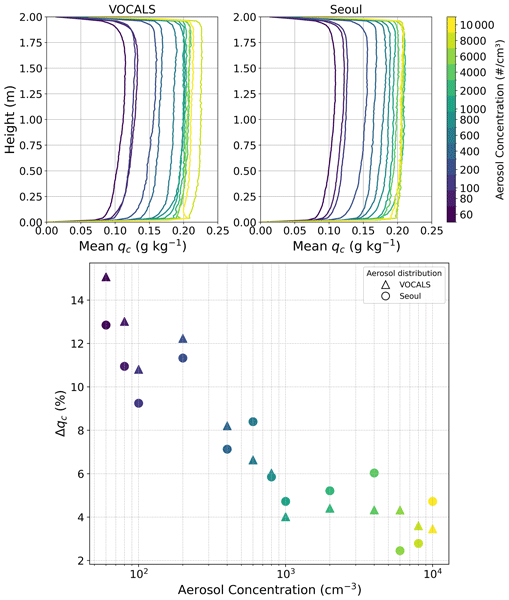
Inyeob La, Wojciech W. Grabowski, Yongjoon Kim, Sanggyeom Kim, and Seong Soo Yum
Atmos. Chem. Phys., 26, 5213–5235, https://doi.org/10.5194/acp-26-5213-2026, https://doi.org/10.5194/acp-26-5213-2026, 2026
Short summary
Short summary
We ask how the amount of aerosol particles shapes cloud structure. Using computer simulations of a laboratory cloud chamber, we varied aerosol levels and tracked droplet growth. When aerosols are few, cloud water increases with height; when many, it becomes almost uniform because vapor is used up near the bottom. These findings clarify when upward motions matter and guide chamber design and better cloud treatment in weather and climate models.
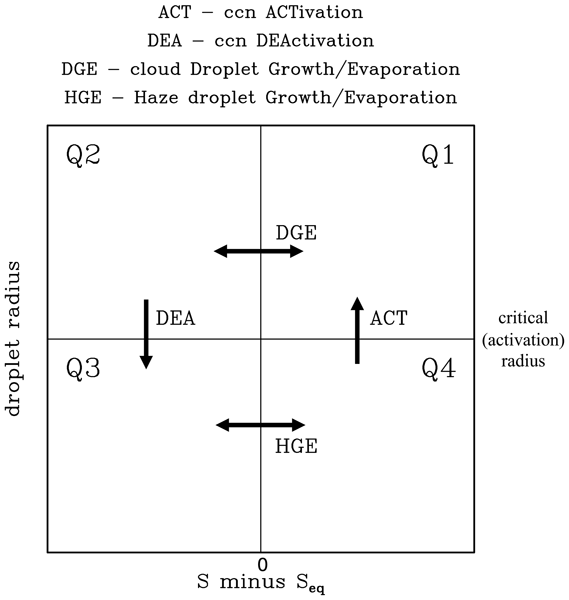
Wojciech W. Grabowski and Hanna Pawlowska
Atmos. Chem. Phys., 25, 5273–5285, https://doi.org/10.5194/acp-25-5273-2025, https://doi.org/10.5194/acp-25-5273-2025, 2025
Short summary
Short summary
A simple diagram to depict cloud droplets' formation via the activation of cloud condensation nuclei (CCN) as well as their subsequent growth and evaporation is presented.
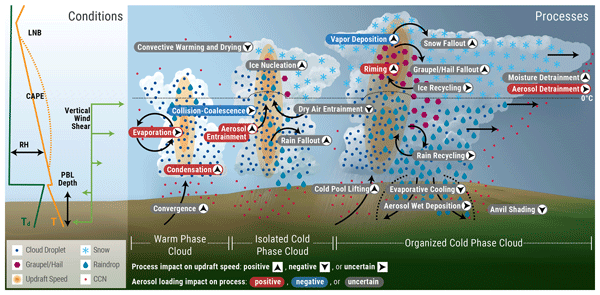
Adam C. Varble, Adele L. Igel, Hugh Morrison, Wojciech W. Grabowski, and Zachary J. Lebo
Atmos. Chem. Phys., 23, 13791–13808, https://doi.org/10.5194/acp-23-13791-2023, https://doi.org/10.5194/acp-23-13791-2023, 2023
Short summary
Short summary
As atmospheric particles called aerosols increase in number, the number of droplets in clouds tends to increase, which has been theorized to increase storm intensity. We critically evaluate the evidence for this theory, showing that flaws and limitations of previous studies coupled with unaddressed cloud process complexities draw it into question. We provide recommendations for future observations and modeling to overcome current uncertainties.
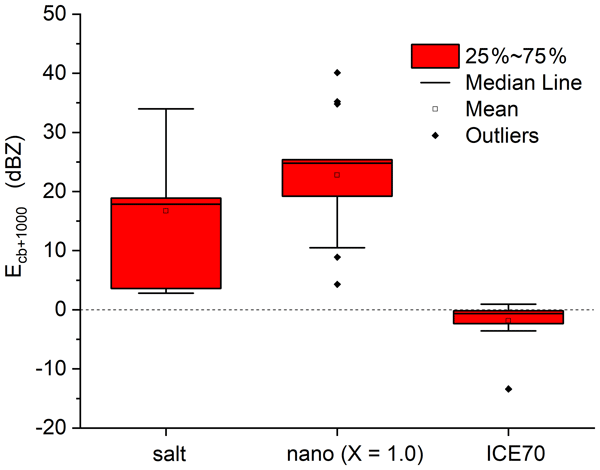
Istvan Geresdi, Lulin Xue, Sisi Chen, Youssef Wehbe, Roelof Bruintjes, Jared A. Lee, Roy M. Rasmussen, Wojciech W. Grabowski, Noemi Sarkadi, and Sarah A. Tessendorf
Atmos. Chem. Phys., 21, 16143–16159, https://doi.org/10.5194/acp-21-16143-2021, https://doi.org/10.5194/acp-21-16143-2021, 2021
Short summary
Short summary
By releasing soluble aerosols into the convective clouds, cloud seeding potentially enhances rainfall. The seeding impacts are hard to quantify with observations only. Numerical models that represent the detailed physics of aerosols, cloud and rain formation are used to investigate the seeding impacts on rain enhancement under different natural aerosol backgrounds and using different seeding materials. Our results indicate that seeding may enhance rainfall under certain conditions.
Wojciech W. Grabowski and Hugh Morrison
Atmos. Chem. Phys., 21, 13997–14018, https://doi.org/10.5194/acp-21-13997-2021, https://doi.org/10.5194/acp-21-13997-2021, 2021
Short summary
Short summary
The paper provides a discussion of key elements of moist convective dynamics: cloud buoyancy, latent heating, precipitation, and entrainment. The motivation comes from recent discussions concerning differences in convective dynamics in polluted and pristine environments.
Cited articles
Anthes, R. A.: Data assimilation and initialization of hurricane prediction model, J. Atmos. Sci., 31, 702–719, https://doi.org/10.1175/1520-0469(1974)031<0702:DAAIOH>2.0.CO;2, 1974.
Anthes, R. A., Kuo Y.-H., Baumhefner D. P., Errico R. M., and Bettge T. W.: Predictability of mesoscale atmospheric motions, Advances in Geophysics, Academic Press, 28B, 159–202, https://doi.org/10.1016/S0065-2687(08)60188-0, 1985.
Asensio, H., Messmerand, M., Lüthi, D., and Osterried, K.: External parameters for numerical weather prediction and climate application EXTPAR V.5_0: User and implementation guide, Consortium for Small-Scale Modeling, 45 pp., https://www.cosmo-model.org/content/support/software/ethz/EXTPAR_user_and_implementation_manual_202003.pdf (last access: 1 December 2025), 2020.
Bach, L., Schraff, C., Keller, J. D., and Hense, A.: Towards a probabilistic regional reanalysis system for Europe: evaluation of precipitation from experiments, Tellus A, 68, 32209, https://doi.org/10.3402/tellusa.v68.32209, 2016.
Baldauf, M., Seifert, A., Förstner, J., Majewski, D., Raschendorfer, M., and Reinhardt, T.: Operational convective-scale numerical weather prediction with the COSMO model: description and sensitivities, Mon. Weather Rev., 139, 3887–3905, https://doi.org/10.1175/MWR-D-10-05013.1, 2011.
Bannister, R. N., Migliorini, S., Rudd, A. C., and Baker, L. H.: Methods of investigating forecast error sensitivity to ensemble size in a limited-area convection-permitting ensemble, Geosci. Model Dev. Discuss. [preprint], https://doi.org/10.5194/gmd-2017-260, in review, 2017.
Berner, J., Achatz, U., Batté, L., Bengtsson, L., de la Cámara, A., Christensen, H. M., Colangeli, M., Coleman, D. R. B., Crommelin, D., Dolaptchiev, S. I., Franzke, C. L. E., Friederichs, P., Imkeller, P., Järvinen, H., Juricke, S., Kitsios, V., Lott, F., Lucarini, V., Mahajan, S., Palmer, T. N., Penland, C., Sakradzija, M., von Storch, J.-S., Weisheimer, A., Weniger, M., Williams, P. D., and Yano, J.-I.: Stochastic parameterization: toward new view of weather and climate models, B. Am. Meteorol. Soc., 98, 565–587, https://doi.org/10.1175/BAMS-D-15-00268.1, 2017.
Bouttier, F., Vie, B., Nuissier, O., and Raynaud, L.: Impact of stochastic physics in a convection-permitting ensemble, Mon. Weather Rev., 140, 3706–3721, https://doi.org/10.1175/MWR-D-12-00031.1, 2012.
Brasseur, O.: Development and application of a physical approach to estimating wind gusts, Mon. Weather Rev., 129, 5–25, https://doi.org/10.1175/1520-0493(2001)129<0005:DAAOAP>2.0.CO;2, 2001.
Bryan, G. H., Wyngaard, J. C., and Fritsch, J. M.: Resolution requirements for the simulation of deep moist convection, Mon. Weather Rev., 131, 2394–2416, https://doi.org/10.1175/1520-0493(2003)131<2394:RRFTSO>2.0.CO;2, 2003.
Bryan, G. H., Knievel, J. C., and Parker, M. D.: A multimodel assessment of RKW theory's relevance to squall-line characteristics, Mon. Weather Rev., 134, 2772–2792, https://doi.org/10.1175/MWR3226.1, 2006.
Bučánek, A. and Brožková, R.: Background error covariances for a BlendVar assimilation system, Tellus A, 69, 1355718, https://doi.org/10.1080/16000870.2017.1355718, 2017.
Buizza, R., Miller, M., and Palmer, T.: Stochastic representation of model uncertainties in the ECMWF ensemble prediction system, Q. J. Roy. Meteor. Soc., 125, 2887–2908, https://doi.org/10.1002/qj.49712556006, 1999.
Celiński-Mysław, D. and Palarz, A.: The occurrence of convective systems with a bow echo in warm season in Poland, Atmos. Res., 193, 26–35, https://doi.org/10.1016/j.atmosres.2017.04.015, 2017.
Celiński-Mysław, D., Palarz, A., and Łoboda, Ł.: Kinematic and thermodynamic conditions related to convective systems with a bow echo in Poland, Theor. Appl. Climatol., 137, 2109–2123, https://doi.org/10.1007/s00704-018-2728-6, 2018.
Chen, Z., Qie, X., Liu, D., and Xiong, Y.: Lightning data assimilation with comprehensively nudging water contents at cloud-resolving scale using WRF model, Atmos. Res., 221, 72–87, https://doi.org/10.1016/j.atmosres.2019.02.001, 2018.
Clark, A. J., Kain, J. S., Stensrud, D. J., Xue, M., Kong, F., Coniglio, M. C., Thomas, K. W., Wang, Y., Brewster, K., Gao, J., Wang, X., Weiss, S. J., and Du, J.: Probabilistic precipitation forecast skill as a function of ensemble size and spatial scale in a convection-allowing ensemble, Mon. Weather Rev., 139, 1410–1418, https://doi.org/10.1175/2010MWR3624.1, 2011.
Clark, P. A., Roberts, N. M., Lean, H. W., Ballard, S. P., and Charlton-Perez, C.: Convection-permitting models: a step-change in rainfall forecasting, Meteorol. Appl., 23, 165–181, https://doi.org/10.1002/met.1538, 2016.
Clark, P. A., Halliwell, C. E., and Flack, D. L. A.: A physically based stochastic boundary layer perturbation scheme. Part I: Formulation and evaluation in a convection-permitting model, J. Atmos. Sci., 78, 727–746, https://doi.org/10.1175/JAS-D-19-0291.1, 2021.
Coniglio, M., Weiss, S., Evans, J., Bright, D., Hart, J., Bothwell, P., Corfidi, S., and Johns, B.: NOAA Hazardous Weather Testbed, NOAA Rep., 11 pp., http://www.nssl.noaa.gov/users/mcon/public_html/2005_summer_exp_plan.pdf (last access: 1 December 2025), 2005.
Coniglio, M. C., Corfidi, S. F., and Kain, J. S.: Views on applying RKW theory: an illustration using the 8 May 2009 derecho-producing convective system, Mon. Weather Rev., 140, 1023–1043, https://doi.org/10.1175/MWR-D-11-00026.1, 2012.
Corfidi, S. F., Coniglio, M. C., Cohen, A. E., and Mead, C. M.: A proposed revision to the definition of “derecho”, B. Am. Meteorol. Soc., 97, 935–949, https://doi.org/10.1175/BAMS-D-14-00254.1, 2016.
Davies, H. C. and Turner, R. E.: Updating prediction models by dynamical relaxation: An examination of the technique, Q. J. Roy. Meteor. Soc., 103, 225–245, https://doi.org/10.1002/qj.49710343602, 1977.
Diongue, A., Lafore, J.-P., Redelsperger, J.-L., and Roca, R.: Numerical study of a Sahelian synoptic weather system: Initiation and mature stages of convection and its interactions with the large-scale dynamics, Q. J. Roy. Meteor. Soc., 128, 1899–1927, https://doi.org/10.1256/003590002320603467, 2002.
Dixit, V., Nuijens, L., and Helfer, K. C.: Counter-gradient momentum transport through subtropical shallow convection in ICON-LEM simulations, J. Adv. Model. Earth Sy., 13, e2020MS002352, https://doi.org/10.1029/2020MS002352, 2021.
Doms, G., Förstner, J., Heise, E., Herzog, H.-J., Mironov, D., Raschendorfer, M., Reinhardt, T., Ritter, B., Schodrin, R., Schultz, J.-P., and Vogel, G.: A description of the nonhydrostatic regional COSMO-model: Part II: Physical parameterizations, Consortium for Small-Scale Modeling, 167 pp., https://doi.org/10.5676/DWD_pub/nwv/cosmo-doc_6.00_II, 2021.
Done, J., Davis, C. A., and Weisman, M.: The next generation of NWP: explicit forecasts of convection using the weather research and forecasting (WRF) model, Atmos. Sci. Lett., 5, 110–117, https://doi.org/10.1002/asl.72, 2004.
Done, J. M., Craig, G. C., Gray, S. L., Clark, P. A., and Gray, M. E. B.: Mesoscale simulations of organized convection: Importance of convective equilibrium, Q. J. Roy. Meteor. Soc., 132, 737–756, https://doi.org/10.1256/qj.04.84, 2006.
Emanuel, K. A.: Atmospheric convection, Oxford University Press, New York, ISBN 0-19-506630-8, 1994.
ESA GlobCover 2009 Project: Global Land Cover Map, ESA and UCL [data set], http://due.esrin.esa.int/page_globcover.php (last access: 2 March 2023), 2010.
FAO/IIASA/ISRIC/ISS-CAS/JRC: Harmonized World Soil Database, Version 1.2, FAO and IIASA [data set], https://www.fao.org/soils-portal/soil-survey/soil-maps-and-databases/harmonized-world-soil-database-v12/en/ (last access: 2 March 2023), 2012.
Figurski, M. J., Nykiel, G., Jaczewski, A., Baldysz, Z., and Wdowikowski, M.: The impact of initial and boundary conditions on severe weather event simulations using a high-resolution WRF model. Case study of the derecho event in Poland on 11 August 2017, Meteorology Hydrology and Water Management, 10, 60–86, https://doi.org/10.26491/mhwm/143877, 2021.
Flack, D. L. A., Clark, P. A., Halliwell, C. E., Roberts, N. M., Gray, S. L., Plant, R. S., and Lean, H. W.: A physically based stochastic boundary layer perturbation scheme. Part II: Perturbation growth within a superensemble framework, J. Atmos. Sci., 78, 747–761, https://doi.org/10.1175/JAS-D-19-0292.1, 2021.
Fujita, T. T.: Manual of downburst identification for project Nimrod, Satellite and Mesometeorology Research Paper 156, Dept. of Geophysical Sciences, University of Chicago, 104 pp., Report no. NASA-CR-156953, 1978.
Gallus, W. A., Snook, N. A., and Johnson, E. V.: Spring and summer severe weather reports over the Midwest as a function of convective mode: A preliminary study, Weather Forecast., 23, 101–113, https://doi.org/10.1175/2007WAF2006120.1, 2008.
Gebhardt, C., Theis, S. E., Krahe, P., and Renner, V.: Experimental ensemble forecasts of precipitation based on a convection-resolving model, Atmos. Sci. Lett., 9, 67–72, https://doi.org/10.1002/asl.177, 2008.
Gerken, T., Babel, W., Herzog, M., Fuchs, K., Sun, F., Ma, Y., Foken, T., and Graf, H.-F.: High-resolution modelling of interactions between soil moisture and convective development in a mountain enclosed Tibetan Basin, Hydrol. Earth Syst. Sci., 19, 4023–4040, https://doi.org/10.5194/hess-19-4023-2015, 2015.
Grabowski, W. W.: Daytime convective development over land: The role of surface forcing, Q. J. Roy. Meteor. Soc., 149, 2800–2819, https://doi.org/10.1002/qj.4532, 2023.
Grabowski, W. W. and Smolarkiewicz, P. K.: CRCP: A cloud resolving convection parameterization for modeling the tropical convective atmosphere, Physica D, 133, 171–178, https://doi.org/10.1016/S0167-2789(99)00104-9, 1999.
Grabowski, W. W., Bechtold, P., Cheng, A., Forbes, R., Halliwell, C., Khairoutdinov, M., Lang, S., Nasuno, T., Petch, J., Tao, W.-K., Wong, R., Wu, X., and Xu, K.-M.: Daytime convective development over land: A model intercomparison based on LBA observations, Q. J. Roy. Meteor. Soc., 132, 317–344, https://doi.org/10.1256/qj.04.147, 2006.
Grunzke, C. T. and Evans, C.: Predictability and dynamics of warm-core mesoscale vortex formation with the 8 May 2009 “Super Derecho” event, Mon. Weather Rev., 145, 811–832, https://doi.org/10.1175/MWR-D-16-0217.1, 2017.
Gustafsson, N., Janjić, T., Schraff, C., Leuenberger, D., Weissmann, M., Reich, H., Brousseau, P., Montmerle, T., Wattrelot, E., Bučánek, A., Mile, M., Hamdi, R., Lindskog, M., Barkmeijer, J., Dahlbom, M., Macpherson, B., Ballard, S., Inverarity, G., Carley, J., Alexander, C., Dowell, D., Liu, S., Ikuta, Y., and Fujita, T.: Survey of data assimilation methods for convective-scale numerical weather prediction at operational centres, Q. J. Roy. Meteor. Soc., 144, 1218–1256, https://doi.org/10.1002/qj.3179, 2018.
Hacker, J. P., Ha, S.-Y., Snyder, C., Berner, J., Eckel, F. A., Kuchera, E., Pocernich, M., Rugg, S., Schramm, J., and Wang, X.: The U.S. Air Force Weather Agency's mesoscale ensemble: scientific description and performance results, Tellus A, 63, 625–641, https://doi.org/10.1111/j.1600-0870.2010.00497.x, 2011.
Harrop, B. E., Lu, J., Leung, L. R., Lau, W. K. M., Kim, K.-M., Medeiros, B., Soden, B. J., Vecchi, G. A., Zhang, B., and Singh, B.: An overview of cloud–radiation denial experiments for the Energy Exascale Earth System Model version 1, Geosci. Model Dev., 17, 3111–3135, https://doi.org/10.5194/gmd-17-3111-2024, 2024.
Heise, W., Lange, M., Ritter, B., and Schrodin, R.: Improvement and validation of the multi-layer soil model, COSMO Newsletter, 3, 198–203, 2003.
Hersbach, H., Bell, B., Berrisford, P., Hirahara, S., Horányi, A., Muñoz-Sabater, J., Nicolas, J., Peubey, C., Radu, R., Schepers, D., Simmons, A., Soci, C., Abdalla, S., Abellan, X., Balsamo, G., Bechtold, P., Biavati, G., Bidlot, J., Bonavita, M., De Chiara, G., Dahlgren, P., Dee, D., Diamantakis, M., Dragani, R., Flemming, J., Forbes, R., Fuentes, M., Geer, A., Haimberger, L., Healy, S., Hogan, R.-J., Hólm, E., Janisková, M., Keeley, S., Laloyaux, P., Lopez, P., Lupu, C., Radnoti, G., de Rosnay, P., Rozum, I., Vamborg, F., Villaume, S., and Thépaut, J.-N.: The ERA5 global reanalysis, Q. J. Roy. Meteor. Soc., 146, 1999–2049, https://doi.org/10.1002/qj.3803, 2020.
Hersbach, H., Bell, B., Berrisford, P., Biavati, G., Horányi, A., Muñoz Sabater, J., Nicolas, J., Peubey, C., Radu, R., Rozum, I., Schepers, D., Simmons, A., Soci, C., Dee, D., and Thépaut, J-N.: ERA5 hourly data on single levels from 1940 to present, Copernicus Climate Change Service (C3S), Climate Data Store (CDS) [data set], https://doi.org/10.24381/cds.adbb2d47, 2023.
Hirt, M., Rasp, S., Blahak, U., and Craig, G. C.: Stochastic parameterization of processes leading to convective initiation in kilometer-scale models, Mon. Weather Rev., 147, 3917–3934, https://doi.org/10.1175/MWR-D-19-0060.1, 2019.
Holton, J. R.: An introduction to dynamic meteorology, Elsevier Academic Press, 535 pp., ISBN 0-12-354015-1, 2004.
Johns, R. H. and Hirt, W. D.: Derechos: widespread convectively induced windstorms, Weather Forecast., 2, 32–49, https://doi.org/10.1175/1520-0434(1987)002<0032:DWCIW>2.0.CO;2, 1987.
Kienast-Sjögren, E., Miltenberger, A. K., Luo, B. P., and Peter, T.: Sensitivities of Lagrangian modelling of mid-latitude cirrus clouds to trajectory data quality, Atmos. Chem. Phys., 15, 7429–7447, https://doi.org/10.5194/acp-15-7429-2015, 2015.
Kirshbaum, D J., Sindhu, K. D., and Turner, D. D.: An observational evaluation of RKW theory over the U.S. Southern Great Planes, J. Atmos. Sci., 82, 1341–1360, https://doi.org/10.1175/JAS-D-24-0185.1, 2025.
Klimowski, B. A., Bunkers, M. J., Hjelmfelt, M. R., and Covert, J. N.: Severe convective windstorms over the Northern High Plains of the United States, Weather Forecast., 18, 502–519, https://doi.org/10.1175/1520-0434(2003)18<502:SCWOTN>2.0.CO;2, 2003.
Klimowski, B. A., Hjelmfelt, M. R., and Bunkres, M. J.: Radar observation of the early evolution of bow echoes, Wea. Forecast., 19, 727–734, https://doi.org/10.1175/1520-0434(2004)019<0727:ROOTEE>2.0.CO;2, 2004.
Kober, K. and Craig, G. C.: Physically based stochastic perturbations (PSP) in the boundary layer to represent uncertainty in convective initiation, J. Atmos. Sci., 73, 2893–2911, https://doi.org/10.1175/JAS-D-15-0144.1, 2016.
Kolonko, M., Szczęch-Gajewska, M., Bochenek, B., Stachura, G., and Sekuła, P.: Using ALARO and AROME numerical weather prediction models for the derecho case on 11 August 2017, Meteorology Hydrology and Water Management, 10, 88–105, https://doi.org/10.26491/mhwm/156260, 2023.
Kühnlein, C., Keil, C., Craig, G. C., and Gebhardt, C.: The impact of downscaled initial condition perturbations on convective-scale ensemble forecasts of precipitation, Quart. J. Roy. Meteor. Soc., 140, 1552-1562, https://doi.org/10.1002/qj.2238, 2014.
Lawson, J. and Gallus Jr., W. A.: On contrasting ensemble simulations of two great plains bow echoes, Weather Forecast., 31, 787–810, https://doi.org/10.1175/WAF-D-15-0060.1, 2016.
Lawson, J. R., Gallus Jr., W. A., and Potvin, C. K.: Sensitivity of a bowing mesoscale convective system to horizontal grid spacing in a convection-allowing ensemble, Atmosphere, 11, 384, https://doi.org/10.3390/atmos11040384, 2020.
Lebo, Z. J. and Morrison, H.: Effects of horizontal and vertical grid spacing on mixing in simulated squall lines and implications for convective strength and structure, Mon. Weather Rev., 143, 4355–4375, https://doi.org/10.1175/MWR-D-15-0154.1, 2015.
Liu, W., Ullrich, P. A., Li, J., Zarzycki, C., Caldwell, P. M., Leung, L. R., and Qian, Y.: The June 2012 North American Derecho: A testbed for evaluating regional and global climate modeling systems at cloud-resolving scales, J. Adv. Model. Earth Sy., 15, https://doi.org/10.1029/2022MS003358, 2023.
LeMone, M. A.: Momentum transport by a line of cumulonimbus, J. Atmos. Sci., 40, 1815–1834, https://doi.org/10.1175/1520-0469(1983)040<1815:MTBALO>2.0.CO;2, 1983.
Lorenz, E. N.: The predictability of a flow which possesses many scales of motion, Tellus, 21, 289–307, https://doi.org/10.3402/tellusa.v21i3.10086, 1969.
Mahoney, K. M., Lackmann, G. M., and Parker, M. D.: The role of momentum transport in the motion of a quasi-idealized mesoscale convective system, Mon. Weather Rev., 137, 3316–3338, https://doi.org/10.1175/2009MWR2895.1, 2009.
Machado, L. A. T. and Chaboureau, J.-P.: Effect of turbulence parameterization on assessment of cloud organization, Mon. Weather Rev., 143, 3246–3262, https://doi.org/10.1175/MWR-D-14-00393.1, 2015.
Margairaz, F., Pardyjak, E. R., and Calaf, M.: Surface thermal heterogeneities and the atmospheric boundary layer: the relevance of dispersive fluxes, Bound.-Lay. Meteorol., 77, 49–68, https://doi.org/10.1007/s10546-020-00544-7, 2020.
Marquis, J. N., Varble, A. C., Robinson, P., Nelson, T. C., and Friedrich, K.: Low-level mesoscale and cloud-scale interactions promoting deep convection initiation, Mon. Weather Rev., 149, 2473–2495, https://doi.org/10.1175/MWR-D-20-0391.1, 2021.
Mathias, L., Ermert, V., Kelemen, F., Ludwig, P., and Pinto, J.: Synoptic analysis and hindcast of an intense bow echo in Western Europe: The 09 June 2014 storm, Weather Forecast., 32, 1121–1141, https://doi.org/10.1175/WAF-D-16-0192.1, 2017.
Mazur, A. and Duniec, G.: Influence of computational grid resolution on the quality of forecasts of dangerous convection phenomena: a case study of August 11, 2017, Meteorology Hydrology and Water Management, 10, 106-114, https://doi.org/10.26491/mhwm/159068, 2023.
McGinley, J.: Nowcasting mesoscale phenomena, in: Mesoscale Meteorology and Forecasting, edited by: Ray, P. S., American Meteorological Society, Boston, 657–688, ISBN 0-933876-66-1, 1986.
Mellor, G. L. and Yamada, T.: Development of a turbulence closure model for geophysical fluid problems, Rev. Geophys., 20, 851–875, https://doi.org/10.1029/RG020i004p00851, 1982.
Melhauser, C. and Zhang, F.: Practical and intrinsic predictability of severe and convective weather at the mesoscales, J. Atmos. Sci., 69, 3350–3371, https://doi.org/10.1175/JAS-D-11-0315.1, 2012.
Meng, Z., Zhang, F., Markowski, P., Wu, D., and Zhao, K.: A Modeling study on the development of a bowing structure and associated rear inflow within a squall line over South China, J. Atmos. Sci., 69, 1182–1207, https://doi.org/10.1175/JAS-D-11-0121.1, 2012.
Müller, M., Homleid, M., Ivarsson, K.-I., Køltzow, M. A., Lindskog, M., Midtbø, K. H., Andrae, U., Aspelien, T., Berggren, L., Bjørge, D., Dahlgren, P., Kristiansen, J., Randriamampianina, R., Ridal, M., and Vignes, O.: AROME-MetCoOp: A Nordic convective-scale operational weather prediction model, Weather Forecast., 32, 609–627, https://doi.org/10.1175/WAF-D-16-0099.1, 2017.
NASA/METI/AIST/Japan Spacesystems and U.S./Japan ASTER Science Team: ASTER Global Digital Elevation Model V003, NASA EOSDIS Land Processes DAAC [data set], https://doi.org/10.5067/ASTER/ASTGTM.003, 2019.
The NCAR Command Language (Version 6.6.2), UCAR/NCAR/CISL/TDD [code], https://doi.org/10.5065/D6WD3XH5, 2019.
Necker, T., Geiss, S., Weissmann, M., Ruiz, J., Miyoshi, T., and Lien, G.-Y.: A convective-scale 1,000-member ensemble simulation and potential application, Q. J. Roy. Meteor. Soc., 146, 1423–1442, https://doi.org/10.1002/qj.3744, 2020.
Orlanski, I.: A rational subdivision of scales for atmospheric processes, B. Am. Meteorol. Soc., 56, 527–530, https://doi.org/10.1175/1520-0477-56.5.527, 1975.
Pacey, G. P., Schultz, D. M., and Garcia-Carreras, L.: Severe convective windstorms in Europe: Climatology, preconvective environments, and convective mode, Weather Forecast., 36, 237–252, https://doi.org/10.1175/WAF-D-20-0075.1, 2021.
Palmer, T. N.: The ECMWF Ensemble Prediction System: Looking back (more than) 25 years and projecting forward 25 years, Q. J. Roy. Meteor. Soc., 145, 12–24, https://doi.org/10.1002/qj.3383, 2019.
Palmer, T. N., Döring, A., and Seregin, G.: The real butterfly effect, Nonlinearity, 27, R123, https://doi.org/10.1088/0951-7715/27/9/R123, 2014.
Parker, M. D., Borchardt, B. S., Miller, R. L., and Ziegler, C. L.: Simulated evolution and severe wind production by the 25–26 June 2015 nocturnal MCS from PECAN, Mon. Weather Rev., 148, 183–209, https://doi.org/10.1175/MWR-D-19-0072.1, 2020.
Peters, J. M., Morrison, H., Nelson, T. C., Marquis, J. N., Mulholland, J. P., and Nowotarski, C. J.: The influence of shear on deep convection initiation. Part I: Theory, J. Atmos. Sci., 79, 1669–1690, https://doi.org/10.1175/JAS-D-21-0145.1, 2022a.
Peters, J. M., Morrison, H., Nelson, T. C., Marquis, J. N., Mulholland, J. P., and Nowotarski, C. J.: The influence of shear on deep convection initiation. Part II: Simulations, J. Atmos. Sci., 79, 1691–1711, https://doi.org/10.1175/JAS-D-21-0144.1, 2022b.
Przybylinski, R. W.: The bow echo: Observations, numerical simulations, and severe weather detection methods, Weather Forecast., 10, 203–218, https://doi.org/10.1175/1520-0434(1995)010<0203:TBEONS>2.0.CO;2, 1995.
Puh, M., Keil, C., Gebhardt, C., Marsigli, C., Hirt, M., Jakub, F., and Craig, G. C.: Physically based stochastic perturbations improve a high-resolution forecast of convection, Q. J. Roy. Meteor. Soc., 149, 3582–3592, https://doi.org/10.1002/qj.4574, 2023.
Raschendorfer, M.: The new turbulence parameterization of LM, COSMO Newsletter, 1, 89–98, http://www.cosmo-model.org/content/model/documentation/newsLetters/newsLetter01/newsLetter_01.pdf (last access: 3 December 2025), 2001.
Reinhardt, T. and Seifert, A.: A three-category ice scheme for LMK, COSMO Newsletter, 6, 115–120, http://www.cosmo-model.org/content/model/documentation/newsLetters/newsLetter06/newsLetter_06.pdf (last access: 3 December 2025), 2006.
Ribeiro, B. Z., Weiss, S. J., and Bosart, L. F.: An analysis of the 3 May 2020 low-predictability derecho using a convection-allowing MPAS Ensemble, Weather Forecast., 37, 219–239, https://doi.org/10.1175/WAF-D-21-0092.1, 2022.
Ritter, B. and Geleyn, J. F.: A comprehensive radiation scheme for numerical weather prediction models with potential applications in climate simulations, Mon. Weather Rev., 120, 303–325, https://doi.org/10.1175/1520-0493(1992)120<0303:ACRSFN>2.0.CO;2, 1992.
Rotunno, R., Klemp, J. B., and Weisman, M. L.: A theory for strong, long-lived squall lines, J. Atmos. Sci., 45, 463–485, https://doi.org/10.1175/1520-0469(1988)045<0463:ATFSLL>2.0.CO;2, 1988.
Saito, K.: The JMA nonhydrostatic model and its applications to operation and research, in: Atmospheric Model Applications, edited by: Yucel, I., IntechOpen, 85–110, https://doi.org/10.5772/35368, 2012.
Sass, B. H. and Petersen, C.: Short range atmospheric forecasts using a nudging procedure to combine analyses of cloud and precipitation with a numerical forecast model, DMI Scientific Report No. 02-01, Danish Meteorological Institute, Copenhagen, Denmark, http://www.dmi.dk/fileadmin/Rapporter/SR/sr02-01.pdf (last access: 6 December 2023), 2002.
Schaaf, C. and Wang, Z.: MCD43A1 MODIS/Terra+Aqua BRDF/Albedo Model Parameters Daily L3 Global - 500m V006, NASA EOSDIS Land Processes DAAC [data set], https://doi.org/10.5067/MODIS/MCD43A1.006, 2015.
Schättler, U. and Blahak, U.: A description of the nonhydrostatic regional COSMO-model: Part V: Initial and boundary data for the COSMO-Model, Consortium for Small-Scale Modelling, 78 pp., https://doi.org/10.5676/DWD_pub/nwv/cosmo-doc_6.00_V, 2021.
Schlemmer, L., Bechtold, P., Sandu, I., and Ahlgrimm, M.: Uncertainties related to the representation of momentum transport in shallow convection, J. Adv. Model. Earth Sy., 9, 1269–1291, https://doi.org/10.1002/2017MS000915, 2017.
Schraff, C.: Mesoscale data assimilation and prediction of low stratus in the Alpine region, Meteor. Atmos. Phys., 64, 21–50, https://doi.org/10.1007/BF01044128, 1997.
Schraff, C. and Hess, R.: A description of the nonhydrostatic regional COSMO-model: Part III: Data assimilation, Consortium for Small-Scale Modeling, Deutscher Wetterdienst, 96 pp., https://doi.org/10.5676/DWD_pub/nwv/cosmo-doc_6.00_III, 2021.
Shutts, G.: A kinetic energy backscatter algorithm for use in ensemble prediction systems, Q. J. Roy. Meteor. Soc., 131, 3079–3102, https://doi.org/10.1256/qj.04.106, 2005.
Skamarock, W. C.: Evaluating mesoscale NWP models using kinetic energy spectra, Mon. Weather Rev., 132, 3019–3032, https://doi.org/10.1175/MWR2830.1, 2004.
Smull, B. F. and Houze Jr., R. A.: Rear inflow in squall lines with trailing stratiform precipitation, Mon. Weather Rev., 115, 2869–2889, https://doi.org/10.1175/1520-0493(1987)115<2869:RIISLW>2.0.CO;2, 1987.
Snively, D. V., and Gallus Jr., W. A.: Prediction of convective morphology in near-cloud-permitting WRF model simulations, Wea. Forecasting, 29, 130–149, https://doi.org/10.1175/WAF-D-13-00047.1, 2014.
Sommeria, G. and Deardorff, J. W.: Subgrid-scale condensation in models of nonprecipitating clouds, J. Atmos. Sci., 34, 344–355, https://doi.org/10.1175/1520-0469(1977)034<0344:SSCIMO>2.0.CO;2, 1977.
Sprenger, M. and Wernli, H.: The LAGRANTO Lagrangian analysis tool – version 2.0, Geosci. Model Dev., 8, 2569–2586, https://doi.org/10.5194/gmd-8-2569-2015, 2015.
Stensrud, D. J., Coniglio, M. C., Davies-Jones, R. P., and Evans J. S.: Comments on “A theory of strong long-lived squall-lines revisited”, J. Atmos. Sci., 62, 2989–2996, https://doi.org/10.1175/JAS3514.1, 2005.
Stephan, K., Klink, S., and Schraff, C.: Assimilation of radar-derived rain rates into the convective-scale model COSMO-DE at DWD, Q. J. Roy. Meteor. Soc., 134, 1315–1326, https://doi.org/10.1002/qj.269, 2008.
Stull, R. B.: An introduction to boundary layer meteorology, Kluwer Academic Publishers, Dordrecht, https://doi.org/10.1007/978-94-009-3027-8, 1988.
Surowiecki, A. and Taszarek, M.: A 10-year radar-based climatology of mesoscale convective system archetypes and derechos in Poland, Mon. Weather Rev., 148, 3471–3488, https://doi.org/10.1175/MWR-D-19-0412.1, 2020.
Tao, W. and Soong, S.: A study of the response of deep tropical clouds to mesoscale processes: three-dimensional numerical experiments, J. Atmos. Sci., 43, 2653–2676, https://doi.org/10.1175/1520-0469(1986)043<2653:ASOTRO>2.0.CO;2, 1986.
Taszarek, M., Pilguj, N., Orlikowski, J., Surowiecki, A., Walczakiewicz, S., Pilorz, W., Piasecki, K., Pajurek, Ł., and Półrolniczak, M.: Derecho evolving from a mesocyclone – a study of 11 August 2017 severe weather outbreak in Poland: Event analysis and high-resolution simulation, Mon. Weather Rev., 147, 2283–2306, https://doi.org/10.1175/MWR-D-18-0330.1, 2019.
Tiedtke, M.: A comprehensive mass flux scheme for cumulus parameterization in large-scale models, Mon. Weather Rev., 117, 1779–1799, https://doi.org/10.1175/1520-0493(1989)117<1779:ACMFSF>2.0.CO;2, 1989.
Toll, V., Männik, A., Luhamaa, A., and Rõõm, R.: Hindcast experiments of the derecho in Estonia on 08 August, 2010: Modelling derecho with NWP model HARMONIE, Atmos. Res., 158–159, 179–191, https://doi.org/10.1016/j.atmosres.2014.10.011, 2015.
Tompkins, A. M. and Semie, A. G.: Organization of tropical convection in low vertical wind shears: Role of updraft entrainment, J. Adv. Model. Earth Sy., 9, 1046–1068, https://doi.org/10.1002/2016MS000802, 2017.
Uboldi, F. and Trevisan, A.: Multiple-scale error growth in a convection-resolving model, Nonlin. Processes Geophys., 22, 1–13, https://doi.org/10.5194/npg-22-1-2015, 2015.
Vallis, G. K.: Atmospheric and oceanic fluid dynamics, Cambridge University Press, 769 pp., ISBN 978-0-521-84969-2, 2006.
Varble, A., Zipser, E. J., Fridlind, A. M., Zhu, P., Ackerman, A. S., Chaboureau, J.-P., Collis, S., Fan, J., Hill, A., and Shipway, B.: Evaluation of cloud-resolving and limited area model intercomparison simulations using TWP-ICE observations: 1. Deep convective updraft properties, J. Geophys. Res. Atmos., 119, 13891–13918, https://doi.org/10.1002/2013JD021371, 2014a.
Varble, A., Zipser, E. J., Fridlind, A. M., Zhu, P., Ackerman, A. S., Chaboureau, J.-P., Fan, J., Hill, A., Shipway, B., and Williams, C.: Evaluation of cloud-resolving and limited area model intercomparison simulations using TWP-ICE observations: 2. Precipitation microphysics, J. Geophys. Res.-Atmos., 119, 13919–13945, https://doi.org/10.1002/2013JD021372, 2014b.
Varble, A., Morrison, H., and Zipser, E.: Effects of under-resolved convective dynamics on the evolution of a squall line, Mon. Wea. Rev., 148, 289–311, https://doi.org/10.1175/MWR-D-19-0187.1, 2020.
Weisman, M. L.: The role of convectively generated rear-inflow jets in the evolution of long-lived mesoconvective systems, J. Atmos. Sci., 49, 1826–1847, https://doi.org/10.1175/1520-0469(1992)049<1826:TROCGR>2.0.CO;2, 1992.
Weisman, M. L.: The genesis of severe, long-lived bow echoes, J. Atmos. Sci., 50, 645–670, https://doi.org/10.1175/1520-0469(1993)050<0645:TGOSLL>2.0.CO;2, 1993.
Weisman, M. L. and Klemp, J. B.: Characteristics of isolated convective storms, in: Mesoscale Meteorology and Forecasting, edited by: Ray, P. S., Amer. Meteor. Soc., 331–358, ISBN 0-933876-66-1, 1986.
Weisman, M. L. and Rotunno, R.: Reply, J. Atmos. Sci., 62, 2997–3002, https://doi.org/10.1175/JAS3515.1, 2005.
Weisman, M. L., Evans, C., and Bosart, L.: The 8 May 2009 Superderecho: Analysis of a real-time explicit convective forecast, Weather Forecast., 28, 863–892, https://doi.org/10.1175/WAF-D-12-00023.1, 2013.
Wilhelm, J., Wapler, K., Blahak, U., Potthast, R., and Kunz, M.: Statistical relevance of meteorological ambient conditions and cell attributes for nowcasting the life cycle of convective storms, Q. J. Roy. Meteor. Soc., 149, 2252–2280, https://doi.org/10.1002/qj.4505, 2023.
Williams, A. G. and Hacker, J. M.: The composite shape and structure of coherent eddies in the convective boundary layers, Bound.-Lay. Meteorol., 61, 213–245, https://doi.org/10.1007/BF02042933, 1992.
Williams, A. G. and Hacker, J. M.: Interactions between coherent eddies in the lower convective boundary layer, Bound.-Lay. Meteorol., 64, 55–74, https://doi.org/10.1007/BF00705662, 1993.
Wójcik, D. K.: Numerical modeling of deep convection: Case study of the 21 August 2007 severe convective system over the Masurian Lake District, PhD thesis, IMGW-PIB, 219 pp., https://doi.org/10.5281/zenodo.7700199, 2021.
Wu, X. and Yanai, M.: Effects of vertical wind shear on the cumulus transport of momentum: Observations and parameterization, J. Atmos. Sci., 51, 1640–1660, https://doi.org/10.1175/1520-0469(1994)051<1640:EOVWSO>2.0.CO;2, 1994.
Wu, X., Grabowski, W. W., and Moncrieff, M. W.: Long-term behavior of cloud systems in TOGA COARE and their interactions with radiative and surface processes. Part I: Two-dimensional modeling study, J. Atmos. Sci., 55, 2693–2714, https://doi.org/10.1175/1520-0469(1998)055<2693:LTBOCS>2.0.CO;2, 1998.
Xu, X., Xue, M., and Wang, Y.: Mesovortices within the 8 May 2009 bow echo over the central United States: Analyses of the characteristics and evolution based on Doppler radar observations and a high-resolution model simulation, Mon. Wea. Rev., 143, 2266–2290, https://doi.org/10.1175/MWR-D-14-00234.1, 2015.
Xu, X., Ju, Y., Liu, Q., Zhao, K., Xue, M., Zhang, S., Zhou, A., Wang, Y., and Tang, Y.: Dynamics of two episodes of high winds produced by an unusually long-lived quasi-linear convective system in South China, J. Atmos. Sci., 81, 1449–1473, https://doi.org/10.1175/JAS-D-23-0047.1, 2024.
Yamada, H.: Numerical simulations of the role of land surface conditions in the evolution and structure of summertime thunderstorms over a flat highland, Mon. Weather Rev., 136, 173–188, https://doi.org/10.1175/2007MWR2053.1, 2008.
Yano, J.-I., Ziemiański, M. Z., Cullen, M., Termonia, P., Onvlee, J., Bengtsson, L., Carrassi, A., Davy, R., Deluca, A., Gray, S. L., Homar, V., Köhler, M., Krichak, S., Michaelides, S., Phillips, V. T. J., Soares, P. M. M., and Wyszogrodzki, A. A.: Scientific challenges of convective-scale numerical weather prediction, B. Am. Meteorol. Soc., 99, 699–710, https://doi.org/10.1175/BAMS-D-17-0125.1, 2018.
Zeng, Y., Janjić, T., de Lozar, A., Rasp, S., Blahak, U., Seifert, A., and Craig, G. C.: Comparison of methods accounting for subgrid-scale model error in convective-scale data assimilation, Mon. Weather Rev., 148, 2457–2477, https://doi.org/10.1175/MWR-D-19-0064.1, 2020.
Ziemiański, M. Z., Grabowski, W. W., and Moncrieff, M. W.: Explicit convection over the western Pacific warm pool in the Community Atmospheric Model, J. Climate, 18, 1482–1502, https://doi.org/10.1175/JCLI3345.1, 2005.
Ziemiański, M. Z., Wójcik, D. K., Rosa, B., and Piotrowski, Z. P.: Compressible EULAG dynamical core in COSMO: convective-scale Alpine weather forecast, Mon. Weather Rev., 148, 3563–3583, https://doi.org/10.1175/MWR-D-20-0317.1, 2021.
Short summary
Representation of severe convection is a challenge for numerical weather prediction models. We show that an explicit stochastic convection initiation scheme, mimicking effects of initial convective cells, allows representation of the isolated bow echo, exposing its cold-pool-driven dynamics, formation of the rear inflow jet, and strong surface winds. The reconstruction delays the strongest gusts by almost an hour, and insufficiently represents continuous linear arrangement of convective cells.
Representation of severe convection is a challenge for numerical weather prediction models. We...


