
Articles | Volume 7, issue 3
https://doi.org/10.5194/wcd-7-1709-2026
© Author(s) 2026. This work is distributed under
the Creative Commons Attribution 4.0 License.
the Creative Commons Attribution 4.0 License.
https://doi.org/10.5194/wcd-7-1709-2026
© Author(s) 2026. This work is distributed under
the Creative Commons Attribution 4.0 License.
the Creative Commons Attribution 4.0 License.
Research article
| 
07 Sep 2026
Research article |
| 07 Sep 2026
| 07 Sep 2026
Quantifying atmospheric and land drivers of hot temperature extremes through explainable Artificial Intelligence

Earth Sciences Department, Barcelona Supercomputing Center (BSC), Barcelona, Spain
Facultat de Física, Universitat de Barcelona, Diagonal 645, 08028 Barcelona, Spain
Lluís Palma
Earth Sciences Department, Barcelona Supercomputing Center (BSC), Barcelona, Spain
Facultat de Física, Universitat de Barcelona, Diagonal 645, 08028 Barcelona, Spain
Markus Donat
Earth Sciences Department, Barcelona Supercomputing Center (BSC), Barcelona, Spain
Institució Catalana de Recerca i Estudis Avançats (ICREA), Barcelona, Spain
Stefano Materia
Earth Sciences Department, Barcelona Supercomputing Center (BSC), Barcelona, Spain
CMCC Foundation–Euro–Mediterranean Center on Climate Change, Bologna, Italy
Bruna Gràvalos Talló
Earth Sciences Department, Barcelona Supercomputing Center (BSC), Barcelona, Spain
Raül Marcos Matamoros
Facultat de Física, Universitat de Barcelona, Diagonal 645, 08028 Barcelona, Spain
Related authors
No articles found.
Montserrat Llasat-Botija, Raül Marcos-Matamoros, Maria Aguilera-Vidal, José Antonio Jimenez, and María Carmen Llasat
Nat. Hazards Earth Syst. Sci., 26, 4429–4455, https://doi.org/10.5194/nhess-26-4429-2026, https://doi.org/10.5194/nhess-26-4429-2026, 2026
Short summary
Short summary
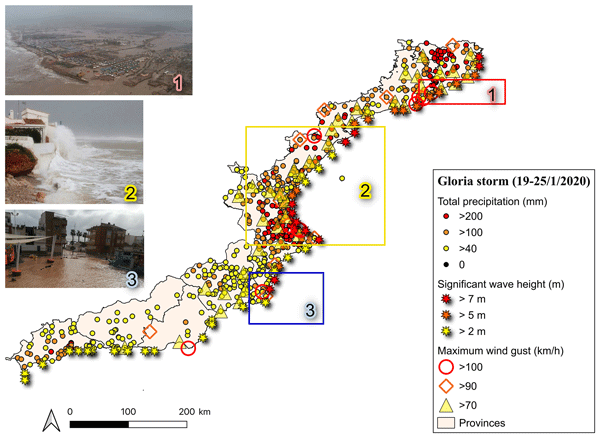
Was Storm Gloria (19-25 January 2020) exceptional, and were its impacts greater because of its multi-compound character? We combined rainfall, wind, wave and insurance data along Spain’s Mediterranean coast to analyse it. Interacting river and coastal floods amplified impacts, simultaneous events widened the affected area, and consecutive floods hindered recovery. Highest losses where severe hazard conditions, but exposure, vulnerability and insurance coverage played a definitive role in them.
Monalisa Sahoo, Stefano Materia, and Markus G. Donat
EGUsphere, https://doi.org/10.5194/egusphere-2026-3206, https://doi.org/10.5194/egusphere-2026-3206, 2026
Short summary
Short summary
This study compares several gridded observation-based datasets of soil moisture, evapotranspiration, potential evapotranspiration, and air temperature during summer across Europe from 2003–2022. It shows that datasets differ in actual values and seasonal variations, but most datasets show coherent temporal variations and coupling relationships. However, timeseries differences found for some datasets also affect their representation of land-atmosphere coupling relationships.
Aude Carréric, Pablo Ortega, Roberto Bilbao, Carlos Delgado-Torres, Vladimir Lapin, Ferran Lopez-Marti, Markus Donat, and Francisco Doblas-Reyes
Earth Syst. Dynam., 17, 717–737, https://doi.org/10.5194/esd-17-717-2026, https://doi.org/10.5194/esd-17-717-2026, 2026
Short summary
Short summary
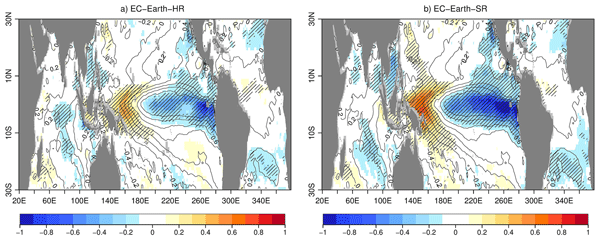
The paper assesses the impact of horizontal resolution of the EC-Earth climate model on its ability to predict El Nino Southern Oscillation (ENSO). The high-resolution simulations show better forecast skill linked to improved simulation of ENSO-related variability and ENSO teleconnections with the equatorial Atlantic. However, the remaining poor skill in the western Pacific highlights the importance of better understanding ENSO simulation errors and mean state biases to improve forecasts.
Carlos Delgado-Torres, Markus G. Donat, Núria Pérez-Zanón, Verónica Torralba, Roberto Bilbao, Pierre-Antoine Bretonnière, Margarida Samsó-Cabré, Albert Soret, and Francisco J. Doblas-Reyes
Earth Syst. Dynam., 17, 41–56, https://doi.org/10.5194/esd-17-41-2026, https://doi.org/10.5194/esd-17-41-2026, 2026
Short summary
Short summary
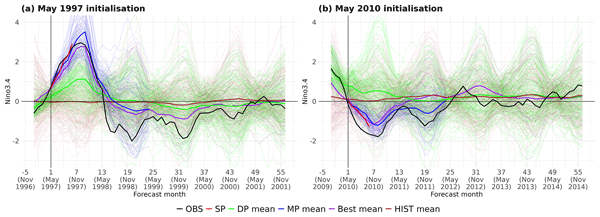
Many decisions require consistent climate information from seasonal to multi-year timescales. We assess seamless forecasts created by constraining seasonal and decadal predictions and compare them with initialised multi-annual forecasts. Multi-annual predictions provide the highest skill, but constrained forecasts still perform well and offer a low-cost, regularly updatable solution for delivering coherent climate information.
Gerard Marcet-Carbonell, Markus G. Donat, and Carlos Delgado-Torres
EGUsphere, https://doi.org/10.5194/egusphere-2025-6277, https://doi.org/10.5194/egusphere-2025-6277, 2026
Short summary
Short summary
The causes behind changes in the circulation of air in the northern hemisphere during summer are currently not well understood. These changes have been associated with accelerated warming and extreme weather events. In this work we explore the effect of natural and human-caused emissions and find evidence suggesting that the changes are related to changes in aerosol emissions. We find no evidence of these changes being related to greenhouse-gas emissions or ocean variability.
Alvise Aranyossy, Paolo De Luca, Carlos Delgado-Torres, Balakrishnan Solaraju-Murali, Margarida Samso Cabre, and Markus G. Donat
Earth Syst. Dynam., 16, 2225–2251, https://doi.org/10.5194/esd-16-2225-2025, https://doi.org/10.5194/esd-16-2225-2025, 2025
Short summary
Short summary
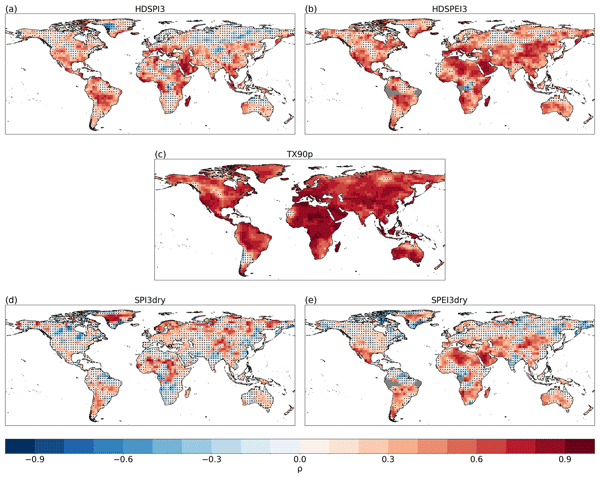
We investigate multi-year predictability of hot, dry and hot-dry compound events, using the Coupled Model Intercomparison Project Phase 6 decadal hindcast experiments, focusing on the forecast years 2–5. We find that hot-dry compound and hot extremes are skillfully predicted in many regions, but lower skill is found for dry extremes. The skill is largely due to long-term trends in response to external forcing, while added skill from initialisation is limited to a few regions.
Alba Santos-Espeso, María Gonçalves Ageitos, Pablo Ortega, Carlos Pérez García-Pando, Markus G. Donat, Margarida Samso Cabré, and Saskia Loosveldt Tomas
Earth Syst. Dynam., 16, 2161–2186, https://doi.org/10.5194/esd-16-2161-2025, https://doi.org/10.5194/esd-16-2161-2025, 2025
Short summary
Short summary
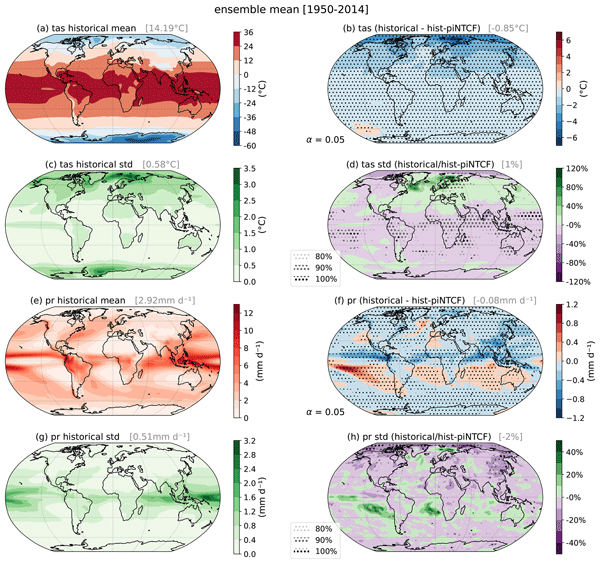
Short-lived air pollutants (e.g., aerosols and ozone) affect climate differently than greenhouse gases. Using climate models, we found that during 1950–2014, these pollutants caused global cooling, stronger in the Arctic, increased vertical mixing in the Labrador Sea, and southward displacement of the tropical rain belt. These regional impacts oppose those of greenhouse gases. Hence, future reductions in pollution for better air quality must be accompanied by stricter greenhouse gas mitigation.
Daniele Peano, Deborah Hemming, Christine Delire, Yuanchao Fan, Hanna Lee, Stefano Materia, Julia E. M. S. Nabel, Taejin Park, David Wårlind, Andy Wiltshire, and Sönke Zaehle
Biogeosciences, 22, 7117–7135, https://doi.org/10.5194/bg-22-7117-2025, https://doi.org/10.5194/bg-22-7117-2025, 2025
Short summary
Short summary
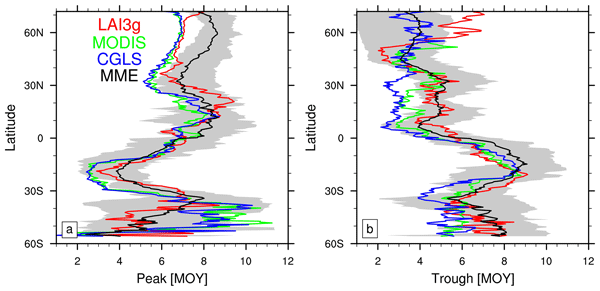
Earth System Models are the principal tools for scientists to study past, present, and future climate changes. This work investigates the ability of a set of them to represent the observed changes in vegetation, which are vital to estimating the impact of future climate mitigation and adaptation strategies. This study highlights the main limitations in correctly representing vegetation variability. These tools still need further development to improve our understanding of future changes.
Rashed Mahmood, Markus G. Donat, Roberto Bilbao, Pablo Ortega, Vladimir Lapin, Etienne Tourigny, and Francisco Doblas-Reyes
Earth Syst. Dynam., 16, 1923–1934, https://doi.org/10.5194/esd-16-1923-2025, https://doi.org/10.5194/esd-16-1923-2025, 2025
Short summary
Short summary
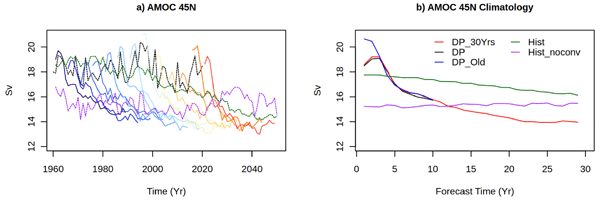
We present 30 year long initialized climate predictions run with the EC-Earth3 model. The predictions show high skill in most regions for near-surface temperatures, with some added skill from initialization for the first decade, but only very limited added skill beyond. The predictions exhibit drift associated with a persistent slowdown in Atlantic Meridonial Overturning Circulation , leaving the initialised predictions in a different climate state than the historical climate simulations.
Juan C. Acosta Navarro, Alvise Aranyossy, Paolo De Luca, Markus G. Donat, Arthur Hrast Essenfelder, Rashed Mahmood, Andrea Toreti, and Danila Volpi
Earth Syst. Dynam., 16, 1723–1737, https://doi.org/10.5194/esd-16-1723-2025, https://doi.org/10.5194/esd-16-1723-2025, 2025
Short summary
Short summary
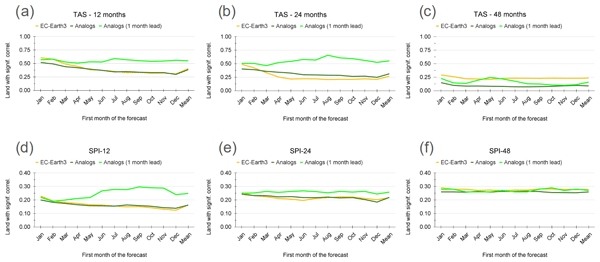
A computationally inexpensive climate model analog method yields skillful climate predictions across timescales, from seasons to multiple years, complementing existing climate prediction systems and potentially providing valuable information for sectors like agriculture and energy.
Pedro José Roldán-Gómez, Pablo Ortega, and Markus G. Donat
Ocean Sci., 21, 2283–2303, https://doi.org/10.5194/os-21-2283-2025, https://doi.org/10.5194/os-21-2283-2025, 2025
Short summary
Short summary
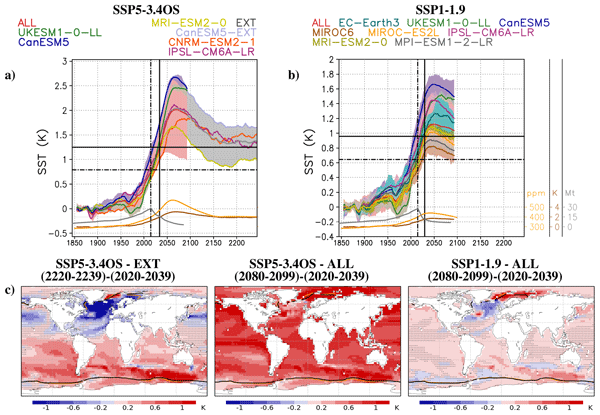
The overshoot scenarios, in which temperatures exceed the targets of the Paris Agreement and are brought back afterwards with a net-negative emission strategy, are known to activate irreversible processes in the climate system. This work analyses in detail the impact of some of these mechanisms, with a particular focus on those associated with ocean circulation and sea ice changes.
Pep Cos, Matias Olmo, Diego Campos, Raül Marcos-Matamoros, Lluís Palma, Ángel G. Muñoz, and Francisco J. Doblas-Reyes
Weather Clim. Dynam., 6, 609–626, https://doi.org/10.5194/wcd-6-609-2025, https://doi.org/10.5194/wcd-6-609-2025, 2025
Short summary
Short summary
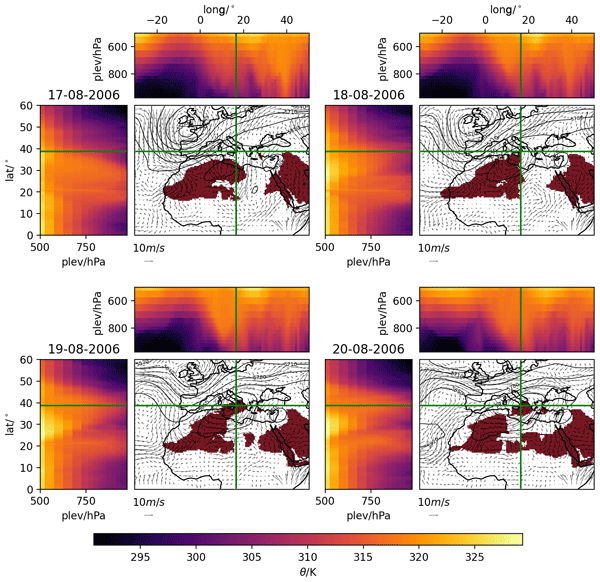
This work presents the identification of Saharan warm-air intrusions in the western Mediterranean, which are the displacement of air masses formed over the Sahara toward the west of the Mediterranean region. We focus on the recent past and obtain a catalogue of intrusion days. The results show the existence of different types of intrusions, important impacts on extremely high temperatures in the Mediterranean and Europe, and the dynamic mechanisms that can cause the onset of these events.
Tuula Aalto, Aki Tsuruta, Jarmo Mäkelä, Jurek Müller, Maria Tenkanen, Eleanor Burke, Sarah Chadburn, Yao Gao, Vilma Mannisenaho, Thomas Kleinen, Hanna Lee, Antti Leppänen, Tiina Markkanen, Stefano Materia, Paul A. Miller, Daniele Peano, Olli Peltola, Benjamin Poulter, Maarit Raivonen, Marielle Saunois, David Wårlind, and Sönke Zaehle
Biogeosciences, 22, 323–340, https://doi.org/10.5194/bg-22-323-2025, https://doi.org/10.5194/bg-22-323-2025, 2025
Short summary
Short summary
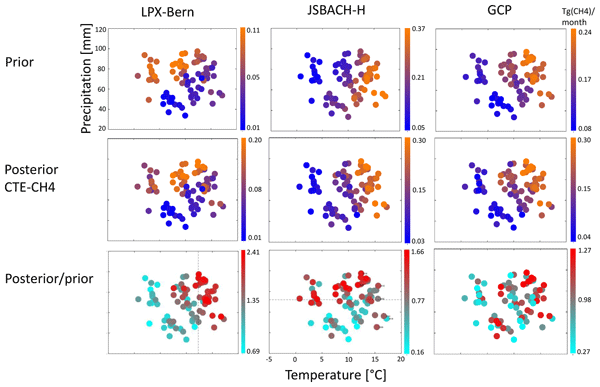
Wetland methane responses to temperature and precipitation were studied in a boreal wetland-rich region in northern Europe using ecosystem models, atmospheric inversions, and upscaled flux observations. The ecosystem models differed in their responses to temperature and precipitation and in their seasonality. However, multi-model means, inversions, and upscaled fluxes had similar seasonality, and they suggested co-limitation by temperature and precipitation.
Pedro José Roldán-Gómez, Paolo De Luca, Raffaele Bernardello, and Markus G. Donat
Earth Syst. Dynam., 16, 1–27, https://doi.org/10.5194/esd-16-1-2025, https://doi.org/10.5194/esd-16-1-2025, 2025
Short summary
Short summary
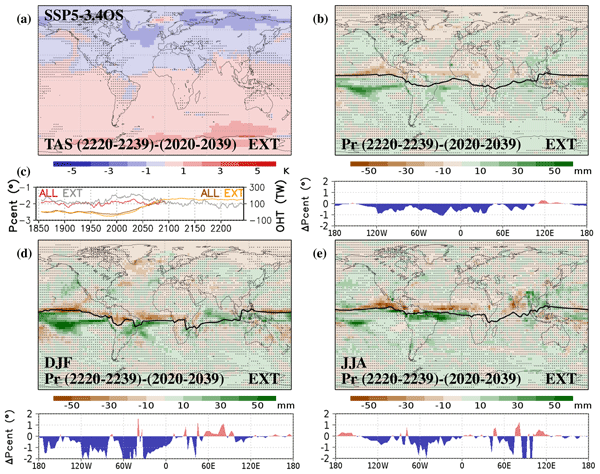
Current trends in CO2 emissions increase the probability of an overshoot scenario in which temperatures exceed the targets of the Paris Agreement and are brought back afterwards with a net-negative emission strategy. This work analyses how the climate after the overshoot would differ from the climate before, linking large scale non-reversibility mechanisms to changes in regional climates and identifying those regions more impacted by changes in temperature and precipitation extremes.

Colin G. Jones, Fanny Adloff, Ben B. B. Booth, Peter M. Cox, Veronika Eyring, Pierre Friedlingstein, Katja Frieler, Helene T. Hewitt, Hazel A. Jeffery, Sylvie Joussaume, Torben Koenigk, Bryan N. Lawrence, Eleanor O'Rourke, Malcolm J. Roberts, Benjamin M. Sanderson, Roland Séférian, Samuel Somot, Pier Luigi Vidale, Detlef van Vuuren, Mario Acosta, Mats Bentsen, Raffaele Bernardello, Richard Betts, Ed Blockley, Julien Boé, Tom Bracegirdle, Pascale Braconnot, Victor Brovkin, Carlo Buontempo, Francisco Doblas-Reyes, Markus Donat, Italo Epicoco, Pete Falloon, Sandro Fiore, Thomas Frölicher, Neven S. Fučkar, Matthew J. Gidden, Helge F. Goessling, Rune Grand Graversen, Silvio Gualdi, José M. Gutiérrez, Tatiana Ilyina, Daniela Jacob, Chris D. Jones, Martin Juckes, Elizabeth Kendon, Erik Kjellström, Reto Knutti, Jason Lowe, Matthew Mizielinski, Paola Nassisi, Michael Obersteiner, Pierre Regnier, Romain Roehrig, David Salas y Mélia, Carl-Friedrich Schleussner, Michael Schulz, Enrico Scoccimarro, Laurent Terray, Hannes Thiemann, Richard A. Wood, Shuting Yang, and Sönke Zaehle
Earth Syst. Dynam., 15, 1319–1351, https://doi.org/10.5194/esd-15-1319-2024, https://doi.org/10.5194/esd-15-1319-2024, 2024
Short summary
Short summary
We propose a number of priority areas for the international climate research community to address over the coming decade. Advances in these areas will both increase our understanding of past and future Earth system change, including the societal and environmental impacts of this change, and deliver significantly improved scientific support to international climate policy, such as future IPCC assessments and the UNFCCC Global Stocktake.
María Carmen Llasat, Montserrat Llasat-Botija, Erika Pardo, Raül Marcos-Matamoros, and Marc Lemus-Canovas
Nat. Hazards Earth Syst. Sci., 24, 3423–3443, https://doi.org/10.5194/nhess-24-3423-2024, https://doi.org/10.5194/nhess-24-3423-2024, 2024
Short summary
Short summary
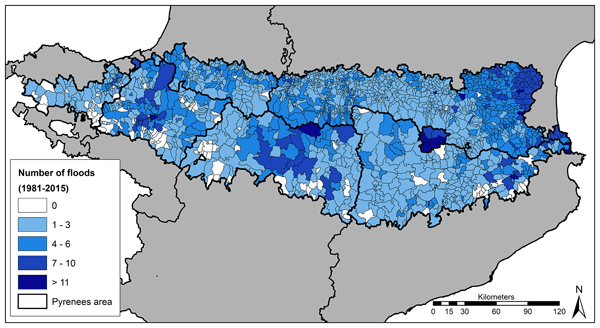
This paper shows the first public and systematic dataset of flood episodes referring to the entire Pyrenees massif, at municipal scale, named PIRAGUA_flood. Of the 181 flood events (1981–2015) that produced 154 fatalities, 36 were transnational, with the eastern part of the massif most affected. Dominant weather types show a southern component flow, with a talweg on the Iberian Peninsula and a depression in the vicinity. A positive and significant trend was found in Nouvelle-Aquitaine.
Elena Bianco, Doroteaciro Iovino, Simona Masina, Stefano Materia, and Paolo Ruggieri
The Cryosphere, 18, 2357–2379, https://doi.org/10.5194/tc-18-2357-2024, https://doi.org/10.5194/tc-18-2357-2024, 2024
Short summary
Short summary
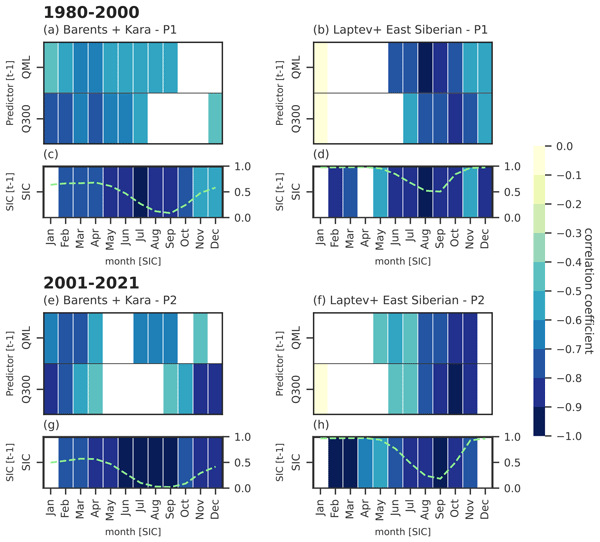
Changes in ocean heat transport and surface heat fluxes in recent decades have altered the Arctic Ocean heat budget and caused warming of the upper ocean. Using two eddy-permitting ocean reanalyses, we show that this has important implications for sea ice variability. In the Arctic regional seas, upper-ocean heat content acts as an important precursor for sea ice anomalies on sub-seasonal timescales, and this link has strengthened since the 2000s.
Elsa Mohino, Paul-Arthur Monerie, Juliette Mignot, Moussa Diakhaté, Markus Donat, Christopher David Roberts, and Francisco Doblas-Reyes
Earth Syst. Dynam., 15, 15–40, https://doi.org/10.5194/esd-15-15-2024, https://doi.org/10.5194/esd-15-15-2024, 2024
Short summary
Short summary
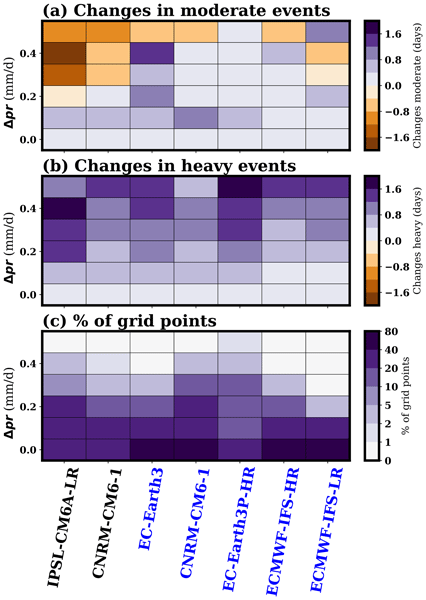
The impact of the Atlantic multidecadal variability (AMV) on the rainfall distribution and timing of the West African monsoon is not well known. Analysing model output, we find that a positive AMV enhances the number of wet days, daily rainfall intensity, and extremes over the Sahel and tends to prolong the monsoon length through later demise. Heavy rainfall events increase all over the Sahel, while moderate ones only occur in the north. Model biases affect the skill in simulating AMV impact.
Dario Nicolì, Alessio Bellucci, Paolo Ruggieri, Panos J. Athanasiadis, Stefano Materia, Daniele Peano, Giusy Fedele, Riccardo Hénin, and Silvio Gualdi
Geosci. Model Dev., 16, 179–197, https://doi.org/10.5194/gmd-16-179-2023, https://doi.org/10.5194/gmd-16-179-2023, 2023
Short summary
Short summary
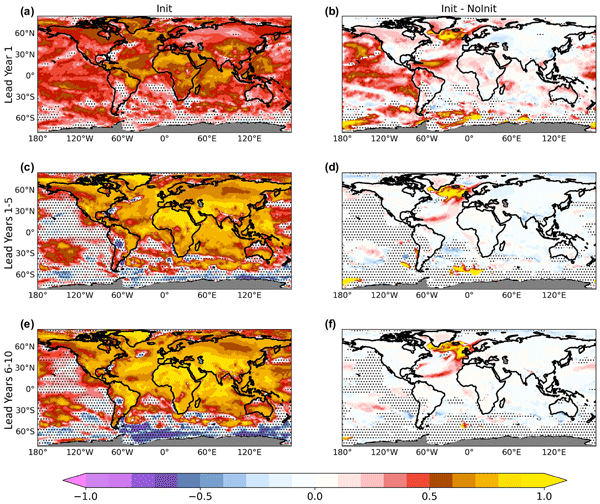
Decadal climate predictions, obtained by constraining the initial condition of a dynamical model through a truthful estimate of the observed climate state, provide an accurate assessment of the near-term climate and are useful for informing decision-makers on future climate-related risks. The predictive skill for key variables is assessed from the operational decadal prediction system compared with non-initialized historical simulations so as to quantify the added value of initialization.
Eva Sebok, Hans Jørgen Henriksen, Ernesto Pastén-Zapata, Peter Berg, Guillaume Thirel, Anthony Lemoine, Andrea Lira-Loarca, Christiana Photiadou, Rafael Pimentel, Paul Royer-Gaspard, Erik Kjellström, Jens Hesselbjerg Christensen, Jean Philippe Vidal, Philippe Lucas-Picher, Markus G. Donat, Giovanni Besio, María José Polo, Simon Stisen, Yvan Caballero, Ilias G. Pechlivanidis, Lars Troldborg, and Jens Christian Refsgaard
Hydrol. Earth Syst. Sci., 26, 5605–5625, https://doi.org/10.5194/hess-26-5605-2022, https://doi.org/10.5194/hess-26-5605-2022, 2022
Short summary
Short summary
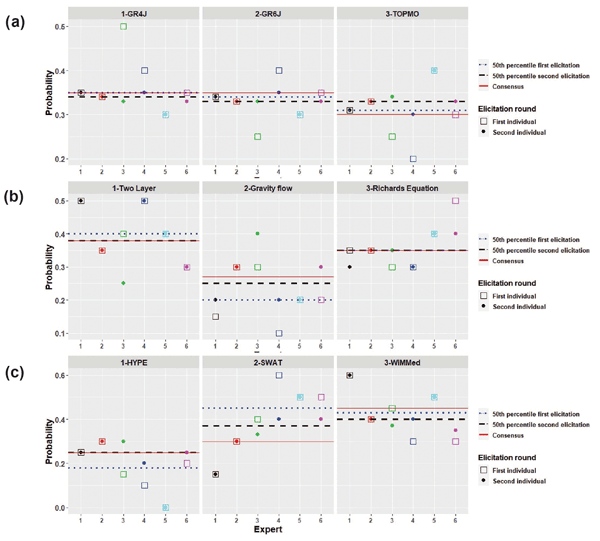
Hydrological models projecting the impact of changing climate carry a lot of uncertainty. Thus, these models usually have a multitude of simulations using different future climate data. This study used the subjective opinion of experts to assess which climate and hydrological models are the most likely to correctly predict climate impacts, thereby easing the computational burden. The experts could select more likely hydrological models, while the climate models were deemed equally probable.
Rashed Mahmood, Markus G. Donat, Pablo Ortega, Francisco J. Doblas-Reyes, Carlos Delgado-Torres, Margarida Samsó, and Pierre-Antoine Bretonnière
Earth Syst. Dynam., 13, 1437–1450, https://doi.org/10.5194/esd-13-1437-2022, https://doi.org/10.5194/esd-13-1437-2022, 2022
Short summary
Short summary
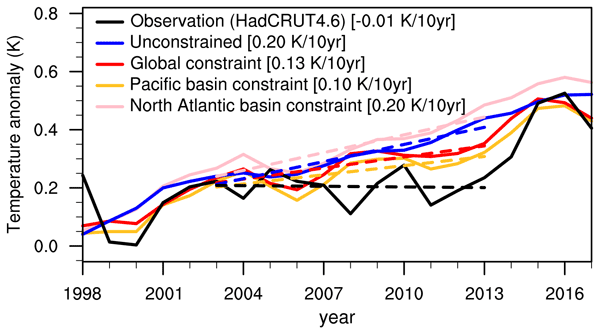
Near-term climate change projections are strongly affected by the uncertainty from internal climate variability. Here we present a novel approach to reduce such uncertainty by constraining decadal-scale variability in the projections using observations. The constrained ensembles show significant added value over the unconstrained ensemble in predicting global climate 2 decades ahead. We also show the applicability of regional constraints for attributing predictability to certain ocean regions.
Josep Cos, Francisco Doblas-Reyes, Martin Jury, Raül Marcos, Pierre-Antoine Bretonnière, and Margarida Samsó
Earth Syst. Dynam., 13, 321–340, https://doi.org/10.5194/esd-13-321-2022, https://doi.org/10.5194/esd-13-321-2022, 2022
Short summary
Short summary
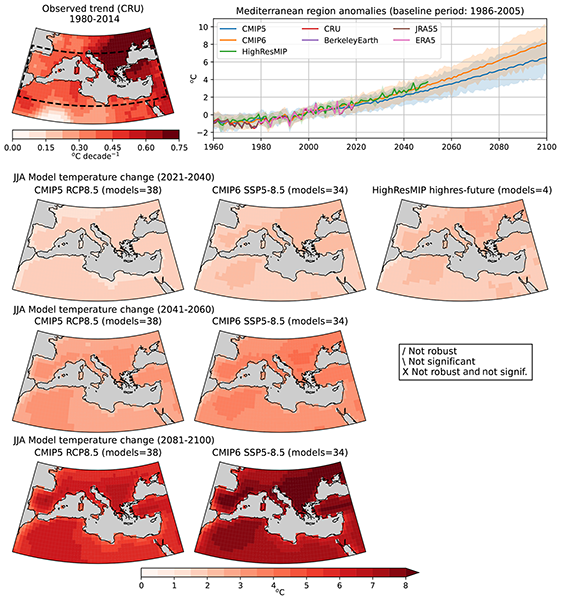
The Mediterranean has been identified as being more affected by climate change than other regions. We find that amplified warming during summer and annual precipitation declines are expected for the 21st century and that the magnitude of the changes will mainly depend on greenhouse gas emissions. By applying a method giving more importance to models with greater performance and independence, we find that the differences between the last two community modelling efforts are reduced in the region.
Cited articles
AEMET: La ola de calor del puente de agosto'21 y los récords de temperaturas en España, aEMET Blog, https://aemetblog.es/2021/08/18/la-ola-de-calor-del-puente-de-agosto21-y-los-records-de-temperaturas-en-espana/ (last access: 28 August 2026), 2021. a
Barriopedro, D., García‐Herrera, R., Ordóñez, C., Miralles, D. G., and Salcedo‐Sanz, S.: Heat Waves: Physical Understanding and Scientific Challenges, Rev. Geophys., 61, e2022RG000780, https://doi.org/10.1029/2022RG000780, 2023. a, b, c
Beobide‐Arsuaga, G., Düsterhus, A., Müller, W. A., Barnes, E. A., and Baehr, J.: Spring Regional Sea Surface Temperatures as a Precursor of European Summer Heatwaves, Geophys. Res. Lett., 50, e2022GL100727, https://doi.org/10.1029/2022GL100727, 2023. a, b, c
Bischof, S., Pilch Kedzierski, R., Hänsch, M., Wahl, S., and Matthes, K.: The Role of the North Atlantic for Heat Wave Characteristics in Europe, an ECHAM6 Study, Geophys. Res. Lett., 50, e2023GL105280, https://doi.org/10.1029/2023GL105280, 2023. a
Bommer, P. L., Kretschmer, M., Hedström, A., Bareeva, D., and Höhne, M. M.-C.: Finding the Right XAI Method – A Guide for the Evaluation and Ranking of Explainable AI Methods in Climate Science, Artificial Intelligence for the Earth Systems, 3, e230074, https://doi.org/10.1175/AIES-D-23-0074.1, 2024. a
Camps-Valls, G., Fernández-Torres, M.-A., Cohrs, K.-H., Höhl, A., Castelletti, A., Pacal, A., Robin, C., Martinuzzi, F., Papoutsis, I., Prapas, I., Pérez-Aracil, J., Weigel, K., Gonzalez-Calabuig, M., Reichstein, M., Rabel, M., Giuliani, M., Mahecha, M. D., Popescu, O.-I., Pellicer-Valero, O. J., Ouala, S., Salcedo-Sanz, S., Sippel, S., Kondylatos, S., Happé, T., and Williams, T.: Artificial intelligence for modeling and understanding extreme weather and climate events, Nat. Commun., 16, 1919, https://doi.org/10.1038/s41467-025-56573-8, 2025. a
Christidis, N. and Stott, P. A.: Changes in the geopotential height at 500 hPa under the influence of external climatic forcings, Geophys. Res. Lett., 42, https://doi.org/10.1002/2015gl066669, 2015. a
Cornes, R. C., Van Der Schrier, G., Van Den Besselaar, E. J. M., and Jones, P. D.: An Ensemble Version of the E‐OBS Temperature and Precipitation Data Sets, J. Geophys. Res.-Atmos., 123, 9391–9409, https://doi.org/10.1029/2017JD028200, 2018. a
Cos, P., Olmo, M., Campos, D., Marcos-Matamoros, R., Palma, L., Muñoz, Á. G., and Doblas-Reyes, F. J.: Saharan warm-air intrusions in the western Mediterranean: identification, impacts on temperature extremes, and large-scale mechanisms, Weather Clim. Dynam., 6, 609–626, https://doi.org/10.5194/wcd-6-609-2025, 2025. a, b
D'Andrea, F., Duvel, J., Rivière, G., Vautard, R., Cassou, C., Cattiaux, J., Coumou, D., Faranda, D., Happé, T., Jézéquel, A., Ribes, A., and Yiou, P.: Summer Deep Depressions Increase Over the Eastern North Atlantic, Geophys. Res. Lett., 51, e2023GL104435, https://doi.org/10.1029/2023GL104435, 2024. a
Davenport, F. V. and Diffenbaugh, N. S.: Using Machine Learning to Analyze Physical Causes of Climate Change: A Case Study of U.S. Midwest Extreme Precipitation, Geophys. Res. Lett., 48, e2021GL093787, https://doi.org/10.1029/2021GL093787, 2021. a, b
Donat, M. G., Sillmann, J., Wild, S., Alexander, L. V., Lippmann, T., and Zwiers, F. W.: Consistency of Temperature and Precipitation Extremes across Various Global Gridded In Situ and Reanalysis Datasets, J. Climate, 27, 5019–5035, https://doi.org/10.1175/JCLI-D-13-00405.1, 2014. a
Fischer, E. M., Seneviratne, S. I., Lüthi, D., and Schär, C.: Contribution of land‐atmosphere coupling to recent European summer heat waves, Geophys. Res. Lett., 34, 2006GL029068, https://doi.org/10.1029/2006GL029068, 2007. a
Garcia Mesa, A.: Dataset for Quantifying Atmospheric and Land Drivers of hot tempERAture extremes through explainable Artificial Intelligence, in: Weather and Climate Dynamics, Barcelona Supercomputing Center, Zenodo [data set], https://doi.org/10.5281/zenodo.21337082, 2026. a
Goodfellow, I., Bengio, Y., and Courville, A.: Deep Learning, MIT Press, http://www.deeplearningbook.org (last access: 28 August 2026), 2016. a
Gordon, E. M., Barnes, E. A., and Davenport, F. V.: Separating internal and forced contributions to near term SST predictability in the CESM2-LE, Environ. Res. Lett., 18, 104047, https://doi.org/10.1088/1748-9326/acfdbc, 2023. a
Gràvalos, B. and Garcia Mesa, A.: agarcimes8/QuantifyDriversHW: v1.0 (Version v1.0), Zenodo [code], https://doi.org/10.5281/zenodo.22143255, 2026. a
Hersbach, H., Bell, B., Berrisford, P., Hirahara, S., Horányi, A., Muñoz‐Sabater, J., Nicolas, J., Peubey, C., Radu, R., Schepers, D., Simmons, A., Soci, C., Abdalla, S., Abellan, X., Balsamo, G., Bechtold, P., Biavati, G., Bidlot, J., Bonavita, M., De Chiara, G., Dahlgren, P., Dee, D., Diamantakis, M., Dragani, R., Flemming, J., Forbes, R., Fuentes, M., Geer, A., Haimberger, L., Healy, S., Hogan, R. J., Hólm, E., Janisková, M., Keeley, S., Laloyaux, P., Lopez, P., Lupu, C., Radnoti, G., De Rosnay, P., Rozum, I., Vamborg, F., Villaume, S., and Thépaut, J.: The ERA5 global reanalysis, Q. J. Roy. Meteor. Soc., 146, 1999–2049, https://doi.org/10.1002/qj.3803, 2020. a
Hirschi, M., Seneviratne, S. I., Alexandrov, V., Boberg, F., Boroneant, C., Christensen, O. B., Formayer, H., Orlowsky, B., and Stepanek, P.: Observational evidence for soil-moisture impact on hot extremes in southeastern Europe, Nat. Geosci., 4, 17–21, https://doi.org/10.1038/ngeo1032, 2011. a
Hsu, H. and Dirmeyer, P. A.: Soil moisture-evaporation coupling shifts into new gears under increasing CO2, Nat. Commun., 14, 1162, https://doi.org/10.1038/s41467-023-36794-5, 2023. a, b, c
Intergovernmental Panel On Climate Change: Climate Change 2021 – The Physical Science Basis: Working Group I Contribution to the Sixth Assessment Report of the Intergovernmental Panel on Climate Change, Cambridge University Press, 1st edn., ISBN 978-1-00-915789-6, https://doi.org/10.1017/9781009157896, 2023. a
Jach, L., Schwitalla, T., Branch, O., Warrach-Sagi, K., and Wulfmeyer, V.: Sensitivity of land–atmosphere coupling strength to changing atmospheric temperature and moisture over Europe, Earth Syst. Dynam., 13, 109–132, https://doi.org/10.5194/esd-13-109-2022, 2022. a
Khodayar Pardo, S. and Paredes-Fortuny, L.: Uneven evolution of regional European summer heatwaves under climate change, Weather and Climate Extremes, 43, 100648, https://doi.org/10.1016/j.wace.2024.100648, 2024. a
Koh, J., Steinfeld, D., and Martius, O.: Using spatial extreme-value theory with machine learning to model and understand spatially compounding weather extremes, P. Roy. Soc. A-Math. Phy., 481, 20240763, https://doi.org/10.1098/rspa.2024.0763, 2025. a
Lemus-Canovas, M., Insua-Costa, D., Trigo, R. M., and Miralles, D. G.: Record-shattering 2023 Spring heatwave in western Mediterranean amplified by long-term drought, npj Clim. Atmos. Sci., 7, 25, https://doi.org/10.1038/s41612-024-00569-6, 2024. a, b
Liu, Z., Mao, H., Wu, C.-Y., Feichtenhofer, C., Darrell, T., and Xie, S.: A ConvNet for the 2020s, arXiv [preprint], https://doi.org/10.48550/arXiv.2201.03545, 2022. a, b
Loshchilov, I. and Hutter, F.: Decoupled Weight Decay Regularization, arXiv [preprint], https://doi.org/10.48550/arXiv.1711.05101, 2019. a
Lundberg, S. and Lee, S.-I.: A Unified Approach to Interpreting Model Predictions, arXiv [preprint], https://doi.org/10.48550/arXiv.1705.07874, 2017a. a, b
Lundberg, S. M. and Lee, S.-I.: A Unified Approach to Interpreting Model Predictions, in: Advances in Neural Information Processing Systems, edited by: Guyon, I., Luxburg, U. V., Bengio, S., Wallach, H., Fergus, R., Vishwanathan, S., and Garnett, R., vol. 30, Curran Associates, Inc., https://proceedings.neurips.cc/paper_files/paper/2017/file/8a20a8621978632d76c43dfd28b67767-Paper.pdf (last access: 28 August 2026), 2017b. a
Mahlstein, I., Spirig, C., Liniger, M. A., and Appenzeller, C.: Estimating daily climatologies for climate indices derived from climate model data and observations, J. Geophys. Res.-Atmos., 120, 2808–2818, https://doi.org/10.1002/2014JD022327, 2015. a, b, c
Mamalakis, A., Barnes, E. A., and Ebert-Uphoff, I.: Carefully Choose the Baseline: Lessons Learned from Applying XAI Attribution Methods for Regression Tasks in Geoscience, Artificial Intelligence for the Earth Systems, 2, e220058, https://doi.org/10.1175/AIES-D-22-0058.1, 2023a. a
Mamalakis, A., Barnes, E. A., and Hurrell, J. W.: Using Explainable Artificial Intelligence to Quantify “Climate Distinguishability” After Stratospheric Aerosol Injection, Geophys. Res. Lett., 50, e2023GL106137, https://doi.org/10.1029/2023GL106137, 2023b. a
Masmoudi-Charfi, C. and Habaieb, H.: Rainfall Distribution Functions for Irrigation Scheduling: Calculation Procedures Following Site of Olive (Olea europaea L.) Cultivation and Growing Periods, American Journal of Plant Sciences, 5, 2094–2133, https://doi.org/10.4236/ajps.2014.513224, 2014. a
Materia, S., García, L. P., van Straaten, C., O, S., Mamalakis, A., Cavicchia, L., Coumou, D., de Luca, P., Kretschmer, M., and Donat, M.: Artificial intelligence for climate prediction of extremes: State of the art, challenges, and future perspectives, WIRES Climate Change, 15, e914, https://doi.org/10.1002/wcc.914, 2024. a
Mayer, K. J. and Barnes, E. A.: Subseasonal Forecasts of Opportunity Identified by an Explainable Neural Network, Geophys. Res. Lett., 48, e2020GL092092, https://doi.org/10.1029/2020GL092092, 2021. a, b
Mayer, K. J., Chapman, W. E., and Manriquez, W. A.: Exploring the Relative Importance of the MJO and ENSO to North Pacific Subseasonal Predictability, Geophys. Res. Lett., 51, e2024GL108479, https://doi.org/10.1029/2024GL108479, 2024. a
McKee, T. B., Doesken, N. J., and Kleist, J.: The Relationship of Drought Frequency and Duration to Time Scales, Proceedings of the 8th Conference on Applied Climatology, 17–22 January 1993, Anaheim, CA, Boston, MA, American Meteorological Society, https://www.droughtmanagement.info/literature/AMS_Relationship_Drought_Frequency_Duration_Time_Scales_1993.pdf (last access: 2 September 2026), 1993. a
Miloshevich, G., Cozian, B., Abry, P., Borgnat, P., and Bouchet, F.: Probabilistic forecasts of extreme heatwaves using convolutional neural networks in a regime of lack of data, arXiv [preprint], https://doi.org/10.48550/arXiv.2208.00971, 2023. a, b, c
Muñoz-Sabater, J., Dutra, E., Agustí-Panareda, A., Albergel, C., Arduini, G., Balsamo, G., Boussetta, S., Choulga, M., Harrigan, S., Hersbach, H., Martens, B., Miralles, D. G., Piles, M., Rodríguez-Fernández, N. J., Zsoter, E., Buontempo, C., and Thépaut, J.-N.: ERA5-Land: a state-of-the-art global reanalysis dataset for land applications, Earth Syst. Sci. Data, 13, 4349–4383, https://doi.org/10.5194/essd-13-4349-2021, 2021. a
Perkins, S. E. and Alexander, L. V.: On the Measurement of Heat Waves, J. Climate, 26, 4500–4517, https://doi.org/10.1175/JCLI-D-12-00383.1, 2013. a, b
Quesada, B., Vautard, R., Yiou, P., Hirschi, M., and Seneviratne, S. I.: Asymmetric European summer heat predictability from wet and dry southern winters and springs, Nat. Clim. Change, 2, 736–741, https://doi.org/10.1038/nclimate1536, 2012. a, b, c
Rousi, E., Kornhuber, K., Beobide-Arsuaga, G., Luo, F., and Coumou, D.: Accelerated western European heatwave trends linked to more-persistent double jets over Eurasia, Nat. Commun., 13, 3851, https://doi.org/10.1038/s41467-022-31432-y, 2022. a
Scaini, A., Sánchez, N., Vicente-Serrano, S. M., and Martínez-Fernández, J.: SMOS-derived soil moisture anomalies and drought indices: A comparative analysis using in situ measurements, Hydrol. Process., 29, 373–383, 2015. a
Seneviratne, S. I., Lüthi, D., Litschi, M., and Schär, C.: Land–atmosphere coupling and climate change in Europe, Nature, 443, 205–209, https://doi.org/10.1038/nature05095, 2006. a, b, c, d
Sha, Y., Sobash, R. A., and Gagne II, D. J.: Improving Ensemble Extreme Precipitation Forecasts Using Generative Artificial Intelligence, Artificial Intelligence for the Earth Systems, 4, https://doi.org/10.1175/AIES-D-24-0063.1, 2025. a
Sippel, S., Meinshausen, N., Fischer, E. M., Székely, E., and Knutti, R.: Climate change now detectable from any single day of weather at global scale, Nat. Clim. Change, 10, 35–41, https://doi.org/10.1038/s41558-019-0666-7, 2020. a
Soci, C., Hersbach, H., Simmons, A., Poli, P., Bell, B., Berrisford, P., Horányi, A., Muñoz-Sabater, J., Nicolas, J., Radu, R., Schepers, D., Villaume, S., Haimberger, L., Woollen, J., Buontempo, C., and Thépaut, J.-N.: The ERA5 global reanalysis from 1940 to 2022, Q. J. Roy. Meteor. Soc., 150, 4014–4048, 2024. a
Sundararajan, M., Taly, A., and Yan, Q.: Axiomatic Attribution for Deep Networks, arXiv [preprint], https://doi.org/10.48550/arXiv.1703.01365, 2017. a
Toms, B. A., Barnes, E. A., and Ebert‐Uphoff, I.: Physically Interpretable Neural Networks for the Geosciences: Applications to Earth System Variability, J. Adv. Model. Earth Sy., 12, e2019MS002002, https://doi.org/10.1029/2019MS002002, 2020. a
Uckan, Y., Ruiz-Vásquez, M., De Polt, K., and Orth, R.: Global relevance of atmospheric and land surface drivers for hot temperature extremes, Earth Syst. Dynam., 16, 869–889, https://doi.org/10.5194/esd-16-869-2025, 2025. a, b, c
Van Straaten, C., Whan, K., Coumou, D., Van Den Hurk, B., and Schmeits, M.: Correcting Subseasonal Forecast Errors with an Explainable ANN to Understand Misrepresented Sources of Predictability of European Summer Temperatures, Artificial Intelligence for the Earth Systems, 2, e220047, https://doi.org/10.1175/AIES-D-22-0047.1, 2023. a
Vicente-Serrano, S. M., Beguería, S., and López-Moreno, J. I.: A Multiscalar Drought Index Sensitive to Global Warming: The Standardized Precipitation Evapotranspiration Index, J. Climate, 23, 1696–1718, https://doi.org/10.1175/2009JCLI2909.1, 2010. a, b, c
Wang, H., Rogers, J. C., and Munroe, D. K.: Commonly used drought indices as indicators of soil moisture in China, J. Hydrometeorol., 16, 1397–1408, 2015. a
Wilcke, R. A. I., Kjellström, E., Lin, C., Matei, D., Moberg, A., and Tyrlis, E.: The extremely warm summer of 2018 in Sweden – set in a historical context, Earth Syst. Dynam., 11, 1107–1121, https://doi.org/10.5194/esd-11-1107-2020, 2020. a, b
Yuan, S., Quiring, S. M., and Zhao, C.: Evaluating the utility of drought indices as soil moisture proxies for drought monitoring and land–atmosphere interactions, J. Hydrometeorol., 21, 2157–2175, 2020. a
Zhang, H., Finkel, J., Abbot, D. S., Gerber, E. P., and Weare, J.: Using Explainable AI and Transfer Learning to Understand and Predict the Maintenance of Atlantic Blocking With Limited Observational Data, Journal of Geophysical Research: Machine Learning and Computation, 1, e2024JH000243, https://doi.org/10.1029/2024JH000243, 2024. a
Zscheischler, J., Westra, S., Van Den Hurk, B. J., Seneviratne, S. I., Ward, P. J., Pitman, A., AghaKouchak, A., Bresch, D. N., Leonard, M., Wahl, T., and Zhang, X.: Future climate risk from compound events, Nat. Clim. Change, 8, 469–477, 2018. a
Short summary
Explainable Artificial Intelligence was used to quantify and disentangle the role of the drivers of summer heat extremes at six sites in Europe and North Africa. Large-scale atmospheric circulation, especially mid-tropospheric geopotential, dominates, while soil drying amplifies heat in temperate and northern regions, and rising carbon dioxide contributes to long-term trends. Results were robust across data sources and help target climate risk and model improvements.
Explainable Artificial Intelligence was used to quantify and disentangle the role of the drivers...


