
Articles | Volume 7, issue 4
https://doi.org/10.5194/wcd-7-2107-2026
© Author(s) 2026. This work is distributed under
the Creative Commons Attribution 4.0 License.
the Creative Commons Attribution 4.0 License.
https://doi.org/10.5194/wcd-7-2107-2026
© Author(s) 2026. This work is distributed under
the Creative Commons Attribution 4.0 License.
the Creative Commons Attribution 4.0 License.
Research article
| 
30 Oct 2026
Research article |
| 30 Oct 2026
| 30 Oct 2026
Large-scale drivers of compounding hot and dry events in three breadbasket regions
Natalia Castillo Bautista
CORRESPONDING AUTHOR

Department of Science, Technology and Society, University School for Advanced Studies IUSS-Pavia, Pavia, 27100, Italy
Department of Science, Technology and Society, University School for Advanced Studies IUSS-Pavia, Pavia, 27100, Italy
National Research Council of Italy, Institute of the Atmospheric Sciences and Climate (CNR-ISAC), Bologna, Italy
Leonard F. Borchert
Research Unit Sustainability and Climate Risk, Earth and Society Research Hub (ESRAH), University of Hamburg, Hamburg, 20144, Germany
Benjamin Poschlod
Research Unit Sustainability and Climate Risk, Earth and Society Research Hub (ESRAH), University of Hamburg, Hamburg, 20144, Germany
Institute for Global Water Security, Hamburg University of Technology, 21079, Hamburg, Germany
Lukas Brunner
Research Unit Sustainability and Climate Risk, Earth and Society Research Hub (ESRAH), University of Hamburg, Hamburg, 20144, Germany
Jana Sillmann
Research Unit Sustainability and Climate Risk, Earth and Society Research Hub (ESRAH), University of Hamburg, Hamburg, 20144, Germany
Mario L. V. Martina
Department of Science, Technology and Society, University School for Advanced Studies IUSS-Pavia, Pavia, 27100, Italy
Related authors
No articles found.
Hendrik Andersen, Benjamin Pohl, and Marco Gaetani
EGUsphere, https://doi.org/10.5194/egusphere-2026-6210, https://doi.org/10.5194/egusphere-2026-6210, 2026
This preprint is open for discussion and under review for Atmospheric Chemistry and Physics (ACP).
Short summary
Short summary
Fog is a regular water source in the Namib Desert, one of the driest places on Earth, but what controls its day-to-day changes is poorly understood. We linked long-term satellite and fog collector data to recurring weather patterns. Fog increases when an approaching weather system pushes moist air masses toward the coast, and decreases when high pressure extends over the region. The fog response depends on fog type and atmospheric state. Climate-driven shifts in weather patterns could alter fog.
Beatrice Biagi, Juan Cuesta, Hiroshi Tanimoto, Yugo Kanaya, Benjamin Pohl, Marco Gaetani, Chang-Feng Ou-Yang, Neng-Huei Lin, Matthias Beekmann, and Gaëlle Dufour
EGUsphere, https://doi.org/10.5194/egusphere-2026-5515, https://doi.org/10.5194/egusphere-2026-5515, 2026
This preprint is open for discussion and under review for Atmospheric Chemistry and Physics (ACP).
Short summary
Short summary
Tropospheric ozone pollution is a major air quality concern across East and Southeast Asia. Our study identifies the most recurring springtime ozone patterns using reanalysis, observations and satellite measurements. High ozone conditions are associated with stagnant weather and biomass burning, while strong convection lowers ozone concentrations. El Niño increases the occurrence of high-ozone conditions and can strengthen the transport of ozone toward North America.
Henrique M. D. Goulart, Lily-belle Sweet, Axel Deijns, Seth Bryant, and Benjamin Poschlod
EGUsphere, https://doi.org/10.5194/egusphere-2026-5735, https://doi.org/10.5194/egusphere-2026-5735, 2026
This preprint is open for discussion and under review for Hydrology and Earth System Sciences (HESS).
Short summary
Short summary
Floods are changing as the climate warms, but different types of floods may respond differently. We used a data-driven method to identify flood types and study how they change in four Bavarian catchments. Rainfall-driven floods become more frequent and severe, while floods linked to snowmelt decline. These changes shift flood risk from spring towards rainfall-driven flooding throughout the year, with implications for preparedness and infrastructure.
Michel Bechtold, Benjamin Poschlod, Christian Otto, Jan Volkholz, Matthias Büchner, and Florian Zabel
Earth Syst. Sci. Data, 18, 6637–6648, https://doi.org/10.5194/essd-18-6637-2026, https://doi.org/10.5194/essd-18-6637-2026, 2026
Short summary
Short summary
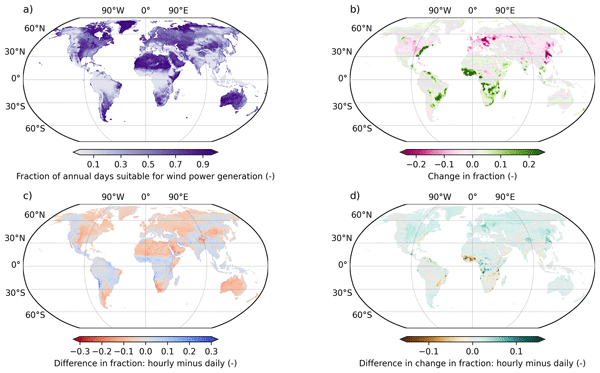
Many climate impacts depend on what happens within a day: heat stress peaks in the afternoon and solar or wind power rise and fall hour by hour. Yet global climate projections are usually published only as daily averages. We converted them into hourly data for global land areas, covering 1850 to 2100 and several future scenarios. The dataset is freely available and lets researchers estimate impacts on health, water and energy far more realistically.
Kai Kornhuber, Emanuele Bevacqua, Mariana Madruga de Brito, Wiebke S. Jäger, Pauline Rivoire, Cassandra D. W. Rogers, Fabiola Banfi, Fulden Batibeniz, James Carruthers, Carlo De Michele, Silvia De Angeli, Cristina Deidda, Marleen C. de Ruiter, Andreas H. Fink, Henrique M. D. Goulart, Katharina Küpfer, Patrick Ludwig, Douglas Maraun, Gabriele Messori, Shruti Nath, Fiachra O'Loughlin, Joaquim G. Pinto, Benjamin Poschlod, Alexandre M. Ramos, Colin Raymond, Andreia F. S. Ribeiro, Deepti Singh, Laura Suarez Gutierrez, Philip J. Ward, and Christopher J. White
Nat. Hazards Earth Syst. Sci., 26, 4309–4334, https://doi.org/10.5194/nhess-26-4309-2026, https://doi.org/10.5194/nhess-26-4309-2026, 2026
Short summary
Short summary
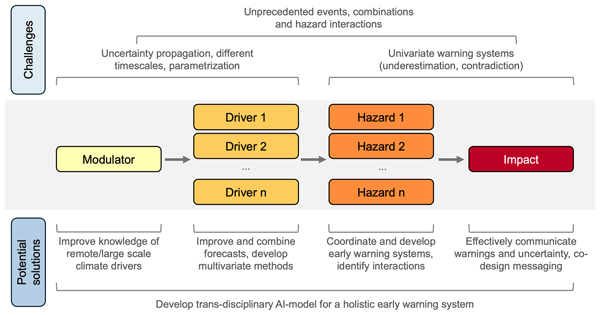
Impacts from extreme weather events may become more severe due to increased likelihood of compounding events under global warming, which challenge present day climate modelling and forecasting capacities. In this perspective we reflect on the usability of compound event research to bridge the gap between academic research and real-world applications.
Anna K. Miesner, Daniel Krieger, and Leonard F. Borchert
EGUsphere, https://doi.org/10.5194/egusphere-2026-5065, https://doi.org/10.5194/egusphere-2026-5065, 2026
Short summary
Short summary
Seasonal forecasts could help communities prepare for coastal flooding months in advance, but predicting storm surges at these timescales remains difficult. We show that large-scale weather patterns can improve seasonal storm surge forecasts by selecting climate-model predictions that better capture conditions linked to storm surges. This method reveals useful information that is hidden in the forecast and provides a pathway towards earlier and more reliable coastal hazard predictions.
Benjamin Poschlod, Lukas Brunner, and Jana Sillmann
EGUsphere, https://doi.org/10.5194/egusphere-2026-4014, https://doi.org/10.5194/egusphere-2026-4014, 2026
Short summary
Short summary
Scientists often measure drought by counting the longest run of days without meaningful rain. Comparing high-resolution climate models, radar, and station data across Germany, we found that fine-scale maps show sharp, patchy patterns, because a small shower can break the dry streak in one place but not the next. The high-resolution climate model matches what radar observes, but yearly counts are so sensitive to chance rainfall that they are an unreliable basis for tracking drought.
Jingkun Yang, Benjamin Poschlod, and Felix Ament
EGUsphere, https://doi.org/10.5194/egusphere-2026-4111, https://doi.org/10.5194/egusphere-2026-4111, 2026
Short summary
Short summary
Heavy rainfall is becoming more severe, yet common measures capture only its peak strength, not how long it lasts or how wide an area it covers. Using high-resolution climate simulations for Germany, we rank the 200 most extreme events across past, present and future. We found that future events are not only more intense but also last longer and spread over larger areas. This means future rainfall hazards will be more complex, and assessments must consider strength, duration and extent together.
Marc Lennartz, Benjamin Poschlod, and Bruno Merz
Nat. Hazards Earth Syst. Sci., 26, 3273–3289, https://doi.org/10.5194/nhess-26-3273-2026, https://doi.org/10.5194/nhess-26-3273-2026, 2026
Short summary
Short summary
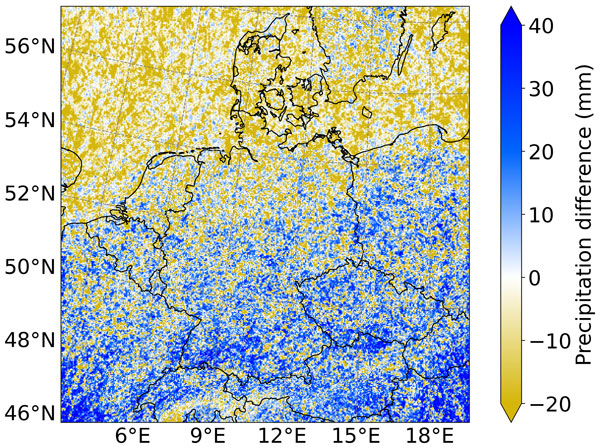
Predicting hourly rainfall extremes under climate change is crucial yet highly uncertain. Using convection-permitting climate model data over Germany, we compare stationary and non-stationary general extreme value (GEV) and simplified metastatistical extreme value (sMEV) methods. We show that the sMEV approach exhibits lower uncertainty across return periods. Moreover, the non-stationary sMEV better captures climate-change-induced changes, though care is needed when projecting future extremes.
Anastasia Vogelbacher, Malte von Szombathely, Marc Lennartz, Benjamin Poschlod, and Jana Sillmann
Nat. Hazards Earth Syst. Sci., 26, 2765–2783, https://doi.org/10.5194/nhess-26-2765-2026, https://doi.org/10.5194/nhess-26-2765-2026, 2026
Short summary
Short summary
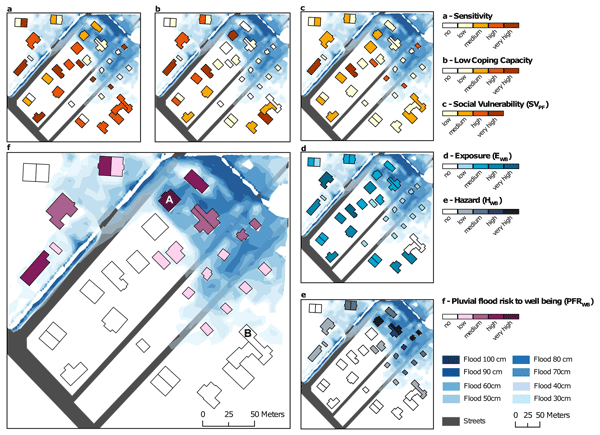
In this study we address risk to pluvial floods by following the risk definition of the Intergovernmental Panel on Climate Change (IPCC), developed in co-operation with stakeholders of the city of Hamburg. We identify buildings in urban areas where residents face higher flood risk due to greater social vulnerability, increased exposure, or elevated flood hazard. We present the development and application of a Python-based ArcGIS toolbox for estimating pluvial flood risk at building scale.
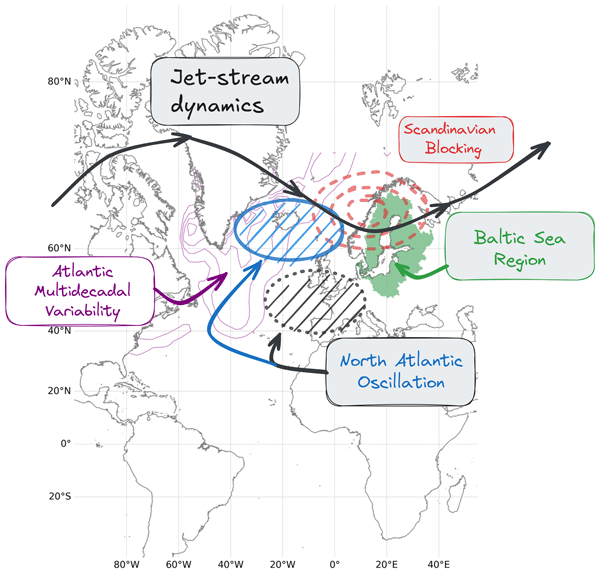
Florian Börgel, Itzel Ruvalcaba Baroni, Leonie Barghorn, Leonard Borchert, Bronwyn Cahill, Cyril Dutheil, Leonie Esters, Małgorzata Falarz, Helena L. Filipsson, Matthias Gröger, Jari Hänninen, Magnus Hieronymus, Erko Jakobson, Mehdi Pasha Karami, Karol Kuliński, Taavi Liblik, H. E. Markus Meier, Gabriele Messori, Lev Naumov, Thomas Neumann, Piia Post, Gregor Rehder, Anna Rutgersson, and Georg Sebastian Voelker
Earth Syst. Dynam., 17, 415–450, https://doi.org/10.5194/esd-17-415-2026, https://doi.org/10.5194/esd-17-415-2026, 2026
Short summary
Short summary
This review explains how weather patterns, guided by the polar jet stream, influence the Baltic Sea’s climate and ecosystem. It covers the North Atlantic Oscillation, blocking events and other processes and discusses how they affect temperature, rainfall, and storms from days to decades. These shifts then impact oxygen levels, productivity, and acidification in the Baltic Sea. Physical links are fairly well known, but biogeochemical pathways remain uncertain.
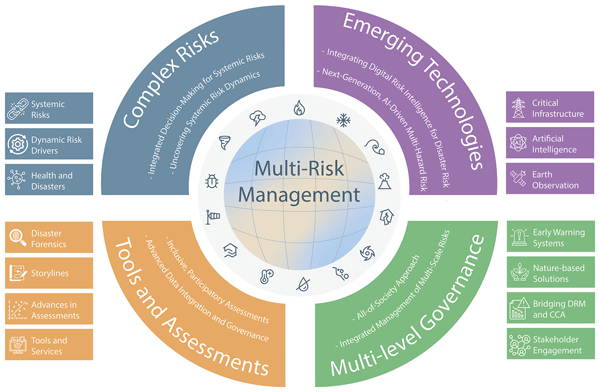
Timothy Tiggeloven, Colin Raymond, Marleen C. de Ruiter, Jana Sillmann, Annegret H. Thieken, Sophie L. Buijs, Roxana Ciurean, Emma Cordier, Julia M. Crummy, Lydia Cumiskey, Kelley De Polt, Melanie Duncan, Davide M. Ferrario, Wiebke S. Jäger, Elco E. Koks, Nicole van Maanen, Heather J. Murdock, Jaroslav Mysiak, Sadhana Nirandjan, Benjamin Poschlod, Peter Priesmeier, Nivedita Sairam, Pia-Johanna Schweizer, Tristian R. Stolte, Marie-Luise Zenker, James E. Daniell, Alexander Fekete, Christian M. Geiß, Marc J. C. van den Homberg, Sirkku K. Juhola, Christian Kuhlicke, Karen Lebek, Robert Šakić Trogrlić, Stefan Schneiderbauer, Silvia Torresan, Cees J. van Westen, Judith N. Claassen, Bijan Khazai, Virginia Murray, Julius Schlumberger, and Philip J. Ward
Geosci. Commun., 9, 185–221, https://doi.org/10.5194/gc-9-185-2026, https://doi.org/10.5194/gc-9-185-2026, 2026
Short summary
Short summary
Natural hazards like floods, earthquakes, and landslides are often interconnected which may create bigger problems than when they occur alone. We studied expert discussions from an international conference to understand how scientists and policymakers can better prepare for these multi-hazards and use new technologies to protect its communities while contributing to dialogues about future international agreements beyond the Sendai Framework and supporting global sustainability goals.
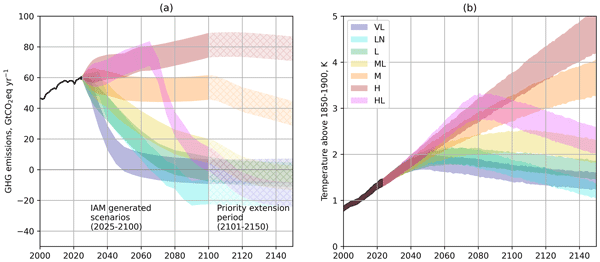
Detlef P. Van Vuuren, Brian C. O'Neill, Claudia Tebaldi, Benjamin M. Sanderson, Louise P. Chini, Pierre Friedlingstein, Tomoko Hasegawa, Keywan Riahi, Bala Govindasamy, Nico Bauer, Veronika Eyring, Cheikh M. N. Fall, Katja Frieler, Matthew J. Gidden, Laila K. Gohar, Annika Högner, Andrew D. Jones, Jarmo Kikstra, Andrew King, Reto Knutti, Elmar Kriegler, Peter Lawrence, Chris Lennard, Jason Lowe, Camilla Mathison, Shahbaz Mehmood, Zebedee Nicholls, Luciana F. Prado, Qiang Zhang, Steven K. Rose, Alex C. Ruane, Marit Sandstad, Carl-Friedrich Schleussner, Roland Seferian, Jana Sillmann, Chris Smith, Anna A. Sörensson, Swapna Panickal, Kaoru Tachiiri, Naomi Vaughan, Saritha S. Vishwanathan, Tokuta Yokohata, Marco Zecchetto, and Tilo Ziehn
Geosci. Model Dev., 19, 2627–2656, https://doi.org/10.5194/gmd-19-2627-2026, https://doi.org/10.5194/gmd-19-2627-2026, 2026
Short summary
Short summary
We propose a set of seven plausible 21st century emission scenarios, and their multi-century extensions, that will be used by the international community of climate modeling centers to produce the next generation of climate projections. These projections will support climate, impact and mitigation researchers, provide information to practitioners to address future risks from climate change, and contribute to policymakers’ considerations of the trade-offs among various levels of mitigation.
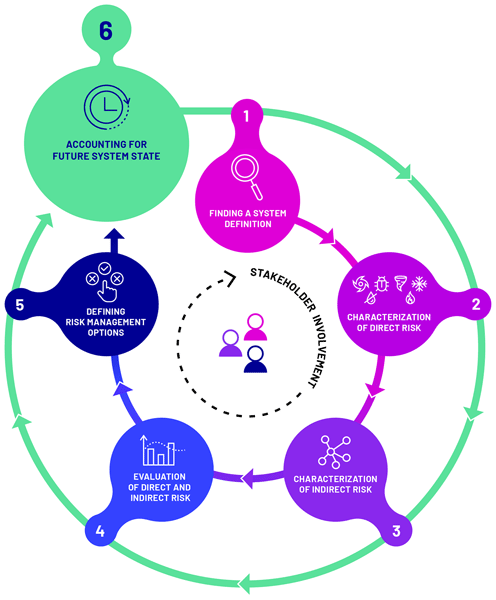
Philip J. Ward, Sophie L. Buijs, Roxana Ciurean, Judith N. Claassen, James Daniell, Kelley De Polt, Melanie Duncan, Stefania Gottardo, Stefan Hochrainer-Stigler, Robert Šakić Trogrlić, Julius Schlumberger, Timothy Tiggeloven, Silvia Torresan, Nicole van Maanen, Andrew Warren, Carmen D. Álvarez-Albelo, Vanessa Banks, Benjamin Blanz, Veronica Casartelli, Jordan Correa, Julia Crummy, Anne Sophie Daloz, Marleen C. de Ruiter, Juan José Díaz-Hernández, Jaime Díaz-Pacheco, Pedro Dorta Antequera, Davide Ferrario, David Geurts, Sara García-González, Joel C. Gill, Raúl Hernández-Martín, Wiebke S. Jäger, Abel López-Díez, Lin Ma, Jaroslav Mysiak, Diep Ngoc Nguyen, Noemi Padrón Fumero, Eva-Cristina Petrescu, Karina Reiter, Jana Sillmann, Lara Smale, and Tristian Stolte
Nat. Hazards Earth Syst. Sci., 26, 1325–1345, https://doi.org/10.5194/nhess-26-1325-2026, https://doi.org/10.5194/nhess-26-1325-2026, 2026
Short summary
Short summary
Disasters often result from interactions between different hazards, like floods triggering landslides, or earthquakes followed by tropical cyclones, so-called multi-hazards. People and societies are increasingly exposed and vulnerable to these multi-hazards. Assessing these aspects is referred to as multi-risk assessment and management. In this paper we synthesise key learnings from the MYRIAD-EU (Multi-hazard and sYstemic framework for enhancing Risk-Informed mAnagement and Decision-making in the E.U.) project, reflecting on progress and challenges faced in addressing multi-hazards and multi-risk.
Benjamin Poschlod, Laura Sailer, Alexander Sasse, Anastasia Vogelbacher, and Ralf Ludwig
Hydrol. Earth Syst. Sci., 30, 1165–1188, https://doi.org/10.5194/hess-30-1165-2026, https://doi.org/10.5194/hess-30-1165-2026, 2026
Short summary
Short summary
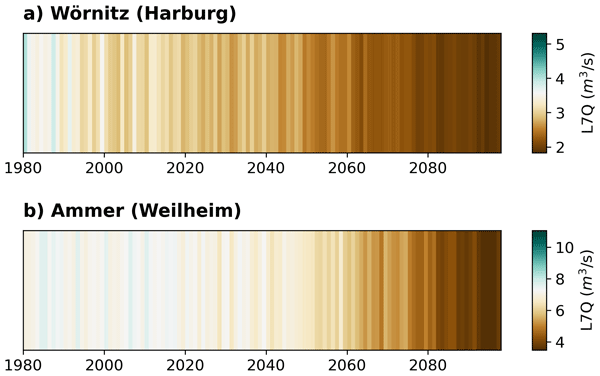
Europe was hit by severe droughts in recent years resulting in extreme low flow conditions in rivers. Here, we investigate future climate change effects on river droughts in Bavaria. We find increasing severity for the low peak discharge and low flow duration in a warmer climate. This is caused by hotter and drier summers, where the joint occurrence of heat and drought intensifies. Further, we show that conditions in the year before the drought gain more importance in a warmer climate.

Maša Ann, Jörn Behrens, and Jana Sillmann
Nonlin. Processes Geophys., 33, 85–102, https://doi.org/10.5194/npg-33-85-2026, https://doi.org/10.5194/npg-33-85-2026, 2026
Short summary
Short summary
We present a new framework based on Dynamic Mode Decomposition (DMD) to better detect outliers and model extremes. Unlike standard DMD, which focuses on average system behaviour, our approach targets rare, exceptional dynamics. Applied to climate data, it improves extreme event approximation and reveals meaningful spatiotemporal patterns. The method may generalise to other types of extremes.
Eva Holtanová, Jan Koláček, and Lukas Brunner
Earth Syst. Dynam., 17, 181–198, https://doi.org/10.5194/esd-17-181-2026, https://doi.org/10.5194/esd-17-181-2026, 2026
Short summary
Short summary
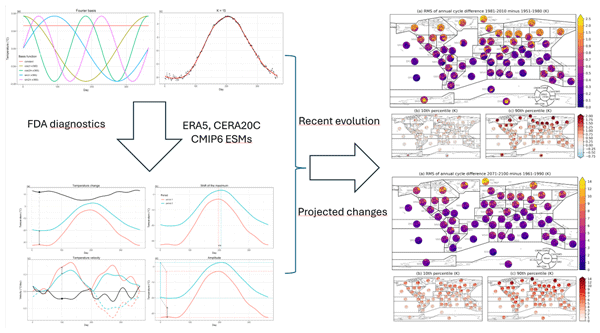
We introduce Functional Data Analysis (FDA) as a new approach to diagnose changes in the temperature seasonal cycle. FDA allows the analysis without needing any prior assumptions about the cycle shape. We evaluate past and future changes based on two reanalyses and five CMIP6 models. We discuss regions of robust changes with datasets’ agreement, e.g., a delayed maximum in the south and east of Europe, while highlighting areas of larger dataset differences, mainly in polar and equatorial regions.

Nina Schuhen, Carley E. Iles, Marit Sandstad, Viktor Ananiev, and Jana Sillmann
Nat. Hazards Earth Syst. Sci., 26, 753–773, https://doi.org/10.5194/nhess-26-753-2026, https://doi.org/10.5194/nhess-26-753-2026, 2026
Short summary
Short summary
As climate changes, extremes are becoming increasingly frequent. We investigate the time of emergence for a large range of different extremes, meaning the earliest time when a significant change in these extremes can be detected beyond natural variability, whether in the past or in the future. The results are based on 21 global climate models and show considerable differences between regions, types of indices and emissions scenarios, as well as between temperature and precipitation extremes.

Arim Yoon, Cathy Hohenegger, Jiawei Bao, and Lukas Brunner
Earth Syst. Dynam., 17, 167–179, https://doi.org/10.5194/esd-17-167-2026, https://doi.org/10.5194/esd-17-167-2026, 2026
Short summary
Short summary
We studied how removing the Amazon rainforest impacts extreme weather by using an advanced global model that resolves convection. Our results show deforestation significantly intensifies short but severe rainfall, leading to more frequent droughts and flooding. Temperatures rise sharply, creating dangerous heat conditions harmful to human health and productivity. Wind speeds drastically increase. These findings provide a stark warning of the effects of continuing deforestation of the Amazon.
Alexander Lee Rischmuller, Benjamin Poschlod, and Jana Sillmann
Adv. Stat. Clim. Meteorol. Oceanogr., 12, 1–19, https://doi.org/10.5194/ascmo-12-1-2026, https://doi.org/10.5194/ascmo-12-1-2026, 2026
Short summary
Short summary
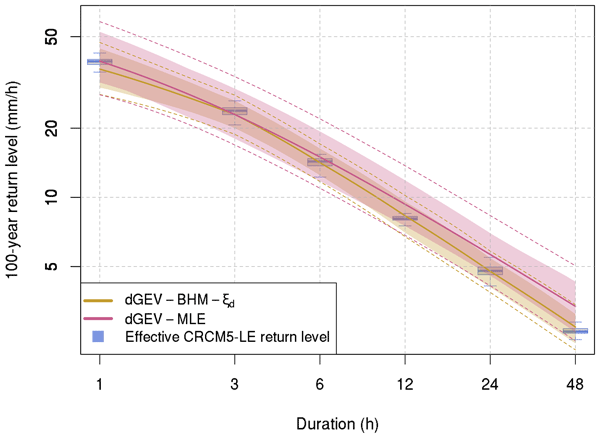
Extreme precipitation probability estimation is vital for hazard protection design but has high uncertainty. We tested six statistical models using 2000 years of climate data. Our Bayesian hierarchical duration-dependent Generalized Extreme Value model shows the highest accuracy and robustness for sample sizes between 30 and 100 years, making it highly promising for use with limited observational records.
Iris Mužić, Øivind Hodnebrog, Yeliz A. Yilmaz, Terje K. Berntsen, Jana Sillmann, David M. Lawrence, and Paul A. Dirmeyer
Adv. Stat. Clim. Meteorol. Oceanogr., 11, 273–292, https://doi.org/10.5194/ascmo-11-273-2025, https://doi.org/10.5194/ascmo-11-273-2025, 2025
Short summary
Short summary
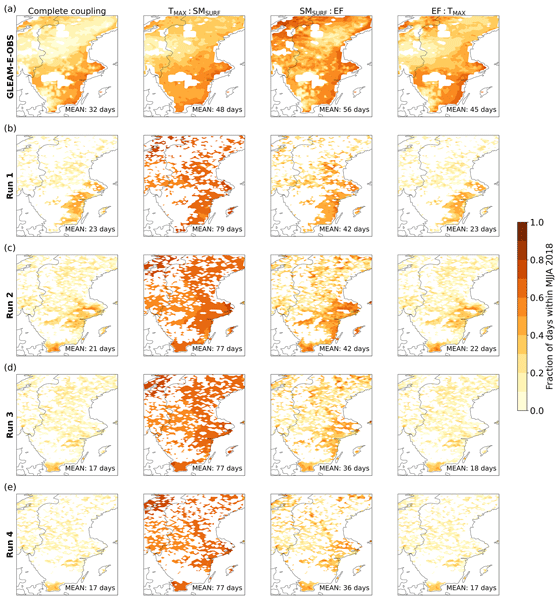
This study investigates soil moisture–temperature coupling during the extreme warm conditions in May–August 2018 in southern and central Sweden using the merged GLEAM-E-OBS dataset and four simulations from the Weather Research and Forecasting model coupled with the Community Terrestrial Systems Model (WRF-CTSM). Based on changes in surface soil moisture, evaporative fraction, and daily maximum 2 m temperature, on average across the region and five datasets, the coupling lasted for 22 d.
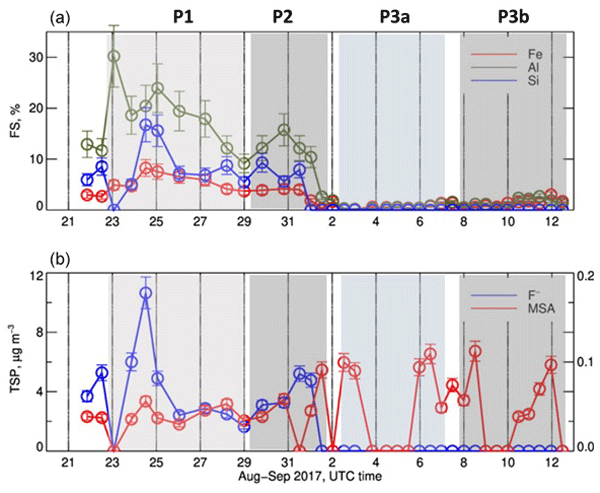
Paola Formenti, Chiara Giorio, Karine Desboeufs, Alexander Zherebker, Marco Gaetani, Clarissa Baldo, Gautier Landrot, Simona Montebello, Servanne Chevaillier, Sylvain Triquet, Guillaume Siour, Claudia Di Biagio, Francesco Battaglia, Jean-François Doussin, Anais Feron, Andreas Namwoonde, and Stuart John Piketh
Atmos. Chem. Phys., 25, 16127–16145, https://doi.org/10.5194/acp-25-16127-2025, https://doi.org/10.5194/acp-25-16127-2025, 2025
Short summary
Short summary
The elemental composition and solubility of several metals, including iron, at a coastal site in Namibia in August–September 2017, indicate that natural and anthropogenic dust had different solubility depending on mineralogy but mostly on the processing by fluoride ions from marine emissions, pointing to the complexity of atmospheric--oceanic interactions in this region of the world influenced by the Benguela current and significant aerosol load.
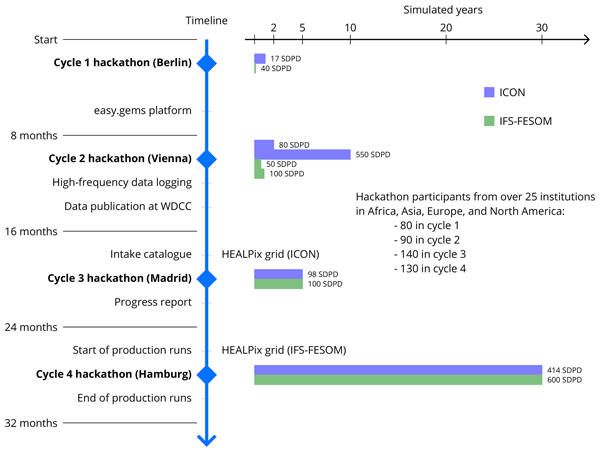
Hans Segura, Xabier Pedruzo-Bagazgoitia, Philipp Weiss, Sebastian K. Müller, Thomas Rackow, Junhong Lee, Edgar Dolores-Tesillos, Imme Benedict, Matthias Aengenheyster, Razvan Aguridan, Gabriele Arduini, Alexander J. Baker, Jiawei Bao, Swantje Bastin, Eulàlia Baulenas, Tobias Becker, Sebastian Beyer, Hendryk Bockelmann, Nils Brüggemann, Lukas Brunner, Suvarchal K. Cheedela, Sushant Das, Jasper Denissen, Ian Dragaud, Piotr Dziekan, Madeleine Ekblom, Jan Frederik Engels, Monika Esch, Richard Forbes, Claudia Frauen, Lilli Freischem, Diego García-Maroto, Philipp Geier, Paul Gierz, Álvaro González-Cervera, Katherine Grayson, Matthew Griffith, Oliver Gutjahr, Helmuth Haak, Ioan Hadade, Kerstin Haslehner, Shabeh ul Hasson, Jan Hegewald, Lukas Kluft, Aleksei Koldunov, Nikolay Koldunov, Tobias Kölling, Shunya Koseki, Sergey Kosukhin, Josh Kousal, Peter Kuma, Arjun U. Kumar, Rumeng Li, Nicolas Maury, Maximilian Meindl, Sebastian Milinski, Kristian Mogensen, Bimochan Niraula, Jakub Nowak, Divya Sri Praturi, Ulrike Proske, Dian Putrasahan, René Redler, David Santuy, Domokos Sármány, Reiner Schnur, Patrick Scholz, Dmitry Sidorenko, Dorian Spät, Birgit Sützl, Daisuke Takasuka, Adrian Tompkins, Alejandro Uribe, Mirco Valentini, Menno Veerman, Aiko Voigt, Sarah Warnau, Fabian Wachsmann, Marta Wacławczyk, Nils Wedi, Karl-Hermann Wieners, Jonathan Wille, Marius Winkler, Yuting Wu, Florian Ziemen, Janos Zimmermann, Frida A.-M. Bender, Dragana Bojovic, Sandrine Bony, Simona Bordoni, Patrice Brehmer, Marcus Dengler, Emanuel Dutra, Saliou Faye, Erich Fischer, Chiel van Heerwaarden, Cathy Hohenegger, Heikki Järvinen, Markus Jochum, Thomas Jung, Johann H. Jungclaus, Noel S. Keenlyside, Daniel Klocke, Heike Konow, Martina Klose, Szymon Malinowski, Olivia Martius, Thorsten Mauritsen, Juan Pedro Mellado, Theresa Mieslinger, Elsa Mohino, Hanna Pawłowska, Karsten Peters-von Gehlen, Abdoulaye Sarré, Pajam Sobhani, Philip Stier, Lauri Tuppi, Pier Luigi Vidale, Irina Sandu, and Bjorn Stevens
Geosci. Model Dev., 18, 7735–7761, https://doi.org/10.5194/gmd-18-7735-2025, https://doi.org/10.5194/gmd-18-7735-2025, 2025
Short summary
Short summary
The Next Generation of Earth Modeling Systems project (nextGEMS) developed two Earth system models that use horizontal grid spacing of 10 km and finer, giving more fidelity to the representation of local phenomena, globally. In its fourth cycle, nextGEMS simulated the Earth System climate over the 2020–2049 period under the SSP3-7.0 scenario. Here, we provide an overview of nextGEMS, insights into the model development, and the realism of multi-decadal, kilometer-scale simulations.
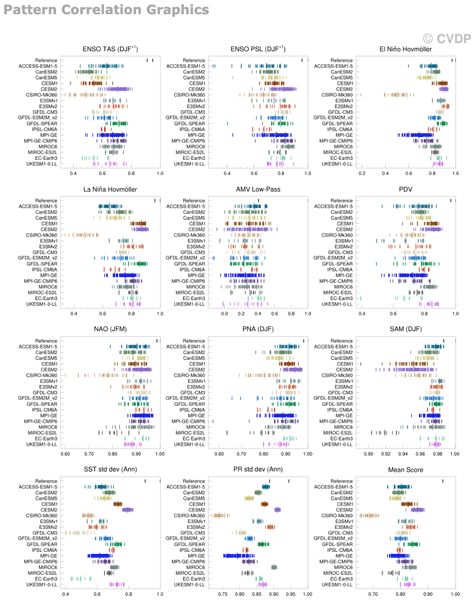
Nicola Maher, Adam S. Phillips, Clara Deser, Robert C. Jnglin Wills, Flavio Lehner, John Fasullo, Julie M. Caron, Lukas Brunner, Urs Beyerle, and Jemma Jeffree
Geosci. Model Dev., 18, 6341–6365, https://doi.org/10.5194/gmd-18-6341-2025, https://doi.org/10.5194/gmd-18-6341-2025, 2025
Short summary
Short summary
We present the new Multi-Model Large Ensemble Archive (MMLEAv2) and introduce the newly updated Climate Variability Diagnostics Package version 6 (CVDPv6), which is designed specifically for use with large ensembles. For highly variable quantities, we demonstrate that a model might perform evaluation poorly or favourably compared to the single realisation of the world that the observations represent, highlighting the need for large ensembles for model evaluation.

Naveen Ragu Ramalingam, Kendra Johnson, Marco Pagani, and Mario L. V. Martina
Nat. Hazards Earth Syst. Sci., 25, 1655–1679, https://doi.org/10.5194/nhess-25-1655-2025, https://doi.org/10.5194/nhess-25-1655-2025, 2025
Short summary
Short summary
By combining limited tsunami simulations with machine learning, we developed a fast and efficient framework to predict tsunami impacts such as wave heights and inundation depths at different coastal sites. Testing our model with historical tsunami source scenarios helped assess its reliability and broad applicability. This work enables more efficient and comprehensive tsunami hazard modelling workflow, which is essential for tsunami risk evaluations and enhancing coastal disaster preparedness.
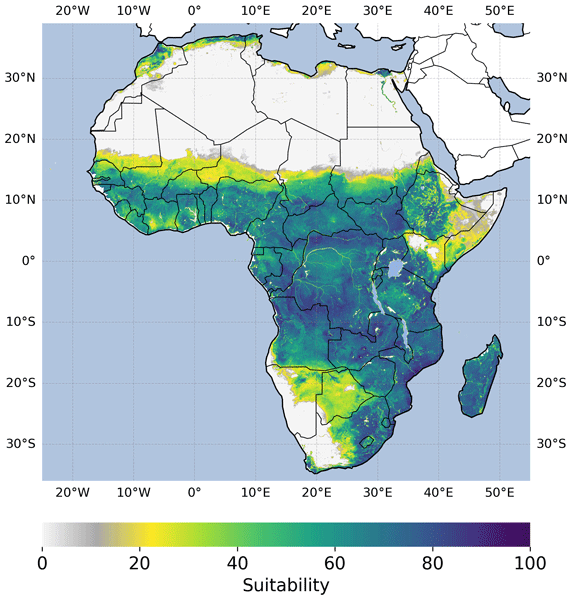
Florian Zabel, Matthias Knüttel, and Benjamin Poschlod
Geosci. Model Dev., 18, 1067–1087, https://doi.org/10.5194/gmd-18-1067-2025, https://doi.org/10.5194/gmd-18-1067-2025, 2025
Short summary
Short summary
CropSuite is a new open-source crop suitability model. It provides a GUI and a wide range of options, including a spatial downscaling of climate data. We apply CropSuite to 48 staple and opportunity crops at a 1 km spatial resolution in Africa. We find that climate variability significantly impacts suitable areas but also affects optimal sowing dates and multiple cropping potential. The results provide valuable information for climate impact assessments, adaptation, and land-use planning.

Paola Ceresa, Gianbattista Bussi, Simona Denaro, Gabriele Coccia, Paolo Bazzurro, Mario Martina, Ettore Fagà, Carlos Avelar, Mario Ordaz, Benjamin Huerta, Osvaldo Garay, Zhanar Raimbekova, Kanatbek Abdrakhmatov, Sitora Mirzokhonova, Vakhitkhan Ismailov, and Vladimir Belikov
Nat. Hazards Earth Syst. Sci., 25, 403–428, https://doi.org/10.5194/nhess-25-403-2025, https://doi.org/10.5194/nhess-25-403-2025, 2025
Short summary
Short summary
A fully probabilistic flood risk assessment was carried out for five Central Asian countries to support regional and national risk financing and insurance applications. The paper presents the first high-resolution regional-scale transboundary flood risk assessment study in the area aiming to provide tools for decision-making.
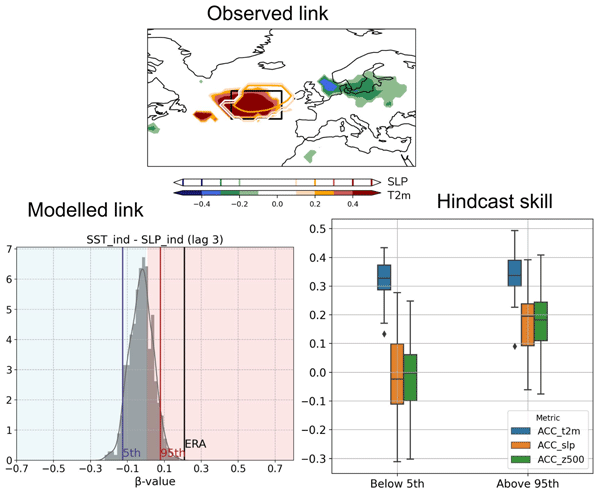
Julianna Carvalho-Oliveira, Giorgia Di Capua, Leonard F. Borchert, Reik V. Donner, and Johanna Baehr
Weather Clim. Dynam., 5, 1561–1578, https://doi.org/10.5194/wcd-5-1561-2024, https://doi.org/10.5194/wcd-5-1561-2024, 2024
Short summary
Short summary
We demonstrate with a causal analysis that an important recurrent summer atmospheric pattern, the so-called East Atlantic teleconnection, was influenced by the extratropical North Atlantic in spring during the second half of the 20th century. This causal link is, however, not well represented by our evaluated seasonal climate prediction system. We show that simulations able to reproduce this link show improved surface climate prediction credibility over those that do not.
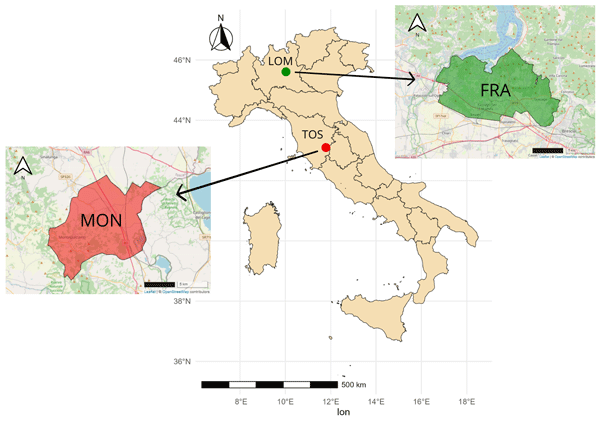
Laura T. Massano, Giorgia Fosser, Marco Gaetani, and Cécile Caillaud
Nat. Hazards Earth Syst. Sci., 24, 4293–4315, https://doi.org/10.5194/nhess-24-4293-2024, https://doi.org/10.5194/nhess-24-4293-2024, 2024
Short summary
Short summary
Traditional wine-growing regions are threatened by expected climate change. Climate models and observations are used to calculate bioclimatic indices based on both temperature and precipitation. These indices are correlated with grape productivity in two wine-growing regions in Italy. This analysis paves the way for using climate models to study how climate change will affect wine production in the future.
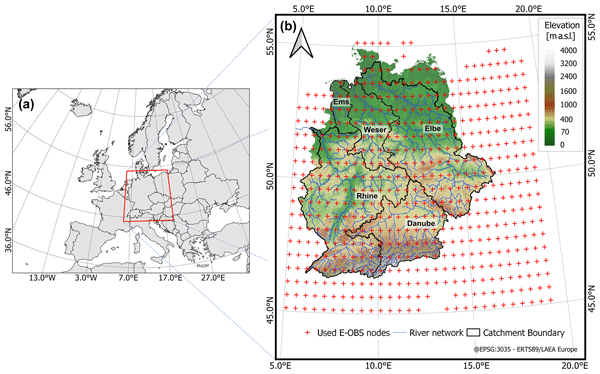
Viet Dung Nguyen, Sergiy Vorogushyn, Katrin Nissen, Lukas Brunner, and Bruno Merz
Adv. Stat. Clim. Meteorol. Oceanogr., 10, 195–216, https://doi.org/10.5194/ascmo-10-195-2024, https://doi.org/10.5194/ascmo-10-195-2024, 2024
Short summary
Short summary
We present a novel stochastic weather generator conditioned on circulation patterns and regional temperature, accounting for dynamic and thermodynamic atmospheric changes. We extensively evaluate the model for the central European region. It statistically downscales precipitation for future periods, generating long, spatially and temporally consistent series. Results suggest an increase in extreme precipitation over the region, offering key benefits for hydrological impact studies.
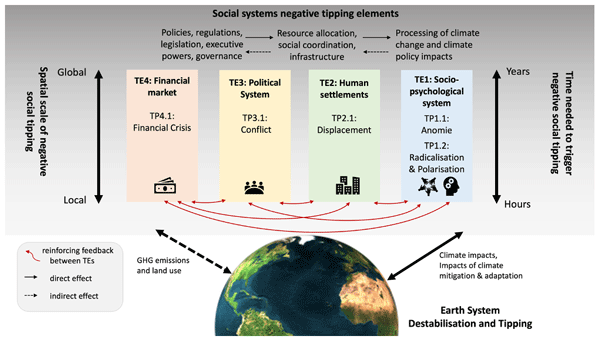
Viktoria Spaiser, Sirkku Juhola, Sara M. Constantino, Weisi Guo, Tabitha Watson, Jana Sillmann, Alessandro Craparo, Ashleigh Basel, John T. Bruun, Krishna Krishnamurthy, Jürgen Scheffran, Patricia Pinho, Uche T. Okpara, Jonathan F. Donges, Avit Bhowmik, Taha Yasseri, Ricardo Safra de Campos, Graeme S. Cumming, Hugues Chenet, Florian Krampe, Jesse F. Abrams, James G. Dyke, Stefanie Rynders, Yevgeny Aksenov, and Bryan M. Spears
Earth Syst. Dynam., 15, 1179–1206, https://doi.org/10.5194/esd-15-1179-2024, https://doi.org/10.5194/esd-15-1179-2024, 2024
Short summary
Short summary
In this paper, we identify potential negative social tipping points linked to Earth system destabilization and draw on related research to understand the drivers and likelihood of these negative social tipping dynamics, their potential effects on human societies and the Earth system, and the potential for cascading interactions and contribution to systemic risks.
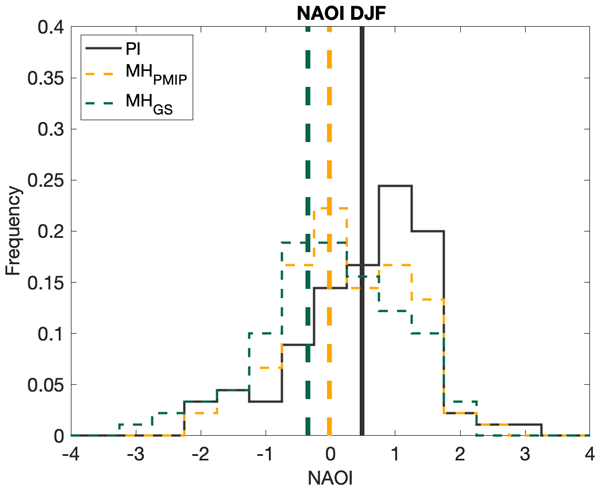
Marco Gaetani, Gabriele Messori, Francesco S. R. Pausata, Shivangi Tiwari, M. Carmen Alvarez Castro, and Qiong Zhang
Clim. Past, 20, 1735–1759, https://doi.org/10.5194/cp-20-1735-2024, https://doi.org/10.5194/cp-20-1735-2024, 2024
Short summary
Short summary
Palaeoclimate reconstructions suggest that, around 6000 years ago, a greening of the Sahara took place, accompanied by climate changes in the Northern Hemisphere at middle to high latitudes. In this study, a climate model is used to investigate how this drastic environmental change in the Sahara impacted remote regions. Specifically, climate simulations reveal significant modifications in atmospheric circulation over the North Atlantic, affecting North American and European climates.
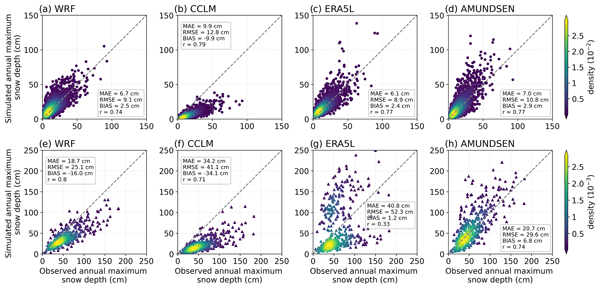
Benjamin Poschlod and Anne Sophie Daloz
The Cryosphere, 18, 1959–1981, https://doi.org/10.5194/tc-18-1959-2024, https://doi.org/10.5194/tc-18-1959-2024, 2024
Short summary
Short summary
Information about snow depth is important within climate research but also many other sectors, such as tourism, mobility, civil engineering, and ecology. Climate models often feature a spatial resolution which is too coarse to investigate snow depth. Here, we analyse high-resolution simulations and identify added value compared to a coarser-resolution state-of-the-art product. Also, daily snow depth extremes are well reproduced by two models.
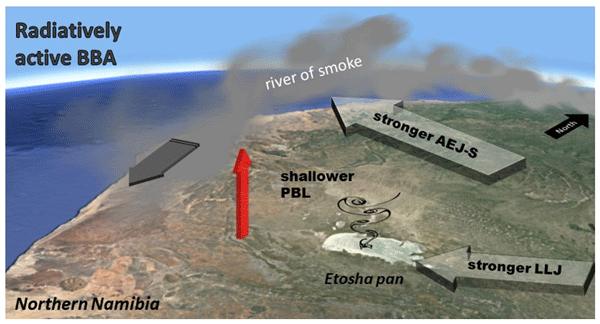
Cyrille Flamant, Jean-Pierre Chaboureau, Marco Gaetani, Kerstin Schepanski, and Paola Formenti
Atmos. Chem. Phys., 24, 4265–4288, https://doi.org/10.5194/acp-24-4265-2024, https://doi.org/10.5194/acp-24-4265-2024, 2024
Short summary
Short summary
In the austral dry season, the atmospheric composition over southern Africa is dominated by biomass burning aerosols and terrigenous aerosols (so-called mineral dust). This study suggests that the radiative effect of biomass burning aerosols needs to be taken into account to properly forecast dust emissions in Namibia.
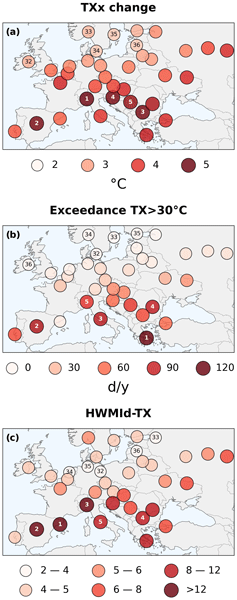
Clemens Schwingshackl, Anne Sophie Daloz, Carley Iles, Kristin Aunan, and Jana Sillmann
Nat. Hazards Earth Syst. Sci., 24, 331–354, https://doi.org/10.5194/nhess-24-331-2024, https://doi.org/10.5194/nhess-24-331-2024, 2024
Short summary
Short summary
Ambient heat in European cities will substantially increase under global warming, as projected by three heat metrics calculated from high-resolution climate model simulations. While the heat metrics consistently project high levels of ambient heat for several cities, in other cities the projected heat levels vary considerably across the three heat metrics. Using complementary heat metrics for projections of ambient heat is thus important for assessments of future risks from heat stress.
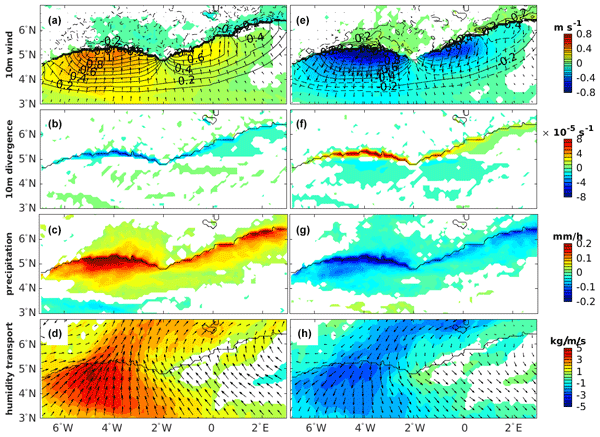
Gaëlle de Coëtlogon, Adrien Deroubaix, Cyrille Flamant, Laurent Menut, and Marco Gaetani
Atmos. Chem. Phys., 23, 15507–15521, https://doi.org/10.5194/acp-23-15507-2023, https://doi.org/10.5194/acp-23-15507-2023, 2023
Short summary
Short summary
Using a numerical atmospheric model, we found that cooling sea surface temperatures along the southern coast of West Africa in July cause the “little dry season”. This effect reduces humidity and pollutant transport inland, potentially enhancing West Africa's synoptic and seasonal forecasting.
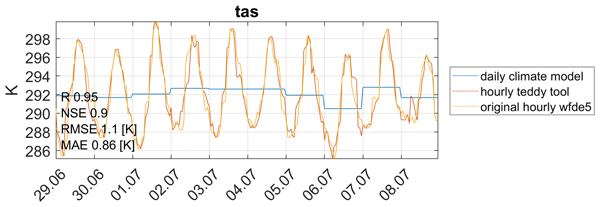
Florian Zabel and Benjamin Poschlod
Geosci. Model Dev., 16, 5383–5399, https://doi.org/10.5194/gmd-16-5383-2023, https://doi.org/10.5194/gmd-16-5383-2023, 2023
Short summary
Short summary
Today, most climate model data are provided at daily time steps. However, more and more models from different sectors, such as energy, water, agriculture, and health, require climate information at a sub-daily temporal resolution for a more robust and reliable climate impact assessment. Here we describe and validate the Teddy tool, a new model for the temporal disaggregation of daily climate model data for climate impact analysis.
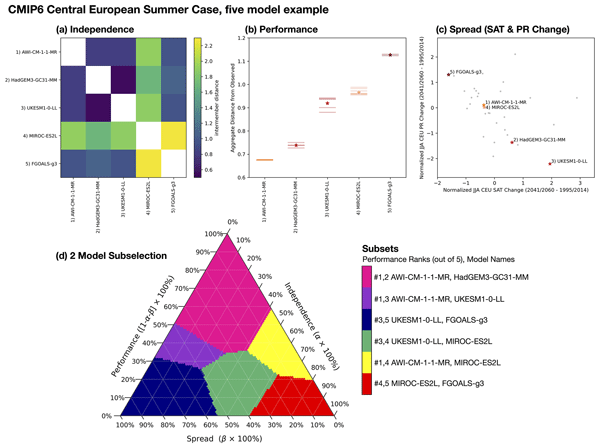
Anna L. Merrifield, Lukas Brunner, Ruth Lorenz, Vincent Humphrey, and Reto Knutti
Geosci. Model Dev., 16, 4715–4747, https://doi.org/10.5194/gmd-16-4715-2023, https://doi.org/10.5194/gmd-16-4715-2023, 2023
Short summary
Short summary
Using all Coupled Model Intercomparison Project (CMIP) models is unfeasible for many applications. We provide a subselection protocol that balances user needs for model independence, performance, and spread capturing CMIP’s projection uncertainty simultaneously. We show how sets of three to five models selected for European applications map to user priorities. An audit of model independence and its influence on equilibrium climate sensitivity uncertainty in CMIP is also presented.
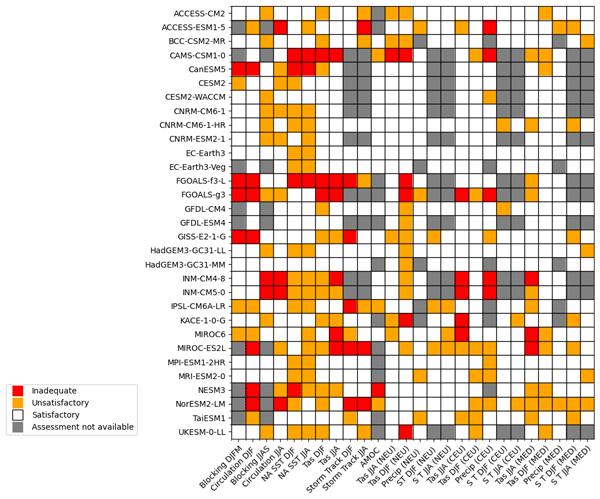
Tamzin E. Palmer, Carol F. McSweeney, Ben B. B. Booth, Matthew D. K. Priestley, Paolo Davini, Lukas Brunner, Leonard Borchert, and Matthew B. Menary
Earth Syst. Dynam., 14, 457–483, https://doi.org/10.5194/esd-14-457-2023, https://doi.org/10.5194/esd-14-457-2023, 2023
Short summary
Short summary
We carry out an assessment of an ensemble of general climate models (CMIP6) based on the ability of the models to represent the key physical processes that are important for representing European climate. Filtering the models with the assessment leads to more models with less global warming being removed, and this shifts the lower part of the projected temperature range towards greater warming. This is in contrast to the affect of weighting the ensemble using global temperature trends.
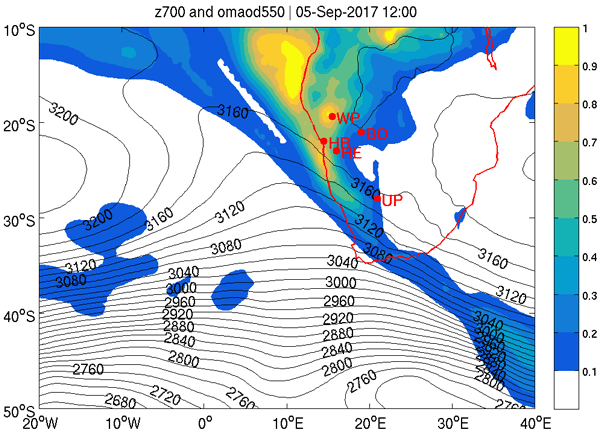
Cyrille Flamant, Marco Gaetani, Jean-Pierre Chaboureau, Patrick Chazette, Juan Cuesta, Stuart John Piketh, and Paola Formenti
Atmos. Chem. Phys., 22, 5701–5724, https://doi.org/10.5194/acp-22-5701-2022, https://doi.org/10.5194/acp-22-5701-2022, 2022
Short summary
Short summary
Rivers of smoke extend from tropical southern Africa towards the Indian Ocean during the winter fire season, controlled by the interaction of tropical easterly waves, and westerly waves at mid latitudes. During the AEROCLO-sA field campaign in 2017, a river of smoke was directly observed over Namibia. In this paper, the evolution and atmospheric drivers of the river of smoke are described, and the role of a mid-latitude cut-off low in lifting the smoke to the upper troposphere is highlighted.
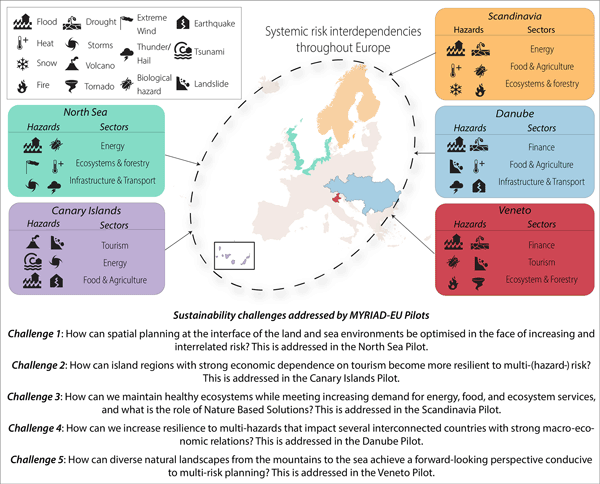
Philip J. Ward, James Daniell, Melanie Duncan, Anna Dunne, Cédric Hananel, Stefan Hochrainer-Stigler, Annegien Tijssen, Silvia Torresan, Roxana Ciurean, Joel C. Gill, Jana Sillmann, Anaïs Couasnon, Elco Koks, Noemi Padrón-Fumero, Sharon Tatman, Marianne Tronstad Lund, Adewole Adesiyun, Jeroen C. J. H. Aerts, Alexander Alabaster, Bernard Bulder, Carlos Campillo Torres, Andrea Critto, Raúl Hernández-Martín, Marta Machado, Jaroslav Mysiak, Rene Orth, Irene Palomino Antolín, Eva-Cristina Petrescu, Markus Reichstein, Timothy Tiggeloven, Anne F. Van Loon, Hung Vuong Pham, and Marleen C. de Ruiter
Nat. Hazards Earth Syst. Sci., 22, 1487–1497, https://doi.org/10.5194/nhess-22-1487-2022, https://doi.org/10.5194/nhess-22-1487-2022, 2022
Short summary
Short summary
The majority of natural-hazard risk research focuses on single hazards (a flood, a drought, a volcanic eruption, an earthquake, etc.). In the international research and policy community it is recognised that risk management could benefit from a more systemic approach. In this perspective paper, we argue for an approach that addresses multi-hazard, multi-risk management through the lens of sustainability challenges that cut across sectors, regions, and hazards.

Marco Gaetani, Benjamin Pohl, Maria del Carmen Alvarez Castro, Cyrille Flamant, and Paola Formenti
Atmos. Chem. Phys., 21, 16575–16591, https://doi.org/10.5194/acp-21-16575-2021, https://doi.org/10.5194/acp-21-16575-2021, 2021
Short summary
Short summary
During the dry austral winter, biomass fires in tropical Africa emit large amounts of smoke in the atmosphere, with large impacts on climate and air quality. The study of the relationship between atmospheric circulation and smoke transport shows that midlatitude atmospheric disturbances may deflect the smoke from tropical Africa towards southern Africa. Understanding the distribution of the smoke in the region is crucial for climate modelling and air quality monitoring.
Cited articles
Alizadeh, M. R., Adamowski, J., Nikoo, M. R., AghaKouchak, A., Dennison, P., and Sadegh, M.: A century of observations reveals increasing likelihood of continental-scale compound dry-hot extremes, Sci. Adv., 6, eaaz4571, https://doi.org/10.1126/sciadv.aaz4571, 2020.
Berg, A., Lintner, B. R., Findell, K., Seneviratne, S. I., Van Den Hurk, B., Ducharne, A., Chéruy, F., Hagemann, S., Lawrence, D. M., Malyshev, S., Meier, A., and Gentine, P.: Interannual Coupling between Summertime Surface Temperature and Precipitation over Land: Processes and Implications for Climate Change, J. Climate, 28, 1308–1328, https://doi.org/10.1175/JCLI-D-14-00324.1, 2015.
Bevacqua, E., Zappa, G., Lehner, F., and Zscheischler, J.: Precipitation trends determine future occurrences of compound hot–dry events, Nat. Clim. Change, 12, 350–355, https://doi.org/10.1038/s41558-022-01309-5, 2022.
Böhnisch, A., Felsche, E., Mittermeier, M., Poschlod, B., and Ludwig, R.: Future Patterns of Compound Dry and Hot Summers and Their Link to Soil Moisture Droughts in Europe, Earth's Future, 13, e2024EF004916, https://doi.org/10.1029/2024EF004916, 2025.
Brett, L., White, C. J., Domeisen, D. I. V., van den Hurk, B., Ward, P., and Zscheischler, J.: Review article: The growth in compound weather and climate event research in the decade since SREX, Nat. Hazards Earth Syst. Sci., 25, 2591–2611, https://doi.org/10.5194/nhess-25-2591-2025, 2025.
Brunner, L., Schaller, N., Anstey, J., Sillmann, J., and Steiner, A. K.: Dependence of Present and Future European Temperature Extremes on the Location of Atmospheric Blocking, Geophys. Res. Lett., 45, 6311–6320, https://doi.org/10.1029/2018GL077837, 2018.
Cassou, C., Terray, L., and Phillips, A. S.: Tropical Atlantic Influence on European Heat Waves, J. Climate, 18, 2805–2811, https://doi.org/10.1175/JCLI3506.1, 2005.
Coumou, D., Di Capua, G., Vavrus, S., Wang, L., and Wang, S.: The influence of Arctic amplification on mid-latitude summer circulation, Nat. Commun., 9, 2959, https://doi.org/10.1038/s41467-018-05256-8, 2018.
Dietz, V., Baehr, J., Suarez-Gutierrez, L., Sillmann, J., and Borchert, L.: The future of hot and dry events in the breadbasket regions of maize, Environ. Res. Lett., 20, 074009, https://doi.org/10.1088/1748-9326/adda63, 2025.
Ding, Q. and Wang, B.: Circumglobal Teleconnection in the Northern Hemisphere Summer, J. Climate, 18, 3483–3505, https://doi.org/10.1175/JCLI3473.1, 2005.
Dirmeyer, P. A., Balsamo, G., Blyth, E. M., Morrison, R., and Cooper, H. M.: Land–Atmosphere Interactions Exacerbated the Drought and Heatwave Over Northern Europe During Summer 2018, AGU Advances, 2, e2020AV000283, https://doi.org/10.1029/2020AV000283, 2021.
Farahmand, A. and AghaKouchak, A.: A generalized framework for deriving nonparametric standardized drought indicators, Adv. Water Resour., 76, 140–145, https://doi.org/10.1016/j.advwatres.2014.11.012, 2015.
Faranda, D., Pascale, S., and Bulut, B.: Persistent anticyclonic conditions and climate change exacerbated the exceptional 2022 European-Mediterranean drought, Environ. Res. Lett., https://doi.org/10.1088/1748-9326/acbc37, 2023.
Felsche, E., Böhnisch, A., Poschlod, B., and Ludwig, R.: European hot and dry summers are projected to become more frequent and expand northwards, Commun. Earth Environ., 5, 410, https://doi.org/10.1038/s43247-024-01575-5, 2024.
Feng, S., Wu, X., Hao, Z., Hao, Y., Zhang, X., and Hao, F.: A database for characteristics and variations of global compound dry and hot events, Weather and Climate Extremes, 30, 100299, https://doi.org/10.1016/j.wace.2020.100299, 2020.
Field, C. B., Barros, V., Stocker, T. F., Dahe, Q., Dokken, D. J., Ebi, K. L., Mastrandrea, M. D., Pauline, K. J. M., Plattner, G.-K., Allen, S. K., Tignor, M., and Midgley, P. M.: Special Report of the Intergovernmental Panel on Climate Change Edited, 30 pp., https://doi.org/10.1017/CBO9781139177245, 2011.
Field, C. B., Barros, V., Stocker, T. F., and Dahe, Q. (Eds.): Managing the Risks of Extreme Events and Disasters to Advance Climate Change Adaptation: Special Report of the Intergovernmental Panel on Climate Change, 1st edn., Cambridge University Press, https://doi.org/10.1017/CBO9781139177245, 2012.
Fink, A. H., Brücher, T., Krüger, A., Leckebusch, G. C., Pinto, J. G., and Ulbrich, U.: The 2003 European summer heatwaves and drought – synoptic diagnosis and impacts, Weather, 59, 209–216, https://doi.org/10.1256/wea.73.04, 2004.
Fioravanti, G., Toreti, A., Cammalleri, C., Muñoz, C. A., Bavera, D., De Jager, A., Hrast Essenfelder, A., Di Ciollo, C., Masante, D., Magni, D., Navarro, J. A., Mazzesch, M., and Maetens, W.: A dataset for monitoring agricultural drought in Europe, Sci. Data, 12, 308, https://doi.org/10.1038/s41597-024-04199-8, 2025.
Fischer, E. M. and Schär, C.: Consistent geographical patterns of changes in high-impact European heatwaves, Nat. Geosci., 3, 398–403, https://doi.org/10.1038/ngeo866, 2010.
Fischer, E. M., Seneviratne, S. I., Vidale, P. L., Lüthi, D., and Schär, C.: Soil Moisture–Atmosphere Interactions during the 2003 European Summer Heat Wave, J. Climate, 20, 5081–5099, https://doi.org/10.1175/JCLI4288.1, 2007.
Folland, C. K., Ou, T., Linderholm, H. W., Scaife, A. A., Knight, J., and Chen, D.: The Summer North Atlantic Oscillation, Arctic sea ice, and Arctic jet Rossby wave forcing, Sci. Adv., 10, https://doi.org/10.1126/sciadv.adk6693, 2024.
García-Herrera, R., Díaz, J., Trigo, R. M., Luterbacher, J., and Fischer, E. M.: A Review of the European Summer Heat Wave of 2003, Crit. Rev. Env. Sci. Tec., 40, 267–306, https://doi.org/10.1080/10643380802238137, 2010.
Gaupp, F., Hall, J., Mitchell, D., and Dadson, S.: Increasing risks of multiple breadbasket failure under 1.5 and 2 °C global warming, Agr. Syst., 175, 34–45, https://doi.org/10.1016/j.agsy.2019.05.010, 2019.
Gaupp, F., Hall, J., Hochrainer-Stigler, S., and Dadson, S.: Changing risks of simultaneous global breadbasket failure, Nat. Clim. Change, 10, 54–57, https://doi.org/10.1038/s41558-019-0600-z, 2020.
Gringorten, I. I.: A plotting rule for extreme probability paper, J. Geophys. Res., 68, 813–814, https://doi.org/10.1029/JZ068i003p00813, 1963.
Guo, J., Wang, F., Wen, Y., Wang, X., Hao, Z., Zheng, H., Fan, Y., and Shen, C.: Rising compound hot-dry extremes engendering more inequality in human exposure risks, npj Nat. Hazards, 2, 66, https://doi.org/10.1038/s44304-025-00119-x, 2025.
Hao, Z. and AghaKouchak, A.: A Nonparametric Multivariate Multi-Index Drought Monitoring Framework, J. Hydrometeorol., 15, 89–101, https://doi.org/10.1175/JHM-D-12-0160.1, 2014.
Hao, Z., Hao, F., Singh, V. P., and Zhang, X.: Quantifying the relationship between compound dry and hot events and El Niño–southern Oscillation (ENSO) at the global scale, J. Hydrol., 567, 332–338, https://doi.org/10.1016/j.jhydrol.2018.10.022, 2018.
Hao, Z., Hao, F., Xia, Y., Feng, S., Sun, C., Zhang, X., Fu, Y., Hao, Y., Zhang, Y., and Meng, Y.: Compound droughts and hot extremes: Characteristics, drivers, changes, and impacts, Earth-Sci. Rev., 235, 104241, https://doi.org/10.1016/j.earscirev.2022.104241, 2022.
Harris, I., Osborn, T. J., Jones, P., and Lister, D.: Version 4 of the CRU TS monthly high-resolution gridded multivariate climate dataset, Sci. Data, 7, 109, https://doi.org/10.1038/s41597-020-0453-3, 2020.
Hersbach, H., Bell, B., Berrisford, P., Hirahara, S., Horányi, A., Muñoz-Sabater, J., Nicolas, J., Peubey, C., Radu, R., Schepers, D., Simmons, A., Soci, C., Abdalla, S., Abellan, X., Balsamo, G., Bechtold, P., Biavati, G., Bidlot, J., Bonavita, M., De Chiara, G., Dahlgren, P., Dee, D., Diamantakis, M., Dragani, R., Flemming, J., Forbes, R., Fuentes, M., Geer, A., Haimberger, L., Healy, S., Hogan, R. J., Hólm, E., Janisková, M., Keeley, S., Laloyaux, P., Lopez, P., Lupu, C., Radnoti, G., de Rosnay, P., Rozum, I., Vamborg, F., Villaume, S., and Thépaut, J. N.: The ERA5 global reanalysis, Q. J. Roy. Meteor. Soc., 146, 1999–2049, https://doi.org/10.1002/qj.3803, 2020.
Hoerling, M., Kumar, A., Dole, R., Nielsen-Gammon, J. W., Eischeid, J., Perlwitz, J., Quan, X.-W., Zhang, T., Pegion, P., and Chen, M.: Anatomy of an Extreme Event, J. Climate, 26, 2811–2832, https://doi.org/10.1175/JCLI-D-12-00270.1, 2013.
Huang, S., Huang, Q., Chang, J., Leng, G., and Xing, L.: The response of agricultural drought to meteorological drought and the influencing factors: A case study in the Wei River Basin, China, Agr. Water Manage., 159, 45–54, https://doi.org/10.1016/j.agwat.2015.05.023, 2015.
Ionita, M., Caldarescu, D. E., and Nagavciuc, V.: Compound Hot and Dry Events in Europe: Variability and Large-Scale Drivers, Frontiers in Climate, 3, 1–19, https://doi.org/10.3389/fclim.2021.688991, 2021.
Iturbide, M., Gutiérrez, J. M., Alves, L. M., Bedia, J., Cerezo-Mota, R., Cimadevilla, E., Cofiño, A. S., Di Luca, A., Faria, S. H., Gorodetskaya, I. V., Hauser, M., Herrera, S., Hennessy, K., Hewitt, H. T., Jones, R. G., Krakovska, S., Manzanas, R., Martínez-Castro, D., Narisma, G. T., Nurhati, I. S., Pinto, I., Seneviratne, S. I., van den Hurk, B., and Vera, C. S.: An update of IPCC climate reference regions for subcontinental analysis of climate model data: definition and aggregated datasets, Earth Syst. Sci. Data, 12, 2959–2970, https://doi.org/10.5194/essd-12-2959-2020, 2020.
Jiménez-Donaire, M. P., Tarquis, A., and Giráldez, J. V.: Evaluation of a combined drought indicator and its potential for agricultural drought prediction in southern Spain, Nat. Hazards Earth Syst. Sci., 20, 21–33, https://doi.org/10.5194/nhess-20-21-2020, 2020.
Kopp, R. E., Hayhoe, K., Easterling, D. R., Hall, T., Horton, R., Kunkel, K. E., and LeGrande, A. N.: Potential surprises – compound extremes and tipping elements, in: Climate Science Special Report: Fourth National Climate Assessment, Volume I, edited by: Wuebbles, D. J., Fahey, D. W., Hibbard, K. A., Dokken, D. J., Stewart, B. C., and Maycock, T. K., U.S. Global Change Research Program, Washington, DC, USA, pp. 411–429, https://doi.org/10.7930/J0GB227J, 2017.
Kornhuber, K., Osprey, S., Coumou, D., Petri, S., Petoukhov, V., Rahmstorf, S., and Gray, L.: Extreme weather events in early summer 2018 connected by a recurrent hemispheric wave-7 pattern, Environ. Res. Lett., 14, https://doi.org/10.1088/1748-9326/ab13bf, 2019.
Kornhuber, K., Coumou, D., Vogel, E., Lesk, C., Donges, J. F., Lehmann, J., and Horton, R. M.: Amplified Rossby waves enhance risk of concurrent heatwaves in major breadbasket regions, Nat. Clim. Change, 10, 48–53, https://doi.org/10.1038/s41558-019-0637-z, 2020.
Kornhuber, K., Lesk, C., Schleussner, C. F., Jägermeyr, J., Pfleiderer, P., and Horton, R. M.: Risks of synchronized low yields are underestimated in climate and crop model projections, Nat. Commun., 14, 3528, https://doi.org/10.1038/s41467-023-38906-7, 2023.
Lee, Y., Yeh, S., Hong, J., Shin, J., and An, S.: Regime shift increase in East Asia's summer extreme hot day frequency across the late 1990s, Int. J. Climatol., 43, 2305–2317, https://doi.org/10.1002/joc.7976, 2023.
Leonard, M., Westra, S., Phatak, A., Lambert, M., Van Den Hurk, B., McInnes, K., Risbey, J., Schuster, S., Jakob, D., and Stafford-Smith, M.: A compound event framework for understanding extreme impacts, WIREs Clim. Change, 5, 113–128, https://doi.org/10.1002/wcc.252, 2014.
Lian, X., Li, Y., Liu, J., Kornhuber, K., and Gentine, P.: Northern ecosystem productivity reduced by Rossby-wave-driven hot–dry conditions, Nat. Geosci., 18, 615–623, https://doi.org/10.1038/s41561-025-01722-3, 2025.
Lyon, B. and Dole, R. M.: A diagnostic comparison of the 1980 and 1988 US summer heat wave-droughts, J. Climate, 8, 1658–1675, 1995.
Ma, M., Qu, Y., Lyu, J., Zhang, X., Su, Z., Gao, H., Yang, X., Chen, X., Jiang, T., Zhang, J., Shen, M., and Wang, Z.: The 2022 extreme drought in the Yangtze River Basin: Characteristics, causes and response strategies, River, 1, 162–171, https://doi.org/10.1002/rvr2.23, 2022.
Malcolm, A. H.: Drought disaster declared by US, The New York Times, 3 September, https://www.nytimes.com/1983/09/03/us/drought-disaster-declared-by-us.html (last access: 18 October 2026), 1983.
Materia, S., Ardilouze, C., Prodhomme, C., Donat, M. G., Benassi, M., Doblas-Reyes, F. J., Peano, D., Caron, L.-P., Ruggieri, P., and Gualdi, S.: Summer temperature response to extreme soil water conditions in the Mediterranean transitional climate regime, Clim. Dynam., 58, 1943–1963, https://doi.org/10.1007/s00382-021-05815-8, 2022.
Miralles, D. G., Gentine, P., Seneviratne, S. I., and Teuling, A. J.: Land–atmospheric feedbacks during droughts and heatwaves: state of the science and current challenges, Ann. NY Acad. Sci., 1436, 19–35, https://doi.org/10.1111/nyas.13912, 2019.
Mishra, A. K. and Singh, V. P.: A review of drought concepts, J. Hydrol., 391, 202–216, https://doi.org/10.1016/j.jhydrol.2010.07.012, 2010.
Mo, K. C., Zimmerman, J. R., Kalnay, E., and Kanamitsu, M.: A GCM Study of the 1988 United States Drought, Mon. Weather Rev., 119, 1512–1532, https://doi.org/10.1175/1520-0493(1991)119%3C1512:AGSOTU%3E2.0.CO;2, 1991.
Mukherjee, S., Ashfaq, M., and Mishra, A. K.: Compound Drought and Heatwaves at a Global Scale: The Role of Natural Climate Variability-Associated Synoptic Patterns and Land-Surface Energy Budget Anomalies, J. Geophys. Res.-Atmos., 125, https://doi.org/10.1029/2019JD031943, 2020.
Nasong, D., Zhou, S., Kornhuber, K., and Yu, B.: Concurrent Heat Extremes in Relation to Global Warming, High Atmospheric Pressure and Low Soil Moisture in the Northern Hemisphere, Earth's Future, 13, e2024EF005256, https://doi.org/10.1029/2024EF005256, 2025.
NOAA National Centers for Environmental Information: Monthly Global Climate Report for Annual 2022, NOAA National Centers for Environmental Information, https://www.ncei.noaa.gov/access/monitoring/monthly-report/global/202213 (last acess date: October 2026), 2023a.
NOAA National Centers for Environmental Information: Monthly National Climate Report for Annual 2022, NOAA National Centers for Environmental Information, https://www.ncei.noaa.gov/access/monitoring/monthly-report/national/202213 (last access: 23 October 2026), 2023b.
Pappert, D., Tuel, A., Coumou, D., Vrac, M., and Martius, O.: Long vs. short: understanding the dynamics of persistent summer hot spells in Europe, Weather Clim. Dynam., 6, 769–788, https://doi.org/10.5194/wcd-6-769-2025, 2025.
Petoukhov, V., Rahmstorf, S., Petri, S., and Schellnhuber, H. J.: Quasiresonant amplification of planetary waves and recent Northern Hemisphere weather extremes, P. Natl. Acad. Sci. USA, 110, 5336–5341, https://doi.org/10.1073/pnas.1222000110, 2013.
Poschlod, B., Zscheischler, J., Sillmann, J., Wood, R. R., and Ludwig, R.: Climate change effects on hydrometeorological compound events over southern Norway, Weather and Climate Extremes, 28, 100253, https://doi.org/10.1016/j.wace.2020.100253, 2020.
Raymond, C., Horton, R. M., Zscheischler, J., Martius, O., AghaKouchak, A., Balch, J., Bowen, S. G., Camargo, S. J., Hess, J., Kornhuber, K., Oppenheimer, M., Ruane, A. C., Wahl, T., and White, K.: Understanding and managing connected extreme events, Nat. Clim. Change, 10, 611–621, https://doi.org/10.1038/s41558-020-0790-4, 2020.
Raymond, C., Suarez-Gutierrez, L., Kornhuber, K., Pascolini-Campbell, M., Sillmann, J., and Waliser, D. E.: Increasing spatiotemporal proximity of heat and precipitation extremes in a warming world quantified by a large model ensemble, Environ. Res. Lett., 17, 035005, https://doi.org/10.1088/1748-9326/ac5712, 2022.
Röthlisberger, M. and Martius, O.: Quantifying the Local Effect of Northern Hemisphere Atmospheric Blocks on the Persistence of Summer Hot and Dry Spells, Geophys. Res. Lett., 46, 10101–10111, https://doi.org/10.1029/2019GL083745, 2019.
Rousi, E., Kornhuber, K., Beobide-Arsuaga, G., Luo, F., and Coumou, D.: Accelerated western European heatwave trends linked to more-persistent double jets over Eurasia, Nat. Commun., 13, 1–11, https://doi.org/10.1038/s41467-022-31432-y, 2022.
Salvadori, G., Durante, F., De Michele, C., Bernardi, M., and Petrella, L.: A multivariate copula-based framework for dealing with hazard scenarios and failure probabilities, Water Resour. Res., 52, 3701–3721, https://doi.org/10.1002/2015WR017225, 2016.
Sarhadi, A., Ausín, M. C., Wiper, M. P., Touma, D., and Diffenbaugh, N. S.: Multidimensional risk in a nonstationary climate: Joint probability of increasingly severe warm and dry conditions, Sci. Adv., 4, eaau3487, https://doi.org/10.1126/sciadv.aau3487, 2018.
Schmutz, J., Vrac, M., François, B., and Bulut, B.: Spatial structures of emerging hot and dry compound events over Europe from 1950 to 2023, Nat. Hazards Earth Syst. Sci., 26, 881–900, https://doi.org/10.5194/nhess-26-881-2026, 2026.
Schulzweida, U.: CDO User Guide, https://doi.org/10.5281/zenodo.10020800, 2023.
Schumacher, D. L., Zachariah, M., Otto, F., Barnes, C., Philip, S., Kew, S., Vahlberg, M., Singh, R., Heinrich, D., Arrighi, J., van Aalst, M., Thalheimer, L., Raju, E., Hauser, M., Hirschi, M., Gudmundsson, L., Beaudoing, H. K., Rodell, M., Li, S., Yang, W., Vecchi, G. A., Vautard, R., Harrington, L. J., and Seneviratne, S. I.: High temperatures exacerbated by climate change made 2022 Northern Hemisphere soil moisture droughts more likely, World Weather Attribution, 55 pp., https://www.worldweatherattribution.org/wp-content/uploads/WCE-NH-drought-scientific-report.pdf (last access: 20 October 2026), 2022.
Seneviratne, S. I., Zhang, X., Adnan, M., Badi, W., Dereczynski, C., Di Luca, A., Ghosh, S., Iskandar, I., Kossin, J., Lewis, S., Otto, F., Pinto, I., Satoh, M., Vicente-Serrano, S. M., Wehner, M., and Zhou, B.: Weather and Climate Extreme Events in a Changing Climate, in: Climate Change 2021: The Physical Science Basis. Contribution of Working Group I to the Sixth Assessment Report of the Intergovernmental Panel on Climate Change, edited by: Masson-Delmotte, V., Zhai, P., Pirani, A., Connors, S. L., Péan, C., Berger, S., Caud, N., Chen, Y., Goldfarb, L., Gomis, M. I., Huang, M., Leitzell, K., Lonnoy, E., Matthews, J. B. R., Maycock, T. K., Waterfield, T., Yelekçi, O., Yu, R., and Zhou, B., Cambridge University Press, Cambridge, United Kingdom and New York, NY, USA, 1513–1766, https://doi.org/10.1017/9781009157896.013, 2021.
Skliris, N., Zika, J. D., Nurser, G., Josey, S. A., and Marsh, R.: Global water cycle amplifying at less than the Clausius–Clapeyron rate, Sci. Rep.-UK, 6, 38752, https://doi.org/10.1038/srep38752, 2016.
Smith, K. E., Sen Gupta, A., Amaya, D., Benthuysen, J. A., Burrows, M. T., Capotondi, A., Filbee-Dexter, K., Frölicher, T. L., Hobday, A. J., Holbrook, N. J., Malan, N., Moore, P. J., Oliver, E. C. J., Richaud, B., Salcedo-Castro, J., Smale, D. A., Thomsen, M., and Wernberg, T.: Baseline matters: Challenges and implications of different marine heatwave baselines, Prog. Oceanogr., 231, 103404, https://doi.org/10.1016/j.pocean.2024.103404, 2025.
Teleubay, Z., Quiring, S. M., and Leasor, Z.: Estimation of impacts-based drought thresholds for the US Corn Belt, Agr. Forest Meteorol., 372, 110715, https://doi.org/10.1016/j.agrformet.2025.110715, 2025.
The New York Times: St. Louis bears brunt of heat wave as U.S. toll rises, 24 July, https://www.nytimes.com/1983/07/24/us/st-louis-bears-brunt-of-heat-wave-as-us-toll-rises.html (last access: 20 October 2026), 1983.
Toreti, A., Bavera, D., Avanzi, F., Cammalleri, C., De Felice, M., De Jager, A., Di Ciollo, C., Gabellani, S., Maetens, W., Magni, D., Manfron, G., Masante, D., Mazzeschi, M., Mccormick, N., Naumann, G., Niemeyer, S., Rossi, L., Seguini, L., Spinoni, J., and Van Den Berg, M.: Drought in northern Italy March 2022: GDO analytical report, Publications Office, LU, https://doi.org/10.2760/781876, 2022.
Trenberth, K. E., Branstator, G. W., and Arkin, P. A.: Origins of the 1988 North American Drought, Science, 242, 1640–1645, https://doi.org/10.1126/science.242.4886.1640, 1988.
UNEP: Impacts of summer 2003 heat wave in Europe, Environment Alert Bulletin, No. 2, United Nations Environment Programme, DEWA/GRID-Europe, Geneva, Switzerland, 4 pp., https://wedocs.unep.org/handle/20.500.11822/40942 (last access: 18 October 2026), 2004.
Ward, P. J., Daniell, J., Duncan, M., Dunne, A., Hananel, C., Hochrainer-Stigler, S., Tijssen, A., Torresan, S., Ciurean, R., Gill, J. C., Sillmann, J., Couasnon, A., Koks, E., Padrón-Fumero, N., Tatman, S., Tronstad Lund, M., Adesiyun, A., Aerts, J. C. J. H., Alabaster, A., Bulder, B., Campillo Torres, C., Critto, A., Hernández-Martín, R., Machado, M., Mysiak, J., Orth, R., Palomino Antolín, I., Petrescu, E.-C., Reichstein, M., Tiggeloven, T., Van Loon, A. F., Vuong Pham, H., and de Ruiter, M. C.: Invited perspectives: A research agenda towards disaster risk management pathways in multi-(hazard-)risk assessment, Nat. Hazards Earth Syst. Sci., 22, 1487–1497, https://doi.org/10.5194/nhess-22-1487-2022, 2022.
Wilhite, D. A. and Glantz, M. H.: Understanding: the Drought Phenomenon: The Role of Definitions, Water Int., 10, 111–120, https://doi.org/10.1080/02508068508686328, 1985.
Witte, J. C., Douglass, A. R., da Silva, A., Torres, O., Levy, R., and Duncan, B. N.: NASA A-Train and Terra observations of the 2010 Russian wildfires, Atmos. Chem. Phys., 11, 9287–9301, https://doi.org/10.5194/acp-11-9287-2011, 2011.
World Meteorological Organization: Standardized Precipitation Index User Guide, edited by: Svoboda, M., Hayes, M., and Wood, D., WMO-No. 1090, Geneva, Switzerland, https://library.wmo.int/records/item/39629-standardized-precipitation-index-user-guide (last access: 20 October 2026), 2012.
Wu, H., Su, X., and Singh, V. P.: Blended Dry and Hot Events Index for Monitoring Dry-Hot Events Over Global Land Areas, Geophys. Res. Lett., 48, e2021GL096181, https://doi.org/10.1029/2021GL096181, 2021.
Zhang, R., Sun, C., Zhu, J., Zhang, R., and Li, W.: Increased European heat waves in recent decades in response to shrinking Arctic sea ice and Eurasian snow cover, npj Climate and Atmospheric Science, 3, https://doi.org/10.1038/s41612-020-0110-8, 2020.
Zhang, W., Wu, Y., Guo, H., Li, W., An, J., and Wang, S.: Temporal and spatial response of agricultural drought to meteorological drought in inner Mongolia plateau inland river basin, Sci. Rep.-UK, 15, 28225, https://doi.org/10.1038/s41598-025-14236-0, 2025.
Zhou, S., Yu, B., and Zhang, Y.: Global concurrent climate extremes exacerbated by anthropogenic climate change, Sci. Adv., 9, eabo1638, https://doi.org/10.1126/sciadv.abo1638, 2023.
Zou, X., Zhai, P., and Zhang, Q.: Variations in droughts over China: 1951–2003, Geophys. Res. Lett., 32, 2004GL021853, https://doi.org/10.1029/2004GL021853, 2005.
Zscheischler, J. and Seneviratne, S. I.: Dependence of drivers affects risks associated with compound events, Sci. Adv., 3, 1–11, https://doi.org/10.1126/sciadv.1700263, 2017.
Zscheischler, J., Westra, S., Van Den Hurk, B. J. J. M., Seneviratne, S. I., Ward, P. J., Pitman, A., Aghakouchak, A., Bresch, D. N., Leonard, M., Wahl, T., and Zhang, X.: Future climate risk from compound events, Nat. Clim. Change, 8, 469–477, https://doi.org/10.1038/s41558-018-0156-3, 2018.
Zscheischler, J., Martius, O., Westra, S., Bevacqua, E., Raymond, C., Horton, R. M., van den Hurk, B., AghaKouchak, A., Jézéquel, A., Mahecha, M. D., Maraun, D., Ramos, A. M., Ridder, N. N., Thiery, W., and Vignotto, E.: A typology of compound weather and climate events, Nature Reviews Earth and Environment, 1, 333–347, https://doi.org/10.1038/s43017-020-0060-z, 2020.
Short summary
When hot temperatures and drought occur together (compound events), they can cause harmful impacts on crops and society. Using six decades of climate data, we show that such compound events repeatedly occurred in three breadbaskets of the Northern Hemisphere. These events are linked to atmospheric circulation patterns that favor heat and dryness, which in turn interact to amplify the impact. Our study contributes to understand the drivers of these events to support climate impact assessment.
When hot temperatures and drought occur together (compound events), they can cause harmful...


Altmetrics
Final-revised paper
Preprint