
Articles | Volume 7, issue 4
https://doi.org/10.5194/wcd-7-2277-2026
© Author(s) 2026. This work is distributed under
the Creative Commons Attribution 4.0 License.
https://doi.org/10.5194/wcd-7-2277-2026
© Author(s) 2026. This work is distributed under
the Creative Commons Attribution 4.0 License.
Research article
| 
23 Nov 2026
Research article |
| 23 Nov 2026
Vertical structure and dynamical regimes of extreme warm events in the Central Mediterranean: a three-dimensional analysis over Rome (Italy)
Annalisa Di Bernardino
CORRESPONDING AUTHOR

Physics Department, Sapienza University of Rome, Rome, 00185, Italy
Stefano Casadio
SERCO Italia SpA, Frascati, Rome, 00044, Italy
Anna Maria Iannarelli
SERCO Italia SpA, Frascati, Rome, 00044, Italy
Anna Maria Siani
Physics Department, Sapienza University of Rome, Rome, 00185, Italy
Related authors
Pierre Gramme, Cedric Busschots, Emmanuel Dekemper, Didier Pieroux, Noel Baker, Stefano Casadio, Anna Maria Iannarelli, Nicola Ferrante, Annalisa Di Bernardino, Paolo Pettinari, Elisa Castelli, Luca Di Liberto, and Francesco Cairo
Atmos. Meas. Tech., 18, 6021–6037, https://doi.org/10.5194/amt-18-6021-2025, https://doi.org/10.5194/amt-18-6021-2025, 2025
Short summary
Short summary
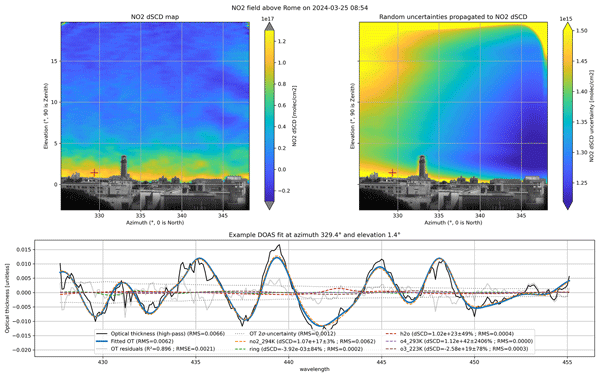
We present a new remote sensing instrument using hyperspectral imaging to observe the variability in space and time of the nitrogen dioxide concentration. We also show the results of its validation campaign in a challenging urban setting in Rome, showing very good agreement with two reference instruments. Having an imaging instrument rather than the currently state-of-the-art unidirectional spectrometers brings promising capability in the context of satellite product validation.
Monica Campanelli, Victor Estellés, Gaurav Kumar, Teruyuki Nakajima, Masahiro Momoi, Julian Gröbner, Stelios Kazadzis, Natalia Kouremeti, Angelos Karanikolas, Africa Barreto, Saulius Nevas, Kerstin Schwind, Philipp Schneider, Iiro Harju, Petri Kärhä, Henri Diémoz, Rei Kudo, Akihiro Uchiyama, Akihiro Yamazaki, Anna Maria Iannarelli, Gabriele Mevi, Annalisa Di Bernardino, and Stefano Casadio
Atmos. Meas. Tech., 17, 5029–5050, https://doi.org/10.5194/amt-17-5029-2024, https://doi.org/10.5194/amt-17-5029-2024, 2024
Short summary
Short summary
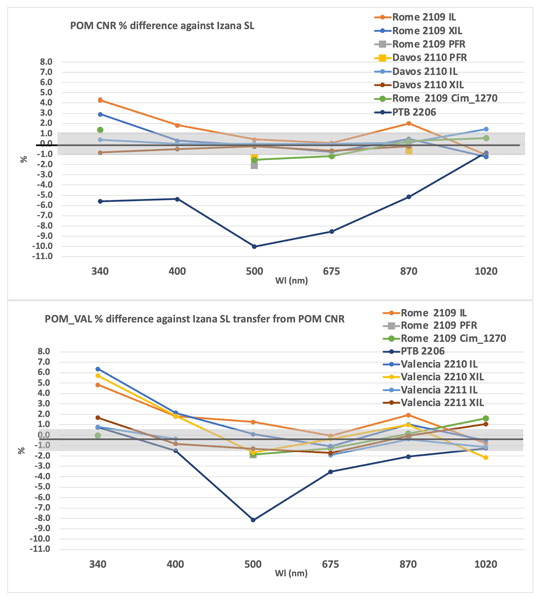
To retrieve columnar aerosol properties from sun photometers, some calibration factors are needed. The on-site calibrations, performed as frequently as possible to monitor changes in the machine conditions, allow operators to track and evaluate the calibration status on a continuous basis, reducing the data gaps incurred by the periodic shipments for performing centralized calibrations. The performance of the on-site calibration procedures was evaluated, providing very good results.
Daniela Meloni, Filippo Calì Quaglia, Virginia Ciardini, Annalisa Di Bernardino, Tatiana Di Iorio, Antonio Iaccarino, Giovanni Muscari, Giandomenico Pace, Claudio Scarchilli, and Alcide di Sarra
Earth Syst. Sci. Data, 16, 543–566, https://doi.org/10.5194/essd-16-543-2024, https://doi.org/10.5194/essd-16-543-2024, 2024
Short summary
Short summary
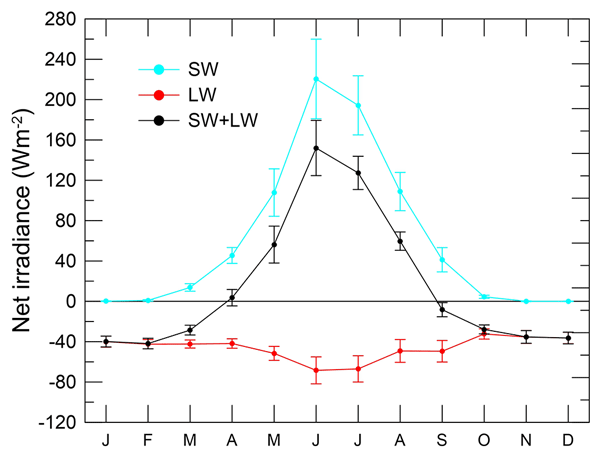
Solar and infrared radiation are key factors in determining Arctic climate. Only a few sites in the Arctic perform long-term measurements of the surface radiation budget (SRB). At the Thule High Arctic Atmospheric Observatory (THAAO, 76.5° N, 68.8° W) in Northern Greenland, solar and infrared irradiance measurements were started in 2009. These data are of paramount importance in studying the impact of the atmospheric (mainly clouds and aerosols) and surface (albedo) parameters on the SRB.
Pierre Gramme, Cedric Busschots, Emmanuel Dekemper, Didier Pieroux, Noel Baker, Stefano Casadio, Anna Maria Iannarelli, Nicola Ferrante, Annalisa Di Bernardino, Paolo Pettinari, Elisa Castelli, Luca Di Liberto, and Francesco Cairo
Atmos. Meas. Tech., 18, 6021–6037, https://doi.org/10.5194/amt-18-6021-2025, https://doi.org/10.5194/amt-18-6021-2025, 2025
Short summary
Short summary
We present a new remote sensing instrument using hyperspectral imaging to observe the variability in space and time of the nitrogen dioxide concentration. We also show the results of its validation campaign in a challenging urban setting in Rome, showing very good agreement with two reference instruments. Having an imaging instrument rather than the currently state-of-the-art unidirectional spectrometers brings promising capability in the context of satellite product validation.
Monica Campanelli, Victor Estellés, Gaurav Kumar, Teruyuki Nakajima, Masahiro Momoi, Julian Gröbner, Stelios Kazadzis, Natalia Kouremeti, Angelos Karanikolas, Africa Barreto, Saulius Nevas, Kerstin Schwind, Philipp Schneider, Iiro Harju, Petri Kärhä, Henri Diémoz, Rei Kudo, Akihiro Uchiyama, Akihiro Yamazaki, Anna Maria Iannarelli, Gabriele Mevi, Annalisa Di Bernardino, and Stefano Casadio
Atmos. Meas. Tech., 17, 5029–5050, https://doi.org/10.5194/amt-17-5029-2024, https://doi.org/10.5194/amt-17-5029-2024, 2024
Short summary
Short summary
To retrieve columnar aerosol properties from sun photometers, some calibration factors are needed. The on-site calibrations, performed as frequently as possible to monitor changes in the machine conditions, allow operators to track and evaluate the calibration status on a continuous basis, reducing the data gaps incurred by the periodic shipments for performing centralized calibrations. The performance of the on-site calibration procedures was evaluated, providing very good results.
Daniela Meloni, Filippo Calì Quaglia, Virginia Ciardini, Annalisa Di Bernardino, Tatiana Di Iorio, Antonio Iaccarino, Giovanni Muscari, Giandomenico Pace, Claudio Scarchilli, and Alcide di Sarra
Earth Syst. Sci. Data, 16, 543–566, https://doi.org/10.5194/essd-16-543-2024, https://doi.org/10.5194/essd-16-543-2024, 2024
Short summary
Short summary
Solar and infrared radiation are key factors in determining Arctic climate. Only a few sites in the Arctic perform long-term measurements of the surface radiation budget (SRB). At the Thule High Arctic Atmospheric Observatory (THAAO, 76.5° N, 68.8° W) in Northern Greenland, solar and infrared irradiance measurements were started in 2009. These data are of paramount importance in studying the impact of the atmospheric (mainly clouds and aerosols) and surface (albedo) parameters on the SRB.
G. Boccacci, F. Frasca, B. Bartolucci, L. Vergelli, C. Bertolin, and A. M. Siani
Int. Arch. Photogramm. Remote Sens. Spatial Inf. Sci., XLVIII-M-2-2023, 227–234, https://doi.org/10.5194/isprs-archives-XLVIII-M-2-2023-227-2023, https://doi.org/10.5194/isprs-archives-XLVIII-M-2-2023-227-2023, 2023

Monica Campanelli, Henri Diémoz, Anna Maria Siani, Alcide di Sarra, Anna Maria Iannarelli, Rei Kudo, Gabriele Fasano, Giampietro Casasanta, Luca Tofful, Marco Cacciani, Paolo Sanò, and Stefano Dietrich
Atmos. Meas. Tech., 15, 1171–1183, https://doi.org/10.5194/amt-15-1171-2022, https://doi.org/10.5194/amt-15-1171-2022, 2022
Short summary
Short summary
The aerosol optical depth (AOD) characteristics in an urban area of Rome were retrieved over a period of 11 years (2010–2020) to determine, for the first time, their effect on the incoming ultraviolet (UV) solar radiation. The surface forcing efficiency shows that the AOD is the primary parameter affecting the surface irradiance in Rome, and it is found to be greater for smaller zenith angles and for larger and more absorbing particles in the UV range (such as, e.g., mineral dust).
Ilias Fountoulakis, Henri Diémoz, Anna Maria Siani, Alcide di Sarra, Daniela Meloni, and Damiano M. Sferlazzo
Atmos. Chem. Phys., 21, 18689–18705, https://doi.org/10.5194/acp-21-18689-2021, https://doi.org/10.5194/acp-21-18689-2021, 2021
Short summary
Short summary
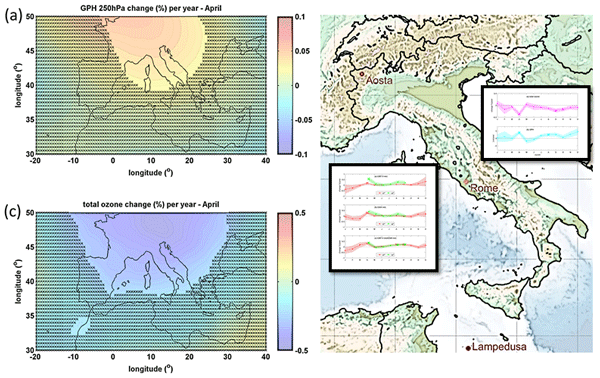
The variability and trends of solar spectral UV irradiance have been studied for the periods 1996–2020 (for Rome) and 2006–2020 (for Lampedusa, Rome, and Aosta) with respect to the variability and trends of total ozone and geopotential height. Analyses revealed increasing UV in particular months at all sites, possibly due to decreasing lower-stratospheric ozone (at Rome in 1996–2020) and decreasing attenuation by aerosols and/or clouds (at all stations in 2006–2020).
Cited articles
Beck, H. E., Zimmermann, N. E., McVicar, T. R., Vergopolan, N., Berg, A., and Wood, E. F.: Present and future Köppen-Geiger climate classification maps at 1 km resolution, Sci. Data, 5, 180214, https://doi.org/10.1038/sdata.2018.214, 2018.
Bedoya-Valestt, S., Azorin-Molina, C., Plaza-Martin, N. P., Minola, L., Gimeno, L., Andres-Martin, M., Vicente-Serrano, S. M., and Chen, D.: Weaker and more frequent Mediterranean Sea breezes in a warming climate, Sci. Rep., https://doi.org/10.1038/s41598-026-47025-4, 2026.
Bolton, D.: The computation of equivalent potential temperature, Mon. Weather Rev., 108, 1046–1053, https://doi.org/10.1175/1520-0493(1980)108<1046:TCOEPT>2.0.CO;2, 1980.
C3S/ECMWF and WMO: C3S-WMO European State of the Climate 2025, https://doi.org/10.24381/zy93-sb27, 2026.
Capozzi, V., Di Bernardino, A., and Budillon, G.: Changes in large-scale circulation behind the increase in extreme heat events in the Apennines (Italy), Atmos. Res., 319, 108013, https://doi.org/10.1016/j.atmosres.2025.108013, 2025.
Cecilia, A., Casasanta, G., Petenko, I., Conidi, A., and Argentini, S.: Measuring the urban heat island of Rome through a dense weather station network and remote sensing imperviousness data, Urban Clim., 47, 101355, https://doi.org/10.1016/j.uclim.2022.101355, 2023.
Cohen, J., Zhang, X., Francis, J., Jung, T., Kwok, R., Overland, J., Ballinger, T. J., Bhatt, U. S., Chen, H. W., Coumou, D., Feldstein, S., Gu, H., Handorf, D., Henderson, G., Ionita, M., Kretschmer, M., Laliberte, F., Lee, S., Linderholm, H. W., Maslowski, W., Peings, Y., Pfeiffer, K., Rigor, I., Semmler, T., Stroeve, J., Taylor, P. C., Vavrus, S., Vihma, T., Wang, S., Wendisch, M., Wu, Y., and Yoon, J.: Divergent consensuses on Arctic amplification influence on midlatitude severe winter weather, Nat. Clim. Change, 10, 20–29, https://doi.org/10.1038/s41558-019-0662-y, 2020.
Cos, J., Doblas-Reyes, F., Jury, M., Marcos, R., Bretonnière, P.-A., and Samsó, M.: The Mediterranean climate change hotspot in the CMIP5 and CMIP6 projections, Earth Syst. Dynam., 13, 321–340, https://doi.org/10.5194/esd-13-321-2022, 2022.
Coumou, D., Di Capua, G., Vavrus, S., Wang, L., and Wang, S.: The influence of Arctic amplification on mid-latitude summer circulation, Nat. Commun., 9, 2959, https://doi.org/10.1038/s41467-018-05256-8, 2018.
Cramer, W., Guiot, J., Fader, M., Garrabou, J., Gattuso, J. P., Iglesias, A., Lange, M. A., Lionello, P., Llasat, M. C., Paz, S., Peñuelas, J., Snoussi, M., Toreti, A., Tsimplis, M. N., and Xoplaki, E.: Climate change and interconnected risks to sustainable development in the Mediterranean, Nat. Clim. Chang., 8, 972–980, https://doi.org/10.1038/s41558-018-0299-2, 2018.
Di Bernardino, A., Iannarelli, A. M., Casadio, S., Mevi, G., Campanelli, M., Casasanta, G., Cede, A., Tiefengraber, M., Spinei, E., and Cacciani, M.: On the effect of sea breeze regime on aerosols and gases properties in the urban area of Rome, Italy, Urban Clim., 37, 100842, https://doi.org/10.1016/j.uclim.2021.100842, 2021.
Di Bernardino, A., Mazzarella, V., Pecci, M., Casasanta, G., Cacciani, M., and Ferretti, R.: Interaction of the sea breeze with the urban area of Rome: WRF mesoscale and WRF large-eddy simulations compared to ground-based observations, Bound.-Lay. Meteorol., 185, 333–363, https://doi.org/10.1007/s10546-022-00734-5, 2022.
Di Bernardino, A., Falasca, S., Iannarelli, A. M., Casadio, S., and Siani, A. M.: Effect of heatwaves on urban sea breeze, heat island intensity, and outdoor thermo-hygrometric comfort in Rome (Italy), Urban Clim., 52, 101735, https://doi.org/10.1016/j.uclim.2023.101735, 2023.
Di Bernardino, A., Iannarelli, A. M., Casadio, S., and Siani, A. M.: Winter warm spells over Italy: Spatial–temporal variation and large-scale atmospheric circulation, Int. J. Climatol., 44, 1262–1275, https://doi.org/10.1002/joc.8388, 2024.
Di Bernardino, A., Argentini, S., Brattich, E., Campanelli, M., Casasanta, G., Cecilia, A., Erriu, M., Falasca, S., Faggi, A., and Siani, A. M.: Influence of atmospheric parameters on the interaction between Urban Heat and Pollution Islands in a Mediterranean coastal city, Atmos. Res., 108702, https://doi.org/10.1016/j.atmosres.2025.108702, 2025.
Draxler, R. R. and Rolph, G. D.: HYSPLIT (HYbrid Single-Particle Lagrangian Integrated Trajectory) model access via NOAA ARL READY website, NOAA Air Resources Laboratory, Silver Spring, MD, 25, http://ready.arl.noaa.gov/HYSPLIT.php (last access: 2 September 2026), 2010.
Duchez, A., Frajka-Williams, E., Josey, S. A., Evans, D. G., Grist, J. P., Marsh, R., McCarthy, G. D., Sinha, B., Berry, D. I., and Hirschi, J. J.: Drivers of exceptionally cold North Atlantic Ocean temperatures and their link to the 2015 European heat wave, Environ. Res. Lett., 11, 074004, https://doi.org/10.1088/1748-9326/11/7/074004, 2016.
Fix-Hewitt, F., Zeileis, A., Stucke, I., Stauffer, R., and Mayr, G. J.: Properties and characteristics of atmospheric deserts over Europe: a first statistical analysis, Weather Clim. Dynam., 7, 17–35, https://doi.org/10.5194/wcd-7-17-2026, 2026a.
Fix-Hewitt, F., Zeileis, A., Stucke, I., Stauffer, R., and Mayr, G. J.: Co-occurrence of atmospheric deserts over Europe with strong positive temperature anomalies, thunderstorms, and dust events, Weather Clim. Dynam., 7, 2133–2153, https://doi.org/10.5194/wcd-7-2133-2026, 2026b.
Francis, J. A., Vavrus, S. J., and Cohen, J.: Amplified Arctic warming and mid-latitude weather: New perspectives on emerging connections, WIRES Climate Change, 8, e474, https://doi.org/10.1002/wcc.474, 2017.
Giannakopoulos, C., Le Sager, P., Bindi, M., Moriondo, M., Kostopoulou, E., and Goodess, C. M.: Climatic changes and associated impacts in the Mediterranean resulting from a 2 C global warming, Glob. Planet. Change, 68, 209–224, https://doi.org/10.1016/j.gloplacha.2009.06.001, 2009.
Giorgi, F.: Climate change hot-spots, Geophys. Res. Lett., 33, L08707, https://doi.org/10.1029/2006GL025734, 2006.
Gobbi, G. P., Barnaba, F., Di Liberto, L., Bolignano, A., Lucarelli, F., Nava, S., Perrino, C., Pietrodangelo, A., Basart, S., Costabile, F., Dionisi, D., Rizza, U., Canepari, S., Sozzi, R., Morelli, M., Manigrasso, M., Drewnick, F., Struckmeier, C., Poenitz, K., and Wille, H.: An inclusive view of Saharan dust advections to Italy and the Central Mediterranean, Atmos. Environ., 201, 242–256, https://doi.org/10.1016/j.atmosenv.2019.01.002, 2019.
Hassoun, A. E. R., Mojtahid, M., Merheb, M., Lionello, P., Gattuso, J. P., and Cramer, W.: Climate change risks on key open marine and coastal mediterranean ecosystems, Sci. Rep., 15, 24907, https://doi.org/10.1038/s41598-025-07858-x, 2025.
Hersbach, H. and National Center for Atmospheric Research (NCAR) Staff (Eds.): The Climate Data Guide: ERA5 atmospheric reanalysis, https://climatedataguide.ucar.edu/climate-data/era5-atmospheric-reanalysis, last access: 7 July 2026.
Hersbach, H., Bell, B., Berrisford, P., Hirahara, S., Horányi, A., Muñoz-Sabater, J., Nicolas, J., Peubey, C., Radu, R., Schepers, D., Simmons, A., Soci, C., Abdalla, S., Abellan, X., Balsamo, G., Bechtold, P., Biavati, G., Bidlot, J., Bonavita, M., De Chiara, G., Dahlgren, P., Dee, D., Diamantakis, M., Dragani, R., Flemming, J., Forbes, R., Fuentes, M., Geer, A., Haimberger, L., Healy, S., Hogan, R. J., Hólm, E., Janisková, M., Keeley, S., Laloyaux, P., Lopez, P., Lupu, C., Radnoti, G., de Rosnay, P., Rozum, I., Vamborg, F., Villaume, S., and Thépaut, J.-N.: The ERA5 global reanalysis, Q. J. R. Meteorol. Soc., 146, 1999–2049, https://doi.org/10.1002/qj.3803, 2020.
Hirsch, A. L. and King, M. J.: Atmospheric and land surface contributions to heatwaves: An Australian perspective, J. Geophys. Res.-Atmos., 125, e2020JD033223, https://doi.org/10.1029/2020JD033223, 2020.
Hirsch, R. M. and Slack, J. R.: A nonparametric trend test for seasonal data with serial dependence, Water Resour. Res., 20, 727–732, https://doi.org/10.1029/WR020i006p00727, 1984.
Hotz, B., Papritz, L., and Röthlisberger, M.: Understanding the vertical temperature structure of recent record-shattering heatwaves, Weather Clim. Dynam., 5, 323–343, https://doi.org/10.5194/wcd-5-323-2024, 2024.
Hotz, B., Wernli, H., Röthlisberger, M., and Noyelle, R.: Global characterisation of the vertical temperature anomaly structure of heat extremes over land in ERA5, Weather Clim. Dynam., 7, 1875–1897, https://doi.org/10.5194/wcd-7-1875-2026, 2026.
Kendall, M. G. and Gibbons, J. D.: Rank correlation methods, Griffin, London, ISBN 0852641990, 1962.
Lhotka, O. and Kyselý, J.: Three-dimensional analysis reveals diverse heat wave types in Europe, Commun. Earth Environ., 5, 323, https://doi.org/10.1038/s43247-024-01497-2, 2024.
Lhotka, O., Kyselý, J., and Plavcová, E.: Evaluation of major heat waves' mechanisms in EURO-CORDEX RCMs over Central Europe, Clim. Dynam., 50, 4249–4262, https://doi.org/10.1007/s00382-017-3873-9, 2018.
Lin, F. and Li, C.: Do economic impacts of heat waves vary across climates? Evidence from Chinese cities, Urban Clim., 67, 102853, https://doi.org/10.1016/j.uclim.2026.102853, 2026.
Mahecha, M. D., Bastos, A., Bohn, F. J., Eisenhauer, N., Feilhauer, H., Hickler, T., Kalesse-Los, H. , Migliavacca, M., Otto, F. E. L., Peng, J., Sippel, S., Tegen, I., Weigelt, A., Wendisch, M., Wirth, C., Al-Halbouni, D., Deneke, H., Doktor, D., Dunker, S., Duveiller, G., Ehrlich, A., Foth, A., García-García, A., Guerra, C. A., Guimarães-Steinicke, C., Hartmann, H., Henning, S., Herrmann, H., Hu, P., Ji, C., Kattenborn, T., Kolleck, N., Kretschmer, M., Kühn, I., Luttkus, M. L., Maahn, M., Mönks, M., Mora, K., Pöhlker, M., Reichstein, M., Rüger, N., Sánchez-Parra, B., Schäfer, M., Stratmann, F., Tesche, M., Wehner, B., Wieneke, S., Winkler, A. J., Wolf, S., Zaehle, S., Zscheischler, J., and Quaas, J.: Biodiversity and climate extremes: Known interactions and research gaps, Earths Future, 12, e2023EF003963, https://doi.org/10.1029/2023EF003963, 2024.
Mann, H. B.: Nonparametric tests against trend, Econometrica, 245–259, https://doi.org/10.2307/1907187, 1945.
Margolis, H. G.: Heat Waves and Rising Temperatures: Human Health Impacts and the Determinants of Vulnerability, in: Climate Change and Global Public Health, edited by: Pinkerton, K. E. and Rom, W. N., Respiratory Medicine, Humana, Cham, https://doi.org/10.1007/978-3-030-54746-2_7, 2020.
Miralles, D. G., Teuling, A. J., Van Heerwaarden, C. C., and Vilà-Guerau de Arellano, J.: Mega-heatwave temperatures due to combined soil desiccation and atmospheric heat accumulation, Nat. Geosci., 7, 345–349, https://doi.org/10.1038/ngeo2141, 2014.
Molina, M. O., Sánchez, E., and Gutiérrez, C.: Future heat waves over the Mediterranean from an Euro-CORDEX regional climate model ensemble, Sci. Rep., 10, 8801, https://doi.org/10.1038/s41598-020-65663-0, 2020.
Nogueira, M., Hurduc, A., Ermida, S., Lima, D. C. A., Soares, P. M. M., Johannsen, F., and Dutra, E.: Assessment of the Paris urban heat island in ERA5 and offline SURFEX-TEB (v8.1) simulations using the METEOSAT land surface temperature product, Geosci. Model Dev., 15, 5949–5965, https://doi.org/10.5194/gmd-15-5949-2022, 2022.
Pastor, F., Valiente, J. A., and Khodayar, S.: A warming Mediterranean: 38 years of increasing sea surface temperature, Remote Sens., 12, 2687, https://doi.org/10.3390/rs12172687, 2020.
Perkins-Kirkpatrick, S. E. and Lewis, S. C.: Increasing trends in regional heatwaves, Nat. Commun., 11, 3357, https://doi.org/10.1038/s41467-020-16970-7, 2020.
Pettitt, A. N.: A non-parametric approach to the change-point problem, J. Roy. Stat. Soc. C App., 28, 126–135, https://doi.org/10.2307/2346729, 1979.
Pfahl, S., Schwierz, C., Croci-Maspoli, M., Grams, C. M., and Wernli, H.: Importance of latent heat release in ascending air streams for atmospheric blocking, Nat. Geosci., 8, 610–614, https://doi.org/10.1038/ngeo2487, 2015.
Previdi, M., Smith, K. L., and Polvani, L. M.: Arctic amplification of climate change: a review of underlying mechanisms, Environ. Res. Lett., 16, 093003, https://doi.org/10.1088/1748-9326/ac1c29, 2021.
Röthlisberger, M. and Papritz, L.: Quantifying the physical processes leading to atmospheric hot extremes at a global scale, Nat. Geosci., 16, 210–216, https://doi.org/10.1038/s41561-023-01126-1, 2023.
Rousi, E., Kornhuber, K., Beobide-Arsuaga, G., Luo, F., and Coumou, D.: Accelerated western European heatwave trends linked to more-persistent double jets over Eurasia, Nat. Commun., 13, 3851, https://doi.org/10.1038/s41467-022-31432-y, 2022.
Sadhukhan, B., Mukherjee, S., and Samanta, R. K.: A study of global temperature anomalies and their changing trends due to global warming, 14th International Conference on Computational Intelligence and Communication Networks (CICN), IEEE, 660–666, https://doi.org/10.1109/CICN56167.2022.10008329, 2022.
Seneviratne, S. I., Corti, T., Davin, E. L., Hirschi, M., Jaeger, E. B., Lehner, I., Orlowsky, B., and Teuling, A. J.: Investigating soil moisture–climate interactions in a changing climate: A review, Earth-Sci. Rev., 99, 125–161, https://doi.org/10.1016/j.earscirev.2010.02.004, 2010.
Seneviratne, S. I., Zhang, X., Adnan, M., Badi, W., Dereczynski, C., Di Luca, A., Ghosh, S., Iskandar, I., Kossin, J., Lewis, S., Otto, F., Pinto, I., Satoh, M., Vicente-Serrano, S. M., Wehner, M., and Zhou, B.: Weather and Climate Extreme Events in a Changing Climate, in: Climate Change 2021: The Physical Science Basis, Contribution of Working Group I to the Sixth Assessment Report of the Intergovernmental Panel on Climate Change, Cambridge University Press, Cambridge, United Kingdom and New York, NY, USA, 1513–1766, https://doi.org/10.1017/9781009157896.013, 2021.
Sousa, P. M., Trigo, R. M., Barriopedro, D., Soares, P. M., and Santos, J. A.: European temperature responses to blocking and ridge regional patterns, Clim. Dyn., 50, 457–477, https://doi.org/10.1007/s00382-017-3620-2, 2018.
Stéfanon, M., Drobinski, P., D'Andrea, F., Lebeaupin-Brossier, C., and Bastin, S.: Soil moisture-temperature feedbacks at meso-scale during summer heat waves over Western Europe, Clim. Dyn., 42, 1309–1324, https://doi.org/10.1007/s00382-013-1794-9, 2014.
Woollings, T., Barriopedro, D., Methven, J., Son, S. W., Martius, O., Harvey, B., Sillmann, J., Rupo, A. R., and Seneviratne, S.: Blocking and its response to climate change, Curr. Clim. Change Rep., 4, 287–300, https://doi.org/10.1007/s40641-018-0108-z, 2018.
World Meteorological Organization: WMO Guidelines on the Calculation of Climate Normals, World Meteorological Organization, Geneva, WMO-No. 1203, ISBN 978-92-63-11203-3, 2017.
World Meteorological Organization: Commission for weather, climate, water and related environmental services and applications, Modernization of the WMO state of the climate monitoring, https://meetings.wmo.int/SERCOM-2/_layouts/15/WopiFrame.aspx?sourcedoc=%7b422E11CE-62D1-42B5-800D-D1E482C1606F%7d&file=SERCOM-2-d05-5(2)-MODERNIZATION-STATE-OF-CLIMATE-MONITORING-draft1_en.docx&action=default (last access: 7 July 2026), 2022.
World Meteorological Organization (WMO) and World Health Organization (WHO): Heatwaves and Health: Guidance on Warning-System Development, edited by: McGregor, G. R., Bessemoulin, P., Ebi, K. L., and Menne, B., World Meteorological Organization, Geneva, WMO-No. 1142, ISBN 978-92-63-11142-5, 2015.
Yue, S. and Wang, C.: The Mann-Kendall test modified by effective sample size to detect trend in serially correlated hydrological series, Water Resour. Manag., 18, 201–218, https://doi.org/10.1023/B:WARM.0000043140.61082.60, 2004.
Zhang, X., Alexander, L., Hegerl, G. C., Jones, P., Tank, A. K., Peterson, T. C., Trewin, B., and Zwiers, F. W.: Indices for monitoring changes in extremes based on daily temperature and precipitation data, WIRES Climate Change, 2, 851–870, https://doi.org/10.1002/wcc.147, 2011.
Zhu, J., Zhu, S., Yu, F., Zhang, G., and Xu, Y.: A downscaling method for ERA5 reanalysis land surface temperature over urban and mountain areas, Nat. Remote Sens. Bull., 25, 1778–1791, https://doi.org/10.11834/jrs.20211257, 2021.
Zittis, G., Hadjinicolaou, P., Almazroui, M., Bucchignani, E., Driouech, F., El Rhaz, K., Kurnaz, L., Nikulin, G., Ntoumos, A., Ozturk, T., Proestos, Y., Stenchikov, G., Zaaboul, R., and Lelieveld, J.: Business-as-usual will lead to super and ultra-extreme heatwaves in the Middle East and North Africa, Npj Clim. Atmos. Sci., 4, 20, https://doi.org/10.1038/s41612-021-00178-7, 2021.
Zschenderlein, P., Fink, A. H., Pfahl, S., and Wernli, H.: Processes determining heat waves across different European climates, Q. J. R. Meteorol. Soc., 145, 2973–2989, https://doi.org/10.1002/qj.3599, 2019.
Short summary
Climate change accelerates extreme warm events in the Mediterranean, yet their vertical structure remains unclear. Using 35 years of atmospheric reanalysis data over Rome, we classified these extremes into five distinct vertical regimes. Our results show a sharp post-2015 increase in deep-column, vertically coupled warming events. This transition toward synoptically controlled extremes can suppress local sea breezes, intensifying urban heat risk.
Climate change accelerates extreme warm events in the Mediterranean, yet their vertical...


Altmetrics
Final-revised paper
Preprint