
Articles | Volume 6, issue 4
https://doi.org/10.5194/wcd-6-1723-2025
© Author(s) 2025. This work is distributed under
the Creative Commons Attribution 4.0 License.
the Creative Commons Attribution 4.0 License.
https://doi.org/10.5194/wcd-6-1723-2025
© Author(s) 2025. This work is distributed under
the Creative Commons Attribution 4.0 License.
the Creative Commons Attribution 4.0 License.
Research article
| 
05 Dec 2025
Research article |
| 05 Dec 2025
| 05 Dec 2025
Hectometric-scale modelling of the mixed layer in an urban region evaluated with a dense LiDAR-ceilometer network
Russell H. Glazer
CORRESPONDING AUTHOR

Department of Meteorology, University of Reading, Reading, United Kingdom
Sue Grimmond
Department of Meteorology, University of Reading, Reading, United Kingdom
Lewis Blunn
MetOffice@Reading, University of Reading, Reading, United Kingdom
Daniel Fenner
Chair of Environmental Meteorology, University of Freiburg, Freiburg, Germany
Chair of Climatology, Technische Universität Berlin, Berlin, Germany
Humphrey Lean
MetOffice@Reading, University of Reading, Reading, United Kingdom
Andreas Christen
Chair of Environmental Meteorology, University of Freiburg, Freiburg, Germany
Will Morrison
Chair of Environmental Meteorology, University of Freiburg, Freiburg, Germany
School of GeoSciences, University of Edinburgh, Edinburgh, United Kingdom
Dana Looschelders
Chair of Environmental Meteorology, University of Freiburg, Freiburg, Germany
Jonathan K. P. Shonk
MetOffice@Reading, University of Reading, Reading, United Kingdom
Related authors
No articles found.
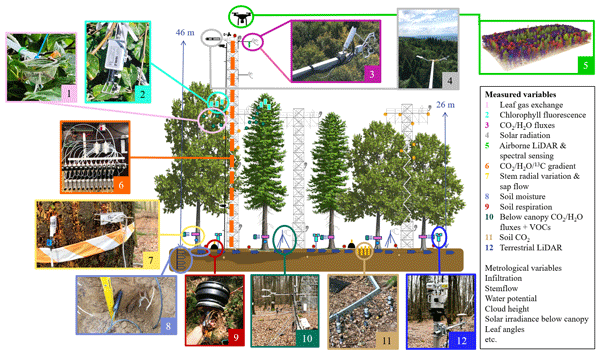
Jasmin Tesch, Kathrin Kühnhammer, Delon Wagner, Andreas Christen, Carsten Dormann, Julian Frey, Rüdiger Grote, Teja Kattenborn, Markus Sulzer, Ulrike Wallrabe, Markus Weiler, Christiane Werner, Samaneh Baghbani, Julian Brzozon, Laura Maria Comella, Lea Dedden, Stefanie Dumberger, Yasmina Frey, Matthias Gassilloud, Timo Gerach, Anna Göritz, Simon Haberstroh, Johannes Klüppel, Luis Kremer, Jürgen Kreuzwieser, Hojin Lee, Joachim Maack, Julian Müller, Oswald Prucker, Sanam K. Rajak, Jürgen Rühe, Stefan J. Rupitsch, Helmer Schack-Kirchner, Christian Scharinger, Uttunga Shinde, Till Steinmann, Clara Stock, and Josef Strack
Geosci. Instrum. Method. Data Syst., 15, 253–272, https://doi.org/10.5194/gi-15-253-2026, https://doi.org/10.5194/gi-15-253-2026, 2026
Short summary
Short summary
In the ECOSENSE forest, we developed a robust infrastructure for distributed forest sensing. Reliable power supply, stable network connection, and smart data collection systems enable the operation of hundreds of sensors under challenging conditions. By detailing the infrastructure design and implementation, we provide a transferable blueprint for building complex monitoring sites that support high-resolution, long-term ecosystem observations.
Frederik Bart, Marco Otto, Daniel Fenner, Henning W. Rust, Fred Meier, Achim Holtmann, Benjamin Schmidt, and Dieter Scherer
EGUsphere, https://doi.org/10.5194/egusphere-2026-5231, https://doi.org/10.5194/egusphere-2026-5231, 2026
This preprint is open for discussion and under review for Natural Hazards and Earth System Sciences (NHESS).
Short summary
Short summary
Extreme rainfall poses a growing risk across Central Europe, and the Berlin-Brandenburg region in particular. We examined how extreme daily rainfall changed over 45 years, combining rain gauge records with weather simulations. We found spring extremes weakened while summer extremes grew stronger and vary greatly by location. Autumn extremes also increased, while winter changed little. These shifts suggest previous planning assumptions about intense rainfall may no longer hold for the region.
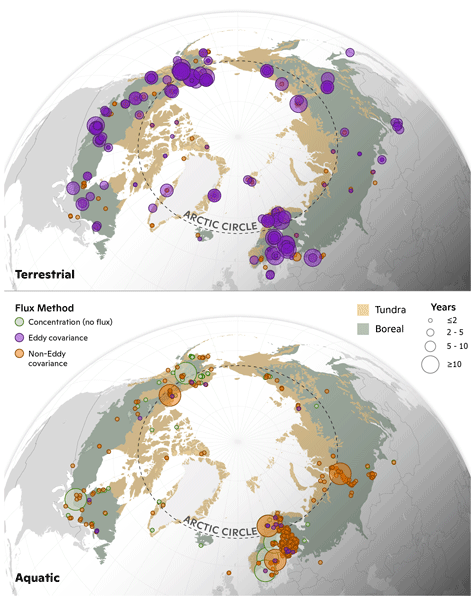
Anna-Maria Virkkala, Isabel Wargowsky, Judith Vogt, McKenzie A. Kuhn, Simran Madaan, Tiffany Windholz, Kyle A. Arndt, Gerard Rocher-Ros, Mathias Göckede, David Olefeldt, Edward A. G. Schuur, David Bastviken, Richard O'Keefe, Brendan M. Rogers, Jennifer D. Watts, Kelcy Kent, Kristoffer Aalstad, Kelly Aho, Joonatan Ala-Könni, Haley Alcock, Inge Althuizen, Christopher D. Arp, Jun Asanuma, Mika Aurela, Sivakiruthika Balathandayuthabani, Katrin Attermeyer, Alan Barr, Maialen Barret, Ochirbat Batkhishig, Christina Biasi, Mats P. Björkman, Andrew Black, Elena Blanc-Betes, Pascal Bodmer, Julia Boike, Abdullah Bolek, Frédéric Bouchard, Ingeborg Bussmann, Lea Cabrol, Eleonora Canfora, Sean Carey, Karel Castro-Morales, Namyi Chae, Andreas Christen, Torben R. Christensen, Casper T. Christiansen, Housen Chu, Graham Clark, Francois Clayer, Patrick Crill, Christopher Cunada, Scott J. Davidson, Joshua F. Dean, Sigrid Dengel, Matteo Detto, Catherine Dieleman, Florent Domine, Egor Dyukarev, Colin Edgar, Bo Elberling, Craig A. Emmerton, Eugenie Euskirchen, Grant Falvo, Thomas Friborg, Michelle Garneau, Mariasilvia Giamberini, Mikhail V. Glagolev, Miquel A. Gonzalez-Meler, Gustaf Granath, Jón Guðmundsson, Konsta Happonen, Yoshinobu Harazono, Lorna Harris, Josh Hashemi, Nicholas Hasson, Janna Heerah, Liam Heffernan, Manuel Helbig, Warren Helgason, Michal Heliasz, Greg Henry, Geert Hensgens, Tetsuya Hiyama, Beth Holmes, Macall Hock, David Holl, Jutta Holst, Thomas Holst, Gabriel Hould-Gosselin, Elyn Humphreys, Jacqueline Hung, Jussi Huotari, Hiroki Ikawa, Danil V. Ilyasov, Mamoru Ishikawa, Go Iwahana, Hiroki Iwata, Marcin Antoni Jackowicz-Korczynski, Joachim Jansen, Järvi Järveoja, Vincent E. J. Jassey, Rasmus Jensen, Katharina Jentzsch, Robert G. Jespersen, Carl-Fredrik Johannesson, Cheristy P. Jones, Anders Jonsson, Ji Young Jung, Sari Juutinen, Evan Kane, Jan Karlsson, Sergey Karsanaev, Kuno Kasak, Julia Kelly, Kasha Kempton, Marcus Klaus, George W. Kling, Natascha Kljun, Jacqueline Knutson, Hideki Kobayashi, John Kochendorfer, Kukka-Maaria Kohonen, Pasi Kolari, Mika Korkiakoski, Aino Korrensalo, Pirkko Kortelainen, Egle Koster, Kajar Koster, Ayumi Kotani, Praveena Krishnan, Juliya Kurbatova, Lars Kutzbach, Min Jung Kwon, Ethan D. Kyzivat, Jessica Lagroix, Theodore Langhorst, Elena Lapshina, Tuula Larmola, Klaus S. Larsen, Isabelle Laurion, Justin Ledman, Hanna Lee, A. Joshua Leffler, Lance Lesack, Anders Lindroth, David Lipson, Annalea Lohila, Efrén López-Blanco, Vincent L. St. Louis, Erik Lundin, Miska Luoto, Takashi Machimura, Marta Magnani, Avni Malhotra, Marja Maljanen, Ivan Mammarella, Elisa Männistö, Luca Belelli Marchesini, Phil Marsh, Pertti J. Martikainen, Maija E. Marushchak, Mikhail Mastepanov, Alex Mavrovic, Trofim Maximov, Christina Minions, Daniel F. Nadeau, Marco Montemayor, Tomoaki Morishita, Patrick Murphy, Erin Nicholls, Mats B. Nilsson, Anastasia Niyazova, Jenni Nordén, Koffi Dodji Noumonvi, Hannu Nykänen, Walter Oechel, Anne Ojala, Tomohiro Okadera, Sujan Pal, Alexey V. Panov, Tim Papakyriakou, Dario Papale, Sang-Jong Park, Frans-Jan W. Parmentier, Gilberto Pastorello, Mike Peacock, Matthias Peichl, Roman Petrov, Kyra St. Pierre, Norbert Pirk, Jessica Plein, Vilmantas Preskienis, Anatoly Prokushkin, Jukka Pumpanen, Hilary A. Rains, Niklas Rakos, Aleksi Räsänen, Helena Rautakoski, Riikka Rinnan, Janne Rinne, Adrian Rocha, Nigel Roulet, Alexandre Roy, Anna Rutgersson, Aleksandr F. Sabrekov, Torsten Sachs, Erik Sahlée, Alejandro Salazar, Henrique Oliveira Sawakuchi, Christopher Schulze, Roger Seco, Armando Sepulveda-Jauregui, Svetlana Serikova, Abbey Serrone, Hanna M. Silvennoinen, Sofie Sjogersten, June Skeeter, Jo Snöälv, Sebastian Sobek, Oliver Sonnentag, Emily H. Stanley, Maria Strack, Lena Strom, Patrick Sullivan, Ryan Sullivan, Anna Sytiuk, Torbern Tagesson, Pierre Taillardat, Julie Talbot, Suzanne E. Tank, Mario Tenuta, Irina Terenteva, Frederic Thalasso, Antoine Thiboult, Halldor Thorgeirsson, Fenix Garcia Tigreros, Margaret Torn, Amy Townsend-Small, Claire Treat, Alain Tremblay, Carlo Trotta, Eeva-Stiina Tuittila, Merritt Turetsky, Masahito Ueyama, Muhammad Umair, Aki Vähä, Lona van Delden, Maarten van Hardenbroek, Andrej Varlagin, Ruth K. Varner, Tarmo Virtanen, Elena Veretennikova, Timo Vesala, Carolina Voigt, Jorien E. Vonk, Robert Wagner, Katey Walter Anthony, Qinxue Wang, Masataka Watanabe, Hailey Webb, Jeffrey M. Welker, Andreas Westergaard-Nielsen, Sebastian Westermann, Jeffrey R. White, Christian Wille, Scott N. Williamson, Scott Zolkos, Donatella Zona, and Susan M. Natali
Earth Syst. Sci. Data, 18, 6357–6409, https://doi.org/10.5194/essd-18-6357-2026, https://doi.org/10.5194/essd-18-6357-2026, 2026
Short summary
Short summary
This dataset includes monthly measurements of carbon dioxide and methane exchange between land, water, and the atmosphere from over 1000 sites in Arctic and boreal regions. It combines measurements from a variety of ecosystems, including wetlands, forests, tundra, lakes, and rivers, gathered by over 260 researchers from 1984–2024. This dataset can be used to improve and reduce uncertainty in carbon budgets in order to strengthen our understanding of climate feedbacks in a warming world.
Alohotsy Rafalimanana, Thomas Lauvaux, Charbel Abdallah, Mali Chariot, Michel Ramonet, Josselin Doc, Olivier Laurent, Morgan Lopez, Anja Raznjevic, Maarten Krol, Leena Järvi, Andreas Christen, Dana Looschelders, Leslie David, Olivier Sanchez, Laura Bignotti, Benjamin Loubet, Sue Grimmond, and William Morrison
EGUsphere, https://doi.org/10.5194/egusphere-2026-2581, https://doi.org/10.5194/egusphere-2026-2581, 2026
Short summary
Short summary
Using WRF-Chem simulations over Greater Paris at resolutions from 900 m to 100 m (LES), we show that horizontal resolution critically shapes urban CO2 plume structure. Mesoscale runs underestimate spatial contrasts by a factor of 2–3, with representativeness errors of 29–61 % (near-surface) and 21–59 % (XCO2). LES improves intra-urban variability and enables more accurate spatial attribution of emissions, a key step toward reliable top-down estimates for city-scale climate mitigation.
Dana Looschelders, Andreas Christen, Sue Grimmond, Simone Kotthaus, and William Morrison
EGUsphere, https://doi.org/10.5194/egusphere-2026-2444, https://doi.org/10.5194/egusphere-2026-2444, 2026
Short summary
Short summary
Using seven automatic lidar-ceilometers located on a 105 km transect in the Paris region, we investigate modifications of the mixed-layer height (MLH) dynamics. Over and downwind of Paris, MLHs are deeper and grow faster during the morning transition. In summer, the spatial extent of urban effects (> 60 km downwind) and absolute MLH spatial differences are larger. In winter, relative MLH differences are larger. The MLH is deeper in the city at the start of the morning transition.
Alohotsy Rafalimanana, Thomas Lauvaux, Charbel Abdallah, Mali Chariot, Michel Ramonet, Josselin Doc, Olivier Laurent, Morgan Lopez, Anja Raznjevic, Maarten Krol, Leena Järvi, Andreas Christen, Dana Looschelders, Leslie David, Olivier Sanchez, Laura Bignotti, Benjamin Loubet, Sue Grimmond, and William Morrison
EGUsphere, https://doi.org/10.5194/egusphere-2026-2109, https://doi.org/10.5194/egusphere-2026-2109, 2026
Short summary
Short summary
This study explores how city design and buildings affect CO2 levels in the air over Paris. Using a transport model, we tested different urban canopy models to represent the city environment and its influence on air motion. We found that realistic descriptions of urban surfaces are crucial, especially in winter, for accurately showing how CO2 builds up and disperses, leading to better satellite monitoring of city CO2 emissions.
Robert Schoetter, Cyril Caliot, Florent Retailleau, Tim Nagel, Christophe Coustet, Vincent Eymet, Vincent Forest, Frédéric Hourdin, Atsushi Inagaki, Simone Kotthaus, Valéry Masson, William Morrison, and Najda Villefranque
EGUsphere, https://doi.org/10.5194/egusphere-2026-2061, https://doi.org/10.5194/egusphere-2026-2061, 2026
This preprint is open for discussion and under review for Geoscientific Model Development (GMD).
Short summary
Short summary
Temperature, humidity, radiation, and wind can have a negative impact on human comfort and infrastructure in urban areas. Building-resolving meteorological models can help to quantify such meteorological impacts and the potential benefits of adaptation measures to climate change. Here, a new unified algorithm to calculate the radiation, heat conduction, and sensible heat exchange in urban areas is coupled with an atmospheric model, and evaluated against experimental data.
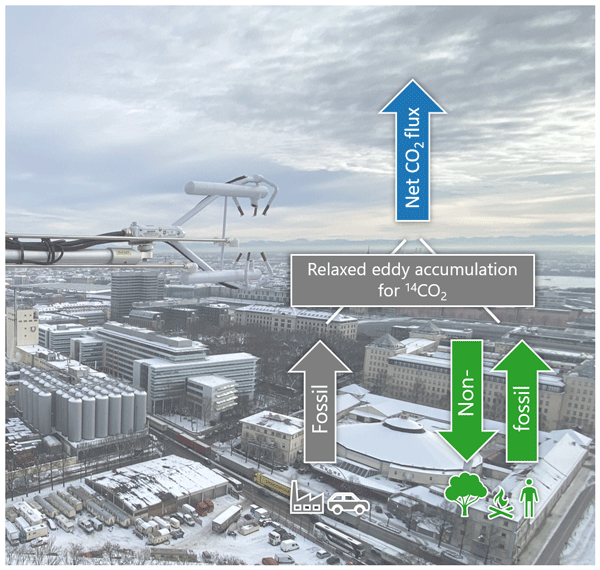
Ann-Kristin Kunz, Samuel Hammer, Patrick Aigner, Laura Bignotti, Lars Borchardt, Jia Chen, Julian Della Coletta, Lukas Emmenegger, Markus Eritt, Xochilt Gutiérrez, Josh Hashemi, Rainer Hilland, Christopher Holst, Armin Jordan, Natascha Kljun, Richard Kneißl, Changxing Lan, Virgile Legendre, Ingeborg Levin, Benjamin Loubet, Matthias Mauder, Betty Molinier, Susanne Preunkert, Michel Ramonet, Stavros Stagakis, and Andreas Christen
Atmos. Chem. Phys., 26, 4967–5003, https://doi.org/10.5194/acp-26-4967-2026, https://doi.org/10.5194/acp-26-4967-2026, 2026
Short summary
Short summary
We present radiocarbon (14C)-based fossil fuel CO2 fluxes from relaxed eddy accumulation measurements on tall towers in the cities of Zurich, Paris, and Munich. By separating net CO2 fluxes into fossil and non-fossil components, these data reveal significant and variable contributions from human, plant, and soil respiration, as well as point-source emissions. These unique insights into CO2 flux composition offer crucial information for observation-based validation of urban emission estimates.
Yuya Takane, Yukihiro Kikegawa, Zhiwen Luo, Hiroyuki Kusaka, and Sue Grimmond
EGUsphere, https://doi.org/10.5194/egusphere-2026-1307, https://doi.org/10.5194/egusphere-2026-1307, 2026
Short summary
Short summary
We developed and released the single-layer urban canopy model coupled with building energy model v2. This incorporates a new scheme enabling dynamic changes in indoor temperature. This allows the model to be applied not only to air-conditioned conditions but also to non-air-conditioned scenarios, making it applicable to all seasons and cities worldwide. This upgrade facilitates the assessment of climate change adaptation measures for both outdoor and indoor environments.
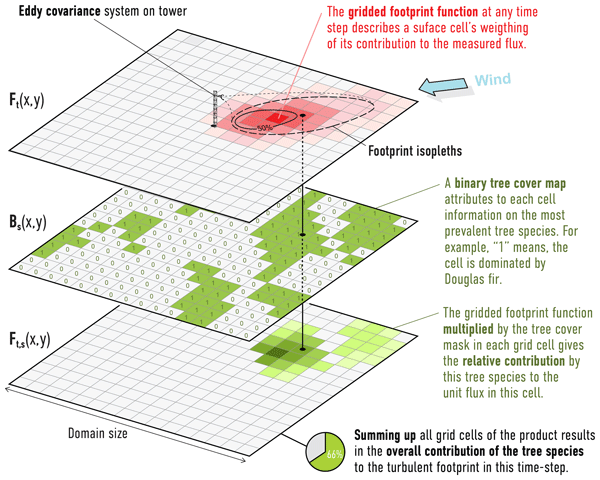
Hassane Moutahir, Markus Sulzer, Ralf Kiese, Andreas Christen, Markus Weiler, Lea Dedden, Julian Brzozon, Pia Labenski, Prajwal Khanal, Ladislav Šigut, and Rüdiger Grote
Biogeosciences, 23, 1719–1738, https://doi.org/10.5194/bg-23-1719-2026, https://doi.org/10.5194/bg-23-1719-2026, 2026
Short summary
Short summary
Eddy covariance (EC) data are vital for studying carbon and water fluxes but often mask species-specific responses in mixed forests. At a Black Forest site with beech and Douglas fir, we combined EC data with ecosystem modeling to separate species contributions. Results show EC fluxes reflect species abundance within flux footprints, though responses vary seasonally. Accounting for these differences is key for gap-filling, accurate budgets, and understanding mixed forests’ climate resilience.
Tiancheng Ma, Denise Hertwig, Megan McGrory, Matthew Paskin, and Sue Grimmond
EGUsphere, https://doi.org/10.5194/egusphere-2025-6060, https://doi.org/10.5194/egusphere-2025-6060, 2026
Short summary
Short summary
Transport impacts emissions (heat, pollutants), which needs to be represented in high-resolution urban models. We introduce the transport model MATSDA and evaluate its route finding for car journeys in London, UK. The model shows high skill at identifying major travel corridors and associated travel durations, capturing day type and time-of-day dependency (rush-hour v. off-peak). MATSDA offers dynamic human movement patterns for transport research in the context of urban climate modelling.
Hojin Lee, Tim Stippich, Jan Petersen, David Meine, Julian Brzozon, Markus Sulzer, Lea Dedden, Andreas Christen, Teja Kattenborn, Christiane Werner, and Jürgen Kreuzwieser
EGUsphere, https://doi.org/10.5194/egusphere-2025-5426, https://doi.org/10.5194/egusphere-2025-5426, 2025
Short summary
Short summary
We studied the effect of waterlogging on volatile organic compounds exchange between forest floor and atmosphere. Waterlogging strongly increased emissions of toluene and p-cymene. Studies on soil cores under controlled conditions demonstrated that anoxia leads to emission of these compounds. Our results suggest that anoxic hotspots of high toluene emission can influence atmospheric mixing ratios of toluene in forest air despite large areas of the forest floor act as a sink of this compound.
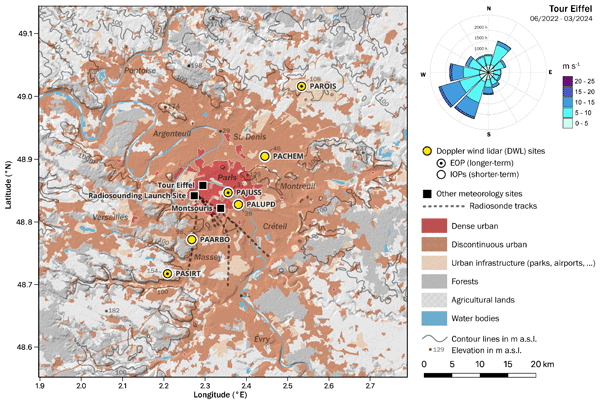
William Morrison, Dana Looschelders, Jonnathan Céspedes, Bernie Claxton, Marc-Antoine Drouin, Jean-Charles Dupont, Aurélien Faucheux, Martial Haeffelin, Christopher C. Holst, Simone Kotthaus, Valéry Masson, James McGregor, Jeremy Price, Matthias Zeeman, Sue Grimmond, and Andreas Christen
Earth Syst. Sci. Data, 17, 6507–6529, https://doi.org/10.5194/essd-17-6507-2025, https://doi.org/10.5194/essd-17-6507-2025, 2025
Short summary
Short summary
We conducted research using sophisticated wind sensors to better understand wind patterns in Paris. By installing these sensors across the city, we gathered detailed data on wind speeds and directions from 2022 to 2024. This information helps improve weather and climate models, making them more accurate for city environments. Our findings offer valuable insights for scientists studying urban air and weather, improving predictions and understanding of city-scale atmospheric processes.
Katharina Epp, Markus Sulzer, Daniel Steinmann, Matthias Zeeman, Andreas Matzarakis, and Andreas Christen
EGUsphere, https://doi.org/10.5194/egusphere-2025-3871, https://doi.org/10.5194/egusphere-2025-3871, 2025
Short summary
Short summary
Indoor heat was continuously monitored in 60 rooms across 11 buildings of a hospital complex using a sensor network measuring physiologically equivalent temperatures. Substantial heat was found in structures built in 1950–1990, in upper-floors and windowless rooms. Climate simulations were coupled with data-driven machine-learning models to predict future indoor heat frequency and intensity. We conclude that widespread adaptation is required to secure hospital operations during hot summers.
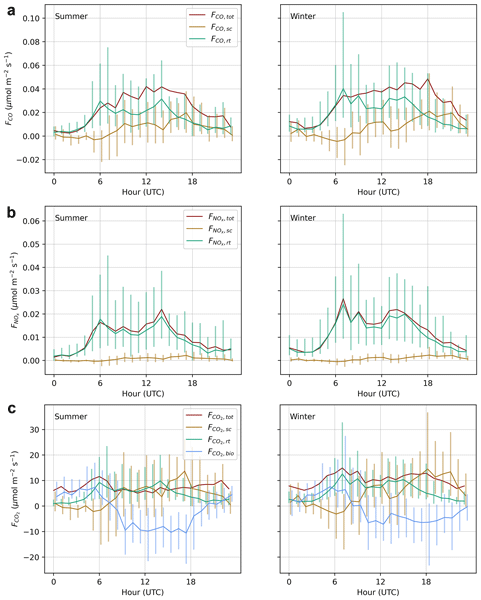
Rainer Hilland, Josh Hashemi, Stavros Stagakis, Dominik Brunner, Lionel Constantin, Natascha Kljun, Ann-Kristin Kunz, Betty Molinier, Samuel Hammer, Lukas Emmenegger, and Andreas Christen
Atmos. Chem. Phys., 25, 14279–14299, https://doi.org/10.5194/acp-25-14279-2025, https://doi.org/10.5194/acp-25-14279-2025, 2025
Short summary
Short summary
We present a study of simultaneously measured fluxes of carbon dioxide (CO2) and co-emitted species in the city of Zurich. Flux measurements of CO2 alone cannot be attributed to specific emission sectors, such as road transport or residential heating. We present a model which uses the measured ratios of CO2 to carbon monoxide (CO) and nitrogen oxides (NOx) as well as sector-specific reference ratios, to attribute measured fluxes to their emission sectors.
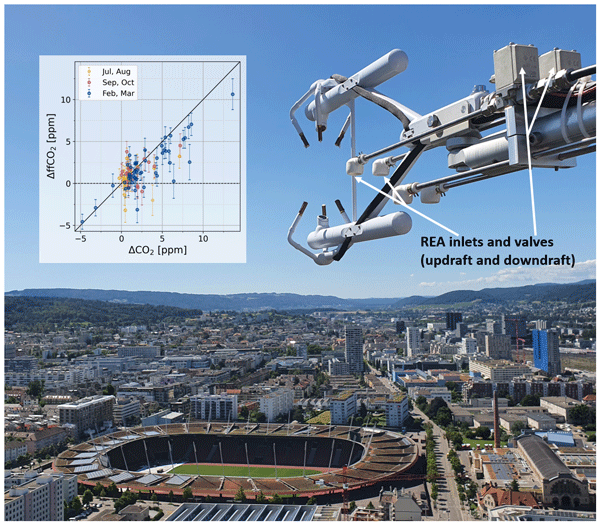
Ann-Kristin Kunz, Lars Borchardt, Andreas Christen, Julian Della Coletta, Markus Eritt, Xochilt Gutiérrez, Josh Hashemi, Rainer Hilland, Armin Jordan, Richard Kneißl, Virgile Legendre, Ingeborg Levin, Susanne Preunkert, Pascal Rubli, Stavros Stagakis, and Samuel Hammer
Atmos. Meas. Tech., 18, 5349–5373, https://doi.org/10.5194/amt-18-5349-2025, https://doi.org/10.5194/amt-18-5349-2025, 2025
Short summary
Short summary
We present, to our knowledge, the first relaxed eddy accumulation system explicitly tailored to a radiocarbon (14C)-based partitioning of fossil and non-fossil urban CO2 fluxes. Laboratory tests and in-depth quality and performance checks prove that the system meets the technical requirements. A pilot application on a tall tower in the city of Zurich, Switzerland, demonstrates the ability to separate fossil and non-fossil CO2 components within the typical precision of 14C measurements.
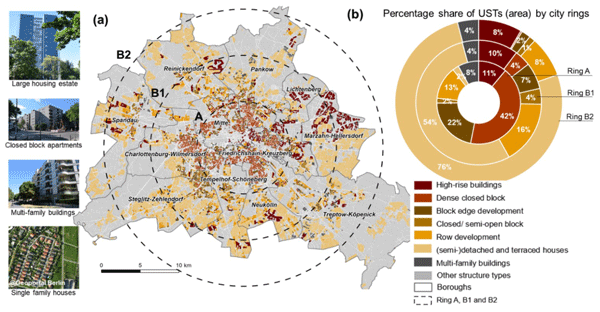
Nimra Iqbal, Marvin Ravan, Zina Mitraka, Joern Birkmann, Sue Grimmond, Denise Hertwig, Nektarios Chrysoulakis, Giorgos Somarakis, Angela Wendnagel-Beck, and Emmanouil Panagiotakis
Nat. Hazards Earth Syst. Sci., 25, 2481–2502, https://doi.org/10.5194/nhess-25-2481-2025, https://doi.org/10.5194/nhess-25-2481-2025, 2025
Short summary
Short summary
This work deepens the understanding of how perceived heat stress, human vulnerability (e.g. age, income) and adaptive capacities (e.g. green, shaded spaces) are coupled with urban structures. The results show that perceived heat stress decreases with distance from the urban center, however, human vulnerability and adaptive capacities depend more strongly on inner variations and differences between urban structures. Planning policies and adaptation strategies should account for these differences.
Mike Bush, David L. A. Flack, Huw W. Lewis, Sylvia I. Bohnenstengel, Chris J. Short, Charmaine Franklin, Adrian P. Lock, Martin Best, Paul Field, Anne McCabe, Kwinten Van Weverberg, Segolene Berthou, Ian Boutle, Jennifer K. Brooke, Seb Cole, Shaun Cooper, Gareth Dow, John Edwards, Anke Finnenkoetter, Kalli Furtado, Kate Halladay, Kirsty Hanley, Margaret A. Hendry, Adrian Hill, Aravindakshan Jayakumar, Richard W. Jones, Humphrey Lean, Joshua C. K. Lee, Andy Malcolm, Marion Mittermaier, Saji Mohandas, Stuart Moore, Cyril Morcrette, Rachel North, Aurore Porson, Susan Rennie, Nigel Roberts, Belinda Roux, Claudio Sanchez, Chun-Hsu Su, Simon Tucker, Simon Vosper, David Walters, James Warner, Stuart Webster, Mark Weeks, Jonathan Wilkinson, Michael Whitall, Keith D. Williams, and Hugh Zhang
Geosci. Model Dev., 18, 3819–3855, https://doi.org/10.5194/gmd-18-3819-2025, https://doi.org/10.5194/gmd-18-3819-2025, 2025
Short summary
Short summary
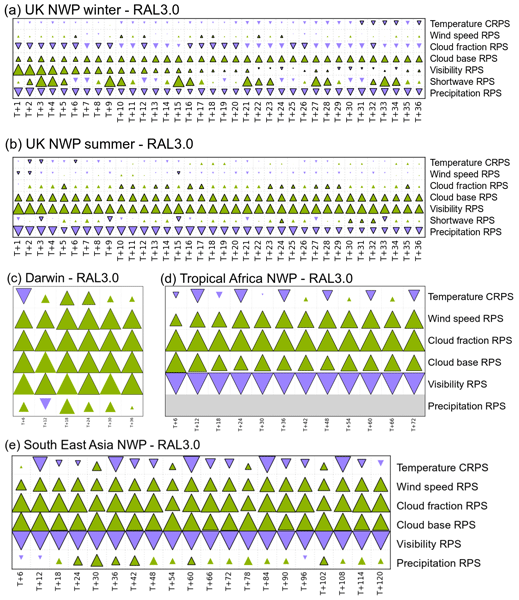
RAL configurations define settings for the Unified Model atmosphere and Joint UK Land Environment Simulator. The third version of the Regional Atmosphere and Land (RAL3) science configuration for kilometre- and sub-kilometre-scale modelling represents a major advance compared to previous versions (RAL2) by delivering a common science definition for applications in tropical and mid-latitude regions. RAL3 has more realistic precipitation distributions and an improved representation of clouds and visibility.
Matthias Zeeman, Andreas Christen, Sue Grimmond, Daniel Fenner, William Morrison, Gregor Feigel, Markus Sulzer, and Nektarios Chrysoulakis
Geosci. Instrum. Method. Data Syst., 13, 393–424, https://doi.org/10.5194/gi-13-393-2024, https://doi.org/10.5194/gi-13-393-2024, 2024
Short summary
Short summary
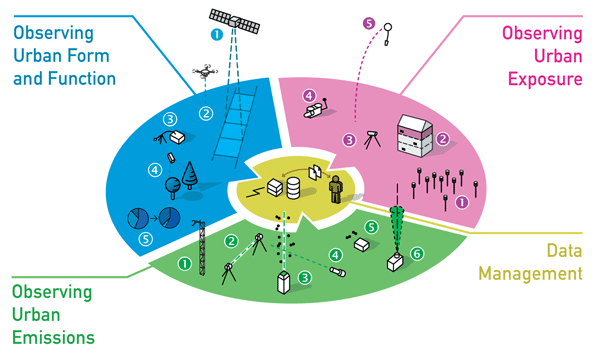
This study presents an overview of a data system for documenting, processing, managing, and publishing data streams from research networks of atmospheric and environmental sensors of varying complexity in urban environments. Our solutions aim to deliver resilient, near-time data using freely available software.
Ferdinand Briegel, Jonas Wehrle, Dirk Schindler, and Andreas Christen
Geosci. Model Dev., 17, 1667–1688, https://doi.org/10.5194/gmd-17-1667-2024, https://doi.org/10.5194/gmd-17-1667-2024, 2024
Short summary
Short summary
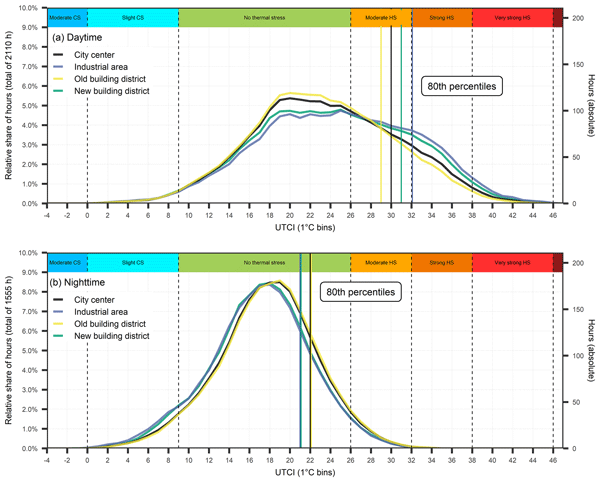
We present a new approach to model heat stress in cities using artificial intelligence (AI). We show that the AI model is fast in terms of prediction but accurate when evaluated with measurements. The fast-predictive AI model enables several new potential applications, including heat stress prediction and warning; downscaling of potential future climates; evaluation of adaptation effectiveness; and, more fundamentally, development of guidelines to support urban planning and policymaking.
Ting Sun, Hamidreza Omidvar, Zhenkun Li, Ning Zhang, Wenjuan Huang, Simone Kotthaus, Helen C. Ward, Zhiwen Luo, and Sue Grimmond
Geosci. Model Dev., 17, 91–116, https://doi.org/10.5194/gmd-17-91-2024, https://doi.org/10.5194/gmd-17-91-2024, 2024
Short summary
Short summary
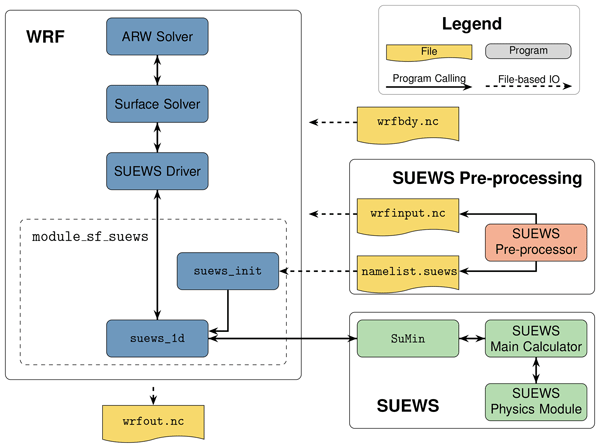
For the first time, we coupled a state-of-the-art urban land surface model – Surface Urban Energy and Water Scheme (SUEWS) – with the widely-used Weather Research and Forecasting (WRF) model, creating an open-source tool that may benefit multiple applications. We tested our new system at two UK sites and demonstrated its potential by examining how human activities in various areas of Greater London influence local weather conditions.
Megan A. Stretton, William Morrison, Robin J. Hogan, and Sue Grimmond
Geosci. Model Dev., 16, 5931–5947, https://doi.org/10.5194/gmd-16-5931-2023, https://doi.org/10.5194/gmd-16-5931-2023, 2023
Short summary
Short summary
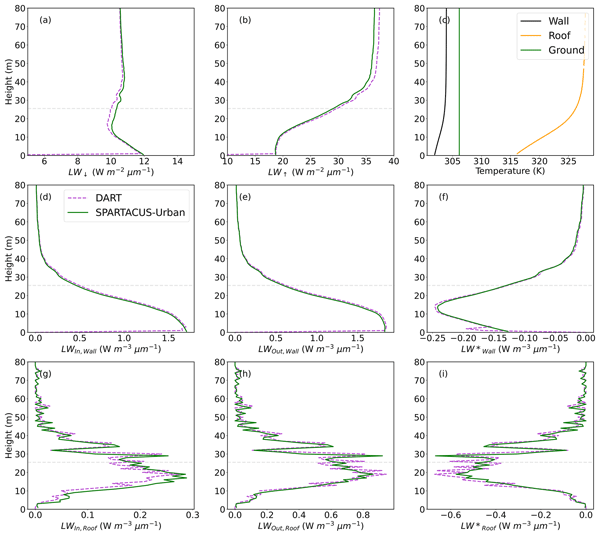
Cities' materials and forms impact radiative fluxes. We evaluate the SPARTACUS-Urban multi-layer approach to modelling longwave radiation, describing realistic 3D geometry statistically using the explicit DART (Discrete Anisotropic Radiative Transfer) model. The temperature configurations used are derived from thermal camera observations. SPARTACUS-Urban accurately predicts longwave fluxes, with a low computational time (cf. DART), but has larger errors with sunlit/shaded surface temperatures.
Junxia Dou, Sue Grimmond, Shiguang Miao, Bei Huang, Huimin Lei, and Mingshui Liao
Atmos. Chem. Phys., 23, 13143–13166, https://doi.org/10.5194/acp-23-13143-2023, https://doi.org/10.5194/acp-23-13143-2023, 2023
Short summary
Short summary
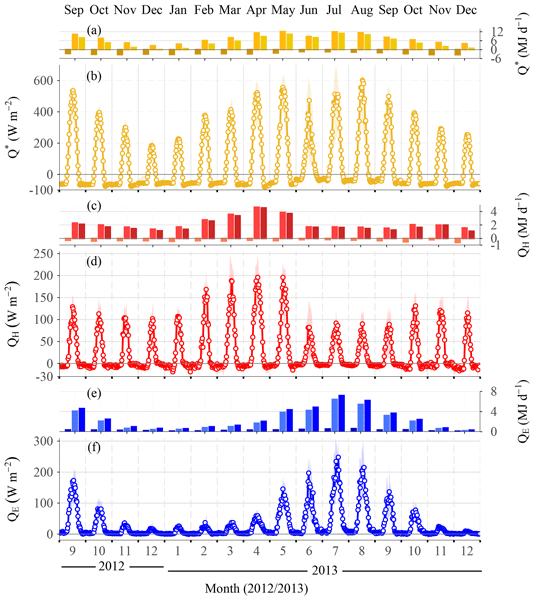
Multi-timescale variations in surface energy fluxes in a suburb of Beijing are analyzed using 16-month observations. Compared to previous suburban areas, this study site has larger seasonal variability in energy partitioning, and summer and winter Bowen ratios are at the lower and higher end of those at other suburban sites, respectively. Our analysis indicates that precipitation, irrigation, crop/vegetation growth activity, and land use/cover all play critical roles in energy partitioning.
Joanna E. Dyson, Lisa K. Whalley, Eloise J. Slater, Robert Woodward-Massey, Chunxiang Ye, James D. Lee, Freya Squires, James R. Hopkins, Rachel E. Dunmore, Marvin Shaw, Jacqueline F. Hamilton, Alastair C. Lewis, Stephen D. Worrall, Asan Bacak, Archit Mehra, Thomas J. Bannan, Hugh Coe, Carl J. Percival, Bin Ouyang, C. Nicholas Hewitt, Roderic L. Jones, Leigh R. Crilley, Louisa J. Kramer, W. Joe F. Acton, William J. Bloss, Supattarachai Saksakulkrai, Jingsha Xu, Zongbo Shi, Roy M. Harrison, Simone Kotthaus, Sue Grimmond, Yele Sun, Weiqi Xu, Siyao Yue, Lianfang Wei, Pingqing Fu, Xinming Wang, Stephen R. Arnold, and Dwayne E. Heard
Atmos. Chem. Phys., 23, 5679–5697, https://doi.org/10.5194/acp-23-5679-2023, https://doi.org/10.5194/acp-23-5679-2023, 2023
Short summary
Short summary
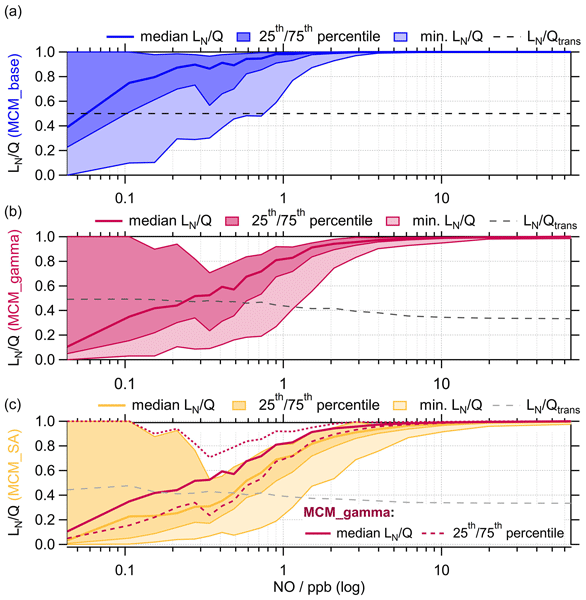
The hydroxyl (OH) and closely coupled hydroperoxyl (HO2) radicals are vital for their role in the removal of atmospheric pollutants. In less polluted regions, atmospheric models over-predict HO2 concentrations. In this modelling study, the impact of heterogeneous uptake of HO2 onto aerosol surfaces on radical concentrations and the ozone production regime in Beijing in the summertime is investigated, and the implications for emissions policies across China are considered.
Mathew Lipson, Sue Grimmond, Martin Best, Winston T. L. Chow, Andreas Christen, Nektarios Chrysoulakis, Andrew Coutts, Ben Crawford, Stevan Earl, Jonathan Evans, Krzysztof Fortuniak, Bert G. Heusinkveld, Je-Woo Hong, Jinkyu Hong, Leena Järvi, Sungsoo Jo, Yeon-Hee Kim, Simone Kotthaus, Keunmin Lee, Valéry Masson, Joseph P. McFadden, Oliver Michels, Wlodzimierz Pawlak, Matthias Roth, Hirofumi Sugawara, Nigel Tapper, Erik Velasco, and Helen Claire Ward
Earth Syst. Sci. Data, 14, 5157–5178, https://doi.org/10.5194/essd-14-5157-2022, https://doi.org/10.5194/essd-14-5157-2022, 2022
Short summary
Short summary
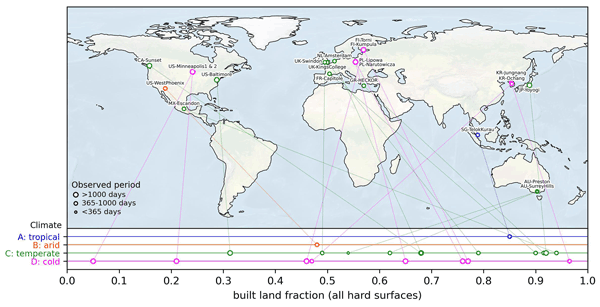
We describe a new openly accessible collection of atmospheric observations from 20 cities around the world, capturing 50 site years. The observations capture local meteorology (temperature, humidity, wind, etc.) and the energy fluxes between the land and atmosphere (e.g. radiation and sensible and latent heat fluxes). These observations can be used to improve our understanding of urban climate processes and to test the accuracy of urban climate models.

Will S. Drysdale, Adam R. Vaughan, Freya A. Squires, Sam J. Cliff, Stefan Metzger, David Durden, Natchaya Pingintha-Durden, Carole Helfter, Eiko Nemitz, C. Sue B. Grimmond, Janet Barlow, Sean Beevers, Gregor Stewart, David Dajnak, Ruth M. Purvis, and James D. Lee
Atmos. Chem. Phys., 22, 9413–9433, https://doi.org/10.5194/acp-22-9413-2022, https://doi.org/10.5194/acp-22-9413-2022, 2022
Short summary
Short summary
Measurements of NOx emissions are important for a good understanding of air quality. While there are many direct measurements of NOx concentration, there are very few measurements of its emission. Measurements of emissions provide constraints on emissions inventories and air quality models. This article presents measurements of NOx emission from the BT Tower in central London in 2017 and compares them with inventories, finding that they underestimate by a factor of ∼1.48.

Yiqing Liu, Zhiwen Luo, and Sue Grimmond
Atmos. Chem. Phys., 22, 4721–4735, https://doi.org/10.5194/acp-22-4721-2022, https://doi.org/10.5194/acp-22-4721-2022, 2022
Short summary
Short summary
Anthropogenic heat emission from buildings is important for atmospheric modelling in cities. The current building anthropogenic heat flux is simplified by building energy consumption. Our research proposes a novel approach to determine ‘real’ building anthropogenic heat emission from the changes in energy balance fluxes between occupied and unoccupied buildings. We hope to provide new insights into future parameterisations of building anthropogenic heat flux in urban climate models.
Hamidreza Omidvar, Ting Sun, Sue Grimmond, Dave Bilesbach, Andrew Black, Jiquan Chen, Zexia Duan, Zhiqiu Gao, Hiroki Iwata, and Joseph P. McFadden
Geosci. Model Dev., 15, 3041–3078, https://doi.org/10.5194/gmd-15-3041-2022, https://doi.org/10.5194/gmd-15-3041-2022, 2022
Short summary
Short summary
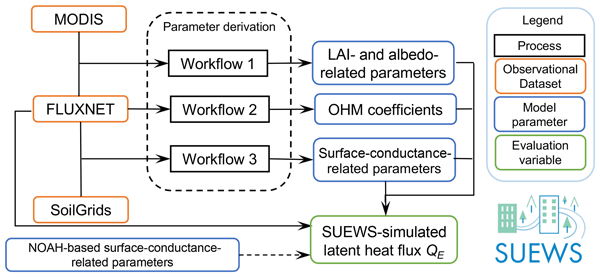
This paper extends the applicability of the SUEWS to extensive pervious areas outside cities. We derived various parameters such as leaf area index, albedo, roughness parameters and surface conductance for non-urban areas. The relation between LAI and albedo is also explored. The methods and parameters discussed can be used for both online and offline simulations. Using appropriate parameters related to non-urban areas is essential for assessing urban–rural differences.
Cited articles
Baklanov, A., Grimmond, C. S. B., Carlson, D., Terblanche, D., Tang, X., Bouchet, V., Lee, B., Langendijk, G., Kolli, R. K., and Hovsepyan, A.: From urban meteorology, climate and environment research to integrated city services, Urban Climate, 23, 330–341, https://doi.org/10.1016/j.uclim.2017.05.004, 2018.
Birkmann, J., Welle, T., Solecki, W., Lwasa, S. and Garschagen, M.: Boost resilience of small and mid-sized cities, Nature, 537, 605–608, https://doi.org/10.1038/537605a, 2016.
Barlow, J., Best, M., Bohnenstengel, S. I., et al.: Developing a research strategy to better understand, observe and simulate urban atmospheric processes at kilometre to sub-kilometre scales, B. Am. Meteorol. Soc., 98, ES261–ES264, https://doi.org/10.1175/BAMS-D-17-0106.1, 2017.
Barlow, J. F., Dunbar, T. M., Nemitz, E. G., Wood, C. R., Gallagher, M. W., Davies, F., O'Connor, E., and Harrison, R. M.: Boundary layer dynamics over London, UK, as observed using Doppler lidar during REPARTEE-II, Atmos. Chem. Phys., 11, 2111–2125, https://doi.org/10.5194/acp-11-2111-2011, 2011.
Bélair, F., Dyer-Hawes, Q., and Romanic, D.: The Dynamics of the Urban Boundary Layer Before and During a Severe Thunderstorm Outflow Over Downtown Montréal, Bound.-Lay. Meteorol., 191, 6, https://doi.org/10.1007/s10546-024-00896-4, 2025.
Best, M. J., Pryor, M., Clark, D. B., Rooney, G. G., Essery, R. L. H., Ménard, C. B., Edwards, J. M., Hendry, M. A., Porson, A., Gedney, N., Mercado, L. M., Sitch, S., Blyth, E., Boucher, O., Cox, P. M., Grimmond, C. S. B., and Harding, R. J.: The Joint UK Land Environment Simulator (JULES), model description – Part 1: Energy and water fluxes, Geosci. Model Dev., 4, 677–699, https://doi.org/10.5194/gmd-4-677-2011, 2011.
Beyrich, F.: Mixing height estimation from sodar data – A critical discussion, Atmos. Environ., 31, 3941–3953, https://doi.org/10.1016/S1352-2310(97)00231-8, 1997.
Blunn, L. P., Plant, R. S., Coceal, O., Bohnenstengel, S. I., Lean, H. W., and Barlow, J. F.: The influence of resolved convective motions on scalar dispersion in hectometric scale numerical weather prediction models, Q. J. Roy. Meteor. Soc., 150, 976–994, 2023.
Bohnenstengel, S. I., Belcher, S. E., Aiken, A., et al.: Meteorology, Air Quality, and Health in London: The ClearfLo Project, B. Am. Meteorol. Soc., 96, 779–804, https://doi.org/10.1175/BAMS-D-12-00245.1, 2015.
Bohnenstengel, S. I., Evans, S., Clark, P. A., and Belcher, S.: Simulations of the London urban heat island, Q. J. Roy. Meteor. Soc., 137, 1625–1640, https://doi.org/10.1002/qj.855, 2011.
Bonin, T. A., Carroll, B. J., Hardesty, R. M., Brewer, W. A., Hajny, K., Salmon, O. E., and Shepson, P. B.: Doppler Lidar Observations of the Mixing Height in Indianapolis Using an Automated Composite Fuzzy Logic Approach, J. Atmos. Ocean. Tech., 35, 473–490, https://doi.org/10.1175/JTECH-D-17-0159.1, 2018.
Boutle, I. A., Eyre, J. E. J., and Lock, A. P.: Seamless Stratocumulus Simulation across the Turbulent Gray Zone, Mon. Weather Rev., 142, 1655–1668, https://doi.org/10.1175/MWR-D-13-00229.1, 2014.
Boutle, I. A., Finnenkoetter, A., Lock, A. P., and Wells, H.: The London Model: forecasting fog at 333 m resolution, Q. J. Roy. Meteor. Soc., 142, 360–371, https://doi.org/10.1002/qj.2656, 2016.
Bush, M., Flack, D. L. A., Lewis, H. W., Bohnenstengel, S. I., Short, C. J., Franklin, C., Lock, A. P., Best, M., Field, P., McCabe, A., Van Weverberg, K., Berthou, S., Boutle, I., Brooke, J. K., Cole, S., Cooper, S., Dow, G., Edwards, J., Finnenkoetter, A., Furtado, K., Halladay, K., Hanley, K., Hendry, M. A., Hill, A., Jayakumar, A., Jones, R. W., Lean, H., Lee, J. C. K., Malcolm, A., Mittermaier, M., Mohandas, S., Moore, S., Morcrette, C., North, R., Porson, A., Rennie, S., Roberts, N., Roux, B., Sanchez, C., Su, C.-H., Tucker, S., Vosper, S., Walters, D., Warner, J., Webster, S., Weeks, M., Wilkinson, J., Whitall, M., Williams, K. D., and Zhang, H.: The third Met Office Unified Model–JULES Regional Atmosphere and Land Configuration, RAL3, Geosci. Model Dev., 18, 3819–3855, https://doi.org/10.5194/gmd-18-3819-2025, 2025.
Céspedes, J., Kotthaus, S., Preissler, J., Toupoint, C., Thobois, L., Drouin, M.-A., Dupont, J.-C., Faucheux, A., and Haeffelin, M.: The Paris low-level jet during PANAME 2022 and its impact on the summertime urban heat island, Atmos. Chem. Phys., 24, 11477–11496, https://doi.org/10.5194/acp-24-11477-2024, 2024.
Clark, D. B., Mercado, L. M., Sitch, S., Jones, C. D., Gedney, N., Best, M. J., Pryor, M., Rooney, G. G., Essery, R. L. H., Blyth, E., Boucher, O., Harding, R. J., Huntingford, C., and Cox, P. M.: The Joint UK Land Environment Simulator (JULES), model description – Part 2: Carbon fluxes and vegetation dynamics, Geosci. Model Dev., 4, 701–722, https://doi.org/10.5194/gmd-4-701-2011, 2011.
Clark, P. A., Harcourt, S. A., Macpherson, B., Mathison, C. T., Cusack, S., and Naylor, M.: Prediction of visibility and aerosol within the operational Met Office Unified Model. I: Model formulation and variational assimilation, Q. J. Roy. Meteor. Soc., 134, 1801–1816, https://doi.org/10.1002/qj.318, 2008.
Cleugh, H. A. and Grimmond, C. S. B.: Modelling Regional Scale Surface Energy Exchanges And Cbl Growth In A Heterogeneous, Urban-Rural Landscape, Bound.-Lay. Meteorol., 98, 1–31, https://doi.org/10.1023/A:1018798928158, 2001.
Collaud Coen, M., Praz, C., Haefele, A., Ruffieux, D., Kaufmann, P., and Calpini, B.: Determination and climatology of the planetary boundary layer height above the Swiss plateau by in situ and remote sensing measurements as well as by the COSMO-2 model, Atmos. Chem. Phys., 14, 13205–13221, https://doi.org/10.5194/acp-14-13205-2014, 2014.
Copernicus Observer: OBSERVER: A wrap-up of Europe's summer 2022 heatwave, Copernicus, https://www.copernicus.eu/en/news/news/observer-wrap-europes-summer-2022-heatwave (last access: 28 February 2025), 2022.
Cosgrove, A. and Berkelhammer, M.: Downwind footprint of an urban heat island on air and lake temperatures, npj Clim. Atmos. Sci., 1, 46, https://doi.org/10.1038/s41612-018-0055-3, 2019.
Dai, C., Wang, Q., Kalogiros, J. A., Lenschow, D. H., Gao, Z., and Zhou, M.: Determining Boundary-Layer Height from Aircraft Measurements, Bound.-Lay. Meteorol., 152, 277–302, https://doi.org/10.1007/s10546-014-9929-z, 2014.
Davies, T., Cullen, M. J. P., Malcolm, A. J., Mawson, M. H., Staniforth, A., White, A. A., and Wood, N.: A new dynamical core for the Met Office's global and regional modelling of the atmosphere, Q. J. Roy. Meteor. Soc., 131, 1759–1782, https://doi.org/10.1256/qj.04.101, 2005.
Drüe, C., Hauf, T., and Hoff, A: Comparison of Boundary-Layer Profiles and Layer Detection by AMDAR and WTR/RASS at Frankfurt Airport, Bound.-Lay. Meteorol., 135, 407–432, https://doi.org/10.1007/s10546-010-9485-0, 2010.
Dunn, O. J.: Multiple Comparisons Using Rank Sums, Technometrics, 6, 241–252, https://doi.org/10.1080/00401706.1964.10490181, 1964.
EMEP/CEIP: Present state of emission data, https://www.ceip.at/status-of-reporting-and-review-results/2023-submission (last access: 18 November 2025), 2023.
ESA: Land Cover CCI, Product User Guide, Version 1.1, Tech. Rep. CCI-LC-PUGV3, https://climate.esa.int/media/documents/ESACCI-LC-Ph2-PUGv3_1.1.pdf (last access: 9 November 2023), 2017.
Fenner, D., Christen, A., Grimmond, S., Meier, F., Morrison, W., Zeeman, M., Barlow, J., Birkmann, J., Blunn, L., Chrysoulakis, N., Clements, M., Glazer, R., Hertwig, D., Kotthaus, S., König, K., Looschelders, D., Mitraka, Z., Poursanidis, D., Tsirantonakis, D., Bechtel, B., Benjamin, K., Beyrich, F., Briegel, F., Feigel, G., Gertsen, C., Iqbal, N., Kittner, J., Lean, H., Liu, Y., Luo, Z., McGrory, M., Metzger, S., Paskin, M., Ravan, M., Ruhtz, T., Saunders, B., Scherer, D., Smith, S. T., Stretton, M., Trachte, K., and Van Hove, M.: urbisphere-Berlin Campaign: Investigating Multiscale Urban Impacts on the Atmospheric Boundary Layer, B. Am. Meteorol. Soc., 105, E1929–E1961, https://doi.org/10.1175/BAMS-D-23-0030.1, 2024.
Forster, A., Augros, C., and Masson, V.: Urban influence on convective precipitation in the Paris region: Hectometric ensemble simulations in a case study, Q. J. Roy. Meteorol. Soc., 150, 3028–3051, https://doi.org/10.1002/qj.4749, 2024.
Geiß, A., Wiegner, M., Bonn, B., Schäfer, K., Forkel, R., von Schneidemesser, E., Münkel, C., Chan, K. L., and Nothard, R.: Mixing layer height as an indicator for urban air quality?, Atmos. Meas. Tech., 10, 2969–2988, https://doi.org/10.5194/amt-10-2969-2017, 2017.
Gencer, E., Folorunsho, R., Linkin, M., Wang, X., Natenzon, C. E., Wajih, S., Mani, N., Esquivel, M., Ali Ibrahim, S., Tsuneki, H., Castro, R., Leone, M., Panjwani, D., Romero-Lankao, P., and Solecki, W.: Disasters and risk in cities, in: Climate Change and Cities: Second Assessment Report of the Urban Climate Change Research Network, edited by: Rosenzweig, C., Solecki, W., Romero-Lankao, P., Mehrotra, S., Dhakal, S., and Ibrahim, S. A., Cambridge University Press, New York, 61–98, 2018.
Glazer, R. H., Grimmond, S., Blunn, L., Fenner, D., Lean, H., Christen, A., Morrison, W., Looschelders, D. and Shonk, J. K. P.: Hectometric-scale modelling of the mixed layer in an urban region evaluated with a dense LiDAR-ceilometer network: Part I, Zenodo [data set and code], https://doi.org/10.5281/zenodo.15365634, 2025a.
Glazer, R. H., Grimmond, S., Blunn, L., Fenner, D., Lean, H., Christen, A., Morrison, W., Looschelders, D. and Shonk, J. K. P.: Hectometric-scale modelling of the mixed layer in an urban region evaluated with a dense LiDAR-ceilometer network: Part II, Zenodo [dataset], https://doi.org/10.5281/zenodo.15374434, 2025b.
Grimmond, C. S. B., Blackett, M., Best, M. J., Barlow, J., Baik, J.-J., Belcher, S. E., Bohnenstengel, S. I., Calmet, I., Chen, F., Dandou, A., Fortuniak, K., Gouvea, M. L., Hamdi, R., Hendry, M., Kawai, T., Kawamoto, Y., Kondo, H., Krayenhoff, E. S., Lee, S.-H., Loridan, T., Martilli, A., Masson, V., Miao, S., Oleson, K., Pigeon, G., Porson, A., Ryu, Y.-H., Salamanca, F., Shashua-Bar, L., Steeneveld, G.-J., Tombrou, M., Voogt, J., Young, D., and Zhang, N.: The international urban energy balance models comparison project: First results from Phase 1, J. Appl. Meteorol. Clim., 49, 1268–1292, https://doi.org/10.1175/2010JAMC2354.1, 2010a.
Grimmond, C. S. B., Roth, M., Oke, T. R., Au, Y. C., Best, M., Betts, R., Carmichael, G., Cleugh, H., Dabberdt, W., Emmanuel, R., Freitas, E., Fortuniak, K., Hanna, S., Klein, P., Kalkstein, L. S., Liu, C. H., Nickson, A., Pearlmutter, D., Sailor, D., and Voogt, J.: Climate and More Sustainable Cities: Climate Information for Improved Planning and Management of Cities (Producers/Capabilities Perspective), Procedia Environ. Sci., 1, 247–274, https://doi.org/10.1016/j.proenv.2010.09.016, 2010b.
Grimmond, S., Bouchet, V., Molina, L. T., Baklanov, A., Tan, J., Schlünzen, K. H., Mills, G., Golding, B., Masson, V., Ren, C., Voogt, J., Miao, S., Lean, H., Heusinkveld, B., Hovespyan, A., Teruggi, G., Parrish, P., and Joe, P.: Integrated urban hydrometeorological, climate and environmental services: Concept, methodology and key messages, Urban Climate, 33, 100623, https://doi.org/10.1016/j.uclim.2020.100623, 2020.
Hall, T. W., Blunn, L., Grimmond, S., McCarroll, N., Merchant, C. J., Morrison, W., Shonk, J. K. P., Lean, H., and Best, M.: Utility of thermal remote sensing for evaluation of a high-resolution weather model in a city, Q. J. Roy. Meteor. Soc., 150, 1771–1790, 2024.
Hanley, K. and Lean, H.: The performance of a variable resolution 300 m ensemble for forecasting convection over London, Q. J. Roy. Meteor. Soc., 150, 3737–3756, 2024.
Heinze, R., Dipankar, A., Henken, C. C., Moseley, C., Sourdeval, O., Trömel, S., Xie, X., Adamidis, P., Ament, F., Baars, H., Barthlott, C., Behrendt, A., Blahak, U., Bley, S., Brdar, S., Brueck, M., Crewell, S., Deneke, H., Di Girolamo, P., Evaristo, R., Fischer, J., Frank, C., Friederichs, P., Göcke, T., Gorges, K., Hande, L., Hanke, M., Hansen, A., Hege, H.-C., Hoose, C., Jahns, T., Kalthoff, N., Klocke, D., Kneifel, S., Knippertz, P., Kuhn, A., van Laar, T., Macke, A., Maurer, V., Mayer, B., Meyer, C.I., Muppa, S.K., Neggers, R.A.J., Orlandi, E., Pantillon, F., Pospichal, B., Röber, N., Scheck, L., Seifert, A., Seifert, P., Senf, F., Siligam, P., Simmer, C., Steinke, S., Stevens, B., Wapler, K., Weniger, M., Wulfmeyer, V., Zängl, G., Zhang, D., and Quaas, J.: Large-eddy simulations over Germany using ICON: A comprehensive evaluation, Q. J. Roy. Meteorol. Soc., 143, 69–100, https://doi.org/10.1002/qj.2947, 2017.
Hertwig, D., Grimmond, C. S. B., Kotthaus, S., Vanderwel, C., Gough, H., Haeffelin, M., and Robins, A.: Variability of physical meteorology in urban areas at different scales: implications for air quality, Faraday Discuss., 226, 149–172, https://doi.org/10.1039/d0fd00098a, 2021.
Hertwig, D., Grimmond, S., Hendry, M. A., Saunders, B., Wang, Z., Jeoffrion, M., Vidale, P. L., McGuire, P. C., Bohnenstengel, S. I., Ward, H. C., and Kotthaus, S.: Urban signals in high-resolution weather and climate simulations: role of urban land-surface characterisation, Theor. Appl. Climatol., 142, 701–728, https://doi.org/10.1007/s00704-020-03294-1, 2020.
Hertwig, D., McGrory, M., Paskin, M., Liu, Y., Lo Piano, S., Llanwarne, H., Smith, S., and Grimmond, S.: Connecting physical and socio-economic spaces for multi-scale urban modelling: a dataset for London, Geoscience Data Journal, 12, e289, https://doi.org/10.1002/gdj3.289, 2025.
Holm, S.: A Simple Sequentially Rejective Multiple Test Procedure, Scand. J. Stat., 6, 65–70, 1979.
Holzworth, G. C.: Estimates of mean maximum mixing depths in the contiguous United States, Mon. Weather Rev., 92, 235–242, https://doi.org/10.1175/1520-0493(1964)092<0235:EOMMMD>2.3.CO;2, 1964.
Honnert, R., Masson, V., and Couvreux, F.: A diagnostic for evaluating the representation of turbulence in atmospheric models at the kilometric scale, J. Atmos. Sci., 68, 3112–3131, 2011.
IPCC: Climate Change 2022 – Impacts, Adaptation and Vulnerability: Working Group II Contribution to the Sixth Assessment Report of the Intergovernmental Panel on Climate Change, edited by: Pörtner, H.-O., Roberts, D. C., Tignor, M. M. B., Poloczanska, E., Mintenbeck, K., Alegría, A., Craig, M., Langsdorf, S., Löschke, S., Möller, V., Okem, A. and Rama, B., Cambridge University Press, https://doi.org/10.1017/9781009325844, 2023.
Joe, P., Belair, S., Bernier, N., et al.: The Environment Canada Pan and Parapan American Science Showcase Project, B. Am. Meteorol. Soc., 99, 921–53, 2018.
Kent, C., Grimmond, C., Gatey, D., and Hirano, K.: Urban morphology parameters from global digital elevation models: implications for aerodynamic roughness and for wind-speed estimation, Remote Sens. Environ., 221, 316–339, https://doi.org/10.1016/j.rse.2018.09.024, 2019.
Kotthaus, S. and Grimmond, C. S. B.: Atmospheric Boundary Layer Characteristics from Ceilometer Measurements. Part 1: A new method to track mixed layer height and classify clouds, Q. J. Roy. Meteor. Soc., 144, 1525–1538, https://doi.org/10.1002/qj.3299, 2018a.
Kotthaus, S. and Grimmond, C. S. B.: Atmospheric Boundary Layer Characteristics from Ceilometer Measurements. Part 2: Application to London's Urban Boundary Layer, Q. J. Roy. Meteor. Soc., 144, 1511–1524, https://doi.org/10.1002/qj.3298, 2018b.
Kotthaus, S., Halios, C. H., Barlow, J. F., and Grimmond, C. S. B.: Volume for pollution dispersoin: London's atmospheric boundary layer during ClearfLo observed with two ground-based lidar types, Atmos. Environ., 190, 401–414, https://doi.org/10.1016/j.atmosenv.2018.06.042, 2018.
Kotthaus, S., Haeffelin, M., Drouin, M.-A., Dupont, J.-C., Grimmond, S., Haefele, A., Hervo, M., Poltera, Y., and Wiegner, M.: Tailored Algorithms for the Detection of the Atmospheric Boundary Layer Height from Common Automatic Lidars and Ceilometers (ALC), Remote Sens., 12, 3259, https://doi.org/10.3390/rs12193259, 2020.
Kotthaus, S., Bravo-Aranda, J. A., Collaud Coen, M., Guerrero-Rascado, J. L., Costa, M. J., Cimini, D., O'Connor, E. J., Hervo, M., Alados-Arboledas, L., Jiménez-Portaz, M., Mona, L., Ruffieux, D., Illingworth, A., and Haeffelin, M.: Atmospheric boundary layer height from ground-based remote sensing: a review of capabilities and limitations, Atmos. Meas. Tech., 16, 433–479, https://doi.org/10.5194/amt-16-433-2023, 2023a.
Kotthaus, S., Drouin, M.-A., Haeffelin, M., Hervo, M. and Haefele, A.: STRATfinder, branches “for_cl61” (commit fc5d5d6f) and “master” (commit be933d0c), GitLab [code], https://gitlab.in2p3.fr/ipsl/sirta/mld/stratfinder/stratfinder (last access: 11 December 2023), 2023b.
Kruskal, W. H. and Wallis, W. A.: Use of Ranks in One-Criterion Variance Analysis, J. Am. Stat. Assoc., 47, 583–621, https://doi.org/10.1080/01621459.1952.10483441, 1952.
Lammert, A. and Bösenberg, J.: Determination of the convective boundary-layer height with laser remote sensing, Bound.-Lay. Meteorol., 119, 159–170, https://doi.org/10.1007/s10546-005-9020-x, 2006.
Lean, H. W., Barlow, J. F., and Halios, C. H.: The impact of spin-up and resolution on the representation of a clear convective boundary layer over London in order 100 m grid-length versions of the Met Office Unified Model, Q. J. Roy. Meteor. Soc., 145, 1674–1689, https://doi.org/10.1002/qj.3519, 2019.
Lean, H. W., Barlow, J. F., and Clark, P. A.: The use of 100 m scale NWP models to understand differences between different measures of mixing height in a morning growing clear convective boundary layer over London, Q. J. Roy. Meteor. Soc., 148, 1983–1995, https://doi.org/10.1002/qj.4291, 2022.
Lean, H. W., Theeuwes, N. E., Baldauf, M., Barkmeijer, J., Bessardon, G., Blunn, L., Bojarova, J., Boutle, I. A., Clark, P. A., Demuzere, M., Dueben, P., Frogner, I.-L., de Haan, S., Harrison, D., van Heerwaarden, C., Honnert, R., Lock, A., Marsigli, C., Masson, V., Mccabe, A., van Reeuwijk, M., Roberts, N., Siebesma, P., Smolíková, P., and Yang, X.: The hectometric modelling challenge: Gaps in the current state of the art and ways forward towards the implementation of 100-m scale weather and climate models, Q. J. Roy. Meteor. Soc., 150, 4671–4708, https://doi.org/10.1002/qj.4858, 2024.
Leroyer, S., Bélair, S., Husain, S. Z., and Mailhot J.: Subkilometer numerical weather prediction in an urban coastal area: a case study over the Vancouver metropolitan area, J. Appl. Meteorol. Clim., 53, 1433–1453, 2014.
Lipson, M. J., Grimmond, S., Best, M., Abramowitz, G., Coutts, A., Tapper, N., Baik, J.-J., Beyers, M., Blunn, L., Boussetta, S., Bou-Zeid, E., De Kauwe, M. G., de Munck, C., Demuzere, M., Fatichi, S., Fortuniak, K., Han, B.-S., Hendry, M. A., Kikegawa, Y., Kondo, H., Lee, D.-I., Lee, S.-H., Lemonsu, A., Machado, T., Manoli, G., Martilli, A., Masson, V., McNorton, J., Meili, N., Meyer, D., Nice, K. A., Oleson, K. W., Park, S.-B., Roth, M., Schoetter, R., Simón-Moral, A., Steeneveld, G.-J., Sun, T., Takane, Y., Thatcher, M., Tsiringakis, A., Varentsov, M., Wang, C., Wang, Z.-H., and Pitman, A. J.: Evaluation of 30 urban land surface models in the Urban-PLUMBER project: Phase 1 results, Q. J. Roy. Meteor. Soc., 150, 126–169, https://doi.org/10.1002/qj.4589, 2024.
Lock, A. P., Brown, A. R., Bush, M. R., Martin, G. M., and Smith, R. N. B.: A New Boundary Layer Mixing Scheme. Part I: Scheme Description and Single-Column Model Tests, Mon. Weather Rev., 128, 3187-3199. https://doi.org/10.1175/1520-0493(2000)128<3187:ANBLMS>2.0.CO;2, 2000.
Looschelders, D., Christen, A., Grimmond, S., Kotthaus, S., Fenner, D., Dupont, J.-C., Haeffelin, M., and Morrison, W.: Inter-Instrument Variability of Vaisala CL61 Lidar-Ceilometer's Attenuated Backscatter, Cloud Properties and Mixed-Layer Height, Meteorol. Appl., 32, e70088, https://doi.org/10.1002/met.70088, 2025.
Lowry, W. P.: Empirical Estimation of Urban Effects on Climate: A Problem Analysis, J. Appl. Meteorol. Clim., 16, 129–135, https://doi.org/10.1175/1520-0450(1977)016<0129:EEOUEO>2.0.CO;2, 1977.
Masson, V., Grimmond, C. S. B., and Oke, T. R.: Evaluation of the Town Energy Balance (TEB) Scheme with Direct Measurements from Dry Districts in Two Cities, J. Appl. Meteorol. Clim., 41, 1011–1026, https://doi.org/10.1175/1520-0450(2002)041<1011:EOTTEB>2.0.CO;2, 2002.
NRC (National Research Council): Urban Meteorology: Forecasting, Monitoring, and Meeting Users' Needs, The National Academies Press, Washington, DC, https://doi.org/10.17226/13328, 2012.
Oke, T. R., Mills, G., Christen, A. and Voogt, J. A.: Concepts, in: Urban Climates, University Press, Cambridge, 29–35, https://doi.org/10.1017/9781139016476, 2017.
Porson, A., Clark, P. A., Harman, I. N., Best, M. J., and Belcher, S. E.: Implementation of a new urban energy budget scheme in the MetUM. Part I: Description and idealized simulations, Q. J. Roy. Meteor. Soc., 136, 1514–1529, https://doi.org/10.1002/qj.668, 2010a.
Porson, A., Clark, P. A., Harman, I. N., Best, M. J., and Belcher, S. E.: Implementation of a new urban energy budget scheme into MetUM. Part II: Validation against observations and model intercomparison, Q. J. Roy. Meteor. Soc., 136, 1530–1542, https://doi.org/10.1002/qj.572, 2010b.
Ritter, C. and Münkel, C.: Backscatter Lidar for Aerosol and Cloud Profiling, in: Springer Handbook of Atmospheric Measurements, edited by: Foken, T.: Springer Handbooks, Springer, Cham, https://doi.org/10.1007/978-3-030-52171-4_24, 2021.
Ronda, R., Steeneveld, G., Heusinkveld, B., Attema, J., and Holtslag, A.: Urban finescale forecasting reveals weather conditions with unprecedented detail, B. Am. Meteorol. Soc., 98, 2675–2688, 2017.
Roth, M. and Oke, T. R.: Relative Efficiencies of Turbulent Transfer of Heat, Mass, and Momentum over a Patchy Urban Surface, J. Atmos. Sci., 52, 1863–1874, https://doi.org/10.1175/1520-0469(1995)052<1863:REOTTO>2.0.CO;2, 1995.
Salvador, P., Pandolfi, M., Tobías, A., Gómez-Moreno, F. J., Molero, F., Barreiro, M., Pérez, N., Revuelta, M. A., Marco, I. M., Querol, X., and Artíñano, B.: Impact of mixing layer height variations on air pollutant concentrations and health in a European urban area: Madrid (Spain), a case study, Environ. Sci. Pollut. Res., 27, 41702–41716, https://doi.org/10.1007/s11356-020-10146-y, 2020.
Scarino, A. J., Obland, M. D., Fast, J. D., Burton, S. P., Ferrare, R. A., Hostetler, C. A., Berg, L. K., Lefer, B., Haman, C., Hair, J. W., Rogers, R. R., Butler, C., Cook, A. L. and Harper, D. B.: Comparison of mixed layer heights from airborne high spectral resolution lidar, ground-based measurements, and the WRF-Chem model during CalNex and CARES, Atmospheric Chemistry and Physics, 14, 5547–5560, https://doi.org/10.5194/acp-14-5547-2014, 2014.
Schäfer, K., Wagner, P., Emeis, S., Jahn, C., Muenkel, C., and Suppan, P.: Mixing layer height and air pollution levels in urban area, in: Proc. SPIE 8534, Remote Sensing of Clouds and the Atmosphere XVII; and Lidar Technologies, Techniques, and Measurements for Atmospheric Remote Sensing VIII, 853409, https://doi.org/10.1117/12.974328, 2012.
Schäfer, K., Helmis, C., Emeis, S., Sgouros, G., Kurtenbach, R., Wiesen, P., Münkel, C., Jahn, C., Hoffmann, M., Anamaterou, E., and O'Connor, M.: Application of continuous remote sensing of mixing layer height for assessment of airport air quality, in: Proc. SPIE 7827, Remote Sensing of Clouds and the Atmosphere XV, 782706, https://doi.org/10.1117/12.865101, 2010.
Seibert, P., Beyrich, F., Gryning, S.-E., Joffre, S., Rasmussen, A., and Tercier, P.: Review and intercomparison of operational methods for the determination of the mixing height, Atmos. Environ., 34, 1001–1027, https://doi.org/10.1016/S1352-2310(99)00349-0, 2000.
Smagorinsky, J.: General Circulation Experiments With The Primitive Equations, Mon. Weather Rev., 91, 99–164, https://doi.org/10.1175/1520-0493(1963)091<0099:GCEWTP>2.3.CO;2, 1963.
Stull, R. B.: An introduction to boundary layer meteorology, Chapter 10, Measurement and Simulation Techniques, Kluwer Academic Publishers, https://doi.org/10.1007/978-94-009-3027-8, 1988.
Stewart, I. D. and Oke, T. R.: Local Climate Zones for Urban Temperature Studies, B. Am. Meteorol. Soc., 93, 1879–1900, https://doi.org/10.1175/BAMS-D-11-00019.1, 2012.
Sützl, B. S., Rooney, G. G., Finnenkoetter, A., Bohnenstengel, S. I., Grimmond, S., and van Reeuwijk, M.: Distributed urban drag parametrization for sub-kilometre scale numerical weather prediction, Q. J. Roy. Meteor. Soc., 147, 3940–3956, 2021.
Tang, G., Zhang, J., Zhu, X., Song, T., Münkel, C., Hu, B., Schäfer, K., Liu, Z., Zhang, J., Wang, L., Xin, J., Suppan, P., and Wang, Y.: Mixing layer height and its implications for air pollution over Beijing, China, Atmos. Chem. Phys., 16, 2459–2475, https://doi.org/10.5194/acp-16-2459-2016, 2016.
UN: World Urbanization Prospects: The 2014 Revision, United Nations, Department of Economic and Social Affairs, Population Division, ST/ESA/SER.A/366, 2015.
Walters, D., Baran, A. J., Boutle, I., Brooks, M., Earnshaw, P., Edwards, J., Furtado, K., Hill, P., Lock, A., Manners, J., Morcrette, C., Mulcahy, J., Sanchez, C., Smith, C., Stratton, R., Tennant, W., Tomassini, L., Van Weverberg, K., Vosper, S., Willett, M., Browse, J., Bushell, A., Carslaw, K., Dalvi, M., Essery, R., Gedney, N., Hardiman, S., Johnson, B., Johnson, C., Jones, A., Jones, C., Mann, G., Milton, S., Rumbold, H., Sellar, A., Ujiie, M., Whitall, M., Williams, K., and Zerroukat, M.: The Met Office Unified Model Global Atmosphere 7.0/7.1 and JULES Global Land 7.0 configurations, Geosci. Model Dev., 12, 1909–1963, https://doi.org/10.5194/gmd-12-1909-2019, 2019.
Warren, E., Charlton-Perez, C., Kotthaus, S., Lean, H., Ballard, S., Hopkin, E., and Grimmond, S.: Evaluation of forward-modelled attenuated backscatter using an urban ceilometer network in London under clear-sky conditions, Atmos. Environ., 191, 532–547, https://doi.org/10.1016/j.atmosenv.2018.04.045, 2018.
Warren, E., Charlton-Perez, C., Kotthaus, S., Marenco, F., Ryder, C., Johnson, B., Green, D., Lean, H., Ballard, S., and Grimmond, S.: Observed aerosol characteristics to improve forward-modelled attenuated backscatter, Atmos. Environ., 224, 117177, https://doi.org/10.1016/j.atmosenv.2019.117177, 2020.
Wood, N., Staniforth, A., White, A., Allen, T., Diamantakis, M., Gross, M., Melvin, T., Smith, C., Vosper, S., Zerroukat, M., and Thuburn, J.: An inherently mass-conserving semi-implicit semi Lagrangian discretization of the deep-atmosphere global non-hydrostatic equations, Q. J. Roy. Meteor. Soc., 140, 1505–1520, 2014.
WMO: Guidance on integrated urban hydrometeorological, climate and environmental services Vol I: Concept and Methodology, WMO-No. 1234, https://library.wmo.int/index.php?lvl=notice_display&id=21512#.XlFbwmj7SHs (last access: 18 November 2025), 2019.
Wulfmeyer, V. and Behrendt, A.: Raman Lidar for Water Vapor and Temperature Profiling, in: Springer Handbook of Atmospheric Measurements, edited by: Foken, T., Springer Handbooks, Springer, Cham, https://doi.org/10.1007/978-3-030-52171-4_25, 2021.
Wyngaard, J. C.: Toward Numerical Modelling in the “Terra Incognita“, J. Atmos. Sci., 61, 1816–1826, 2004.
Zanaga, D., Van De Kerchove, R., Daems, D., De Keersmaecker, W., Brockmann, C., Kirches, G., Wevers, J., Cartus, O., Santoro, M., Fritz, S., Lesiv, M., Herold, M., Tsendbazar, N.-E., Xu, P., Ramoino, F., and Arino, O.: ESA WorldCover 10 m 2021 v200, Version v200, Zenodo [data set], https://doi.org/10.5281/zenodo.7254221, 2022.
Zhang, D., Shou, Y., Dickerson, R. R., and Chen, F.: Impact of Upstream Urbanization on the Urban Heat Island Effects along the Washington–Baltimore Corridor, J. Appl. Meteorol. Clim., 50, 2012–2029, https://doi.org/10.1175/JAMC-D-10-05008.1, 2011.
Short summary
In this study we use very high resolution numerical weather prediction model simulations of the Berlin, Germany region along with assessment of field campaign observations to understand better the impact of urban areas on the near-surface boundary layer. We find that there a clear affect of urban areas up to 15 km downwind of the city centre in both the field campaign observations and the high resolution model.
In this study we use very high resolution numerical weather prediction model simulations of the...


