
Articles | Volume 6, issue 4
https://doi.org/10.5194/wcd-6-1797-2025
© Author(s) 2025. This work is distributed under
the Creative Commons Attribution 4.0 License.
the Creative Commons Attribution 4.0 License.
https://doi.org/10.5194/wcd-6-1797-2025
© Author(s) 2025. This work is distributed under
the Creative Commons Attribution 4.0 License.
the Creative Commons Attribution 4.0 License.
Research article
| 
10 Dec 2025
Research article |
| 10 Dec 2025
| 10 Dec 2025
The impact of synoptic meteorology on observed surface heat fluxes over the Southern Ocean

School of Earth, Atmosphere and Environment, Monash University, Melbourne, Victoria, Australia
Australian Research Council's Securing Antarctica's Environmental Future (SAEF), Melbourne, Victoria, Australia
Tahereh Alinejadtabrizi
School of Earth, Atmosphere and Environment, Monash University, Melbourne, Victoria, Australia
Steven Siems
School of Earth, Atmosphere and Environment, Monash University, Melbourne, Victoria, Australia
Australian Research Council's Securing Antarctica's Environmental Future (SAEF), Melbourne, Victoria, Australia
Peter T. May
School of Earth, Atmosphere and Environment, Monash University, Melbourne, Victoria, Australia
Haifeng Zhang
Bureau of Meteorology, Melbourne, Victoria, Australia
Eric Schulz
Bureau of Meteorology, Melbourne, Victoria, Australia
Related authors
A. V. Sreenath, Peter T. May, Steven Siems, Heather Corden, and Alexis Berne
EGUsphere, https://doi.org/10.5194/egusphere-2026-4159, https://doi.org/10.5194/egusphere-2026-4159, 2026
This preprint is open for discussion and under review for Atmospheric Chemistry and Physics (ACP).
Short summary
Short summary
We investigated how synoptic weather regimes control cloud growth and surface precipitation at Dumont d’Urville, East Antarctica. Multi-instrument observations show that synoptic forcing determines hydrometeor growth and precipitation formation aloft, while boundary-layer conditions, including local downslope flow and near-surface moisture, control how much precipitation reaches the surface.
Caleb Mynard, Emily B. Franklin, Joel Alroe, Karen Westwood, Brandon J. McNabb, Robert Strzepek, Philippe D. Tortell, Steven T. Siems, Antonio Patti, Suzie Molloy, Alan Griffiths, Branka Miljevic, Marc D. Mallet, Ruhi Humphries, and Erin Dunne
Atmos. Chem. Phys., 26, 11583–11604, https://doi.org/10.5194/acp-26-11583-2026, https://doi.org/10.5194/acp-26-11583-2026, 2026
Short summary
Short summary
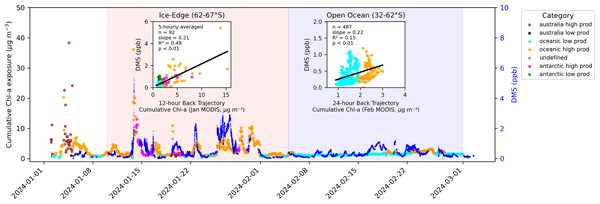
Marine sulfur gases help form climate-cooling particles, but their controls over the Southern Ocean are unclear. During a summer research voyage we measured these gases and linked them to ocean and atmospheric conditions. Near Antarctica, coastal blooms drove sharp rises in dimethyl sulfide while methanethiol remained low. Over the open ocean, both gases varied together, mainly influenced by ocean mixing and temperature, suggesting models should treat coastal and open ocean regions separately.
A. V. Sreenath, Peter T. May, Steven Siems, Heather Corden, and Alexis Berne
EGUsphere, https://doi.org/10.5194/egusphere-2026-4159, https://doi.org/10.5194/egusphere-2026-4159, 2026
This preprint is open for discussion and under review for Atmospheric Chemistry and Physics (ACP).
Short summary
Short summary
We investigated how synoptic weather regimes control cloud growth and surface precipitation at Dumont d’Urville, East Antarctica. Multi-instrument observations show that synoptic forcing determines hydrometeor growth and precipitation formation aloft, while boundary-layer conditions, including local downslope flow and near-surface moisture, control how much precipitation reaches the surface.
Xiaoshen Sun, Chris Medcraft, Ramon Braga, Peter Butcherine, Zoran Ristovski, Steven Siems, Christian J. Sanders, and Daniel P. Harrison
EGUsphere, https://doi.org/10.5194/egusphere-2026-1729, https://doi.org/10.5194/egusphere-2026-1729, 2026
This preprint is open for discussion and under review for Atmospheric Measurement Techniques (AMT).
Short summary
Short summary
We propose a novel method to detect and track sea spray particles released during marine cloud brightening (MCB) over the Great Barrier Reef. Using aircraft measurements, we showed that these released particles can be separated from the research ship and aircraft exhaust and tracked as they spread horizontally and vertically. This improves our ability to trace added sea spray aerosols and supports future work on how they may affect clouds.
Lara S. Richards, Yi Huang, Michael A. Barnes, Chenhui Jin, Fadhlil R. Muhammad, Daniel P. Harrison, and Steven T. Siems
EGUsphere, https://doi.org/10.5194/egusphere-2026-2114, https://doi.org/10.5194/egusphere-2026-2114, 2026
Short summary
Short summary
The doldrums are regions of light winds and relatively clear skies found in the tropics. They often occur during severe coral bleaching events on the Great Barrier Reef yet remain poorly understood. This study examines why the doldrums form and persist, identifying how both tropical and extratropical weather systems align to first form the doldrums and that the stalling of these weather systems prolongs the doldrums persistence.
Anna M. Ukkola, Steven Thomas, Elisabeth Vogel, Ulrike Bende-Michl, Steven Siems, Vjekoslav Matic, and Wendy Sharples
Hydrol. Earth Syst. Sci., 30, 1463–1485, https://doi.org/10.5194/hess-30-1463-2026, https://doi.org/10.5194/hess-30-1463-2026, 2026
Short summary
Short summary
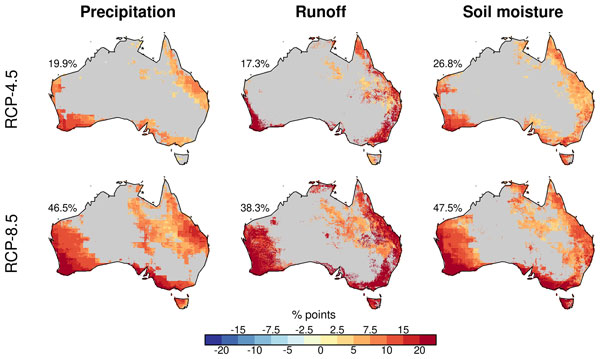
Future drought changes in Australia –the driest inhabited continent on Earth– have remained stubbornly uncertain. We assess future drought changes in Australia using projections from climate and hydrological models. We show an increasing probability of drought in highly-populated and agricultural regions of Australia in coming decades, suggesting potential impacts on agricultural activities, ecosystems and urban water supply.
Wenhui Zhao, Yi Huang, Steven Siems, and Daniel Harrison
EGUsphere, https://doi.org/10.5194/egusphere-2026-1251, https://doi.org/10.5194/egusphere-2026-1251, 2026
Short summary
Short summary
Using convection-permitting WRF simulations, this study examines how marine cloud brightening over the GBR depends on aerosol emission strength and spatial distribution. Densely spaced sources generate more uniform aerosol enhancements and stronger cloud microphysical responses than sparsely distributed sources, despite identical emissions. CDNC and optical depth increase strongly, indicating a dominant Twomey effect, while cloud water and coverage respond weakly.

Arathy A. Kurup, Caroline Poulsen, Steven T. Siems, and Daniel J. V. Robbins
Atmos. Meas. Tech., 19, 1487–1514, https://doi.org/10.5194/amt-19-1487-2026, https://doi.org/10.5194/amt-19-1487-2026, 2026
Short summary
Short summary
Southern Ocean (SO) clouds are crucial in defining the Earth's radiation budget. They are primarily observed by satellites, due to a lack of surface observations. This study validated cloud top height and cloud mask and compared the microphysics products from 3 satellite cloud datasets over the SO. The study revealed significant differences in cloud property retrievals between the sensors. Multilayer clouds play a major role in the differences when validated with active satellite measurements.

Lara S. Richards, Steven T. Siems, Yi Huang, Daniel P. Harrison, and Wenhui Zhao
Weather Clim. Dynam., 7, 109–127, https://doi.org/10.5194/wcd-7-109-2026, https://doi.org/10.5194/wcd-7-109-2026, 2026
Short summary
Short summary
By studying the variability of the trade winds during the Great Barrier Reef coral bleaching season, we show that ocean heating and a higher risk of coral bleaching are linked to the breakdown of the trade winds into either calm and clear conditions or a monsoon-like northerly flow. Years with mass coral bleaching are also associated with more "calm and clear" days in the warmest months and fewer strong trade wind days on the fringe months of the bleaching season.
Zhaoyang Kong, Andrew T. Prata, Peter T. May, Ariaan Purich, Yi Huang, and Steven T. Siems
Weather Clim. Dynam., 6, 1643–1660, https://doi.org/10.5194/wcd-6-1643-2025, https://doi.org/10.5194/wcd-6-1643-2025, 2025
Short summary
Short summary
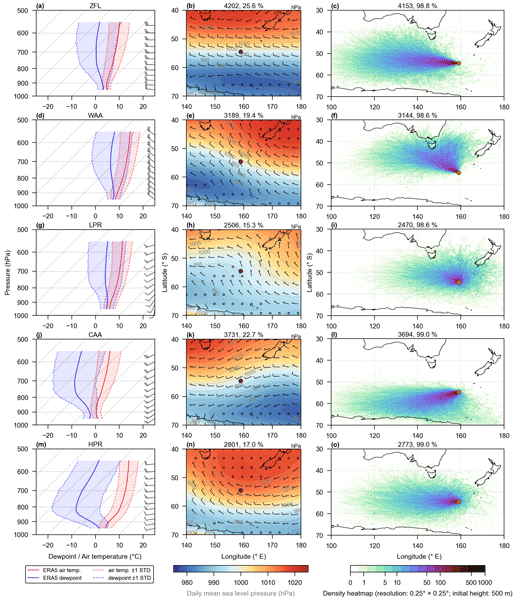
To investigate why ERA5 (European Centre for Medium-Range Weather Forecasts Reanalysis v5) does not accurately capture the observed increase in annual precipitation at Macquarie Island during 1979 to 2023, we classify daily synoptic systems using k-means clustering. Find that the increase in mean intensity across all systems is the main contributor to the observed annual precipitation trend and the resulting discrepancy, rather than changes in the frequency. And this increase may also have a substantial impact on the freshwater fluxes over the Southern Ocean.
Tahereh Alinejadtabrizi, Yi Huang, Francisco Lang, Steven Siems, Michael Manton, Luis Ackermann, Melita Keywood, Ruhi Humphries, Paul Krummel, Alastair Williams, and Greg Ayers
Atmos. Chem. Phys., 25, 2631–2648, https://doi.org/10.5194/acp-25-2631-2025, https://doi.org/10.5194/acp-25-2631-2025, 2025
Short summary
Short summary
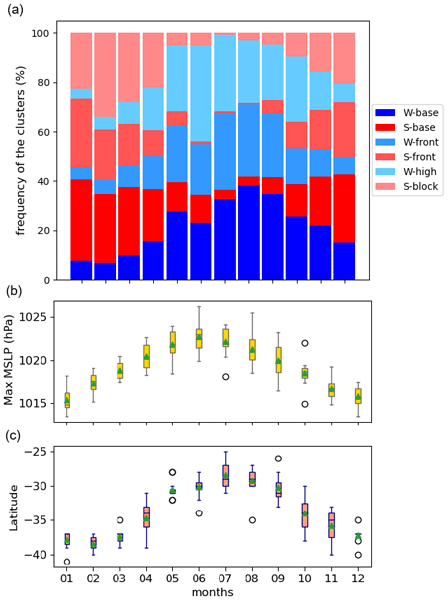
Clouds over the Southern Ocean are crucial to Earth's energy balance, but understanding the factors that control them is complex. Our research examines how weather patterns affect tiny particles called cloud condensation nuclei (CCN), which influence cloud properties. Using data from Kennaook / Cape Grim, we found that winter air from Antarctica brings cleaner conditions with lower CCN, while summer patterns from Australia transport more particles. Precipitation also helps reduce CCN in winter.
Daniel J. V. Robbins, Caroline A. Poulsen, Steven T. Siems, Simon R. Proud, Andrew T. Prata, Roy G. Grainger, and Adam C. Povey
Atmos. Meas. Tech., 17, 3279–3302, https://doi.org/10.5194/amt-17-3279-2024, https://doi.org/10.5194/amt-17-3279-2024, 2024
Short summary
Short summary
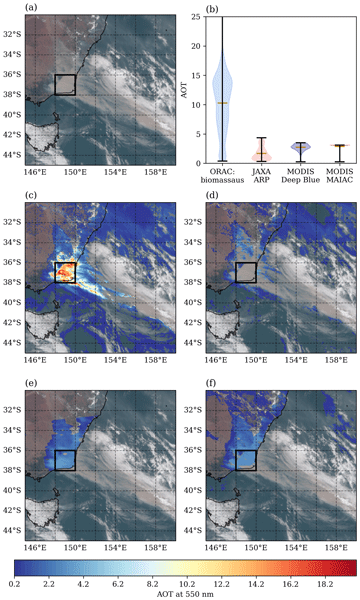
Extreme wildfire events are becoming more common with climate change. The smoke plumes associated with these wildfires are not captured by current operational satellite products due to their high optical thickness. We have developed a novel aerosol retrieval for the Advanced Himawari Imager to study these plumes. We find very high values of optical thickness not observed in other operational satellite products, suggesting these plumes have been missed in previous studies.
Francisco Lang, Steven T. Siems, Yi Huang, Tahereh Alinejadtabrizi, and Luis Ackermann
Atmos. Chem. Phys., 24, 1451–1466, https://doi.org/10.5194/acp-24-1451-2024, https://doi.org/10.5194/acp-24-1451-2024, 2024
Short summary
Short summary
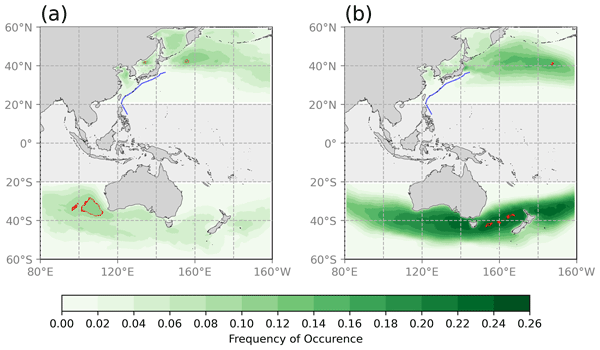
Marine low-level clouds play a crucial role in the Earth's energy balance, trapping heat from the surface and reflecting sunlight back into space. These clouds are distinguishable by their large-scale spatial structures, primarily characterized as hexagonal patterns with either filled (closed) or empty (open) cells. Utilizing satellite observations, these two cloud type patterns have been categorized over the Southern Ocean and North Pacific Ocean through a pattern recognition program.
Daniel Robbins, Caroline Poulsen, Steven Siems, and Simon Proud
Atmos. Meas. Tech., 15, 3031–3051, https://doi.org/10.5194/amt-15-3031-2022, https://doi.org/10.5194/amt-15-3031-2022, 2022
Short summary
Short summary
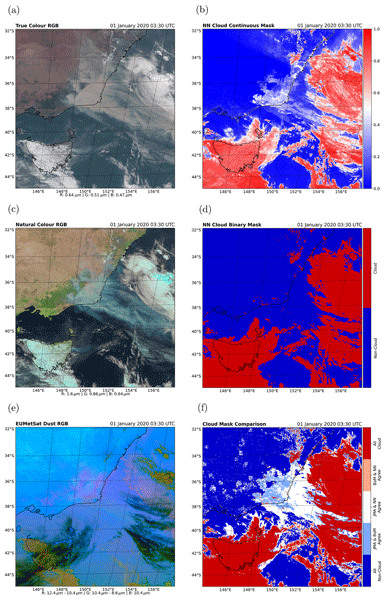
A neural network (NN)-based cloud mask for a geostationary satellite instrument, AHI, is developed using collocated data and is better at not classifying thick aerosols as clouds versus the Japanese Meteorological Association and the Bureau of Meteorology masks, identifying 1.13 and 1.29 times as many non-cloud pixels than each mask, respectively. The improvement during the day likely comes from including the shortest wavelength bands from AHI in the NN mask, which the other masks do not use.
Francisco Lang, Luis Ackermann, Yi Huang, Son C. H. Truong, Steven T. Siems, and Michael J. Manton
Atmos. Chem. Phys., 22, 2135–2152, https://doi.org/10.5194/acp-22-2135-2022, https://doi.org/10.5194/acp-22-2135-2022, 2022
Short summary
Short summary
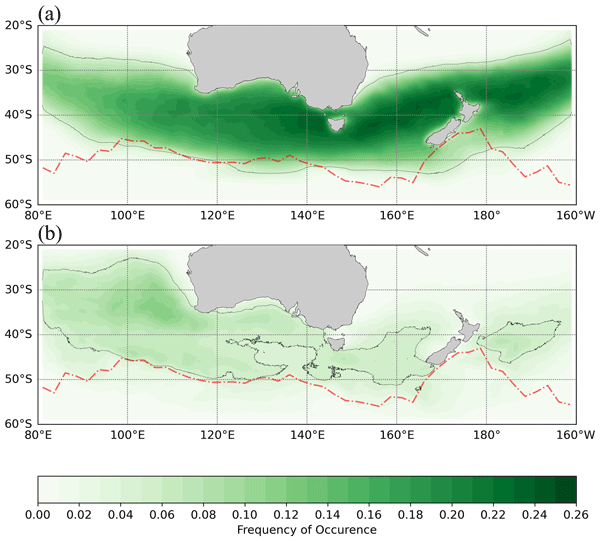
Marine low-level clouds cover vast areas of the Southern Ocean, and they are essential to the Earth system energy balance. We use 3 years of satellite observations to group low-level clouds by their spatial structure using a pattern-recognizing program. We studied two primary cloud type patterns, i.e. open and closed clouds. Open clouds are uniformly distributed over the storm track, while closed clouds are most predominant in the southeastern Indian Ocean. Closed clouds exhibit a daily cycle.
Cited articles
Alinejadtabrizi, T., Lang, F., Huang, Y., Ackermann, L., Keywood, M., Ayers, G., Krummel, P., Humphries, R., Williams, A. G., Siems, S. T., and Manton, M.: Wet deposition in shallow convection over the Southern Ocean, npj Climate and Atmospheric Science, 7, 76, https://doi.org/10.1038/s41612-024-00625-1, 2024. a
Bariteau, L., Blomquist, B., Fairall, C., Thompson, E., Edson, J., and Pincus, R.: Python implementation of the COARE 3.5 Bulk Air-Sea Flux algorithm (v1.1), Zenodo [code], https://doi.org/10.5281/zenodo.5110991, 2021. a
Behrangi, A. and Song, Y.: A new estimate for oceanic precipitation amount and distribution using complementary precipitation observations from space and comparison with GPCP, Environmental Research Letters, 15, 124042, https://doi.org/10.1088/1748-9326/abc6d1, 2020. a
Belmonte Rivas, M. and Stoffelen, A.: Characterizing ERA-Interim and ERA5 surface wind biases using ASCAT, Ocean Science, 15, 831–852, 2019. a
Berner, A. H., Bretherton, C. S., and Wood, R.: Large-eddy simulation of mesoscale dynamics and entrainment around a pocket of open cells observed in VOCALS-REx RF06, Atmos. Chem. Phys., 11, 10525–10540, https://doi.org/10.5194/acp-11-10525-2011, 2011. a
Berner, A. H., Bretherton, C. S., Wood, R., and Muhlbauer, A.: Marine boundary layer cloud regimes and POC formation in a CRM coupled to a bulk aerosol scheme, Atmos. Chem. Phys., 13, 12549–12572, https://doi.org/10.5194/acp-13-12549-2013, 2013. a
Bessho, K., Date, K., Hayashi, M., Ikeda, A., Imai, T., Inoue, H., Kumagai, Y., Miyakawa, T., Murata, H., Ohno, T., and Okuyama, A.: An Introduction to Himawari-8/9–Japan's New-Generation Geostationary Meteorological Satellites, Journal of the Meteorological Society of Japan. Ser. II, 94, 151–183, https://doi.org/10.2151/jmsj.2016-009, 2016. a
Bharti, V., Fairall, C., Blomquist, B., Huang, Y., Protat, A., Sullivan, P., Siems, S., and Manton, M.: Air-sea heat and momentum fluxes in the Southern Ocean, Journal of Geophysical Research: Atmospheres, 124, 12426–12443, https://doi.org/10.1029/2018JD029761, 2019. a, b
Boisvert, L. N., Webster, M. A., Petty, A. A., Markus, T., Cullather, R. I., and Bromwich, D. H.: Intercomparison of precipitation estimates over the Southern Ocean from atmospheric reanalyses, Journal of Climate, 33, 10627–10651, https://doi.org/10.1175/JCLI-D-20-0044.1, 2020. a
Bosilovich, M. G., Chen, J., Robertson, F. R., and Adler, R. F.: Evaluation of global precipitation in reanalyses, Journal of Applied Meteorology and Climatology, 47, 2279–2299, https://doi.org/10.1175/2008JAMC1921.1, 2008. a
Chen, S., Campbell, T. J., Jin, H., Gaberšek, S., Hodur, R. M., and Martin, P.: Effect of two-way air–sea coupling in high and low wind speed regimes, Monthly Weather Review, 138, 3579–3602, https://doi.org/10.1175/2009MWR3119.1, 2010. a
Curry, J. A., Bentamy, A., Bourassa, M. A., Bourras, D., Bradley, E. F., Brunke, M. A., Castro, S., Chou, S.-H., Clayson, C. A., Emery, W. J., and Eymard, L.: Seaflux, Bulletin of the American Meteorological Society, 85, 409–424, https://doi.org/10.1175/BAMS-85-3-409, 2004. a
Dai, A.: The diurnal cycle from observations and ERA5 in precipitation, clouds, boundary layer height, buoyancy, and surface fluxes, Climate Dynamics, 62, 5879–5908, 2024. a
Draxler, R. R. and Hess, G. D.: An overview of the HYSPLIT_4 modelling system for trajectories, Australian Meteorological Magazine, 47, 295–308, https://www.researchgate.net/profile/G-Hess/publication/239061109_An_overview_of_the_HYSPLIT_ 4_modelling_system_for_trajectories/links/004635374253416d 4e000000/An-overview-of-the-HYSPLIT-4-modelling-system-for-trajectories.pdf (last access: 5 December 2025), 1998. a
Edson, J. B., Jampana, V., Weller, R. A., Bigorre, S. P., Plueddemann, A. J., Fairall, C. W., Miller, S. D., Mahrt, L., Vickers, D., and Hersbach, H.: On the exchange of momentum over the open ocean, Journal of Physical Oceanography, 43, 1589–1610, https://doi.org/10.1175/JPO-D-12-0173.1, 2013. a
Fairall, C. W., Bradley, E. F., Rogers, D. P., Edson, J. B., and Young, G. S.: Bulk parameterization of air-sea fluxes for Tropical Ocean-Global Atmosphere Coupled-Ocean Atmosphere Response Experiment, Journal of Geophysical Research: Oceans, 101, 3747–3764, https://doi.org/10.1029/95JC03205, 1996. a
Fletcher, J., Mason, S., and Jakob, C.: The climatology, meteorology, and boundary layer structure of marine cold air outbreaks in both hemispheres, Journal of Climate, 29, 1999–2014, 2016a. a
Fletcher, J. K., Mason, S., and Jakob, C.: A climatology of clouds in marine cold air outbreaks in both hemispheres, Journal of Climate, 29, 6677–6692, 2016b. a
Frolicher, T. L., Sarmiento, J. L., Paynter, D. J., Dunne, J. P., Krasting, J. P., and Winton, M.: Dominance of the Southern Ocean in anthropogenic carbon and heat uptake in CMIP5 models, Journal of Climate, 28, 862–886, https://doi.org/10.1175/JCLI-D-14-00117.1, 2015. a
Galewsky, J.: Relationships between inversion strength, lower-tropospheric moistening, and low-cloud fraction in the subtropical Southeast Pacific derived from stable isotopologues of water vapor, Geophysical Research Letters, 45, 7701–7710, 2018. a
Gossart, A., Helsen, S., Lenaerts, J., Broucke, S. V., Van Lipzig, N., and Souverijns, N.: An evaluation of surface climatology in state-of-the-art reanalyses over the Antarctic Ice Sheet, Journal of Climate, 32, 6899–6915, 2019. a
Hartigan, J. A. and Wong, M. A.: Algorithm AS 136: A k-means clustering algorithm, Journal of the Royal Statistical Society. Series C (Applied Statistics), 28, 100–108, https://doi.org/10.2307/2346830, 1979. a
Hersbach, H., Bell, B., Berrisford, P., Hirahara, S., Horányi, A., Muñoz-Sabater, J., Nicolas, J., Peubey, C., Radu, R., Schepers, D., and Simmons, A.: The ERA5 global reanalysis, Quarterly Journal of the Royal Meteorological Society, 146, 1999–2049, https://doi.org/10.1002/qj.3803, 2020. a, b
Hill, K., Moltmann, T., Proctor, R., and Allen, S.: The Australian Integrated Marine Observing System: delivering data streams to address national and international research priorities, Marine Technology Society Journal, 44, 65–72, https://doi.org/10.4031/MTSJ.44.6.13, 2010. a
Hobbs, W. R., Klekociuk, A. R., and Pan, Y.: Validation of reanalysis Southern Ocean atmosphere trends using sea ice data, Atmos. Chem. Phys., 20, 14757–14768, https://doi.org/10.5194/acp-20-14757-2020, 2020. a
Hoskins, B. J. and Hodges, K. I.: The annual cycle of Northern Hemisphere storm tracks. Part I: Seasons, Journal of Climate, 32, 1743–1760, https://doi.org/10.1175/JCLI-D-17-0870.1, 2019. a
Jeon, J.-G., Yeh, S.-W., Song, S.-Y., Kirtman, B. P., and Kim, D.: Contrasting trends in convective and large-scale precipitation in the intertropical convergence zone from reanalysis data sets, Journal of Geophysical Research: Atmospheres, 128, e2022JD037973, https://doi.org/10.1029/2022JD037973, 2023. a
Jeong, H., Park, H.-S., Kang, S. M., and Chung, E.-S.: The greater role of Southern Ocean warming compared to Arctic Ocean warming in shifting future tropical rainfall patterns, Nature Communications, 16, 2790, https://doi.org/10.1038/s41467-025-57654-4, 2025. a
Josey, S. A., Grist, J. P., Mecking, J. V., Moat, B. I., and Schulz, E.: A clearer view of Southern Ocean air–sea interaction using surface heat flux asymmetry, Philosophical Transactions of the Royal Society A: Mathematical, Physical and Engineering Sciences, 381, 20220067, https://doi.org/10.1098/rsta.2022.0067, 2023. a
King, J. C., Marshall, G. J., Colwell, S., Arndt, S., Allen-Sader, C., and Phillips, T.: The performance of the ERA-Interim and ERA5 atmospheric reanalyses over Weddell Sea pack ice, Journal of Geophysical Research: Oceans, 127, e2022JC018805, https://doi.org/10.1029/2022JC018805, 2022. a
Klein, S. A. and Hartmann, D. L.: The seasonal cycle of low stratiform clouds, Journal of Climate, 6, 1587–1606, 1993. a
Kolstad, E. W. and Bracegirdle, T. J.: Marine cold-air outbreaks in the future: an assessment of IPCC AR4 model results for the Northern Hemisphere, Climate Dynamics, 30, 871–885, https://doi.org/10.1007/s00382-007-0331-0, 2008. a
Kuwano-Yoshida, A. and Minobe, S.: Storm-track response to SST fronts in the northwestern Pacific region in an AGCM, Journal of Climate, 30, 1081–1102, https://doi.org/10.1175/JCLI-D-16-0331.1, 2017. a
Lang, F., Huang, Y., Siems, S. T., and Manton, M. J.: Characteristics of the marine atmospheric boundary layer over the Southern Ocean in response to the synoptic forcing, Journal of Geophysical Research: Atmospheres, 123, 7799–7820, https://doi.org/10.1029/2018JD028700, 2018. a
Lang, F., Ackermann, L., Huang, Y., Truong, S. C. H., Siems, S. T., and Manton, M. J.: A climatology of open and closed mesoscale cellular convection over the Southern Ocean derived from Himawari-8 observations, Atmos. Chem. Phys., 22, 2135–2152, https://doi.org/10.5194/acp-22-2135-2022, 2022. a, b, c
Large, W. and Yeager, S.: The global climatology of an interannually varying air–sea flux data set, Climate Dynamics, 33, 341–364, 2009. a
Liu, J., Xiao, T., and Chen, L.: Intercomparisons of air–sea heat fluxes over the Southern Ocean, Journal of Climate, 24, 1198–1211, https://doi.org/10.1175/2010JCLI3699.1, 2011. a
Manton, M., Huang, Y., and Siems, S.: Variations in precipitation across the Southern Ocean, Journal of Climate, 33, 10653–10670, https://doi.org/10.1175/JCLI-D-20-0120.1, 2020. a
Mayer, J., Mayer, M., Haimberger, L., and Liu, C.: Comparison of surface energy fluxes from global to local scale, Journal of Climate, 35, 4551–4569, 2022. a
McCoy, I. L., Wood, R., and Fletcher, J. K.: Identifying meteorological controls on open and closed mesoscale cellular convection associated with marine cold air outbreaks, Journal of Geophysical Research: Atmospheres, 122, 11678–11702, https://doi.org/10.1002/2017JD027031, 2017. a, b, c, d
McFarquhar, G. M., Bretherton, C. S., Marchand, R., Protat, A., DeMott, P. J., Alexander, S. P., Roberts, G. C., Twohy, C. H., Toohey, D., Siems, S., Huang, Y., Wood, R., Rauber, R. M., Lasher-Trapp, S., Jensen, J., Stith, J. L., Mace, J., Um, J., Järvinen, E., Schnaiter, M., Gettelman, A., Sanchez, K. J., McCluskey, C. S., Russell, L. M., McCoy, I. L., Atlas, R. L., Bardeen, C. G., Moore, K. A., Hill, T. C. J., Humphries, R. S., Keywood, M. D., Ristovski, Z., Cravigan, L., Schofield, R., Fairall, C., Mallet, M. D., Kreidenweis, S. M., Rainwater, B., D'Alessandro, J., Wang, Y., Wu, W., Saliba, G., Levin, E. J. T., Ding, S., Lang, F., Truong, S. C. H., Wolff, C., Haggerty, J., Harvey, M. J., Klekociuk, A. R., and McDonald, A.: Observations of clouds, aerosols, precipitation, and surface radiation over the Southern Ocean: An overview of CAPRICORN, MARCUS, MICRE, and SOCRATES, Bulletin of the American Meteorological Society, 102, E894–E928, https://doi.org/10.1175/BAMS-D-20-0132.1, 2021. a
Meijers, A. J. S.: The Southern Ocean in the Coupled Model Intercomparison Project phase 5, Philosophical Transactions of the Royal Society A: Mathematical, Physical and Engineering Sciences, 372, 20130296, https://doi.org/10.1098/rsta.2013.0296, 2014. a
Monin, A. S. and Obukhov, A. M.: Basic laws of turbulent mixing in the surface layer of the atmosphere, Tr. Akad. Nauk SSSR Geophiz. Inst., 24, 163–187, https://moodle2.units.it/pluginfile.php/507310/mod_resource/content/1/Lezione-giaiotti_081.pdf (last access: 6 December 2025), 1954. a
Montoya Duque, E., Huang, Y., May, P., and Siems, S.: An evaluation of IMERG and ERA5 quantitative precipitation estimates over the Southern Ocean using shipborne observations, Journal of Applied Meteorology and Climatology, 62, 1479–1495, https://doi.org/10.1175/JAMC-D-23-0039.1, 2023. a
Naud, C. M., Booth, J. F., and Del Genio, A. D.: The relationship between boundary layer stability and cloud cover in the post-cold-frontal region, Journal of Climate, 29, 8129–8149, https://doi.org/10.1175/JCLI-D-15-0700.1, 2016. a
Naud, C. M., Booth, J. F., Lamer, K., Marchand, R., Protat, A., and McFarquhar, G. M.: On the relationship between the marine cold air outbreak M parameter and low-level cloud heights in the midlatitudes, Journal of Geophysical Research: Atmospheres, 125, e2020JD032465, https://doi.org/10.1029/2020JD032465, 2020. a, b
Naud, C. M., Crespo, J. A., and Posselt, D. J.: On the relationship between CYGNSS surface heat fluxes and the life cycle of low-latitude ocean extratropical cyclones, Journal of Applied Meteorology and Climatology, 60, 1575–1590, 2021. a
Neiman, P. J., Shapiro, M. A., Donall, E. G., and Kreitzberg, C. W.: Diabatic modification of an extratropical marine cyclone warm sector by cold underlying water, Monthly Weather Review, 118, 1576–1590, https://doi.org/10.1175/1520-0493(1990)118<1576:DMOAEM>2.0.CO;2, 1990. a
Niiler, P. P. and Kraus, E. B.: One-dimensional models of the upper ocean, in: Modelling and Prediction of the Upper Layers of the Ocean, edited by: Kraus, E. B., Pergamon Press, 143–172, https://ftp.soest.hawaii.edu/kelvin/OCN665_old/papers/Niiler%20and%20Kraus%201977.pdf (last access: 6 December 2025), 1977. a
Papritz, L., Pfahl, S., Sodemann, H., and Wernli, H.: A climatology of cold air outbreaks and their impact on air–sea heat fluxes in the high-latitude South Pacific, Journal of Climate, 28, 342–364, 2015. a
Pokhrel, S., Dutta, U., Rahaman, H., Chaudhari, H., Hazra, A., Saha, S. K., and Veeranjaneyulu, C.: Evaluation of different heat flux products over the tropical Indian Ocean, Earth and Space Science, 7, e2019EA000988, https://doi.org/10.1029/2019EA000988, 2020. a
Risbey, J. S., Pook, M. J., McIntosh, P. C., Wheeler, M. C., and Hendon, H. H.: On the remote drivers of rainfall variability in Australia, Monthly Weather Review, 137, 3233–3253, https://doi.org/10.1175/2009MWR2861.1, 2009. a
Rowe, P. M., Zou, X., Gorodetskaya, I., Stillwell, R. A., Cordero, R. R., Bromwich, D., Zhang, Z., Ralph, F. M., and Neshyba, S.: Comparison of cloud and radiation measurements to models over the Southern Ocean at Escudero Station, King George Island, Journal of Geophysical Research: Atmospheres, 130, e2025JD043563, https://doi.org/10.1029/2025JD043563, 2025. a
Rudeva, I., Simmonds, I., Crock, D., and Boschat, G.: Midlatitude fronts and variability in the Southern Hemisphere tropical width, Journal of Climate, 32, 8243–8260, 2019. a
Sallée, J.-B., Shuckburgh, E., Bruneau, N., Meijers, A., Bracegirdle, T., Wang, Z., and Roy, T.: Assessment of Southern Ocean water mass circulation and characteristics in CMIP5 models: Historical bias and forcing response, Journal of Geophysical Research: Oceans, 118, 1830–1844, https://doi.org/10.1002/jgrc.20135, 2013. a
Sandu, I. and Stevens, B.: On the factors modulating the stratocumulus to cumulus transitions, Journal of the Atmospheric Sciences, 68, 1865–1881, https://doi.org/10.1175/2011JAS3614.1, 2011. a
Schott, F. A., Xie, S.-P., and McCreary Jr., J. P.: Indian Ocean circulation and climate variability, Reviews of Geophysics, 47, https://doi.org/10.1029/2007RG000245, 2009. a
Schuddeboom, A. and McDonald, A.: The Southern Ocean radiative bias, cloud compensating errors, and equilibrium climate sensitivity in CMIP6 models, Journal of Geophysical Research: Atmospheres, 126, e2021JD035310, https://doi.org/10.1029/2021JD035310, 2021. a
Schulz, E., Josey, S. A., and Verein, R.: First air-sea flux mooring measurements in the Southern Ocean, Geophysical Research Letters, 39, https://doi.org/10.1029/2012GL052290, 2012. a
Seethala, C., Zuidema, P., Edson, J., Brunke, M., Chen, G., Li, X.-Y., Painemal, D., Robinson, C., Shingler, T., Shook, M., and Sorooshian, A.: On assessing ERA5 and MERRA2 representations of cold-air outbreaks across the Gulf Stream, Geophysical Research Letters, 48, e2021GL094364, https://doi.org/10.1029/2021GL094364, 2021. a
Shaman, J., Samelson, R. M., and Skyllingstad, E.: Air–sea fluxes over the Gulf Stream region: Atmospheric controls and trends, Journal of Climate, 23, 2651–2670, https://doi.org/10.1175/2010JCLI3269.1, 2010. a
Shao, M. and Wu, L.: Atmospheric fronts shaping the (sub) mesoscale SST-wind coupling over the Southern Ocean: Observational case, Journal of Geophysical Research: Atmospheres, 129, e2023JD039386, https://doi.org/10.1029/2023JD039386, 2024. a
Siems, S. T., Huang, Y., and Manton, M. J.: Southern Ocean precipitation: Toward a process-level understanding, Wiley Interdisciplinary Reviews: Climate Change, 13, e800, https://doi.org/10.1002/wcc.800, 2022. a
Sivam, S., Zhang, C., Zhang, D., Yu, L., and Dressel, I.: Surface latent and sensible heat fluxes over the Pacific Sub-Arctic Ocean from saildrone observations and three global reanalysis products, Frontiers in Marine Science, 11, 1431718, https://doi.org/10.3389/fmars.2024.1431718, 2024. a
Small, R. J. d., deSzoeke, S. P., Xie, S.-P., O'Neill, L., Seo, H., Song, Q., Cornillon, P., Spall, M., and Minobe, S.: Air–sea interaction over ocean fronts and eddies, Dynamics of Atmospheres and Oceans, 45, 274–319, https://doi.org/10.1016/j.dynatmoce.2008.01.001, 2008. a
Su, T., Li, Z., and Zheng, Y.: Cloud-surface coupling alters the morning transition from stable to unstable boundary layer, Geophysical Research Letters, 50, e2022GL102256, https://doi.org/10.1029/2022GL102256, 2023. a
Su, Z., Wang, J., Klein, P., Thompson, A. F., and Menemenlis, D.: Ocean submesoscales as a key component of the global heat budget, Nature Communications, 9, 775, https://doi.org/10.1038/s41467-018-02983-w, 2018. a
Swart, S., Gille, S. T., Delille, B., Josey, S. A., Mazloff, M. R., Newman, L., Thompson, A. F., Thomson, J., Ward, B., Du Plessis, M. D., and Kent, E. C.: Constraining Southern Ocean air-sea-ice fluxes through enhanced observations, Frontiers in Marine Science, 6, 421, https://doi.org/10.3389/fmars.2019.00421, 2019. a
Tetzner, D., Thomas, E., and Allen, C.: A validation of ERA5 reanalysis data in the Southern Antarctic Peninsula–Ellsworth land region, and its implications for ice core studies, Geosciences, 9, 289, https://doi.org/10.3390/geosciences9070289, 2019. a
Trenberth, K. E. and Fasullo, J. T.: Simulation of present-day and twenty-first-century energy budgets of the southern oceans, Journal of Climate, 23, 440–454, 2010. a
Truong, S. C. H., Huang, Y., Lang, F., Messmer, M., Simmonds, I., Siems, S. T., and Manton, M. J.: A climatology of the marine atmospheric boundary layer over the Southern Ocean from four field campaigns during 2016–2018, Journal of Geophysical Research: Atmospheres, 125, e2020JD033214, https://doi.org/10.1029/2020JD033214, 2020. a, b
Valdivieso, M., Haines, K., Balmaseda, M., Chang, Y.-S., Drevillon, M., Ferry, N., Fujii, Y., Köhl, A., Storto, A., Toyoda, T., and Wang, X.: An assessment of air–sea heat fluxes from ocean and coupled reanalyses, Climate Dynamics, 49, 983–1008, https://doi.org/10.1007/s00382-015-2843-3, 2017. a, b
Williams, R. G., Meijers, A. J. S., Roussenov, V. M., Katavouta, A., Ceppi, P., Rosser, J. P., and Salvi, P.: Asymmetries in the Southern Ocean contribution to global heat and carbon uptake, Nature Climate Change, 14, 823–831, https://doi.org/10.1038/s41558-024-02066-3, 2024. a
Wood, R.: Stratocumulus clouds, Monthly Weather Review, 140, 2373–2423, 2012. a
Wood, R. and Hartmann, D. L.: Spatial variability of liquid water path in marine low cloud: The importance of mesoscale cellular convection, Journal of Climate, 19, 1748–1764, https://doi.org/10.1175/JCLI3702.1, 2006. a
Wood, R., Bretherton, C. S., Leon, D., Clarke, A. D., Zuidema, P., Allen, G., and Coe, H.: An aircraft case study of the spatial transition from closed to open mesoscale cellular convection over the Southeast Pacific, Atmos. Chem. Phys., 11, 2341–2370, https://doi.org/10.5194/acp-11-2341-2011, 2011. a
Wyant, M. C., Bretherton, C. S., Rand, H. A., and Stevens, D. E.: Numerical simulations and a conceptual model of the stratocumulus to trade cumulus transition, Journal of the Atmospheric Sciences, 54, 168–192, https://doi.org/10.1175/1520-0469(1997)054<0168:NSAACM>2.0.CO;2, 1997. a
Yau, M. K. and Jean, M.: Synoptic aspects and physical processes in the rapidly intensifying cyclone of 6–8 March 1986, Atmosphere-Ocean, 27, 59–86, https://doi.org/10.1080/07055900.1989.9649328, 1989. a
Yokoyama, Y. and Yamamoto, M.: Influences of surface heat flux on twin cyclone structure during their explosive development over the East Asian marginal seas on 23 January 2008, Weather and Climate Extremes, 23, 100198, https://doi.org/10.1016/j.wace.2019.100198, 2019. a
Yu, L., Jin, X., and Weller, R. A.: Role of net surface heat flux in seasonal variations of sea surface temperature in the tropical Atlantic Ocean, Journal of Climate, 19, 6153–6169, 2006. a
Zelinka, M. D., Myers, T. A., McCoy, D. T., Po-Chedley, S., Caldwell, P. M., Ceppi, P., Klein, S. A., and Taylor, K. E.: Causes of higher climate sensitivity in CMIP6 models, Geophysical Research Letters, 47, e2019GL085782, https://doi.org/10.1029/2019GL085782, 2020. a
Zheng, Q. and Miller, M. A.: Summertime marine boundary layer cloud, thermodynamic, and drizzle morphology over the eastern North Atlantic: A four-year study, Journal of Climate, 35, 4805–4825, 2022. a
Short summary
Using 14 years of observations from mooring, we reported that cold air advection creates intense surface flux exchange over the southern ocean, linked with strong boundary layer instability. Results also indicate that cold air advection creates frequent open mesoscale cellular convective clouds. The flux exchange for open and closed mesoscale cellular convective clouds is comparable, suggesting a limited role of the surface flux in the transition of these boundary layer clouds.
Using 14 years of observations from mooring, we reported that cold air advection creates intense...


