
Articles | Volume 7, issue 2
https://doi.org/10.5194/wcd-7-1033-2026
© Author(s) 2026. This work is distributed under
the Creative Commons Attribution 4.0 License.
the Creative Commons Attribution 4.0 License.
https://doi.org/10.5194/wcd-7-1033-2026
© Author(s) 2026. This work is distributed under
the Creative Commons Attribution 4.0 License.
the Creative Commons Attribution 4.0 License.
Research article
| 
25 Jun 2026
Research article |
| 25 Jun 2026
| 25 Jun 2026
Glacier thinning causes warmer and drier regional climate at the Jostedalsbreen ice cap in western Norway
Kristine Flacké Haualand
CORRESPONDING AUTHOR

Department of Civil Engineering and Environmental Sciences, Western Norway University of Applied Sciences, Sogndal, Norway
Marie Pontoppidan
NORCE Research AS, Bjerknes Centre for Climate Research, Bergen, Norway
Henning Åkesson
Department of Geosciences, University of Oslo, Oslo, Norway
Tobias Sauter
Insitute of Geography, Humboldt-Universität zu Berlin, Berlin, Germany
Related authors
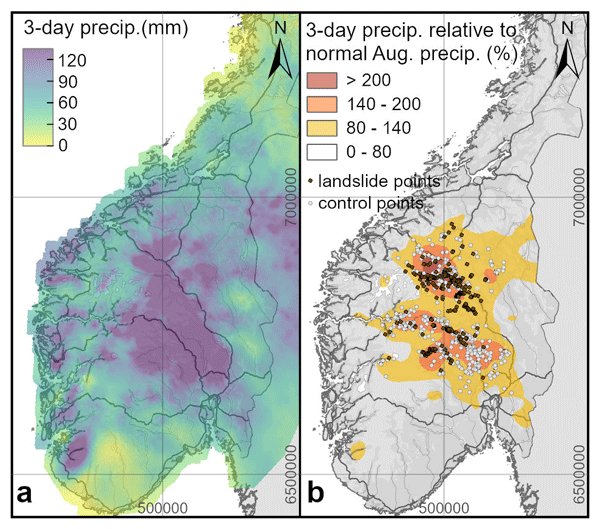
Denise Christina Rüther, Kristine Flacké Haualand, Iris Louisa Johanna Peeters, and Mark Andrew Kusk Gillespie
Nat. Hazards Earth Syst. Sci., 26, 4675–4721, https://doi.org/10.5194/nhess-26-4675-2026, https://doi.org/10.5194/nhess-26-4675-2026, 2026
Short summary
Short summary
We use several machine learning models to explore which factors best explain landslide release during an extreme rainfall event in eastern Norway. As landslides often occur in clusters, methods must be chosen carefully to account for any spatial effects. When considering this, we find that south-facing slopes, thicker soils and more water made landslides most likely. On forested slopes, landslides are most likely in deciduous rather than spruce or pine stands.
Alexander Georgi, Leopold Schlagbauer, Kristine Flacké Haualand, Malte Springer, Lindsey Nicholson, and Tobias Sauter
EGUsphere, https://doi.org/10.5194/egusphere-2026-3922, https://doi.org/10.5194/egusphere-2026-3922, 2026
Short summary
Short summary
We studied how well a high-resolution weather model simulates atmospheric conditions over a glacier in the Austrian Alps. By comparing model results with extensive field observations from weather stations, lasers, and research drones, we found that the model accurately captures temperature, moisture, and wind patterns. Some errors remain close to the surface and during transitions of wind regimes. Overall, the model provides a reliable tool to support future climate and glacier research.
Kristine Flacké Haualand, Tiago Silva, Kerstin Rasmussen, Caroline Drost Jensen, Johan Hassing Scheller, Jakob Abermann, Simon de Villiers, Andreas Trügler, Wolfgang Schöner, and Jacob Clement Yde
EGUsphere, https://doi.org/10.5194/egusphere-2026-3684, https://doi.org/10.5194/egusphere-2026-3684, 2026
Short summary
Short summary
Southeast Greenland is often affected by damaging windstorms from the Greenland ice sheet. Using weather observations, we find that these windstorms have footprints covering several 100 km in the horizontal and several km in the vertical. The largest seasonal differences are warming instead of cooling and larger reductions in humidity in summer compared to winter. Our findings improve our understanding of spatial and temporal characteristics of these windstorms in the present and future climate.
Tiago Silva, Kristine Flacké Haualand, Jacob Clement Yde, Johan Hassing Scheller, Jakob Abermann, Andreas Trügler, and Wolfgang Schöner
EGUsphere, https://doi.org/10.5194/egusphere-2026-3687, https://doi.org/10.5194/egusphere-2026-3687, 2026
Short summary
Short summary
Severe downslope windstorms (locally known as piteraq) impact southeast Greenland communities and global ocean currents. Using high-resolution weather reanalysis, we show how piteraq events are driven by massive cold weather systems colliding with Greenland. As the dense air plunges down the steep coastal slopes, it accelerates into concentrated low-level jets. Recognizing the associated large-scale preconditioning will improve early warning systems and future climate predictions.
Denise Christina Rüther, Kristine Flacké Haualand, Iris Louisa Johanna Peeters, and Mark Andrew Kusk Gillespie
Nat. Hazards Earth Syst. Sci., 26, 4675–4721, https://doi.org/10.5194/nhess-26-4675-2026, https://doi.org/10.5194/nhess-26-4675-2026, 2026
Short summary
Short summary
We use several machine learning models to explore which factors best explain landslide release during an extreme rainfall event in eastern Norway. As landslides often occur in clusters, methods must be chosen carefully to account for any spatial effects. When considering this, we find that south-facing slopes, thicker soils and more water made landslides most likely. On forested slopes, landslides are most likely in deciduous rather than spruce or pine stands.
Alexander Georgi, Leopold Schlagbauer, Kristine Flacké Haualand, Malte Springer, Lindsey Nicholson, and Tobias Sauter
EGUsphere, https://doi.org/10.5194/egusphere-2026-3922, https://doi.org/10.5194/egusphere-2026-3922, 2026
Short summary
Short summary
We studied how well a high-resolution weather model simulates atmospheric conditions over a glacier in the Austrian Alps. By comparing model results with extensive field observations from weather stations, lasers, and research drones, we found that the model accurately captures temperature, moisture, and wind patterns. Some errors remain close to the surface and during transitions of wind regimes. Overall, the model provides a reliable tool to support future climate and glacier research.
Kristine Flacké Haualand, Tiago Silva, Kerstin Rasmussen, Caroline Drost Jensen, Johan Hassing Scheller, Jakob Abermann, Simon de Villiers, Andreas Trügler, Wolfgang Schöner, and Jacob Clement Yde
EGUsphere, https://doi.org/10.5194/egusphere-2026-3684, https://doi.org/10.5194/egusphere-2026-3684, 2026
Short summary
Short summary
Southeast Greenland is often affected by damaging windstorms from the Greenland ice sheet. Using weather observations, we find that these windstorms have footprints covering several 100 km in the horizontal and several km in the vertical. The largest seasonal differences are warming instead of cooling and larger reductions in humidity in summer compared to winter. Our findings improve our understanding of spatial and temporal characteristics of these windstorms in the present and future climate.
Tiago Silva, Kristine Flacké Haualand, Jacob Clement Yde, Johan Hassing Scheller, Jakob Abermann, Andreas Trügler, and Wolfgang Schöner
EGUsphere, https://doi.org/10.5194/egusphere-2026-3687, https://doi.org/10.5194/egusphere-2026-3687, 2026
Short summary
Short summary
Severe downslope windstorms (locally known as piteraq) impact southeast Greenland communities and global ocean currents. Using high-resolution weather reanalysis, we show how piteraq events are driven by massive cold weather systems colliding with Greenland. As the dense air plunges down the steep coastal slopes, it accelerates into concentrated low-level jets. Recognizing the associated large-scale preconditioning will improve early warning systems and future climate predictions.
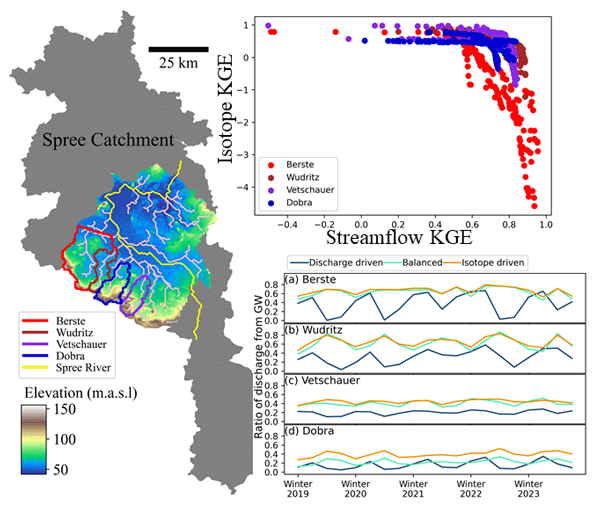
Hanwu Zheng, Doerthe Tetzlaff, Christian Birkel, Songjun Wu, Tobias Sauter, and Chris Soulsby
Hydrol. Earth Syst. Sci., 30, 1143–1163, https://doi.org/10.5194/hess-30-1143-2026, https://doi.org/10.5194/hess-30-1143-2026, 2026
Short summary
Short summary
Ecohydrological processes in heavily managed catchments are often inadequately represented in models. We applied a tracer-aided model STARR (Spatially distributed Tracer-Aided Rainfall-Runoff) in an ET (evapotranspiration)-dominated region (the Middle Spree, NE Germany) with major management impacts. Water isotopes were useful in identifying runoff contributions and partitioning ET even at sparse resolution. Trade-offs between discharge- and isotope-based calibrations could be partially mitigated by integrating more process-based conceptualizations into the model.
Phillip Schuster, Ana-Lena Tappe, Alexander Georgi, Christoph Schneider, Mia Janzen, and Tobias Sauter
EGUsphere, https://doi.org/10.5194/egusphere-2025-3461, https://doi.org/10.5194/egusphere-2025-3461, 2025
Short summary
Short summary
We present MATILDA-Online, an open-source, cloud-based modeling toolkit, to support integrated water management in glacierized mountain regions. It integrates glacier and hydrology models with open data and cloud computing. Despite data scarcity, this tool empowers local professionals, students, and researchers to generate climate impact assessments, promoting informed decision-making. Despite its accessibility, effective calibration and interpretation still require expert knowledge.
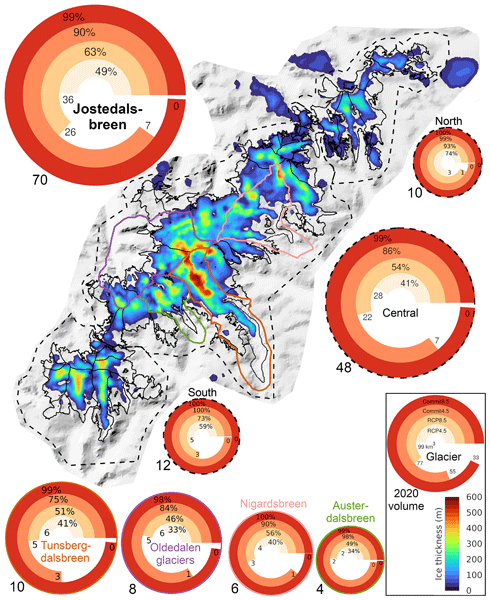
Henning Åkesson, Kamilla Hauknes Sjursen, Thomas Vikhamar Schuler, Thorben Dunse, Liss Marie Andreassen, Mette Kusk Gillespie, Benjamin Aubrey Robson, Thomas Schellenberger, and Jacob Clement Yde
The Cryosphere, 19, 5871–5902, https://doi.org/10.5194/tc-19-5871-2025, https://doi.org/10.5194/tc-19-5871-2025, 2025
Short summary
Short summary
We model the historical and future evolution of the Jostedalsbreen ice cap in Norway, projecting substantial and largely irreversible mass loss for the 21st century, and that the ice cap will split into three parts. Further mass loss is in the pipeline, with a disappearance during the 22nd century under high emissions. Our study demonstrates an approach to model complex ice masses, highlights uncertainties due to precipitation, and calls for further research on long-term future glacier change.
Phillip Schuster, Azamat Osmonov, Alexander Georgi, Christoph Schneider, and Tobias Sauter
EGUsphere, https://doi.org/10.5194/egusphere-2025-3462, https://doi.org/10.5194/egusphere-2025-3462, 2025
Short summary
Short summary
This study examines water resources in a high-mountain basin in Kyrgyzstan facing climate change. The applied MATILDA-Online toolkit aims to integrate scientific research with practical water management. Projections indicate severe glacier melt and a significant reduction in runoff by 2100, with earlier peak flows and increased dry periods. The main challenges are the limited number of observations and their low accuracy, as well as the substantial effort required for model calibration.

Pedro Henrique Lima Alencar, Saskia Arndt, Kei Namba, Márk Somogyvári, Frederik Bart, Fabio Brill, Juan F. Dueñas, Peter Feindt, Daniel Johnson, Nariman Mahmoodi, Christoph Merz, Subham Mukherjee, Katrin Nissen, Eva Nora Paton, Tobias Sauter, Dörthe Tetzlaff, Franziska Tügel, Thomas Vogelpohl, Stenka Valentinova Vulova, Behnam Zamani, and Hui Hui Zhang
Nat. Hazards Earth Syst. Sci., 25, 4043–4051, https://doi.org/10.5194/nhess-25-4043-2025, https://doi.org/10.5194/nhess-25-4043-2025, 2025
Short summary
Short summary
As climate change escalates, the Berlin-Brandenburg region faces new challenges. Climate change-induced extreme events are expected to cause new conflicts to emerge and aggravate existing ones. To guide future research, we co-develop a list of key questions on climate and water challenges in the region. Our findings highlight the need for new research approaches. We expect this list to provide a roadmap for actionable knowledge production to address climate and water challenges in the region.
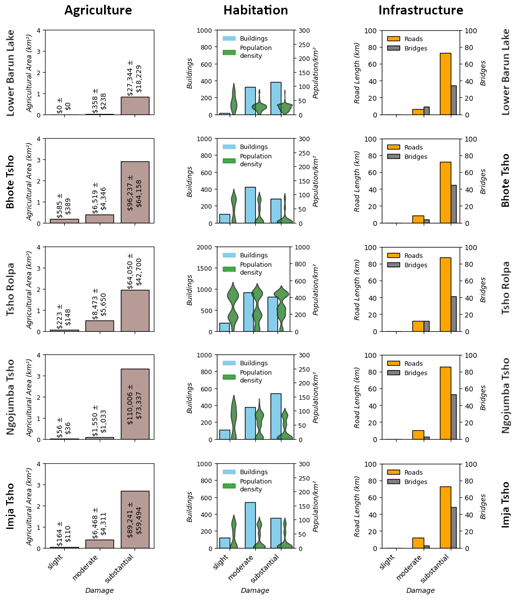
Wilhelm Furian and Tobias Sauter
Nat. Hazards Earth Syst. Sci., 25, 3779–3802, https://doi.org/10.5194/nhess-25-3779-2025, https://doi.org/10.5194/nhess-25-3779-2025, 2025
Short summary
Short summary
Glacial lake outburst floods (GLOFs) continue to threaten high-mountain communities in Nepal. We simulate potential GLOF events from five glacial lakes in the Everest region during the 21st century using a 3D flood model and several breach and SSP scenarios. Large GLOFs could extend over 100 km and inundate 80 to 100 km of roads/trails, 735 to 1989 houses and 0.85 to 3.52 km2 of agricultural land. The results help to assess the changing GLOF impacts and support more accurate risk assessments.
Jamie Barnett, Felicity A. Holmes, Joshua Cuzzone, Henning Åkesson, Mathieu Morlighem, Matt O'Regan, Johan Nilsson, Nina Kirchner, and Martin Jakobsson
The Cryosphere, 19, 3631–3653, https://doi.org/10.5194/tc-19-3631-2025, https://doi.org/10.5194/tc-19-3631-2025, 2025
Short summary
Short summary
Understanding how ice sheets have changed in the past can allow us to make better predictions for the future. By running a state-of-the-art model of Ryder Glacier, North Greenland, over the past 12 000 years we find that both a warming atmosphere and the ocean play a key role in the evolution of the glacier. Our conclusions stress that accurately quantifying the ice sheet’s interactions with the ocean is required to predict future changes and reliable sea level rise estimates.
Felicity A. Holmes, Jamie Barnett, Henning Åkesson, Mathieu Morlighem, Johan Nilsson, Nina Kirchner, and Martin Jakobsson
The Cryosphere, 19, 2695–2714, https://doi.org/10.5194/tc-19-2695-2025, https://doi.org/10.5194/tc-19-2695-2025, 2025
Short summary
Short summary
Northern Greenland contains some of the ice sheet's last remaining glaciers with floating ice tongues. One of these is Ryder Glacier, which has been relatively stable in recent decades, in contrast to nearby glaciers. Here, we use a computer model to simulate Ryder Glacier until 2300 under both a low- and a high-emissions scenario. Very high levels of surface melt under a high-emissions future lead to a sea level rise contribution that is an order of magnitude higher than under a low-emissions future.
Annelies Voordendag, Brigitta Goger, Rainer Prinz, Tobias Sauter, Thomas Mölg, Manuel Saigger, and Georg Kaser
The Cryosphere, 18, 849–868, https://doi.org/10.5194/tc-18-849-2024, https://doi.org/10.5194/tc-18-849-2024, 2024
Short summary
Short summary
Wind-driven snow redistribution affects glacier mass balance. A case study of Hintereisferner glacier in Austria used high-resolution observations and simulations to model snow redistribution. Simulations matched observations, showing the potential of the model for studying snow redistribution on other mountain glaciers.
Franziska Temme, David Farías-Barahona, Thorsten Seehaus, Ricardo Jaña, Jorge Arigony-Neto, Inti Gonzalez, Anselm Arndt, Tobias Sauter, Christoph Schneider, and Johannes J. Fürst
The Cryosphere, 17, 2343–2365, https://doi.org/10.5194/tc-17-2343-2023, https://doi.org/10.5194/tc-17-2343-2023, 2023
Short summary
Short summary
Calibration of surface mass balance (SMB) models on regional scales is challenging. We investigate different calibration strategies with the goal of achieving realistic simulations of the SMB in the Monte Sarmiento Massif, Tierra del Fuego. Our results show that the use of regional observations from satellite data can improve the model performance. Furthermore, we compare four melt models of different complexity to understand the benefit of increasing the processes considered in the model.
Thomas Frank, Henning Åkesson, Basile de Fleurian, Mathieu Morlighem, and Kerim H. Nisancioglu
The Cryosphere, 16, 581–601, https://doi.org/10.5194/tc-16-581-2022, https://doi.org/10.5194/tc-16-581-2022, 2022
Short summary
Short summary
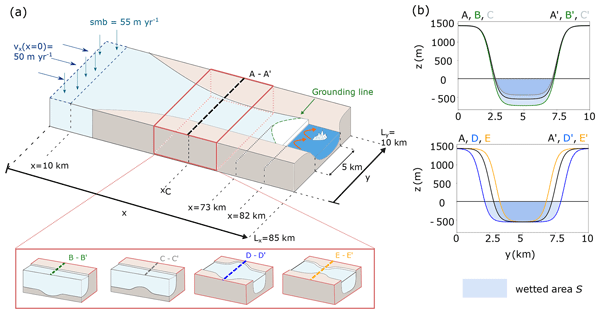
The shape of a fjord can promote or inhibit glacier retreat in response to climate change. We conduct experiments with a synthetic setup under idealized conditions in a numerical model to study and quantify the processes involved. We find that friction between ice and fjord is the most important factor and that it is possible to directly link ice discharge and grounding line retreat to fjord topography in a quantitative way.
Cited articles
Abolafia-Rosenzweig, R., He, C., Liu, C., Lin, T.-S., Mocko, D., Rittger, K., Rudisill, W., Cheng, Y., Barlage, M., Palomaki, R., Wegiel, J. W., and Kumar, S. V.: Snow cover plays a non-dominant role in WRF/Noah-MP simulated surface air temperature cold biases over the western US, J. Geophys. Res.-Atmos., 130, e2025JD044191, https://doi.org/10.1029/2025JD044191, 2025. a
Åkesson, H. and Sjursen, K. H.: Modelled future evolution of Jostedalsbreen ice cap, Norway, Zenodo [data set], https://doi.org/10.5281/zenodo.17472491, 2025. a
Åkesson, H., Sjursen, K. H., Schuler, T. V., Dunse, T., Andreassen, L. M., Gillespie, M. K., Robson, B. A., Schellenberger, T., and Yde, J. C.: Recent history and future demise of Jostedalsbreen, the largest ice cap in mainland Europe, The Cryosphere, 19, 5871–5902, https://doi.org/10.5194/tc-19-5871-2025, 2025. a, b, c, d, e
Andreassen, L. M., Robson, B. A., Sjursen, K. H., Elvehøy, H., Kjøllmoen, B., and Carrivick, J. L.: Spatio-temporal variability in geometry and geodetic mass balance of Jostedalsbreen ice cap, Norway, Ann. Glaciol., 64, 26–43, 2023. a
Andreassen, L. M., Elvehøy, H., and Kjøllmoen, B.: Glaciological investigations in Norway 2024, NVE Rapport 27 2025, https://publikasjoner.nve.no/rapport/2025/rapport2025_27.pdf (last access: 10 February 2026), 2025. a
Azad, R. and Sorteberg, A.: Extreme daily precipitation in coastal western Norway and the link to atmospheric rivers, J. Geophys. Res.-Atmos., 122, 2080–2095, 2017. a
Ban, N., Caillaud, C., Coppola, E., Pichelli, E., Sobolowski, S., Adinolfi, M., Ahrens, B., Alias, A., Anders, I., Bastin, S., Belušić, D., Berthou, S., Brisson, E., Cardoso, R. M., Chan, S. C., Christensen, O. B., Fernández, J., Fita, L., Frisius, T., Gašparac, G., Giorgi, F., Goergen, K., Haugen, J., Hodnebrog, Ø., Kartsios, S., Katragkou, E., Kendon, E., Keuler, K., Lavin-Gullon, A., Lenderink, G., Leutwyler, D., Lorenz, T., Maraun, D., Mercogliano, P., Milovac, J., Panitz, H.-J., Raffa, M., Remedio, A., Schär, C., Soares, P. M. M., Srnec, L., Steensen, B. M., Stocchi, P., Tölle, M. H., Truhetz, H., Vergara-Temprado, J., de Vries, H., Warrach-Sagi, K., Wulfmeyer, V., and Zander, M. J.: The first multi-model ensemble of regional climate simulations at kilometer-scale resolution, part I: evaluation of precipitation, Clim. Dynam., 57, 275–302, 2021. a
Claremar, B., Obleitner, F., Reijmer, C., Pohjola, V., Waxegård, A., Karner, F., and Rutgersson, A.: Applying a mesoscale atmospheric model to Svalbard glaciers, Adv. Meteorol., 2012, 321649, https://doi.org/10.1155/2012/321649, 2012. a, b
Collier, E., Mölg, T., Maussion, F., Scherer, D., Mayer, C., and Bush, A. B. G.: High-resolution interactive modelling of the mountain glacier–atmosphere interface: an application over the Karakoram, The Cryosphere, 7, 779–795, https://doi.org/10.5194/tc-7-779-2013, 2013. a
Dannevig, H. and Rusdal, T.: Caring for melting glaciers, Tourism Geogr., 25, 1679–1695, 2023. a
Di Mauro, B.: A darker cryosphere in a warming world, Nat. Clim. Change, 10, 979–980, 2020. a
Draeger, C., Radić, V., White, R. H., and Tessema, M. A.: Evaluation of reanalysis data and dynamical downscaling for surface energy balance modeling at mountain glaciers in western Canada, The Cryosphere, 18, 17–42, https://doi.org/10.5194/tc-18-17-2024, 2024. a
Dutra, E., Muñoz-Sabater, J., Boussetta, S., Komori, T., Hirahara, S., and Balsamo, G.: Environmental lapse rate for high-resolution land surface downscaling: An application to ERA5, Earth Space Sci., 7, e2019EA000984, https://doi.org/10.1029/2019EA000984, 2020. a
Dyrrdal, A. V., Bakke, S. J., Hanssen-Bauer, I., Mayer, S., Nilsen, I. B., Nilsen, J. E. Ø., Paasche, Ø., Saloranta, T., and Årthun, M.: Klima i Norge – kunnskapsgrunnlag for klimatilpasning oppdatert i 2025, NCCS-rapport 1/2025, Norsk Klimaservicesenter, https://doi.org/10.60839/4rgq-nn84, 2025. a, b, c
Eidhammer, T., Booth, A., Decker, S., Li, L., Barlage, M., Gochis, D., Rasmussen, R., Melvold, K., Nesje, A., and Sobolowski, S.: Mass balance and hydrological modeling of the Hardangerjøkulen ice cap in south-central Norway, Hydrol. Earth Syst. Sci., 25, 4275–4297, https://doi.org/10.5194/hess-25-4275-2021, 2021. a, b
Ek, M. B., Mitchell, K. E., Lin, Y., Rogers, E., Grunmann, P., Koren, V., Gayno, G., and Tarpley, J. D.: Implementation of Noah land surface model advances in the National Centers for Environmental Prediction operational mesoscale Eta model, J. Geophys. Res.-Atmos., 108, https://doi.org/10.1029/2002JD003296, 2003. a
Ekblom Johansson, F., Bakke, J., Støren, E. N., Gillespie, M. K., and Laumann, T.: Mapping of the subglacial topography of Folgefonna ice cap in western Norway – consequences for ice retreat patterns and hydrological changes, Front. Earth Sci., 10, 886361, https://doi.org/10.3389/feart.2022.886361, 2022. a
Esau, I. and Repina, I.: Wind climate in Kongsfjorden, Svalbard, and attribution of leading wind driving mechanisms through turbulence-resolving simulations, Adv. Meteorol., 2012, 568454, https://doi.org/10.1155/2012/568454, 2012. a
Fausto, R. S., van As, D., Mankoff, K. D., Vandecrux, B., Citterio, M., Ahlstrøm, A. P., Andersen, S. B., Colgan, W., Karlsson, N. B., Kjeldsen, K. K., Korsgaard, N. J., Larsen, S. H., Nielsen, S., Pedersen, A. Ø., Shields, C. L., Solgaard, A. M., and Box, J. E.: Programme for Monitoring of the Greenland Ice Sheet (PROMICE) automatic weather station data, Earth Syst. Sci. Data, 13, 3819–3845, https://doi.org/10.5194/essd-13-3819-2021, 2021. a
Fosser, G., Gaetani, M., Kendon, E. J., Adinolfi, M., Ban, N., Belušić, D., Caillaud, C., Careto, J. A., Coppola, E., Demory, M.-E., de Vries, H., Dobler, A., Feldmann, H., Goergen, K., Lenderink, G., Pichelli, E., Schär, C., Soares, P. M. M., Somot, S., and Tölle, M. H.: Convection-permitting climate models offer more certain extreme rainfall projections, NPJ Clim. Atmos. Sci., 7, 51, https://doi.org/10.1038/s41612-024-00600-w, 2024. a
Geonorge: https://kartkatalog.geonorge.no/ (last access: 1 August 2024), 2025. a
Gillespie, M. K., Andreassen, L. M., Huss, M., de Villiers, S., Sjursen, K. H., Aasen, J., Bakke, J., Cederstrøm, J. M., Elvehøy, H., Kjøllmoen, B., Loe, E., Meland, M., Melvold, K., Nerhus, S. D., Røthe, T. O., Støren, E. W. N., Øst, K., and Yde, J. C.: Ice thickness and bed topography of Jostedalsbreen ice cap, Norway, Earth Syst. Sci. Data, 16, 5799–5825, https://doi.org/10.5194/essd-16-5799-2024, 2024a. a, b, c, d, e
Gillespie, M. K., Andreassen, L. M., Huss, M., de Villiers, S., Sjursen, K. H., Aasen, J., Bakke, J., Cederstrøm, J. M., Elvehøy, H., Kjøllmoen, B., Loe, E., Meland, M., Melvold, K., Nerhus, S. D., Røthe, T. O., Støren, E. W. N., Øst, K., and Yde, J. C.: Jostedalsbreen ice thickness and bed topography, Norwegian Research Information Repository [data set], https://doi.org/10.58059/yhwr-rx55, 2024b. a
Goger, B., Stiperski, I., Ouy, M., and Nicholson, L.: Investigating the influence of changing ice surfaces on gravity wave formation impacting glacier boundary layer flow with large-eddy simulations, Weather Clim. Dynam., 6, 345–367, https://doi.org/10.5194/wcd-6-345-2025, 2025. a, b
Hanssen-Bauer, I. and Førland, E.: Temperature and precipitation variations in Norway 1900–1994 and their links to atmospheric circulation, Int. J. Climatol., 20, 1693–1708, https://doi.org/10.1002/1097-0088(20001130)20:14<1693::AID-JOC567>3.0.CO;2-7, 2000. a
Haualand, K. F.: Model output for regional climate simulations around the Jostedalsbreen ice cap, Zenodo [data set], https://doi.org/10.5281/zenodo.20529869, 2026. a
Haualand, K. F., Sauter, T., Abermann, J., de Villiers, S. D., Georgi, A., Goger, B., Dawson, I., Nerhus, S. D., Robson, B. A., Sjursen, K. H., Thomas, D. J., Thomaser, M., and Yde, J. C.: Meteorological impact of glacier retreat and proglacial lake temperature in western Norway, J. Geophys. Res.-Atmos., 130, e2024JD042715, https://doi.org/10.1029/2024JD042715, 2025. a, b, c, d, e, f, g, h, i, j, k
Hersbach, H., Bell, B., Berrisford, P., Hirahara, S., Horányi, A., Muñoz-Sabater, J., Nicolas, J., Peubey, C., Radu, R., Schepers, D., Simmons, A., Soci, C., Abdalla, S., Abellan, X., Balsamo, G., Bechtold, P., Biavati, G., Bidlot, J., Bonavita, M., De Chiara, G., Dahlgren, P., Dee, D., Diamantakis, M., Dragani, R., Flemming, J., Forbes, R., Fuentes, M., Geer, A., Haimberger, L., Healy, S., Hogan, R. J., Hólm, E., Janisková, M., Keeley, S., Laloyaux, P., Lopez, P., Lupu, C., Radnoti, G., de Rosnay, P., Rozum, I., Vamborg, F., Villaume, S., and Thépaut, J.-N.: The ERA5 global reanalysis, Q. J. Roy. Meteor. Soc., 146, 1999–2049, 2020. a, b
Houze Jr., R. A.: Orographic effects on precipitating clouds, Rev. Geophys., 50, https://doi.org/10.1029/2011RG000365, 2012. a
Hunter, J. D.: Matplotlib: A 2D graphics environment, Comput. Sci. Eng., 9, 90–95, 2007. a
Iacono, M. J., Delamere, J. S., Mlawer, E. J., Shephard, M. W., Clough, S. A., and Collins, W. D.: Radiative forcing by long-lived greenhouse gases: Calculations with the AER radiative transfer models, J. Geophys. Res.-Atmos., 113, https://doi.org/10.1029/2008JD009944, 2008. a
Ketzler, G., Römer, W., and Beylich, A. A.: The Climate of Norway, Springer International Publishing, Cham, 7–29, ISBN 978-3-030-52563-7, https://doi.org/10.1007/978-3-030-52563-7_2, 2021. a
Klopsch, C., Yde, J. C., Matthews, J. A., Vater, A. E., and Gillespie, M. A. K.: Repeated survey along the foreland of a receding Norwegian glacier reveals shifts in succession of beetles and spiders, Holocene, 33, 14–26, 2023. a
Koren, V., Schaake, J., Mitchell, K., Duan, Q.-Y., Chen, F., and Baker, J. M.: A parameterization of snowpack and frozen ground intended for NCEP weather and climate models, J. Geophys. Res.-Atmos., 104, 19569–19585, 1999. a
Kotlarski, S., Jacob, D., Podzun, R., and Paul, F.: Representing glaciers in a regional climate model, Clim. Dynam., 34, 27–46, 2010. a
Letcher, T., Eylander, J., Shoop, S., and Frankenstein, S.: Are the Noah and Noah-MP land surface models accurate for frozen soil conditions?, Cold Reg. Sci. Technol., 220, 104149, https://doi.org/10.1016/j.coldregions.2024.104149, 2024. a
Lin, C., Yang, K., Chen, D., Guyennon, N., Balestrini, R., Yang, X., Acharya, S., Ou, T., Yao, T., Tartari, G., and Salerno, F.: Summer afternoon precipitation associated with wind convergence near the Himalayan glacier fronts, Atmos. Res., 259, 105658, https://doi.org/10.1016/j.atmosres.2021.105658, 2021. a
Lüthi, S., Ban, N., Kotlarski, S., Steger, C. R., Jonas, T., and Schär, C.: Projections of alpine snow-cover in a high-resolution climate simulation, Atmosphere, 10, 463, https://doi.org/10.3390/atmos10080463, 2019. a
Marr, P., Winkler, S., and Löffler, J.: Environmental and socio-economic consequences of recent mountain glacier fluctuations in Norway, Springer International Publishing, 289–314, ISBN 978-3-030-70238-0, https://doi.org/10.1007/978-3-030-70238-0_10, 2022. a
Michel, C., Sorteberg, A., Eckhardt, S., Weijenborg, C., Stohl, A., and Cassiani, M.: Characterization of the atmospheric environment during extreme precipitation events associated with atmospheric rivers in Norway – Seasonal and regional aspects, Weather and Climate Extremes, 34, 100370, https://doi.org/10.1016/j.wace.2021.100370, 2021. a
Nakanishi, M. and Niino, H.: Development of an improved turbulence closure model for the atmospheric boundary layer, J. Meteorol. Soc. Jpn. Ser. II, 87, 895–912, 2009. a
Natural Earth: https://www.naturalearthdata.com/downloads/50m-cultural-vectors/50m-admin-0-countries-2/ (last access: 1 August 2024), 2025. a
Pichelli, E., Coppola, E., Sobolowski, S., Ban, N., Giorgi, F., Stocchi, P., Alias, A., Belušić, D., Berthou, S., Caillaud, C., Cardoso, R. M., Chan, S., Christensen, O. B., Dobler, A., de Vries, H., Goergen, K., Kendon, E. J., Keuler, K., Lenderink, G., Lorenz, T., Mishra, A. N., Panitz, H.-J., Schär, C., Soares, P. M. M., Truhetz, H., and Vergara-Temprado, J.: The first multi-model ensemble of regional climate simulations at kilometer-scale resolution part 2: historical and future simulations of precipitation, Clim. Dynam., 56, 3581–3602, 2021. a
Pineda, N., Jorba, O., Jorge, J., and Baldasano, J. M.: Using NOAA AVHRR and SPOT VGT data to estimate surface parameters: application to a mesoscale meteorological model, Int. J. Remote Sens., 25, 129–143, 2004. a
Pontoppidan, M., Reuder, J., Mayer, S., and Kolstad, E. W.: Downscaling an intense precipitation event in complex terrain: the importance of high grid resolution, Tellus A, 69, 1271561, https://doi.org/10.1080/16000870.2016.1271561, 2017. a, b
Ren, L., Duan, K., and Xin, R.: Impact of future loss of glaciers on precipitation pattern: A case study from south-eastern Tibetan Plateau, Atmos. Res., 242, 104984, https://doi.org/10.1016/j.atmosres.2020.104984, 2020. a
Rydgren, K., Halvorsen, R., Töpper, J. P., and Njøs, J. M.: Glacier foreland succession and the fading effect of terrain age, J. Veg. Sci., 25, 1367–1380, 2014. a
Salerno, F., Guyennon, N., Yang, K., Shaw, T. E., Lin, C., Colombo, N., Romano, E., Gruber, S., Bolch, T., Alessandri, A., Cristofanelli, P., Putero, D., Diolaiuti, G., Tartari, G., Verza, G., Thakuri, S., Balsamo, G., Miles, E. S., and Pellicciotti, F.: Local cooling and drying induced by Himalayan glaciers under global warming, Nat. Geosci., 16, 1120–1127, 2023. a, b, c, d
Sauter, T.: Revisiting extreme precipitation amounts over southern South America and implications for the Patagonian Icefields, Hydrol. Earth Syst. Sci., 24, 2003–2016, https://doi.org/10.5194/hess-24-2003-2020, 2020. a, b
Sauter, T. and Galos, S. P.: Effects of local advection on the spatial sensible heat flux variation on a mountain glacier, The Cryosphere, 10, 2887–2905, https://doi.org/10.5194/tc-10-2887-2016, 2016. a
Sauter, T., Brock, B. W., Collier, E., Goger, B., Groos, A. R., Haualand, K. F., Mott, R., Nicholson, L., Prinz, R., Shaw, T. E., Stiperski, I., Georgi, A., Haugeneder, M., Mandal, A., Reynolds, D., Saigger, M., Sicart, J. E., and Voordendag, A.: Glacier-atmosphere interactions and feedbacks in high-mountain regions – A review, Rev. Geophys., 64, e2024RG000869, https://doi.org/10.1029/2024RG000869, 2026. a, b, c, d, e
Shaw, T. E., Buri, P., McCarthy, M., Miles, E. S., and Pellicciotti, F.: Local controls on near-surface glacier cooling under warm atmospheric conditions, J. Geophys. Res.-Atmos., 129, e2023JD040214, https://doi.org/10.1029/2023JD040214, 2024. a
Shaw, T. E., Miles, E. S., McCarthy, M., Buri, P., Guyennon, N., Salerno, F., Carturan, L., Brock, B., and Pellicciotti, F.: Mountain glaciers recouple to atmospheric warming over the twenty-first century, Nat. Clim. Change, 1–7, https://doi.org/10.1038/s41558-025-02449-0, 2025. a, b, c
Sjursen, K. H., Dunse, T., Schuler, T. V., Andreassen, L. M., and Åkesson, H.: Spatiotemporal mass-balance variability of Jostedalsbreen Ice Cap, Norway, revealed by a temperature-index model using Bayesian inference, Ann. Glaciol., 66, e1, https://doi.org/10.1017/aog.2024.41, 2025. a
Skamarock, W. C., Klemp, J. B., Dudhia, J., Gill, D. O., Liu, Z., Berner, J., Wang, W., Powers, J. G., Duda, M. G., Barker, D. M., and Huang, X.-Y.: A description of the advanced research WRF version 4, NCAR tech. note NCAR/TN-556+STR, 145, https://doi.org/10.5065/1dfh-6p97, 2019. a
Smagorinsky, J.: General circulation experiments with the primitive equations: I. The basic experiment, Mon. Weather Rev., 91, 99–164, 1963. a
Temme, F., Turton, J. V., Mölg, T., and Sauter, T.: Flow regimes and föhn types characterize the local climate of Southern Patagonia, Atmosphere, 11, 899, https://doi.org/10.3390/atmos11090899, 2020. a, b
Thompson, G., Field, P. R., Rasmussen, R. M., and Hall, W. D.: Explicit forecasts of winter precipitation using an improved bulk microphysics scheme. Part II: Implementation of a new snow parameterization, Mon. Weather Rev., 136, 5095–5115, 2008. a
Tveito, O. E.: Norwegian standard climate normals 1991–2020 – the methodological approach. MET report 05-2021, https://www.met.no/publikasjoner/met-report/met-report-2021/_/attachment/inline/31bb0160-d8cf-4a2b-9646-4df6f5904059:3ac4fec6cf3fb7919aefe42db2b63ad8e8b9e6a6/METreport%2005_2021_New_Norwegian_standard_climate_normals_1991_2020-signert.pdf (last access: 10 December 2025), 2021. a
van den Broeke, M. R.: Structure and diurnal variation of the atmospheric boundary layer over a mid-latitude glacier in summer, Bound.-Lay. Meteorol., 83, 183–205, 1997. a
Van Tricht, L., Zekollari, H., Huss, M., Rounce, D. R., Schuster, L., Aguayo, R., Schmitt, P., Maussion, F., Tober, B., and Farinotti, D.: Peak glacier extinction in the mid-twenty-first century, Nat. Clim. Change, 1–5, https://doi.org/10.1038/s41558-025-02513-9, 2025. a
Wagner, J. S., Gohm, A., and Rotach, M. W.: The impact of horizontal model grid resolution on the boundary layer structure over an idealized valley, Mon. Weather Rev., 142, 3446–3465, 2014. a
Zhang, Y., Gao, T., Kang, S., Shangguan, D., and Luo, X.: Albedo reduction as an important driver for glacier melting in Tibetan Plateau and its surrounding areas, Earth-Sci. Rev., 220, 103735, https://doi.org/10.1016/j.earscirev.2021.103735, 2021. a
Short summary
Melting glaciers worldwide cause changes in land surface type and elevation that may impact regional climate. In a weather and climate model, we find that these changes result in warming and less precipitation, particularly less snow, over Jostedalsbreen ice cap in western Norway. Most of these impacts are related to thinning of the ice cap and the associated lowering of the surface and reduction in orographic lifting of moist air masses. The findings suggest accelerated melting of the ice cap.
Melting glaciers worldwide cause changes in land surface type and elevation that may impact...


