
Articles | Volume 7, issue 1
https://doi.org/10.5194/wcd-7-109-2026
© Author(s) 2026. This work is distributed under
the Creative Commons Attribution 4.0 License.
the Creative Commons Attribution 4.0 License.
https://doi.org/10.5194/wcd-7-109-2026
© Author(s) 2026. This work is distributed under
the Creative Commons Attribution 4.0 License.
the Creative Commons Attribution 4.0 License.
Research article
| 
16 Jan 2026
Research article |
| 16 Jan 2026
| 16 Jan 2026
Trade wind regimes during the Great Barrier Reef coral bleaching season
Lara S. Richards
CORRESPONDING AUTHOR

School of Earth, Atmosphere and Environment, Monash University, Melbourne, Australia
The Australian Research Council Centre of Excellence for the Weather of the 21st Century, Melbourne, Australia
Steven T. Siems
School of Earth, Atmosphere and Environment, Monash University, Melbourne, Australia
The Australian Research Council Centre of Excellence for the Weather of the 21st Century, Melbourne, Australia
School of Geography, Earth and Atmospheric Sciences, The University of Melbourne, Melbourne, Australia
Daniel P. Harrison
National Marine Science Centre, Southern Cross University, Coffs Harbour, Australia
Wenhui Zhao
School of Geography, Earth and Atmospheric Sciences, The University of Melbourne, Melbourne, Australia
Related authors
Lara S. Richards, Yi Huang, Michael A. Barnes, Chenhui Jin, Fadhlil R. Muhammad, Daniel P. Harrison, and Steven T. Siems
Weather Clim. Dynam., 7, 1977–1993, https://doi.org/10.5194/wcd-7-1977-2026, https://doi.org/10.5194/wcd-7-1977-2026, 2026
Short summary
Short summary
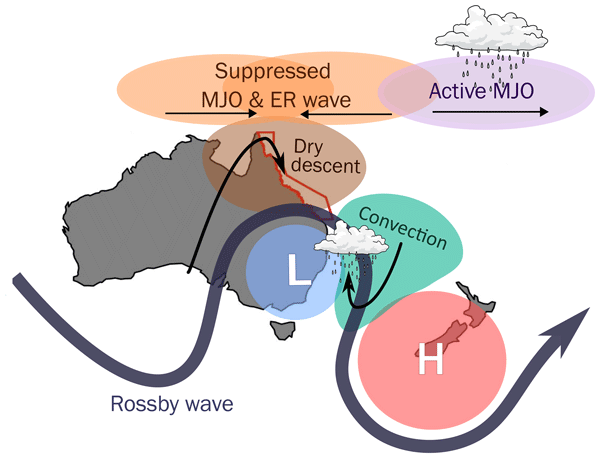
The doldrums are regions of light winds and relatively clear skies found in the tropics. They often occur during severe coral bleaching events on the Great Barrier Reef yet remain poorly understood. This study examines why the doldrums form and persist, identifying how both tropical and extratropical weather systems align to first form the doldrums and how the stalling of these weather systems prolongs the doldrums over the Great Barrier Reef.
Lara S. Richards, Yi Huang, Michael A. Barnes, Chenhui Jin, Fadhlil R. Muhammad, Daniel P. Harrison, and Steven T. Siems
Weather Clim. Dynam., 7, 1977–1993, https://doi.org/10.5194/wcd-7-1977-2026, https://doi.org/10.5194/wcd-7-1977-2026, 2026
Short summary
Short summary
The doldrums are regions of light winds and relatively clear skies found in the tropics. They often occur during severe coral bleaching events on the Great Barrier Reef yet remain poorly understood. This study examines why the doldrums form and persist, identifying how both tropical and extratropical weather systems align to first form the doldrums and how the stalling of these weather systems prolongs the doldrums over the Great Barrier Reef.
Juha Sulo, Magdalena Okuljar, Joel Alroe, Zijun Li, Eva Johanna Horchler, Luke Cravigan, Branka Miljevic, Luke Harrison, Daniel Harrison, and Zoran Ristovski
Aerosol Research, 4, 413–427, https://doi.org/10.5194/ar-4-413-2026, https://doi.org/10.5194/ar-4-413-2026, 2026
Short summary
Short summary
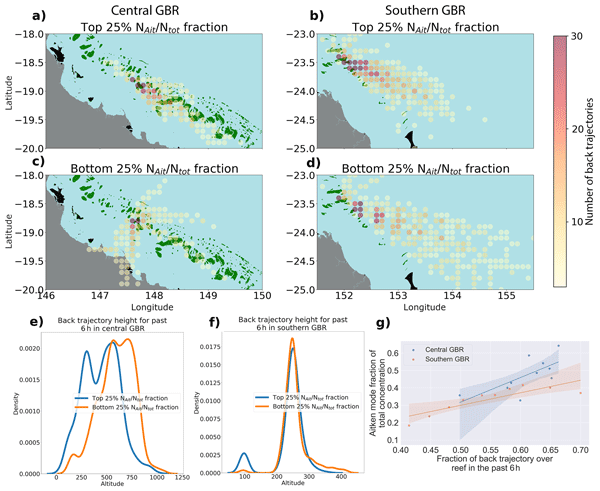
The Great Barrier Reef is the world’s largest coral reef system, and the air above it plays a role in cloud formation. Using direct measurements taken over several years, this study shows that although the reef has low aerosol concentrations, air that passes directly over coral reefs contains more very small particles, providing the first direct evidence that reefs add particles to the atmosphere. These locally produced particles make a measurable contribution to cloud formation over the reef.
Magdalena Okuljar, Juha Sulo, Joel Alroe, Zijun Li, Branka Miljevic, Daniel Harrison, and Zoran Ristovski
EGUsphere, https://doi.org/10.5194/egusphere-2026-4869, https://doi.org/10.5194/egusphere-2026-4869, 2026
Short summary
Short summary
The Great Barrier Reef is the largest coral reef system globally, yet the extent to which it contributes to local atmospheric particle loading remains poorly understood. This work focuses on particle formation processes observed during a six-week measurement campaign. Our results show that the reef ecosystem can influence local aerosol formation processes, with implications for regional cloud formation and climate feedbacks in marine ecosystems.
Caleb Mynard, Emily B. Franklin, Joel Alroe, Karen Westwood, Brandon J. McNabb, Robert Strzepek, Philippe D. Tortell, Steven T. Siems, Antonio Patti, Suzie Molloy, Alan Griffiths, Branka Miljevic, Marc D. Mallet, Ruhi Humphries, and Erin Dunne
Atmos. Chem. Phys., 26, 11583–11604, https://doi.org/10.5194/acp-26-11583-2026, https://doi.org/10.5194/acp-26-11583-2026, 2026
Short summary
Short summary
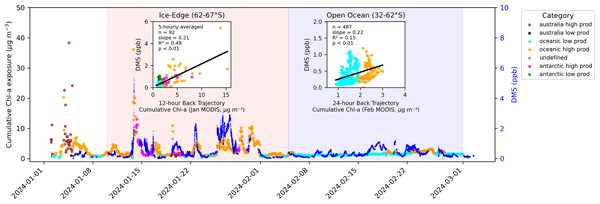
Marine sulfur gases help form climate-cooling particles, but their controls over the Southern Ocean are unclear. During a summer research voyage we measured these gases and linked them to ocean and atmospheric conditions. Near Antarctica, coastal blooms drove sharp rises in dimethyl sulfide while methanethiol remained low. Over the open ocean, both gases varied together, mainly influenced by ocean mixing and temperature, suggesting models should treat coastal and open ocean regions separately.
A. V. Sreenath, Peter T. May, Steven Siems, Heather Corden, and Alexis Berne
EGUsphere, https://doi.org/10.5194/egusphere-2026-4159, https://doi.org/10.5194/egusphere-2026-4159, 2026
This preprint is open for discussion and under review for Atmospheric Chemistry and Physics (ACP).
Short summary
Short summary
We investigated how synoptic weather regimes control cloud growth and surface precipitation at Dumont d’Urville, East Antarctica. Multi-instrument observations show that synoptic forcing determines hydrometeor growth and precipitation formation aloft, while boundary-layer conditions, including local downslope flow and near-surface moisture, control how much precipitation reaches the surface.
Xiaoshen Sun, Chris Medcraft, Ramon Braga, Peter Butcherine, Zoran Ristovski, Steven Siems, Christian J. Sanders, and Daniel P. Harrison
EGUsphere, https://doi.org/10.5194/egusphere-2026-1729, https://doi.org/10.5194/egusphere-2026-1729, 2026
This preprint is open for discussion and under review for Atmospheric Measurement Techniques (AMT).
Short summary
Short summary
We propose a novel method to detect and track sea spray particles released during marine cloud brightening (MCB) over the Great Barrier Reef. Using aircraft measurements, we showed that these released particles can be separated from the research ship and aircraft exhaust and tracked as they spread horizontally and vertically. This improves our ability to trace added sea spray aerosols and supports future work on how they may affect clouds.
Alanah Chapman, Yi Huang, and Claire Vincent
Weather Clim. Dynam., 7, 1265–1284, https://doi.org/10.5194/wcd-7-1265-2026, https://doi.org/10.5194/wcd-7-1265-2026, 2026
Short summary
Short summary
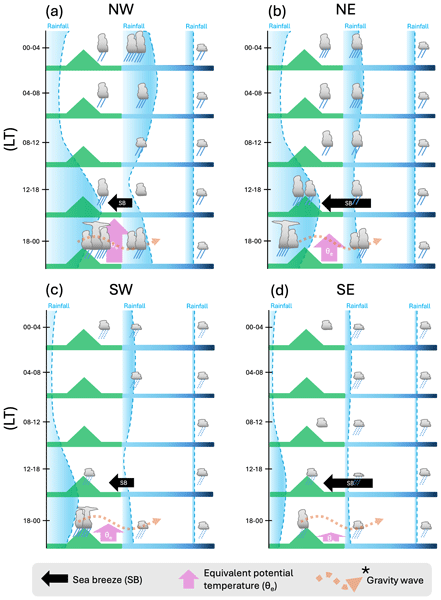
Mass coral bleaching on the Great Barrier Reef is driven by unusually warm ocean temperatures, but cloud cover also plays a critical role by regulating how much sunlight reaches the ocean. This study examines daily patterns of clouds and rainfall over north-east Queensland during bleaching seasons using satellite, radar, and regional weather data. Clouds and rainfall patterns differ between land, ocean and wind conditions, helping improve understanding of processes influencing reef heat stress.
Rebecca L. Jackson, Matthew T. Woodhouse, Mark Baird, Clothilde Langlais, Mathieu Mongin, Anthony Jones, Daniel Partridge, Luke Harrison, Johanna Horchler, Joel Alroe, Luke Cravigan, Zoran Ristovski, and Daniel P. Harrison
EGUsphere, https://doi.org/10.5194/egusphere-2026-2761, https://doi.org/10.5194/egusphere-2026-2761, 2026
Short summary
Short summary
ACCESS-EMS-GBR is a regional coupled atmosphere-ocean model of the Great Barrier Reef. It simulates aerosol and cloud processes in the atmosphere, plus hydrodynamics, biogeochemistry and ecological processes in the marine environment. Developed to assess the effects of Marine Cloud Brightening on coral bleaching, it is the first regional model able to simulate how aerosol emissions affect clouds, radiation and the underlying reef ecosystem and is ideal for a range of atmosphere-ocean studies.
Johannes Kainz, Daniel P. Harrison, and Fabian Hoffmann
Atmos. Chem. Phys., 26, 9443–9451, https://doi.org/10.5194/acp-26-9443-2026, https://doi.org/10.5194/acp-26-9443-2026, 2026
Short summary
Short summary
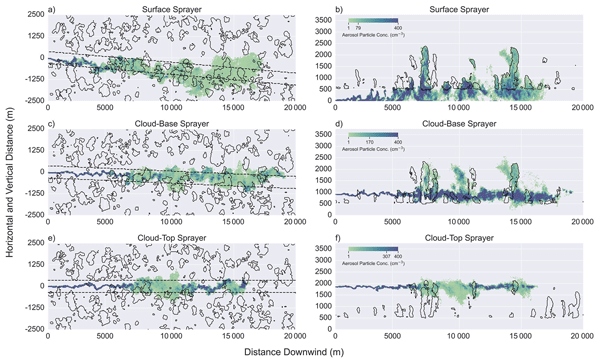
Marine Cloud Brightening (MCB) aims to counter global warming. It suggests to increase cloud reflectance by spraying aerosols from which additional cloud droplets can form. We demonstrate that MCB can be applied to cumulus clouds. The impact of aerosol particles released by a single aerosol sprayer using simulations is analyzed. The study draws conclusions on the optimal placement height of the sprayer to optimize aerosol transport, the ability to form new cloud droplets, and the area affected.
Anna M. Ukkola, Steven Thomas, Elisabeth Vogel, Ulrike Bende-Michl, Steven Siems, Vjekoslav Matic, and Wendy Sharples
Hydrol. Earth Syst. Sci., 30, 1463–1485, https://doi.org/10.5194/hess-30-1463-2026, https://doi.org/10.5194/hess-30-1463-2026, 2026
Short summary
Short summary
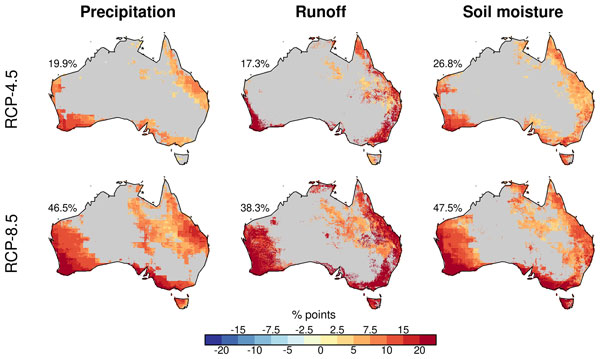
Future drought changes in Australia –the driest inhabited continent on Earth– have remained stubbornly uncertain. We assess future drought changes in Australia using projections from climate and hydrological models. We show an increasing probability of drought in highly-populated and agricultural regions of Australia in coming decades, suggesting potential impacts on agricultural activities, ecosystems and urban water supply.
Wenhui Zhao, Yi Huang, Steven Siems, and Daniel Harrison
EGUsphere, https://doi.org/10.5194/egusphere-2026-1251, https://doi.org/10.5194/egusphere-2026-1251, 2026
Short summary
Short summary
Using convection-permitting WRF simulations, this study examines how marine cloud brightening over the GBR depends on aerosol emission strength and spatial distribution. Densely spaced sources generate more uniform aerosol enhancements and stronger cloud microphysical responses than sparsely distributed sources, despite identical emissions. CDNC and optical depth increase strongly, indicating a dominant Twomey effect, while cloud water and coverage respond weakly.

Arathy A. Kurup, Caroline Poulsen, Steven T. Siems, and Daniel J. V. Robbins
Atmos. Meas. Tech., 19, 1487–1514, https://doi.org/10.5194/amt-19-1487-2026, https://doi.org/10.5194/amt-19-1487-2026, 2026
Short summary
Short summary
Southern Ocean (SO) clouds are crucial in defining the Earth's radiation budget. They are primarily observed by satellites, due to a lack of surface observations. This study validated cloud top height and cloud mask and compared the microphysics products from 3 satellite cloud datasets over the SO. The study revealed significant differences in cloud property retrievals between the sensors. Multilayer clouds play a major role in the differences when validated with active satellite measurements.
Ramon Campos Braga, Daniel Harrison, Manfred Wendisch, and Rachel Albrecht
EGUsphere, https://doi.org/10.5194/egusphere-2026-795, https://doi.org/10.5194/egusphere-2026-795, 2026
Short summary
Short summary
We introduce a new thermodynamic method to quantify water vapor supersaturation (Sv) at warm cloud bases by describing the ascent of a cloudy air parcel as a reversible cloud-adiabatic process. This approach enables the calculation of cloud-base droplet number concentration spectra from in situ airborne measurements without reliance on prescribed updraft velocities or empirical parameterizations. The method is validated using CCN measurements from airborne observations over the Amazon Basin.
A. V. Sreenath, Tahereh Alinejadtabrizi, Steven Siems, Peter T. May, Haifeng Zhang, and Eric Schulz
Weather Clim. Dynam., 6, 1797–1813, https://doi.org/10.5194/wcd-6-1797-2025, https://doi.org/10.5194/wcd-6-1797-2025, 2025
Short summary
Short summary
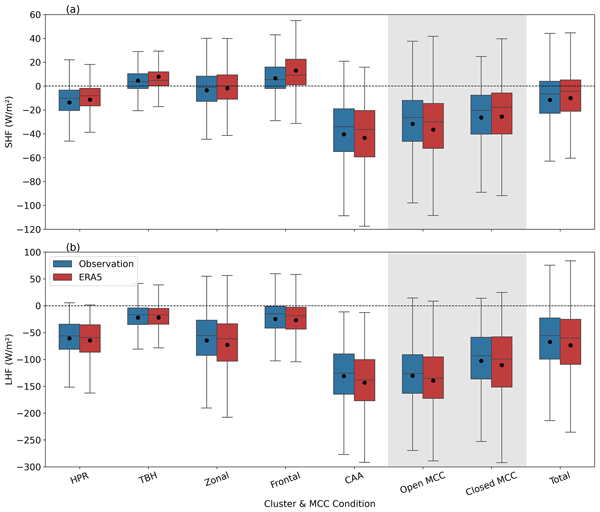
Using 14 years of observations from mooring, we reported that cold air advection creates intense surface flux exchange over the southern ocean, linked with strong boundary layer instability. Results also indicate that cold air advection creates frequent open mesoscale cellular convective clouds. The flux exchange for open and closed mesoscale cellular convective clouds is comparable, suggesting a limited role of the surface flux in the transition of these boundary layer clouds.
Zhaoyang Kong, Andrew T. Prata, Peter T. May, Ariaan Purich, Yi Huang, and Steven T. Siems
Weather Clim. Dynam., 6, 1643–1660, https://doi.org/10.5194/wcd-6-1643-2025, https://doi.org/10.5194/wcd-6-1643-2025, 2025
Short summary
Short summary
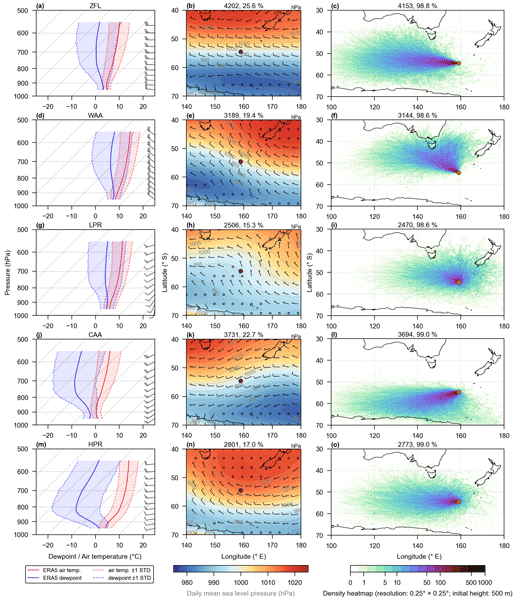
To investigate why ERA5 (European Centre for Medium-Range Weather Forecasts Reanalysis v5) does not accurately capture the observed increase in annual precipitation at Macquarie Island during 1979 to 2023, we classify daily synoptic systems using k-means clustering. Find that the increase in mean intensity across all systems is the main contributor to the observed annual precipitation trend and the resulting discrepancy, rather than changes in the frequency. And this increase may also have a substantial impact on the freshwater fluxes over the Southern Ocean.
Robert G. Ryan, Lilani Toms-Hardman, Alexander Smirnov, Daniel P. Harrison, and Robyn Schofield
Atmos. Chem. Phys., 25, 11183–11197, https://doi.org/10.5194/acp-25-11183-2025, https://doi.org/10.5194/acp-25-11183-2025, 2025
Short summary
Short summary
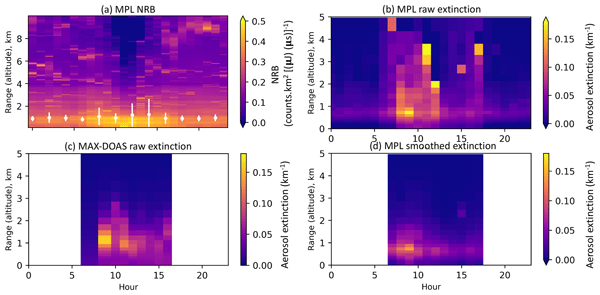
Measurements of aerosol vertical distribution are key for understanding how they interact with clouds and sunlight. Such measurements are currently lacking at the Great Barrier Reef, limiting our ability to validate climate models in this sensitive, ecologically rich environment. Here we use a range of techniques to quantify the vertical variation of aerosols above the Great Barrier Reef for the first time, using the comparison of techniques to also infer aerosol spatial variation.
E. Johanna Horchler, Joel Alroe, Luke Harrison, Luke Cravigan, Daniel P. Harrison, and Zoran D. Ristovski
Atmos. Chem. Phys., 25, 10075–10087, https://doi.org/10.5194/acp-25-10075-2025, https://doi.org/10.5194/acp-25-10075-2025, 2025
Short summary
Short summary
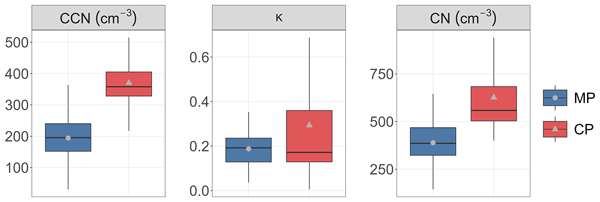
Aerosols play a role in global climate by interacting with incoming solar radiation and by taking up water vapour from the atmosphere to form clouds. Enhancing local-scale cloud cover can reduce sea surface temperatures. Coral bleaching events have increased in the Great Barrier Reef (GBR) as sea surface temperatures have risen. Our study found that the number of aerosols and the cloud-forming ability over the GBR increased if the aerosols were transported from inland Australia rather than the ocean.
Tahereh Alinejadtabrizi, Yi Huang, Francisco Lang, Steven Siems, Michael Manton, Luis Ackermann, Melita Keywood, Ruhi Humphries, Paul Krummel, Alastair Williams, and Greg Ayers
Atmos. Chem. Phys., 25, 2631–2648, https://doi.org/10.5194/acp-25-2631-2025, https://doi.org/10.5194/acp-25-2631-2025, 2025
Short summary
Short summary
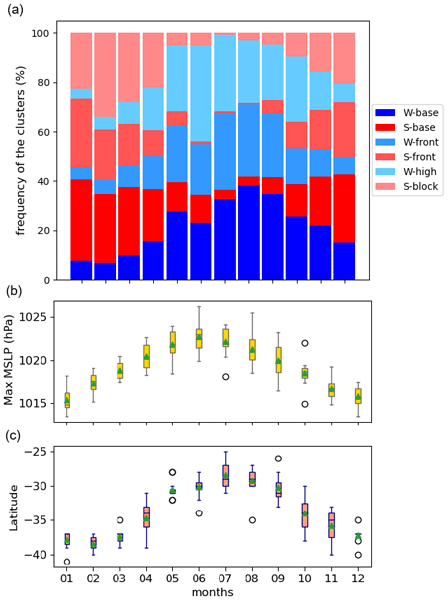
Clouds over the Southern Ocean are crucial to Earth's energy balance, but understanding the factors that control them is complex. Our research examines how weather patterns affect tiny particles called cloud condensation nuclei (CCN), which influence cloud properties. Using data from Kennaook / Cape Grim, we found that winter air from Antarctica brings cleaner conditions with lower CCN, while summer patterns from Australia transport more particles. Precipitation also helps reduce CCN in winter.
Daniel J. V. Robbins, Caroline A. Poulsen, Steven T. Siems, Simon R. Proud, Andrew T. Prata, Roy G. Grainger, and Adam C. Povey
Atmos. Meas. Tech., 17, 3279–3302, https://doi.org/10.5194/amt-17-3279-2024, https://doi.org/10.5194/amt-17-3279-2024, 2024
Short summary
Short summary
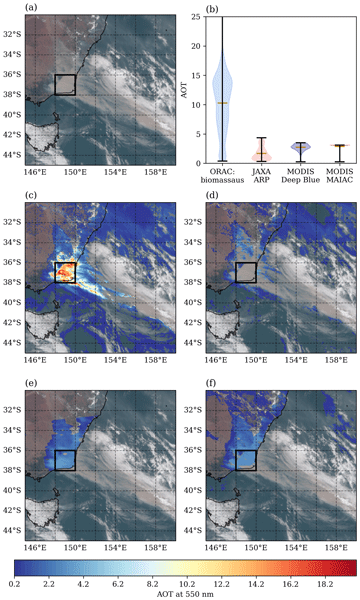
Extreme wildfire events are becoming more common with climate change. The smoke plumes associated with these wildfires are not captured by current operational satellite products due to their high optical thickness. We have developed a novel aerosol retrieval for the Advanced Himawari Imager to study these plumes. We find very high values of optical thickness not observed in other operational satellite products, suggesting these plumes have been missed in previous studies.
Wenhui Zhao, Yi Huang, Steven Siems, Michael Manton, and Daniel Harrison
Atmos. Chem. Phys., 24, 5713–5736, https://doi.org/10.5194/acp-24-5713-2024, https://doi.org/10.5194/acp-24-5713-2024, 2024
Short summary
Short summary
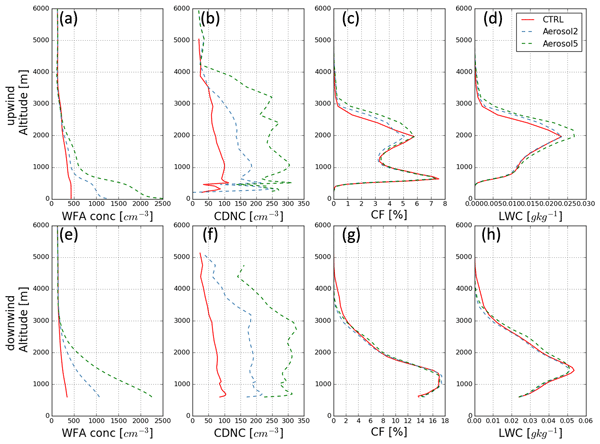
We studied how shallow clouds and rain behave over the Great Barrier Reef (GBR) using a detailed weather model. We found that the shape of the land, especially mountains, and particles in the air play big roles in influencing these clouds. Surprisingly, the sea's temperature had a smaller effect. Our research helps us understand the GBR's climate and how various factors can influence it, where the importance of the local cloud in thermal coral bleaching has recently been identified.
Francisco Lang, Steven T. Siems, Yi Huang, Tahereh Alinejadtabrizi, and Luis Ackermann
Atmos. Chem. Phys., 24, 1451–1466, https://doi.org/10.5194/acp-24-1451-2024, https://doi.org/10.5194/acp-24-1451-2024, 2024
Short summary
Short summary
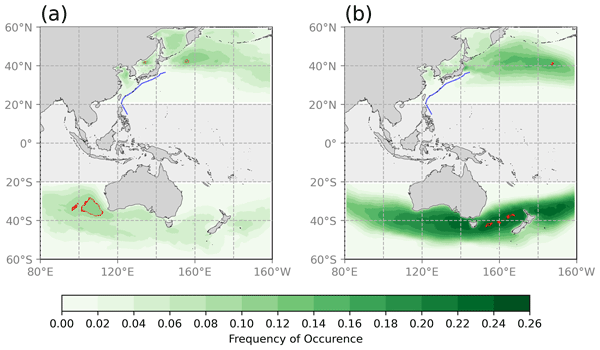
Marine low-level clouds play a crucial role in the Earth's energy balance, trapping heat from the surface and reflecting sunlight back into space. These clouds are distinguishable by their large-scale spatial structures, primarily characterized as hexagonal patterns with either filled (closed) or empty (open) cells. Utilizing satellite observations, these two cloud type patterns have been categorized over the Southern Ocean and North Pacific Ocean through a pattern recognition program.
Daniel Robbins, Caroline Poulsen, Steven Siems, and Simon Proud
Atmos. Meas. Tech., 15, 3031–3051, https://doi.org/10.5194/amt-15-3031-2022, https://doi.org/10.5194/amt-15-3031-2022, 2022
Short summary
Short summary
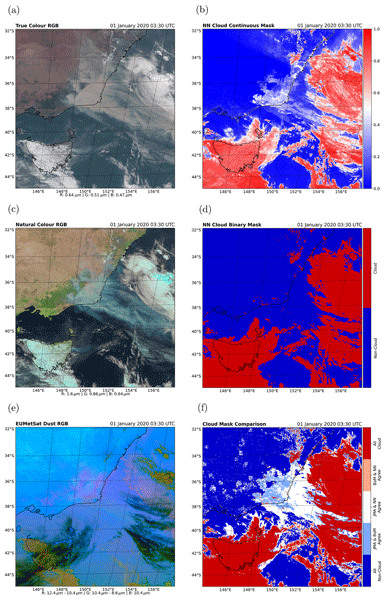
A neural network (NN)-based cloud mask for a geostationary satellite instrument, AHI, is developed using collocated data and is better at not classifying thick aerosols as clouds versus the Japanese Meteorological Association and the Bureau of Meteorology masks, identifying 1.13 and 1.29 times as many non-cloud pixels than each mask, respectively. The improvement during the day likely comes from including the shortest wavelength bands from AHI in the NN mask, which the other masks do not use.
Francisco Lang, Luis Ackermann, Yi Huang, Son C. H. Truong, Steven T. Siems, and Michael J. Manton
Atmos. Chem. Phys., 22, 2135–2152, https://doi.org/10.5194/acp-22-2135-2022, https://doi.org/10.5194/acp-22-2135-2022, 2022
Short summary
Short summary
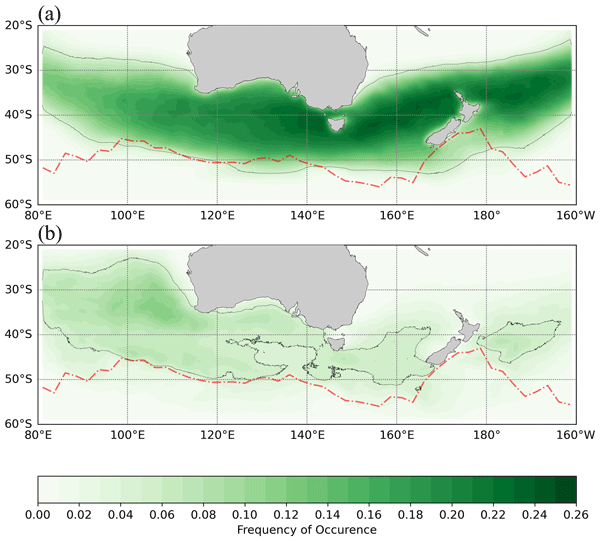
Marine low-level clouds cover vast areas of the Southern Ocean, and they are essential to the Earth system energy balance. We use 3 years of satellite observations to group low-level clouds by their spatial structure using a pattern-recognizing program. We studied two primary cloud type patterns, i.e. open and closed clouds. Open clouds are uniformly distributed over the storm track, while closed clouds are most predominant in the southeastern Indian Ocean. Closed clouds exhibit a daily cycle.
Cited articles
Aemisegger, F., Vogel, R., Graf, P., Dahinden, F., Villiger, L., Jansen, F., Bony, S., Stevens, B., and Wernli, H.: How Rossby wave breaking modulates the water cycle in the North Atlantic trade wind region, Weather Clim. Dynam., 2, 281–309, https://doi.org/10.5194/wcd-2-281-2021, 2021. a
Australian Institute of Marine Science (AIMS): Northern Australia Automated Marine Weather and Oceanographic Stations, Sites: [Davies Reef], AIMS [data set], https://doi.org/10.25845/5c09bf93f315d, 2020. a
Bainbridge, S. J.: Temperature and light patterns at four reefs along the Great Barrier Reef during the 2015–2016 austral summer: understanding patterns of observed coral bleaching, J. Oper. Oceanogr., 10, 16–29, https://doi.org/10.1080/1755876X.2017.1290863, 2017. a, b
Baird, A. H., Keith, S. A., Woolsey, E., Yoshida, R., and Naruse, T.: Rapid coral mortality following unusually calm and hot conditions on Iriomote, Japan, F1000Research, 6, 1728, https://doi.org/10.12688/f1000research.12660.2, 2018. a
Barnes, M. A., Reeder, M. J., and Ndarana, T.: Rossby wave breaking morphologies on the Southern Hemisphere dynamical tropopause, J. Climate, 38, 4825–4844, https://doi.org/10.1175/JCLI-D-24-0461.1, 2025. a
Benthuysen, J. A., Smith, G. A., Spillman, C. M., and Steinberg, C. R.: Subseasonal prediction of the 2020 Great Barrier Reef and Coral Sea marine heatwave, Environ. Res. Lett., 16, 124050, https://doi.org/10.1088/1748-9326/ac3aa1, 2021. a
Berkelmans, R.: Time-integrated thermal bleaching thresholds of reefs and their variation on the Great Barrier Reef, Mar. Ecol. Prog. Ser., 229, 73–82, https://doi.org/10.3354/meps229073, 2002. a
Chambers, D. P., Tapley, B. D., and Stewart, R. H.: Anomalous warming in the Indian Ocean coincident with El Niño, J. Geophys. Res.-Oceans, 104, 3035–3047, https://doi.org/10.1029/1998JC900085, 1999. a
Crowe, P. R.: The Seasonal Variation in the Strength of the Trades, Transactions and Papers (Institute of British Geographers), 16, 25–47, https://doi.org/10.2307/621211, 1950. a, b
Dao, T. L., Vincent, C. L., Huang, Y., and Soderholm, J. S.: Modulations of local rainfall in northeast Australia associated with the Madden–Julian oscillation during austral summer, Q. J. Roy. Meteor. Soc., 151, e4995, https://doi.org/10.1002/qj.4995, 2025. a
Di Lorenzo, E. and Mantua, N.: Multi-year persistence of the 2014/15 North Pacific marine heatwave, Nat. Clim. Change, 6, 1042–1047, https://doi.org/10.1038/nclimate3082, 2016. a
Glynn, P. W.: Mass mortalities of echinoids and other reef flat organisms coincident with midday, low water exposures in Puerto Rico, Mar. Biol., 1, 226–243, https://doi.org/10.1007/BF00347116, 1968. a
Gregory, C. H., Holbrook, N. J., Spillman, C. M., and Marshall, A. G.: Combined Role of the MJO and ENSO in Shaping Extreme Warming Patterns and Coral Bleaching Risk in the Great Barrier Reef, Geophys. Res. Lett., 51, e2024GL108810, https://doi.org/10.1029/2024gl108810, 2024. a
Harrison, D. P., Baird, M., Harrison, L., Utembe, S., Schofield, R., Escobar Correa, R., Mongin, M., and Rizwi, F.: Reef Restoration and Adaptation Program: Environmental Modelling of Large Scale Solar Radiation Management. A report provided to the Australian Government by the Reef Restoration and Adaptation Program, 83 pp., 2019. a
Henley, B. J., McGregor, H. V., King, A. D., Hoegh-Guldberg, O., Arzey, A. K., Karoly, D. J., Lough, J. M., DeCarlo, T. M., and Linsley, B. K.: Highest ocean heat in four centuries places Great Barrier Reef in danger, Nature, 632, 320–326, https://doi.org/10.1038/s41586-024-07672-x, 2024. a
Hersbach, H., Bell, B., Berrisford, P., Hirahara, S., Horányi, A., Muñoz‐Sabater, J., Nicolas, J., Peubey, C., Radu, R., Schepers, D., Simmons, A., Soci, C., Abdalla, S., Abellan, X., Balsamo, G., Bechtold, P., Biavati, G., Bidlot, J., Bonavita, M., De Chiara, G., Dahlgren, P., Dee, D., Diamantakis, M., Dragani, R., Flemming, J., Forbes, R., Fuentes, M., Geer, A., Haimberger, L., Healy, S., Hogan, R. J., Hólm, E., Janisková, M., Keeley, S., Laloyaux, P., Lopez, P., Lupu, C., Radnoti, G., de Rosnay, P., Rozum, I., Vamborg, F., Villaume, S., and Thépaut, J.: The ERA5 global reanalysis, Q. J. Roy. Meteor. Soc., 146, 1999–2049, https://doi.org/10.1002/qj.3803, 2020. a
Hersbach, H., Bell, B., Berrisford, P., Biavati, G., Horányi, A., Muñoz‐Sabater, J., Nicolas, J., Peubey, C., Radu, R., Rozum, I., Schepers, D., Simmons, A., Soci, C., Dee, D., and Thépaut, J.: ERA5 hourly data on pressure levels from 1940 to present, Copernicus Climate Change Service (C3S) Climate Data Store (CDS) [data set], https://doi.org/10.24381/cds.bd0915c6, 2023a. a
Hersbach, H., Bell, B., Berrisford, P., Biavati, G., Horányi, A., Muñoz‐Sabater, J., Nicolas, J., Peubey, C., Radu, R., Rozum, I., Schepers, D., Simmons, A., Soci, C., Dee, D., and Thépaut, J.: ERA5 hourly data on single levels from 1940 to present, Copernicus Climate Change Service (C3S) Climate Data Store (CDS) [data set], https://doi.org/10.24381/cds.adbb2d47, 2023b. a
Holbrook, N. J., Scannell, H. A., Sen Gupta, A., Benthuysen, J. A., Feng, M., Oliver, E. C. J., Alexander, L. V., Burrows, M. T., Donat, M. G., Hobday, A. J., Moore, P. J., Perkins-Kirkpatrick, S. E., Smale, D. A., Straub, S. C., and Wernberg, T.: A global assessment of marine heatwaves and their drivers, Nat. Commun., 10, 2624, https://doi.org/10.1038/s41467-019-10206-z, 2019. a
Holland, G. J.: Interannual Variability of the Australian Summer Monsoon at Darwin: 1952–82, Mon. Weather Rev., 114, 594–604, https://doi.org/10.1175/1520-0493(1986)114<0594:IVOTAS>2.0.CO;2, 1986. a
Hoskins, B. J., McIntyre, M. E., and Robertson, A. W.: On the use and significance of isentropic potential vorticity maps, Q. J. Roy. Meteor. Soc., 111, 877–946, https://doi.org/10.1002/qj.49711147002, 1985. a
Huang, B., Liu, C., Banzon, V., Freeman, E., Graham, G., Hankins, B., Smith, T., and Zhang, H.-M.: Improvements of the Daily Optimum Interpolation Sea Surface Temperature (DOISST) Version 2.1, J. Climate, 34, 2923–2939, https://doi.org/10.1175/JCLI-D-20-0166.1, 2021. a, b
Jokiel, P. L. and Brown, E. K.: Global warming, regional trends and inshore environmental conditions influence coral bleaching in Hawaii, Glob. Change Biol., 10, 1627–1641, https://doi.org/10.1111/j.1365-2486.2004.00836.x, 2004. a
Karnauskas, K. B.: Physical Diagnosis of the 2016 Great Barrier Reef Bleaching Event, Geophys. Res. Lett., 47, https://doi.org/10.1029/2019GL086177, 2020. a, b
Kawamoto, K., Nakajima, T., and Nakajima, T. Y.: A Global Determination of Cloud Microphysics with AVHRR Remote Sensing, J. Climate, 14, 2054–2068, https://doi.org/10.1175/1520-0442(2001)014<2054:AGDOCM>2.0.CO;2, 2001. a
Klocke, D., Brueck, M., Hohenegger, C., and Stevens, B.: Rediscovery of the doldrums in storm-resolving simulations over the tropical Atlantic, Nat. Geosci., 10, 891–896, https://doi.org/10.1038/s41561-017-0005-4, 2017. a, b
Lee, T., Hobbs, W. R., Willis, J. K., Halkides, D., Fukumori, I., Armstrong, E. M., Hayashi, A. K., Liu, W. T., Patzert, W., and Wang, O.: Record warming in the South Pacific and western Antarctica associated with the strong central‐Pacific El Niño in 2009–10, Geophys. Res. Lett., 37, https://doi.org/10.1029/2010gl044865, 2010. a, b
Li, Y., Chen, Q., Liu, X., Li, J., Xing, N., Xie, F., Feng, J., Zhou, X., Cai, H., and Wang, Z.: Long-Term Trend of the Tropical Pacific Trade Winds Under Global Warming and Its Causes, J. Geophys. Res.-Oceans, 124, 2626–2640, https://doi.org/10.1029/2018JC014603, 2019. a
Liu, Z. and Philander, S. G. H.: How Different Wind Stress Patterns Affect the Tropical-Subtropical Circulations of the Upper Ocean, J. Phys. Oceanogr., 25, 449–462, https://doi.org/10.1175/1520-0485(1995)025<0449:HDWSPA>2.0.CO;2, 1995. a
Lyons, W. F. and Bonell, M.: Daily meso-scale rainfall in the tropical wet/dry climate of the Townsville area, north-east Queensland during the 1988–1989 wet season: Synoptic-scale airflow considerations, Int. J. Climatol., 12, 655–684, https://doi.org/10.1002/joc.3370120702, 1992. a
Marchand, R. and Ackerman, T.: An analysis of cloud cover in multiscale modeling framework global climate model simulations using 4 and 1 km horizontal grids, J. Geophys. Res.-Atmos., 115, https://doi.org/10.1029/2009JD013423, 2010. a
Merrifield, M. A.: A Shift in Western Tropical Pacific Sea Level Trends during the 1990s, J. Climate, 24, 4126–4138, https://doi.org/10.1175/2011jcli3932.1, 2011. a
Murphy, M. J., Siems, S. T., and Manton, M. J.: Regional variation in the wet season of northern Australia, Mon. Weather Rev., 144, 4941–4962, https://doi.org/10.1175/MWR-D-16-0133.1, 2016. a
Nakajima, T. Y. and Nakajima, T.: Wide-Area Determination of Cloud Microphysical Properties from NOAA AVHRR Measurements for FIRE and ASTEX Regions, J. Atmos. Sci., 52, 4043–4059, https://doi.org/10.1175/1520-0469(1995)052<4043:WADOCM>2.0.CO;2, 1995. a
Ndarana, T. and Waugh, D. W.: A Climatology of Rossby Wave Breaking on the Southern Hemisphere Tropopause, J. Atmos. Sci., 68, 798–811, https://doi.org/10.1175/2010JAS3460.1, 2011. a
Nuijens, L. and Stevens, B.: The Influence of Wind Speed on Shallow Marine Cumulus Convection, J. Atmos. Sci., 69, 168–184, https://doi.org/10.1175/jas-d-11-02.1, 2012. a
O'Brien, L. and Reeder, M. J.: Southern Hemisphere summertime Rossby waves and weather in the Australian region, Q. J. Roy. Meteor. Soc., 143, 2374–2388, https://doi.org/10.1002/qj.3090, 2017. a
Pope, M., Jakob, C., and Reeder, M. J.: Regimes of the North Australian Wet Season, J. Climate, 22, 6699–6715, https://doi.org/10.1175/2009jcli3057.1, 2009. a, b
Richards, L. S., Siems, S. T., Huang, Y., Zhao, W., Harrison, D. P., Manton, M. J., and Reeder, M. J.: The meteorological drivers of mass coral bleaching on the central Great Barrier Reef during the 2022 La Niña, Sci. Rep., 14, 23867, https://doi.org/10.1038/s41598-024-74181-2, 2024. a, b, c, d, e, f, g
Sekizawa, S., Nakamura, H., and Kosaka, Y.: Interannual Variability of the Australian Summer Monsoon System Internally Sustained Through Wind‐Evaporation Feedback, Geophys. Res. Lett., 45, 7748–7755, https://doi.org/10.1029/2018gl078536, 2018. a
Sekizawa, S., Nakamura, H., and Kosaka, Y.: Interannual Variability of the Australian Summer Monsoon Sustained through Internal Processes: Wind–Evaporation Feedback, Dynamical Air–Sea Interaction, and Soil Moisture Memory, J. Climate, 36, 983–1000, https://doi.org/10.1175/jcli-d-22-0116.1, 2023. a
Skirving, W., Heron, M., and Heron, S.: The Hydrodynamics of a Bleaching Event: Implications for Management and Monitoring, American Geophysical Union, 145–161, 2006. a
Smith, G. A. and Trewin, B.: Seasonal climate summary southern hemisphere (autumn 2020): another coral bleaching event for the Great Barrier Reef without an active El Niño, Journal of Southern Hemisphere Earth Systems Science, 74, ES24014, https://doi.org/10.1071/es24014, 2024. a
Smith, N. P.: Weather and hydrographic conditions associated with coral bleaching: Lee Stocking Island, Bahamas, Coral Reefs, 20, 415–422, https://doi.org/10.1007/s00338-001-0189-2, 2001. a
Spady, B. L., Skirving, W. J., Liu, G., De La Cour, J. L., McDonald, C. J., and Manzello, D. P.: Unprecedented early-summer heat stress and forecast of coral bleaching on the Great Barrier Reef, 2021–2022, F1000Res, 11, 127, https://doi.org/10.12688/f1000research.108724.4, 2022. a
Spencer, T., Teleki, K. A., Bradshaw, C., and Spalding, M. D.: Coral Bleaching in the Southern Seychelles During the 1997–1998 Indian Ocean Warm Event, Mar. Pollut. Bull., 40, 569–586, https://doi.org/10.1016/S0025-326X(00)00026-6, 2000. a
Sprenger, M. and Wernli, H.: The LAGRANTO Lagrangian analysis tool – version 2.0, Geosci. Model Dev., 8, 2569–2586, https://doi.org/10.5194/gmd-8-2569-2015, 2015. a
Takahashi, C. and Watanabe, M.: Pacific trade winds accelerated by aerosol forcing over the past two decades, Nat. Clim. Change, 6, 768–772, https://doi.org/10.1038/nclimate2996, 2016. a
Thiam, M., de Coetlogon, G., Wade, M., Sarr, M., and Diop, B.: Air–sea feedback in the northeastern tropical Atlantic in boreal summer at intraseasonal time-scales, Q. J. Roy. Meteor. Soc., 151, e4982, https://doi.org/10.1002/qj.4982, 2025. a
Troup, A. J.: Variations in upper tropospheric flow associated with the onset of the Australian summer monsoon, Mausam, 12, 217–230, 1961. a
Wheeler, M. C. and Hendon, H. H.: An All-Season Real-Time Multivariate MJO Index: Development of an Index for Monitoring and Prediction, Mon. Weather Rev., 132, 1917–1932, https://doi.org/10.1175/1520-0493(2004)132<1917:AARMMI>2.0.CO;2, 2004. a, b
Wheeler, M. C., Hendon, H. H., Cleland, S., Meinke, H., and Donald, A.: Impacts of the Madden–Julian Oscillation on Australian Rainfall and Circulation, J. Climate, 22, 1482–1498, https://doi.org/10.1175/2008JCLI2595.1, 2009. a
Windmiller, J. M.: The Calm and Variable Inner Life of the Atlantic Intertropical Convergence Zone: The Relationship Between the Doldrums and Surface Convergence, Geophys. Res. Lett., 51, e2024GL109460, https://doi.org/10.1029/2024GL109460, 2024. a, b
Wyrtki, K. and Meyers, G.: The Trade Wind Field Over the Pacific Ocean, J. Appl. Meteorol. Clim., 15, 698–704, https://doi.org/10.1175/1520-0450(1976)015<0698:TTWFOT>2.0.CO;2, 1976. a, b
Zhao, W., Huang, Y., Siems, S., and Manton, M.: The Role of Clouds in Coral Bleaching Events Over the Great Barrier Reef, Geophys. Res. Lett., 48, e2021GL093936, https://doi.org/10.1029/2021GL093936, 2021. a, b
Short summary
By studying the variability of the trade winds during the Great Barrier Reef coral bleaching season, we show that ocean heating and a higher risk of coral bleaching are linked to the breakdown of the trade winds into either calm and clear conditions or a monsoon-like northerly flow. Years with mass coral bleaching are also associated with more "calm and clear" days in the warmest months and fewer strong trade wind days on the fringe months of the bleaching season.
By studying the variability of the trade winds during the Great Barrier Reef coral bleaching...


