Articles | Volume 7, issue 3
https://doi.org/10.5194/wcd-7-1307-2026
© Author(s) 2026. This work is distributed under
the Creative Commons Attribution 4.0 License.
https://doi.org/10.5194/wcd-7-1307-2026
© Author(s) 2026. This work is distributed under
the Creative Commons Attribution 4.0 License.
Intraseasonal prediction of monthly storminess in the North Sea with the ACE2 atmospheric emulator and Random Forests
Institute of Coastal Systems – Analysis and Modeling, Helmholtz-Zentrum Hereon, Geesthacht, Germany
Birgit Hünicke
Institute of Coastal Systems – Analysis and Modeling, Helmholtz-Zentrum Hereon, Geesthacht, Germany
Eduardo Zorita
Institute of Coastal Systems – Analysis and Modeling, Helmholtz-Zentrum Hereon, Geesthacht, Germany
Related authors
No articles found.
Nele Tim, Birgit Hünicke, and Eduardo Zorita
EGUsphere, https://doi.org/10.5194/egusphere-2026-806, https://doi.org/10.5194/egusphere-2026-806, 2026
Short summary
Short summary
We analysed extreme precipitation over Southern Africa by use of high-resolution atmospheric simulations. The strongest precipitation occurs over Madagascar, the Mozambique Channel, and the adjacent mainland. Extremes are generally stronger in the Summer Rainfall Zone than in the Winter Rainfall Zones, are projected to become more intense along the South African coast, and the Agulhas Current does not have a discernible impact on rainfall events along the South African coast.
Kai Bellinghausen, Birgit Hünicke, and Eduardo Zorita
EGUsphere, https://doi.org/10.5194/egusphere-2026-523, https://doi.org/10.5194/egusphere-2026-523, 2026
Preprint archived
Short summary
Short summary
Storm extremes across Northern Hemisphere land areas have a structured synchronised pattern. Using ERA5 data (1940–2023) and a storm index based on local wind‑speed extremes, we find that northern regions above 50° N vary together, opposite to more southern areas. Links to SST, SKT and pressure fields point to climate modes like the NAO as possible drivers. ACE2 emulator experiments confirm that surface‑temperature patterns can drive jet‑stream shifts possibly altering the mode of storminess.
Kai Bellinghausen, Birgit Hünicke, and Eduardo Zorita
Nat. Hazards Earth Syst. Sci., 25, 1139–1162, https://doi.org/10.5194/nhess-25-1139-2025, https://doi.org/10.5194/nhess-25-1139-2025, 2025
Short summary
Short summary
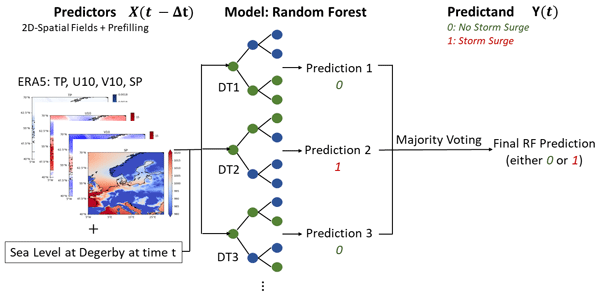
We designed a tool to predict the storm surges at the Baltic Sea coast with satisfactory predictability (80 % correct predictions), using lead times of a few days. The proportion of false warnings is typically as low as 10 % to 20 %. We were able to identify the relevant predictor regions and their patterns – such as low-pressure systems and strong winds. Due to its short computing time, the method can be used as a pre-warning system to trigger the application of more sophisticated algorithms.
Marlene Klockmann, Udo von Toussaint, and Eduardo Zorita
Geosci. Model Dev., 17, 1765–1787, https://doi.org/10.5194/gmd-17-1765-2024, https://doi.org/10.5194/gmd-17-1765-2024, 2024
Short summary
Short summary
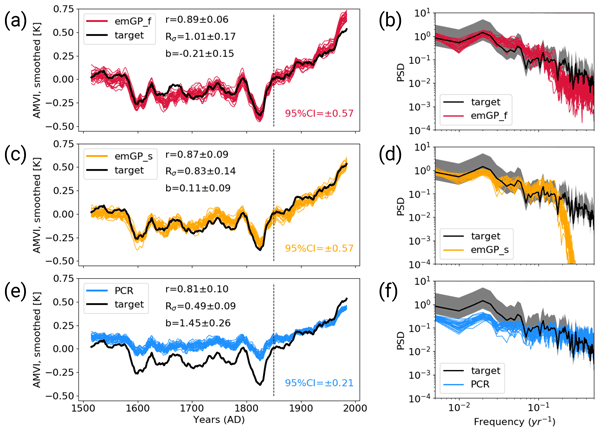
Reconstructions of climate variability before the observational period rely on climate proxies and sophisticated statistical models to link the proxy information and climate variability. Existing models tend to underestimate the true magnitude of variability, especially if the proxies contain non-climatic noise. We present and test a promising new framework for climate-index reconstructions, based on Gaussian processes, which reconstructs robust variability estimates from noisy and sparse data.
Nele Tim, Birgit Hünicke, and Eduardo Zorita
Nat. Hazards Earth Syst. Sci. Discuss., https://doi.org/10.5194/nhess-2023-147, https://doi.org/10.5194/nhess-2023-147, 2023
Manuscript not accepted for further review
Short summary
Short summary
Our study analyses extreme precipitation over southern Africa in regional high-resolution atmospheric simulations of the past and future. We investigated heavy precipitation over Southern Africa, coastal South Africa, Cape Town, and the KwaZulu-Natal province in eastern South Africa. Coastal precipitation extremes are projected to intensify, double in intensity in KwaZulu-Natal, and weaken in Cape Town. Extremes are not projected to occur more often in the 21st century than in the last decades.
Nele Tim, Eduardo Zorita, Birgit Hünicke, and Ioana Ivanciu
Weather Clim. Dynam., 4, 381–397, https://doi.org/10.5194/wcd-4-381-2023, https://doi.org/10.5194/wcd-4-381-2023, 2023
Short summary
Short summary
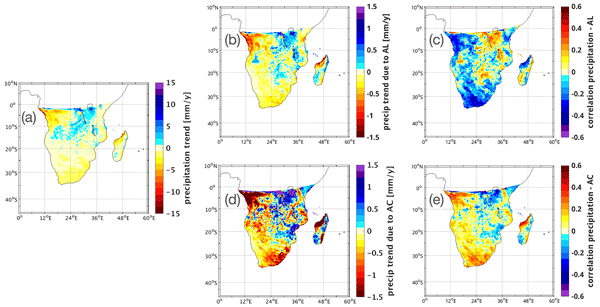
As stated by the IPCC, southern Africa is one of the two land regions that are projected to suffer from the strongest precipitation reductions in the future. Simulated drying in this region is linked to the adjacent oceans, and prevailing winds as warm and moist air masses are transported towards the continent. Precipitation trends in past and future climate can be partly attributed to the strength of the Agulhas Current system, the current along the east and south coasts of southern Africa.
Kai Bellinghausen, Birgit Hünicke, and Eduardo Zorita
Nat. Hazards Earth Syst. Sci. Discuss., https://doi.org/10.5194/nhess-2023-21, https://doi.org/10.5194/nhess-2023-21, 2023
Manuscript not accepted for further review
Short summary
Short summary
The prediction of extreme coastal sea level, e.g. caused by a storm surge, is operationally carried out with dynamical computer models. These models are expensive to run and still display some limitations in predicting the height of extremes. We present a successful purely data-driven machine learning model to predict extreme sea levels along the Baltic Sea coast a few days in advance. The method is also able to identify the critical predictors for the different Baltic Sea regions.
Zeguo Zhang, Sebastian Wagner, Marlene Klockmann, and Eduardo Zorita
Clim. Past, 18, 2643–2668, https://doi.org/10.5194/cp-18-2643-2022, https://doi.org/10.5194/cp-18-2643-2022, 2022
Short summary
Short summary
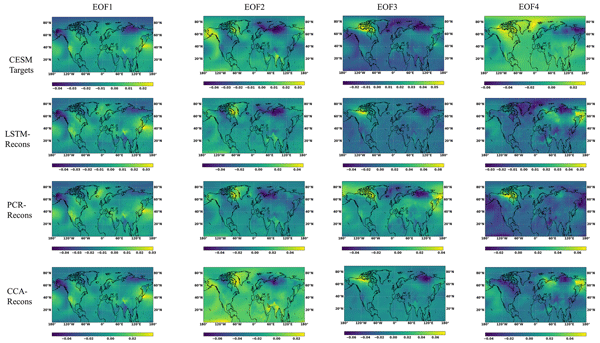
A bidirectional long short-term memory (LSTM) neural network was employed for the first time for past temperature field reconstructions. The LSTM method tested in our experiments using a limited calibration and validation dataset shows worse reconstruction skills compared to traditional reconstruction methods. However, a certain degree of reconstruction performance achieved by the nonlinear LSTM method shows that skill can be achieved even when using small samples with limited datasets.
H. E. Markus Meier, Madline Kniebusch, Christian Dieterich, Matthias Gröger, Eduardo Zorita, Ragnar Elmgren, Kai Myrberg, Markus P. Ahola, Alena Bartosova, Erik Bonsdorff, Florian Börgel, Rene Capell, Ida Carlén, Thomas Carlund, Jacob Carstensen, Ole B. Christensen, Volker Dierschke, Claudia Frauen, Morten Frederiksen, Elie Gaget, Anders Galatius, Jari J. Haapala, Antti Halkka, Gustaf Hugelius, Birgit Hünicke, Jaak Jaagus, Mart Jüssi, Jukka Käyhkö, Nina Kirchner, Erik Kjellström, Karol Kulinski, Andreas Lehmann, Göran Lindström, Wilhelm May, Paul A. Miller, Volker Mohrholz, Bärbel Müller-Karulis, Diego Pavón-Jordán, Markus Quante, Marcus Reckermann, Anna Rutgersson, Oleg P. Savchuk, Martin Stendel, Laura Tuomi, Markku Viitasalo, Ralf Weisse, and Wenyan Zhang
Earth Syst. Dynam., 13, 457–593, https://doi.org/10.5194/esd-13-457-2022, https://doi.org/10.5194/esd-13-457-2022, 2022
Short summary
Short summary
Based on the Baltic Earth Assessment Reports of this thematic issue in Earth System Dynamics and recent peer-reviewed literature, current knowledge about the effects of global warming on past and future changes in the climate of the Baltic Sea region is summarised and assessed. The study is an update of the Second Assessment of Climate Change (BACC II) published in 2015 and focuses on the atmosphere, land, cryosphere, ocean, sediments, and the terrestrial and marine biosphere.
Marcus Reckermann, Anders Omstedt, Tarmo Soomere, Juris Aigars, Naveed Akhtar, Magdalena Bełdowska, Jacek Bełdowski, Tom Cronin, Michał Czub, Margit Eero, Kari Petri Hyytiäinen, Jukka-Pekka Jalkanen, Anders Kiessling, Erik Kjellström, Karol Kuliński, Xiaoli Guo Larsén, Michelle McCrackin, H. E. Markus Meier, Sonja Oberbeckmann, Kevin Parnell, Cristian Pons-Seres de Brauwer, Anneli Poska, Jarkko Saarinen, Beata Szymczycha, Emma Undeman, Anders Wörman, and Eduardo Zorita
Earth Syst. Dynam., 13, 1–80, https://doi.org/10.5194/esd-13-1-2022, https://doi.org/10.5194/esd-13-1-2022, 2022
Short summary
Short summary
As part of the Baltic Earth Assessment Reports (BEAR), we present an inventory and discussion of different human-induced factors and processes affecting the environment of the Baltic Sea region and their interrelations. Some are naturally occurring and modified by human activities, others are completely human-induced, and they are all interrelated to different degrees. The findings from this study can largely be transferred to other comparable marginal and coastal seas in the world.
Ralf Weisse, Inga Dailidienė, Birgit Hünicke, Kimmo Kahma, Kristine Madsen, Anders Omstedt, Kevin Parnell, Tilo Schöne, Tarmo Soomere, Wenyan Zhang, and Eduardo Zorita
Earth Syst. Dynam., 12, 871–898, https://doi.org/10.5194/esd-12-871-2021, https://doi.org/10.5194/esd-12-871-2021, 2021
Short summary
Short summary
The study is part of the thematic Baltic Earth Assessment Reports – a series of review papers summarizing the knowledge around major Baltic Earth science topics. It concentrates on sea level dynamics and coastal erosion (its variability and change). Many of the driving processes are relevant in the Baltic Sea. Contributions vary over short distances and across timescales. Progress and research gaps are described in both understanding details in the region and in extending general concepts.
Cited articles
Afargan-Gerstman, H., Büeler, D., Wulff, C. O., Sprenger, M., and Domeisen, D. I. V.: Stratospheric influence on the winter North Atlantic storm track in subseasonal reforecasts, Weather Clim. Dynam., 5, 231–249, https://doi.org/10.5194/wcd-5-231-2024, 2024. a
Allen Institute for Artificial Intelligence (Ai2): ACE2-ERA5, Hugging Face, https://doi.org/10.57967/HF/5377, 2025. a
Ayarzagüena, B., Barriopedro, D., Garrido-Pérez, J. M., Abalos, M., de la Cámara, A., and García-Herrera, R.: Stratospheric connection to the abrupt end of the 2016/2017 Iberian drought, Geophys. Res. Lett., 45, https://doi.org/10.1029/2018GL079802, 2018. a
Baldwin, M. P., Ayarzagüena, B., Birner, T., Butchart, N., Butler, A. H., Charlton‐Perez, A. J., Domeisen, D. I. V., Garfinkel, C. I., Garny, H., Gerber, E. P., Hegglin, M. I., Langematz, U., and Pedatella, N. M.: Sudden Stratospheric Warmings, Rev. Geophys., 59, https://doi.org/10.1029/2020rg000708, 2021. a, b
Bellinghausen, K., Hünicke, B., and Zorita, E.: Coherent Modes of Northern Hemisphere Wind Extremes and Their Links to Global Large-Scale Drivers, EGUsphere [preprint], https://doi.org/10.5194/egusphere-2026-523, 2026. a
Breiman, L.: Random Forests, Mach. Learn., 45, 5–32, https://doi.org/10.1023/a:1010933404324, 2001. a, b
Brönnimann, S.: Impact of El Niño–Southern Oscillation on European climate, Rev. Geophys., 45, https://doi.org/10.1029/2006rg000199, 2007. a
Butler, A.: Table of major mid-winter SSWs in reanalyses products, National Oceanic and Atmospheric Administration (NOAA), Chemical Sciences Laboratory (CSL), https://csl.noaa.gov/groups/csl8/sswcompendium/majorevents.html (last access: 11 June 2026), 2023. a
Butler, A. H. and Polvani, L. M.: El Niño, La Niña, and stratospheric sudden warmings: A reevaluation in light of the observational record, Geophys. Res. Lett., 38, https://doi.org/10.1029/2011GL048084, 2011. a
Charlton-Perez, A., Ferranti, L., and Lee, R.: The influence of the stratospheric state on North Atlantic weather regimes, Q. J. Roy. Meteor. Soc., 144, 1140–1151, https://doi.org/10.1002/qj.3280, 2018. a, b
Dai, Y., Hitchcock, P., Butler, A. H., Garfinkel, C. I., and Seviour, W. J. M.: Assessing stratospheric contributions to subseasonal predictions of precipitation after the 2018 sudden stratospheric warming from the Stratospheric Nudging And Predictable Surface Impacts (SNAPSI) project, Weather Clim. Dynam., 6, 841–862, https://doi.org/10.5194/wcd-6-841-2025, 2025. a
Domeisen, D. I.: Estimating the frequency of sudden stratospheric warming events from surface observations of the North Atlantic Oscillation, J. Geophys. Res.-Atmos., 124, 3180–3194, https://doi.org/10.1029/2018JD030077, 2019. a, b, c
Domeisen, D. I. V. and Butler, A. H.: Stratospheric drivers of extreme events at the Earth’s surface, Commun. Earth Environ., 1, https://doi.org/10.1038/s43247-020-00060-z, 2020. a, b, c
Donat, M. G., Pardowitz, T., Leckebusch, G. C., Ulbrich, U., and Burghoff, O.: High-resolution refinement of a storm loss model and estimation of return periods of loss-intensive storms over Germany, Nat. Hazards Earth Syst. Sci., 11, 2821–2833, https://doi.org/10.5194/nhess-11-2821-2011, 2011. a, b
Feser, F., Barcikowska, M., Krueger, O., Schenk, F., Weisse, R., and Xia, L.: Storminess over the North Atlantic and northwestern Europe – A review, Q. J. Roy. Meteor. Soc., 141, 350–382, https://doi.org/10.1002/qj.2364, 2014. a, b
Gagne II, D. J., Haupt, S. E., Nychka, D. W., and Thompson, G.: Interpretable deep learning for spatial analysis of severe hailstorms, Mon. Weather Rev., 147, 2827–2845, https://doi.org/10.1175/MWR-D-18-0316.1, 2019. a
Gandoin, R. and Garza, J.: Underestimation of strong wind speeds offshore in ERA5: evidence, discussion and correction, Wind Energ. Sci., 9, 1727–1745, https://doi.org/10.5194/wes-9-1727-2024, 2024. a
Gao, J., Heinselman, P. L., Xue, M., Wicker, L. J., Yussouf, N., Stensrud, D. J., and Droegemeier, K. K.: The Numerical Prediction of Severe Convective Storms: Advances in Research and Applications, Remaining Challenges, and Outlook for the Future, Elsevier, ISBN 9780124095489, https://doi.org/10.1016/b978-0-323-96026-7.00127-2, 2024. a, b
Gershunov, A. and Barnett, T. P.: Interdecadal modulation of ENSO teleconnections, B. Am. Meteorol. Soc., 79, 2715–2726, https://doi.org/10.1175/1520-0477(1998)079<2715:IMOET>2.0.CO;2, 1998. a
Henderson, S. A., Maloney, E. D., and Barnes, E. A.: The Influence of the Madden–Julian Oscillation on Northern Hemisphere Winter Blocking, J. Climate, 29, https://doi.org/10.1175/JCLI-D-15-0502.1, 2016. a
Hersbach, H., Bell, B., Berrisford, P., Hirahara, S., Horányi, A., Muñoz‐Sabater, J., Nicolas, J., Peubey, C., Radu, R., Schepers, D., Simmons, A., Soci, C., Abdalla, S., Abellan, X., Balsamo, G., Bechtold, P., Biavati, G., Bidlot, J., Bonavita, M., De Chiara, G., Dahlgren, P., Dee, D., Diamantakis, M., Dragani, R., Flemming, J., Forbes, R., Fuentes, M., Geer, A., Haimberger, L., Healy, S., Hogan, R. J., Hólm, E., Janisková, M., Keeley, S., Laloyaux, P., Lopez, P., Lupu, C., Radnoti, G., de Rosnay, P., Rozum, I., Vamborg, F., Villaume, S., and Thépaut, J.: The ERA5 global reanalysis, Q. J. Roy. Meteor. Soc., 146, 1999–2049, https://doi.org/10.1002/qj.3803, 2020. a, b, c
Hersbach, H., Comyn-Platt, E., Bell, B., Berrisford, P., Biavati, G., Horányi, A., Muñoz Sabater, J., Nicolas, J., Peubey, C., Radu, R., Rozum, I., Schepers, D., Simmons, A., Soci, C., Dee, D., Thépaut, J.-N., Cagnazo, C., and Cucchi, M.: ERA5 post-processed daily-statistics on pressure levels from 1940 to present, Copernicus Climate Change Service (C3S) Climate Data Store (CDS) [data set], https://doi.org/10.24381/cds.50314f4c, 2023. a
Hitchcock, P., Butler, A., Charlton-Perez, A., Garfinkel, C. I., Stockdale, T., Anstey, J., Mitchell, D., Domeisen, D. I. V., Wu, T., Lu, Y., Mastrangelo, D., Malguzzi, P., Lin, H., Muncaster, R., Merryfield, B., Sigmond, M., Xiang, B., Jia, L., Hyun, Y.-K., Oh, J., Specq, D., Simpson, I. R., Richter, J. H., Barton, C., Knight, J., Lim, E.-P., and Hendon, H.: Stratospheric Nudging And Predictable Surface Impacts (SNAPSI): a protocol for investigating the role of stratospheric polar vortex disturbances in subseasonal to seasonal forecasts, Geosci. Model Dev., 15, 5073–5092, https://doi.org/10.5194/gmd-15-5073-2022, 2022. a
Hurrell, J. W., Kushnir, Y., Ottersen, G., and Visbeck, M.: An overview of the North Atlantic Oscillation, American Geophysical Union, 1–35, ISBN 0875909949, https://doi.org/10.1029/134gm01, 2003. a, b
Ineson, S. and Scaife, A.: The role of the stratosphere in the European climate response to El Niño, Nat. Geosci., 2, https://doi.org/10.1038/ngeo381, 2009. a
Ineson, S., Dunstone, N. J., Scaife, A. A., Andrews, M. B., Lockwood, J. F., and Pang, B.: Statistics of sudden stratospheric warmings using a large model ensemble, Atmos. Sci. Lett., 25, https://doi.org/10.1002/asl.1202, 2024. a
Kautz, L., Inna Polichtchouk, I., Birner, T., Garny, H., and Pinto, J. G.: Enhanced extended-range predictability of the 2018 late-winter Eurasian cold spell due to the stratosphere, Q. J. Roy. Meteor. Soc., 146, https://doi.org/10.1002/qj.3724, 2019. a
Kent, C., Scaife, A. A., Dunstone, N. J., Smith, D., Hardiman, S. C., Dunstan, T., and Watt-Meyer, O.: Skilful global seasonal predictions from a machine learning weather model trained on reanalysis data, npj Clim. Atmos. Sci., 8, 314, https://doi.org/10.1038/s41612-025-01198-3, 2025. a
Kew, S. F., Selten, F. M., Lenderink, G., and Hazeleger, W.: The simultaneous occurrence of surge and discharge extremes for the Rhine delta, Nat. Hazards Earth Syst. Sci., 13, 2017–2029, https://doi.org/10.5194/nhess-13-2017-2013, 2013. a
Kidston, J., Scaife, A. A., Hardiman, S. C., Mitchell, D. M., Butchart, N., Baldwin, M. P., and Gray, L. J.: Stratospheric influence on tropospheric jet streams, storm tracks and surface weather, Nat. Geosci., 8, 433–440, https://doi.org/10.1038/ngeo2424, 2015. a, b, c, d
Krieger, D., Brune, S., Baehr, J., and Weisse, R.: Improving seasonal predictions of German Bight storm activity, Nat. Hazards Earth Syst. Sci., 24, 1539–1554, https://doi.org/10.5194/nhess-24-1539-2024, 2024. a, b
Kushnir, Y.: Interdecadal Variations in North Atlantic Sea Surface Temperature and Associated Atmospheric Conditions, J. Climate, 7, 141–157, https://doi.org/10.1175/1520-0442(1994)007<0141:ivinas>2.0.co;2, 1994. a
Limpasuvan, V., Hartmann, D. L., Thompson, D. W. J., Jeev, K., and Yung, Y. L.: Stratosphere‐troposphere evolution during polar vortex intensification, J. Geophys. Res.-Atmos., 110, https://doi.org/10.1029/2005jd006302, 2005. a
McKenna, C. M. and Maycock, A. C.: The Role of the North Atlantic Oscillation for Projections of Winter Mean Precipitation in Europe, Geophys. Res. Lett., 49, https://doi.org/10.1029/2022gl099083, 2022. a
Mouallem, J., Yao, W., Harris, L., Lin, S., and Chen, X.: A Minimal, Adiabatic Example of Sudden Stratospheric Warming, J. Adv. Model. Earth Sy., 17, https://doi.org/10.1029/2024ms004760, 2025. a, b
Pinto, J. G. and Raible, C. C.: Past and recent changes in the North Atlantic oscillation, WIREs Climate Change, 3, 79–90, https://doi.org/10.1002/wcc.150, 2011. a
Polvani, L. M., Sun, L., Butler, A. H., Richter, J. H., and Deser, C.: Distinguishing Stratospheric Sudden Warmings from ENSO as Key Drivers of Wintertime Climate Variability over the North Atlantic and Eurasia, J. Climate, 30, https://doi.org/10.1175/JCLI-D-16-0277.1, 2017. a
Pu, Z. and Kalnay, E.: Numerical Weather Prediction Basics: Models, Numerical Methods, and Data Assimilation, Springer Berlin Heidelberg, 1–31, ISBN 9783642404573, https://doi.org/10.1007/978-3-642-40457-3_11-1, 2018. a, b
Scaife, A. A., Arribas, A., Blockley, E., Brookshaw, A., Clark, R. T., Dunstone, N., Eade, R., Fereday, D., Folland, C. K., Gordon, M., Hermanson, L., Knight, J. R., Lea, D. J., MacLachlan, C., Maidens, A., Martin, M., Peterson, A. K., Smith, D., Vellinga, M., Wallace, E., Waters, J., and Williams, A.: Skillful long‐range prediction of European and North American winters, Geophys. Res. Lett., 41, 2514–2519, https://doi.org/10.1002/2014gl059637, 2014. a
Schade, N. H.: Evaluating the atmospheric drivers leading to the December 2014 flood in Schleswig-Holstein, Germany, Earth Syst. Dynam., 8, 405–418, https://doi.org/10.5194/esd-8-405-2017, 2017. a
Schade, N. H., Jensen, C., and Kruschke, T.: Large scale atmospheric conditions favoring storm surges in the North and Baltic Seas and possible future changes, Front. Environ. Sci., 13, https://doi.org/10.3389/fenvs.2025.1601836, 2025. a
Sung, M.-K., Ham, Y.-G., Kug, J.-S., and An, S.-I.: An alterative effect by the tropical North Atlantic SST in intraseasonally varying El Niño teleconnection over the North Atlantic, Tellus A, 65, 19863, https://doi.org/10.3402/tellusa.v65i0.19863, 2013. a, b
Tao, L., Fang, J., Yang, X.-Q., Sun, X., Cai, D., and Wang, Y.: Role of North Atlantic tripole SST in mid-winter reversal of NAO, Geophys. Res. Lett., 50, e2023GL103502, https://doi.org/10.1029/2023GL103502, 2023. a
Thornton, H. E., Smith, D. M., Scaife, A. A., and Dunstone, N. J.: Seasonal Predictability of the East Atlantic Pattern in Late Autumn and Early Winter, Geophys. Res. Lett., 50, https://doi.org/10.1029/2022GL100712, 2022. a
Tian, Q., Luo, W., Tian, Y., Gao, H., Guo, L., and Jiang, Y.: Prediction of storm surge in the Pearl River Estuary based on data-driven model, Front. Mar. Sci., 11, https://doi.org/10.3389/fmars.2024.1390364, 2024. a, b
Urraca, R., Huld, T., Gracia-Amillo, A., Martinez-de Pison, F. J., Kaspar, F., and Sanz-Garcia, A.: Evaluation of global horizontal irradiance estimates from ERA5 and COSMO-REA6 reanalyses using ground and satellite-based data, Sol. Energy, 164, 339–354, https://doi.org/10.1016/j.solener.2018.02.059, 2018. a
Utrabo-Carazo, E., Lockwood, J. F., Dunn, R. J. H., Minola, L., Aguilar, E., and Azorin-Molina, C.: Effects of extreme stratospheric polar vortex events on near-surface wind gusts across Europe, Environ. Res. Lett., 19, https://doi.org/10.1088/1748-9326/ad67f4, 2024. a
Wang, L., Ting, M., and Kushner, P. J.: A robust empirical seasonal prediction of winter NAO and surface climate, Sci. Rep., 7, https://doi.org/10.1038/s41598-017-00353-y, 2017. a
Watt-Meyer, O., Dresdner, G., McGibbon, J., Clark, S. K., Henn, B., Duncan, J., Brenowitz, N. D., Kashinath, K., Pritchard, M. S., Bonev, B., Peters, M. E., and Bretherton, C. S.: ACE: A fast, skillful learned global atmospheric model for climate prediction, arXiv [preprint], https://doi.org/10.48550/arXiv.2310.02074, 2023. a
Williams, R., Maycock, A., Charnay, V., Knight, J., and Polichtchouk, I.: Strong polar vortex favoured intense Northern European storminess in February 2022, Commun. Earth Environ., 226, https://doi.org/10.1038/s43247-025-02175-7, 2025. a
Xie, Y., Shang, S., Chen, J., Zhang, F., He, Z., Wei, G., Wu, J., Zhu, B., and Zeng, Y.: Fast Storm Surge Ensemble Prediction using Searching Optimization of a Numerical Scenario Database, Weather Forecast., https://doi.org/10.1175/waf-d-20-0205.1, 2021. a
Yadav, P., Garfinkel, C. I., and Domeisen, D. I. V.: The Role of the Stratosphere in Teleconnections Arising From Fast and Slow MJO Episodes, Geophys. Res. Lett., 51, https://doi.org/10.1029/2023GL104826, 2024. a, b
Zhang, C., Zhang, J., Xia, X., Song, J., Li, D., and Tian, W.: Impacts of stratospheric polar vortex changes on tropospheric blockings over the Atlantic region, Clim. Dynam., 62, 4829–4848, https://doi.org/10.1007/s00382-023-07092-z, 2024. a
Zhang, J. and Wang, F.: Changes in the Risk of Extreme Climate Events over East Asia at Different Global Warming Levels, Water, 11, https://doi.org/10.3390/w11122535, 2019. a
Short summary
By analysing data from 1940 to 2024, we found that upper atmosphere conditions in early winter directly influence the number of North Sea storms occurring weeks or months later. We used a climate model and machine learning to improve these forecasts. Results show that December patterns can predict January storminess with high accuracy, with effects persisting for up to 60 d. Stratospheric data and machine learning together improve winter storm prediction for this region.
By analysing data from 1940 to 2024, we found that upper atmosphere conditions in early winter...