
Articles | Volume 7, issue 3
https://doi.org/10.5194/wcd-7-1619-2026
© Author(s) 2026. This work is distributed under
the Creative Commons Attribution 4.0 License.
the Creative Commons Attribution 4.0 License.
https://doi.org/10.5194/wcd-7-1619-2026
© Author(s) 2026. This work is distributed under
the Creative Commons Attribution 4.0 License.
the Creative Commons Attribution 4.0 License.
Research article
| 
02 Sep 2026
Research article |
| 02 Sep 2026
| 02 Sep 2026
An energetic perspective on the impact of the Atlantic Multidecadal Variability on the West African Monsoon

Departamento de Física de la Tierra y Astrofísica, Universidad Complutense de Madrid, 28040 Madrid, Spain
Instituto de Geociencias IGEO (UCM-CSIC), 28040 Madrid, Spain
Paul-Arthur Monerie
National Centre for Atmospheric Science, University of Reading, Department of Meteorology, P.O. Box 243, Earley Gate, Reading RG6 6BB, UK
Juliette Mignot
LOCEAN/IPSL, IRD/Sorbonne Université/CNRS/MNHN, 4 Place Jussieu, 75005 Paris, France
Simona Bordoni
Department of Civil, Environmental and Mechanical Engineering, University of Trento, 38123 Trento, Italy
Center Agriculture Food Environment (C3A), University of Trento, San Michele all’Adige, Italy
Related authors
Fernando Belinchón, Elsa Mohino, and Irene Polo
EGUsphere, https://doi.org/10.5194/egusphere-2026-4587, https://doi.org/10.5194/egusphere-2026-4587, 2026
This preprint is open for discussion and under review for Weather and Climate Dynamics (WCD).
Short summary
Short summary
A major tropical weather pattern, the Madden–Julian Oscillation, moves eastward every 30–60 days, affecting rainfall worldwide. We show it also triggers ocean waves called Kelvin waves, which can, in turn, strengthen or sustain the pattern itself. Studying the Pacific, Indian, and Atlantic Oceans, we found this two-way exchange varies by region, offering new insight into how the ocean shapes the predictability of this pattern.
Jerry Raj, Elsa Mohino, Belén Rodríguez-Fonseca, Teresa Losada, Thomas Rackow, and Tobias Becker
EGUsphere, https://doi.org/10.5194/egusphere-2026-2879, https://doi.org/10.5194/egusphere-2026-2879, 2026
Short summary
Short summary
African Easterly Waves drive most of the rainfall across West Africa and spawn many Atlantic hurricanes. Using a global coupled climate model at a fine resolution, we checked how AEWs will change in a warming world. Our results show that the waves will intensify over land, bringing more extreme downpours to parts of the Sahel while the western Sahel dries. These shifts threaten food security and increase flood risk for one of the world's most climate-vulnerable regions.
Hans Segura, Xabier Pedruzo-Bagazgoitia, Philipp Weiss, Sebastian K. Müller, Thomas Rackow, Junhong Lee, Edgar Dolores-Tesillos, Imme Benedict, Matthias Aengenheyster, Razvan Aguridan, Gabriele Arduini, Alexander J. Baker, Jiawei Bao, Swantje Bastin, Eulàlia Baulenas, Tobias Becker, Sebastian Beyer, Hendryk Bockelmann, Nils Brüggemann, Lukas Brunner, Suvarchal K. Cheedela, Sushant Das, Jasper Denissen, Ian Dragaud, Piotr Dziekan, Madeleine Ekblom, Jan Frederik Engels, Monika Esch, Richard Forbes, Claudia Frauen, Lilli Freischem, Diego García-Maroto, Philipp Geier, Paul Gierz, Álvaro González-Cervera, Katherine Grayson, Matthew Griffith, Oliver Gutjahr, Helmuth Haak, Ioan Hadade, Kerstin Haslehner, Shabeh ul Hasson, Jan Hegewald, Lukas Kluft, Aleksei Koldunov, Nikolay Koldunov, Tobias Kölling, Shunya Koseki, Sergey Kosukhin, Josh Kousal, Peter Kuma, Arjun U. Kumar, Rumeng Li, Nicolas Maury, Maximilian Meindl, Sebastian Milinski, Kristian Mogensen, Bimochan Niraula, Jakub Nowak, Divya Sri Praturi, Ulrike Proske, Dian Putrasahan, René Redler, David Santuy, Domokos Sármány, Reiner Schnur, Patrick Scholz, Dmitry Sidorenko, Dorian Spät, Birgit Sützl, Daisuke Takasuka, Adrian Tompkins, Alejandro Uribe, Mirco Valentini, Menno Veerman, Aiko Voigt, Sarah Warnau, Fabian Wachsmann, Marta Wacławczyk, Nils Wedi, Karl-Hermann Wieners, Jonathan Wille, Marius Winkler, Yuting Wu, Florian Ziemen, Janos Zimmermann, Frida A.-M. Bender, Dragana Bojovic, Sandrine Bony, Simona Bordoni, Patrice Brehmer, Marcus Dengler, Emanuel Dutra, Saliou Faye, Erich Fischer, Chiel van Heerwaarden, Cathy Hohenegger, Heikki Järvinen, Markus Jochum, Thomas Jung, Johann H. Jungclaus, Noel S. Keenlyside, Daniel Klocke, Heike Konow, Martina Klose, Szymon Malinowski, Olivia Martius, Thorsten Mauritsen, Juan Pedro Mellado, Theresa Mieslinger, Elsa Mohino, Hanna Pawłowska, Karsten Peters-von Gehlen, Abdoulaye Sarré, Pajam Sobhani, Philip Stier, Lauri Tuppi, Pier Luigi Vidale, Irina Sandu, and Bjorn Stevens
Geosci. Model Dev., 18, 7735–7761, https://doi.org/10.5194/gmd-18-7735-2025, https://doi.org/10.5194/gmd-18-7735-2025, 2025
Short summary
Short summary
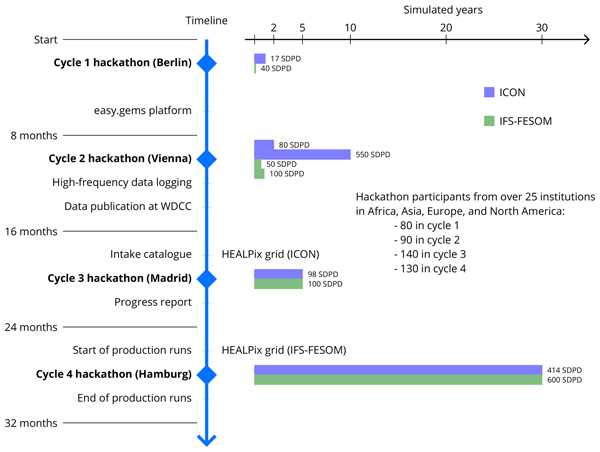
The Next Generation of Earth Modeling Systems project (nextGEMS) developed two Earth system models that use horizontal grid spacing of 10 km and finer, giving more fidelity to the representation of local phenomena, globally. In its fourth cycle, nextGEMS simulated the Earth System climate over the 2020–2049 period under the SSP3-7.0 scenario. Here, we provide an overview of nextGEMS, insights into the model development, and the realism of multi-decadal, kilometer-scale simulations.
Elsa Mohino, Paul-Arthur Monerie, Juliette Mignot, Moussa Diakhaté, Markus Donat, Christopher David Roberts, and Francisco Doblas-Reyes
Earth Syst. Dynam., 15, 15–40, https://doi.org/10.5194/esd-15-15-2024, https://doi.org/10.5194/esd-15-15-2024, 2024
Short summary
Short summary
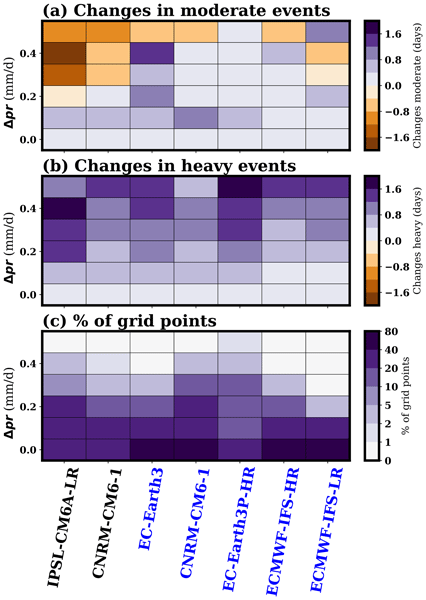
The impact of the Atlantic multidecadal variability (AMV) on the rainfall distribution and timing of the West African monsoon is not well known. Analysing model output, we find that a positive AMV enhances the number of wet days, daily rainfall intensity, and extremes over the Sahel and tends to prolong the monsoon length through later demise. Heavy rainfall events increase all over the Sahel, while moderate ones only occur in the north. Model biases affect the skill in simulating AMV impact.
Fernando Belinchón, Elsa Mohino, and Irene Polo
EGUsphere, https://doi.org/10.5194/egusphere-2026-4587, https://doi.org/10.5194/egusphere-2026-4587, 2026
This preprint is open for discussion and under review for Weather and Climate Dynamics (WCD).
Short summary
Short summary
A major tropical weather pattern, the Madden–Julian Oscillation, moves eastward every 30–60 days, affecting rainfall worldwide. We show it also triggers ocean waves called Kelvin waves, which can, in turn, strengthen or sustain the pattern itself. Studying the Pacific, Indian, and Atlantic Oceans, we found this two-way exchange varies by region, offering new insight into how the ocean shapes the predictability of this pattern.
Diego Cortés-Morales, Alban Lazar, Diana Ruiz Pino, and Juliette Mignot
Earth Syst. Sci. Data, 18, 4179–4202, https://doi.org/10.5194/essd-18-4179-2026, https://doi.org/10.5194/essd-18-4179-2026, 2026
Short summary
Short summary
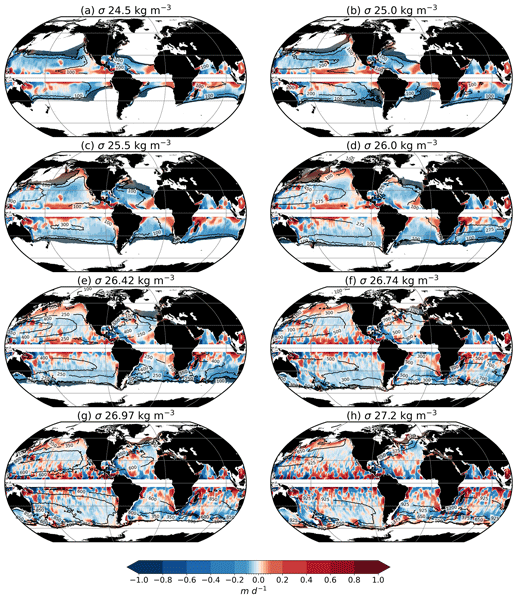
OLIV3 (Observation-based LInear Vorticity Vertical Velocities) is a new global dataset of large-scale oceanic vertical velocities. It is derived from the geostrophic linear vorticity balance, combining in situ and satellite, meridional velocities and wind stress. Comparisons with reanalysis and observation-based products show that OLIV3 captures the large-scale vertical flow, its climatology, and temporal variability, providing a better description of the ocean interior than Ekman pumping.
Jerry Raj, Elsa Mohino, Belén Rodríguez-Fonseca, Teresa Losada, Thomas Rackow, and Tobias Becker
EGUsphere, https://doi.org/10.5194/egusphere-2026-2879, https://doi.org/10.5194/egusphere-2026-2879, 2026
Short summary
Short summary
African Easterly Waves drive most of the rainfall across West Africa and spawn many Atlantic hurricanes. Using a global coupled climate model at a fine resolution, we checked how AEWs will change in a warming world. Our results show that the waves will intensify over land, bringing more extreme downpours to parts of the Sahel while the western Sahel dries. These shifts threaten food security and increase flood risk for one of the world's most climate-vulnerable regions.
Didier Swingedouw, Laura Jackson, Aixue Hu, Anastasia Romanou, Nicole C. Laureanti, Wilbert Weijer, Sina Loriani, Bette Otto-Bliesner, Ayako Abe-Ouchi, Lucas Almeida, Alessio Bellucci, Reyk Börner, Gokhan Danabasoglu, Donovan P. Dennis, Marion Devilliers, Sybren Drijfhout, Jonathan Donges, Friederike Fröb, Thomas L. Frölicher, Guillaume Gastineau, Heiko Goelzer, Chuncheng Guo, Urs Hofmann, Anna Höse, Colin Jones, Torben Koenigk, Ann Kristin Klose, Valerio Lembo, Jose Licon-Salaiz, Ken Mankoff, Virna Meccia, Irina Melnikova, Oliver Mehling, Laurie Menviel, Juliette Mignot, Jon I. Robson, Gavin A. Schmidt, Robin Smith, Yuchen Sun, Irene Trombini, Matteo Willeit, Richard Wood, Fanghua Wu, Lin Zhaohui, and Ricarda Winkelmann
EGUsphere, https://doi.org/10.5194/egusphere-2026-1698, https://doi.org/10.5194/egusphere-2026-1698, 2026
Short summary
Short summary
This study presents a plan for climate model experiments to better understand how changes in freshwater in the North Atlantic affect major ocean currents. We designed coordinated simulations to test their response to warming, added freshwater, and possible recovery after weakening. Comparing results across models and past climate evidence helps improve confidence in projections and assess risks of large ocean circulation changes.
Hans Segura, Xabier Pedruzo-Bagazgoitia, Philipp Weiss, Sebastian K. Müller, Thomas Rackow, Junhong Lee, Edgar Dolores-Tesillos, Imme Benedict, Matthias Aengenheyster, Razvan Aguridan, Gabriele Arduini, Alexander J. Baker, Jiawei Bao, Swantje Bastin, Eulàlia Baulenas, Tobias Becker, Sebastian Beyer, Hendryk Bockelmann, Nils Brüggemann, Lukas Brunner, Suvarchal K. Cheedela, Sushant Das, Jasper Denissen, Ian Dragaud, Piotr Dziekan, Madeleine Ekblom, Jan Frederik Engels, Monika Esch, Richard Forbes, Claudia Frauen, Lilli Freischem, Diego García-Maroto, Philipp Geier, Paul Gierz, Álvaro González-Cervera, Katherine Grayson, Matthew Griffith, Oliver Gutjahr, Helmuth Haak, Ioan Hadade, Kerstin Haslehner, Shabeh ul Hasson, Jan Hegewald, Lukas Kluft, Aleksei Koldunov, Nikolay Koldunov, Tobias Kölling, Shunya Koseki, Sergey Kosukhin, Josh Kousal, Peter Kuma, Arjun U. Kumar, Rumeng Li, Nicolas Maury, Maximilian Meindl, Sebastian Milinski, Kristian Mogensen, Bimochan Niraula, Jakub Nowak, Divya Sri Praturi, Ulrike Proske, Dian Putrasahan, René Redler, David Santuy, Domokos Sármány, Reiner Schnur, Patrick Scholz, Dmitry Sidorenko, Dorian Spät, Birgit Sützl, Daisuke Takasuka, Adrian Tompkins, Alejandro Uribe, Mirco Valentini, Menno Veerman, Aiko Voigt, Sarah Warnau, Fabian Wachsmann, Marta Wacławczyk, Nils Wedi, Karl-Hermann Wieners, Jonathan Wille, Marius Winkler, Yuting Wu, Florian Ziemen, Janos Zimmermann, Frida A.-M. Bender, Dragana Bojovic, Sandrine Bony, Simona Bordoni, Patrice Brehmer, Marcus Dengler, Emanuel Dutra, Saliou Faye, Erich Fischer, Chiel van Heerwaarden, Cathy Hohenegger, Heikki Järvinen, Markus Jochum, Thomas Jung, Johann H. Jungclaus, Noel S. Keenlyside, Daniel Klocke, Heike Konow, Martina Klose, Szymon Malinowski, Olivia Martius, Thorsten Mauritsen, Juan Pedro Mellado, Theresa Mieslinger, Elsa Mohino, Hanna Pawłowska, Karsten Peters-von Gehlen, Abdoulaye Sarré, Pajam Sobhani, Philip Stier, Lauri Tuppi, Pier Luigi Vidale, Irina Sandu, and Bjorn Stevens
Geosci. Model Dev., 18, 7735–7761, https://doi.org/10.5194/gmd-18-7735-2025, https://doi.org/10.5194/gmd-18-7735-2025, 2025
Short summary
Short summary
The Next Generation of Earth Modeling Systems project (nextGEMS) developed two Earth system models that use horizontal grid spacing of 10 km and finer, giving more fidelity to the representation of local phenomena, globally. In its fourth cycle, nextGEMS simulated the Earth System climate over the 2020–2049 period under the SSP3-7.0 scenario. Here, we provide an overview of nextGEMS, insights into the model development, and the realism of multi-decadal, kilometer-scale simulations.
Roshanak Tootoonchi, Simona Bordoni, and Roberta D'Agostino
Weather Clim. Dynam., 6, 245–263, https://doi.org/10.5194/wcd-6-245-2025, https://doi.org/10.5194/wcd-6-245-2025, 2025
Short summary
Short summary
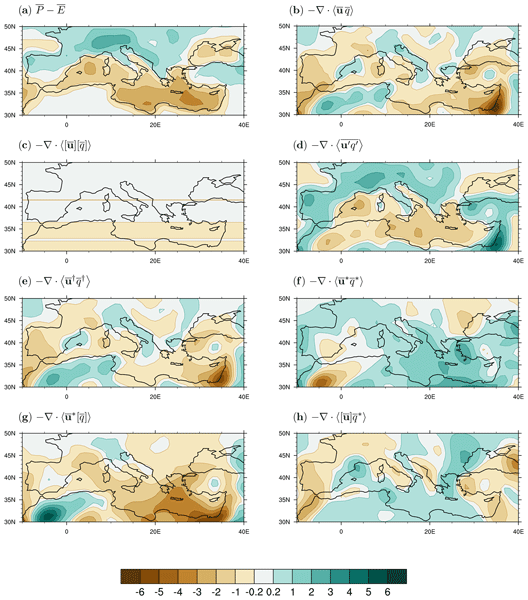
In this study, we explore the role of stationary circulations arising from deviations from the zonal mean in the distinct transition from net evaporation over the ocean to net precipitation over land in the Mediterranean region from ERA5. Stationary eddies reinforce the wetting tendency over land and oppose the drying tendency over the ocean due to transient storms. Our results have important implications for future changes in the region, previously identified as a climate change hot spot.
Michele Filippucci, Simona Bordoni, and Paolo Davini
Weather Clim. Dynam., 5, 1207–1222, https://doi.org/10.5194/wcd-5-1207-2024, https://doi.org/10.5194/wcd-5-1207-2024, 2024
Short summary
Short summary
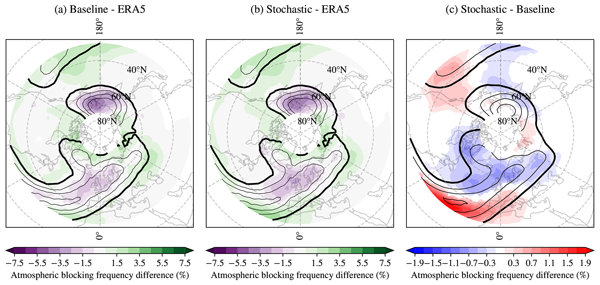
Atmospheric blocking is a recurring phenomenon in midlatitudes, causing winter cold spells and summer heat waves. Current models underestimate it, hindering understanding of global warming's impact on extremes. In this paper, we investigate whether stochastic parameterizations can improve blocking representation. We find that blocking frequency representation slightly deteriorates, following a change in midlatitude winds. We conclude by suggesting a direction for future model development.
Roberto Bilbao, Pablo Ortega, Didier Swingedouw, Leon Hermanson, Panos Athanasiadis, Rosie Eade, Marion Devilliers, Francisco Doblas-Reyes, Nick Dunstone, An-Chi Ho, William Merryfield, Juliette Mignot, Dario Nicolì, Margarida Samsó, Reinel Sospedra-Alfonso, Xian Wu, and Stephen Yeager
Earth Syst. Dynam., 15, 501–525, https://doi.org/10.5194/esd-15-501-2024, https://doi.org/10.5194/esd-15-501-2024, 2024
Short summary
Short summary
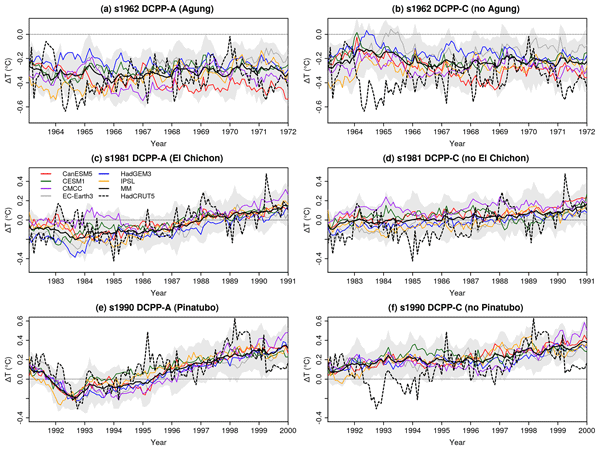
In recent decades three major volcanic eruptions have occurred: Mount Agung in 1963, El Chichón in 1982 and Mount Pinatubo in 1991. In this article we explore the climatic impacts of these volcanic eruptions with a purposefully designed set of simulations from six CMIP6 decadal prediction systems. We analyse the radiative and dynamical responses and show that including the volcanic forcing in these predictions is important to reproduce the observed surface temperature variations.
Elsa Mohino, Paul-Arthur Monerie, Juliette Mignot, Moussa Diakhaté, Markus Donat, Christopher David Roberts, and Francisco Doblas-Reyes
Earth Syst. Dynam., 15, 15–40, https://doi.org/10.5194/esd-15-15-2024, https://doi.org/10.5194/esd-15-15-2024, 2024
Short summary
Short summary
The impact of the Atlantic multidecadal variability (AMV) on the rainfall distribution and timing of the West African monsoon is not well known. Analysing model output, we find that a positive AMV enhances the number of wet days, daily rainfall intensity, and extremes over the Sahel and tends to prolong the monsoon length through later demise. Heavy rainfall events increase all over the Sahel, while moderate ones only occur in the north. Model biases affect the skill in simulating AMV impact.
Adama Sylla, Emilia Sanchez Gomez, Juliette Mignot, and Jorge López-Parages
Geosci. Model Dev., 15, 8245–8267, https://doi.org/10.5194/gmd-15-8245-2022, https://doi.org/10.5194/gmd-15-8245-2022, 2022
Short summary
Short summary
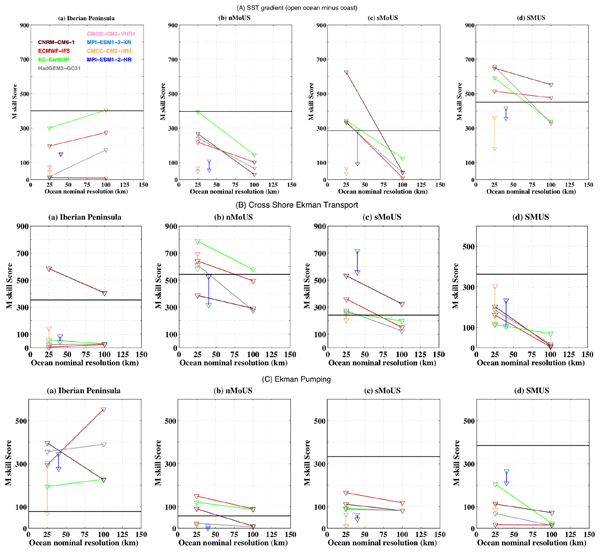
Increasing model resolution depends on the subdomain of the Canary upwelling considered. In the Iberian Peninsula, the high-resolution (HR) models do not seem to better simulate the upwelling indices, while in Morocco to the Senegalese coast, the HR models show a clear improvement. Thus increasing the resolution of a global climate model does not necessarily have to be the only way to better represent the climate system. There is still much work to be done in terms of physical parameterizations.
Yona Silvy, Clément Rousset, Eric Guilyardi, Jean-Baptiste Sallée, Juliette Mignot, Christian Ethé, and Gurvan Madec
Geosci. Model Dev., 15, 7683–7713, https://doi.org/10.5194/gmd-15-7683-2022, https://doi.org/10.5194/gmd-15-7683-2022, 2022
Short summary
Short summary
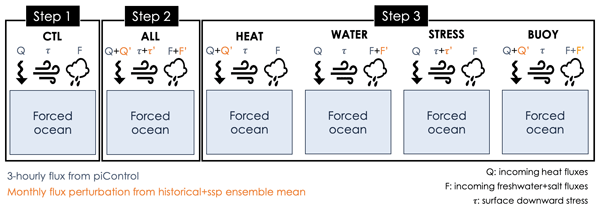
A modeling framework is introduced to understand and decompose the mechanisms causing the ocean temperature, salinity and circulation to change since the pre-industrial period and into 21st century scenarios of global warming. This framework aims to look at the response to changes in the winds and in heat and freshwater exchanges at the ocean interface in global climate models, throughout the 1850–2100 period, to unravel their individual effects on the changing physical structure of the ocean.
Cited articles
Adam, O., Bischoff, T., and Schneider, T.: Seasonal and Interannual Variations of the Energy Flux Equator and ITCZ. Part I: Zonally Averaged ITCZ Position, J. Climate, 29, 3219–3230, https://doi.org/10.1175/JCLI-D-15-0512.1, 2016a. a, b, c
Adam, O., Schneider, T., Enzel, Y., and Quade, J.: Both differential and equatorial heating contributed to African monsoon variations during the mid-Holocene, Earth Planet. Sc. Lett., 522, 20–29, https://doi.org/10.1016/j.epsl.2019.06.019, 2019. a
Badji, A., Mohino, E., Diakhaté, M., Mignot, J., and Gaye, A. T.: Decadal Variability of Rainfall in Senegal: Beyond the Total Seasonal Amount, J. Climate, 35, 5339–5358, https://doi.org/10.1175/JCLI-D-21-0699.1, 2022. a
Balkanski, Y., Bonnet, R., Boucher, O., Checa-Garcia, R., and Servonnat, J.: Better representation of dust can improve climate models with too weak an African monsoon, Atmos. Chem. Phys., 21, 11423–11435, https://doi.org/10.5194/acp-21-11423-2021, 2021. a
Berntell, E., Zhang, Q., Chafik, L., and Körnich, H.: Representation of multidecadal Sahel rainfall variability in 20th century reanalyses, Sci. Rep.-UK, 8, 10937, https://doi.org/10.1038/s41598-018-29217-9, 2018. a, b
Biasutti, M., Voigt, A., Boos, W. R., Braconnot, P., Hargreaves, J. C., Harrison, S. P., Kang, S. M., Mapes, B. E., Scheff, J., and Schumacher, C.: Global energetics and local physics as drivers of past, present and future monsoons, Nat. Geosci., 11, 392–400, https://doi.org/10.1038/s41561-018-0137-1, 2018. a
Bischoff, T. and Schneider, T.: Energetic constraints on the position of the intertropical convergence zone, J. Climate, 27, 4937–4951, https://doi.org/10.1175/JCLI-D-13-00650.1, 2014. a
Boer, G. J., Smith, D. M., Cassou, C., Doblas-Reyes, F., Danabasoglu, G., Kirtman, B., Kushnir, Y., Kimoto, M., Meehl, G. A., Msadek, R., Mueller, W. A., Taylor, K. E., Zwiers, F., Rixen, M., Ruprich-Robert, Y., and Eade, R.: The Decadal Climate Prediction Project (DCPP) contribution to CMIP6, Geosci. Model Dev., 9, 3751–3777, https://doi.org/10.5194/gmd-9-3751-2016, 2016. a, b, c
Boos, W. R. and Korty, R. L.: Regional energy budget control of the intertropical convergence zone and application to mid-Holocene rainfall, Nat. Geosci., 9, 892–897, https://doi.org/10.1038/ngeo2833, 2016. a
Boucher, O., Servonnat, J., Albright, A. L., Aumont, O., Balkanski, Y., Bastrikov, V., Bekki, S., Bonnet, R., Bony, S., Bopp, L., Braconnot, P., Brockmann, P., Cadule, P., Caubel, A., Cheruy, F., Codron, F., Cozic, A., Cugnet, D., D'Andrea, F., Davini, P., de Lavergne, C., Denvil, S., Deshayes, J., Devilliers, M., Ducharne, A., Dufresne, J.-L., Dupont, E., Ethe, C., Fairhead, L., Falletti, L., Flavoni, S., Foujols, M.-A., Gardoll, S., Gastineau, G., Ghattas, J., Grandpeix, J.-Y., Guenet, B., Guez, L. E., Guilyardi, E., Guimberteau, M., Hauglustaine, D., Hourdin, F., Idelkadi, A., Joussaume, S., Kageyama, M., Khodri, M., Krinner, G., Lebas, N., Levavasseur, G., Levy, C., Li, L., Lott, F., Lurton, T., Luyssaert, S., Madec, G., Madeleine, J.-B., Maignan, F., Marchand, M., Marti, O., Mellul, L., Meurdesoif, Y., Mignot, J., Musat, I., Ottle, C., Peylin, P., Planton, Y., Polcher, J., Rio, C., Rochetin, N., Rousset, C., Sepulchre, P., Sima, A., Swingedouw, D., Thieblemont, R., Traore, A. K., Vancoppenolle, M., Vial, J., Vialard, J., Viovy, N., and Vuichard, N.: Presentation and Evaluation of the IPSL-CM6A-LR Climate Model, J. Adv. Model. Earth Sy., 12, e2019MS002010, https://doi.org/10.1029/2019MS002010, 2020. a
Cai, W., Reason, C., Mohino, E., Rodríguez-Fonseca, B., Malherbe, J., Santoso, A., Li, X., Chikoore, H., Nnamchi, H., McPhaden, M. J., Keenlyside, N., Taschetto, A. S., Wu, L., Ng, B., Liu, Y., Geng, T., Yang, K., Wang, G., Jia, F., Lin, X., Li, S., Yang, Y., Wang, J., Zhang, L., Li, Z., Wilfried, P., Zhou, L., Zhang, X., Engelbrecht, F., Li, Z., and Mutemi, J. N.: Climate impacts of the El Niño–Southern Oscillation in Africa, Nature Reviews Earth and Environment, 6, 503–520, https://doi.org/10.1038/s43017-025-00705-7, 2025. a
Chagnaud, G., Panthou, G., Vischel, T., and Lebel, T.: A synthetic view of rainfall intensification in the West African Sahel, Environ. Res. Lett., 17, 044005, https://doi.org/10.1088/1748-9326/ac4a9c, 2022. a
Cook, K. H.: Generation of the African easterly jet and its role in determining West African precipitation, J. Climate, 12, 1165–1184, https://doi.org/10.1175/1520-0442(1999)012<1165:GOTAEJ>2.0.CO;2, 1999. a, b
Dai, A., Lamb, P. J., Trenberth, K. E., Hulme, M., Jones, P. D., and Xie, P.: The recent Sahel drought is real, Int. J. Climatol., 24, 1323–1331, 2004. a
Datti, A. D., Zeng, G., Monerie, P.-A., Oo, K. T., and Chen, C.: A Review of the arctic-West African monsoon nexus: How arctic sea ice decline influences monsoon system, Theor. Appl. Climatol., 156, 9, https://doi.org/10.1007/s00704-024-05255-4, 2025. a
Dong, B. and Dai, A.: The influence of the Interdecadal Pacific Oscillation on Temperature and Precipitation over the Globe, Clim. Dynam., 45, 2667–2681, https://doi.org/10.1007/s00382-015-2500-x, 2015. a, b
Dong, B. and Sutton, R.: Dominant role of greenhouse-gas forcing in the recovery of Sahel rainfall, Nat. Clim. Change, 5, 757–U173, https://doi.org/10.1038/NCLIMATE2664, 2015. a, b
Dong, B., Sutton, R. T., Highwood, E., and Wilcox, L.: The impacts of European and Asian anthropogenic sulfur dioxide emissions on Sahel rainfall, J. Climate, 27, 7000–7017, https://doi.org/10.1175/JCLI-D-13-00769.1, 2014. a
Donohoe, A., Marshall, J., Ferreira, D., and Mcgee, D.: The relationship between ITCZ location and cross-equatorial atmospheric heat transport: From the seasonal cycle to the Last Glacial Maximum, J. Climate, 26, 3597–3618, https://doi.org/10.1175/JCLI-D-12-00467.1, 2013. a
Döscher, R., Acosta, M., Alessandri, A., Anthoni, P., Arsouze, T., Bergman, T., Bernardello, R., Boussetta, S., Caron, L.-P., Carver, G., Castrillo, M., Catalano, F., Cvijanovic, I., Davini, P., Dekker, E., Doblas-Reyes, F. J., Docquier, D., Echevarria, P., Fladrich, U., Fuentes-Franco, R., Gröger, M., v. Hardenberg, J., Hieronymus, J., Karami, M. P., Keskinen, J.-P., Koenigk, T., Makkonen, R., Massonnet, F., Ménégoz, M., Miller, P. A., Moreno-Chamarro, E., Nieradzik, L., van Noije, T., Nolan, P., O'Donnell, D., Ollinaho, P., van den Oord, G., Ortega, P., Prims, O. T., Ramos, A., Reerink, T., Rousset, C., Ruprich-Robert, Y., Le Sager, P., Schmith, T., Schrödner, R., Serva, F., Sicardi, V., Sloth Madsen, M., Smith, B., Tian, T., Tourigny, E., Uotila, P., Vancoppenolle, M., Wang, S., Wårlind, D., Willén, U., Wyser, K., Yang, S., Yepes-Arbós, X., and Zhang, Q.: The EC-Earth3 Earth system model for the Coupled Model Intercomparison Project 6, Geosci. Model Dev., 15, 2973–3020, https://doi.org/10.5194/gmd-15-2973-2022, 2022. a
Folland, C., Palmer, T., and Parker, D.: Sahel Rainfall and Worldwide Sea Temperatures, 1901-85, Nature, 320, 602–607, https://doi.org/10.1038/320602a0, 1986. a, b, c
Ganguly, I., Gonzalez, A. O., and Karnauskas, K. B.: On the role of wind–evaporation–SST feedbacks in the subseasonal variability of the East Pacific ITCZ, J. Climate, 37, 129–143, https://doi.org/10.1175/JCLI-D-22-0849.1, 2024. a
Giannini, A. and Kaplan, A.: The role of aerosols and greenhouse gases in Sahel drought and recovery, Climatic Change, 152, 449–466, https://doi.org/10.1007/s10584-018-2341-9, 2019. a
Guo, J., Xie, X., Myhre, G., Shindell, D., Kirkevåg, A., Iversen, T., Samset, B. H., Shi, Z., Li, X., Sun, H., Liu, X., and Liu, Y.: Increased Asian Sulfate Aerosol Emissions Remarkably Enhance Sahel Summer Precipitation, Earths Future, 12, e2024EF004745, https://doi.org/10.1029/2024EF004745, 2024. a
Gutjahr, O., Putrasahan, D., Lohmann, K., Jungclaus, J. H., von Storch, J.-S., Brüggemann, N., Haak, H., and Stössel, A.: Max Planck Institute Earth System Model (MPI-ESM1.2) for the High-Resolution Model Intercomparison Project (HighResMIP), Geosci. Model Dev., 12, 3241–3281, https://doi.org/10.5194/gmd-12-3241-2019, 2019. a, b
Haarsma, R., Acosta, M., Bakhshi, R., Bretonnière, P.-A., Caron, L.-P., Castrillo, M., Corti, S., Davini, P., Exarchou, E., Fabiano, F., Fladrich, U., Fuentes Franco, R., García-Serrano, J., von Hardenberg, J., Koenigk, T., Levine, X., Meccia, V. L., van Noije, T., van den Oord, G., Palmeiro, F. M., Rodrigo, M., Ruprich-Robert, Y., Le Sager, P., Tourigny, E., Wang, S., van Weele, M., and Wyser, K.: HighResMIP versions of EC-Earth: EC-Earth3P and EC-Earth3P-HR – description, model computational performance and basic validation, Geosci. Model Dev., 13, 3507–3527, https://doi.org/10.5194/gmd-13-3507-2020, 2020. a, b
Hartmann, D. L.: Global physical climatology, 2nd edn., Elsevier, Amsterdam, Netherlands, https://doi.org/10.1016/C2009-0-00030-0, 2016. a
Haywood, J. M., Jones, A., Bellouin, N., and Stephenson, D.: Asymmetric forcing from stratospheric aerosols impacts Sahelian rainfall, Nat. Clim. Change, 3, 660–665, https://doi.org/10.1038/nclimate1857, 2013. a
He, C., Clement, A. C., Kramer, S. M., Cane, M. A., Klavans, J. M., Fenske, T. M., and Murphy, L. N.: Tropical Atlantic multidecadal variability is dominated by external forcing, Nature, 622, 521–527, https://doi.org/10.1038/s41586-023-06489-4, 2023. a
Herman, R. J., Biasutti, M., and Kushnir, Y.: Drivers of low-frequency Sahel precipitation variability: comparing CMIP5 and CMIP6 ensemble means with observations, Clim. Dynam., 61, 4449–4470, https://doi.org/10.1007/s00382-023-06755-1, 2023. a, b, c
Hersbach, H., Bell, B., Berrisford, P., Hirahara, S., Horányi, A., Muñoz-Sabater, J., Nicolas, J., Peubey, C., Radu, R., Schepers, D., Simmons, A., Soci, C., Abdalla, S., Abellan, X., Balsamo, G., Bechtold, P., Biavati, G., Bidlot, J., Bonavita, M., De Chiara, G., Dahlgren, P., Dee, D., Diamantakis, M., Dragani, R., Flemming, J., Forbes, R., Fuentes, M., Geer, A., Haimberger, L., Healy, S., Hogan, R. J., Hólm, E., Janisková, M., Keeley, S., Laloyaux, P., Lopez, P., Lupu, C., Radnoti, G., de Rosnay, P., Rozum, I., Vamborg, F., Villaume, S., and Thépaut, J.-N.: The ERA5 global reanalysis, Q. J. Roy. Meteor. Soc., 146, 1999–2049, https://doi.org/10.1002/qj.3803, 2020. a
Hill, S. A., Ming, Y., and Zhao, M.: Robust responses of the Sahelian hydrological cycle to global warming, J. Climate, 31, 9793–9814, https://doi.org/10.1175/JCLI-D-18-0238.1, 2018. a
Hirasawa, H., Kushner, P. J., Sigmond, M., Fyfe, J., and Deser, C.: Anthropogenic Aerosols Dominate Forced Multidecadal Sahel Precipitation Change through Distinct Atmospheric and Oceanic Drivers, J. Climate, 33, 10187–10204, https://doi.org/10.1175/JCLI-D-19-0829.1, 2020. a, b
Hirasawa, H., Kushner, P. J., Sigmond, M., Fyfe, J., and Deser, C.: Evolving Sahel rainfall response to anthropogenic aerosols driven by shifting regional oceanic and emission influences, J. Climate, 35, 3181–3193, https://doi.org/10.1175/JCLI-D-21-0795.1, 2022. a
Hirons, L. C., Klingaman, N. P., and Woolnough, S. J.: MetUM-GOML1: a near-globally coupled atmosphere–ocean-mixed-layer model, Geosci. Model Dev., 8, 363–379, https://doi.org/10.5194/gmd-8-363-2015, 2015. a, b
Hodson, D. L. R., Bretonniere, P.-A., Cassou, C., Davini, P., Klingaman, N. P., Lohmann, K., Lopez-Parages, J., Martin-Rey, M., Moine, M.-P., Monerie, P.-A., Putrasahan, D. A., Roberts, C. D., Robson, J., Ruprich-Robert, Y., Sanchez-Gomez, E., Seddon, J., and Senan, R.: Coupled climate response to Atlantic Multidecadal Variability in a multi-model multi-resolution ensemble, Clim. Dynam., 59, 805–836, https://doi.org/10.1007/s00382-022-06157-9, 2022. a, b, c, d, e
Hua, W., Dai, A., Zhou, L., Qin, M., and Chen, H.: An Externally Forced Decadal Rainfall Seesaw Pattern Over the Sahel and Southeast Amazon, Geophys. Res. Lett., 46, 923–932, https://doi.org/10.1029/2018GL081406, 2019. a
Huang, B., Banzon, V. F., Freeman, E., Lawrimore, J., Liu, W., Peterson, T. C., Smith, T. M., Thorne, P. W., Woodruff, S. D., and Zhang, H.-M.: Extended reconstructed sea surface temperature version 4 (ERSS T. v4). Part I: Upgrades and intercomparisons, J. Climate, 28, 911–930, https://doi.org/10.1175/JCLI-D-14-00006.1, 2015. a
Hwang, Y., Frierson, D. M. W., and Kang, S. M.: Anthropogenic sulfate aerosol and the southward shift of tropical precipitation in the late 20th century, Geophys. Res. Lett., 40, 2845–2850, https://doi.org/10.1002/grl.50502, 2013. a
Jeong, H., Park, H.-S., Kang, S. M., and Chung, E.-S.: The greater role of Southern Ocean warming compared to Arctic Ocean warming in shifting future tropical rainfall patterns, Nat. Commun., 16, 2790, https://doi.org/10.1038/s41467-025-57654-4, 2025. a
Joshi, M. K., Rai, A., and Kulkarni, A.: Global-scale interdecadal variability a skillful predictor at decadal-to-multidecadal timescales for Sahelian and Indian Monsoon Rainfall, npj Climate and Atmospheric Science, 5, 2, https://doi.org/10.1038/s41612-021-00227-1, 2022. a, b, c
Kang, S. M., Held, I. M., Frierson, D. M., and Zhao, M.: The response of the ITCZ to extratropical thermal forcing: Idealized slab-ocean experiments with a GCM, J. Climate, 21, 3521–3532, https://doi.org/10.1175/2007JCLI2146.1, 2008. a
Kang, S. M., Frierson, D. M., and Held, I. M.: The tropical response to extratropical thermal forcing in an idealized GCM: The importance of radiative feedbacks and convective parameterization, J. Atmos. Sci., 66, 2812–2827, https://doi.org/10.1175/2009JAS2924.1, 2009. a
Karnauskas, K. B.: A simple coupled model of the wind–evaporation–SST feedback with a role for stability, J. Climate, 35, 2149–2160, https://doi.org/10.1175/JCLI-D-20-0895.1, 2022. a
Kim, W. M., Yeager, S., and Danabasoglu, G.: Atlantic multidecadal variability and associated climate impacts initiated by ocean thermohaline dynamics, J. Climate, 33, 1317–1334, https://doi.org/10.1175/JCLI-D-19-0530.1, 2020. a, b, c
Kitoh, A., Mohino, E., Ding, Y., Rajendran, K., Ambrizzi, T., Marengo, J., and Magaña, V.: Combined oceanic influences on continental climates, in: Interacting climates of ocean basins: observations, mechanisms, predictability, and impacts, vol. 1, 1st edn., Cambridge University Press, New York, USA, 216–249, https://doi.org/10.1017/9781108610995, 2020. a, b
Knight, J. R., Folland, C. K., and Scaife, A. A.: Climate impacts of the Atlantic Multidecadal Oscillation, Geophys. Res. Lett., 33, L17706, https://doi.org/10.1029/2006GL026242, 2006. a, b, c, d
Lavaysse, C., Flamant, C., and Janicot, S.: Regional-scale convection patterns during strong and weak phases of the Saharan heat low, Atmos. Sci. Lett., 11, 255–264, https://doi.org/10.1002/asl.284, 2010. a
Lebel, T. and Ali, A.: Recent trends in the Central and Western Sahel rainfall regime (1990–2007), J. Hydrol., 375, 52–64, https://doi.org/10.1016/j.jhydrol.2008.11.030, 2009. a
Li, L., Schmitt, R. W., Ummenhofer, C. C., and Karnauskas, K. B.: North Atlantic salinity as a predictor of Sahel rainfall, Sci. Adv., 2, e1501588, https://doi.org/10.1126/sciadv.1501588, 2016. a, b
Marshall, J., Donohoe, A., Ferreira, D., and McGee, D.: The ocean’s role in setting the mean position of the Inter-Tropical Convergence Zone, Clim. Dynam., 42, 1967–1979, https://doi.org/10.1007/s00382-013-1767-z, 2014. a
Martin, E. R., Thorncroft, C., and Booth, B. B. B.: The Multidecadal Atlantic SST-Sahel Rainfall Teleconnection in CMIP5 Simulations, J. Climate, 27, 784–806, https://doi.org/10.1175/JCLI-D-13-00242.1, 2014. a, b, c, d
Mayer, J., Mayer, M., and Haimberger, L.: Mass-consistent atmospheric energy and moisture budget monthly data from 1979 to present derived from ERA5 reanalysis, Copernicus Climate Change Service (C3S) Climate Data Store (CDS), https://doi.org/10.24381/cds.c2451f6b, last access: 3 March 2026, 2021. a
Mohino, E., Monerie, P.-A., Mignot, J., Diakhaté, M., Donat, M., Roberts, C. D., and Doblas-Reyes, F.: Impact of Atlantic multidecadal variability on rainfall intensity distribution and timing of the West African monsoon, Earth Syst. Dynam., 15, 15–40, https://doi.org/10.5194/esd-15-15-2024, 2024. a, b, c, d
Monerie, P., Dittus, A. J., Wilcox, L. J., and Turner, A. G.: Uncertainty in Simulating Twentieth Century West African Precipitation Trends: The Role of Anthropogenic Aerosol Emissions, Earths Future, 11, e2022EF002995, https://doi.org/10.1029/2022EF002995, 2023. a, b
Monerie, P.-A., Oudar, T., and Sanchez-Gomez, E.: Respective impacts of Arctic sea ice decline and increasing greenhouse gases concentration on Sahel precipitation, Clim. Dynam., 52, 5947–5964, https://doi.org/10.1007/s00382-018-4488-5, 2019a. a
Monerie, P.-A., Robson, J., Dong, B., Hodson, D. L. R., and Klingaman, N. P.: Effect of the Atlantic Multidecadal Variability on the Global Monsoon, Geophys. Res. Lett., 46, 1765–1775, https://doi.org/10.1029/2018GL080903, 2019b. a, b, c, d
Monerie, P.-A., Robson, J., Dong, B., and Hodson, D.: Role of the Atlantic multidecadal variability in modulating East Asian climate, Clim. Dynam., 56, 381–398, https://doi.org/10.1007/s00382-020-05477-y, 2021. a
Monerie, P.-A., Mohino, E., Moine, M.-P., Biasutti, M., Pohl, B., and Mignot, J.: Exploring uncertainty in dynamical future changes in Sahel precipitation: the extratropical influence, Clim. Dynam., 63, 1–21, https://doi.org/10.1007/s00382-025-07835-0, 2025. a
Moreno-Chamarro, E., Marshall, J., and Delworth, T. L.: Linking ITCZ migrations to the AMOC and North Atlantic/Pacific SST decadal variability, J. Climate, 33, 893–905, https://doi.org/10.1175/JCLI-D-19-0258.1, 2020. a, b
Mutton, H., Chadwick, R., Collins, M., Lambert, F. H., Geen, R., Todd, A., and Taylor, C. M.: The impact of the direct radiative effect of increased CO2 on the West African monsoon, J. Climate, 35, 2441–2458, https://doi.org/10.1175/JCLI-D-21-0340.1, 2022. a, b
Mutton, H., Chadwick, R., Collins, M., Lambert, F. H., Taylor, C. M., Geen, R., and Todd, A.: The impact of a uniform ocean warming on the West African monsoon, Clim. Dynam., 62, 103–122, https://doi.org/10.1007/s00382-023-06898-1, 2024. a
Ndiaye, C. D., Mohino, E., Mignot, J., and Sall, S. M.: On the Detection of Externally Forced Decadal Modulations of the Sahel Rainfall over the Whole Twentieth Century in the CMIP6 Ensemble, J. Climate, 35, 3339–3354, https://doi.org/10.1175/JCLI-D-21-0585.1, 2022. a
Neelin, J. D. and Held, I. M.: Modeling tropical convergence based on the moist static energy budget, Mon. Weather Rev., 115, 3–12, https://doi.org/10.1175/1520-0493(1987)115<0003:MTCBOT>2.0.CO;2, 1987. a
Nicholson, S. E.: The West African Sahel: A Review of Recent Studies on the Rainfall Regime and Its Interannual Variability, International Scholarly Research Notices, 2013, e453521, https://doi.org/10.1155/2013/453521, 2013. a, b
O’Reilly, C. H., Woollings, T., and Zanna, L.: The dynamical influence of the Atlantic multidecadal oscillation on continental climate, J. Climate, 30, 7213–7230, https://doi.org/10.1175/JCLI-D-16-0345.1, 2017. a, b
O’Reilly, C. H., Patterson, M., Robson, J., Monerie, P. A., Hodson, D., and Ruprich-Robert, Y.: Challenges with interpreting the impact of Atlantic Multidecadal Variability using SST-restoring experiments, npj Climate and Atmospheric Science, 6, 14, https://doi.org/10.1038/s41612-023-00335-0, 2023. a, b, c
Roberts, C. D., Senan, R., Molteni, F., Boussetta, S., Mayer, M., and Keeley, S. P. E.: Climate model configurations of the ECMWF Integrated Forecasting System (ECMWF-IFS cycle 43r1) for HighResMIP, Geosci. Model Dev., 11, 3681–3712, https://doi.org/10.5194/gmd-11-3681-2018, 2018. a, b
Rodríguez-Fonseca, B., Mohino, E., Mechoso, C. R., Caminade, C., Biasutti, M., Gaetani, M., García-Serrano, J., Vizy, E. K., Cook, K., and Xue, Y.: Variability and predictability of West African droughts: a review on the role of sea surface temperature anomalies, J. Climate, 28, 4034–4060, https://doi.org/10.1175/JCLI-D-14-00130.1, 2015. a
Rotstayn, L. D. and Lohmann, U.: Tropical Rainfall Trends and the Indirect Aerosol Effect, J. Climate, https://doi.org/10.1175/1520-0442(2002)015<2103:TRTATI>2.0.CO;2, 2002. a
Ruprich-Robert, Y., Delworth, T., Msadek, R., Castruccio, F., Yeager, S., and Danabasoglu, G.: Impacts of the Atlantic Multidecadal Variability on North American Summer Climate and Heat Waves, J. Climate, https://doi.org/10.1175/JCLI-D-17-0270.1, 2018. a
Ruprich-Robert, Y., Moreno-Chamarro, E., Levine, X., Bellucci, A., Cassou, C., Castruccio, F., Davini, P., Eade, R., Gastineau, G., Hermanson, L., Hodson, D., Lohmann, K., Lopez-Parages, J., Monerie, P.-A., Nicolì, D., Qasmi, S., Roberts, C. D., Sanchez-Gomez, E., Danabasoglu, G., Dunstone, N., Martin-Rey, M., Msadek, R., Robson, J., Smith, D., and Tourigny, E.: Impacts of Atlantic multidecadal variability on the tropical Pacific: a multi-model study, npj Climate and Atmospheric Science, 4, 1–11, https://doi.org/10.1038/s41612-021-00188-5, 2021. a
Sanderson, B. M., Knutti, R., and Caldwell, P.: Addressing interdependency in a multimodel ensemble by interpolation of model properties, J. Climate, 28, 5150–5170, https://doi.org/10.1175/JCLI-D-14-00361.1, 2015. a
Sanogo, S., Fink, A. H., Omotosho, J. A., Ba, A., Redl, R., and Ermert, V.: Spatio-temporal characteristics of the recent rainfall recovery in West Africa, Int. J. Climatol., 35, 4589–4605, https://doi.org/10.1002/joc.4309, 2015. a
Schneider, T., Bischoff, T., and Haug, G. H.: Migrations and dynamics of the intertropical convergence zone, Nature, 513, 45–53, https://doi.org/10.1038/nature13636, 2014. a, b, c, d
Schulzweida, U.: CDO User Guide, Zenodo, https://doi.org/10.5281/zenodo.10020800, 2023. a
Shekhar, R. and Boos, W. R.: Improving Energy-Based Estimates of Monsoon Location in the Presence of Proximal Deserts, J. Climate, https://doi.org/10.1175/JCLI-D-15-0747.1, 2016. a, b, c
Taylor, C. M., Belusic, D., Guichard, F., Arker, D. J. P., Vischel, T., Bock, O., Harris, P. P., Janicot, S., Klein, C., and Panthou, G.: Frequency of extreme Sahelian storms tripled since 1982 in satellite observations, Nature, 544, 475–478, https://doi.org/10.1038/nature22069, 2017. a
Thorncroft, C. D., Nguyen, H., Zhang, C., and Peyrille, P.: Annual cycle of the West African monsoon: regional circulations and associated water vapour transport, Q. J. Roy. Meteor. Soc., 137, 129–147, https://doi.org/10.1002/qj.728, 2011. a, b
Ting, M., Kushnir, Y., Seager, R., and Li, C.: Forced and internal twentieth-century SST trends in the North Atlantic, J. Climate, 22, 1469–1481, https://doi.org/10.1175/2008JCLI2561.1, 2009. a
Ting, M., Kushnir, Y., Seager, R., and Li, C.: Robust features of Atlantic multi-decadal variability and its climate impacts, Geophys. Res. Lett., 38, L17705, https://doi.org/10.1029/2011GL048712, 2011. a, b, c
Villamayor, J. and Mohino, E.: Robust Sahel drought due to the Interdecadal Pacific Oscillation in CMIP5 simulations, Geophys. Res. Lett., 42, 1214–1222, https://doi.org/10.1002/2014GL062473, 2015. a, b
Villamayor, J., Mohino, E., Khodri, M., Mignot, J., and Janicot, S.: Atlantic Control of the Late Nineteenth-Century Sahel Humid Period, J. Climate, 31, 8225–8240, https://doi.org/10.1175/JCLI-D-18-0148.1, 2018. a, b, c
Voldoire, A., Saint-Martin, D., Senesi, S., Decharme, B., Alias, A., Chevallier, M., Colin, J., Gueremy, J.-F., Michou, M., Moine, M.-P., Nabat, P., Roehrig, R., Salas y Melia, D., Seferian, R., Valcke, S., Beau, I., Belamari, S., Berthet, S., Cassou, C., Cattiaux, J., Deshayes, J., Douville, H., Ethe, C., Franchisteguy, L., Geoffroy, O., Levy, C., Madec, G., Meurdesoif, Y., Msadek, R., Ribes, A., Sanchez-Gomez, E., Terray, L., and Waldman, R.: Evaluation of CMIP6 DECK Experiments With CNRM-CM6-1, J. Adv. Model. Earth Sy., 11, 2177–2213, https://doi.org/10.1029/2019MS001683, 2019. a, b
Wang, C., Dong, S., Evan, A. T., Foltz, G. R., and Lee, S.-K.: Multidecadal covariability of North Atlantic sea surface temperature, African dust, Sahel rainfall, and Atlantic hurricanes, J. Climate, 25, 5404–5415, https://doi.org/10.1175/JCLI-D-11-00413.1, 2012. a, b
Wang, G., Eltahir, E. A. B., Foley, J. A., Pollard, D., and Levis, S.: Decadal variability of rainfall in the Sahel: results from the coupled GENESIS-IBIS atmosphere-biosphere model, Clim. Dynam., 22, 625–637, https://doi.org/10.1007/s00382-004-0411-3, 2004. a
Watanabe, M. and Tatebe, H.: Reconciling roles of sulphate aerosol forcing and internal variability in Atlantic multidecadal climate changes, Clim. Dynam., 53, 4651–4665, https://doi.org/10.1007/s00382-019-04811-3, 2019. a
Williams, K. D., Copsey, D., Blockley, E. W., Bodas-Salcedo, A., Calvert, D., Comer, R., Davis, P., Graham, T., Hewitt, H. T., Hill, R., Hyder, P., Ineson, S., Johns, T. C., Keen, A. B., Lee, R. W., Megann, A., Milton, S. F., Rae, J. G. L., Roberts, M. J., Scaife, A. A., Schiemann, R., Storkey, D., Thorpe, L., Watterson, I. G., Walters, D. N., West, A., Wood, R. A., Woollings, T., and Xavier, P. K.: The Met Office Global Coupled Model 3.0 and 3.1 (GC3.0 and GC3.1) Configurations, J. Adv. Model. Earth Sy., 10, 357–380, https://doi.org/10.1002/2017MS001115, 2018. a
WMO: Guide to Instruments and Methods of Observation. Volume I – Measurement of Meteorological Varibles, WMO-No. 8, WMO, Geneva, Switzerland, https://library.wmo.int/idurl/4/41650, 2024. a
Xue, J., Wang, B., Yu, Y., Li, J., Sun, C., and Mao, J.: Multidecadal variation of northern hemisphere summer monsoon forced by the SST inter-hemispheric dipole, Environ. Res. Lett., 17, 044033, https://doi.org/10.1088/1748-9326/ac5a65, 2022. a
Zhang, J., Liu, Y., Sun, C., Li, J., Ding, R., Xie, F., Xie, T., Zhang, Y., and Gong, Z.: On the connection between AMOC and observed land precipitation in Northern Hemisphere: a comparison of the AMOC indicators, Clim. Dynam., 56, 651–664, https://doi.org/10.1007/s00382-020-05496-9, 2021. a, b
Zhang, R. and Delworth, T. L.: Impact of Atlantic multidecadal oscillations on India/Sahel rainfall and Atlantic hurricanes, Geophys. Res. Lett., 33, L17712, https://doi.org/10.1029/2006GL026267, 2006. a, b, c, d
Zhang, R., Sutton, R., Danabasoglu, G., Kwon, Y.-O., Marsh, R., Yeager, S. G., Amrhein, D. E., and Little, C. M.: A Review of the Role of the Atlantic Meridional Overturning Circulation in Atlantic Multidecadal Variability and Associated Climate Impacts, Rev. Geophys., 57, 316–375, https://doi.org/10.1029/2019RG000644, 2019. a, b
Zhang, S., Stier, P., Dagan, G., and Wang, M.: Anthropogenic Aerosols Modulated 20th-Century Sahel Rainfall Variability Via Their Impacts on North Atlantic Sea Surface Temperature, Geophys. Res. Lett., 49, e2021GL095629, https://doi.org/10.1029/2021GL095629, 2022. a
Short summary
In this study, we show that the positive phase of the Atlantic Multidecadal Variability, with warmer North Atlantic surface temperatures, enhances local latent heat release and net energy input into the atmosphere. The excess energy is exported through a northward shift of the tropical rain belt, leading to increased rainfall over the Sahel. Deep convection is also enhanced while mid-level dry-air intrusion is reduced due to a weakening of the shallow meridional circulation over the Sahara.
In this study, we show that the positive phase of the Atlantic Multidecadal Variability, with...


