
Articles | Volume 7, issue 1
https://doi.org/10.5194/wcd-7-247-2026
© Author(s) 2026. This work is distributed under
the Creative Commons Attribution 4.0 License.
the Creative Commons Attribution 4.0 License.
https://doi.org/10.5194/wcd-7-247-2026
© Author(s) 2026. This work is distributed under
the Creative Commons Attribution 4.0 License.
the Creative Commons Attribution 4.0 License.
Research article
| 
30 Jan 2026
Research article |
| 30 Jan 2026
| 30 Jan 2026
A new index used to characterise the extent of Antarctic marine coastal winds in climate projections
Archie Cable
CORRESPONDING AUTHOR

National Oceanography Centre, Southampton, UK
Thomas Caton Harrison
British Antarctic Survey, Cambridge, UK
Elizabeth Kent
National Oceanography Centre, Southampton, UK
Richard Cornes
National Oceanography Centre, Southampton, UK
Thomas J. Bracegirdle
British Antarctic Survey, Cambridge, UK
Related authors
No articles found.
Yvonne Anderson, Amanda C. Maycock, Juliane Schwendike, Thomas J. Bracegirdle, Simon A. Josey, and Doug M. Smith
EGUsphere, https://doi.org/10.5194/egusphere-2026-4140, https://doi.org/10.5194/egusphere-2026-4140, 2026
Short summary
Short summary
This study assessed how well climate models represent relationships between the North Atlantic ocean and atmosphere in autumn and winter. While models simulate observed relationships in autumn and winter, they fail to capture them in the transition between seasons. The results suggest the link between autumn sea surface temperatures and the winter atmosphere is driven mainly by atmospheric rather than ocean processes, highlighting important model biases that may limit seasonal forecast skill.
Luisa E. Avilés-Podgurski, Patrick Martineau, Hua Lu, Ayako Yamamoto, Amanda C. Maycock, Andrew Orr, Tony Phillips, Thomas J. Bracegirdle, Anna E. Hogg, Grzegorz Muszynski, and Andrew Fleming
Weather Clim. Dynam., 7, 1051–1071, https://doi.org/10.5194/wcd-7-1051-2026, https://doi.org/10.5194/wcd-7-1051-2026, 2026
Short summary
Short summary
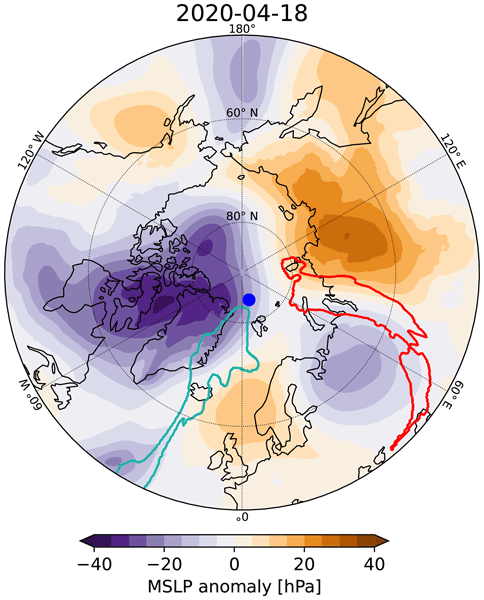
Atmospheric rivers (ARs) are narrow filaments of intense poleward water vapour transport. On rare occasions, they reach the Arctic, driving strong warming and melt. In April 2020, two ARs intruded into the central Arctic within one week, raising near-surface temperatures by up to 30°C and leading to extreme precipitation. Their distinct paths and thermodynamic evolution reveal diverse AR impacts on Arctic sea ice and precipitation extremes.
Robin S. Smith, Tarkan A. Bilge, Thomas J. Bracegirdle, Paul R. Holland, Till Kuhlbrodt, Charlotte Lang, Spencer Liddicoat, Tom Mitcham, Jane Mulcahy, Kaitlin A. Naughten, Andrew Orr, Julien Palmieri, Antony J. Payne, Steven Rumbold, Marc Stringer, Ranjini Swaminathan, Sarah Taylor, Jeremy Walton, and Colin Jones
Earth Syst. Dynam., 17, 475–493, https://doi.org/10.5194/esd-17-475-2026, https://doi.org/10.5194/esd-17-475-2026, 2026
Short summary
Short summary
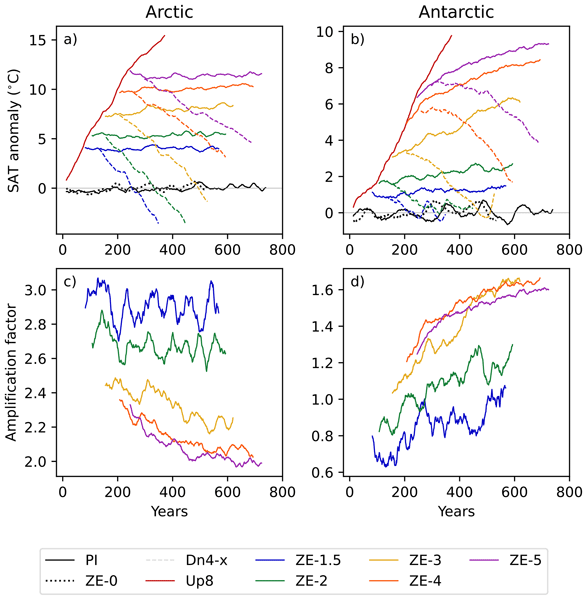
There is a dangerous amount of uncertainty in our predictions of climate change in polar regions because some of feedbacks that might lead to changes that are too rapid for us to adapt to, or that cannot be reversed. We have run a set of simulations with a state-of-the-art Earth System Model that helps improve our understanding of how climate in these regions might change. Some of the aspects we investigate are reversible but many are not, especially those affecting ice sheets and sea level.
William J. Dow, Amanda C. Maycock, Andrew N. Ross, Ryan S. Williams, and Thomas J. Bracegirdle
EGUsphere, https://doi.org/10.5194/egusphere-2026-1179, https://doi.org/10.5194/egusphere-2026-1179, 2026
Short summary
Short summary
This study aims to advance understanding of the atmospheric drivers of extreme warm days across the Antarctic Peninsula during summer. We find that these days are linked to a range of large-scale atmospheric circulation patterns. Using a statistical method, we grouped similar events and compared their wind, temperature and pressure features, showing clear differences spatially and temporally. Understanding these dynamics improves understanding of the processes that drive these extreme events.
Peter W. Thorne, John M. Nicklas, John J. Kennedy, Bruce Calvert, Baylor Fox-Kemper, Mark T. Richardson, Adrian Simmons, Ed Hawkins, Robert Rhode, Kathryn Cowtan, Nerilie J. Abram, Axel Andersson, Simon Noone, Phillipe Marbaix, Nathan Lenssen, Dirk Olonscheck, Tristram Walsh, Stephen Outten, Ingo Bethke, Bjorn H. Samset, Chris Smith, Anna Pirani, Jan Fuglestvedt, Lavanya Rajamani, Richard A. Betts, Elizabeth C. Kent, Blair Trewin, Colin Morice, Tim Osborn, Samantha N. Burgess, Oliver Geden, Andrew Parnell, Piers M. Forster, Chris Hewitt, Zeke Hausfather, Valerie Masson-Delmotte, Jochem Marotzke, Nathan Gillett, Sonia I. Seneviratne, Gavin A. Schmidt, Duo Chan, Stefan Brönnimann, Andy Reisinger, Matthew Menne, Maisa Rojas Corradi, Christopher Kadow, Peter Huybers, David B. Stephenson, Emily Wallis, Joeri Rogelj, Andrew Schurer, Karen McKinnon, Panmao Zhai, Fatima Driouech, Wilfran Moufouma Okia, Saeed Vazifehkhah, Sophie Szopa, Christopher J. Merchant, Shoji Hirahara, Masayoshi Ishii, Francois A. Engelbrecht, Qingxiang Li, June-Yi Lee, Alex J. Cannon, Christophe Cassou, Karina von Schuckmann, Amir H. Delju, and Ellie Murtagh
Earth Syst. Sci. Data Discuss., https://doi.org/10.5194/essd-2025-825, https://doi.org/10.5194/essd-2025-825, 2026
Preprint under review for ESSD
Short summary
Short summary
We reassess the basis for determining the present level of long-term global warming. Unbiased estimates of both realised warming and anthropogenic warming are possible that approximate a 20-year retrospective mean. Our resulting estimates of 1.40 [1.23–1.58] °C (realised) and 1.34 [1.18–1.50] °C (anthropogenic) as at end of 2024 highlight the urgency of immediate, far-reaching and sustained climate mitigation actions if we are to meet the long term temperature goal of the Paris Agreement.
Colin P. Morice, David I. Berry, Richard C. Cornes, Kathryn Cowtan, Thomas Cropper, Ed Hawkins, John J. Kennedy, Timothy J. Osborn, Nick A. Rayner, Beatriz Recinos Rivas, Andrew P. Schurer, Michael Taylor, Praveen R. Teleti, Emily J. Wallis, Jonathan Winn, and Elizabeth C. Kent
Earth Syst. Sci. Data, 17, 7079–7100, https://doi.org/10.5194/essd-17-7079-2025, https://doi.org/10.5194/essd-17-7079-2025, 2025
Short summary
Short summary
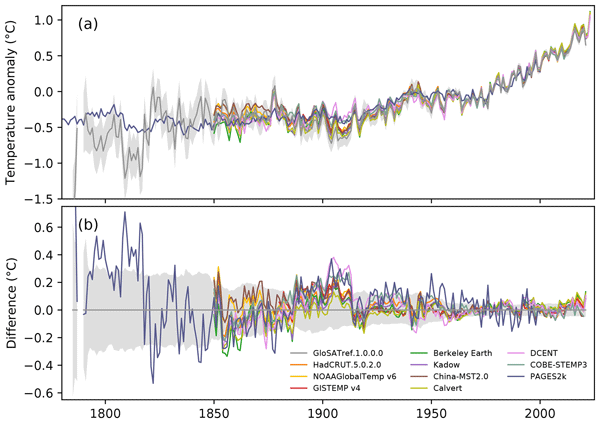
We present a new data set of global gridded surface air temperature change extending back to the 1780s. This is achieved using marine air temperature observations with newly available estimates of diurnal-heating biases together with an updated land station database that includes bias adjustments for early thermometer enclosures. These developments allow the data set to extend further into the past than current data sets that use sea surface temperature rather than marine air temperature data.
Valentin Wiener, Étienne Vignon, Thomas Caton Harrison, Christophe Genthon, Felipe Toledo, Guylaine Canut-Rocafort, Yann Meurdesoif, and Alexis Berne
Weather Clim. Dynam., 6, 1605–1627, https://doi.org/10.5194/wcd-6-1605-2025, https://doi.org/10.5194/wcd-6-1605-2025, 2025
Short summary
Short summary
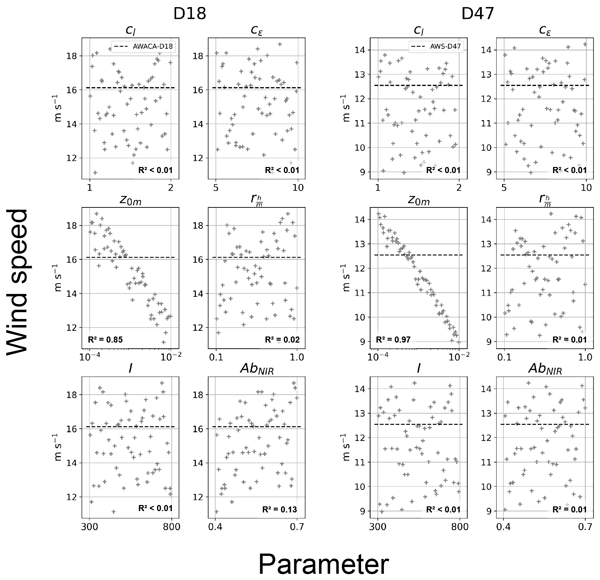
Katabatic winds are a key feature of the climate of Antarctica, but substantial biases remain in their representation in atmospheric models. This study investigates a katabatic wind event in an atmospheric circulation model using in-situ observations. The framework allows to disentangle which part of the bias is due to horizontal resolution, to parameter calibration and to structural deficiencies in the model. We underline in particular the need to refine the physics of the model snow cover.
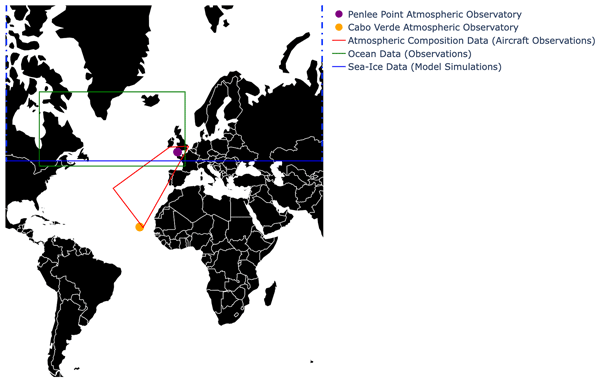
Alex T. Archibald, Bablu Sinha, Maria R. Russo, Emily Matthews, Freya A. Squires, N. Luke Abraham, Stephane J.-B. Bauguitte, Thomas J. Bannan, Thomas G. Bell, David Berry, Lucy J. Carpenter, Hugh Coe, Andrew Coward, Peter Edwards, Daniel Feltham, Dwayne Heard, Jim Hopkins, James Keeble, Elizabeth C. Kent, Brian A. King, Isobel R. Lawrence, James Lee, Claire R. Macintosh, Alex Megann, Bengamin I. Moat, Katie Read, Chris Reed, Malcolm J. Roberts, Reinhard Schiemann, David Schroeder, Timothy J. Smyth, Loren Temple, Navaneeth Thamban, Lisa Whalley, Simon Williams, Huihui Wu, and Mingxi Yang
Earth Syst. Sci. Data, 17, 135–164, https://doi.org/10.5194/essd-17-135-2025, https://doi.org/10.5194/essd-17-135-2025, 2025
Short summary
Short summary
Here, we present an overview of the data generated as part of the North Atlantic Climate System Integrated Study (ACSIS) programme that are available through dedicated repositories at the Centre for Environmental Data Analysis (CEDA; www.ceda.ac.uk) and the British Oceanographic Data Centre (BODC; bodc.ac.uk). The datasets described here cover the North Atlantic Ocean, the atmosphere above (it including its composition), and Arctic sea ice.
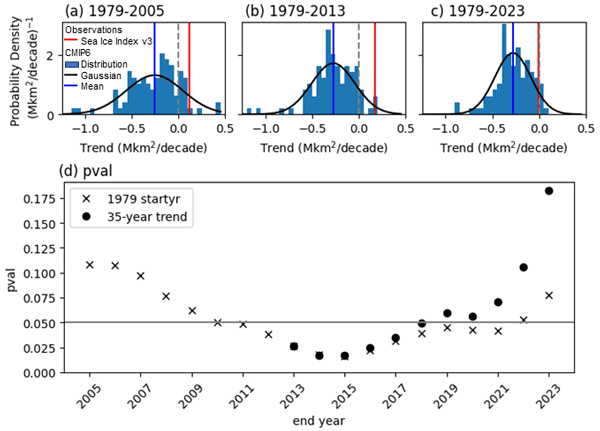
Caroline R. Holmes, Thomas J. Bracegirdle, Paul R. Holland, Julienne Stroeve, and Jeremy Wilkinson
The Cryosphere, 18, 5641–5652, https://doi.org/10.5194/tc-18-5641-2024, https://doi.org/10.5194/tc-18-5641-2024, 2024
Short summary
Short summary
Until recently, satellite data showed an increase in Antarctic sea ice area since 1979, but climate models simulated a decrease over this period. This mismatch was one reason for low confidence in model projections of 21st-century sea ice loss. We show that following low Antarctic sea ice in 2022 and 2023, we can no longer conclude that modelled and observed trends differ. However, differences in the manner of the decline mean that model sea ice projections should still be viewed with caution.

Colin G. Jones, Fanny Adloff, Ben B. B. Booth, Peter M. Cox, Veronika Eyring, Pierre Friedlingstein, Katja Frieler, Helene T. Hewitt, Hazel A. Jeffery, Sylvie Joussaume, Torben Koenigk, Bryan N. Lawrence, Eleanor O'Rourke, Malcolm J. Roberts, Benjamin M. Sanderson, Roland Séférian, Samuel Somot, Pier Luigi Vidale, Detlef van Vuuren, Mario Acosta, Mats Bentsen, Raffaele Bernardello, Richard Betts, Ed Blockley, Julien Boé, Tom Bracegirdle, Pascale Braconnot, Victor Brovkin, Carlo Buontempo, Francisco Doblas-Reyes, Markus Donat, Italo Epicoco, Pete Falloon, Sandro Fiore, Thomas Frölicher, Neven S. Fučkar, Matthew J. Gidden, Helge F. Goessling, Rune Grand Graversen, Silvio Gualdi, José M. Gutiérrez, Tatiana Ilyina, Daniela Jacob, Chris D. Jones, Martin Juckes, Elizabeth Kendon, Erik Kjellström, Reto Knutti, Jason Lowe, Matthew Mizielinski, Paola Nassisi, Michael Obersteiner, Pierre Regnier, Romain Roehrig, David Salas y Mélia, Carl-Friedrich Schleussner, Michael Schulz, Enrico Scoccimarro, Laurent Terray, Hannes Thiemann, Richard A. Wood, Shuting Yang, and Sönke Zaehle
Earth Syst. Dynam., 15, 1319–1351, https://doi.org/10.5194/esd-15-1319-2024, https://doi.org/10.5194/esd-15-1319-2024, 2024
Short summary
Short summary
We propose a number of priority areas for the international climate research community to address over the coming decade. Advances in these areas will both increase our understanding of past and future Earth system change, including the societal and environmental impacts of this change, and deliver significantly improved scientific support to international climate policy, such as future IPCC assessments and the UNFCCC Global Stocktake.
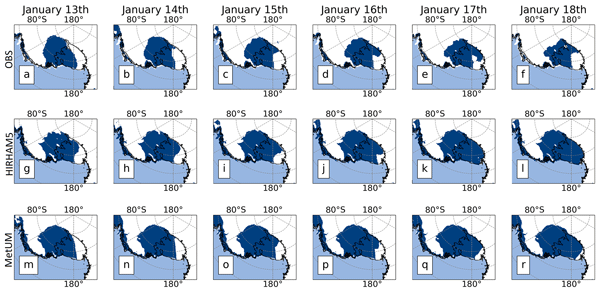
Nicolaj Hansen, Andrew Orr, Xun Zou, Fredrik Boberg, Thomas J. Bracegirdle, Ella Gilbert, Peter L. Langen, Matthew A. Lazzara, Ruth Mottram, Tony Phillips, Ruth Price, Sebastian B. Simonsen, and Stuart Webster
The Cryosphere, 18, 2897–2916, https://doi.org/10.5194/tc-18-2897-2024, https://doi.org/10.5194/tc-18-2897-2024, 2024
Short summary
Short summary
We investigated a melt event over the Ross Ice Shelf. We use regional climate models and a firn model to simulate the melt and compare the results with satellite data. We find that the firn model aligned well with observed melt days in certain parts of the ice shelf. The firn model had challenges accurately simulating the melt extent in the western sector. We identified potential reasons for these discrepancies, pointing to limitations in the models related to representing the cloud properties.
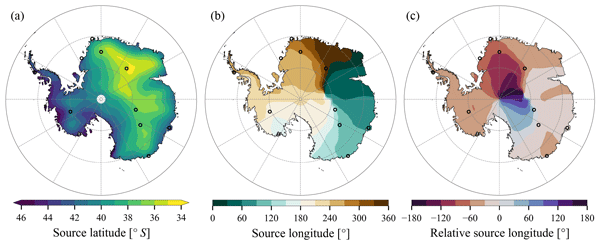
Qinggang Gao, Louise C. Sime, Alison J. McLaren, Thomas J. Bracegirdle, Emilie Capron, Rachael H. Rhodes, Hans Christian Steen-Larsen, Xiaoxu Shi, and Martin Werner
The Cryosphere, 18, 683–703, https://doi.org/10.5194/tc-18-683-2024, https://doi.org/10.5194/tc-18-683-2024, 2024
Short summary
Short summary
Antarctic precipitation is a crucial component of the climate system. Its spatio-temporal variability impacts sea level changes and the interpretation of water isotope measurements in ice cores. To better understand its climatic drivers, we developed water tracers in an atmospheric model to identify moisture source conditions from which precipitation originates. We find that mid-latitude surface winds exert an important control on moisture availability for Antarctic precipitation.
Paul R. Holland, Gemma K. O'Connor, Thomas J. Bracegirdle, Pierre Dutrieux, Kaitlin A. Naughten, Eric J. Steig, David P. Schneider, Adrian Jenkins, and James A. Smith
The Cryosphere, 16, 5085–5105, https://doi.org/10.5194/tc-16-5085-2022, https://doi.org/10.5194/tc-16-5085-2022, 2022
Short summary
Short summary
The Antarctic Ice Sheet is losing ice, causing sea-level rise. However, it is not known whether human-induced climate change has contributed to this ice loss. In this study, we use evidence from climate models and palaeoclimate measurements (e.g. ice cores) to suggest that the ice loss was triggered by natural climate variations but is now sustained by human-forced climate change. This implies that future greenhouse-gas emissions may influence sea-level rise from Antarctica.
Thomas Caton Harrison, Stavroula Biri, Thomas J. Bracegirdle, John C. King, Elizabeth C. Kent, Étienne Vignon, and John Turner
Weather Clim. Dynam., 3, 1415–1437, https://doi.org/10.5194/wcd-3-1415-2022, https://doi.org/10.5194/wcd-3-1415-2022, 2022
Short summary
Short summary
Easterly winds encircle Antarctica, impacting sea ice and helping drive ocean currents which shield ice shelves from warmer waters. Reanalysis datasets give us our most complete picture of how these winds behave. In this paper we use satellite data, surface measurements and weather balloons to test how realistic recent reanalysis estimates are. The winds are generally accurate, especially in the most recent of the datasets, but important short-term variations are often misrepresented.
Cited articles
Amante, C. and Eakins, B.: ETOPO1 1 Arc-Minute Global Relief Model: Procedures, Data Sources and Analysis, NOAA Technical Memorandum NESDIS NGDC-24, NOAA National Geophysical Data Center [technical memorandum], https://doi.org/10.7289/V5C8276M, 2009.
Baring-Gould, I., Robichaud, R., and McLain, K.: Analysis of the Use of Wind Energy to Supplement the Power Needs at McMurdo Station and Amundsen-Scott South Pole Station, Antarctica, Tech. rep., National Renewable Energy Lab. (NREL), Golden, CO, US, https://doi.org/10.2172/15016224, 2005. a
Bintanja, R., Severijns, C., Haarsma, R., and Hazeleger, W.: The future of Antarctica's surface winds simulated by a high-resolution global climate model: 1. Model description and validation, J. Geophys. Res.-Atmos., 119, 7136–7159, https://doi.org/10.1002/2013JD020847, 2014. a
Bracegirdle, T. J., Connolley, W. M., and Turner, J.: Antarctic climate change over the twenty first century, J. Geophys. Res.-Atmos., 113, https://doi.org/10.1029/2007JD008933, 2008. a
Bracegirdle, T. J., Hyder, P., and Holmes, C. R.: CMIP5 diversity in southern westerly jet projections related to historical sea ice area: strong link to strengthening and weak link to shift, J. Climate, 31, 195–211, https://doi.org/10.1175/jcli-d-17-0320.1, 2018. a, b
Bromwich, D. H.: Satellite analyses of Antarctic katabatic wind behavior, B. Am. Meteorol. Soc., 70, 738–749, https://doi.org/10.1175/1520-0477(1989)070<0738:SAOAKW>2.0.CO;2, 1989. a
Bromwich, D. H., Carrasco, J. F., Liu, Z., and Tzeng, R.-Y.: Hemispheric atmospheric variations and oceanographic impacts associated with katabatic surges across the Ross ice shelf, Antarctica, J. Geophys. Res.-Atmos., 98, 13045–13062, https://doi.org/10.1029/93JD00562, 1993. a
Caton Harrison, T., Biri, S., Bracegirdle, T. J., King, J. C., Kent, E. C., Vignon, É., and Turner, J.: Reanalysis representation of low-level winds in the Antarctic near-coastal region, Weather Clim. Dynam., 3, 1415–1437, https://doi.org/10.5194/wcd-3-1415-2022, 2022. a, b, c, d
Chiang, J. C. H., Tokos, K. S., Lee, S.-Y., and Matsumoto, K.: Contrasting impacts of the south Pacific split jet and the southern annular mode modulation on Southern Ocean circulation and biogeochemistry, Paleoceanogr. Paleoclimatol., 33, 2–20, https://doi.org/10.1002/2017PA003229, 2018. a
Compo, G. P., Whitaker, J. S., Sardeshmukh, P. D., Matsui, N., Allan, R. J., Yin, X., Gleason, B. E., Vose, R. S., Rutledge, G., Bessemoulin, P., Brönnimann, S., Brunet, M., Crouthamel, R. I., Grant, A. N., Groisman, P. Y., Jones, P. D., Kruk, M. C., Kruger, A. C., Marshall, G. J., Maugeri, M., Mok, H. Y., Nordli, O., Ross, T. F., Trigo, R. M., Wang, X. L., Woodruff, S. D., and Worley, S. J.: The twentieth century reanalysis project, Q. J. Roy. Meteor. Soc., 137, 1–28, https://doi.org/10.1002/qj.776, 2011. a
Davrinche, C., Orsi, A., Agosta, C., Amory, C., and Kittel, C.: Understanding the drivers of near-surface winds in Adélie Land, East Antarctica, The Cryosphere, 18, 2239–2256, https://doi.org/10.5194/tc-18-2239-2024, 2024. a, b
de Brito Neto, F. A., Mendes, D., and Spyrides, M. H. C.: Analysis of extreme wind events in the Weddell Sea region (Antarctica) at Belgrano II Station, J. S. Am. Earth Sci., 116, 103804, https://doi.org/10.1016/j.jsames.2022.103804, 2022. a
Eyring, V., Bony, S., Meehl, G. A., Senior, C. A., Stevens, B., Stouffer, R. J., and Taylor, K. E.: Overview of the Coupled Model Intercomparison Project Phase 6 (CMIP6) experimental design and organization, Geosci. Model Dev., 9, 1937–1958, https://doi.org/10.5194/gmd-9-1937-2016, 2016. a
GMAO: Global Modeling and Assimilation Office, inst3_3d_asm_Cp: MERRA-2 3D IAU State, Meteorology Instantaneous 3-hourly (p-coord, 0.625x0.5L42), version 5.12.4, Goddard Space Flight Center Distributed Active Archive Center (GSFC DAAC) [data set], Greenbelt, MD, USA, https://doi.org/10.5067/3Z173KIE2TPD, 2015. a, b
Goyal, R., Jucker, M., Sen Gupta, A., and England, M. H.: Generation of the Amundsen Sea low by Antarctic orography, Geophys. Res. Lett., 48, e2020GL091487, https://doi.org/10.1029/2020GL091487, 2021a. a
Goyal, R., Jucker, M., Sen Gupta, A., Hendon, H. H., and England, M. H.: Zonal Wave 3 pattern in the Southern Hemisphere generated by tropical convection, Nat. Geosci., 14, 732–738, https://doi.org/10.1038/s41561-021-00811-3, 2021b. a
Goyal, R., Sen Gupta, A., Jucker, M., and England, M. H.: Historical and projected changes in the Southern Hemisphere surface westerlies, Geophys. Res. Lett., 48, https://doi.org/10.1029/2020GL090849, 2021c. a
Goyal, R., Jucker, M., Gupta, A. S., and England, M. H.: A New Zonal Wave-3 Index for the Southern Hemisphere, J. Climate, 35, 5137–5149, https://doi.org/10.1175/JCLI-D-21-0927.1, 2022. a
Guest, P. S.: Inside katabatic winds over the Terra Nova Bay Polynya: 1. Atmospheric jet and surface conditions, J. Geophys. Res.-Atmos., 126, e2021JD034902, https://doi.org/10.1029/2021JD034902, 2021. a
Hazel, J. E. and Stewart, A. L.: Are the near-Antarctic easterly winds weakening in response to enhancement of the southern annular mode?, J. Climate, 32, 1895–1918, https://doi.org/10.1175/JCLI-D-18-0402.1, 2019. a
Hersbach, H., Bell, B., Berrisford, P., Hirahara, S., Horányi, A., Muñoz-Sabater, J., Nicolas, J., Peubey, C., Radu, R., Schepers, D., Simmons, A., Soci, C., Abdalla, S., Abellan, X., Balsamo, G., Bechtold, P., Biavati, G., Bidlot, J., Bonavita, M., De Chiara, G., Dahlgren, P., Dee, D., Diamantakis, M., Dragani, R., Flemming, J., Forbes, R., Fuentes, M., Geer, A., Haimberger, L., Healy, S., Hogan, R. J., Hólm, E., Janisková, M., Keeley, S., Laloyaux, P., Lopez, P., Lupu, C., Radnoti, G., de Rosnay, P., Rozum, I., Vamborg, F., Villaume, S., and Thépaut, J.-N.: The ERA5 global reanalysis, Q. J. Roy. Meteor. Soc., 146, 1999–2049, https://doi.org/10.1002/qj.3803, 2020. a, b
Hersbach, H., Bell, B., Berrisford, P., Biavati, G., Horányi, A., Muñoz Sabater, J., Nicolas, J., Peubey, C., Radu, R., Rozum, I., Schepers, D., Simmons, A., Soci, C., Dee, D., and Thépaut, J.-N.: ERA5 monthly averaged data on single levels from 1940 to present, Copernicus Climate Change Service (C3S) Climate Data Store (CDS) [data set], https://doi.org/10.24381/cds.6860a573, 2023. a, b
JMA (Japan Meteorological Agency/Japan): JRA-55: Japanese 55-year Reanalysis, Daily 3-Hourly and 6-Hourly Data, updated monthly, Research Data Archive at the National Center for Atmospheric Research, Computational and Information Systems Laboratory [data set], https://doi.org/10.5065/D6HH6H41, 2013. a, b
JMA: (Japan Meteorological Agency/Japan): Japanese Reanalysis for Three Quarters of a Century (JRA-3Q), updated monthly, Research Data Archive at the National Center for Atmospheric Research, Computational and Information Systems Laboratory [data set], https://doi.org/10.5065/AVTZ-1H78, 2023. a, b
King, J. C.: Control of near-surface winds over an Antarctic ice shelf, J. Geophys. Res.-Atmos., 98, 12949–12953, https://doi.org/10.1029/92JD02425, 1993. a
Kodama, Y., Wendler, G., and Ishikawa, N.: The diurnal variation of the boundary layer in summer in Adelie Land, eastern Antarctica, J. Appl. Meteorol., 28, 16–24, https://doi.org/10.1175/1520-0450(1989)028<0016:TDVOTB>2.0.CO;2, 1989. a
Lachlan-Cope, T. A., Connolley, W. M., and Turner, J.: The role of the non-axisymmetric antarctic orography in forcing the observed pattern of variability of the Antarctic climate, Geophys. Res. Lett., 28, 4111–4114, https://doi.org/10.1029/2001GL013465, 2001. a
Lin, Y., Nakayama, Y., Liang, K., Huang, Y., Chen, D., and Yang, Q.: A dataset of the daily edge of each polynya in the Antarctic, Sci. Data, 11, https://doi.org/10.1038/s41597-024-03848-2, 2024. a
Mo, K. C.: Relationships between low-frequency variability in the Southern Hemisphere and sea surface temperature anomalies, J. Climate, 13, 3599–3610, https://doi.org/10.1175/1520-0442(2000)013<3599:RBLFVI>2.0.CO;2, 2000. a
Neme, J., England, M. H., and Mc C. Hogg, A.: Projected changes of surface winds over the Antarctic continental margin, Geophys. Res. Lett., 49, e2022GL098820, https://doi.org/10.1029/2022GL098820, 2022. a, b
Nigro, M. A. and Cassano, J. J.: Identification of surface wind patterns over the Ross Ice Shelf, Antarctica, using self-organizing maps, Mon. Weather Rev., 142, 2361–2378, https://doi.org/10.1175/MWR-D-13-00382.1, 2014. a
NOAA National Geophysical Data Center: ETOPO1 1 Arc-Minute Global Relief Model, NOAA National Centers for Environmental Information, https://www.ngdc.noaa.gov/mgg/global/global.html (last access: 20 February 2016), 2009.
Orr, A., Marshall, G. J., Hunt, J. C. R., Sommeria, J., Wang, C.-G., van Lipzig, N. P. M., Cresswell, D., and King, J. C.: Characteristics of summer airflow over the Antarctic Peninsula in response to recent strengthening of Westerly Circumpolar Winds, J. Atmos. Sci., 65, 1396–1413, https://doi.org/10.1175/2007JAS2498.1, 2008. a
Parish, T. R.: The influence of the Antarctic Peninsula on the wind field over the western Weddell Sea, J. Geophys. Res.-Oceans, 88, 2684–2692, https://doi.org/10.1029/JC088iC04p02684, 1983. a
Parish, T. R.: Surface winds over the Antarctic continent: a review, Rev. Geophys., 26, 169–180, https://doi.org/10.1029/RG026i001p00169, 1988. a
Parish, T. R. and Cassano, J. J.: The role of katabatic winds on the Antarctic surface wind regime, Mon. Weather Rev., 131, 317–333, https://doi.org/10.1175/1520-0493(2003)131<0317:TROKWO>2.0.CO;2, 2003. a
Parish, T. R., Pettré, P., and Wendler, G.: The influence of large-scale forcing on the katabatic wind regime at Adélie Land, Antarctica, Meteorl. Atmos. Phys., 51, 165–176, https://doi.org/10.1007/BF01030492, 1993. a
Parish, T. R., Cassano, J. J., and Seefeldt, M. W.: Characteristics of the Ross Ice Shelf air stream as depicted in Antarctic Mesoscale Prediction System simulations, J. Geophys. Res.-Atmos., 111, https://doi.org/10.1029/2005JD006185, 2006. a
Patterson, M., Bracegirdle, T., and Woollings, T.: Southern Hemisphere atmospheric blocking in CMIP5 and future changes in the Australia-New Zealand sector, Geophys. Res. Lett., 46, 9281–9290, https://doi.org/10.1029/2019GL083264, 2019. a
Raphael, M. N.: A zonal wave 3 index for the Southern Hemisphere, Geophys. Res. Lett., 31, https://doi.org/10.1029/2004GL020365, 2004. a
Rogers, J. C. and van Loon, H.: Spatial variability of sea level pressure and 500 mb height anomalies over the Southern Hemisphere, Mon. Weather Rev., 110, 1375–1392, https://doi.org/10.1175/1520-0493(1982)110<1375:SVOSLP>2.0.CO;2, 1982. a
Russell, J. L., Kamenkovich, I., Bitz, C., Ferrari, R., Gille, S. T., Goodman, P. J., Hallberg, R., Johnson, K., Khazmutdinova, K., Marinov, I., Mazloff, M., Riser, S., Sarmiento, J. L., Speer, K., Talley, L. D., and Wanninkhof, R.: Metrics for the evaluation of the Southern Ocean in coupled climate models and earth system models, J. Geophys. Res.-Oceans, 123, 3120–3143, https://doi.org/10.1002/2017JC013461, 2018. a
Sanz Rodrigo, J., Buchlin, J., van Beeck, J., Lenaerts, J. T. M., and van den Broeke, M. R.: Evaluation of the Antarctic surface wind climate from ERA reanalyses and RACM02/ANT simulations based on automatic weather stations, Clim. Dynam., 40, 353–376, https://doi.org/10.1007/s00382-012-1396-y, 2013. a
SCAR: Scientific Committee on Antarctic Research, https://scar.org/science/research-programmes/antclimnow/climate-indicators, last access: 26 August 2025. a
Schmidt, C., Morrison, A. K., and England, M. H.: Wind– and sea-ice–driven interannual variability of Antarctic bottom water formation, J. Geophys. Res.-Oceans, 128, e2023JC019774, https://doi.org/10.1029/2023JC019774, 2023. a, b
Singer, I. A.: Steadiness of the wind, J. Appl. Meteorol., 6, 1033–1038, 1967. a
Thompson, A. F., Stewart, A. L., Spence, P., and Heywood, K. J.: The Antarctic slope current in a changing climate, Rev. Geophys., 56, 741–770, https://doi.org/10.1029/2018RG000624, 2018. a
Turner, J., Hosking, J. S., Bracegirdle, T. J., Phillips, T., and Marshall, G. J.: Variability and trends in the Southern Hemisphere high latitude, quasi-stationary planetary waves, Int. J. Climatol., 37, 2325–2336, https://doi.org/10.1002/joc.4848, 2017. a
van den Broeke, M. R., van Lipzig, N. P. M., and van Meijgaard, E.: Momentum budget of the East Antarctic atmospheric boundary layer: results of a regional climate model, J. Atmos. Sci., 59, 3117–3129, https://doi.org/10.1175/1520-0469(2002)059<3117:MBOTEA>2.0.CO;2, 2002. a
van Wessem, J. M., Reijmer, C. H., van de Berg, W. J., van den Broeke, M. R., Cook, A. J., van Ulft, L. H., and van Meijgaard, E.: Temperature and wind climate of the Antarctic peninsula as simulated by a high-resolution regional atmospheric climate model, J. Climate, 28, 7306–7326, https://doi.org/10.1175/JCLI-D-15-0060.1, 2015. a
Vignon, É., Traullé, O., and Berne, A.: On the fine vertical structure of the low troposphere over the coastal margins of East Antarctica, Atmos. Chem. Phys., 19, 4659–4683, https://doi.org/10.5194/acp-19-4659-2019, 2019. a
Yu, L., Zhong, S., Xiao, E., Zhang, T., and Sun, B.: Near-surface wind variability in Prydz Bay and Amery Ice Shelf region, East Antarctica: a four-decade SOM analysis, Int. J. Climatol., 44, 5075–5089, https://doi.org/10.1002/joc.8624, 2024. a
Short summary
Winds around the Antarctic coast have global importance. With influences from competing drivers, their structure is complex so it is hard to understand how they will change in the future. We develop a simple measure that identifies key features in the coastal winds, including their northern extent. Using climate models, we analyse future projections of this boundary and find that it will shift polewards, shrinking the Antarctic coastal wind region.
Winds around the Antarctic coast have global importance. With influences from competing drivers,...


