
Articles | Volume 7, issue 2
https://doi.org/10.5194/wcd-7-567-2026
© Author(s) 2026. This work is distributed under
the Creative Commons Attribution 4.0 License.
the Creative Commons Attribution 4.0 License.
https://doi.org/10.5194/wcd-7-567-2026
© Author(s) 2026. This work is distributed under
the Creative Commons Attribution 4.0 License.
the Creative Commons Attribution 4.0 License.
Research article
| Highlight paper
| 
08 Apr 2026
Research article | Highlight paper |
| 08 Apr 2026
| 08 Apr 2026
Contrasting impact of different Mediterranean cyclones on the hydrological cycle and ocean heat content
Yonatan Givon
CORRESPONDING AUTHOR

Department of Earth and Planetary Sciences, Weizmann Institute of Science, Rehovot, Israel
Douglas Keller Jr.
Laboratoire de Météorologie Dynamique-IPSL, École Polytechnique, Institut Polytechnique de Paris, ENS, PSL Research University, Sorbonne Université, CNRS, Palaiseau, France
Philippe Drobinski
Laboratoire de Météorologie Dynamique-IPSL, École Polytechnique, Institut Polytechnique de Paris, ENS, PSL Research University, Sorbonne Université, CNRS, Palaiseau, France
Shira Raveh-Rubin
Department of Earth and Planetary Sciences, Weizmann Institute of Science, Rehovot, Israel
Related authors
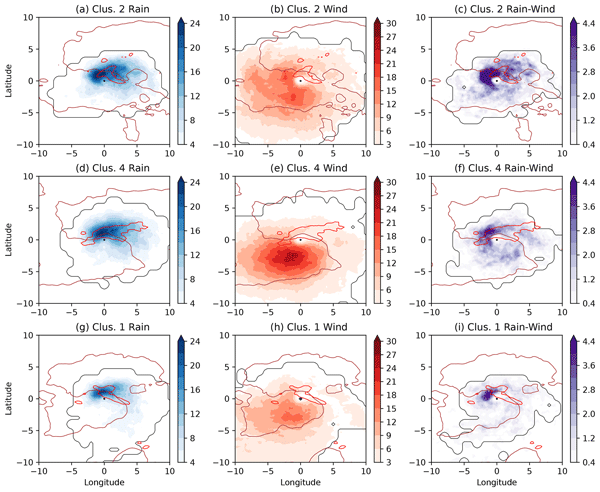
Raphaël Rousseau-Rizzi, Shira Raveh-Rubin, Jennifer L. Catto, Alice Portal, Yonatan Givon, and Olivia Martius
Weather Clim. Dynam., 5, 1079–1101, https://doi.org/10.5194/wcd-5-1079-2024, https://doi.org/10.5194/wcd-5-1079-2024, 2024
Short summary
Short summary
We identify situations when rain and wind, rain and wave, or heat and dust hazards co-occur within Mediterranean cyclones. These hazard combinations are associated with risk to infrastructure, risk of coastal flooding and risk of respiratory issues. The presence of Mediterranean cyclones is associated with increased probability of all three hazard combinations. We identify weather configurations and cyclone structures, particularly those associated with specific co-occurrence combinations.
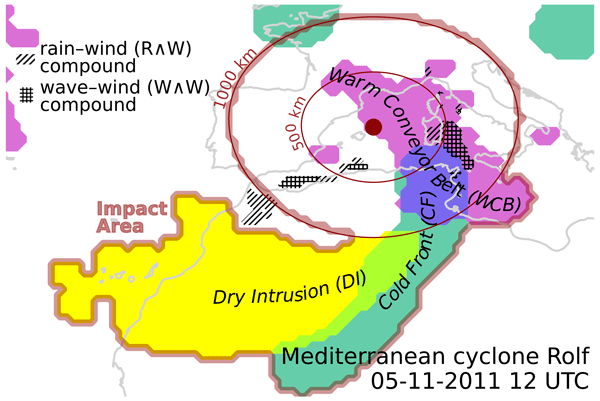
Alice Portal, Shira Raveh-Rubin, Jennifer L. Catto, Yonatan Givon, and Olivia Martius
Weather Clim. Dynam., 5, 1043–1060, https://doi.org/10.5194/wcd-5-1043-2024, https://doi.org/10.5194/wcd-5-1043-2024, 2024
Short summary
Short summary
Mediterranean cyclones are associated with extended rain, wind, and wave impacts. Although beneficial for regional water resources, their passage may induce extreme weather, which is especially impactful when multiple hazards combine together. Here we show how the passage of Mediterranean cyclones increases the likelihood of rain–wind and wave–wind compounding and how compound–cyclone statistics vary by region and season, depending on the presence of specific airflows around the cyclone.
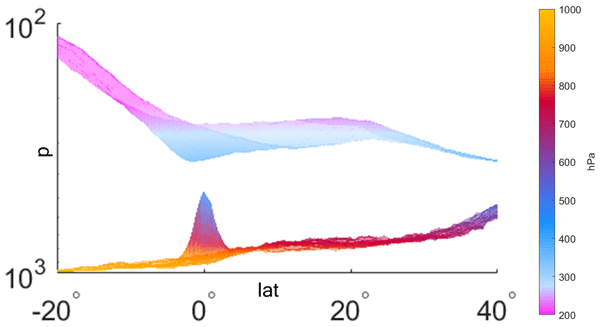
Yonatan Givon, Or Hess, Emmanouil Flaounas, Jennifer Louise Catto, Michael Sprenger, and Shira Raveh-Rubin
Weather Clim. Dynam., 5, 133–162, https://doi.org/10.5194/wcd-5-133-2024, https://doi.org/10.5194/wcd-5-133-2024, 2024
Short summary
Short summary
A novel classification of Mediterranean cyclones is presented, enabling a separation between storms driven by different atmospheric processes. The surface impact of each cyclone class differs greatly by precipitation, winds, and temperatures, providing an invaluable tool to study the climatology of different types of Mediterranean storms and enhancing the understanding of their predictability, on both weather and climate scales.
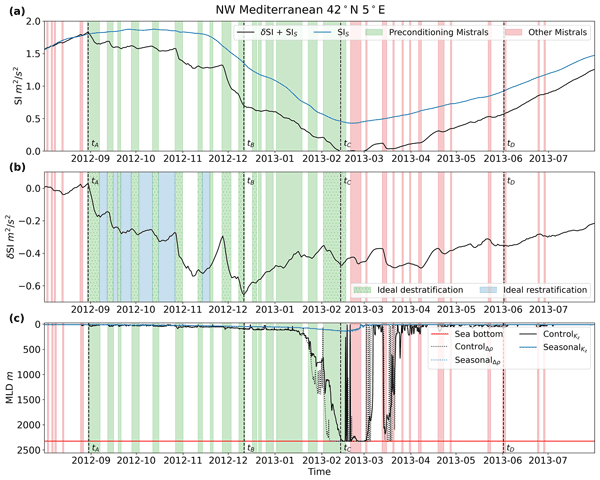
Douglas Keller Jr., Yonatan Givon, Romain Pennel, Shira Raveh-Rubin, and Philippe Drobinski
Ocean Sci., 18, 483–510, https://doi.org/10.5194/os-18-483-2022, https://doi.org/10.5194/os-18-483-2022, 2022
Short summary
Short summary
The mistral winds are believed to be the primary source of cooling of the Gulf of Lion, leading to deep convection in the region, a process that mixes the ocean column from the seafloor to the sea surface. However, we have found that seasonal atmospheric changes also significantly cool the Gulf of Lion waters to cause deep convection, rather than mistral winds being the sole source, contributing roughly two-thirds of the required cooling, with the mistral winds contributing the final third.
Tali Sarit Gens, Leehi Magaritz-Ronen, and Shira Raveh-Rubin
Weather Clim. Dynam., 7, 959–977, https://doi.org/10.5194/wcd-7-959-2026, https://doi.org/10.5194/wcd-7-959-2026, 2026
Short summary
Short summary
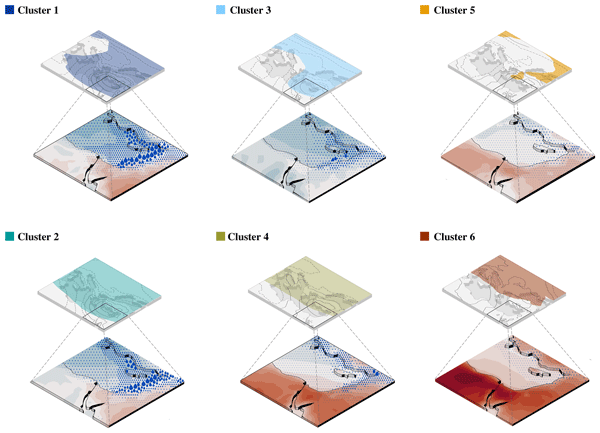
Cyclones significantly impact daily life in the Eastern Mediterranean. We classify these cyclones using a novel machine learning tool based on their upper-level state of the atmosphere, which identifies six distinct patterns. The patterns directly link to cyclone development and surface impacts, including rainfall and temperature variability and extremes. The findings reveal emerging opposing trends that may indicate future changes in the region's climate towards warmer and drier cyclones.
Antonio Donateo, Gianluca Pappaccogli, Federico Scoto, Maurizio Busetto, Francesca L. Lovisco, Natalie Brett, Douglas Keller, Brice Barret, Elsa Dieudonné, Roman Pohorsky, Andrea Baccarini, Slimane Bekki, Jean-Christophe Raut, Julia Schmale, Kathy S. Law, Steve R. Arnold, Javier G. Fochesatto, William R. Simpson, and Stefano Decesari
Atmos. Chem. Phys., 25, 18129–18156, https://doi.org/10.5194/acp-25-18129-2025, https://doi.org/10.5194/acp-25-18129-2025, 2025
Short summary
Short summary
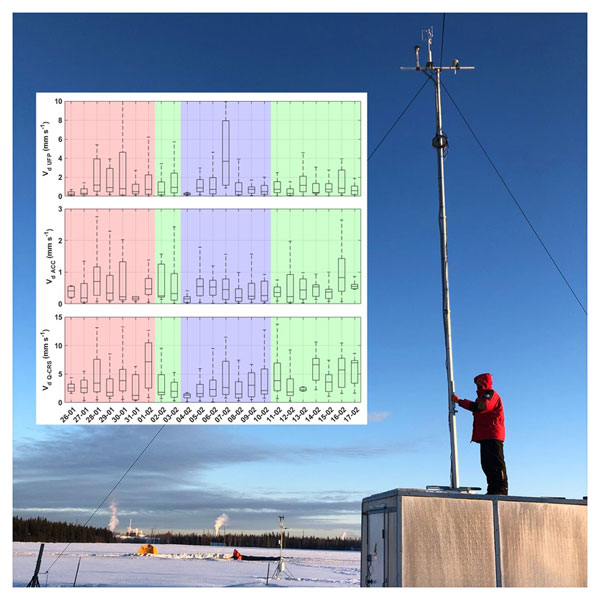
A study in Fairbanks, Alaska, measured winter aerosol fluxes on snow. Both emission and deposition occurred, with larger particles settling faster. Weather influenced dispersion and deposition, while wind-driven turbulence enhanced deposition despite stable conditions. Results show aerosol accumulation in snow impacts pollution and snowmelt. Findings help improve aerosol models and pollution studies in cold cities.
Lia Rapella, Tommaso Alberti, Davide Faranda, and Philippe Drobinski
Weather Clim. Dynam., 6, 1339–1363, https://doi.org/10.5194/wcd-6-1339-2025, https://doi.org/10.5194/wcd-6-1339-2025, 2025
Short summary
Short summary
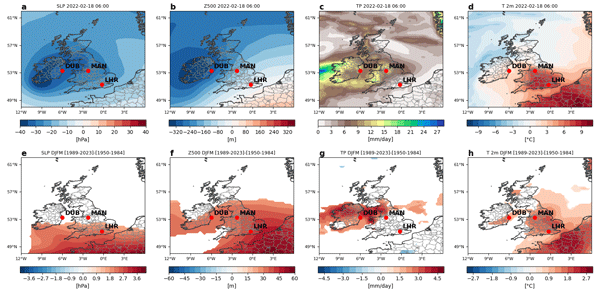
Extreme weather events pose increasing challenges for aviation, including flight disruptions and infrastructure damage. This study examines the influence of anthropogenic climate change on four recent major storms across Europe, the USA, and East Asia. Our research underscores the growing intensity of extreme storms, driven by human-induced climate change, stressing the need to adapt aviation strategies to an increasingly hazardous environment.
Joan Delort Ylla, Alexis Tantet, and Philippe Drobinski
Adv. Geosci., 65, 159–169, https://doi.org/10.5194/adgeo-65-159-2025, https://doi.org/10.5194/adgeo-65-159-2025, 2025
Short summary
Short summary
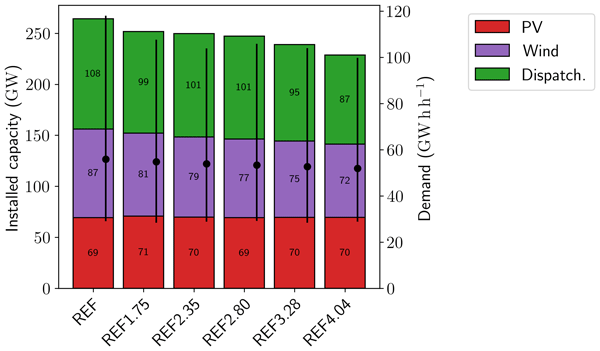
Understanding how the electricity generation sector reacts to climate change while large shares of wind and solar energies are introduced is of crucial importance to ensure a clean, secure and affordable electricity provision. We find that in a best case scenario, if we account only for climate change impacts on the wind and solar resource coupled to the demand, then climate change tends to have no adverse economic impacts, while it becomes more interesting to invest in solar than wind energy.
Raphaël Rousseau-Rizzi, Shira Raveh-Rubin, Jennifer L. Catto, Alice Portal, Yonatan Givon, and Olivia Martius
Weather Clim. Dynam., 5, 1079–1101, https://doi.org/10.5194/wcd-5-1079-2024, https://doi.org/10.5194/wcd-5-1079-2024, 2024
Short summary
Short summary
We identify situations when rain and wind, rain and wave, or heat and dust hazards co-occur within Mediterranean cyclones. These hazard combinations are associated with risk to infrastructure, risk of coastal flooding and risk of respiratory issues. The presence of Mediterranean cyclones is associated with increased probability of all three hazard combinations. We identify weather configurations and cyclone structures, particularly those associated with specific co-occurrence combinations.
Alice Portal, Shira Raveh-Rubin, Jennifer L. Catto, Yonatan Givon, and Olivia Martius
Weather Clim. Dynam., 5, 1043–1060, https://doi.org/10.5194/wcd-5-1043-2024, https://doi.org/10.5194/wcd-5-1043-2024, 2024
Short summary
Short summary
Mediterranean cyclones are associated with extended rain, wind, and wave impacts. Although beneficial for regional water resources, their passage may induce extreme weather, which is especially impactful when multiple hazards combine together. Here we show how the passage of Mediterranean cyclones increases the likelihood of rain–wind and wave–wind compounding and how compound–cyclone statistics vary by region and season, depending on the presence of specific airflows around the cyclone.
Yonatan Givon, Or Hess, Emmanouil Flaounas, Jennifer Louise Catto, Michael Sprenger, and Shira Raveh-Rubin
Weather Clim. Dynam., 5, 133–162, https://doi.org/10.5194/wcd-5-133-2024, https://doi.org/10.5194/wcd-5-133-2024, 2024
Short summary
Short summary
A novel classification of Mediterranean cyclones is presented, enabling a separation between storms driven by different atmospheric processes. The surface impact of each cyclone class differs greatly by precipitation, winds, and temperatures, providing an invaluable tool to study the climatology of different types of Mediterranean storms and enhancing the understanding of their predictability, on both weather and climate scales.
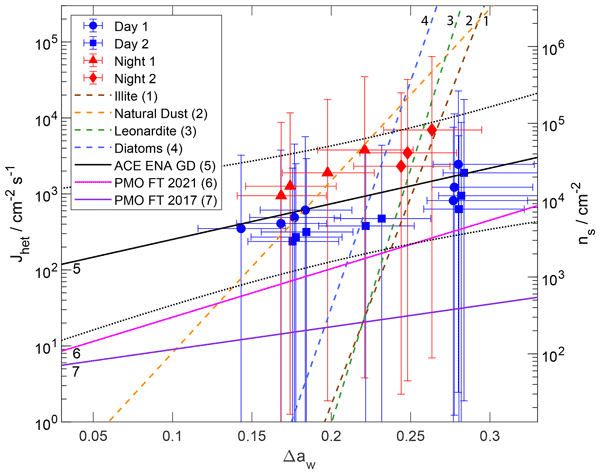
Daniel A. Knopf, Joseph C. Charnawskas, Peiwen Wang, Benny Wong, Jay M. Tomlin, Kevin A. Jankowski, Matthew Fraund, Daniel P. Veghte, Swarup China, Alexander Laskin, Ryan C. Moffet, Mary K. Gilles, Josephine Y. Aller, Matthew A. Marcus, Shira Raveh-Rubin, and Jian Wang
Atmos. Chem. Phys., 22, 5377–5398, https://doi.org/10.5194/acp-22-5377-2022, https://doi.org/10.5194/acp-22-5377-2022, 2022
Short summary
Short summary
Marine boundary layer aerosols collected in the remote region of the eastern North Atlantic induce immersion freezing and deposition ice nucleation under typical mixed-phase and cirrus cloud conditions. Corresponding ice nucleation parameterizations for model applications have been derived. Chemical imaging of ambient aerosol and ice-nucleating particles demonstrates that the latter is dominated by sea salt and organics while also representing a major particle type in the particle population.
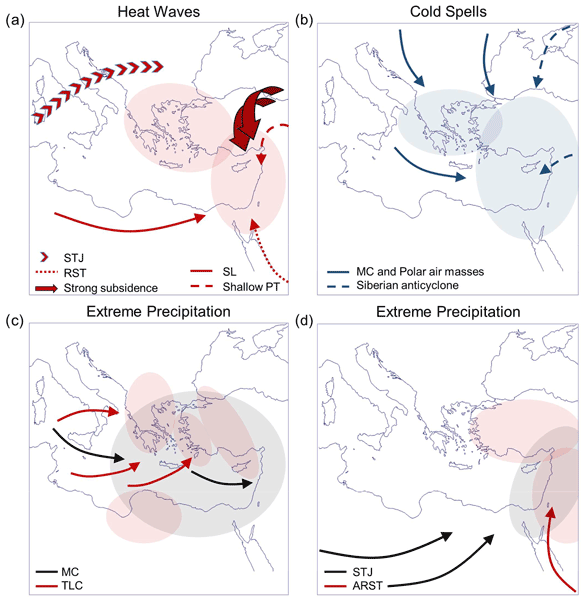
Assaf Hochman, Francesco Marra, Gabriele Messori, Joaquim G. Pinto, Shira Raveh-Rubin, Yizhak Yosef, and Georgios Zittis
Earth Syst. Dynam., 13, 749–777, https://doi.org/10.5194/esd-13-749-2022, https://doi.org/10.5194/esd-13-749-2022, 2022
Short summary
Short summary
Gaining a complete understanding of extreme weather, from its physical drivers to its impacts on society, is important in supporting future risk reduction and adaptation measures. Here, we provide a review of the available scientific literature, knowledge gaps and key open questions in the study of extreme weather events over the vulnerable eastern Mediterranean region.
Douglas Keller Jr., Yonatan Givon, Romain Pennel, Shira Raveh-Rubin, and Philippe Drobinski
Ocean Sci., 18, 483–510, https://doi.org/10.5194/os-18-483-2022, https://doi.org/10.5194/os-18-483-2022, 2022
Short summary
Short summary
The mistral winds are believed to be the primary source of cooling of the Gulf of Lion, leading to deep convection in the region, a process that mixes the ocean column from the seafloor to the sea surface. However, we have found that seasonal atmospheric changes also significantly cool the Gulf of Lion waters to cause deep convection, rather than mistral winds being the sole source, contributing roughly two-thirds of the required cooling, with the mistral winds contributing the final third.
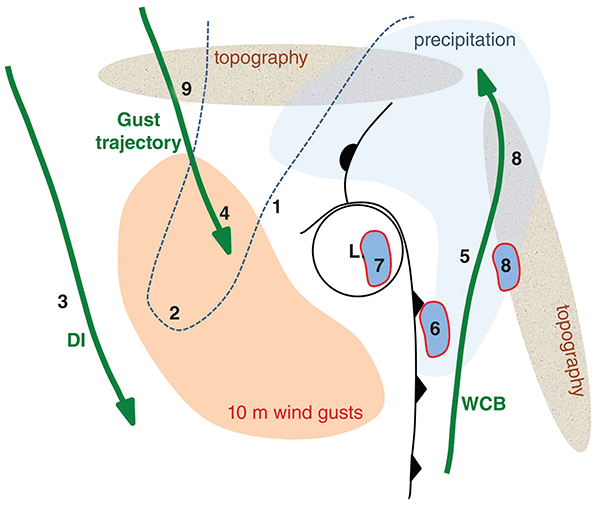
Emmanouil Flaounas, Silvio Davolio, Shira Raveh-Rubin, Florian Pantillon, Mario Marcello Miglietta, Miguel Angel Gaertner, Maria Hatzaki, Victor Homar, Samira Khodayar, Gerasimos Korres, Vassiliki Kotroni, Jonilda Kushta, Marco Reale, and Didier Ricard
Weather Clim. Dynam., 3, 173–208, https://doi.org/10.5194/wcd-3-173-2022, https://doi.org/10.5194/wcd-3-173-2022, 2022
Short summary
Short summary
This is a collective effort to describe the state of the art in Mediterranean cyclone dynamics, climatology, prediction (weather and climate scales) and impacts. More than that, the paper focuses on the future directions of research that would advance the broader field of Mediterranean cyclones as a whole. Thereby, we propose interdisciplinary cooperation and additional modelling and forecasting strategies, and we highlight the need for new impact-oriented approaches to climate prediction.
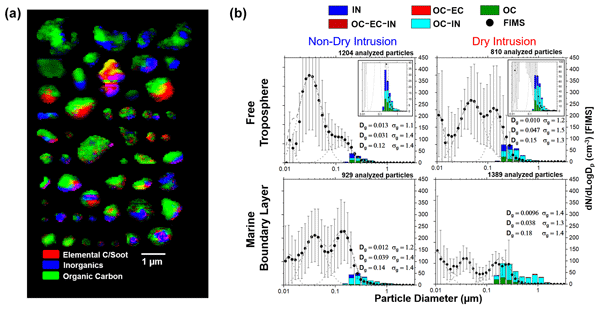
Jay M. Tomlin, Kevin A. Jankowski, Daniel P. Veghte, Swarup China, Peiwen Wang, Matthew Fraund, Johannes Weis, Guangjie Zheng, Yang Wang, Felipe Rivera-Adorno, Shira Raveh-Rubin, Daniel A. Knopf, Jian Wang, Mary K. Gilles, Ryan C. Moffet, and Alexander Laskin
Atmos. Chem. Phys., 21, 18123–18146, https://doi.org/10.5194/acp-21-18123-2021, https://doi.org/10.5194/acp-21-18123-2021, 2021
Short summary
Short summary
Analysis of individual atmospheric particles shows that aerosol transported from North America during meteorological dry intrusion episodes may have a substantial impact on the mixing state and particle-type population over the mid-Atlantic, as organic contribution and particle-type diversity are significantly enhanced during these periods. These observations need to be considered in current atmospheric models.
Cited articles
Aemisegger, F. and Papritz, L.: A Climatology of Strong Large-Scale Ocean Evaporation Events. Part I: Identification, Global Distribution, and Associated Climate Conditions, J. Climate, 31, 7287–7312, https://doi.org/10.1175/JCLI-D-17-0591.1, 2018.
André, J., D'Andrea, F., Drobinski, P., and Muller, C.: Regimes of precipitation change over Europe and the Mediterranean, J. Geophys. Res.-Atmos., 129, e2023JD040413, https://doi.org/10.1029/2023JD040413, 2024.
Berthou, S., Mailler, S., Drobinski, P., Arsouze, T., Bastin, S., Beranger, K., and Lebeaupin Brossier, C.: Lagged effects of the Mistral wind on heavy precipitation through ocean-atmosphere coupling in the region of Valencia (Spain), Clim. Dyn., 51, 969–983, https://doi.org/10.1007/s00382-016-3153-0, 2018.
Buzzi, A., Davolio, S., and Fantini, M.: Cyclogenesis in the lee of the Alps: a review of theories, B. Atmos. Sci. Technol., 1, 433–457, https://doi.org/10.1007/s42865-020-00021-6, 2020.
Cavicchia, L., von Storch, H., and Gualdi, S.: Mediterranean Tropical-Like Cyclones in Present and Future Climate, J. Climate, 27, 7493–7501, https://doi.org/10.1175/JCLI-D-14-00339.1, 2014.
Chericoni, M., Fosser, G., Flaounas, E., Gaetani, M., and Anav, A.: Unravelling drivers of the future Mediterranean precipitation paradox during cyclones, npj Clim. Atmos. Sci., 8, 260, https://doi.org/10.1038/s41612-025-01121-w, 2025.
de Vries, A. J.: A global climatological perspective on the importance of Rossby wave breaking and intense moisture transport for extreme precipitation events, Weather Clim. Dynam., 2, 129–161, https://doi.org/10.5194/wcd-2-129-2021, 2021.
Flamant, C.: Alpine lee cyclogenesis influence on air-sea heat exchanges and marine atmospheric boundary layer thermodynamics over the western Mediterranean during a Tramontane/Mistral event, J. Geophys. Res., 108, 8057, 10.1029/2001JC001040, 2003.
Flaounas, E., Raveh-Rubin, S., Wernli, H., Drobinski, P., and Bastin, S.: The dynamical structure of intense Mediterranean cyclones, Clim. Dyn., 44, 2411–2427, https://doi.org/10.1007/s00382-014-2330-2, 2015.
Flaounas, E., Di Luca, A., Drobinski, P., Mailler, S., Arsouze, T., Bastin, S., Beranger K., and Lebeaupin Brossier, C.: Cyclone contribution to the Mediterranean Sea water budget, Clim. Dyn., 46, 913–927, https://doi.org/10.1007/s00382-015-2622-1, 2016.
Flaounas, E., Fita, L., Lagouvardos, K., and Kotroni, V.: Heavy rainfall in Mediterranean cyclones, Part II. Water budget, precipitation efficiency and remote water sources, Clim. Dyn., 53, 2539–2555, https://doi.org/10.1007/s00382-019-04639-x, 2019.
Flaounas, E., Davolio, S., Raveh-Rubin, S., Pantillon, F., Miglietta, M. M., Gaertner, M. A., Hatzaki, M., Homar, V., Khodayar, S., Korres, G., Kotroni, V., Kushta, J., Reale, M., and Ricard, D.: Mediterranean cyclones: current knowledge and open questions on dynamics, prediction, climatology and impacts, Weather Clim. Dynam., 3, 173–208, https://doi.org/10.5194/wcd-3-173-2022, 2022.
Flaounas, E., Aragão, L., Bernini, L., Dafis, S., Doiteau, B., Flocas, H., Gray, S. L., Karwat, A., Kouroutzoglou, J., Lionello, P., Miglietta, M. M., Pantillon, F., Pasquero, C., Patlakas, P., Picornell, M. Á., Porcù, F., Priestley, M. D. K., Reale, M., Roberts, M. J., Saaroni, H., Sandler, D., Scoccimarro, E., Sprenger, M., and Ziv, B.: A composite approach to produce reference datasets for extratropical cyclone tracks: application to Mediterranean cyclones, Weather Clim. Dynam., 4, 639–661, https://doi.org/10.5194/wcd-4-639-2023, 2023.
Gaertner, M. A., Jacob, D., Gil, V., Domínguez, M., Padorno, E., Sánchez, E., and Castro, M.: Tropical cyclones over the Mediterranean Sea in climate change simulations, Geophys. Res. Lett., 34, L14711, https://doi.org/10.1029/2007GL029977, 2007.
Givon, Y.: Mediterranean cyclones: induced evaporation year 2019, TIB AV-Portal [video], https://doi.org/10.5446/72785, 2026.
Givon, Y., Keller Jr., D., Silverman, V., Pennel, R., Drobinski, P., and Raveh-Rubin, S.: Large-scale drivers of the mistral wind: link to Rossby wave life cycles and seasonal variability, Weather Clim. Dynam., 2, 609–630, https://doi.org/10.5194/wcd-2-609-2021, 2021.
Givon, Y., Hess, O., Flaounas, E., Catto, J. L., Sprenger, M., and Raveh-Rubin, S.: Process-based classification of Mediterranean cyclones using potential vorticity, Weather Clim. Dynam., 5, 133–162, https://doi.org/10.5194/wcd-5-133-2024, 2024a.
Givon, Y., Keller, D., Pennel, R., Drobinski, P., and Raveh-Rubin, S.: Decomposing the role of dry intrusions for ocean evaporation during mistral, Q. J. R. Meteorol. Soc., 150, 1791–1808, https://doi.org/10.1002/qj.4670, 2024b.
Hatzaki, M., Flaounas, E., Davolio, S., Pantillon, F., Patlakas, P., Raveh-Rubin, S., Hochman, A., Kushta, j., Khodayar, S., Dafis, S., and Liberato M. L. R.: MedCyclones: Working Together toward Understanding Mediterranean Cyclones, Bull. Amer. Meteor. Soc., 104, E480–E487, https://doi.org/10.1175/BAMS-D-22-0280.1, 2023.
Hersbach, H., Bell, B., Berrisford, P., Hirahara, S., Horányi, A., Muñoz-Sabater, J., Nicolas, J., Peubey, C., Radu, R., Schepers, D., Simmons, A., Soci, C., Abdalla, S., Abellan, X., Balsamo, G., Bechtold, P., Biavati, G., Bidlot, J., Bonavita, M., De Chiara, G., Dahlgren, P., Dee, D., Diamantakis, M., Dragani, R., Flemming, J., Forbes, R., Fuentes, M., Geer, A., Haimberger, L., Healy, S., Hogan, R., J., Hólm, E., Janisková, M., Keeley, S., Laloyaux, P., Lopez, P., Lupu, C., Radnoti, G., Rosnay, P., Rozum, I., Vamborg, F., Villaume, S., and Thépaut, L. N.: The ERA5 global reanalysis, Q. J. R. Meteorol. Soc., 146, 1999–2049, https://doi.org/10.1002/qj.3803, 2020.
Hersbach, H., Bell, B., Berrisford, P., Biavati, G., Horányi, A., Muñoz Sabater, J., Nicolas, J., Peubey, C., Radu, R., Rozum, I., Schepers, D., Simmons, A., Soci, C., Dee, D., and Thépaut, J.-N.: ERA5 hourly data on single levels from 1940 to present, Copernicus Climate Change Service (C3S) Climate Data Store (CDS) [data set], https://doi.org/10.24381/cds.adbb2d47, 2023.
Hochman, A., Alpert, P., Kunin, P., Rostkier-Edelstein, D., Harpaz, T., Saaroni, H., and Messori, G.: The dynamics of cyclones in the twentyfirst century: the Eastern Mediterranean as an example, Clim. Dyn., 54, 561–574, https://doi.org/10.1007/s00382-019-05017-3, 2020.
Ilotoviz, E., Ghate, V. P., and Raveh-Rubin, S.: The impact of slantwise descending dry intrusions on the marine boundary layer and air-sea interface over the ARM Eastern North Atlantic site, J. Geophys. Res.-Atmos., 126, e2020JD033879, https://doi.org/10.1029/2020JD033879, 2021.
Jangir, B., Mishra, A., K., and Strobach, E.: The interplay between medicanes and the Mediterranean Sea in the presence of sea surface temperature anomalies, Atmos. Res., 310, 107625, https://doi.org/10.1016/j.atmosres.2024.107625, 2024.
Keller Jr., D.: Fractal Attractor of the Deep Convection Cycle in the Northwest Mediterranean Sea, ESS Open Archive, 10.22541/essoar.174619871.10521682/v1, 2025.
Keller Jr., D., Givon, Y., Pennel, R., Raveh-Rubin, S., and Drobinski, P.: Untangling the mistral and seasonal atmospheric forcing driving deep convection in the Gulf of Lion: 2012–2013, Ocean Sci., 18, 483–510, https://doi.org/10.5194/os-18-483-2022, 2022.
Keller Jr., D., Givon, Y., Pennel, R., Raveh-Rubin, S., and Drobinski, P.: Untangling the mistral and seasonal atmospheric forcing driving deep convection in the Gulf of Lion: 1993–2013, J. Geophys. Res.-Oceans, 129, e2022JC019245, https://doi.org/10.1029/2022JC019245, 2024.
Khodayar, S., Kushta, J., Catto, J. L., Dafis, S., Davolio, S., Ferrarin, C., Flaounas, E., Groenemeijer P., Hatzaki, M., Hochman, A., Kotroni, V., Landa, J., Láng-Ritter, I., Lazoglou, G., Liberato, M. L. R., Miglietta, M. M., Papagiannaki, K., Patlakas, P., Stojanov, R., and Zittis, G.: Mediterranean cyclones in a changing climate: A review on their socio-economic impacts, Rev. Geophys., 63, e2024RG000853, https://doi.org/10.1029/2024RG000853, 2025.
Klaider, N. and Raveh-Rubin, S.: Extended influence of midlatitude cyclones on global cold extremes, Geophys. Res. Lett., 50, e2023GL104999, https://doi.org/10.1029/2023GL104999, 2023.
Lebeaupin Brossier, C., Bastin, S., Béranger, K., and Drobinski, P.: Regional mesoscale air–sea coupling impacts and extreme meteorological events role on the Mediterranean Sea water budget, Clim. Dyn. 44, 1029–1051, https://doi.org/10.1007/s00382-014-2252-z, 2015.
Lionello, P. and Giorgi, F.: Winter precipitation and cyclones in the Mediterranean region: future climate scenarios in a regional simulation, Adv. Geosci., 12, 153–158, https://doi.org/10.5194/adgeo-12-153-2007, 2007.
Lionello, P., Boldrin, U., and Giorgi, F.: Future changes in cyclone climatology over Europe as inferred from a regional climate simulation, Clim. Dyn., 30, 657–671, https://doi.org/10.1007/s00382-007-0315-0, 2008.
Miglietta, M. M., Flaounas, E., González-Alemán, J. J., Panegrossi, G., Gaertner, M. A., Pantillon, F., Pasquero, C, Schultz, D., M., D'Adderio, L., P., Dafis, S., Husson, R, Ricchi, A., Carrió, D. S., Davolio, S., Fita, L., Picornell, M., A., Pytharoulis I., Raveh-Rubin, S., Scoccimarro, E., Bernini, L., Cavicchia, L., Conte, D., Ferretti, R., Flocas, H., Gutiérrez-Fernández, J., Hatzaki, M., Santaner, V., H., Jansà, A., and Patlakas, P.: Defining medicanes: Bridging the knowledge gap between tropical and extratropical cyclones in the Mediterranean, B. Am. Meteorol. Soc., 106, E1955–E1971, https://doi.org/10.1175/BAMS-D-24-0289.1, 2025.
Nissen, K. M., Leckebusch, G. C., Pinto, J. G., and Ulbrich, U.: Mediterranean cyclones and windstorms in a changing climate, Reg. Environ. Change, 14, 1873–1890, https://doi.org/10.1007/s10113-012-0400-8, 2014.
Papritz, L., Pfahl, S., Sodemann, H., and Wernli, H.: A Climatology of Cold Air Outbreaks and Their Impact on Air–Sea Heat Fluxes in the High-Latitude South Pacific, J. Climate, 28, 342–364, https://doi.org/10.1175/JCLI-D-14-00482.1, 2015.
Portal, A., Raveh-Rubin, S., Catto, J. L., Givon, Y., and Martius, O.: Linking compound weather extremes to Mediterranean cyclones, fronts, and airstreams, Weather Clim. Dynam., 5, 1043–1060, https://doi.org/10.5194/wcd-5-1043-2024, 2024.
Portal, A., Angelidou, A., Rousseau-Rizzi, R., Raveh-Rubin, S., Givon, Y., Catto, J. L., Battaglioli, F., Taszarek, M., Flaounas, E., and Martius, O.: Convective Environments Within Mediterranean Cyclones, Atmos. Sci. Lett., 26, e1302, https://doi.org/10.1002/asl.1302, 2025.
Rai, D. and Raveh-Rubin, S.: Enhancement of Indian summer monsoon rainfall by cross-equatorial dry intrusions, npj Clim. Atmos. Sci., 6, 43, https://doi.org/10.1038/s41612-023-00374-7, 2023.
Raveh-Rubin, S.: Dry Intrusions: Lagrangian Climatology and Dynamical Impact on the Planetary Boundary Layer, J. Climate, 30, 6661–6682, https://doi.org/10.1175/JCLI-D-16-0782.1, 2017.
Raveh-Rubin, S. and Wernli, H.: Large-scale wind and precipitation extremes in the Mediterranean: a climatological analysis for 1979–2012, Q. J. Roy. Meteor. Soc., 141, 2404–2417, https://doi.org/10.1002/qj.2891, 2015.
Reale, M., Cabos Narvaez, W. D., Cavicchia, L., Conte, D., Coppola, E., Flaounas, E., Giorgi, F., Gualdi, S., Hochman, A., Li, L., Lionello, P., Podrascanin, Z., Salon, S., Sanchez-Gomez, E., Scoccimarro, E., Sein, D. V., and Somot, S.: Future projections of Mediterranean cyclone characteristics using the Med-CORDEX ensemble of coupled regional climate system models, Clim. Dyn., 58, 2501–2524, https://doi.org/10.1007/s00382-021-06018-x, 2022.
Reale, O., Feudale, L., and Turato, B.: Evaporative moisture sources during a sequence of floods in the Mediterranean region, Geophys. Res. Lett., 28, 2085–2088, https://doi.org/10.1029/2000GL012379, 2001.
Rieder, J. C., Aemisegger, F., Dente, E., and Armon, M.: Meteorological ingredients of heavy precipitation and subsequent lake-filling episodes in the northwestern Sahara, Hydrol. Earth Syst. Sci., 29, 1395–1427, https://doi.org/10.5194/hess-29-1395-2025, 2025.
Rousseau-Rizzi, R., Raveh-Rubin, S., Catto, J. L., Portal, A., Givon, Y., and Martius, O.: A storm-relative climatology of compound hazards in Mediterranean cyclones, Weather Clim. Dynam., 5, 1079–1101, https://doi.org/10.5194/wcd-5-1079-2024, 2024.
Ruiz, S., Gomis, D., Sotillo, M. G., and Josey, S. A.: Characterization of surface heat fluxes in the Mediterranean Sea from a 44-year high-resolution atmospheric data set, Global Planet. Change, 63, 258–274, https://doi.org/10.1016/j.gloplacha.2007.12.002, 2008.
Saaroni, H., Halfon, N., Ziv, B., Alpert, P., and Kutiel, H.: Links between the rainfall regime in Israel and location and intensity of Cyprus lows, Int. J. Climatol., 30, 1014–1025, https://doi.org/10.1002/joc.1912, 2010.
Scoccimarro, E., Borrelli, A., Sangelantoni, L., Cavicchia, L., Tibaldi, S., and Boccaletti, G.,: A cul-de-sac effect makes Emilia-Romagna more prone to floods in a changing climate, Sci. Rep., 15, 36823, https://doi.org/10.1038/s41598-025-24486-7, 2025.
Stathopoulos, C., Patlakas, P., Tsalis, C., and Kallos, G.: The Role of Sea Surface Temperature Forcing in the Life-Cycle of Mediterranean Cyclones, Remote Sens., 12, 825, https://doi.org/10.3390/rs12050825, 2020.
Storto, A. and Masina, S.: C-GLORSv5: an improved multipurpose global ocean eddy-permitting physical reanalysis, Earth Syst. Sci. Data, 8, 679–696, https://doi.org/10.5194/essd-8-679-2016, 2016.
Strobach, E., Mishra, A. K., Jangir, B., Ziv, B., Sun, R., Siegelman, L., Meroni, A. N., and Klein, P.: Intensification of a rain system imparted by Mediterranean mesoscale eddies, Sci. Rep., 14, 26810, https://doi.org/10.1038/s41598-024-76767-2, 2024.
Thurnherr, I., Hartmuth, K., Jansing, L., Gehring, J., Boettcher, M., Gorodetskaya, I., Werner, M., Wernli, H., and Aemisegger, F.: The role of air–sea fluxes for the water vapour isotope signals in the cold and warm sectors of extratropical cyclones over the Southern Ocean, Weather Clim. Dynam., 2, 331–357, https://doi.org/10.5194/wcd-2-331-2021, 2021.
Tootoonchi, R., Bordoni, S., and D'Agostino, R.: Revisiting the moisture budget of the Mediterranean region in the ERA5 reanalysis, Weather Clim. Dynam., 6, 245–263, https://doi.org/10.5194/wcd-6-245-2025, 2025.
Yu, L.: Global Variations in Oceanic Evaporation (1958–2005): The Role of the Changing Wind Speed, J. Climate, 20, 5376–5390, https://doi.org/10.1175/2007JCLI1714.1, 2007.
Zappa, G., Hawcroft, M. K., Shaffrey, L., Black, E., and Brayshaw, D. J.: Extratropical cyclones and the projected decline of winter Mediterranean precipitation in the CMIP5 models, Clim. Dyn., 45, 1727–1738, https://doi.org/10.1007/s00382-014-2426-8, 2015.
Zittis, G., Hadjinicolaou, P., Klangidou, M., Proestos, Y., and Lelieveld, J.: A multi-model, multi-scenario, and multi-domain analysis of regional climate projections for the Mediterranean, Reg. Environ. Change 19, 2621–2635, https://doi.org/10.1007/s10113-019-01565-w, 2019.
Zittis, G., Almazroui, M., Alpert, P., Ciais, P., Cramer, W., Dahdal, Y., Fnais, M., Francis, D., Hadjinicolaou, P., Howari, F., Jrrar, A., Kaskaoutis, D. G., Kulmala, M., Lazoglou, G., Mihalopoulos, N., Lin, X., Rudich, Y., Sciare, J., Stenchikov, G., Xoplaki, E., and Lelieveld, J.: Climate change and weather extremes in the Eastern Mediterranean and Middle East, Rev. Geophys., 60, e2021RG000762, https://doi.org/10.1029/2021RG000762, 2022.
Editorial statement
This study details the contribution of different Mediterranean cyclone types (obtained using a potential-vorticity based classification) to the Mediterranean hydrological cycle. The approach allows attributing trends in evaporation E, precipitation P and the net freshwater flux (E-P) to the different frequency and intensity changes of each cyclone category. Of particular interest is the finding that the impact of Mediterranean cyclones on P, E, and E-P substantially varies according to the cyclone type. Therefore, understanding trends in the hydrological cycle in the Mediterranean must go beyond counting cyclones and also look at cyclone types and their specific frequency trends.
This study details the contribution of different Mediterranean cyclone types (obtained using a...
Short summary
We examine the impact of differently driven Mediterranean cyclones on the regional water cycle and ocean heat content based on a process-based classification. Opposing effects of different cyclone drivers are revealed, stemming from variations in both cyclone frequency and intensity. Mediterranean cyclones offset ~quarter of the precipitation-evaporation deficit, steadily shifting towards evaporation-dominated states.
We examine the impact of differently driven Mediterranean cyclones on the regional water cycle...


