
Articles | Volume 7, issue 3
https://doi.org/10.5194/wcd-7-1447-2026
© Author(s) 2026. This work is distributed under
the Creative Commons Attribution 4.0 License.
the Creative Commons Attribution 4.0 License.
https://doi.org/10.5194/wcd-7-1447-2026
© Author(s) 2026. This work is distributed under
the Creative Commons Attribution 4.0 License.
the Creative Commons Attribution 4.0 License.
Research article
| 
19 Aug 2026
Research article |
| 19 Aug 2026
| 19 Aug 2026
Multiscale assessment of Indian monsoon rainfall using ICON and CMIP6 model simulations

UMVP, Indian Institute of Tropical Meteorology, Pune, India
Verma Utkarsh
UMVP, Indian Institute of Tropical Meteorology, Pune, India
Savitribai Phule Pune University, Pune, India
Patita Kalyana Sahoo
UMVP, Indian Institute of Tropical Meteorology, Pune, India
Academy of Scientific and Innovative Research, Ghaziabad, India
Praveen K. Pothapakula
Institute for Atmospheric and Climate Science, ETH Zürich, 8092 Zurich, Switzerland
Anusha Sunkisala
Independent Researcher, Zurich, Switzerland
Nishant Gautam
UMVP, Indian Institute of Tropical Meteorology, Pune, India
Academy of Scientific and Innovative Research, Ghaziabad, India
Kolady P. Pribin
UMVP, Indian Institute of Tropical Meteorology, Pune, India
Academy of Scientific and Innovative Research, Ghaziabad, India
Shivamurthy Yashas
UMVP, Indian Institute of Tropical Meteorology, Pune, India
Savitribai Phule Pune University, Pune, India
Hemantkumar S. Chaudhari
UMVP, Indian Institute of Tropical Meteorology, Pune, India
Archana Rai
UMVP, Indian Institute of Tropical Meteorology, Pune, India
Hasibur Rahaman
Indian National Centre for Ocean Information Services, Ministry of Earth Sciences, Hyderabad, India
Andreas F. Prein
Institute for Atmospheric and Climate Science, ETH Zürich, 8092 Zurich, Switzerland
Anurag Dipankar
Institute for Atmospheric and Climate Science, ETH Zürich, 8092 Zurich, Switzerland
Subodh Kumar Saha
UMVP, Indian Institute of Tropical Meteorology, Pune, India
Related authors
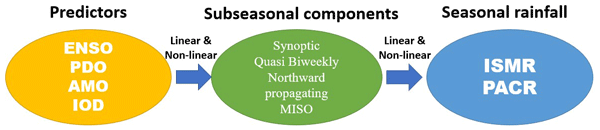
Shivamurthy Yashas, Subodh Kumar Saha, Samir Pokhrel, Mahen Konwar, and Verma Utkarsh
Geosci. Model Dev., 19, 4817–4833, https://doi.org/10.5194/gmd-19-4817-2026, https://doi.org/10.5194/gmd-19-4817-2026, 2026
Short summary
Short summary
This study highlights challenges in estimating seasonal climate predictability using the
perfect modelframework, which assumes only initial conditions cause error. We show that forecasts can exceed the predicted limit, known as the Potential Predictability Limit (PPL), due to model imperfections in simulating physical processes. A new method is proposed to estimate PPL more accurately and avoid such paradoxes.
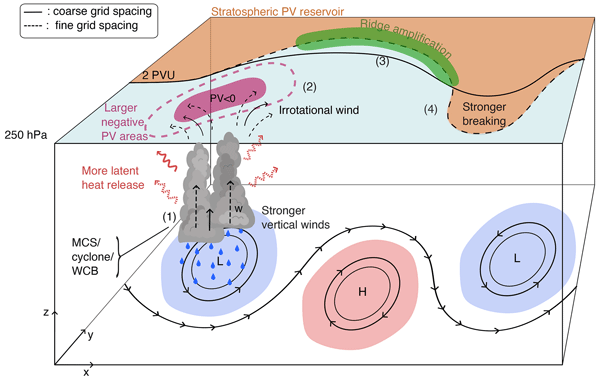
Marius Rixen, Praveen K. Pothapakula, Michael Sprenger, Christian Zeman, and Andreas F. Prein
Weather Clim. Dynam., 7, 2065–2086, https://doi.org/10.5194/wcd-7-2065-2026, https://doi.org/10.5194/wcd-7-2065-2026, 2026
Short summary
Short summary
Despite steady improvements in forecasting skill, episodes of low forecast skill, called forecast busts, still persist. Using global ensemble simulations at different grid spacings, we show that coarse-grid simulations fail to resolve key mesoscale diabatic processes, and that errors upscale and propagate downstream, leading to large forecast errors. Fine grid spacing simulations better capture scale interactions in strongly diabatic flow, highlighting the potential of kilometer-scale models.
Edgar Dolores-Tesillos, Praveen K. Pothapakula, Christian Zeman, and Daniela I. V. Domeisen
EGUsphere, https://doi.org/10.5194/egusphere-2026-5758, https://doi.org/10.5194/egusphere-2026-5758, 2026
This preprint is open for discussion and under review for Weather and Climate Dynamics (WCD).
Short summary
Short summary
We tested whether increasing climate-model resolution and changing how convection is represented improve the simulation of heatwaves. Using a hierarchy of global atmosphere-only simulations, we found that finer resolution does not consistently reduce heatwave biases. Heatwave persistence depends on regional interactions among convection, rainfall, land conditions, and large-scale circulation, showing that higher resolution alone is not enough.
Andres Barrio-Martin, Carlos Calvo-Sancho, Nuria P. Plaza-Martin, Cesar Azorin-Molina, Andreas F. Prein, Tim R. McVicar, Sergio M. Vicente-Serrano, Luis Gimeno, Raquel Nieto, Zhenzhong Zeng, Ana Morata, and Deliang Chen
EGUsphere, https://doi.org/10.5194/egusphere-2026-5202, https://doi.org/10.5194/egusphere-2026-5202, 2026
This preprint is open for discussion and under review for Natural Hazards and Earth System Sciences (NHESS).
Short summary
Short summary
We identified the atmospheric conditions that distinguish ordinary thunderstorms from four severe weather hazards, highlighting numerical proxies for their modelling in the Mediterranean. Severe winds occur in warm, unstable air (summer) or with strong mid-level winds (other seasons); tornadoes are favored by instability near the ground; large hail occurs when instability and strong winds combine; and short-duration heavy precipitation is favored by high moisture and slow-moving thunderstorms.
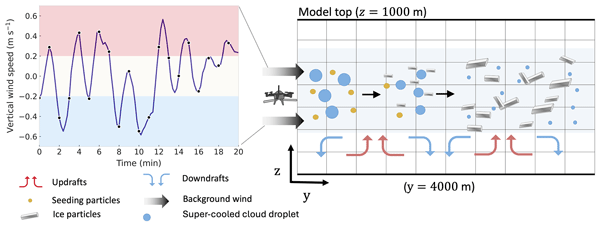
Huiying Zhang, Chia Rui Ong, Anurag Dipankar, Ulrike Lohmann, and Jan Henneberger
Atmos. Chem. Phys., 26, 8677–8693, https://doi.org/10.5194/acp-26-8677-2026, https://doi.org/10.5194/acp-26-8677-2026, 2026
Short summary
Short summary
We used computer simulations to study cloud seeding. We discovered a 'self-lofting' mechanism whereby, as the seeded ice crystals grow, they release heat, generating an upward air current. This enables the ice plume to rise and spread vertically, even when the surrounding air is sinking. This is why seeded ice survives in unfavourable wind conditions. Our results demonstrate that this internal heating is essential for the effectiveness and validation of weather modification technologies.
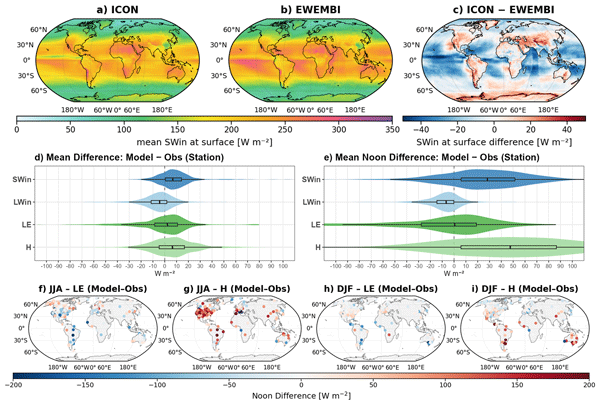
Andreas F. Prein, Praveen K. Pothapakula, Christian Zeman, Morgane Lalonde, Marius Rixen, Anurag Dipankar, Matthieu Leclair, and Andreas Jocksch
Geosci. Model Dev., 19, 5277–5303, https://doi.org/10.5194/gmd-19-5277-2026, https://doi.org/10.5194/gmd-19-5277-2026, 2026
Short summary
Short summary
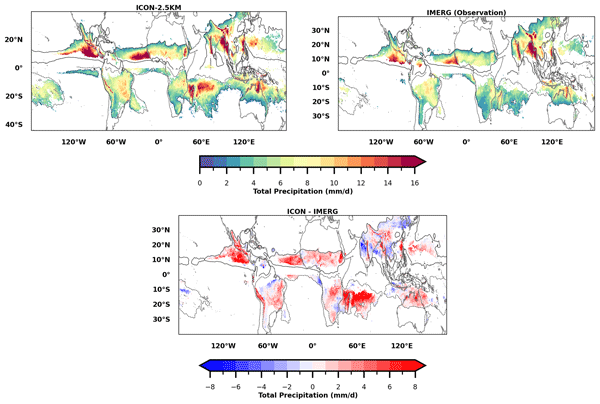
We produce one of the world's most detailed global weather and climate simulations, spanning 4 years and enabling the direct representation of storms rather than approximations. This allows the capture of dangerous events such as strong wind gusts, heavy rain, and powerful tropical and mid-latitude storms everywhere on Earth. Our results show major improvements over traditional climate models, but also reveal remaining challenges in representing large, organized storm systems in the tropics.
Praveen K. Pothapakula, Andreas F. Prein, Anusha Sunkisala, and Anurag Dipankar
Weather Clim. Dynam., 7, 979–1007, https://doi.org/10.5194/wcd-7-979-2026, https://doi.org/10.5194/wcd-7-979-2026, 2026
Short summary
Short summary
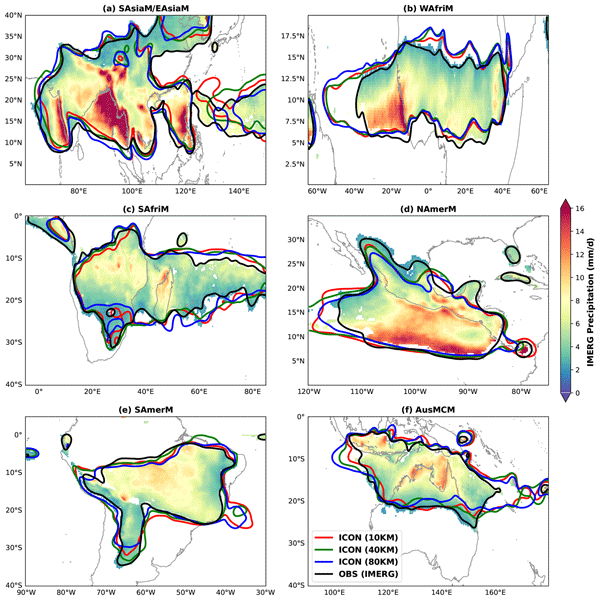
Monsoons provide vital rainfall for billions but are hard to forecast. Using a next-generation climate model, we simulated monsoons at different grid spacings. The model captures key seasonal patterns, but finer grids do not always improve accuracy. They can worsen predictions by overproducing intense rain, as they artificially strengthen weather systems like monsoon lows and waves. Our work shows that smarter model physics is needed for reliable future forecasts and climate projections.
Venugopal Thandlam, Teena Davis, Venkatramana Kaagita, Anna Rutgersson, and Hasibur Rahaman
EGUsphere, https://doi.org/10.22541/au.175571767.72906574/v1, https://doi.org/10.22541/au.175571767.72906574/v1, 2026
Short summary
Short summary
We studied how to improve the accuracy of ocean heat measurements by identifying errors in data from floating weather stations. By comparing twenty-three years of buoy records with satellite data, we developed new ways to filter out false readings caused by sensor issues or environmental interference. Our methods significantly improved the reliability of thermal radiation data. This ensures more precise climate models and better predictions of global warming.
Shivamurthy Yashas, Subodh Kumar Saha, Samir Pokhrel, Mahen Konwar, and Verma Utkarsh
Geosci. Model Dev., 19, 4817–4833, https://doi.org/10.5194/gmd-19-4817-2026, https://doi.org/10.5194/gmd-19-4817-2026, 2026
Short summary
Short summary
This study highlights challenges in estimating seasonal climate predictability using the
perfect modelframework, which assumes only initial conditions cause error. We show that forecasts can exceed the predicted limit, known as the Potential Predictability Limit (PPL), due to model imperfections in simulating physical processes. A new method is proposed to estimate PPL more accurately and avoid such paradoxes.
Anurag Dipankar, Mauro Bianco, Mona Bukenberger, Till Ehrengruber, Nicoletta Farabullini, Oliver Fuhrer, Abishek Gopal, Daniel Hupp, Andreas Jocksch, Samuel Kellerhals, Clarissa A. Kroll, Xavier Lapillonne, Matthieu Leclair, Magdalena Luz, Christoph Müller, Chia Rui Ong, Carlos Osuna, Praveen Pothapakula, Andreas Prein, Matthias Röthlin, William Sawyer, Christoph Schär, Sebastian Schemm, Giacomo Serafini, Hannes Vogt, Ben Weber, Robert C. Jnglin Wills, Nicolas Gruber, and Thomas C. Schulthess
Geosci. Model Dev., 19, 713–729, https://doi.org/10.5194/gmd-19-713-2026, https://doi.org/10.5194/gmd-19-713-2026, 2026
Short summary
Short summary
Climate models are becoming more detailed and accurate by simulating weather at scales of just a few kilometers. Simulating at km-scale is computationally demanding requiring powerful supercomputers and efficient code. This work presents a refactored dynamical core of a state-of-the-art climate model using a Python-based approach. The refactored code has passed through a sequence of verification and validation demonstrating its usability in performing km-scale global simulations.
Sofía Segovia, Pablo A. Mendoza, Miguel Lagos-Zúñiga, Lucía Scaff, and Andreas Prein
EGUsphere, https://doi.org/10.5194/egusphere-2025-3061, https://doi.org/10.5194/egusphere-2025-3061, 2025
Short summary
Short summary
High-resolution climate simulations can improve our understanding of precipitation and temperature patterns in regions with complex terrain. We evaluate a new climate dataset against in-situ observations, and its potencial for hydrological modeling. Results show that, despite some limitations in dry areas, high-resolution climate models can provide information of a quality comparable to that of observation-based products, supporting their use in water resources planning and decision-making.
Bjorn Stevens, Stefan Adami, Tariq Ali, Hartwig Anzt, Zafer Aslan, Sabine Attinger, Jaana Bäck, Johanna Baehr, Peter Bauer, Natacha Bernier, Bob Bishop, Hendryk Bockelmann, Sandrine Bony, Guy Brasseur, David N. Bresch, Sean Breyer, Gilbert Brunet, Pier Luigi Buttigieg, Junji Cao, Christelle Castet, Yafang Cheng, Ayantika Dey Choudhury, Deborah Coen, Susanne Crewell, Atish Dabholkar, Qing Dai, Francisco Doblas-Reyes, Dale Durran, Ayoub El Gaidi, Charlie Ewen, Eleftheria Exarchou, Veronika Eyring, Florencia Falkinhoff, David Farrell, Piers M. Forster, Ariane Frassoni, Claudia Frauen, Oliver Fuhrer, Shahzad Gani, Edwin Gerber, Debra Goldfarb, Jens Grieger, Nicolas Gruber, Wilco Hazeleger, Rolf Herken, Chris Hewitt, Torsten Hoefler, Huang-Hsiung Hsu, Daniela Jacob, Alexandra Jahn, Christian Jakob, Thomas Jung, Christopher Kadow, In-Sik Kang, Sarah Kang, Karthik Kashinath, Katharina Kleinen-von Königslöw, Daniel Klocke, Uta Kloenne, Milan Klöwer, Chihiro Kodama, Stefan Kollet, Tobias Kölling, Jenni Kontkanen, Steve Kopp, Michal Koran, Markku Kulmala, Hanna Lappalainen, Fakhria Latifi, Bryan Lawrence, June Yi Lee, Quentin Lejeun, Christian Lessig, Chao Li, Thomas Lippert, Jürg Luterbacher, Pekka Manninen, Jochem Marotzke, Satoshi Matsouoka, Charlotte Merchant, Peter Messmer, Gero Michel, Kristel Michielsen, Tomoki Miyakawa, Jens Müller, Ramsha Munir, Sandeep Narayanasetti, Ousmane Ndiaye, Carlos Nobre, Achim Oberg, Riko Oki, Tuba Özkan-Haller, Tim Palmer, Stan Posey, Andreas Prein, Odessa Primus, Mike Pritchard, Julie Pullen, Dian Putrasahan, Johannes Quaas, Krishnan Raghavan, Venkatachalam Ramaswamy, Markus Rapp, Florian Rauser, Markus Reichstein, Aromar Revi, Sonakshi Saluja, Masaki Satoh, Vera Schemann, Sebastian Schemm, Christina Schnadt Poberaj, Thomas Schulthess, Cath Senior, Jagadish Shukla, Manmeet Singh, Julia Slingo, Adam Sobel, Silvina Solman, Jenna Spitzer, Philip Stier, Thomas Stocker, Sarah Strock, Hang Su, Petteri Taalas, John Taylor, Susann Tegtmeier, Georg Teutsch, Adrian Tompkins, Uwe Ulbrich, Pier-Luigi Vidale, Chien-Ming Wu, Hao Xu, Najibullah Zaki, Laure Zanna, Tianjun Zhou, and Florian Ziemen
Earth Syst. Sci. Data, 16, 2113–2122, https://doi.org/10.5194/essd-16-2113-2024, https://doi.org/10.5194/essd-16-2113-2024, 2024
Short summary
Short summary
To manage Earth in the Anthropocene, new tools, new institutions, and new forms of international cooperation will be required. Earth Virtualization Engines is proposed as an international federation of centers of excellence to empower all people to respond to the immense and urgent challenges posed by climate change.
Oliver Douglas Levers, Dorien Herremans, Anurag Dipankar, and Lucienne Blessing
EGUsphere, https://doi.org/10.5194/egusphere-2022-234, https://doi.org/10.5194/egusphere-2022-234, 2022
Preprint withdrawn
Short summary
Short summary
Southeast Asia is a region which is very sensitive to climate change and has numerous islands and peninsulas which are not well resolved within many General Circulation Models (GCMs). Here, deep convolutional encoders are employed to increase the spatial resolution of climate model data (downscaling) and address systematic errors in model outputs (bias correction). Technique and region-specific issues are identified for surface temperature data and compared with other model outputs.
Praveen Kumar Pothapakula, Amelie Hoff, Anika Obermann-Hellhund, Timo Keber, and Bodo Ahrens
Earth Syst. Dynam. Discuss., https://doi.org/10.5194/esd-2022-24, https://doi.org/10.5194/esd-2022-24, 2022
Preprint withdrawn
Short summary
Short summary
The Vb-cyclones simulated with a coupled regional climate model with two different driving data sets are compared against each other in historical period, thereafter the future climate predictions were analyzed. The Vb-cyclones in two simulations agree well in terms of their occurrence, intensity and track in two simulations, though there are discrepancies in seasonal cycles and their process linking Mediterranean Sea in historical period. So significant changes were observed in the future.
James M. Done, Gary M. Lackmann, and Andreas F. Prein
Weather Clim. Dynam., 3, 693–711, https://doi.org/10.5194/wcd-3-693-2022, https://doi.org/10.5194/wcd-3-693-2022, 2022
Short summary
Short summary
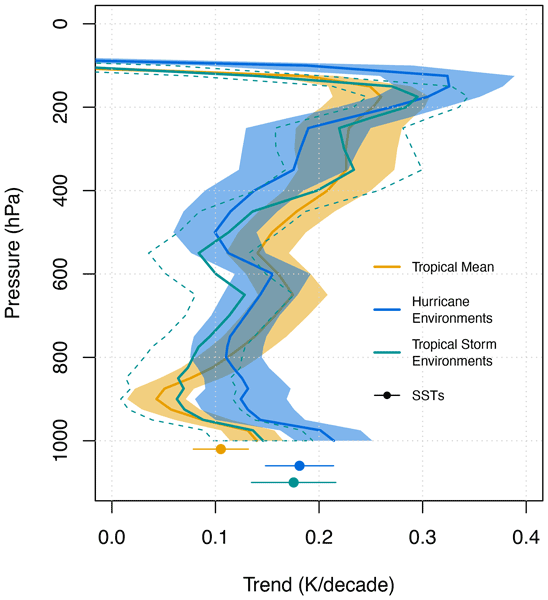
We know that warm oceans generally favour tropical cyclones (TCs). Less is known about the role of air temperature above the oceans extending into the lower stratosphere. Our global analysis of historical records and computer simulations suggests that TCs strengthen in response to historical temperature change while also being influenced by other environmental factors. Ocean warming drives much of the strengthening, with relatively small contributions from temperature changes aloft.
Cited articles
Annamalai, H. and Slingo, J. M.: Active/break cycles: diagnosis of the intraseasonal variability of the Asian Summer Monsoon, Clim. Dynam., 18, 85–102, https://doi.org/10.1007/s003820100161, 2001. a
Asensio, H., Messmer, M., Lüthi, D., and Osterried, K.: External Parameters for Numerical Weather Prediction and Climate Application (EXTPAR v5_0): User and Implementation Guide, ETH Zürich and COSMO Consortium, http://www.cosmo-model.org/content/support/software/ethz/EXTPAR_user_and_implementation_manual_202003.pdf (last access: 25 October 2025), 2020. a
Baranowski, D. B., Waliser, D. E., Jiang, X., Ridout, J. A., and Flatau, M. K.: Contemporary GCM Fidelity in Representing the Diurnal Cycle of Precipitation Over the Maritime Continent, J. Geophys. Res.-Atmos., 124, 747–769, https://doi.org/10.1029/2018JD029474, 2019. a
Barros, A. P. and Lang, T. J.: Monitoring the Monsoon in the Himalayas: Observations in Central Nepal, June 2001, Mon. Weather Rev., 131, 1408–1427, https://doi.org/10.1175/1520-0493(2003)131<1408:MTMITH>2.0.CO;2, 2003. a
Basu, B. K.: Diurnal variation in precipitation over India during the summer monsoon season: observed and model predicted, Mon. Weather Rev., 135, 2155–2167, https://doi.org/10.1175/MWR3355.1, 2007. a, b
Bechtold, P., Bazile, E., Guichard, F., Mascart, P., and Richard, E.: A mass-flux convection scheme for regional and global models, Q. J. Roy. Meteor. Soc., 127, 869–886, https://doi.org/10.1002/qj.49712757309, 2001. a
Bechtold, P., Chaboureau, J.-P., Beljaars, A., Betts, A. K., Köhler, M., Miller, M., and Redelsperger, J.-L.: The simulation of the diurnal cycle of convective precipitation over land in a global model, Q. J. Roy. Meteor. Soc., 130, 3119–3137, https://doi.org/10.1256/qj.03.103, 2004. a, b
Bechtold, P., Köhler, M., Jung, T., Doblas-Reyes, F., Leutbecher, M., Rodwell, M. J., Vitart, F., and Balsamo, G.: Advances in simulating atmospheric variability with the ECMWF model: From synoptic to decadal time-scales, Q. J. Roy. Meteor. Soc., 134, 1337–1351, https://doi.org/10.1002/qj.289, 2008. a
Betts, A. K. and Jakob, C.: Evaluation of the diurnal cycle of precipitation, surface thermodynamics, and surface fluxes in the ECMWF model using LBA data, J. Geophys. Res.-Atmos., 107, LBA 12-1–LBA 12-8, https://doi.org/10.1029/2001JD000427, 2002. a
Bretherton, C. S., McCaa, J. R., and Grenier, H.: A New Parameterization for Shallow Cumulus Convection and Its Application to Marine Subtropical Cloud-Topped Boundary Layers. Part I: Description and 1D Results, Mon. Weather Rev., 132, 864–882, https://doi.org/10.1175/1520-0493(2004)132<0864:ANPFSC>2.0.CO;2, 2004. a
Chaudhari, H. S., Hazra, A., Pokhrel, S., Saha, S. K., and Talluri, S. S.: Simulation of extreme Indian summer monsoon years in Coupled Model Intercomparison Project Phase 5 models: Role of cloud processes, Int. J. Climatol., 39, 901–920, https://doi.org/10.1002/joc.5851, 2019. a
Chen, D., Dai, A., and Hall, A.: The Convective-To-Total Precipitation Ratio and the “Drizzling” Bias in Climate Models, J. Geophys. Res.-Atmos., 126, e2020JD034198, https://doi.org/10.1029/2020JD034198, 2021. a, b, c
Chen, G.: Diurnal Cycle of the Asian Summer Monsoon: Air Pump of the Second Kind, J. Climate, 33, 1747–1775, https://doi.org/10.1175/JCLI-D-19-0210.1, 2020. a
Chikira, M. and Sugiyama, M.: A Cumulus Parameterization with State-Dependent Entrainment Rate. Part I: Description and Sensitivity to Temperature and Humidity Profiles, J. Atmos. Sci., 67, 2171–2193, https://doi.org/10.1175/2010JAS3316.1, 2010. a
Christopoulos, C. and Schneider, T.: Assessing Biases and Climate Implications of the Diurnal Precipitation Cycle in Climate Models, Geophys. Res. Lett., 48, e2021GL093017, https://doi.org/10.1029/2021GL093017, 2021. a, b
Chutia, T., Chakraborty, A., Bhat, G. S., and Rajeevan, M.: Shifted Diurnal Cycle of Indian Summer Monsoon Rainfall, Geophys. Res. Lett., 52, e2025GL116401, https://doi.org/10.1029/2025GL116401, 2025. a
Dai, A.: Precipitation Characteristics in Eighteen Coupled Climate Models, J. Climate, 19, 4605–4630, https://doi.org/10.1175/JCLI3884.1, 2006. a, b, c
Dai, A. and Trenberth, K. E.: The Diurnal Cycle and Its Depiction in the Community Climate System Model, J. Climate, 17, 930–951, https://doi.org/10.1175/1520-0442(2004)017<0930:TDCAID>2.0.CO;2, 2004. a
Dai, A., Giorgi, F., and Trenberth, K. E.: Observed and model-simulated diurnal cycles of precipitation over the contiguous United States, J. Geophys. Res.-Atmos., 104, 6377–6402, https://doi.org/10.1029/98JD02720, 1999. a
DeMott, C. A., Stan, C., Randall, D. A., and Branson, M. D.: Intraseasonal Variability in Coupled GCMs: The Roles of Ocean Feedbacks and Model Physics, J. Climate, 27, 4970–4995, https://doi.org/10.1175/JCLI-D-13-00760.1, 2014. a
Deoras, A., Hunt, K. M. R., and Turner, A. G.: Comparison of the Prediction of Indian Monsoon Low Pressure Systems by Subseasonal-to-Seasonal Prediction Models, Weather Forecast., 36, 859–877, https://doi.org/10.1175/WAF-D-20-0081.1, 2021. a
Diaz, M. and Boos, W. R.: The Influence of Surface Heat Fluxes on the Growth of Idealized Monsoon Depressions, J. Atmos. Sci., 78, 2013–2027, https://doi.org/10.1175/JAS-D-20-0359.1, 2021. a
Dipankar, A.: EXCLAIM use cases, Zenodo [computer software], https://doi.org/10.5281/zenodo.17250248, 2025. a
Dipankar, A., Bianco, M., Bukenberger, M., Ehrengruber, T., Farabullini, N., Fuhrer, O., Gopal, A., Hupp, D., Jocksch, A., Kellerhals, S., Kroll, C. A., Lapillonne, X., Leclair, M., Luz, M., Müller, C., Ong, C. R., Osuna, C., Pothapakula, P., Prein, A., Röthlin, M., Sawyer, W., Schär, C., Schemm, S., Serafini, G., Vogt, H., Weber, B., Wills, R. C. J., Gruber, N., and Schulthess, T. C.: Toward exascale climate modelling: a python DSL approach to ICON's (icosahedral non-hydrostatic) dynamical core (icon-exclaim v0.2.0), Geosci. Model Dev., 19, 713–729, https://doi.org/10.5194/gmd-19-713-2026, 2026. a, b, c
Donner, L. J., Wyman, B. L., Hemler, R. S., Horowitz, L. W., Ming, Y., Zhao, M., Golaz, J.-C., Ginoux, P., Lin, S.-J., Schwarzkopf, M. D., Austin, J., Alaka, G., Cooke, W. F., Delworth, T. L., Freidenreich, S. M., Gordon, C. T., Griffies, S. M., Held, I. M., Hurlin, W. J., Klein, S. A., Knutson, T. R., Langenhorst, A. R., Lee, H.-C., Lin, Y., Magi, B. I., Malyshev, S. L., Milly, P. C. D., Naik, V., Nath, M. J., Pincus, R., Ploshay, J. J., Ramaswamy, V., Seman, C. J., Shevliakova, E., Sirutis, J. J., Stern, W. F., Stouffer, R. J., Wilson, R. J., Winton, M., Wittenberg, A. T., and Zeng, F.: The Dynamical Core, Physical Parameterizations, and Basic Simulation Characteristics of the Atmospheric Component AM3 of the GFDL Global Coupled Model CM3, J. Climate, 24, 3484–3519, https://doi.org/10.1175/2011JCLI3955.1, 2011. a
Emanuel, K. A.: Atmospheric Convection, Oxford University Press, New York, ISBN: 9780195066302, 1994. a
Folkins, I., Mitovski, T., and Pierce, J. R.: A simple way to improve the diurnal cycle in convective rainfall over land in climate models, J. Geophys. Res.-Atmos., 119, 2113–2130, https://doi.org/10.1002/2013JD020149, 2014. a
Fujinami, H., Nomura, S., and Yasunari, T.: Characteristics of Diurnal Variations in Convection and Precipitation over the Southern Tibetan Plateau during Summer, SOLA, 1, 49–52, https://doi.org/10.2151/sola.2005-014, 2005. a, b
Godbole, R. V.: The composite structure of the monsoon depression, Tellus, 29, https://doi.org/10.3402/tellusa.v29i1.11327, 1977. a
Goswami, B. N.: South Asian monsoon, Springer Berlin Heidelberg, Berlin, Heidelberg, 19–61, https://doi.org/10.1007/3-540-27250-X_2, ISBN 978-3-540-27250-2, 2005. a
Goswami, B. N., Keshavamurty, R. N., and Satyan, V.: Role of barotropic, baroclinic and combined barotropic-baroclinic instability for the growth of monsoon depressions and mid-tropospheric cyclones, Proceedings of the Indian Academy of Sciences - Earth and Planetary Sciences, 89, 79–97, https://doi.org/10.1007/BF02841521, 1980. a
Goswami, B. N., Ajayamohan, R. S., Xavier, P. K., and Sengupta, D.: Clustering of synoptic activity by Indian summer monsoon intraseasonal oscillations, Geophys. Res. Lett., 30, https://doi.org/10.1029/2002GL016734, 2003. a
Goswami, B. N., Venugopal, V., Sengupta, D., Madhusoodanan, M. S., and Xavier, P. K.: Increasing Trend of Extreme Rain Events Over India in a Warming Environment, Science, 314, 1442–1445, https://doi.org/10.1126/science.1132027, 2006. a, b
Guo, H., John, J. G., Blanton, C., McHugh, C., Nikonov, S., Radhakrishnan, A., Rand, K., Zadeh, N. T., Balaji, V., Durachta, J., Dupuis, C., Menzel, R., Robinson, T., Underwood, S., Vahlenkamp, H., Bushuk, M., Dunne, K. A., Dussin, R., Gauthier, P. P., Ginoux, P., Griffies, S. M., Hallberg, R., Harrison, M., Hurlin, W., Lin, P., Malyshev, S., Naik, V., Paulot, F., Paynter, D. J., Ploshay, J., Reichl, B. G., Schwarzkopf, D. M., Seman, C. J., Shao, A., Silvers, L., Wyman, B., Yan, X., Zeng, Y., Adcroft, A., Dunne, J. P., Held, I. M., Krasting, J. P., Horowitz, L. W., Milly, P., Shevliakova, E., Winton, M., Zhao, M., and Zhang, R.: NOAA-GFDL GFDL-CM4 model output amip, Earth System Grid Federation [data set], https://doi.org/10.22033/ESGF/CMIP6.8494, 2018. a
Guérémy, J. F.: A continuous buoyancy based convection scheme: one- and three-dimensional validation, Tellus A, 63, 687–706, https://doi.org/10.1111/j.1600-0870.2011.00521.x, 2011. a
Hajima, T., Abe, M., Arakawa, O., Suzuki, T., Komuro, Y., Ogura, T., Ogochi, K., Watanabe, M., Yamamoto, A., Tatebe, H., Noguchi, M. A., Ohgaito, R., Ito, A., Yamazaki, D., Ito, A., Takata, K., Watanabe, S., Kawamiya, M., and Tachiiri, K.: MIROC MIROC-ES2L model output prepared for CMIP6 CMIP amip, Earth System Grid Federation [data set], https://doi.org/10.22033/ESGF/CMIP6.5421, 2020. a
Han, J. and Pan, H.-L.: Revision of Convection and Vertical Diffusion Schemes in the NCEP Global Forecast System, Weather Forecast., 26, 520–533, https://doi.org/10.1175/WAF-D-10-05038.1, 2011. a
Hannachi, A., Jolliffe, I. T., and Stephenson, D. B.: Empirical orthogonal functions and related techniques in atmospheric science: A review, Int. J. Climatol., 27, 1119–1152, https://doi.org/10.1002/joc.1499, 2007. a
Held, I. M., Guo, H., Adcroft, A., Dunne, J. P., Horowitz, L. W., Krasting, J., Shevliakova, E., Winton, M., Zhao, M., Bushuk, M., Wittenberg, A. T., Wyman, B., Xiang, B., Zhang, R., Anderson, W., Balaji, V., Donner, L., Dunne, K., Durachta, J., Gauthier, P. P. G., Ginoux, P., Golaz, J.-C., Griffies, S. M., Hallberg, R., Harris, L., Harrison, M., Hurlin, W., John, J., Lin, P., Lin, S.-J., Malyshev, S., Menzel, R., Milly, P. C. D., Ming, Y., Naik, V., Paynter, D., Paulot, F., Ramaswamy, V., Reichl, B., Robinson, T., Rosati, A., Seman, C., Silvers, L. G., Underwood, S., and Zadeh, N.: Structure and Performance of GFDL's CM4.0 Climate Model, J. Adv. Model. Earth Sy., 11, 3691–3727, https://doi.org/10.1029/2019MS001829, 2019. a
Hertwig, E., von Storch, J.-S., Handorf, D., Dethloff, K., Fast, I., and Krismer, T.: Effect of horizontal resolution on ECHAM6-AMIP performance, Clim. Dynam., 45, 185–211, https://doi.org/10.1007/s00382-014-2396-x, 2015. a, b
Hong, S.-Y. and Lim, J.-O. J.: The WRF single-moment 6-class microphysics scheme (WSM6), J. Korean Meteor. Soc., 42, 129–151, 2006. a
Houze Jr., R. A.: Mesoscale convective systems, Rev. Geophys., 42, https://doi.org/10.1029/2004RG000150, 2004. a
Huang, W.-R. and Wang, S.-Y. S.: Future changes in propagating and non-propagating diurnal rainfall over East Asia, Clim. Dynam., 49, 375–389, https://doi.org/10.1007/s00382-016-3348-4, 2017. a
Huffman, G. J., Stocker, E. F., Bolvin, D. T., Nelkin, E. J., and Tan, J.: GPM IMERG Final Precipitation L3 Half Hourly 0.1 degree x 0.1 degree V07, Greenbelt, MD, Goddard Earth Sciences Data and Information Services Center (GES DISC) [data set], https://doi.org/10.5067/GPM/IMERG/3B-HH/07, 2023. a, b
Hunt, K. M. R. and Turner, A. G.: Non-linear intensification of monsoon low-pressure systems by the BSISO, Weather Clim. Dynam., 3, 1341–1358, https://doi.org/10.5194/wcd-3-1341-2022, 2022. a
Hunt, K. M. R., Turner, A. G., and Schiemann, R. K. H.: Katabatic and convective processes drive two preferred peaks in the precipitation diurnal cycle over the Central Himalaya, Q. J. Roy. Meteor. Soc., 148, 1731–1751, https://doi.org/10.1002/qj.4275, 2022. a
Jha, A. K., Das, S. K., Krishna, U. V. M., and Deshpande, S. M.: Role of Thermodynamics and Dynamics in the Diurnal Cycle, Propagation, and Progression of Convective Storms in the Eastern Flank of the Indian Monsoon Trough, J. Atmos. Sci., 79, 3351–3374, https://doi.org/10.1175/JAS-D-21-0159.1, 2022. a
Jiang, X., Adames, Á. F., Kim, D., Maloney, E. D., Lin, H., Kim, H., Zhang, C., DeMott, C. A., and Klingaman, N. P.: Fifty Years of Research on the Madden-Julian Oscillation: Recent Progress, Challenges, and Perspectives, J. Geophys. Res.-Atmos., 125, e2019JD030911, https://doi.org/10.1029/2019JD030911, 2020. a, b
Jungclaus, J., Bittner, M., Wieners, K.-H., Wachsmann, F., Schupfner, M., Legutke, S., Giorgetta, M., Reick, C., Gayler, V., Haak, H., de Vrese, P., Raddatz, T., Esch, M., Mauritsen, T., von Storch, J.-S., Behrens, J., Brovkin, V., Claussen, M., Crueger, T., Fast, I., Fiedler, S., Hagemann, S., Hohenegger, C., Jahns, T., Kloster, S., Kinne, S., Lasslop, G., Kornblueh, L., Marotzke, J., Matei, D., Meraner, K., Mikolajewicz, U., Modali, K., Müller, W., Nabel, J., Notz, D., Peters-von Gehlen, K., Pincus, R., Pohlmann, H., Pongratz, J., Rast, S., Schmidt, H., Schnur, R., Schulzweida, U., Six, K., Stevens, B., Voigt, A., and Roeckner, E.: MPI-M MPI-ESM1.2-HR model output prepared for CMIP6 CMIP amip, Earth System Grid Federation [data set], https://doi.org/10.22033/ESGF/CMIP6.6463, 2019. a
Kendon, E. J., Roberts, N. M., Senior, C. A., and Roberts, M. J.: Realism of Rainfall in a Very High-Resolution Regional Climate Model, J. Climate, 25, 5791–5806, https://doi.org/10.1175/JCLI-D-11-00562.1, 2012. a
Kikuchi, K. and Wang, B.: Diurnal Precipitation Regimes in the Global Tropics, J. Climate, 21, 2680–2696, https://doi.org/10.1175/2007JCLI2051.1, 2008. a, b, c, d
Kilpatrick, T., Xie, S.-P., and Nasuno, T.: Diurnal Convection-Wind Coupling in the Bay of Bengal, J. Geophys. Res.-Atmos., 122, 9705–9720, https://doi.org/10.1002/2017JD027271, 2017. a
Kinne, S.: The MACv2 aerosol climatology, Tellus B, 71, 1–21, 2019. a
Konda, G. and Vissa, N. K.: Robustness of BSISO and air-sea interactions in the CMIP (Phase-6) models over the North Indian Ocean, Dynam. Atmos. Oceans, 99, 101316, https://doi.org/10.1016/j.dynatmoce.2022.101316, 2022. a
Krishna, U. V., Das, S. K., Deshpande, S. M., and Pandithurai, G.: Physical processes controlling the diurnal cycle of convective storms in the Western Ghats, Scientific Reports, 11, 2045–2322, https://doi.org/10.1038/s41598-021-93173-0, 2021. a
Krishnamurti, T. N. and Bhalme, H. N.: Oscillations of a Monsoon System. Part I. Observational Aspects, J. Atmos. Sci., 33, 1937–1954, https://doi.org/10.1175/1520-0469(1976)033<1937:OOAMSP>2.0.CO;2, 1976. a
Krishnamurti, T. N. and Subrahmanyam, D.: The 30–50 Day Mode at 850 mb During MONEX, J. Atmos. Sci., 39, 2088–2095, https://doi.org/10.1175/1520-0469(1982)039<2088:TDMAMD>2.0.CO;2, 1982. a
Krishnamurti, T. N., Gnanaseelan, C., and Chakraborty, A.: Prediction of the Diurnal Change Using a Multimodel Superensemble. Part I: Precipitation, Mon. Weather Rev., 135, 3613–3632, https://doi.org/10.1175/MWR3446.1, 2007. a, b
Krishnan, R., Swapna, P., Vellore, R., Narayanasetti, S., Prajeesh, A. G., Choudhury, A. D., Singh, M., Sabin, T. P., and Sanjay, J.: The IITM Earth System Model (ESM): Development and Future Roadmap, Springer Singapore, Singapore, 183–195, https://doi.org/10.1007/978-981-13-3396-5_9, ISBN 978-981-13-3396-5, 2019. a
Lapillonne, X., Hupp, D., Gessler, F., Walser, A., Pauling, A., Lauber, A., Cumming, B., Osuna, C., Müller, C., Merker, C., Leuenberger, D., Leutwyler, D., Alexeev, D., Vollenweider, G., Van Parys, G., Jucker, J., Jansing, L., Arpagaus, M., Induni, M., Jacob, M., Kraushaar, M., Jähn, M., Stellio, M., Fuhrer, O., Baumann, P., Steiner, P., Kaufmann, P., Dietlicher, R., Müller, R., Kosukhin, S., Schulthess, T. C., Schättler, U., Cherkas, V., and Sawyer, W.: Operational numerical weather prediction with ICON on GPUs (version 2024.10), Geosci. Model Dev., 19, 755–772, https://doi.org/10.5194/gmd-19-755-2026, 2026. a
Lee, Y.-C. and Wang, Y.-C.: Evaluating Diurnal Rainfall Signal Performance from CMIP5 to CMIP6, J. Climate, 34, 7607–7623, https://doi.org/10.1175/JCLI-D-20-0812.1, 2021. a, b
Leuenberger, D., Koller, M., Fuhrer, O., and Schär, C.: A Generalization of the SLEVE Vertical Coordinate, Mon. Weather Rev., 138, 3683–3689, https://doi.org/10.1175/2010MWR3307.1, 2010. a
Lin, X., Randall, D. A., and Fowler, L. D.: Diurnal Variability of the Hydrologic Cycle and Radiative Fluxes: Comparisons between Observations and a GCM, J. Climate, 13, 4159–4179, https://doi.org/10.1175/1520-0442(2000)013<4159:DVOTHC>2.0.CO;2, 2000. a
Lopez, P.: Implementation and validation of a new prognostic large-scale cloud and precipitation scheme for climate and data-assimilation purposes, Q. J. Roy. Meteor. Soc., 128, 229–257, https://doi.org/10.1256/00359000260498879, 2002. a
Lorenz, E. N.: Empirical Orthogonal Functions and Statistical Weather Prediction, Tech. Rep. Report 1, Statistical Forecasting Project, Massachusetts Institute of Technology, https://rainbow.ldeo.columbia.edu/~alexeyk/QDS/Lorenz1956.pdf (last access: 13 August 2026), 1956. a
Mak, M.: Synoptic-scale disturbances in the summer monsoon, in: Monsoon Meteorology, edited by: Chang, C. P. and Krishnamurti, T. N., Oxford University Press, New York, 435–460, ISBN: 0195042549, 1987. a
Mapes, B. E., Warner, T. T., and Xu, M.: Diurnal Patterns of Rainfall in Northwestern South America. Part III: Diurnal Gravity Waves and Nocturnal Convection Offshore, Mon. Weather Rev., 131, 830–844, https://doi.org/10.1175/1520-0493(2003)131<0830:DPORIN>2.0.CO;2, 2003. a
Misra, V. and Jayasankar, C. B.: An observational study of the modulation of the diurnal variations by the intraseasonal oscillations of the Indian summer monsoon, Clim. Dynam., 64, 38, https://doi.org/10.1007/s00382-025-08019-6, 2026. a
Moncrieff, M. W.: Toward a Dynamical Foundation for Organized Convection Parameterization in GCMs, Geophys. Res. Lett., 46, 14103–14108, https://doi.org/10.1029/2019GL085316, 2019. a
Murali Krishna, U. V., Das, S. K., Deshpande, S. M., Doiphode, S. L., and Pandithurai, G.: The assessment of Global Precipitation Measurement estimates over the Indian subcontinent, Earth and Space Science, 4, 540–553, https://doi.org/10.1002/2017EA000285, 2017. a
Müller, W. A., Jungclaus, J. H., Mauritsen, T., Baehr, J., Bittner, M., Budich, R., Bunzel, F., Esch, M., Ghosh, R., Haak, H., Ilyina, T., Kleine, T., Kornblueh, L., Li, H., Modali, K., Notz, D., Pohlmann, H., Roeckner, E., Stemmler, I., Tian, F., and Marotzke, J.: A Higher-resolution Version of the Max Planck Institute Earth System Model (MPI-ESM1.2-HR), J. Adv. Model. Earth Sy., 10, 1383–1413, https://doi.org/10.1029/2017MS001217, 2018. a
Müller, W. A., Früh, B., Korn, P., Potthast, R., Baehr, J., Bettems, J.-M., Bölöni, G., Brienen, S., Fröhlich, K., Helmert, J., Jungclaus, J., Köhler, M., Lorenz, S., Schneidereit, A., Schnur, R., Schulz, J.-P., Schlemmer, L., Sgoff, C., Pham, T. V., Pohlmann, H., Vogel, B., Vogel, H., Wirth, R., Zaehle, S., Zängl, G., Stevens, B., and Marotzke, J.: ICON: Toward Vertically Integrated Model Configurations for Numerical Weather Prediction, Climate Predictions, and Projections, B. Am. Meteorol. Soc., 106, E1017–E1031, https://doi.org/10.1175/BAMS-D-24-0042.1, 2025. a
Narayanasetti, S., Panickal, S., Gopinathan, P. A., Choudhury, A. D., Singh, M., and Raghavan, K.: CCCR-IITM IITM-ESM model output prepared for CMIP6 ScenarioMIP ssp126, Earth System Grid Federation [data set], https://doi.org/10.22033/ESGF/CMIP6.14747, 2020. a
Park, S. and Bretherton, C. S.: The University of Washington Shallow Convection and Moist Turbulence Schemes and Their Impact on Climate Simulations with the Community Atmosphere Model, J. Climate, 22, 3449–3469, https://doi.org/10.1175/2008JCLI2557.1, 2009. a
Patwardhan, S., Sooraj, K. P., Varikoden, H., Vishnu, S., Koteswararao, K., Ramarao, M. V. S., and Pattanaik, D. R.: Synoptic Scale Systems, Springer Singapore, Singapore, 143–154, https://doi.org/10.1007/978-981-15-4327-2_7, ISBN 978-981-15-4327-2, 2020. a
Pegion, K. and Kirtman, B. P.: The Impact of Air–Sea Interactions on the Simulation of Tropical Intraseasonal Variability, J. Climate, 21, 6616–6635, https://doi.org/10.1175/2008JCLI2180.1, 2008. a
Peng, C.-H. and Chen, X.: Monsoonal MCS Initiation, Rainfall, and Diurnal Gravity Waves over the Bay of Bengal: Observation and a Linear Model, J. Atmos. Sci., 81, 1401–1418, https://doi.org/10.1175/JAS-D-23-0230.1, 2024. a
Piriou, J.-M., Redelsperger, J.-L., Geleyn, J.-F., Lafore, J.-P., and Guichard, F.: An Approach for Convective Parameterization with Memory: Separating Microphysics and Transport in Grid-Scale Equations, J. Atmos. Sci., 64, 4127–4139, https://doi.org/10.1175/2007JAS2144.1, 2007. a
Pokhrel, S. and Sikka, D. R.: Variability of the TRMM-PR total and convective and stratiform rain fractions over the Indian region during the summer monsoon, Clim. Dynam., 41, 21–44, https://doi.org/10.1007/s00382-012-1502-1, 2013. a
Pokhrel, S., Saha, S. K., Dhakate, A., Rahman, H., Chaudhari, H. S., Salunke, K., Hazra, A., Sujith, K., and Sikka, D. R.: Seasonal prediction of Indian summer monsoon rainfall in NCEP CFSv2: Forecast and predictability error, Clim. Dynam., 46, 2305–2326, https://doi.org/10.1007/s00382-015-2703-1, 2016. a
Pokhrel, S., Hazra, A., Chaudhari, H. S., Saha, S. K., Paulose, F., Krishna, S., Krishna, P. M., and Rao, S. A.: Hindcast skill improvement in Climate Forecast System (CFSv2) using modified cloud scheme, Int. J. Climatol., 38, 2994–3012, https://doi.org/10.1002/joc.5478, 2018a. a, b
Pokhrel, S., Hazra, A., Saha, S. K., Chaudhari, H. S., Metya, A., Ghude, S. D., and Konwar, M.: Contrast in monsoon precipitation over oceanic region of north Bay of Bengal and east equatorial Indian Ocean, Int. J. Climatol., 38, e1061–e1075, https://doi.org/10.1002/joc.5433, 2018b. a
Ponukumati, P., Mohammed, A., and Regonda, S.: Insights on Satellite-Based IMERG Precipitation Estimates at Multiple Space and Time Scales for a Developing Urban Region in India, J. Hydrometeorol., 24, 977–996, https://doi.org/10.1175/JHM-D-22-0160.1, 2023. a
Pothapakula, P. K., Prein, A. F., Sunkisala, A., and Dipankar, A.: Global monsoon in ICON: the scale-dependent response of Northern Hemisphere monsoons, Weather Clim. Dynam., 7, 979–1007, https://doi.org/10.5194/wcd-7-979-2026, 2026. a, b
Prajeesh, A. G., Swapna, P., Krishnan, R., Ayantika, D. C., Sandeep, N., Manmeet, S., Aditi, M., and Sandip, I.: The Indian summer monsoon and Indian Ocean Dipole connection in the IITM Earth System Model (IITM-ESM), Clim. Dynam., 58, 1877–1897, https://doi.org/10.1007/s00382-021-05999-z, 2022. a
Prakash, S. and Srinivasan, J.: A Comprehensive Evaluation of Near-Real-Time and Research Products of IMERG Precipitation over India for the Southwest Monsoon Period, Remote Sensing, 13, https://doi.org/10.3390/rs13183676, 2021. a
Prein, A. F., Langhans, W., Fosser, G., Ferrone, A., Ban, N., Goergen, K., Keller, M., Tölle, M., Gutjahr, O., Feser, F., Brisson, E., Kollet, S., Schmidli, J., van Lipzig, N. P. M., and Leung, R.: A review on regional convection-permitting climate modeling: Demonstrations, prospects, and challenges, Rev. Geophys., 53, 323–361, https://doi.org/10.1002/2014RG000475, 2015. a
Prein, A. F., Pothapakula, P. K., Zeman, C., Lalonde, M., Rixen, M., Dipankar, A., Leclair, M., and Jocksch, A.: From single storms to large-scale waves: a multi-year kilometer-scale global simulation, Geosci. Model Dev., 19, 5277–5303, https://doi.org/10.5194/gmd-19-5277-2026, 2026. a, b
Rajendran, K., Surendran, S., Varghese, S. J., and Sathyanath, A.: Simulation of Indian summer monsoon rainfall, interannual variability and teleconnections: evaluation of CMIP6 models, Clim. Dynam., 58, 2693–2723, https://doi.org/10.1007/s00382-021-06027-w, 2022. a
Raschendorfer, M., Simmer, C., and Gross, P.: Parameterisation of Turbulent Transport in the Atmosphere, Springer Berlin Heidelberg, Berlin, Heidelberg, 167–185, https://doi.org/10.1007/3-540-45256-7_10, ISBN 978-3-540-45256-0, 2003. a
Rio, C., Hourdin, F., Grandpeix, J.-Y., and Lafore, J.-P.: Shifting the diurnal cycle of parameterized deep convection over land, Geophys. Res. Lett., 36, https://doi.org/10.1029/2008GL036779, 2009. a, b
Saha, S. K., Pokhrel, S., Chaudhari, H. S., Dhakate, A., Shewale, S., Sabeerali, C. T., Salunke, K., Hazra, A., Mahapatra, S., and Rao, A. S.: Improved simulation of Indian summer monsoon in latest NCEP climate forecast system free run, Int. J. Climatol., 34, 1628–1641, https://doi.org/10.1002/joc.3791, 2014. a, b, c, d, e
Sahany, S.: Fine-Scale Structure of Diurnal Variations of Indian Monsoon Rainfall: Observational Analysis and Numerical Modeling, PhD thesis, Centre for Atmospheric and Oceanic Sciences, Indian Institute of Science, Bangalore, India, https://etd.iisc.ac.in/handle/2005/980 (last access: 13 August 2026), 2009. a
Sahany, S., Venugopal, V., and Nanjundiah, R. S.: Diurnal-scale signatures of monsoon rainfall over the Indian region from TRMM satellite observations, J. Geophys. Res.-Atmos., 115, https://doi.org/10.1029/2009JD012644, 2010. a, b, c
Satoh, M., Matsuno, T., Tomita, H., Miura, H., Nasuno, T., and Iga, S.: Nonhydrostatic icosahedral atmospheric model (NICAM) for global cloud resolving simulations, J. Comput. Phys., 227, 3486–3514, https://doi.org/10.1016/j.jcp.2007.02.006, 2008. a
Schulz, J.-P. and Vogel, G.: Improving the Processes in the Land Surface Scheme TERRA: Bare Soil Evaporation and Skin Temperature, Atmosphere, 11, https://doi.org/10.3390/atmos11050513, 2020. a
Seifert, A.: On the Parameterization of Evaporation of Raindrops as Simulated by a One-Dimensional Rainshaft Model, J. Atmos. Sci., 65, 3608–3619, https://doi.org/10.1175/2008JAS2586.1, 2008. a
Sen Roy, S. and Balling Jr., R. C.: Diurnal variations in summer season precipitation in India, Int. J. Climatol., 27, 969–976, https://doi.org/10.1002/joc.1458, 2007. a
Seo, H., Subramanian, A. C., Miller, A. J., and Cavanaugh, N. R.: Coupled Impacts of the Diurnal Cycle of Sea Surface Temperature on the Madden–Julian Oscillation, J. Climate, 27, 8422–8443, https://doi.org/10.1175/JCLI-D-14-00141.1, 2014. a
Shukla, J.: Interannual variability of monsoons, Monsoons, pp. 523–548, 1987. a
Sikka, D. R.: Some aspects of the life history, structure and movement of monsoon depressions, Pure Appl. Geophys., 115, 1501–1529, https://doi.org/10.1007/BF00874421, 1977. a, b
Sikka, D. R. and Gadgil, S.: On the Maximum Cloud Zone and the ITCZ over Indian Longitudes during the Southwest Monsoon, Mon. Weather Rev., 108, 1840–1853, https://doi.org/10.1175/1520-0493(1980)108<1840:OTMCZA>2.0.CO;2, 1980. a
Singh, C.: Intra-seasonal oscillations of South Asian summer monsoon in coupled climate model cohort CMIP6, Clim. Dynam., 60, 179–199, https://doi.org/10.1007/s00382-022-06323-z, 2023. a
Sperber, K. R., Annamalai, H., Kang, I. S., Kitoh, A., Moise, A., Turner, A., Wang, B., and Zhou, T.: The Asian summer monsoon: an intercomparison of CMIP5 vs. CMIP3 simulations of the late 20th century, Clim. Dynam., 41, 2711–2744, https://doi.org/10.1007/s00382-012-1607-6, 2013. a, b
Stephens, G. L., L'Ecuyer, T., Forbes, R., Gettelmen, A., Golaz, J.-C., Bodas-Salcedo, A., Suzuki, K., Gabriel, P., and Haynes, J.: Dreary state of precipitation in global models, J. Geophys. Res.-Atmos., 115, https://doi.org/10.1029/2010JD014532, 2010. a, b
Stevens, B., Giorgetta, M., Esch, M., Mauritsen, T., Crueger, T., Rast, S., Salzmann, M., Schmidt, H., Bader, J., Block, K., Brokopf, R., Fast, I., Kinne, S., Kornblueh, L., Lohmann, U., Pincus, R., Reichler, T., and Roeckner, E.: Atmospheric component of the MPI-M Earth System Model: ECHAM6, J. Adv. Model. Earth Sy., 5, 146–172, https://doi.org/10.1002/jame.20015, 2013. a
Stevens, B., Satoh, M., Auger, L., Biercamp, J., Bretherton, C., Chen, X., Durran, D., Emanuel, K., Fu, Q., Griffiths, M., Haerter, J. O., Heus, T., Heymsfield, A., Hong, S.-J., Khairoutdinov, M., Klocke, D., Mellado, J. P., Miltenberger, A., Noda, A. T., Pauluis, O., Rio, C., Roehrig, R., Sato, Y., Sugi, M., van Ulft, L., Yamada, Y., and Zhou, C.: DYAMOND: the DYnamics of the Atmospheric general circulation Modeled On Non-hydrostatic Domains, Progress in Earth and Planetary Science, 6, 61, https://doi.org/10.1186/s40645-019-0304-z, 2019. a
Swapna, P., Krishnan, R., Sandeep, N., Prajeesh, A. G., Ayantika, D. C., Manmeet, S., and Vellore, R.: Long-Term Climate Simulations Using the IITM Earth System Model (IITM-ESMv2) With Focus on the South Asian Monsoon, J. Adv. Model. Earth Sy., 10, 1127–1149, https://doi.org/10.1029/2017MS001262, 2018. a
Tang, S., Gleckler, P., Xie, S., Lee, J., Ahn, M.-S., Covey, C., and Zhang, C.: Evaluating the Diurnal and Semidiurnal Cycle of Precipitation in CMIP6 Models Using Satellite- and Ground-Based Observations, J. Climate, 34, 3189–3210, https://doi.org/10.1175/JCLI-D-20-0639.1, 2021. a, b
Tang, S., Xie, S., Guo, Z., Hong, S.-Y., Khouider, B., Klocke, D., Köhler, M., Koo, M.-S., Krishna, P. M., Larson, V. E., Park, S., Vaillancourt, P. A., Wang, Y.-C., Yang, J., Daleu, C. L., Homeyer, C. R., Jones, T. R., Malap, N., Neggers, R., Prabhakaran, T., Ramirez, E., Schumacher, C., Tao, C., Bechtold, P., Ma, H.-Y., Neelin, J. D., and Zeng, X.: Long-term single-column model intercomparison of diurnal cycle of precipitation over midlatitude and tropical land, Q. J. Roy. Meteor. Soc., 148, 641–669, https://doi.org/10.1002/qj.4222, 2022. a, b
Tao, C., Xie, S., Tang, S., Lee, J., Ma, H.-Y., Zhang, C., and Lin, W.: Diurnal cycle of precipitation over global monsoon systems in CMIP6 simulations, Clim. Dynam., 60, 3947–3968, https://doi.org/10.1007/s00382-022-06546-0, 2023. a
Tatebe, H., Ogura, T., Nitta, T., Komuro, Y., Ogochi, K., Takemura, T., Sudo, K., Sekiguchi, M., Abe, M., Saito, F., Chikira, M., Watanabe, S., Mori, M., Hirota, N., Kawatani, Y., Mochizuki, T., Yoshimura, K., Takata, K., O'ishi, R., Yamazaki, D., Suzuki, T., Kurogi, M., Kataoka, T., Watanabe, M., and Kimoto, M.: Description and basic evaluation of simulated mean state, internal variability, and climate sensitivity in MIROC6, Geosci. Model Dev., 12, 2727–2765, https://doi.org/10.5194/gmd-12-2727-2019, 2019. a, b
Tawfik, A. B., Lawrence, D. M., and Dirmeyer, P. A.: Representing subgrid convective initiation in the Community Earth System Model, J. Adv. Model. Earth Sy., 9, 1740–1758, https://doi.org/10.1002/2016MS000866, 2017. a
Taylor, K. E., Williamson, D., and Zwiers, F.: The sea surface temperature and sea ice concentration boundary conditions for AMIP II simulations, Tech. Rep. PCMDI Report 60, Program for Climate Model Diagnosis and Intercomparison, Lawrence Livermore National Laboratory, https://pcmdi.llnl.gov/report/pdf/60.pdf?id=86 (last access: 21 January 2026), 2000. a
Tiedtke, M.: A Comprehensive Mass Flux Scheme for Cumulus Parameterization in Large-Scale Models, Mon. Weather Rev., 117, 1779–1800, https://doi.org/10.1175/1520-0493(1989)117<1779:ACMFSF>2.0.CO;2, 1989. a
Torrence, C. and Compo, G. P.: A Practical Guide to Wavelet Analysis, B. Am. Meteorol. Soc., 79, 61–78, https://doi.org/10.1175/1520-0477(1998)079<0061:APGTWA>2.0.CO;2, 1998. a
Trenberth, K. E., Dai, A., Rasmussen, R. M., and Parsons, D. B.: The Changing Character of Precipitation, B. Am. Meteorol. Soc., 84, 1205–1218, https://doi.org/10.1175/BAMS-84-9-1205, 2003. a
Turner, A. G. and Annamalai, H.: Climate change and the South Asian summer monsoon, Nat. Clim. Change, 2, 587–595, https://doi.org/10.1038/nclimate1495, 2012. a
Utkarsh, V.: Codes used in the preparation of the article “Multiscale assessment of Indian monsoon rainfall using ICON and CMIP6 model simulations”, Zenodo [data set/code], https://doi.org/10.5281/zenodo.21877462, 2026. a
Voldoire, A.: CNRM-CERFACS CNRM-CM6-1-HR model output prepared for CMIP6 CMIP amip, Earth System Grid Federation [data set], https://doi.org/10.22033/ESGF/CMIP6.3923, 2019. a
Voldoire, A., Saint-Martin, D., Sénési, S., Decharme, B., Alias, A., Chevallier, M., Colin, J., Guérémy, J.-F., Michou, M., Moine, M.-P., Nabat, P., Roehrig, R., Salas y Mélia, D., Séférian, R., Valcke, S., Beau, I., Belamari, S., Berthet, S., Cassou, C., Cattiaux, J., Deshayes, J., Douville, H., Ethé, C., Franchistéguy, L., Geoffroy, O., Lévy, C., Madec, G., Meurdesoif, Y., Msadek, R., Ribes, A., Sanchez-Gomez, E., Terray, L., and Waldman, R.: Evaluation of CMIP6 DECK Experiments With CNRM-CM6-1, J. Adv. Model. Earth Sy., 11, 2177–2213, https://doi.org/10.1029/2019MS001683, 2019. a
Waliser, D. E., Jin, K., Kang, I.-S., Stern, W. F., Schubert, S. D., Wu, M. L. C., Lau, K.-M., Lee, M.-I., Krishnamurthy, V., Kitoh, A., Meehl, G. A., Galin, V. Y., Satyan, V., Mandke, S. K., Wu, G., Liu, Y., and Park, C.-K.: AGCM simulations of intraseasonal variability associated with the Asian summer monsoon, Clim. Dynam., 21, 423–446, https://doi.org/10.1007/s00382-003-0337-1, 2003. a
Wallace, J. M.: Diurnal Variations in Precipitation and Thunderstorm Frequency over the Conterminous United States, Mon. Weather Rev., 103, 406–419, https://doi.org/10.1175/1520-0493(1975)103<0406:DVIPAT>2.0.CO;2, 1975. a
Wan, H., Giorgetta, M. A., Zängl, G., Restelli, M., Majewski, D., Bonaventura, L., Fröhlich, K., Reinert, D., Rípodas, P., Kornblueh, L., and Förstner, J.: The ICON-1.2 hydrostatic atmospheric dynamical core on triangular grids – Part 1: Formulation and performance of the baseline version, Geosci. Model Dev., 6, 735–763, https://doi.org/10.5194/gmd-6-735-2013, 2013. a
Wang, B.: The Asian Monsoon, Springer Praxis Books, Springer, Berlin, Heidelberg, https://doi.org/10.1007/3-540-37722-0, ISBN 978-3-540-37722-1, 2006. a
Watters, D., Battaglia, A., and Allan, R. P.: The Diurnal Cycle of Precipitation according to Multiple Decades of Global Satellite Observations, Three CMIP6 Models, and the ECMWF Reanalysis, J. Climate, 34, 5063–5080, https://doi.org/10.1175/JCLI-D-20-0966.1, 2021. a
Webster, P. J., Magaña, V. O., Palmer, T. N., Shukla, J., Tomas, R. A., Yanai, M., and Yasunari, T.: Monsoons: Processes, predictability, and the prospects for prediction, J. Geophys. Res.-Oceans, 103, 14451–14510, https://doi.org/10.1029/97JC02719, 1998. a, b
Wheeler, M. and Kiladis, G. N.: Convectively Coupled Equatorial Waves: Analysis of Clouds and Temperature in the Wavenumber–Frequency Domain, J. Atmos. Sci., 56, 374–399, https://doi.org/10.1175/1520-0469(1999)056<0374:CCEWAO>2.0.CO;2, 1999. a
Yang, G.-Y. and Slingo, J.: The Diurnal Cycle in the Tropics, Mon. Weather Rev., 129, 784–801, https://doi.org/10.1175/1520-0493(2001)129<0784:TDCITT>2.0.CO;2, 2001. a
Yasunari, T.: Cloudiness Fluctuations Associated with the Northern Hemisphere Summer Monsoon, J. Meteorol. Soc. of Jpn, Ser. II, 57, 227–242, https://doi.org/10.2151/jmsj1965.57.3_227, 1979. a, b
Zhang, B., Donner, L. J., Zhao, M., and Tan, Z.: Improved Precipitation Diurnal Cycle in GFDL Climate Models With Non-Equilibrium Convection, J. Adv. Model. Earth Sy., 16, e2024MS004315, https://doi.org/10.1029/2024MS004315, 2024. a
Zhao, Q. and Carr, F. H.: A Prognostic Cloud Scheme for Operational NWP Models, Mon. Weather Rev., 125, 1931–1953, https://doi.org/10.1175/1520-0493(1997)125<1931:APCSFO>2.0.CO;2, 1997. a
Zhou, T., Yu, R., Chen, H., Dai, A., and Pan, Y.: Summer Precipitation Frequency, Intensity, and Diurnal Cycle over China: A Comparison of Satellite Data with Rain Gauge Observations, J. Climate, 21, 3997–4010, https://doi.org/10.1175/2008JCLI2028.1, 2008. a
Zängl, G., Reinert, D., Rípodas, P., and Baldauf, M.: The ICON (ICOsahedral Non-hydrostatic) modelling framework of DWD and MPI-M: Description of the non-hydrostatic dynamical core, Q. J. Roy. Meteor. Soc., 141, 563–579, https://doi.org/10.1002/qj.2378, 2015. a, b, c
Short summary
We studied how well climate models simulate Indian monsoon rainfall at different time scales, from daily cycles to longer variations. We found that models may match seasonal averages but still fail to capture when and how rainfall occurs. These errors differ over land and ocean and affect overall monsoon patterns. Improving how models represent rainfall processes across scales is essential for better prediction.
We studied how well climate models simulate Indian monsoon rainfall at different time scales,...


