
Articles | Volume 7, issue 4
https://doi.org/10.5194/wcd-7-2229-2026
© Author(s) 2026. This work is distributed under
the Creative Commons Attribution 4.0 License.
the Creative Commons Attribution 4.0 License.
https://doi.org/10.5194/wcd-7-2229-2026
© Author(s) 2026. This work is distributed under
the Creative Commons Attribution 4.0 License.
the Creative Commons Attribution 4.0 License.
Research article
| 
09 Nov 2026
Research article |
| 09 Nov 2026
| 09 Nov 2026
TurboMeter: an attribution framework for aviation turbulence events in a changing climate

Istituto Nazionale di Geofisica e Vulcanologia, via di Vigna Murata 605, 00143 Rome, Italy
Davide Faranda
Laboratoire des Sciences du Climat et de l'Environnement, UMR 8212 CEA-CNRS-UVSQ, Université Paris-Saclay & IPSL, CE Saclay l'Orme des Merisiers, 91191, Gif-sur-Yvette, France
London Mathematical Laboratory, 8 Margravine Gardens, London, W6 8RH, UK
LMD-IPSL, Ecole Polytechnique, Institut Polytechnique de Paris, ENS, Université PSL, Sorbonne Université, CNRS, Palaiseau, France
Mohamed Foudad
Department of Meteorology, University of Reading, Whiteknights Road, Reading, UK
Erika Coppola
International Centre for Theoretical Physics, Strada Costiera 11, Trieste, Italy
Lia Rapella
LMD-IPSL, Ecole Polytechnique, Institut Polytechnique de Paris, ENS, Université PSL, Sorbonne Université, CNRS, Palaiseau, France
Rachel Burbidge
Department of Natural Sciences, Manchester Metropolitan University, Manchester, UK
EUROCONTROL, Brussels, Belgium
Miguel A. C. Teixeira
IDMEC, Instituto Superior Técnico, University of Lisbon, Av. Rovisco Pais 1, 1049-001 Lisbon, Portugal
Paul D. Williams
Department of Meteorology, University of Reading, Whiteknights Road, Reading, UK
Related authors
Davide Faranda, Thibault Guinaldo, Francisco Pastor, Tommaso Alberti, and Samira Khodayar
Nat. Hazards Earth Syst. Sci., 26, 5407–5419, https://doi.org/10.5194/nhess-26-5407-2026, https://doi.org/10.5194/nhess-26-5407-2026, 2026
Short summary
Short summary
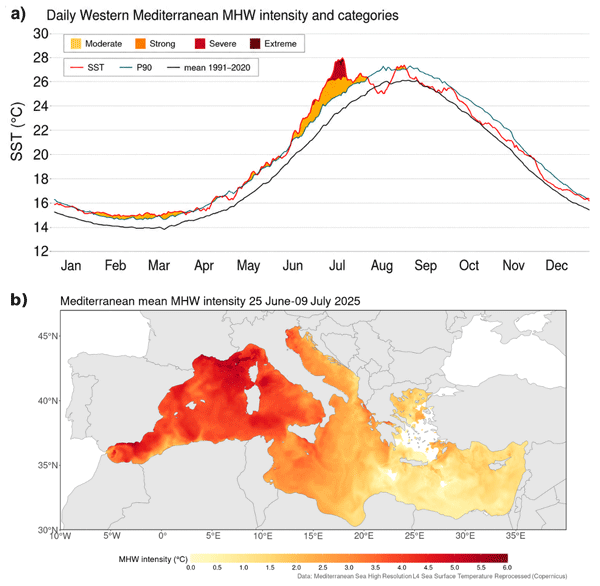
The Mediterranean Sea experienced a record-breaking heatwave in summer 2025. We compared this event to similar patterns from past decades to see how a warmer climate changed its strength. We found that today's warmer background added about 1.5 °C to the sea surface, making the heatwave far more intense and widespread. This shows how climate change is turning ordinary weather patterns into extreme events, with major impacts on marine life, coastal communities, and economies.
Tommaso Alberti, Davide Faranda, and Valerio Lucarini
EGUsphere, https://doi.org/10.5194/egusphere-2026-6629, https://doi.org/10.5194/egusphere-2026-6629, 2026
This preprint is open for discussion and under review for Nonlinear Processes in Geophysics (NPG).
Short summary
Short summary
We studied historical temperature records to understand how land and oceans respond together to a warming world. Ocean temperatures vary more slowly, but land and ocean changes have become increasingly linked, first over many decades and then over shorter periods. Shared temperature patterns also last longer. These findings suggest that warming is reshaping how land and oceans interact, offering a new way to investigate persistent heat and simultaneous hot conditions on land and at sea.
Lia Rapella, Tommaso Alberti, Davide Faranda, and Philippe Drobinski
Weather Clim. Dynam., 6, 1339–1363, https://doi.org/10.5194/wcd-6-1339-2025, https://doi.org/10.5194/wcd-6-1339-2025, 2025
Short summary
Short summary
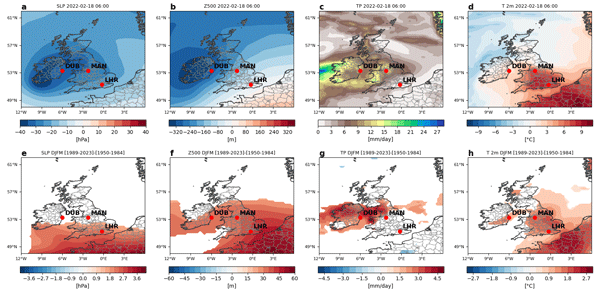
Extreme weather events pose increasing challenges for aviation, including flight disruptions and infrastructure damage. This study examines the influence of anthropogenic climate change on four recent major storms across Europe, the USA, and East Asia. Our research underscores the growing intensity of extreme storms, driven by human-induced climate change, stressing the need to adapt aviation strategies to an increasingly hazardous environment.
Kerry Emanuel, Tommaso Alberti, Stella Bourdin, Suzana J. Camargo, Davide Faranda, Emmanouil Flaounas, Juan Jesus Gonzalez-Aleman, Chia-Ying Lee, Mario Marcello Miglietta, Claudia Pasquero, Alice Portal, Hamish Ramsay, Marco Reale, and Romualdo Romero
Weather Clim. Dynam., 6, 901–926, https://doi.org/10.5194/wcd-6-901-2025, https://doi.org/10.5194/wcd-6-901-2025, 2025
Short summary
Short summary
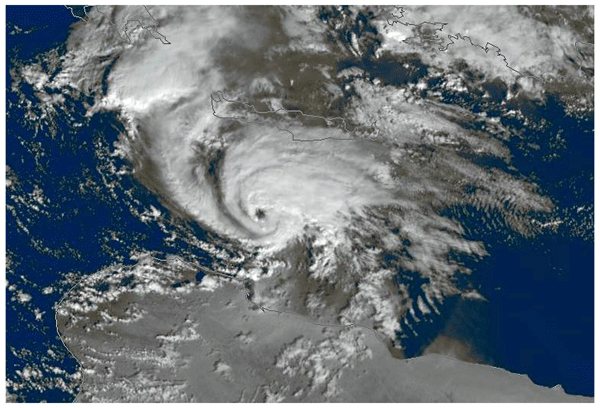
Storms strongly resembling hurricanes are sometimes observed to form well outside the tropics, even in polar latitudes. They behave capriciously, developing very rapidly and then dying just as quickly. We show that strong dynamical processes in the atmosphere can sometimes cause it to become much colder locally than the underlying ocean, creating the conditions for hurricanes to form but only over small areas and for short times. We call the resulting storms "CYCLOPs".
Davide Faranda, Gabriele Messori, Erika Coppola, Tommaso Alberti, Mathieu Vrac, Flavio Pons, Pascal Yiou, Marion Saint Lu, Andreia N. S. Hisi, Patrick Brockmann, Stavros Dafis, Gianmarco Mengaldo, and Robert Vautard
Weather Clim. Dynam., 5, 959–983, https://doi.org/10.5194/wcd-5-959-2024, https://doi.org/10.5194/wcd-5-959-2024, 2024
Short summary
Short summary
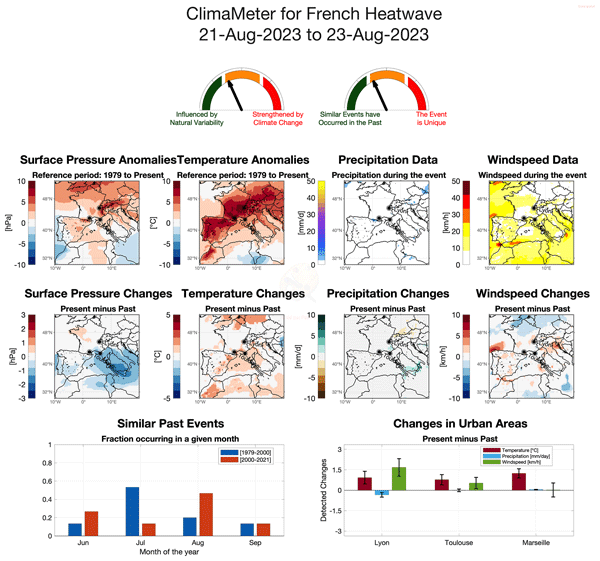
We introduce ClimaMeter, a tool offering real-time insights into extreme-weather events. Our tool unveils how climate change and natural variability affect these events, affecting communities worldwide. Our research equips policymakers and the public with essential knowledge, fostering informed decisions and enhancing climate resilience. We analysed two distinct events, showcasing ClimaMeter's global relevance.

Vera Melinda Galfi, Tommaso Alberti, Lesley De Cruz, Christian L. E. Franzke, and Valerio Lembo
Nonlin. Processes Geophys., 31, 185–193, https://doi.org/10.5194/npg-31-185-2024, https://doi.org/10.5194/npg-31-185-2024, 2024
Short summary
Short summary
In the online seminar series "Perspectives on climate sciences: from historical developments to future frontiers" (2020–2021), well-known and established scientists from several fields – including mathematics, physics, climate science and ecology – presented their perspectives on the evolution of climate science and on relevant scientific concepts. In this paper, we first give an overview of the content of the seminar series, and then we introduce the written contributions to this special issue.
Tommaso Alberti, Davide Faranda, and Valerio Lucarini
EGUsphere, https://doi.org/10.5194/egusphere-2026-6629, https://doi.org/10.5194/egusphere-2026-6629, 2026
This preprint is open for discussion and under review for Nonlinear Processes in Geophysics (NPG).
Short summary
Short summary
We studied historical temperature records to understand how land and oceans respond together to a warming world. Ocean temperatures vary more slowly, but land and ocean changes have become increasingly linked, first over many decades and then over shorter periods. Shared temperature patterns also last longer. These findings suggest that warming is reshaping how land and oceans interact, offering a new way to investigate persistent heat and simultaneous hot conditions on land and at sea.
Davide Faranda, Thibault Guinaldo, Francisco Pastor, Tommaso Alberti, and Samira Khodayar
Nat. Hazards Earth Syst. Sci., 26, 5407–5419, https://doi.org/10.5194/nhess-26-5407-2026, https://doi.org/10.5194/nhess-26-5407-2026, 2026
Short summary
Short summary
The Mediterranean Sea experienced a record-breaking heatwave in summer 2025. We compared this event to similar patterns from past decades to see how a warmer climate changed its strength. We found that today's warmer background added about 1.5 °C to the sea surface, making the heatwave far more intense and widespread. This shows how climate change is turning ordinary weather patterns into extreme events, with major impacts on marine life, coastal communities, and economies.
Greta Cazzaniga, Anastasia Akakpo-Numado, Patrick Brockmann, Adrien Burq, Mathieu Vrac, and Davide Faranda
Nat. Hazards Earth Syst. Sci., 26, 4741–4752, https://doi.org/10.5194/nhess-26-4741-2026, https://doi.org/10.5194/nhess-26-4741-2026, 2026
Short summary
Short summary
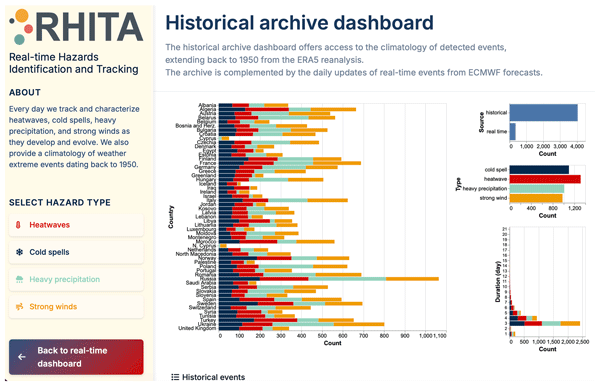
Extreme weather events are becoming more frequent and severe, creating a strong need for rapid and reliable information. We developed an open tool that automatically detects and tracks heatwaves, cold spells, heavy rain, and strong winds across Europe, both in real time and in past decades. By comparing current events with long historical records, the tool shows how unusual an event is and reveals clear increases in heatwaves, while other hazards show more mixed changes.
Isabel H. Smith, Paul D. Williams, and Reinhard Schiemann
Weather Clim. Dynam., 7, 1733–1758, https://doi.org/10.5194/wcd-7-1733-2026, https://doi.org/10.5194/wcd-7-1733-2026, 2026
Short summary
Short summary
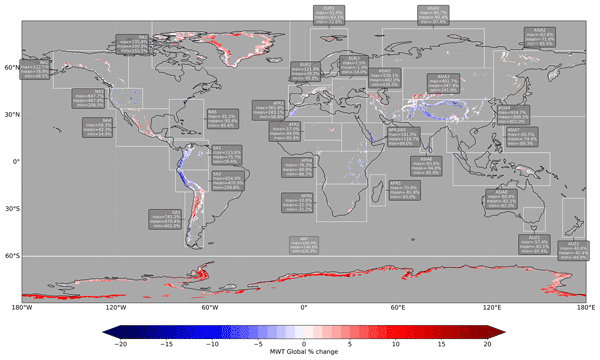
Mountain wave turbulence (MWT) has a dangerous and costly impact on the aviation sector. There is a lack of research into future projected MWT with global warming. This paper quantifies global changes in moderate or greater MWT within a high-end warming scenario by 2050. An increase in MWT is projected for the Antarctic, Greenland, Georgia, Azerbaijan and parts of Chile and Argentina. A decline in MWT is projected for the Alps, Atlas and northern and central Andes.
Adrien Burq, Jean Jouhaud, Victor Xing, Victor Bouvier, Vincent Forcadell, Mateusz Taszarek, Mathieu Vrac, and Davide Faranda
EGUsphere, https://doi.org/10.5194/egusphere-2026-4363, https://doi.org/10.5194/egusphere-2026-4363, 2026
Short summary
Short summary
Lightning is a small-scale process that climate and weather models cannot compute exactly, so it must be approximated. Here we build a deep learning model that predicts lightning across a whole region at once, using inputs from the whole region, and compare it to models that predict each pixel separately. Using this larger-scale information proves beneficial: our model outperforms the single-pixel ones. We also identify the spatial scale and the environmental predictors that matter most.
Tom Dörffel, Natalia Mikula, Lisa Schielicke, Theresa Kiszler, Davide Faranda, Berengere Dubrulle, and Nikki Vercauteren
EGUsphere, https://doi.org/10.5194/egusphere-2026-2918, https://doi.org/10.5194/egusphere-2026-2918, 2026
Short summary
Short summary
We investigate how two different indicators related to measures of energy transfer can be used to assess the dynamics of tropical cyclones. One indicator is based on the energy redistribution across length-scales and the other one is based on more fundamental thermodynamic principles. This research demonstrates the potential of these indicators of being used as predictors for the intensity change of tropical cyclones even in under-resolved simulations.
Moetasim Ashfaq, Erika Coppola, Chris Lennard, Claas Teichmann, Deeksha Rastogi, Elias Massoud, Erasmo Buonomo, Eun-Soon Im, George Zittis, Jason P. Evans, Jesus Fernandez, Katherine J. Evans, Maria Leidinice da Silva, Marianna Adinolfi, Melissa Bukovsky, Rosmeri Porfirio da Rocha, Shabeh ul Hasson, Silvina A. Solman, Stefan Sobolowski, Sushant Das, Swen Brands, Tereza Cavazos, Thanh Ngo-Duc, and Xuejie Gao
EGUsphere, https://doi.org/10.5194/egusphere-2026-2649, https://doi.org/10.5194/egusphere-2026-2649, 2026
Short summary
Short summary
Producing reliable regional climate projections requires carefully selecting which global climate models drive them. We developed a transparent and reproducible framework to identify a balanced, representative subset of models for the Coordinated Regional Climate Downscaling Experiment, a major international effort to generate high-resolution climate projections worldwide. While designed for this initiative, the framework is broadly applicable to other models sub-selection efforts.
Clara Naldesi, Nathalie Bertrand, Davide Faranda, and Mathieu Vrac
EGUsphere, https://doi.org/10.5194/egusphere-2026-1466, https://doi.org/10.5194/egusphere-2026-1466, 2026
Short summary
Short summary
The public increasingly needs to know whether and how climate change influences specific extreme events. ClimaMeter is a scientific tool designed to address this demand. This paper reviews the ClimaMeter methodology, focusing on how it estimates the relative roles of natural variability and climate change. We propose a more flexible and general approach within the same framework, enabling a more nuanced assessment of natural variability.
Valerio Lembo, Gabriele Messori, Davide Faranda, Vera Melinda Galfi, Rune Grand Graversen, and Flavio Emanuele Pons
Weather Clim. Dynam., 7, 453–473, https://doi.org/10.5194/wcd-7-453-2026, https://doi.org/10.5194/wcd-7-453-2026, 2026
Short summary
Short summary
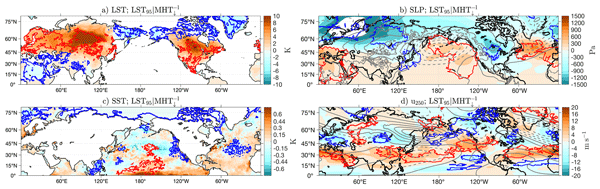
Hemispheric heatwaves have fundamental implications for ecosystems and societies. They are studied together with large-scale atmospheric dynamics, through the lens of poleward heat transports by planetary-scale waves. Extremely weak transports of heat towards the North Pole are found to be associated with hemispheric heatwaves in the Northern Hemisphere mid-latitudes. Therefore, we conclude that heat transports are a possible indicator and a precursor of concurrent hemispheric heatwaves.
Davide Faranda, Lucas Taligrot, Pascal Yiou, and Nada Caud
Geosci. Commun., 9, 115–125, https://doi.org/10.5194/gc-9-115-2026, https://doi.org/10.5194/gc-9-115-2026, 2026
Short summary
Short summary
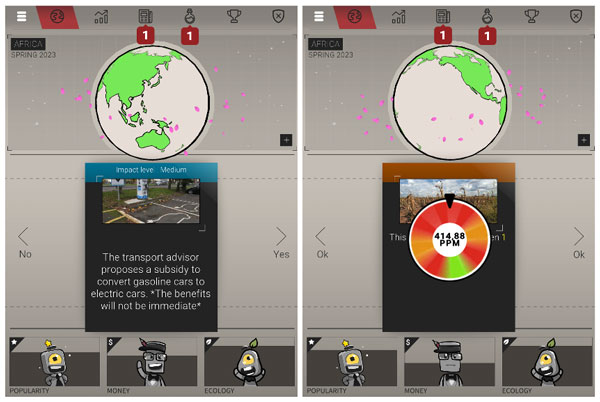
We developed a free online game called ClimarisQ to help people better understand climate change and extreme weather. By playing the game, users learn how decisions about the environment, money, and public opinion affect future risks. We studied how players reacted and found that the game makes climate issues easier to grasp and encourages discussion. This shows that interactive tools like games can support learning and action on climate and environmental challenges.
Corwin J. Wright, Phoebe E. Noble, Timothy P. Banyard, Sarah J. Freeman, and Paul D. Williams
Atmos. Chem. Phys., 25, 18267–18290, https://doi.org/10.5194/acp-25-18267-2025, https://doi.org/10.5194/acp-25-18267-2025, 2025
Short summary
Short summary
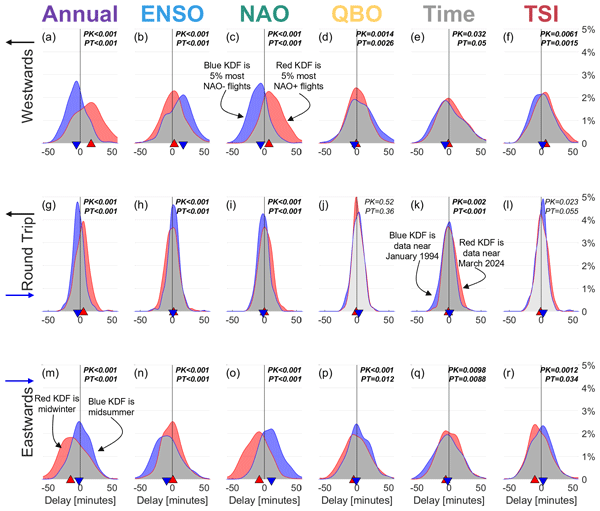
We use measured transatlantic flight times since 1994 from the IAGOS (In-Service Aircraft for a Global
Observing System) program to assess the impact of the North Atlantic Oscillation, El Nino-Southern Oscillation, Quasi-Biennial Oscillation and solar cycle. We show that they drive changes to one-way flight times of over an hour and to round-trip flight times by several minutes per flight. They thus cause variability in total CO2 emissions of 10s of kT/month and financial cost of millions of US dollars/month over the full transatlantic fleet.
Observing System) program to assess the impact of the North Atlantic Oscillation, El Nino-Southern Oscillation, Quasi-Biennial Oscillation and solar cycle. We show that they drive changes to one-way flight times of over an hour and to round-trip flight times by several minutes per flight. They thus cause variability in total CO2 emissions of 10s of kT/month and financial cost of millions of US dollars/month over the full transatlantic fleet.
Emmanouil Flaounas, Stavros Dafis, Silvio Davolio, Davide Faranda, Christian Ferrarin, Katharina Hartmuth, Assaf Hochman, Aristeidis Koutroulis, Samira Khodayar, Mario Marcello Miglietta, Florian Pantillon, Platon Patlakas, Michael Sprenger, and Iris Thurnherr
Weather Clim. Dynam., 6, 1515–1538, https://doi.org/10.5194/wcd-6-1515-2025, https://doi.org/10.5194/wcd-6-1515-2025, 2025
Short summary
Short summary
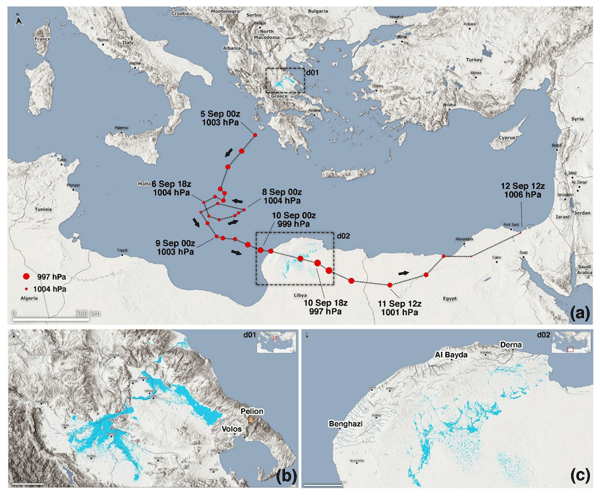
Storm Daniel (2023) is one of the most catastrophic storms ever documented in the Mediterranean. Our results highlight the different dynamics and therefore the different predictability skill of precipitation, its extremes and impacts that have been produced in Greece and Libya, the two most affected countries. Our approach concerns an analysis of the storm by articulating dynamics, weather prediction, hydrological and oceanographic implications, climate extremes, and attribution theory.
Pradeebane Vaittinada Ayar, Stella Bourdin, Davide Faranda, and Mathieu Vrac
Nat. Hazards Earth Syst. Sci., 25, 4655–4672, https://doi.org/10.5194/nhess-25-4655-2025, https://doi.org/10.5194/nhess-25-4655-2025, 2025
Short summary
Short summary
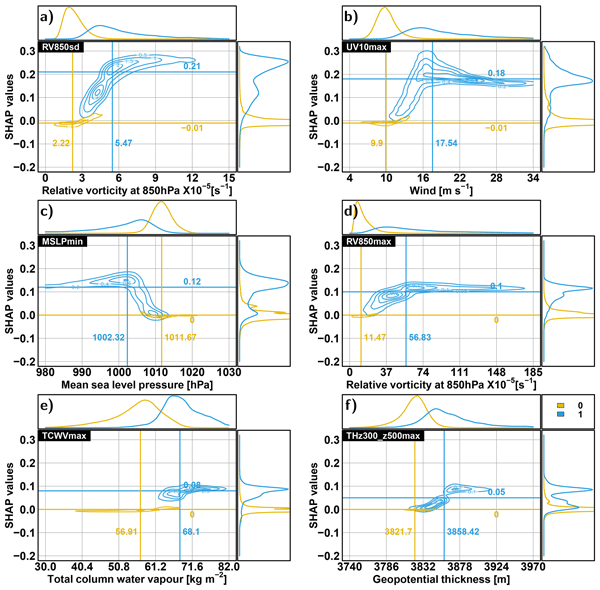
Tracking tropical cyclones (TCs) remains a matter of interest for investigating observed and simulated tropical cyclones. In this study, Random Forest (RF), a machine learning approach, is considered to track TCs. RF associates the TC occurrence or absence with different atmospheric configurations. Compared to trackers found in the literature, it shows similar performance for tracking TCs, better control over false alarms, more flexibility, and reveals key variables for TCs' detection.
Lia Rapella, Tommaso Alberti, Davide Faranda, and Philippe Drobinski
Weather Clim. Dynam., 6, 1339–1363, https://doi.org/10.5194/wcd-6-1339-2025, https://doi.org/10.5194/wcd-6-1339-2025, 2025
Short summary
Short summary
Extreme weather events pose increasing challenges for aviation, including flight disruptions and infrastructure damage. This study examines the influence of anthropogenic climate change on four recent major storms across Europe, the USA, and East Asia. Our research underscores the growing intensity of extreme storms, driven by human-induced climate change, stressing the need to adapt aviation strategies to an increasingly hazardous environment.
Kerry Emanuel, Tommaso Alberti, Stella Bourdin, Suzana J. Camargo, Davide Faranda, Emmanouil Flaounas, Juan Jesus Gonzalez-Aleman, Chia-Ying Lee, Mario Marcello Miglietta, Claudia Pasquero, Alice Portal, Hamish Ramsay, Marco Reale, and Romualdo Romero
Weather Clim. Dynam., 6, 901–926, https://doi.org/10.5194/wcd-6-901-2025, https://doi.org/10.5194/wcd-6-901-2025, 2025
Short summary
Short summary
Storms strongly resembling hurricanes are sometimes observed to form well outside the tropics, even in polar latitudes. They behave capriciously, developing very rapidly and then dying just as quickly. We show that strong dynamical processes in the atmosphere can sometimes cause it to become much colder locally than the underlying ocean, creating the conditions for hurricanes to form but only over small areas and for short times. We call the resulting storms "CYCLOPs".
James M. Ciarlo', Monique Borg Inguanez, Erika Coppola, Aaron Micallef, and David Mifsud
Earth Syst. Dynam., 16, 1391–1407, https://doi.org/10.5194/esd-16-1391-2025, https://doi.org/10.5194/esd-16-1391-2025, 2025
Short summary
Short summary
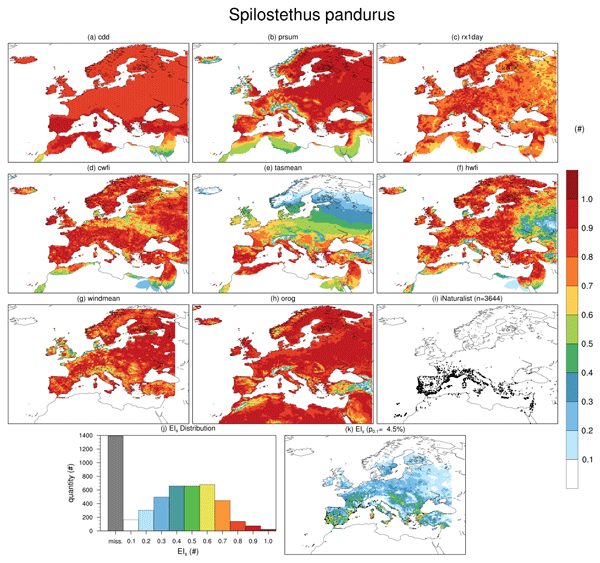
Climate change threatens biodiversity, especially that of arthropods, by altering species' habitats and ecological roles. This study presents a proof of concept for a novel index that models species distributions based on climatic niches, using regional climate model data and focusing on Mediterranean arthropods. The index enables quick assessments of species' climate resilience and offers potential applications for projecting ecological impacts of future climate changes.
Robin Noyelle, Davide Faranda, Yoann Robin, Mathieu Vrac, and Pascal Yiou
Weather Clim. Dynam., 6, 817–839, https://doi.org/10.5194/wcd-6-817-2025, https://doi.org/10.5194/wcd-6-817-2025, 2025
Short summary
Short summary
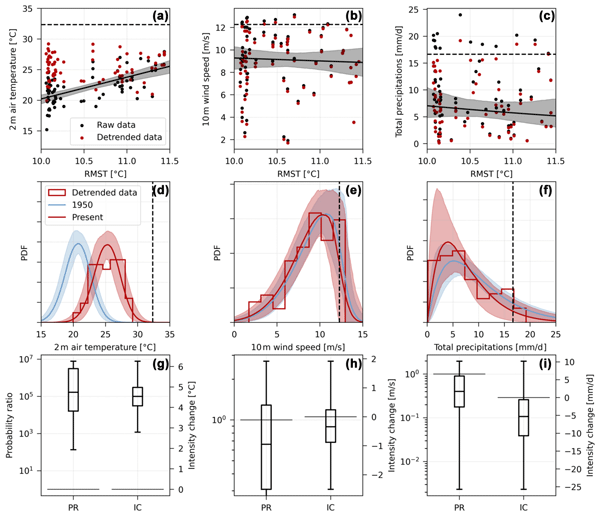
Properties of extreme meteorological and climatological events are changing under human-caused climate change. Extreme event attribution methods seek to estimate the contribution of global warming in the probability and intensity changes of extreme events. Here we propose a procedure to estimate these quantities for the flow analogue method, which compares the observed event to similar events in the past.
Ferran Lopez-Marti, Mireia Ginesta, Davide Faranda, Anna Rutgersson, Pascal Yiou, Lichuan Wu, and Gabriele Messori
Earth Syst. Dynam., 16, 169–187, https://doi.org/10.5194/esd-16-169-2025, https://doi.org/10.5194/esd-16-169-2025, 2025
Short summary
Short summary
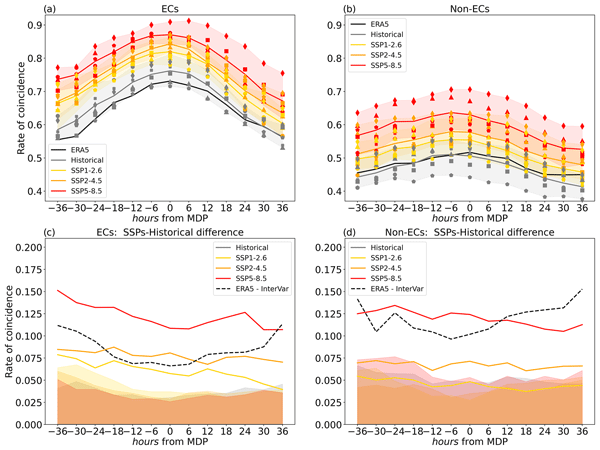
Explosive cyclones and atmospheric rivers are two main drivers of extreme weather in Europe. In this study, we investigate their joint changes in future climates over the North Atlantic. Our results show that both the concurrence of these events and the intensity of atmospheric rivers increase by the end of the century across different future scenarios. Furthermore, explosive cyclones associated with atmospheric rivers last longer and are deeper than those without atmospheric rivers.
Davide Faranda, Gabriele Messori, Erika Coppola, Tommaso Alberti, Mathieu Vrac, Flavio Pons, Pascal Yiou, Marion Saint Lu, Andreia N. S. Hisi, Patrick Brockmann, Stavros Dafis, Gianmarco Mengaldo, and Robert Vautard
Weather Clim. Dynam., 5, 959–983, https://doi.org/10.5194/wcd-5-959-2024, https://doi.org/10.5194/wcd-5-959-2024, 2024
Short summary
Short summary
We introduce ClimaMeter, a tool offering real-time insights into extreme-weather events. Our tool unveils how climate change and natural variability affect these events, affecting communities worldwide. Our research equips policymakers and the public with essential knowledge, fostering informed decisions and enhancing climate resilience. We analysed two distinct events, showcasing ClimaMeter's global relevance.
Vera Melinda Galfi, Tommaso Alberti, Lesley De Cruz, Christian L. E. Franzke, and Valerio Lembo
Nonlin. Processes Geophys., 31, 185–193, https://doi.org/10.5194/npg-31-185-2024, https://doi.org/10.5194/npg-31-185-2024, 2024
Short summary
Short summary
In the online seminar series "Perspectives on climate sciences: from historical developments to future frontiers" (2020–2021), well-known and established scientists from several fields – including mathematics, physics, climate science and ecology – presented their perspectives on the evolution of climate science and on relevant scientific concepts. In this paper, we first give an overview of the content of the seminar series, and then we introduce the written contributions to this special issue.
Lucas Fery and Davide Faranda
Weather Clim. Dynam., 5, 439–461, https://doi.org/10.5194/wcd-5-439-2024, https://doi.org/10.5194/wcd-5-439-2024, 2024
Short summary
Short summary
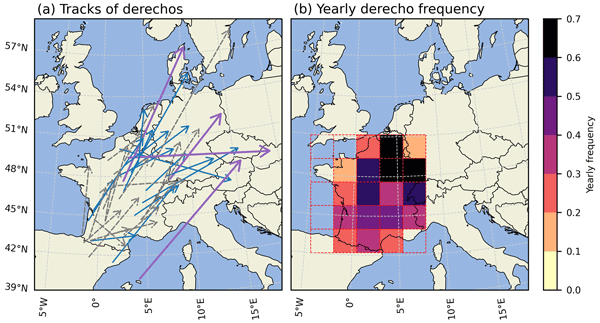
In this study, we analyse warm-season derechos – a type of severe convective windstorm – in France between 2000 and 2022, identifying 38 events. We compare their frequency and features with other countries. We also examine changes in the associated large-scale patterns. We find that convective instability has increased in southern Europe. However, the attribution of these changes to natural climate variability, human-induced climate change or a combination of both remains unclear.
Susanna Strada, Andrea Pozzer, Graziano Giuliani, Erika Coppola, Fabien Solmon, Xiaoyan Jiang, Alex Guenther, Efstratios Bourtsoukidis, Dominique Serça, Jonathan Williams, and Filippo Giorgi
Atmos. Chem. Phys., 23, 13301–13327, https://doi.org/10.5194/acp-23-13301-2023, https://doi.org/10.5194/acp-23-13301-2023, 2023
Short summary
Short summary
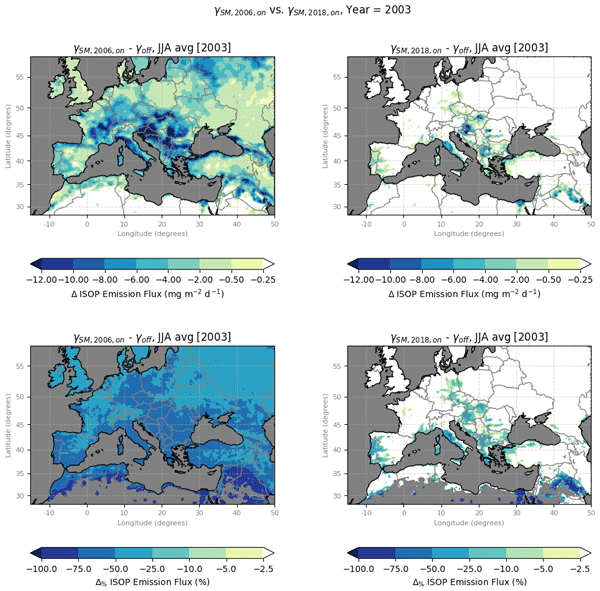
Water deficit modifies emissions of isoprene, an aromatic compound released by plants that influences the production of an air pollutant such as ozone. Numerical modelling shows that, during the warmest and driest summers, isoprene decreases between −20 and −60 % over the Euro-Mediterranean region, while near-surface ozone only diminishes by a few percent. Decreases in isoprene emissions not only happen under dry conditions, but also could occur after prolonged or repeated water deficits.
Emma Holmberg, Gabriele Messori, Rodrigo Caballero, and Davide Faranda
Earth Syst. Dynam., 14, 737–765, https://doi.org/10.5194/esd-14-737-2023, https://doi.org/10.5194/esd-14-737-2023, 2023
Short summary
Short summary
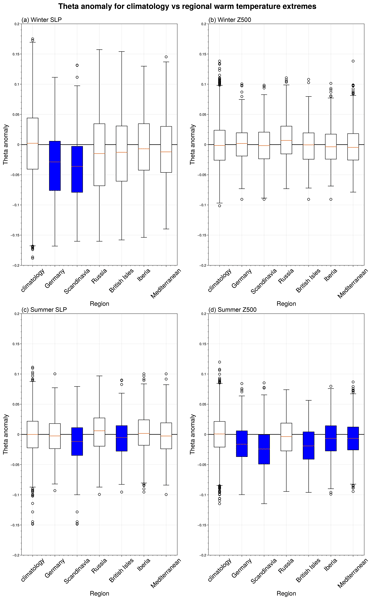
We analyse the duration of large-scale patterns of air movement in the atmosphere, referred to as persistence, and whether unusually persistent patterns favour warm-temperature extremes in Europe. We see no clear relationship between summertime heatwaves and unusually persistent patterns. This suggests that heatwaves do not necessarily require the continued flow of warm air over a region and that local effects could be important for their occurrence.
Davide Faranda, Stella Bourdin, Mireia Ginesta, Meriem Krouma, Robin Noyelle, Flavio Pons, Pascal Yiou, and Gabriele Messori
Weather Clim. Dynam., 3, 1311–1340, https://doi.org/10.5194/wcd-3-1311-2022, https://doi.org/10.5194/wcd-3-1311-2022, 2022
Short summary
Short summary
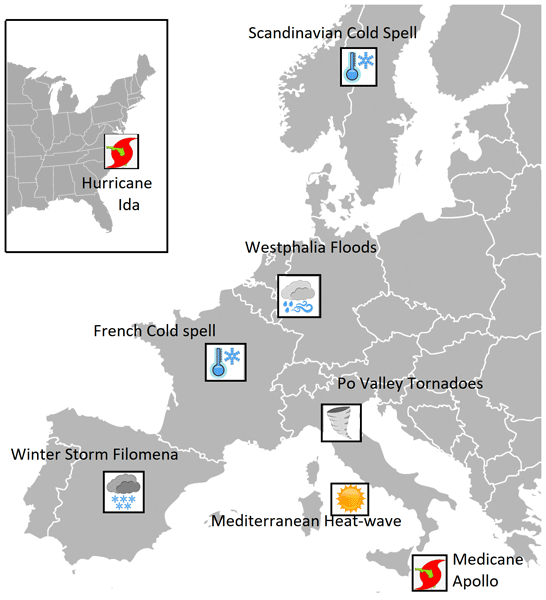
We analyze the atmospheric circulation leading to impactful extreme events for the calendar year 2021 such as the Storm Filomena, Westphalia floods, Hurricane Ida and Medicane Apollo. For some of the events, we find that climate change has contributed to their occurrence or enhanced their intensity; for other events, we find that they are unprecedented. Our approach underscores the importance of considering changes in the atmospheric circulation when performing attribution studies.
Flavio Maria Emanuele Pons and Davide Faranda
Adv. Stat. Clim. Meteorol. Oceanogr., 8, 155–186, https://doi.org/10.5194/ascmo-8-155-2022, https://doi.org/10.5194/ascmo-8-155-2022, 2022
Short summary
Short summary
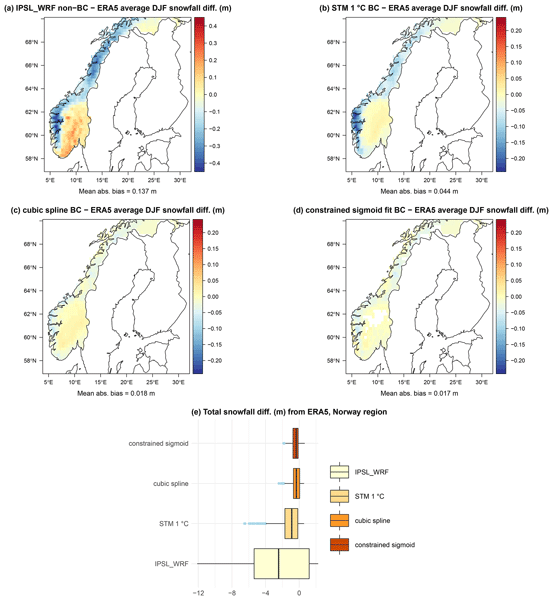
The objective motivating this study is the assessment of the impacts of winter climate extremes, which requires accurate simulation of snowfall. However, climate simulation models contain physical approximations, which result in biases that must be corrected using past data as a reference. We show how to exploit simulated temperature and precipitation to estimate snowfall from already bias-corrected variables, without requiring the elaboration of complex, multivariate bias adjustment techniques.
Miriam D'Errico, Flavio Pons, Pascal Yiou, Soulivanh Tao, Cesare Nardini, Frank Lunkeit, and Davide Faranda
Earth Syst. Dynam., 13, 961–992, https://doi.org/10.5194/esd-13-961-2022, https://doi.org/10.5194/esd-13-961-2022, 2022
Short summary
Short summary
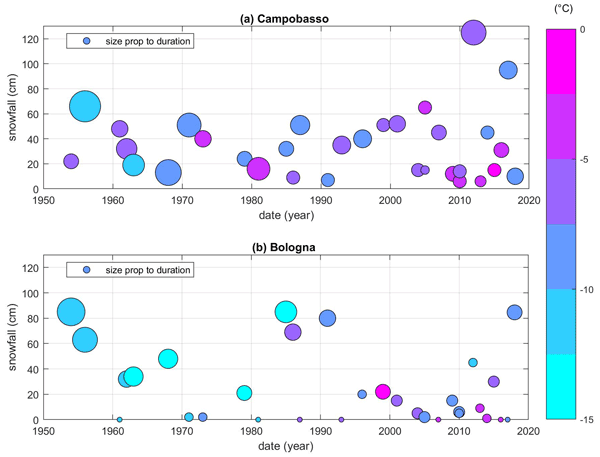
Climate change is already affecting weather extremes. In a warming climate, we will expect the cold spells to decrease in frequency and intensity. Our analysis shows that the frequency of circulation patterns leading to snowy cold-spell events over Italy will not decrease under business-as-usual emission scenarios, although the associated events may not lead to cold conditions in the warmer scenarios.
Bérengère Dubrulle, François Daviaud, Davide Faranda, Louis Marié, and Brice Saint-Michel
Nonlin. Processes Geophys., 29, 17–35, https://doi.org/10.5194/npg-29-17-2022, https://doi.org/10.5194/npg-29-17-2022, 2022
Short summary
Short summary
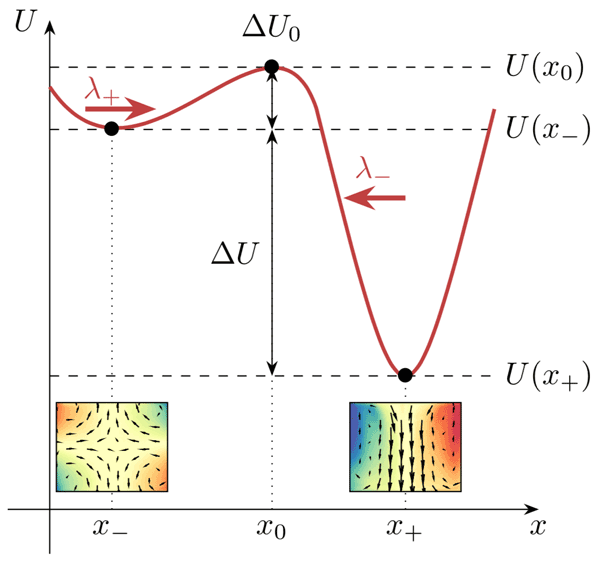
Present climate models discuss climate change but show no sign of bifurcation in the future. Is this because there is none or because they are in essence too simplified to be able to capture them? To get elements of an answer, we ran a laboratory experiment and discovered that the answer is not so simple.

Erika Coppola, Paolo Stocchi, Emanuela Pichelli, Jose Abraham Torres Alavez, Russell Glazer, Graziano Giuliani, Fabio Di Sante, Rita Nogherotto, and Filippo Giorgi
Geosci. Model Dev., 14, 7705–7723, https://doi.org/10.5194/gmd-14-7705-2021, https://doi.org/10.5194/gmd-14-7705-2021, 2021
Short summary
Short summary
In this work we describe the development of a non-hydrostatic version of the regional climate model RegCM4-NH, implemented to allow simulations at convection-permitting scales of <4 km for climate applications. The new core is described, and three case studies of intense convection are carried out to illustrate the model performances. Comparison with observations is much improved with respect to with coarse grid runs. RegCM4-NH offers a promising tool for climate investigations at a local scale.
Cited articles
Baek, S.-H., Kim, J.-H., Kim, S.-H., Lee, Y., Noh, Y.-J., and Lee, S.-M.: Characteristics of convectively induced turbulence in East Asia using geostationary korea multi-purpose Satellite-2A (GK-2A) and in situ aircraft data, J. Geophys. Res.-Atmos., 129, e2024JD041671, https://doi.org/10.1029/2024JD041671, 2024. a, b
Burbidge, R., Paling, C., and Dunk, R. M.: A systematic review of adaption to climate change impacts in the aviation sector, Transport Rev., 44, 8–33, 2024. a
Dutton, J. A.: Clear-air turbulence, aviation, and atmospheric science, Rev. Geophys., 9, 613–657, 1971. a
Ellrod, G. P. and Knapp, D. I.: An objective clear-air turbulence forecasting technique: verification and operational use, Weather Forecast., 7, 150–165, https://doi.org/10.1175/1520-0434(1992)007<0150:AOCATF>2.0.CO;2, 1992. a, b
Ellrod, G. P. and Knox, J. A.: Improvements to an operational clear-air turbulence diagnostic index by addition of a divergence trend term, Weather Forecast., 25, 789–798, https://doi.org/10.1175/2009WAF2222290.1, 2010. a
Faranda, D., Messori, G., Jezequel, A., Vrac, M., and Yiou, P.: Atmospheric circulation compounds anthropogenic warming and impacts of climate extremes in Europe, P. Natl. Acad. Sci. USA, 120, e2214525120, https://doi.org/10.1073/pnas.2214525120, 2023. a, b, c
Faranda, D., Messori, G., Coppola, E., Alberti, T., Vrac, M., Pons, F., Yiou, P., Saint Lu, M., Hisi, A. N. S., Brockmann, P., Dafis, S., Mengaldo, G., and Vautard, R.: ClimaMeter: contextualizing extreme weather in a changing climate, Weather Clim. Dynam., 5, 959–983, https://doi.org/10.5194/wcd-5-959-2024, 2024. a, b, c, d, e, f, g, h, i, j, k, l, m
Gratton, G. B., Williams, P. D., Padhra, A., and Rapsomanikis, S.: Reviewing the impacts of climate change on air transport operations, The Aeronautical Journal, 126, 209–221, 2022. a
Guarino, M.-V., Teixeira, M. A. C., Keller, T. L., and Sharman, R. D.: Mountain-wave turbulence in the presence of directional wind shear over the Rocky Mountains, J. Atmos. Sci., 75, 1285–1305, 2018. a
Hersbach, H., Bell, B., Berrisford, P., Hirahara, S., Horányi, A., Muñoz-Sabater, J., Nicolas, J., Peubey, C., Radu, R., Schepers, D., Simmons, A., Soci, C., Abdalla, S., Abellan, X., Balsamo, G., Bechtold, P., Biavati, G., Bidlot, J., Bonavita, M., De Chiara, G., Dahlgren, P., Dee, D., Diamantakis, M., Dragani, R., Flemming, J., Forbes, R., Fuentes, M., Geer, A., Haimberger, L., Healy, S., Hogan, R. J., Hólm, E., Janisková, M., Keeley, S., Laloyaux, P., Lopez, P., Lupu, C., Radnoti, G., de Rosnay, P., Rozum, I., Vamborg, F., Villaume, S., and Thépaut, J.-N.: The ERA5 global reanalysis, Q. J. Roy. Meteor. Soc., 146, 1999–2049, 2020. a
International Civil Aviation Organization (ICAO): Seventh Meeting of the MOG, https://www.icao.int/sites/de fault/files/METP/Documents/Nov-2020-New-WAFS-Hazard-da ta-training-material.pdf (last access: 27 October 2026), 2020. a, b
Jaeger, E. B. and Sprenger, M.: A Northern Hemispheric climatology of indices for clear air turbulence in the tropopause region derived from ERA40 reanalysis data, J. Geophys. Res.-Atmos., 112, https://doi.org/10.1029/2006JD008189, 2007. a, b
Jézéquel, A., Dépoues, V., Guillemot, H., Trolliet, M., Vanderlinden, J.-P., and Yiou, P.: Behind the veil of extreme event attribution, Climatic Change, 149, 367–383, https://doi.org/10.1007/s10584-018-2252-9, 2018. a, b
Kaluza, T., Williams, P. D., Schultz, D. M., and Banyard, T. P.: Climatology of upper-tropospheric turbulence: capabilities and limitations of aircraft reports and ERA5 reanalysis diagnostics, Q. J. Roy. Meteor. Soc., 152, e70073, 2026. a
Kim, J.-H. and Chun, H.-Y.: A numerical study of clear-air turbulence encounters over South Korea on 2 April 2007, J. Appl. Meteorol., 49, 2381–2403, 2010. a
Kim, S.-H., Chun, H.-Y., Kim, J.-H., Sharman, R. D., and Strahan, M.: Retrieval of eddy dissipation rate from derived equivalent vertical gust included in Aircraft Meteorological Data Relay (AMDAR), Atmos. Meas. Tech., 13, 1373–1385, https://doi.org/10.5194/amt-13-1373-2020, 2020. a, b
Lane, T. P., Sharman, R. D., Trier, S. B., Fovell, R. G., and Williams, J. K.: Recent Advances in the Understanding of Near-Cloud Turbulence, B. Am. Meteorol. Soc., 93, 499–515, https://doi.org/10.1175/BAMS-D-11-00062.1, 2012. a
Lee, J. H., Kim, J.-H., Sharman, R. D., Kim, J., and Son, S.-W.: Climatology of clear-air turbulence in upper troposphere and lower stratosphere in the Northern Hemisphere using ERA5 reanalysis data, J. Geophys. Res.-Atmos., 128, e2022JD037679, https://doi.org/10.1029/2022JD037679, 2023. a, b
Lee, J. H., Kim, J.-H., Trier, S. B., Sharman, R. D., and Doyle, J. D.: Generation mechanisms of near-cloud turbulence events in the upper-level outflow of tropical cyclone Hagibis, Mon. Weather Rev., 153, 521–542, https://doi.org/10.1175/MWR-D-24-0116.1, 2025. a, b
Prosser, M. C., Williams, P. D., Marlton, G. J., and Harrison, R. G.: Evidence for large increases in clear-air turbulence over the past four decades, Geophys. Res. Lett., 50, e2023GL103814, https://doi.org/10.1029/2023GL103814, 2023. a, b, c
Rapella, L., Alberti, T., Faranda, D., and Drobinski, P.: Anthropogenic climate change has increased severity of mid-latitude storms and impacted airport operations, Weather Clim. Dynam., 6, 1339–1363, https://doi.org/10.5194/wcd-6-1339-2025, 2025. a
Sharman, R. and Lane, T.: Aviation Turbulence, Springer International Publishing, Switzerland, 10, https://doi.org/10.1007/978-3-319-23630-8, ISBN: 978-3-319-23630-8, 2016. a, b
Shaw, T. A. and Miyawaki, O.: Fast upper-level jet stream winds get faster under climate change, Nat. Clim. Change, 14, 61–67, https://doi.org/10.1038/s41558-023-01884-1, 2023. a
Smith, I. H., Williams, P. D., and Schiemann, R.: Clear-air turbulence trends over the North Atlantic in high-resolution climate models, Clim. Dynam., 61, 1–17, 2023. a
Storer, L. N., Williams, P. D., and Joshi, M. M.: Global response of clear-air turbulence to climate change, Geophys. Res. Lett., 44, 9976–9984, 2017. a
Storer, L. N., Williams, P. D., and Gill, P. G.: Aviation turbulence: dynamics, forecasting, and response to climate change, Pure Appl. Geophys., 176, 2081–2095, 2019. a
Trier, S. B., Sharman, R. D., Muñoz-Esparza, D., and Lane, T. P.: Environment and mechanisms of severe turbulence in a midlatitude cyclone, J. Atmos. Sci., 77, 3869–3889, https://doi.org/10.1175/JAS-D-20-0095.1, 2020. a, b
Williams, P. D. and Joshi, M. M.: Intensification of winter transatlantic aviation turbulence in response to climate change, Nat. Clim. Change, 3, 644–648, https://doi.org/10.1038/nclimate1866, 2013. a, b
Yiou, P., Jézéquel, A., Naveau, P., Otto, F. E. L., Vautard, R., and Vrac, M.: A statistical framework for conditional extreme event attribution, Adv. Stat. Clim. Meteorol. Oceanogr., 3, 17–31, https://doi.org/10.5194/ascmo-3-17-2017, 2017. a, b
Short summary
We developed TurboMeter to study whether climate change is making aviation turbulence stronger. By comparing current atmospheric conditions with similar past situations, we find that most turbulence events in 2024 were intensified by human-caused climate change, especially over the North Atlantic, East Asia, and the United States. This work shows that climate change is already affecting flight safety and highlights the need for climate-informed planning in aviation.
We developed TurboMeter to study whether climate change is making aviation turbulence stronger....


Altmetrics
Final-revised paper
Preprint