
Articles | Volume 7, issue 1
https://doi.org/10.5194/wcd-7-277-2026
© Author(s) 2026. This work is distributed under
the Creative Commons Attribution 4.0 License.
the Creative Commons Attribution 4.0 License.
https://doi.org/10.5194/wcd-7-277-2026
© Author(s) 2026. This work is distributed under
the Creative Commons Attribution 4.0 License.
the Creative Commons Attribution 4.0 License.
Research article
| 
02 Feb 2026
Research article |
| 02 Feb 2026
| 02 Feb 2026
The tropospheric response to zonally asymmetric momentum torques: implications for the downward response to wave reflection and SSW events
Wuhan Ning
Fredy and Nadine Herrmann Institute of Earth Sciences, The Hebrew University of Jerusalem, Jerusalem 91904, Israel
Chaim I. Garfinkel
CORRESPONDING AUTHOR

Fredy and Nadine Herrmann Institute of Earth Sciences, The Hebrew University of Jerusalem, Jerusalem 91904, Israel
Judah Cohen
Atmospheric and Environmental Research, Janus Research Group LLC, Lexington, Massachusetts 02421, USA
Department of Civil and Environmental Engineering, Massachusetts Institute of Technology, Cambridge, Massachusetts 02139, USA
Ian P. White
Bureau of Meteorology, Melbourne, Victoria, Australia
State Key Laboratory of Environment Characteristics and Effects for Near-space, Nanjing University of Information Science and Technology, Nanjing 210044, China
Related authors
Chaim I. Garfinkel, Tiffany Shaw, Benny Keller, Edwin P. Gerber, Ian P. White, Martin Jucker, Wuhan Ning, Ori Adam, and Siming Liu
Weather Clim. Dynam., 7, 1951–1975, https://doi.org/10.5194/wcd-7-1951-2026, https://doi.org/10.5194/wcd-7-1951-2026, 2026
Short summary
Short summary
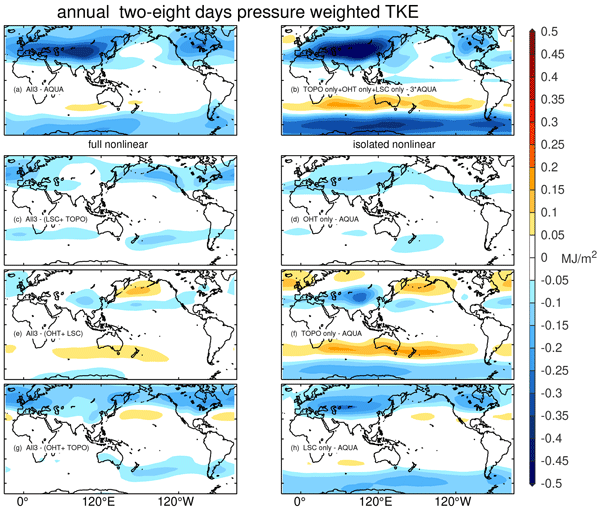
Midlatitude storm tracks are stronger over ocean basins than continents, and also stronger in the Southern Hemisphere than in the Northern Hemisphere. It is still not clear how Earth's land-ocean distribution, ocean heat transport, and orography, set up this structure. We use an intermediate complexity moist general circulation model to reveal substantial non-additivities in the response to these inhomogeneities, and then diagnose why.
Blanca Ayarzagüena, Amy H. Butler, Peter Hitchcock, Chaim I. Garfinkel, Zac D. Lawrence, Wuhan Ning, Philip Rupp, Zheng Wu, Hilla Afargan-Gerstman, Natalia Calvo, Alvaro de la Cámara, Martin Jucker, Gerbrand Koren, Daniel De Maeseneire, Gloria L. Manney, Marisol Osman, Masakazu Taguchi, Cory Barton, Dong-Chan Hong, Yu-Kyung Hyun, Hera Kim, Jeff Knight, Piero Malguzzi, Daniele Mastrangelo, Jiyoung Oh, Inna Polichtchouk, Jadwiga H. Richter, Isla R. Simpson, Seok-Woo Son, Damien Specq, and Tim Stockdale
Weather Clim. Dynam., 7, 411–437, https://doi.org/10.5194/wcd-7-411-2026, https://doi.org/10.5194/wcd-7-411-2026, 2026
Short summary
Short summary
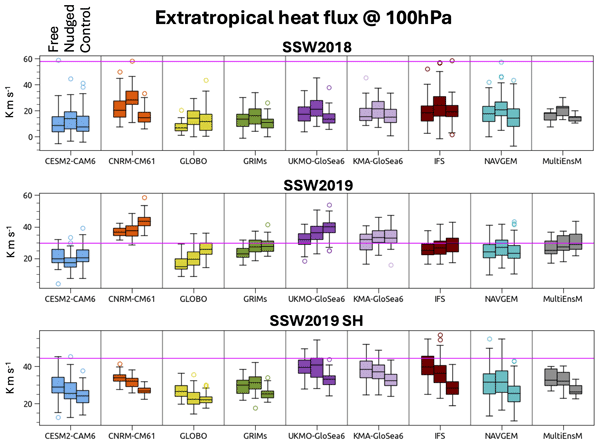
Sudden Stratospheric Warmings (SSWs) are known to follow a sustained wave dissipation in the stratosphere, which depends on both the tropospheric and stratospheric states. However, the relative role of each state is still unclear. Using a new set of subseasonal to seasonal forecasts, we show that the stratospheric state does not drastically affect the precursors of three recent SSWs, but modulates the stratospheric wave activity, with impacts depending on SSW features.
Chaim I. Garfinkel, Tiffany Shaw, Benny Keller, Edwin P. Gerber, Ian P. White, Martin Jucker, Wuhan Ning, Ori Adam, and Siming Liu
Weather Clim. Dynam., 7, 1951–1975, https://doi.org/10.5194/wcd-7-1951-2026, https://doi.org/10.5194/wcd-7-1951-2026, 2026
Short summary
Short summary
Midlatitude storm tracks are stronger over ocean basins than continents, and also stronger in the Southern Hemisphere than in the Northern Hemisphere. It is still not clear how Earth's land-ocean distribution, ocean heat transport, and orography, set up this structure. We use an intermediate complexity moist general circulation model to reveal substantial non-additivities in the response to these inhomogeneities, and then diagnose why.
Kexiang Feng, Jian Rao, Chaim I. Garfinkel, Amy H. Butler, Blanca Ayarzagüena, and Xiaoqi Zhang
EGUsphere, https://doi.org/10.5194/egusphere-2026-4971, https://doi.org/10.5194/egusphere-2026-4971, 2026
This preprint is open for discussion and under review for Weather and Climate Dynamics (WCD).
Short summary
Short summary
Sudden stratospheric warmings can influence weather at the Earth's surface, but the role of the upper atmosphere remains unclear. Using forecast models with different upper-atmosphere conditions, we find that the upper atmosphere actively affects the evolution of these events and their surface impacts. This highlights the importance of better representing the upper atmosphere to improve forecasts of sudden stratospheric warmings and their impacts.
William J. M. Seviour, Justin Finkel, Philip Rupp, Regan Mudhar, Amy H. Butler, Chaim I. Garfinkel, Peter Hitchcock, Blanca Ayarzagüena, Dong-Chan Hong, Yu-Kyung Hyun, Hera Kim, Eun-Pa Lim, Daniel De Maeseneire, Gabriele Messori, Gerbrand Koren, Michael Sigmond, Isla R. Simpson, and Seok-Woo Son
Weather Clim. Dynam., 7, 1405–1423, https://doi.org/10.5194/wcd-7-1405-2026, https://doi.org/10.5194/wcd-7-1405-2026, 2026
Short summary
Short summary
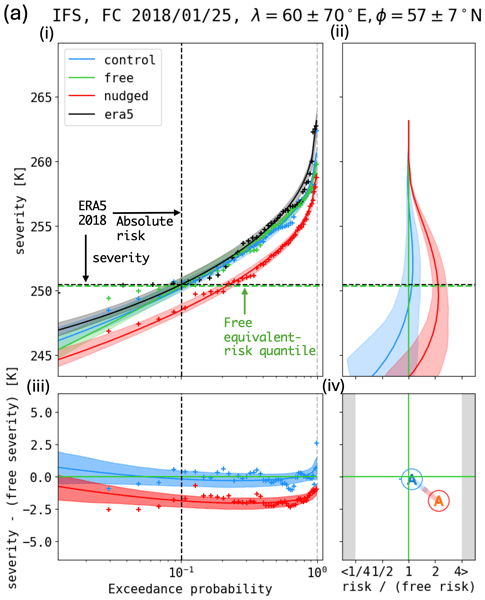
Variability of the stratospheric polar vortex is thought to play a role in driving weather extremes, but quantifying this role for a given event has proved challenging. Using a new set of perturbed subseasonal forecast experiments from 7 modelling centres, we determine the stratospheric contribution to the risk and severity of three recent extreme weather events. The forecast-based methodology that we develop is applicable to understanding a range of other drivers of weather extremes.
David Avisar and Chaim I. Garfinkel
Weather Clim. Dynam., 7, 1331–1348, https://doi.org/10.5194/wcd-7-1331-2026, https://doi.org/10.5194/wcd-7-1331-2026, 2026
Short summary
Short summary
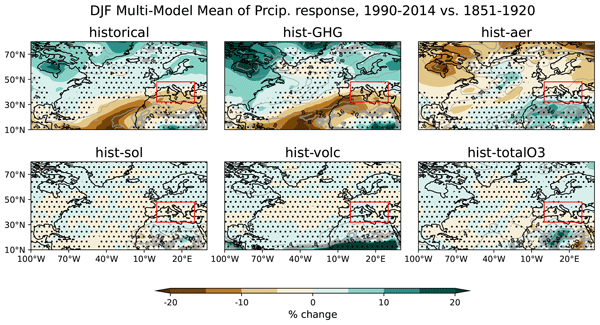
We use the Large Ensemble Single Forcing simulations to assess the role of individual forcings to the Mediterranean drying and to clarify the dynamical origin of the model’s prediction variability. A more pronounced North Atlantic warming hole, a stronger stratospheric polar vortex, and a larger poleward shift of the subtropical jet correlate with a stronger drying trend. Aerosols had a detectable influence on Mediterranean climate. Hence, their removal may have an impact in future decades.
Chaim I. Garfinkel, David Avisar, Wenjuan Huo, Ales Kuchar, Shoshiro Minobe, Scott Osprey, Katharina Perny, and Jonathon S. Wright
EGUsphere, https://doi.org/10.5194/egusphere-2026-3738, https://doi.org/10.5194/egusphere-2026-3738, 2026
Short summary
Short summary
Whether tropical volcanic eruptions lead to a circulation response in winter is still unclear. We re-evaluate this effect using large ensembles from eight separate models with only one time-varying external forcing: volcanic aerosols. We find that 75 % of models simulate the previously proposed effect, but that the signal requires at least 30 eruptions before it emerges robustly from the noise. Furthermore, we demonstrate that the El Niño signal differs from natural El Niño events.
Hongbin Chen, Jian Rao, Seok-Woo Son, Bin Guan, and Mengxin Pan
Earth Syst. Sci. Data, 18, 5357–5373, https://doi.org/10.5194/essd-18-5357-2026, https://doi.org/10.5194/essd-18-5357-2026, 2026
Short summary
Short summary
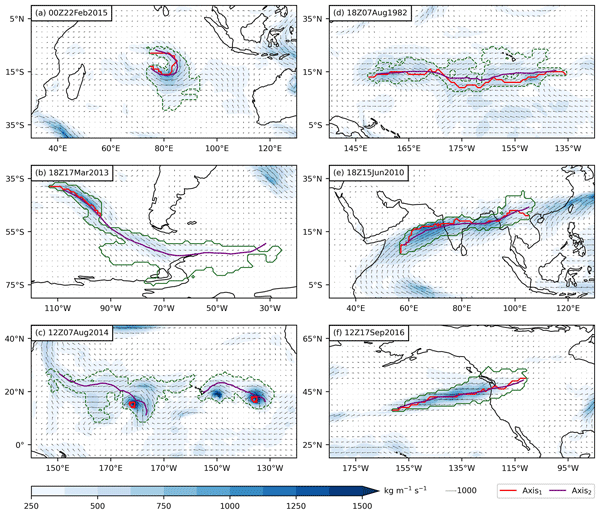
We present a global atmospheric river (AR) database derived from ERA5 reanalysis (1940–2024). By employing a novel multi-method fusion algorithm, this database provides AR identification results at a horizontal resolution of 1° × 1° and a temporal resolution of 6 hours. Characterized by enhanced algorithmic robustness and extensive temporal coverage, it offers a valuable resource for further weather and climate research.
Chaim I. Garfinkel, David Avisar, Scott M. Osprey, Doug Smith, Jian Rao, and Jonathon S. Wright
Weather Clim. Dynam., 7, 1133–1152, https://doi.org/10.5194/wcd-7-1133-2026, https://doi.org/10.5194/wcd-7-1133-2026, 2026
Short summary
Short summary
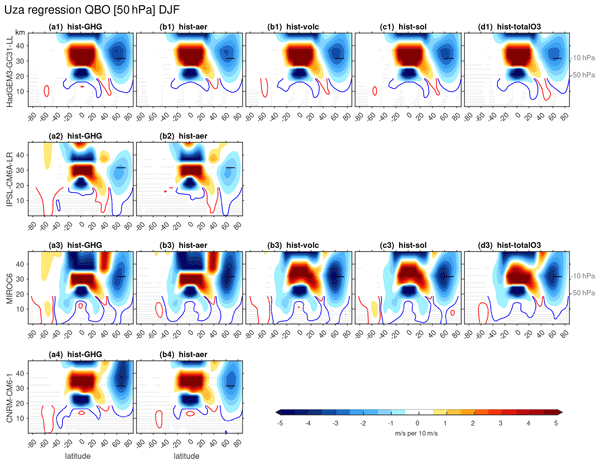
The Quasi-biennial Oscillation (QBO) dominates variability in the tropical stratosphere, & it impacts surface climate in several parts of the world. However, climate models have been shown to systematically under-estimate the influence of the QBO. Here, we re-evaluate this finding using much larger ensemble sizes than have been previously available based on four separate models. We find that the models are comparatively more successful in capturing QBO influences than reported by previous work.
Dong-Chan Hong, Seok-Woo Son, Blanca Ayarzagüena, Amy H. Butler, Chaim I. Garfinkel, Peter Hitchcock, Yu-Kyung Hyun, and Jiankai Zhang
EGUsphere, https://doi.org/10.5194/egusphere-2026-2798, https://doi.org/10.5194/egusphere-2026-2798, 2026
Short summary
Short summary
This study investigates how Sudden Stratospheric Warming (SSW) influences surface climate. By comparing multi-model simulations, we isolated and quantified the role of SSWs. Results reveal that poleward mass transport during SSWs induces high pressure over the Arctic, driving changes in extratropical circulations. While SSWs alter the troposphere, chaotic internal weather variability can amplify or suppress their influence, explaining the differing surface impacts following SSWs.
Qian Lu, Jian Rao, Chunhua Shi, and Chaim I. Garfinkel
Atmos. Chem. Phys., 26, 5763–5780, https://doi.org/10.5194/acp-26-5763-2026, https://doi.org/10.5194/acp-26-5763-2026, 2026
Short summary
Short summary
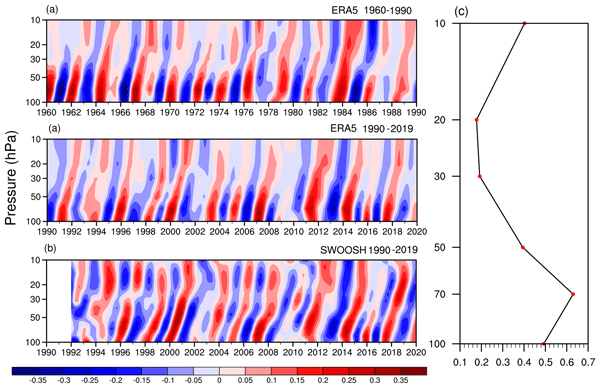
Stratospheric water vapor has an impact on global temperature changes. Tropical stratospheric water vapor exhibits a clear imprint of the Quasi-Biennial Oscillation (QBO). This study compares the water vapor variations associated with the QBO between boreal winter and summer, and the seasonal difference in the stratospheric water vapor distribution under different QBO phases is revealed.
Rongzhao Lu and Jian Rao
Atmos. Chem. Phys., 26, 3723–3742, https://doi.org/10.5194/acp-26-3723-2026, https://doi.org/10.5194/acp-26-3723-2026, 2026
Short summary
Short summary
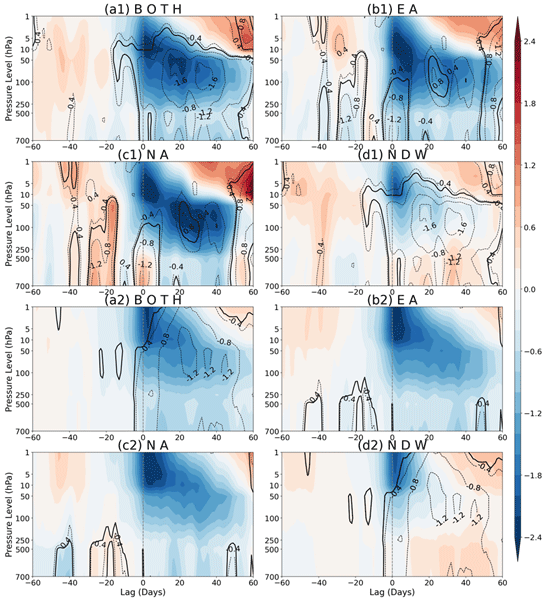
The downward impact of sudden stratospheric warming events (SSWs) on the troposphere is still controversial. We further classify downward-propagating SSWs (DWs) into three types that are followed by cold surges over Eurasia (EA), over North America (NA), and over both (BOTH), respectively. This study reveals the diversity of the DWs and distinguishes their potential impact on both continents in the Northern Hemisphere.
Blanca Ayarzagüena, Amy H. Butler, Peter Hitchcock, Chaim I. Garfinkel, Zac D. Lawrence, Wuhan Ning, Philip Rupp, Zheng Wu, Hilla Afargan-Gerstman, Natalia Calvo, Alvaro de la Cámara, Martin Jucker, Gerbrand Koren, Daniel De Maeseneire, Gloria L. Manney, Marisol Osman, Masakazu Taguchi, Cory Barton, Dong-Chan Hong, Yu-Kyung Hyun, Hera Kim, Jeff Knight, Piero Malguzzi, Daniele Mastrangelo, Jiyoung Oh, Inna Polichtchouk, Jadwiga H. Richter, Isla R. Simpson, Seok-Woo Son, Damien Specq, and Tim Stockdale
Weather Clim. Dynam., 7, 411–437, https://doi.org/10.5194/wcd-7-411-2026, https://doi.org/10.5194/wcd-7-411-2026, 2026
Short summary
Short summary
Sudden Stratospheric Warmings (SSWs) are known to follow a sustained wave dissipation in the stratosphere, which depends on both the tropospheric and stratospheric states. However, the relative role of each state is still unclear. Using a new set of subseasonal to seasonal forecasts, we show that the stratospheric state does not drastically affect the precursors of three recent SSWs, but modulates the stratospheric wave activity, with impacts depending on SSW features.

Cristiana Stan, Saisri Kollapaneni, Andrea M. Jenney, Jiabao Wang, Zheng Wu, Cheng Zheng, Hyemi Kim, Chaim I. Garfinkel, and Ayush Singh
Geosci. Model Dev., 18, 7969–7985, https://doi.org/10.5194/gmd-18-7969-2025, https://doi.org/10.5194/gmd-18-7969-2025, 2025
Short summary
Short summary
The diagnostics package is an open-source Python software package used for evaluating the Madden–Julian Oscillation teleconnections to the extratropics, as predicted by subseasonal-to-seasonal (S2S) forecast systems.
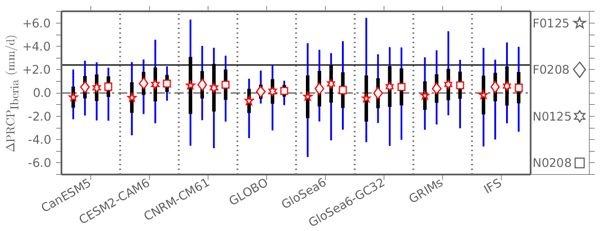
Ying Dai, Peter Hitchcock, Amy H. Butler, Chaim I. Garfinkel, and William J. M. Seviour
Weather Clim. Dynam., 6, 841–862, https://doi.org/10.5194/wcd-6-841-2025, https://doi.org/10.5194/wcd-6-841-2025, 2025
Short summary
Short summary
Using a new database of subseasonal to seasonal (S2S) forecasts, we find that with a successful forecast of the sudden stratospheric warming (SSW), S2S models can capture the European precipitation signals after the 2018 SSW several weeks in advance. The findings indicate that the stratosphere represents an important source of S2S predictability for precipitation over Europe and call for consideration of stratospheric variability in hydrological prediction at S2S timescales.
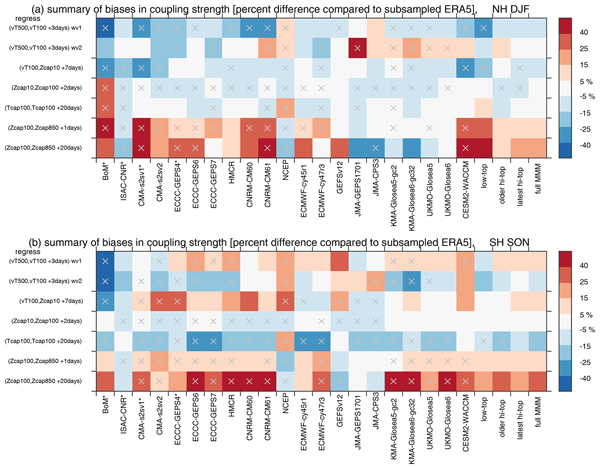
Chaim I. Garfinkel, Zachary D. Lawrence, Amy H. Butler, Etienne Dunn-Sigouin, Irene Erner, Alexey Y. Karpechko, Gerbrand Koren, Marta Abalos, Blanca Ayarzagüena, David Barriopedro, Natalia Calvo, Alvaro de la Cámara, Andrew Charlton-Perez, Judah Cohen, Daniela I. V. Domeisen, Javier García-Serrano, Neil P. Hindley, Martin Jucker, Hera Kim, Robert W. Lee, Simon H. Lee, Marisol Osman, Froila M. Palmeiro, Inna Polichtchouk, Jian Rao, Jadwiga H. Richter, Chen Schwartz, Seok-Woo Son, Masakazu Taguchi, Nicholas L. Tyrrell, Corwin J. Wright, and Rachel W.-Y. Wu
Weather Clim. Dynam., 6, 171–195, https://doi.org/10.5194/wcd-6-171-2025, https://doi.org/10.5194/wcd-6-171-2025, 2025
Short summary
Short summary
Variability in the extratropical stratosphere and troposphere is coupled, and because of the longer timescales characteristic of the stratosphere, this allows for a window of opportunity for surface prediction. This paper assesses whether models used for operational prediction capture these coupling processes accurately. We find that most processes are too weak; however downward coupling from the lower stratosphere to the near surface is too strong.
Rongzhao Lu and Jian Rao
EGUsphere, https://doi.org/10.5194/egusphere-2024-2179, https://doi.org/10.5194/egusphere-2024-2179, 2024
Preprint archived
Short summary
Short summary
The SSWs are classified into downward-propagating (DW) SSWs with noticeable impacts on the troposphere and non-downward-propagating (NDW). The DW events are further classified into three types. This study improves our understanding of the diversity of the SSWs.
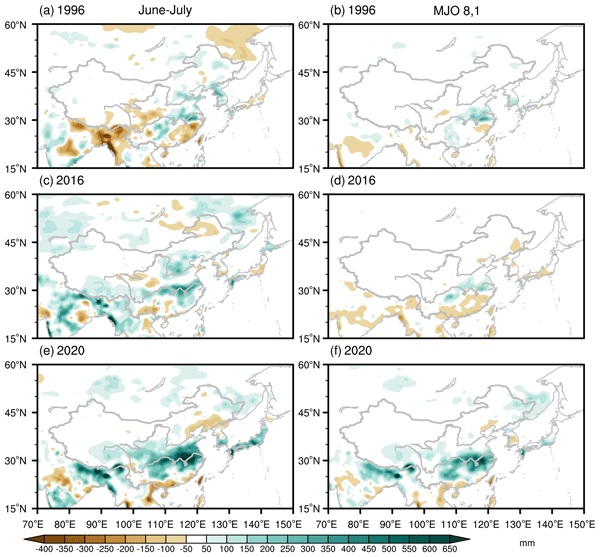
Zefan Ju, Jian Rao, Yue Wang, Junfeng Yang, and Qian Lu
Atmos. Chem. Phys., 23, 14903–14918, https://doi.org/10.5194/acp-23-14903-2023, https://doi.org/10.5194/acp-23-14903-2023, 2023
Short summary
Short summary
In the paper, we explored the impact of the Madden–Julian Oscillation (MJO) and the Quasi-Biennial Oscillation (QBO) on East China summer rainfall variability. It is novel to find that the combined impact of MJO and QBO is not maximized when the QBO and MJO are in phase to enhance (or suppress) the tropical convection.
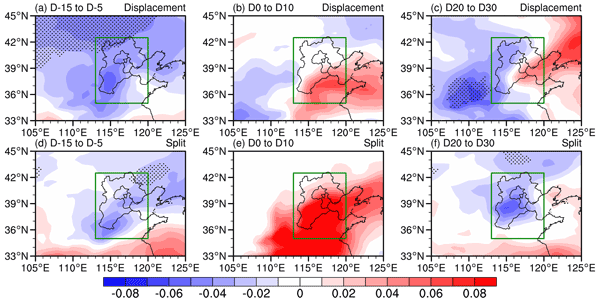
Qian Lu, Jian Rao, Chunhua Shi, Dong Guo, Guiqin Fu, Ji Wang, and Zhuoqi Liang
Atmos. Chem. Phys., 22, 13087–13102, https://doi.org/10.5194/acp-22-13087-2022, https://doi.org/10.5194/acp-22-13087-2022, 2022
Short summary
Short summary
Existing evidence mainly focuses on the possible impact of tropospheric climate anomalies on the regional air pollutions, but few studies pay attention to the impact of stratospheric changes on haze pollutions in the Beijing–Tianjin–Hebei (BTH) region. Our study reveals the linkage between the stratospheric variability and the regional atmospheric environment. The downward-propagating stratospheric signals might have a cleaning effect on the atmospheric environment in the BTH region.
Zachary D. Lawrence, Marta Abalos, Blanca Ayarzagüena, David Barriopedro, Amy H. Butler, Natalia Calvo, Alvaro de la Cámara, Andrew Charlton-Perez, Daniela I. V. Domeisen, Etienne Dunn-Sigouin, Javier García-Serrano, Chaim I. Garfinkel, Neil P. Hindley, Liwei Jia, Martin Jucker, Alexey Y. Karpechko, Hera Kim, Andrea L. Lang, Simon H. Lee, Pu Lin, Marisol Osman, Froila M. Palmeiro, Judith Perlwitz, Inna Polichtchouk, Jadwiga H. Richter, Chen Schwartz, Seok-Woo Son, Irene Erner, Masakazu Taguchi, Nicholas L. Tyrrell, Corwin J. Wright, and Rachel W.-Y. Wu
Weather Clim. Dynam., 3, 977–1001, https://doi.org/10.5194/wcd-3-977-2022, https://doi.org/10.5194/wcd-3-977-2022, 2022
Short summary
Short summary
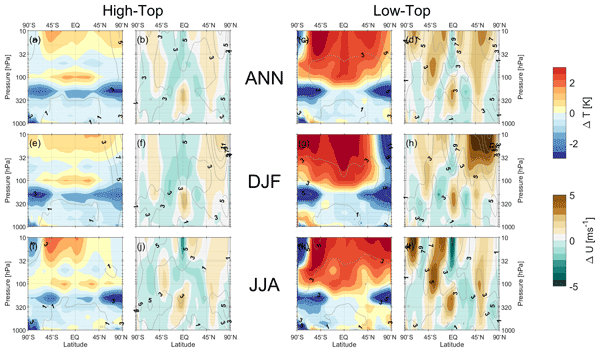
Forecast models that are used to predict weather often struggle to represent the Earth’s stratosphere. This may impact their ability to predict surface weather weeks in advance, on subseasonal-to-seasonal (S2S) timescales. We use data from many S2S forecast systems to characterize and compare the stratospheric biases present in such forecast models. These models have many similar stratospheric biases, but they tend to be worse in systems with low model tops located within the stratosphere.
Peter Hitchcock, Amy Butler, Andrew Charlton-Perez, Chaim I. Garfinkel, Tim Stockdale, James Anstey, Dann Mitchell, Daniela I. V. Domeisen, Tongwen Wu, Yixiong Lu, Daniele Mastrangelo, Piero Malguzzi, Hai Lin, Ryan Muncaster, Bill Merryfield, Michael Sigmond, Baoqiang Xiang, Liwei Jia, Yu-Kyung Hyun, Jiyoung Oh, Damien Specq, Isla R. Simpson, Jadwiga H. Richter, Cory Barton, Jeff Knight, Eun-Pa Lim, and Harry Hendon
Geosci. Model Dev., 15, 5073–5092, https://doi.org/10.5194/gmd-15-5073-2022, https://doi.org/10.5194/gmd-15-5073-2022, 2022
Short summary
Short summary
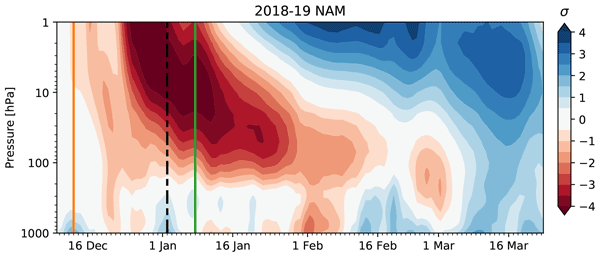
This paper describes an experimental protocol focused on sudden stratospheric warmings to be carried out by subseasonal forecast modeling centers. These will allow for inter-model comparisons of these major disruptions to the stratospheric polar vortex and their impacts on the near-surface flow. The protocol will lead to new insights into the contribution of the stratosphere to subseasonal forecast skill and new approaches to the dynamical attribution of extreme events.
Chen Schwartz, Chaim I. Garfinkel, Priyanka Yadav, Wen Chen, and Daniela I. V. Domeisen
Weather Clim. Dynam., 3, 679–692, https://doi.org/10.5194/wcd-3-679-2022, https://doi.org/10.5194/wcd-3-679-2022, 2022
Short summary
Short summary
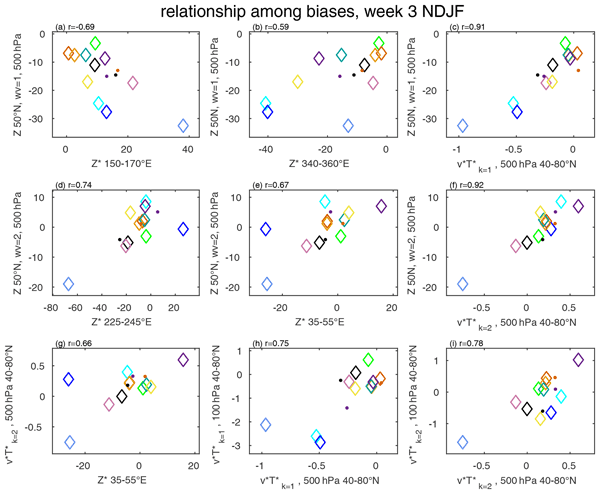
Eleven operational forecast models that run on subseasonal timescales (up to 2 months) are examined to assess errors in their simulated large-scale stationary waves in the Northern Hemisphere winter. We found that models with a more finely resolved stratosphere generally do better in simulating the waves in both the stratosphere (10–50 km) and troposphere below. Moreover, a connection exists between errors in simulated time-mean convection in tropical regions and errors in the simulated waves.
Shlomi Ziskin Ziv, Chaim I. Garfinkel, Sean Davis, and Antara Banerjee
Atmos. Chem. Phys., 22, 7523–7538, https://doi.org/10.5194/acp-22-7523-2022, https://doi.org/10.5194/acp-22-7523-2022, 2022
Short summary
Short summary
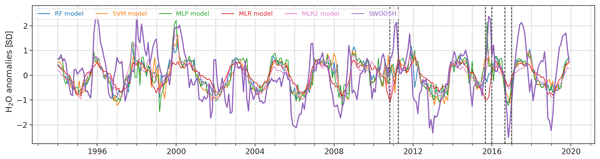
Stratospheric water vapor is important for Earth's overall greenhouse effect and for ozone chemistry; however the factors governing its variability on interannual timescales are not fully known, and previous modeling studies have indicated that models struggle to capture this interannual variability. We demonstrate that nonlinear interactions are important for determining overall water vapor concentrations and also that models have improved in their ability to capture these connections.
Adam A. Scaife, Mark P. Baldwin, Amy H. Butler, Andrew J. Charlton-Perez, Daniela I. V. Domeisen, Chaim I. Garfinkel, Steven C. Hardiman, Peter Haynes, Alexey Yu Karpechko, Eun-Pa Lim, Shunsuke Noguchi, Judith Perlwitz, Lorenzo Polvani, Jadwiga H. Richter, John Scinocca, Michael Sigmond, Theodore G. Shepherd, Seok-Woo Son, and David W. J. Thompson
Atmos. Chem. Phys., 22, 2601–2623, https://doi.org/10.5194/acp-22-2601-2022, https://doi.org/10.5194/acp-22-2601-2022, 2022
Short summary
Short summary
Great progress has been made in computer modelling and simulation of the whole climate system, including the stratosphere. Since the late 20th century we also gained a much clearer understanding of how the stratosphere interacts with the lower atmosphere. The latest generation of numerical prediction systems now explicitly represents the stratosphere and its interaction with surface climate, and here we review its role in long-range predictions and projections from weeks to decades ahead.
Cited articles
Agel, L., Cohen, J., Barlow, M., Pfeiffer, K., Francis, J., Garfinkel, C. I., and Kretschmer, M.: Cold-air outbreaks in the continental US: connections with stratospheric variations, Science Advances, 11, eadq9557, https://doi.org/10.1126/sciadv.adq9557 2025. a, b
Alexander, M. and Dunkerton, T.: A spectral parameterization of mean-flow forcing due to breaking gravity waves, J. Atmos. Sci., 56, 4167–4182, 1999. a
Andrews, D. and Mcintyre, M. E.: Planetary waves in horizontal and vertical shear: the generalized Eliassen-Palm relation and the mean zonal acceleration, J. Atmos. Sci., 33, 2031–2048, 1976. a
Baldwin, M. P., Stephenson, D. B., Thompson, D. W., Dunkerton, T. J., Charlton, A. J., and O'Neill, A.: Stratospheric memory and skill of extended-range weather forecasts, Science, 301, 636–640, 2003. a
Baldwin, M. P., Ayarzagüena, B., Birner, T., Butchart, N., Butler, A. H., Charlton-Perez, A. J., Domeisen, D. I., Garfinkel, C. I., Garny, H., Gerber, E. P., Hegglin, M. I., Langematz, U., and Pedatella, N. M.: Sudden stratospheric warmings, Rev. Geophys., 59, e2020RG000708, https://doi.org/10.1029/2020RG000708, 2021. a, b, c, d, e
Bancalá, S., Krüger, K., and Giorgetta, M.: The preconditioning of major sudden stratospheric warmings, J. Geophys. Res.-Atmos., 117, https://doi.org/10.1029/2011JD016769, 2012. a, b
Betts, A. K.: A new convective adjustment scheme. Part I: Observational and theoretical basis, Q. J. Roy. Meteor. Soc., 112, 677–691, 1986. a
Butler, A. H., Sjoberg, J. P., Seidel, D. J., and Rosenlof, K. H.: A sudden stratospheric warming compendium, Earth Syst. Sci. Data, 9, 63–76, https://doi.org/10.5194/essd-9-63-2017, 2017. a, b, c
Ding, X., Chen, G., Sun, L., and Zhang, P.: Distinct North American cooling signatures following the zonally symmetric and asymmetric modes of winter stratospheric variability, Geophys. Res. Lett., 49, e2021GL096076, https://doi.org/10.1029/2021GL096076, 2022. a
Ding, X., Chen, G., Zhang, P., Domeisen, D. I., and Orbe, C.: Extreme stratospheric wave activity as harbingers of cold events over North America, Communications Earth and Environment, 4, 187, https://doi.org/10.1038/s43247-023-00845-y, 2023. a
Domeisen, D. I. V., Butler, A. H., Charlton-Perez, A. J., Ayarzagüena, B., Baldwin, M. P., Dunn-Sigouin, E., Furtado, J. C., Garfinkel, C. I., Hitchcock, P., Karpechko, A. Y., Kim, H., Knight, J., Lang, A. L., Lim, E.-P., Marshall, A., Roff, G., Schwartz, C., Simpson, I. R., Son, S.-W., and Taguchi, M.: The role of the stratosphere in subseasonal to seasonal prediction: 2. Predictability arising from stratosphere-troposphere coupling, J. Geophys. Res.-Atmos., 125, e2019JD030923, https://doi.org/10.1029/2019JD030923, 2020. a
Dunn-Sigouin, E. and Shaw, T.: Dynamics of extreme stratospheric negative heat flux events in an idealized model, J. Atmos. Sci., 75, 3521–3540, https://doi.org/10.1175/JAS-D-17-0263.1, 2018. a
Edmon Jr., H., Hoskins, B., and McIntyre, M.: Eliassen-Palm cross sections for the troposphere, J. Atmos. Sci., 37, 2600–2616, 1980. a
Frierson, D. M., Held, I. M., and Zurita-Gotor, P.: A gray-radiation aquaplanet moist GCM. Part I: Static stability and eddy scale, J. Atmos. Sci., 63, 2548–2566, 2006. a
Garfinkel, C. I., Son, S.-W., Song, K., Aquila, V., and Oman, L. D.: Stratospheric variability contributed to and sustained the recent hiatus in Eurasian winter warming, Geophys. Res. Lett., 44, 374–382, 2017. a
Hall, R. J., Mitchell, D. M., Seviour, W. J., and Wright, C. J.: Tracking the stratosphere-to-surface impact of sudden stratospheric warmings, J. Geophys. Res.-Atmos., 126, e2020JD033881, https://doi.org/10.1029/2020JD033881, 2021. a, b, c
Hitchcock, P. and Simpson, I. R.: The downward influence of stratospheric sudden warmings, J. Atmos. Sci., 71, 3856–3876, 2014. a
Hoskins, B.: Dynamical processes in the atmosphere and the use of models, Q. J. Roy. Meteor. Soc., 109, 1–21, 1983. a
Huang, J., Tian, W., Gray, L. J., Zhang, J., Li, Y., Luo, J., and Tian, H.: Preconditioning of Arctic stratospheric polar vortex shift events, J. Climate, 31, 5417–5436, 2018. a
Keyser, D., Schmidt, B. D., and Duffy, D. G.: A technique for representing three-dimensional vertical circulations in baroclinic disturbances, Mon. Weather Rev., 117, 2463–2494, 1989. a
Kodera, K., Mukougawa, H., Maury, P., Ueda, M., and Claud, C.: Absorbing and reflecting sudden stratospheric warming events and their relationship with tropospheric circulation, J. Geophys. Res.-Atmos., 121, 80–94, 2016. a
Lehtonen, I. and Karpechko, A. Y.: Observed and modeled tropospheric cold anomalies associated with sudden stratospheric warmings, J. Geophys. Res.-Atmos., 121, 1591–1610, 2016. a
Matthewman, N. J., Esler, J. G., Charlton-Perez, A. J., and Polvani, L.: A new look at stratospheric sudden warmings. Part III: Polar vortex evolution and vertical structure, J. Climate, 22, 1566–1585, 2009. a
Matthias, V. and Kretschmer, M.: The influence of stratospheric wave reflection on North American cold spells, Mon. Weather Rev., 148, 1675–1690, 2020. a
Maycock, A. C. and Hitchcock, P.: Do split and displacement sudden stratospheric warmings have different annular mode signatures?, Geophys. Res. Lett., 42, 10,943–10,951, https://doi.org/10.1002/2015GL066754, 2015. a
Merlis, T. M., Schneider, T., Bordoni, S., and Eisenman, I.: Hadley circulation response to orbital precession. Part II: Subtropical continent, J. Climate, 26, 754–771, 2013. a
Messori, G., Kretschmer, M., Lee, S. H., and Wendt, V.: Stratospheric downward wave reflection events modulate North American weather regimes and cold spells, Weather Clim. Dynam., 3, 1215–1236, https://doi.org/10.5194/wcd-3-1215-2022, 2022. a, b
Mlawer, E. J., Taubman, S. J., Brown, P. D., Iacono, M. J., and Clough, S. A.: Radiative transfer for inhomogeneous atmospheres: RRTM, a validated correlated-k model for the longwave, J. Geophys. Res.-Atmos., 102, 16663–16682, 1997. a
Perlwitz, J. and Harnik, N.: Observational evidence of a stratospheric influence on the troposphere by planetary wave reflection, J. Climate, 16, 3011–3026, 2003. a
Plumb, R. A.: On the three-dimensional propagation of stationary waves, J. Atmos. Sci., 42, 217–229, 1985. a
Polvani, L. M. and Waugh, D. W.: Upward wave activity flux as a precursor to extreme stratospheric events and subsequent anomalous surface weather regimes, J. Climate, 17, 3548–3554, 2004. a
Raiter, D., Galanti, E., Chemke, R., and Kaspi, Y.: Linking future tropical precipitation changes to zonally-asymmetric large-scale meridional circulation, Geophys. Res. Lett., 51, e2023GL106072, https://doi.org/10.1029/2023GL106072, 2024. a, b
Rao, J., Garfinkel, C. I., and White, I. P.: Predicting the downward and surface influence of the February 2018 and January 2019 sudden stratospheric warming events in subseasonal to seasonal (S2S) models, J. Geophys. Res.-Atmos., 125, e2019JD031919, https://doi.org/10.1029/2019JD031919, 2020. a
Rao, J., Garfinkel, C. I., and White, I. P.: Development of the extratropical response to the stratospheric quasi-biennial oscillation, J. Climate, 34, 7239–7255, 2021. a
Rupp, P., Hitchcock, P., and Birner, T.: Coupled planetary wave dynamics in the polar stratosphere analyzed with potential enstrophy and eddy energy budgets, J. Atmos. Sci., 82, 1629–1645, https://doi.org/10.1175/JAS-D-24-0249.1, 2025. a
Shen, X., Wang, L., Scaife, A. A., Hardiman, S. C., and Xu, P.: The Stratosphere–Troposphere Oscillation as the dominant intraseasonal coupling mode between the stratosphere and troposphere, J. Climate, 36, 2259–2276, 2023. a
Shen, X., Wang, L., Scaife, A. A., and Hardiman, S. C.: Intraseasonal linkages of winter surface air temperature between Eurasia and North America, Geophys. Res. Lett., 52, e2024GL113301, https://doi.org/10.1029/2024GL113301, 2025. a
Shepherd, T. G. and Shaw, T. A.: The angular momentum constraint on climate sensitivity and downward influence in the middle atmosphere, J. Atmos. Sci., 61, 2899–2908, 2004. a
Simpson, I. R., Seager, R., Ting, M., and Shaw, T. A.: Causes of change in Northern Hemisphere winter meridional winds and regional hydroclimate, Nat. Clim. Change, 6, 65–70, 2016. a
Tan, X. and Bao, M.: Linkage between a dominant mode in the lower stratosphere and the Western Hemisphere circulation pattern, Geophys. Res. Lett., 47, e2020GL090105, https://doi.org/10.1029/2020GL090105, 2020. a
White, I. P., Garfinkel, C. I., Cohen, J., Jucker, M., and Rao, J.: The impact of split and displacement sudden stratospheric warmings on the troposphere, J. Geophys. Res.-Atmos., 126, e2020JD033989, https://doi.org/10.1029/2020JD033989, 2021. a, b
Short summary
Whether the zonal structure of a polar vortex matters for surface climate is an open question, with much observational work showing a role but with limited modeling work and demonstration of a causal influence. Here, we isolate this influence using a moist general circulation model. We find that the surface responses differ qualitatively depending on the zonal asymmetries of the shifted polar vortex and concurrently occurring wave reflection events, and provide a mechanistic explanation for why.
Whether the zonal structure of a polar vortex matters for surface climate is an open question,...


