
Articles | Volume 7, issue 1
https://doi.org/10.5194/wcd-7-341-2026
© Author(s) 2026. This work is distributed under
the Creative Commons Attribution 4.0 License.
the Creative Commons Attribution 4.0 License.
https://doi.org/10.5194/wcd-7-341-2026
© Author(s) 2026. This work is distributed under
the Creative Commons Attribution 4.0 License.
the Creative Commons Attribution 4.0 License.
Research article
| 
17 Feb 2026
Research article |
| 17 Feb 2026
| 17 Feb 2026
Topographic effects of Svalbard on warm and moist air intrusions into the Central Arctic

Alfred Wegener Institute, Helmholtz Centre for Polar and Marine Research, Telegrafenberg A45, Potsdam, Germany
Sonja Murto
Stockholm University and Bolin Centre for Climate Research, Department of Meteorology, Stockholm, Sweden
Department of Earth Sciences, Uppsala University, Uppsala, Sweden
Florian Gebhardt
Alfred Wegener Institute, Helmholtz Centre for Polar and Marine Research, Telegrafenberg A45, Potsdam, Germany
Ella Gilbert
British Antarctic Survey, Madingley Road, Cambridge, UK
Annette Rinke
Alfred Wegener Institute, Helmholtz Centre for Polar and Marine Research, Telegrafenberg A45, Potsdam, Germany
Related authors
No articles found.
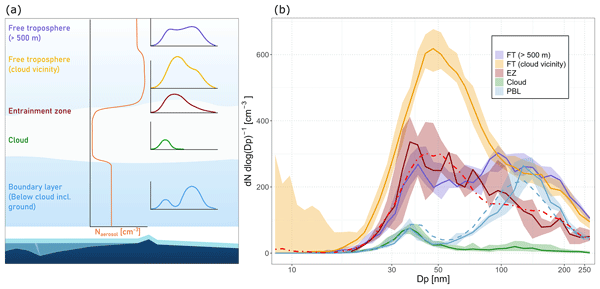
Roman Pohorsky, Heather Guy, Ian Morley Brooks, Lea Haberstock, Nicolas Fauré, Paul Zieger, Julia Kojoj, Sonja Murto, Radiance Calmer, Benjamin Heutte, Michael Lonardi, Erik Schurch Thomson, Michael Tjernström, Jessie Creamean, Athanasios Nenes, and Julia Schmale
Atmos. Chem. Phys., 26, 10331–10353, https://doi.org/10.5194/acp-26-10331-2026, https://doi.org/10.5194/acp-26-10331-2026, 2026
Short summary
Short summary
This study presents tethered-balloon observations above Arctic sea ice showing that enhanced aerosol concentrations above low-level clouds are commonly observed. A closure analysis demonstrates that entrainment of these aerosols is required to reproduce observed cloud droplet numbers. Simulations indicate that neglecting this source can bias longwave radiative forcing, highlighting the need for vertical aerosol observations and improved model representation of aerosol entrainment at cloud top.
Ian Simpson, Edward Hanna, Ryan S. Williams, Linh Luu, Andrew Orr, Julie Jones, Xavier Fettweis, Jose Abraham Torres Alavez, Ole Bøssing Christensen, Ella Gilbert, Sid Gumber, Christoph Kittel, Sihan Li, Damien Maure, Ruth Mottram, Tony Phillips, Willem Jan van de Berg, and Kristiina Verro
EGUsphere, https://doi.org/10.5194/egusphere-2026-2270, https://doi.org/10.5194/egusphere-2026-2270, 2026
Short summary
Short summary
The warming trend in global temperatures has potential to result in accelerated break up of the Antarctic ice shelves, which would contribute to rising sea levels. Here we present a novel database of Antarctic extreme weather events over a selection of the Antarctic ice shelves. We examine air temperature, precipitation, wind and surface pressure. In addition, we examine trends in the frequency of extreme events and the links with weather patterns around Antarctica.
Hannah C. Frostenberg, Jessie M. Creamean, Erik S. Thomson, Heather Guy, Roman Pohorsky, Camille Mavis, Ian M. Brooks, Nicolas Fauré, Lea Haberstock, Julia Kojoj, Sonja Murto, Julia Schmale, Michael Tjernström, Paul Zieger, and Luisa Ickes
EGUsphere, https://doi.org/10.5194/egusphere-2026-2403, https://doi.org/10.5194/egusphere-2026-2403, 2026
Short summary
Short summary
Arctic low clouds containing both droplets and ice crystals strongly impact sea ice and therefore require accurate modeling. Using a high-resolution atmospheric model, we found that particle and ice concentrations, alongside ice crystal shape, strongly dictate the simulated cloud. Therefore, these specific properties should be prioritized during future Arctic observational campaigns. Furthermore, atmospheric models must be able to represent a variety of ice crystal shapes.
Theresa Mathes, Ian Brooks, Sonja Murto, Michael Tjernström, Julia Kojoj, Paul Zieger, John Prytherch, Birgit Wehner, and Andreas Held
EGUsphere, https://doi.org/10.5194/egusphere-2026-1792, https://doi.org/10.5194/egusphere-2026-1792, 2026
Short summary
Short summary
The Arctic is warming faster than the global average, affecting key climate processes. We investigated the exchange of particles between the surface and the atmosphere in the High Arctic over a period of five weeks using eddy covariance measurements. While ice surfaces primarily act as a sink, strong winds can also cause particles to be released, a process likely linked to blowing snow. These results enhance our understanding of particle sources and facilitate more precise climate modelling.
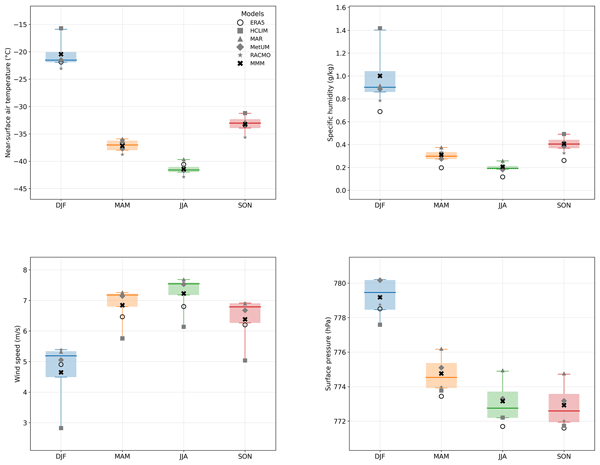
Ella Gilbert, José Abraham Torres-Alavez, Marte G. Hofsteenge, Willem Jan van de Berg, Fredrik Boberg, Ole Bøssing Christensen, Christiaan Timo van Dalum, Xavier Fettweis, Siddharth Gumber, Nicolaj Hansen, Christoph Kittel, Clara Lambin, Damien Maure, Ruth Mottram, Martin Olesen, Andrew Orr, Tony Phillips, Maurice van Tiggelen, Kristiina Verro, and Priscilla A. Mooney
The Cryosphere, 20, 2629–2658, https://doi.org/10.5194/tc-20-2629-2026, https://doi.org/10.5194/tc-20-2629-2026, 2026
Short summary
Short summary
Here we present a new dataset – the PolarRES ensemble – of four state-of-the-art regional climate models, which capture the full complexity of Antarctica's climate. The ensemble out-performs other available tools, advancing our ability to explore Antarctic climate. While it still has limitations, the PolarRES ensemble offers a novel and exciting way of evaluating climate processes and features, and we encourage researchers to use the data, which are freely available.
Chao-Yuan Yang, Fengguan Gu, Jiping Liu, Annette Rinke, Hu Yang, and Xiaoxu Shi
EGUsphere, https://doi.org/10.5194/egusphere-2026-362, https://doi.org/10.5194/egusphere-2026-362, 2026
Short summary
Short summary
Accurately exchanging energy between the atmosphere and the ocean-ice systems through surface heat fluxes is crucial for climate modelling. We present an improved version of Coupled Arctic Prediction System (CAPS) by revising flux coupling for conservation of heat. Our results show that the model with improved flux coupling can better simulate sea ice conditions during the period of Multidisciplinary drifting Observatory for the Study of Arctic Climate (MOSAiC).
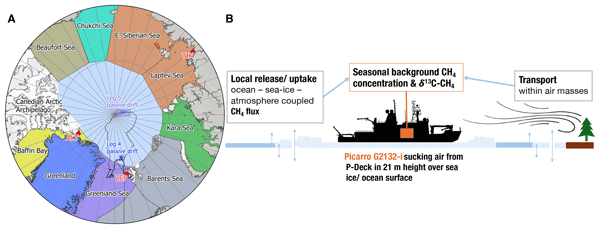
Amanda Sellmaier, Ellen Damm, Torsten Sachs, Benjamin Kirbus, Inge Wiekenkamp, Annette Rinke, Falk Pätzold, Daiki Nomura, Astrid Lampert, and Markus Rex
Atmos. Chem. Phys., 25, 17685–17700, https://doi.org/10.5194/acp-25-17685-2025, https://doi.org/10.5194/acp-25-17685-2025, 2025
Short summary
Short summary
This study presents continuous ship-borne measurements of methane (CH4) concentration and isotopic composition monitored during an ice drift expedition in 2020. Using trajectory analysis, we linked atmospheric CH4 variabilities to air mass pathways transported over open water or sea-ice. The study highlights the potential of ship-borne observations to fill significant data gaps in the high Arctic.
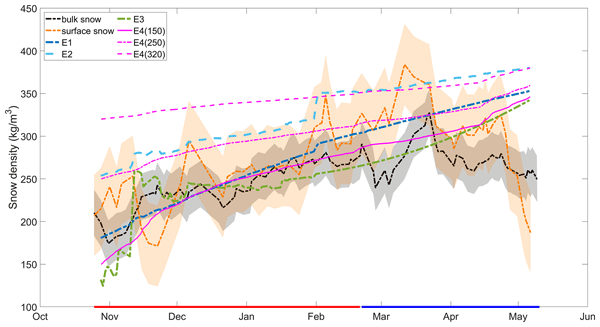
Yubing Cheng, Bin Cheng, Roberta Pirazzini, Amy R. Macfarlane, Timo Vihma, Wolfgang Dorn, Ruzica Dadic, Martin Schneebeli, Stefanie Arndt, and Annette Rinke
The Cryosphere, 19, 6001–6021, https://doi.org/10.5194/tc-19-6001-2025, https://doi.org/10.5194/tc-19-6001-2025, 2025
Short summary
Short summary
We study snow density from the MOSAiC expedition. Several snow density schemes were tested and compared with observation. A thermodynamic ice model was employed to assess the impact of snow density and precipitation on the thermal regime of sea ice. The parameterized mean snow densities are consistent with observations. Increased snow density reduces snow and ice temperatures, promoting ice growth, while increased precipitation leads to warmer snow and ice temperatures and reduced ice thickness.
Theresa Mathes, Heather Guy, John Prytherch, Julia Kojoj, Ian Brooks, Sonja Murto, Paul Zieger, Birgit Wehner, Michael Tjernström, and Andreas Held
Atmos. Chem. Phys., 25, 8455–8474, https://doi.org/10.5194/acp-25-8455-2025, https://doi.org/10.5194/acp-25-8455-2025, 2025
Short summary
Short summary
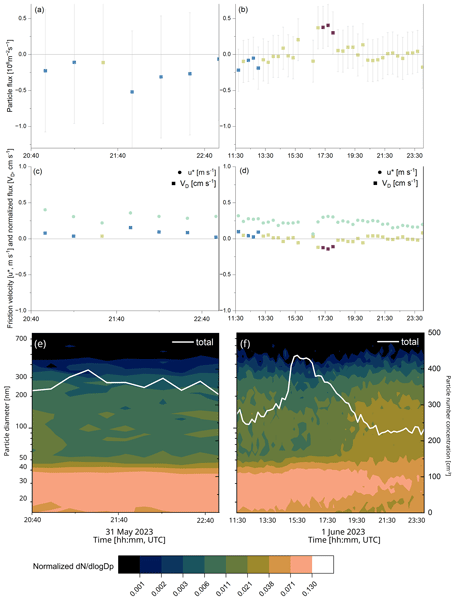
The Arctic is warming faster than the global average and an investigation of aerosol–cloud–sea ice interactions is crucial for studying its climate system. During the ARTofMELT Expedition 2023, particle and sensible heat fluxes were measured over different surfaces. Wide lead surfaces acted as particle sources, with the strongest sensible heat fluxes, while closed ice surfaces acted as particle sinks. In this study, methods to measure these interactions are improved, enhancing our understanding of Arctic climate processes.
Ella Gilbert, Denis Pishniak, José Abraham Torres, Andrew Orr, Michelle Maclennan, Nander Wever, and Kristiina Verro
The Cryosphere, 19, 597–618, https://doi.org/10.5194/tc-19-597-2025, https://doi.org/10.5194/tc-19-597-2025, 2025
Short summary
Short summary
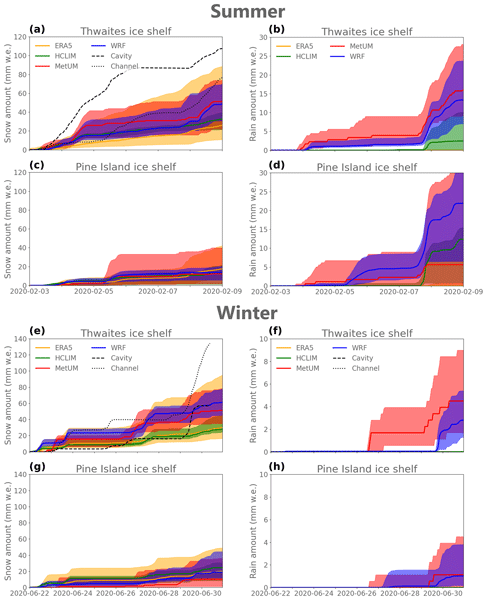
We use three sophisticated climate models to examine extreme precipitation in a critical region of West Antarctica. We found that rainfall probably occurred during the two cases we examined and that it was generated by the interaction of air with steep topography. Our results show that kilometre-scale models are useful tools for exploring extreme precipitation in this region and that more observations of rainfall are needed.
Lara Foth, Wolfgang Dorn, Annette Rinke, Evelyn Jäkel, and Hannah Niehaus
The Cryosphere, 18, 4053–4064, https://doi.org/10.5194/tc-18-4053-2024, https://doi.org/10.5194/tc-18-4053-2024, 2024
Short summary
Short summary
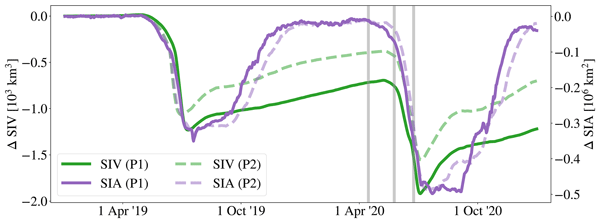
It is demonstrated that the explicit consideration of the cloud dependence of the snow surface albedo in a climate model results in a more realistic simulation of the surface albedo during the snowmelt period in late May and June. Although this improvement appears to be relatively insubstantial, it has significant impact on the simulated sea-ice volume and extent in the model due to an amplification of the snow/sea-ice albedo feedback, one of the main contributors to Arctic amplification.
Falco Monsees, Alexei Rozanov, John P. Burrows, Mark Weber, Annette Rinke, Ralf Jaiser, and Peter von der Gathen
Atmos. Chem. Phys., 24, 9085–9099, https://doi.org/10.5194/acp-24-9085-2024, https://doi.org/10.5194/acp-24-9085-2024, 2024
Short summary
Short summary
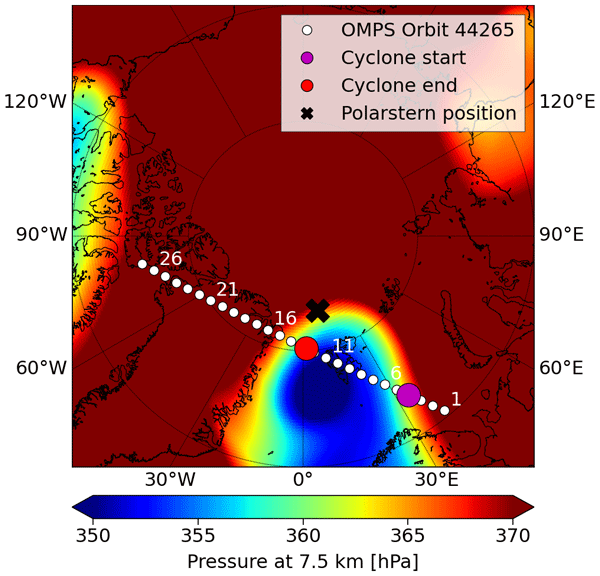
Cyclones strongly influence weather predictability but still cannot be fully characterised in the Arctic because of the sparse coverage of meteorological measurements. A potential approach to compensate for this is the use of satellite measurements of ozone, because cyclones impact the tropopause and therefore also ozone. In this study we used this connection to investigate the correlation between ozone and the tropopause in the Arctic and to identify cyclones with satellite ozone observations.
Nicolaj Hansen, Andrew Orr, Xun Zou, Fredrik Boberg, Thomas J. Bracegirdle, Ella Gilbert, Peter L. Langen, Matthew A. Lazzara, Ruth Mottram, Tony Phillips, Ruth Price, Sebastian B. Simonsen, and Stuart Webster
The Cryosphere, 18, 2897–2916, https://doi.org/10.5194/tc-18-2897-2024, https://doi.org/10.5194/tc-18-2897-2024, 2024
Short summary
Short summary
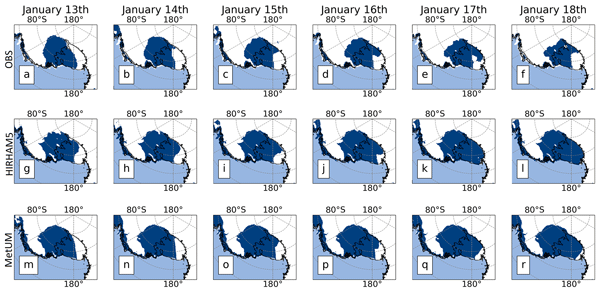
We investigated a melt event over the Ross Ice Shelf. We use regional climate models and a firn model to simulate the melt and compare the results with satellite data. We find that the firn model aligned well with observed melt days in certain parts of the ice shelf. The firn model had challenges accurately simulating the melt extent in the western sector. We identified potential reasons for these discrepancies, pointing to limitations in the models related to representing the cloud properties.
Ella Gilbert, Jhaswantsing Purseed, Yun Li, Martina Krämer, Beatrice Altamura, and Nicolas Bellouin
EGUsphere, https://doi.org/10.5194/egusphere-2024-821, https://doi.org/10.5194/egusphere-2024-821, 2024
Preprint withdrawn
Short summary
Short summary
We use a simple experiment to explore the non-CO2 impacts of aviation on climate, which are considerably larger than the impact of the sector’s carbon emissions alone. We show that the main effect of our experiments – which intend to mimic the effect of aircraft soot emissions reaching existing high-altitude cirrus clouds – is to extend cloud lifetime, thereby enhancing their effect on climate.
Evelyn Jäkel, Sebastian Becker, Tim R. Sperzel, Hannah Niehaus, Gunnar Spreen, Ran Tao, Marcel Nicolaus, Wolfgang Dorn, Annette Rinke, Jörg Brauchle, and Manfred Wendisch
The Cryosphere, 18, 1185–1205, https://doi.org/10.5194/tc-18-1185-2024, https://doi.org/10.5194/tc-18-1185-2024, 2024
Short summary
Short summary
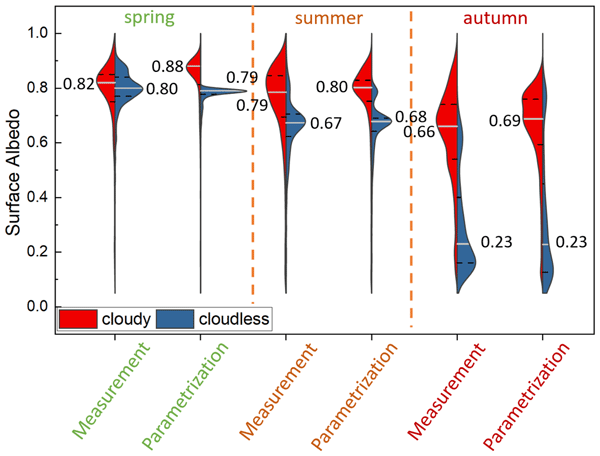
The results of the surface albedo scheme of a coupled regional climate model were evaluated against airborne and ground-based measurements conducted in the European Arctic in different seasons between 2017 and 2022. We found a seasonally dependent bias between measured and modeled surface albedo for cloudless and cloudy situations. The strongest effects of the albedo model bias on the net irradiance were most apparent in the presence of optically thin clouds.
John Prytherch, Sonja Murto, Ian Brown, Adam Ulfsbo, Brett F. Thornton, Volker Brüchert, Michael Tjernström, Anna Lunde Hermansson, Amanda T. Nylund, and Lina A. Holthusen
Biogeosciences, 21, 671–688, https://doi.org/10.5194/bg-21-671-2024, https://doi.org/10.5194/bg-21-671-2024, 2024
Short summary
Short summary
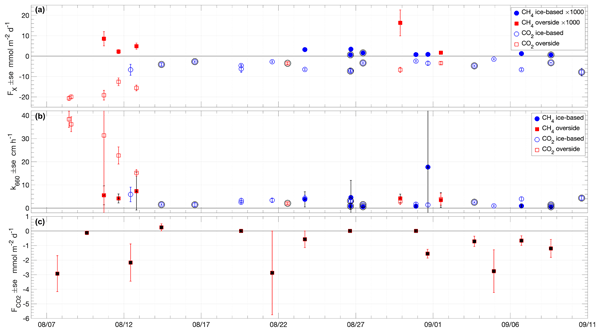
We directly measured methane and carbon dioxide exchange between ocean or sea ice and the atmosphere during an icebreaker-based expedition to the central Arctic Ocean (CAO) in summer 2021. These measurements can help constrain climate models and carbon budgets. The methane measurements, the first such made in the CAO, are lower than previous estimates and imply that the CAO is an insignificant contributor to Arctic methane emission. Gas exchange rates are slower than previous estimates.
Melanie Lauer, Annette Rinke, Irina Gorodetskaya, Michael Sprenger, Mario Mech, and Susanne Crewell
Atmos. Chem. Phys., 23, 8705–8726, https://doi.org/10.5194/acp-23-8705-2023, https://doi.org/10.5194/acp-23-8705-2023, 2023
Short summary
Short summary
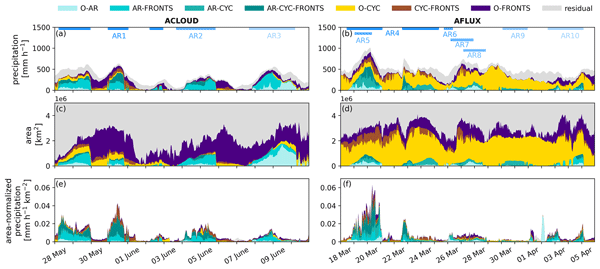
We present a new method to analyse the influence of atmospheric rivers (ARs), cyclones, and fronts on the precipitation in the Arctic, based on two campaigns: ACLOUD (early summer 2017) and AFLUX (early spring 2019). There are differences between both campaign periods: in early summer, the precipitation is mostly related to ARs and fronts, especially when they are co-located, while in early spring, cyclones isolated from ARs and fronts contributed most to the precipitation.
Christoph Kittel, Charles Amory, Stefan Hofer, Cécile Agosta, Nicolas C. Jourdain, Ella Gilbert, Louis Le Toumelin, Étienne Vignon, Hubert Gallée, and Xavier Fettweis
The Cryosphere, 16, 2655–2669, https://doi.org/10.5194/tc-16-2655-2022, https://doi.org/10.5194/tc-16-2655-2022, 2022
Short summary
Short summary
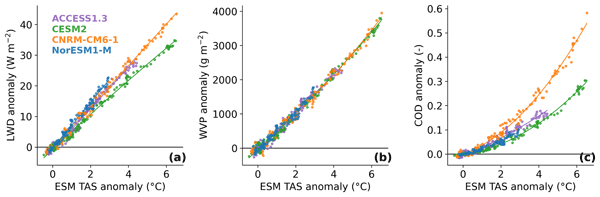
Model projections suggest large differences in future Antarctic surface melting even for similar greenhouse gas scenarios and warming rates. We show that clouds containing a larger amount of liquid water lead to stronger melt. As surface melt can trigger the collapse of the ice shelves (the safety band of the Antarctic Ice Sheet), clouds could be a major source of uncertainties in projections of sea level rise.
Annakaisa von Lerber, Mario Mech, Annette Rinke, Damao Zhang, Melanie Lauer, Ana Radovan, Irina Gorodetskaya, and Susanne Crewell
Atmos. Chem. Phys., 22, 7287–7317, https://doi.org/10.5194/acp-22-7287-2022, https://doi.org/10.5194/acp-22-7287-2022, 2022
Short summary
Short summary
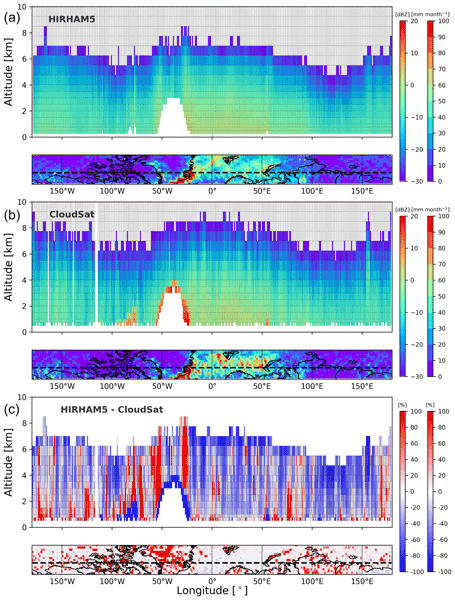
Snowfall is an important climate indicator. However, microphysical snowfall processes are challenging for atmospheric models. In this study, the performance of a regional climate model is evaluated in modeling the spatial and temporal distribution of Arctic snowfall when compared to CloudSat satellite observations. Excellent agreement in averaged annual snowfall rates is found, and the shown methodology offers a promising diagnostic tool to investigate the shown differences further.
Klaus Dethloff, Wieslaw Maslowski, Stefan Hendricks, Younjoo J. Lee, Helge F. Goessling, Thomas Krumpen, Christian Haas, Dörthe Handorf, Robert Ricker, Vladimir Bessonov, John J. Cassano, Jaclyn Clement Kinney, Robert Osinski, Markus Rex, Annette Rinke, Julia Sokolova, and Anja Sommerfeld
The Cryosphere, 16, 981–1005, https://doi.org/10.5194/tc-16-981-2022, https://doi.org/10.5194/tc-16-981-2022, 2022
Short summary
Short summary
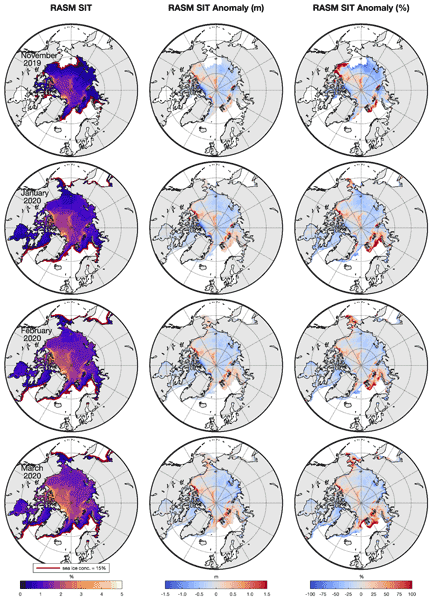
Sea ice thickness anomalies during the MOSAiC (Multidisciplinary drifting Observatory for the Study of Arctic Climate) winter in January, February and March 2020 were simulated with the coupled Regional Arctic climate System Model (RASM) and compared with CryoSat-2/SMOS satellite data. Hindcast and ensemble simulations indicate that the sea ice anomalies are driven by nonlinear interactions between ice growth processes and wind-driven sea-ice transports, with dynamics playing a dominant role.
Carolina Viceto, Irina V. Gorodetskaya, Annette Rinke, Marion Maturilli, Alfredo Rocha, and Susanne Crewell
Atmos. Chem. Phys., 22, 441–463, https://doi.org/10.5194/acp-22-441-2022, https://doi.org/10.5194/acp-22-441-2022, 2022
Short summary
Short summary
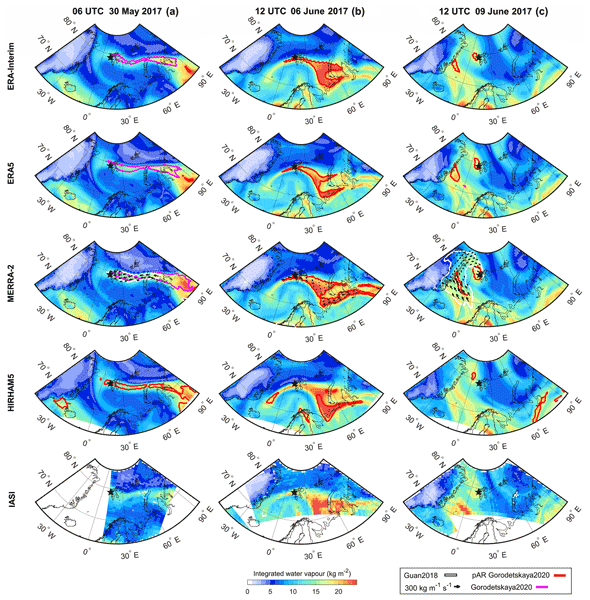
We focus on anomalous moisture transport events known as atmospheric rivers (ARs). During ACLOUD and PASCAL, three AR events were identified: 30 May, 6 June, and 9 June 2017. We explore their spatio-temporal evolution and precipitation patterns using measurements, reanalyses, and a model. We show the importance of the following: Atlantic and Siberian pathways during spring–summer in the Arctic, AR-associated heat/moisture increase, precipitation phase transition, and high-resolution datasets.
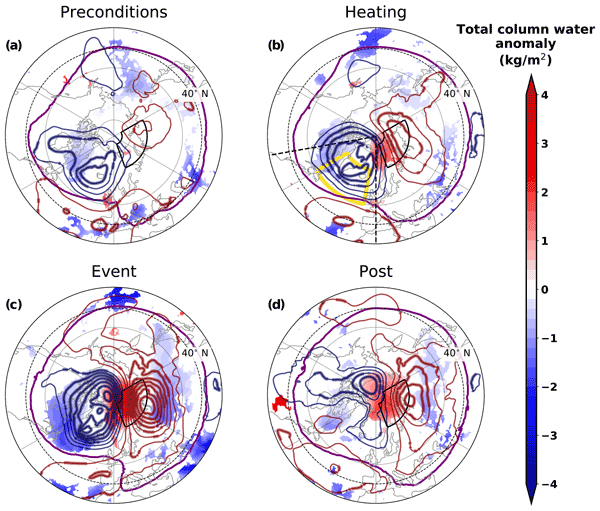
Sonja Murto, Rodrigo Caballero, Gunilla Svensson, and Lukas Papritz
Weather Clim. Dynam., 3, 21–44, https://doi.org/10.5194/wcd-3-21-2022, https://doi.org/10.5194/wcd-3-21-2022, 2022
Short summary
Short summary
This study uses reanalysis data to investigate the role of atmospheric blocking, prevailing high-pressure systems and mid-latitude cyclones in driving high-Arctic wintertime warm extreme events. These events are mainly preceded by Ural and Scandinavian blocks, which are shown to be significantly influenced and amplified by cyclones in the North Atlantic. It also highlights processes that need to be well captured in climate models for improving their representation of Arctic wintertime climate.
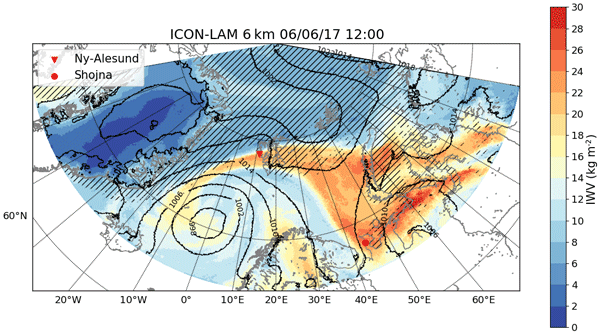
Hélène Bresson, Annette Rinke, Mario Mech, Daniel Reinert, Vera Schemann, Kerstin Ebell, Marion Maturilli, Carolina Viceto, Irina Gorodetskaya, and Susanne Crewell
Atmos. Chem. Phys., 22, 173–196, https://doi.org/10.5194/acp-22-173-2022, https://doi.org/10.5194/acp-22-173-2022, 2022
Short summary
Short summary
Arctic warming is pronounced, and one factor in this is the poleward atmospheric transport of heat and moisture. This study assesses the 4D structure of an Arctic moisture intrusion event which occurred in June 2017. For the first time, high-resolution pan-Arctic ICON simulations are performed and compared with global models, reanalysis, and observations. Results show the added value of high resolution in the event representation and the impact of the intrusion on the surface energy fluxes.
Cited articles
Bresson, H., Rinke, A., Mech, M., Reinert, D., Schemann, V., Ebell, K., Maturilli, M., Viceto, C., Gorodetskaya, I., and Crewell, S.: Case study of a moisture intrusion over the Arctic with the ICOsahedral Non-hydrostatic (ICON) model: resolution dependence of its representation, Atmos. Chem. Phys., 22, 173–196, https://doi.org/10.5194/acp-22-173-2022, 2022. a
Cardinale, C. J. and Rose, B. E. J.: The Arctic Surface Heating Efficiency of Tropospheric Energy Flux Events, J. Climate, 35, 5897–5913, https://doi.org/10.1175/JCLI-D-21-0852.1, 2022. a
Cox, C. J., Gallagher, M. R., Shupe, M. D., Persson, P. O. G., Solomon, A., Fairall, C. W., Ayers, T., Blomquist, B., Brooks, I. M., Costa, D., Grachev, A., Gottas, D., Hutchings, J. K., Kutchenreiter, M., Leach, J., Morris, S. M., Morris, V., Osborn, J., Pezoa, S., Preußer, A., Riihimaki, L. D., and Uttal, T.: Continuous observations of the surface energy budget and meteorology over the Arctic sea ice during MOSAiC, Scientific Data, 10, 519, https://doi.org/10.1038/s41597-023-02415-5, 2023. a, b
Dahlke, S. and Maturilli, M.: Contribution of Atmospheric Advection to the Amplified Winter Warming in the Arctic North Atlantic Region, Adv. Meteorol., 2017, 1–8, https://doi.org/10.1155/2017/4928620, 2017. a
Dahlke, S., Shupe, M. D., Cox, C. J., Brooks, I. M., Blomquist, B., and Persson, P. O. G.: Extended radiosonde profiles 2019/09-2020/10 during MOSAiC Legs PS122/1 - PS122/5, PANGAEA [data set], https://doi.org/10.1594/PANGAEA.961881, 2023. a, b
Dörnbrack, A., Stachlewska, I. S., Ritter, C., and Neuber, R.: Aerosol distribution around Svalbard during intense easterly winds, Atmos. Chem. Phys., 10, 1473–1490, https://doi.org/10.5194/acp-10-1473-2010, 2010. a
Elvidge, A. D. and Renfrew, I. A.: The Causes of Foehn Warming in the Lee of Mountains, B. Am. Meteor. Soc., 97, 455–466, https://doi.org/10.1175/BAMS-D-14-00194.1, 2016. a, b, c, d
Gilbert, E., Orr, A., King, J. C., Renfrew, I. A., and Lachlan‐Cope, T.: A 20-Year Study of Melt Processes Over Larsen C Ice Shelf Using a High-Resolution Regional Atmospheric Model: 1. Model Configuration and Validation, J. Geophys. Res.-Atmos., 127, e2021JD034766, https://doi.org/10.1029/2021JD034766, 2022a. a
Gilbert, E., Orr, A., Renfrew, I. A., King, J. C., and Lachlan‐Cope, T.: A 20-Year Study of Melt Processes Over Larsen C Ice Shelf Using a High-Resolution Regional Atmospheric Model: 2. Drivers of Surface Melting, J. Geophys. Res.-Atmos., 127, e2021JD036012, https://doi.org/10.1029/2021JD036012, 2022b. a
Haacker, J., Wouters, B., Fettweis, X., Glissenaar, I. A., and Box, J. E.: Atmospheric-river-induced foehn events drain glaciers on Novaya Zemlya, Nat. Commun., 15, 7021, https://doi.org/10.1038/s41467-024-51404-8, 2024. a
Hersbach, H., Bell, B., Berrisford, P., Hirahara, S., Horányi, A., Muñoz‐Sabater, J., Nicolas, J., Peubey, C., Radu, R., Schepers, D., Simmons, A., Soci, C., Abdalla, S., Abellan, X., Balsamo, G., Bechtold, P., Biavati, G., Bidlot, J., Bonavita, M., De Chiara, G., Dahlgren, P., Dee, D., Diamantakis, M., Dragani, R., Flemming, J., Forbes, R., Fuentes, M., Geer, A., Haimberger, L., Healy, S., Hogan, R. J., Hólm, E., Janisková, M., Keeley, S., Laloyaux, P., Lopez, P., Lupu, C., Radnoti, G., De Rosnay, P., Rozum, I., Vamborg, F., Villaume, S., and Thépaut, J.-N.: The ERA5 global reanalysis, Q. J. Roy. Meteor. Soc., 146, 1999–2049, https://doi.org/10.1002/qj.3803, 2020. a, b, c
Kilpeläinen, T., Vihma, T., and Ólafsson, H.: Modelling of spatial variability and topographic effects over Arctic fjords in Svalbard, Tellus A, 63, 223, https://doi.org/10.1111/j.1600-0870.2010.00481.x, 2011. a
Kirbus, B., Tiedeck, S., Camplani, A., Chylik, J., Crewell, S., Dahlke, S., Ebell, K., Gorodetskaya, I., Griesche, H., Handorf, D., Höschel, I., Lauer, M., Neggers, R., Rückert, J., Shupe, M. D., Spreen, G., Walbröl, A., Wendisch, M., and Rinke, A.: Surface impacts and associated mechanisms of a moisture intrusion into the Arctic observed in mid-April 2020 during MOSAiC, Frontiers in Earth Science, 11, 1147848, https://doi.org/10.3389/feart.2023.1147848, 2023. a
Kolbe, M., Sonnemans, J. P. J., Bintanja, R., Van Der Linden, E. C., Van Der Wiel, K., Whan, K., and Benedict, I.: Impact of Atmospheric Rivers on Future Poleward Moisture Transport and Arctic Climate in EC-Earth2, J. Geophys. Res.-Atmos., 128, e2023JD038926, https://doi.org/10.1029/2023JD038926, 2023. a
Køltzow, M., Schyberg, H., Støylen, E., and Yang, X.: Value of the Copernicus Arctic Regional Reanalysis (CARRA) in representing near-surface temperature and wind speed in the north-east European Arctic, Polar Res., 41, https://doi.org/10.33265/polar.v41.8002, 2022. a
Landwehrs, J., Murto, S., Gebhardt, F., Gilbert, E., and Rinke, A.: Supplementary Data to Landwehrs et al. 2025 “Topographic Effects of Svalbard on Warm and Moist Air Intrusions into the Central Arctic”, Version v1, Zenodo [data set], https://doi.org/10.5281/zenodo.17054204, 2025. a, b
Littmann, D.-C.: Large eddy simulations of the Arctic boundary layer around the MOSAiC drift track, PhD thesis, Universität Potsdam, https://doi.org/10.25932/PUBLISHUP-62437, 2024. a
Lu, H., Orr, A., King, J., Phillips, T., Gilbert, E., Colwell, S., and Bracegirdle, T. J.: Extreme warm events in the South Orkney Islands, Southern Ocean: Compounding influence of atmospheric rivers and föhn conditions, Q. J. Roy. Meteor. Soc., 149, 3645–3668, https://doi.org/10.1002/qj.4578, 2023. a
Ma, W., Chen, G., Peings, Y., and Alviz, N.: Atmospheric River Response to Arctic Sea Ice Loss in the Polar Amplification Model Intercomparison Project, Geophys. Res. Lett., 48, e2021GL094883, https://doi.org/10.1029/2021GL094883, 2021. a
Ma, W., Wang, H., Chen, G., Leung, L. R., Lu, J., Rasch, P. J., Fu, Q., Kravitz, B., Zou, Y., Cassano, J. J., and Maslowski, W.: The role of interdecadal climate oscillations in driving Arctic atmospheric river trends, Nat. Commun., 15, 2135, https://doi.org/10.1038/s41467-024-45159-5, 2024a. a
Ma, W., Wang, H., Chen, G., Qian, Y., Baxter, I., Huo, Y., and Seefeldt, M. W.: Wintertime extreme warming events in the high Arctic: characteristics, drivers, trends, and the role of atmospheric rivers, Atmos. Chem. Phys., 24, 4451–4472, https://doi.org/10.5194/acp-24-4451-2024, 2024b. a
Matrosov, S. Y., Shupe, M. D., and Uttal, T.: High temporal resolution estimates of Arctic snowfall rates emphasizing gauge and radar-based retrievals from the MOSAiC expedition, Elementa: Science of the Anthropocene, 10, 00101, https://doi.org/10.1525/elementa.2021.00101, 2022. a, b
Mattingly, K. S., Turton, J. V., Wille, J. D., Noël, B., Fettweis, X., Rennermalm, A. K., and Mote, T. L.: Increasing extreme melt in northeast Greenland linked to foehn winds and atmospheric rivers, Nat. Commun., 14, 1743, https://doi.org/10.1038/s41467-023-37434-8, 2023. a, b
Messori, G., Woods, C., and Caballero, R.: On the Drivers of Wintertime Temperature Extremes in the High Arctic, J. Climate, 31, 1597–1618, https://doi.org/10.1175/JCLI-D-17-0386.1, 2018. a
Murto, S., Papritz, L., Messori, G., Caballero, R., Svensson, G., and Wernli, H.: Extreme Surface Energy Budget Anomalies in the High Arctic in Winter, J. Climate, 36, 3591–3609, https://doi.org/10.1175/JCLI-D-22-0209.1, 2023. a
Nygård, T., Naakka, T., and Vihma, T.: Horizontal Moisture Transport Dominates the Regional Moistening Patterns in the Arctic, J. Climate, 33, 6793–6807, https://doi.org/10.1175/JCLI-D-19-0891.1, 2020. a
Comparison of kilometre and sub-kilometre scale simulations of a foehn wind event over the Larsen C Ice Shelf, Antarctic Peninsula using the Met Office Unified Model (MetUM), Q. J. Roy. Meteor. Soc., 147, 3472–3492, https://doi.org/10.1002/qj.4138, 2021. a
Characteristics of Surface “Melt Potential” over Antarctic Ice Shelves based on Regional Atmospheric Model Simulations of Summer Air Temperature Extremes from 1979/80 to 2018/19, J. Climate, 36, 3357–3383, https://doi.org/10.1175/JCLI-D-22-0386.1, 2023. a
Papritz, L. and Dunn‐Sigouin, E.: What Configuration of the Atmospheric Circulation Drives Extreme Net and Total Moisture Transport Into the Arctic, Geophys. Res. Lett., 47, e2020GL089769, https://doi.org/10.1029/2020GL089769, 2020. a
Papritz, L., Hauswirth, D., and Hartmuth, K.: Moisture origin, transport pathways, and driving processes of intense wintertime moisture transport into the Arctic, Weather Clim. Dynam., 3, 1–20, https://doi.org/10.5194/wcd-3-1-2022, 2022. a
Papritz, L., Murto, S., Röthlisberger, M., Caballero, R., Messori, G., Svensson, G., and Wernli, H.: The Role of Local and Remote Processes for Wintertime Surface Energy Budget Extremes over Arctic Sea Ice, J. Climate, 36, 7657–7674, https://doi.org/10.1175/JCLI-D-22-0883.1, 2023. a, b
Pham, T. V., Steger, C., Rockel, B., Keuler, K., Kirchner, I., Mertens, M., Rieger, D., Zängl, G., and Früh, B.: ICON in Climate Limited-area Mode (ICON release version 2.6.1): a new regional climate model, Geosci. Model Dev., 14, 985–1005, https://doi.org/10.5194/gmd-14-985-2021, 2021. a
Pithan, F., Svensson, G., Caballero, R., Chechin, D., Cronin, T. W., Ekman, A. M. L., Neggers, R., Shupe, M. D., Solomon, A., Tjernström, M., and Wendisch, M.: Role of air-mass transformations in exchange between the Arctic and mid-latitudes, Nat. Geosci., 11, 805–812, https://doi.org/10.1038/s41561-018-0234-1, 2018. a
Pithan, F., Athanase, M., Dahlke, S., Sánchez-Benítez, A., Shupe, M. D., Sledd, A., Streffing, J., Svensson, G., and Jung, T.: Nudging allows direct evaluation of coupled climate models with in situ observations: a case study from the MOSAiC expedition, Geosci. Model Dev., 16, 1857–1873, https://doi.org/10.5194/gmd-16-1857-2023, 2023. a
Previdi, M., Smith, K. L., and Polvani, L. M.: Arctic amplification of climate change: a review of underlying mechanisms, Environ. Res. Lett., 16, 093003, https://doi.org/10.1088/1748-9326/ac1c29, 2021. a
Rantanen, M., Karpechko, A. Y., Lipponen, A., Nordling, K., Hyvärinen, O., Ruosteenoja, K., Vihma, T., and Laaksonen, A.: The Arctic has warmed nearly four times faster than the globe since 1979, Communications Earth & Environment, 3, 168, https://doi.org/10.1038/s43247-022-00498-3, 2022. a
Reeve, M. A. and Kolstad, E. W.: The Spitsbergen South Cape tip jet, Q. J. Roy. Meteor. Soc., 137, 1739–1748, https://doi.org/10.1002/qj.876, 2011. a
Rinke, A., Cassano, J. J., Cassano, E. N., Jaiser, R., and Handorf, D.: Meteorological conditions during the MOSAiC expedition, Elementa: Science of the Anthropocene, 9, 00023, https://doi.org/10.1525/elementa.2021.00023, 2021. a
Rockel, B. and Geyer, B.: SPICE (Starter Package for ICON-CLM Experiments), Version v5, Zenodo [code], https://doi.org/10.5281/zenodo.10047021, 2023. a
Scholz, S. R. and Lora, J. M.: Atmospheric rivers cause warm winters and extreme heat events, Nature, 636, 640–646, https://doi.org/10.1038/s41586-024-08238-7, 2024. a
Serreze, M. C. and Barry, R. G.: Processes and impacts of Arctic amplification: A research synthesis, Global Planet. Change, 77, 85–96, https://doi.org/10.1016/j.gloplacha.2011.03.004, 2011. a
Shupe, M. D., Rex, M., Blomquist, B., Persson, P. Ola G. Schmale, J., Uttal, T., Althausen, D., Angot, H., Archer, S., Bariteau, L., Beck, I., Bilberry, J., Bucci, S., Buck, C., Boyer, M., Brasseur, Z., Brooks, I. M., Calmer, R., Cassano, J., Castro, V., Chu, D., Costa, D., Cox, C. J., Creamean, J., Crewell, S., Dahlke, S., Damm, E., de Boer, G., Deckelmann, H., Dethloff, K., Dütsch, M., Ebell, K., Ehrlich, A., Ellis, J., Engelmann, R., Fong, A. A., Frey, M. M., Gallagher, M. R., Ganzeveld, L., Gradinger, R., Graeser, J., Greenamyer, V., Griesche, H., Griffiths, S., Hamilton, J., Heinemann, G., Helmig, D., Herber, A., Heuzé, C., Hofer, J., Houchens, T., Howard, D., Inoue, J., Jacobi, H.-W., Jaiser, R., Jokinen, T., Jourdan, O., Jozef, G., King, W., Kirchgaessner, A., Klingebiel, M., Krassovski, M., Krumpen, T., Lampert, A., Landing, W., Laurila, T., Lawrence, D., Lonardi, M., Loose, B., Lüpkes, C., Maahn, M., Macke, A., Maslowski, W., Marsay, C., Maturilli, M., Mech, M., Morris, S., Moser, M., Nicolaus, M., Ortega, P., Osborn, J., Pätzold, F., Perovich, D. K., Petäjä, T., Pilz, C., Pirazzini, R., Posman, K., Powers, H., Pratt, K. A., Preußer, A., Quéléver, L., Radenz, M., Rabe, B., Rinke, A., Sachs, T., Schulz, A., Siebert, H., Silva, T., Solomon, A., Sommerfeld, A., Spreen, G., Stephens, M., Stohl, A., Svensson, G., Uin, J., Viegas, J., Voigt, C., von der Gathen, P., Wehner, B., Welker, J. M., Wendisch, M., Werner, M., Xie, Z., and Yue, F.: Arctic Report Card 2020: The MOSAiC Expedition: A Year Drifting with the Arctic Sea Ice, Elementa: Science of the Anthropocene, 10, 00060, https://doi.org/10.1525/elementa.2021.00060, 2022. a
Sprenger, M. and Wernli, H.: The LAGRANTO Lagrangian analysis tool – version 2.0, Geosci. Model Dev., 8, 2569–2586, https://doi.org/10.5194/gmd-8-2569-2015, 2015. a
Svensson, G., Murto, S., Shupe, M. D., Pithan, F., Magnusson, L., Day, J. J., Doyle, J. D., Renfrew, I. A., Spengler, T., and Vihma, T.: Warm air intrusions reaching the MOSAiC expedition in April 2020 – The YOPP targeted observing period (TOP), Elementa: Science of the Anthropocene, 11, 00016, https://doi.org/10.1525/elementa.2023.00016, 2023. a, b
Taylor, P. C., Boeke, R. C., Boisvert, L. N., Feldl, N., Henry, M., Huang, Y., Langen, P. L., Liu, W., Pithan, F., Sejas, S. A., and Tan, I.: Process Drivers, Inter-Model Spread, and the Path Forward: A Review of Amplified Arctic Warming, Frontiers in Earth Science, 9, 758361, https://doi.org/10.3389/feart.2021.758361, 2022. a
Thaker, R., Vavrus, S. J., Shields, C. A., DuVivier, A. K., Maclennan, M., Holland, M. M., and Landrum, L.: Arctic Atmospheric Rivers in a Changing Climate and the Impacts on Sea Ice, J. Geophys. Res.-Atmos., 130, e2024JD042521, https://doi.org/10.1029/2024JD042521, 2025. a
Wang, Z., Ding, Q., Wu, R., Ballinger, T. J., Guan, B., Bozkurt, D., Nash, D., Baxter, I., Topál, D., Li, Z., Huang, G., Chen, W., Chen, S., Cao, X., and Chen, Z.: Role of atmospheric rivers in shaping long term Arctic moisture variability, Nat. Commun., 15, 5505, https://doi.org/10.1038/s41467-024-49857-y, 2024. a
Wendisch, M., Brückner, M., Crewell, S., Ehrlich, A., Notholt, J., Lüpkes, C., Macke, A., Burrows, J. P., Rinke, A., Quaas, J., Maturilli, M., Schemann, V., Shupe, M. D., Akansu, E. F., Barrientos-Velasco, C., Bärfuss, K., Blechschmidt, A.-M., Block, K., Bougoudis, I., Bozem, H., Böckmann, C., Bracher, A., Bresson, H., Bretschneider, L., Buschmann, M., Chechin, D. G., Chylik, J., Dahlke, S., Deneke, H., Dethloff, K., Donth, T., Dorn, W., Dupuy, R., Ebell, K., Egerer, U., Engelmann, R., Eppers, O., Gerdes, R., Gierens, R., Gorodetskaya, I. V., Gottschalk, M., Griesche, H., Gryanik, V. M., Handorf, D., Harm-Altstädter, B., Hartmann, J., Hartmann, M., Heinold, B., Herber, A., Herrmann, H., Heygster, G., Höschel, I., Hofmann, Z., Hölemann, J., Hünerbein, A., Jafariserajehlou, S., Jäkel, E., Jacobi, C., Janout, M., Jansen, F., Jourdan, O., Jurányi, Z., Kalesse-Los, H., Kanzow, T., Käthner, R., Kliesch, L. L., Klingebiel, M., Knudsen, E. M., Kovács, T., Körtke, W., Krampe, D., Kretzschmar, J., Kreyling, D., Kulla, B., Kunkel, D., Lampert, A., Lauer, M., Lelli, L., Von Lerber, A., Linke, O., Löhnert, U., Lonardi, M., Losa, S. N., Losch, M., Maahn, M., Mech, M., Mei, L., Mertes, S., Metzner, E., Mewes, D., Michaelis, J., Mioche, G., Moser, M., Nakoudi, K., Neggers, R., Neuber, R., Nomokonova, T., Oelker, J., Papakonstantinou-Presvelou, I., Pätzold, F., Pefanis, V., Pohl, C., Van Pinxteren, M., Radovan, A., Rhein, M., Rex, M., Richter, A., Risse, N., Ritter, C., Rostosky, P., Rozanov, V. V., Donoso, E. R., Saavedra Garfias, P., Salzmann, M., Schacht, J., Schäfer, M., Schneider, J., Schnierstein, N., Seifert, P., Seo, S., Siebert, H., Soppa, M. A., Spreen, G., Stachlewska, I. S., Stapf, J., Stratmann, F., Tegen, I., Viceto, C., Voigt, C., Vountas, M., Walbröl, A., Walter, M., Wehner, B., Wex, H., Willmes, S., Zanatta, M., and Zeppenfeld, S.: Atmospheric and Surface Processes, and Feedback Mechanisms Determining Arctic Amplification: A Review of First Results and Prospects of the (AC)3 Project, B. Am. Meteorol. Soc., 104, E208–E242, https://doi.org/10.1175/BAMS-D-21-0218.1, 2023. a
Woods, C. and Caballero, R.: The Role of Moist Intrusions in Winter Arctic Warming and Sea Ice Decline, J. Climate, 29, 4473–4485, https://doi.org/10.1175/JCLI-D-15-0773.1, 2016. a, b
Yamanouchi, T.: Arctic warming by cloud radiation enhanced by moist air intrusion observed at Ny-Ålesund, Svalbard, Polar Sci., 21, 110–116, https://doi.org/10.1016/j.polar.2018.10.009, 2019. a
You, C., Tjernström, M., and Devasthale, A.: Warm and moist air intrusions into the winter Arctic: a Lagrangian view on the near-surface energy budgets, Atmos. Chem. Phys., 22, 8037–8057, https://doi.org/10.5194/acp-22-8037-2022, 2022. a
Zängl, G., Reinert, D., Rípodas, P., and Baldauf, M.: The ICON (ICOsahedral Non-hydrostatic) modelling framework of DWD and MPI-M: Description of the non-hydrostatic dynamical core, Q. J. Roy. Meteor. Soc., 141, 563–579, https://doi.org/10.1002/qj.2378, 2015. a
Zhang, C., Tung, W.-w., and Cleveland, W. S.: Climatology and decadal changes of Arctic atmospheric rivers based on ERA5 and MERRA-2, Environmental Research: Climate, 2, 035005, https://doi.org/10.1088/2752-5295/acdf0f, 2023a. a
Zhang, P., Chen, G., Ting, M., Ruby Leung, L., Guan, B., and Li, L.: More frequent atmospheric rivers slow the seasonal recovery of Arctic sea ice, Nat. Clim. Change, 13, 266–273, https://doi.org/10.1038/s41558-023-01599-3, 2023b. a
Short summary
This study investigates how Svalbard's mountains modulate warm and moist air mass intrusions into the central Arctic, where such events are key drivers of warm extremes. Using atmospheric modeling, air parcel trajectories and observations from the MOSAiC expedition for a case in April 2020 and a climatological analysis for springtime in 2000–2022, we show that Svalbard can alter winds, temperatures, clouds and surface energy fluxes hundreds of kilometers downstream over sea ice.
This study investigates how Svalbard's mountains modulate warm and moist air mass intrusions...


