
Articles | Volume 7, issue 3
https://doi.org/10.5194/wcd-7-1241-2026
© Author(s) 2026. This work is distributed under
the Creative Commons Attribution 4.0 License.
the Creative Commons Attribution 4.0 License.
https://doi.org/10.5194/wcd-7-1241-2026
© Author(s) 2026. This work is distributed under
the Creative Commons Attribution 4.0 License.
the Creative Commons Attribution 4.0 License.
Research article
| 
16 Jul 2026
Research article |
| 16 Jul 2026
| 16 Jul 2026
Identifying the diabatic processes driving the evolution of a sting jet: the case of Storm Ciarán

Department of Meteorology, University of Reading, Reading, UK
National Centre for Atmospheric Science, University of Reading, Reading, UK
Institute for Atmospheric and Climate Science, ETH Zurich, Zurich, Switzerland
Ming Hon Franco Lee
Institute for Atmospheric and Climate Science, ETH Zurich, Zurich, Switzerland
Richard Forbes
European Centre for Medium-Range Weather Forecasts, Reading, UK
Rémi Bouffet-Klein
Institute for Atmospheric and Climate Science, ETH Zurich, Zurich, Switzerland
Related authors
Andressa Andrade Cardoso, Suzanne L. Gray, Ambrogio Volonté, Ben J. Harvey, and Claudio Sánchez
EGUsphere, https://doi.org/10.5194/egusphere-2026-4757, https://doi.org/10.5194/egusphere-2026-4757, 2026
Short summary
Short summary
We studied whether high-resolution weather models that simulate thunderstorm clouds directly, rather than estimating their effects, improve forecasts of hazardous Mediterranean storms. Unlike more typical Mediterranean storms, tropical-cyclone-like medicanes became much stronger in the high-resolution simulations. However, the results also depended on how physical processes were represented, showing that more accurate forecasts require both better model design and higher resolution.
Piyali Goswami, Ségolène Berthou, Theodore G. Shepherd, Ambrogio Volonté, Sana Mahmood, Juan Manuel Castillo, Anne-Christine Péquignet, Yong-June Park, Mark Worsfold, Regina Rodrigues, and Magdalena A. Balmaseda
Nat. Hazards Earth Syst. Sci., 26, 3213–3230, https://doi.org/10.5194/nhess-26-3213-2026, https://doi.org/10.5194/nhess-26-3213-2026, 2026
Short summary
Short summary
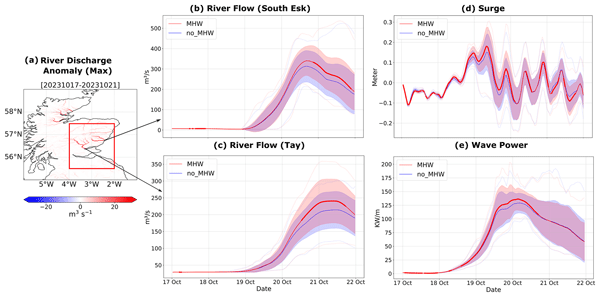
We examined how a marine heatwave - period of unusually warm ocean conditions - affected flooding and coastal erosion during a storm in northwest Europe. Using a state-of-the-art regional coupled model at km-scale, we compared simulations with and without the marine heatwave to isolate its effects on the storm hazards. Warmer shallow seas intensified rainfall, winds and surface depression of the storm, which integrated into larger increases of surge, wave power and river flows.
Suzanne L. Gray, Ambrogio Volonté, Oscar Martínez-Alvarado, and Ben J. Harvey
Weather Clim. Dynam., 5, 1523–1544, https://doi.org/10.5194/wcd-5-1523-2024, https://doi.org/10.5194/wcd-5-1523-2024, 2024
Short summary
Short summary
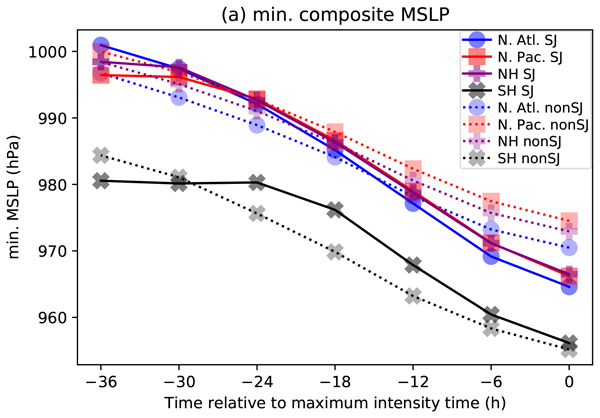
Sting jets occur in some of the most damaging cyclones impacting Europe. We present the first climatology of sting-jet cyclones over the major ocean basins. Cyclones with sting-jet precursors occur over the North Atlantic, North Pacific, and Southern Oceans, with implications for wind warnings. Precursor cyclones have distinct characteristics, even in reanalyses that are too coarse to fully resolve sting jets, evidencing the climatological consequences of strong diabatic cloud processes.
Claudio Sánchez, Suzanne Gray, Ambrogio Volonté, Florian Pantillon, Ségolène Berthou, and Silvio Davolio
Weather Clim. Dynam., 5, 1429–1455, https://doi.org/10.5194/wcd-5-1429-2024, https://doi.org/10.5194/wcd-5-1429-2024, 2024
Short summary
Short summary
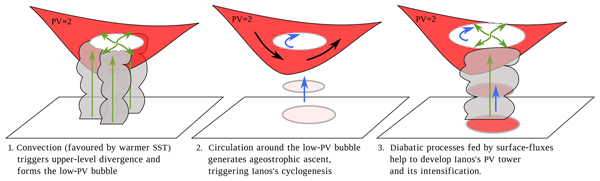
Medicane Ianos was a very intense cyclone that led to harmful impacts over Greece. We explore what processes are important for the forecasting of Medicane Ianos, with the use of the Met Office weather model. There was a preceding precipitation event before Ianos’s birth, whose energetics generated a bubble in the tropopause. This bubble created the necessary conditions for Ianos to emerge and strengthen, and the processes are enhanced in simulations with a warmer Mediterranean Sea.
Hannah L. Croad, John Methven, Ben Harvey, Sarah P. E. Keeley, and Ambrogio Volonté
Weather Clim. Dynam., 4, 617–638, https://doi.org/10.5194/wcd-4-617-2023, https://doi.org/10.5194/wcd-4-617-2023, 2023
Short summary
Short summary
The interaction between Arctic cyclones and the sea ice surface in summer is investigated by analysing the friction and sensible heat flux processes acting in two cyclones with contrasting evolution. The major finding is that the effects of friction on cyclone strength are dependent on a particular feature of cyclone structure: whether they have a warm or cold core during growth. Friction leads to cooling within both cyclone types in the lower atmosphere, which may contribute to their longevity.
Ambrogio Volonté, Andrew G. Turner, Reinhard Schiemann, Pier Luigi Vidale, and Nicholas P. Klingaman
Weather Clim. Dynam., 3, 575–599, https://doi.org/10.5194/wcd-3-575-2022, https://doi.org/10.5194/wcd-3-575-2022, 2022
Short summary
Short summary
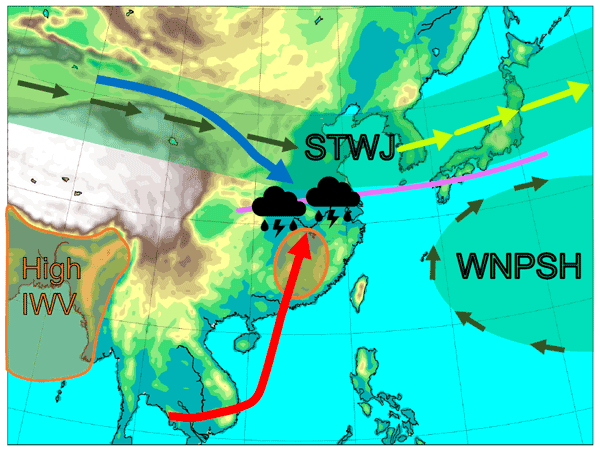
In this study we analyse the complex seasonal evolution of the East Asian summer monsoon. Using reanalysis data, we show the importance of the interaction between tropical and extratropical air masses converging at the monsoon front, particularly during its northward progression. The upper-level flow pattern (e.g. the westerly jet) controls the balance between the airstreams and thus the associated rainfall. This framework provides a basis for studies of extreme events and climate variability.
Ming Hon Franco Lee, Hanna Joos, Heini Wernli, Richard Forbes, and Michael Sprenger
EGUsphere, https://doi.org/10.5194/egusphere-2026-4609, https://doi.org/10.5194/egusphere-2026-4609, 2026
This preprint is open for discussion and under review for Weather and Climate Dynamics (WCD).
Short summary
Short summary
Warm conveyor belts are coherent, rapidly ascending airstreams in extratropical cyclones, creating divergent outflows at upper levels. Using a numerical simulation, turbulence is found modifying potential vorticity near the tropopause in an outflow region. Despite the complex flow, changes in potential vorticity are retained due to the coordination provided by the outflow, leading to a potential upscale effect on the dynamics on larger scales, possibly affecting weather predictability.
Andressa Andrade Cardoso, Suzanne L. Gray, Ambrogio Volonté, Ben J. Harvey, and Claudio Sánchez
EGUsphere, https://doi.org/10.5194/egusphere-2026-4757, https://doi.org/10.5194/egusphere-2026-4757, 2026
Short summary
Short summary
We studied whether high-resolution weather models that simulate thunderstorm clouds directly, rather than estimating their effects, improve forecasts of hazardous Mediterranean storms. Unlike more typical Mediterranean storms, tropical-cyclone-like medicanes became much stronger in the high-resolution simulations. However, the results also depended on how physical processes were represented, showing that more accurate forecasts require both better model design and higher resolution.
Paolo Andreozzi, Mark D. Fielding, Robin J. Hogan, Richard M. Forbes, Adrian A. Hill, Samuel Rémy, Birger Bohn, and Ulrich Löhnert
Atmos. Chem. Phys., 26, 11309–11338, https://doi.org/10.5194/acp-26-11309-2026, https://doi.org/10.5194/acp-26-11309-2026, 2026
Short summary
Short summary
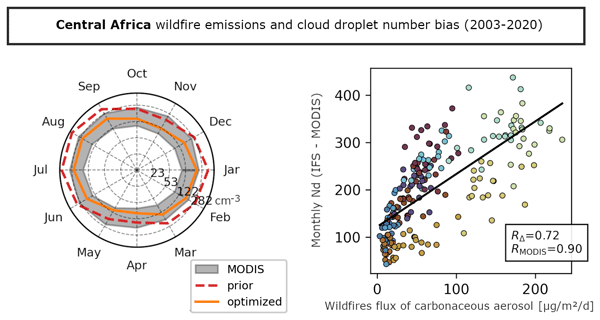
Aerosols significantly contribute to the Earth’s climate, but models still struggle to represent them. Here we use satellite observations of clouds to constrain aerosol processes in a weather and air-quality model. We show that African wildfires lead to overly bright simulated clouds and that the model removes too much aerosol in mixed-phase clouds. This demonstrates how cloud observations can target weakly constrained aerosol processes, with potential benefits for weather and climate modelling.
Piyali Goswami, Ségolène Berthou, Theodore G. Shepherd, Ambrogio Volonté, Sana Mahmood, Juan Manuel Castillo, Anne-Christine Péquignet, Yong-June Park, Mark Worsfold, Regina Rodrigues, and Magdalena A. Balmaseda
Nat. Hazards Earth Syst. Sci., 26, 3213–3230, https://doi.org/10.5194/nhess-26-3213-2026, https://doi.org/10.5194/nhess-26-3213-2026, 2026
Short summary
Short summary
We examined how a marine heatwave - period of unusually warm ocean conditions - affected flooding and coastal erosion during a storm in northwest Europe. Using a state-of-the-art regional coupled model at km-scale, we compared simulations with and without the marine heatwave to isolate its effects on the storm hazards. Warmer shallow seas intensified rainfall, winds and surface depression of the storm, which integrated into larger increases of surge, wave power and river flows.
Ming Hon Franco Lee, Hanna Joos, Heini Wernli, Richard Forbes, and Michael Sprenger
EGUsphere, https://doi.org/10.5194/egusphere-2026-4184, https://doi.org/10.5194/egusphere-2026-4184, 2026
Short summary
Short summary
Turbulence near jet streams modifies the atmospheric flow, but there is limited research on the underlying mechanism. In this study, we infer this feedback by tracing the change in potential vorticity. We use an analytical framework to explain the systematic changes caused by turbulence in a numerical simulation of a jet stream. A typical tripolar pattern appears repeatedly, and it is highly related to the coherence of the jet. The improved understanding may help advance weather forecasts.
Gabriel Moldovan, Ewan Pinnington, Ana Prieto Nemesio, Simon Lang, Zied Ben Bouallègue, Jesper Dramsch, Mihai Alexe, Mario Santa Cruz, Sara Hahner, Harrison Cook, Helen Theissen, Mariana Clare, Cathal O'Brien, Jan Polster, Linus Magnusson, Gert Mertes, Florian Pinault, Baudouin Raoult, Patricia de Rosnay, Richard Forbes, and Matthew Chantry
Geosci. Model Dev., 19, 4703–4724, https://doi.org/10.5194/gmd-19-4703-2026, https://doi.org/10.5194/gmd-19-4703-2026, 2026
Short summary
Short summary
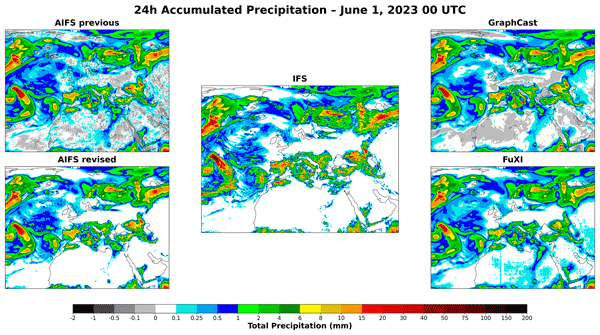
We present the latest release of the Artificial Intelligence Forecasting System, AIFS 1.1.0, which shows improved headline forecasting skill through an expanded dataset and enhanced training schedule. The model also incorporates hard physical constraints that facilitate training and improve rainfall prediction. Finally, we extend the set of forecasted variables to include soil conditions and energy-related fields, strengthening the operational value of AIFS.
Tuule Müürsepp, Michael Sprenger, Heini Wernli, and Hanna Joos
Weather Clim. Dynam., 7, 547–565, https://doi.org/10.5194/wcd-7-547-2026, https://doi.org/10.5194/wcd-7-547-2026, 2026
Short summary
Short summary
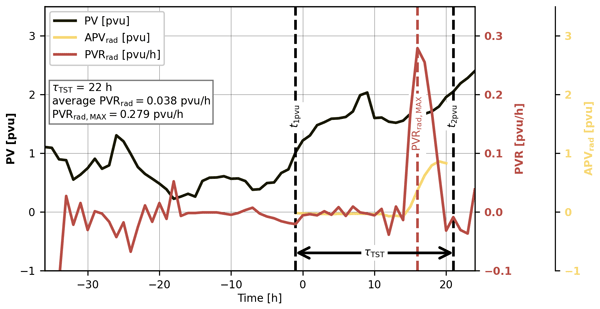
The tropopause region of the atmosphere is greatly impacted by the exchange of mass and constituents between the troposphere and the stratosphere. This study quantifies the role of radiation in troposphere-to-stratosphere transport using reanalysis data. We find that radiation contributes to this transport most of the time, albeit it might not be the dominant process. We provide a new insight into the complex interplay of processes that air parcels experience on their way to the stratosphere.
Ming Hon Franco Lee and Michael Sprenger
Weather Clim. Dynam., 6, 1583–1604, https://doi.org/10.5194/wcd-6-1583-2025, https://doi.org/10.5194/wcd-6-1583-2025, 2025
Short summary
Short summary
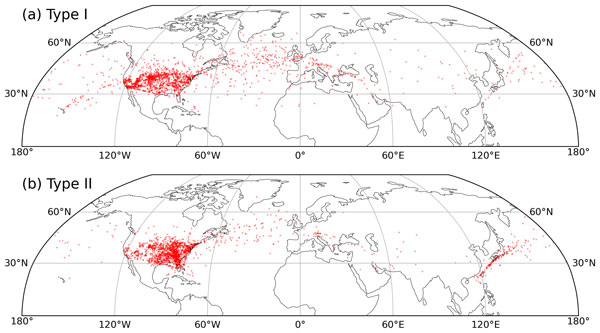
Turbulence can occur in clear-air conditions at cruising altitude. From around 5000 clear-air turbulence events identified using aircraft measurements, nonlinear breaking of large-scale waves and rapidly ascending airstreams associated with cyclones are found concurrent with 40 % and 30 % of them respectively. The results further show that these weather systems may trigger turbulence by generating highly deformed flow or flow instability, improving our understanding of clear-air turbulence.
Franziska Schnyder, Ming Hon Franco Lee, and Heini Wernli
Weather Clim. Dynam., 6, 1319–1337, https://doi.org/10.5194/wcd-6-1319-2025, https://doi.org/10.5194/wcd-6-1319-2025, 2025
Short summary
Short summary
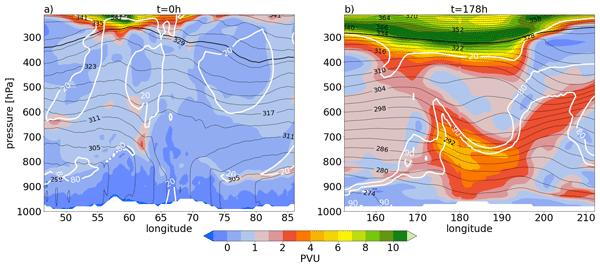
In this study, we investigate a particularly long-lived example of a Siberian summer cyclone, which originates during a heat wave in Kazakhstan in July 2021 and propagates into the Arctic, where it leads to heavy precipitation and alters the Arctic tropopause. Although a rare event in current climate, this case reveals how compounding events may be linked by one weather system and portrays a type of cyclone event which is likely to become more frequent in a warmer climate.
Hans Segura, Xabier Pedruzo-Bagazgoitia, Philipp Weiss, Sebastian K. Müller, Thomas Rackow, Junhong Lee, Edgar Dolores-Tesillos, Imme Benedict, Matthias Aengenheyster, Razvan Aguridan, Gabriele Arduini, Alexander J. Baker, Jiawei Bao, Swantje Bastin, Eulàlia Baulenas, Tobias Becker, Sebastian Beyer, Hendryk Bockelmann, Nils Brüggemann, Lukas Brunner, Suvarchal K. Cheedela, Sushant Das, Jasper Denissen, Ian Dragaud, Piotr Dziekan, Madeleine Ekblom, Jan Frederik Engels, Monika Esch, Richard Forbes, Claudia Frauen, Lilli Freischem, Diego García-Maroto, Philipp Geier, Paul Gierz, Álvaro González-Cervera, Katherine Grayson, Matthew Griffith, Oliver Gutjahr, Helmuth Haak, Ioan Hadade, Kerstin Haslehner, Shabeh ul Hasson, Jan Hegewald, Lukas Kluft, Aleksei Koldunov, Nikolay Koldunov, Tobias Kölling, Shunya Koseki, Sergey Kosukhin, Josh Kousal, Peter Kuma, Arjun U. Kumar, Rumeng Li, Nicolas Maury, Maximilian Meindl, Sebastian Milinski, Kristian Mogensen, Bimochan Niraula, Jakub Nowak, Divya Sri Praturi, Ulrike Proske, Dian Putrasahan, René Redler, David Santuy, Domokos Sármány, Reiner Schnur, Patrick Scholz, Dmitry Sidorenko, Dorian Spät, Birgit Sützl, Daisuke Takasuka, Adrian Tompkins, Alejandro Uribe, Mirco Valentini, Menno Veerman, Aiko Voigt, Sarah Warnau, Fabian Wachsmann, Marta Wacławczyk, Nils Wedi, Karl-Hermann Wieners, Jonathan Wille, Marius Winkler, Yuting Wu, Florian Ziemen, Janos Zimmermann, Frida A.-M. Bender, Dragana Bojovic, Sandrine Bony, Simona Bordoni, Patrice Brehmer, Marcus Dengler, Emanuel Dutra, Saliou Faye, Erich Fischer, Chiel van Heerwaarden, Cathy Hohenegger, Heikki Järvinen, Markus Jochum, Thomas Jung, Johann H. Jungclaus, Noel S. Keenlyside, Daniel Klocke, Heike Konow, Martina Klose, Szymon Malinowski, Olivia Martius, Thorsten Mauritsen, Juan Pedro Mellado, Theresa Mieslinger, Elsa Mohino, Hanna Pawłowska, Karsten Peters-von Gehlen, Abdoulaye Sarré, Pajam Sobhani, Philip Stier, Lauri Tuppi, Pier Luigi Vidale, Irina Sandu, and Bjorn Stevens
Geosci. Model Dev., 18, 7735–7761, https://doi.org/10.5194/gmd-18-7735-2025, https://doi.org/10.5194/gmd-18-7735-2025, 2025
Short summary
Short summary
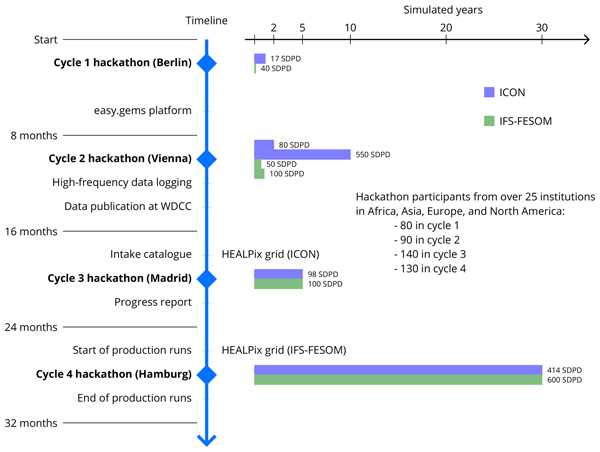
The Next Generation of Earth Modeling Systems project (nextGEMS) developed two Earth system models that use horizontal grid spacing of 10 km and finer, giving more fidelity to the representation of local phenomena, globally. In its fourth cycle, nextGEMS simulated the Earth System climate over the 2020–2049 period under the SSP3-7.0 scenario. Here, we provide an overview of nextGEMS, insights into the model development, and the realism of multi-decadal, kilometer-scale simulations.
Selvakumar Vishnupriya, Michael Sprenger, Hanna Joos, and Heini Wernli
Weather Clim. Dynam., 6, 1195–1219, https://doi.org/10.5194/wcd-6-1195-2025, https://doi.org/10.5194/wcd-6-1195-2025, 2025
Short summary
Short summary
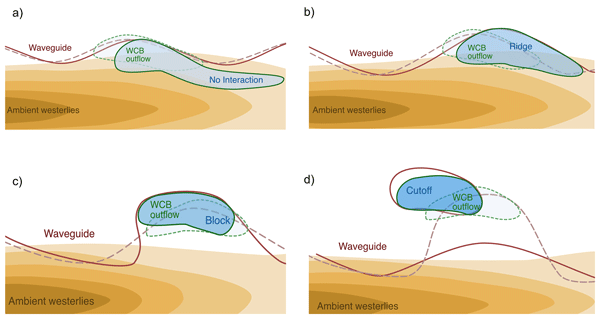
Extratropical cyclones feature rapidly ascending airstreams known as warm conveyor belts, which could influence upper-level flow dynamics. This study classifies interactions between warm conveyor belt outflows and the jet stream into four types: no interactions, ridges, blocks, and tropospheric cutoffs. We use reanalysis data to demonstrate that the interaction type depends on the structure of the ambient flow than on the outflow, improving our understanding of extratropical flow variability.
Thomas Rackow, Xabier Pedruzo-Bagazgoitia, Tobias Becker, Sebastian Milinski, Irina Sandu, Razvan Aguridan, Peter Bechtold, Sebastian Beyer, Jean Bidlot, Souhail Boussetta, Willem Deconinck, Michail Diamantakis, Peter Dueben, Emanuel Dutra, Richard Forbes, Rohit Ghosh, Helge F. Goessling, Ioan Hadade, Jan Hegewald, Thomas Jung, Sarah Keeley, Lukas Kluft, Nikolay Koldunov, Aleksei Koldunov, Tobias Kölling, Josh Kousal, Christian Kühnlein, Pedro Maciel, Kristian Mogensen, Tiago Quintino, Inna Polichtchouk, Balthasar Reuter, Domokos Sármány, Patrick Scholz, Dmitry Sidorenko, Jan Streffing, Birgit Sützl, Daisuke Takasuka, Steffen Tietsche, Mirco Valentini, Benoît Vannière, Nils Wedi, Lorenzo Zampieri, and Florian Ziemen
Geosci. Model Dev., 18, 33–69, https://doi.org/10.5194/gmd-18-33-2025, https://doi.org/10.5194/gmd-18-33-2025, 2025
Short summary
Short summary
Detailed global climate model simulations have been created based on a numerical weather prediction model, offering more accurate spatial detail down to the scale of individual cities ("kilometre-scale") and a better understanding of climate phenomena such as atmospheric storms, whirls in the ocean, and cracks in sea ice. The new model aims to provide globally consistent information on local climate change with greater precision, benefiting environmental planning and local impact modelling.
Suzanne L. Gray, Ambrogio Volonté, Oscar Martínez-Alvarado, and Ben J. Harvey
Weather Clim. Dynam., 5, 1523–1544, https://doi.org/10.5194/wcd-5-1523-2024, https://doi.org/10.5194/wcd-5-1523-2024, 2024
Short summary
Short summary
Sting jets occur in some of the most damaging cyclones impacting Europe. We present the first climatology of sting-jet cyclones over the major ocean basins. Cyclones with sting-jet precursors occur over the North Atlantic, North Pacific, and Southern Oceans, with implications for wind warnings. Precursor cyclones have distinct characteristics, even in reanalyses that are too coarse to fully resolve sting jets, evidencing the climatological consequences of strong diabatic cloud processes.
Andrew Gettelman, Richard Forbes, Roger Marchand, Chih-Chieh Chen, and Mark Fielding
Geosci. Model Dev., 17, 8069–8092, https://doi.org/10.5194/gmd-17-8069-2024, https://doi.org/10.5194/gmd-17-8069-2024, 2024
Short summary
Short summary
Supercooled liquid clouds (liquid clouds colder than 0°C) are common at higher latitudes (especially over the Southern Ocean) and are critical for constraining climate projections. We compare a single-column version of a weather model to observations with two different cloud schemes and find that both the dynamical environment and atmospheric aerosols are important for reproducing observations.
Claudio Sánchez, Suzanne Gray, Ambrogio Volonté, Florian Pantillon, Ségolène Berthou, and Silvio Davolio
Weather Clim. Dynam., 5, 1429–1455, https://doi.org/10.5194/wcd-5-1429-2024, https://doi.org/10.5194/wcd-5-1429-2024, 2024
Short summary
Short summary
Medicane Ianos was a very intense cyclone that led to harmful impacts over Greece. We explore what processes are important for the forecasting of Medicane Ianos, with the use of the Met Office weather model. There was a preceding precipitation event before Ianos’s birth, whose energetics generated a bubble in the tropopause. This bubble created the necessary conditions for Ianos to emerge and strengthen, and the processes are enhanced in simulations with a warmer Mediterranean Sea.
Katharina Heitmann, Michael Sprenger, Hanin Binder, Heini Wernli, and Hanna Joos
Weather Clim. Dynam., 5, 537–557, https://doi.org/10.5194/wcd-5-537-2024, https://doi.org/10.5194/wcd-5-537-2024, 2024
Short summary
Short summary
Warm conveyor belts (WCBs) are coherently ascending air streams that occur in extratropical cyclones where they form precipitation and often affect the large-scale flow. We quantified the key characteristics and impacts of WCBs and linked them to different phases in the cyclone life cycle and to different WCB branches. A climatology of these metrics revealed that WCBs are most intense during cyclone intensification and that the cyclonic and anticyclonic WCB branches show distinct differences.
Hannah L. Croad, John Methven, Ben Harvey, Sarah P. E. Keeley, and Ambrogio Volonté
Weather Clim. Dynam., 4, 617–638, https://doi.org/10.5194/wcd-4-617-2023, https://doi.org/10.5194/wcd-4-617-2023, 2023
Short summary
Short summary
The interaction between Arctic cyclones and the sea ice surface in summer is investigated by analysing the friction and sensible heat flux processes acting in two cyclones with contrasting evolution. The major finding is that the effects of friction on cyclone strength are dependent on a particular feature of cyclone structure: whether they have a warm or cold core during growth. Friction leads to cooling within both cyclone types in the lower atmosphere, which may contribute to their longevity.
Gillian Young McCusker, Jutta Vüllers, Peggy Achtert, Paul Field, Jonathan J. Day, Richard Forbes, Ruth Price, Ewan O'Connor, Michael Tjernström, John Prytherch, Ryan Neely III, and Ian M. Brooks
Atmos. Chem. Phys., 23, 4819–4847, https://doi.org/10.5194/acp-23-4819-2023, https://doi.org/10.5194/acp-23-4819-2023, 2023
Short summary
Short summary
In this study, we show that recent versions of two atmospheric models – the Unified Model and Integrated Forecasting System – overestimate Arctic cloud fraction within the lower troposphere by comparison with recent remote-sensing measurements made during the Arctic Ocean 2018 expedition. The overabundance of cloud is interlinked with the modelled thermodynamic structure, with strong negative temperature biases coincident with these overestimated cloud layers.
Andrew Gettelman, Hugh Morrison, Trude Eidhammer, Katherine Thayer-Calder, Jian Sun, Richard Forbes, Zachary McGraw, Jiang Zhu, Trude Storelvmo, and John Dennis
Geosci. Model Dev., 16, 1735–1754, https://doi.org/10.5194/gmd-16-1735-2023, https://doi.org/10.5194/gmd-16-1735-2023, 2023
Short summary
Short summary
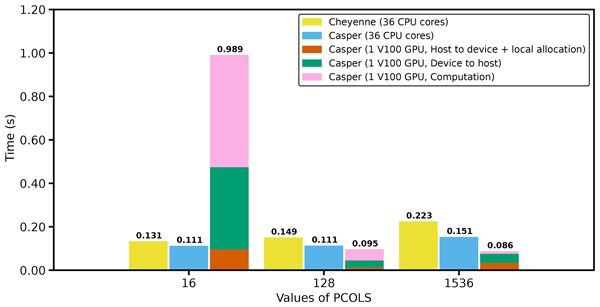
Clouds are a critical part of weather and climate prediction. In this work, we document updates and corrections to the description of clouds used in several Earth system models. These updates include the ability to run the scheme on graphics processing units (GPUs), changes to the numerical description of precipitation, and a correction to the ice number. There are big improvements in the computational performance that can be achieved with GPU acceleration.
Hanna Joos, Michael Sprenger, Hanin Binder, Urs Beyerle, and Heini Wernli
Weather Clim. Dynam., 4, 133–155, https://doi.org/10.5194/wcd-4-133-2023, https://doi.org/10.5194/wcd-4-133-2023, 2023
Short summary
Short summary
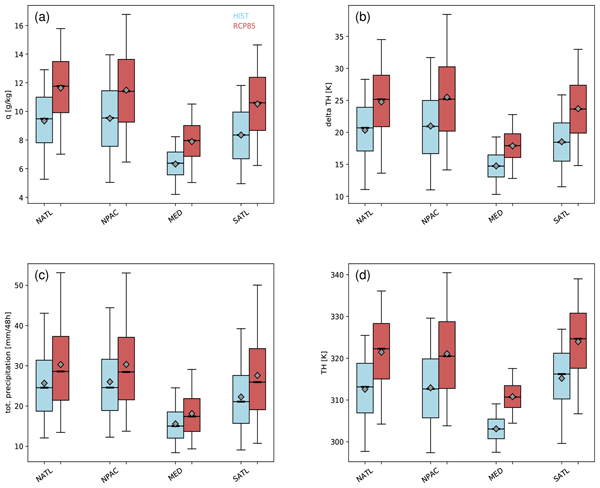
Warm conveyor belts (WCBs) are strongly ascending, cloud- and precipitation-forming airstreams in extratropical cyclones. In this study we assess their representation in a climate simulation and their changes under global warming. They become moister, become more intense, and reach higher altitudes in a future climate, implying that they potentially have an increased impact on the mid-latitude flow.
Hanin Binder, Hanna Joos, Michael Sprenger, and Heini Wernli
Weather Clim. Dynam., 4, 19–37, https://doi.org/10.5194/wcd-4-19-2023, https://doi.org/10.5194/wcd-4-19-2023, 2023
Short summary
Short summary
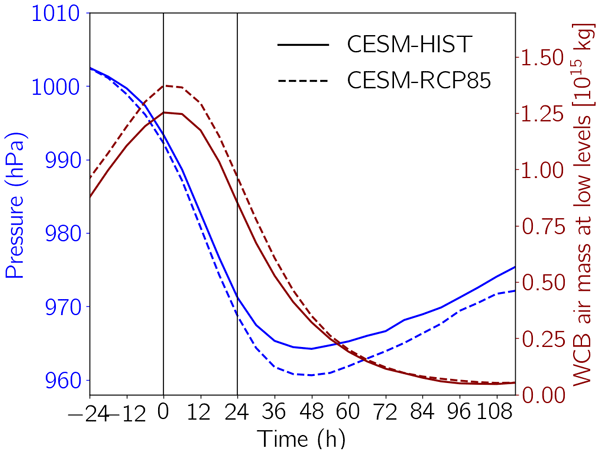
Warm conveyor belts (WCBs) are the main cloud- and precipitation-producing airstreams in extratropical cyclones. The latent heat release that occurs during cloud formation often contributes to the intensification of the associated cyclone. Based on the Community Earth System Model Large Ensemble coupled climate simulations, we show that WCBs and associated latent heating will become stronger in a future climate and be even more important for explosive cyclone intensification than in the present.
Ambrogio Volonté, Andrew G. Turner, Reinhard Schiemann, Pier Luigi Vidale, and Nicholas P. Klingaman
Weather Clim. Dynam., 3, 575–599, https://doi.org/10.5194/wcd-3-575-2022, https://doi.org/10.5194/wcd-3-575-2022, 2022
Short summary
Short summary
In this study we analyse the complex seasonal evolution of the East Asian summer monsoon. Using reanalysis data, we show the importance of the interaction between tropical and extratropical air masses converging at the monsoon front, particularly during its northward progression. The upper-level flow pattern (e.g. the westerly jet) controls the balance between the airstreams and thus the associated rainfall. This framework provides a basis for studies of extreme events and climate variability.
Lukas Bösiger, Michael Sprenger, Maxi Boettcher, Hanna Joos, and Tobias Günther
Geosci. Model Dev., 15, 1079–1096, https://doi.org/10.5194/gmd-15-1079-2022, https://doi.org/10.5194/gmd-15-1079-2022, 2022
Short summary
Short summary
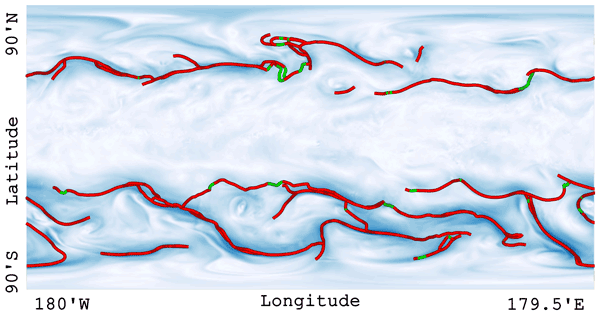
Jet streams are coherent air flows that interact with atmospheric structures such as warm conveyor belts (WCBs) and the tropopause. Individually, these structures have a significant impact on the weather evolution. A first step towards a deeper understanding of the meteorological processes is to extract jet stream core lines, for which we develop a novel feature extraction algorithm. Based on the line geometry, we automatically detect and visualize potential interactions between WCBs and jets.
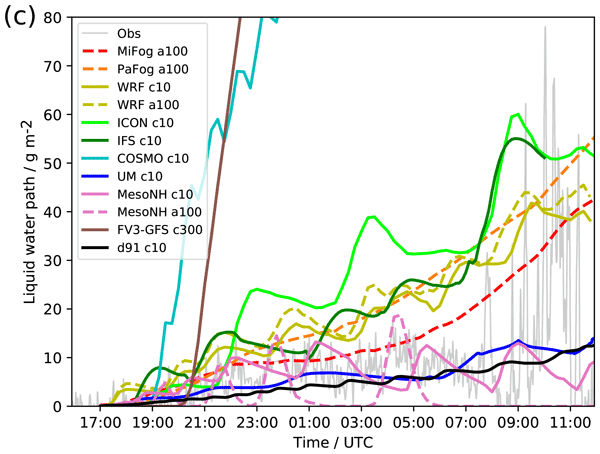
Ian Boutle, Wayne Angevine, Jian-Wen Bao, Thierry Bergot, Ritthik Bhattacharya, Andreas Bott, Leo Ducongé, Richard Forbes, Tobias Goecke, Evelyn Grell, Adrian Hill, Adele L. Igel, Innocent Kudzotsa, Christine Lac, Bjorn Maronga, Sami Romakkaniemi, Juerg Schmidli, Johannes Schwenkel, Gert-Jan Steeneveld, and Benoît Vié
Atmos. Chem. Phys., 22, 319–333, https://doi.org/10.5194/acp-22-319-2022, https://doi.org/10.5194/acp-22-319-2022, 2022
Short summary
Short summary
Fog forecasting is one of the biggest problems for numerical weather prediction. By comparing many models used for fog forecasting with others used for fog research, we hoped to help guide forecast improvements. We show some key processes that, if improved, will help improve fog forecasting, such as how water is deposited on the ground. We also showed that research models were not themselves a suitable baseline for comparison, and we discuss what future observations are required to improve them.
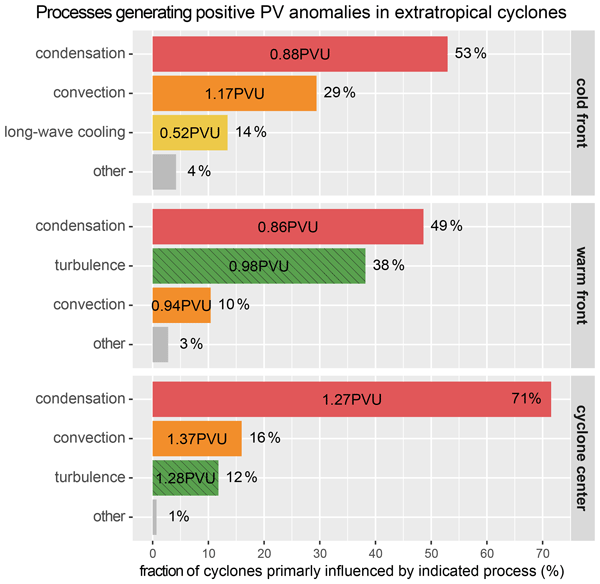
Roman Attinger, Elisa Spreitzer, Maxi Boettcher, Heini Wernli, and Hanna Joos
Weather Clim. Dynam., 2, 1073–1091, https://doi.org/10.5194/wcd-2-1073-2021, https://doi.org/10.5194/wcd-2-1073-2021, 2021
Short summary
Short summary
Diabatic processes affect the development of extratropical cyclones. This work provides a systematic assessment of the diabatic processes that modify potential vorticity (PV) in model simulations. PV is primarily produced by condensation and convection. Given favorable environmental conditions, long-wave radiative cooling and turbulence become the primary process at the cold and warm fronts, respectively. Turbulence and long-wave radiative heating produce negative PV anomalies at the fronts.
Cited articles
Attinger, R., Spreitzer, E., Boettcher, M., Forbes, R., Wernli, H., and Joos, H.: Quantifying the role of individual diabatic processes for the formation of PV anomalies in a North Pacific cyclone, Q. J. Roy. Meteor. Soc., 145, 2454–2476, https://doi.org/10.1002/qj.3573, 2019. a, b, c, d, e, f, g, h
Baker, L. H., Gray, S. L., and Clark, P. A.: Idealised simulations of sting-jet cyclones, Q. J. Roy. Meteor. Soc., 140, 96–110, https://doi.org/10.1002/QJ.2131, 2014. a
Bechtold, P., Forbes, R., Sandu, I., Lang, S., and Ahlgrimm, M.: A major moist physics upgrade for the IFS, ECMWF Newsletter, https://doi.org/10.21957/3gt59vx1pb, 2020. a
Browning, K. A.: Radar Measurements of Air Motion Near Fronts, Weather, 26, 320–340, https://doi.org/10.1002/j.1477-8696.1971.tb04211.x, 1971. a
Browning, K. A.: The sting at the end of the tail: Damaging winds associated with extratropical cyclones, Q. J. Roy. Meteor. Soc., 130, 375–399, https://doi.org/10.1256/qj.02.143, 2004. a
Browning, K. A. and Field, M.: Evidence from Meteosat imagery of the interaction of sting jets with the boundary layer, Met. Apps., 11, 277–289, https://doi.org/10.1017/S1350482704001379, 2004. a, b
Browning, K. A. and Roberts, N. M.: Structure of a frontal cyclone, Q. J. Roy. Meteor. Soc., 120, 1535–1557, https://doi.org/10.1002/qj.49712052006, 1994. a
Chagnon, J. M. and Gray, S. L.: A Diabatically Generated Potential Vorticity Structure near the Extratropical Tropopause in Three Simulated Extratropical Cyclones, Mon. Weather Rev., 143, 2337–2347, https://doi.org/10.1175/MWR-D-14-00092.1, 2015. a
Chagnon, J. M., Gray, S. L., and Methven, J.: Diabatic processes modifying potential vorticity in a North Atlantic cyclone, Q. J. Roy. Meteor. Soc., 139, 1270–1282, https://doi.org/10.1002/qj.2037, 2013. a, b
Charlton-Perez, A. J., Dacre, H. F., Driscoll, S., Gray, S. L., Harvey, B., Harvey, N. J., Hunt, K. M. R., Lee, R. W., Swaminathan, R., Vandaele, R., and Volonté, A.: Do AI models produce better weather forecasts than physics-based models? A quantitative evaluation case study of Storm Ciarán, npj Clim. Atmos. Sci., 7, 1–11, https://doi.org/10.1038/s41612-024-00638-w, 2024. a
Clark, P. A., Browning, K. A., and Wang, C.: The sting at the end of the tail: Model diagnostics of fine-scale three-dimensional structure of the cloud head, Q. J. Roy. Meteor. Soc., 131, 2263–2292, https://doi.org/10.1256/qj.04.36, 2005. a, b, c
Clough, S. A. and Franks, R. A. A.: The evaporation of frontal and other stratiform precipitation, Q. J. Roy. Meteor. Soc., 117, 1057–1080, https://doi.org/10.1002/qj.49711750109, 1991. a
Coronel, B., Ricard, D., Rivière, G., and Arbogast, P.: Cold-conveyor-belt jet, sting jet and slantwise circulations in idealized simulations of extratropical cyclones, Q. J. Roy. Meteor. Soc., 142, 1781–1796, https://doi.org/10.1002/qj.2775, 2016. a, b
Eisenstein, L., Schulz, B., Qadir, G. A., Pinto, J. G., and Knippertz, P.: Identification of high-wind features within extratropical cyclones using a probabilistic random forest – Part 1: Method and case studies, Weather Clim. Dynam., 3, 1157–1182, https://doi.org/10.5194/wcd-3-1157-2022, 2022. a
Flaounas, E., Gray, S. L., and Teubler, F.: A process-based anatomy of Mediterranean cyclones: from baroclinic lows to tropical-like systems, Weather Clim. Dynam., 2, 255–279, https://doi.org/10.5194/wcd-2-255-2021, 2021. a
Forbes, R. M. and Clark, P. A.: Sensitivity of extratropical cyclone mesoscale structure to the parametrization of ice microphysical processes, Q. J. Roy. Meteor. Soc., 129, 1123–1148, https://doi.org/10.1256/qj.01.171, 2003. a
Gray, S. L., Martínez-Alvarado, O., Baker, L. H., and Clark, P. A.: Conditional symmetric instability in sting-jet storms, Q. J. Roy. Meteor. Soc., 137, 1482–1500, https://doi.org/10.1002/qj.859, 2011. a
Joos, H. and Forbes, R. M.: Impact of different IFS microphysics on a warm conveyor belt and the downstream flow evolution, Q. J. Roy. Meteor. Soc., 142, 2727–2739, https://doi.org/10.1002/qj.2863, 2016. a
Joos, H. and Wernli, H.: Influence of microphysical processes on the potential vorticity development in a warm conveyor belt: a case-study with the limited-area model COSMO, Q. J. Roy. Meteor. Soc., 138, 407–418, https://doi.org/10.1002/qj.934, 2012. a
Kendon, M.: Storm Éowyn, 24 January 2025, Analysis by Met Office Climate Information Centre, https://www.metoffice.gov.uk/binaries/content/assets/metofficegovuk/pdf/weather/learn-about/uk-past-events/interesting/2025/2025_02_storm_eowyn.pdf (last access: 29 April 2025), 2025. a
Kuhlbrodt, T., Swaminathan, R., Ceppi, P., and Wilder, T.: A Glimpse into the Future: The 2023 Ocean Temperature and Sea Ice Extremes in the Context of Longer-Term Climate Change, B. Am. Meteorol. Soc., 105, E474–E485, https://doi.org/10.1175/BAMS-D-23-0209.1, 2024. a
Lean, H. W. and Clark, P. A.: The effects of changing resolution on mesocale modelling of line convection and slantwise circulations in FASTEX IOP16, Q. J. Roy. Meteor. Soc., 129, 2255–2278, https://doi.org/10.1256/qj.02.57, 2003. a
Madonna, E., Wernli, H., Joos, H., and Martius, O.: Warm Conveyor Belts in the ERA-Interim Dataset (1979–2010). Part I: Climatology and Potential Vorticity Evolution, J. Climate, 27, 3–26, https://doi.org/10.1175/JCLI-D-12-00720.1, 2014. a
Martínez-Alvarado, O., Baker, L. H., Gray, S. L., Methven, J., and Plant, R. S.: Distinguishing the Cold Conveyor Belt and Sting Jet Airstreams in an Intense Extratropical Cyclone, Mon. Weather Rev., 142, 2571–2595, https://doi.org/10.1175/MWR-D-13-00348.1, 2014. a
Roberts, N. M. and Forbes, R. M.: An observational study of multiple cloud head structure in the FASTEX IOP 16 cyclone, Atmos. Sci. Lett., 3, 59–70, https://doi.org/10.1006/asle.2002.0048, 2002. a
Sanders, F. and Gyakum, J. R.: Synoptic-Dynamic Climatology of the “Bomb”, Mon. Weather Rev., 108, 1589–1606, https://doi.org/10.1175/1520-0493(1980)108<1589:SDCOT>2.0.CO;2, 1980. a
Schultz, D. M.: Reexamining the Cold Conveyor Belt, Mon. Weather Rev., 129, 2205–2225, https://doi.org/10.1175/1520-0493(2001)129<2205:RTCCB>2.0.CO;2, 2001. a
Schultz, D. M. and Schumacher, P. N.: The Use and Misuse of Conditional Symmetric Instability, Mon. Weather Rev., 127, 2709–2732, https://doi.org/10.1175/1520-0493(1999)127<2709:TUAMOC>2.0.CO;2, 1999. a
Schultz, D. M., Sienkiewicz, J. M., Schultz, D. M., and Sienkiewicz, J. M.: Using Frontogenesis to Identify Sting Jets in Extratropical Cyclones, Weather Forecast., 28, 603–613, https://doi.org/10.1175/WAF-D-12-00126.1, 2013. a
Shapiro, M. A. and Keyser, D.: Fronts, Jet Streams and the Tropopause, in: Extratropical Cyclones, edited by: Newton, C. W. and Holopainen, E. O., American Meteorological Society, Boston, MA, 167–191, https://doi.org/10.1007/978-1-944970-33-8_10, 1990. a
Spreitzer, E., Attinger, R., Boettcher, M., Forbes, R., Wernli, H., and Joos, H.: Modification of Potential Vorticity near the Tropopause by Nonconservative Processes in the ECMWF Model, J. Atmos. Sci., 76, 1709–1726, https://doi.org/10.1175/JAS-D-18-0295.1, 2019. a, b, c
Sprenger, M. and Wernli, H.: The LAGRANTO Lagrangian analysis tool – version 2.0, Geosci. Model Dev., 8, 2569–2586, https://doi.org/10.5194/gmd-8-2569-2015, 2015. a
Stoelinga, M. T.: A Potential Vorticity-Based Study of the Role of Diabatic Heating and Friction in a Numerically Simulated Baroclinic Cyclone, Mon. Weather Rev., 124, 849–874, https://doi.org/10.1175/1520-0493(1996)124<0849:APVBSO>2.0.CO;2, 1996. a
Suri, D., Keates, S., and Sidaway, M.: Storm Éowyn, 24 January 2025, Weather, https://doi.org/10.1002/wea.7725, 2025. a
Volonté, A. and Riboldi, J.: The origins of Storm Ciarán: From diabatic Rossby wave to warm-seclusion cyclone with a sting jet, Weather, 79, 390–396, https://doi.org/10.1002/wea.7632, 2024. a
Volonté, A., Clark, P. A., and Gray, S. L.: Idealised simulations of cyclones with robust symmetrically unstable sting jets, Weather Clim. Dynam., 1, 63–91, https://doi.org/10.5194/wcd-1-63-2020, 2020. a, b, c, d
Volonté, A., Gray, S. L., Clark, P. A., Martínez-Alvarado, O., and Ackerley, D.: Strong surface winds in Storm Eunice. Part 1: storm overview and indications of sting jet activity from observations and model data, Weather, 79, 40–45, https://doi.org/10.1002/WEA.4402, 2023a. a, b
Volonté, A., Gray, S. L., Clark, P. A., Martínez-Alvarado, O., and Ackerley, D.: Strong surface winds in Storm Eunice. Part 2: airstream analysis, Weather, 79, 54–59, https://doi.org/10.1002/WEA.4401, 2023b. a, b, c, d
Wernli, H. and Gray, S. L.: The importance of diabatic processes for the dynamics of synoptic-scale extratropical weather systems – a review, Weather Clim. Dynam., 5, 1299–1408, https://doi.org/10.5194/wcd-5-1299-2024, 2024. a
Wimmer, M., Rivière, G., Arbogast, P., Piriou, J.-M., Delanoë, J., Labadie, C., Cazenave, Q., and Pelon, J.: Diabatic processes modulating the vertical structure of the jet stream above the cold front of an extratropical cyclone: sensitivity to deep convection schemes, Weather Clim. Dynam., 3, 863–882, https://doi.org/10.5194/wcd-3-863-2022, 2022. a
Short summary
Sting jets are air flows that can form in cloudy and unstable regions of intense windstorms. They can cause damaging wind gusts as they descend and accelerate while releasing their instability. We use a numerical simulation of Storm Ciarán to identify the individual cloud processes, such as condensation and sublimation, driving the onset of this instability. We reveal their complex interplay and highlight the unique properties of the three-dimensional environment in which a sting jet develops.
Sting jets are air flows that can form in cloudy and unstable regions of intense windstorms....


