
Articles | Volume 7, issue 3
https://doi.org/10.5194/wcd-7-1331-2026
© Author(s) 2026. This work is distributed under
the Creative Commons Attribution 4.0 License.
the Creative Commons Attribution 4.0 License.
Special issue:
https://doi.org/10.5194/wcd-7-1331-2026
© Author(s) 2026. This work is distributed under
the Creative Commons Attribution 4.0 License.
the Creative Commons Attribution 4.0 License.
Research article
| 
28 Jul 2026
Research article |
| 28 Jul 2026
| 28 Jul 2026
Revisiting the historical wintertime drying of the Mediterranean in the LESFMIP simulations
David Avisar
CORRESPONDING AUTHOR

Fredy & Nadine Herrmann Institute of Earth Sciences, The Hebrew University of Jerusalem, Jerusalem, Israel
The Department of Applied Mathematics, Israel Institute for Biological Reserach, Ness-Ziona, 7410001, Israel
Chaim I. Garfinkel
Fredy & Nadine Herrmann Institute of Earth Sciences, The Hebrew University of Jerusalem, Jerusalem, Israel
Related authors
Chaim I. Garfinkel, David Avisar, Wenjuan Huo, Ales Kuchar, Shoshiro Minobe, Scott Osprey, Katharina Perny, and Jonathon S. Wright
EGUsphere, https://doi.org/10.5194/egusphere-2026-3738, https://doi.org/10.5194/egusphere-2026-3738, 2026
Short summary
Short summary
Whether tropical volcanic eruptions lead to a circulation response in winter is still unclear. We re-evaluate this effect using large ensembles from eight separate models with only one time-varying external forcing: volcanic aerosols. We find that 75 % of models simulate the previously proposed effect, but that the signal requires at least 30 eruptions before it emerges robustly from the noise. Furthermore, we demonstrate that the El Niño signal differs from natural El Niño events.
Chaim I. Garfinkel, David Avisar, Scott M. Osprey, Doug Smith, Jian Rao, and Jonathon S. Wright
Weather Clim. Dynam., 7, 1133–1152, https://doi.org/10.5194/wcd-7-1133-2026, https://doi.org/10.5194/wcd-7-1133-2026, 2026
Short summary
Short summary
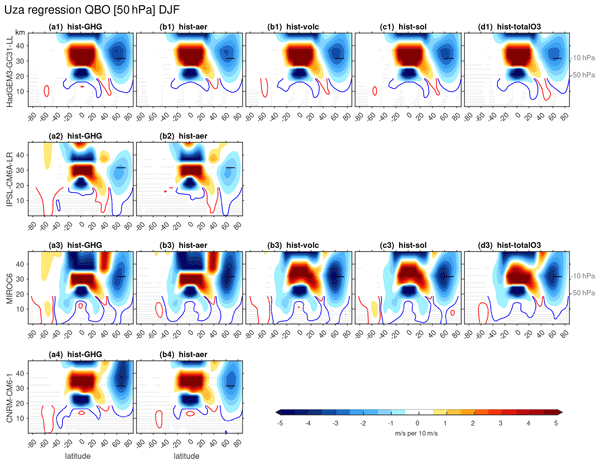
The Quasi-biennial Oscillation (QBO) dominates variability in the tropical stratosphere, & it impacts surface climate in several parts of the world. However, climate models have been shown to systematically under-estimate the influence of the QBO. Here, we re-evaluate this finding using much larger ensemble sizes than have been previously available based on four separate models. We find that the models are comparatively more successful in capturing QBO influences than reported by previous work.
Chaim I. Garfinkel, Tiffany Shaw, Benny Keller, Edwin P. Gerber, Ian P. White, Martin Jucker, Wuhan Ning, Ori Adam, and Siming Liu
Weather Clim. Dynam., 7, 1951–1975, https://doi.org/10.5194/wcd-7-1951-2026, https://doi.org/10.5194/wcd-7-1951-2026, 2026
Short summary
Short summary
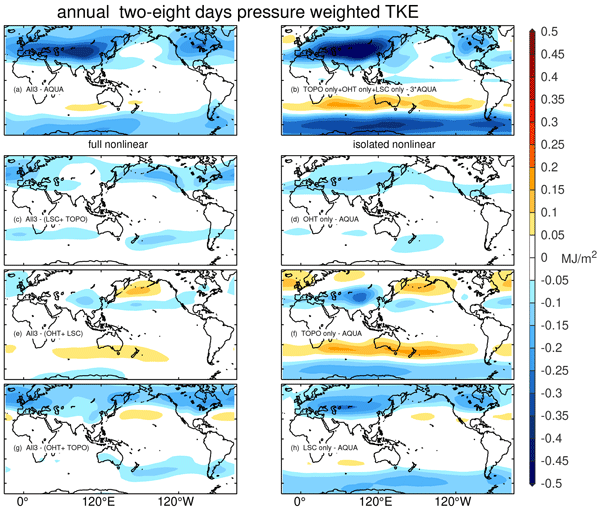
Midlatitude storm tracks are stronger over ocean basins than continents, and also stronger in the Southern Hemisphere than in the Northern Hemisphere. It is still not clear how Earth's land-ocean distribution, ocean heat transport, and orography, set up this structure. We use an intermediate complexity moist general circulation model to reveal substantial non-additivities in the response to these inhomogeneities, and then diagnose why.
Kexiang Feng, Jian Rao, Chaim I. Garfinkel, Amy H. Butler, Blanca Ayarzagüena, and Xiaoqi Zhang
EGUsphere, https://doi.org/10.5194/egusphere-2026-4971, https://doi.org/10.5194/egusphere-2026-4971, 2026
This preprint is open for discussion and under review for Weather and Climate Dynamics (WCD).
Short summary
Short summary
Sudden stratospheric warmings can influence weather at the Earth's surface, but the role of the upper atmosphere remains unclear. Using forecast models with different upper-atmosphere conditions, we find that the upper atmosphere actively affects the evolution of these events and their surface impacts. This highlights the importance of better representing the upper atmosphere to improve forecasts of sudden stratospheric warmings and their impacts.
William J. M. Seviour, Justin Finkel, Philip Rupp, Regan Mudhar, Amy H. Butler, Chaim I. Garfinkel, Peter Hitchcock, Blanca Ayarzagüena, Dong-Chan Hong, Yu-Kyung Hyun, Hera Kim, Eun-Pa Lim, Daniel De Maeseneire, Gabriele Messori, Gerbrand Koren, Michael Sigmond, Isla R. Simpson, and Seok-Woo Son
Weather Clim. Dynam., 7, 1405–1423, https://doi.org/10.5194/wcd-7-1405-2026, https://doi.org/10.5194/wcd-7-1405-2026, 2026
Short summary
Short summary
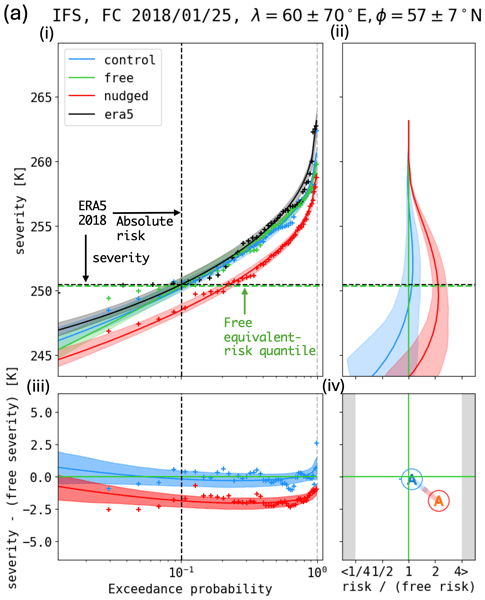
Variability of the stratospheric polar vortex is thought to play a role in driving weather extremes, but quantifying this role for a given event has proved challenging. Using a new set of perturbed subseasonal forecast experiments from 7 modelling centres, we determine the stratospheric contribution to the risk and severity of three recent extreme weather events. The forecast-based methodology that we develop is applicable to understanding a range of other drivers of weather extremes.
Chaim I. Garfinkel, David Avisar, Wenjuan Huo, Ales Kuchar, Shoshiro Minobe, Scott Osprey, Katharina Perny, and Jonathon S. Wright
EGUsphere, https://doi.org/10.5194/egusphere-2026-3738, https://doi.org/10.5194/egusphere-2026-3738, 2026
Short summary
Short summary
Whether tropical volcanic eruptions lead to a circulation response in winter is still unclear. We re-evaluate this effect using large ensembles from eight separate models with only one time-varying external forcing: volcanic aerosols. We find that 75 % of models simulate the previously proposed effect, but that the signal requires at least 30 eruptions before it emerges robustly from the noise. Furthermore, we demonstrate that the El Niño signal differs from natural El Niño events.
Chaim I. Garfinkel, David Avisar, Scott M. Osprey, Doug Smith, Jian Rao, and Jonathon S. Wright
Weather Clim. Dynam., 7, 1133–1152, https://doi.org/10.5194/wcd-7-1133-2026, https://doi.org/10.5194/wcd-7-1133-2026, 2026
Short summary
Short summary
The Quasi-biennial Oscillation (QBO) dominates variability in the tropical stratosphere, & it impacts surface climate in several parts of the world. However, climate models have been shown to systematically under-estimate the influence of the QBO. Here, we re-evaluate this finding using much larger ensemble sizes than have been previously available based on four separate models. We find that the models are comparatively more successful in capturing QBO influences than reported by previous work.
Dong-Chan Hong, Seok-Woo Son, Blanca Ayarzagüena, Amy H. Butler, Chaim I. Garfinkel, Peter Hitchcock, Yu-Kyung Hyun, and Jiankai Zhang
EGUsphere, https://doi.org/10.5194/egusphere-2026-2798, https://doi.org/10.5194/egusphere-2026-2798, 2026
Short summary
Short summary
This study investigates how Sudden Stratospheric Warming (SSW) influences surface climate. By comparing multi-model simulations, we isolated and quantified the role of SSWs. Results reveal that poleward mass transport during SSWs induces high pressure over the Arctic, driving changes in extratropical circulations. While SSWs alter the troposphere, chaotic internal weather variability can amplify or suppress their influence, explaining the differing surface impacts following SSWs.
Qian Lu, Jian Rao, Chunhua Shi, and Chaim I. Garfinkel
Atmos. Chem. Phys., 26, 5763–5780, https://doi.org/10.5194/acp-26-5763-2026, https://doi.org/10.5194/acp-26-5763-2026, 2026
Short summary
Short summary
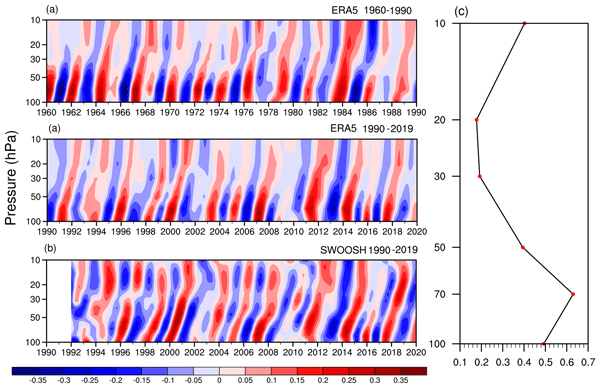
Stratospheric water vapor has an impact on global temperature changes. Tropical stratospheric water vapor exhibits a clear imprint of the Quasi-Biennial Oscillation (QBO). This study compares the water vapor variations associated with the QBO between boreal winter and summer, and the seasonal difference in the stratospheric water vapor distribution under different QBO phases is revealed.
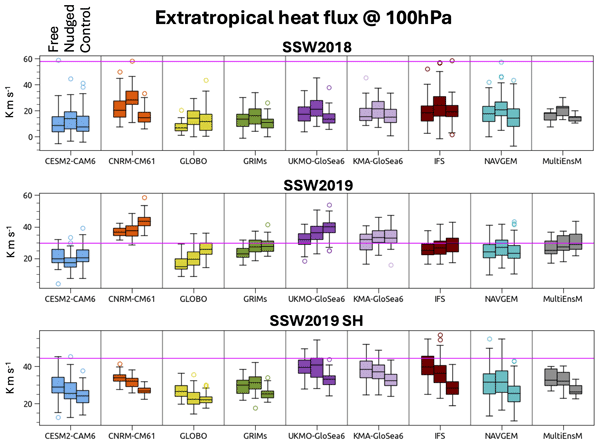
Blanca Ayarzagüena, Amy H. Butler, Peter Hitchcock, Chaim I. Garfinkel, Zac D. Lawrence, Wuhan Ning, Philip Rupp, Zheng Wu, Hilla Afargan-Gerstman, Natalia Calvo, Alvaro de la Cámara, Martin Jucker, Gerbrand Koren, Daniel De Maeseneire, Gloria L. Manney, Marisol Osman, Masakazu Taguchi, Cory Barton, Dong-Chan Hong, Yu-Kyung Hyun, Hera Kim, Jeff Knight, Piero Malguzzi, Daniele Mastrangelo, Jiyoung Oh, Inna Polichtchouk, Jadwiga H. Richter, Isla R. Simpson, Seok-Woo Son, Damien Specq, and Tim Stockdale
Weather Clim. Dynam., 7, 411–437, https://doi.org/10.5194/wcd-7-411-2026, https://doi.org/10.5194/wcd-7-411-2026, 2026
Short summary
Short summary
Sudden Stratospheric Warmings (SSWs) are known to follow a sustained wave dissipation in the stratosphere, which depends on both the tropospheric and stratospheric states. However, the relative role of each state is still unclear. Using a new set of subseasonal to seasonal forecasts, we show that the stratospheric state does not drastically affect the precursors of three recent SSWs, but modulates the stratospheric wave activity, with impacts depending on SSW features.
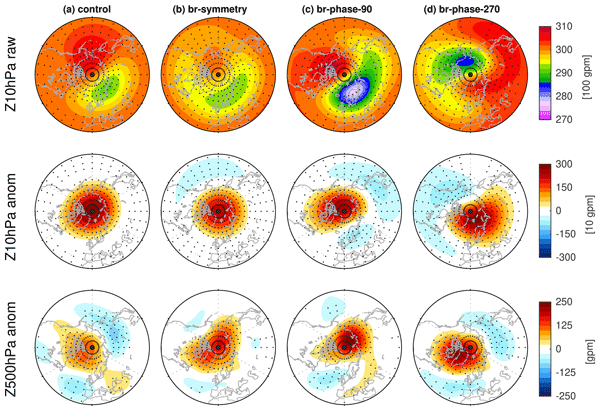
Wuhan Ning, Chaim I. Garfinkel, Judah Cohen, Ian P. White, and Jian Rao
Weather Clim. Dynam., 7, 277–295, https://doi.org/10.5194/wcd-7-277-2026, https://doi.org/10.5194/wcd-7-277-2026, 2026
Short summary
Short summary
Whether the zonal structure of a polar vortex matters for surface climate is an open question, with much observational work showing a role but with limited modeling work and demonstration of a causal influence. Here, we isolate this influence using a moist general circulation model. We find that the surface responses differ qualitatively depending on the zonal asymmetries of the shifted polar vortex and concurrently occurring wave reflection events, and provide a mechanistic explanation for why.

Cristiana Stan, Saisri Kollapaneni, Andrea M. Jenney, Jiabao Wang, Zheng Wu, Cheng Zheng, Hyemi Kim, Chaim I. Garfinkel, and Ayush Singh
Geosci. Model Dev., 18, 7969–7985, https://doi.org/10.5194/gmd-18-7969-2025, https://doi.org/10.5194/gmd-18-7969-2025, 2025
Short summary
Short summary
The diagnostics package is an open-source Python software package used for evaluating the Madden–Julian Oscillation teleconnections to the extratropics, as predicted by subseasonal-to-seasonal (S2S) forecast systems.
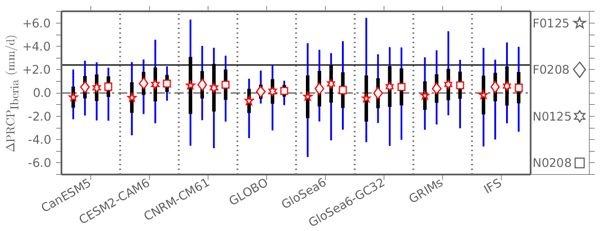
Ying Dai, Peter Hitchcock, Amy H. Butler, Chaim I. Garfinkel, and William J. M. Seviour
Weather Clim. Dynam., 6, 841–862, https://doi.org/10.5194/wcd-6-841-2025, https://doi.org/10.5194/wcd-6-841-2025, 2025
Short summary
Short summary
Using a new database of subseasonal to seasonal (S2S) forecasts, we find that with a successful forecast of the sudden stratospheric warming (SSW), S2S models can capture the European precipitation signals after the 2018 SSW several weeks in advance. The findings indicate that the stratosphere represents an important source of S2S predictability for precipitation over Europe and call for consideration of stratospheric variability in hydrological prediction at S2S timescales.
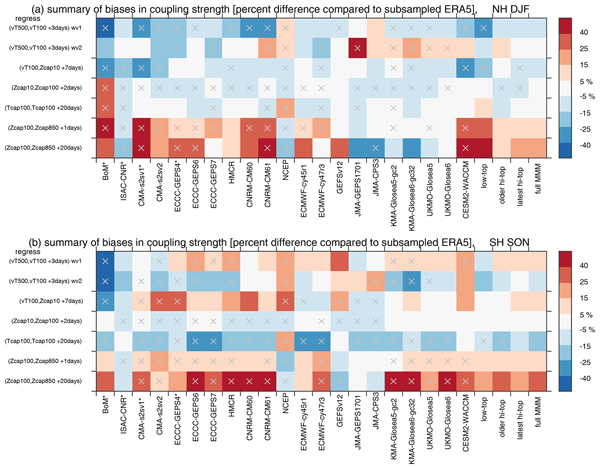
Chaim I. Garfinkel, Zachary D. Lawrence, Amy H. Butler, Etienne Dunn-Sigouin, Irene Erner, Alexey Y. Karpechko, Gerbrand Koren, Marta Abalos, Blanca Ayarzagüena, David Barriopedro, Natalia Calvo, Alvaro de la Cámara, Andrew Charlton-Perez, Judah Cohen, Daniela I. V. Domeisen, Javier García-Serrano, Neil P. Hindley, Martin Jucker, Hera Kim, Robert W. Lee, Simon H. Lee, Marisol Osman, Froila M. Palmeiro, Inna Polichtchouk, Jian Rao, Jadwiga H. Richter, Chen Schwartz, Seok-Woo Son, Masakazu Taguchi, Nicholas L. Tyrrell, Corwin J. Wright, and Rachel W.-Y. Wu
Weather Clim. Dynam., 6, 171–195, https://doi.org/10.5194/wcd-6-171-2025, https://doi.org/10.5194/wcd-6-171-2025, 2025
Short summary
Short summary
Variability in the extratropical stratosphere and troposphere is coupled, and because of the longer timescales characteristic of the stratosphere, this allows for a window of opportunity for surface prediction. This paper assesses whether models used for operational prediction capture these coupling processes accurately. We find that most processes are too weak; however downward coupling from the lower stratosphere to the near surface is too strong.
Zachary D. Lawrence, Marta Abalos, Blanca Ayarzagüena, David Barriopedro, Amy H. Butler, Natalia Calvo, Alvaro de la Cámara, Andrew Charlton-Perez, Daniela I. V. Domeisen, Etienne Dunn-Sigouin, Javier García-Serrano, Chaim I. Garfinkel, Neil P. Hindley, Liwei Jia, Martin Jucker, Alexey Y. Karpechko, Hera Kim, Andrea L. Lang, Simon H. Lee, Pu Lin, Marisol Osman, Froila M. Palmeiro, Judith Perlwitz, Inna Polichtchouk, Jadwiga H. Richter, Chen Schwartz, Seok-Woo Son, Irene Erner, Masakazu Taguchi, Nicholas L. Tyrrell, Corwin J. Wright, and Rachel W.-Y. Wu
Weather Clim. Dynam., 3, 977–1001, https://doi.org/10.5194/wcd-3-977-2022, https://doi.org/10.5194/wcd-3-977-2022, 2022
Short summary
Short summary
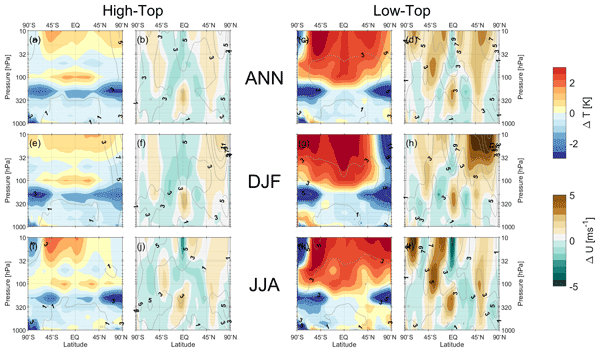
Forecast models that are used to predict weather often struggle to represent the Earth’s stratosphere. This may impact their ability to predict surface weather weeks in advance, on subseasonal-to-seasonal (S2S) timescales. We use data from many S2S forecast systems to characterize and compare the stratospheric biases present in such forecast models. These models have many similar stratospheric biases, but they tend to be worse in systems with low model tops located within the stratosphere.
Peter Hitchcock, Amy Butler, Andrew Charlton-Perez, Chaim I. Garfinkel, Tim Stockdale, James Anstey, Dann Mitchell, Daniela I. V. Domeisen, Tongwen Wu, Yixiong Lu, Daniele Mastrangelo, Piero Malguzzi, Hai Lin, Ryan Muncaster, Bill Merryfield, Michael Sigmond, Baoqiang Xiang, Liwei Jia, Yu-Kyung Hyun, Jiyoung Oh, Damien Specq, Isla R. Simpson, Jadwiga H. Richter, Cory Barton, Jeff Knight, Eun-Pa Lim, and Harry Hendon
Geosci. Model Dev., 15, 5073–5092, https://doi.org/10.5194/gmd-15-5073-2022, https://doi.org/10.5194/gmd-15-5073-2022, 2022
Short summary
Short summary
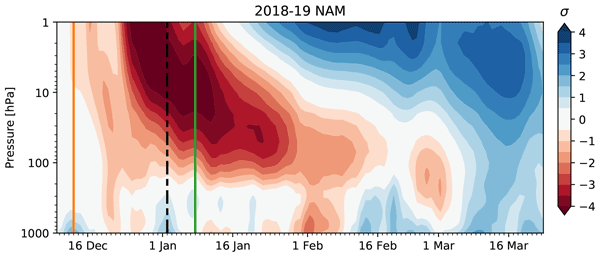
This paper describes an experimental protocol focused on sudden stratospheric warmings to be carried out by subseasonal forecast modeling centers. These will allow for inter-model comparisons of these major disruptions to the stratospheric polar vortex and their impacts on the near-surface flow. The protocol will lead to new insights into the contribution of the stratosphere to subseasonal forecast skill and new approaches to the dynamical attribution of extreme events.
Chen Schwartz, Chaim I. Garfinkel, Priyanka Yadav, Wen Chen, and Daniela I. V. Domeisen
Weather Clim. Dynam., 3, 679–692, https://doi.org/10.5194/wcd-3-679-2022, https://doi.org/10.5194/wcd-3-679-2022, 2022
Short summary
Short summary
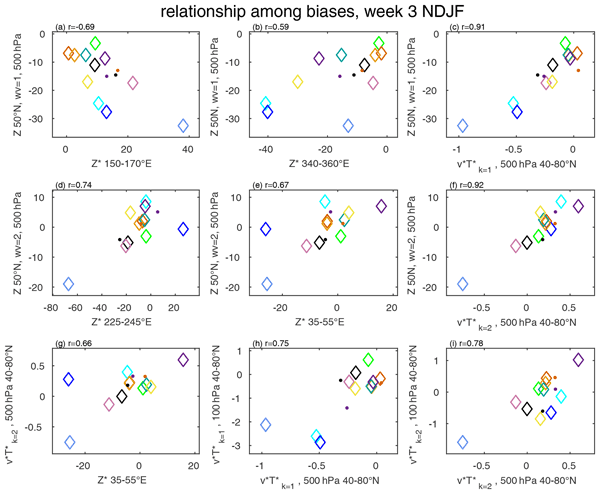
Eleven operational forecast models that run on subseasonal timescales (up to 2 months) are examined to assess errors in their simulated large-scale stationary waves in the Northern Hemisphere winter. We found that models with a more finely resolved stratosphere generally do better in simulating the waves in both the stratosphere (10–50 km) and troposphere below. Moreover, a connection exists between errors in simulated time-mean convection in tropical regions and errors in the simulated waves.
Shlomi Ziskin Ziv, Chaim I. Garfinkel, Sean Davis, and Antara Banerjee
Atmos. Chem. Phys., 22, 7523–7538, https://doi.org/10.5194/acp-22-7523-2022, https://doi.org/10.5194/acp-22-7523-2022, 2022
Short summary
Short summary
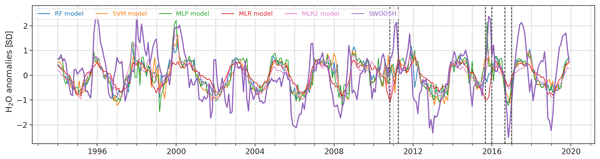
Stratospheric water vapor is important for Earth's overall greenhouse effect and for ozone chemistry; however the factors governing its variability on interannual timescales are not fully known, and previous modeling studies have indicated that models struggle to capture this interannual variability. We demonstrate that nonlinear interactions are important for determining overall water vapor concentrations and also that models have improved in their ability to capture these connections.
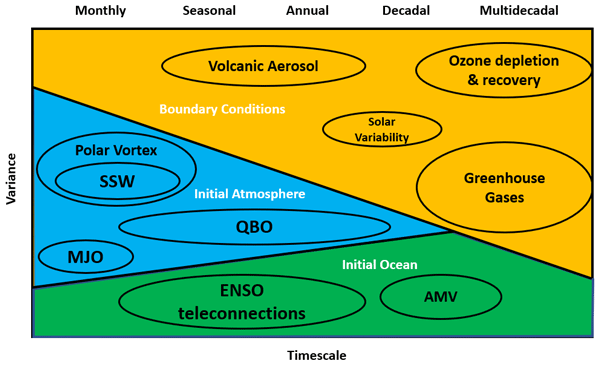
Adam A. Scaife, Mark P. Baldwin, Amy H. Butler, Andrew J. Charlton-Perez, Daniela I. V. Domeisen, Chaim I. Garfinkel, Steven C. Hardiman, Peter Haynes, Alexey Yu Karpechko, Eun-Pa Lim, Shunsuke Noguchi, Judith Perlwitz, Lorenzo Polvani, Jadwiga H. Richter, John Scinocca, Michael Sigmond, Theodore G. Shepherd, Seok-Woo Son, and David W. J. Thompson
Atmos. Chem. Phys., 22, 2601–2623, https://doi.org/10.5194/acp-22-2601-2022, https://doi.org/10.5194/acp-22-2601-2022, 2022
Short summary
Short summary
Great progress has been made in computer modelling and simulation of the whole climate system, including the stratosphere. Since the late 20th century we also gained a much clearer understanding of how the stratosphere interacts with the lower atmosphere. The latest generation of numerical prediction systems now explicitly represents the stratosphere and its interaction with surface climate, and here we review its role in long-range predictions and projections from weeks to decades ahead.
Cited articles
Adam, O., Grise, K. M., Staten, P., Simpson, I. R., Davis, S. M., Davis, N. A., Waugh, D. W., Birner, T., and Ming, A.: The TropD software package (v1): standardized methods for calculating tropical-width diagnostics, Geosci. Model Dev., 11, 4339–4357, https://doi.org/10.5194/gmd-11-4339-2018, 2018. a
Allan, R. and Ansell, T.: A New Globally Complete Monthly Historical Gridded Mean Sea Level Pressure Dataset (HadSLP2): 1850–2004, J. Climate, 19, 5816–5842, https://doi.org/10.1175/JCLI3937.1, 2006. a
Baldwin, M. P., Ayarzagüena, B., Birner, T., Butchart, N., Butler, A. H., Charlton-Perez, A. J., Domeisen, D. I. V., Garfinkel, C. I., Garny, H., Gerber, E. P., Hegglin, M. I., Langematz, U., and Pedatella, N. M.: Sudden stratospheric warmings, Rev. Geophys., 59, e2020RG000708, https://doi.org/10.1029/2020RG000708, 2021. a
Cos, J., Doblas-Reyes, F., Jury, M., Marcos, R., Bretonnière, P.-A., and Samsó, M.: The Mediterranean climate change hotspot in the CMIP5 and CMIP6 projections, Earth Syst. Dynam., 13, 321–340, https://doi.org/10.5194/esd-13-321-2022, 2022. a, b
Dai, Y., Hitchcock, P., Butler, A. H., Garfinkel, C. I., and Seviour, W. J. M.: Assessing stratospheric contributions to subseasonal predictions of precipitation after the 2018 SSW from SNAPSI, EGUsphere [preprint], https://doi.org/10.5194/egusphere-2025-484, 2025. a, b
Delworth, T. L., Cooke, W. F., V. Naik, D. P., and Zhang, L.: A weakened AMOC may prolong greenhouse gas-induced Mediterranean drying even with significant and rapid climate change mitigation, Proc. Natl. Acad. Sci. USA, 119, e2116655119, https://doi.org/10.1073/pnas.2116655119, 2022. a, b
Domeisen, D. I. V.: Estimating the Frequency of Sudden Stratospheric Warming Events From Surface Observations of the North Atlantic Oscillation, J. Geophys. Res.-Atmos., 124, 3180–3194, https://doi.org/10.1029/2018JD030077, 2019. a
Elbaum, E., Garfinkel, C. I., Adam, O., Morin, E., Rostkier-Edelstein, D., and Dayan, U.: Uncertainty inprojected changes in precipitation minusevaporation: Dominant role of dynamiccirculation changes and weak role forthermodynamic changes, Geophys. Res. Lett., 49, e2022GL097725, https://doi.org/10.1029/2022GL097725, 2022. a, b, c, d, e, f
Findell, K. L., Sutton, R., Caltabiano, N., Brookshaw, A., Heimbach, P., Kimoto, M., Osprey, S., Smith, D., Risbey, J. S., Wang, Z., Cheng, L., Diaz, L. B., Donat, M. G., Ek, M., Lee, J.-Y., Minobe, S., Rusticucci, M., Vitart, F., and Wang, L.: Explaining and Predicting Earth System Change A World Climate Research Programme Call to Action, Bull. Am. Meteorol. Soc., 104, E325–E339, https://doi.org/10.1175/BAMS-D-21-0280.1, 2023. a
Garfinkel, C. I., Adam, O., Morin, E., Enzel, Y., Elbaum, E., Bartov, M., Rostkier-Edelstein, D., and Dayan, U.: The Role of Zonally Averaged Climate Change in Contributing to Intermodel Spread in CMIP5 Predicted Local Precipitation Changes, J. Climate, 33, 1141–1154, https://doi.org/10.1175/JCLI-D-19-0232.1, 2020. a, b, c, d, e, f, g
Garfinkel, C. I., Keller, B., Lachmy, O., White, I., Gerber, E. P., Jucker, M., and Adam, O.: Impact of parameterized convection on the storm track and near-surface jet response to global warming: Implications for mechanisms of the future poleward shift, J. Climate, 37, 2541–2564, https://doi.org/10.1175/JCLI-D-23-0105.1, 2024. a, b
Gervais, M., Shaman, J., and Kushnir, Y.: Impacts of the North Atlantic warming hole in future climate projections: Mean atmospheric circulation and the North Atlantic jet, J. Climate, 32, 2673–2689, 2019. a
Giorgi, F.: Climate change hot-spots, Geophys. Res. Lett., 33, L08707, https://doi.org/10.1029/2006GL025734, 2006. a
Grise, K. M. and Polvani, L. M.: Is climate sensitivity related to dynamical sensitivity?, J. Geophys. Res.-Atmos., 121, 5159–5176, https://doi.org/10.1002/2015JD024687, 2016. a, b
He, J. and Soden, B. J.: A re-examination of the projected subtropical precipitation decline, Nat. Clim. Chang., 7, 53–57, https://doi.org/10.1038/nclimate3157, 2017. a
Held, I. M. and Soden, B. J.: Robust Responses of the Hydrological Cycle to Global Warming, J. Climate, 19, 5686–5699, https://doi.org/10.1175/JCLI3990.1, 2006. a, b, c, d
Kang, J. M., Shaw, T. A., and Sun, L.: Anthropogenic Aerosols Have Significantly Weakened the Regional Summertime Circulation in the Northern Hemisphere During the Satellite Era, AGU Advances, 5, e2024AV001318, https://doi.org/10.1029/2024AV001318, 2024. a
Kushnir, Y.: Mediterranean climate future: an insightful look into the Basin’s precipitation response to greenhouse gas forcing, Environ. Res. Lett., 10, 111001, https://doi.org/10.1088/1748-9326/10/11/111001, 2015. a, b, c
Lu, J., Vecchi, G. A., and Reichler, T.: Expansion of the Hadley cell under global warming, Geophys. Res. Lett., 34, L06805, https://doi.org/10.1029/2006GL028443, 2007. a
Rahmstorf, S., Box, J., Feulner, G., Mann, M. E., Robinson, A., Rutherford, S., and Schaffernicht, E. J.: Exceptional twentieth-century slowdown in Atlantic Ocean overturning circulation, Nat. Clim. Chang., 5, 475–480, https://doi.org/10.1038/nclimate2554, 2015. a
Schmidt, D. F. and Grise, K. M.: The response of local precipitation and sea level pressure to Hadley cell expansion, Geophys. Res. Lett., 44, 10–573, 2017a. a
Schmidt, D. F. and Grise, K. M.: The response of local precipitation and sea level pressure to Hadley cell expansion, Geophys. Res. Lett., 44, 10573–10582, https://doi.org/10.1002/2017GL075380, 2017b. a
Seager, R., Naik, N., and Vecchi, G. A.: Thermodynamic and Dynamic Mechanisms for Large-Scale Changes in the Hydrological Cycle in Response to Global Warming, J. Climate, 23, 4651–4668, https://doi.org/10.1175/2010JCLI3655.1, 2010. a
Seager, R., Liu, H. B., Henderson, N., Simpson, I., Kelley, C., Shaw, T., Kushnir, Y., and Ting, M. F.: Causes of Increasing aridification of the mediterranean region in response to rising greenhouse gases, J. Climate, 27, 4655–4676, https://doi.org/10.1175/JCLI-D-13-00446.1, 2014. a
Seager, R., Osborn, T. J., Simpson, Y. K. I. R., Nakamura, J., and Liu, H.: Climate Variability and Change of Mediterranean-Type Climates, J. Climate, 32, https://doi.org/10.1175/JCLI-D-18-0472.1, 2019. a, b
Seager, R., Yutian, W., Annalisa, C., Simpson, I. R., Osborn, T. J., Kushnir, Y., Lukovic, J., Liu, H., and Nakamura, J.: Recent and near-term future changes in impacts-relevant seasonal hydroclimate in the world's Mediterranean climate regions, Int. J. Climatol., 44, 3792–3820, https://doi.org/10.1002/joc.8551, 2024. a, b, c, d
Shaw, T. A., Arblaster, J. M., Birner, T., Butler, A. H., Domeisen, D. I. V., Garfinkel, C. I., H. Garny, K. M. G., and Karpechko, A. Y.: Emerging Climate Change Signals in Atmospheric Circulation, AGU Adv., 5, e2024AV001297, https://doi.org/10.1029/2024AV001297, 2024. a, b
Shepherd, T. G., Boyd, E., Calel, R. A., Chapman, S. C., Dessai, S., Dima-West, I. M., Fowler, H. J., James, R., Maraun, D., Martius, O., Senior, Catherine A., Sobel, A. H., Stainforth, D. A., Tett, S. F. B., Trenberth, K. E., van den Hurk, B. J. J. M., Watkins, N. W., Wilby, R. L., and Zenghelis, D. A.: Storylines: an alternative approach to representing uncertainty in physical aspects of climate change, Clim. Change, 151, 555–571, 2018. a
Simpson, I. R., Hitchcock, P., Seager, R., Wu, Y., and Callaghan, P.: The Downward Influence of Uncertainty in the Northern Hemisphere Stratospheric Polar Vortex Response to Climate Change, J. Climate, 31, 6371–6391, https://doi.org/10.1175/JCLI-D-18-0041.1, 2018. a, b
Smith, D. M., Gillett, N. P., Simpson, I. R., Athanasiadis, P. J., Baehr, J., Bethke, I., Bilge, T. A., Bonnet, R., Boucher, O., Findell, K. L., Gastineau, G., Gualdi, S., Hermanson, L., Leung, L. R., Mignot, J., Müller, W. A., Osprey, S., Otterå, O. H., Persad, G. G., Scaife, A., Schmidt, G. A., Shiogama, H., Sutton, R. T., Swingedouw, D., Yang, S., Zhou, T., and Ziehn, T.: Attribution of multi-annual to decadal changes in the climate system: The Large Ensemble Single Forcing Model Intercomparison Project (LESFMIP), Front. Clim., 4, 1, https://doi.org/10.3389/fclim.2022.955414, 2022. a
Smith, D. M., Dunstone, N. J., Eade, R., Hardiman, S. C., Hermanson, L., Scaife, A. A., and Seabrook, M.: Mitigation needed to avoid unprecedented multi-decadal North Atlantic Oscillation magnitude, Nat. Clim. Chang., 15, 403–410, https://doi.org/10.1038/s41558-025-02277-2, 2025. a
Tang, T., Shindell, D., Samset, B. H., Boucher, O., Forster, P. M., Hodnebrog, Ø., Myhre, G., Sillmann, J., Voulgarakis, A., Andrews, T., Faluvegi, G., Fläschner, D., Iversen, T., Kasoar, M., Kharin, V., Kirkevåg, A., Lamarque, J.-F., Olivié, D., Richardson, T., Stjern, C. W., and Takemura, T.: Dynamical response of Mediterranean precipitation to greenhouse gases and aerosols, Atmos. Chem. Phys., 18, 8439–8452, https://doi.org/10.5194/acp-18-8439-2018, 2018. a, b, c, d
Tuel, A., O’Gorman, P. A., and Eltahir, E.: Elements of the Dynamical Response to Climate Change over the Mediterranean, J. Climate, 34, 1135–1146, https://doi.org/10.1175/JCLI-D-20-0429.1, 2021. a
Vacca, A. V., Bellomo, K., and Fabiano, F.: On the role of AMOC weakening in shaping wintertime Euro-Atlantic atmospheric circulation, Clim. Dyn., 63, 273, https://doi.org/10.1007/s00382-025-07747-z, 2025. a
Westervelt, D. M., Conley, A. J., Fiore, A. M., Lamarque, J.-F., Shindell, D. T., Previdi, M., Mascioli, N. R., Faluvegi, G., Correa, G., and Horowitz, L. W.: Connecting regional aerosol emissions reductions to local and remote precipitation responses, Atmos. Chem. Phys., 18, 12461–12475, https://doi.org/10.5194/acp-18-12461-2018, 2018. a
Zappa, G. and Shepherd, T. G.: Storylines of Atmospheric Circulation Change for European Regional Climate Impact Assessment, J. Climate, 30, 6561–6577, https://doi.org/10.1175/JCLI-D-16-0807.1, 2017. a
Zappa, G., Hawcroft, M. K., Shaffrey, L., Black, E., and Brayshaw, D. J.: Extratropical cyclones and the projected decline of winter Mediterranean precipitation in the CMIP5 models, Clim. Dyn., 45, 1727–1738, https://doi.org/10.1007/s00382-014-2426-8, 2015a. a
Zappa, G., Pithan, F., and Shepherd, T. G.: Multimodel evidence for an atmospheric circulation response to Arctic sea ice loss in the CMIP5 future projections, Geophys. Res. Lett., 45, 1011–1019, https://doi.org/10.1002/2017GL076096, 2018. a, b
Zelinka, M. D., Myers, T. A., D. T. McCoy, S. P.-C., Caldwell, P. M., Ceppi, P., Klein, S. A., and Taylor, K. E.: Causes of Higher Climate Sensitivity in CMIP6 Models, Geophys. Res. Lett., 47, e2019GL085782, https://doi.org/10.1029/2019GL085782, 2020. a
Zhang, C., Zhang, J., Xia, X., and Li, D.: Impact of Arctic Stratospheric Polar Vortex on Mediterranean Precipitation, J. Climate, 37, 4403–4419, https://doi.org/10.1175/JCLI-D-23-0469.1, 2024. a, b
Zhang, J., Zhang, C., Zhao, S., Liu, Y., Du, S., Wang, W., Huang, J., and Xu, M.: Impacts of the Arctic stratospheric polar vortex changes on the frontogenesis over the northern middle latitudes during winter, Atmos. Res., 289, 106751, https://doi.org/10.1016/j.atmosres.2023.106751, 2023. a
Short summary
We use the Large Ensemble Single Forcing simulations to assess the role of individual forcings to the Mediterranean drying and to clarify the dynamical origin of the model’s prediction variability. A more pronounced North Atlantic warming hole, a stronger stratospheric polar vortex, and a larger poleward shift of the subtropical jet correlate with a stronger drying trend. Aerosols had a detectable influence on Mediterranean climate. Hence, their removal may have an impact in future decades.
We use the Large Ensemble Single Forcing simulations to assess the role of individual forcings...


