Articles | Volume 7, issue 3
https://doi.org/10.5194/wcd-7-1571-2026
© Author(s) 2026. This work is distributed under
the Creative Commons Attribution 4.0 License.
https://doi.org/10.5194/wcd-7-1571-2026
© Author(s) 2026. This work is distributed under
the Creative Commons Attribution 4.0 License.
Derecho-favoring atmospheric environments in Finland: characteristics, identification criteria, and frequency trends

Oskari Rantala
CORRESPONDING AUTHOR
Institute for Atmospheric and Earth System Research (INAR), University of Helsinki, Helsinki, Finland
Jouni A. Räisänen
Institute for Atmospheric and Earth System Research (INAR), University of Helsinki, Helsinki, Finland
Jenni Rauhala
Finnish Meteorological Institute, Helsinki, Finland
Marja Bister
Institute for Atmospheric and Earth System Research (INAR), University of Helsinki, Helsinki, Finland
Related authors
No articles found.
Antti Toropainen, Mika Rantanen, and Jouni Räisänen
EGUsphere, https://doi.org/10.5194/egusphere-2026-3721, https://doi.org/10.5194/egusphere-2026-3721, 2026
This preprint is open for discussion and under review for Geoscientific Model Development (GMD).
Short summary
Short summary
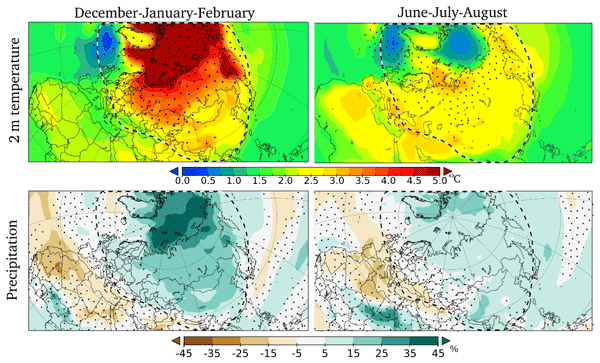
This study describes a tool for quantifying the effect of climate change on locally observed temperatures at time-scales ranging from a day to a month. The impact of climate change is estimated by "transferring" past temperature observations to stationary pre-industrial, present-day and future climates by using predicted temperature changes from global climate models. We apply the tool to a record-hot heatwave which impacted Northern Europe in July 2025.
Heikki Järvinen, Jouni Räisänen, Lauri Tuppi, Clément Bouvier, Antonio Sanchez-Benitez, Juniper Tyree, Antti Toropainen, Paolo Davini, Francisco Doblas-Reyes, Thomas Jung, Daniel Klocke, Jenni Kontkanen, Sebastian Milinski, Matteo Nurisso, Himansu Kesari Pradhan, and Irina Sandu
EGUsphere, https://doi.org/10.5194/egusphere-2026-3364, https://doi.org/10.5194/egusphere-2026-3364, 2026
Short summary
Short summary
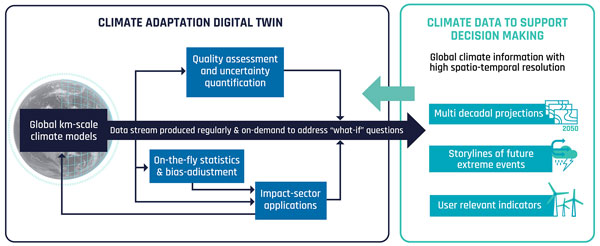
There is rich process-level variability present in the new-generation kilometre-scale climate simulations. The EU’s Climate Change Adaptation Digital Twin (Climate DT) integrates global Earth observing systems and observation modelling capabilities – until now common only in weather prediction – into operational climate simulation workflow. This provides a novel framework for precise evaluation of fine-scale details of simulation data and informing adaptation decisions at local (city) scales.
Francisco J. Doblas-Reyes, Jenni Kontkanen, Irina Sandu, Mario Acosta, Mohammed Hussam Al Turjmam, Ivan Alsina-Ferrer, Miguel Andrés-Martínez, Costanza Anerdi, Leo Arriola, Marvin Axness, Marc Batlle Martín, Peter Bauer, Tobias Becker, Daniel Beltrán, Sebastian Beyer, Hendryk Bockelmann, Pierre-Antoine Bretonnière, Sebastien Cabaniols, Silvia Caprioli, Miguel Castrillo, Aparna Chandrasekar, Suvarchal Cheedela, Victor Correal, Emanuele Danovaro, Paolo Davini, Jussi Enkovaara, Claudia Frauen, Barbara Früh, Aina Gaya Àvila, Paolo Ghinassi, Rohit Ghosh, Supriyo Ghosh, Iker González, Katherine Grayson, Matthew Griffith, Ioan Hadade, Christopher Haine, Carl Hartick, Utz-Uwe Haus, Shane Hearne, Heikki Järvinen, Bernat Jiménez, Amal John, Marlin Juchem, Thomas Jung, Jessica Kegel, Matthias Kelbling, Kai Keller, Bruno Kinoshita, Theresa Kiszler, Daniel Klocke, Lukas Kluft, Nikolay Koldunov, Tobias Kölling, Joonas Kolstela, Luis Kornblueh, Sergey Kosukhin, Aleksander Lacima-Nadolnik, Jeisson Javier Leal Rojas, Jonni Lehtiranta, Tuomas Lunttila, Anna Luoma, Pekka Manninen, Alexey Medvedev, Sebastian Milinski, Ali Mohammed, Sebastian Müller, Devaraju Naryanappa, Natalia Nazarova, Sami Niemelä, Bimochan Niraula, Henrik Nortamo, Aleksi Nummelin, Matteo Nurisso, Pablo Ortega, Stella Paronuzzi, Xabier Pedruzo-Bagazgoitia, Charles Pelletier, Carlos Peña, Suraj Polade, Himansu Kesari Pradhan, Rommel Quintanilla, Tiago Quintino, Thomas Rackow, Jouni Räisänen, Maqsood Mubarak Rajput, René Redler, Balthasar Reuter, Nuno Rocha Monteiro, Francesc Roura-Adserias, Silva Ruppert, Susan Sayed, Reiner Schnur, Tanvi Sharma, Dmitry Sidorenko, Outi Sievi-Korte, Albert Soret, Christian Steger, Bjorn Stevens, Jan Streffing, Jaleena Sunny, Luiggi Tenorio, Stephan Thober, Ulf Tigerstedt, Oriol Tinto, Juha Tonttila, Heikki Tuomenvirta, Lauri Tuppi, Ginka Van Thielen, Emanuele Vitali, Jost von Hardenberg, Ingo Wagner, Nils Wedi, Jan Wehner, Sven Willner, Xavier Yepes-Arbós, Florian Ziemen, and Janos Zimmermann
Geosci. Model Dev., 19, 2821–2848, https://doi.org/10.5194/gmd-19-2821-2026, https://doi.org/10.5194/gmd-19-2821-2026, 2026
Short summary
Short summary
The Climate Change Adaptation Digital Twin (Climate DT) pioneers the operationalisation of global climate projections. It produces global simulations with local granularity for adaptation decision-making. Applications are embedded to generate tailored indicators. A unified workflow orchestrates all components in several supercomputers. Data management ensures consistency and streaming enables real-time use. It is a complementary innovation to initiatives like CMIP, CORDEX, and climate services.
Jianpu Bian, Jouni Räisänen, and Heikki Seppä
Clim. Past, 21, 1209–1233, https://doi.org/10.5194/cp-21-1209-2025, https://doi.org/10.5194/cp-21-1209-2025, 2025
Short summary
Short summary
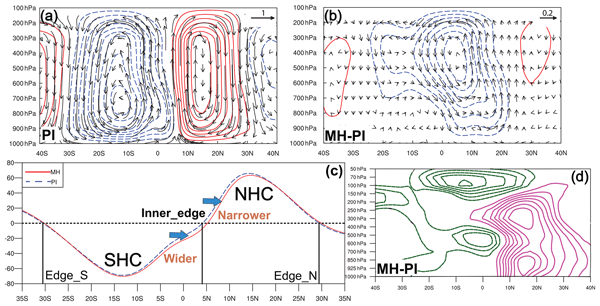
This research explores the connection between the mid-Holocene northward shift of the Intertropical Convergence Zone (ITCZ) and Hadley cell changes and effects on terrestrial hydroclimate. Our findings show that the ITCZ shift coincides with a contraction and weakening of the northern Hadley cell and an expansion and intensification of the southern cell, leading to reduced (increased) terrestrial aridity and dryland contraction (expansion) in the Northern (Southern) Hemisphere.
Jouni Räisänen
The Cryosphere, 17, 1913–1934, https://doi.org/10.5194/tc-17-1913-2023, https://doi.org/10.5194/tc-17-1913-2023, 2023
Short summary
Short summary
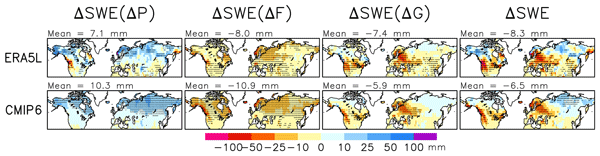
Changes in snow amount since the mid-20th century are studied, focusing on the mechanisms that have changed the water equivalent of the snowpack (SWE). Both reanalysis and climate model data show a decrease in SWE in most of the Northern Hemisphere. The total winter precipitation has increased in most areas, but this has been compensated for by reduced snowfall-to-precipitation ratio and enhanced snowmelt. However, the details and magnitude of these trends vary between different data sets.
Johannes Mikkola, Victoria A. Sinclair, Marja Bister, and Federico Bianchi
Atmos. Chem. Phys., 23, 821–842, https://doi.org/10.5194/acp-23-821-2023, https://doi.org/10.5194/acp-23-821-2023, 2023
Short summary
Short summary
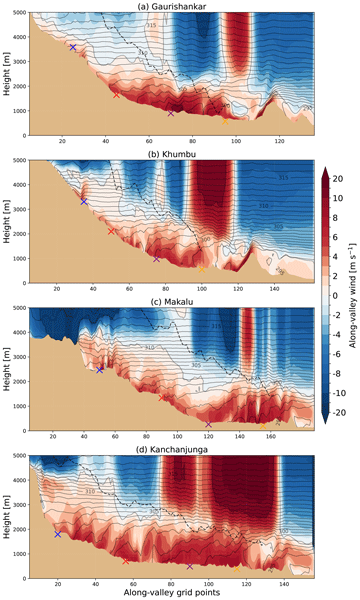
Local winds in four valleys located in the Nepal Himalayas are studied by means of high-resolution meteorological modelling. Well-defined daytime up-valley winds are simulated in all of the valleys with some variation in the flow depth and strength among the valleys and their parts. Parts of the valleys with a steep valley floor inclination (2–5°) are associated with weaker and shallower daytime up-valley winds compared with the parts that have nearly flat valley floors (< 1°).
Hanna K. Lappalainen, Tuukka Petäjä, Timo Vihma, Jouni Räisänen, Alexander Baklanov, Sergey Chalov, Igor Esau, Ekaterina Ezhova, Matti Leppäranta, Dmitry Pozdnyakov, Jukka Pumpanen, Meinrat O. Andreae, Mikhail Arshinov, Eija Asmi, Jianhui Bai, Igor Bashmachnikov, Boris Belan, Federico Bianchi, Boris Biskaborn, Michael Boy, Jaana Bäck, Bin Cheng, Natalia Chubarova, Jonathan Duplissy, Egor Dyukarev, Konstantinos Eleftheriadis, Martin Forsius, Martin Heimann, Sirkku Juhola, Vladimir Konovalov, Igor Konovalov, Pavel Konstantinov, Kajar Köster, Elena Lapshina, Anna Lintunen, Alexander Mahura, Risto Makkonen, Svetlana Malkhazova, Ivan Mammarella, Stefano Mammola, Stephany Buenrostro Mazon, Outi Meinander, Eugene Mikhailov, Victoria Miles, Stanislav Myslenkov, Dmitry Orlov, Jean-Daniel Paris, Roberta Pirazzini, Olga Popovicheva, Jouni Pulliainen, Kimmo Rautiainen, Torsten Sachs, Vladimir Shevchenko, Andrey Skorokhod, Andreas Stohl, Elli Suhonen, Erik S. Thomson, Marina Tsidilina, Veli-Pekka Tynkkynen, Petteri Uotila, Aki Virkkula, Nadezhda Voropay, Tobias Wolf, Sayaka Yasunaka, Jiahua Zhang, Yubao Qiu, Aijun Ding, Huadong Guo, Valery Bondur, Nikolay Kasimov, Sergej Zilitinkevich, Veli-Matti Kerminen, and Markku Kulmala
Atmos. Chem. Phys., 22, 4413–4469, https://doi.org/10.5194/acp-22-4413-2022, https://doi.org/10.5194/acp-22-4413-2022, 2022
Short summary
Short summary
We summarize results during the last 5 years in the northern Eurasian region, especially from Russia, and introduce recent observations of the air quality in the urban environments in China. Although the scientific knowledge in these regions has increased, there are still gaps in our understanding of large-scale climate–Earth surface interactions and feedbacks. This arises from limitations in research infrastructures and integrative data analyses, hindering a comprehensive system analysis.
Kalle Nordling, Hannele Korhonen, Jouni Räisänen, Antti-Ilari Partanen, Bjørn H. Samset, and Joonas Merikanto
Atmos. Chem. Phys., 21, 14941–14958, https://doi.org/10.5194/acp-21-14941-2021, https://doi.org/10.5194/acp-21-14941-2021, 2021
Short summary
Short summary
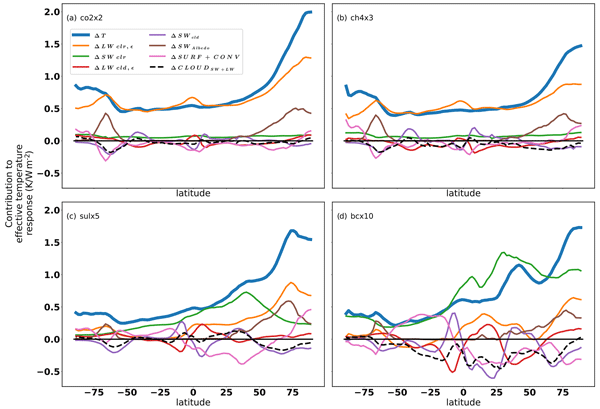
Understanding the temperature responses to different climate forcing agents, such as greenhouse gases and aerosols, is crucial for understanding future regional climate changes. In climate models, the regional temperature responses vary for all forcing agents, but the causes of this variability are poorly understood. For all forcing agents, the main component contributing to variance in regional surface temperature responses between the climate models is the clear-sky longwave emissivity.
Cited articles
Ashley, W. S. and Mote, T. L.: Derecho Hazards in the United States, B. Am. Meteorol. Soc., 86, 1577–1592, https://doi.org/10.1175/BAMS-86-11-1577, 2005. a
Ashley, W. S., Mote, T. L., and Bentley, M. L.: On the episodic nature of derecho-producing convective systems in the United States, Int. J. Climatol., 25, 1915–1932, https://doi.org/10.1002/joc.1229, 2005. a
Atkins, N. T. and Wakimoto, R. M.: Wet Microburst Activity over the Southeastern United States: Implications for Forecasting, Weather Forecast., 6, 470–482, https://doi.org/10.1175/1520-0434(1991)006<0470:WMAOTS>2.0.CO;2, 1991. a
Barnston, A. G. and Livezey, R. E.: Classification, seasonality and persistence of low-frequency atmospheric circulation patterns, Mon. Weather Rev., 115, 1083–1126, 1987. a
Celiński-Mysław, D. and Matuszko, D.: An analysis of selected cases of derecho in Poland, Atmos. Res., 149, 263–281, https://doi.org/10.1016/j.atmosres.2014.06.016, 2014. a, b
Chernokulsky, A., Shikhov, A., Bykov, A., Kalinin, N., Kurgansky, M., Sherstyukov, B., and Yarinich, Y.: Diagnosis and modelling of two destructive derecho events in European Russia in the summer of 2010, Atmos. Res., 267, 105928, https://doi.org/10.1016/j.atmosres.2021.105928, 2022. a, b, c
Coniglio, M. C., Stensrud, D. J., and Richman, M. B.: An Observational Study of Derecho-Producing Convective Systems, Weather Forecast., 19, 320–337, https://doi.org/10.1175/1520-0434(2004)019<0320:AOSODC>2.0.CO;2, 2004. a
Corfidi, S. F., Coniglio, M. C., Cohen, A. E., and Mead, C. M.: A proposed revision to the definition of “derecho”, B. Am. Meteorol. Soc., 97, 935–949, 2016. a
Coumou, D., Di Capua, G., Vavrus, S., Wang, L., and Wang, S.: The influence of Arctic amplification on mid-latitude summer circulation, Nat. Commun., 9, 2959, https://doi.org/10.1038/s41467-018-05256-8, 2018. a
Crameri, F.: Scientific colour maps (8.0.1), Zenodo [code], https://doi.org/10.5281/zenodo.8409685, 2023. a
Crameri, F., Shephard, G. E., and Heron, P. J.: The misuse of colour in science communication, Nat. Commun., 11, 5444, https://doi.org/10.1038/s41467-020-19160-7, 2020. a
Derbyshire, S. H., Beau, I., Bechtold, P., Grandpeix, J.-Y., Piriou, J.-M., Redelsperger, J.-L., and Soares, P.: Sensitivity of moist convection to environmental humidity, Q. J. Roy. Meteor. Soc., 130, 3055–3079, 2004. a
Doswell, C. A. and Evans, J. S.: Proximity sounding analysis for derechos and supercells: an assessment of similarities and differences, Atmos. Res., 67–68, 117–133, https://doi.org/10.1016/S0169-8095(03)00047-4, 2003. a
El Rafei, M., Isaza, A., Sherwood, S. C., Evans, J., Brown, A., Ji, F., and Dowdy, A.: Downdrafts and convective gusts in high-resolution simulations: An Australian case study, J. Geophys. Res.-Atmos., 130, e2025JD044151, https://doi.org/10.1029/2025JD044151, 2025. a
Evans, J. S. and Doswell, C. A.: Examination of Derecho Environments Using Proximity Soundings, Weather Forecast., 16, 329–342, https://doi.org/10.1175/1520-0434(2001)016<0329:EODEUP>2.0.CO;2, 2001. a, b
Fujita, T. T.: Proposed characterization of tornadoes and hurricanes by area and intensity, Tech. rep., No. NASA-CR-125545, https://ntrs.nasa.gov/api/citations/19720008829/downloads/19720008829.pdf (last access: 1 September 2025), 1971. a
Gatzen, C.: A Derecho in Europe: Berlin, 10 July 2002, Weather Forecast., 19, 639–645, https://doi.org/10.1175/1520-0434(2004)019<0639:ADIEBJ>2.0.CO;2, 2004. a, b, c
Ghasemifard, H., Groenemeijer, P., Battaglioli, F., and Púčik, T.: Do changing circulation types raise the frequency of summertime thunderstorms and large hail in Europe?, Environmental Research: Climate, 3, 015008, https://doi.org/10.1088/2752-5295/ad22ec, 2024. a
González-Alemán, J. J., Insua-Costa, D., Bazile, E., González-Herrero, S., Marcello Miglietta, M., Groenemeijer, P., and Donat, M. G.: Anthropogenic warming had a crucial role in triggering the historic and destructive Mediterranean derecho in summer 2022, B. Am. Meteorol. Soc., 104, E1526–E1532, https://doi.org/10.1175/BAMS-D-23-0119.1, 2023. a, b
Gospodinov, I., Dimitrova, T., Bocheva, L., Simeonov, P., and Dimitrov, R.: Derecho-like event in Bulgaria on 20 July 2011, Atmos. Res., 158–159, 254–273, https://doi.org/10.1016/j.atmosres.2014.05.009, 2015. a
Guastini, C. T. and Bosart, L. F.: Analysis of a Progressive Derecho Climatology and Associated Formation Environments, Mon. Weather Rev., 144, 1363–1382, https://doi.org/10.1175/MWR-D-15-0256.1, 2016. a
Hamid, K.: Investigation of the passage of a derecho in Belgium, Atmos. Res., 107, 86–105, https://doi.org/10.1016/j.atmosres.2011.12.013, 2012. a, b, c
Hersbach, H., Bell, B., Berrisford, P., Hirahara, S., Horányi, A., Muñoz‐Sabater, J., Nicolas, J., Peubey, C., Radu, R., Schepers, D., Simmons, A., Soci, C., Abdalla, S., Abellan, X., Balsamo, G., Bechtold, P., Biavati, G., Bidlot, J., Bonavita, M., De Chiara, G., Dahlgren, P., Dee, D., Diamantakis, M., Dragani, R., Flemming, J., Forbes, R., Fuentes, M., Geer, A., Haimberger, L., Healy, S., Hogan, R.J., Hólm, E., Janisková, M., Keeley, S., Laloyaux, P., Lopez, P., Lupu, C., Radnoti, G., de Rosnay, P., Rozum, I., Vamborg, F., Villaume, S., and Thépaut, J.-N.: Complete ERA5 from 1940: Fifth generation of ECMWF atmospheric reanalyses of the global climate, Copernicus Climate Change Service (C3S) Data Store (CDS) [data set], https://doi.org/10.24381/cds.143582cf, 2017. a
Hersbach, H., Bell, B., Berrisford, P., Horányi, A., Sabater, J. M., Nicolas, J., Radu, R., Schepers, D., Simmons, A., Soci, C., and Dee, D.: Global reanalysis: goodbye ERA-Interim, hello ERA5, ECMWF Newsletter, 159, 17–24, 2019. a
Hersbach, H., Bell, B., Berrisford, P., Hirahara, S., Horányi, A., Muñoz-Sabater, J., Nicolas, J., Peubey, C., Radu, R., Schepers, D., Simmons, A., Soci, C., Abdalla, S., Abellan, X., Balsamo, G., Bechtold, P., Biavati, G., Bidlot, J., Bonavita, M., De Chiara, G., Dahlgren, P., Dee, D., Diamantakis, M., Dragani, R., Flemming, J., Forbes, R., Fuentes, M., Geer, A., Haimberger, L., Healy, S., Hogan, R. J., Hólm, E., Janisková, M., Keeley, S., Laloyaux, P., Lopez, P., Lupu, C., Radnoti, G., de Rosnay, P., Rozum, I., Vamborg, F., Villaume, S., and Thépaut, J.-N.: The ERA5 global reanalysis, Q. J. Roy. Meteor. Soc., 146, 1999–2049, 2020. a
Hoeppe, P.: Trends in weather related disasters – Consequences for insurers and society, Weather and Climate Extremes, 11, 70–79, https://doi.org/10.1016/j.wace.2015.10.002, 2016. a
IPCC: Summary for Policymakers, in: Climate Change 2023: Synthesis Report, Contribution of Working Groups I, II and III to the Sixth Assessment Report of the Intergovernmental Panel on Climate Change edited by: Core Writing Team, Lee, H., and Romero, J., IPCC, Geneva, Switzerland, 1–34, https://doi.org/10.59327/IPCC/AR6-9789291691647.001, 2023. a, b
Johns, R. H.: Meteorological conditions associated with bow echo development in convective storms, Weather Forecast., 8, 294–299, 1993. a
Kaminski, K., Ashley, W. S., Haberlie, A. M., and Gensini, V. A.: Future derecho potential in the United States, J. Climate, 38, 3–26, 2025. a
Li, J., Qian, Y., Leung, L. R., Chen, X., Yang, Z., and Feng, Z.: Potential weakening of the June 2012 North American derecho under future warming conditions, J. Geophys. Res.-Atmos., 128, e2022JD037494, https://doi.org/10.1029/2022JD037494, 2023. a, b
Lind, P., Belušić, D., Médus, E., Dobler, A., Pedersen, R. A., Wang, F., Matte, D., Kjellström, E., Landgren, O., Lindstedt, D., Christensen, O. B., and Christensen, J. H.: Climate change information over Fenno-Scandinavia produced with a convection-permitting climate model, Clim. Dynam., 61, 519, https://doi.org/10.1007/s00382-022-06589-3, 2023. a
López, J. M.: A Mediterranean derecho: Catalonia (Spain), 17th August 2003, Atmos. Res., 83, 272–283, https://doi.org/10.1016/j.atmosres.2005.08.008, 2007. a, b, c, d
Markowski, P. and Richardson, Y.: Mesoscale meteorology in midlatitudes, John Wiley & Sons, https://doi.org/10.1002/9780470682104, 2010. a
May, R. M., Arms, S. C., Marsh, P., Bruning, E., Leeman, J. R., Goebbert, K., Thielen, J. E., Bruick, Z. S., and Camron, M. D.: MetPy: A Python Package for Meteorological Data, v1.7.1, GitHub, https://doi.org/10.5065/D6WW7G29, 2025. a
Munich RE: Hail, tornadoes and flash floods: Risks from severe thunderstorms are on the rise, https://www.munichre.com/en/risks/natural-disasters/thunderstorms-hail-tornados.html (last access: 1 September 2025), 2025a. a
Munich RE: Natural disasters worldwide: Losses are on the rise as climate change strikes, https://www.munichre.com/en/risks/natural-disasters.html (last access: 1 September 2025), 2025b. a
Pilguj, N., Surowiecki, A., Taszarek, M., and Piasecki, K.: Quasi-linear convective systems and derechos across Europe: ERA5 convective environments and synoptic-scale patterns, Mon. Weather Rev., https://doi.org/10.1175/MWR-D-25-0029.1, 2025. a, b, c
Piper, D. and Kunz, M.: Spatiotemporal variability of lightning activity in Europe and the relation to the North Atlantic Oscillation teleconnection pattern, Nat. Hazards Earth Syst. Sci., 17, 1319–1336, https://doi.org/10.5194/nhess-17-1319-2017, 2017. a
Prein, A.: Thunderstorm straight line winds intensify with climate change, Nat. Climate Change, 13, 1353–1359, 2023. a
Púčik, T., Groenemeijer, P., Rädler, A. T., Tijssen, L., Nikulin, G., Prein, A. F., van Meijgaard, E., Fealy, R., Jacob, D., and Teichmann, C.: Future changes in European severe convection environments in a regional climate model ensemble, J. Climate, 30, 6771–6794, 2017. a
Punkka, A.-J. and Bister, M.: Mesoscale Convective Systems and Their Synoptic-Scale Environment in Finland, Weather Forecast., 30, 182–196, https://doi.org/10.1175/WAF-D-13-00146.1, 2015. a, b
Punkka, A.-J., Teittinen, J., and Johns, R. H.: Synoptic and Mesoscale Analysis of a High-Latitude Derecho–Severe Thunderstorm Outbreak in Finland on 5 July 2002, Weather Forecast., 21, 752–763, https://doi.org/10.1175/WAF953.1, 2006. a
Rädler, A. T., Groenemeijer, P. H., Faust, E., Sausen, R., and Púčik, T.: Frequency of severe thunderstorms across Europe expected to increase in the 21st century due to rising instability, npj Clim. Atmos. Sci., 2, 30, https://doi.org/10.1038/s41612-019-0083-7, 2019. a, b, c
Rantala, O.: Atmospheric conditions favoring derecho formation and the frequency of these conditions in Finland, Master's thesis, University of Helsinki, https://helda.helsinki.fi/items/59830da5-0c1d-4493-bb6b-54e08e4af980 (last access: 7 January 2026), 2025. a
Rantala, O., Räisänen, J., Rauhala, J., and Bister, M.: Python code for the manuscript “Derecho-favoring atmospheric environments in Finland: characteristics, identification criteria, and frequency trends” (Version v2), Zenodo [code], https://doi.org/10.5281/zenodo.20797398, 2026. a
Safety Investigation Authority, Finland: The storms of July–August 2010, Investigation report S2/2010Y, https://www.turvallisuustutkinta.fi/app/uploads/sites/8/2024/11/s22010y_tutkintaselostus.pdf (last access: 20 August 2026), 2010. a
Shourd, K. N. and Kaplan, M. L.: A Climatology of 1995–2024 United States Warm Season Derecho Events and Analysis of Potential Climate Forcing Associations, E-Journal of Severe Storms Meteorology, 20, https://doi.org/10.55599/ejssm.v20i2.98, 2025. a
Squitieri, B. J., Wade, A. R., and Jirak, I. L.: On a modified definition of a derecho. Part I: Construction of the definition and quantitative criteria for identifying future derechos over the contiguous United States, B. Am. Meteorol. Soc., 106, E84–E110, 2025. a
Surowiecki, A. and Taszarek, M.: A 10-year radar-based climatology of mesoscale convective system archetypes and derechos in Poland, Mon. Weather Rev., 148, 3471–3488, 2020. a
Surowiecki, A., Pilguj, N., Taszarek, M., Piasecki, K., Púčik, T., and Brooks, H. E.: Quasi-linear convective systems and derechos across Europe: climatology, accompanying hazards, and societal impacts, B. Am. Meteorol. Soc., 105, E1619–E1643, https://doi.org/10.1175/BAMS-D-23-0257.1, 2024. a
Taszarek, M., Brooks, H. E., and Czernecki, B.: Sounding-Derived Parameters Associated with Convective Hazards in Europe, Mon. Weather Rev., 145, 1511–1528, https://doi.org/10.1175/MWR-D-16-0384.1, 2017. a
Taszarek, M., Pilguj, N., Orlikowski, J., Surowiecki, A., Walczakiewicz, S., Pilorz, W., Piasecki, K., Łukasz Pajurek, and Półrolniczak, M.: Derecho Evolving from a Mesocyclone – A Study of 11 August 2017 Severe Weather Outbreak in Poland: Event Analysis and High-Resolution Simulation, Mon. Weather Rev., 147, 2283–2306, https://doi.org/10.1175/MWR-D-18-0330.1, 2019. a, b, c
Taszarek, M., Allen, J. T., Púčik, T., Hoogewind, K. A., and Brooks, H. E.: Severe Convective Storms across Europe and the United States. Part II: ERA5 Environments Associated with Lightning, Large Hail, Severe Wind, and Tornadoes, J. Climate, 33, 10263–10286, https://doi.org/10.1175/JCLI-D-20-0346.1, 2020. a, b, c, d, e
Taszarek, M., Allen, J. T., Brooks, H. E., Pilguj, N., and Czernecki, B.: Differing trends in United States and European severe thunderstorm environments in a warming climate, B. Am. Meteorol. Soc., 102, E296–E322, 2021a. a
Westermayer, A., Groenemeijer, P., Pistotnik, G., Sausen, R., and Faust, E.: Identification of favorable environments for thunderstorms in reanalysis data, Meteorol. Z., 26, 59–70, 2017. a
Yano, J.-I., Bister, M., Fuchs, Ž., Gerard, L., Phillips, V. T. J., Barkidija, S., and Piriou, J.-M.: Phenomenology of convection-parameterization closure, Atmos. Chem. Phys., 13, 4111–4131, https://doi.org/10.5194/acp-13-4111-2013, 2013. a
Short summary
Derechos are widespread long-lasting windstorms associated with thunderstorms. They can cause damage comparable to tornadoes. Using data from derechos in Finland and results from earlier studies, we develop three criteria sets to identify atmospheric conditions favoring derecho formation in Finland. Application of these criteria sets to historical data shows that conditions favoring derechos have become more common in Finland during the recent decades.
Derechos are widespread long-lasting windstorms associated with thunderstorms. They can cause...