Articles | Volume 7, issue 3
https://doi.org/10.5194/wcd-7-1821-2026
© Author(s) 2026. This work is distributed under
the Creative Commons Attribution 4.0 License.
https://doi.org/10.5194/wcd-7-1821-2026
© Author(s) 2026. This work is distributed under
the Creative Commons Attribution 4.0 License.
Subseasonal predictability and Rossby wave dynamics of blocking high during transitional seasons: insights from three successive events in May–June 2023

Zhixiang Li
School of Atmospheric Sciences, Sun Yat-sen University and Southern Marine Science and Engineering Guangdong Laboratory (Zhuhai), Zhuhai, People's Republic of China
Key Laboratory of Earth System Numerical Modeling and Application, Institute of Atmospheric Physics, Chinese Academy of Sciences, Beijing, People's Republic of China
School of Atmospheric Sciences, Sun Yat-sen University and Southern Marine Science and Engineering Guangdong Laboratory (Zhuhai), Zhuhai, People's Republic of China
Yimin Liu
Key Laboratory of Earth System Numerical Modeling and Application, Institute of Atmospheric Physics, Chinese Academy of Sciences, Beijing, People's Republic of China
Related authors
No articles found.
Yiran Chen, Jiming Jin, Yimin Liu, Jannik Heusinger, Jesús Carrera, and Zeyu Zhou
Geosci. Model Dev., 19, 8515–8533, https://doi.org/10.5194/gmd-19-8515-2026, https://doi.org/10.5194/gmd-19-8515-2026, 2026
Short summary
Short summary
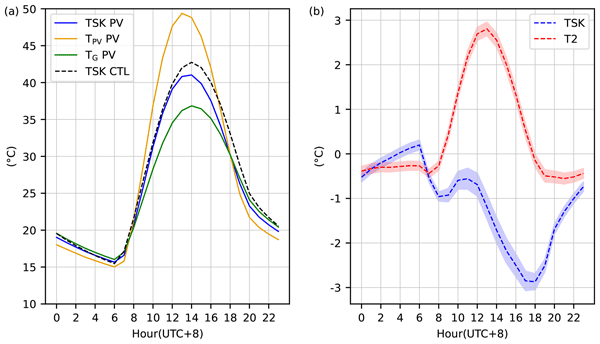
Solar power plants are expanding rapidly worldwide, but their impacts on local climate remain uncertain. In this study, we developed a coupled model that explicitly represents interactions between solar panels, land surface, and the atmosphere. Evaluation against satellite observations showed improved simulation of land surface temperature over solar farms. Simulations show that solar farms can cool the land surface, warm near-surface air, reduce incoming sunlight, and alter rainfall patterns.
Forrest M. Hoffman, Birgit Hassler, Ranjini Swaminathan, Jared Lewis, Bouwe Andela, Nathan Collier, Dóra Hegedűs, Jiwoo Lee, Charlotte Pascoe, Mika Pflüger, Martina Stockhause, Paul Ullrich, Min Xu, Lisa Bock, Felicity Chun, Bettina K. Gier, Douglas I. Kelley, Axel Lauer, Julien Lenhardt, Manuel Schlund, Mohanan G. Sreeush, Katja Weigel, Ed Blockley, Rebecca Beadling, Romain Beucher, Demiso D. Dugassa, Valerio Lembo, Jianhua Lu, Swen Brands, Jerry Tjiputra, Elizaveta Malinina, Brian Medeiros, Enrico Scoccimarro, Jeremy Walton, Phil Kershaw, André Lanfer Marquez, Malcolm J. Roberts, Eleanor O'Rourke, Beth Dingley, Briony Turner, Helene Hewitt, and John P. Dunne
Geosci. Model Dev., 19, 7415–7455, https://doi.org/10.5194/gmd-19-7415-2026, https://doi.org/10.5194/gmd-19-7415-2026, 2026
Short summary
Short summary
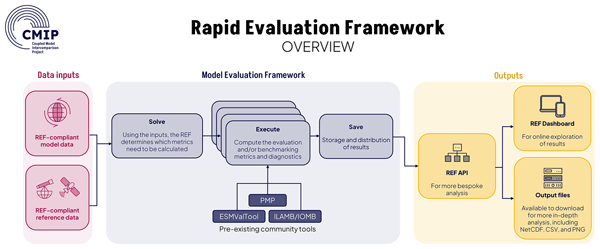
The Rapid Evaluation Framework (REF) is a community-driven platform for benchmarking and performance assessment of Earth system models. Built upon four disparate community evaluation tools, the REF is designed to provide model-data comparisons for the Assessment Fast Track for the Seventh Phase of the Coupled Model Intercomparison Project. The REF will be run at the Earth System Grid Federation to enable model devleopers and scientists to quickly identify model biases and performance issues.
Xiaocong Wang, Yanjie Liu, and Yimin Liu
EGUsphere, https://doi.org/10.5194/egusphere-2026-4008, https://doi.org/10.5194/egusphere-2026-4008, 2026
Short summary
Short summary
This study advances our understanding of the representation of the diurnal cycle of precipitation (DCP) in numerical models. By systematically comparing three convection schemes with different trigger and closure treatments using a single-column model, this study identifies the physical mechanisms responsible for these biases and evaluates the effectiveness of various modifications in improving DCP simulations over China.
Yanjie Liu, Xiaocong Wang, Yimin Liu, Shuaiqi Tang, and Hao Miao
Atmos. Chem. Phys., 26, 6763–6779, https://doi.org/10.5194/acp-26-6763-2026, https://doi.org/10.5194/acp-26-6763-2026, 2026
Short summary
Short summary
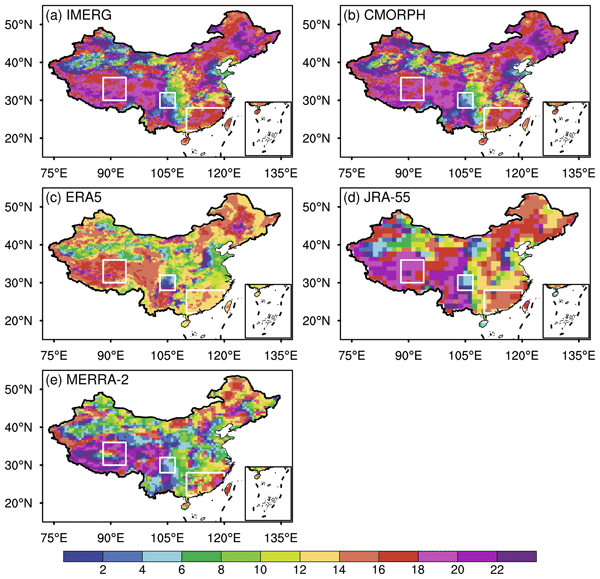
This study investigates how well operational models simulate the diurnal cycle of summer rainfall over China. Comparing three reanalyses shows all capture nocturnal precipitation peak but differ in afternoon rainfall timing: JRA‑55 and MERRA‑2 match observations better, while ERA5 exhibits a 3-hour phase advance. These differences are linked to how large-scale forcing is use in convection parameterization, underscoring the critical role of trigger on cumulus convection.
Mei Chong, Shengkai Wang, Xi Chen, Yuan Liang, Bing Pu, Shian-Jiann Lin, Zhi Liang, and Yimin Liu
Earth Syst. Sci. Data Discuss., https://doi.org/10.5194/essd-2025-628, https://doi.org/10.5194/essd-2025-628, 2026
Preprint under review for ESSD
Short summary
Short summary
The wind speed needed to lift dust from surfaces governs the highest uncertainty in emission models, making it the root cause of dust forecasting errors. We developed iDust-ut, a global threshold dataset by fusing ground observations, satellite data, and reanalysis products. Tests with the iDust model show doubled severe dust storm prediction accuracy. The dataset works directly in any model with built-in adaptation for wind biases, substantially improving operational dust forecasting worldwide.
Weihao Sun, Massimo A. Bollasina, Ioana Colfescu, Guoxiong Wu, and Yimin Liu
Atmos. Chem. Phys., 26, 2027–2039, https://doi.org/10.5194/acp-26-2027-2026, https://doi.org/10.5194/acp-26-2027-2026, 2026
Short summary
Short summary
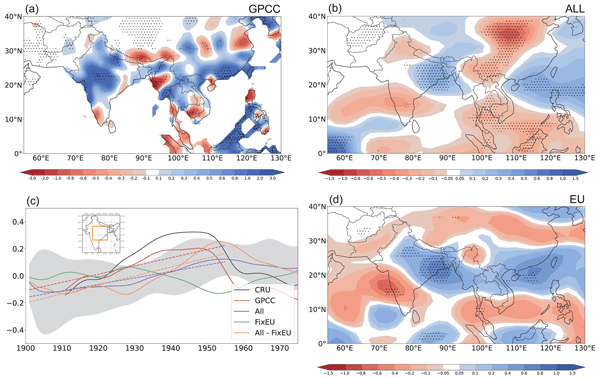
Observational records show that the Asian monsoon underwent substantial changes during the early 20th century, including a wetting trend over South Asia and a southward shift in rainfall over East Asia. We show that increasing European sulphate aerosol emissions played a crucial role in shaping the monsoon rainfall trends. This has important implications for reducing uncertainties in monsoon projections, particularly in light of the diverse future aerosol emission scenarios for the region.
Yangke Liu, Qing Bao, Bian He, Xiaofei Wu, Jing Yang, Yimin Liu, Guoxiong Wu, Tao Zhu, Siyuan Zhou, Yao Tang, Ankang Qu, Yalan Fan, Anling Liu, Dandan Chen, Zhaoming Luo, Xing Hu, and Tongwen Wu
Geosci. Model Dev., 17, 6249–6275, https://doi.org/10.5194/gmd-17-6249-2024, https://doi.org/10.5194/gmd-17-6249-2024, 2024
Short summary
Short summary
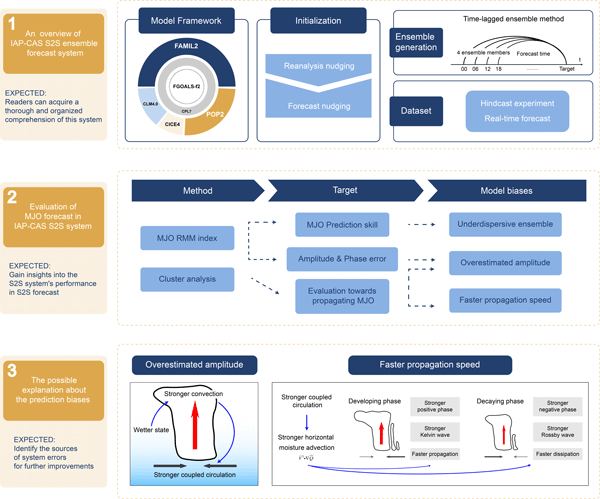
We give an overview of the Institute of Atmospheric Physics–Chinese Academy of Sciences subseasonal-to-seasonal ensemble forecasting system and Madden–Julian Oscillation forecast evaluation of the system. Compared to other S2S models, the IAP-CAS model has its benefits but also biases, i.e., underdispersive ensemble, overestimated amplitude, and faster propagation speed when forecasting MJO. We provide a reason for these biases and prospects for further improvement of this system in the future.
Jinxiao Li, Qing Bao, Yimin Liu, Lei Wang, Jing Yang, Guoxiong Wu, Xiaofei Wu, Bian He, Xiaocong Wang, Xiaoqi Zhang, Yaoxian Yang, and Zili Shen
Geosci. Model Dev., 14, 6113–6133, https://doi.org/10.5194/gmd-14-6113-2021, https://doi.org/10.5194/gmd-14-6113-2021, 2021
Short summary
Short summary
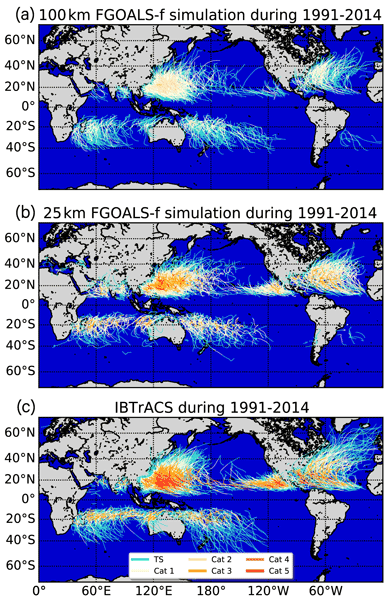
The configuration and simulated performance of tropical cyclones (TCs) in FGOALS-f3-L/H will be introduced firstly. The results indicate that the simulated performance of TC activities is improved globally with the increased horizontal resolution especially in TC counts, seasonal cycle, interannual variabilities and intensity aspects. It is worth establishing a high-resolution coupled dynamic prediction system based on FGOALS-f3-H (~ 25 km) to improve the prediction skill of TCs.
Cited articles
Barnes, C., Jain, P., Keeping, T., Gillett, N., Boucher, J., Gachon, P., Heinrich, D., Kirchmeier-Young, M., and Boulanger, Y.: Disentangling the roles of natural variability and climate change in Canada's 2023 fire season, Environ. Res.-Climate, 4, 035013, https://doi.org/10.1088/2752-5295/adec0f, 2025.
Bartusek, S., Kornhuber, K., and Ting, M.: 2021 North American heatwave amplified by climate change-driven nonlinear interactions, Nat. Clim. Change, 12, 1143–1150, https://doi.org/10.1038/s41558-022-01520-4, 2022.
Berthou, S., Renshaw, R., Smyth, T., Tinker, J., Grist, J. P., Wihsgott, J. U., Jones, S., Inall, M., Nolan, G., Berx, B., Arnold, A., Blunn, L. P., Castillo, J. M., Cotterill, D., Daly, E., Dow, G., Gómez, B., Fraser-Leonhardt, V., Hirschi, J. J.-M., Lewis, H. W., Mahmood, S., and Worsfold, M.: Exceptional atmospheric conditions in June 2023 generated a northwest European marine heatwave which contributed to breaking land temperature records, Commun. Earth Environ., 5, 287, https://doi.org/10.1038/s43247-024-01413-8, 2024.
Black, E., Blackburn, M., Harrison, G., Hoskins, B., and Methven, J.: Factors contributing to the summer 2003 European heatwave, Weather, 59, 217–223, https://doi.org/10.1256/wea.74.04, 2004.
Bordoni, S. and Schneider, T.: Monsoons as eddy-mediated regime transitions of the tropical overturning circulation, Nat. Geosci., 1, 515–519, https://doi.org/10.1038/ngeo248, 2008.
Breeden, M. L., Albers, J. R., Butler, A. H., and Newman, M.: The spring minimum in subseasonal 2-meter temperature forecast skill over North America, Mon. Weather Rev., 150, 2617–2628, https://doi.org/10.1175/MWR-D-22-0062.1, 2022.
Byrne, B., Liu, J., Bowman, K. W., Pascolini-Campbell, M., Chatterjee, A., Pandey, S., Miyazaki, K., van der Werf, G. R., Wunch, D., Wennberg, P. O., Roehl, C. M., and Sinha, S.: Carbon emissions from the 2023 Canadian wildfires, Nature, 633, 835–839, https://doi.org/10.1038/s41586-024-07878-z, 2024.
Cheung, H. N., Zhou, W., Mok, H. Y., Wu, M. C., and Shao, Y. P.: Revisiting the climatology of atmospheric blocking in the Northern Hemisphere, Adv. Atmos. Sci., 30, 397–410, https://doi.org/10.1007/s00376-012-2006-y, 2013.
Coumou, D., Petoukhov, V., Rahmstorf, S., Petri, S., and Schellnhuber, H. J.: Quasi-resonant circulation regimes and hemispheric synchronization of extreme weather in boreal summer, P. Natl Acad. Sci. USA, 111, 12331–12336, https://doi.org/10.1073/pnas.1412797111, 2014.
Diao, Y., Guo, J., Zhang, Y., Hou, Z., and Luo, B.: Trend turning of North China summer extreme precipitations around early 2000s and its possible reason, Clim. Dynam., 61, 5367–5386, https://doi.org/10.1007/s00382-023-06860-1, 2023.
Ding, Y., Wang, Z., Song, Y., and Zhang, J.: Causes of the unprecedented freezing disaster in January 2008 and its possible association with the global warming, Acta Meteorol. Sin., 66, 808–825, https://doi.org/10.11676/qxxb2008.074, 2008 (in Chinese).
Fei, C. and White, R. H.: The role of topography, land and sea surface temperature on quasi-stationary waves in Northern Hemisphere winter: insights from CAM6 simulations, Weather Clim. Dynam., 6, 1119–1146, https://doi.org/10.5194/wcd-6-1119-2025, 2025.
Fragkoulidis, G. and Wirth, V.: Local Rossby wave packet amplitude, phase speed, and group velocity: Seasonal variability and their role in temperature extremes, J. Climate, 33, 8767–8787, https://doi.org/10.1175/JCLI-D-19-0377.1, 2020.
Gao, J. and Gao, H.: “Wheat-Soaked Persistent Precipitation” in Late Spring 2023 in the Huang-Huai-Hai Plain and the Large-Scale Circulation Pattern, Meteorol. Mon., 49, 1227–1234, https://doi.org/10.7519/j.issn.1000-0526.2023.082901, 2023 (in Chinese).
Hersbach, H., Bell, B., Berrisford, P., Hirahara, S., Horányi, A., Muñoz‐Sabater, J., Nicolas, J., Peubey, C., Radu, R., Schepers, D., Simmons, A., Soci, C., Abdalla, S., Abellan, X., Balsamo, G., Bechtold, P., Biavati, G., Bidlot, J., Bonavita, M., De Chiara, G., Dahlgren, P., Dee, D., Diamantakis, M., Dragani, R., Flemming, J., Forbes, R., Fuentes, M., Geer, A., Haimberger, L., Healy, S., Hogan, R. J., Hólm, E., Janisková, M., Keeley, S., Laloyaux, P., Lopez, P., Lupu, C., Radnoti, G., De Rosnay, P., Rozum, I., Vamborg, F., Villaume, S., and Thépaut, J.: The ERA5 global reanalysis, Q. J. Roy. Meteor. Soc., 146, 1999–2049, https://doi.org/10.1002/qj.3803, 2020.
Hoskins, B. J. and Ambrizzi, T.: Rossby wave propagation on a realistic longitudinally varying flow, J. Atmos. Sci., 50, 1661–1671, https://doi.org/10.1175/1520-0469(1993)050<1661:RWPOAR>2.0.CO;2, 1993.
Hoskins, B. J., McIntyre, M. E., and Robertson, A. W.: On the use and significance of isentropic potential vorticity maps, Q. J. Roy. Meteor. Soc., 111, 877–946, https://doi.org/10.1002/qj.49711147002, 1985.
Huffman, G. J., Adler, R. F., Morrissey, M. M., Bolvin, D. T., Curtis, S., Joyce, R., McGavock, B., and Susskind, J.: Global precipitation at one-degree daily resolution from multisatellite observations, J. Hydrometeorol., 2, 36–50, https://doi.org/10.1175/1525-7541(2001)002<0036:gpaodd>2.0.co;2, 2001.
Jain, P., Barber, Q. E., Taylor, S. W., Whitman, E., Castellanos-Acuna, D., Boulanger, Y., Chavardès, R. D., Chen, J., Englefield, P., Flannigan, M., Girardin, M. P., Hanes, C. C., Little, J., Morrison, K., Skakun, R. S., Thompson, D. K., Wang, X., and Parisien, M.-A.: Drivers and Impacts of the Record-Breaking 2023 Wildfire Season in Canada, Nat. Commun., 15, 6764, https://doi.org/10.1038/s41467-024-51154-7, 2024.
Kautz, L.-A., Martius, O., Pfahl, S., Pinto, J. G., Ramos, A. M., Sousa, P. M., and Woollings, T.: Atmospheric blocking and weather extremes over the Euro-Atlantic sector – a review, Weather Clim. Dynam., 3, 305–336, https://doi.org/10.5194/wcd-3-305-2022, 2022.
Kornhuber, K., Osprey, S., Coumou, D., Petri, S., Petoukhov, V., Rahmstorf, S., and Gray, L.: Extreme weather events in early summer 2018 connected by a recurrent hemispheric wave-7 pattern, Environ. Res. Lett., 14, 054002, https://doi.org/10.1088/1748-9326/ab13bf, 2019.
Lau, W. K. M. and Kim, K.-M.: The 2010 Pakistan Flood and Russian Heat Wave: Teleconnection of Hydrome teorological Extremes, J. Hydrometeorol., 13, 392–403, https://doi.org/10.1175/JHM-D-11-016.1, 2012.
Li, Z., Lu, J., and Liu, Y.: The Period and Phase Speed of Upper-tropospheric Planetary- and Synoptic-scale Waves during the Solstice Seasons: Climatology and Trends during 1979–2023, Adv. Atmos. Sci., 42, 2223–2234, https://doi.org/10.1007/s00376-024-4236-1, 2025.
Lubis, S. W., Chen, Z., Lu, J., Hagos, S., Chang, C.-C., and Leung, L. R.: Enhanced Pacific Northwest heat extremes and wildfire risks induced by the boreal summer intraseasonal oscillation, npj Clim. Atmos. Sci., 7, 232, https://doi.org/10.1038/s41612-024-00766-3, 2024.
Luo, B., Xiao, C., Luo, D., Fu, Q., Chen, D., Zhang, Q., Ge, Y., and Diao, Y.: Atmospheric and oceanic drivers behind the 2023 Canadian wildfires, Commun. Earth. Environ., 6, 446, https://doi.org/10.1038/s43247-025-02387-x, 2025.
Luo, D., Cha, J., Zhong, L., and Dai, A.: A nonlinear multiscale interaction model for atmospheric blocking: The eddy-blocking matching mechanism, Q. J. Roy. Meteor. Soc., 140, 1785–1808, https://doi.org/10.1002/qj.2337, 2014.
Luo, D., Chen, X., Overland, J., Simmonds, I., Wu, Y., and Zhang, P.: Weakened Potential Vortility Barrier Linked to Recent Winter Arctic Sea Ice Loss and Midlatitude Cold Extremes, J. Climate, 32, 4235–4261, https://doi.org/10.1175/JCLI-D-18-0449.1, 2019.
Luo, D., Luo, B., and Zhang, W.: A perspective on the evolution of atmospheric blocking theories: From eddy-mean flow Interaction to nonlinear multiscale interaction, Adv. Atmos. Sci., 40, 553–569, https://doi.org/10.1007/s00376-022-2194-z, 2023.
Lupo, A. R.: Atmospheric blocking events: a review, Ann. N. Y. Acad. Sci., 1504, 5–24, https://doi.org/10.1111/nyas.14557, 2021.
Maddison, J., Gray, S., Martínez-Alvarado, O., and Williams, K.: Upstream cyclone influence on the predictability of block onsets over the Euro-Atlantic region, Mon. Weather Rev., 147, 1277–1296, https://doi.org/10.1175/MWR-D-18-0226.1, 2019.
Martius, O., Sodemann, H., Joos, H., Pfahl, S., Winschall, A., Croci-Maspoli, M., Graf, M., Madonna, E., Mueller, B., Schemm, S., Sedláček, J., Sprenger, M., and Wernli, H.: The role of upper-level dynamics and surface processes for the Pakistan flood of July 2010, Q. J. Roy. Meteor. Soc., 139, 1780–1797, https://doi.org/10.1002/qj.2082, 2013.
Mu, M. and Duan, W.: A nonlinear theory and technology for reducing the uncertainty of high-impact ocean–atmosphere event prediction, Adv. Atmos. Sci., 42, 1981–1995, https://doi.org/10.1007/s00376-025-4467-9, 2025.
Nakamura, N. and Huang, C. S. Y.: Atmospheric blocking as a traffic jam in the jet stream, Science, 361, 42–47, https://doi.org/10.1126/science.aat0721, 2018.
Pelly, J. L. and Hoskins, B. J.: A new perspective on blocking, J. Atmos. Sci., 60, 743–755, https://doi.org/10.1175/1520-0469(2003)060<0743:ANPOB>2.0.CO;2, 2003a.
Pelly, J. L. and Hoskins, B. J.: How well does the ECMWF Ensemble Prediction System predict blocking?, Q. J. Roy. Meteor. Soc., 129, 1683–1702, https://doi.org/10.1256/qj.01.173, 2003b.
Riboldi, J., Lott, F., D'Andrea, F., and Rivière, G.: On the linkage between Rossby wave phase speed, atmospheric blocking, and Arctic amplification, Geophys. Res. Lett., 47, e2020GL087796, https://doi.org/10.1029/2020GL087796, 2020.
Shutts, G. J.: The propagation of eddies in diffluent jetstreams: Eddy vorticity forcing of `blocking' flow fields. Q. J. Roy. Meteor. Soc., 109, 737–761, https://doi.org/10.1002/qj.49710946204, 1983.
Takaya, K. and Nakamura, H.: A formulation of a phase-independent wave activity flux for stationary and migratory quasigeostrophic eddies on a zonally varying basic flow, J. Atmos. Sci., 58, 608–627, https://doi.org/10.1175/1520-0469(2001)058<0608:AFOAPI>2.0.CO;2, 2001.
Tao, S.: Heavy Rainfalls in China, Science Press, Beijing, China, 225 pp., 1980 (in Chinese).
Tibaldi, S. and Molteni, F.: On the operational predictability of blocking, Tellus A, 42, 343–365, https://doi.org/10.3402/tellusa.v42i3.11882, 1990.
van Mourik, J., de Vries, H., and Baatsen, M.: On the movement of atmospheric blocking systems and the associated temperature responses, Weather Clim. Dynam., 6, 413–429, https://doi.org/10.5194/wcd-6-413-2025, 2025.
Wang, L., Lu, J., Breeden, M. L., Chen, G., Henderson, S. A., Narinesingh, V., Simpson, I. R., Woollings, T., Hu, Y., and Lubis, S. W.: Gaps and ways forward in atmospheric blocking and extreme weather research, Nat. Commun., 17, 2873, https://doi.org/10.1038/s41467-026-70487-z, 2026.
White, R. H. and Mareshet Admasu, L.: Temporally and zonally varying atmospheric waveguides – climatologies and connections to quasi-stationary waves, Weather Clim. Dynam., 6, 549–570, https://doi.org/10.5194/wcd-6-549-2025, 2025.
White, R. H., Anderson, S., Booth, J. F., Braich, G., Draeger, C., Fei, C., Harley, C. D. G., Henderson, S. B., Jakob, M., Lau, C.-A., Mareshet Admasu, L., Narinesingh, V., Rodell, C., Roocroft, E., Weinberger, K. R., and West, G.: The unprecedented Pacific Northwest heatwave of June 2021, Nat. Commun., 14, 727, https://doi.org/10.1038/s41467-023-36289-3, 2023.
Woollings, T., Barriopedro, D., Methven, J., Son, S.-W., Martius, O., Harvey, B., Sillmann, J., Lupo, A. R., and Seneviratne, S.: Blocking and its response to climate change, Curr. Clim. Change Rep., 4, 287–300, https://doi.org/10.1007/s40641-018-0108-z, 2018.
Wu, D., Zhang, J., Niu, X., Shi, R., Wang, X., Liu, J., Wen, H., Zhou, Y., Pu, W., Zhang, B., Zhang, D., and Wang, X.: Triggers of the record-breaking 2023 Canadian wildfires: Extreme heat waves and droughts driven by abnormally high sea surface temperatures, J. Geophys. Res.-Atmos., 130, e2025JD044451, https://doi.org/10.1029/2025JD044451, 2025.
Xu, Z., Yang, X.-Q., Tao, L., and Sun, L.: Impact of anomalous Eurasian blocking activities on the East Asian Meiyu rainfall, Clim. Dynam., 61, 3127–3146, https://doi.org/10.1007/s00382-023-06735-5, 2023.
Yamazaki, A. and Itoh, H.: Vortex–vortex interactions for the maintenance of blocking. Part I: The selective absorption mechanism and a case study, J. Atmos. Sci., 70, 725–742, https://doi.org/10.1175/JAS-D-11-0295.1, 2013.
Yao, W., Lu, J., and Liu, Y.: Rotational flow dominates abrupt seasonal change in zonally asymmetric tropical meridional circulation, Geophys. Res. Lett., 53, e2025GL118924, https://doi.org/10.1029/2025GL118924, 2026.
Yao, Y., Zhuo, W., Gong, Z., Luo, B., Luo, D., Zheng, F., Zhong, L., Huang, F., Ma, S., Zhu, C., and Zhou, T.: Extreme cold events in North America and Eurasia in November–December 2022: A potential vorticity gradient perspective, Adv. Atmos. Sci., 40, 953–962, https://doi.org/10.1007/s00376-023-2384-3, 2023.
Yeh, T.-C., Dao, S.-Y., and Li, M.-T.: The abrupt change of circulation over the Northern Hemisphere during June and October, in: The Atmosphere and the Sea in Motion. The Rossby Memorial Volume, edited by: Bolin, B., Rockefeller Institute Press, New York, 249–267, ISBN 9780874700336, 1959.
Yeh, T.-C., Tao, S.-Y., Chu, P.-C., and Chen, L. S.: Studies on the Blocking Situations in Northern Hemisphere Winter, Science Press, Beijing, China, 135 pp., 1962 (in Chinese).
Zhang, W., Wang, L., Luo, D., Yao, Y., Luo, B., Simmonds, I., and Semenov, V.: Impacts of background conditions on the evolutionary disparities between Greenland and Euro-Atlantic blocking, J. Atmos. Sci., 82, 501–517, https://doi.org/10.1175/JAS-D-24-0016.1, 2025.
Short summary
This work studies the dynamical linkages, local wave parameters, and subseasonal predictability of three successive blocking events that are associated with continual extreme events during May–June 2023. These blocks are interconnected via downstream Rossby wave energy dispersion and are dominated by the regime of slowly propagating, large-amplitude planetary-scale waves. Predictability beyond two weeks depends on capturing upstream quasi-stationary troughs and the associated energy dispersion.
This work studies the dynamical linkages, local wave parameters, and subseasonal predictability...