
Articles | Volume 7, issue 3
https://doi.org/10.5194/wcd-7-1919-2026
© Author(s) 2026. This work is distributed under
the Creative Commons Attribution 4.0 License.
the Creative Commons Attribution 4.0 License.
https://doi.org/10.5194/wcd-7-1919-2026
© Author(s) 2026. This work is distributed under
the Creative Commons Attribution 4.0 License.
the Creative Commons Attribution 4.0 License.
Research article
| 
30 Sep 2026
Research article |
| 30 Sep 2026
| 30 Sep 2026
Assessing the plausibility of unprecedented events: a process-based approach applied to month-long heatwaves in Western Europe
Florian E. Roemer
CORRESPONDING AUTHOR

Institute for Atmospheric and Climate Science, ETH Zürich, Zurich, Switzerland
Erich M. Fischer
Institute for Atmospheric and Climate Science, ETH Zürich, Zurich, Switzerland
Robin Noyelle
Institute for Atmospheric and Climate Science, ETH Zürich, Zurich, Switzerland
Reto Knutti
Institute for Atmospheric and Climate Science, ETH Zürich, Zurich, Switzerland
Related authors
Kaah P. Menang, Stefan A. Buehler, Lukas Kluft, Robin J. Hogan, and Florian E. Roemer
Atmos. Chem. Phys., 25, 11689–11701, https://doi.org/10.5194/acp-25-11689-2025, https://doi.org/10.5194/acp-25-11689-2025, 2025
Short summary
Short summary
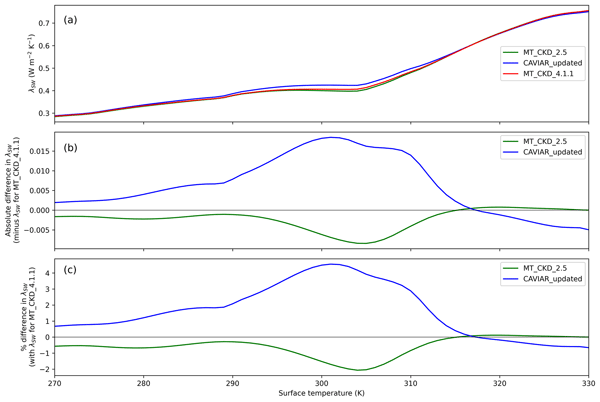
We investigated the impact of the shortwave water vapour continuum absorption on clear-sky shortwave radiative feedback. For current temperatures, the impact is modest (<2%). In a warmer world, continuum-induced uncertainty in estimated feedback would be up to ~5%. Representing continuum absorption with the widely used semi-empirical model in radiative transfer calculations leads to an underestimation of this feedback. Constraining the shortwave continuum will help reduce these discrepancies.
Hiu-Wang Lau, Belinda Hotz, Heini Wernli, and Robin Noyelle
EGUsphere, https://doi.org/10.5194/egusphere-2026-5697, https://doi.org/10.5194/egusphere-2026-5697, 2026
This preprint is open for discussion and under review for Weather and Climate Dynamics (WCD).
Short summary
Short summary
Studying the spatial and vertical extent of heat extremes is essential to understand their impacts and physical mechanisms. Here we investigate the 3D vertical structures of heatwaves and describe their geometry. We find that they extend vertically but are larger and more intense close to the ground and that their general shape is an ellipse oriented towards the pole. We argue that the simplified image of a “heat dome” is not adapted to describe the vertical structure of heatwaves.
Belinda Hotz, Heini Wernli, Matthias Röthlisberger, and Robin Noyelle
Weather Clim. Dynam., 7, 1875–1897, https://doi.org/10.5194/wcd-7-1875-2026, https://doi.org/10.5194/wcd-7-1875-2026, 2026
Short summary
Short summary
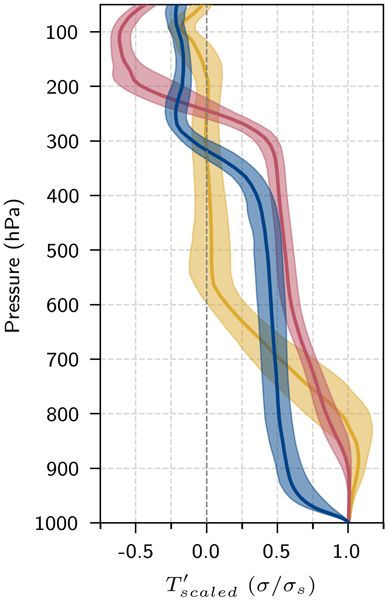
We systematically investigate vertical temperature anomaly profiles during heat extremes on a global scale. Three distinct clusters emerge, aligning closely with the polar, mid-latitude, and tropical climate zones and capturing the key characteristics of the vertical profiles. While mid-latitude and polar profiles feature anomalies throughout the troposphere, with the highest temperature anomalies in the boundary layer, tropical temperature anomalies are confined to the boundary layer.
Gergana Gyuleva, Reto Knutti, Robin Noyelle, Urs Beyerle, Erich Fischer, and Sebastian Sippel
EGUsphere, https://doi.org/10.48550/arXiv.2608.13219, https://doi.org/10.48550/arXiv.2608.13219, 2026
Short summary
Short summary
How much Earth warms depends on climate feedbacks, which change with sea surface temperatures. This effect is usually modelled by prescribing observed sea-surface temperatures to atmospheric models. We test this standard approach in idealised runs and find it fails to reproduce the true feedback. We also find that feedback variations can be fully explained via statistical noise. Our results suggest historical "pattern effect" estimates are not robust, increasing uncertainty in future warming.
Matthias Röthlisberger, Michael Sprenger, Urs Beyerle, Erich M. Fischer, and Heini Wernli
Weather Clim. Dynam., 7, 1363–1384, https://doi.org/10.5194/wcd-7-1363-2026, https://doi.org/10.5194/wcd-7-1363-2026, 2026
Short summary
Short summary
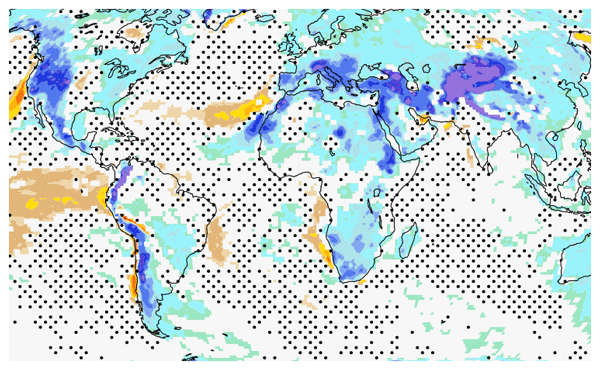
This study investigates yearly heat extremes simulated with the global climate model CESM2. A trajectory-based method is used, which allows quantifying the contributions to temperature anomalies from advection, subsidence, and diabatic heating. The results show that the magnitude of CESM2 heat extremes agrees fairly well with ERA5 reanalyses, but it is often
for the partly wrong physical reasons.
Alexandre Mass, Jan Cermak, Reto Knutti, Anna L. Merrifield, and Hendrik Andersen
EGUsphere, https://doi.org/10.5194/egusphere-2026-3242, https://doi.org/10.5194/egusphere-2026-3242, 2026
Short summary
Short summary
Fog is a critical water source for life in the Namib Desert. To assess how fog may change in the future, we combined satellite observations with climate model projections. Warming ocean temperatures reduce fog, but stronger onshore winds and increased atmospheric stability counteract this effect. Overall, Namib fog appears more resilient to climate change than previously thought, a finding that may apply to other fog-prone coasts worldwide.
Andrea Rivosecchi, Andrea Dittus, Ed Hawkins, Reinhard Schiemann, and Erich Fischer
EGUsphere, https://doi.org/10.5194/egusphere-2026-1733, https://doi.org/10.5194/egusphere-2026-1733, 2026
Short summary
Short summary
We analysed 250-year global temperature trends under zero CO2 emissions in the UK Earth System Model. Stopping emissions while global temperatures remain below +2 °C limits the post-net-zero mean surface warming. Annual hot extremes cool regionally after zero emissions in the midlatitudes, due to the expansion of evergreen vegetation. However, in this framework vegetation change is largely unconstrained by modern land-use changes, highlighting a potential limitation of idealised model protocols.
Detlef P. Van Vuuren, Brian C. O'Neill, Claudia Tebaldi, Benjamin M. Sanderson, Louise P. Chini, Pierre Friedlingstein, Tomoko Hasegawa, Keywan Riahi, Bala Govindasamy, Nico Bauer, Veronika Eyring, Cheikh M. N. Fall, Katja Frieler, Matthew J. Gidden, Laila K. Gohar, Annika Högner, Andrew D. Jones, Jarmo Kikstra, Andrew King, Reto Knutti, Elmar Kriegler, Peter Lawrence, Chris Lennard, Jason Lowe, Camilla Mathison, Shahbaz Mehmood, Zebedee Nicholls, Luciana F. Prado, Qiang Zhang, Steven K. Rose, Alex C. Ruane, Marit Sandstad, Carl-Friedrich Schleussner, Roland Seferian, Jana Sillmann, Chris Smith, Anna A. Sörensson, Swapna Panickal, Kaoru Tachiiri, Naomi Vaughan, Saritha S. Vishwanathan, Tokuta Yokohata, Marco Zecchetto, and Tilo Ziehn
Geosci. Model Dev., 19, 2627–2656, https://doi.org/10.5194/gmd-19-2627-2026, https://doi.org/10.5194/gmd-19-2627-2026, 2026
Short summary
Short summary
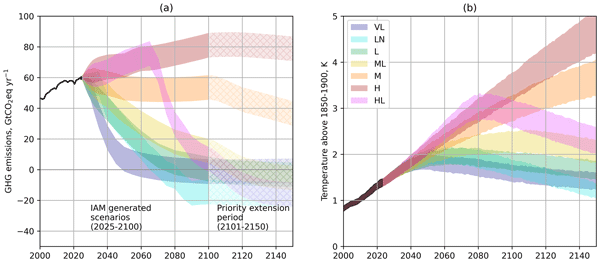
We propose a set of seven plausible 21st century emission scenarios, and their multi-century extensions, that will be used by the international community of climate modeling centers to produce the next generation of climate projections. These projections will support climate, impact and mitigation researchers, provide information to practitioners to address future risks from climate change, and contribute to policymakers’ considerations of the trade-offs among various levels of mitigation.
Donghe Zhu, Patrick Pieper, Stephan Pfahl, and Erich Fischer
EGUsphere, https://doi.org/10.5194/egusphere-2026-1258, https://doi.org/10.5194/egusphere-2026-1258, 2026
Short summary
Short summary
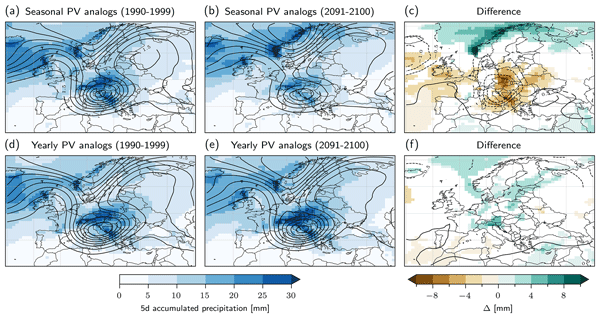
Climate models consistently project stronger heavy rainfall in a warming climate, but they disagree on how large these changes will be across regions. In this study, we identify the key causes of this uncertainty. Shifts in when events occur during the year alter the warming on those days and explain part of the thermodynamic increase in heavy rainfall. Differences in mid-tropospheric atmospheric motion are the dominant source of model disagreement in the dynamic increase in heavy rainfall.
Jacopo Riboldi, Robin Noyelle, Ellina Agayar, Hanin Binder, Marc Federer, Katharina Hartmuth, Michael Sprenger, Iris Thurnherr, and Selvakumar Vishnupriya
Weather Clim. Dynam., 7, 65–87, https://doi.org/10.5194/wcd-7-65-2026, https://doi.org/10.5194/wcd-7-65-2026, 2026
Short summary
Short summary
Storm Boris led to record-breaking precipitation over central Europe in September 2024. By incorporating event-specific meteorological information, this work introduces a methodology to strengthen our comprehension of how global warming affects similar hazards. Furthermore, it contextualizes how the answer to the question "How will Boris-like storms change in a warmer climate?" depends on explicit and implicit methodological choices, with the aim to inform future attribution research.
Hans Segura, Xabier Pedruzo-Bagazgoitia, Philipp Weiss, Sebastian K. Müller, Thomas Rackow, Junhong Lee, Edgar Dolores-Tesillos, Imme Benedict, Matthias Aengenheyster, Razvan Aguridan, Gabriele Arduini, Alexander J. Baker, Jiawei Bao, Swantje Bastin, Eulàlia Baulenas, Tobias Becker, Sebastian Beyer, Hendryk Bockelmann, Nils Brüggemann, Lukas Brunner, Suvarchal K. Cheedela, Sushant Das, Jasper Denissen, Ian Dragaud, Piotr Dziekan, Madeleine Ekblom, Jan Frederik Engels, Monika Esch, Richard Forbes, Claudia Frauen, Lilli Freischem, Diego García-Maroto, Philipp Geier, Paul Gierz, Álvaro González-Cervera, Katherine Grayson, Matthew Griffith, Oliver Gutjahr, Helmuth Haak, Ioan Hadade, Kerstin Haslehner, Shabeh ul Hasson, Jan Hegewald, Lukas Kluft, Aleksei Koldunov, Nikolay Koldunov, Tobias Kölling, Shunya Koseki, Sergey Kosukhin, Josh Kousal, Peter Kuma, Arjun U. Kumar, Rumeng Li, Nicolas Maury, Maximilian Meindl, Sebastian Milinski, Kristian Mogensen, Bimochan Niraula, Jakub Nowak, Divya Sri Praturi, Ulrike Proske, Dian Putrasahan, René Redler, David Santuy, Domokos Sármány, Reiner Schnur, Patrick Scholz, Dmitry Sidorenko, Dorian Spät, Birgit Sützl, Daisuke Takasuka, Adrian Tompkins, Alejandro Uribe, Mirco Valentini, Menno Veerman, Aiko Voigt, Sarah Warnau, Fabian Wachsmann, Marta Wacławczyk, Nils Wedi, Karl-Hermann Wieners, Jonathan Wille, Marius Winkler, Yuting Wu, Florian Ziemen, Janos Zimmermann, Frida A.-M. Bender, Dragana Bojovic, Sandrine Bony, Simona Bordoni, Patrice Brehmer, Marcus Dengler, Emanuel Dutra, Saliou Faye, Erich Fischer, Chiel van Heerwaarden, Cathy Hohenegger, Heikki Järvinen, Markus Jochum, Thomas Jung, Johann H. Jungclaus, Noel S. Keenlyside, Daniel Klocke, Heike Konow, Martina Klose, Szymon Malinowski, Olivia Martius, Thorsten Mauritsen, Juan Pedro Mellado, Theresa Mieslinger, Elsa Mohino, Hanna Pawłowska, Karsten Peters-von Gehlen, Abdoulaye Sarré, Pajam Sobhani, Philip Stier, Lauri Tuppi, Pier Luigi Vidale, Irina Sandu, and Bjorn Stevens
Geosci. Model Dev., 18, 7735–7761, https://doi.org/10.5194/gmd-18-7735-2025, https://doi.org/10.5194/gmd-18-7735-2025, 2025
Short summary
Short summary
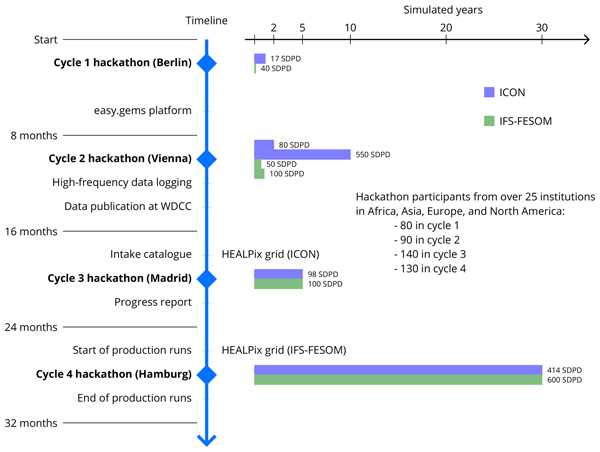
The Next Generation of Earth Modeling Systems project (nextGEMS) developed two Earth system models that use horizontal grid spacing of 10 km and finer, giving more fidelity to the representation of local phenomena, globally. In its fourth cycle, nextGEMS simulated the Earth System climate over the 2020–2049 period under the SSP3-7.0 scenario. Here, we provide an overview of nextGEMS, insights into the model development, and the realism of multi-decadal, kilometer-scale simulations.
Luna Bloin-Wibe, Robin Noyelle, Vincent Humphrey, Urs Beyerle, Reto Knutti, and Erich Fischer
Weather Clim. Dynam., 6, 1147–1177, https://doi.org/10.5194/wcd-6-1147-2025, https://doi.org/10.5194/wcd-6-1147-2025, 2025
Short summary
Short summary
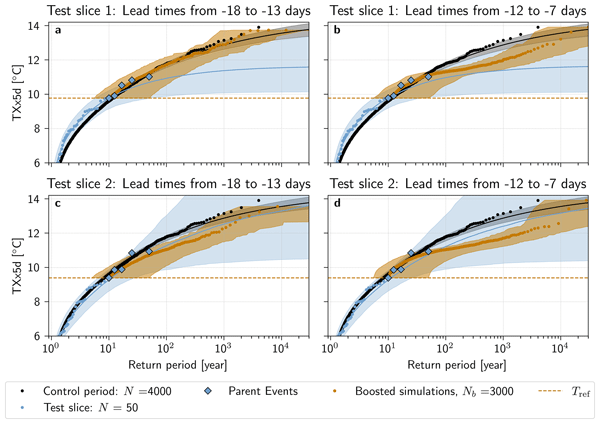
Weather extremes have become more frequent due to climate change. It is therefore crucial to understand them, but since they are rarer than average weather, they are challenging to study. Ensemble Boosting (EB) is a tool that generates extreme climate model events efficiently, but without directly estimating their probability. Here, we present a method to recover these probabilities for a global climate model. EB can thus now be used to find extremes with meaningful statistical information.
Kaah P. Menang, Stefan A. Buehler, Lukas Kluft, Robin J. Hogan, and Florian E. Roemer
Atmos. Chem. Phys., 25, 11689–11701, https://doi.org/10.5194/acp-25-11689-2025, https://doi.org/10.5194/acp-25-11689-2025, 2025
Short summary
Short summary
We investigated the impact of the shortwave water vapour continuum absorption on clear-sky shortwave radiative feedback. For current temperatures, the impact is modest (<2%). In a warmer world, continuum-induced uncertainty in estimated feedback would be up to ~5%. Representing continuum absorption with the widely used semi-empirical model in radiative transfer calculations leads to an underestimation of this feedback. Constraining the shortwave continuum will help reduce these discrepancies.
Luise J. Fischer, David N. Bresch, Dominik Büeler, Christian M. Grams, Robin Noyelle, Matthias Röthlisberger, and Heini Wernli
Weather Clim. Dynam., 6, 1027–1043, https://doi.org/10.5194/wcd-6-1027-2025, https://doi.org/10.5194/wcd-6-1027-2025, 2025
Short summary
Short summary
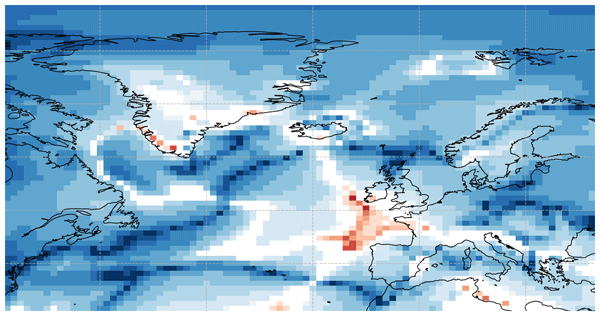
Atmospheric flows over the North Atlantic can be meaningfully classified into weather regimes, and climate simulations suggest that the regime frequencies might change in the future. We provide a quantitative framework that helps assess whether these regime frequency changes are relevant to understanding climate change signals in precipitation. At least in our example application, in most regions, regime frequency changes explain little of the projected precipitation changes.
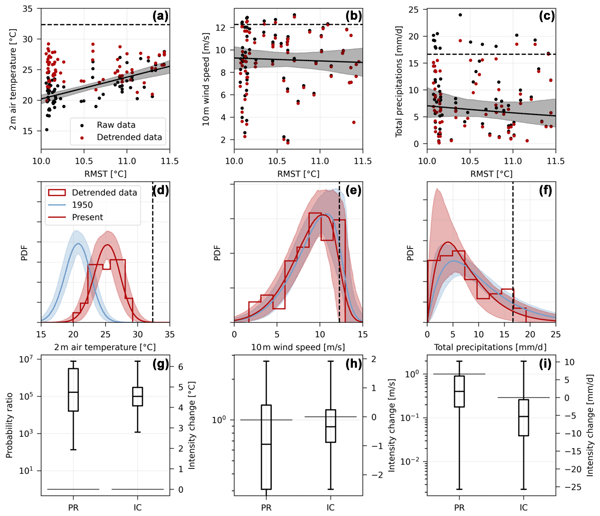
Robin Noyelle, Davide Faranda, Yoann Robin, Mathieu Vrac, and Pascal Yiou
Weather Clim. Dynam., 6, 817–839, https://doi.org/10.5194/wcd-6-817-2025, https://doi.org/10.5194/wcd-6-817-2025, 2025
Short summary
Short summary
Properties of extreme meteorological and climatological events are changing under human-caused climate change. Extreme event attribution methods seek to estimate the contribution of global warming in the probability and intensity changes of extreme events. Here we propose a procedure to estimate these quantities for the flow analogue method, which compares the observed event to similar events in the past.
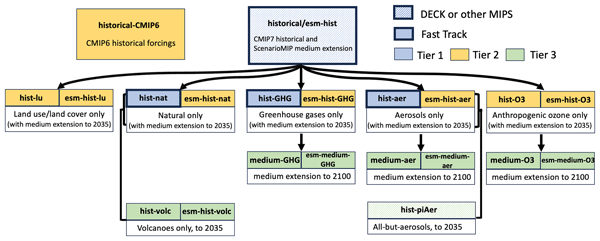
Nathan P. Gillett, Isla R. Simpson, Gabi Hegerl, Reto Knutti, Dann Mitchell, Aurélien Ribes, Hideo Shiogama, Dáithí Stone, Claudia Tebaldi, Piotr Wolski, Wenxia Zhang, and Vivek K. Arora
Geosci. Model Dev., 18, 4399–4416, https://doi.org/10.5194/gmd-18-4399-2025, https://doi.org/10.5194/gmd-18-4399-2025, 2025
Short summary
Short summary
Climate model simulations of the response to human and natural influences together, natural climate influences alone and greenhouse gases alone are key to quantifying human influence on the climate. The last set of such coordinated simulations underpinned key findings in the last Intergovernmental Panel on Climate Change (IPCC) report. Here we propose a new set of such simulations to be used in the next generation of attribution studies and to underpin the next IPCC report.

Colin G. Jones, Fanny Adloff, Ben B. B. Booth, Peter M. Cox, Veronika Eyring, Pierre Friedlingstein, Katja Frieler, Helene T. Hewitt, Hazel A. Jeffery, Sylvie Joussaume, Torben Koenigk, Bryan N. Lawrence, Eleanor O'Rourke, Malcolm J. Roberts, Benjamin M. Sanderson, Roland Séférian, Samuel Somot, Pier Luigi Vidale, Detlef van Vuuren, Mario Acosta, Mats Bentsen, Raffaele Bernardello, Richard Betts, Ed Blockley, Julien Boé, Tom Bracegirdle, Pascale Braconnot, Victor Brovkin, Carlo Buontempo, Francisco Doblas-Reyes, Markus Donat, Italo Epicoco, Pete Falloon, Sandro Fiore, Thomas Frölicher, Neven S. Fučkar, Matthew J. Gidden, Helge F. Goessling, Rune Grand Graversen, Silvio Gualdi, José M. Gutiérrez, Tatiana Ilyina, Daniela Jacob, Chris D. Jones, Martin Juckes, Elizabeth Kendon, Erik Kjellström, Reto Knutti, Jason Lowe, Matthew Mizielinski, Paola Nassisi, Michael Obersteiner, Pierre Regnier, Romain Roehrig, David Salas y Mélia, Carl-Friedrich Schleussner, Michael Schulz, Enrico Scoccimarro, Laurent Terray, Hannes Thiemann, Richard A. Wood, Shuting Yang, and Sönke Zaehle
Earth Syst. Dynam., 15, 1319–1351, https://doi.org/10.5194/esd-15-1319-2024, https://doi.org/10.5194/esd-15-1319-2024, 2024
Short summary
Short summary
We propose a number of priority areas for the international climate research community to address over the coming decade. Advances in these areas will both increase our understanding of past and future Earth system change, including the societal and environmental impacts of this change, and deliver significantly improved scientific support to international climate policy, such as future IPCC assessments and the UNFCCC Global Stocktake.
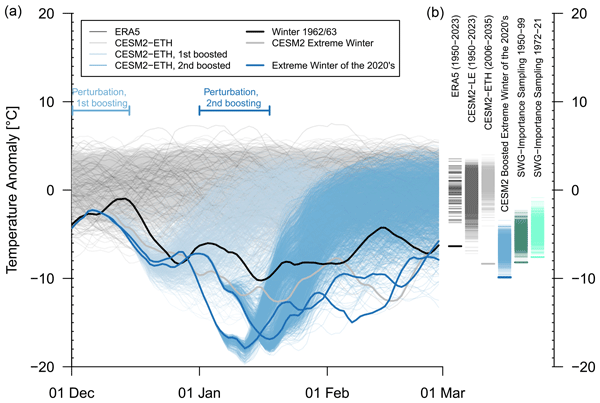
Sebastian Sippel, Clair Barnes, Camille Cadiou, Erich Fischer, Sarah Kew, Marlene Kretschmer, Sjoukje Philip, Theodore G. Shepherd, Jitendra Singh, Robert Vautard, and Pascal Yiou
Weather Clim. Dynam., 5, 943–957, https://doi.org/10.5194/wcd-5-943-2024, https://doi.org/10.5194/wcd-5-943-2024, 2024
Short summary
Short summary
Winter temperatures in central Europe have increased. But cold winters can still cause problems for energy systems, infrastructure, or human health. Here we tested whether a record-cold winter, such as the one observed in 1963 over central Europe, could still occur despite climate change. The answer is yes: it is possible, but it is very unlikely. Our results rely on climate model simulations and statistical rare event analysis. In conclusion, society must be prepared for such cold winters.
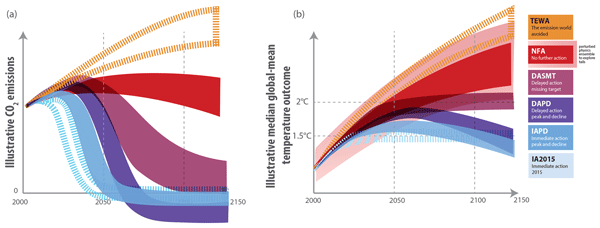
Malte Meinshausen, Carl-Friedrich Schleussner, Kathleen Beyer, Greg Bodeker, Olivier Boucher, Josep G. Canadell, John S. Daniel, Aïda Diongue-Niang, Fatima Driouech, Erich Fischer, Piers Forster, Michael Grose, Gerrit Hansen, Zeke Hausfather, Tatiana Ilyina, Jarmo S. Kikstra, Joyce Kimutai, Andrew D. King, June-Yi Lee, Chris Lennard, Tabea Lissner, Alexander Nauels, Glen P. Peters, Anna Pirani, Gian-Kasper Plattner, Hans Pörtner, Joeri Rogelj, Maisa Rojas, Joyashree Roy, Bjørn H. Samset, Benjamin M. Sanderson, Roland Séférian, Sonia Seneviratne, Christopher J. Smith, Sophie Szopa, Adelle Thomas, Diana Urge-Vorsatz, Guus J. M. Velders, Tokuta Yokohata, Tilo Ziehn, and Zebedee Nicholls
Geosci. Model Dev., 17, 4533–4559, https://doi.org/10.5194/gmd-17-4533-2024, https://doi.org/10.5194/gmd-17-4533-2024, 2024
Short summary
Short summary
The scientific community is considering new scenarios to succeed RCPs and SSPs for the next generation of Earth system model runs to project future climate change. To contribute to that effort, we reflect on relevant policy and scientific research questions and suggest categories for representative emission pathways. These categories are tailored to the Paris Agreement long-term temperature goal, high-risk outcomes in the absence of further climate policy and worlds “that could have been”.
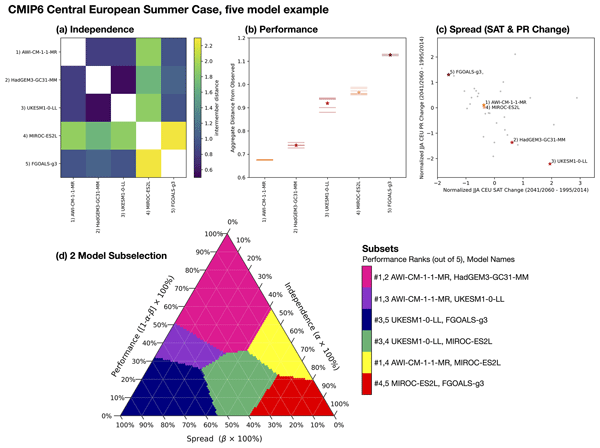
Anna L. Merrifield, Lukas Brunner, Ruth Lorenz, Vincent Humphrey, and Reto Knutti
Geosci. Model Dev., 16, 4715–4747, https://doi.org/10.5194/gmd-16-4715-2023, https://doi.org/10.5194/gmd-16-4715-2023, 2023
Short summary
Short summary
Using all Coupled Model Intercomparison Project (CMIP) models is unfeasible for many applications. We provide a subselection protocol that balances user needs for model independence, performance, and spread capturing CMIP’s projection uncertainty simultaneously. We show how sets of three to five models selected for European applications map to user priorities. An audit of model independence and its influence on equilibrium climate sensitivity uncertainty in CMIP is also presented.
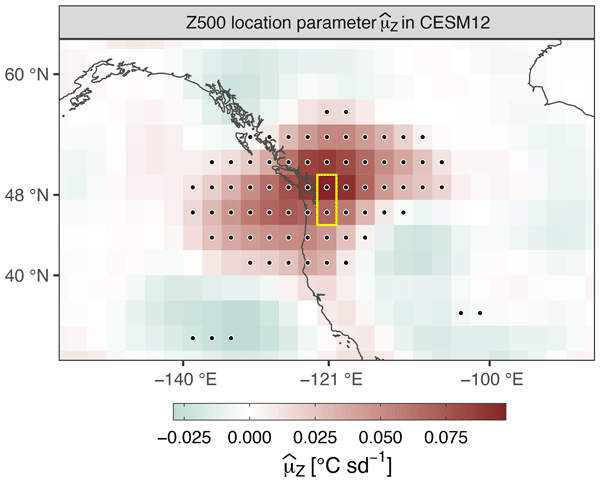
Joel Zeder and Erich M. Fischer
Adv. Stat. Clim. Meteorol. Oceanogr., 9, 83–102, https://doi.org/10.5194/ascmo-9-83-2023, https://doi.org/10.5194/ascmo-9-83-2023, 2023
Short summary
Short summary
The intensities of recent heatwave events, such as the record-breaking heatwave in early June 2021 in the Pacific Northwest area, are substantially altered by climate change. We further quantify the contribution of the local weather situation and the land surface conditions with a statistical model suited for extreme data. Based on this method, we can answer
what ifquestions, such as estimating the change in the 2021 heatwave temperature if it happened in a world without climate change.
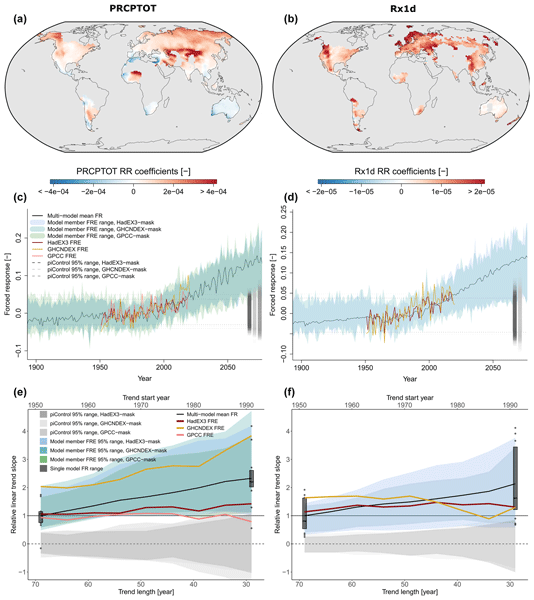
Iris Elisabeth de Vries, Sebastian Sippel, Angeline Greene Pendergrass, and Reto Knutti
Earth Syst. Dynam., 14, 81–100, https://doi.org/10.5194/esd-14-81-2023, https://doi.org/10.5194/esd-14-81-2023, 2023
Short summary
Short summary
Precipitation change is an important consequence of climate change, but it is hard to detect and quantify. Our intuitive method yields robust and interpretable detection of forced precipitation change in three observational datasets for global mean and extreme precipitation, but the different observational datasets show different magnitudes of forced change. Assessment and reduction of uncertainties surrounding forced precipitation change are important for future projections and adaptation.
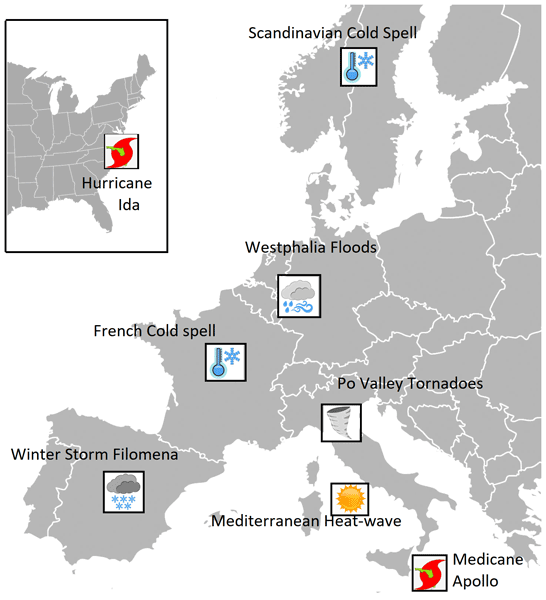
Davide Faranda, Stella Bourdin, Mireia Ginesta, Meriem Krouma, Robin Noyelle, Flavio Pons, Pascal Yiou, and Gabriele Messori
Weather Clim. Dynam., 3, 1311–1340, https://doi.org/10.5194/wcd-3-1311-2022, https://doi.org/10.5194/wcd-3-1311-2022, 2022
Short summary
Short summary
We analyze the atmospheric circulation leading to impactful extreme events for the calendar year 2021 such as the Storm Filomena, Westphalia floods, Hurricane Ida and Medicane Apollo. For some of the events, we find that climate change has contributed to their occurrence or enhanced their intensity; for other events, we find that they are unprecedented. Our approach underscores the importance of considering changes in the atmospheric circulation when performing attribution studies.
Cited articles
Amara, R.: Views on futures research methodology, Futures, 23, 645–649, https://doi.org/10.1016/0016-3287(91)90085-G, 1991. a, b
Anderson, G. B. and Bell, M. L.: Heat Waves in the United States: Mortality Risk during Heat Waves and Effect Modification by Heat Wave Characteristics in 43 U.S. Communities, Environ. Health Persp., 119, 210–218, https://doi.org/10.1289/ehp.1002313, 2011. a
Bador, M., Terray, L., Boé, J., Somot, S., Alias, A., Gibelin, A.-L., and Dubuisson, B.: Future summer mega-heatwave and record-breaking temperatures in a warmer France climate, Environ. Res. Lett., 12, 074025, https://doi.org/10.1088/1748-9326/aa751c, 2017. a
Baldissera Pacchetti, M., Coulter, L., Dessai, S., Shepherd, T. G., Sillmann, J., and Van Den Hurk, B.: Varieties of approaches to constructing physical climate storylines: A review, WIREs Clim. Change, 15, e869, https://doi.org/10.1002/wcc.869, 2024. a
Barriopedro, D., Fischer, E. M., Luterbacher, J., Trigo, R. M., and García-Herrera, R.: The Hot Summer of 2010: Redrawing the Temperature Record Map of Europe, Science, 332, 220–224, https://doi.org/10.1126/science.1201224, 2011. a
Barriopedro, D., García-Herrera, R., Ordóñez, C., Miralles, D. G., and Salcedo-Sanz, S.: Heat Waves: Physical Understanding and Scientific Challenges, Rev. Geophys., 61, e2022RG000780, https://doi.org/10.1029/2022RG000780, 2023. a, b
Bartusek, S., Kornhuber, K., and Ting, M.: 2021 North American heatwave amplified by climate change-driven nonlinear interactions, Nat. Clim. Change, 12, 1143–1150, https://doi.org/10.1038/s41558-022-01520-4, 2022. a
Baulenas, E., Versteeg, G., Terrado, M., Mindlin, J., and Bojovic, D.: Assembling the climate story: use of storyline approaches in climate-related science, Global Challenges, 7, 2200183, https://doi.org/10.1002/gch2.202200183, 2023. a
Black, E., Blackburn, M., Harrison, G., Hoskins, B., and Methven, J.: Factors contributing to the summer 2003 European heatwave, Weather, 59, 217–223, https://doi.org/10.1256/wea.74.04, 2004. a
Bloin-Wibe, L., Noyelle, R., Humphrey, V., Beyerle, U., Knutti, R., and Fischer, E.: Estimating return periods for extreme events in climate models through Ensemble Boosting, Weather Clim. Dynam., 6, 1147–1177, https://doi.org/10.5194/wcd-6-1147-2025, 2025. a, b
Compo, G. P., Whitaker, J. S., Sardeshmukh, P. D., Matsui, N., Allan, R. J., Yin, X., Gleason, B. E., Vose, R. S., Rutledge, G., Bessemoulin, P., Brönnimann, S., Brunet, M., Crouthamel, R. I., Grant, A. N., Groisman, P. Y., Jones, P. D., Kruk, M. C., Kruger, A. C., Marshall, G. J., Maugeri, M., Mok, H. Y., Nordli, O., Ross, T. F., Trigo, R. M., Wang, X. L., Woodruff, S. D., and Worley, S. J.: The Twentieth Century Reanalysis Project, Q. J. Roy. Meteor. Soc., 137, 1–28, https://doi.org/10.1002/qj.776, 2011. a
Copernicus Climate Change Service: Heatwaves contribute to the warmest June https://climate.copernicus.eu/heatwaves-contribute-warmest-june-record-western-europe (last access: 25 August 2026), 2025. a
Danabasoglu, G., Deser, C., Rodgers, K., and Timmermann, A.: CESM2 Large Ensemble, NSF National Center for Atmospheric Research, https://doi.org/10.26024/kgmp-c556, 2020. a, b
Davini, P. and D’Andrea, F.: Northern Hemisphere Atmospheric Blocking Representation in Global Climate Models: Twenty Years of Improvements?, J. Climate, 29, 8823–8840, https://doi.org/10.1175/JCLI-D-16-0242.1, 2016. a, b
Derbyshire, J.: Increasing Preparedness for Extreme Events using Plausibility-Based Scenario Planning: Lessons from COVID-19, Risk Anal., 42, 97–104, https://doi.org/10.1111/risa.13827, 2022. a
D'Ippoliti, D., Michelozzi, P., Marino, C., de'Donato, F., Menne, B., Katsouyanni, K., Kirchmayer, U., Analitis, A., Medina-Ramón, M., Paldy, A., Atkinson, R., Kovats, S., Bisanti, L., Schneider, A., Lefranc, A., Iñiguez, C., and Perucci, C. A.: The impact of heat waves on mortality in 9 European cities: results from the EuroHEAT project, Environ. Health, 9, 37, https://doi.org/10.1186/1476-069X-9-37, 2010. a
Dole, R., Hoerling, M., Perlwitz, J., Eischeid, J., Pegion, P., Zhang, T., Quan, X.-W., Xu, T., and Murray, D.: Was there a basis for anticipating the 2010 Russian heat wave?, Geophys. Res. Lett., 38, https://doi.org/10.1029/2010GL046582, 2011. a
Domeisen, D. I. V., Eltahir, E. A. B., Fischer, E. M., Knutti, R., Perkins-Kirkpatrick, S. E., Schär, C., Seneviratne, S. I., Weisheimer, A., and Wernli, H.: Prediction and projection of heatwaves, Nature Reviews Earth & Environment, 4, 36–50, https://doi.org/10.1038/s43017-022-00371-z, 2023. a
Drouard, M. and Woollings, T.: Contrasting Mechanisms of Summer Blocking Over Western Eurasia, Geophys. Res. Lett., 45, 12040–12048, https://doi.org/10.1029/2018GL079894, 2018. a
Easterling, D. R., Meehl, G. A., Parmesan, C., Changnon, S. A., Karl, T. R., and Mearns, L. O.: Climate Extremes: Observations, Modeling, and Impacts, Science, 289, 2068–2074, https://doi.org/10.1126/science.289.5487.2068, 2000. a
Feser, F., Van Garderen, L., and Hansen, F.: The Summer Heatwave 2022 over Western Europe: An Attribution to Anthropogenic Climate Change, B. Am. Meteorol. Soc., 105, E2175–E2179, https://doi.org/10.1175/BAMS-D-24-0017.1, 2024. a
Finkel, J. and O’Gorman, P. A.: Bringing Statistics to Storylines: Rare Event Sampling for Sudden, Transient Extreme Events, J. Adv. Model. Earth Sy., 16, e2024MS004264, https://doi.org/10.1029/2024MS004264, 2024. a
Finkel, J. and O’Gorman, P. A.: Rare Event Sampling for Moving Targets: Extremes of Temperature and Daily Precipitation in a General Circulation Model, J. Adv. Model. Earth Sy., 18, e2025MS005456, https://doi.org/10.1029/2025MS005456, 2026. a
Fischbacher-Smith, D.: Beyond the worst case scenario: “Managing” the risks of extreme events, Risk Management, 12, 1–8, https://doi.org/10.1057/rm.2009.17, 2010. a
Fischer, E. M., Seneviratne, S. I., Vidale, P. L., Lüthi, D., and Schär, C.: Soil Moisture–Atmosphere Interactions during the 2003 European Summer Heat Wave, J. Climate, 20, 5081–5099, https://doi.org/10.1175/JCLI4288.1, 2007. a
Fischer, E. M., Sippel, S., and Knutti, R.: Increasing probability of record-shattering climate extremes, Nat. Clim. Change, 11, 689–695, https://doi.org/10.1038/s41558-021-01092-9, 2021. a, b, c
Fischer, E. M., Beyerle, U., Bloin-Wibe, L., Gessner, C., Humphrey, V., Lehner, F., Pendergrass, A. G., Sippel, S., Zeder, J., and Knutti, R.: Storylines for unprecedented heatwaves based on ensemble boosting, Nat. Commun., 14, 4643, https://doi.org/10.1038/s41467-023-40112-4, 2023. a, b
Fischer, E. M., Bador, M., Huser, R., Kendon, E. J., Robinson, A., and Sippel, S.: Record-breaking extremes in a warming climate, Nature Reviews Earth & Environment, 1–15, https://doi.org/10.1038/s43017-025-00681-y, 2025. a, b
Fleishman, E., Rupp, D. E., Loikith, P. C., Bumbaco, K. A., and O’Neill, L. W.: Synthesis of Publications on the Anomalous June 2021 Heat Wave in the Pacific Northwest of the United States and Canada, B. Am. Meteorol. Soc., 106, E1155–E1174, https://doi.org/10.1175/BAMS-D-24-0188.1, 2025. a
García-Herrera, R., Díaz, J., Trigo, R. M., Luterbacher, J., and Fischer, E. M.: A Review of the European Summer Heat Wave of 2003, Crit. Rev. Env. Sci. Tec., 40, 267–306, https://doi.org/10.1080/10643380802238137, 2010. a, b
Garfinkel, C. I., Rostkier-Edelstein, D., Morin, E., Hochman, A., Schwartz, C., and Nirel, R.: Precursors of summer heat waves in the Eastern Mediterranean, Q. J. Roy. Meteor. Soc., 150, 3757–3773, https://doi.org/10.1002/qj.4795, 2024. a, b
Gessner, C., Fischer, E. M., Beyerle, U., and Knutti, R.: Very Rare Heat Extremes: Quantifying and Understanding Using Ensemble Reinitialization, J. Climate, 34, 6619–6634, https://doi.org/10.1175/JCLI-D-20-0916.1, 2021. a, b
Giardina, C., Kurchan, J., Lecomte, V., and Tailleur, J.: Simulating Rare Events in Dynamical Processes, J. Stat. Phys., 145, 787–811, https://doi.org/10.1007/s10955-011-0350-4, 2011. a
Goodwin, P. and Wright, G.: The limits of forecasting methods in anticipating rare events, Technol. Forecast. Soc., 77, 355–368, https://doi.org/10.1016/j.techfore.2009.10.008, 2010. a
Green, J. S. A.: The Weather During July 1976: Some Dynamical Considerations of the Drought, Weather, 32, 120–126, https://doi.org/10.1002/j.1477-8696.1977.tb04532.x, 1977. a
Hazeleger, W., van den Hurk, B. J. J. M., Min, E., van Oldenborgh, G. J., Petersen, A. C., Stainforth, D. A., Vasileiadou, E., and Smith, L. A.: Tales of future weather, Nat. Clim. Change, 5, 107–113, https://doi.org/10.1038/nclimate2450, 2015. a
Hersbach, H., Bell, B., Berrisford, P., Hirahara, S., Horányi, A., Muñoz-Sabater, J., Nicolas, J., Peubey, C., Radu, R., Schepers, D., Simmons, A., Soci, C., Abdalla, S., Abellan, X., Balsamo, G., Bechtold, P., Biavati, G., Bidlot, J., Bonavita, M., De Chiara, G., Dahlgren, P., Dee, D., Diamantakis, M., Dragani, R., Flemming, J., Forbes, R., Fuentes, M., Geer, A., Haimberger, L., Healy, S., Hogan, R. J., Hólm, E., Janisková, M., Keeley, S., Laloyaux, P., Lopez, P., Lupu, C., Radnoti, G., de Rosnay, P., Rozum, I., Vamborg, F., Villaume, S., and Thépaut, J.-N.: The ERA5 global reanalysis, Q. J. Roy. Meteor. Soc., 146, 1999–2049, https://doi.org/10.1002/qj.3803, 2020. a, b, c
Hersbach, H., Bell, B., Berrisford, P., Biavati, G., Horányi, A., Muñoz Sabater, J., Nicolas, J., Peubey, C., Radu, R., Rozum, I., Schepers, D., Simmons, A., Soci, C., Dee, D., and Thépaut, J.-N.: ERA5 hourly data on pressure levels from 1940 to present, Copernicus Climate Change Service (C3S) Climate Data Store (CDS) [data set], https://doi.org/10.24381/cds.bd0915c6, 2023a. a
Hersbach, H., Bell, B., Berrisford, P., Biavati, G., Horányi, A., Muñoz Sabater, J., Nicolas, J., Peubey, C., Radu, R., Rozum, I., Schepers, D., Simmons, A., Soci, C., Dee, D., and Thépaut, J.-N.: ERA5 hourly data on single levels from 1940 to present, Copernicus Climate Change Service (C3S) Climate Data Store (CDS) [data set], https://doi.org/10.24381/cds.adbb2d47, 2023b. a
Hochman, A., Messori, G., Quinting, J. F., Pinto, J. G., and Grams, C. M.: Do Atlantic-European Weather Regimes Physically Exist?, Geophys. Res. Lett., 48, e2021GL095574, https://doi.org/10.1029/2021GL095574, 2021. a
Hotz, B., Papritz, L., and Röthlisberger, M.: Understanding the vertical temperature structure of recent record-shattering heatwaves, Weather Clim. Dynam., 5, 323–343, https://doi.org/10.5194/wcd-5-323-2024, 2024. a, b, c
Kautz, L.-A., Martius, O., Pfahl, S., Pinto, J. G., Ramos, A. M., Sousa, P. M., and Woollings, T.: Atmospheric blocking and weather extremes over the Euro-Atlantic sector – a review, Weather Clim. Dynam., 3, 305–336, https://doi.org/10.5194/wcd-3-305-2022, 2022. a
Kelder, T., Marjoribanks, T. I., Slater, L. J., Prudhomme, C., Wilby, R. L., Wagemann, J., and Dunstone, N.: An open workflow to gain insights about low-likelihood high-impact weather events from initialized predictions, Meteorol. Appl., 29, e2065, https://doi.org/10.1002/met.2065, 2022a. a, b
Kelder, T., Wanders, N., van der Wiel, K., Marjoribanks, T. I., Slater, L. J., Wilby, R. L., and Prudhomme, C.: Interpreting extreme climate impacts from large ensemble simulations – are they unseen or unrealistic?, Environ. Res. Lett., 17, 044052, https://doi.org/10.1088/1748-9326/ac5cf4, 2022b. a, b
Kelder, T., Heinrich, D., Klok, L., Thompson, V., Goulart, H. M. D., Hawkins, E., Slater, L. J., Suarez-Gutierrez, L., Wilby, R. L., Coughlan de Perez, E., Stephens, E. M., Burt, S., van den Hurk, B., de Vries, H., van der Wiel, K., Schipper, E. L. F., Carmona Baéz, A., van Bueren, E., and Fischer, E. M.: How to stop being surprised by unprecedented weather, Nat. Commun., 16, 1–15, https://doi.org/10.1038/s41467-025-57450-0, 2025. a
Kendon, E. J., Ciavarella, A., McCarthy, M., Brown, S., Christidis, N., Kay, G., Dunstone, N., Fereday, D., and Pope, J. O.: Multiperspective view of the 1976 drought–heatwave event and its changing likelihood, Q. J. Roy. Meteor. Soc., 150, 232–261, https://doi.org/10.1002/qj.4594, 2024. a
Klif, A., Garfinkel, C. I., Rostkier-Edelstein, D., and Hochman, A.: Process-based evaluation of Eastern Mediterranean heatwave development in the CMIP6 models, Weather and Climate Extremes, 53, 100918, https://doi.org/10.1016/j.wace.2026.100918, 2026. a
Kornhuber, K., Osprey, S., Coumou, D., Petri, S., Petoukhov, V., Rahmstorf, S., and Gray, L.: Extreme weather events in early summer 2018 connected by a recurrent hemispheric wave-7 pattern, Environ. Res. Lett., 14, 054002, https://doi.org/10.1088/1748-9326/ab13bf, 2019. a
Le Tertre, A., Lefranc, A., Eilstein, D., Declercq, C., Medina, S., Blanchard, M., Chardon, B., Fabre, P., Filleul, L., Jusot, J.-F., Pascal, L., Prouvost, H., Cassadou, S., and Ledrans, M.: Impact of the 2003 Heatwave on All-Cause Mortality in 9 French Cities, Epidemiology, 17, 75, https://doi.org/10.1097/01.ede.0000187650.36636.1f, 2006. a
Liu, P., Reed, K. A., Garner, S. T., Zhao, M., and Zhu, Y.: Blocking Simulations in GFDL GCMs for CMIP5 and CMIP6, J. Climate, 35, 5053–5070, https://doi.org/10.1175/JCLI-D-21-0456.1, 2022. a, b
Lucarini, V., Melinda Galfi, V., Riboldi, J., and Messori, G.: Typicality of the 2021 Western North America summer heatwave, Environ. Res. Lett., 18, 015004, https://doi.org/10.1088/1748-9326/acab77, 2023. a
Mahesh, A., Collins, W., Bonev, B., Brenowitz, N., Cohen, Y., Elms, J., Harrington, P., Kashinath, K., Kurth, T., North, J., OBrien, T., Pritchard, M., Pruitt, D., Risser, M., Subramanian, S., and Willard, J.: Huge Ensembles Part I: Design of Ensemble Weather Forecasts using Spherical Fourier Neural Operators, arXiv [preprint], https://doi.org/10.48550/arXiv.2408.03100, 2025a. a
Mahesh, A., Collins, W., Bonev, B., Brenowitz, N., Cohen, Y., Harrington, P., Kashinath, K., Kurth, T., North, J., OBrien, T., Pritchard, M., Pruitt, D., Risser, M., Subramanian, S., and Willard, J.: Huge Ensembles Part II: Properties of a Huge Ensemble of Hindcasts Generated with Spherical Fourier Neural Operators, arXiv [preprint], https://doi.org/10.48550/arXiv.2408.01581, 2025b. a
Muñoz Sabater, J., Comyn-Platt, E., Hersbach, H., Bell, B., Berrisford, P., Biavati, G., Horányi, A., Nicolas, J., Peubey, C., Radu, R., Rozum, I., Schepers, D., Simmons, A., Soci, C., Dee, D., Thépaut, J-N., Cagnazzo, C., and Cucchi, M.: ERA5-Land post-processed daily statistics from 1950 to present, Copernicus Climate Change Service (C3S) Climate Data Store (CDS) [data set], https://doi.org/10.24381/cds.e9c9c792, 2024. a
Muñoz-Sabater, J., Dutra, E., Agustí-Panareda, A., Albergel, C., Arduini, G., Balsamo, G., Boussetta, S., Choulga, M., Harrigan, S., Hersbach, H., Martens, B., Miralles, D. G., Piles, M., Rodríguez-Fernández, N. J., Zsoter, E., Buontempo, C., and Thépaut, J.-N.: ERA5-Land: a state-of-the-art global reanalysis dataset for land applications, Earth Syst. Sci. Data, 13, 4349–4383, https://doi.org/10.5194/essd-13-4349-2021, 2021. a, b
Nordmann, A.: (Im)Plausibility2, International Journal of Foresight and Innovation Policy, 9, 125–132, https://doi.org/10.1504/IJFIP.2013.058612, 2013. a, b, c
Noyelle, R., Yiou, P., and Faranda, D.: Investigating the typicality of the dynamics leading to extreme temperatures in the IPSL-CM6A-LR model, Clim. Dynam., 62, 1329–1357, https://doi.org/10.1007/s00382-023-06967-5, 2024. a
Noyelle, R., Caubel, A., Meurdesoif, Y., Faranda, D., and Yiou, P.: Evolution of the Dynamics of Centennial Hot Summers in Western Europe With Climate Change, Geophys. Res. Lett., 52, e2025GL115552, https://doi.org/10.1029/2025GL115552, 2025a. a
Noyelle, R., Caubel, A., Meurdesoif, Y., Yiou, P., and Faranda, D.: Statistical and Dynamical Aspects of Extremely Hot Summers in Western Europe Sampled with a Rare Event Algorithm, J. Climate, 38, 4763–4787, https://doi.org/10.1175/JCLI-D-24-0635.1, 2025b. a, b
Pappert, D., Tuel, A., Coumou, D., Vrac, M., and Martius, O.: Long vs. short: understanding the dynamics of persistent summer hot spells in Europe, Weather Clim. Dynam., 6, 769–788, https://doi.org/10.5194/wcd-6-769-2025, 2025. a
Philip, S., Kew, S., van Oldenborgh, G. J., Otto, F., Vautard, R., van der Wiel, K., King, A., Lott, F., Arrighi, J., Singh, R., and van Aalst, M.: A protocol for probabilistic extreme event attribution analyses, Adv. Stat. Clim. Meteorol. Oceanogr., 6, 177–203, https://doi.org/10.5194/ascmo-6-177-2020, 2020. a
Pitkänen, M. R. A., Mikkonen, S., Lehtinen, K. E. J., Lipponen, A., and Arola, A.: Artificial bias typically neglected in comparisons of uncertain atmospheric data, Geophys. Res. Lett., 43, 10003–10011, https://doi.org/10.1002/2016GL070852, 2016. a
Polt, K. D., Ward, P. J., De Ruiter, M., Bogdanovich, E., Reichstein, M., Frank, D., and Orth, R.: Quantifying impact-relevant heatwave durations, Environ. Res. Lett., 18, 104005, https://doi.org/10.1088/1748-9326/acf05e, 2023. a
Ragone, F. and Bouchet, F.: Rare Event Algorithm Study of Extreme Warm Summers and Heatwaves Over Europe, Geophys. Res. Lett., 48, e2020GL091197, https://doi.org/10.1029/2020GL091197, 2021. a
Ragone, F., Wouters, J., and Bouchet, F.: Computation of extreme heat waves in climate models using a large deviation algorithm, P. Natl. Acad. Sci. USA, 115, 24–29, https://doi.org/10.1073/pnas.1712645115, 2018. a
Rebetez, M., Dupont, O., and Giroud, M.: An analysis of the July 2006 heatwave extent in Europe compared to the record year of 2003, Theor. Appl. Climatol., 95, 1–7, https://doi.org/10.1007/s00704-007-0370-9, 2009. a
Robine, J.-M., Cheung, S. L. K., Roy, S. L., Oyen, H. V., Griffiths, C., Michel, J.-P., and Herrmann, F. R.: Death toll exceeded 70 000 in Europe during the summer of 2003, CR Biol., 331, 171–178, https://doi.org/10.1016/j.crvi.2007.12.001, 2007. a
Rodgers, K. B., Lee, S.-S., Rosenbloom, N., Timmermann, A., Danabasoglu, G., Deser, C., Edwards, J., Kim, J.-E., Simpson, I. R., Stein, K., Stuecker, M. F., Yamaguchi, R., Bódai, T., Chung, E.-S., Huang, L., Kim, W. M., Lamarque, J.-F., Lombardozzi, D. L., Wieder, W. R., and Yeager, S. G.: Ubiquity of human-induced changes in climate variability, Earth Syst. Dynam., 12, 1393–1411, https://doi.org/10.5194/esd-12-1393-2021, 2021. a, b
Roemer, F. E., Fischer, E., Noyelle, R., and Knutti, R.: Supplementary code for “Assessing the plausibility of unprecedented events: A process-based approach applied to month-long heatwaves in Western Europe”, Zenodo [code], https://doi.org/10.5281/zenodo.19492889, 2026a. a
Roemer, F. E., Fischer, E., Noyelle, R., and Knutti, R.: Supplementary data for “Assessing the plausibility of unprecedented events: A process-based approach applied to month-long heatwaves in Western Europe”, Zenodo [data set], https://doi.org/10.5281/zenodo.19494785, 2026b. a
Röthlisberger, M. and Martius, O.: Quantifying the Local Effect of Northern Hemisphere Atmospheric Blocks on the Persistence of Summer Hot and Dry Spells, Geophys. Res. Lett., 46, 10101–10111, https://doi.org/10.1029/2019GL083745, 2019. a
Röthlisberger, M. and Papritz, L.: Quantifying the physical processes leading to atmospheric hot extremes at a global scale, Nat. Geosci., 16, 210–216, https://doi.org/10.1038/s41561-023-01126-1, 2023. a
Röthlisberger, M., Frossard, L., Bosart, L. F., Keyser, D., and Martius, O.: Recurrent Synoptic-Scale Rossby Wave Patterns and Their Effect on the Persistence of Cold and Hot Spells, J. Climate, 32, 3207–3226, https://doi.org/10.1175/JCLI-D-18-0664.1, 2019. a
Röthlisberger, M., Sprenger, M., Flaounas, E., Beyerle, U., and Wernli, H.: The substructure of extremely hot summers in the Northern Hemisphere, Weather Clim. Dynam., 1, 45–62, https://doi.org/10.5194/wcd-1-45-2020, 2020. a
Röthlisberger, M., Sprenger, M., Beyerle, U., Fischer, E. M., and Wernli, H.: Advective, adiabatic and diabatic contributions to heat extremes simulated with the Community Earth System Model version 2, Weather Clim. Dynam., 7, 1363–1384, https://doi.org/10.5194/wcd-7-1363-2026, 2026. a, b, c, d, e, f
Russo, S., Sillmann, J., and Fischer, E. M.: Top ten European heatwaves since 1950 and their occurrence in the coming decades, Environ. Res. Lett., 10, 124003, https://doi.org/10.1088/1748-9326/10/12/124003, 2015. a
Sánchez-Benítez, A., Goessling, H., Pithan, F., Semmler, T., and Jung, T.: The July 2019 European Heat Wave in a Warmer Climate: Storyline Scenarios with a Coupled Model Using Spectral Nudging, J. Climate, 35, 2373–2390, https://doi.org/10.1175/JCLI-D-21-0573.1, 2022. a
Schulzweida, U.: CDO User Guide, Zenodo, https://doi.org/10.5281/zenodo.10020800, 2023. a
Schumacher, D. L., Singh, J., Hauser, M., Fischer, E. M., Wild, M., and Seneviratne, S. I.: Exacerbated summer European warming not captured by climate models neglecting long-term aerosol changes, Communications Earth & Environment, 5, 182, https://doi.org/10.1038/s43247-024-01332-8, 2024. a
Selin, C.: Trust and the illusive force of scenarios, Futures, 38, 1–14, https://doi.org/10.1016/j.futures.2005.04.001, 2006. a
Selin, C. and Guimarães Pereira, A.: Pursuing plausibility, International Journal of Foresight and Innovation Policy, 9, 93–109, https://doi.org/10.1504/IJFIP.2013.058616, 2013. a, b
Seneviratne, S. I., Koster, R. D., Guo, Z., Dirmeyer, P. A., Kowalczyk, E., Lawrence, D., Liu, P., Mocko, D., Lu, C.-H., Oleson, K. W., and Verseghy, D.: Soil Moisture Memory in AGCM Simulations: Analysis of Global Land–Atmosphere Coupling Experiment (GLACE) Data, J. Hydrometeorol., 7, 1090–1112, https://doi.org/10.1175/JHM533.1, 2006. a
Seneviratne, S. I., Corti, T., Davin, E. L., Hirschi, M., Jaeger, E. B., Lehner, I., Orlowsky, B., and Teuling, A. J.: Investigating soil moisture–climate interactions in a changing climate: A review, Earth-Sci. Rev., 99, 125–161, https://doi.org/10.1016/j.earscirev.2010.02.004, 2010. a, b, c, d
Shepherd, T. G., Boyd, E., Calel, R. A., Chapman, S. C., Dessai, S., Dima-West, I. M., Fowler, H. J., James, R., Maraun, D., Martius, O., Senior, C. A., Sobel, A. H., Stainforth, D. A., Tett, S. F. B., Trenberth, K. E., van den Hurk, B. J. J. M., Watkins, N. W., Wilby, R. L., and Zenghelis, D. A.: Storylines: an alternative approach to representing uncertainty in physical aspects of climate change, Climatic Change, 151, 555–571, https://doi.org/10.1007/s10584-018-2317-9, 2018. a, b, c
Sillmann, J., Shepherd, T. G., van den Hurk, B., Hazeleger, W., Martius, O., Slingo, J., and Zscheischler, J.: Event-Based Storylines to Address Climate Risk, Earths Future, 9, e2020EF001783, https://doi.org/10.1029/2020EF001783, 2021. a, b
Singh, J., Sippel, S., and Fischer, E. M.: Circulation dampened heat extremes intensification over the Midwest USA and amplified over Western Europe, Communications Earth & Environment, 4, 432, https://doi.org/10.1038/s43247-023-01096-7, 2023. a
Suarez-Gutierrez, L., Müller, W. A., Li, C., and Marotzke, J.: Dynamical and thermodynamical drivers of variability in European summer heat extremes, Clim. Dynam., 54, 4351–4366, https://doi.org/10.1007/s00382-020-05233-2, 2020. a
Suarez-Gutierrez, L., Beyerle, U., Mittermeier, M., Vautard, R., and Fischer, E.: Worst-Case European Heat and Drought Storylines generated using Ensemble Boosting, https://doi.org/10.21203/rs.3.rs-7113183/v1, 2025. a
Thompson, V., Dunstone, N. J., Scaife, A. A., Smith, D. M., Slingo, J. M., Brown, S., and Belcher, S. E.: High risk of unprecedented UK rainfall in the current climate, Nat. Commun., 8, 107, https://doi.org/10.1038/s41467-017-00275-3, 2017. a, b
Thompson, V., Dunstone, N. J., Scaife, A. A., Smith, D. M., Hardiman, S. C., Ren, H.-L., Lu, B., and Belcher, S. E.: Risk and dynamics of unprecedented hot months in South East China, Clim. Dynam., 52, 2585–2596, https://doi.org/10.1007/s00382-018-4281-5, 2019. a
Thompson, V., Mitchell, D., Hegerl, G. C., Collins, M., Leach, N. J., and Slingo, J. M.: The most at-risk regions in the world for high-impact heatwaves, Nat. Commun., 14, 2152, https://doi.org/10.1038/s41467-023-37554-1, 2023. a
Tibaldi, S. and Molteni, F.: On the operational predictability of blocking, Tellus A, 42, 343–365, https://doi.org/10.1034/j.1600-0870.1990.t01-2-00003.x, 1990. a, b, c, d
Tuel, A. and Martius, O.: Weather persistence on sub-seasonal to seasonal timescales: a methodological review, Earth Syst. Dynam., 14, 955–987, https://doi.org/10.5194/esd-14-955-2023, 2023. a
Tyrlis, E., Lelieveld, J., and Steil, B.: The summer circulation over the eastern Mediterranean and the Middle East: influence of the South Asian monsoon, Clim. Dynam., 40, 1103–1123, https://doi.org/10.1007/s00382-012-1528-4, 2013. a, b
Urueña, S.: Understanding “plausibility”: A relational approach to the anticipatory heuristics of future scenarios, Futures, 111, 15–25, https://doi.org/10.1016/j.futures.2019.05.002, 2019. a
van den Brink, H. W., Können, G. P., Opsteegh, J. D., van Oldenborgh, G. J., and Burgers, G.: Estimating return periods of extreme events from ECMWF seasonal forecast ensembles, Int. J. Climatol., 25, 1345–1354, https://doi.org/10.1002/joc.1155, 2005. a
van den Hurk, B. J. J. M., Baldissera Pacchetti, M., Boere, E., Ciullo, A., Coulter, L., Dessai, S., Ercin, E., Goulart, H. M. D., Hamed, R., Hochrainer-Stigler, S., Koks, E., Kubiczek, P., Levermann, A., Mechler, R., van Meersbergen, M., Mester, B., Middelanis, R., Minderhoud, K., Mysiak, J., Nirandjan, S., van den Oord, G., Otto, C., Sayers, P., Schewe, J., Shepherd, T. G., Sillmann, J., Stuparu, D., Vogt, T., and Witpas, K.: Climate impact storylines for assessing socio-economic responses to remote events, Climate Risk Management, 40, 100500, https://doi.org/10.1016/j.crm.2023.100500, 2023. a
van der Helm, R.: Towards a clarification of probability, possibility and plausibility: how semantics could help futures practice to improve, Foresight, 8, 17–27, https://doi.org/10.1108/14636680610668045, 2006. a, b
van der Wiel, K., Lenderink, G., and de Vries, H.: Physical storylines of future European drought events like 2018 based on ensemble climate modelling, Weather and Climate Extremes, 33, 100350, https://doi.org/10.1016/j.wace.2021.100350, 2021. a
Vautard, R., Christidis, N., Ciavarella, A., Alvarez-Castro, C., Bellprat, O., Christiansen, B., Colfescu, I., Cowan, T., Doblas-Reyes, F., Eden, J., Hauser, M., Hegerl, G., Hempelmann, N., Klehmet, K., Lott, F., Nangini, C., Orth, R., Radanovics, S., Seneviratne, S. I., van Oldenborgh, G. J., Stott, P., Tett, S., Wilcox, L., and Yiou, P.: Evaluation of the HadGEM3-A simulations in view of detection and attribution of human influence on extreme events in Europe, Clim. Dynam., 52, 1187–1210, https://doi.org/10.1007/s00382-018-4183-6, 2019. a, b
Vautard, R., Cattiaux, J., Happé, T., Singh, J., Bonnet, R., Cassou, C., Coumou, D., D’Andrea, F., Faranda, D., Fischer, E., Ribes, A., Sippel, S., and Yiou, P.: Heat extremes in Western Europe increasing faster than simulated due to atmospheric circulation trends, Nat. Commun., 14, 6803, https://doi.org/10.1038/s41467-023-42143-3, 2023. a
Vogel, M. M., Zscheischler, J., and Seneviratne, S. I.: Varying soil moisture–atmosphere feedbacks explain divergent temperature extremes and precipitation projections in central Europe, Earth Syst. Dynam., 9, 1107–1125, https://doi.org/10.5194/esd-9-1107-2018, 2018. a, b, c, d
White, R. H., Anderson, S., Booth, J. F., Braich, G., Draeger, C., Fei, C., Harley, C. D. G., Henderson, S. B., Jakob, M., Lau, C.-A., Mareshet Admasu, L., Narinesingh, V., Rodell, C., Roocroft, E., Weinberger, K. R., and West, G.: The unprecedented Pacific Northwest heatwave of June 2021, Nat. Commun., 14, 727, https://doi.org/10.1038/s41467-023-36289-3, 2023. a
Whittaker, T. and Di Luca, A.: Constructing extreme heatwave storylines with differentiable climate models, Weather Clim. Dynam., 7, 393–410, https://doi.org/10.5194/wcd-7-393-2026, 2026. a
Wilson, I.: Mental maps of the future: an intuitive logics approach to scenarios, Learning from the future: Competitive foresight scenarios, John Wiley & Sons Inc., New York, 81–108, ISBN: 0-471-30352-6, 1998. a
World Meteorological Organization, Programme of the European Union, Copernicus Climate Change Service, and European Centre for Medium-Range Weather Forecasts: European State of the Climate – Report 2024, https://library.wmo.int/records/item/69475-european-state-of-the-climate-report-2024?language_id=13&back=&offset= (last access: 25 August 2026), 2025. a
Yiou, P., Cadiou, C., Faranda, D., Jézéquel, A., Malhomme, N., Miloshevich, G., Noyelle, R., Pons, F., Robin, Y., and Vrac, M.: Ensembles of climate simulations to anticipate worst case heatwaves during the Paris 2024 Olympics, npj Climate and Atmospheric Science, 6, 188, https://doi.org/10.1038/s41612-023-00500-5, 2023. a
Zschenderlein, P., Fink, A. H., Pfahl, S., and Wernli, H.: Processes determining heat waves across different European climates, Q. J. Roy. Meteor. Soc., 145, 2973–2989, https://doi.org/10.1002/qj.3599, 2019. a
Zuo, J., Pullen, S., Palmer, J., Bennetts, H., Chileshe, N., and Ma, T.: Impacts of heat waves and corresponding measures: a review, J. Clean. Prod., 92, 1–12, https://doi.org/10.1016/j.jclepro.2014.12.078, 2015. a
Short summary
Climate model based storylines of future extreme events are a useful tool to inform disaster preparations, but it is often unclear whether such events are plausible to occur in the real world. We present an approach that evaluates the plausibility of climate storylines based on process understanding and historical precedents. We demonstrate our approach for long-lasting heatwaves in Western Europe; it can also be applied other types of extreme events.
Climate model based storylines of future extreme events are a useful tool to inform disaster...


