
Articles | Volume 7, issue 1
https://doi.org/10.5194/wcd-7-263-2026
© Author(s) 2026. This work is distributed under
the Creative Commons Attribution 4.0 License.
the Creative Commons Attribution 4.0 License.
https://doi.org/10.5194/wcd-7-263-2026
© Author(s) 2026. This work is distributed under
the Creative Commons Attribution 4.0 License.
the Creative Commons Attribution 4.0 License.
Research article
| 
02 Feb 2026
Research article |
| 02 Feb 2026
| 02 Feb 2026
Mediterranean Sea heat uptake variability as a precursor to winter precipitation in the Levant
Ofer Cohen
Fredy and Nadine Herrmann Institute of Earth Sciences, The Hebrew University of Jerusalem, Jerusalem, Israel
Assaf Hochman
Fredy and Nadine Herrmann Institute of Earth Sciences, The Hebrew University of Jerusalem, Jerusalem, Israel
Ehud Strobach
Holon Institute of Technology, Holon, Israel
Dorita Rostkier-Edelstein
Fredy and Nadine Herrmann Institute of Earth Sciences, The Hebrew University of Jerusalem, Jerusalem, Israel
Agricultural Research Organization, Volcani Institute, Rishon LeTsiyon, Israel
Hezi Gildor
Fredy and Nadine Herrmann Institute of Earth Sciences, The Hebrew University of Jerusalem, Jerusalem, Israel

Fredy and Nadine Herrmann Institute of Earth Sciences, The Hebrew University of Jerusalem, Jerusalem, Israel
Related authors
No articles found.
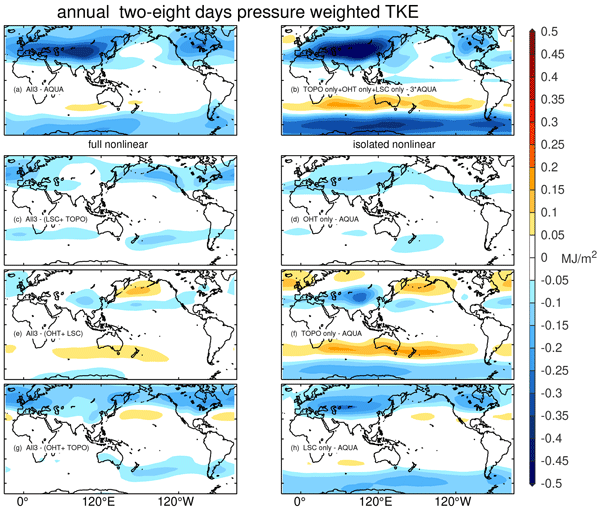
Chaim I. Garfinkel, Tiffany Shaw, Benny Keller, Edwin P. Gerber, Ian P. White, Martin Jucker, Wuhan Ning, Ori Adam, and Siming Liu
Weather Clim. Dynam., 7, 1951–1975, https://doi.org/10.5194/wcd-7-1951-2026, https://doi.org/10.5194/wcd-7-1951-2026, 2026
Short summary
Short summary
Midlatitude storm tracks are stronger over ocean basins than continents, and also stronger in the Southern Hemisphere than in the Northern Hemisphere. It is still not clear how Earth's land-ocean distribution, ocean heat transport, and orography, set up this structure. We use an intermediate complexity moist general circulation model to reveal substantial non-additivities in the response to these inhomogeneities, and then diagnose why.
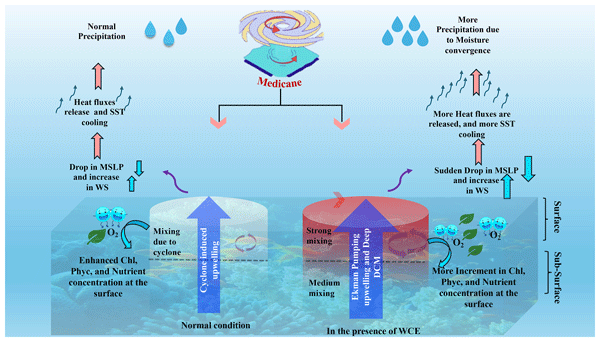
Babita Jangir and Ehud Strobach
Biogeosciences, 23, 4271–4286, https://doi.org/10.5194/bg-23-4271-2026, https://doi.org/10.5194/bg-23-4271-2026, 2026
Short summary
Short summary
This study examines Medicane Daniel, showing how a warm-core eddy (WCE), high ocean heat content (OHC), and a marine heatwave (MHW) sustained its intensity near Libya. Using high-resolution Surface Water and Ocean Topography (SWOT) observations, we reveal fine-scale eddy dynamics and larger WCE structures than those captured by conventional datasets, highlighting their role in air–sea interactions. Enhanced moisture convergence supported storm intensification, while storm-induced mixing and upwelling increased chlorophyll, nutrient, and oxygen concentrations.
Padmavathi Bevara and Ehud Strobach
EGUsphere, https://doi.org/10.21203/rs.3.rs-8796665/v2, https://doi.org/10.21203/rs.3.rs-8796665/v2, 2026
Short summary
Short summary
Farmers and water managers need early warnings of dry or wet seasons, but forecasts can miss local soil conditions. We tested a leading seasonal forecasting system against a high-quality historical record across Mediterranean and European regions from 1981 to 2024, for several soil depths and up to six months ahead. Skill varies by place and season, and reconstructing the main patterns improves agreement. Soil moisture changes also track wheat and maize yield swings, supporting better planning.
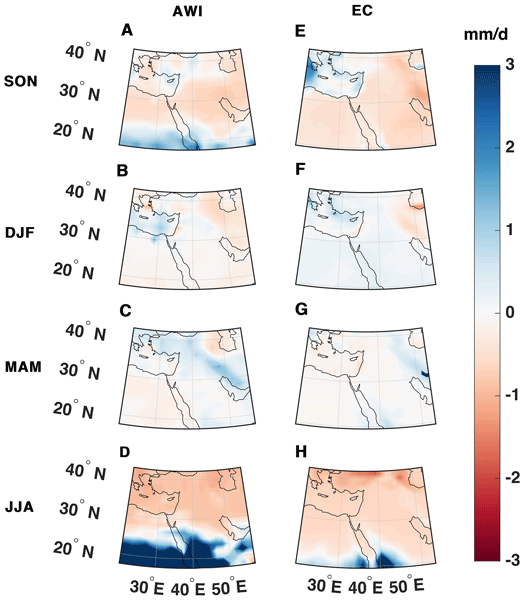
Efraim Bril, Adi Torfstein, Roy Yaniv, and Assaf Hochman
Clim. Past, 22, 339–355, https://doi.org/10.5194/cp-22-339-2026, https://doi.org/10.5194/cp-22-339-2026, 2026
Short summary
Short summary
During a past warm period, we found that the eastern Mediterranean region experienced stronger but shorter rain events, especially in the south. The warming made the air wetter, which helped produce more intense rainfall. Using climate models and recent data, we show how this improves our understanding of future changes in dry regions.
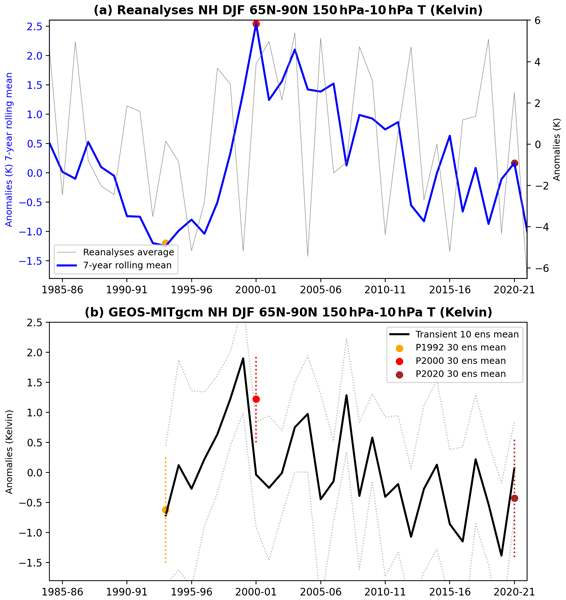
Abdullah A. Fahad, Andrea Molod, Krzysztof Wargan, Dimitris Menemenlis, Patrick Heimbach, Atanas Trayanov, Ehud Strobach, and Lawrence Coy
Atmos. Chem. Phys., 26, 647–663, https://doi.org/10.5194/acp-26-647-2026, https://doi.org/10.5194/acp-26-647-2026, 2026
Short summary
Short summary
This study used reanalysis datasets and a 1-degree coupled General Circulation Model to analyze the Northern Hemisphere stratospheric temperature response in a decadal simulation. Results show that the polar stratospheric temperature increased from 1992 to 2000, contrary to the expectation of stratospheric cooling due to rising CO2. The study concluded that changes in ozone and CO2 drive the meridional eddy heat transport, dictating polar stratospheric temperature behavior.
Emmanouil Flaounas, Stavros Dafis, Silvio Davolio, Davide Faranda, Christian Ferrarin, Katharina Hartmuth, Assaf Hochman, Aristeidis Koutroulis, Samira Khodayar, Mario Marcello Miglietta, Florian Pantillon, Platon Patlakas, Michael Sprenger, and Iris Thurnherr
Weather Clim. Dynam., 6, 1515–1538, https://doi.org/10.5194/wcd-6-1515-2025, https://doi.org/10.5194/wcd-6-1515-2025, 2025
Short summary
Short summary
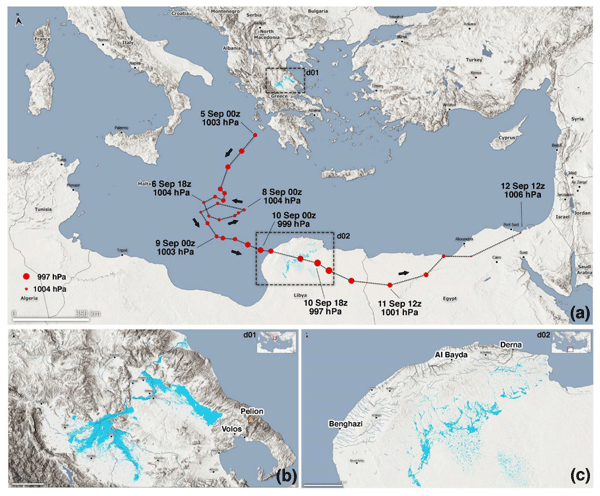
Storm Daniel (2023) is one of the most catastrophic storms ever documented in the Mediterranean. Our results highlight the different dynamics and therefore the different predictability skill of precipitation, its extremes and impacts that have been produced in Greece and Libya, the two most affected countries. Our approach concerns an analysis of the storm by articulating dynamics, weather prediction, hydrological and oceanographic implications, climate extremes, and attribution theory.
Itamar Yacoby, Hezi Gildor, and Nathan Paldor
Ocean Sci., 21, 2805–2828, https://doi.org/10.5194/os-21-2805-2025, https://doi.org/10.5194/os-21-2805-2025, 2025
Short summary
Short summary
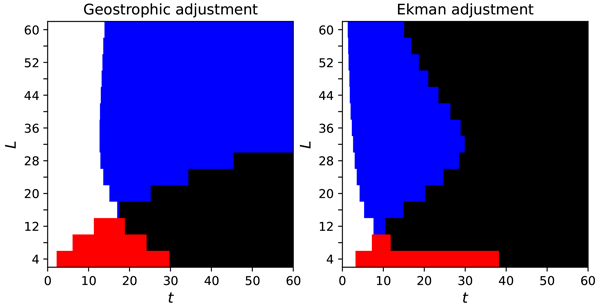
The paper examines the applicability of known linear wave theories to numerical simulations of two, zonally invariant, fundamental problems of Physical Oceanography: Geostrophic adjustment and Ekman Adjustment. By simulating the problems with a modified version of the Massachusetts Institute of Technology General Circulation Model (MITgcm) we show that neither of the known wave theories can explain the results of the simulations in large and small meridional domains and for long and short times.
Yosef Ashkenazy, Hezi Gildor, and Aviv Solodoch
Ocean Sci., 21, 1641–1661, https://doi.org/10.5194/os-21-1641-2025, https://doi.org/10.5194/os-21-1641-2025, 2025
Short summary
Short summary
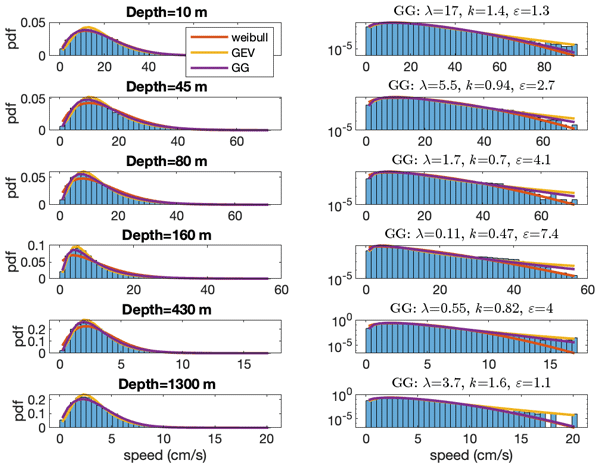
We studied ocean currents in the eastern Mediterranean near Israel's coast (2016–2024) across depths of up to 1.3 km. The generalized gamma distribution best matched current-speed data. The speed increment time series fit a stretched exponential distribution better than a normal distribution. Comparisons with high-resolution and regional general circulation models showed discrepancies, highlighting the need to refine the models for better extreme current-speed event predictions.
Hofit Shachaf, Colin Price, Dorita Rostkier-Edelstein, and Cliff Mass
Nat. Hazards Earth Syst. Sci., 24, 3035–3047, https://doi.org/10.5194/nhess-24-3035-2024, https://doi.org/10.5194/nhess-24-3035-2024, 2024
Short summary
Short summary
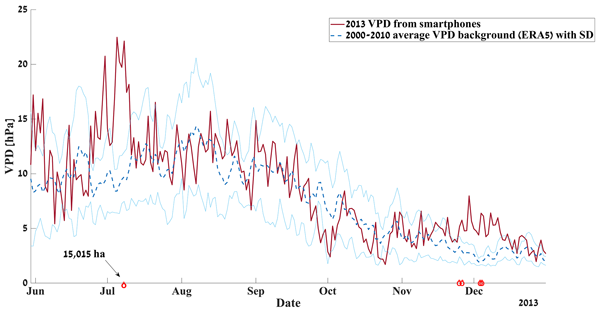
We have used the temperature and relative humidity sensors in smartphones to estimate the vapor pressure deficit (VPD), an important atmospheric parameter closely linked to fuel moisture and wildfire risk. Our analysis for two severe wildfire case studies in Israel and Portugal shows the potential for using smartphone data to compliment the regular weather station network while also providing high spatial resolution of the VPD index.
Nir Haim, Vika Grigorieva, Rotem Soffer, Boaz Mayzel, Timor Katz, Ronen Alkalay, Eli Biton, Ayah Lazar, Hezi Gildor, Ilana Berman-Frank, Yishai Weinstein, Barak Herut, and Yaron Toledo
Earth Syst. Sci. Data, 16, 2659–2668, https://doi.org/10.5194/essd-16-2659-2024, https://doi.org/10.5194/essd-16-2659-2024, 2024
Short summary
Short summary
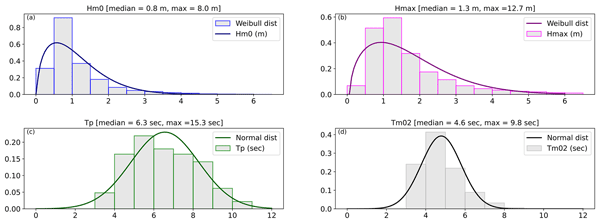
This paper outlines the process of creating an open-access surface wave dataset, drawing from deep-sea research station observations located 50 km off the coast of Israel. The discussion covers the wave monitoring procedure, from instrument configuration to wave field retrieval, and aspects of quality assurance. The dataset presented spans over 5 years, offering uncommon in situ wave measurements in the deep sea, and addresses the existing gap in wave information within the region.
Shai Abir, Hamish A. McGowan, Yonatan Shaked, Hezi Gildor, Efrat Morin, and Nadav G. Lensky
Atmos. Chem. Phys., 24, 6177–6195, https://doi.org/10.5194/acp-24-6177-2024, https://doi.org/10.5194/acp-24-6177-2024, 2024
Short summary
Short summary
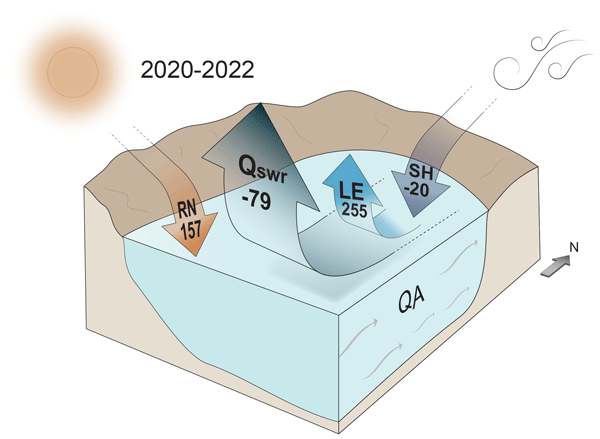
Understanding air–sea heat exchange is vital for studying ocean dynamics. Eddy covariance measurements over the Gulf of Eilat revealed a 3.22 m yr-1 evaporation rate, which is inconsistent with bulk formulae estimations in stable atmospheric conditions, requiring bulk formulae to be revisited in these environments. The surface fluxes have a net cooling effect on the gulf water on an annual mean (-79 W m-2), balanced by a strong exchange flux between the Red Sea and the Gulf of Eilat.
Itamar Yacoby, Nathan Paldor, and Hezi Gildor
Ocean Sci., 19, 1163–1181, https://doi.org/10.5194/os-19-1163-2023, https://doi.org/10.5194/os-19-1163-2023, 2023
Short summary
Short summary
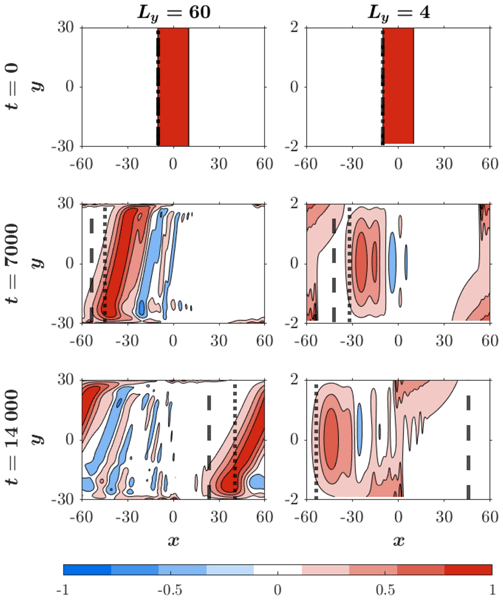
The transition from an arbitrary initial sea surface height to a geostrophic balance in which the velocity is steady was solved last century for constant Coriolis frequency, f(y), where y is the latitude. This study extends the theory to the realistic case in which f(y) is linear with y. We find that the variation in f(y) translates the steady geostrophic state westward as low-frequency Rossby waves that are harmonic in narrow domains and trapped near the equatorward boundary in wide ones.
Hector S. Torres, Patrice Klein, Jinbo Wang, Alexander Wineteer, Bo Qiu, Andrew F. Thompson, Lionel Renault, Ernesto Rodriguez, Dimitris Menemenlis, Andrea Molod, Christopher N. Hill, Ehud Strobach, Hong Zhang, Mar Flexas, and Dragana Perkovic-Martin
Geosci. Model Dev., 15, 8041–8058, https://doi.org/10.5194/gmd-15-8041-2022, https://doi.org/10.5194/gmd-15-8041-2022, 2022
Short summary
Short summary
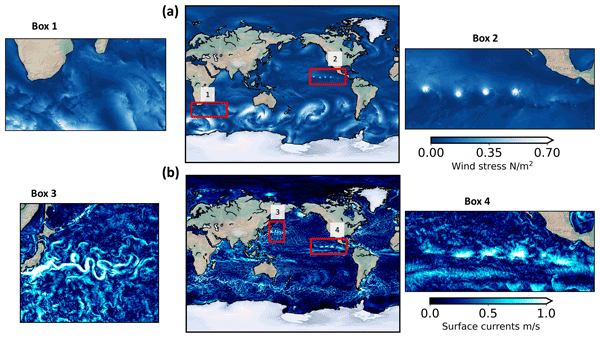
Wind work at the air-sea interface is the scalar product of winds and currents and is the transfer of kinetic energy between the ocean and the atmosphere. Using a new global coupled ocean-atmosphere simulation performed at kilometer resolution, we show that all scales of winds and currents impact the ocean dynamics at spatial and temporal scales. The consequential interplay of surface winds and currents in the numerical simulation motivates the need for a winds and currents satellite mission.
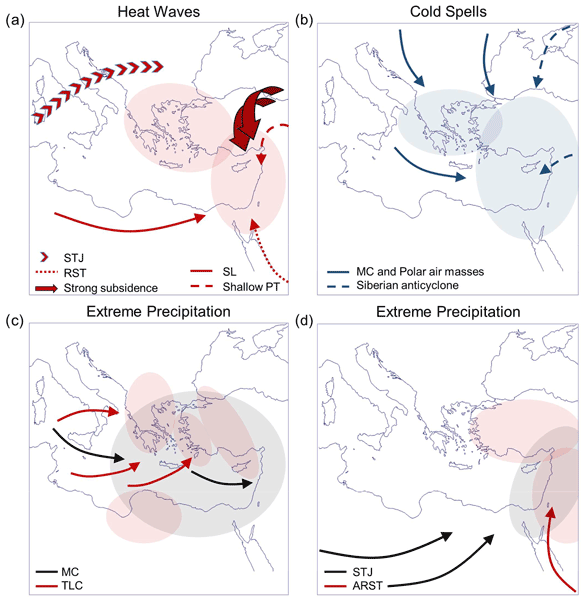
Assaf Hochman, Francesco Marra, Gabriele Messori, Joaquim G. Pinto, Shira Raveh-Rubin, Yizhak Yosef, and Georgios Zittis
Earth Syst. Dynam., 13, 749–777, https://doi.org/10.5194/esd-13-749-2022, https://doi.org/10.5194/esd-13-749-2022, 2022
Short summary
Short summary
Gaining a complete understanding of extreme weather, from its physical drivers to its impacts on society, is important in supporting future risk reduction and adaptation measures. Here, we provide a review of the available scientific literature, knowledge gaps and key open questions in the study of extreme weather events over the vulnerable eastern Mediterranean region.
Ehud Strobach, Andrea Molod, Donifan Barahona, Atanas Trayanov, Dimitris Menemenlis, and Gael Forget
Geosci. Model Dev., 15, 2309–2324, https://doi.org/10.5194/gmd-15-2309-2022, https://doi.org/10.5194/gmd-15-2309-2022, 2022
Short summary
Short summary
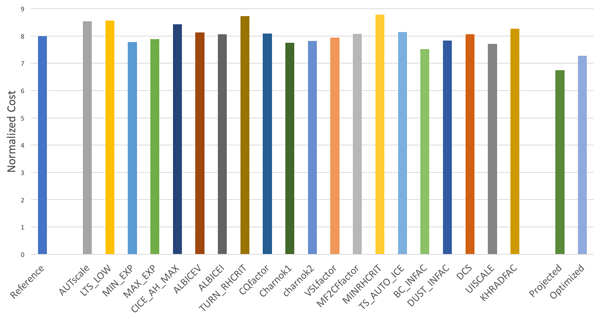
The Green's functions methodology offers a systematic, easy-to-implement, computationally cheap, scalable, and extendable method to tune uncertain parameters in models accounting for the dependent response of the model to a change in various parameters. Herein, we successfully show for the first time that long-term errors in earth system models can be considerably reduced using Green's functions methodology. The method can be easily applied to any model containing uncertain parameters.
Cited articles
Alpert, P., Osetinsky, I., Ziv, B., and Shafir, H.: A new seasons definition based on classified daily synoptic systems: an example for the eastern Mediterranean, International Journal of Climatology: A Journal of the Royal Meteorological Society, 24, 1013–1021, https://doi.org/10.1002/joc.1037, 2004a. a
Alpert, P., Osetinsky, I., Ziv, B., and Shafir, H.: Semi-objective classification for daily synoptic systems: Application to the eastern Mediterranean climate change, International Journal of Climatology: A Journal of the Royal Meteorological Society, 24, 1001–1011, https://doi.org/10.1002/joc.1036, 2004b. a, b, c, d, e
Amitai, Y. and Gildor, H.: Can precipitation over Israel be predicted from Eastern Mediterranean heat content?, International Journal of Climatology, 37, 2492–2501, https://doi.org/10.1002/joc.4860, 2017. a, b, c, d
Baruch, Z., Dayan, U., Kushnir, Y., Roth, C., and Enzel, Y.: Regional and global atmospheric patterns governing rainfall in the southern Levant, Int. J. Climatol, 26, 55–73, https://doi.org/10.1002/joc.1238, 2006. a
Black, E.: The influence of the North Atlantic Oscillation and European circulation regimes on the daily to interannual variability of winter precipitation in Israel, International Journal of Climatology, 32, https://doi.org/10.1002/joc.2383, 2012. a, b
Bril, E., Torfstein, A., Yaniv, R., and Hochman, A.: Hydroclimatic Variability and Weather-Type Characteristics in the Levant During the Last Interglacial, EGUsphere [preprint], https://doi.org/10.5194/egusphere-2025-3088, 2025. a
Cramer, W., Guiot, J., Fader, M., Garrabou, J., Gattuso, J.-P., Iglesias, A., Lange, M. A., Lionello, P., Llasat, M. C., Paz, S., Peñuelas, J., Snoussi, M., Toreti, A., Tsimplis, M. N., and Xoplaki, E.: Climate change and interconnected risks to sustainable development in the Mediterranean, Nature Climate Change, 8, 972–980, https://doi.org/10.1038/s41558-018-0299-2, 2018. a
Criado-Aldeanueva, F. and Soto-Navarro, F. J.: The mediterranean oscillation teleconnection index: station-based versus principal component paradigms, Advances in Meteorology, 2013, 738501, https://doi.org/10.1155/2013/738501, 2013. a
d'Ortenzio, F., Iudicone, D., de Boyer Montegut, C., Testor, P., Antoine, D., Marullo, S., Santoleri, R., and Madec, G.: Seasonal variability of the mixed layer depth in the Mediterranean Sea as derived from in situ profiles, Geophysical Research Letters, 32, https://doi.org/10.1029/2005gl022463, 2005. a
Elbaum, E., Garfinkel, C. I., Adam, O., Morin, E., Rostkier-Edelstein, D., and Dayan, U.: Uncertainty in projected changes in precipitation minus evaporation: Dominant role of dynamic circulation changes and weak role for thermodynamic changes, Geophysical Research Letters, 49, e2022GL097725, https://doi.org/10.1029/2022GL097725, 2022. a, b
Eshel, G. and Farrell, B. F.: Mechanisms of eastern Mediterranean rainfall variability, Journal of the Atmospheric Sciences, 57, 3219–3232, https://doi.org/10.1175/1520-0469(2000)057<3219:moemrv>2.0.co;2, 2000. a, b
Flaounas, E., Kelemen, F. D., Wernli, H., Gaertner, M. A., Reale, M., Sanchez-Gomez, E., Lionello, P., Calmanti, S., Podrascanin, Z., Somot, S., Akhtar, N., Romera, R., and Conte, D.: Assessment of an ensemble of ocean–atmosphere coupled and uncoupled regional climate models to reproduce the climatology of Mediterranean cyclones, Climate Dynamics, 51, 1023–1040, https://doi.org/10.1007/s00382-016-3398-7, 2018. a
Flaounas, E., Davolio, S., Raveh-Rubin, S., Pantillon, F., Miglietta, M. M., Gaertner, M. A., Hatzaki, M., Homar, V., Khodayar, S., Korres, G., Kotroni, V., Kushta, J., Reale, M., and Ricard, D.: Mediterranean cyclones: Current knowledge and open questions on dynamics, prediction, climatology and impacts, Weather and Climate Dynamics, 3, 173–208, https://doi.org/10.5194/wcd-3-173-2022, 2022. a, b, c
Flaounas, E., Dafis, S., Davolio, S., Faranda, D., Ferrarin, C., Hartmuth, K., Hochman, A., Koutroulis, A., Khodayar, S., Miglietta, M. M., Pantillon, F., Patlakas, P., Sprenger, M., and Thurnherr, I.: Dynamics, predictability, impacts and climate change considerations of the catastrophic Mediterranean Storm Daniel (2023), Weather Clim. Dynam., 6, 1515–1538, https://doi.org/10.5194/wcd-6-1515-2025, 2025. a
Gill, A. E.: Atmosphere–Ocean Dynamics, Academic Press, San Diego, CA, ISBN 978-0-12-283522-3, 1982. a
Giorgi, F.: Climate change hot-spots, Geophysical Research Letters, 33, https://doi.org/10.1029/2006gl025734, 2006. a
Givati, A. and Rosenfeld, D.: The Arctic Oscillation, climate change and the effects on precipitation in Israel, Atmospheric Research, 132, 114–124, https://doi.org/10.1016/j.atmosres.2013.05.001, 2013. a, b
Goldreich, Y.: The climate of Israel: observation, research and application, Springer, https://doi.org/10.1007/978-1-4615-0697-3, 2003. a, b, c
Good, S.: Global Ocean OSTIA Sea Surface Temperature and Sea Ice Analysis, EU Copernicus Marine Service Information (CMEMS), Marine Data Store (MDS), https://doi.org/10.48670/moi-00165, 2022. a
Hannachi, A., Jolliffe, I. T., and Stephenson, D. B.: Empirical orthogonal functions and related techniques in atmospheric science: A review, International Journal of Climatology, 27, 1119–1152, https://doi.org/10.1002/joc.1499, 2007. a
Hersbach, H., Bell, B., Berrisford, P., Hirahara, S., Horányi, A., Muñoz-Sabater, J., Nicolas, J., Peubey, C., Radu, R., Schepers, D., Simmons, A., Soci, C., Abdalla, S., Abellan, X., Balsamo, G., Bechtold, P., Biavati, G., Bidlot, J., Bonavita, M., De Chiara, G., Dahlgren, P., Dee, D., Diamantakis, M., Dragani, R., Flemming, J., Forbes, R., Fuentes, M., Geer, A., Haimberger, L., Healy, S., Hogan, R. J., Hólm, E., Janisková, M., Keeley, S., Laloyaux, P., Lopez, P., Lupu, C., Radnoti, G., de Rosnay, P., Rozum, I., Vamborg, F., Villaume, S., and Thépaut, J. N.: The ERA5 global reanalysis, Quarterly Journal of the Royal Meteorological Society, 146, 1999–2049, https://doi.org/10.1002/qj.3803, 2020. a, b, c
Hochman, A. and Gildor, H.: Synergistic effects of El Niño–Southern Oscillation and the Indian Ocean Dipole on Middle Eastern subseasonal precipitation variability and predictability, Quarterly Journal of the Royal Meteorological Society, 151, e4903, https://doi.org/10.1002/qj.4903, 2025. a
Hochman, A., Bucchignani, E., Gershtein, G., Krichak, S. O., Alpert, P., Levi, Y., Yosef, Y., Carmona, Y., Breitgand, J., Mercogliano, P., and Zollo, A. L.: Evaluation of regional COSMO-CLM climate simulations over the Eastern Mediterranean for the period 1979–2011, International Journal of Climatology, 38, 1161–1176, https://doi.org/10.1002/joc.5232, 2018a. a
Hochman, A., Harpaz, T., Saaroni, H., and Alpert, P.: The seasons’ length in 21st century CMIP5 projections over the eastern Mediterranean, International Journal of Climatology, 38, 2627–2637, https://doi.org/10.1002/joc.5448, 2018b. a
Hochman, A., Harpaz, T., Saaroni, H., and Alpert, P.: Synoptic classification in 21st century CMIP5 predictions over the Eastern Mediterranean with focus on cyclones, International Journal of Climatology, 38, 1476–1483, https://doi.org/10.1002/joc.5260, 2018c. a
Hochman, A., Mercogliano, P., Alpert, P., Saaroni, H., and Bucchignani, E.: High-resolution projection of climate change and extremity over Israel using COSMO-CLM, International Journal of Climatology, 38, 5095–5106, https://doi.org/10.1002/joc.5714, 2018d. a
Hochman, A., Kunin, P., Alpert, P., Harpaz, T., Saaroni, H., and Rostkier-Edelstein, D.: Weather regimes and analogues downscaling of seasonal precipitation for the 21st century: A case study over Israel, International Journal of Climatology, 40, 2062–2077, https://doi.org/10.1002/joc.6318, 2020. a
Hochman, A., Alpert, P., Negev, M., Abdeen, Z., Abdeen, A. M., Pinto, J. G., and Levine, H.: The relationship between cyclonic weather regimes and seasonal influenza over the Eastern Mediterranean, Science of the Total Environment, 750, 141686, https://doi.org/10.1016/j.scitotenv.2020.141686, 2021a. a, b
Hochman, A., Rostkier-Edelstein, D., Kunin, P., and Pinto, J. G.: Changes in the characteristics of ‘wet’ and ‘dry’ Red Sea Trough over the Eastern Mediterranean in CMIP5 climate projections, Theoretical and Applied Climatology, 143, 781–794, https://doi.org/10.1007/s00704-020-03449-0, 2021b. a
Hochman, A., Marra, F., Messori, G., Pinto, J. G., Raveh-Rubin, S., Yosef, Y., and Zittis, G.: Extreme weather and societal impacts in the eastern Mediterranean, Earth System Dynamics, 13, 749–777, https://doi.org/10.5194/esd-13-749-2022, 2022a. a, b
Hochman, A., Scher, S., Quinting, J., Pinto, J. G., and Messori, G.: Dynamics and predictability of cold spells over the Eastern Mediterranean, Climate Dynamics, 58, 2047–2064, https://doi.org/10.1007/s00382-020-05465-2, 2022b. a, b, c
Hochman, A., Plotnik, T., Marra, F., Shehter, E.-R., Raveh-Rubin, S., and Magaritz-Ronen, L.: The sources of extreme precipitation predictability; the case of the ‘Wet’ Red Sea Trough, Weather and Climate Extremes, 40, 100564, https://doi.org/10.1016/j.wace.2023.100564, 2023. a
Hochman, A., Shachar, N., and Gildor, H.: Unraveling sub-seasonal precipitation variability in the Middle East via Indian Ocean sea surface temperature, Scientific Reports, 14, 2919, https://doi.org/10.1038/s41598-024-53677-x, 2024. a, b
Hoskins, B. J. and Valdes, P. J.: On the existence of storm-tracks, Journal of Atmospheric Sciences, 47, 1854–1864, https://doi.org/10.1175/1520-0469(1990)047<1854:oteost>2.0.co;2, 1990. a
Kara, A. B., Rochford, P. A., and Hurlburt, H. E.: An optimal definition for ocean mixed layer depth, Journal of Geophysical Research: Oceans, 105, 16803–16821, https://doi.org/10.1029/2000jc900072, 2000. a
Kaspi, Y. and Schneider, T.: The role of stationary eddies in shaping midlatitude storm tracks, Journal of the Atmospheric Sciences, 70, 2596–2613, https://doi.org/10.1175/jas-d-12-082.1, 2013. a
Keller Jr., D., Givon, Y., Pennel, R., Raveh-Rubin, S., and Drobinski, P.: Untangling the mistral and seasonal atmospheric forcing driving deep convection in the Gulf of Lion: 1993–2013, Journal of Geophysical Research: Oceans, 129, e2022JC019245, https://doi.org/10.1029/2022jc019245, 2024. a
Khodayar, S., Kushta, J., Catto, J. L., Dafis, S., Davolio, S., Ferrarin, C., Flaounas, E., Groenemeijer, P., Hatzaki, M., Hochman, A., Kotroni, V., Landa, J., Láng-Ritter, I., Lazoglou, G., Liberato, M. L., Miglietta, M. M., Papagiannaki, K., Patlakas, P., Stojanov, R., and Zittis, G.: Mediterranean cyclones in a changing climate: A review on their socio-economic impacts, Reviews of Geophysics, 63, e2024RG000853, https://doi.org/10.1029/2024rg000853, 2025. a
Kohonen, T.: The self-organizing map, Proceedings of the IEEE, 78, 1464–1480, https://doi.org/10.1016/s0925-2312(98)00030-7, 1990. a
Lelieveld, J., Hadjinicolaou, P., Kostopoulou, E., Chenoweth, J., El Maayar, M., Giannakopoulos, C. e., Hannides, C., Lange, M., Tanarhte, M., Tyrlis, E., and Xoplaki, E.: Climate change and impacts in the Eastern Mediterranean and the Middle East, Climatic Change, 114, 667–687, https://doi.org/10.1007/s10584-012-0418-4, 2012. a
Ludwig, P. and Hochman, A.: Last glacial maximum hydro-climate and cyclone characteristics in the Levant: a regional modelling perspective, Environmental Research Letters, 17, 014053, https://doi.org/10.1088/1748-9326/ac46ea, 2022. a
Luo, D., Yao, Y., Dai, A., and Feldstein, S. B.: The positive North Atlantic Oscillation with downstream blocking and Middle East snowstorms: The large-scale environment, Journal of Climate, 28, 6398–6418, https://doi.org/10.1175/jcli-d-15-0184.1, 2015. a, b
Martin-Vide, J. and Lopez-Bustins, J.-A.: The western Mediterranean oscillation and rainfall in the Iberian Peninsula, International Journal of Climatology, 26, 1455–1475, https://doi.org/10.1002/joc.1388, 2006. a
Muñoz-Sabater, J., Dutra, E., Agustí-Panareda, A., Albergel, C., Arduini, G., Balsamo, G., Boussetta, S., Choulga, M., Harrigan, S., Hersbach, H., Martens, B., Miralles, D. G., Piles, M., Rodríguez-Fernández, N. J., Zsoter, E., Buontempo, C., and Thépaut, J.-N.: ERA5-Land: a state-of-the-art global reanalysis dataset for land applications, Earth System Science Data, 13, 4349–4383, https://doi.org/10.5194/essd-13-4349-2021, 2021. a
Palutikof, J.: Analysis of Mediterranean climate data: measured and modelled, in: Mediterranean Climate: Variability and Trends, edited by: Bolle, H.-J., Springer, Berlin, Heidelberg, pp. 125–132, https://doi.org/10.1007/978-3-642-55657-9_6, 2003. a
Price, C., Stone, L., Huppert, A., Rajagopalan, B., and Alpert, P.: A possible link between El Nino and precipitation in Israel, Geophysical Research Letters, 25, 3963–3966, https://doi.org/10.1029/1998gl900098, 1998. a, b
Raveh-Rubin, S. and Flaounas, E.: A dynamical link between deep Atlantic extratropical cyclones and intense Mediterranean cyclones, Atmospheric Science Letters, 18, 215–221, https://doi.org/10.1002/asl.745, 2017. a
Reale, M., Raganato, A., D'Andrea, F., Abid, M. A., Hochman, A., Chowdhury, N., Salon, S., and Kucharski, F.: Response of early winter precipitation and storm activity in the North Atlantic–European–Mediterranean region to Indian Ocean SST variability, Geophysical Research Letters, 52, e2025GL116732, https://doi.org/10.1029/2025gl116732, 2025. a
Redolat, D. and Monjo, R.: Statistical predictability of Euro-Mediterranean subseasonal anomalies: The TeWA approach, Weather and Forecasting, 39, 899–914, https://doi.org/10.1175/waf-d-23-0061.1, 2024. a, b
Redolat, D., Monjo, R., Lopez-Bustins, J. A., and Martin-Vide, J.: Upper-Level Mediterranean Oscillation index and seasonal variability of rainfall and temperature, Theoretical and Applied Climatology, 135, 1059–1077, https://doi.org/10.1007/s00704-018-2424-6, 2019. a, b
Rostkier-Edelstein, D., Kunin, P., Hopson, T. M., Liu, Y., and Givati, A.: Statistical downscaling of seasonal precipitation in Israel, International Journal of Climatology, 36, 590–606, https://doi.org/10.1002/joc.4368, 2016. a
Saaroni, H., Halfon, N., Ziv, B., Alpert, P., and Kutiel, H.: Links between the rainfall regime in Israel and location and intensity of Cyprus lows, International Journal of Climatology: A Journal of the Royal Meteorological Society, 30, 1014–1025, https://doi.org/10.1002/joc.1912, 2010. a, b
Samuels, R., Hochman, A., Baharad, A., Givati, A., Levi, Y., Yosef, Y., Saaroni, H., Ziv, B., Harpaz, T., and Alpert, P.: Evaluation and projection of extreme precipitation indices in the Eastern Mediterranean based on CMIP5 multi-model ensemble, International Journal of Climatology, 38, 2280–2297, https://doi.org/10.1002/joc.5334, 2018. a
Seager, R., Liu, H., Henderson, N., Simpson, I., Kelley, C., Shaw, T., Kushnir, Y., and Ting, M.: Causes of increasing aridification of the Mediterranean region in response to rising greenhouse gases, Journal of Climate, 27, 4655–4676, https://doi.org/10.1175/jcli-d-13-00446.1, 2014. a, b, c
Seager, R., Wu, Y., Cherchi, A., Simpson, I. R., Osborn, T. J., Kushnir, Y., Lukovic, J., Liu, H., and Nakamura, J.: Recent and near-term future changes in impacts-relevant seasonal hydroclimate in the world's Mediterranean climate regions, International Journal of Climatology, 44, 3792–3820, https://doi.org/10.1002/joc.8551, 2024. a, b
Titchner, H. A. and Rayner, N. A.: The Met Office Hadley Centre sea ice and sea surface temperature data set, version 2: 1. Sea ice concentrations, Journal of Geophysical Research: Atmospheres, 119, 2864–2889, https://doi.org/10.1002/2013jd020316, 2014. a
Tootoonchi, R., Bordoni, S., and D'Agostino, R.: Revisiting the moisture budget of the Mediterranean region in the ERA5 reanalysis, Weather Clim. Dynam., 6, 245–263, https://doi.org/10.5194/wcd-6-245-2025, 2025. a, b, c
Treguier, A. M., de Boyer Montégut, C., Bozec, A., Chassignet, E. P., Fox-Kemper, B., McC. Hogg, A., Iovino, D., Kiss, A. E., Le Sommer, J., Li, Y., Lin, P., Lique, C., Liu, H., Serazin, G., Sidorenko, D., Wang, Q., Xu, X., and Yeager, S.: The mixed-layer depth in the Ocean Model Intercomparison Project (OMIP): impact of resolving mesoscale eddies, Geoscientific Model Development, 16, 3849–3872, https://doi.org/10.5194/gmd-16-3849-2023, 2023. a
Tzvetkov, E. and Assaf, G.: The Mediterranean heat storage and Israeli precipitation, Water Resources Research, 18, 1036–1040, https://doi.org/10.1029/wr018i004p01036, 1982. a, b, c
Vallès-Casanova, I., Adam, O., and Martín Rey, M.: Influence of winter Saharan dust on equatorial Atlantic variability, Communications Earth & Environment, 6, 31, https://doi.org/10.1038/s43247-024-01926-2, 2025. a
Wang, W. and McPhaden, M. J.: The surface-layer heat balance in the equatorial Pacific Ocean. Part I: Mean seasonal cycle, Journal of Physical Oceanography, 29, 1812–1831, https://doi.org/10.1175/1520-0485(1999)029<1812:tslhbi>2.0.co;2, 1999. a
Wills, R. C., Byrne, M. P., and Schneider, T.: Thermodynamic and dynamic controls on changes in the zonally anomalous hydrological cycle, Geophysical Research Letters, 43, 4640–4649, https://doi.org/10.1002/2016gl068418, 2016. a
Zittis, G., Almazroui, M., Alpert, P., Ciais, P., Cramer, W., Dahdal, Y., Fnais, M., Francis, D., Hadjinicolaou, P., Howari, F., Jrrar, A., Kaskaoutis, D. G., Kulmala, M., Lazoglou, G., Mihalopoulos, N., Lin, X., Rudich, Y., Sciare, J., Stenchikov, G., Xoplaki, E., and Lelieveld, J.: Climate change and weather extremes in the Eastern Mediterranean and Middle East, Reviews of Geophysics, 60, e2021RG000762, https://doi.org/10.1029/2021RG000762, 2022. a
Ziv, B., Dayan, U., Kushnir, Y., Roth, C., and Enzel, Y.: Regional and global atmospheric patterns governing rainfall in the southern Levant, Int. J. Climatol., 26, 55–73, https://doi.org/10.1002/joc.1238, 2006. a, b, c
Short summary
Severe warming and drying in the Eastern Mediterranean makes seasonal prediction of regional rain imperative. The study explores the observed relation of Mediterranean Sea variability to Levant winter precipitation. Ocean heat uptake in the Aegean Sea during summer is found to be a strong predictor of winter Levant precipitation. This connection is mediated by changes in the subtropical jet, which create more favorable conditions for precipitating storms in the Levant during winter.
Severe warming and drying in the Eastern Mediterranean makes seasonal prediction of regional...


