
Articles | Volume 7, issue 1
https://doi.org/10.5194/wcd-7-89-2026
© Author(s) 2026. This work is distributed under
the Creative Commons Attribution 4.0 License.
the Creative Commons Attribution 4.0 License.
https://doi.org/10.5194/wcd-7-89-2026
© Author(s) 2026. This work is distributed under
the Creative Commons Attribution 4.0 License.
the Creative Commons Attribution 4.0 License.
Research article
| 
15 Jan 2026
Research article |
| 15 Jan 2026
| 15 Jan 2026
Considerable yet contrasting regional imprint of circulation change on summer temperature trends across the Northern hemisphere mid-latitudes
Peter Pfleiderer
CORRESPONDING AUTHOR

Institute for Meteorology, Leipzig University, Leipzig, Germany
Anna Merrifield
Institute for Atmospheric and Climate Sciences, ETH Zürich, Zürich, Switzerland
István Dunkl
Institute for Meteorology, Leipzig University, Leipzig, Germany
Homer Durand
Image Processing Laboratory, Universitat de València, València, Spain
Enora Cariou
Centre National de Recherches Météorologiques, Université de Toulouse, CNRS, Météo-France, Toulouse, France
Julien Cattiaux
Centre National de Recherches Météorologiques, Université de Toulouse, CNRS, Météo-France, Toulouse, France
Gustau Camps-Valls
Image Processing Laboratory, Universitat de València, València, Spain
Sebastian Sippel
Institute for Meteorology, Leipzig University, Leipzig, Germany
Related authors
Niklas Schwind, Mahé Perrette, Edward Byers, Annika Högner, Quentin Lejeune, Tessa Möller, Zebedee Nicholls, Peter Pfleiderer, Sarah Schöngart, Michaela Werning, and Carl-Friedrich Schleussner
Geosci. Model Dev., 19, 6797–6828, https://doi.org/10.5194/gmd-19-6797-2026, https://doi.org/10.5194/gmd-19-6797-2026, 2026
Short summary
Short summary
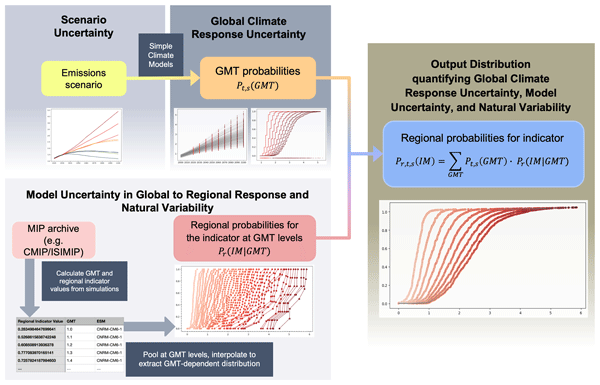
We study how regional climate and climate impact indicators may respond to different emissions scenarios. Their possible outcomes are shaped by uncertainties in future emissions, global warming, regional effects of global warming, and the chaotic climate system. We introduce RIME-X (Rapid Impact Model Emulator Extended), an emulator that combines multiple tools and datasets to estimate probabilistically how any emissions path may influence regional outcomes.
Sarah Schöngart, Lukas Gudmundsson, Mathias Hauser, Peter Pfleiderer, Quentin Lejeune, Shruti Nath, Sonia Isabelle Seneviratne, and Carl-Friedrich Schleussner
Geosci. Model Dev., 17, 8283–8320, https://doi.org/10.5194/gmd-17-8283-2024, https://doi.org/10.5194/gmd-17-8283-2024, 2024
Short summary
Short summary
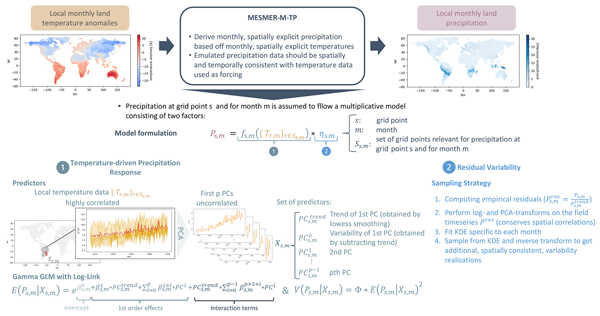
Precipitation and temperature are two of the most impact-relevant climatic variables. Yet, projecting future precipitation and temperature data under different emission scenarios relies on complex models that are computationally expensive. In this study, we propose a method that allows us to generate monthly means of local precipitation and temperature at low computational costs. Our modelling framework is particularly useful for all downstream applications of climate model data.

Peter Pfleiderer, Shruti Nath, and Carl-Friedrich Schleussner
Weather Clim. Dynam., 3, 471–482, https://doi.org/10.5194/wcd-3-471-2022, https://doi.org/10.5194/wcd-3-471-2022, 2022
Short summary
Short summary
Tropical cyclones are amongst the most dangerous weather events. Here we develop an empirical model that allows us to estimate the number and strengths of tropical cyclones for given atmospheric conditions and sea surface temperatures. An application of the model shows that atmospheric circulation is the dominant factor for seasonal tropical cyclone activity. However, warming sea surface temperatures have doubled the likelihood of extremely active hurricane seasons in the past decades.
Enora Cariou, Julien Cattiuaux, Saïd Qasmi, and Aurélien Ribes
EGUsphere, https://doi.org/10.5194/egusphere-2026-5426, https://doi.org/10.5194/egusphere-2026-5426, 2026
This preprint is open for discussion and under review for Weather and Climate Dynamics (WCD).
Short summary
Short summary
Europe has warmed rapidly in recent decades, partly due to changes in atmospheric circulation, but whether these circulation changes arise from natural variability or anthropogenic forcing remains unclear. Here, using neural network and statistical approaches, we quantify the forced and internal contributions to observed and projected dynamical changes. We further use this dynamical information to derive a new estimate of recent and future warming in Europe.
Myriam Terristi, Sebastian Sippel, Benjamin D. Stocker, and Ana Bastos
EGUsphere, https://doi.org/10.5194/egusphere-2026-5509, https://doi.org/10.5194/egusphere-2026-5509, 2026
This preprint is open for discussion and under review for Earth System Dynamics (ESD).
Short summary
Short summary
Satellite records reveal a paradox: vegetation is greening across much of the world even as water scarcity intensifies. Using 24 years of global observations, we followed vegetation throughout dry periods rather than treating droughts as isolated events. Greenness often rose at first, then declined as water shortages deepened. Extreme droughts also shifted many ecosystems towards water limitation, revealing a growing vulnerability beneath the global greening trend.
Gergana Gyuleva, Reto Knutti, Robin Noyelle, Urs Beyerle, Erich Fischer, and Sebastian Sippel
EGUsphere, https://doi.org/10.48550/arXiv.2608.13219, https://doi.org/10.48550/arXiv.2608.13219, 2026
Short summary
Short summary
How much Earth warms depends on climate feedbacks, which change with sea surface temperatures. This effect is usually modelled by prescribing observed sea-surface temperatures to atmospheric models. We test this standard approach in idealised runs and find it fails to reproduce the true feedback. We also find that feedback variations can be fully explained via statistical noise. Our results suggest historical "pattern effect" estimates are not robust, increasing uncertainty in future warming.
Niklas Schwind, Mahé Perrette, Edward Byers, Annika Högner, Quentin Lejeune, Tessa Möller, Zebedee Nicholls, Peter Pfleiderer, Sarah Schöngart, Michaela Werning, and Carl-Friedrich Schleussner
Geosci. Model Dev., 19, 6797–6828, https://doi.org/10.5194/gmd-19-6797-2026, https://doi.org/10.5194/gmd-19-6797-2026, 2026
Short summary
Short summary
We study how regional climate and climate impact indicators may respond to different emissions scenarios. Their possible outcomes are shaped by uncertainties in future emissions, global warming, regional effects of global warming, and the chaotic climate system. We introduce RIME-X (Rapid Impact Model Emulator Extended), an emulator that combines multiple tools and datasets to estimate probabilistically how any emissions path may influence regional outcomes.
Aytaç Paçal, Birgit Hassler, Katja Weigel, Miguel-Ángel Fernández-Torres, Gustau Camps-Valls, and Veronika Eyring
Earth Syst. Dynam., 17, 955–986, https://doi.org/10.5194/esd-17-955-2026, https://doi.org/10.5194/esd-17-955-2026, 2026
Short summary
Short summary
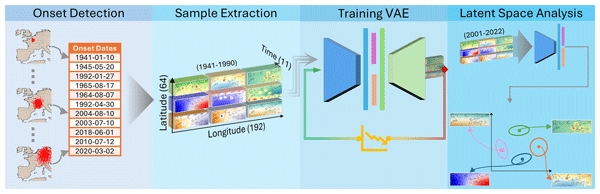
Heatwaves are among the deadliest natural hazards, yet their evolving atmospheric drivers remain unclear. We apply an unsupervised machine learning model to reanalysis data to identify multivariate heatwave patterns over Europe. The model captures seasonally distinct regimes and reveals significant shifts between historical and recent events across all seasons, highlighting changes in heatwave dynamics over time.
Alexandre Mass, Jan Cermak, Reto Knutti, Anna L. Merrifield, and Hendrik Andersen
EGUsphere, https://doi.org/10.5194/egusphere-2026-3242, https://doi.org/10.5194/egusphere-2026-3242, 2026
Short summary
Short summary
Fog is a critical water source for life in the Namib Desert. To assess how fog may change in the future, we combined satellite observations with climate model projections. Warming ocean temperatures reduce fog, but stronger onshore winds and increased atmospheric stability counteract this effect. Overall, Namib fog appears more resilient to climate change than previously thought, a finding that may apply to other fog-prone coasts worldwide.
Franziska Müller, Laura Eifler, Felix Cremer, Pieter Beck, Gustau Camps-Valls, and Ana Bastos
Nat. Hazards Earth Syst. Sci., 26, 2785–2815, https://doi.org/10.5194/nhess-26-2785-2026, https://doi.org/10.5194/nhess-26-2785-2026, 2026
Short summary
Short summary
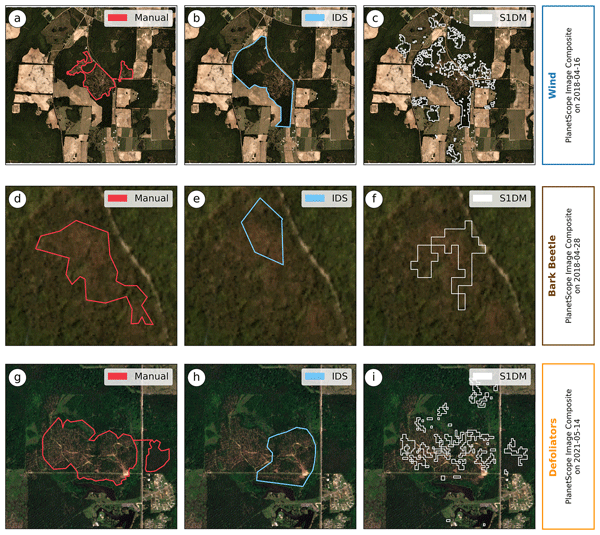
Forest health is increasingly threatened, but disturbances like wind damage and insect outbreaks are hard to track. Our Sentinel-1 Disturbance Mapping (S1DM) approach combines satellite radar with survey data, improving detection for wind and bark beetle impacts and often spotting them earlier. Defoliators remain difficult to capture, but this method strengthens monitoring and supports better forest management.
Onaïa Savary, Constantin Ardilouze, and Julien Cattiaux
Weather Clim. Dynam., 7, 223–245, https://doi.org/10.5194/wcd-7-223-2026, https://doi.org/10.5194/wcd-7-223-2026, 2026
Short summary
Short summary
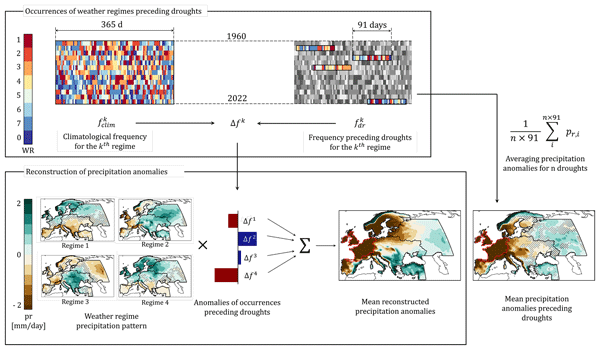
We investigate the link between European meteorological droughts and persistent year-round weather regimes derived from mid-tropospheric circulation. Using a novel regionalization based on drought synchronicity and reanalysis data, we show that regime frequency anomalies partly explain drought occurrence, especially in western Europe and in winter, highlighting both the potential and limits of regime-based drought prediction.
Na Li, Sebastian Sippel, Nora Linscheid, Miguel D. Mahecha, Markus Reichstein, and Ana Bastos
Biogeosciences, 23, 767–792, https://doi.org/10.5194/bg-23-767-2026, https://doi.org/10.5194/bg-23-767-2026, 2026
Short summary
Short summary
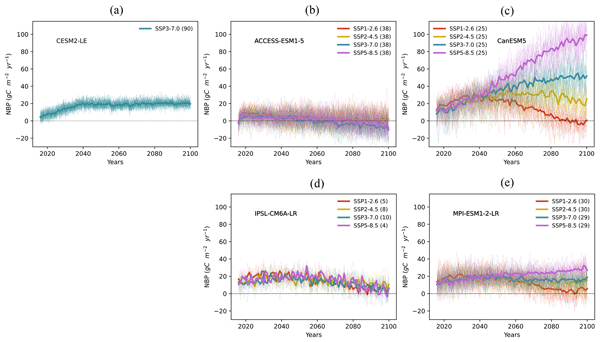
We study when anthropogenic signal becomes detectable in the global land carbon sink, which has risen since the 1950s due to CO₂ fertilization and mid- to high-latitude warming. The signal emerges earlier at the global than at regional scales. Future scenarios (2016–2100) take longer to detect than the historical period (1851–2014) because the signal is weaker relative to larger natural variability. Removing circulation-induced variability with dynamical adjustment shortens the detection time.
István Dunkl, Ana Bastos, and Tatiana Ilyina
Earth Syst. Dynam., 16, 151–167, https://doi.org/10.5194/esd-16-151-2025, https://doi.org/10.5194/esd-16-151-2025, 2025
Short summary
Short summary
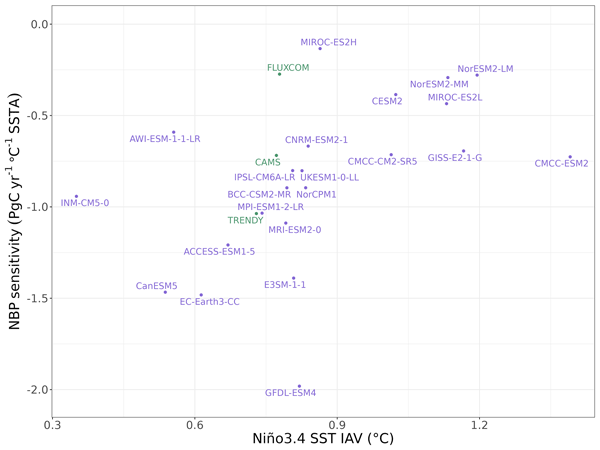
While the El Niño–Southern Oscillation, a climate mode, has a similar impact on CO2 growth rates across Earth system models, there is significant uncertainty in the processes behind this relationship. We found a compensatory effect that masks differences in the sensitivity of carbon fluxes to climate anomalies and observed that the carbon fluxes contributing to global CO2 anomalies originate from different regions and are caused by different drivers.
Sarah Schöngart, Lukas Gudmundsson, Mathias Hauser, Peter Pfleiderer, Quentin Lejeune, Shruti Nath, Sonia Isabelle Seneviratne, and Carl-Friedrich Schleussner
Geosci. Model Dev., 17, 8283–8320, https://doi.org/10.5194/gmd-17-8283-2024, https://doi.org/10.5194/gmd-17-8283-2024, 2024
Short summary
Short summary
Precipitation and temperature are two of the most impact-relevant climatic variables. Yet, projecting future precipitation and temperature data under different emission scenarios relies on complex models that are computationally expensive. In this study, we propose a method that allows us to generate monthly means of local precipitation and temperature at low computational costs. Our modelling framework is particularly useful for all downstream applications of climate model data.
Jacob A. Nelson, Sophia Walther, Fabian Gans, Basil Kraft, Ulrich Weber, Kimberly Novick, Nina Buchmann, Mirco Migliavacca, Georg Wohlfahrt, Ladislav Šigut, Andreas Ibrom, Dario Papale, Mathias Göckede, Gregory Duveiller, Alexander Knohl, Lukas Hörtnagl, Russell L. Scott, Jiří Dušek, Weijie Zhang, Zayd Mahmoud Hamdi, Markus Reichstein, Sergio Aranda-Barranco, Jonas Ardö, Maarten Op de Beeck, Dave Billesbach, David Bowling, Rosvel Bracho, Christian Brümmer, Gustau Camps-Valls, Shiping Chen, Jamie Rose Cleverly, Ankur Desai, Gang Dong, Tarek S. El-Madany, Eugenie Susanne Euskirchen, Iris Feigenwinter, Marta Galvagno, Giacomo A. Gerosa, Bert Gielen, Ignacio Goded, Sarah Goslee, Christopher Michael Gough, Bernard Heinesch, Kazuhito Ichii, Marcin Antoni Jackowicz-Korczynski, Anne Klosterhalfen, Sara Knox, Hideki Kobayashi, Kukka-Maaria Kohonen, Mika Korkiakoski, Ivan Mammarella, Mana Gharun, Riccardo Marzuoli, Roser Matamala, Stefan Metzger, Leonardo Montagnani, Giacomo Nicolini, Thomas O'Halloran, Jean-Marc Ourcival, Matthias Peichl, Elise Pendall, Borja Ruiz Reverter, Marilyn Roland, Simone Sabbatini, Torsten Sachs, Marius Schmidt, Christopher R. Schwalm, Ankit Shekhar, Richard Silberstein, Maria Lucia Silveira, Donatella Spano, Torbern Tagesson, Gianluca Tramontana, Carlo Trotta, Fabio Turco, Timo Vesala, Caroline Vincke, Domenico Vitale, Enrique R. Vivoni, Yi Wang, William Woodgate, Enrico A. Yepez, Junhui Zhang, Donatella Zona, and Martin Jung
Biogeosciences, 21, 5079–5115, https://doi.org/10.5194/bg-21-5079-2024, https://doi.org/10.5194/bg-21-5079-2024, 2024
Short summary
Short summary
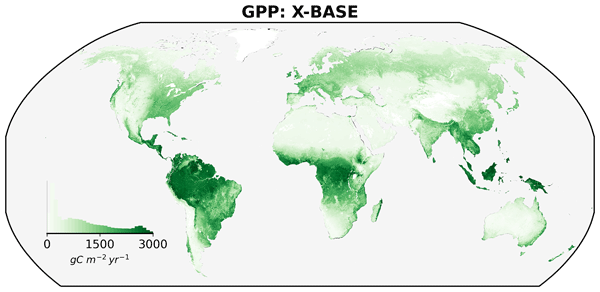
The movement of water, carbon, and energy from the Earth's surface to the atmosphere, or flux, is an important process to understand because it impacts our lives. Here, we outline a method called FLUXCOM-X to estimate global water and CO2 fluxes based on direct measurements from sites around the world. We go on to demonstrate how these new estimates of net CO2 uptake/loss, gross CO2 uptake, total water evaporation, and transpiration from plants compare to previous and independent estimates.
Francesco Martinuzzi, Miguel D. Mahecha, Gustau Camps-Valls, David Montero, Tristan Williams, and Karin Mora
Nonlin. Processes Geophys., 31, 535–557, https://doi.org/10.5194/npg-31-535-2024, https://doi.org/10.5194/npg-31-535-2024, 2024
Short summary
Short summary
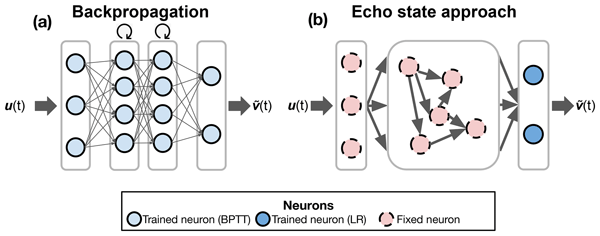
We investigated how machine learning can forecast extreme vegetation responses to weather. Examining four models, no single one stood out as the best, though "echo state networks" showed minor advantages. Our results indicate that while these tools are able to generally model vegetation states, they face challenges under extreme conditions. This underlines the potential of artificial intelligence in ecosystem modeling, also pinpointing areas that need further research.
Sebastian Sippel, Clair Barnes, Camille Cadiou, Erich Fischer, Sarah Kew, Marlene Kretschmer, Sjoukje Philip, Theodore G. Shepherd, Jitendra Singh, Robert Vautard, and Pascal Yiou
Weather Clim. Dynam., 5, 943–957, https://doi.org/10.5194/wcd-5-943-2024, https://doi.org/10.5194/wcd-5-943-2024, 2024
Short summary
Short summary
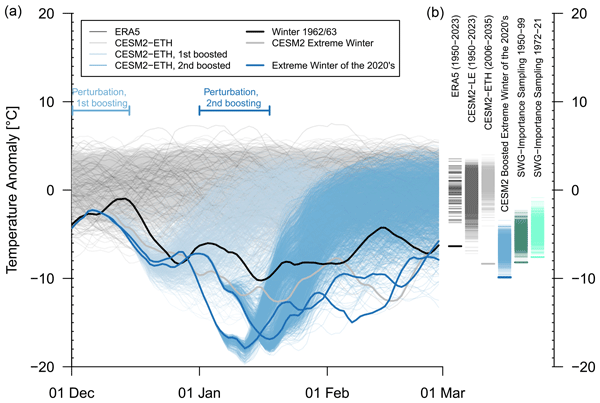
Winter temperatures in central Europe have increased. But cold winters can still cause problems for energy systems, infrastructure, or human health. Here we tested whether a record-cold winter, such as the one observed in 1963 over central Europe, could still occur despite climate change. The answer is yes: it is possible, but it is very unlikely. Our results rely on climate model simulations and statistical rare event analysis. In conclusion, society must be prepared for such cold winters.
István Dunkl, Nicole Lovenduski, Alessio Collalti, Vivek K. Arora, Tatiana Ilyina, and Victor Brovkin
Biogeosciences, 20, 3523–3538, https://doi.org/10.5194/bg-20-3523-2023, https://doi.org/10.5194/bg-20-3523-2023, 2023
Short summary
Short summary
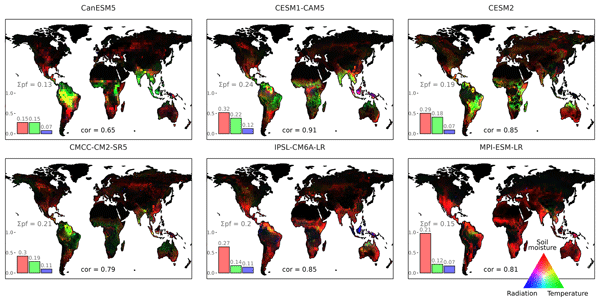
Despite differences in the reproduction of gross primary productivity (GPP) by Earth system models (ESMs), ESMs have similar predictability of the global carbon cycle. We found that, although GPP variability originates from different regions and is driven by different climatic variables across the ESMs, the ESMs rely on the same mechanisms to predict their own GPP. This shows that the predictability of the carbon cycle is limited by our understanding of variability rather than predictability.
Anna L. Merrifield, Lukas Brunner, Ruth Lorenz, Vincent Humphrey, and Reto Knutti
Geosci. Model Dev., 16, 4715–4747, https://doi.org/10.5194/gmd-16-4715-2023, https://doi.org/10.5194/gmd-16-4715-2023, 2023
Short summary
Short summary
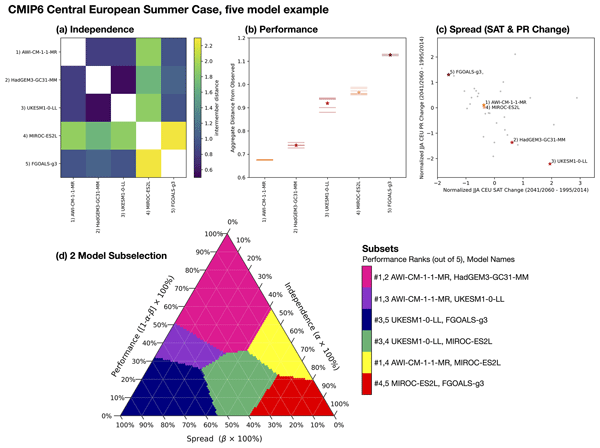
Using all Coupled Model Intercomparison Project (CMIP) models is unfeasible for many applications. We provide a subselection protocol that balances user needs for model independence, performance, and spread capturing CMIP’s projection uncertainty simultaneously. We show how sets of three to five models selected for European applications map to user priorities. An audit of model independence and its influence on equilibrium climate sensitivity uncertainty in CMIP is also presented.
Iris Elisabeth de Vries, Sebastian Sippel, Angeline Greene Pendergrass, and Reto Knutti
Earth Syst. Dynam., 14, 81–100, https://doi.org/10.5194/esd-14-81-2023, https://doi.org/10.5194/esd-14-81-2023, 2023
Short summary
Short summary
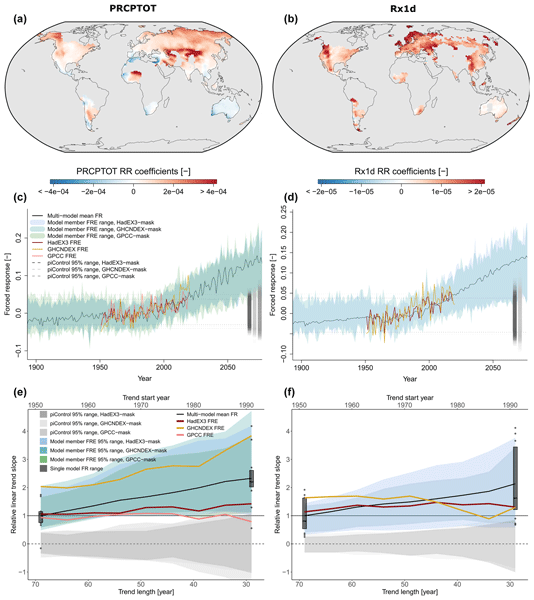
Precipitation change is an important consequence of climate change, but it is hard to detect and quantify. Our intuitive method yields robust and interpretable detection of forced precipitation change in three observational datasets for global mean and extreme precipitation, but the different observational datasets show different magnitudes of forced change. Assessment and reduction of uncertainties surrounding forced precipitation change are important for future projections and adaptation.
Na Li, Sebastian Sippel, Alexander J. Winkler, Miguel D. Mahecha, Markus Reichstein, and Ana Bastos
Earth Syst. Dynam., 13, 1505–1533, https://doi.org/10.5194/esd-13-1505-2022, https://doi.org/10.5194/esd-13-1505-2022, 2022
Short summary
Short summary
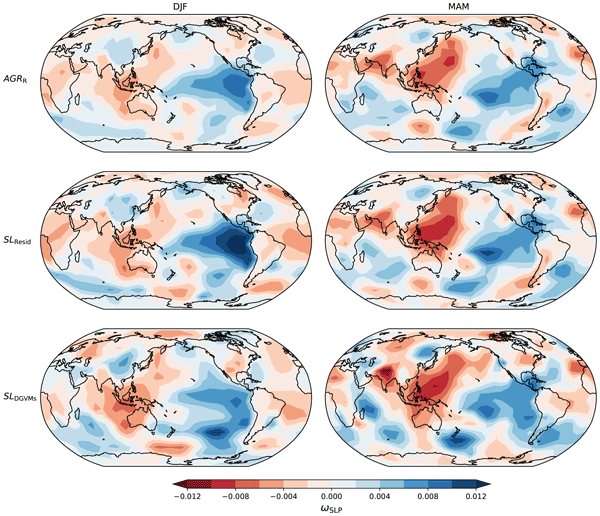
Quantifying the imprint of large-scale atmospheric circulation dynamics and associated carbon cycle responses is key to improving our understanding of carbon cycle dynamics. Using a statistical model that relies on spatiotemporal sea level pressure as a proxy for large-scale atmospheric circulation, we quantify the fraction of interannual variability in atmospheric CO2 growth rate and the land CO2 sink that are driven by atmospheric circulation variability.
Stella Bourdin, Sébastien Fromang, William Dulac, Julien Cattiaux, and Fabrice Chauvin
Geosci. Model Dev., 15, 6759–6786, https://doi.org/10.5194/gmd-15-6759-2022, https://doi.org/10.5194/gmd-15-6759-2022, 2022
Short summary
Short summary
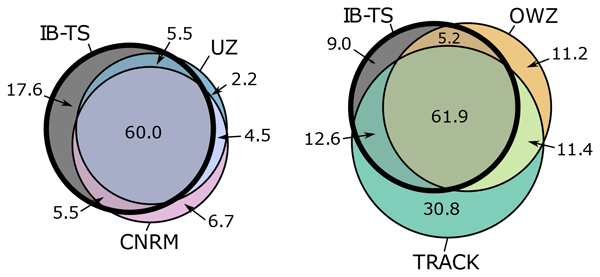
When studying tropical cyclones in a large dataset, one needs objective and automatic procedures to detect their specific pattern. Applying four different such algorithms to a reconstruction of the climate, we show that the choice of the algorithm is crucial to the climatology obtained. Mainly, the algorithms differ in their sensitivity to weak storms so that they provide different frequencies and durations. We review the different options to consider for the choice of the tracking methodology.
István Dunkl and Mareike Ließ
SOIL, 8, 541–558, https://doi.org/10.5194/soil-8-541-2022, https://doi.org/10.5194/soil-8-541-2022, 2022
Short summary
Short summary
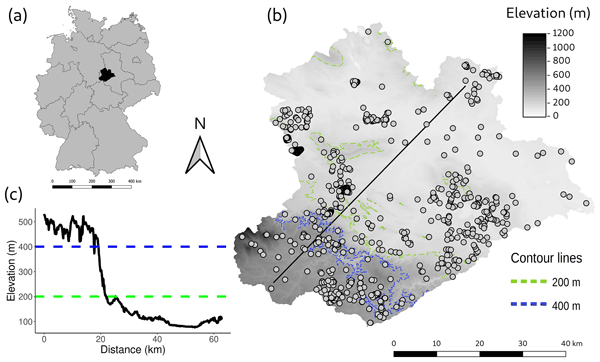
Digital soil mapping (DSM) allows us to regionalize soil properties by relating them to environmental covariates with the help of an empirical model. Legacy soil data provide a valuable basis to generate high-resolution soil maps with DSM. We studied the usefulness of data-clustering methods to tackle potential sampling bias in legacy soil data while applying DSM for soil texture regionalization. Clustering has proved to be useful in various steps of the DSM process.
Peter Pfleiderer, Shruti Nath, and Carl-Friedrich Schleussner
Weather Clim. Dynam., 3, 471–482, https://doi.org/10.5194/wcd-3-471-2022, https://doi.org/10.5194/wcd-3-471-2022, 2022
Short summary
Short summary
Tropical cyclones are amongst the most dangerous weather events. Here we develop an empirical model that allows us to estimate the number and strengths of tropical cyclones for given atmospheric conditions and sea surface temperatures. An application of the model shows that atmospheric circulation is the dominant factor for seasonal tropical cyclone activity. However, warming sea surface temperatures have doubled the likelihood of extremely active hurricane seasons in the past decades.

István Dunkl, Aaron Spring, Pierre Friedlingstein, and Victor Brovkin
Earth Syst. Dynam., 12, 1413–1426, https://doi.org/10.5194/esd-12-1413-2021, https://doi.org/10.5194/esd-12-1413-2021, 2021
Short summary
Short summary
The variability in atmospheric CO2 is largely controlled by terrestrial carbon fluxes. These land–atmosphere fluxes are predictable for around 2 years, but the mechanisms providing the predictability are not well understood. By decomposing the predictability of carbon fluxes into individual contributors we were able to explain the spatial and seasonal patterns and the interannual variability of CO2 flux predictability.
Aaron Spring, István Dunkl, Hongmei Li, Victor Brovkin, and Tatiana Ilyina
Earth Syst. Dynam., 12, 1139–1167, https://doi.org/10.5194/esd-12-1139-2021, https://doi.org/10.5194/esd-12-1139-2021, 2021
Short summary
Short summary
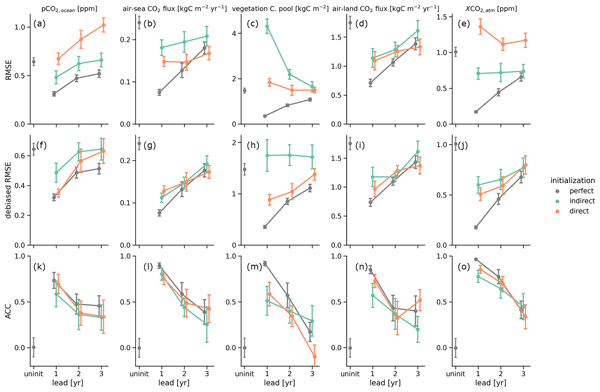
Numerical carbon cycle prediction models usually do not start from observed carbon states due to sparse observations. Instead, only physical climate is reconstructed, assuming that the carbon cycle follows indirectly. Here, we test in an idealized framework how well this indirect and direct reconstruction with perfect observations works. We find that indirect reconstruction works quite well and that improvements from the direct method are limited, strengthening the current indirect use.
Cited articles
Beyerle, U. and Sippel, S.: Data used in “Considerable yet contrasting regional imprint of circulation change on summer temperature trends across the Northern hemisphere mid-latitudes” (10.5194/egusphere-2025-2397), Zenodo [data set], https://doi.org/10.5281/zenodo.18172330, 2026. a
camdoc: Camdoc Documentation: 9 Physics Modifications via the Namelist, CESM Development Team, https://ncar.github.io/CAM/doc/build/html/users_guide/physics-modifications-via-the-namelist.html#nudging, last access: 21 May 2025. a
Cariou, E., Cattiaux, J., Qasmi, S., Ribes, A., Cassou, C., and Doury, A.: Linking European Temperature Variations to Atmospheric Circulation With a Neural Network: A Pilot Study in a Climate Model, Geophysical Research Letters, 52, e2024GL113540, https://doi.org/10.1029/2024GL113540, 2025. a, b, c, d, e
Cattiaux, J., Vautard, R., Cassou, C., Yiou, P., Masson-Delmotte, V., and Codron, F.: Winter 2010 in Europe: A Cold Extreme in a Warming Climate: COLD WINTER 2010 IN EUROPE, Geophysical Research Letters, 37, https://doi.org/10.1029/2010GL044613, 2010. a
Chemke, R. and Coumou, D.: Human Influence on the Recent Weakening of Storm Tracks in Boreal Summer, npj Climate and Atmospheric Science, 7, 1–8, https://doi.org/10.1038/s41612-024-00640-2, 2024. a, b, c
Coumou, D., Lehmann, J., and Beckmann, J.: The Weakening Summer Circulation in the Northern Hemisphere Mid-Latitudes, Science, 348, 324–327, https://doi.org/10.1126/science.1261768, 2015. a, b
Danabasoglu, G., Lamarque, J.-F., Bacmeister, J., Bailey, D. A., DuVivier, A. K., Edwards, J., Emmons, L. K., Fasullo, J., Garcia, R., Gettelman, A., Hannay, C., Holland, M. M., Large, W. G., Lauritzen, P. H., Lawrence, D. M., Lenaerts, J. T. M., Lindsay, K., Lipscomb, W. H., Mills, M. J., Neale, R., Oleson, K. W., Otto-Bliesner, B., Phillips, A. S., Sacks, W., Tilmes, S., van Kampenhout, L., Vertenstein, M., Bertini, A., Dennis, J., Deser, C., Fischer, C., Fox-Kemper, B., Kay, J. E., Kinnison, D., Kushner, P. J., Larson, V. E., Long, M. C., Mickelson, S., Moore, J. K., Nienhouse, E., Polvani, L., Rasch, P. J., and Strand, W. G.: The Community Earth System Model Version 2 (CESM2), Journal of Advances in Modeling Earth Systems, 12, e2019MS001916, https://doi.org/10.1029/2019MS001916, 2020a. a, b
Danabasoglu, G., Deser, C., Rodgers, K., and Timmermann, A.: CESM2 Large Ensemble, NSF National Center for Atmospheric Research [data set], https://doi.org/10.26024/kgmp-c556, 2020b. a
Danabasoglu, G., Lawrence, D., Lindsay, K., Lipscomb, W., and Strand, G.: IPCC DDC: NCAR CESM2 model output prepared for CMIP6 CMIP piControl, World Data Center for Climate (WDCC) at DKRZ [data set], https://doi.org/10.26050/WDCC/AR6.C6CMNRCES2pc, 2023. a
Dong, B., Sutton, R. T., Shaffrey, L., and Harvey, B.: Recent Decadal Weakening of the Summer Eurasian Westerly Jet Attributable to Anthropogenic Aerosol Emissions, Nature Communications, 13, 1148, https://doi.org/10.1038/s41467-022-28816-5, 2022. a, b
Durand, H., Varando, G., and Camps-Valls, G.: Learning Causal Response Representations through Direct Effect Analysis, Proceedings of the Forty-first Conference on Uncertainty in Artificial Intelligence, 21–25 July 2025, Proceedings of Machine Learning Research, edited by: Chiappa, S. and Magliacane, S., PMLR, 1135–1166, https://proceedings.mlr.press/v286/durand25a.html (last access: 30 September 2025), 2025. a
Eyring, V., Gillett, N. P., Achuta Rao, K. M., Barimalala, R., Barreiro Parrillo, M., Bellouin, N., Cassou, C., Durack, P. J., Kosaka, Y., McGregor, S., Min, S., Morgenstern, O., and Sun, Y.: Human influence on the climate system, in: Climate change 2021: The physical science basis. Contribution of working group I to the sixth assessment report of the intergovernmental panel on climate change, edited by: Masson-Delmotte, V., Zhai, P., Pirani, A., Connors, S. L., Péan, C., Berger, S., Caud, N., Chen, Y., Goldfarb, L., Gomis, M. I., Huang, M., Leitzell, K., Lonnoy, E., Matthews, J. B. R., Maycock, T. K., Waterfield, T., Yelekçi, O., Yu, R., and Zhou, B., Cambridge University Press, Cambridge, United Kingdom and New York, NY, USA, 423–552, https://doi.org/10.1017/9781009157896.005, 2021. a
Fabiano, F., Meccia, V. L., Davini, P., Ghinassi, P., and Corti, S.: A regime view of future atmospheric circulation changes in northern mid-latitudes, Weather Clim. Dynam., 2, 163–180, https://doi.org/10.5194/wcd-2-163-2021, 2021. a
Fereday, D., Chadwick, R., Knight, J., and Scaife, A. A.: Atmospheric Dynamics Is the Largest Source of Uncertainty in Future Winter European Rainfall, Journal of Climate, 31, 963–977, https://doi.org/10.1175/JCLI-D-17-0048.1, 2018. a
Guo, R., Deser, C., Terray, L., and Lehner, F.: Human Influence on Winter Precipitation Trends (1921–2015) over North America and Eurasia Revealed by Dynamical Adjustment, Geophysical Research Letters, 46, 3426–3434, https://doi.org/10.1029/2018GL081316, 2019. a, b
Hanna, E., Fettweis, X., and Hall, R. J.: Brief communication: Recent changes in summer Greenland blocking captured by none of the CMIP5 models, The Cryosphere, 12, 3287–3292, https://doi.org/10.5194/tc-12-3287-2018, 2018. a
Hersbach, H., Bell, B., Berrisford, P., Hirahara, S., Horányi, A., Muñoz-Sabater, J., Nicolas, J., Peubey, C., Radu, R., Schepers, D., Simmons, A., Soci, C., Abdalla, S., Abellan, X., Balsamo, G., Bechtold, P., Biavati, G., Bidlot, J., Bonavita, M., De Chiara, G., Dahlgren, P., Dee, D., Diamantakis, M., Dragani, R., Flemming, J., Forbes, R., Fuentes, M., Geer, A., Haimberger, L., Healy, S., Hogan, R. J., Hólm, E., Janisková, M., Keeley, S., Laloyaux, P., Lopez, P., Lupu, C., Radnoti, G., de Rosnay, P., Rozum, I., Vamborg, F., Villaume, S., and Thépaut, J.-N.: The ERA5 Global Reanalysis, Quarterly Journal of the Royal Meteorological Society, 146, 1999–2049, https://doi.org/10.1002/qj.3803, 2020. a, b, c
Horton, D. E., Johnson, N. C., Singh, D., Swain, D. L., Rajaratnam, B., and Diffenbaugh, N. S.: Contribution of Changes in Atmospheric Circulation Patterns to Extreme Temperature Trends, Nature, 522, 465–469, https://doi.org/10.1038/nature14550, 2015. a
Kornhuber, K., Bartusek, S., Seager, R., Schellnhuber, H. J., and Ting, M.: Global Emergence of Regional Heatwave Hotspots Outpaces Climate Model Simulations, Proceedings of the National Academy of Sciences, 121, e2411258121, https://doi.org/10.1073/pnas.2411258121, 2024. a
Kvålseth, T. O.: Cautionary Note about R2, The American Statistician, 39, 279–285, https://doi.org/10.2307/2683704, 1985. a
Lehner, F., Deser, C., and Terray, L.: Toward a New Estimate of “Time of Emergence” of Anthropogenic Warming: Insights from Dynamical Adjustment and a Large Initial-Condition Model Ensemble, Journal of Climate, 30, 7739–7756, https://doi.org/10.1175/JCLI-D-16-0792.1, 2017. a, b, c, d
Liné, A., Cassou, C., Msadek, R., and Parey, S.: Modulation of Northern Europe Near-Term Anthropogenic Warming and Wettening Assessed through Internal Variability Storylines, npj Climate and Atmospheric Science, 7, 1–14, https://doi.org/10.1038/s41612-024-00759-2, 2024. a
Merrifield, A. L., Simpson, I. R., McKinnon, K. A., Sippel, S., Xie, S.-P., and Deser, C.: Local and Nonlocal Land Surface Influence in European Heatwave Initial Condition Ensembles, Geophysical Research Letters, 46, 14082–14092, https://doi.org/10.1029/2019GL083945, 2019. a, b
O'Neill, B. C., Tebaldi, C., van Vuuren, D. P., Eyring, V., Friedlingstein, P., Hurtt, G., Knutti, R., Kriegler, E., Lamarque, J.-F., Lowe, J., Meehl, G. A., Moss, R., Riahi, K., and Sanderson, B. M.: The Scenario Model Intercomparison Project (ScenarioMIP) for CMIP6, Geosci. Model Dev., 9, 3461–3482, https://doi.org/10.5194/gmd-9-3461-2016, 2016. a
Pfleiderer, P.: Peterpeterp/circ_contribution_to_JJA_trends: V1.1, Zenodo [code], https://doi.org/10.5281/zenodo.17857756, 2025. a
Pfleiderer, P., Schleussner, C.-f., Kornhuber, K., and Coumou, D.: Summer Weather Becomes More Persistent in a 2 °C World, Nature Climate Change, https://doi.org/10.1038/s41558-019-0555-0, 2019. a
Qasmi, S. and Ribes, A.: Reducing Uncertainty in Local Temperature Projections, Science Advances, 8, eabo6872, https://doi.org/10.1126/sciadv.abo6872, 2022. a
Rayner, N. A., Parker, D. E., Horton, E. B., Folland, C. K., Alexander, L. V., Rowell, D. P., Kent, E. C., and Kaplan, A.: Global Analyses of Sea Surface Temperature, Sea Ice, and Night Marine Air Temperature since the Late Nineteenth Century, Journal of Geophysical Research: Atmospheres, 108, https://doi.org/10.1029/2002JD002670, 2003. a
Rigal, A., Azaïs, J.-M., and Ribes, A.: Estimating Daily Climatological Normals in a Changing Climate, Climate Dynamics, 53, 275–286, https://doi.org/10.1007/s00382-018-4584-6, 2019. a
Rodgers, K. B., Lee, S.-S., Rosenbloom, N., Timmermann, A., Danabasoglu, G., Deser, C., Edwards, J., Kim, J.-E., Simpson, I. R., Stein, K., Stuecker, M. F., Yamaguchi, R., Bódai, T., Chung, E.-S., Huang, L., Kim, W. M., Lamarque, J.-F., Lombardozzi, D. L., Wieder, W. R., and Yeager, S. G.: Ubiquity of human-induced changes in climate variability, Earth Syst. Dynam., 12, 1393–1411, https://doi.org/10.5194/esd-12-1393-2021, 2021. a, b
Ronneberger, O., Fischer, P., and Brox, T.: U-Net: Convolutional Networks for Biomedical Image Segmentation, arXiv [preprint], https://doi.org/10.48550/arXiv.1505.04597, 2015. a
Röthlisberger, M. and Papritz, L.: Quantifying the Physical Processes Leading to Atmospheric Hot Extremes at a Global Scale, Nature Geoscience, 16, 210–216, https://doi.org/10.1038/s41561-023-01126-1, 2023. a
Saffioti, C., Fischer, E. M., and Knutti, R.: Improved Consistency of Climate Projections over Europe after Accounting for Atmospheric Circulation Variability, Journal of Climate, 30, 7271–7291, https://doi.org/10.1175/JCLI-D-16-0695.1, 2017. a
Seneviratne, S. I., Lüthi, D., Litschi, M., and Schär, C.: Land–Atmosphere Coupling and Climate Change in Europe, Nature, 443, 205–209, https://doi.org/10.1038/nature05095, 2006. a
Seneviratne, S. I., Zhang, X., Adnan, M., Badi, W., Dereczynski, C., Di Luca, A., Vicente-Serrano, S. M., Wehner, M., and Zhou, B.: Chapter 11: Weather and Climate Extreme Events in a Changing Climate, in: Climate Change 2021: The Physical Science Basis, https://doi.org/10.1017/9781009157896.013, 2021. a
Shaw, T. A. and Miyawaki, O.: Fast Upper-Level Jet Stream Winds Get Faster under Climate Change, Nature Climate Change, 14, 61–67, https://doi.org/10.1038/s41558-023-01884-1, 2024. a
Shepherd, T. G.: Atmospheric Circulation as a Source of Uncertainty in Climate Change Projections, Nature Geoscience, 7, 703–708, https://doi.org/10.1038/ngeo2253, 2014. a, b, c
Shepherd, T. G.: Storyline Approach to the Construction of Regional Climate Change Information, Proceedings of the Royal Society A: Mathematical, Physical and Engineering Sciences, 475, https://doi.org/10.1098/rspa.2019.0013, 2019. a
Singh, J., Sippel, S., and Fischer, E. M.: Circulation Dampened Heat Extremes Intensification over the Midwest USA and Amplified over Western Europe, Communications Earth & Environment, 4, 1–9, https://doi.org/10.1038/s43247-023-01096-7, 2023. a, b, c, d
Singh, J., Sippel, S., Gu, L., Knutti, R., and Fischer, E.: Externally Forced Circulation Changes Amplify Mid-Latitude Regional Heat Extremes in Climate Model Nudged-Circulation Experiments, https://doi.org/10.21203/rs.3.rs-7299009/v2, 2025. a
Sippel, S., Meinshausen, N., Merrifield, A., Lehner, F., Pendergrass, A. G., Fischer, E., and Knutti, R.: Uncovering the Forced Climate Response from a Single Ensemble Member Using Statistical Learning, Journal of Climate, 32, 5677–5699, https://doi.org/10.1175/JCLI-D-18-0882.1, 2019. a, b, c
Sippel, S., Barnes, C., Cadiou, C., Fischer, E., Kew, S., Kretschmer, M., Philip, S., Shepherd, T. G., Singh, J., Vautard, R., and Yiou, P.: Could an extremely cold central European winter such as 1963 happen again despite climate change?, Weather Clim. Dynam., 5, 943–957, https://doi.org/10.5194/wcd-5-943-2024, 2024. a
Smoliak, B. V., Wallace, J. M., Lin, P., and Fu, Q.: Dynamical Adjustment of the Northern Hemisphere Surface Air Temperature Field: Methodology and Application to Observations, Journal of Climate, 28, 1613–1629, https://doi.org/10.1175/JCLI-D-14-00111.1, 2015. a, b, c, d
Terray, L.: A dynamical adjustment perspective on extreme event attribution, Weather Clim. Dynam., 2, 971–989, https://doi.org/10.5194/wcd-2-971-2021, 2021. a, b
Topál, D. and Ding, Q.: Atmospheric Circulation-Constrained Model Sensitivity Recalibrates Arctic Climate Projections, Nature Climate Change, 13, 710–718, https://doi.org/10.1038/s41558-023-01698-1, 2023. a, b
Van Den Dool, H. M.: Searching for Analogues, How Long Must We Wait?, Tellus A, 46, 314–324, https://doi.org/10.1034/j.1600-0870.1994.t01-2-00006.x, 1994. a
Vautard, R., Cattiaux, J., Happé, T., Singh, J., Bonnet, R., Cassou, C., Coumou, D., D'Andrea, F., Faranda, D., Fischer, E., Ribes, A., Sippel, S., and Yiou, P.: Heat Extremes in Western Europe Increasing Faster than Simulated Due to Atmospheric Circulation Trends, Nature Communications, 14, 6803, https://doi.org/10.1038/s41467-023-42143-3, 2023. a, b, c, d, e
Wehrli, K., Guillod, B. P., Hauser, M., Leclair, M., and Seneviratne, S. I.: Assessing the Dynamic Versus Thermodynamic Origin of Climate Model Biases, Geophysical Research Letters, 45, 8471–8479, https://doi.org/10.1029/2018GL079220, 2018. a, b, c
Wills, R. C. J., Battisti, D. S., Armour, K. C., Schneider, T., and Deser, C.: Pattern Recognition Methods to Separate Forced Responses from Internal Variability in Climate Model Ensembles and Observations, Journal of Climate, 33, 8693–8719, https://doi.org/10.1175/JCLI-D-19-0855.1, 2020. a
Woollings, T., Drouard, M., O'Reilly, C. H., Sexton, D. M. H., and McSweeney, C.: Trends in the Atmospheric Jet Streams Are Emerging in Observations and Could Be Linked to Tropical Warming, Communications Earth & Environment, 4, 1–8, https://doi.org/10.1038/s43247-023-00792-8, 2023. a
Zeder, J. and Fischer, E. M.: Quantifying the statistical dependence of mid-latitude heatwave intensity and likelihood on prevalent physical drivers and climate change, Adv. Stat. Clim. Meteorol. Oceanogr., 9, 83–102, https://doi.org/10.5194/ascmo-9-83-2023, 2023. a
Short summary
Due to changes in atmospheric circulation some regions are warming quicker than others. Statistical methods are used to estimate how much of the local summer temperature changes are due to circulation changes. We evaluate these methods by comparing their estimates to special simulations representing only temperature changes related to circulation changes. By applying the methods to observations of 1979–2023 we find that half of the warming over parts of Europe is related to circulation changes.
Due to changes in atmospheric circulation some regions are warming quicker than others....


