
Articles | Volume 7, issue 3
https://doi.org/10.5194/wcd-7-1899-2026
© Author(s) 2026. This work is distributed under
the Creative Commons Attribution 4.0 License.
the Creative Commons Attribution 4.0 License.
https://doi.org/10.5194/wcd-7-1899-2026
© Author(s) 2026. This work is distributed under
the Creative Commons Attribution 4.0 License.
the Creative Commons Attribution 4.0 License.
Research article
| 
29 Sep 2026
Research article |
| 29 Sep 2026
| 29 Sep 2026
Mediterranean cyclones from pre-industrial to future climate: changes in extreme wind, precipitation and compound precipitation–wind events

Climate and Environmental Physics, University of Bern, Bern, Switzerland
Oeschger Centre for Climate Change Research, University of Bern, Bern, Switzerland
Martina Messmer
Geoscience and Remote Sensing, Faculty of Civil Engineering and Geosciences, Delft University of Technology, Delft, the Netherlands
Edgar Dolores-Tesillos
Faculty of Geosciences and Environment, University of Lausanne, Lausanne, Switzerland
Christoph C. Raible
Climate and Environmental Physics, University of Bern, Bern, Switzerland
Oeschger Centre for Climate Change Research, University of Bern, Bern, Switzerland
Related authors
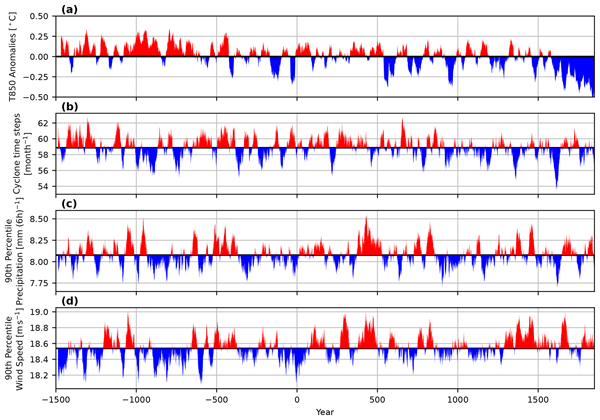
Onno Doensen, Martina Messmer, Woon Mi Kim, and Christoph C. Raible
Clim. Past, 21, 1305–1322, https://doi.org/10.5194/cp-21-1305-2025, https://doi.org/10.5194/cp-21-1305-2025, 2025
Short summary
Short summary
Extratropical cyclones are crucial systems in the Mediterranean. While extensively studied, their late Holocene variability is poorly understood. Using a climate model spanning 3350-years, we find Mediterranean cyclones show significant multi-decadal variability. Extreme cyclones tend to be more extreme in the central Mediterranean in terms of wind speed. Our work creates a reference baseline to better understand the impact of climate change on Mediterranean cyclones.
Alejandro Hermoso, Lucas Ferreira Correa, Casey R. Patrizio, Henk Dijkstra, Anna von der Heydt, and Christoph C. Raible
EGUsphere, https://doi.org/10.5194/egusphere-2026-5619, https://doi.org/10.5194/egusphere-2026-5619, 2026
This preprint is open for discussion and under review for Earth System Dynamics (ESD).
Short summary
Short summary
The North Atlantic jet stream strongly influences European weather variability. We investigate how it may change under global warming and a collapse of the Atlantic Meridional Overturning Circulation. Using two climate models and higher-resolution regional simulations, we find that the jet stream response is strongly model dependent. The regional simulations retain the large-scale response of the global models, while also introducing regional differences in the jet stream response.
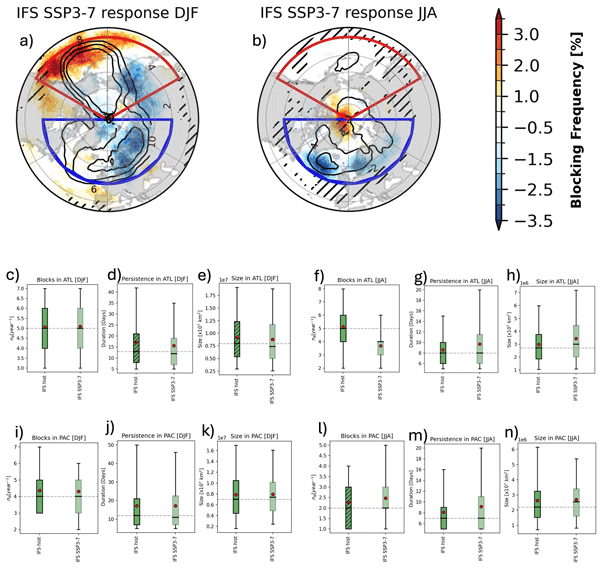
Edgar Dolores-Tesillos, Olivia Martius, and Stephan Pfahl
Weather Clim. Dynam., 7, 1089–1116, https://doi.org/10.5194/wcd-7-1089-2026, https://doi.org/10.5194/wcd-7-1089-2026, 2026
Short summary
Short summary
Storm-resolving climate models are gaining attention for their improved simulation of mesoscale processes. Yet, how finer resolution benefits synoptic-scale phenomena remains unclear. We assess atmospheric blocking in the Next Generation Earth Modelling Systems, European Eddy-Rich Earth System Models, and Destination Earth projects, identifying key bias drivers and their response under a high-emissions climate change scenario.
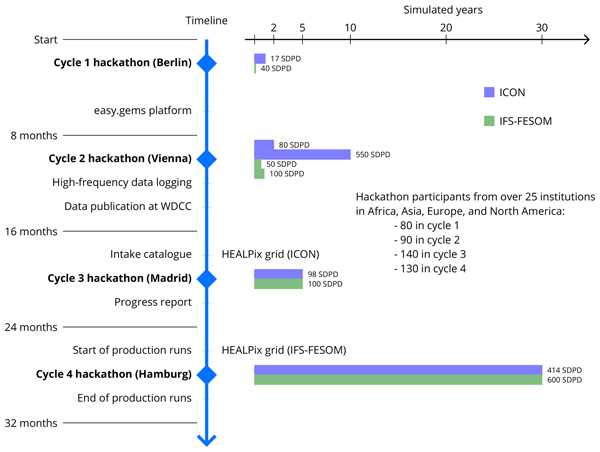
Hans Segura, Xabier Pedruzo-Bagazgoitia, Philipp Weiss, Sebastian K. Müller, Thomas Rackow, Junhong Lee, Edgar Dolores-Tesillos, Imme Benedict, Matthias Aengenheyster, Razvan Aguridan, Gabriele Arduini, Alexander J. Baker, Jiawei Bao, Swantje Bastin, Eulàlia Baulenas, Tobias Becker, Sebastian Beyer, Hendryk Bockelmann, Nils Brüggemann, Lukas Brunner, Suvarchal K. Cheedela, Sushant Das, Jasper Denissen, Ian Dragaud, Piotr Dziekan, Madeleine Ekblom, Jan Frederik Engels, Monika Esch, Richard Forbes, Claudia Frauen, Lilli Freischem, Diego García-Maroto, Philipp Geier, Paul Gierz, Álvaro González-Cervera, Katherine Grayson, Matthew Griffith, Oliver Gutjahr, Helmuth Haak, Ioan Hadade, Kerstin Haslehner, Shabeh ul Hasson, Jan Hegewald, Lukas Kluft, Aleksei Koldunov, Nikolay Koldunov, Tobias Kölling, Shunya Koseki, Sergey Kosukhin, Josh Kousal, Peter Kuma, Arjun U. Kumar, Rumeng Li, Nicolas Maury, Maximilian Meindl, Sebastian Milinski, Kristian Mogensen, Bimochan Niraula, Jakub Nowak, Divya Sri Praturi, Ulrike Proske, Dian Putrasahan, René Redler, David Santuy, Domokos Sármány, Reiner Schnur, Patrick Scholz, Dmitry Sidorenko, Dorian Spät, Birgit Sützl, Daisuke Takasuka, Adrian Tompkins, Alejandro Uribe, Mirco Valentini, Menno Veerman, Aiko Voigt, Sarah Warnau, Fabian Wachsmann, Marta Wacławczyk, Nils Wedi, Karl-Hermann Wieners, Jonathan Wille, Marius Winkler, Yuting Wu, Florian Ziemen, Janos Zimmermann, Frida A.-M. Bender, Dragana Bojovic, Sandrine Bony, Simona Bordoni, Patrice Brehmer, Marcus Dengler, Emanuel Dutra, Saliou Faye, Erich Fischer, Chiel van Heerwaarden, Cathy Hohenegger, Heikki Järvinen, Markus Jochum, Thomas Jung, Johann H. Jungclaus, Noel S. Keenlyside, Daniel Klocke, Heike Konow, Martina Klose, Szymon Malinowski, Olivia Martius, Thorsten Mauritsen, Juan Pedro Mellado, Theresa Mieslinger, Elsa Mohino, Hanna Pawłowska, Karsten Peters-von Gehlen, Abdoulaye Sarré, Pajam Sobhani, Philip Stier, Lauri Tuppi, Pier Luigi Vidale, Irina Sandu, and Bjorn Stevens
Geosci. Model Dev., 18, 7735–7761, https://doi.org/10.5194/gmd-18-7735-2025, https://doi.org/10.5194/gmd-18-7735-2025, 2025
Short summary
Short summary
The Next Generation of Earth Modeling Systems project (nextGEMS) developed two Earth system models that use horizontal grid spacing of 10 km and finer, giving more fidelity to the representation of local phenomena, globally. In its fourth cycle, nextGEMS simulated the Earth System climate over the 2020–2049 period under the SSP3-7.0 scenario. Here, we provide an overview of nextGEMS, insights into the model development, and the realism of multi-decadal, kilometer-scale simulations.
Onno Doensen, Martina Messmer, Woon Mi Kim, and Christoph C. Raible
Clim. Past, 21, 1305–1322, https://doi.org/10.5194/cp-21-1305-2025, https://doi.org/10.5194/cp-21-1305-2025, 2025
Short summary
Short summary
Extratropical cyclones are crucial systems in the Mediterranean. While extensively studied, their late Holocene variability is poorly understood. Using a climate model spanning 3350-years, we find Mediterranean cyclones show significant multi-decadal variability. Extreme cyclones tend to be more extreme in the central Mediterranean in terms of wind speed. Our work creates a reference baseline to better understand the impact of climate change on Mediterranean cyclones.
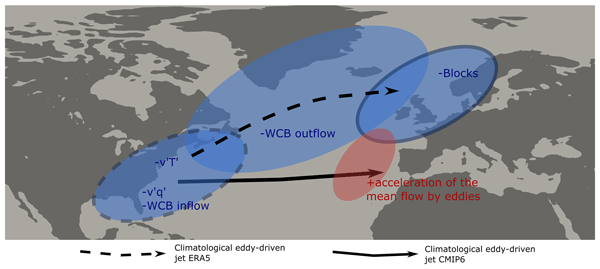
Edgar Dolores-Tesillos, Olivia Martius, and Julian Quinting
Weather Clim. Dynam., 6, 471–487, https://doi.org/10.5194/wcd-6-471-2025, https://doi.org/10.5194/wcd-6-471-2025, 2025
Short summary
Short summary
An accurate representation of synoptic weather systems in climate models is required to estimate their societal and economic impacts under climate warming. Current climate models poorly represent the frequency of atmospheric blocking. Few studies have analysed the role of moist processes as a source of the bias of blocks. Here, we implement ELIAS2.0, a deep-learning tool, to validate the representation of moist processes in CMIP6 models and their link to the Euro-Atlantic blocking biases.
Evelien J. C. van Dijk, Christoph C. Raible, Michael Sigl, Johann Jungclaus, and Heinz Wanner
Clim. Past Discuss., https://doi.org/10.5194/cp-2024-79, https://doi.org/10.5194/cp-2024-79, 2024
Manuscript not accepted for further review
Short summary
Short summary
The temperature in the past 4000 years consisted of warm and cold periods, initiated by external forcing. But, these periods are not consistent through time and space. We use climate models and reconstructions to study to which extent the periods are reflected in the European climate. We find that on local scales, the chaotic nature of the climate system is larger than the external forcing. This study shows that these periods have to be used very carefully when studying a local site.
Emmanuele Russo, Jonathan Buzan, Sebastian Lienert, Guillaume Jouvet, Patricio Velasquez Alvarez, Basil Davis, Patrick Ludwig, Fortunat Joos, and Christoph C. Raible
Clim. Past, 20, 449–465, https://doi.org/10.5194/cp-20-449-2024, https://doi.org/10.5194/cp-20-449-2024, 2024
Short summary
Short summary
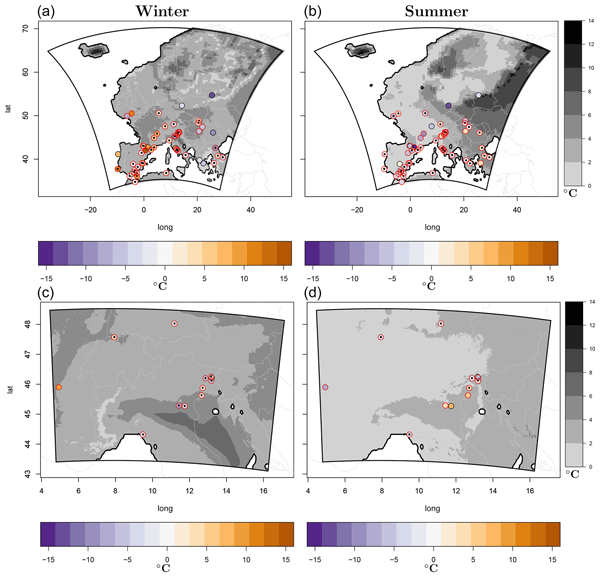
We present a series of experiments conducted for the Last Glacial Maximum (~21 ka) over Europe using the regional climate Weather Research and Forecasting model (WRF) at convection-permitting resolutions. The model, with new developments better suited to paleo-studies, agrees well with pollen-based climate reconstructions. This agreement is improved when considering different sources of uncertainty. The effect of convection-permitting resolutions is also assessed.
Edgar Dolores-Tesillos and Stephan Pfahl
Weather Clim. Dynam., 5, 163–179, https://doi.org/10.5194/wcd-5-163-2024, https://doi.org/10.5194/wcd-5-163-2024, 2024
Short summary
Short summary
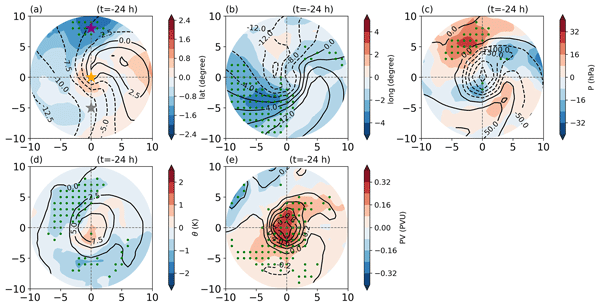
In a warmer climate, the winter extratropical cyclones over the North Atlantic basin are expected to have a larger footprint of strong winds. Dynamical changes at different altitudes are responsible for these wind changes. Based on backward trajectories using the CESM-LE simulations, we show that the diabatic processes gain relevance as the planet warms. For instance, changes in the radiative processes will play an important role in the upper-level cyclone dynamics.
Woon Mi Kim, Santos J. González-Rojí, and Christoph C. Raible
Clim. Past, 19, 2511–2533, https://doi.org/10.5194/cp-19-2511-2023, https://doi.org/10.5194/cp-19-2511-2023, 2023
Short summary
Short summary
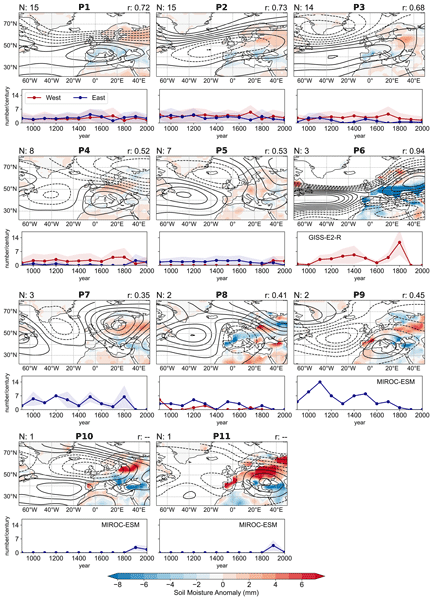
In this study, we investigate circulation patterns associated with Mediterranean droughts during the last millennium using global climate simulations. Different circulation patterns driven by internal interactions in the climate system contribute to the occurrence of droughts in the Mediterranean. The detected patterns are different between the models, and this difference can be a potential source of uncertainty in model–proxy comparison and future projections of Mediterranean droughts.
Eric Samakinwa, Christoph C. Raible, Ralf Hand, Andrew R. Friedman, and Stefan Brönnimann
Clim. Past Discuss., https://doi.org/10.5194/cp-2023-67, https://doi.org/10.5194/cp-2023-67, 2023
Publication in CP not foreseen
Short summary
Short summary
In this study, we nudged a stand-alone ocean model MPI-OM to proxy-reconstructed SST. Based on these model simulations, we introduce new estimates of the AMOC variations during the period 1450–1780 through a 10-member ensemble simulation with a novel nudging technique. Our approach reaffirms the known mechanisms of AMOC variability and also improves existing knowledge of the interplay between the AMOC and the NAO during the AMOC's weak and strong phases.
Jonathan Robert Buzan, Emmanuele Russo, Woon Mi Kim, and Christoph C. Raible
EGUsphere, https://doi.org/10.5194/egusphere-2023-324, https://doi.org/10.5194/egusphere-2023-324, 2023
Preprint archived
Short summary
Short summary
Paleoclimate is used to test climate models to verify that simulations accurately project both future and past climate states. We present fully coupled climate sensitivity simulations of Preindustrial, Last Glacial Maximum, and the Quaternary climate periods. We show distinct climate states derived from non-linear responses to ice sheet heights and orbits. The implication is that as paleo proxy data become more reliable, they may constrain the specific climate states produced by climate models.
Patricio Velasquez, Martina Messmer, and Christoph C. Raible
Clim. Past, 18, 1579–1600, https://doi.org/10.5194/cp-18-1579-2022, https://doi.org/10.5194/cp-18-1579-2022, 2022
Short summary
Short summary
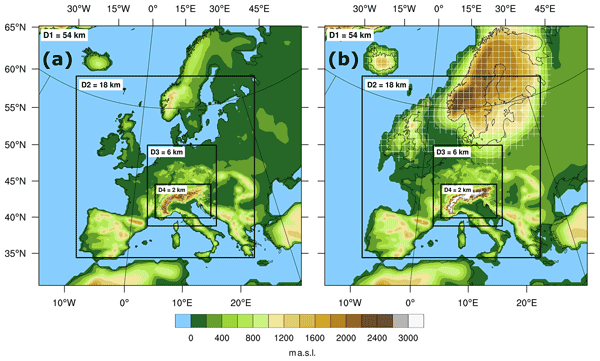
We investigate the sensitivity of the glacial Alpine hydro-climate to northern hemispheric and local ice-sheet changes. We perform sensitivity simulations of up to 2 km horizontal resolution over the Alps for glacial periods. The findings demonstrate that northern hemispheric and local ice-sheet topography are important role in regulating the Alpine hydro-climate and permits a better understanding of the Alpine precipitation patterns at glacial times.
Helen Mackay, Gill Plunkett, Britta J. L. Jensen, Thomas J. Aubry, Christophe Corona, Woon Mi Kim, Matthew Toohey, Michael Sigl, Markus Stoffel, Kevin J. Anchukaitis, Christoph Raible, Matthew S. M. Bolton, Joseph G. Manning, Timothy P. Newfield, Nicola Di Cosmo, Francis Ludlow, Conor Kostick, Zhen Yang, Lisa Coyle McClung, Matthew Amesbury, Alistair Monteath, Paul D. M. Hughes, Pete G. Langdon, Dan Charman, Robert Booth, Kimberley L. Davies, Antony Blundell, and Graeme T. Swindles
Clim. Past, 18, 1475–1508, https://doi.org/10.5194/cp-18-1475-2022, https://doi.org/10.5194/cp-18-1475-2022, 2022
Short summary
Short summary
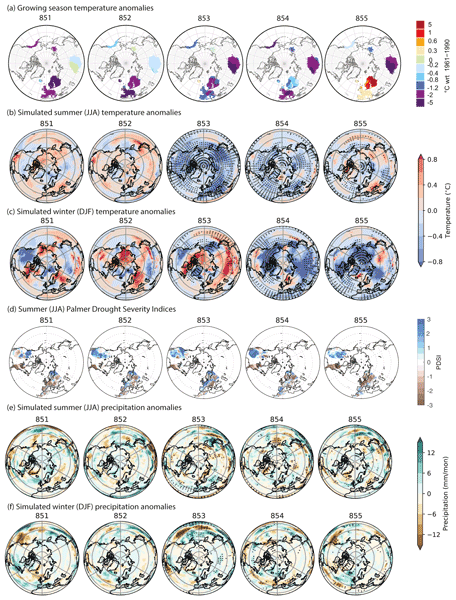
We assess the climatic and societal impact of the 852/3 CE Alaska Mount Churchill eruption using environmental reconstructions, historical records and climate simulations. The eruption is associated with significant Northern Hemisphere summer cooling, despite having only a moderate sulfate-based climate forcing potential; however, evidence of a widespread societal response is lacking. We discuss the difficulties of confirming volcanic impacts of a single eruption even when it is precisely dated.

Emmanuele Russo, Bijan Fallah, Patrick Ludwig, Melanie Karremann, and Christoph C. Raible
Clim. Past, 18, 895–909, https://doi.org/10.5194/cp-18-895-2022, https://doi.org/10.5194/cp-18-895-2022, 2022
Short summary
Short summary
In this study a set of simulations are performed with the regional climate model COSMO-CLM for Europe, for the mid-Holocene and pre-industrial periods. The main aim is to better understand the drivers of differences between models and pollen-based summer temperatures. Results show that a fundamental role is played by spring soil moisture availability. Additionally, results suggest that model bias is not stationary, and an optimal configuration could not be the best under different forcing.
Santos J. González-Rojí, Martina Messmer, Christoph C. Raible, and Thomas F. Stocker
Geosci. Model Dev., 15, 2859–2879, https://doi.org/10.5194/gmd-15-2859-2022, https://doi.org/10.5194/gmd-15-2859-2022, 2022
Short summary
Short summary
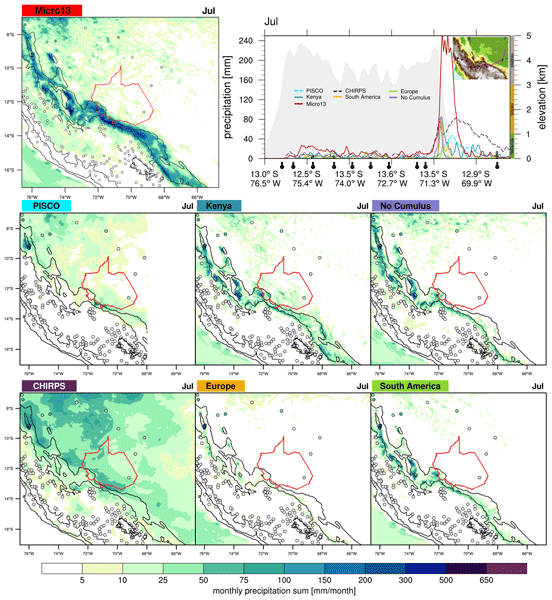
Different configurations of physics parameterizations of a regional climate model are tested over southern Peru at fine resolution. The most challenging regions compared to observational data are the slopes of the Andes. Model configurations for Europe and East Africa are not perfectly suitable for southern Peru. The experiment with the Stony Brook University microphysics scheme and the Grell–Freitas cumulus parameterization provides the most accurate results over Madre de Dios.
Edgar Dolores-Tesillos, Franziska Teubler, and Stephan Pfahl
Weather Clim. Dynam., 3, 429–448, https://doi.org/10.5194/wcd-3-429-2022, https://doi.org/10.5194/wcd-3-429-2022, 2022
Short summary
Short summary
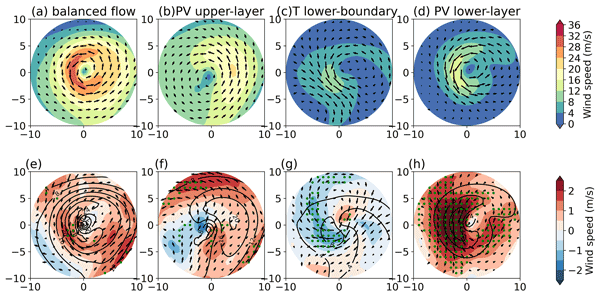
Strong winds caused by extratropical cyclones represent a costly hazard for European countries. Here, based on CESM-LENS coupled climate simulations, we show that future changes of such strong winds are characterized by an increased magnitude and extended footprint southeast of the cyclone center. This intensification is related to a combination of increased diabatic heating and changes in upper-level wave dynamics.
Cited articles
Bengtsson, L., Hodges, K. I., and Roeckner, E.: Storm Tracks and Climate Change, J. Climate, 19, 3518–3543, https://doi.org/10.1175/jcli3815.1, 2006. a
Blender, R., Fraedrich, K., and Lunkeit, F.: Identification of cyclone-track regimes in the North Atlantic, Q. J. Roy. Meteor. Soc., 123, 727–741, https://doi.org/10.1002/qj.49712353910, 1997. a, b
Büeler, D. and Pfahl, S.: Potential Vorticity Diagnostics to Quantify Effects of Latent Heating in Extratropical Cyclones. Part II: Application to Idealized Climate Change Simulations, J. Atmos. Sci., 76, 1885–1902, https://doi.org/10.1175/jas-d-18-0342.1, 2019. a
Čampa, J. and Wernli, H.: A PV Perspective on the Vertical Structure of Mature Midlatitude Cyclones in the Northern Hemisphere, J. Atmos. Sci., 69, 725–740, https://doi.org/10.1175/jas-d-11-050.1, 2012. a, b
Campins, J., Genovés, A., Picornell, M., and Jansà, A.: Climatology of Mediterranean cyclones using the ERA-40 dataset, Int. J. Climatol., 31, 1596–1614, https://doi.org/10.1002/joc.2183, 2011. a
Carniel, C. E., Ricchi, A., Ferretti, R., Curci, G., Miglietta, M. M., Reale, M., Serafini, P., Wellmeyer, E. D., Davolio, S., Zardi, D., and Kantha, L.: A high‐resolution climatological study of explosive cyclones in the Mediterranean region: Frequency, intensity and synoptic drivers, Q. J. Roy. Meteor. Soc., 150, 5561–5582, https://doi.org/10.1002/qj.4889, 2024. a
Catto, J. L., Ackerley, D., Booth, J. F., Champion, A. J., Colle, B. A., Pfahl, S., Pinto, J. G., Quinting, J. F., and Seiler, C.: The future of midlatitude cyclones, Current Climate Change Reports, 5, 407–420, https://doi.org/10.1007/s40641-019-00149-4, 2019. a, b, c
Danielson, J. J. and Gesch, D. B.: Global multi-resolution terrain elevation data 2010 (GMTED2010), U.S. Geological Survey, Open-File Report 2011-1073, https://doi.org/10.3133/ofr20111073, 2011. a
Davis, C. A. and Emanuel, K. A.: Potential Vorticity Diagnostics of Cyclogenesis, Mon. Weather Rev., 119, 1929–1953, https://doi.org/10.1175/1520-0493(1991)119<1929:pvdoc>2.0.co;2, 1991. a
Doensen, O.: Mediterranean cyclones from pre-industrial to future climate: changes in extreme wind, precipitation and compound precipitation–wind events, Version v1, Zenodo [data set], https://doi.org/10.5281/zenodo.17965187, 2025. a
Doensen, O., Messmer, M., Kim, W. M., and Raible, C. C.: Characterization of the mean and extreme Mediterranean cyclones and their variability during the period 1500 BCE to 1850 CE, Clim. Past, 21, 1305–1322, https://doi.org/10.5194/cp-21-1305-2025, 2025. a, b, c, d
Doiteau, B., Pantillon, F., Plu, M., Descamps, L., and Rieutord, T.: Systematic evaluation of the predictability of different Mediterranean cyclone categories, Weather Clim. Dynam., 5, 1409–1427, https://doi.org/10.5194/wcd-5-1409-2024, 2024. a
Dolores-Tesillos, E. and Pfahl, S.: Future changes in North Atlantic winter cyclones in CESM-LE – Part 2: A Lagrangian analysis, Weather Clim. Dynam., 5, 163–179, https://doi.org/10.5194/wcd-5-163-2024, 2024. a
Dolores-Tesillos, E., Teubler, F., and Pfahl, S.: Future changes in North Atlantic winter cyclones in CESM-LE – Part 1: Cyclone intensity, potential vorticity anomalies, and horizontal wind speed, Weather Clim. Dynam., 3, 429–448, https://doi.org/10.5194/wcd-3-429-2022, 2022. a, b
Dudhia, J.: Numerical Study of Convection Observed during the Winter Monsoon Experiment Using a Mesoscale Two-Dimensional Model, J. Atmos. Sci., 46, 3077–3107, https://doi.org/10.1175/1520-0469(1989)046<3077:nsocod>2.0.co;2, 1989. a
Ferrarin, C., Bajo, M., Benetazzo, A., Cavaleri, L., Chiggiato, J., Davison, S., Davolio, S., Lionello, P., Orlić, M., and Umgiesser, G.: Local and large-scale controls of the exceptional Venice floods of November 2019, Prog. Oceanogr., 197, 102628, https://doi.org/10.1016/j.pocean.2021.102628, 2021. a
Fita, Ll., Romero, R., and Ramis, C.: Intercomparison of intense cyclogenesis events over the Mediterranean basin based on baroclinic and diabatic influences, Adv. Geosci., 7, 333–342, https://doi.org/10.5194/adgeo-7-333-2006, 2006. a
Flaounas, E., Drobinski, P., and Bastin, S.: Dynamical downscaling of IPSL-CM5 CMIP5 historical simulations over the Mediterranean: benefits on the representation of regional surface winds and cyclogenesis, Clim. Dynam., 40, 2497–2513, https://doi.org/10.1007/s00382-012-1606-7, 2013. a
Flaounas, E., Kotroni, V., Lagouvardos, K., and Flaounas, I.: CycloTRACK (v1.0) – tracking winter extratropical cyclones based on relative vorticity: sensitivity to data filtering and other relevant parameters, Geosci. Model Dev., 7, 1841–1853, https://doi.org/10.5194/gmd-7-1841-2014, 2014. a
Flaounas, E., Lagouvardos, K., Kotroni, V., Claud, C., Delanoë, J., Flamant, C., Madonna, E., and Wernli, H.: Processes leading to heavy precipitation associated with two Mediterranean cyclones observed during the HYMEX SOP1, Q. J. Roy. Meteor. Soc., 142, 275–286, https://doi.org/10.1002/qj.2618, 2015a. a
Flaounas, E., Raveh-Rubin, S., Wernli, H., Drobinski, P., and Bastin, S.: The dynamical structure of intense Mediterranean cyclones, Clim. Dynam., 44, 2411–2427, https://doi.org/10.1007/s00382-014-2330-2, 2015b. a, b
Flaounas, E., Kotroni, V., Lagouvardos, K., Gray, S. L., Rysman, J.-F., and Claud, C.: Heavy rainfall in Mediterranean cyclones. Part I: contribution of deep convection and warm conveyor belt, Clim. Dynam., 50, 2935–2949, https://doi.org/10.1007/s00382-017-3783-x, 2018. a
Flaounas, E., Gray, S. L., and Teubler, F.: A process-based anatomy of Mediterranean cyclones: from baroclinic lows to tropical-like systems, Weather Clim. Dynam., 2, 255–279, https://doi.org/10.5194/wcd-2-255-2021, 2021. a
Flaounas, E., Davolio, S., Raveh-Rubin, S., Pantillon, F., Miglietta, M. M., Gaertner, M. A., Hatzaki, M., Homar, V., Khodayar, S., Korres, G., Kotroni, V., Kushta, J., Reale, M., and Ricard, D.: Mediterranean cyclones: current knowledge and open questions on dynamics, prediction, climatology and impacts, Weather Clim. Dynam., 3, 173–208, https://doi.org/10.5194/wcd-3-173-2022, 2022. a
Givon, Y., Hess, O., Flaounas, E., Catto, J. L., Sprenger, M., and Raveh-Rubin, S.: Process-based classification of Mediterranean cyclones using potential vorticity, Weather Clim. Dynam., 5, 133–162, https://doi.org/10.5194/wcd-5-133-2024, 2024. a
Hersbach, H., Bell, B., Berrisford, P., Hirahara, S., Horányi, A., Muñoz-Sabater, J., Nicolas, J., Peubey, C., Radu, R., Schepers, D., Simmons, A., Soci, C., Abdalla, S., Abellan, X., Balsamo, G., Bechtold, P., Biavati, G., Bidlot, J., Bonavita, M., De Chiara, G., Dahlgren, P., Dee, D., Diamantakis, M., Dragani, R., Flemming, J., Forbes, R., Fuentes, M., Geer, A., Haimberger, L., Healy, S., Hogan, R. J., Hólm, E., Janisková, M., Keeley, S., Laloyaux, P., Lopez, P., Lupu, C., Radnoti, G., de Rosnay, P., Rozum, I., Vamborg, F., Villaume, S., and Thépaut, J.-N.: The ERA5 global reanalysis, Q. J. Roy. Meteor. Soc., 146, 1999–2049, https://doi.org/10.1002/qj.3803, 2020. a
Hochman, A., Harpaz, T., Saaroni, H., and Alpert, P.: Synoptic classification in 21st century CMIP5 predictions over the Eastern Mediterranean with focus on cyclones, Int. J. Climatol., 38, 1476–1483, https://doi.org/10.1002/joc.5260, 2017. a
Hochman, A., Alpert, P., Kunin, P., Rostkier-Edelstein, D., Harpaz, T., Saaroni, H., and Messori, G.: The dynamics of cyclones in the twentyfirst century: the Eastern Mediterranean as an example, Clim. Dynam., 54, 561–574, https://doi.org/10.1007/s00382-019-05017-3, 2020. a
Homar, V., Ramis, C., and Alonso, S.: A deep cyclone of African origin over the Western Mediterranean: diagnosis and numerical simulation, Ann. Geophys., 20, 93–106, https://doi.org/10.5194/angeo-20-93-2002, 2002. a
Homar, V., Jansà, A., Campins, J., Genovés, A., and Ramis, C.: Towards a systematic climatology of sensitivities of Mediterranean high impact weather: a contribution based on intense cyclones, Nat. Hazards Earth Syst. Sci., 7, 445–454, https://doi.org/10.5194/nhess-7-445-2007, 2007. a
Hong, S.-Y., Noh, Y., and Dudhia, J.: A New Vertical Diffusion Package with an Explicit Treatment of Entrainment Processes, Mon. Weather Rev., 134, 2318–2341, https://doi.org/10.1175/mwr3199.1, 2006. a
Hoskins, B. J., McIntyre, M. E., and Robertson, A. W.: On the use and significance of isentropic potential vorticity maps, Q. J. Roy. Meteor. Soc., 111, 877–946, https://doi.org/10.1002/qj.49711147002, 1985. a
Hurrell, J. W., Holland, M. M., Gent, P. R., Ghan, S., Kay, J. E., Kushner, P. J., Lamarque, J.-F., Large, W. G., Lawrence, D., Lindsay, K., Lipscomb, W. H., Long, M. C., Mahowald, N., Marsh, D. R., Neale, R. B., Rasch, P., Vavrus, S., Vertenstein, M., Bader, D., Collins, W. D., Hack, J. J., Kiehl, J., and Marshall, S.: The community earth system model: a framework for collaborative research, B. Am. Meteorol. Soc., 94, 1339–1360, https://doi.org/10.1175/BAMS-D-12-00121.1, 2013. a, b
Jerez, S., López‐Romero, J. M., Turco, M., Lorente‐Plazas, R., Gómez‐Navarro, J. J., Jiménez‐Guerrero, P., and Montávez, J. P.: On the Spin‐Up Period in WRF Simulations Over Europe: Trade‐Offs Between Length and Seasonality, J. Adv. Model. Earth Sy., 12, https://doi.org/10.1029/2019ms001945, 2020. a
Jiménez, P. A., Dudhia, J., González-Rouco, J. F., Navarro, J., Montávez, J. P., and García-Bustamante, E.: A Revised Scheme for the WRF Surface Layer Formulation, Mon. Weather Rev., 140, 898–918, https://doi.org/10.1175/mwr-d-11-00056.1, 2012. a
Kain, J. S.: The Kain–Fritsch Convective Parameterization: An Update, J. Appl. Meteorol., 43, 170–181, https://doi.org/10.1175/1520-0450(2004)043<0170:tkcpau>2.0.co;2, 2004. a
Khodayar, S., Kushta, J., Catto, J. L., Dafis, S., Davolio, S., Ferrarin, C., Flaounas, E., Groenemeijer, P., Hatzaki, M., Hochman, A., Kotroni, V., Landa, J., Láng‐Ritter, I., Lazoglou, G., Liberato, M. L. R., Miglietta, M. M., Papagiannaki, K., Patlakas, P., Stojanov, R., and Zittis, G.: Mediterranean Cyclones in a Changing Climate: A Review on Their Socio‐Economic Impacts, Rev. Geophys., 63, https://doi.org/10.1029/2024rg000853, 2025. a
Kolmogorov, A. N.: Sulla determinazione empirica di una legge di distribuzione, Giorn. Dell'Inst. Ital. Degli Att., 4, 83–91, 1933. a
Kim, W. M., Blender, R., Sigl, M., Messmer, M., and Raible, C. C.: Statistical characteristics of extreme daily precipitation during 1501 BCE–1849 CE in the Community Earth System Model, Clim. Past, 17, 2031–2053, https://doi.org/10.5194/cp-17-2031-2021, 2021. a
Lionello, P., Dalan, F., and Elvini, E.: Cyclones in the Mediterranean region: the present and the doubled CO2 climate scenarios, Clim. Res., 22, 147–159, https://doi.org/10.3354/cr022147, 2002. a, b
Lionello, P., Conte, D., and Reale, M.: The effect of cyclones crossing the Mediterranean region on sea level anomalies on the Mediterranean Sea coast, Nat. Hazards Earth Syst. Sci., 19, 1541–1564, https://doi.org/10.5194/nhess-19-1541-2019, 2019. a
Martius, O., Pfahl, S., and Chevalier, C.: A global quantification of compound precipitation and wind extremes, Geophys. Res. Lett., 43, 7709–7717, https://doi.org/10.1002/2016gl070017, 2016. a
Messmer, M. and Simmonds, I.: Global analysis of cyclone-induced compound precipitation and wind extreme events, Weather and Climate Extremes, 32, 100324, https://doi.org/10.1016/j.wace.2021.100324, 2021. a
Mlawer, E. J., Taubman, S. J., Brown, P. D., Iacono, M. J., and Clough, S. A.: Radiative transfer for inhomogeneous atmospheres: RRTM, a validated correlated‐k model for the longwave, J. Geophys. Res.-Atmos., 102, 16663–16682, https://doi.org/10.1029/97jd00237, 1997. a
Neu, U., Akperov, M. G., Bellenbaum, N., Benestad, R., Blender, R., Caballero, R., Cocozza, A., Dacre, H. F., Feng, Y., Fraedrich, K., Grieger, J., Gulev, S., Hanley, J., Hewson, T., Inatsu, M., Keay, K., Kew, S. F., Kindem, I., Leckebusch, G. C., Liberato, M. L. R., Lionello, P., Mokhov, I. I., Pinto, J. G., Raible, C. C., Reale, M., Rudeva, I., Schuster, M., Simmonds, I., Sinclair, M., Sprenger, M., Tilinina, N. D., Trigo, I. F., Ulbrich, S., Ulbrich, U., Wang, X. L., and Wernli, H.: IMILAST: A Community Effort to Intercompare Extratropical Cyclone Detection and Tracking Algorithms, B. Am. Meteorol. Soc., 94, 529–547, https://doi.org/10.1175/bams-d-11-00154.1, 2013. a
Nissen, K. M., Leckebusch, G. C., Pinto, J. G., Renggli, D., Ulbrich, S., and Ulbrich, U.: Cyclones causing wind storms in the Mediterranean: characteristics, trends and links to large-scale patterns, Nat. Hazards Earth Syst. Sci., 10, 1379–1391, https://doi.org/10.5194/nhess-10-1379-2010, 2010. a
Nissen, K. M., Leckebusch, G. C., Pinto, J. G., and Ulbrich, U.: Mediterranean cyclones and windstorms in a changing climate, Reg. Environ. Change, 14, 1873–1890, https://doi.org/10.1007/s10113-012-0400-8, 2014. a, b, c
Niu, G.-Y., Yang, Z.-L., Mitchell, K. E., Chen, F., Ek, M. B., Barlage, M., Kumar, A., Manning, K., Niyogi, D., Rosero, E., Tewari, M., and Xia, Y.: The community Noah land surface model with multiparameterization options (Noah-MP): 1. Model description and evaluation with local-scale measurements, J. Geophys. Res., 116, https://doi.org/10.1029/2010jd015139, 2011. a
Pettersen, S.: Weather Analysis and Forecasting: Volume I: Motion and Motion Systems, McGraw-Hill, New York, USA, 1956. a
Pfahl, S. and Sprenger, M.: On the relationship between extratropical cyclone precipitation and intensity, Geophys. Res. Lett., 43, 1752–1758, https://doi.org/10.1002/2016GL068018, 2016. a
Pfahl, S. and Wernli, H.: Quantifying the relevance of cyclones for precipitation extremes, J. Climate, 25, 6770–6780, https://doi.org/10.1175/JCLI-D-11-00705.1, 2012. a, b
Pfahl, S., O'Gorman, P. A., and Singh, M. S.: Extratropical Cyclones in Idealized Simulations of Changed Climates, J. Climate, 28, 9373–9392, https://doi.org/10.1175/jcli-d-14-00816.1, 2015. a
Portal, A., Raveh-Rubin, S., Catto, J. L., Givon, Y., and Martius, O.: Linking compound weather extremes to Mediterranean cyclones, fronts, and airstreams, Weather Clim. Dynam., 5, 1043–1060, https://doi.org/10.5194/wcd-5-1043-2024, 2024. a, b
Prezerakos, N. G., Flocas, H. A., and Brikas, D.: The role of the interaction between polar and subtropical jet in a case of depression rejuvenation over the Eastern Mediterranean, Meteorol. Atmos. Phys., 92, 139–151, https://doi.org/10.1007/s00703-005-0142-y, 2005. a, b
Priestley, M. D. K. and Catto, J. L.: Future changes in the extratropical storm tracks and cyclone intensity, wind speed, and structure, Weather Clim. Dynam., 3, 337–360, https://doi.org/10.5194/wcd-3-337-2022, 2022. a
Raible, C., Yoshimori, M., Stocker, T., and Casty, C.: Extreme midlatitude cyclones and their implications for precipitation and wind speed extremes in simulations of the Maunder Minimum versus present day conditions, Clim. Dynam., 28, 409–423, https://doi.org/10.1007/s00382-006-0188-7, 2007. a
Raible, C. C., Della-Marta, P. M., Schwierz, C., Wernli, H., and Blender, R.: Northern Hemisphere Extratropical Cyclones: A Comparison of Detection and Tracking Methods and Different Reanalyses, Mon. Weather Rev., 136, 880–897, https://doi.org/10.1175/2007mwr2143.1, 2008. a
Raible, C. C., Ziv, B., Saaroni, H., and Wild, M.: Winter synoptic-scale variability over the Mediterranean Basin under future climate conditions as simulated by the ECHAM5, Clim. Dynam., 35, 473–488, https://doi.org/10.1007/s00382-009-0678-5, 2010. a, b, c, d
Raible, C. C., Messmer, M., Lehner, F., Stocker, T. F., and Blender, R.: Extratropical cyclone statistics during the last millennium and the 21st century, Clim. Past, 14, 1499–1514, https://doi.org/10.5194/cp-14-1499-2018, 2018. a
Raveh-Rubin, S. and Flaounas, E.: A dynamical link between deep Atlantic extratropical cyclones and intense Mediterranean cyclones, Atmos. Sci. Lett., 18, 215–221, https://doi.org/10.1002/asl.745, 2017. a, b
Reale, M., Cabos Narvaez, W. D., Cavicchia, L., Conte, D., Coppola, E., Flaounas, E., Giorgi, F., Gualdi, S., Hochman, A., Li, L., Lionello, P., Podrascanin, Z., Salon, S., Sanchez-Gomez, E., Scoccimarro, E., Sein, D. V., and Somot, S.: Future projections of Mediterranean cyclone characteristics using the Med-CORDEX ensemble of coupled regional climate system models, Clim. Dynam., 58, 2501–2524, https://doi.org/10.1007/s00382-021-06018-x, 2022. a, b, c, d, e, f
Rousseau-Rizzi, R., Raveh-Rubin, S., Catto, J. L., Portal, A., Givon, Y., and Martius, O.: A storm-relative climatology of compound hazards in Mediterranean cyclones, Weather Clim. Dynam., 5, 1079–1101, https://doi.org/10.5194/wcd-5-1079-2024, 2024. a
Schemm, S.: Toward Eliminating the Decades‐Old “Too Zonal and Too Equatorward” Storm‐Track Bias in Climate Models, J. Adv. Model. Earth Sy., 15, https://doi.org/10.1029/2022ms003482, 2023. a
Scherrmann, A., Wernli, H., and Flaounas, E.: Origin of low-tropospheric potential vorticity in Mediterranean cyclones, Weather Clim. Dynam., 4, 157–173, https://doi.org/10.5194/wcd-4-157-2023, 2023. a
Scherrmann, A., Wernli, H., and Flaounas, E.: The upstream–downstream connection of North Atlantic and Mediterranean cyclones in semi-idealized simulations, Weather Clim. Dynam., 5, 419–438, https://doi.org/10.5194/wcd-5-419-2024, 2024. a
Schneidereit, A., Blender, R., and Fraedrich, K.: A radius–depth model for midlatitude cyclones in reanalysis data and simulations, Q. J. Roy. Meteor. Soc., 136, 50–60, https://doi.org/10.1002/qj.523, 2010. a
Sinclair, V. A., Rantanen, M., Haapanala, P., Räisänen, J., and Järvinen, H.: The characteristics and structure of extra-tropical cyclones in a warmer climate, Weather Clim. Dynam., 1, 1–25, https://doi.org/10.5194/wcd-1-1-2020, 2020. a
Skamarock, C., Klemp, B., Dudhia, J., Gill, O., Liu, Z., Berner, J., Wang, W., Powers, G., Duda, G., Barker, D., and Huang, X.-y.: A Description of the Advanced Research WRF Model Version 4.3, NCAR Technical Notes, NCAR/TN-556+STR, https://doi.org/10.5065/1dfh-6p97, 2021. a, b
Thompson, G., Field, P. R., Rasmussen, R. M., and Hall, W. D.: Explicit Forecasts of Winter Precipitation Using an Improved Bulk Microphysics Scheme. Part II: Implementation of a New Snow Parameterization, Mon. Weather Rev., 136, 5095–5115, https://doi.org/10.1175/2008mwr2387.1, 2008. a
Trigo, I. F.: Climatology and interannual variability of storm-tracks in the Euro-Atlantic sector: a comparison between ERA-40 and NCEP/NCAR reanalyses, Clim. Dynam., 26, 127–143, https://doi.org/10.1007/s00382-005-0065-9, 2006. a
Trigo, I. F., Davies, T. D., and Bigg, G. R.: Objective Climatology of Cyclones in the Mediterranean Region, J. Climate, 12, 1685–1696, https://doi.org/10.1175/1520-0442(1999)012<1685:ococit>2.0.co;2, 1999. a
Trigo, I. F., Davies, T. D., and Bigg, G. R.: Decline in Mediterranean rainfall caused by weakening of Mediterranean cyclones, Geophys. Res. Lett., 27, 2913–2916, https://doi.org/10.1029/2000GL011526, 2000. a
Ulbrich, U., Leckebusch, G. C., Grieger, J., Schuster, M., Akperov, M., Bardin, M. Y., Feng, Y., Gulev, S., Inatsu, M., Keay, K., Kew, S. F., Liberato, M. L., Lionello, P., Mokhov, I. I., Neu, U., Pinto, J. G., Raible, C. C., Reale, M., Rudeva, I., Simmonds, I., Tilinina, N. D., Trigo, I. F., Ulbrich, S., and Wang: Are Greenhouse Gas Signals of Northern Hemisphere winter extra-tropical cyclone activity dependent on the identification and tracking algorithm?, Meteorol. Z., 22, 61–68, https://doi.org/10.1127/0941-2948/2013/0420, 2013. a, b
Vakrat, E. and Hochman, A.: Dynamical systems insights on cyclonic compound “wet” and “windy” extremes in the Eastern Mediterranean, Q. J. Roy. Meteor. Soc., 149, 3593–3606, https://doi.org/10.1002/qj.4575, 2023. a
Welch, B. L.: The generalization of 'STUDENT'S' problem when several different population varlances are involved, Biometrika, 34, 28–35, https://doi.org/10.2307/2332510, 1947. a
Willison, J., Robinson, W. A., and Lackmann, G. M.: The importance of resolving mesoscale latent heating in the North Atlantic storm track, J. Atmos. Sci., 70, 2234–2250, https://doi.org/10.1175/JAS-D-12-0226.1, 2013. a
Zappa, G., Shaffrey, L. C., Hodges, K. I., Sansom, P. G., and Stephenson, D. B.: A Multimodel Assessment of Future Projections of North Atlantic and European Extratropical Cyclones in the CMIP5 Climate Models, J. Climate, 26, 5846–5862, https://doi.org/10.1175/jcli-d-12-00573.1, 2013. a
Zappa, G., Hawcroft, M. K., Shaffrey, L., Black, E., and Brayshaw, D. J.: Extratropical cyclones and the projected decline of winter Mediterranean precipitation in the CMIP5 models, Clim. Dynam., 45, 1727–1738, https://doi.org/10.1007/s00382-014-2426-8, 2015a. a, b, c, d
Zappa, G., Hoskins, B. J., and Shepherd, T. G.: The dependence of wintertime Mediterranean precipitation on the atmospheric circulation response to climate change, Environ. Res. Lett., 10, 104012, https://doi.org/10.1088/1748-9326/10/10/104012, 2015b. a, b
Zhang, Z. and Colle, B. A.: Impact of Dynamically Downscaling Two CMIP5 Models on the Historical and Future Changes in Winter Extratropical Cyclones along the East Coast of North America, J. Climate, 31, 8499–8525, https://doi.org/10.1175/jcli-d-18-0178.1, 2018. a, b
Zscheischler, J., Westra, S., Van Den Hurk, B. J., Seneviratne, S. I., Ward, P. J., Pitman, A., AghaKouchak, A., Bresch, D. N., Leonard, M., Wahl, T., and Zhang, X.: Future climate risk from compound events, Nat. Clim. Change, 8, 469–477, https://doi.org/10.1038/s41558-018-0156-3, 2018. a
Short summary
This study finds that while the total number of Mediterranean cyclones is set to decrease by the end of the century, the most extreme cyclones become more intense. Heavy precipitation cyclones intensify mainly in the western Mediterranean, while strong wind cyclones increase across the whole Mediterranean. These changes are partially driven by an increased moisture availability and more favourable dynamics.
This study finds that while the total number of Mediterranean cyclones is set to decrease by the...


