
Articles | Volume 7, issue 4
https://doi.org/10.5194/wcd-7-2155-2026
© Author(s) 2026. This work is distributed under
the Creative Commons Attribution 4.0 License.
the Creative Commons Attribution 4.0 License.
Special issue:
https://doi.org/10.5194/wcd-7-2155-2026
© Author(s) 2026. This work is distributed under
the Creative Commons Attribution 4.0 License.
the Creative Commons Attribution 4.0 License.
Research article
| 
05 Nov 2026
Research article |
| 05 Nov 2026
| 05 Nov 2026
Boreal autumn to winter North Atlantic atmosphere–ocean coupling in large ensemble climate simulations

Institute for Climate and Atmospheric Science, School of Earth, Environment and Sustainability, University of Leeds, Woodhouse Lane, Leeds, LS2 9JT, United Kingdom
Amanda C. Maycock
Institute for Climate and Atmospheric Science, School of Earth, Environment and Sustainability, University of Leeds, Woodhouse Lane, Leeds, LS2 9JT, United Kingdom
Juliane Schwendike
Institute for Climate and Atmospheric Science, School of Earth, Environment and Sustainability, University of Leeds, Woodhouse Lane, Leeds, LS2 9JT, United Kingdom
Thomas J. Bracegirdle
British Antarctic Survey, High Cross, Madingley Road, Cambridge, CB3 0ET, United Kingdom
Simon A. Josey
National Oceanography Centre, European Way, Southampton, SO14 3ZH, United Kingdom
Doug M. Smith
Met Office Hadley Centre, FitzRoy Road, Exeter, EX1 3PB, United Kingdom
Related authors
Yvonne Anderson, Jacob Perez, and Amanda C. Maycock
Weather Clim. Dynam., 6, 595–608, https://doi.org/10.5194/wcd-6-595-2025, https://doi.org/10.5194/wcd-6-595-2025, 2025
Short summary
Short summary
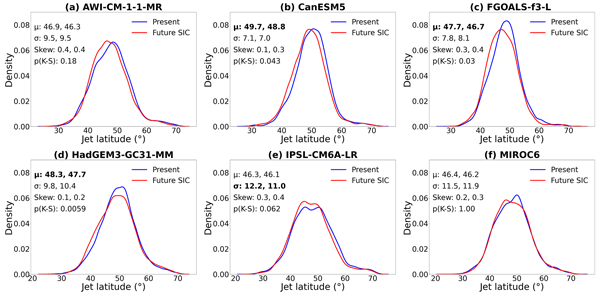
The impact of Arctic sea ice loss on the North Atlantic jet stream is debated, with some linking changes to ice loss and others to natural variability. This study uses a new method to explore how future sea ice loss will affect the jet stream. In half of the models, the jet shifts equatorward, but its speed and tilt are unchanged. Some models also exhibit more jet splitting. The results suggest that future sea ice loss is unlikely to significantly weaken the jet stream or make it more variable.
Ewa M. Bednarz, Amy H. Butler, James M. Haywood, Matthew Henry, Andy Jones, Ben Kravitz, Walker R. Lee, Douglas G. MacMartin, Amanda C. Maycock, Takashi Sekiya, Shingo Watanabe, and Daniele Visioni
Atmos. Chem. Phys., 26, 12751–12770, https://doi.org/10.5194/acp-26-12751-2026, https://doi.org/10.5194/acp-26-12751-2026, 2026
Short summary
Short summary
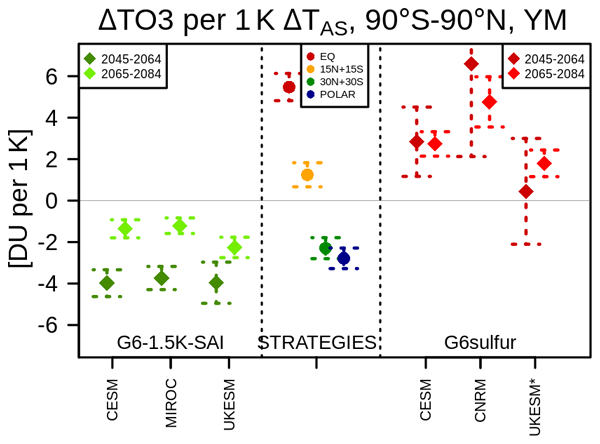
An assessment of the potential impacts of Stratospheric Aerosol Injection, a proposed method to offset global warming, on stratospheric ozone projections over the 21st century using the new multi-model GeoMIP (Geoengineering Model Intercomparison Project) G6-1.5K-SAI (Stratospheric Aerosol Injection) experiment. We discuss drivers of the responses, identify areas of model agreement and disagreement and sources of uncertainty. Our results highlight the need to assess any projected SAI impacts in wider strategy and scenario dimension using a multi-model framework.
Andrew J. Nicoll, Hannah M. Christensen, Chris Huntingford, and Doug Smith
Earth Syst. Dynam., 17, 1061–1079, https://doi.org/10.5194/esd-17-1061-2026, https://doi.org/10.5194/esd-17-1061-2026, 2026
Short summary
Short summary
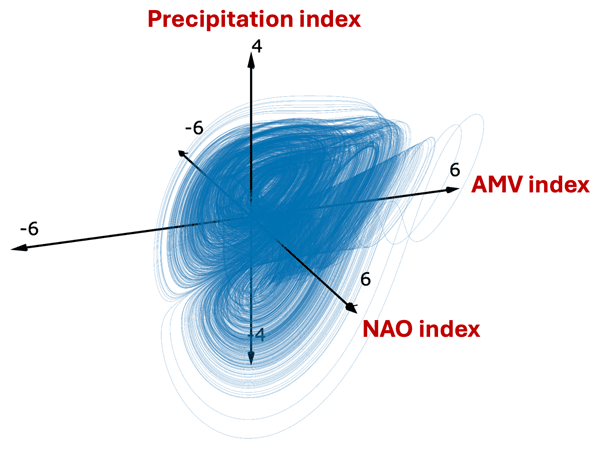
We use artificial intelligence to learn simple equations from historical climate data that describe how North Atlantic ocean temperature, air pressure and rainfall vary and influence each other over decades. Analysing the model's behaviour and equation terms, we find rainfall strongly feeds back on both the ocean and the atmosphere. These interactions are well captured by the models and allow rainfall to be predicted over the ocean, and nearby regions such as Europe over coming decades.
Chaim I. Garfinkel, David Avisar, Scott M. Osprey, Doug Smith, Jian Rao, and Jonathon S. Wright
Weather Clim. Dynam., 7, 1133–1152, https://doi.org/10.5194/wcd-7-1133-2026, https://doi.org/10.5194/wcd-7-1133-2026, 2026
Short summary
Short summary
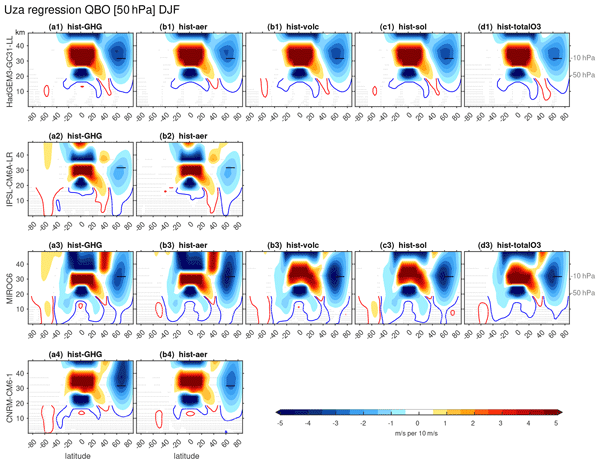
The Quasi-biennial Oscillation (QBO) dominates variability in the tropical stratosphere, & it impacts surface climate in several parts of the world. However, climate models have been shown to systematically under-estimate the influence of the QBO. Here, we re-evaluate this finding using much larger ensemble sizes than have been previously available based on four separate models. We find that the models are comparatively more successful in capturing QBO influences than reported by previous work.
Luisa E. Avilés-Podgurski, Patrick Martineau, Hua Lu, Ayako Yamamoto, Amanda C. Maycock, Andrew Orr, Tony Phillips, Thomas J. Bracegirdle, Anna E. Hogg, Grzegorz Muszynski, and Andrew Fleming
Weather Clim. Dynam., 7, 1051–1071, https://doi.org/10.5194/wcd-7-1051-2026, https://doi.org/10.5194/wcd-7-1051-2026, 2026
Short summary
Short summary
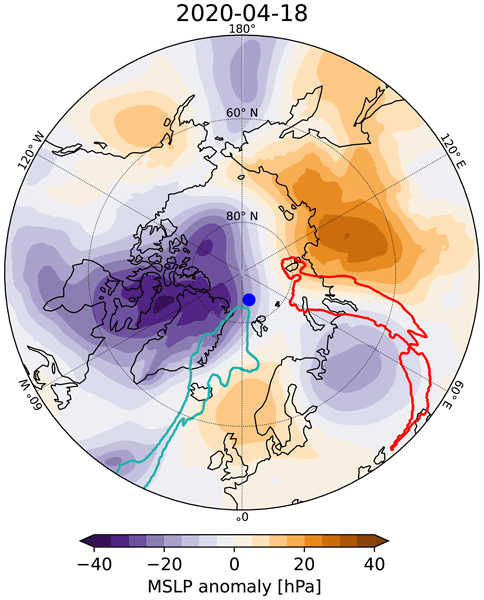
Atmospheric rivers (ARs) are narrow filaments of intense poleward water vapour transport. On rare occasions, they reach the Arctic, driving strong warming and melt. In April 2020, two ARs intruded into the central Arctic within one week, raising near-surface temperatures by up to 30°C and leading to extreme precipitation. Their distinct paths and thermodynamic evolution reveal diverse AR impacts on Arctic sea ice and precipitation extremes.
Amanda C. Maycock, Christine M. McKenna, Matthew D. K. Priestley, Jacob Perez, Zhuo Li, and Julia F. Lockwood
Nat. Hazards Earth Syst. Sci., 26, 2051–2064, https://doi.org/10.5194/nhess-26-2051-2026, https://doi.org/10.5194/nhess-26-2051-2026, 2026
Short summary
Short summary
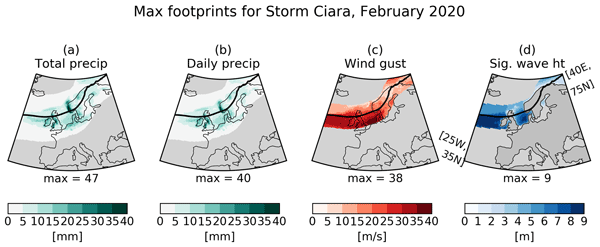
Winter North Atlantic storms cause significant financial losses and damage in Europe. This study shows that modes of seasonal large-scale climate variability called the North Atlantic Oscillation and East Atlantic Pattern modulate the exposure to cyclone related extreme wind, precipitation and storm surge hazards across many parts of Europe. The results have the potential to be combined with skilful seasonal climate forecasts of climate modes to inform the insurance sector.
Robin S. Smith, Tarkan A. Bilge, Thomas J. Bracegirdle, Paul R. Holland, Till Kuhlbrodt, Charlotte Lang, Spencer Liddicoat, Tom Mitcham, Jane Mulcahy, Kaitlin A. Naughten, Andrew Orr, Julien Palmieri, Antony J. Payne, Steven Rumbold, Marc Stringer, Ranjini Swaminathan, Sarah Taylor, Jeremy Walton, and Colin Jones
Earth Syst. Dynam., 17, 475–493, https://doi.org/10.5194/esd-17-475-2026, https://doi.org/10.5194/esd-17-475-2026, 2026
Short summary
Short summary
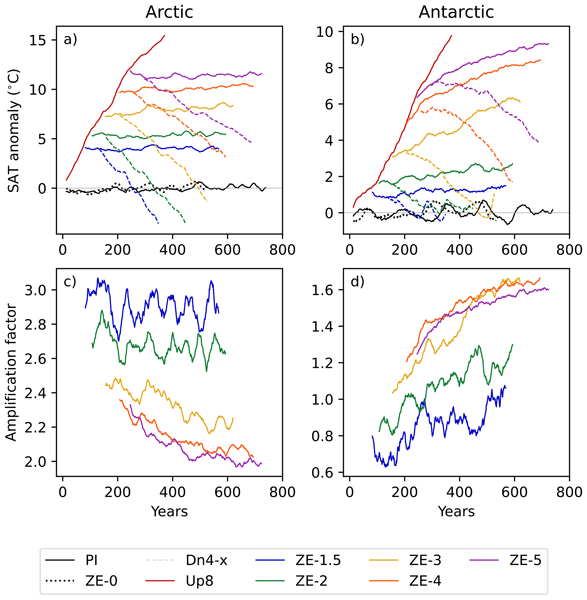
There is a dangerous amount of uncertainty in our predictions of climate change in polar regions because some of feedbacks that might lead to changes that are too rapid for us to adapt to, or that cannot be reversed. We have run a set of simulations with a state-of-the-art Earth System Model that helps improve our understanding of how climate in these regions might change. Some of the aspects we investigate are reversible but many are not, especially those affecting ice sheets and sea level.
William J. Dow, Amanda C. Maycock, Andrew N. Ross, Ryan S. Williams, and Thomas J. Bracegirdle
EGUsphere, https://doi.org/10.5194/egusphere-2026-1179, https://doi.org/10.5194/egusphere-2026-1179, 2026
Short summary
Short summary
This study aims to advance understanding of the atmospheric drivers of extreme warm days across the Antarctic Peninsula during summer. We find that these days are linked to a range of large-scale atmospheric circulation patterns. Using a statistical method, we grouped similar events and compared their wind, temperature and pressure features, showing clear differences spatially and temporally. Understanding these dynamics improves understanding of the processes that drive these extreme events.
Archie Cable, Thomas Caton Harrison, Elizabeth Kent, Richard Cornes, and Thomas J. Bracegirdle
Weather Clim. Dynam., 7, 247–262, https://doi.org/10.5194/wcd-7-247-2026, https://doi.org/10.5194/wcd-7-247-2026, 2026
Short summary
Short summary
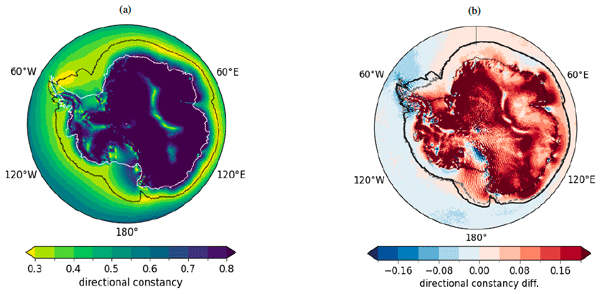
Winds around the Antarctic coast have global importance. With influences from competing drivers, their structure is complex so it is hard to understand how they will change in the future. We develop a simple measure that identifies key features in the coastal winds, including their northern extent. Using climate models, we analyse future projections of this boundary and find that it will shift polewards, shrinking the Antarctic coastal wind region.
Weronika Osmolska, Charles Chemel, Amanda Maycock, and Paul Field
Weather Clim. Dynam., 6, 1221–1240, https://doi.org/10.5194/wcd-6-1221-2025, https://doi.org/10.5194/wcd-6-1221-2025, 2025
Short summary
Short summary
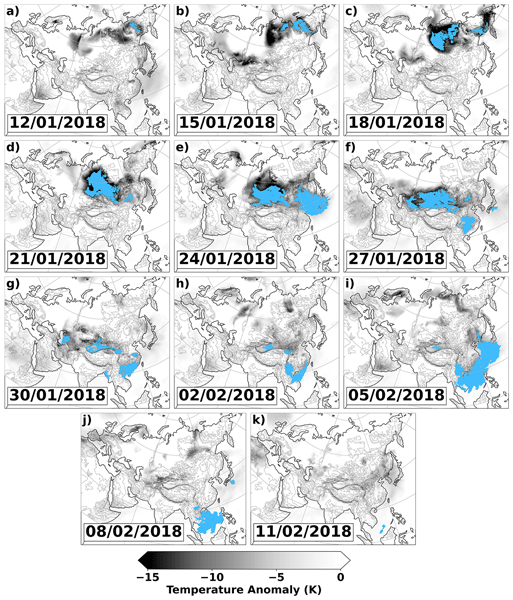
Extreme cold temperatures have widespread impacts on health, agriculture, infrastructures and the economy. We develop for the first time a methodology to build a catalogue of cold spell events, tracked in space and time. This catalogue is used to examine the behaviour of cold spells and its climatology. The results reveal specific pathways through which cold air affect midlatitudes.
Yvonne Anderson, Jacob Perez, and Amanda C. Maycock
Weather Clim. Dynam., 6, 595–608, https://doi.org/10.5194/wcd-6-595-2025, https://doi.org/10.5194/wcd-6-595-2025, 2025
Short summary
Short summary
The impact of Arctic sea ice loss on the North Atlantic jet stream is debated, with some linking changes to ice loss and others to natural variability. This study uses a new method to explore how future sea ice loss will affect the jet stream. In half of the models, the jet shifts equatorward, but its speed and tilt are unchanged. Some models also exhibit more jet splitting. The results suggest that future sea ice loss is unlikely to significantly weaken the jet stream or make it more variable.
Andreas Schiller, Simon A. Josey, John Siddorn, and Ibrahim Hoteit
State Planet, 5-opsr, 18, https://doi.org/10.5194/sp-5-opsr-18-2025, https://doi.org/10.5194/sp-5-opsr-18-2025, 2025
Short summary
Short summary
The study illustrates the way atmospheric fields are used in ocean models as boundary conditions for the provisioning of the exchanges of heat, freshwater, and momentum fluxes. Such fluxes can be based on remote sensing instruments or provided directly by numerical weather prediction systems. Air–sea flux datasets are defined by their spatial and temporal resolutions and are limited by associated biases. Air–sea flux datasets for ocean models should be chosen with the applications in mind.
Caroline R. Holmes, Thomas J. Bracegirdle, Paul R. Holland, Julienne Stroeve, and Jeremy Wilkinson
The Cryosphere, 18, 5641–5652, https://doi.org/10.5194/tc-18-5641-2024, https://doi.org/10.5194/tc-18-5641-2024, 2024
Short summary
Short summary
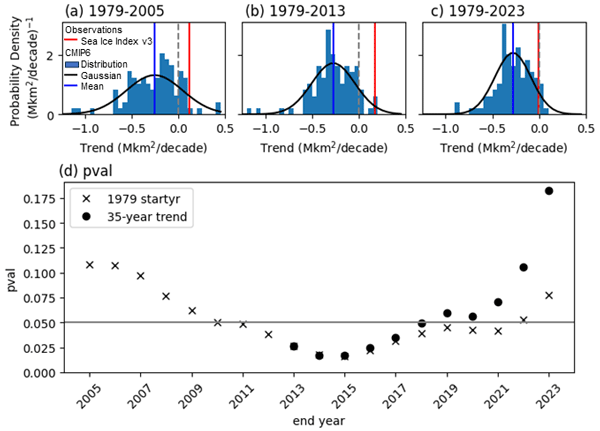
Until recently, satellite data showed an increase in Antarctic sea ice area since 1979, but climate models simulated a decrease over this period. This mismatch was one reason for low confidence in model projections of 21st-century sea ice loss. We show that following low Antarctic sea ice in 2022 and 2023, we can no longer conclude that modelled and observed trends differ. However, differences in the manner of the decline mean that model sea ice projections should still be viewed with caution.

Colin G. Jones, Fanny Adloff, Ben B. B. Booth, Peter M. Cox, Veronika Eyring, Pierre Friedlingstein, Katja Frieler, Helene T. Hewitt, Hazel A. Jeffery, Sylvie Joussaume, Torben Koenigk, Bryan N. Lawrence, Eleanor O'Rourke, Malcolm J. Roberts, Benjamin M. Sanderson, Roland Séférian, Samuel Somot, Pier Luigi Vidale, Detlef van Vuuren, Mario Acosta, Mats Bentsen, Raffaele Bernardello, Richard Betts, Ed Blockley, Julien Boé, Tom Bracegirdle, Pascale Braconnot, Victor Brovkin, Carlo Buontempo, Francisco Doblas-Reyes, Markus Donat, Italo Epicoco, Pete Falloon, Sandro Fiore, Thomas Frölicher, Neven S. Fučkar, Matthew J. Gidden, Helge F. Goessling, Rune Grand Graversen, Silvio Gualdi, José M. Gutiérrez, Tatiana Ilyina, Daniela Jacob, Chris D. Jones, Martin Juckes, Elizabeth Kendon, Erik Kjellström, Reto Knutti, Jason Lowe, Matthew Mizielinski, Paola Nassisi, Michael Obersteiner, Pierre Regnier, Romain Roehrig, David Salas y Mélia, Carl-Friedrich Schleussner, Michael Schulz, Enrico Scoccimarro, Laurent Terray, Hannes Thiemann, Richard A. Wood, Shuting Yang, and Sönke Zaehle
Earth Syst. Dynam., 15, 1319–1351, https://doi.org/10.5194/esd-15-1319-2024, https://doi.org/10.5194/esd-15-1319-2024, 2024
Short summary
Short summary
We propose a number of priority areas for the international climate research community to address over the coming decade. Advances in these areas will both increase our understanding of past and future Earth system change, including the societal and environmental impacts of this change, and deliver significantly improved scientific support to international climate policy, such as future IPCC assessments and the UNFCCC Global Stocktake.
Jacob Perez, Amanda C. Maycock, Stephen D. Griffiths, Steven C. Hardiman, and Christine M. McKenna
Weather Clim. Dynam., 5, 1061–1078, https://doi.org/10.5194/wcd-5-1061-2024, https://doi.org/10.5194/wcd-5-1061-2024, 2024
Short summary
Short summary
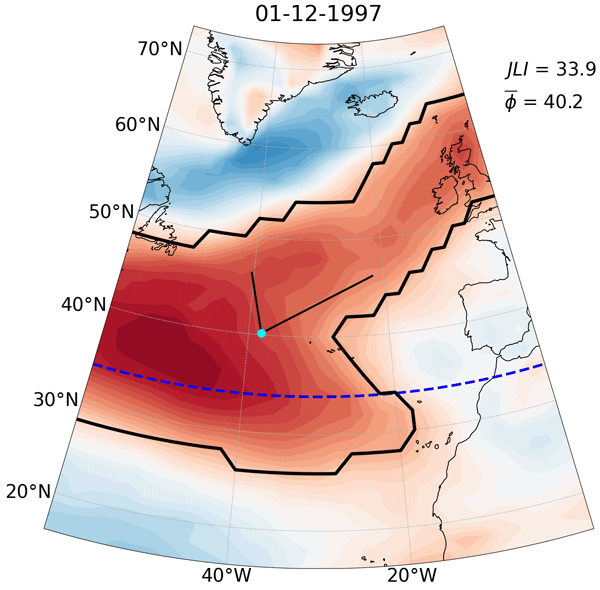
This study assesses existing methods for identifying the position and tilt of the North Atlantic eddy-driven jet, proposing a new feature-based approach. The new method overcomes limitations of other methods, offering a more robust characterisation. Contrary to prior findings, the distribution of daily latitudes shows no distinct multi-modal structure, challenging the notion of preferred jet stream latitudes or regimes. This research enhances our understanding of North Atlantic dynamics.
Rémy Bonnet, Christine M. McKenna, and Amanda C. Maycock
Weather Clim. Dynam., 5, 913–926, https://doi.org/10.5194/wcd-5-913-2024, https://doi.org/10.5194/wcd-5-913-2024, 2024
Short summary
Short summary
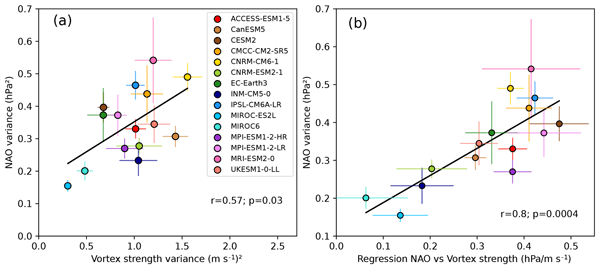
Climate models underestimate multidecadal winter North Atlantic Oscillation (NAO) variability. Understanding the origin of this weak variability is important for making reliable climate projections. We use multi-model climate simulations to explore statistical relationships with drivers that may contribute to NAO variability. We find a relationship between modelled stratosphere–troposphere coupling and multidecadal NAO variability, offering an avenue to improve the simulation of NAO variability.
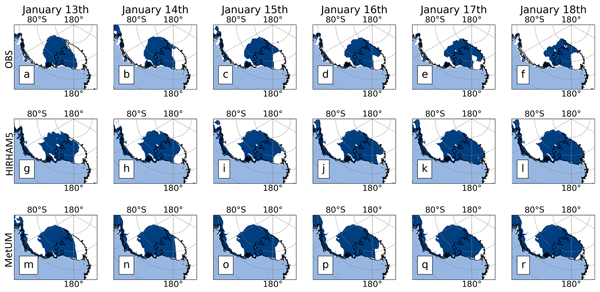
Nicolaj Hansen, Andrew Orr, Xun Zou, Fredrik Boberg, Thomas J. Bracegirdle, Ella Gilbert, Peter L. Langen, Matthew A. Lazzara, Ruth Mottram, Tony Phillips, Ruth Price, Sebastian B. Simonsen, and Stuart Webster
The Cryosphere, 18, 2897–2916, https://doi.org/10.5194/tc-18-2897-2024, https://doi.org/10.5194/tc-18-2897-2024, 2024
Short summary
Short summary
We investigated a melt event over the Ross Ice Shelf. We use regional climate models and a firn model to simulate the melt and compare the results with satellite data. We find that the firn model aligned well with observed melt days in certain parts of the ice shelf. The firn model had challenges accurately simulating the melt extent in the western sector. We identified potential reasons for these discrepancies, pointing to limitations in the models related to representing the cloud properties.

Phoebe A. Hudson, Adrien C. H. Martin, Simon A. Josey, Alice Marzocchi, and Athanasios Angeloudis
Ocean Sci., 20, 341–367, https://doi.org/10.5194/os-20-341-2024, https://doi.org/10.5194/os-20-341-2024, 2024
Short summary
Short summary
Satellite salinity data are used for the first time to study variability in Arctic freshwater transport from the Lena River and are shown to be a valuable tool for studying this region. These data confirm east/westerly wind is the main control on fresh water and sea ice transport rather than the volume of river runoff. The strong role of the wind suggests understanding how wind patterns will change is key to predicting future Arctic circulation and sea ice concentration.
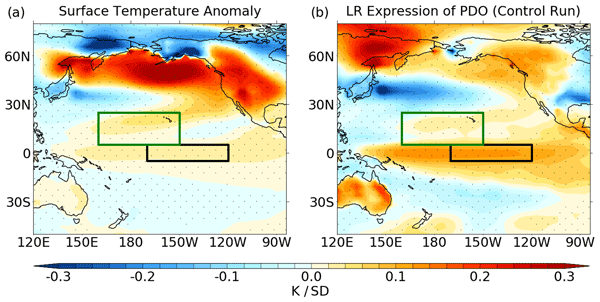
William J. Dow, Christine M. McKenna, Manoj M. Joshi, Adam T. Blaker, Richard Rigby, and Amanda C. Maycock
Weather Clim. Dynam., 5, 357–367, https://doi.org/10.5194/wcd-5-357-2024, https://doi.org/10.5194/wcd-5-357-2024, 2024
Short summary
Short summary
Changes to sea surface temperatures in the extratropical North Pacific are driven partly by patterns of local atmospheric circulation, such as the Aleutian Low. We show that an intensification of the Aleutian Low could contribute to small changes in temperatures across the equatorial Pacific via the initiation of two mechanisms. The effect, although significant, is unlikely to explain fully the recently observed multi-year shift of a pattern of climate variability across the wider Pacific.
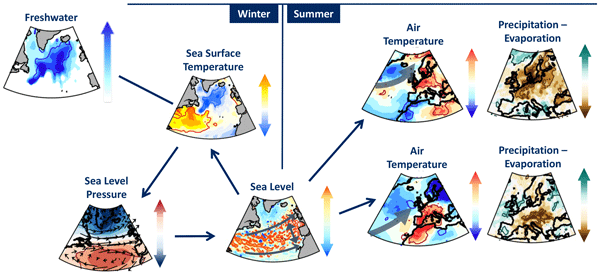
Marilena Oltmanns, N. Penny Holliday, James Screen, Ben I. Moat, Simon A. Josey, D. Gwyn Evans, and Sheldon Bacon
Weather Clim. Dynam., 5, 109–132, https://doi.org/10.5194/wcd-5-109-2024, https://doi.org/10.5194/wcd-5-109-2024, 2024
Short summary
Short summary
The melting of land ice and sea ice leads to freshwater input into the ocean. Based on observations, we show that stronger freshwater anomalies in the subpolar North Atlantic in winter are followed by warmer and drier weather over Europe in summer. The identified link indicates an enhanced predictability of European summer weather at least a winter in advance. It further suggests that warmer and drier summers over Europe can become more frequent under increased freshwater fluxes in the future.
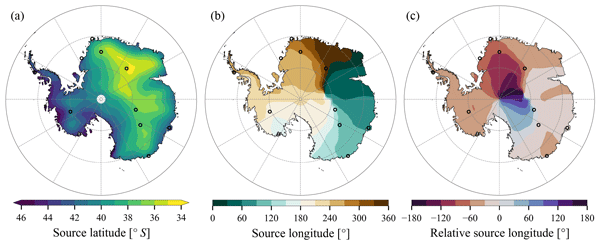
Qinggang Gao, Louise C. Sime, Alison J. McLaren, Thomas J. Bracegirdle, Emilie Capron, Rachael H. Rhodes, Hans Christian Steen-Larsen, Xiaoxu Shi, and Martin Werner
The Cryosphere, 18, 683–703, https://doi.org/10.5194/tc-18-683-2024, https://doi.org/10.5194/tc-18-683-2024, 2024
Short summary
Short summary
Antarctic precipitation is a crucial component of the climate system. Its spatio-temporal variability impacts sea level changes and the interpretation of water isotope measurements in ice cores. To better understand its climatic drivers, we developed water tracers in an atmospheric model to identify moisture source conditions from which precipitation originates. We find that mid-latitude surface winds exert an important control on moisture availability for Antarctic precipitation.

Sam Hardy, John Methven, Juliane Schwendike, Ben Harvey, and Mike Cullen
Weather Clim. Dynam., 4, 1019–1043, https://doi.org/10.5194/wcd-4-1019-2023, https://doi.org/10.5194/wcd-4-1019-2023, 2023
Short summary
Short summary
We examine a Borneo vortex case using computer simulations and satellite observations. The vortex is identified with high humidity through the atmosphere and has heaviest rainfall on its northern flank. Simulations represent circulation and rainfall accumulation well. The low-level Borneo vortex is coupled with a higher-level wave, which moves westwards along a layer with a sharp vertical gradient in moisture. Vortex growth occurs through mechanisms usually considered outside the tropics.
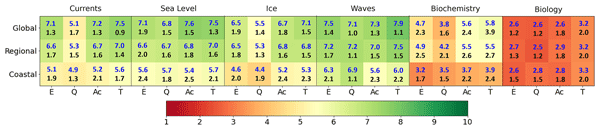
Stefania A. Ciliberti, Enrique Alvarez Fanjul, Jay Pearlman, Kirsten Wilmer-Becker, Pierre Bahurel, Fabrice Ardhuin, Alain Arnaud, Mike Bell, Segolene Berthou, Laurent Bertino, Arthur Capet, Eric Chassignet, Stefano Ciavatta, Mauro Cirano, Emanuela Clementi, Gianpiero Cossarini, Gianpaolo Coro, Stuart Corney, Fraser Davidson, Marie Drevillon, Yann Drillet, Renaud Dussurget, Ghada El Serafy, Katja Fennel, Marcos Garcia Sotillo, Patrick Heimbach, Fabrice Hernandez, Patrick Hogan, Ibrahim Hoteit, Sudheer Joseph, Simon Josey, Pierre-Yves Le Traon, Simone Libralato, Marco Mancini, Pascal Matte, Angelique Melet, Yasumasa Miyazawa, Andrew M. Moore, Antonio Novellino, Andrew Porter, Heather Regan, Laia Romero, Andreas Schiller, John Siddorn, Joanna Staneva, Cecile Thomas-Courcoux, Marina Tonani, Jose Maria Garcia-Valdecasas, Jennifer Veitch, Karina von Schuckmann, Liying Wan, John Wilkin, and Romane Zufic
State Planet, 1-osr7, 2, https://doi.org/10.5194/sp-1-osr7-2-2023, https://doi.org/10.5194/sp-1-osr7-2-2023, 2023
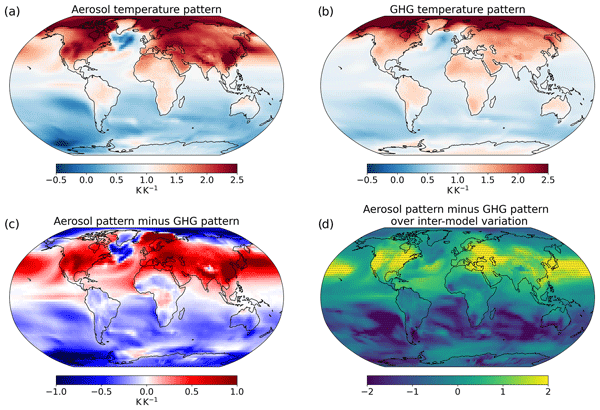
Christopher D. Wells, Lawrence S. Jackson, Amanda C. Maycock, and Piers M. Forster
Earth Syst. Dynam., 14, 817–834, https://doi.org/10.5194/esd-14-817-2023, https://doi.org/10.5194/esd-14-817-2023, 2023
Short summary
Short summary
There are many possibilities for future emissions, with different impacts in different places. Complex models can study these impacts but take a long time to run, even on powerful computers. Simple methods can be used to reduce this time by estimating the complex model output, but these are not perfect. This study looks at the accuracy of one of these techniques, showing that there are limitations to its use, especially for low-emission future scenarios.
William Stanley Torgerson, Juliane Schwendike, Andrew Ross, and Chris Short
EGUsphere, https://doi.org/10.5194/egusphere-2023-1272, https://doi.org/10.5194/egusphere-2023-1272, 2023
Preprint archived
Short summary
Short summary
Two types of fluctuations were studied in Hurricane Irma (2017) using model simulations. The first type of fluctuation, the eyewall replacement cycle, has a Hurricane’s eyewall replaced by a second outer eyewall that develops further out. The other type of fluctuation has no replacement of the eyewall but a disruption to its structure instead.

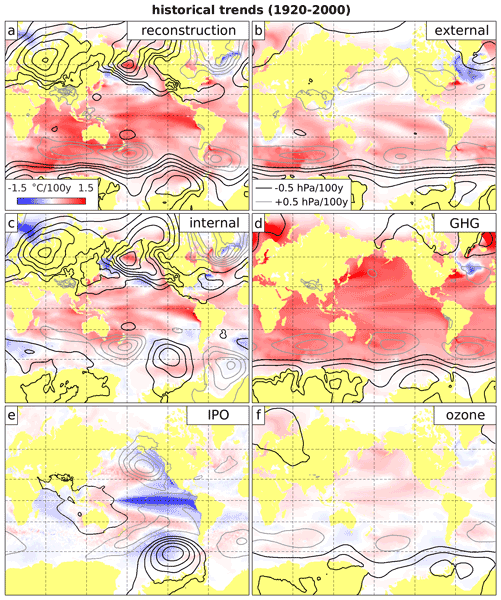
Andrew P. Schurer, Gabriele C. Hegerl, Hugues Goosse, Massimo A. Bollasina, Matthew H. England, Michael J. Mineter, Doug M. Smith, and Simon F. B. Tett
Clim. Past, 19, 943–957, https://doi.org/10.5194/cp-19-943-2023, https://doi.org/10.5194/cp-19-943-2023, 2023
Short summary
Short summary
We adopt an existing data assimilation technique to constrain a model simulation to follow three important modes of variability, the North Atlantic Oscillation, El Niño–Southern Oscillation and the Southern Annular Mode. How it compares to the observed climate is evaluated, with improvements over simulations without data assimilation found over many regions, particularly the tropics, the North Atlantic and Europe, and discrepancies with global cooling following volcanic eruptions are reconciled.
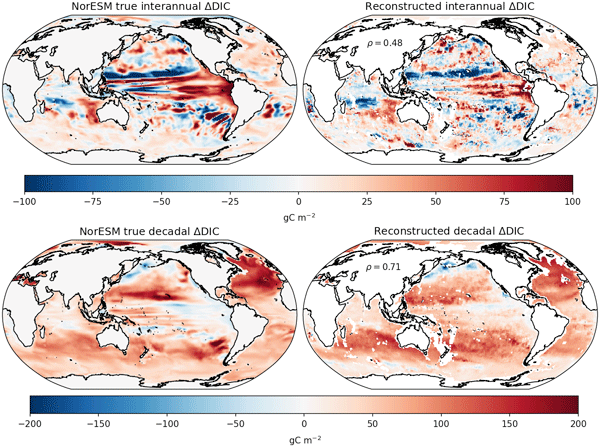
Katherine E. Turner, Doug M. Smith, Anna Katavouta, and Richard G. Williams
Biogeosciences, 20, 1671–1690, https://doi.org/10.5194/bg-20-1671-2023, https://doi.org/10.5194/bg-20-1671-2023, 2023
Short summary
Short summary
We present a new method for reconstructing ocean carbon using climate models and temperature and salinity observations. To test this method, we reconstruct modelled carbon using synthetic observations consistent with current sampling programmes. Sensitivity tests show skill in reconstructing carbon trends and variability within the upper 2000 m. Our results indicate that this method can be used for a new global estimate for ocean carbon content.

William Torgerson, Juliane Schwendike, Andrew Ross, and Chris J. Short
Weather Clim. Dynam., 4, 331–359, https://doi.org/10.5194/wcd-4-331-2023, https://doi.org/10.5194/wcd-4-331-2023, 2023
Short summary
Short summary
We investigated intensity fluctuations that occurred during the rapid intensification of Hurricane Irma (2017) to understand their effects on the storm structure. Using high-resolution model simulations, we found that the fluctuations were caused by local regions of strong ascent just outside the eyewall that disrupted the storm, leading to a larger and more symmetrical storm eye. This alters the location and intensity of the strongest winds in the storm and hence the storm's impact.
Paul R. Holland, Gemma K. O'Connor, Thomas J. Bracegirdle, Pierre Dutrieux, Kaitlin A. Naughten, Eric J. Steig, David P. Schneider, Adrian Jenkins, and James A. Smith
The Cryosphere, 16, 5085–5105, https://doi.org/10.5194/tc-16-5085-2022, https://doi.org/10.5194/tc-16-5085-2022, 2022
Short summary
Short summary
The Antarctic Ice Sheet is losing ice, causing sea-level rise. However, it is not known whether human-induced climate change has contributed to this ice loss. In this study, we use evidence from climate models and palaeoclimate measurements (e.g. ice cores) to suggest that the ice loss was triggered by natural climate variations but is now sustained by human-forced climate change. This implies that future greenhouse-gas emissions may influence sea-level rise from Antarctica.
Thomas Caton Harrison, Stavroula Biri, Thomas J. Bracegirdle, John C. King, Elizabeth C. Kent, Étienne Vignon, and John Turner
Weather Clim. Dynam., 3, 1415–1437, https://doi.org/10.5194/wcd-3-1415-2022, https://doi.org/10.5194/wcd-3-1415-2022, 2022
Short summary
Short summary
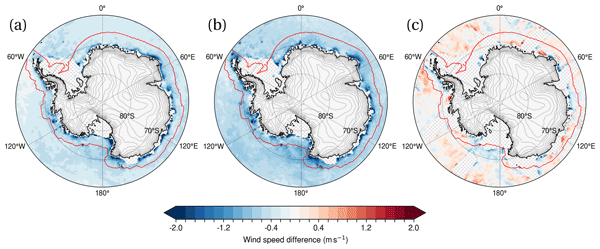
Easterly winds encircle Antarctica, impacting sea ice and helping drive ocean currents which shield ice shelves from warmer waters. Reanalysis datasets give us our most complete picture of how these winds behave. In this paper we use satellite data, surface measurements and weather balloons to test how realistic recent reanalysis estimates are. The winds are generally accurate, especially in the most recent of the datasets, but important short-term variations are often misrepresented.
Rachael N. C. Sanders, Daniel C. Jones, Simon A. Josey, Bablu Sinha, and Gael Forget
Ocean Sci., 18, 953–978, https://doi.org/10.5194/os-18-953-2022, https://doi.org/10.5194/os-18-953-2022, 2022
Short summary
Short summary
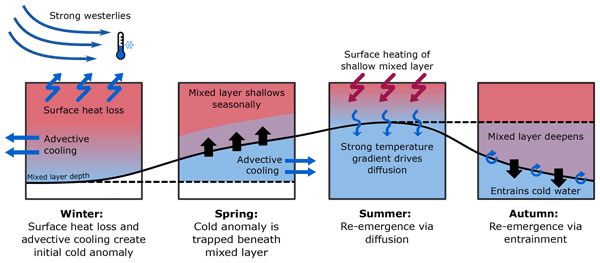
In 2015, record low temperatures were observed in the North Atlantic. Using an ocean model, we show that surface heat loss in December 2013 caused 75 % of the initial cooling before this "cold blob" was trapped below the surface. The following summer, the cold blob re-emerged due to a strong temperature difference between the surface ocean and below, driving vertical diffusion of heat. Lower than average surface warming then led to the coldest temperature anomalies in August 2015.
Marilena Oltmanns, N. Penny Holliday, James Screen, D. Gwyn Evans, Simon A. Josey, Sheldon Bacon, and Ben I. Moat
Weather Clim. Dynam. Discuss., https://doi.org/10.5194/wcd-2021-79, https://doi.org/10.5194/wcd-2021-79, 2021
Revised manuscript not accepted
Short summary
Short summary
The Arctic is currently warming twice as fast as the global average. This results in enhanced melting and thus freshwater releases into the North Atlantic. Using a combination of observations and models, we show that atmosphere-ocean feedbacks initiated by freshwater releases into the North Atlantic lead to warmer and drier weather over Europe in subsequent summers. The existence of this dynamical link suggests that European summer weather can potentially be predicted months to years in advance.
Cited articles
Athanasiadis, P. J., Bellucci, A., Scaife, A. A., Hermanson, L., Materia, S., Sanna, A., Borrelli, A., MacLachlan, C., and Gualdi, S.: A Multisystem View of Wintertime NAO Seasonal Predictions, J. Climate, 30, 1461–1475, https://doi.org/10.1175/JCLI-D-16-0153.1, 2017. a
Ayarzagüena, B., Ineson, S., Dunstone, N. J., Baldwin, M. P., and Scaife, A. A.: Intraseasonal Effects of El Niño–Southern Oscillation on North Atlantic Climate, J. Climate, 31, 8861–8873, https://doi.org/10.1175/JCLI-D-18-0097.1, 2018. a
Barnston, A. G. and Livezey, R. E.: Classification, Seasonality and Persistence of Low-Frequency Atmospheric Circulation Patterns, Mon. Weather Rev., 115, 1083–1126, https://doi.org/10.1175/1520-0493(1987)115<1083:CSAPOL>2.0.CO;2, 1987. a
Bonnet, R., McKenna, C. M., and Maycock, A. C.: Model spread in multidecadal North Atlantic Oscillation variability connected to stratosphere–troposphere coupling, Weather Clim. Dynam., 5, 913–926, https://doi.org/10.5194/wcd-5-913-2024, 2024. a, b
Cayan, D. R.: Latent and Sensible Heat Flux Anomalies over the Northern Oceans: Driving the Sea Surface Temperature, J. Phys. Oceanogr., 22, 859–881, https://doi.org/10.1175/1520-0485(1992)022<0859:LASHFA>2.0.CO;2, 1992. a, b, c
CEDA: WCRP Coupled Model Intercomparison Project (Phase 6) datasets, ESGF, https://esgf-ui.ceda.ac.uk (last access: 10 January 2026), 2026. a
Coëtlogon, G. d. and Frankignoul, C.: The Persistence of Winter Sea Surface Temperature in the North Atlantic, J. Climate, 16, 1364–1377, https://doi.org/10.1175/1520-0442(2003)16<1364:TPOWSS>2.0.CO;2, 2003. a
Deser, C. and Timlin, M. S.: Atmosphere–Ocean Interaction on Weekly Timescales in the North Atlantic and Pacific, J. Climate, 10, 393–408, https://doi.org/10.1175/1520-0442(1997)010<0393:AOIOWT>2.0.CO;2, 1997. a, b
Deser, C., Tomas, R. A., and Peng, S.: The Transient Atmospheric Circulation Response to North Atlantic SST and Sea Ice Anomalies, J. Climate, 20, 4751–4767, https://doi.org/10.1175/JCLI4278.1, 2007. a, b
Deser, C., Alexander, M. A., Xie, S.-P., and Phillips, A. S.: Sea Surface Temperature Variability: Patterns and Mechanisms, Annu. Rev. Mar. Sci., 2, 115–143, https://doi.org/10.1146/annurev-marine-120408-151453, 2010. a
Eade, R., Smith, D., Scaife, A., Wallace, E., Dunstone, N., Hermanson, L., and Robinson, N.: Do seasonal-to-decadal climate predictions underestimate the predictability of the real world?, Geophys. Res. Lett., 41, 5620–5628, https://doi.org/10.1002/2014GL061146, 2014. a
Eden, C. and Willebrand, J.: Mechanism of Interannual to Decadal Variability of the North Atlantic Circulation, J. Climate, 14, 2266–2280, https://doi.org/10.1175/1520-0442(2001)014<2266:MOITDV>2.0.CO;2, 2001. a
Eyring, V., Bony, S., Meehl, G. A., Senior, C. A., Stevens, B., Stouffer, R. J., and Taylor, K. E.: Overview of the Coupled Model Intercomparison Project Phase 6 (CMIP6) experimental design and organization, Geosci. Model Dev., 9, 1937–1958, https://doi.org/10.5194/gmd-9-1937-2016, 2016. a
Ferreira, D. and Frankignoul, C.: The Transient Atmospheric Response to Midlatitude SST Anomalies, J. Climate, 18, 1049–1067, https://doi.org/10.1175/JCLI-3313.1, 2005. a, b
Gastineau, G. and Frankignoul, C.: Influence of the North Atlantic SST Variability on the Atmospheric Circulation during the Twentieth Century, J. Climate, 28, 1396–1416, https://doi.org/10.1175/JCLI-D-14-00424.1, 2015. a
Hernadez, A. and Comas-Bru, L.: East Atlantic and Scandinavian patterns, in: Atmospheric Oscillations, Elsevier, Chap. 9, 183–202, https://doi.org/10.1016/B978-0-443-15638-0.00009-5, 2025. a, b, c
Hersbach, H., Bell, B., Berrisford, P., Hirahara, S., Horányi, A., Muñoz‐Sabater, J., Nicolas, J., Peubey, C., Radu, R., Schepers, D., Simmons, A., Soci, C., Abdalla, S., Abellan, X., Balsamo, G., Bechtold, P., Biavati, G., Bidlot, J., Bonavita, M., De Chiara, G., Dahlgren, P., Dee, D., Diamantakis, M., Dragani, R., Flemming, J., Forbes, R., Fuentes, M., Geer, A., Haimberger, L., Healy, S., Hogan, R.J., Hólm, E., Janisková, M., Keeley, S., Laloyaux, P., Lopez, P., Lupu, C., Radnoti, G., de Rosnay, P., Rozum, I., Vamborg, F., Villaume, S., and Thépaut, J.-N.: Complete ERA5 from 1940: Fifth generation of ECMWF atmospheric reanalyses of the global climate, Copernicus Climate Change Service (C3S) Data Store (CDS) [data set], https://doi.org/10.24381/cds.143582cf, 2017. a
Hersbach, H., Bell, B., Berrisford, P., Hirahara, S., Horányi, A., Muñoz-Sabater, J., Nicolas, J., Peubey, C., Radu, R., Schepers, D., Simmons, A., Soci, C., Abdalla, S., Abellan, X., Balsamo, G., Bechtold, P., Biavati, G., Bidlot, J., Bonavita, M., De Chiara, G., Dahlgren, P., Dee, D., Diamantakis, M., Dragani, R., Flemming, J., Forbes, R., Fuentes, M., Geer, A., Haimberger, L., Healy, S., Hogan, R. J., Hólm, E., Janisková, M., Keeley, S., Laloyaux, P., Lopez, P., Lupu, C., Radnoti, G., de Rosnay, P., Rozum, I., Vamborg, F., Villaume, S., and Thépaut, J.-N.: The ERA5 global reanalysis, Q. J. Roy. Meteor. Soc., 146, 1999–2049, https://doi.org/10.1002/qj.3803, 2020. a
Hurrell, J. W., Kushnir, Y., Ottersen, G., and Visbeck, M.: An Overview of the North Atlantic Oscillation, in: The North Atlantic Oscillation: Climatic Significance and Environmental Impact, American Geophysical Union (AGU), 1–35, https://doi.org/10.1029/134GM01, ISBN 978-1-118-66903-7, 2003. a, b
Ineson, S. and Scaife, A. A.: The role of the stratosphere in the European climate response to El Niño, Nat. Geosci., 2, 32–36, https://doi.org/10.1038/ngeo381, 2009. a
Jiménez-Esteve, B. and Domeisen, D. I. V.: The Tropospheric Pathway of the ENSO–North Atlantic Teleconnection, J. Climate, 31, 4563–4584, https://doi.org/10.1175/JCLI-D-17-0716.1, 2018. a
Keeley, S. P. E., Sutton, R. T., and Shaffrey, L. C.: Does the North Atlantic Oscillation show unusual persistence on intraseasonal timescales?, Geophys. Res. Lett., 36, https://doi.org/10.1029/2009GL040367, 2009. a
Koenigk, T., Caian, M., Nikulin, G., and Schimanke, S.: Regional Arctic sea ice variations as predictor for winter climate conditions, Clim. Dynam., 46, 317–337, https://doi.org/10.1007/s00382-015-2586-1, 2016. a
Kolstad, E. W.: Deficient ocean–atmosphere feedbacks constrain seasonal NAO prediction, Weather Clim. Dynam., 7, 507–522, https://doi.org/10.5194/wcd-7-507-2026, 2026. a
Kushnir, Y., Robinson, W. A., Bladé, I., Hall, N. M. J., Peng, S., and Sutton, R.: Atmospheric GCM Response to Extratropical SST Anomalies: Synthesis and Evaluation, J. Climate, 15, 2233–2256, https://doi.org/10.1175/1520-0442(2002)015<2233:AGRTES>2.0.CO;2, 2002. a
Maidens, A., Knight, J. R., and Scaife, A. A.: Tropical and stratospheric influences on winter atmospheric circulation patterns in the North Atlantic sector, Environ. Res. Lett., 16, 024035, https://doi.org/10.1088/1748-9326/abd8aa, 2021. a, b
Marshall, J., Kushnir, Y., Battisti, D., Chang, P., Czaja, A., Dickson, R., Hurrell, J., McCartney, M., Saravanan, R., and Visbeck, M.: North Atlantic climate variability: phenomena, impacts and mechanisms, Int. J. Climatol., 21, 1863–1898, https://doi.org/10.1002/joc.693, 2001. a, b, c
Mellado-Cano, J., Barriopedro, D., García-Herrera, R., Trigo, R. M., and Hernández, A.: Examining the North Atlantic Oscillation, East Atlantic Pattern, and Jet Variability since 1685, J. Climate, 32, 6285–6298, https://doi.org/10.1175/JCLI-D-19-0135.1, 2019. a
Mori, M., Watanabe, M., Shiogama, H., Inoue, J., and Kimoto, M.: Robust Arctic sea-ice influence on the frequent Eurasian cold winters in past decades, Nat. Geosci., 7, 869–873, https://doi.org/10.1038/ngeo2277, 2014. a
Ossó, A., Sutton, R., Shaffrey, L., and Dong, B.: Observational evidence of European summer weather patterns predictable from spring, P. Natl. Acad. Sci. USA, 115, 59–63, https://doi.org/10.1073/pnas.1713146114, 2018. a
Patrizio, C. R., Athanasiadis, P. J., Smith, D. M., and Nicolì, D.: Ocean-atmosphere feedbacks key to NAO decadal predictability, npj Climate and Atmospheric Science, 8, 1–14, https://doi.org/10.1038/s41612-025-01027-7, 2025. a, b
Perez, J., Maycock, A. C., Griffiths, S. D., Hardiman, S. C., and McKenna, C. M.: A new characterisation of the North Atlantic eddy-driven jet using two-dimensional moment analysis, Weather Clim. Dynam., 5, 1061–1078, https://doi.org/10.5194/wcd-5-1061-2024, 2024. a
Petoukhov, V. and Semenov, V. A.: A link between reduced Barents-Kara sea ice and cold winter extremes over northern continents, J. Geophys. Res.-Atmos., 115, https://doi.org/10.1029/2009JD013568, 2010. a
Scaife, A. A., Arribas, A., Blockley, E., Brookshaw, A., Clark, R. T., Dunstone, N., Eade, R., Fereday, D., Folland, C. K., Gordon, M., Hermanson, L., Knight, J. R., Lea, D. J., MacLachlan, C., Maidens, A., Martin, M., Peterson, A. K., Smith, D., Vellinga, M., Wallace, E., Waters, J., and Williams, A.: Skillful long-range prediction of European and North American winters, Geophys. Res. Lett., 41, 2514–2519, https://doi.org/10.1002/2014GL059637, 2014. a, b
Scaife, A. A., Karpechko, A. Y., Baldwin, M. P., Brookshaw, A., Butler, A. H., Eade, R., Gordon, M., MacLachlan, C., Martin, N., Dunstone, N., and Smith, D.: Seasonal winter forecasts and the stratosphere, Atmos. Sci. Lett., 17, 51–56, https://doi.org/10.1002/asl.598, 2016. a
Scaife, A. A., Comer, R. E., Dunstone, N. J., Knight, J. R., Smith, D. M., MacLachlan, C., Martin, N., Peterson, K. A., Rowlands, D., Carroll, E. B., Belcher, S., and Slingo, J.: Tropical rainfall, Rossby waves and regional winter climate predictions, Q. J. Roy. Meteor. Soc., 143, 1–11, https://doi.org/10.1002/qj.2910, 2017. a
Smith, D. M., Scaife, A. A., Eade, R., and Knight, J. R.: Seasonal to decadal prediction of the winter North Atlantic Oscillation: emerging capability and future prospects, Q. J. Roy. Meteor. Soc., 142, 611–617, https://doi.org/10.1002/qj.2479, 2016. a
Smith, D. M., Eade, R., Scaife, A. A., Caron, L.-P., Danabasoglu, G., DelSole, T. M., Delworth, T., Doblas-Reyes, F. J., Dunstone, N. J., Hermanson, L., Kharin, V., Kimoto, M., Merryfield, W. J., Mochizuki, T., Müller, W. A., Pohlmann, H., Yeager, S., and Yang, X.: Robust skill of decadal climate predictions, npj Climate and Atmospheric Science, 2, 1–10, https://doi.org/10.1038/s41612-019-0071-y, 2019. a
Thornton, H. E., Smith, D. M., Scaife, A. A., and Dunstone, N. J.: Seasonal Predictability of the East Atlantic Pattern in Late Autumn and Early Winter, Geophys. Res. Lett., 50, e2022GL100712, https://doi.org/10.1029/2022GL100712, 2023. a, b, c, d
Wang, L., Ting, M., and Kushner, P. J.: A robust empirical seasonal prediction of winter NAO and surface climate, Scientific Reports, 7, 279, https://doi.org/10.1038/s41598-017-00353-y, 2017. a, b
Williams, R. S., Maycock, A. C., Charnay, V., Knight, J., and Polichtchouk, I.: Strong polar vortex favoured intense Northern European storminess in February 2022, Communications Earth & Environment, 6, 226, https://doi.org/10.1038/s43247-025-02175-7, 2025. a
Short summary
This study assessed how well climate models represent relationships between the North Atlantic ocean and atmosphere in autumn and winter. While models simulate observed relationships in autumn and winter, they fail to capture them in the transition between seasons. The results suggest the link between autumn sea surface temperatures and the winter atmosphere is driven mainly by atmospheric rather than ocean processes, highlighting important model biases that may limit seasonal forecast skill.
This study assessed how well climate models represent relationships between the North Atlantic...


Altmetrics
Final-revised paper
Preprint