
Articles | Volume 7, issue 1
https://doi.org/10.5194/wcd-7-489-2026
© Author(s) 2026. This work is distributed under
the Creative Commons Attribution 4.0 License.
the Creative Commons Attribution 4.0 License.
https://doi.org/10.5194/wcd-7-489-2026
© Author(s) 2026. This work is distributed under
the Creative Commons Attribution 4.0 License.
the Creative Commons Attribution 4.0 License.
Research article
| Highlight paper
| 
12 Mar 2026
Research article | Highlight paper |
| 12 Mar 2026
| 12 Mar 2026
The impact of Aeolus observations on wind and rainfall predictions
Institute of Meteorology and Climate Research Troposphere Research (IMKTRO), Karlsruhe Institute of Technology (KIT), Karlsruhe, Germany
Peter Knippertz
Institute of Meteorology and Climate Research Troposphere Research (IMKTRO), Karlsruhe Institute of Technology (KIT), Karlsruhe, Germany
Michael Rennie
European Centre for Medium-Range Weather Forecasts (ECMWF), Reading, UK
Martin Weissmann
Institut für Meteorologie und Geophysik, Universität Wien, Vienna, Austria
Related authors
Tanguy Jonville, Maurus Borne, Cyrille Flamant, Juan Cuesta, Olivier Bock, Pierre Bosser, Christophe Lavaysse, Andreas Fink, and Peter Knippertz
Atmos. Chem. Phys., 25, 9765–9786, https://doi.org/10.5194/acp-25-9765-2025, https://doi.org/10.5194/acp-25-9765-2025, 2025
Short summary
Short summary
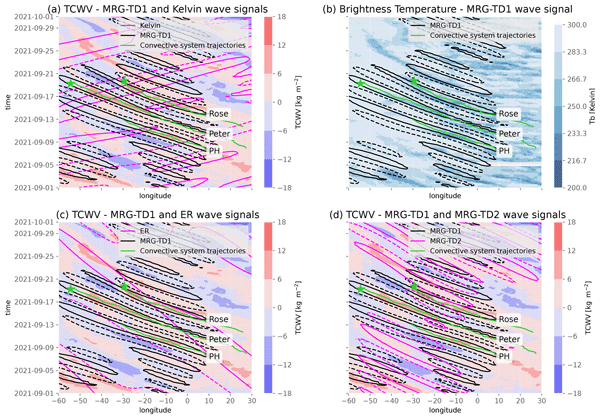
Tropical waves structure the atmosphere. Four types of tropical waves (equatorial Rossby – ER, Kelvin, MRG-TD1, and MRG-TD2 – mixed Rossby gravity–tropical depressions) are studied using filters, satellite measurements, and in situ data from the Clouds–Atmosphere Dynamics–Dust Interaction in West Africa (CADDIWA) campaign held in September 2021 in Cabo Verde. ER waves impact temperature and humidity above 2500 m, MRG-TD1 around 3500 m, and MRG-TD2 around 2000 m. Interactions between these waves favor tropical cyclone formation.
Maurus Borne, Peter Knippertz, Martin Weissmann, Benjamin Witschas, Cyrille Flamant, Rosimar Rios-Berrios, and Peter Veals
Atmos. Meas. Tech., 17, 561–581, https://doi.org/10.5194/amt-17-561-2024, https://doi.org/10.5194/amt-17-561-2024, 2024
Short summary
Short summary
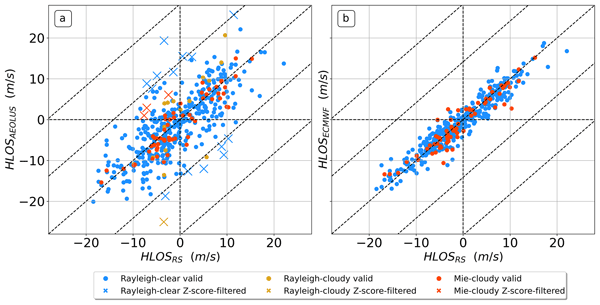
This study assesses the quality of Aeolus wind measurements over the tropical Atlantic. The results identified the accuracy and precision of the Aeolus wind measurements and the potential source of errors. For instance, the study revealed atmospheric conditions that can deteriorate the measurement quality, such as weaker laser signal in cloudy or dusty conditions, and confirmed the presence of an orbital-dependant bias. These results can help to improve the Aeolus wind measurement algorithm.
N'Datchoh Evelyne Touré, Peter Knippertz, Andreas H. Fink, Marlon Maranan, Julia Bruckert, Gholamali Hoshyaripour, Jasmin Haupt, and Arona Diedhiou
EGUsphere, https://doi.org/10.5194/egusphere-2026-3128, https://doi.org/10.5194/egusphere-2026-3128, 2026
This preprint is open for discussion and under review for Atmospheric Chemistry and Physics (ACP).
Short summary
Short summary
Rapid urbanization in Africa drives increasing air pollution. Once released, pollutants can travel long distances and impact remote areas. Here, we investigate the dispersion of pollutants from cities along the West African Guinean Coast by the land-sea breeze (LSB) circulation during the dry season using idealized tracer experiments with a weather prediction model. The experiments quantify the typical inland penetration of pollutants and show a transport to the Atlantic Ocean aloft.
Dimitri Trapon, Holger Baars, Sebastian Bley, Albert Ansmann, Michael Rennie, Sergey Khaykin, and Michael Sicard
EGUsphere, https://doi.org/10.5194/egusphere-2026-2575, https://doi.org/10.5194/egusphere-2026-2575, 2026
Short summary
Short summary
The study presents observations of the 2022 Hunga volcanic aerosol in the stratosphere made by the European Space Agency’s Aeolus satellite. Aeolus tracks the long-range transported plumes that circumnavigate the Earth at distinct latitudes and altitudes up to 30 km. Vertical gradient of optical properties measured with the ultraviolet lidar signal are shown, such as decreasing trends over time. This helps to understand the stratospheric residence time of aerosols in the Southern Hemisphere.
Bingying Shi, Philipp Griewank, Florian Meier, Jinzhong Min, and Martin Weissmann
EGUsphere, https://doi.org/10.5194/egusphere-2026-1463, https://doi.org/10.5194/egusphere-2026-1463, 2026
Short summary
Short summary
The non-Gaussian distribution of first-guess departures can be mitigated by applying cloud-dependent error models. In this study, we evaluate three existing error models and propose a revised approach that leads to a better fit to a Gaussian distribution. Furthermore, the revised approach is physically better justified as the cloud effect is estimated by the maximum cloud effect of model and observations instead of using the mean cloud effect of model and observations.
Oliver Lux, Michael Rennie, Jos de Kloe, and Oliver Reitebuch
Atmos. Meas. Tech., 19, 1729–1761, https://doi.org/10.5194/amt-19-1729-2026, https://doi.org/10.5194/amt-19-1729-2026, 2026
Short summary
Short summary
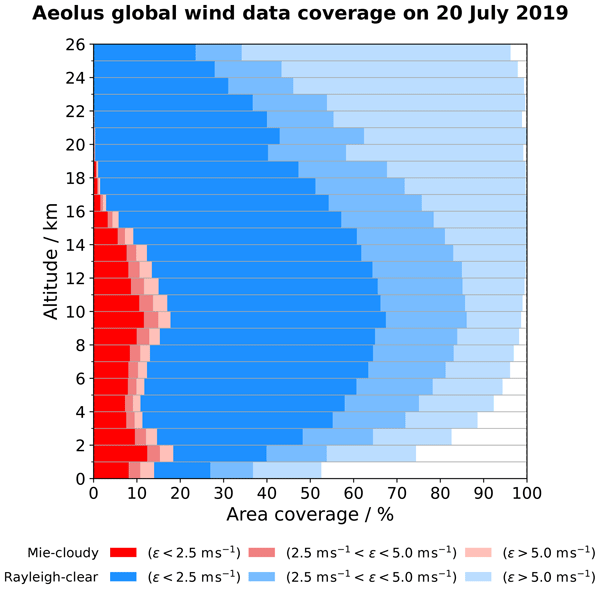
The European Space Agency's Aeolus satellite (2018–2023) was the first mission to measure global wind profiles from space. We analysed its performance over five years to understand data quality and coverage under different conditions. By linking instrument behaviour to wind observations, we identified strengths and limitations. These results provide essential guidance for the design and operation of the operational follow-on mission Aeolus-2.
Hannah Meyer, Konrad Kandler, Sylvain Dupont, Jerónimo Escribano, Jessica Girdwood, George Nikolich, Andrés Alastuey, Vicken Etyemezian, Cristina González-Flórez, Adolfo González-Romero, Tareq Hussein, Mark Irvine, Peter Knippertz, Ottmar Möhler, Xavier Querol, Chris Stopford, Franziska Vogel, Frederik Weis, Andreas Wieser, Carlos Pérez García-Pando, and Martina Klose
Atmos. Meas. Tech., 19, 21–61, https://doi.org/10.5194/amt-19-21-2026, https://doi.org/10.5194/amt-19-21-2026, 2026
Short summary
Short summary
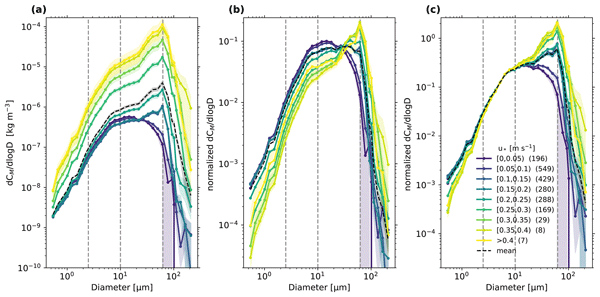
Mineral dust particles emitted from dry soils are of various sizes, yet the abundance of very large particles is not well understood. Here we measured the dust size distribution from fine to giant particles at an emission source during a field campaign in Jordan (J-WADI) using multiple instruments. Our findings show that large particles make up a significant part of the total dust mass. This knowledge is essential to improve climate models and to predict dust impacts on climate and environment.
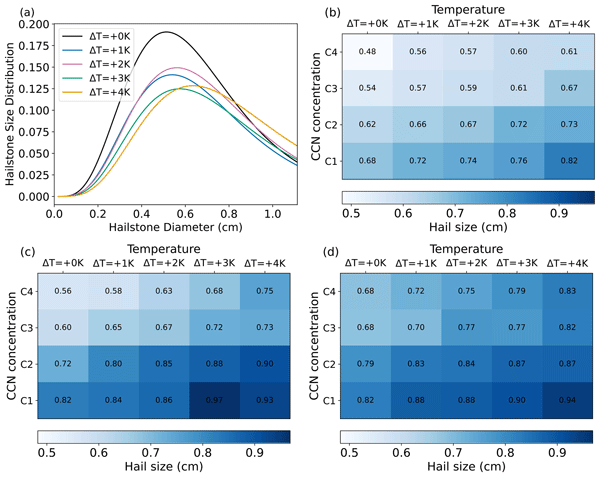
Lina Lucas, Christian Barthlott, Corinna Hoose, and Peter Knippertz
Atmos. Chem. Phys., 25, 18527–18548, https://doi.org/10.5194/acp-25-18527-2025, https://doi.org/10.5194/acp-25-18527-2025, 2025
Short summary
Short summary
We studied how climate change and cleaner air could affect severe storms in Germany. Using high-resolution weather simulations of past supercell storms under warmer and less polluted conditions, we found that storms may become more intense, with heavier rainfall and larger hailstones. These changes suggest an increased risk of damage in the future. Our findings help improve understanding of how extreme storms may evolve in a changing climate.
Tanguy Jonville, Maurus Borne, Cyrille Flamant, Juan Cuesta, Olivier Bock, Pierre Bosser, Christophe Lavaysse, Andreas Fink, and Peter Knippertz
Atmos. Chem. Phys., 25, 9765–9786, https://doi.org/10.5194/acp-25-9765-2025, https://doi.org/10.5194/acp-25-9765-2025, 2025
Short summary
Short summary
Tropical waves structure the atmosphere. Four types of tropical waves (equatorial Rossby – ER, Kelvin, MRG-TD1, and MRG-TD2 – mixed Rossby gravity–tropical depressions) are studied using filters, satellite measurements, and in situ data from the Clouds–Atmosphere Dynamics–Dust Interaction in West Africa (CADDIWA) campaign held in September 2021 in Cabo Verde. ER waves impact temperature and humidity above 2500 m, MRG-TD1 around 3500 m, and MRG-TD2 around 2000 m. Interactions between these waves favor tropical cyclone formation.
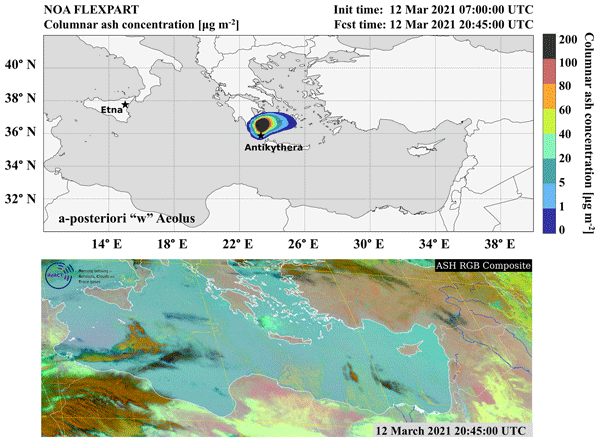
Anna Kampouri, Vassilis Amiridis, Thanasis Georgiou, Stavros Solomos, Anna Gialitaki, Maria Tsichla, Michael Rennie, Simona Scollo, and Prodromos Zanis
Atmos. Chem. Phys., 25, 7343–7368, https://doi.org/10.5194/acp-25-7343-2025, https://doi.org/10.5194/acp-25-7343-2025, 2025
Short summary
Short summary
This study proposes a novel inverse modeling framework coupled with remote sensing data for improving volcanic ash dispersion forecasts, essential for aviation safety. By integrating FLEXPART dispersion model outputs with ground-based ACTRIS lidar observations, the approach estimates Etna's volcanic particle emissions and highlights a significant enhancement in the forecast accuracy.
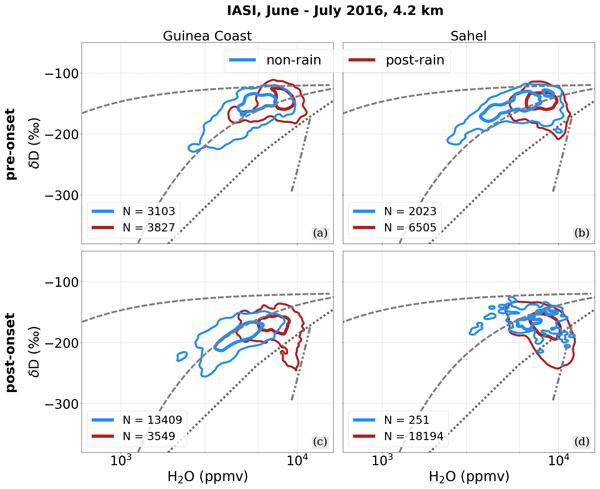
Christopher Johannes Diekmann, Matthias Schneider, Peter Knippertz, Tim Trent, Hartmut Boesch, Amelie Ninja Roehling, John Worden, Benjamin Ertl, Farahnaz Khosrawi, and Frank Hase
Atmos. Chem. Phys., 25, 5409–5431, https://doi.org/10.5194/acp-25-5409-2025, https://doi.org/10.5194/acp-25-5409-2025, 2025
Short summary
Short summary
The West African Monsoon is the main source of rainfall over West Africa, and understanding the development of the monsoon remains challenging due to complex interactions of atmospheric processes. We make use of new satellite datasets of isotopes in tropospheric water vapour to characterize processes controlling the monsoon convection. We find that comparing different water vapour isotopes reveals effects of rain–vapour interactions and air mass transport.
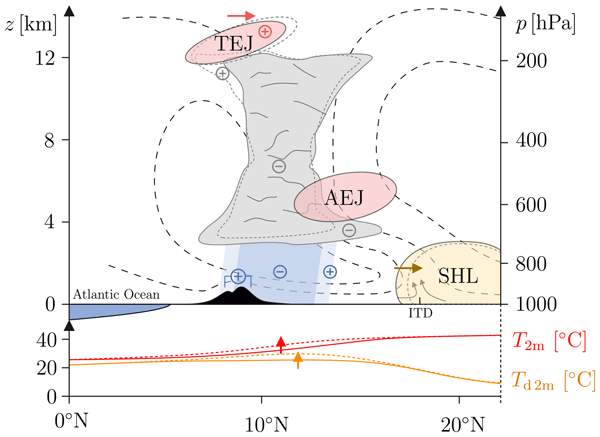
Matthias Fischer, Peter Knippertz, and Carsten Proppe
Weather Clim. Dynam., 6, 113–130, https://doi.org/10.5194/wcd-6-113-2025, https://doi.org/10.5194/wcd-6-113-2025, 2025
Short summary
Short summary
The West African monsoon is vital for millions but difficult to represent with numerical models. Our research aims at improving monsoon simulations by optimizing three model parameters – entrainment rate, ice fall speed, and soil moisture evaporation – using an advanced surrogate-based multi-objective optimization framework. Results show that tuning these parameters can sometimes improve certain monsoon characteristics, however at the expense of others, highlighting the power of our approach.
Selina M. Kiefer, Patrick Ludwig, Sebastian Lerch, Peter Knippertz, and Joaquim G. Pinto
EGUsphere, https://doi.org/10.5194/egusphere-2024-2955, https://doi.org/10.5194/egusphere-2024-2955, 2024
Preprint withdrawn
Short summary
Short summary
Weather forecasts 14 days in advance generally have a low skill but not always. We identify reasons thereof depending on the atmospheric flow, shown by Weather Regimes (WRs). If the WRs during the forecasts follow climatological patterns, forecast skill is increased. The forecast of a cold-wave day is better when the European Blocking WR (high pressure around the British Isles) is present a few days before a cold-wave day. These results can be used to assess the reliability of predictions.
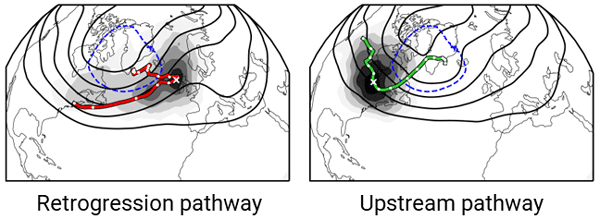
Seraphine Hauser, Franziska Teubler, Michael Riemer, Peter Knippertz, and Christian M. Grams
Weather Clim. Dynam., 5, 633–658, https://doi.org/10.5194/wcd-5-633-2024, https://doi.org/10.5194/wcd-5-633-2024, 2024
Short summary
Short summary
Blocking over Greenland has substantial impacts on the weather and climate in mid- and high latitudes. This study applies a quasi-Lagrangian thinking on the dynamics of Greenland blocking and reveals two pathways of anticyclonic anomalies linked to the block. Moist processes were found to play a dominant role in the formation and maintenance of blocking. This emphasizes the necessity of the correct representation of moist processes in weather and climate models to realistically depict blocking.
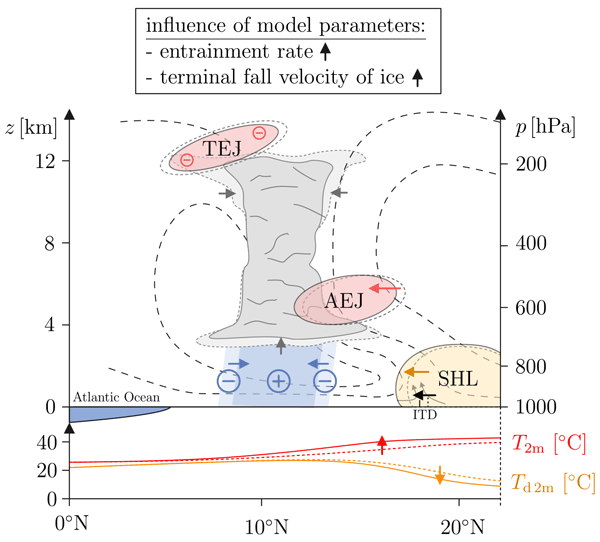
Matthias Fischer, Peter Knippertz, Roderick van der Linden, Alexander Lemburg, Gregor Pante, Carsten Proppe, and John H. Marsham
Weather Clim. Dynam., 5, 511–536, https://doi.org/10.5194/wcd-5-511-2024, https://doi.org/10.5194/wcd-5-511-2024, 2024
Short summary
Short summary
Our research enhances the understanding of the complex dynamics within the West African monsoon system by analyzing the impact of specific model parameters on its characteristics. Employing surrogate models, we identified critical factors such as the entrainment rate and the fall velocity of ice. Precise definition of these parameters in weather models could improve forecast accuracy, thus enabling better strategies to manage and reduce the impact of weather events.
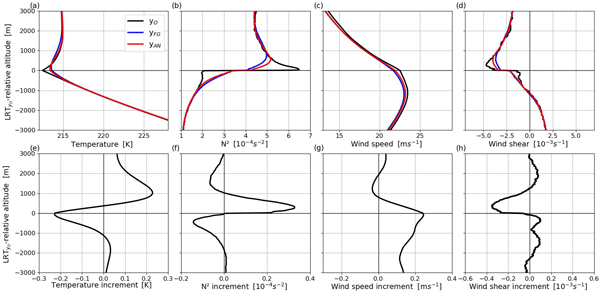
Konstantin Krüger, Andreas Schäfler, Martin Weissmann, and George C. Craig
Weather Clim. Dynam., 5, 491–509, https://doi.org/10.5194/wcd-5-491-2024, https://doi.org/10.5194/wcd-5-491-2024, 2024
Short summary
Short summary
Initial conditions of current numerical weather prediction models insufficiently represent the sharp vertical gradients across the midlatitude tropopause. Observation-space data assimilation output is used to study the influence of assimilated radiosondes on the tropopause. The radiosondes reduce systematic biases of the model background and sharpen temperature and wind gradients in the analysis. Tropopause sharpness is still underestimated in the analysis, which may impact weather forecasts.
Maurus Borne, Peter Knippertz, Martin Weissmann, Benjamin Witschas, Cyrille Flamant, Rosimar Rios-Berrios, and Peter Veals
Atmos. Meas. Tech., 17, 561–581, https://doi.org/10.5194/amt-17-561-2024, https://doi.org/10.5194/amt-17-561-2024, 2024
Short summary
Short summary
This study assesses the quality of Aeolus wind measurements over the tropical Atlantic. The results identified the accuracy and precision of the Aeolus wind measurements and the potential source of errors. For instance, the study revealed atmospheric conditions that can deteriorate the measurement quality, such as weaker laser signal in cloudy or dusty conditions, and confirmed the presence of an orbital-dependant bias. These results can help to improve the Aeolus wind measurement algorithm.
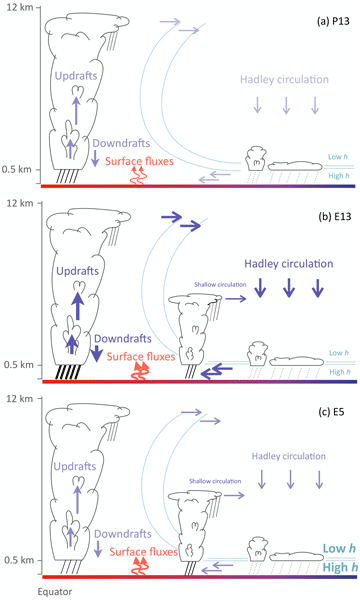
Hyunju Jung, Peter Knippertz, Yvonne Ruckstuhl, Robert Redl, Tijana Janjic, and Corinna Hoose
Weather Clim. Dynam., 4, 1111–1134, https://doi.org/10.5194/wcd-4-1111-2023, https://doi.org/10.5194/wcd-4-1111-2023, 2023
Short summary
Short summary
A narrow rainfall belt in the tropics is an important feature for large-scale circulations and the global water cycle. The accurate simulation of this rainfall feature has been a long-standing problem, with the reasons behind that unclear. We present a novel diagnostic tool that allows us to disentangle processes important for rainfall, which changes due to modifications in model. Using our diagnostic tool, one can potentially identify sources of uncertainty in weather and climate models.
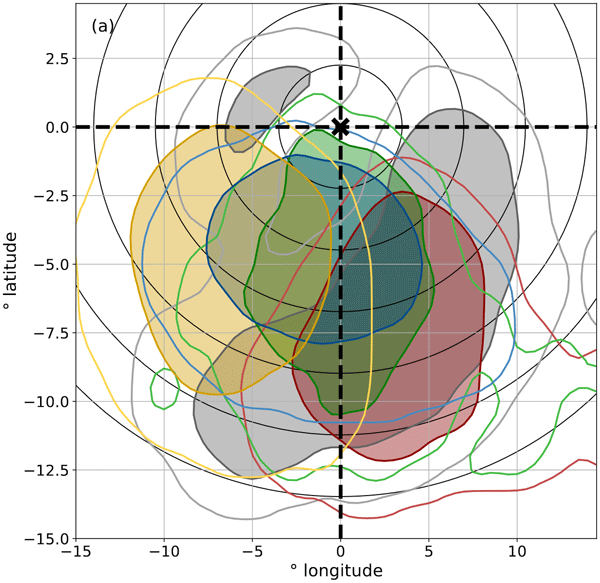
Lea Eisenstein, Benedikt Schulz, Joaquim G. Pinto, and Peter Knippertz
Weather Clim. Dynam., 4, 981–999, https://doi.org/10.5194/wcd-4-981-2023, https://doi.org/10.5194/wcd-4-981-2023, 2023
Short summary
Short summary
Mesoscale high-wind features within extratropical cyclones can cause immense damage. In Part 1 of this work, we introduced RAMEFI (RAndom-forest-based MEsoscale wind Feature Identification), an objective, flexible identification tool for these wind features based on a probabilistic random forest. Here, we use RAMEFI to compile a climatology of the features over 19 extended winter seasons over western and central Europe, focusing on relative occurrence, affected areas and further characteristics.
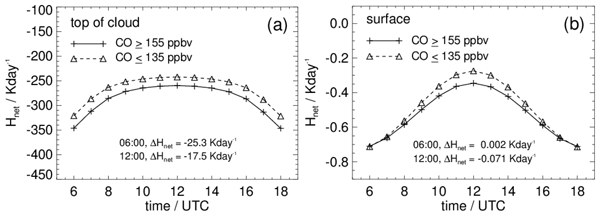
Valerian Hahn, Ralf Meerkötter, Christiane Voigt, Sonja Gisinger, Daniel Sauer, Valéry Catoire, Volker Dreiling, Hugh Coe, Cyrille Flamant, Stefan Kaufmann, Jonas Kleine, Peter Knippertz, Manuel Moser, Philip Rosenberg, Hans Schlager, Alfons Schwarzenboeck, and Jonathan Taylor
Atmos. Chem. Phys., 23, 8515–8530, https://doi.org/10.5194/acp-23-8515-2023, https://doi.org/10.5194/acp-23-8515-2023, 2023
Short summary
Short summary
During the DACCIWA campaign in West Africa, we found a 35 % increase in the cloud droplet concentration that formed in a polluted compared with a less polluted environment and a decrease of 17 % in effective droplet diameter. Radiative transfer simulations, based on the measured cloud properties, reveal that these low-level polluted clouds radiate only 2.6 % more energy back to space, compared with a less polluted cloud. The corresponding additional decrease in temperature is rather small.
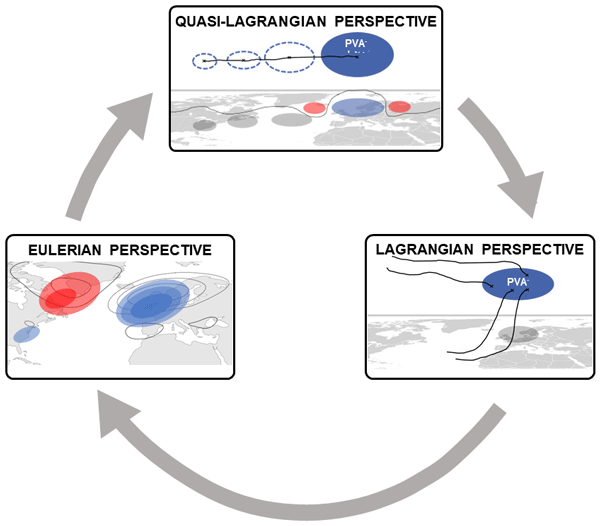
Seraphine Hauser, Franziska Teubler, Michael Riemer, Peter Knippertz, and Christian M. Grams
Weather Clim. Dynam., 4, 399–425, https://doi.org/10.5194/wcd-4-399-2023, https://doi.org/10.5194/wcd-4-399-2023, 2023
Short summary
Short summary
Blocking describes a flow configuration in the midlatitudes where stationary high-pressure systems block the propagation of weather systems. This study combines three individual perspectives that capture the dynamics and importance of various processes in the formation of a major blocking in 2016 from a weather regime perspective. In future work, this framework will enable a holistic view of the dynamics and the role of moist processes in different life cycle stages of blocked weather regimes.
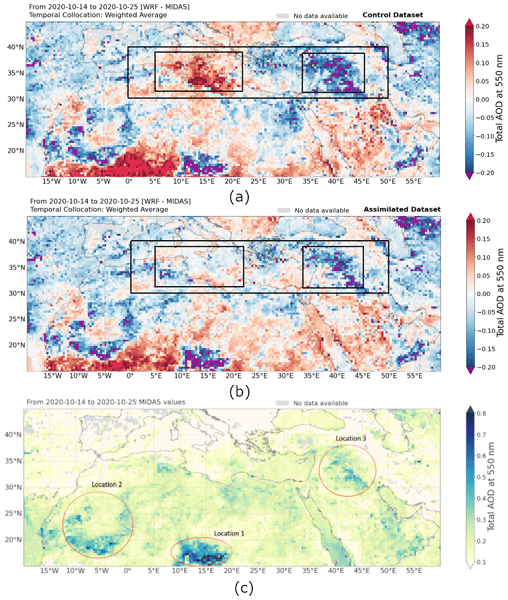
Pantelis Kiriakidis, Antonis Gkikas, Georgios Papangelis, Theodoros Christoudias, Jonilda Kushta, Emmanouil Proestakis, Anna Kampouri, Eleni Marinou, Eleni Drakaki, Angela Benedetti, Michael Rennie, Christian Retscher, Anne Grete Straume, Alexandru Dandocsi, Jean Sciare, and Vasilis Amiridis
Atmos. Chem. Phys., 23, 4391–4417, https://doi.org/10.5194/acp-23-4391-2023, https://doi.org/10.5194/acp-23-4391-2023, 2023
Short summary
Short summary
With the launch of the Aeolus satellite, higher-accuracy wind products became available. This research was carried out to validate the assimilated wind products by testing their effect on the WRF-Chem model predictive ability of dust processes. This was carried out for the eastern Mediterranean and Middle East region for two 2-month periods in autumn and spring 2020. The use of the assimilated products improved the dust forecasts of the autumn season (both quantitatively and qualitatively).

Patrick Ludwig, Florian Ehmele, Mário J. Franca, Susanna Mohr, Alberto Caldas-Alvarez, James E. Daniell, Uwe Ehret, Hendrik Feldmann, Marie Hundhausen, Peter Knippertz, Katharina Küpfer, Michael Kunz, Bernhard Mühr, Joaquim G. Pinto, Julian Quinting, Andreas M. Schäfer, Frank Seidel, and Christina Wisotzky
Nat. Hazards Earth Syst. Sci., 23, 1287–1311, https://doi.org/10.5194/nhess-23-1287-2023, https://doi.org/10.5194/nhess-23-1287-2023, 2023
Short summary
Short summary
Heavy precipitation in July 2021 led to widespread floods in western Germany and neighboring countries. The event was among the five heaviest precipitation events of the past 70 years in Germany, and the river discharges exceeded by far the statistical 100-year return values. Simulations of the event under future climate conditions revealed a strong and non-linear effect on flood peaks: for +2 K global warming, an 18 % increase in rainfall led to a 39 % increase of the flood peak in the Ahr river.
Anne Martin, Martin Weissmann, and Alexander Cress
Weather Clim. Dynam., 4, 249–264, https://doi.org/10.5194/wcd-4-249-2023, https://doi.org/10.5194/wcd-4-249-2023, 2023
Short summary
Short summary
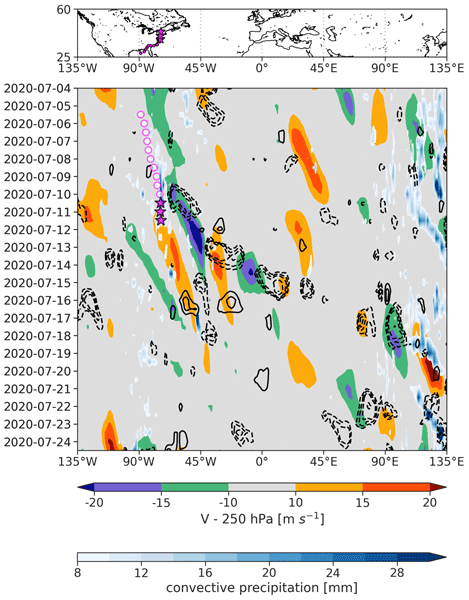
Global wind profiles from the Aeolus satellite mission are an important recent substitute for the Global Observing System, showing an overall positive impact on numerical weather prediction forecasts. This study highlights atmospheric dynamic phenomena constituting pathways for significant improvement of Aeolus for future studies, including large-scale tropical circulation systems and the interaction of tropical cyclones undergoing an extratropical transition with the midlatitude waveguide.
Susanna Mohr, Uwe Ehret, Michael Kunz, Patrick Ludwig, Alberto Caldas-Alvarez, James E. Daniell, Florian Ehmele, Hendrik Feldmann, Mário J. Franca, Christian Gattke, Marie Hundhausen, Peter Knippertz, Katharina Küpfer, Bernhard Mühr, Joaquim G. Pinto, Julian Quinting, Andreas M. Schäfer, Marc Scheibel, Frank Seidel, and Christina Wisotzky
Nat. Hazards Earth Syst. Sci., 23, 525–551, https://doi.org/10.5194/nhess-23-525-2023, https://doi.org/10.5194/nhess-23-525-2023, 2023
Short summary
Short summary
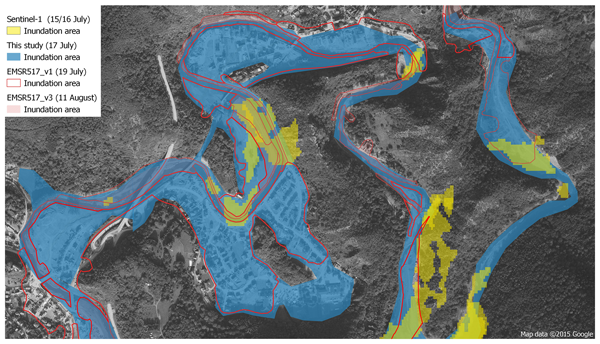
The flood event in July 2021 was one of the most severe disasters in Europe in the last half century. The objective of this two-part study is a multi-disciplinary assessment that examines the complex process interactions in different compartments, from meteorology to hydrological conditions to hydro-morphological processes to impacts on assets and environment. In addition, we address the question of what measures are possible to generate added value to early response management.
Tobias Necker, David Hinger, Philipp Johannes Griewank, Takemasa Miyoshi, and Martin Weissmann
Nonlin. Processes Geophys., 30, 13–29, https://doi.org/10.5194/npg-30-13-2023, https://doi.org/10.5194/npg-30-13-2023, 2023
Short summary
Short summary
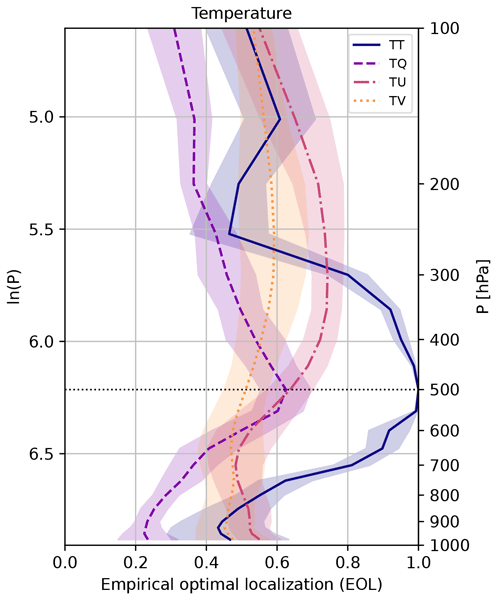
This study investigates vertical localization based on a convection-permitting 1000-member ensemble simulation. We derive an empirical optimal localization (EOL) that minimizes sampling error in 40-member sub-sample correlations assuming 1000-member correlations as truth. The results will provide guidance for localization in convective-scale ensemble data assimilation systems.
Konstantin Krüger, Andreas Schäfler, Martin Wirth, Martin Weissmann, and George C. Craig
Atmos. Chem. Phys., 22, 15559–15577, https://doi.org/10.5194/acp-22-15559-2022, https://doi.org/10.5194/acp-22-15559-2022, 2022
Short summary
Short summary
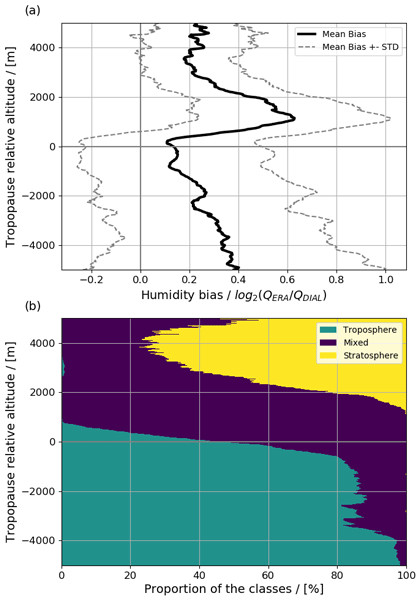
A comprehensive data set of airborne lidar water vapour profiles is compared with ERA5 reanalyses for a robust characterization of the vertical structure of the mid-latitude lower-stratospheric moist bias. We confirm a moist bias of up to 55 % at 1.3 km altitude above the tropopause and uncover a decreasing bias beyond. Collocated O3 and H2O observations reveal a particularly strong bias in the mixing layer, indicating insufficiently modelled transport processes fostering the bias.
Lea Eisenstein, Benedikt Schulz, Ghulam A. Qadir, Joaquim G. Pinto, and Peter Knippertz
Weather Clim. Dynam., 3, 1157–1182, https://doi.org/10.5194/wcd-3-1157-2022, https://doi.org/10.5194/wcd-3-1157-2022, 2022
Short summary
Short summary
Mesoscale high-wind features within extratropical cyclones can cause immense damage. Here, we present RAMEFI, a novel approach to objectively identify the wind features based on a probabilistic random forest. RAMEFI enables a wide range of applications such as probabilistic predictions for the occurrence or a multi-decadal climatology of these features, which will be the focus of Part 2 of the study, with the goal of improving wind and, specifically, wind gust forecasts in the long run.
Adrien Deroubaix, Laurent Menut, Cyrille Flamant, Peter Knippertz, Andreas H. Fink, Anneke Batenburg, Joel Brito, Cyrielle Denjean, Cheikh Dione, Régis Dupuy, Valerian Hahn, Norbert Kalthoff, Fabienne Lohou, Alfons Schwarzenboeck, Guillaume Siour, Paolo Tuccella, and Christiane Voigt
Atmos. Chem. Phys., 22, 3251–3273, https://doi.org/10.5194/acp-22-3251-2022, https://doi.org/10.5194/acp-22-3251-2022, 2022
Short summary
Short summary
During the summer monsoon in West Africa, pollutants emitted in urbanized areas modify cloud cover and precipitation patterns. We analyze these patterns with the WRF-CHIMERE model, integrating the effects of aerosols on meteorology, based on the numerous observations provided by the Dynamics-Aerosol-Climate-Interactions campaign. This study adds evidence to recent findings that increased pollution levels in West Africa delay the breakup time of low-level clouds and reduce precipitation.

Fabian Weiler, Michael Rennie, Thomas Kanitz, Lars Isaksen, Elena Checa, Jos de Kloe, Ngozi Okunde, and Oliver Reitebuch
Atmos. Meas. Tech., 14, 7167–7185, https://doi.org/10.5194/amt-14-7167-2021, https://doi.org/10.5194/amt-14-7167-2021, 2021
Short summary
Short summary
This paper summarizes the identification and correction of one of the most important systematic error sources for the wind measurements of the ESA satellite Aeolus. It depicts the effects of small temperature variations in the primary telescope mirror on the quality of the wind products and describes the approach to correct for it in the near-real-time processing. Moreover, the performance of the correction approach is assessed, and alternative approaches are discussed.
Christopher J. Diekmann, Matthias Schneider, Benjamin Ertl, Frank Hase, Omaira García, Farahnaz Khosrawi, Eliezer Sepúlveda, Peter Knippertz, and Peter Braesicke
Earth Syst. Sci. Data, 13, 5273–5292, https://doi.org/10.5194/essd-13-5273-2021, https://doi.org/10.5194/essd-13-5273-2021, 2021
Short summary
Short summary
The joint analysis of different stable water isotopes in water vapour is a powerful tool for investigating atmospheric moisture pathways. This paper presents a novel global and multi-annual dataset of H2O and HDO in mid-tropospheric water vapour by using data from the satellite sensor Metop/IASI. Due to its unique combination of coverage and resolution in space and time, this dataset is highly promising for studying the hydrological cycle and its representation in weather and climate models.
Fabienne Dahinden, Franziska Aemisegger, Heini Wernli, Matthias Schneider, Christopher J. Diekmann, Benjamin Ertl, Peter Knippertz, Martin Werner, and Stephan Pfahl
Atmos. Chem. Phys., 21, 16319–16347, https://doi.org/10.5194/acp-21-16319-2021, https://doi.org/10.5194/acp-21-16319-2021, 2021
Short summary
Short summary
We use high-resolution numerical isotope modelling and Lagrangian backward trajectories to identify moisture transport pathways and governing physical and dynamical processes that affect the free-tropospheric humidity and isotopic variability over the eastern subtropical North Atlantic. Furthermore, we conduct a thorough isotope modelling validation with aircraft and remote-sensing observations of water vapour isotopes.
Stefan Geiss, Leonhard Scheck, Alberto de Lozar, and Martin Weissmann
Atmos. Chem. Phys., 21, 12273–12290, https://doi.org/10.5194/acp-21-12273-2021, https://doi.org/10.5194/acp-21-12273-2021, 2021
Short summary
Short summary
This study demonstrates the benefits of using both visible and infrared satellite channels to evaluate clouds in numerical weather prediction models. Combining these highly resolved observations provides significantly more and complementary information than using only infrared observations. The visible observations are particularly sensitive to subgrid water clouds, which are not well constrained by other observations.
Cited articles
Baker, W. E., Atlas, R., Cardinali, C., Clement, A., Emmitt, G. D., Gentry, B. M., Hardesty, R. M., Källén, E., Kavaya, M. J., Langland, R., Ma, Z., Masutani, M., McCarty, W., Pierce, R. B., Pu, Z., Riishojgaard, L. P., Ryan, J., Tucker, S., Weissmann, M., and Yoe, J. G.: Lidar-measured wind profiles: The missing link in the global observing system, B. Am. Meteorol. Soc., 95, 543–564, 2014. a, b
Bauer, P., Geer, A. J., Lopez, P., and Salmond, D.: Direct 4D-Var assimilation of all-sky radiances. Part I: Implementation, Q. J. Roy. Meteor. Soc., 136, 1868–1885, 2010. a
Bechtold, P., Semane, N., Lopez, P., Chaboureau, J.-P., Beljaars, A., and Bormann, N.: Representing equilibrium and nonequilibrium convection in large-scale models, J. Atmos. Sci., 71, 734–753, 2014. a
Bonafoni, S., Biondi, R., Brenot, H., and Anthes, R.: Radio occultation and ground-based GNSS products for observing, understanding and predicting extreme events: A review, Atmos. Res., 230, 104624, https://doi.org/10.1016/j.atmosres.2019.104624, 2019. a
Borne, M., Knippertz, P., Weissmann, M., Witschas, B., Flamant, C., Rios-Berrios, R., and Veals, P.: Validation of Aeolus L2B products over the tropical Atlantic using radiosondes, Atmos. Meas. Tech., 17, 561–581, https://doi.org/10.5194/amt-17-561-2024, 2024. a
Bouttier, F. and Kelly, G.: Observing-system experiments in the ECMWF 4D-Var data assimilation system, Q. J. Roy. Meteor. Soc., 127, 1469–1488, 2001. a
Campbell, I. and Renwick, J. A.: Southern Hemisphere storm tracks and large-scale variability: What do the latest reanalyses say?, J. Climate, 36, 5549–5567, 2023. a
Chou, C.-C. and Kushner, P. J.: Scale-dependent impact of Aeolus winds on a global forecast system, Q. J. Roy. Meteor. Soc., 150, 373–387, 2024. a
De Meutter, P., Gerard, L., Smet, G., Hamid, K., Hamdi, R., Degrauwe, D., and Termonia, P.: Predicting small-scale, short-lived downbursts: Case study with the NWP limited-area ALARO model for the Pukkelpop thunderstorm, Mon. Weather Rev., 143, 742–756, 2015. a
Derin, Y. and Yilmaz, K. K.: Evaluation of multiple satellite-based precipitation products over complex topography, J. Hydrometeorol., 15, 1498–1516, 2014. a
Derin, Y., Anagnostou, E., Berne, A., Borga, M., Boudevillain, B., Buytaert, W., Chang, C.-H., Chen, H., Delrieu, G., Hsu, Y. C., Lavado-Casimiro, W., Manz, B., Moges, S., Nikolopoulos, E., Sahlu, D., Salerno, F., Rodríguez-Sánchez, J.-P., Vergara, H., and Yilmaz, K.: Evaluation of GPM-era global satellite precipitation products over multiple complex terrain regions, Remote Sens., 11, 2936, https://doi.org/10.3390/rs11242936, 2019. a
Dinku, T., Connor, S. J., and Ceccato, P.: Comparison of CMORPH and TRMM-3B42 over mountainous regions of Africa and South America, Satellite rainfall applications for surface hydrology, 193–204, https://doi.org/10.1007/978-90-481-2915-7_11, 2010. a
Dong, B., Sutton, R. T., Woollings, T., and Hodges, K.: Variability of the North Atlantic summer storm track: mechanisms and impacts on European climate, Environ. Res. Lett., 8, 034037, https://doi.org/10.1088/1748-9326/8/3/034037, 2013. a
Ebert, E. E.: Fuzzy verification of high-resolution gridded forecasts: a review and proposed framework, Meteorol. Appl., 15, 51–64, 2008. a
Ern, M., Diallo, M. A., Khordakova, D., Krisch, I., Preusse, P., Reitebuch, O., Ungermann, J., and Riese, M.: The quasi-biennial oscillation (QBO) and global-scale tropical waves in Aeolus wind observations, radiosonde data, and reanalyses, Atmos. Chem. Phys., 23, 9549–9583, https://doi.org/10.5194/acp-23-9549-2023, 2023. a
Feng, Z., Leung, L. R., Hagos, S., Houze, R. A., Burleyson, C. D., and Balaguru, K.: More frequent intense and long-lived storms dominate the springtime trend in central US rainfall, Nat. Commun., 7, 13429, https://doi.org/10.1038/ncomms13429, 2016. a
Forbes, R., Haiden, T., and Magnusson, L.: Improvements in IFS forecasts of heavy precipitation, ECMWF Newsletter, 144, 21–26, 2015. a
Geer, A. J., Bauer, P., and Lopez, P.: Direct 4D-Var assimilation of all-sky radiances. Part II: Assessment, Q. J. Roy. Meteor. Soc., 136, 1886–1905, 2010. a
Gilleland, E., Ahijevych, D., Brown, B. G., Casati, B., and Ebert, E. E.: Intercomparison of spatial forecast verification methods, Weather Forecast., 24, 1416–1430, 2009. a
Hersbach, H., Bell, B., Berrisford, P., Hirahara, S., Horányi, A., Muñoz-Sabater, J., Nicolas, J., Peubey, C., Radu, R., Schepers, D., Simmons, A., Soci, C., Abdalla, S., Abellan, X., Balsamo, G., Bechtold, P., Biavati, G., Bidlot, J., Bonavita, M., De Chiara, G., Dahlgren, P., Dee, D., Diamantakis, M., Dragani, R., Flemming, J., Forbes, R., Fuentes, M., Geer, A., Haimberger, L., Healy, S., Hogan, R. J., Holm, E., Janiskova, M., Keeley, S., Laloyaux, P., Lopez, P., Radnoti, G., de Rosnay, P., Rozum, I., Vamborg, F., Villaume, S., and Thepaut, J.-N.: The ERA5 global reanalysis, Q. J. Roy. Meteor. Soc., 146, 1999–2049, 2020. a
Hobouchian, M. P., Salio, P., Skabar, Y. G., Vila, D., and Garreaud, R.: Assessment of satellite precipitation estimates over the slopes of the subtropical Andes, Atmos. Res., 190, 43–54, 2017. a
Huffman, G. J., Bolvin, D. T., Braithwaite, D., Hsu, K., Joyce, R., Xie, P., and Yoo, S.-H.: NASA global precipitation measurement (GPM) integrated multi-satellite retrievals for GPM (IMERG), Algorithm Theoretical Basis Document (ATBD) Version, 4, 26, https://doi.org/10.1007/978-3-030-24568-9_19, 2015. a
Kelly, G., McNally, T., Thépaut, J.-N., and Szyndel, M.: OSEs of all main data types in the ECMWF operation system, in: Proc. Third WMO Workshop on the Impact of Various Observing Systems on Numerical Weather Prediction, WMO/TD 1228, Alpbach, Austria, WMO, 63–94, 2004. a
Lux, O., Rennie, M., de Kloe, J., and Reitebuch, O.: Five years of Aeolus wind profiling: global coverage and data quality, EGUsphere [preprint], https://doi.org/10.5194/egusphere-2025-4596, 2025. a
Ma, C.-G. and Chang, E. K.: Impacts of storm-track variations on wintertime extreme weather events over the continental United States, J. Climate, 30, 4601–4624, 2017. a
Marseille, G. and Stoffelen, A.: Simulation of wind profiles from a space-borne Doppler wind lidar, Q. J. Roy. Meteor. Soc., 129, 3079–3098, 2003. a
Martin, A., Weissmann, M., and Cress, A.: Investigation of links between dynamical scenarios and particularly high impact of Aeolus on numerical weather prediction (NWP) forecasts, Weather Clim. Dynam., 4, 249–264, https://doi.org/10.5194/wcd-4-249-2023, 2023b. a
Matsuno, T.: Quasi-geostrophic motions in the equatorial area, J. Meteorol. Soc. Jpn. Ser. II, 44, 25–43, 1966. a
Murphy, A. H. and Winkler, R. L.: A general framework for forecast verification, Mon. Weather Rev., 115, 1330–1338, 1987. a
Nimac, I., Danzer, J., and Kirchengast, G.: The added value and potential of long-term radio occultation data for climatological wind field monitoring, Atmos. Meas. Tech., 18, 265–286, https://doi.org/10.5194/amt-18-265-2025, 2025. a
Prakash, S., Mitra, A. K., Pai, D., and AghaKouchak, A.: From TRMM to GPM: How well can heavy rainfall be detected from space?, Adv. Water Resour., 88, 1–7, 2016. a
Prein, A. F., Langhans, W., Fosser, G., Ferrone, A., Ban, N., Goergen, K., Keller, M., Tölle, M., Gutjahr, O., Feser, F., Brisson, E., Kollet, S., Schmidli, J., van Lipzig, N. P. M., and Leung, R.: A review on regional convection-permitting climate modeling: Demonstrations, prospects, and challenges, Rev. Geophys., 53, 323–361, 2015. a
Reitebuch, O.: The spaceborne wind lidar mission ADM-Aeolus, in: Atmospheric physics: Background–methods–trends, Springer, 815–827, ISBN 978-3-642-30182-7, 2012. a
Rennie, M. and Isaksen, L.: The NWP impact of Aeolus Level-2B winds at ECMWF, ECMWF, https://doi.org/10.21957/d4ea1c09d4, 2024. a
Rennie, M., Healy, S., Abdalla, S., McLean, W., and Henry, K.: Aeolus positive impact on forecasts with the second reprocessed dataset, ECMWF Newsletter, 173, 14–20, 2022. a
Roberts, N.: Assessing the spatial and temporal variation in the skill of precipitation forecasts from an NWP model, Meteorol. Appl., 15, 163–169, 2008. a
Stoffelen, A., Marseille, G.-J., Bouttier, F., Vasiljevic, D., De Haan, S., and Cardinali, C.: ADM-Aeolus Doppler wind lidar observing system simulation experiment, Q. J. Roy. Meteor. Soc., 132, 1927–1947, 2006. a
Straume, A.-G., Rennie, M., Isaksen, L., de Kloe, J., Marseille, G.-J., Stoffelen, A., Flament, T., Stieglitz, H., Dabas, A., Huber, D., Reitebuch, O., Lemmerz, C., Lux, O., Marksteiner, U., Weiler, F., Witschas, B., Meringer, M., Schmidt, K., Nikolaus, I., Geiss, A., Flamant, P., Kanitz, T., Wernham, D., von Bismarck, J., Bley, S., Fehr, T., Floberghagen, R., and Parinello, T.: ESA's space-based Doppler wind lidar mission Aeolus–First wind and aerosol product assessment results, in: EPJ Web of Conferences, vol. 237, 01007, EDP Sciences, https://doi.org/10.1051/epjconf/202023701007, 2020. a
Taylor, C. M., Belušić, D., Guichard, F., Parker, D. J., Vischel, T., Bock, O., Harris, P. P., Janicot, S., Klein, C., and Panthou, G.: Frequency of extreme Sahelian storms tripled since 1982 in satellite observations, Nature, 544, 475–478, 2017. a
Thiemig, V., Rojas, R., Zambrano-Bigiarini, M., Levizzani, V., and De Roo, A.: Validation of satellite-based precipitation products over sparsely gauged African river basins, J. Hydrometeorol., 13, 1760–1783, 2012. a
Walz, E.-M., Maranan, M., van der Linden, R., Fink, A. H., and Knippertz, P.: An IMERG-based optimal extended probabilistic climatology (EPC) as a benchmark ensemble forecast for precipitation in the tropics and subtropics, Weather Forecast., 36, 1561–1573, 2021. a
Weissmann, M. and Cardinali, C.: Impact of airborne Doppler lidar observations on ECMWF forecasts, Q. J. Roy. Meteor. Soc., 133, 107–116, 2007. a
Weissmann, M., Langland, R. H., Cardinali, C., Pauley, P. M., and Rahm, S.: Influence of airborne Doppler wind lidar profiles near Typhoon Sinlaku on ECMWF and NOGAPS forecasts, Q. J. Roy. Meteor. Soc., 138, 118–130, https://doi.org/10.1002/qj.896, 2012. a
Wheeler, M. and Kiladis, G. N.: Convectively coupled equatorial waves: Analysis of clouds and temperature in the wavenumber–frequency domain, J. Atmos. Sci., 56, 374–399, 1999. a
Yang, G.-Y. and Slingo, J.: The diurnal cycle in the tropics, Mon. Weather Rev., 129, 784–801, 2001. a
Žagar, N.: Assimilation of equatorial waves by line-of-sight wind observations, J. Atmos. Sci., 61, 1877–1893, 2004. a
Žagar, N., Stoffelen, A., Marseille, G.-J., Accadia, C., and Schlüssel, P.: Impact assessment of simulated Doppler wind lidars with a multivariate variational assimilation in the tropics, Mon. Weather Rev., 136, 2443–2460, 2008. a
Žagar, N., Pilch Kedzierski, R., De Chiara, G., Healy, S., Rennie, M., and Sielmann, F.: ESA's Aeolus mission reveals uncertainties in tropical wind and wave-driven circulations, Geophys. Res. Lett., 52, e2025GL114832, https://doi.org/10.1029/2025GL114832, 2025. a, b
Editorial statement
This study utilised the ECMWF Integrated Forecasting System over an impressively long evaluation period of more than three years to document the impact of assimilating Aeolus wind observations on predictions of wind and precipitation globally. This long-term perspective provides a level of statistical confidence often missing from shorter-term campaign evaluations. Another key aspect of this NWP-oriented study is the consideration of the improvement of precipitation forecasts in different seasons – it is largest during the cold season in the extratropics – with some explanations why effects differ across hemispheres and seasons.
This study utilised the ECMWF Integrated Forecasting System over an impressively long evaluation...
Short summary
This study shows that Aeolus satellite wind lidar observations significantly improve wind forecasts and that these improvements lead to more accurate rainfall predictions, particularly at longer lead times and during winter seasons in the extratropics. The benefits are likely due to better representation of large-scale atmospheric features such as jet streams and Rossby waves, highlighting Aeolus's value for numerical weather prediction.
This study shows that Aeolus satellite wind lidar observations significantly improve wind...


