
Articles | Volume 7, issue 2
https://doi.org/10.5194/wcd-7-717-2026
© Author(s) 2026. This work is distributed under
the Creative Commons Attribution 4.0 License.
the Creative Commons Attribution 4.0 License.
https://doi.org/10.5194/wcd-7-717-2026
© Author(s) 2026. This work is distributed under
the Creative Commons Attribution 4.0 License.
the Creative Commons Attribution 4.0 License.
Research article
| 
08 May 2026
Research article |
| 08 May 2026
| 08 May 2026
Transient flow patterns of an annular-like stratospheric polar vortex
Huw C. Davies
Institute for Atmospheric and Climate Science, ETHZ, 8092 Zurich, Switzerland
Michael A. Sprenger
CORRESPONDING AUTHOR

Institute for Atmospheric and Climate Science, ETHZ, 8092 Zurich, Switzerland
Related authors
No articles found.
Ming Hon Franco Lee, Hanna Joos, Heini Wernli, Richard Forbes, and Michael Sprenger
EGUsphere, https://doi.org/10.5194/egusphere-2026-4609, https://doi.org/10.5194/egusphere-2026-4609, 2026
This preprint is open for discussion and under review for Weather and Climate Dynamics (WCD).
Short summary
Short summary
Warm conveyor belts are coherent, rapidly ascending airstreams in extratropical cyclones, creating divergent outflows at upper levels. Using a numerical simulation, turbulence is found modifying potential vorticity near the tropopause in an outflow region. Despite the complex flow, changes in potential vorticity are retained due to the coordination provided by the outflow, leading to a potential upscale effect on the dynamics on larger scales, possibly affecting weather predictability.
Anna Kuhn, Chenhui Jin, Elizabeth Ritchie, and Michael Armand Sprenger
EGUsphere, https://doi.org/10.5194/egusphere-2026-4836, https://doi.org/10.5194/egusphere-2026-4836, 2026
This preprint is open for discussion and under review for Weather and Climate Dynamics (WCD).
Short summary
Short summary
We apply a clustering approach to analyze winter jet stream variability over Australia, defining five jet configurations. We find high variability, especially in the longitudinal jet maximum. Patterns of vertical motion show the strongest ascent south of the jet maximum, coinciding with enhanced precipitation. Extreme precipitation events for six Australian capital cities are linked to either a strong or weakened jet stream, highlighting the important role of the jet in driving those events.
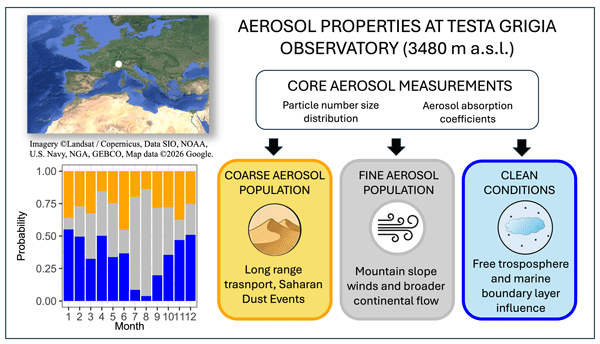
Stefania Gilardoni, Annachiara Bellini, Paolo Bonasoni, Henri Diémoz, Christian Gencarelli, Angela Marinoni, Eros Mariani, Luigi Mazari Villanova, Bruno Neininger, Mattia Perilli, Michael Sprenger, and Francesco Petracchini
Atmos. Chem. Phys., 26, 11135–11152, https://doi.org/10.5194/acp-26-11135-2026, https://doi.org/10.5194/acp-26-11135-2026, 2026
Short summary
Short summary
This study presents the first high-time-resolution aerosol data collected from the Testa Grigia Observatory (3,480 m) in the Italian Alps, from 2021 to 2023. We identified three transport pathways: Saharan Dust Events (SDE), which occurred with a frequency of 6 %, regional and long-range transported pollution (28 %), and clean air from the free troposphere. The timing of SDE, observed mainly in spring, and the mixing of dust particles with black carbon, enhance SDE impact on snow melting.
Matthias Röthlisberger, Michael Sprenger, Urs Beyerle, Erich M. Fischer, and Heini Wernli
Weather Clim. Dynam., 7, 1363–1384, https://doi.org/10.5194/wcd-7-1363-2026, https://doi.org/10.5194/wcd-7-1363-2026, 2026
Short summary
Short summary
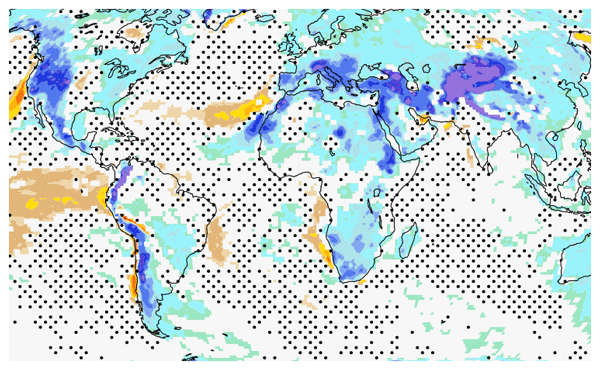
This study investigates yearly heat extremes simulated with the global climate model CESM2. A trajectory-based method is used, which allows quantifying the contributions to temperature anomalies from advection, subsidence, and diabatic heating. The results show that the magnitude of CESM2 heat extremes agrees fairly well with ERA5 reanalyses, but it is often
for the partly wrong physical reasons.
Ming Hon Franco Lee, Hanna Joos, Heini Wernli, Richard Forbes, and Michael Sprenger
EGUsphere, https://doi.org/10.5194/egusphere-2026-4184, https://doi.org/10.5194/egusphere-2026-4184, 2026
Short summary
Short summary
Turbulence near jet streams modifies the atmospheric flow, but there is limited research on the underlying mechanism. In this study, we infer this feedback by tracing the change in potential vorticity. We use an analytical framework to explain the systematic changes caused by turbulence in a numerical simulation of a jet stream. A typical tripolar pattern appears repeatedly, and it is highly related to the coherence of the jet. The improved understanding may help advance weather forecasts.
Ellina Agayar, Moshe Armon, Michael Sprenger, and Heini Wernli
Nat. Hazards Earth Syst. Sci., 26, 3025–3043, https://doi.org/10.5194/nhess-26-3025-2026, https://doi.org/10.5194/nhess-26-3025-2026, 2026
Short summary
Short summary
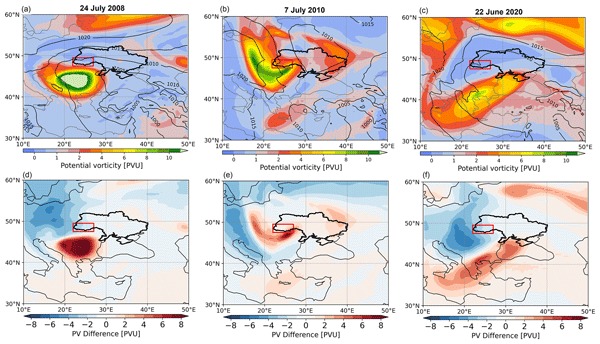
This study investigates the hydrometeorological features of the major floods of 2008, 2010, and 2020 in western Ukraine. All cases were linked to upper-level potential vorticity (PV) anomalies. We also conducted a climatological analysis of PV structure associated with 22 summer heavy precipitation events (2000–2022), highlighting their key role in determining the location and intensity of flood-inducing rainfall events in the Carpathians.
Alexander Pietak, Langwen Huang, Luigi Fusco, Michael Sprenger, Sebastian Schemm, and Torsten Hoefler
Geosci. Model Dev., 19, 3893–3922, https://doi.org/10.5194/gmd-19-3893-2026, https://doi.org/10.5194/gmd-19-3893-2026, 2026
Short summary
Short summary
As meteorological models grow in complexity, the volume of output data increases, making compression increasingly desirable. However, no specialized methods currently exist for compressing data in the Lagrangian frame. To address this gap, we developed psit, a pipeline for the lossy compression of Lagrangian flow data. In most cases, psit achieves performance that is equivalent or superior to non specialized alternatives, with compression errors behaving similar to measurement inaccuracies.
Marius Rixen, Praveen Pothapakula, Michael Sprenger, Christian Zeman, and Andreas F. Prein
EGUsphere, https://doi.org/10.5194/egusphere-2026-1814, https://doi.org/10.5194/egusphere-2026-1814, 2026
Short summary
Short summary
Despite steady improvements in forecasting skill, episodes of low forecast skill, called forecast busts, still persist. Using global ensemble simulations at different grid spacings, we show that coarse-grid simulations fail to resolve key mesoscale diabatic processes, and that errors upscale and propagate downstream, leading to large forecast errors. Fine grid spacing simulations better capture scale interactions in strongly diabatic flow, highlighting the potential of kilometer-scale models.
Tuule Müürsepp, Michael Sprenger, Heini Wernli, and Hanna Joos
Weather Clim. Dynam., 7, 547–565, https://doi.org/10.5194/wcd-7-547-2026, https://doi.org/10.5194/wcd-7-547-2026, 2026
Short summary
Short summary
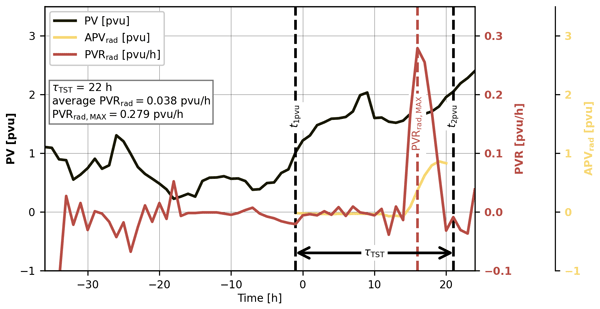
The tropopause region of the atmosphere is greatly impacted by the exchange of mass and constituents between the troposphere and the stratosphere. This study quantifies the role of radiation in troposphere-to-stratosphere transport using reanalysis data. We find that radiation contributes to this transport most of the time, albeit it might not be the dominant process. We provide a new insight into the complex interplay of processes that air parcels experience on their way to the stratosphere.
Jacopo Riboldi, Robin Noyelle, Ellina Agayar, Hanin Binder, Marc Federer, Katharina Hartmuth, Michael Sprenger, Iris Thurnherr, and Selvakumar Vishnupriya
Weather Clim. Dynam., 7, 65–87, https://doi.org/10.5194/wcd-7-65-2026, https://doi.org/10.5194/wcd-7-65-2026, 2026
Short summary
Short summary
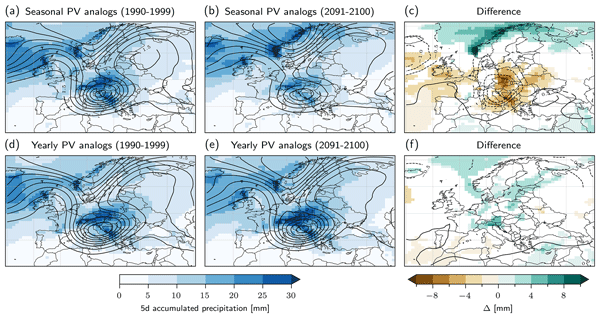
Storm Boris led to record-breaking precipitation over central Europe in September 2024. By incorporating event-specific meteorological information, this work introduces a methodology to strengthen our comprehension of how global warming affects similar hazards. Furthermore, it contextualizes how the answer to the question "How will Boris-like storms change in a warmer climate?" depends on explicit and implicit methodological choices, with the aim to inform future attribution research.
Ming Hon Franco Lee and Michael Sprenger
Weather Clim. Dynam., 6, 1583–1604, https://doi.org/10.5194/wcd-6-1583-2025, https://doi.org/10.5194/wcd-6-1583-2025, 2025
Short summary
Short summary
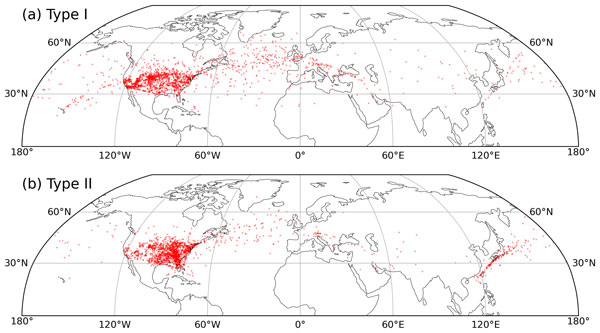
Turbulence can occur in clear-air conditions at cruising altitude. From around 5000 clear-air turbulence events identified using aircraft measurements, nonlinear breaking of large-scale waves and rapidly ascending airstreams associated with cyclones are found concurrent with 40 % and 30 % of them respectively. The results further show that these weather systems may trigger turbulence by generating highly deformed flow or flow instability, improving our understanding of clear-air turbulence.
Emmanouil Flaounas, Stavros Dafis, Silvio Davolio, Davide Faranda, Christian Ferrarin, Katharina Hartmuth, Assaf Hochman, Aristeidis Koutroulis, Samira Khodayar, Mario Marcello Miglietta, Florian Pantillon, Platon Patlakas, Michael Sprenger, and Iris Thurnherr
Weather Clim. Dynam., 6, 1515–1538, https://doi.org/10.5194/wcd-6-1515-2025, https://doi.org/10.5194/wcd-6-1515-2025, 2025
Short summary
Short summary
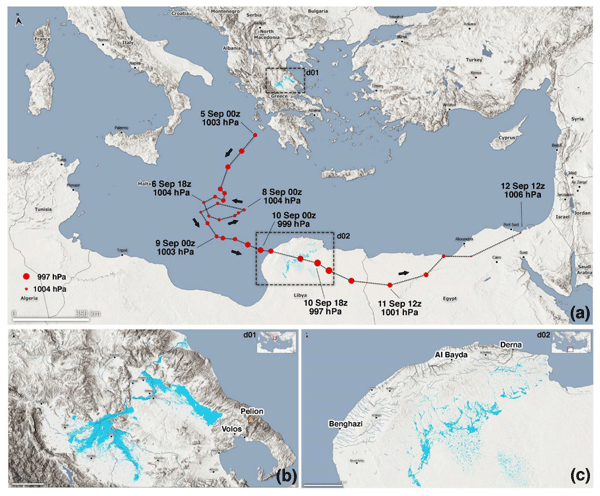
Storm Daniel (2023) is one of the most catastrophic storms ever documented in the Mediterranean. Our results highlight the different dynamics and therefore the different predictability skill of precipitation, its extremes and impacts that have been produced in Greece and Libya, the two most affected countries. Our approach concerns an analysis of the storm by articulating dynamics, weather prediction, hydrological and oceanographic implications, climate extremes, and attribution theory.
Selvakumar Vishnupriya, Michael Sprenger, Hanna Joos, and Heini Wernli
Weather Clim. Dynam., 6, 1195–1219, https://doi.org/10.5194/wcd-6-1195-2025, https://doi.org/10.5194/wcd-6-1195-2025, 2025
Short summary
Short summary
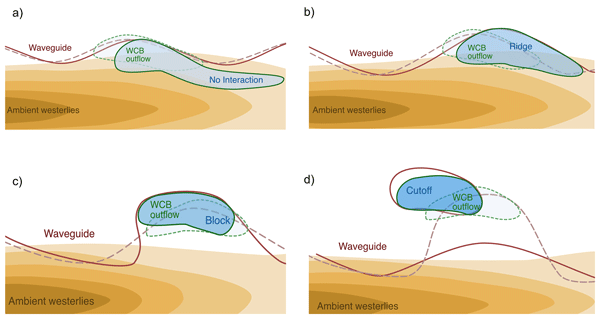
Extratropical cyclones feature rapidly ascending airstreams known as warm conveyor belts, which could influence upper-level flow dynamics. This study classifies interactions between warm conveyor belt outflows and the jet stream into four types: no interactions, ridges, blocks, and tropospheric cutoffs. We use reanalysis data to demonstrate that the interaction type depends on the structure of the ambient flow than on the outflow, improving our understanding of extratropical flow variability.
Killian P. Brennan, Iris Thurnherr, Michael Sprenger, and Heini Wernli
Nat. Hazards Earth Syst. Sci., 25, 3693–3712, https://doi.org/10.5194/nhess-25-3693-2025, https://doi.org/10.5194/nhess-25-3693-2025, 2025
Short summary
Short summary
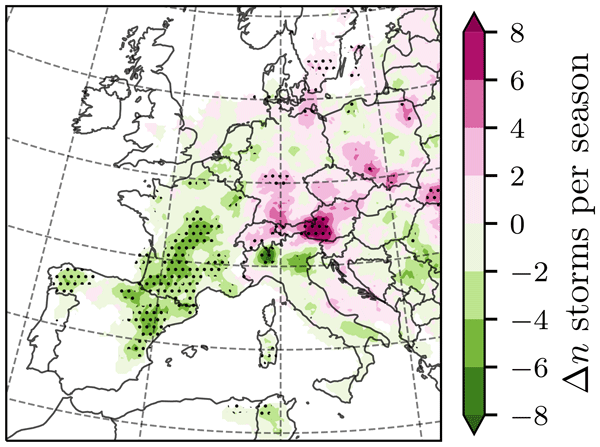
Hailstorms can cause severe damage to homes, crops, and infrastructure. Using high-resolution climate simulations, we tracked thousands of hailstorms across Europe to study future changes. Large hail will become more frequent, hail-covered areas will expand, and instances of extreme hail combined with heavy rain will double. These shifts could increase risks for communities and businesses, highlighting the need for better preparedness and adaptation.
Killian P. Brennan, Michael Sprenger, André Walser, Marco Arpagaus, and Heini Wernli
Weather Clim. Dynam., 6, 645–668, https://doi.org/10.5194/wcd-6-645-2025, https://doi.org/10.5194/wcd-6-645-2025, 2025
Short summary
Short summary
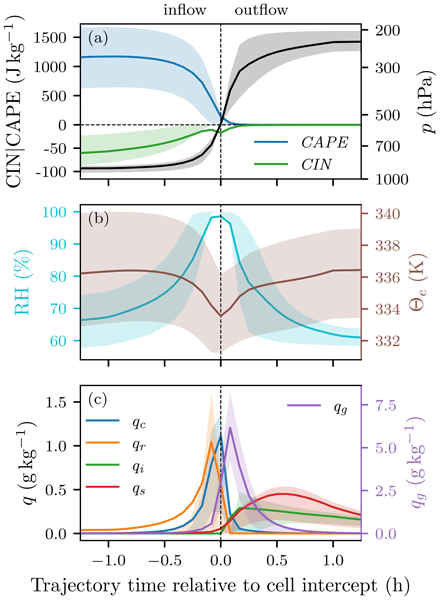
We studied severe hailstorms that occurred in Switzerland on 28 June 2021 using a weather prediction model to understand how they evolved. We found that the storms moved toward areas with more storm energy. Hailfall was quickly followed by heavy rain. Just before the storms died out, the air feeding them stopped coming from near the ground. We also observed a delay between different types of precipitation forming in the incoming air.
Nicolai Krieger, Heini Wernli, Michael Sprenger, and Christian Kühnlein
Weather Clim. Dynam., 6, 447–469, https://doi.org/10.5194/wcd-6-447-2025, https://doi.org/10.5194/wcd-6-447-2025, 2025
Short summary
Short summary
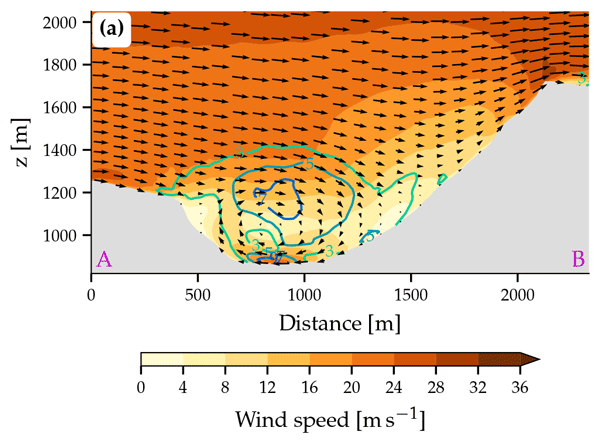
This study investigates the Laseyer, a local windstorm in a narrow Swiss valley characterized by strong southeasterly winds during northwesterly ambient flow. Using large-eddy simulations (LESs) with 30 m grid spacing, this is the first study to reveal that the extreme gusts in the valley are caused by an amplifying interplay of two recirculation regions. Modifying terrain and ambient wind conditions affects the windstorm's intensity and highlights the importance of topographic details in LES.
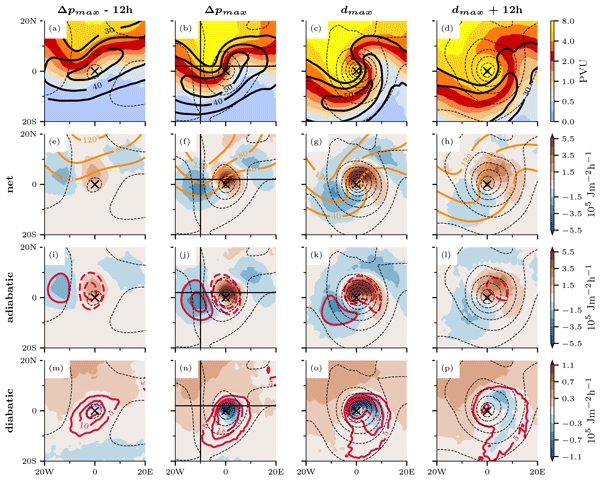
Marc Federer, Lukas Papritz, Michael Sprenger, and Christian M. Grams
Weather Clim. Dynam., 6, 211–230, https://doi.org/10.5194/wcd-6-211-2025, https://doi.org/10.5194/wcd-6-211-2025, 2025
Short summary
Short summary
Although extratropical cyclones in the North Atlantic are among the most impactful midlatitude weather systems, their intensification is not entirely understood. Here, we explore how individual cyclones convert available potential energy (APE) into kinetic energy and relate these conversions to the synoptic development of the cyclones. By combining potential vorticity thinking with a local APE framework, we offer a novel perspective on established concepts in dynamic meteorology.
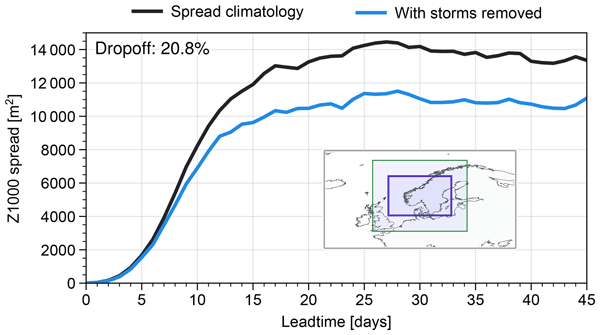
Philip Rupp, Jonas Spaeth, Hilla Afargan-Gerstman, Dominik Büeler, Michael Sprenger, and Thomas Birner
Weather Clim. Dynam., 5, 1287–1298, https://doi.org/10.5194/wcd-5-1287-2024, https://doi.org/10.5194/wcd-5-1287-2024, 2024
Short summary
Short summary
We quantify the occurrence of strong synoptic storms as contributing about 20 % to the uncertainty of subseasonal geopotential height forecasts over northern Europe. We further show that North Atlantic storms are less frequent, weaker and shifted southward following sudden stratospheric warming events, leading to a reduction in northern European forecast uncertainty.
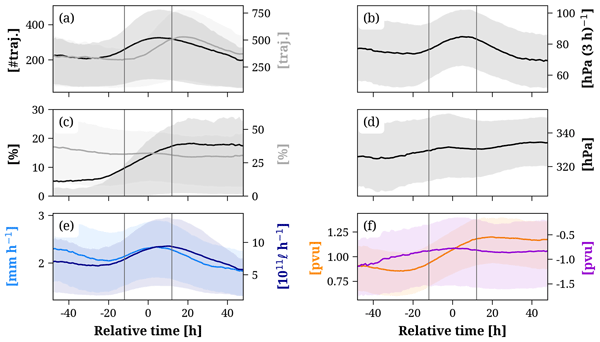
Katharina Heitmann, Michael Sprenger, Hanin Binder, Heini Wernli, and Hanna Joos
Weather Clim. Dynam., 5, 537–557, https://doi.org/10.5194/wcd-5-537-2024, https://doi.org/10.5194/wcd-5-537-2024, 2024
Short summary
Short summary
Warm conveyor belts (WCBs) are coherently ascending air streams that occur in extratropical cyclones where they form precipitation and often affect the large-scale flow. We quantified the key characteristics and impacts of WCBs and linked them to different phases in the cyclone life cycle and to different WCB branches. A climatology of these metrics revealed that WCBs are most intense during cyclone intensification and that the cyclonic and anticyclonic WCB branches show distinct differences.
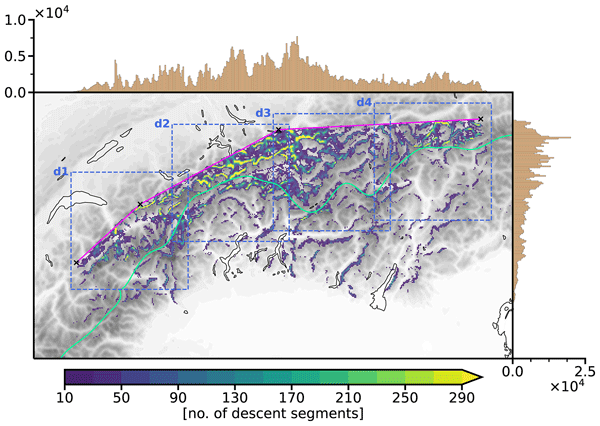
Lukas Jansing, Lukas Papritz, and Michael Sprenger
Weather Clim. Dynam., 5, 463–489, https://doi.org/10.5194/wcd-5-463-2024, https://doi.org/10.5194/wcd-5-463-2024, 2024
Short summary
Short summary
Using an innovative approach, the descent of foehn is diagnosed from a Lagrangian perspective based on 15 kilometer-scale simulations combined with online trajectories. The descent is confined to distinct hotspots in the immediate lee of local mountain peaks and chains. Two detailed case studies reveal a varying wave regime to be associated with the descent. Furthermore, additional controlling factors, such as the diurnal cycle, likewise influence the descent activity.
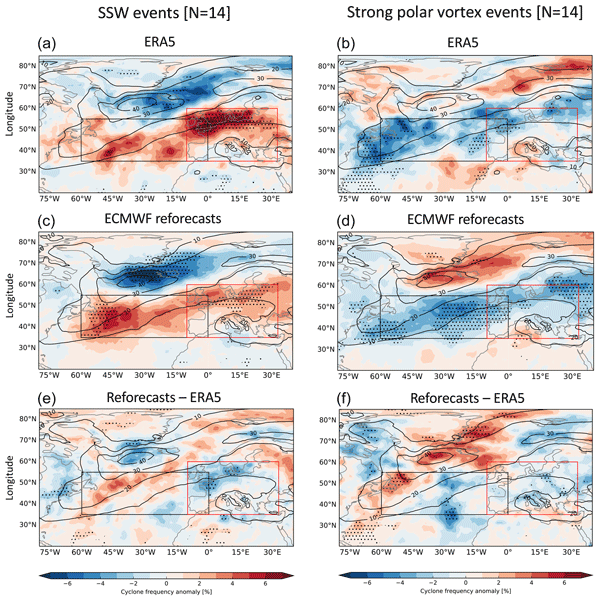
Hilla Afargan-Gerstman, Dominik Büeler, C. Ole Wulff, Michael Sprenger, and Daniela I. V. Domeisen
Weather Clim. Dynam., 5, 231–249, https://doi.org/10.5194/wcd-5-231-2024, https://doi.org/10.5194/wcd-5-231-2024, 2024
Short summary
Short summary
The stratosphere is a layer of Earth's atmosphere found above the weather systems. Changes in the stratosphere can affect the winds and the storm tracks in the North Atlantic region for a relatively long time, lasting for several weeks and even months. We show that the stratosphere can be important for weather forecasts beyond 1 week, but more work is needed to improve the accuracy of these forecasts for 3–4 weeks.
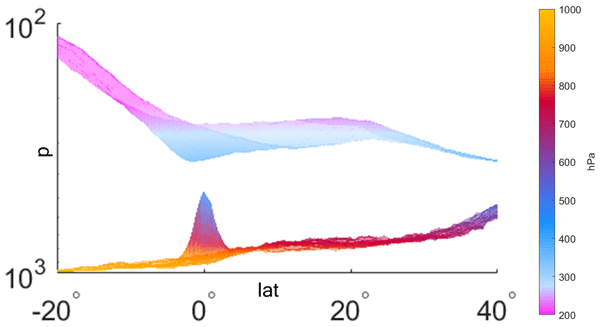
Yonatan Givon, Or Hess, Emmanouil Flaounas, Jennifer Louise Catto, Michael Sprenger, and Shira Raveh-Rubin
Weather Clim. Dynam., 5, 133–162, https://doi.org/10.5194/wcd-5-133-2024, https://doi.org/10.5194/wcd-5-133-2024, 2024
Short summary
Short summary
A novel classification of Mediterranean cyclones is presented, enabling a separation between storms driven by different atmospheric processes. The surface impact of each cyclone class differs greatly by precipitation, winds, and temperatures, providing an invaluable tool to study the climatology of different types of Mediterranean storms and enhancing the understanding of their predictability, on both weather and climate scales.
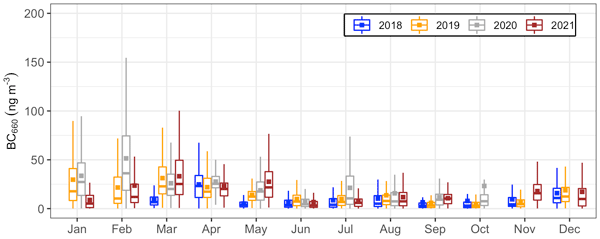
Stefania Gilardoni, Dominic Heslin-Rees, Mauro Mazzola, Vito Vitale, Michael Sprenger, and Radovan Krejci
Atmos. Chem. Phys., 23, 15589–15607, https://doi.org/10.5194/acp-23-15589-2023, https://doi.org/10.5194/acp-23-15589-2023, 2023
Short summary
Short summary
Models still fail in reproducing black carbon (BC) temporal variability in the Arctic. Analysis of equivalent BC concentrations in the European Arctic shows that BC seasonal variability is modulated by the efficiency of removal by precipitation during transport towards high latitudes. Short-term variability is controlled by synoptic-scale circulation patterns. The advection of warm air from lower latitudes is an effective pollution transport pathway during summer.
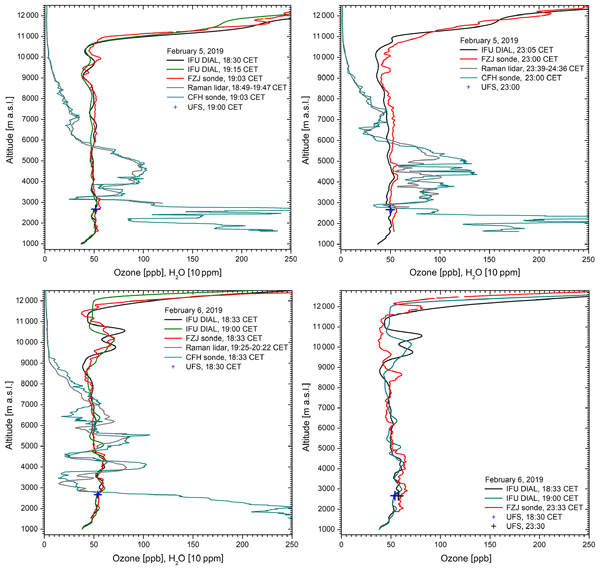
Thomas Trickl, Martin Adelwart, Dina Khordakova, Ludwig Ries, Christian Rolf, Michael Sprenger, Wolfgang Steinbrecht, and Hannes Vogelmann
Atmos. Meas. Tech., 16, 5145–5165, https://doi.org/10.5194/amt-16-5145-2023, https://doi.org/10.5194/amt-16-5145-2023, 2023
Short summary
Short summary
Tropospheric ozone have been measured for more than a century. Highly quantitative ozone measurements have been made at monitoring stations. However, deficits have been reported for vertical sounding systems. Here, we report a thorough intercomparison effort between a differential-absorption lidar system and two types of balloon-borne ozone sondes, also using ozone sensors at nearby mountain sites as references. The sondes agree very well with the lidar after offset corrections.
Melanie Lauer, Annette Rinke, Irina Gorodetskaya, Michael Sprenger, Mario Mech, and Susanne Crewell
Atmos. Chem. Phys., 23, 8705–8726, https://doi.org/10.5194/acp-23-8705-2023, https://doi.org/10.5194/acp-23-8705-2023, 2023
Short summary
Short summary
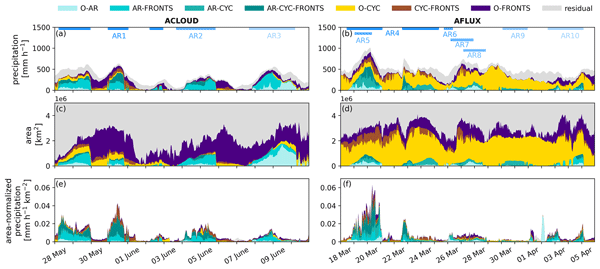
We present a new method to analyse the influence of atmospheric rivers (ARs), cyclones, and fronts on the precipitation in the Arctic, based on two campaigns: ACLOUD (early summer 2017) and AFLUX (early spring 2019). There are differences between both campaign periods: in early summer, the precipitation is mostly related to ARs and fronts, especially when they are co-located, while in early spring, cyclones isolated from ARs and fronts contributed most to the precipitation.
Emmanouil Flaounas, Leonardo Aragão, Lisa Bernini, Stavros Dafis, Benjamin Doiteau, Helena Flocas, Suzanne L. Gray, Alexia Karwat, John Kouroutzoglou, Piero Lionello, Mario Marcello Miglietta, Florian Pantillon, Claudia Pasquero, Platon Patlakas, María Ángeles Picornell, Federico Porcù, Matthew D. K. Priestley, Marco Reale, Malcolm J. Roberts, Hadas Saaroni, Dor Sandler, Enrico Scoccimarro, Michael Sprenger, and Baruch Ziv
Weather Clim. Dynam., 4, 639–661, https://doi.org/10.5194/wcd-4-639-2023, https://doi.org/10.5194/wcd-4-639-2023, 2023
Short summary
Short summary
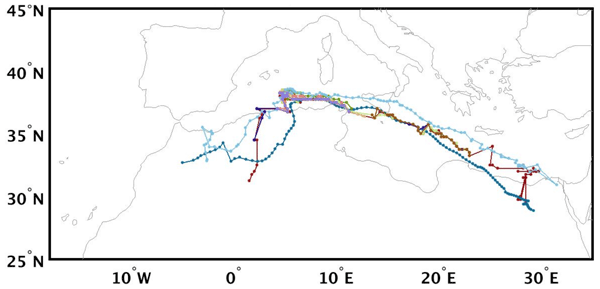
Cyclone detection and tracking methods (CDTMs) have different approaches in defining and tracking cyclone centers. This leads to disagreements on extratropical cyclone climatologies. We present a new approach that combines tracks from individual CDTMs to produce new composite tracks. These new tracks are shown to correspond to physically meaningful systems with distinctive life stages.
Hanna Joos, Michael Sprenger, Hanin Binder, Urs Beyerle, and Heini Wernli
Weather Clim. Dynam., 4, 133–155, https://doi.org/10.5194/wcd-4-133-2023, https://doi.org/10.5194/wcd-4-133-2023, 2023
Short summary
Short summary
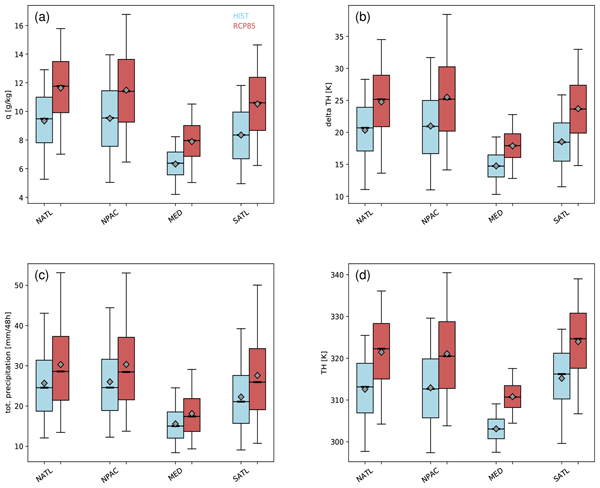
Warm conveyor belts (WCBs) are strongly ascending, cloud- and precipitation-forming airstreams in extratropical cyclones. In this study we assess their representation in a climate simulation and their changes under global warming. They become moister, become more intense, and reach higher altitudes in a future climate, implying that they potentially have an increased impact on the mid-latitude flow.
Andreas Schäfler, Michael Sprenger, Heini Wernli, Andreas Fix, and Martin Wirth
Atmos. Chem. Phys., 23, 999–1018, https://doi.org/10.5194/acp-23-999-2023, https://doi.org/10.5194/acp-23-999-2023, 2023
Short summary
Short summary
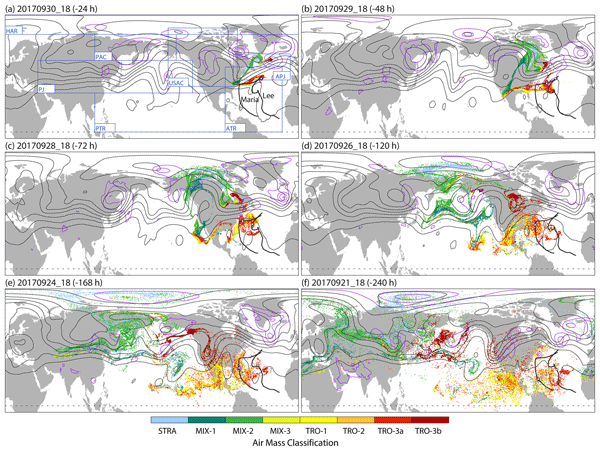
In this study, airborne lidar profile measurements of H2O and O3 across a midlatitude jet stream are combined with analyses in tracer–trace space and backward trajectories. We highlight that transport and mixing processes in the history of the observed air masses are governed by interacting tropospheric weather systems on synoptic timescales. We show that these weather systems play a key role in the high variability of the paired H2O and O3 distributions near the tropopause.
Hanin Binder, Hanna Joos, Michael Sprenger, and Heini Wernli
Weather Clim. Dynam., 4, 19–37, https://doi.org/10.5194/wcd-4-19-2023, https://doi.org/10.5194/wcd-4-19-2023, 2023
Short summary
Short summary
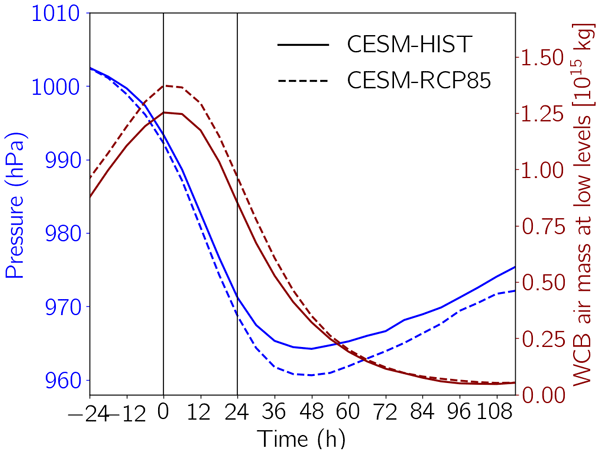
Warm conveyor belts (WCBs) are the main cloud- and precipitation-producing airstreams in extratropical cyclones. The latent heat release that occurs during cloud formation often contributes to the intensification of the associated cyclone. Based on the Community Earth System Model Large Ensemble coupled climate simulations, we show that WCBs and associated latent heating will become stronger in a future climate and be even more important for explosive cyclone intensification than in the present.

Michael A. Barnes, Thando Ndarana, Michael Sprenger, and Willem A. Landman
Weather Clim. Dynam., 3, 1291–1309, https://doi.org/10.5194/wcd-3-1291-2022, https://doi.org/10.5194/wcd-3-1291-2022, 2022
Short summary
Short summary
Stratospheric air can intrude into the troposphere and is associated with cyclonic development throughout the atmosphere. Through a highly idealized systematic approach, the effect that different intrusion characteristics have on surface cyclogenetic forcing is investigated. The proximity of stratospheric intrusions to the surface is shown to be the main factor in surface cyclogenetic forcing, whilst its width is an additional contributing factor.

Lukas Jansing, Lukas Papritz, Bruno Dürr, Daniel Gerstgrasser, and Michael Sprenger
Weather Clim. Dynam., 3, 1113–1138, https://doi.org/10.5194/wcd-3-1113-2022, https://doi.org/10.5194/wcd-3-1113-2022, 2022
Short summary
Short summary
This study presents a 5-year climatology of three main foehn types and three deep-foehn subtypes. The main types differ in their large-scale and Alpine-scale weather conditions and the subtypes in terms of the amount and extent of precipitation on the Alpine south side. The different types of foehn are found to strongly affect the local meteorological conditions at Altdorf. The study concludes by setting the new classification into a historic context.
Jan Clemens, Felix Ploeger, Paul Konopka, Raphael Portmann, Michael Sprenger, and Heini Wernli
Atmos. Chem. Phys., 22, 3841–3860, https://doi.org/10.5194/acp-22-3841-2022, https://doi.org/10.5194/acp-22-3841-2022, 2022
Short summary
Short summary
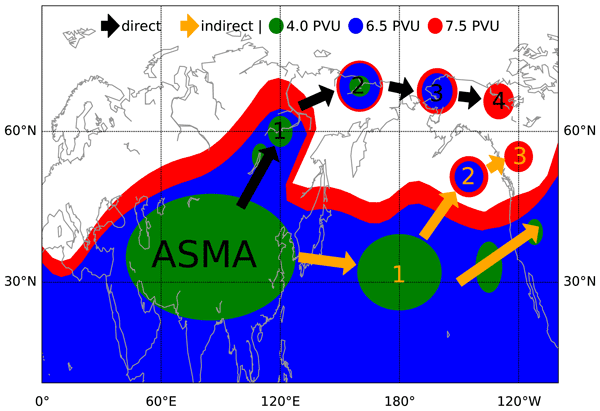
Highly polluted air flows from the surface to higher levels of the atmosphere during the Asian summer monsoon. At high levels, the air is trapped within eddies. Here, we study how air masses can leave the eddy within its cutoff, how they distribute, and how their chemical composition changes. We found evidence for transport from the eddy to higher latitudes over the North Pacific and even Alaska. During transport, trace gas concentrations within cutoffs changed gradually, showing steady mixing.
Jörg Wieder, Claudia Mignani, Mario Schär, Lucie Roth, Michael Sprenger, Jan Henneberger, Ulrike Lohmann, Cyril Brunner, and Zamin A. Kanji
Atmos. Chem. Phys., 22, 3111–3130, https://doi.org/10.5194/acp-22-3111-2022, https://doi.org/10.5194/acp-22-3111-2022, 2022
Short summary
Short summary
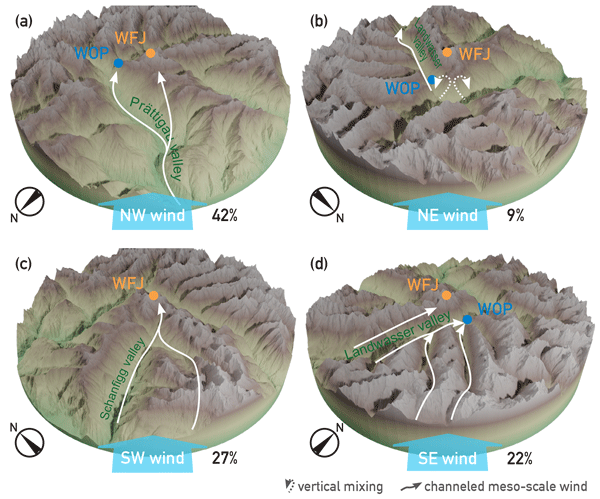
We investigate the variation in ice-nucleating particles (INPs) relevant for primary ice formation in mixed-phased clouds over the Alps based on simultaneous in situ observations at a mountaintop and a nearby high valley (1060 m height difference). In most cases, advection from the surrounding lower regions was responsible for changes in INP concentration, causing a diurnal cycle at the mountaintop. Our study underlines the importance of the planetary boundary layer as an INP reserve.
Lukas Bösiger, Michael Sprenger, Maxi Boettcher, Hanna Joos, and Tobias Günther
Geosci. Model Dev., 15, 1079–1096, https://doi.org/10.5194/gmd-15-1079-2022, https://doi.org/10.5194/gmd-15-1079-2022, 2022
Short summary
Short summary
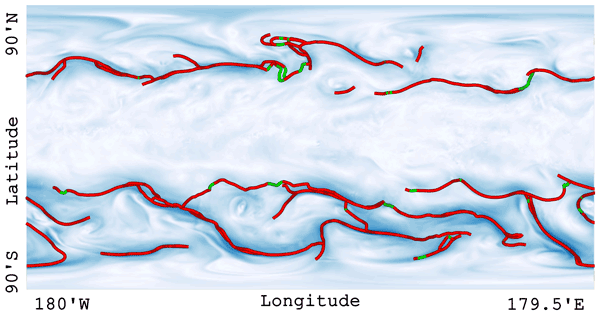
Jet streams are coherent air flows that interact with atmospheric structures such as warm conveyor belts (WCBs) and the tropopause. Individually, these structures have a significant impact on the weather evolution. A first step towards a deeper understanding of the meteorological processes is to extract jet stream core lines, for which we develop a novel feature extraction algorithm. Based on the line geometry, we automatically detect and visualize potential interactions between WCBs and jets.
Philippe Besson, Luise J. Fischer, Sebastian Schemm, and Michael Sprenger
Weather Clim. Dynam., 2, 991–1009, https://doi.org/10.5194/wcd-2-991-2021, https://doi.org/10.5194/wcd-2-991-2021, 2021
Short summary
Short summary
The strongest cyclone intensification is associated with a strong dry-dynamical forcing. Moreover, strong forcing and strong intensification correspond to a tendency for poleward cyclone propagation, which occurs in distinct regions in the Northern Hemisphere. There is a clear spatial pattern in the occurrence of certain forcing combinations. This implies a fundamental relationship between dry-dynamical processes and the intensification as well as the propagation of extratropical cyclones.
Cited articles
Abatzoglou, J. T. and Magnusdottir, G.: Wave breaking along the stratospheric polar vortex as seen in ERA-40 data, Geophys. Res. Lett., 34, L08812, https://doi.org/10.1029/2007gl029509, 2007.
Appenzeller, C. and Davies, H. C.: Structure of stratospheric intrusions into the troposphere, Nature, 358, 570–572, https://doi.org/10.1038/358570a0, 1992.
Baldwin, M. P., Ayarzagüena, B., Birner, T., Butchart, N., Butler, A. H., Charlton-Perez, A. J., Domeisen, D. I. V., Garfinkel, C. I., Garny, H., Gerber, E. P., Hegglin, M. I., Langematz, U., and Pedatella, N. M.: Sudden Stratospheric warmings, Rev. Geophys., 59, e2020RG000708, https://doi.org/10.1029/2020RG000708, 2021.
Bowman, K. P. and Chen, P.: Mixing by barotropic Instability in a non-linear model, J. Atmos. Sci., 51, 3692–3705, 1994.
Butchart, N.: The stratosphere: a review of the dynamics and variability, Weather Clim. Dynam., 3, 1237–1272, https://doi.org/10.5194/wcd-3-1237-2022, 2022.
Butchart, N. and Remsberg, E. E.: The area of the stratospheric polar vortex as a diagnostic for tracer transport on an isentropic surface, J. Atmos. Sci., 43, 1319–1339, https://doi.org/10.1175/1520-0469(1986)043<1319:TAOTSP>2.0.CO;2 1986.
Butler, A. H., Lawrence, Z. D., Lee, S. H., Lillo, S. P., and Long, C. S.: Differences between the 2018 and 2019 stratospheric polar vortex split events, Q. J. Roy. Meteorol. Soc., 146, 3503–3521, https://doi.org/10.1002/qj.3858, 2020.
Charney, J. G. and Stern, M. E.: On the stability of internal jets in a rotating atmosphere, J. Atmos. Sci., 19, 159–172, https://doi.org/10.1175/1520-0469(1962)019<0159:OTSOIB>2.0.CO;2, 1962.
Davies, H. C.: An interpretation of sudden warmings in terms of potential vorticity, J. Atmos. Sci., 38, 428–445, https://doi.org/10.1175/1520-0469(1981)038<0427:AIOSWI>2.0.CO;2, 1981.
Davies, H. C. and Bishop, C.: Eady edge waves and rapid development. J. Atmos. Sci., 51, 1930–1946, https://doi.org/10.1175/1520-0469(1994)051<1930:EEWARD>2.0.CO;2, 1994.
Davies, H. C. and Sprenger, M. A.: Cyclone-like features within the stratospheric polar-night vortex, Geophys. Res. Lett., 51, https://doi.org/10.1029/2024GL109529, 2024.
Dee, D. P., Uppala, S. M., Simmons, A. J., Berrisford, P., Poli, P., Kobayashi, S., Andrae, U., Balmaseda, M. A., Balsamo, G., Bauer, P., Bechtold, P., Beljaars, A. C. M., van de Berg, L., Bidlot, J., Bormann, N., Delsol, C., Dragani, R., Fuentes, M., Geer, A. J., Haimberger, L., Healy, S. B., Hersbach, H., Hólm, E. V., Isaksen, L., Kållberg, P., Köhler, M., Matricardi, M., McNally, A. P., Monge-Sanz, B. M., Morcrette, J. J., Park, B. K., Peubey, C., de Rosnay, P., Tavolato, C., Thépaut, J. N., and Vitart, F.: ERA-Interim global atmospheric reanalysis, Copernicus Climate Change Service (C3S) Climate Data Store (CDS) [data set], https://doi.org/10.24381/cds.f2f5241d, 2011.
de la Camara, A., Albers, J. R., Birner, T., Garcia, R. R., Pitchcock, P., Kinnison, D. E., and Smith, A. K.: Sensitivity of sudden stratospheric warmings to previous stratospheric conditions, J. Atmos. Sci., 74, 2857–2877, https://doi.org/10.1175/JAS-D-17-0136.1, 2017.
Dickinson, R. E.: Baroclinic instability of an unbounded zonal shear flow in a compressible atmosphere, J. Atmos. Sci., 30, 1520–1527, https://doi.org/10.1175/1520-0469(1973)030<1520:BIOAUZ>2.0.CO;2, 1973.
Dritschel, D. G.: On the stabilization of a two-dimensional vortex strip by adverse shear, J. Fluid Mech., 206, 193–221, 1989a.
Dritschel, D. G.: Contour dynamics and contour surgery: Numerical algorithms for extended, high-resolution modelling of vortex dynamics in two-dimensional, inviscid, incompressible flows, Comput. Phys. Rep., 10, 77–146, https://doi.org/10.1016/0167-7977(89)90004-X, 1989b.
Dritschel, D. G. and Polvani, L. M.: The roll-up of vorticity strips on the surface of a sphere, J. Fluid Mech., 234, 47–69, 1992.
Eichinger, R., Garny, H., Sacha, P., Danker, J., Dietmuller, S., and Oberlander-Hayn, S: Effects of missing gravity waves on stratospheric dynamics; part 1: Climatology, Clim. Dynam., 54, 3165–3183, 2020.
Erner, I., Karpechko, A. Y., and Järvinen, H. J.: Mechanisms and predictability of sudden stratospheric warming in winter 2018, Weather Clim. Dynam., 1, 657–674, https://doi.org/10.5194/wcd-1-657-2020, 2020.
Frederiksen, J. S.: Instability of the three-dimensional distorted stratospheric polar vortex at the onset of the sudden warming, J. Atmos. Sci., 39, 2313–2329, https://doi.org/10.1175/1520-0469(1982)039<2313:IOTTDD>2.0.CO;2, 1982.
Gelaro, R., McCarty, W., Suarez, M. J., Todling, R., Molod. A., Takas, L., Randles, C. A., Darmenov, A., Bosilovich, M. G., Reichle, R., Wargan, K., Coy. L., Cullather, R., Draper, C., Akella, S., Buchard, V., Conaty, A., Da Silva, A. M., Gu, W., Kim, G.-K., Koster, R., Lucchesi, R., Merkova, D., Nielsen, J. E., Partyka, G., Pawson, S., Putman, W., Rienecker, M., Schubert, S. D., Sienkiewicz, M., and Zaho, B.: The Modern-Era Retrospective analysis for research and applications, version 2 (MERRA-2), J. Climate, 30, 5419–5454, https://doi.org/10.1175/JCLI-D-16-0758.1 2017.
Greer, K., Thayer, J. P., and Harvey, V. L.: A climatology of polar winter stratopause warmings and associated planetary wave breaking, J. Geophy. Res., 108, 4168–4180, https://doi.org/10.1002/jgrd.50289 2013.
Hartmann, D. L.: Barotropic instability of the polar night jet stream, J. Atmos. Sci., 40, 817–835, https://doi.org/10.1175/1520-0469(1983)040<0817:BIOTPN>2.0.CO;2 , 1983.
Harvey, V. L., Pierce, R. B., Fairlie, T. D., and Hitchman, M. H.: A climatology of stratospheric polar vortices and anticyclones, J. Geophy. Res., 107, 4442, https://doi.org/10.1029/2001JD001471, 2002.
Harvey, V. L., Randall, C. E., and Hitchman, M. H.: Breakdown of potential vorticity – based equivalent latitude as A vortex-centered coordinate in the polar winter mesosphere, J. Geophys. Res., 114, D22105, https://doi.org/10.1029/2009JD012681, 2009.
Hersbach, H., Bell, B., Berrisford, P., Hirahara, S., Horányi, A., Munoz-Sabater, J., Nicolas, J., Peubey, C., Radu, R., Schepers, D., Simmons, A., Soci, C., Saleh Abdalla, S., Abellan, X., Balsamo, G., Bechtold, P., Biavati, G., Bidlot, J., Bonavita, M., De Chiara, G., Dahlgren, P., Dee, D., Diamsntakis, M., Dragani, R., Flemming, J., Forbes, R., Fuentes, M. A., Haimberger, L., Healy, S., Hogan, R. J., Hólm, E., Janisková, M., Keeley, S., Laloyaux, P., Lopez, P., Lupu, C., Radnoti, G., de Rozany, G., Rozum, I., Vamborg, F., Villaume, S., and Thepaut, J.-N.: The ERA5 global reanalysis, Q. J. R. Meteorol. Soc., 146, 1999–2049, https://doi.org/10.1002/qj.3803, 2020.
Hitchcock, P. and Haynes, P.: Stratospheric control of planetary waves, Geophys. Res. Lett., 43, 11884–11892, https://doi.org/10.1002/2016GL071372, 2016.
Hitchman, M. H. and Huesmann, A. S.: A seasonal climatology of Rossby wave breaking in the 320–2000 K layer, J. Atmos. Sci., 64, 1922–1932, https://doi.org/10.1175/JAS3927.1, 2007.
Holton, J. R. and Alexander, M.J .: The role of waves in the transport circulation of the middle atmosphere, Geophys. Monograph. Ser., 123, 21–35, https://doi.org/10.1029/GM123p0021, 2000.
Hoskins, B. J., McIntyre, M. E., and Robertson, A. W.: On the use and significance of isentropic potential vorticity maps, Q. J. Roy. Meteorol. Soc., 111, 877–946, https://doi.org/10.1002/qj.49711147002, 1985.
Ishioka, K. and Yoden, S.: Non-linear aspects of a barotropically unstable polar vortex in a forced-dissipative system: Flow regimes and Tracer transport, J. Met. Soc. JPN, 72, 201–212, 1995.
Karpechko, A. Y., Charlton-Perez, A., Balmaseda, M., Tyrrell, N., and Vitart, F.: Predicting sudden stratospheric Warming 2018 and its climate impacts with a multimodel ensemble, Geophys. Res. Lett., 45, 13538–13546, https://doi.org/10.1029/2018GL081091, 2018.
Knight, J., Scaife, A., Bett, P. E., Collier, T., Dunstone, N., Gordon, M., Hardiman, S., Hermanson,L., Kay, G., McLean, P., Pilling, C., Smith, D., Stringer, N., Thornton, H., and Walker, B.: Predictability of European Winters 2017/2018 and 2018/2019: Contrasting influences from the tropics and stratosphere, Amos. Sci. Lett., 22, https://doi.org/10.1002/asl.100, 2020.
Lawrence, Z. D. and Manney, G. L.: Characterizing stratospheric polar vortex variability with computer vision techniques, J. Geophys. Res.-Atmos., 123, 1510–1535, https://doi.org/10.1002/2017JD027556, 2018.
Lawrence, Z. D. and Manney, G. L.: Does the Artic stratospheric polar vortex exhibit signs of preconditioning prior to sudden stratospheric warmings?, J. Atmos. Sci., 77, 611–632, https://doi.org/10.1175/JAS-D-19-0168.1, 2020.
Leovy, C.: Radiative equilibrium of the mesosphere, J. Atmos. Sci., 21, 238–248, https://doi.org/10.1175/1520-0469(1964)021<0238:REOTM>2.0.CO;2, 1964.
Leutwyler, D. and Schär, C.: Barotropic Instability of a Cyclone Core at Kilometer-Scale Resolution, J. Adv. Modeling Earth Syst., 11, 3390–3402, 2019.
Lighthill, M. J.: Waves in Fluids, Comm. Pure & App. Maths, 20, 267–293, 1967.
Lu, H., Gray, L. J., Martineau, P., King, J. VC., and Bracegirdle, T. J.: Regime behavior in the upper stratosphere as a precursor of stratosphere–troposphere coupling in the Northern Winter, J. Climate, 34, 7677–7696, https://doi.org/10.1175/JCLI-D-20-0831.1, 2021.
Lu, Z., Li, F., Orsolini, Y. J., Gao, Y., and He, S.: Understanding of European Cold Extremes, Sudden Stratospheric Warming, and Siberian Snow Accumulation in the Winter of 2017/18, J. Climate, 33, 527–545, https://doi.org/10.1175/JCLI-D-18-0861.1, 2020.
Manney, G. L., Nathan, T. R., and Standford, J. L.: Barotropic stability of realistic stratospheric jets, J. Atmos. Sci., 45, 2545–2555, https://doi.org/10.1175/1520-0469(1988)045<2545:BSORSJ>2.0.CO;2, 1988.
Manney, G. L., Butler, A. H., Lawrence, Z. D., Wargan, K., and Santee, M. L.: What's in a name? On the use and significance of the term “Polar Vortex”, Geophys. Res. Lett., 49, e2021GL097617, https://doi.org/10.1029/2021GL097617, 2021.
Martius, O., Polvani, L. M., and Davies, H. C.: Blocking precursors to stratospheric sudden warming events, Geophys. Res. Lett., 36, L14806, https://doi.org/10.1029/2009GL038776, 2009.
Matthewman, N. J. and Esler, J. G.: Sudden stratospheric warmings as self-tuning Resonances. Part I: Vortex splitting events, J. Atmos. Sci., 68, 2481–2504, https://doi.org/10.1175/JAS-D-11-07.1, 2011.
McIntyre, M. E. and Palmer, T. P.: The “surf-zone” in the stratosphere, J. Atmos. Terres. Phys., 46, 825–849, https://doi.org/10.1016/0021-9169(84)90063-1, 1984.
Michaelangeli, D. V. and Zurek, R. W. : Barotropic Instability of Midlatitude Zonal Jets on Mars, Earth and Venus, J. Atmos. Sci., 44, 2031–2041, https://doi.org/10.1175/1520-0469(1987)044<2031:BIOMZJ>2.0.CO;2, 1987.
Mitchell, D. M., Scott, R. K., Seviour, W. J. M., Thomson, S. I., Waugh, D. W., Teanby, N. A., and Ball, E. R.: Polar vortices in planetary atmospheres, Rev. Geophys., 59, e2020RG000723, https://doi.org/10.1029/2020RG000723, 2021.
Mitzu, R. and Yoden, S.: Chaotic Mixing and transport barriers in an idealized stratospheric polar vortex, J. Atmos. Sci., 58, 2616–2629, https://doi.org/10.1175/1520-0469(2001)058<2616:CMATBI>2.0.CO;2, 2001.
Nash, E. R., Newman, O. P. A., Rosenfield, J. E., and Schoeberl, M. R.: An objective determination of the polar vortex using Ertel's potential vorticity, J. Geophys. Res., 101, 9471–9478, https://doi.org/10.1029/96JD00066, 1996.
Paldor, N., Shamir, O., and Garfinkel, C. M.: Barotropic instability of a zonal jet on the sphere: from non-divergence through quasi-geostrophy to shallow water, Geophys. Astrophys. Fluid Dynam., 115, 15–34, https://doi.org/10.1080/03091929.2020.1724996, 2021.
Perot, K. and Orsolini, Y. J.: Impact of the major SSWs of February 2018 and January 2019 on the middle atmospheric nitric oxide abundance, J. Atmos. Solar-Terr. Phys., 218, https://doi.org/10.1016/j.jastp.2021.105586, 2021.
Pfister, L.: A theoretical study of three-dimensional barotropic instability with applications to the upper stratosphere, J. Atmos. Sci., 36, 908–920, https://doi.org/10.1175/1520-0469(1979)036<0908:ATSOTD>2.0.CO;2, 1979.
Plumb, R. A.: Instability of the distorted polar night vortex: A theory of stratospheric warmings, J. Atmos. Sci., 38, 2514–2531, https://doi.org/10.1175/1520-0469(1981)038<2514:IOTDPN>2.0.CO;2, 1981.
Randel, W. J. and Lait, L. R.: Dynamics of the 4-day wave in the Southern Hemisphere polar stratosphere, J. Atmos. Sci., 48, 2496–2508, https://n2t.org/ark:/85065/d7h1324w, 1991.
Rao, J., Ren, R., Chen, H., Yu, Y., and Zhou, Y.: The stratospheric sudden warming event in February 2018 and its prediction by a climate system model, J. Geophys. Res.-Atmos., 123, 13332–13345, https://doi.org/10.1029/2018JD028908, 2018.
Rao, J., Garfinkel, C. I., and Butler A. H.: Stratospheric polar vortex variability, in: Atmospheric Oscillations: Sources of Subseasonal-to-seasonal variability and predictability, Chapter 14, 277–299, Elsevier, https://doi.org/10.1016/B978-0-443-15638-0.00014-9, 2024.
Schoeberl, M. R. and Newman, P.A.: Polar Vortex, in: Encyclopedia of Atmospheric Sciences, edited by: North, G. R., Pyle, J., and Zhang, F., 2nd edn., Vol. 4, 12–17, https://doi.org/10.1016/B0-12-227090-8/00228-1, 2015.
Schubert, W. H., Montgomery, M. T., Taft, R. K., Guinn, T. A., Fulton, S. R., Kossin, J. P., and Edwards, J. P.: Polygonal eyewalls, asymmetric eye contraction, and potential vorticity mixing in hurricanes, J. Atmos. Sci., 56, 1197–1223, https://doi.org/10.1175/1520-0469(1999)056<1197:PEAECA>2.0.CO;2, 2018.
Serra, M., Sathe, P., Beron-Vera, F., and Haller, G.: Uncovering the edge of the polar vortex, J. Atmos. Sci., 74, 3871–3885, https://doi.org/10.1175/JAS-D-17-0052.1, 2017.
Seviour, W. J. M., Waugh, D. W., and Scott, R. K.: The Stability of Mars's annular polar vortex, J. Atmos. Sci., 74, 1533–1547, https://doi.org/10.1175/JAS-D-16-0293.1, 2017.
Sharkey, J., Teanby, N. A., Sylvestre, M., Mitchell, D. M., Seviour, W. J. M., Nixon, C. A., and Irwin, P. G. J.: Potential vorticity structure of Titan's polar vortices from Cassini CIRS observations, 2021, Icar, 354, 114030, https://doi.org/10.1016/j.icarus.2020.114030, 2021.
Shine, K. P.: The middle atmosphere in the absence of dynamical heat fluxes, Q. J. Roy. Meteorol. Soc., 113, 603–633, https://doi.org/10.1002/qj.49711347610, 1987.
Shultis, J., Seviour, W., Waugh, D., and Toigo, A.: Transport and mixing in planetary polar vortices with annular and monopolar potential vortiocity structures, The Planet. Sci. J., 6, 63, https://doi.org/10.3847/PSJ/adba4b, 2025.
Simmons, A. J.: Baroclinic instability at the winter stratopause, Q. J. Roy. Meteorol. Soc., 100, 531–540, https://doi.org/10.1002/qj.49710042603, 1974.
Smith, A. K.: Preconditioning for Stratospheric Sudden Warmings: Sensitivity Studies with a Numerical Model, J. Atmos. Sci., 49, 1003–1019, 1992.
S-RIP: SPARC Reanalysis Intercomparison Project (S-RIP) Final Report, edited by: Fujiwara, M., Manney, G. L., Gray, L. J., and Wright, J. S., SPARC Report No. 10, WCRP-17/2020, https://aparc-climate.org/sparc-report-no-10/ (last access: 10 June 2025), 2022.
Venne, D. E. and Stanford, J. L.: Observations of a 4-day temperature wave in the polar winter stratosphere, J. Atmos. Sci., 36, 2016–2019, https://doi.org/10.1175/1520-0469(1997)054<0420:TDWAOF>2.0.CO;2, 1979.
Wang, Y., Shulga, V., Milinevsky, G., Patoka, A., Evtushevsky, O., Klekociuk, A., Han, W., Grytsai, A., Shulga, D., Myshenko, V., and Antyufeyev, O.: Winter 2018 major sudden stratospheric warming impact on midlatitude mesosphere from microwave radiometer measurements, Atmos. Chem. Phys., 19, 10303–10317, https://doi.org/10.5194/acp-19-10303-2019, 2019.
Watanabe, S., Koshin, D., Noguchi, S., and Sato, K.: Gravity wave morphology during the 2018 sudden stratospheric warming simulated by a whole neutral atmosphere general circulation model, J. Geophys. Res.-Atmos. 127, e2022JD036718, https://doi.org/10.1029/2022JD036718, 2022.
Waugh, D. M.: Fluid dynamics of polar vortices on Earth, Mars, and Titan, Annu. Rev. Fluid Mech., 55, 265–269, https://doi.org/10.1146/annurev-fluid-120720-032208, 2023.
Waugh, D. W. and Polvani, L. M.: Stratospheric Polar Vortices. In `The Stratosphere: Dynamics, Transport, and Chemistry, Geophys. Monograph Series, 190, 43–57, 2010.
Waugh, D. W., Sobel, A. H., and Polvani, L. M.: What is the polar vortex and how does it influence weather?, B. Am. Meteor. Soc., 98, 37–44, https://doi.org/10.1175/BAMS-D-15-00212.1, 2016.
Yessimbet, K., Shepherd, T. G., Osso, A. C., and Steiner, A. K.: Pathways of influence between Northern Hemisphere blocking and stratospheric polar vortex variability, Geophys. Res. Lett., 49, e2022GL100895, https://doi.org/10.1029/2022GL100895, 2022.
Short summary
The Stratospheric Polar Vortex with its strong circumpolar jet is a dominant feature of the wintertime stratosphere. Evidence is presented of the characteristics of its distinctive sub-planetary scale features. The scale and dynamics of the features are linked to the break-up of an annular band of strong vorticity at the vortex's periphery, and moreover its aggregation into one or two vortices due to forcing from below can have ramifications for the occurrence of Sudden Stratospheric Warmings.
The Stratospheric Polar Vortex with its strong circumpolar jet is a dominant feature of the...


