
Articles | Volume 7, issue 2
https://doi.org/10.5194/wcd-7-873-2026
© Author(s) 2026. This work is distributed under
the Creative Commons Attribution 4.0 License.
the Creative Commons Attribution 4.0 License.
https://doi.org/10.5194/wcd-7-873-2026
© Author(s) 2026. This work is distributed under
the Creative Commons Attribution 4.0 License.
the Creative Commons Attribution 4.0 License.
Research article
| 
02 Jun 2026
Research article |
| 02 Jun 2026
| 02 Jun 2026
Identifying controls of extratropical cyclone intensity at genesis time and during intensification in the North Atlantic and Europe

Institute for Atmospheric and Earth System Research/Physics, Faculty of Science, University of Helsinki, Helsinki, Finland
Clément Bouvier
Institute for Atmospheric and Earth System Research/Physics, Faculty of Science, University of Helsinki, Helsinki, Finland
Victoria A. Sinclair
Institute for Atmospheric and Earth System Research/Physics, Faculty of Science, University of Helsinki, Helsinki, Finland
Related authors
Joona Cornér, Clément Bouvier, Benjamin Doiteau, Florian Pantillon, and Victoria A. Sinclair
Nat. Hazards Earth Syst. Sci., 25, 207–229, https://doi.org/10.5194/nhess-25-207-2025, https://doi.org/10.5194/nhess-25-207-2025, 2025
Short summary
Short summary
Classification reduces the considerable variability between extratropical cyclones (ETCs) and thus simplifies studying their representation in climate models and changes in the future climate. In this paper we present an objective classification of ETCs using measures of ETC intensity. This is motivated by the aim of finding a set of ETC intensity measures which together comprehensively describe both the dynamical and impact-relevant nature of ETC intensity.
Terhi K. Laurila, Hilppa Gregow, Joona Cornér, and Victoria A. Sinclair
Weather Clim. Dynam., 2, 1111–1130, https://doi.org/10.5194/wcd-2-1111-2021, https://doi.org/10.5194/wcd-2-1111-2021, 2021
Short summary
Short summary
We create a climatology of mid-latitude cyclones and windstorms in northern Europe and investigate how sensitive the minimum pressure and maximum gust of windstorms are to four precursors. Windstorms are more common in the cold season than the warm season, whereas the number of mid-latitude cyclones has no annual cycle. The low-level temperature gradient has the strongest impact of all considered precursors on the intensity of windstorms in terms of both the minimum pressure and maximum gust.
Johannes Mikkola, Victoria A. Sinclair, Giancarlo Ciarelli, Alexander Gohm, and Federico Bianchi
Atmos. Chem. Phys., 26, 11171–11187, https://doi.org/10.5194/acp-26-11171-2026, https://doi.org/10.5194/acp-26-11171-2026, 2026
Short summary
Short summary
This study investigates the effect of black carbon on the diurnal winds within idealised mountain valleys using numerical simulations. Absorption of solar radiation by black carbon weakens the up-slope winds, but unexpectedly strengthens the afternoon up-valley winds. This happens because weaker up-slope winds remove less momentum from the valley, allowing the up-valley winds to become stronger even though the overall driving force is reduced by the absorption.
Juniper Tyree, Robert Underwood, Clément Bouvier, Daniel Köhler, Tim Reichelt, Peter Dueben, Sara Faghih-Naini, Heikki Järvinen, and Milan Klöwer
EGUsphere, https://doi.org/10.5194/egusphere-2026-4266, https://doi.org/10.5194/egusphere-2026-4266, 2026
Short summary
Short summary
Many scientists use computers to simulate our world. This is producing too much data. Data can be made smaller using lossy compression. But many scientists fear losing important details and avoid it. We created Compression Safeguards to protect scientists and make lossy compression safe. First, scientists say what’s important in their data. Then the Safeguards correct the compressed data so that nothing important is lost. We test many examples: Safeguards protect but make the data less smaller.
Aino Ovaska, Daniel Holmberg, Elio Rauth, Mansour Alghamdi, Paulo Artaxo, Eija Asmi, John Backman, Benjamin Bergmans, Matthew Boyer, Liezl Bredenkamp, Maurizio Busetto, Delano Campos De Oliveira, Juan Andrés Casquero-Vera, Darius Ceburnis, Tak Chan, Tommy Chan, Sebastien Conil, Daniele Contini, Suzanne Crumeyrolle, Valentin Duflot, Kostas Eleftheriadis, Johan Esveld, Ekaterina Ezhova, Markus Fiebig, Shahzad Gani, Olga Garmash, Francisco Gómez-Moreno, Roy M. Harrison, Andras Hoffer, Rakesh Hooda, Antti Hyvärinen, Tareq Hussein, Jorma Joutsensaari, Nikos Kalivitis, Heinz Kaminski, Jutta Kesti, Radovan Krejci, Adam Kristensson, Chongai Kuang, Markku Kulmala, Lauri Laakso, Ari Leskinen, Heikki Lihavainen, Andreas Massling, Maik Merkel, Steffen Noe, Jakub Ondracek, Noemí Perez, Jean-Eudes Petit, Tuukka Petäjä, Michael Pikridas, Christopher Pöhlker, Mira Pöhlker, Jean-Philippe Putaud, Ximeng Qi, Cristina Reche, Sergio Rodríguez, Petr Roztocil, Jean Sciare, Karine Sellegri, Dongjie Shang, Ashish Singh, Mikko Sipilä, Henrik Skov, Mar Sorribas, Tamanna Subba, Junying Sun, Peter Tunved, Ville Vakkari, Pieter G. Van Zyl, Aki Virkkula, Jens Voigtländer, Kay Weinhold, Alfred Wiedensohler, Hee-Jung Yoo, Putian Zhou, Kai Puolamäki, Tuomo Nieminen, Veli-Matti Kerminen, Victoria A. Sinclair, and Pauli Paasonen
Earth Syst. Sci. Data Discuss., https://doi.org/10.5194/essd-2026-415, https://doi.org/10.5194/essd-2026-415, 2026
Preprint under review for ESSD
Short summary
Short summary
All clouds form around aerosol particles, and their abundance influences cloud properties. In turn, clouds affect climate by changing how energy moves through the atmosphere, making them important for climate change. To better understand these interactions, we need accurate information on how many aerosol particles are in the atmosphere. Therefore, we have developed a new 21-year global dataset of particle concentrations relevant for cloud formation.
Heikki Järvinen, Jouni Räisänen, Lauri Tuppi, Clément Bouvier, Antonio Sanchez-Benitez, Juniper Tyree, Antti Toropainen, Paolo Davini, Francisco Doblas-Reyes, Thomas Jung, Daniel Klocke, Jenni Kontkanen, Sebastian Milinski, Matteo Nurisso, Himansu Kesari Pradhan, and Irina Sandu
EGUsphere, https://doi.org/10.5194/egusphere-2026-3364, https://doi.org/10.5194/egusphere-2026-3364, 2026
Short summary
Short summary
There is rich process-level variability present in the new-generation kilometre-scale climate simulations. The EU’s Climate Change Adaptation Digital Twin (Climate DT) integrates global Earth observing systems and observation modelling capabilities – until now common only in weather prediction – into operational climate simulation workflow. This provides a novel framework for precise evaluation of fine-scale details of simulation data and informing adaptation decisions at local (city) scales.
Manuel Bettineschi, Arineh Cholakian, Victoria Sinclair, Katerina Sindelarova, Arnaud P. Praplan, Steven J. Thomas, Tuukka Petäjä, Federico Bianchi, and Giancarlo Ciarelli
Atmos. Chem. Phys., 26, 8067–8088, https://doi.org/10.5194/acp-26-8067-2026, https://doi.org/10.5194/acp-26-8067-2026, 2026
Short summary
Short summary
We studied how forests in Finland release natural gases that affect air quality and climate. Existing models strongly overestimated these emissions because they used overly simple forest descriptions. By adding detailed information on tree species, we greatly improved agreement with real measurements. This means more realistic estimates of particle formation in the air. Our results show that accurate forest data are essential for reliable climate and air quality predictions.
Aino Ovaska, Elio Rauth, Daniel Holmberg, Paulo Artaxo, John Backman, Benjamin Bergmans, Don Collins, Marco Aurélio Franco, Shahzad Gani, Roy M. Harrison, Rakesh K. Hooda, Tareq Hussein, Antti-Pekka Hyvärinen, Kerneels Jaars, Adam Kristensson, Markku Kulmala, Lauri Laakso, Ari Laaksonen, Nikolaos Mihalopoulos, Colin O'Dowd, Jakub Ondracek, Tuukka Petäjä, Kristina Plauškaitė, Mira Pöhlker, Ximeng Qi, Peter Tunved, Ville Vakkari, Alfred Wiedensohler, Kai Puolamäki, Tuomo Nieminen, Veli-Matti Kerminen, Victoria A. Sinclair, and Pauli Paasonen
Aerosol Research, 3, 589–618, https://doi.org/10.5194/ar-3-589-2025, https://doi.org/10.5194/ar-3-589-2025, 2025
Short summary
Short summary
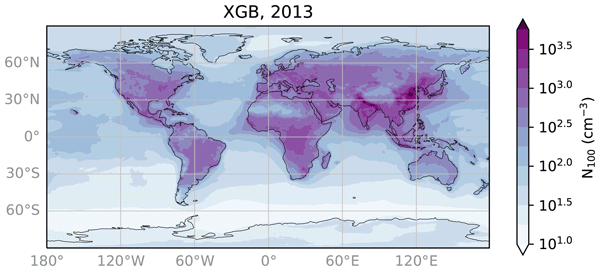
We trained machine learning models to estimate the number of aerosol particles large enough to form clouds and generated daily estimates for the entire globe. The models performed well in many continental regions but struggled in remote and marine areas. Still, this approach offers a way to quantify these particles in areas that lack direct measurements, helping us understand their influence on clouds and climate on a global scale.
Sara Tahvonen, Daniel Köhler, Petri Räisänen, and Victoria A. Sinclair
Weather Clim. Dynam., 6, 1299–1317, https://doi.org/10.5194/wcd-6-1299-2025, https://doi.org/10.5194/wcd-6-1299-2025, 2025
Short summary
Short summary
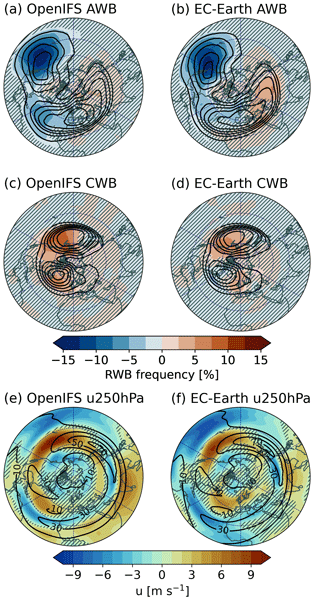
Rossby wave breaking (RWB) influences weather at a large scale and can contribute to extreme weather events, but it is not known if climate change will have an effect on where and how often RWB occurs. We investigate how extreme sea ice loss and warming of the sea surface effect RWB. Our results show that sea surface temperatures significantly change local RWB frequencies and the closely related upper atmospheric jet streams, but that sea ice changes have no noticeable effect in our experiments.
Tuomas Naakka, Daniel Köhler, Kalle Nordling, Petri Räisänen, Marianne Tronstad Lund, Risto Makkonen, Joonas Merikanto, Bjørn H. Samset, Victoria A. Sinclair, Jennie L. Thomas, and Annica M. L. Ekman
Atmos. Chem. Phys., 25, 8127–8145, https://doi.org/10.5194/acp-25-8127-2025, https://doi.org/10.5194/acp-25-8127-2025, 2025
Short summary
Short summary
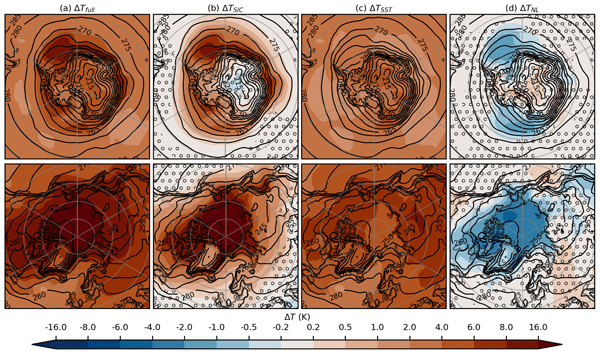
The effects of warmer sea surface temperatures and decreasing sea ice cover on polar climates have been studied using four climate models with identical prescribed changes in sea surface temperatures and sea ice cover. The models predict similar changes in air temperature and precipitation in the polar regions in a warmer climate with less sea ice. However, the models disagree on how the atmospheric circulation, i.e. the large-scale winds, will change with warmer temperatures and less sea ice.
Daniel Köhler, Petri Räisänen, Tuomas Naakka, Kalle Nordling, and Victoria A. Sinclair
Weather Clim. Dynam., 6, 669–694, https://doi.org/10.5194/wcd-6-669-2025, https://doi.org/10.5194/wcd-6-669-2025, 2025
Short summary
Short summary
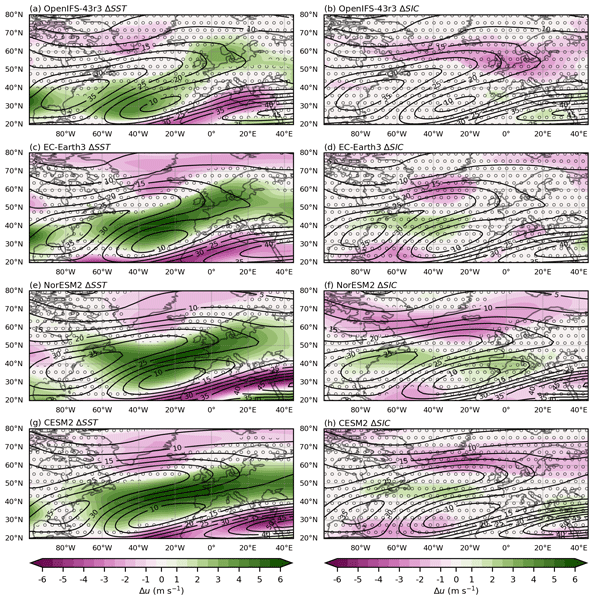
We study the impacts of globally increasing sea surface temperatures and sea ice loss on the atmosphere in wintertime. In future climates, the jet stream shifts southward over the North Atlantic and extends further over Europe. Increasing sea surface temperatures drives these changes. The region of high activity of low-pressure systems is projected to move east towards Europe. Future increasing sea surface temperatures and sea ice loss contribute with similar magnitude to the eastward shift.
Ilona Láng-Ritter, Terhi Kristiina Laurila, Antti Mäkelä, Hilppa Gregow, and Victoria Anne Sinclair
Nat. Hazards Earth Syst. Sci., 25, 1697–1717, https://doi.org/10.5194/nhess-25-1697-2025, https://doi.org/10.5194/nhess-25-1697-2025, 2025
Short summary
Short summary
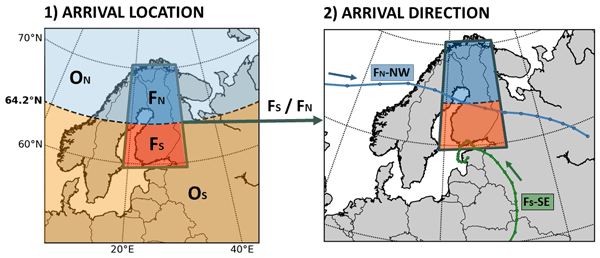
We present a classification method for extratropical cyclones and windstorms and show their impacts on Finland's electricity grid by analysing the 92 most damaging windstorms (2005–2018). The south-west- and north-west-arriving windstorms cause the most damage to the power grid. The most relevant parameters for damage are the wind gust speed and extent of wind gusts. Windstorms are more frequent and damaging in autumn and winter, but weaker wind speeds in summer also cause significant damage.
Johannes Mikkola, Alexander Gohm, Victoria A. Sinclair, and Federico Bianchi
Atmos. Chem. Phys., 25, 511–533, https://doi.org/10.5194/acp-25-511-2025, https://doi.org/10.5194/acp-25-511-2025, 2025
Short summary
Short summary
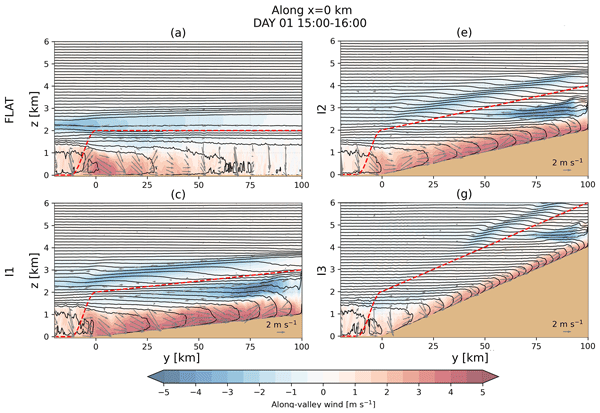
This study investigates the influence of valley floor inclination on diurnal winds and passive tracer transport within idealised mountain valleys using numerical simulations. The valley inclination strengthens the daytime up-valley winds but only up to a certain point. Beyond that critical angle, the winds weaken again. The inclined valleys transport the tracers higher up in the free troposphere, which would, for example, lead to higher potential for long-range transport.
Diego Aliaga, Victoria A. Sinclair, Radovan Krejci, Marcos Andrade, Paulo Artaxo, Luis Blacutt, Runlong Cai, Samara Carbone, Yvette Gramlich, Liine Heikkinen, Dominic Heslin-Rees, Wei Huang, Veli-Matti Kerminen, Alkuin Maximilian Koenig, Markku Kulmala, Paolo Laj, Valeria Mardoñez-Balderrama, Claudia Mohr, Isabel Moreno, Pauli Paasonen, Wiebke Scholz, Karine Sellegri, Laura Ticona, Gaëlle Uzu, Fernando Velarde, Alfred Wiedensohler, Doug Worsnop, Cheng Wu, Chen Xuemeng, Qiaozhi Zha, and Federico Bianchi
Aerosol Research, 3, 15–44, https://doi.org/10.5194/ar-3-15-2025, https://doi.org/10.5194/ar-3-15-2025, 2025
Short summary
Short summary
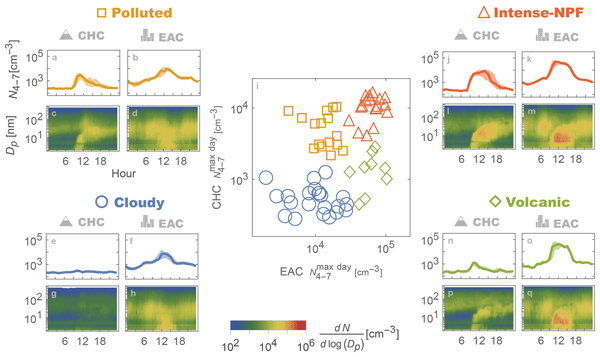
This study examines new particle formation (NPF) in the Bolivian Andes at Chacaltaya mountain (CHC) and the urban El Alto–La Paz area (EAC). Days are clustered into four categories based on NPF intensity. Differences in particle size, precursor gases, and pollution levels are found. High NPF intensities increased Aitken mode particle concentrations at both sites, while volcanic influence selectively diminished NPF intensity at CHC but not EAC. This study highlights NPF dynamics in the Andes.
Joona Cornér, Clément Bouvier, Benjamin Doiteau, Florian Pantillon, and Victoria A. Sinclair
Nat. Hazards Earth Syst. Sci., 25, 207–229, https://doi.org/10.5194/nhess-25-207-2025, https://doi.org/10.5194/nhess-25-207-2025, 2025
Short summary
Short summary
Classification reduces the considerable variability between extratropical cyclones (ETCs) and thus simplifies studying their representation in climate models and changes in the future climate. In this paper we present an objective classification of ETCs using measures of ETC intensity. This is motivated by the aim of finding a set of ETC intensity measures which together comprehensively describe both the dynamical and impact-relevant nature of ETC intensity.
Zoé Brasseur, Julia Schneider, Janne Lampilahti, Ville Vakkari, Victoria A. Sinclair, Christina J. Williamson, Carlton Xavier, Dmitri Moisseev, Markus Hartmann, Pyry Poutanen, Markus Lampimäki, Markku Kulmala, Tuukka Petäjä, Katrianne Lehtipalo, Erik S. Thomson, Kristina Höhler, Ottmar Möhler, and Jonathan Duplissy
Atmos. Chem. Phys., 24, 11305–11332, https://doi.org/10.5194/acp-24-11305-2024, https://doi.org/10.5194/acp-24-11305-2024, 2024
Short summary
Short summary
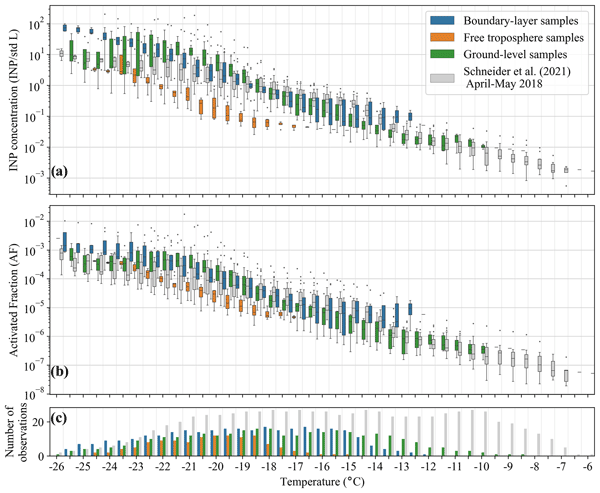
Ice-nucleating particles (INPs) strongly influence the formation of clouds by initiating the formation of ice crystals. However, very little is known about the vertical distribution of INPs in the atmosphere. Here, we present aircraft measurements of INP concentrations above the Finnish boreal forest. Results show that near-surface INPs are efficiently transported and mixed within the boundary layer and occasionally reach the free troposphere.
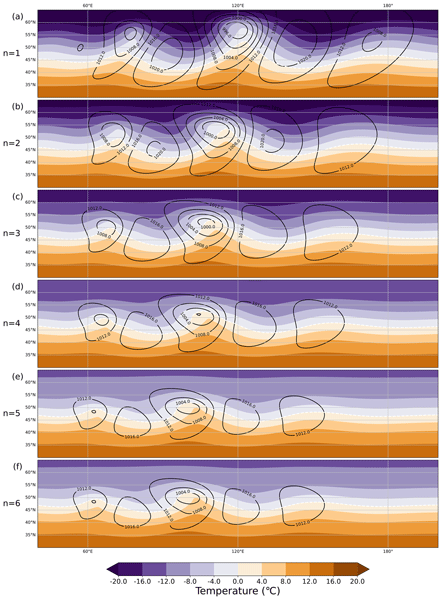
Clément Bouvier, Daan van den Broek, Madeleine Ekblom, and Victoria A. Sinclair
Geosci. Model Dev., 17, 2961–2986, https://doi.org/10.5194/gmd-17-2961-2024, https://doi.org/10.5194/gmd-17-2961-2024, 2024
Short summary
Short summary
An analytical initial background state has been developed for moist baroclinic wave simulation on an aquaplanet and implemented into OpenIFS. Seven parameters can be controlled, which are used to generate the background states and the development of baroclinic waves. The meteorological and numerical stability has been assessed. Resulting baroclinic waves have proven to be realistic and sensitive to the jet's width.
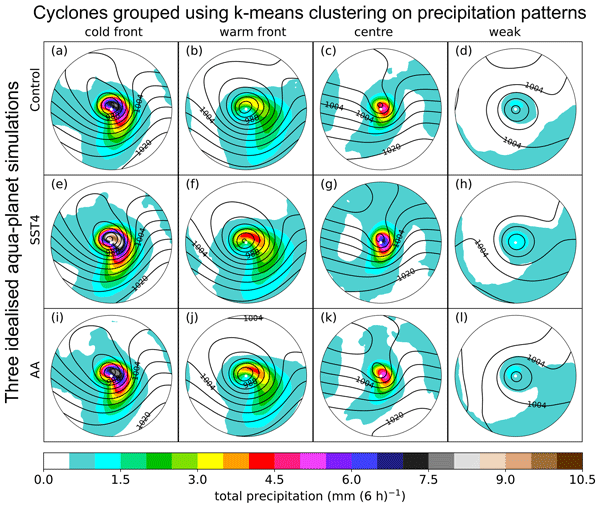
Victoria A. Sinclair and Jennifer L. Catto
Weather Clim. Dynam., 4, 567–589, https://doi.org/10.5194/wcd-4-567-2023, https://doi.org/10.5194/wcd-4-567-2023, 2023
Short summary
Short summary
We studied the relationship between the strength of mid-latitude cyclones and their precipitation, how this may change in the future, and whether it depends of the type of cyclone. The relationship between cyclone strength and precipitation increases in warmer climates and depends strongly on the type of cyclone. For some cyclone types there is no relation between cyclone strength and precipitation. For all cyclone types, precipitation increases with uniform warming and polar amplification.

Qiaozhi Zha, Wei Huang, Diego Aliaga, Otso Peräkylä, Liine Heikkinen, Alkuin Maximilian Koenig, Cheng Wu, Joonas Enroth, Yvette Gramlich, Jing Cai, Samara Carbone, Armin Hansel, Tuukka Petäjä, Markku Kulmala, Douglas Worsnop, Victoria Sinclair, Radovan Krejci, Marcos Andrade, Claudia Mohr, and Federico Bianchi
Atmos. Chem. Phys., 23, 4559–4576, https://doi.org/10.5194/acp-23-4559-2023, https://doi.org/10.5194/acp-23-4559-2023, 2023
Short summary
Short summary
We investigate the chemical composition of atmospheric cluster ions from January to May 2018 at the high-altitude research station Chacaltaya (5240 m a.s.l.) in the Bolivian Andes. With state-of-the-art mass spectrometers and air mass history analysis, the measured cluster ions exhibited distinct diurnal and seasonal patterns, some of which contributed to new particle formation. Our study will improve the understanding of atmospheric ions and their role in high-altitude new particle formation.
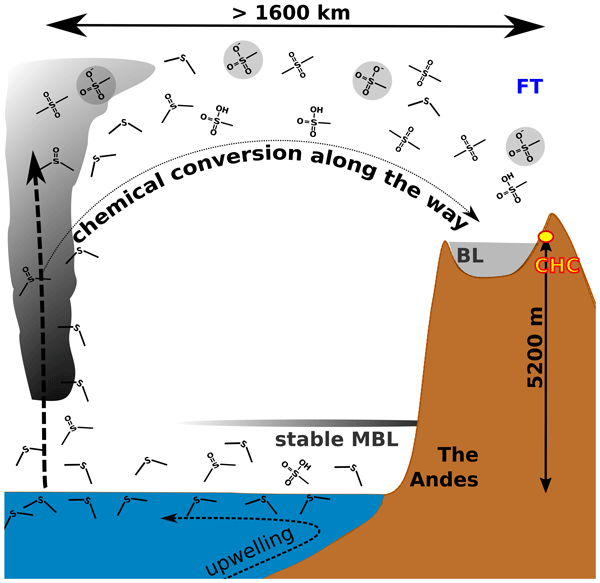
Wiebke Scholz, Jiali Shen, Diego Aliaga, Cheng Wu, Samara Carbone, Isabel Moreno, Qiaozhi Zha, Wei Huang, Liine Heikkinen, Jean Luc Jaffrezo, Gaelle Uzu, Eva Partoll, Markus Leiminger, Fernando Velarde, Paolo Laj, Patrick Ginot, Paolo Artaxo, Alfred Wiedensohler, Markku Kulmala, Claudia Mohr, Marcos Andrade, Victoria Sinclair, Federico Bianchi, and Armin Hansel
Atmos. Chem. Phys., 23, 895–920, https://doi.org/10.5194/acp-23-895-2023, https://doi.org/10.5194/acp-23-895-2023, 2023
Short summary
Short summary
Dimethyl sulfide (DMS), emitted from the ocean, is the most abundant biogenic sulfur emission into the atmosphere. OH radicals, among others, can oxidize DMS to sulfuric and methanesulfonic acid, which are relevant for aerosol formation. We quantified DMS and nearly all DMS oxidation products with novel mass spectrometric instruments for gas and particle phase at the high mountain station Chacaltaya (5240 m a.s.l.) in the Bolivian Andes in free tropospheric air after long-range transport.
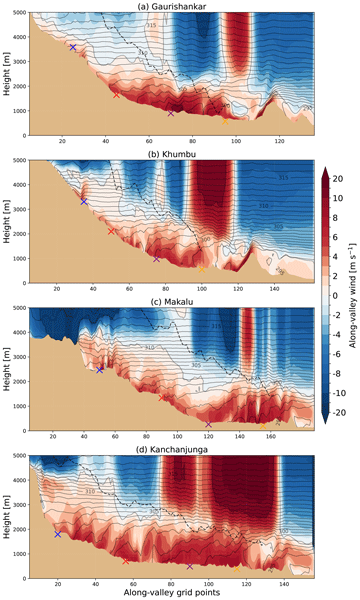
Johannes Mikkola, Victoria A. Sinclair, Marja Bister, and Federico Bianchi
Atmos. Chem. Phys., 23, 821–842, https://doi.org/10.5194/acp-23-821-2023, https://doi.org/10.5194/acp-23-821-2023, 2023
Short summary
Short summary
Local winds in four valleys located in the Nepal Himalayas are studied by means of high-resolution meteorological modelling. Well-defined daytime up-valley winds are simulated in all of the valleys with some variation in the flow depth and strength among the valleys and their parts. Parts of the valleys with a steep valley floor inclination (2–5°) are associated with weaker and shallower daytime up-valley winds compared with the parts that have nearly flat valley floors (< 1°).
Victoria Anne Sinclair, Jenna Ritvanen, Gabin Urbancic, Irene Erner, Yurii Batrak, Dmitri Moisseev, and Mona Kurppa
Atmos. Meas. Tech., 15, 3075–3103, https://doi.org/10.5194/amt-15-3075-2022, https://doi.org/10.5194/amt-15-3075-2022, 2022
Short summary
Short summary
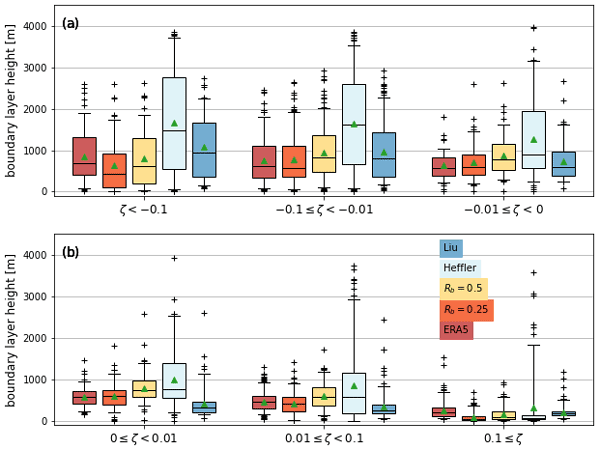
We investigate the boundary-layer (BL) height and surface stability in southern Finland using radiosondes, a microwave radiometer and ERA5 reanalysis. Accurately quantifying the BL height is challenging, and the diagnosed BL height can depend strongly on the method used. Microwave radiometers provide reliable estimates of the BL height but only in unstable conditions. ERA5 captures the BL height well except under very stable conditions, which occur most commonly at night during the warm season.
Terhi K. Laurila, Hilppa Gregow, Joona Cornér, and Victoria A. Sinclair
Weather Clim. Dynam., 2, 1111–1130, https://doi.org/10.5194/wcd-2-1111-2021, https://doi.org/10.5194/wcd-2-1111-2021, 2021
Short summary
Short summary
We create a climatology of mid-latitude cyclones and windstorms in northern Europe and investigate how sensitive the minimum pressure and maximum gust of windstorms are to four precursors. Windstorms are more common in the cold season than the warm season, whereas the number of mid-latitude cyclones has no annual cycle. The low-level temperature gradient has the strongest impact of all considered precursors on the intensity of windstorms in terms of both the minimum pressure and maximum gust.
Diego Aliaga, Victoria A. Sinclair, Marcos Andrade, Paulo Artaxo, Samara Carbone, Evgeny Kadantsev, Paolo Laj, Alfred Wiedensohler, Radovan Krejci, and Federico Bianchi
Atmos. Chem. Phys., 21, 16453–16477, https://doi.org/10.5194/acp-21-16453-2021, https://doi.org/10.5194/acp-21-16453-2021, 2021
Short summary
Short summary
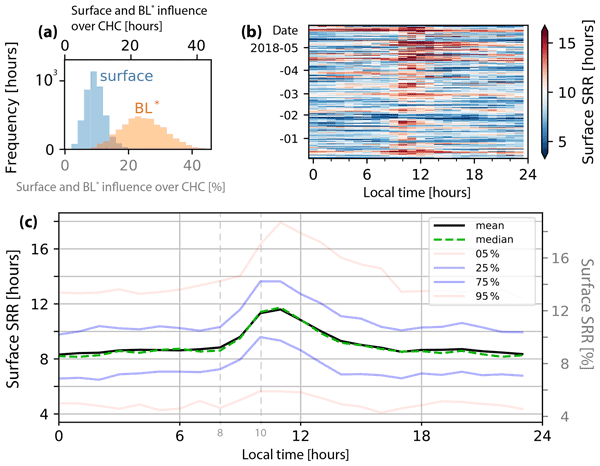
We investigate the origin of air masses sampled at Mount Chacaltaya, Bolivia. Three-quarters of the measured air has not been influenced by the surface in the previous 4 d. However, it is rare that, at any given time, the sampled air has not been influenced at all by the surface, and often the sampled air has multiple origins. The influence of the surface is more prevalent during day than night. Furthermore, during the 6-month study, one-third of the air masses originated from Amazonia.
Cited articles
Ahmadi-Givi, F., Graig, G. C., and Plant, R. S.: The dynamics of a midlatitude cyclone with very strong latent-heat release, Q. J. R. Meteorol. Soc., 130, 295–323, https://doi.org/10.1256/qj.02.226, 2004. a
Ancell, B. and Hakim, G. J.: Comparing Adjoint- and Ensemble-Sensitivity Analysis with Applications to Observation Targeting, Mon. Wea. Rev., 135, 4117–4134, https://doi.org/10.1175/2007MWR1904.1, 2007. a, b
Bengtsson, L., Hodges, K. I., Esch, M., Keenlyside, N., Kornblueh, L., Luo, J.-J., and Yamagata, T.: How may tropical cyclones change in a warmer climate?, Tellus A, 59, 539–561, https://doi.org/10.1111/j.1600-0870.2007.00251.x, 2007. a
Besson, P., Fischer, L. J., Schemm, S., and Sprenger, M.: A global analysis of the dry-dynamic forcing during cyclone growth and propagation, Wea. Climate Dyn., 2, 991–1009, https://doi.org/10.5194/wcd-2-991-2021, 2021. a, b
Bjerknes, J. and Solberg, H.: Life cycle of cyclones and the polar front theory of atmospheric circulation, Geophys. Publik., 3, 1–18, https://geofysikk.org/NGF/GeoPub/NGF_GP_Vol03_no1.pdf (last access: 1 June 2026), 1922. a
Browning, K. A., Smart, D. J., Clark, M. R., and Illingworth, A. J.: The role of evaporating showers in the transfer of sting-jet momentum to the surface, Q. J. R. Meteorol. Soc., 141, 2956–2971, https://doi.org/10.1002/qj.2581, 2015. a
Čampa, J. and Wernli, H.: A PV Perspective on the Vertical Structure of Mature Midlatitude Cyclones in the Northern Hemisphere, J. Atmos. Sci., 69, 725–740, https://doi.org/10.1175/JAS-D-11-050.1, 2012. a
Catto, J. L.: Extratropical cyclone classification and its use in climate studies, Rev. Geophys., 54, 486–520, https://doi.org/10.1002/2016RG000519, 2016. a
Catto, J. L., Shaffrey, L. C., and Hodges, K. I.: Can Climate Models Capture the Structure of Extratropical Cyclones?, J. Climate, 23, 1621–1635, https://doi.org/10.1175/2009JCLI3318.1, 2010. a, b, c
Charney, J. G.: The dynamics of long waves in a baroclinic westerly current, J. Atmos. Sci., 4, 136–162, https://doi.org/10.1175/1520-0469(1947)004<0136:TDOLWI>2.0.CO;2, 1947. a
Charney, J. G.: On the Scale of Atmospheric Motions, Vol. 17 of Geofysiske publikasjoner, Grøndahl & søns boktr., I kommission hos Cammermeyer, Oslo, https://geofysikk.org/NGF/GeoPub/NGF_GP_Vol17_no2.pdf (last access: 1 June 2026), 1948. a
Cornér, J., Bouvier, C., Doiteau, B., Pantillon, F., and Sinclair, V. A.: Classification of North Atlantic and European extratropical cyclones using multiple measures of intensity: Data and Python code, Zenodo [data set and code], https://doi.org/10.5281/zenodo.11384417, 2024. a
Cornér, J., Bouvier, C., Doiteau, B., Pantillon, F., and Sinclair, V. A.: Classification of North Atlantic and European extratropical cyclones using multiple measures of intensity, Nat. Hazards Earth Syst. Sci., 25, 207–229, https://doi.org/10.5194/nhess-25-207-2025, 2025a. a, b, c
Cornér, J., Bouvier, C., and Sinclair, V. A.: Identifying controls of extratropical cyclone intensity at genesis time and during intensification in the North Atlantic and Europe: Dataset, University of Helsinki, Institute for Atmospheric and Earth System Research [data set], https://doi.org/10.23729/fd-75f4f757-3eae-37c7-85df-1923c986796e, 2025b. a
Cornér, J., Bouvier, C., and Sinclair, V. A.: Identifying controls of extratropical cyclone intensity at genesis time and during intensification in the North Atlantic and Europe: Python code, Zenodo [code], https://doi.org/10.5281/zenodo.17953425, 2026. a
Crameri, F.: Scientific colour maps, Zenodo [code], https://doi.org/10.5281/zenodo.8409685, 2023. a
Dacre, H. F. and Gray, S. L.: The Spatial Distribution and Evolution Characteristics of North Atlantic Cyclones, Mon. Wea. Rev., 137, 99–115, https://doi.org/10.1175/2008MWR2491.1, 2009. a, b
Dacre, H. F., Hawcroft, M. K., Stringer, M. A., and Hodges, K. I.: An Extratropical Cyclone Atlas: A Tool for Illustrating Cyclone Structure and Evolution Characteristics, Bull. Amer. Meteor. Soc., 93, 1497–1502, https://doi.org/10.1175/BAMS-D-11-00164.1, 2012. a
Davis, C. A. and Emanuel, K. A.: Potential Vorticity Diagnostics of Cyclogenesis, Mon. Wea. Rev., 119, 1929–1953, https://doi.org/10.1175/1520-0493(1991)119<1929:PVDOC>2.0.CO;2, 1991. a
Deveson, A. C. L., Browning, K. A., and Hewson, T. D.: A classification of FASTEX cyclones using a height-attributable quasi-geostrophic vertical-motion diagnostic, Q. J. R. Meteorol. Soc., 128, 93–117, https://doi.org/10.1256/00359000260498806, 2002. a, b
Dolores-Tesillos, E., Teubler, F., and Pfahl, S.: Future changes in North Atlantic winter cyclones in CESM-LE – Part 1: Cyclone intensity, potential vorticity anomalies, and horizontal wind speed, Weather Clim. Dynam., 3, 429–448, https://doi.org/10.5194/wcd-3-429-2022, 2022. a, b, c, d
Eady, E. T.: Long Waves and Cyclone Waves, Tellus, 1, 33–52, https://doi.org/10.3402/tellusa.v1i3.8507, 1949. a
Eckhardt, S., Stohl, A., Wernli, H., James, P., Forster, C., and Spichtinger, N.: A 15-Year Climatology of Warm Conveyor Belts, J. Climate, 17, 218–237, https://doi.org/10.1175/1520-0442(2004)017<0218:AYCOWC>2.0.CO;2, 2004. a
Field, P. R. and Wood, R.: Precipitation and Cloud Structure in Midlatitude Cyclones, J. Climate, 20, 233–254, https://doi.org/10.1175/JCLI3998.1, 2007. a, b
Gill, A. E.: Chapter 7 – Effects of Rotation, in: Atmosphere–Ocean Dynamics, vol. 30 of International Geophysics, Academic Press, London, pp. 189–245, https://doi.org/10.1016/S0074-6142(08)60032-7, 1982. a
Gliksman, D., Averbeck, P., Becker, N., Gardiner, B., Goldberg, V., Grieger, J., Handorf, D., Haustein, K., Karwat, A., Knutzen, F., Lentink, H. S., Lorenz, R., Niermann, D., Pinto, J. G., Queck, R., Ziemann, A., and Franzke, C. L. E.: Review article: A European perspective on wind and storm damage – from the meteorological background to index-based approaches to assess impacts, Nat. Hazards Earth Syst. Sci., 23, 2171–2201, https://doi.org/10.5194/nhess-23-2171-2023, 2023. a
Graf, M. A., Wernli, H., and Sprenger, M.: Objective classification of extratropical cyclogenesis, Q. J. R. Meteorol. Soc., 143, 1047–1061, https://doi.org/10.1002/qj.2989, 2017. a, b
Gray, S. L. and Dacre, H. F.: Classifying dynamical forcing mechanisms using a climatology of extratropical cyclones, Q. J. R. Meteorol. Soc., 132, 1119–1137, https://doi.org/10.1256/qj.05.69, 2006. a
Hakim, G. J. and Torn, R. D.: Ensemble Synoptic Analysis, in: Synoptic–Dynamic Meteorology and Weather Analysis and Forecasting: A Tribute to Fred Sanders, edited by: Bosart, L. F. and Bluestein, H. B., American Meteorological Society, Boston, MA, pp. 147–161, ISBN 978-0-933876-68-2, https://doi.org/10.1007/978-0-933876-68-2_7, 2008. a
Hartmann, D. L.: Global Physical Climatology, vol. 103, Elsevier, ISBN 978-0-12-328531-7, https://doi.org/10.1016/C2009-0-00030-0, 2015. a
Hawcroft, M. K., Shaffrey, L. C., Hodges, K. I., and Dacre, H. F.: How much Northern Hemisphere precipitation is associated with extratropical cyclones?, Geophys. Res. Lett., 39, https://doi.org/10.1029/2012GL053866, 2012. a
Hersbach, H., Bell, B., Berrisford, P., Hirahara, S., Horányi, A., Muñoz-Sabater, J., Nicolas, J., Peubey, C., Radu, R., Schepers, D., Simmons, A., Soci, C., Abdalla, S., Abellan, X., Balsamo, G., Bechtold, P., Biavati, G., Bidlot, J., Bonavita, M., De Chiara, G., Dahlgren, P., Dee, D., Diamantakis, M., Dragani, R., Flemming, J., Forbes, R., Fuentes, M., Geer, A., Haimberger, L., Healy, S., Hogan, R. J., Hólm, E., Janisková, M., Keeley, S., Laloyaux, P., Lopez, P., Lupu, C., Radnoti, G., de Rosnay, P., Rozum, I., Vamborg, F., Villaume, S., and Thépaut, J.-N.: Complete ERA5 from 1940: Fifth generation of ECMWF atmospheric reanalyses of the global climate, Copernicus Climate Change Service (C3S) Data Store (CDS) [data set], https://doi.org/10.24381/cds.143582cf, 2017. a
Hersbach, H., Bell, B., Berrisford, P., Hirahara, S., Horányi, A., Muñoz-Sabater, J., Nicolas, J., Peubey, C., Radu, R., Schepers, D., Simmons, A., Soci, C., Abdalla, S., Abellan, X., Balsamo, G., Bechtold, P., Biavati, G., Bidlot, J., Bonavita, M., De Chiara, G., Dahlgren, P., Dee, D., Diamantakis, M., Dragani, R., Flemming, J., Forbes, R., Fuentes, M., Geer, A., Haimberger, L., Healy, S., Hogan, R. J., Hólm, E., Janisková, M., Keeley, S., Laloyaux, P., Lopez, P., Lupu, C., Radnoti, G., de Rosnay, P., Rozum, I., Vamborg, F., Villaume, S., and Thépaut, J.-N.: The ERA5 global reanalysis, Q. J. R. Meteorol. Soc., 146, 1999–2049, https://doi.org/10.1002/qj.3803, 2020. a
Hodges, K. I.: A General Method for Tracking Analysis and Its Application to Meteorological Data, Mon. Wea. Rev., 122, 2573–2586, https://doi.org/10.1175/1520-0493(1994)122<2573:AGMFTA>2.0.CO;2, 1994. a
Hodges, K. I.: Feature Tracking on the Unit Sphere, Mon. Wea. Rev., 123, 3458–3465, https://doi.org/10.1175/1520-0493(1995)123<3458:FTOTUS>2.0.CO;2, 1995. a
Hodges, K. I.: Adaptive Constraints for Feature Tracking, Mon. Wea. Rev., 127, 1362–1373, https://doi.org/10.1175/1520-0493(1999)127<1362:ACFFT>2.0.CO;2, 1999. a
Hodges, K. I., Lee, R. W., and Bengtsson, L.: A Comparison of Extratropical Cyclones in Recent Reanalyses ERA-Interim, NASA MERRA, NCEP CFSR, and JRA-25, J. Climate, 24, 4888–4906, https://doi.org/10.1175/2011JCLI4097.1, 2011. a
Holton, J. R. and Hakim, G. J.: Chapter 6 – Quasi-geostrophic Analysis, in: An Introduction to Dynamic Meteorology, Academic Press, Boston, 5th edn., pp. 171–211, ISBN 978-0-12-384866-6, https://doi.org/10.1016/B978-0-12-384866-6.00006-4, 2013. a, b, c
Hoskins, B. J. and Valdes, P. J.: On the Existence of Storm-Tracks, J. Atmos. Sci., 47, 1854–1864, https://doi.org/10.1175/1520-0469(1990)047<1854:OTEOST>2.0.CO;2, 1990. a
Hoskins, B. J., McIntyre, M. E., and Robertson, A. W.: On the use and significance of isentropic potential vorticity maps, Q. J. R. Meteorol. Soc., 111, 877–946, https://doi.org/10.1002/qj.49711147002, 1985. a, b, c
Karremann, M. K., Pinto, J. G., von Bomhard, P. J., and Klawa, M.: On the clustering of winter storm loss events over Germany, Nat. Hazards Earth Syst. Sci., 14, 2041–2052, https://doi.org/10.5194/nhess-14-2041-2014, 2014. a
Lee, J.-Y., Marotzke, J., Bala, G., Cao, L., Corti, S., Dunne, J., Engelbrecht, F., Fischer, E., Fyfe, J., Jones, C., Maycock, A., Mutemi, J., Ndiaye, O., Panickal, S., and Zhou, T.: Future Global Climate: Scenario-Based Projections and Near-Term Information, in: Climate Change 2021: The Physical Science Basis. Contribution of Working Group I to the Sixth Assessment Report of the Intergovernmental Panel on Climate Change, edited by: Masson-Delmotte, V., Zhai, P., Pirani, A., Connors, S., Péan, C., Berger, S., Caud, N., Chen, Y., Goldfarb, L., Gomis, M., Huang, M., Leitzell, K., Lonnoy, E., Matthews, J., Maycock, T., Waterfield, T., Yelekçi, O., Yu, R., and Zhou, B., Cambridge University Press, Cambridge, United Kingdom and New York, NY, USA, pp. 553–672, https://doi.org/10.1017/9781009157896.006, 2021. a
Lindzen, R. S. and Farrell, B.: A Simple Approximate Result for the Maximum Growth Rate of Baroclinic Instabilities, J. Atmos. Sci., 37, 1648–1654, https://doi.org/10.1175/1520-0469(1980)037<1648:ASARFT>2.0.CO;2, 1980. a
Madonna, E., Limbach, S., Aebi, C., Joos, H., Wernli, H., and Martius, O.: On the Co-Occurrence of Warm Conveyor Belt Outflows and PV Streamers, J. Atmos. Sci., 71, 3668–3673, https://doi.org/10.1175/JAS-D-14-0119.1, 2014. a
Martin, W. J. and Xue, M.: Sensitivity Analysis of Convection of the 24 May 2002 IHOP Case Using Very Large Ensembles, Mon. Wea. Rev., 134, 192–207, https://doi.org/10.1175/MWR3061.1, 2006. a
Moemken, J., Alifdini, I., Ramos, A. M., Georgiadis, A., Brocklehurst, A., Braun, L., and Pinto, J. G.: Insurance loss model vs. meteorological loss index – how comparable are their loss estimates for European windstorms?, Nat. Hazards Earth Syst. Sci., 24, 3445–3460, https://doi.org/10.5194/nhess-24-3445-2024, 2024. a
Pantillon, F., Lerch, S., Knippertz, P., and Corsmeier, U.: Forecasting wind gusts in winter storms using a calibrated convection-permitting ensemble, Q. J. R. Meteorol. Soc., 144, 1864–1881, https://doi.org/10.1002/qj.3380, 2018. a
Petterssen, S. and Smebye, S. J.: On the development of extratropical cyclones, Q. J. R. Meteorol. Soc., 97, 457–482, https://doi.org/10.1002/qj.49709741407, 1971. a, b, c
Petterssen, S., Dunn, G. E., and Means, L. L.: Report of an experiment in forecasting of cyclone development, J. Atmos. Sci., 12, 58–67, https://doi.org/10.1175/1520-0469(1955)012<0058:ROAEIF>2.0.CO;2, 1955. a
Pfahl, S. and Sprenger, M.: On the relationship between extratropical cyclone precipitation and intensity, Geophys. Res. Lett., 43, 1752–1758, https://doi.org/10.1002/2016GL068018, 2016. a
Pinto, J. G., Spangehl, T., Ulbrich, U., and Speth, P.: Sensitivities of a cyclone detection and tracking algorithm: individual tracks and climatology, Meteorol. Z., 14, 823–838, 2005. a
Plant, R. S., Craig, G. C., and Gray, S. L.: On a threefold classification of extratropical cyclogenesis, Q. J. R. Meteorol. Soc., 129, 2989–3012, https://doi.org/10.1256/qj.02.174, 2003. a, b, c
Priestley, M. D. K., Ackerley, D., Catto, J. L., Hodges, K. I., McDonald, R. E., and Lee, R. W.: An Overview of the Extratropical Storm Tracks in CMIP6 Historical Simulations, J. Climate, 33, 6315–6343, https://doi.org/10.1175/JCLI-D-19-0928.1, 2020. a
Roberts, J. F., Champion, A. J., Dawkins, L. C., Hodges, K. I., Shaffrey, L. C., Stephenson, D. B., Stringer, M. A., Thornton, H. E., and Youngman, B. D.: The XWS open access catalogue of extreme European windstorms from 1979 to 2012, Nat. Hazards Earth Syst. Sci., 14, 2487–2501, https://doi.org/10.5194/nhess-14-2487-2014, 2014. a
Schemm, S. and Rivière, G.: On the Efficiency of Baroclinic Eddy Growth and How It Reduces the North Pacific Storm-Track Intensity in Midwinter, J. Climate, 32, 8373–8398, https://doi.org/10.1175/JCLI-D-19-0115.1, 2019. a
Schemm, S. and Wernli, H.: The Linkage between the Warm and the Cold Conveyor Belts in an Idealized Extratropical Cyclone, J. Atmos. Sci., 71, 1443–1459, https://doi.org/10.1175/JAS-D-13-0177.1, 2014. a
Seiler, C.: A Climatological Assessment of Intense Extratropical Cyclones from the Potential Vorticity Perspective, J. Climate, 32, 2369–2380, https://doi.org/10.1175/JCLI-D-18-0461.1, 2019. a
Sinclair, V. A. and Catto, J. L.: The relationship between extra-tropical cyclone intensity and precipitation in idealised current and future climates, Weather Clim. Dynam., 4, 567–589, https://doi.org/10.5194/wcd-4-567-2023, 2023. a
Sinclair, V. A., Rantanen, M., Haapanala, P., Räisänen, J., and Järvinen, H.: The characteristics and structure of extra-tropical cyclones in a warmer climate, Weather Clim. Dynam., 1, 1–25, https://doi.org/10.5194/wcd-1-1-2020, 2020. a
Stanković, A., Messori, G., Pinto, J. G., and Caballero, R.: Large-scale perspective on extreme near-surface winds in the central North Atlantic, Weather Clim. Dynam., 5, 821–837, https://doi.org/10.5194/wcd-5-821-2024, 2024. a
Tam, F. I.-H., Augsburger, F., and Beucler, T.: From winter storm thermodynamics to wind gust extremes: discovering interpretable equations from data, Environ. Data Sci., 4, e48, https://doi.org/10.1017/eds.2025.10008, 2025. a
Torn, R. D. and Hakim, G. J.: Ensemble-Based Sensitivity Analysis, Mon. Wea. Rev., 136, 663–677, https://doi.org/10.1175/2007MWR2132.1, 2008. a
Wang, C.-C. and Rogers, J. C.: A Composite Study of Explosive Cyclogenesis in Different Sectors of the North Atlantic. Part I: Cyclone Structure and Evolution, Mon. Wea. Rev., 129, 1481–1499, https://doi.org/10.1175/1520-0493(2001)129<1481:ACSOEC>2.0.CO;2, 2001. a
Wernli, H. and Gray, S. L.: The importance of diabatic processes for the dynamics of synoptic-scale extratropical weather systems – a review, Weather Clim. Dynam., 5, 1299–1408, https://doi.org/10.5194/wcd-5-1299-2024, 2024. a
Wernli, H. and Schwierz, C.: Surface Cyclones in the ERA-40 Dataset (1958–2001). Part I: Novel Identification Method and Global Climatology, J. Atmos. Sci., 63, 2486–2507, https://doi.org/10.1175/JAS3766.1, 2006. a
Wilks, D. S.: “The Stippling Shows Statistically Significant Grid Points”: How Research Results are Routinely Overstated and Overinterpreted, and What to Do about It, Bull. Amer. Meteor. Soc., 97, 2263–2273, https://doi.org/10.1175/BAMS-D-15-00267.1, 2016. a
Short summary
Understanding the intensification of extratropical cyclones (ETCs) is important from weather forecasting and climate perspectives due to their societal impacts and major role in mid-latitude weather. Here we show that precursors to ETC intensification at genesis time show physically meaningful controls on the final maximum ETC intensity. However, to understand in detail the processes leading to differences in intensity between ETCs, one should study the evolution of multiple ETC precursors.
Understanding the intensification of extratropical cyclones (ETCs) is important from weather...


