
Articles | Volume 6, issue 4
https://doi.org/10.5194/wcd-6-1743-2025
© Author(s) 2025. This work is distributed under
the Creative Commons Attribution 4.0 License.
the Creative Commons Attribution 4.0 License.
https://doi.org/10.5194/wcd-6-1743-2025
© Author(s) 2025. This work is distributed under
the Creative Commons Attribution 4.0 License.
the Creative Commons Attribution 4.0 License.
Research article
| 
09 Dec 2025
Research article |
| 09 Dec 2025
| 09 Dec 2025
Precipitation, moisture sources and transport pathways associated with summertime North Atlantic deep cyclones
Rikke Stoffels
CORRESPONDING AUTHOR

Institute for Environmental Studies, Vrije Universiteit Amsterdam, Amsterdam, the Netherlands
Royal Netherlands Meteorological Institute (KNMI), de Bilt, the Netherlands
Meteorology and Air Quality Group, Wageningen University and Research, Wageningen, the Netherlands
Imme Benedict
Meteorology and Air Quality Group, Wageningen University and Research, Wageningen, the Netherlands
Lukas Papritz
Institute for Atmospheric and Climate Science, ETH Zurich, Zurich, Switzerland
Frank Selten
Royal Netherlands Meteorological Institute (KNMI), de Bilt, the Netherlands
Chris Weijenborg
Meteorology and Air Quality Group, Wageningen University and Research, Wageningen, the Netherlands
Related authors
No articles found.
Seraphine Hauser, Lukas Papritz, and Heini Wernli
EGUsphere, https://doi.org/10.5194/egusphere-2026-5124, https://doi.org/10.5194/egusphere-2026-5124, 2026
This preprint is open for discussion and under review for Weather and Climate Dynamics (WCD).
Short summary
Short summary
This study analyses the sensitivity of numerical simulations of Storm Éowyn in January 2025 with respect to model resolution, initialisation time, and latent heating. High resolution is crucial to capture the structure and intensity of the cyclone, and the severe wind hazards that affected parts of the British Isles. In simulations with artificially reduced latent heating, the cyclone becomes less intense, and shifts northward compared to the control simulation, missing the British Isles.
Thomas J. Batelaan, Chris Weijenborg, and Gert-Jan Steeneveld
EGUsphere, https://doi.org/10.5194/egusphere-2025-4871, https://doi.org/10.5194/egusphere-2025-4871, 2026
Short summary
Short summary
In February 2022, a powerful jet stream over the North Atlantic coexists with severe windstorms Dudley and Eunice, part of a cyclone cluster. We investigated how diabatic heating from moist processes strengthened this jet, creating an environment that allowed storms to grow. Using computer simulations and a jet stream-centred-visualisation approach to depict the jet stream evolution, we show that this heating was crucial in intensifying the jet stream during this cyclone clustering event.

Chris Weijenborg and Thomas Spengler
Weather Clim. Dynam., 7, 475–488, https://doi.org/10.5194/wcd-7-475-2026, https://doi.org/10.5194/wcd-7-475-2026, 2026
Short summary
Short summary
The swift succession of storms, referred to as cyclone clustering, is often associated with weather extremes. We introduce a detection scheme for these events and subdivide these into two types. One type is associated with storms that follow each other in space, whereas the other type requires a proximity over time. Cyclone clustering is more frequent during winter and the first type is associated with stronger storms, suggesting that the two types emerge due to different mechanisms.
René M. van Westen, Karin van der Wiel, Swinda K. J. Falkena, and Frank Selten
Hydrol. Earth Syst. Sci., 29, 6607–6630, https://doi.org/10.5194/hess-29-6607-2025, https://doi.org/10.5194/hess-29-6607-2025, 2025
Short summary
Short summary
The Atlantic Meridional Overturning Circulation (AMOC) moderates the European climate. The AMOC is a tipping element and may collapse to a substantially weaker state under climate change. Such an event induces global and regional climate shifts. The European hydroclimate becomes drier under an AMOC collapse, this response is not considered in the
standardhydroclimate projections. Our results indicate a considerable influence of the AMOC on the European hydroclimate.
Jolanda J. E. Theeuwen, Sarah N. Warnau, Imme B. Benedict, Stefan C. Dekker, Hubertus V. M. Hamelers, Chiel C. van Heerwaarden, and Arie Staal
Biogeosciences, 22, 6913–6936, https://doi.org/10.5194/bg-22-6913-2025, https://doi.org/10.5194/bg-22-6913-2025, 2025
Short summary
Short summary
The Mediterranean Basin is prone to drying. This study uses a simple model to explore how forests affect the potential for rainfall by analyzing the lowest part of the atmosphere. Results show that forest contributes to rainfall potential in wet regions, where it also promotes cooling, and may reduce local precipitation in dry regions. These findings suggest that the impact of forestation varies with soil moisture, and may possibly mitigate or intensify future drying.
Hans Segura, Xabier Pedruzo-Bagazgoitia, Philipp Weiss, Sebastian K. Müller, Thomas Rackow, Junhong Lee, Edgar Dolores-Tesillos, Imme Benedict, Matthias Aengenheyster, Razvan Aguridan, Gabriele Arduini, Alexander J. Baker, Jiawei Bao, Swantje Bastin, Eulàlia Baulenas, Tobias Becker, Sebastian Beyer, Hendryk Bockelmann, Nils Brüggemann, Lukas Brunner, Suvarchal K. Cheedela, Sushant Das, Jasper Denissen, Ian Dragaud, Piotr Dziekan, Madeleine Ekblom, Jan Frederik Engels, Monika Esch, Richard Forbes, Claudia Frauen, Lilli Freischem, Diego García-Maroto, Philipp Geier, Paul Gierz, Álvaro González-Cervera, Katherine Grayson, Matthew Griffith, Oliver Gutjahr, Helmuth Haak, Ioan Hadade, Kerstin Haslehner, Shabeh ul Hasson, Jan Hegewald, Lukas Kluft, Aleksei Koldunov, Nikolay Koldunov, Tobias Kölling, Shunya Koseki, Sergey Kosukhin, Josh Kousal, Peter Kuma, Arjun U. Kumar, Rumeng Li, Nicolas Maury, Maximilian Meindl, Sebastian Milinski, Kristian Mogensen, Bimochan Niraula, Jakub Nowak, Divya Sri Praturi, Ulrike Proske, Dian Putrasahan, René Redler, David Santuy, Domokos Sármány, Reiner Schnur, Patrick Scholz, Dmitry Sidorenko, Dorian Spät, Birgit Sützl, Daisuke Takasuka, Adrian Tompkins, Alejandro Uribe, Mirco Valentini, Menno Veerman, Aiko Voigt, Sarah Warnau, Fabian Wachsmann, Marta Wacławczyk, Nils Wedi, Karl-Hermann Wieners, Jonathan Wille, Marius Winkler, Yuting Wu, Florian Ziemen, Janos Zimmermann, Frida A.-M. Bender, Dragana Bojovic, Sandrine Bony, Simona Bordoni, Patrice Brehmer, Marcus Dengler, Emanuel Dutra, Saliou Faye, Erich Fischer, Chiel van Heerwaarden, Cathy Hohenegger, Heikki Järvinen, Markus Jochum, Thomas Jung, Johann H. Jungclaus, Noel S. Keenlyside, Daniel Klocke, Heike Konow, Martina Klose, Szymon Malinowski, Olivia Martius, Thorsten Mauritsen, Juan Pedro Mellado, Theresa Mieslinger, Elsa Mohino, Hanna Pawłowska, Karsten Peters-von Gehlen, Abdoulaye Sarré, Pajam Sobhani, Philip Stier, Lauri Tuppi, Pier Luigi Vidale, Irina Sandu, and Bjorn Stevens
Geosci. Model Dev., 18, 7735–7761, https://doi.org/10.5194/gmd-18-7735-2025, https://doi.org/10.5194/gmd-18-7735-2025, 2025
Short summary
Short summary
The Next Generation of Earth Modeling Systems project (nextGEMS) developed two Earth system models that use horizontal grid spacing of 10 km and finer, giving more fidelity to the representation of local phenomena, globally. In its fourth cycle, nextGEMS simulated the Earth System climate over the 2020–2049 period under the SSP3-7.0 scenario. Here, we provide an overview of nextGEMS, insights into the model development, and the realism of multi-decadal, kilometer-scale simulations.
Peter Kalverla, Imme Benedict, Chris Weijenborg, and Ruud J. van der Ent
Geosci. Model Dev., 18, 4335–4352, https://doi.org/10.5194/gmd-18-4335-2025, https://doi.org/10.5194/gmd-18-4335-2025, 2025
Short summary
Short summary
We introduce a new version of WAM2layers (Water Accounting Model – 2 layers), a computer program that tracks how the weather brings water from one place to another. It uses data from weather and climate models, whose resolution is steadily increasing. Processing the latest data had become a challenge, and the updates presented here ensure that WAM2layers runs smoothly again. We also made it easier to use the program and to understand its source code. This makes it more transparent, reliable, and easier to maintain.
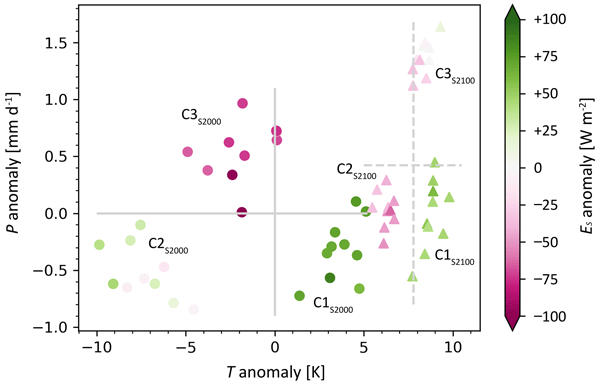
Katharina Hartmuth, Heini Wernli, and Lukas Papritz
Weather Clim. Dynam., 6, 505–520, https://doi.org/10.5194/wcd-6-505-2025, https://doi.org/10.5194/wcd-6-505-2025, 2025
Short summary
Short summary
In this study, we use large-ensemble climate model simulations to analyze extreme winters in the Barents Sea in a changing climate. We find that variability in both atmospheric processes and sea ice conditions determines the formation of such seasons in the present-day climate. The reduction in sea ice variability results in a decreasing importance of surface boundary conditions in a warmer climate, while the robust link shown for surface weather systems persists.
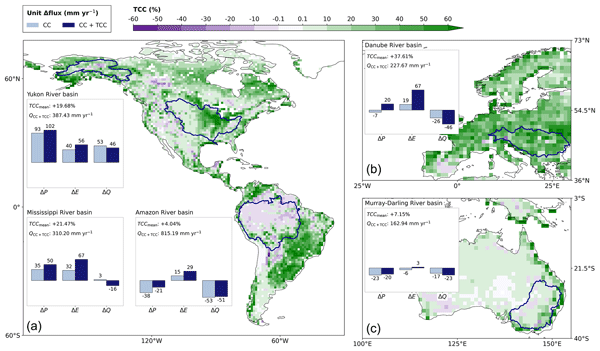
Freek Engel, Anne J. Hoek van Dijke, Caspar T. J. Roebroek, and Imme Benedict
Hydrol. Earth Syst. Sci., 29, 1895–1918, https://doi.org/10.5194/hess-29-1895-2025, https://doi.org/10.5194/hess-29-1895-2025, 2025
Short summary
Short summary
A warming climate alters the freshwater availability over land, and, due to related tree cover change and potential forestation, this availability can be further enhanced or negated. We find that large-scale change in tree cover may counteract climate-driven changes on a global scale, whereas, regionally, the climate and tree cover impacts can differ extensively. Current ecosystem restoration projects should account for the effects of (re-)forestation on (non-)local water availability.
Jippe J. A. Hoogeveen, Jan Fokke Meirink, and Frank M. Selten
EGUsphere, https://doi.org/10.5194/egusphere-2025-418, https://doi.org/10.5194/egusphere-2025-418, 2025
Preprint archived
Short summary
Short summary
We investigated the effect of clouds on the reflection of sunlight to space and thermal radiation from earth to space. We found a few possible inhomogeneities in the measurements. A clear decrease in reflection of sunlight was found, which we partly attributed to changes in cloud cover. Thermal radiation could be attributed relatively reliably, however we were unable to find the expected decrease due to greenhouse gasses. We do not know a conclusive cause for this.
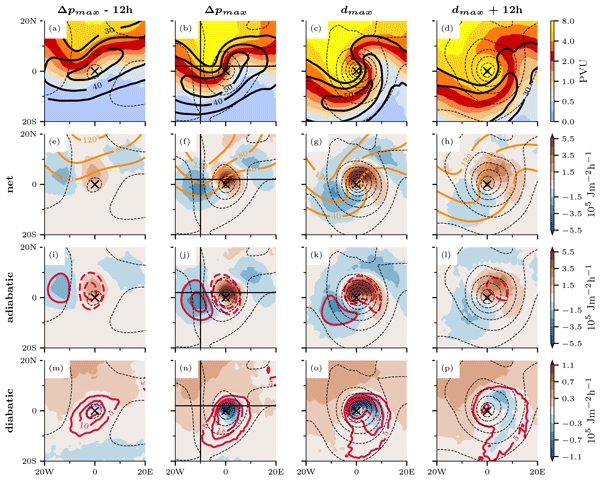
Marc Federer, Lukas Papritz, Michael Sprenger, and Christian M. Grams
Weather Clim. Dynam., 6, 211–230, https://doi.org/10.5194/wcd-6-211-2025, https://doi.org/10.5194/wcd-6-211-2025, 2025
Short summary
Short summary
Although extratropical cyclones in the North Atlantic are among the most impactful midlatitude weather systems, their intensification is not entirely understood. Here, we explore how individual cyclones convert available potential energy (APE) into kinetic energy and relate these conversions to the synoptic development of the cyclones. By combining potential vorticity thinking with a local APE framework, we offer a novel perspective on established concepts in dynamic meteorology.
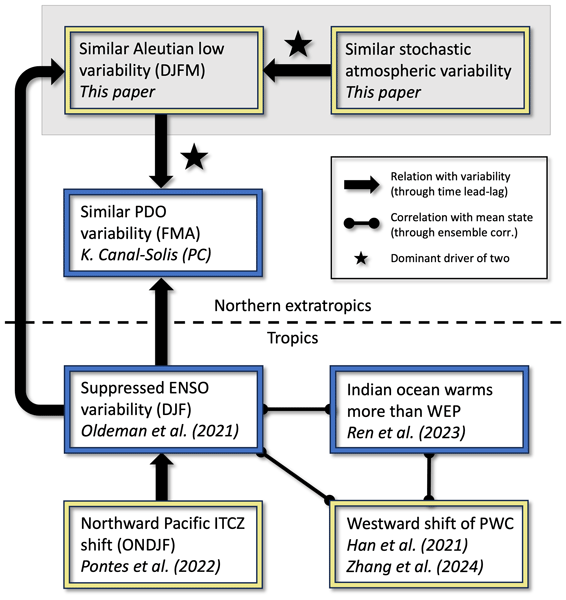
Arthur Merlijn Oldeman, Michiel L. J. Baatsen, Anna S. von der Heydt, Frank M. Selten, and Henk A. Dijkstra
Earth Syst. Dynam., 15, 1037–1054, https://doi.org/10.5194/esd-15-1037-2024, https://doi.org/10.5194/esd-15-1037-2024, 2024
Short summary
Short summary
We might be able to constrain uncertainty in future climate projections by investigating variations in the climate of the past. In this study, we investigate the interactions of climate variability between the tropical Pacific (El Niño) and the North Pacific in a warm past climate – the mid-Pliocene, a period roughly 3 million years ago. Using model simulations, we find that, although the variability in El Niño was reduced, the variability in the North Pacific atmosphere was not.
Lukas Jansing, Lukas Papritz, and Michael Sprenger
Weather Clim. Dynam., 5, 463–489, https://doi.org/10.5194/wcd-5-463-2024, https://doi.org/10.5194/wcd-5-463-2024, 2024
Short summary
Short summary
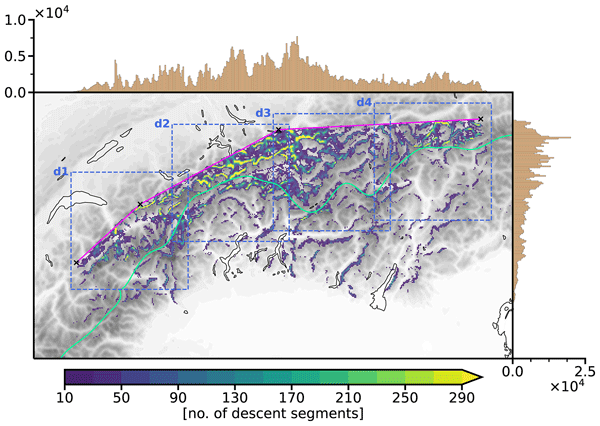
Using an innovative approach, the descent of foehn is diagnosed from a Lagrangian perspective based on 15 kilometer-scale simulations combined with online trajectories. The descent is confined to distinct hotspots in the immediate lee of local mountain peaks and chains. Two detailed case studies reveal a varying wave regime to be associated with the descent. Furthermore, additional controlling factors, such as the diurnal cycle, likewise influence the descent activity.
Belinda Hotz, Lukas Papritz, and Matthias Röthlisberger
Weather Clim. Dynam., 5, 323–343, https://doi.org/10.5194/wcd-5-323-2024, https://doi.org/10.5194/wcd-5-323-2024, 2024
Short summary
Short summary
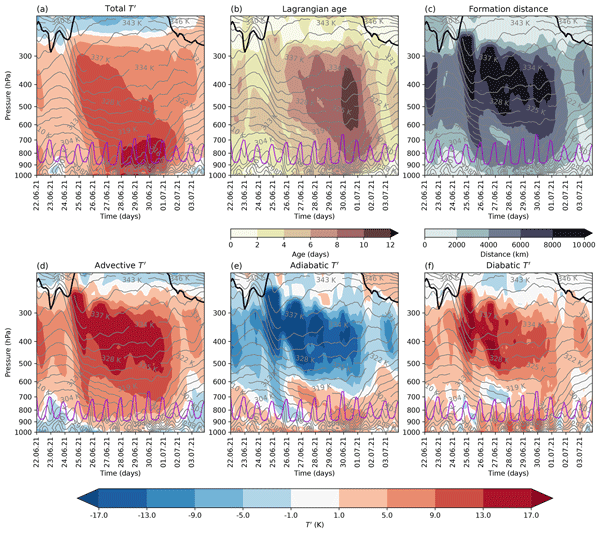
Analysing the vertical structure of temperature anomalies of recent record-breaking heatwaves reveals a complex four-dimensional interplay of anticyclone–heatwave interactions, with vertically strongly varying advective, adiabatic, and diabatic contributions to the respective temperature anomalies. The heatwaves featured bottom-heavy positive temperature anomalies, extending throughout the troposphere.
Freek Engel, Anne J. Hoek van Dijke, Caspar T. J. Roebroek, and Imme Benedict
EGUsphere, https://doi.org/10.5194/egusphere-2024-313, https://doi.org/10.5194/egusphere-2024-313, 2024
Preprint archived
Short summary
Short summary
A warming climate alters the freshwater availability over land, and due to related tree cover change and potential forestation this availability can be further enhanced or negated. We find that large-scale change in tree cover counteracts climate-driven changes on a global scale, whereas regionally the climate and tree cover impacts can differ extensively. Current ecosystem restoration projects should account for the effects of (re)forestation on (non-)local water availability.
Marta Wenta, Christian M. Grams, Lukas Papritz, and Marc Federer
Weather Clim. Dynam., 5, 181–209, https://doi.org/10.5194/wcd-5-181-2024, https://doi.org/10.5194/wcd-5-181-2024, 2024
Short summary
Short summary
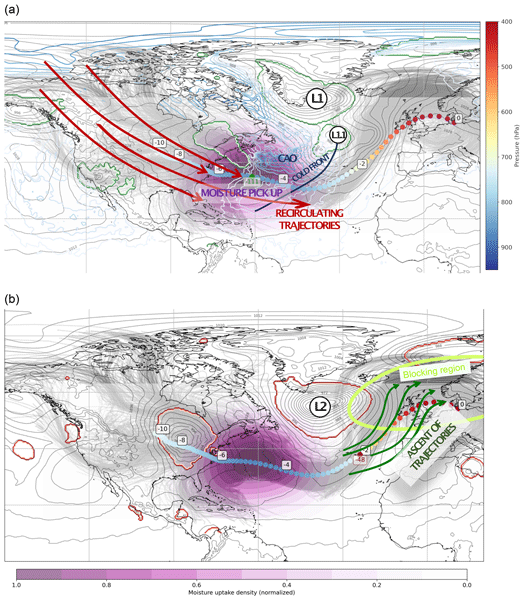
Our study links air–sea interactions over the Gulf Stream to an atmospheric block in February 2019. We found that over 23 % of air masses that were lifted into the block by cyclones interacted with the Gulf Stream. As cyclones pass over the Gulf Stream, they cause intense surface evaporation events, preconditioning the environment for the development of cyclones. This implies that air–sea interactions over the Gulf Stream affect the large-scale dynamics in the North Atlantic–European region.
Tiina Nygård, Lukas Papritz, Tuomas Naakka, and Timo Vihma
Weather Clim. Dynam., 4, 943–961, https://doi.org/10.5194/wcd-4-943-2023, https://doi.org/10.5194/wcd-4-943-2023, 2023
Short summary
Short summary
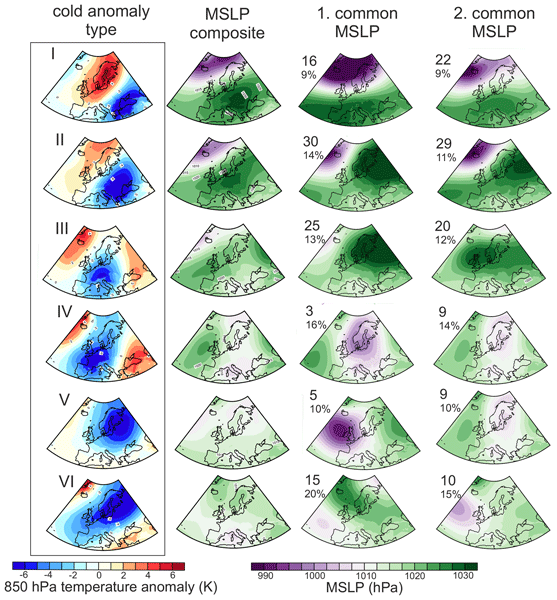
Despite the general warming trend, wintertime cold-air outbreaks in Europe have remained nearly as extreme and as common as decades ago. In this study, we identify six principal cold anomaly types over Europe in 1979–2020. We show the origins of various physical processes and their contributions to the formation of cold wintertime air masses.

Lukas Jansing, Lukas Papritz, Bruno Dürr, Daniel Gerstgrasser, and Michael Sprenger
Weather Clim. Dynam., 3, 1113–1138, https://doi.org/10.5194/wcd-3-1113-2022, https://doi.org/10.5194/wcd-3-1113-2022, 2022
Short summary
Short summary
This study presents a 5-year climatology of three main foehn types and three deep-foehn subtypes. The main types differ in their large-scale and Alpine-scale weather conditions and the subtypes in terms of the amount and extent of precipitation on the Alpine south side. The different types of foehn are found to strongly affect the local meteorological conditions at Altdorf. The study concludes by setting the new classification into a historic context.
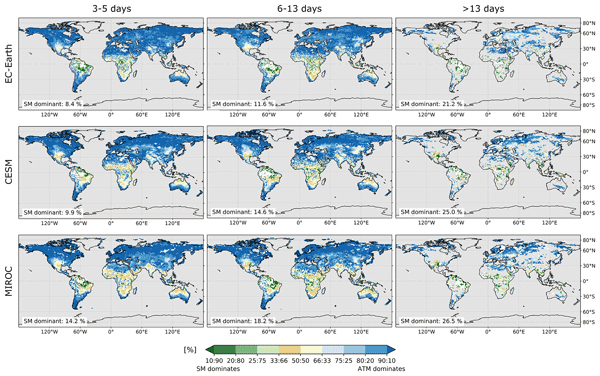
Kathrin Wehrli, Fei Luo, Mathias Hauser, Hideo Shiogama, Daisuke Tokuda, Hyungjun Kim, Dim Coumou, Wilhelm May, Philippe Le Sager, Frank Selten, Olivia Martius, Robert Vautard, and Sonia I. Seneviratne
Earth Syst. Dynam., 13, 1167–1196, https://doi.org/10.5194/esd-13-1167-2022, https://doi.org/10.5194/esd-13-1167-2022, 2022
Short summary
Short summary
The ExtremeX experiment was designed to unravel the contribution of processes leading to the occurrence of recent weather and climate extremes. Global climate simulations are carried out with three models. The results show that in constrained experiments, temperature anomalies during heatwaves are well represented, although climatological model biases remain. Further, a substantial contribution of both atmospheric circulation and soil moisture to heat extremes is identified.
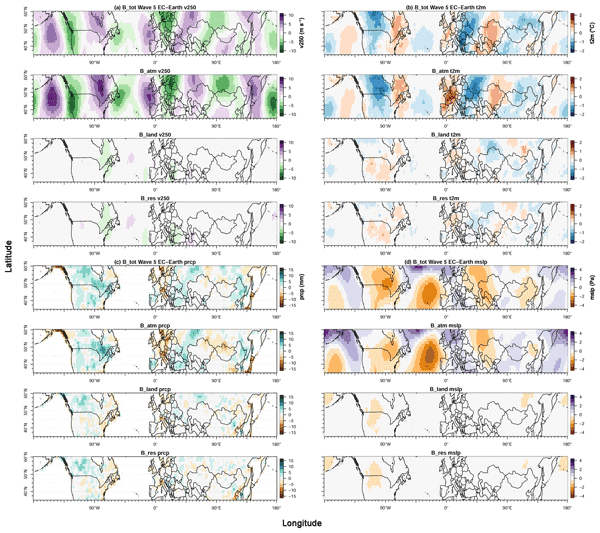
Fei Luo, Frank Selten, Kathrin Wehrli, Kai Kornhuber, Philippe Le Sager, Wilhelm May, Thomas Reerink, Sonia I. Seneviratne, Hideo Shiogama, Daisuke Tokuda, Hyungjun Kim, and Dim Coumou
Weather Clim. Dynam., 3, 905–935, https://doi.org/10.5194/wcd-3-905-2022, https://doi.org/10.5194/wcd-3-905-2022, 2022
Short summary
Short summary
Recent studies have identified the weather systems in observational data, where wave patterns with high-magnitude values that circle around the whole globe in either wavenumber 5 or wavenumber 7 are responsible for the extreme events. In conclusion, we find that the climate models are able to reproduce the large-scale atmospheric circulation patterns as well as their associated surface variables such as temperature, precipitation, and sea level pressure.
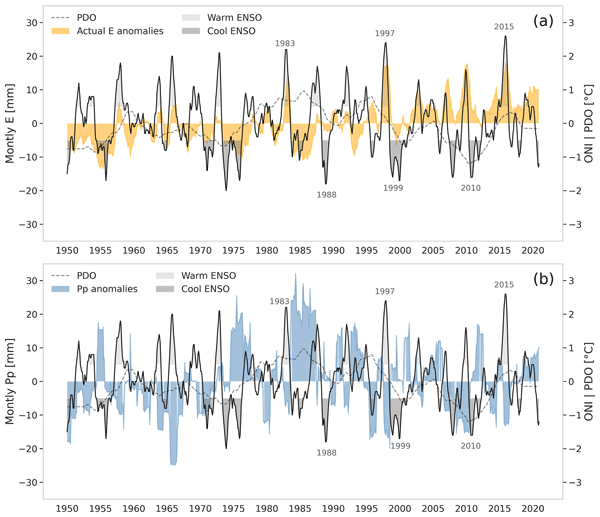
Felipe Lobos-Roco, Oscar Hartogensis, Francisco Suárez, Ariadna Huerta-Viso, Imme Benedict, Alberto de la Fuente, and Jordi Vilà-Guerau de Arellano
Hydrol. Earth Syst. Sci., 26, 3709–3729, https://doi.org/10.5194/hess-26-3709-2022, https://doi.org/10.5194/hess-26-3709-2022, 2022
Short summary
Short summary
This research brings a multi-scale temporal analysis of evaporation in a saline lake of the Atacama Desert. Our findings reveal that evaporation is controlled differently depending on the timescale. Evaporation is controlled sub-diurnally by wind speed, regulated seasonally by radiation and modulated interannually by ENSO. Our research extends our understanding of evaporation, contributing to improving the climate change assessment and efficiency of water management in arid regions.
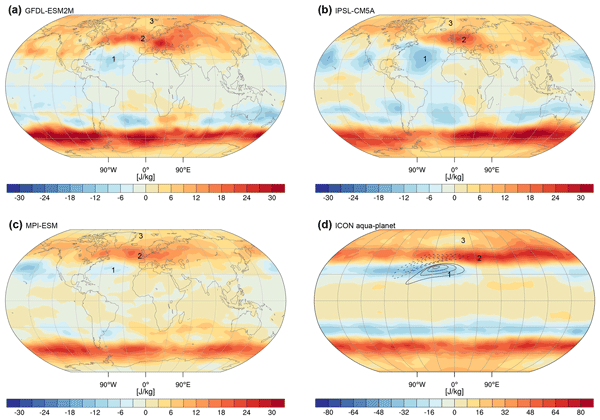
Sebastian Schemm, Lukas Papritz, and Gwendal Rivière
Weather Clim. Dynam., 3, 601–623, https://doi.org/10.5194/wcd-3-601-2022, https://doi.org/10.5194/wcd-3-601-2022, 2022
Short summary
Short summary
Much of the change in our daily weather patterns is due to the development and intensification of extratropical cyclones. The response of these systems to climate change is an important topic of ongoing research. This study is the first to reproduce the changes in the North Atlantic circulation and extratropical cyclone characteristics found in fully coupled Earth system models under high-CO2 scenarios, but in an idealized, reduced-complexity simulation with uniform warming.
Katharina Hartmuth, Maxi Boettcher, Heini Wernli, and Lukas Papritz
Weather Clim. Dynam., 3, 89–111, https://doi.org/10.5194/wcd-3-89-2022, https://doi.org/10.5194/wcd-3-89-2022, 2022
Short summary
Short summary
In this study, we introduce a novel method to objectively define and identify extreme Arctic seasons based on different surface variables. We find that such seasons are resulting from various combinations of unusual seasonal conditions. The occurrence or absence of different atmospheric processes strongly affects the character of extreme Arctic seasons. Further, changes in sea ice and sea surface temperature can strongly influence the formation of such a season in distinct regions.
Sonja Murto, Rodrigo Caballero, Gunilla Svensson, and Lukas Papritz
Weather Clim. Dynam., 3, 21–44, https://doi.org/10.5194/wcd-3-21-2022, https://doi.org/10.5194/wcd-3-21-2022, 2022
Short summary
Short summary
This study uses reanalysis data to investigate the role of atmospheric blocking, prevailing high-pressure systems and mid-latitude cyclones in driving high-Arctic wintertime warm extreme events. These events are mainly preceded by Ural and Scandinavian blocks, which are shown to be significantly influenced and amplified by cyclones in the North Atlantic. It also highlights processes that need to be well captured in climate models for improving their representation of Arctic wintertime climate.
Lukas Papritz, David Hauswirth, and Katharina Hartmuth
Weather Clim. Dynam., 3, 1–20, https://doi.org/10.5194/wcd-3-1-2022, https://doi.org/10.5194/wcd-3-1-2022, 2022
Short summary
Short summary
Water vapor profoundly impacts the Arctic, for example by contributing to sea ice melt. A substantial portion of water vapor in the Arctic originates at mid-latitudes and is transported poleward in a few episodic and intense events. This transport is accomplished by low- and high-pressure systems occurring in specific regions or following particular tracks. Here, we explore how the type of weather system impacts where the water vapor is coming from and how it is transported poleward.
Cited articles
Aemisegger, F. and Papritz, L.: A Climatology of Strong Large-Scale Ocean Evaporation Events. Part I: Identification, Global Distribution, and Associated Climate Conditions, J. Climate, 31, 7287–7312, https://doi.org/10.1175/JCLI-D-17-0591.1, 2018.
Ahrens, C. D.: Meteorology today: An introduction to weather, climate, and the environment, 9th edn., Brooks/Cole, CengageLearning, ISBN 0495555738, 2009.
Binder, H., Boettcher, M., Joos, H., and Wernli, H.: The role of warm conveyor belts for the intensification of extratropical cyclones in Northern Hemisphere winter, J. Atmos. Sci., 73, 3997–4020, https://doi.org/10.1175/JAS-D-15-0302.1, 2016.
Bjerknes, J. and Solberg, H.: Life cycle of cyclones and the polar front theory of atmospheric circulation, Geofys. Publ., 3, 3–18, 1922.
Boutle, I. A., Beare, R. J., Belcher, S. E., Brown, A. R., and Plant, R. S.: The moist boundary layer under a mid-latitude weather system, Bound.-Lay. Meteorol., 134, 367–386, https://doi.org/10.1007/s10546-009-9452-9, 2010.
Boutle, I. A., Belcher, S. E., and Plant, R. S.: Moisture transport in midlatitude cyclones, Q. J. Roy. Meteorol. Soc., 137, 360–373, 2011.
Browning, K.: Organization of clouds and precipitation in extratropical cyclones, in: Extratropical cyclones, Springer, 129–153, https://doi.org/10.1007/978-1-944970-33-8_8, 1990.
Browning, K. A.: The dry intrusion perspective of extra-tropical cyclone development, Meteor. Appl., 4, 317–324, https://doi.org/10.1017/S1350482797000613, 1997.
Bui, H. and Spengler, T.: On the influence of sea surface temperature distributions on the development of extratropical cyclones, J. Atmos. Sci., 78, 1173–1188, https://doi.org/10.1175/JAS-D-20-0137.1, 2021.
Catto, J. L.: Extratropical cyclone classification and its use in climate studies, Rev. Geophys., 54, 486–520, https://doi.org/10.1002/2016RG000519, 2016.
Catto, J. L., Jakob, C., Berry, G., and Nicholls, N.: Relating global precipitation to atmospheric fronts, Geophys. Res. Lett., 39, L10805, https://doi.org/10.1029/2012GL051736, 2012.
Chang, E. K. M. and Song, S.: The Seasonal Cycles in the Distribution of Precipitation around Cyclones in the Western North Pacific and Atlantic, J. Atmos. Sci., 63, 815–839, https://doi.org/10.1175/JAS3661.1, 2006.
Chang, E. K. M., Lee, S., and Swanson, K. L.: Storm track dynamics, J. Climate, 15, 2163–2183, https://doi.org/10.1175/1520-0442(2002)015<02163:STD>2.0.CO;2, 2002.
Coll-Hidalgo, P., Nieto, R., Fernández-Alvarez, J. C., and Gimeno, L.: Assessment of the origin of moisture for the precipitation of North Atlantic extratropical cyclones: Insights from downscaled ERA5, Atmos. Res., 324, 108205, https://doi.org/10.1016/j.atmosres.2025.108205, 2025.
Dacre, H. F. and Clark, P. A.: A kinematic analysis of extratropical cyclones, warm conveyor belts and atmospheric rivers, npj Clim. Atmos. Sci., 8, 97, https://doi.org/10.1038/s41612-025-00942-z, 2025.
Dacre, H. F., Martinez-Alvarado, O., and Mbengue, C. O.: Linking atmospheric rivers and warm conveyor belt airflows, J. Hydrometeorol., 20, 1183–1196, https://doi.org/10.1175/JHM-D-18-0175.1, 2019.
Dacre, H. F., Josey, S. A., and Grant, A. L. M.: Extratropical-cyclone-induced sea surface temperature anomalies in the 2013–2014 winter, Weather Clim. Dynam., 1, 27–44, https://doi.org/10.5194/wcd-1-27-2020, 2020.
Demirdjian, R., Doyle, J. D., Finocchio, P. M., and Reynolds, C. A.: Preconditioning and intensification of upstream extratropical cyclones through surface fluxes, J. Atmos. Sci., 80, 1499–1517, https://doi.org/10.1175/JAS-D-22-0251.1, 2023.
Eckhardt, S., Stohl, A., James, P., Forster, C., and Spichtinger, N.: A 15-Year climatology of warm conveyor belts, J. Climate, 17, 2018–237, https://doi.org/10.1175/1520-0442(2004)017<0218:AYCOWC>2.0.CO;2, 2004.
Field, P. R. and Wood, R.: Precipitation and cloud structure in midlatitude cyclones, J. Climate, 20, 233–254, https://doi.org/10.1175/JCLI3998.1, 2007.
Gimeno, L., Stohl, A., Trigo, R. M., Dominguez, F., Yoshimura, K., Yu, L., Drumond, A., Durán-Quesada, A. M., and Nieto, R.: Oceanic and terrestrial sources of continental precipitation, Rev. Geophys., 50, RG4003, https://doi.org/10.1029/2012RG000389, 2012.
Hartmann, D. L.: Global Physical Climatology, Academic Press, San Diego, CA, 408 pp., ISBN 9780123285300, 1994.
Heitmann, K., Sprenger, M., Binder, H., Wernli, H., and Joos, H.: Warm conveyor belt characteristics and impacts along the life cycle of extratropical cyclones: case studies and climatological analysis based on ERA5, Weather Clim. Dynam., 5, 537–557, https://doi.org/10.5194/wcd-5-537-2024, 2024.
Hersbach, H., Bell, B., Berrisford, P., Hirahara, S., Horányi, A., Muñoz-Sabater, J., Nicolas, J., Peubey, C., Radu, R., Schepers, D., Simmons, A., Soci, C., Abdalla, S., Abellan, X., Balsamo, G., Bechtold, P., Biavati, G., Bidlot, J., Bonavita, M., De Chiara, G., Dahlgren, P., Dee, D., Diamantakis, M., Dragani, R., Flemming, J., Forbes, R., Fuentes, M., Geer, A., Haimberger, L., Healy, S., Hogan, R. J., Hólm, E., Janisková, M., Keeley, S., Laloyaux, P., Lopez, P., Lupu, C., Radnoti, G., de Rosnay, P., Rozum, I., Vamborg, F., Villaume, S., and Thépaut, J.-N.: The ERA5 Global Reanalysis, Q. J. Roy. Meteor. Soc., 146, 1999–2049, https://doi.org/10.1002/qj.3803, 2020.
Ilotoviz, E., Ghate, V. P., and Raveh-Rubin, S.: The impact of slantwise descending dry intrusions on the marine boundary layer and air-sea interface over the ARM Eastern North Atlantic site, J. Geophys. Res., 126, e2020JD033879, https://doi.org/10.1029/2020JD033879, 2021.
Kållberg, P. W., Berrisford, P., Hoskins, B. J., Simmons, A., Uppala, S., Lamy-Thépaut, S., and Hine, R.: ERA-40 Atlas, ERA-40 Project Report Series, no. 19, ECMWF, Shinfield Park, 191 pp., Reading, https://www.ecmwf.int/en/elibrary/75292-era-40-atlas-note-large-pdf-file-683-mb-revised-version-posted-19012006 (last access: 8 August 2025), 2005.
Knippertz, P. and Wernli, H.: A Lagrangian climatology of tropical moisture exports to the Northern Hemispheric extratropics, J. Climate, 23, 987–1003, https://doi.org/10.1175/2009JCLI3333.1, 2010.
Knippertz, P., Wernli, H., Binder, H., Bottcher, M., Joos, H., Madonna, E., Pante, G., and Sprenger, M.: The Relationship between Warm Conveyor Belts, Tropical Moisture Exports and Atmospheric Rivers, EGU General Assembly, EGU2018-4362, https://meetingorganizer.copernicus.org/EGU2018/EGU2018-4362.pdf, last access: 8–13 April 2018.
Konstali, K., Spengler, T., Spensberger, C., and Sorteberg, A.: Linking future precipitation changes to weather features in CESM2-LE, J. Geophys. Res.-Atmos., 129, e2024JD041190, https://doi.org/10.1029/2024JD041190, 2024.
Läderach, A. and Sodemann, H.: A revised picture of the atmospheric moisture residence time, Geophys. Res. Lett., 43, 924–933, https://doi.org/10.1002/2015GL067449, 2016.
Laurila, T. K., Gregow, H., Cornér, J., and Sinclair, V. A.: Characteristics of extratropical cyclones and precursors to windstorms in northern Europe, Weather Clim. Dynam., 2, 1111–1130, https://doi.org/10.5194/wcd-2-1111-2021, 2021.
Lavers, D. A., Simmons, A., Vamborg, F., and Rodwell, M. J.: An evaluation of ERA5 precipitation for climate monitoring, Q. J. Roy. Meteorol. Soc., 148, 3124–3137, https://doi.org/10.1002/qj.4351, 2022.
Madonna, E., Wernli, H., Joos, H., and Martius, O.: Warm conveyor belts in the ERA-Interim dataset (1979–2010). Part I: Climatology and potential vorticity evolution, J. Climate, 27, 3–26, https://doi.org/10.1175/JCLI-D-12-00720.1, 2014.
Messmer, M. and Simmonds, I.: Global analysis of cyclone-induced compound precipitation and wind extreme events, Weather Clim. Extrem., 32, 100324, https://doi.org/10.1016/j.wace.2021.100324, 2021.
Mesquita, M. D. S., Gunnar Kvamstø, N., Sorteberg, A., and Atkinson, D. E.: Climatological properties of summertime extra-tropical storm tracks in the Northern Hemisphere, Tellus A, 60, 557–569, https://doi.org/10.1111/j.1600-0870.2008.00305.x, 2008.
Neu, U., Akperov, M. G., Bellenbaum, N., Benestad, R., Blender, R., Caballero, R., Cocozza, A., Dacre, H. F., Feng, Y., Fraedrich, K., Grieger, J., Gulev, S., Hanley, J., Hewson, T., Inatsu, M., Keay, K., Kew, S. F., Kindem, I., Leckebusch, G. C., Liberato, M. L. R., Lionello, P., Mokhov, I. I., Pinto, J. G., Raible, C. C., Reale, M., Rudeva, I., Schuster, M., Simmonds, I., Sinclair, M., Sprenger, M., Tilinina, N. D., Trigo, I. F., Ulbrich, S., Ulbrich, U., Wang, X. L., and Wernli, H.: IMILAST: A community effort to intercompare extratropical cyclone detection and tracking algorithms, B. Am. Meteorol. Soc., 94, 529–547, https://doi.org/10.1175/BAMS-D-11-00154.1, 2013.
Papritz, L., Pfahl, S., Sodemann, H., and Wernli, H.: A Climatology of Cold Air Outbreaks and Their Impact on Air-Sea Heat Fluxes in the High-Latitude South Pacific, J. Climate, 28, 342–364, https://doi.org/10.1175/JCLI-D-14-00482.1, 2015.
Papritz, L., Aemisegger, F., and Wernli, H.: Sources and transport pathways of precipitating waters in cold-season deep North Atlantic cyclones, J. Atmos. Sci., 78, 3349–3368, https://doi.org/10.1175/JAS-D-21-0105.1, 2021.
Peixoto, J. P. and Oort, A. H.: Physics of Climate, American Institute of Physics, New York, 520 pp., ISBN 9780883187128, 1992.
Pérez-Alarcón, A., Sorí, R., Fernández-Alvarez, J. C., Nieto, R., and Gimeno, L.: Where Does the Moisture for North Atlantic Tropical Cyclones Come From?, J. Hydrometeor., 23, 457–472, https://doi.org/10.1175/JHM-D-21-0117.1, 2022.
Pfahl, S. and Sprenger, M.: On the relationship between extratropical cyclone precipitation and intensity, Geophys. Res. Lett., 43, 1752–1758, https://doi.org/10.1002/2016GL068018, 2016.
Pfahl, S. and Wernli, H.: Quantifying the Relevance of Cyclones for Precipitation Extremes, J. Climate, 25, 6770–6780, https://doi.org/10.1175/JCLI-D-11-00705.1, 2012.
Pfahl, S., Madonna, E., Boettcher, M., Joos, H., and Wernli, H.: Warm conveyor belts in the ERA-Interim dataset (1979–2010). Part II: Moisture origin and relevance for precipitation, J. Climate, 27, 27–40, https://doi.org/10.1175/JCLI-D-13-00223.1, 2014.
Priestley, M. D. K. and Catto, J. L.: Future changes in the extratropical storm tracks and cyclone intensity, wind speed, and structure, Weather Clim. Dynam., 3, 337–360, https://doi.org/10.5194/wcd-3-337-2022, 2022.
Priestley, M. D. K., Pinto, J. G., Dacre, H. F., and Shaffrey, L. C.: Rossby wave breaking, the upper level jet, and serial clustering of extratropical cyclones in western Europe, Geophys. Res. Lett., 44, 514–521, https://doi.org/10.1002/2016GL071277, 2017.
Priestley, M. D. K., Dacre, H. F., Shaffrey, L. C., Schemm, S., and Pinto, J. G.: The role of secondary cyclones and cyclone families for the North Atlantic storm track and clustering over western Europe, Q. J. Roy. Meteorol. Soc., 146, 1184–1205, https://doi.org/10.1002/qj.3733, 2020.
Shapiro, M. A. and Keyser, D.: Fronts, jet streams and the tropopause, in: Extratropical Cyclones: The Erik Palmén Memorial Volume, edited by: Newton, C. and Holopainen, E. O., American Meteorological Society, Boston, MA, 167–191, ISBN 978-1-944970-33-8, 1990.
Sodemann, H.: Source code of the Lagrangian moisture source and transport diagnostic WaterSip V3.2.1, Zenodo [code], https://doi.org/10.5281/zenodo.15068065, 2025a.
Sodemann, H.: The Lagrangian moisture source and transport diagnostic WaterSip V3.2, Geosci. Model Dev., 18, 8887–8926, https://doi.org/10.5194/gmd-18-8887-2025, 2025b.
Sodemann, H. and Stohl, A.: Moisture Origin and Meridional Transport in Atmospheric Rivers and Their Association with Multiple Cyclones, Mon. Wea. Rev., 141, 2850–2868, https://doi.org/10.1175/MWR-D-12-00256.1, 2013.
Sodemann, H., Schwierz, C., and Wernli, H.: Interannual variability of Greenland winter precipitation sources: Lagrangian moisture diagnostic and North Atlantic Oscillation influence, J. Geophys. Res., 113, D03107, https://doi.org/10.1029/2007JD008503, 2008.
Sprenger, M. and Wernli, H.: The LAGRANTO Lagrangian analysis tool – version 2.0, Geosci. Model Dev., 8, 2569–2586, https://doi.org/10.5194/gmd-8-2569-2015, 2015.
Sprenger, M., Fragkoulidis, G., Binder, H., Croci-Maspoli, M., Graf, P., Grams, C. M., Knippertz, P., Madonna, E., Schemm, S., Skerlak, B., and Wernli, H.: Global Climatologies of Eulerian and Lagrangian Flow Features based on ERA-Interim, B. Am. Meteorol. Soc., 98, 1739–1748, https://doi.org/10.1175/BAMS-D-15-00299.1, 2017.
van der Ent, R. J. and Tuinenburg, O. A.: The residence time of water in the atmosphere revisited, Hydrol. Earth Syst. Sci., 21, 779–790, https://doi.org/10.5194/hess-21-779-2017, 2017.
Weijenborg, C. and Spengler, T.: Detection and global climatology of two types of cyclone clustering, EGUsphere [preprint], https://doi.org/10.5194/egusphere-2024-3404, 2024.
Wernli, H. and Davies, H. C.: A Lagrangian-based analysis of extratropical cyclones. I: The method and some applications, Q. J. Roy. Meteor. Soc., 123, 467–489, https://doi.org/10.1256/smsqj.53810, 1997.
Wernli, H. and Schwierz, C.: Surface Cyclones in the ERA-40 Dataset (1958–2001). Part I: Novel Identification Method and Global Climatology, J. Atmos. Sci., 63, 2486–2507, https://doi.org/10.1175/JAS3766.1, 2006.
Short summary
Summertime North Atlantic storms bring heavy rainfall, especially near their centers and along their fronts. By tracking precipitating air parcels back in time we find that the moisture comes from areas of strong ocean evaporation, with hotspots in the Gulf Stream region. We also find that sometimes evaporation in a previous storm can contribute to rainfall in the next. Unlike in winter, summer storms also draw moisture from land, and their properties are partly shaped by former tropical storms.
Summertime North Atlantic storms bring heavy rainfall, especially near their centers and along...


