
Articles | Volume 7, issue 3
https://doi.org/10.5194/wcd-7-1117-2026
© Author(s) 2026. This work is distributed under
the Creative Commons Attribution 4.0 License.
the Creative Commons Attribution 4.0 License.
https://doi.org/10.5194/wcd-7-1117-2026
© Author(s) 2026. This work is distributed under
the Creative Commons Attribution 4.0 License.
the Creative Commons Attribution 4.0 License.
Research article
| 
06 Jul 2026
Research article |
| 06 Jul 2026
| 06 Jul 2026
Distinct bias structures for extratropical cyclones with strong or weak diabatic heating

Geophysical Institute, University of Bergen, and Bjerknes Centre for Climate Research, Bergen, Norway
Clemens Spensberger
Geophysical Institute, University of Bergen, and Bjerknes Centre for Climate Research, Bergen, Norway
Linus Magnusson
European Centre for Medium-Range Weather Forecasts, Reading, United Kingdom
Thomas Spengler
Geophysical Institute, University of Bergen, and Bjerknes Centre for Climate Research, Bergen, Norway
Related authors
Qidi Yu, Linus Magnusson, Clemens Spensberger, and Thomas Spengler
EGUsphere, https://doi.org/10.5194/egusphere-2026-3727, https://doi.org/10.5194/egusphere-2026-3727, 2026
Short summary
Short summary
Forecast models still struggle to capture moisture and how it interacts with winter ocean storms. We compared 12-hour forecasts from a leading physics-based model at 9 km resolution and its artificial intelligence model. Both improve on the previous version, yet the former underestimates storm strength, linked to how it represents the vertical distribution of heating, while the latter shows a physical inconsistency: near-surface winds that do not match its pressure pattern.
Qidi Yu, Linus Magnusson, Clemens Spensberger, and Thomas Spengler
EGUsphere, https://doi.org/10.5194/egusphere-2026-3727, https://doi.org/10.5194/egusphere-2026-3727, 2026
Short summary
Short summary
Forecast models still struggle to capture moisture and how it interacts with winter ocean storms. We compared 12-hour forecasts from a leading physics-based model at 9 km resolution and its artificial intelligence model. Both improve on the previous version, yet the former underestimates storm strength, linked to how it represents the vertical distribution of heating, while the latter shows a physical inconsistency: near-surface winds that do not match its pressure pattern.
Fumiaki Ogawa, Andrea Marcheggiani, Hisashi Nakamura, and Thomas Spengler
EGUsphere, https://doi.org/10.5194/egusphere-2026-1762, https://doi.org/10.5194/egusphere-2026-1762, 2026
Short summary
Short summary
We propose an idealised framework to study how the shape of midlatitude SST fronts controls the atmospheric general circulation. The new SST profile enables separate changes in the geometric properties of extratropical SST fronts, such as strength, width, position, and maximum SST. The response of storm tracks, jets, and the water cycle to changes in frontal parameters are briefly discussed. This approach provides a basis for more targeted studies on the role of SST fronts on the atmosphere.
Gabriel Moldovan, Ewan Pinnington, Ana Prieto Nemesio, Simon Lang, Zied Ben Bouallègue, Jesper Dramsch, Mihai Alexe, Mario Santa Cruz, Sara Hahner, Harrison Cook, Helen Theissen, Mariana Clare, Cathal O'Brien, Jan Polster, Linus Magnusson, Gert Mertes, Florian Pinault, Baudouin Raoult, Patricia de Rosnay, Richard Forbes, and Matthew Chantry
Geosci. Model Dev., 19, 4703–4724, https://doi.org/10.5194/gmd-19-4703-2026, https://doi.org/10.5194/gmd-19-4703-2026, 2026
Short summary
Short summary
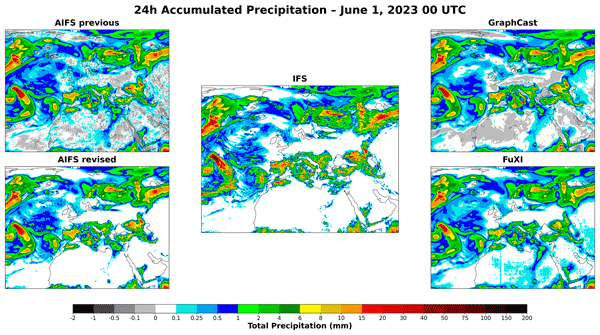
We present the latest release of the Artificial Intelligence Forecasting System, AIFS 1.1.0, which shows improved headline forecasting skill through an expanded dataset and enhanced training schedule. The model also incorporates hard physical constraints that facilitate training and improve rainfall prediction. Finally, we extend the set of forecasted variables to include soil conditions and energy-related fields, strengthening the operational value of AIFS.
Svenya Chripko, Thomas Spengler, Stefanie Semper, and Kjetil Våge
Ocean Sci., 22, 1711–1726, https://doi.org/10.5194/os-22-1711-2026, https://doi.org/10.5194/os-22-1711-2026, 2026
Short summary
Short summary
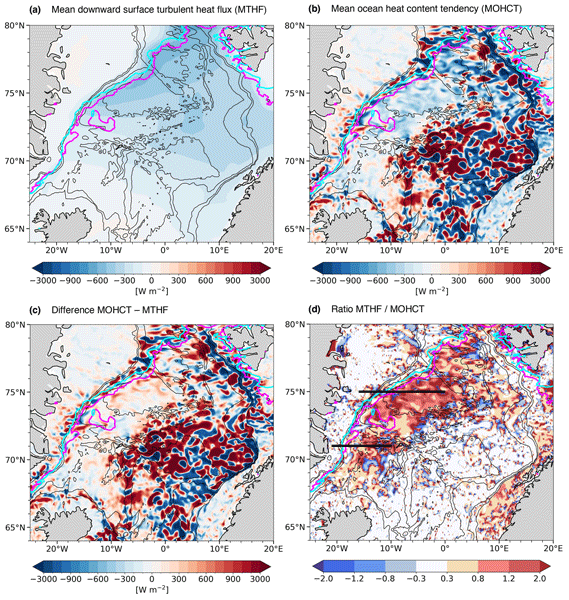
Using a high-resolution ocean reanalysis, we provide the first quantification of the three-dimensional ocean response to a strong cold air outbreak in the entire Nordic Seas. We show that the effects of the cold air outbreak on the mixed layer are masked by the effects of lateral heat transport in the eastern part of the region. The effects are only visible in the western Nordic Seas (away from sea ice and currents), which impacts water mass transformation in the area.

Chris Weijenborg and Thomas Spengler
Weather Clim. Dynam., 7, 475–488, https://doi.org/10.5194/wcd-7-475-2026, https://doi.org/10.5194/wcd-7-475-2026, 2026
Short summary
Short summary
The swift succession of storms, referred to as cyclone clustering, is often associated with weather extremes. We introduce a detection scheme for these events and subdivide these into two types. One type is associated with storms that follow each other in space, whereas the other type requires a proximity over time. Cyclone clustering is more frequent during winter and the first type is associated with stronger storms, suggesting that the two types emerge due to different mechanisms.
Andrea Marcheggiani and Thomas Spengler
Weather Clim. Dynam., 6, 1479–1489, https://doi.org/10.5194/wcd-6-1479-2025, https://doi.org/10.5194/wcd-6-1479-2025, 2025
Short summary
Short summary
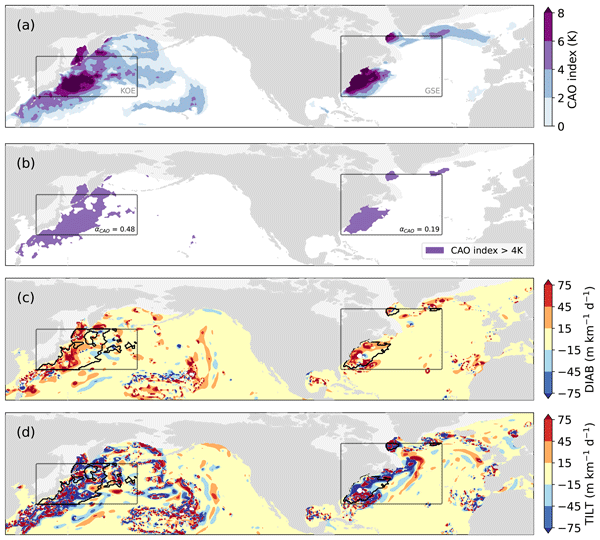
Cold air outbreaks, where cold polar air flows over warmer oceans, help restore midlatitude atmospheric temperature gradients near strong ocean currents, supporting storm formation. Using a novel method, we show that moderate outbreaks cover less than 15 % of the Gulf Stream region but explain up to 40 % of near-surface variability. In the North Pacific, they are more extensive and still account for a large share of variability, highlighting their key role in shaping storm tracks.
Clemens Spensberger, Kjersti Konstali, and Thomas Spengler
Weather Clim. Dynam., 6, 431–446, https://doi.org/10.5194/wcd-6-431-2025, https://doi.org/10.5194/wcd-6-431-2025, 2025
Short summary
Short summary
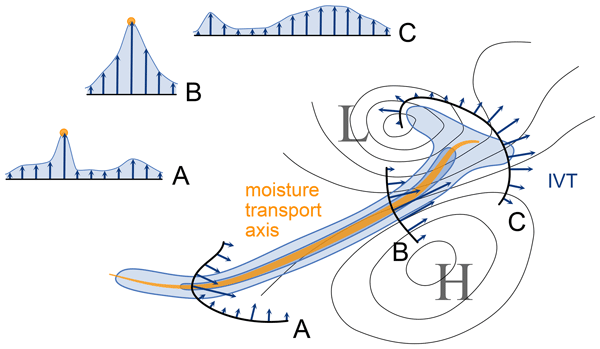
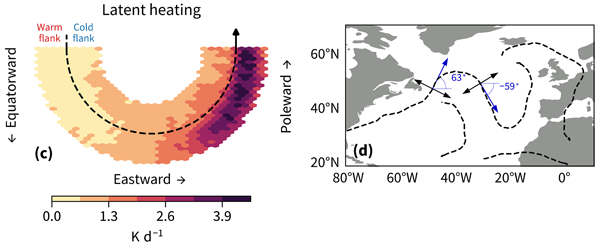
The transport of moisture from warmer and moister to colder and drier regions mainly occurs in brief and narrow bursts. In the mid-latitudes, such bursts are generally referred to as atmospheric rivers; in the Arctic they are often referred to as warm moist intrusions. We introduce a new definition to identify such bursts which is based primarily on their elongated structure. With this more general definition, we show that bursts in moisture transport occur frequently across all climate zones.
Henrik Auestad, Clemens Spensberger, Andrea Marcheggiani, Paulo Ceppi, Thomas Spengler, and Tim Woollings
Weather Clim. Dynam., 5, 1269–1286, https://doi.org/10.5194/wcd-5-1269-2024, https://doi.org/10.5194/wcd-5-1269-2024, 2024
Short summary
Short summary
Latent heating due to condensation can influence atmospheric circulation by strengthening or weakening horizontal temperature contrasts. Strong temperature contrasts intensify storms and imply the existence of strong upper tropospheric winds called jets. It remains unclear whether latent heating preferentially reinforces or abates the existing jet. We show that this disagreement is attributable to how the jet is defined, confirming that latent heating reinforces the jet.
Joshua Dorrington, Marta Wenta, Federico Grazzini, Linus Magnusson, Frederic Vitart, and Christian M. Grams
Nat. Hazards Earth Syst. Sci., 24, 2995–3012, https://doi.org/10.5194/nhess-24-2995-2024, https://doi.org/10.5194/nhess-24-2995-2024, 2024
Short summary
Short summary
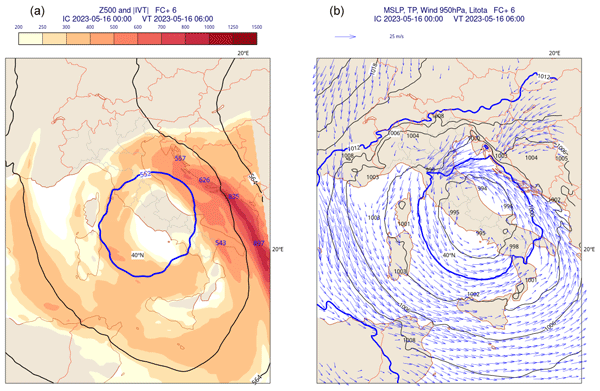
Extreme rainfall is the leading weather-related source of damages in Europe, but it is still difficult to predict on long timescales. A recent example of this was the devastating floods in the Italian region of Emiglia Romagna in May 2023. We present perspectives based on large-scale dynamical information that allows us to better understand and predict such events.
Fumiaki Ogawa and Thomas Spengler
Weather Clim. Dynam., 5, 1031–1042, https://doi.org/10.5194/wcd-5-1031-2024, https://doi.org/10.5194/wcd-5-1031-2024, 2024
Short summary
Short summary
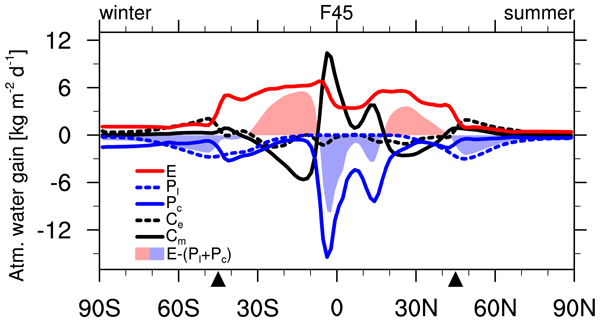
The exchange of energy and moisture between the atmosphere and ocean is maximised along strong meridional contrasts in sea surface temperature, such as across the Gulf Stream and Kuroshio. We find that these strong meridional contrasts confine and determine the position of evaporation and precipitation, as well as storm occurrence and intensity. The general intensity of the water cycle and storm activity, however, is determined by the underlying absolute sea surface temperature.
Clemens Spensberger
Weather Clim. Dynam., 5, 659–669, https://doi.org/10.5194/wcd-5-659-2024, https://doi.org/10.5194/wcd-5-659-2024, 2024
Short summary
Short summary
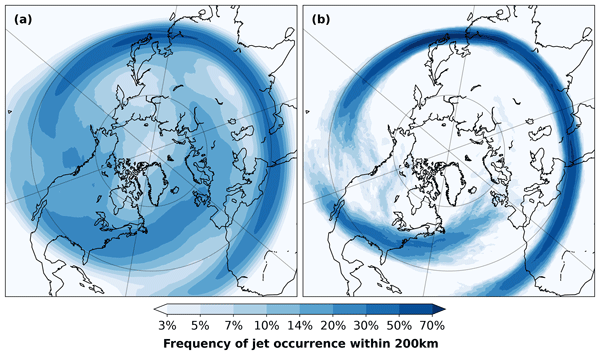
It is well-established that variations in convection in the tropical Indo-Pacific can influence weather in far-away regions. In this idea, I argue that the main theory used to explain this influence over large distances is incomplete. I propose hypotheses that could lead the way towards a more fundamental explanation and outline a novel approach that could be used to test the hypotheses I raise. The suggested approach might be useful to address also other long-standing questions.
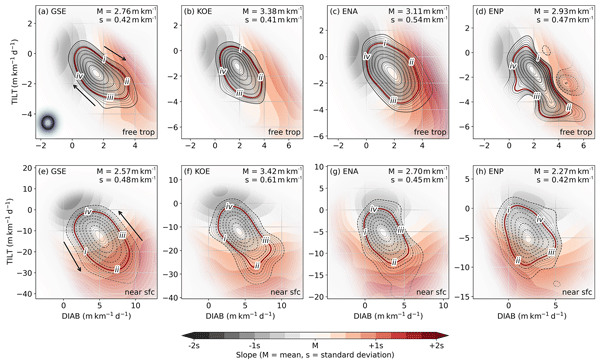
Andrea Marcheggiani and Thomas Spengler
Weather Clim. Dynam., 4, 927–942, https://doi.org/10.5194/wcd-4-927-2023, https://doi.org/10.5194/wcd-4-927-2023, 2023
Short summary
Short summary
There is a gap between the theoretical understanding and model representation of moist diabatic effects on the evolution of storm tracks. We seek to bridge this gap by exploring the relationship between diabatic and adiabatic contributions to changes in baroclinicity. We find reversed behaviours in the lower and upper troposphere in the maintenance of baroclinicity. In particular, our study reveals a link between higher moisture availability and upper-tropospheric restoration of baroclinicity.
Christiane Duscha, Juraj Pálenik, Thomas Spengler, and Joachim Reuder
Atmos. Meas. Tech., 16, 5103–5123, https://doi.org/10.5194/amt-16-5103-2023, https://doi.org/10.5194/amt-16-5103-2023, 2023
Short summary
Short summary
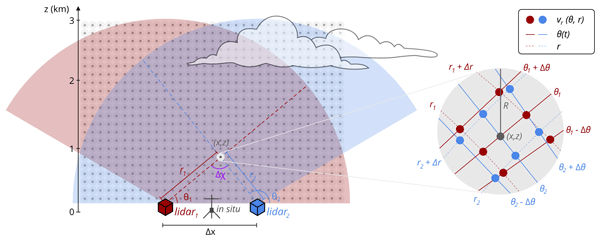
We combine observations from two scanning Doppler lidars to obtain new and unique insights into the dynamic processes inherent to atmospheric convection. The approach complements and enhances conventional methods to probe convection and has the potential to substantially deepen our understanding of this complex process, which is crucial to improving our weather and climate models.
Stephen Outten, Camille Li, Martin P. King, Lingling Suo, Peter Y. F. Siew, Hoffman Cheung, Richard Davy, Etienne Dunn-Sigouin, Tore Furevik, Shengping He, Erica Madonna, Stefan Sobolowski, Thomas Spengler, and Tim Woollings
Weather Clim. Dynam., 4, 95–114, https://doi.org/10.5194/wcd-4-95-2023, https://doi.org/10.5194/wcd-4-95-2023, 2023
Short summary
Short summary
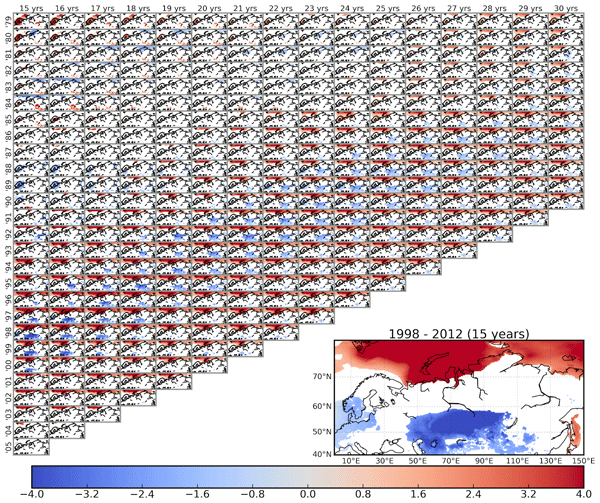
Strong disagreement exists in the scientific community over the role of Arctic sea ice in shaping wintertime Eurasian cooling. The observed Eurasian cooling can arise naturally without sea-ice loss but is expected to be a rare event. We propose a framework that incorporates sea-ice retreat and natural variability as contributing factors. A helpful analogy is of a dice roll that may result in cooling, warming, or anything in between, with sea-ice loss acting to load the dice in favour of cooling.
Tim Woollings, Camille Li, Marie Drouard, Etienne Dunn-Sigouin, Karim A. Elmestekawy, Momme Hell, Brian Hoskins, Cheikh Mbengue, Matthew Patterson, and Thomas Spengler
Weather Clim. Dynam., 4, 61–80, https://doi.org/10.5194/wcd-4-61-2023, https://doi.org/10.5194/wcd-4-61-2023, 2023
Short summary
Short summary
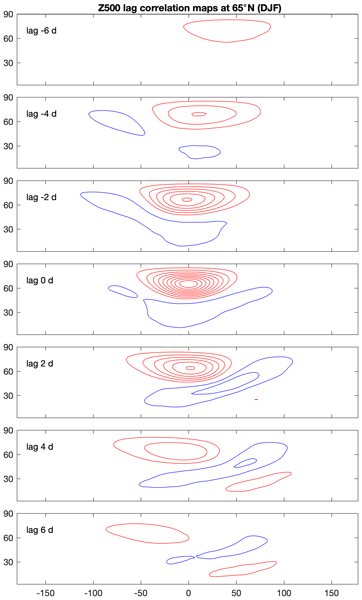
This paper investigates large-scale atmospheric variability in polar regions, specifically the balance between large-scale turbulence and Rossby wave activity. The polar regions are relatively more dominated by turbulence than lower latitudes, but Rossby waves are found to play a role and can even be triggered from high latitudes under certain conditions. Features such as cyclone lifetimes, high-latitude blocks, and annular modes are discussed from this perspective.
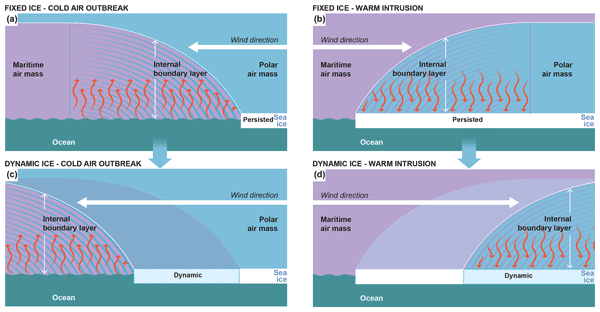
Jonathan J. Day, Sarah Keeley, Gabriele Arduini, Linus Magnusson, Kristian Mogensen, Mark Rodwell, Irina Sandu, and Steffen Tietsche
Weather Clim. Dynam., 3, 713–731, https://doi.org/10.5194/wcd-3-713-2022, https://doi.org/10.5194/wcd-3-713-2022, 2022
Short summary
Short summary
A recent drive to develop seamless forecasting systems has culminated in the development of weather forecasting systems that include a coupled representation of the atmosphere, ocean and sea ice. Before this, sea ice and sea surface temperature anomalies were typically fixed throughout a given forecast. We show that the dynamic coupling is most beneficial during periods of rapid ice advance, where persistence is a poor forecast of the sea ice and leads to large errors in the uncoupled system.

Beatriz M. Monge-Sanz, Alessio Bozzo, Nicholas Byrne, Martyn P. Chipperfield, Michail Diamantakis, Johannes Flemming, Lesley J. Gray, Robin J. Hogan, Luke Jones, Linus Magnusson, Inna Polichtchouk, Theodore G. Shepherd, Nils Wedi, and Antje Weisheimer
Atmos. Chem. Phys., 22, 4277–4302, https://doi.org/10.5194/acp-22-4277-2022, https://doi.org/10.5194/acp-22-4277-2022, 2022
Short summary
Short summary
The stratosphere is emerging as one of the keys to improve tropospheric weather and climate predictions. This study provides evidence of the role the stratospheric ozone layer plays in improving weather predictions at different timescales. Using a new ozone modelling approach suitable for high-resolution global models that provide operational forecasts from days to seasons, we find significant improvements in stratospheric meteorological fields and stratosphere–troposphere coupling.
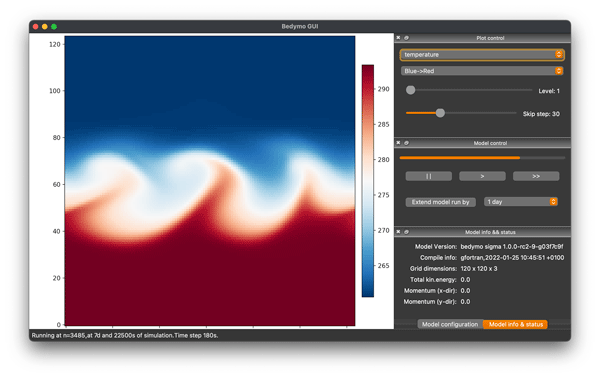
Clemens Spensberger, Trond Thorsteinsson, and Thomas Spengler
Geosci. Model Dev., 15, 2711–2729, https://doi.org/10.5194/gmd-15-2711-2022, https://doi.org/10.5194/gmd-15-2711-2022, 2022
Short summary
Short summary
In order to understand the atmosphere, we rely on a hierarchy of models ranging from very simple to very complex. Comparing different steps in this hierarchy usually entails comparing different models. Here we combine two such steps that are commonly used in one modelling framework. This makes comparisons both much easier and much more direct.
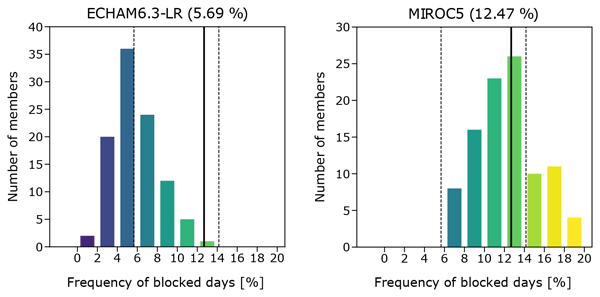
Clio Michel, Erica Madonna, Clemens Spensberger, Camille Li, and Stephen Outten
Weather Clim. Dynam., 2, 1131–1148, https://doi.org/10.5194/wcd-2-1131-2021, https://doi.org/10.5194/wcd-2-1131-2021, 2021
Short summary
Short summary
Climate models still struggle to correctly represent blocking frequency over the North Atlantic–European domain. This study makes use of five large ensembles of climate simulations and the ERA-Interim reanalyses to investigate the Greenland blocking frequency and one of its drivers, namely cyclonic Rossby wave breaking. We particularly try to understand the discrepancies between two specific models, out of the five, that behave differently.
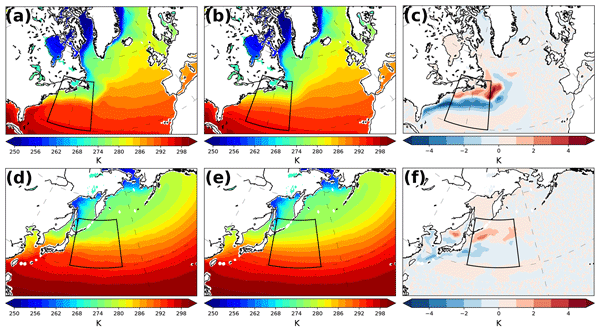
Leonidas Tsopouridis, Thomas Spengler, and Clemens Spensberger
Weather Clim. Dynam., 2, 953–970, https://doi.org/10.5194/wcd-2-953-2021, https://doi.org/10.5194/wcd-2-953-2021, 2021
Short summary
Short summary
Comparing simulations with realistic and smoothed SSTs, we find that the intensification of individual cyclones in the Gulf Stream and Kuroshio regions is only marginally affected by reducing the SST gradient. In contrast, we observe a reduced cyclone activity and a shift in storm tracks. Considering differences of the variables occurring within/outside of a radius of any cyclone, we find cyclones to play only a secondary role in explaining the mean states differences among the SST experiments.
Cited articles
Balasubramanian, G. and Yau, M.: The effects of convection on a simulated marine cyclone, J. Atmos. Sci., 51, 2397–2417, https://doi.org/10.1175/1520-0469(1994)051<2397:teocoa>2.0.co;2, 1994.
Baumgart, M., Riemer, M., Wirth, V., Teubler, F., and Lang, S. T.: Potential vorticity dynamics of forecast errors: A quantitative case study, Mon. Weather Rev., 146, 1405–1425, https://doi.org/10.1175/mwr-d-17-0196.1, 2018.
Baumgart, M., Ghinassi, P., Wirth, V., Selz, T., Craig, G. C., and Riemer, M.: Quantitative view on the processes governing the upscale error growth up to the planetary scale using a stochastic convection scheme, Mon. Weather Rev., 147, 1713–1731, https://doi.org/10.1175/mwr-d-18-0292.1, 2019.
Binder, H., Boettcher, M., Joos, H., and Wernli, H.: The role of warm conveyor belts for the intensification of extratropical cyclones in Northern Hemisphere winter, J. Atmos. Sci., 73, 3997–4020, https://doi.org/10.1175/jas-d-15-0302.1, 2016.
Binder, H., Boettcher, M., Joos, H., Sprenger, M., and Wernli, H.: Vertical cloud structure of warm conveyor belts – a comparison and evaluation of ERA5 reanalysis, CloudSat and CALIPSO data, Weather Clim. Dynam., 1, 577–595, https://doi.org/10.5194/wcd-1-577-2020, 2020.
Bosart, L. F.: The Presidents' Day snowstorm of 18–19 February 1979: A subsynoptic-scale event, Mon. Weather Rev., 109, 1542–1566, https://doi.org/10.1175/1520-0493(1981)109<1542:tpdsof>2.0.co;2, 1981.
Browning, K.: The dry intrusion perspective of extra-tropical cyclone development, Meteorol. Appl., 4, 317–324, https://doi.org/10.1017/s1350482797000613, 1997.
Browning, K.: The sting at the end of the tail: Damaging winds associated with extratropical cyclones, Q. J. Roy. Meteorol. Soc., 130, 375–399, https://doi.org/10.1256/qj.02.143, 2004.
Browning, K. A.: Organization of clouds and precipitation in extratropical cyclones, in: Extratropical cyclones: the Erik Palmén memorial volume, pp. 129–153, Springer, https://doi.org/10.1007/978-1-944970-33-8_8, 1990.
Catto, J. L. and Pfahl, S.: The importance of fronts for extreme precipitation, J. Geophys. Res.-Atmos., 118, 10–791, https://doi.org/10.1002/jgrd.50852, 2013.
Catto, J. L. and Raveh-Rubin, S.: Climatology and dynamics of the link between dry intrusions and cold fronts during winter. Part I: global climatology, Clim. Dynam., 53, 1873–1892, https://doi.org/10.1007/s00382-019-04745-w, 2019.
Catto, J. L., Shaffrey, L. C., and Hodges, K. I.: Can climate models capture the structure of extratropical cyclones?, J. Climate, 23, 1621–1635, https://doi.org/10.1175/2009jcli3318.1, 2010.
Clark, P. A. and Gray, S. L.: Sting jets in extratropical cyclones: a review, Q. J. Roy. Meteorol. Soc., 144, 943–969, https://doi.org/10.1002/qj.3267, 2018.
Coronel, B., Ricard, D., Rivière, G., and Arbogast, P.: Role of moist processes in the tracks of idealized midlatitude surface cyclones, J. Atmos. Sci., 72, 2979–2996, https://doi.org/10.1175/jas-d-14-0337.1, 2015.
Crezee, B., Joos, H., and Wernli, H.: The microphysical building blocks of low-level potential vorticity anomalies in an idealized extratropical cyclone, J. Atmos. Sci., 74, 1403–1416, https://doi.org/10.1175/jas-d-16-0260.1, 2017.
Davies, H. C. and Didone, M.: Diagnosis and dynamics of forecast error growth, Mon. Weather Rev., 141, 2483–2501, https://doi.org/10.1175/mwr-d-12-00242.1, 2013.
Davis, C. A., Stoelinga, M. T., and Kuo, Y.-H.: The integrated effect of condensation in numerical simulations of extratropical cyclogenesis, Mon. Weather Rev., 121, 2309–2330, https://doi.org/10.1175/1520-0493(1993)121<2309:tieoci>2.0.co;2, 1993.
ECMWF: IFS Documentation CY41R2 – Part II: Data Assimilation, Tech. rep., European Centre for Medium-Range Weather Forecasts, Reading, UK, https://www.ecmwf.int/en/elibrary/16648-part-ii-data-assimilation (last access: 12 March 2026), 2016.
Eliassen, A.: On the vertical circulation in frontal zones, Geofysiske Publikasjoner, 24, 147–160, https://geofysikk.org/NGF/GeoPub/NGF_GP_Vol24_no4.pdf (last access: 7 June 2026), 1962.
Forbes, R. M.: Microphysics: From intricacy to simplicity, in: ECMWF Seminar on Parametrization of Subgrid Physical Processes, pp. 129–148, https://www.ecmwf.int/sites/default/files/elibrary/2009/9442-microphysics-intricacy-simplicity.pdf (last access: 20 May 2026), 2008.
Froude, L. S., Bengtsson, L., and Hodges, K. I.: The predictability of extratropical storm tracks and the sensitivity of their prediction to the observing system, Mon. Weather Rev., 135, 315–333, https://doi.org/10.1175/mwr3274.1, 2007.
Geer, A., Ahlgrimm, M., Bechtold, P., Bonavita, M., Bormann, N., English, S., Fielding, M., Forbes, R., Hogan, R., Hólm, E., Janisková, M., Lonitz, K., Lopez, P., Matricardi, M., Sandu, I., and Weston, P.: Assimilating observations sensitive to cloud and precipitation, European Centre for Medium-Range Weather Forecasts, https://doi.org/10.21957/sz7cr1dym, 2017.
Gentile, E. S. and Gray, S. L.: Attribution of observed extreme marine wind speeds and associated hazards to midlatitude cyclone conveyor belt jets near the British Isles, Int. J. Climatol., 43, 2735–2753, https://doi.org/10.1002/joc.7999, 2023.
Grams, C. M., Magnusson, L., and Madonna, E.: An atmospheric dynamics perspective on the amplification and propagation of forecast error in numerical weather prediction models: A case study, Q. J. Roy. Meteoro. Soc., 144, 2577–2591, https://doi.org/10.1002/qj.3353, 2018.
Gray, S. L., Dunning, C., Methven, J., Masato, G., and Chagnon, J. M.: Systematic model forecast error in Rossby wave structure, Geophys. Res. Lett., 41, 2979–2987, https://doi.org/10.1002/2014gl059282, 2014.
Gyakum, J. R.: On the evolution of the QE II storm. II: Dynamic and thermodynamic structure, Mon. Weather Rev., 111, 1156–1173, https://doi.org/10.1175/1520-0493(1983)111<1156:oteoti>2.0.co;2, 1983.
Harvey, B., Methven, J., Sanchez, C., and Schäfler, A.: Diabatic generation of negative potential vorticity and its impact on the North Atlantic jet stream, Q. J. Roy. Meteorol. Soc., 146, 1477–1497, https://doi.org/10.1002/qj.3747, 2020.
Hersbach, H., Bell, B., Berrisford, P., Hirahara, S., Horányi, A., Muñoz-Sabater, J., Nicolas, J., Peubey, C., Radu, R., Schepers, D., Simmons, A., Soci, C., Abdalla, S., Abellan, X., Balsamo, G., Bechtold, P., Biavati, G., Bidlot, J., Bonavita, M., De Chiara, G., Dahlgren, P., Dee, D., Diamantakis, M., Dragani, R., Flemming, J., Forbes, R., Fuentes, M., Geer, A., Haimberger, L., Healy, S., Hogan, R. J., Hólm, E., Janisková, M., Keeley, S., Laloyaux, P., Lopez, P., Lupu, C., Radnoti, G., de Rosnay, P., Rozum, I., Vamborg, F., Villaume, S., and Thépaut, J.-N.: The ERA5 global reanalysis, Q. J. Roy. Meteorol. Soc., 146, 1999–2049, https://doi.org/10.1002/qj.3803, 2020.
Holton, J. R. and Hakim, G. J.: An introduction to dynamic meteorology, vol. 88, Academic press, https://doi.org/10.1016/C2009-0-63394-8, 2013.
Hoskins, B. J. and Hodges, K. I.: New perspectives on the Northern Hemisphere winter storm tracks, J. Atmos. Sci., 59, 1041–1061, https://doi.org/10.1175/1520-0469(2002)059<1041:npotnh>2.0.co;2, 2002.
Joos, H. and Forbes, R. M.: Impact of different IFS microphysics on a warm conveyor belt and the downstream flow evolution, Q. J. Roy. Meteorol. Soc., 142, 2727–2739, https://doi.org/10.1002/qj.2863, 2016.
Klocke, D. and Rodwell, M.: A comparison of two numerical weather prediction methods for diagnosing fast-physics errors in climate models, Q. J. Roy. Meteorol. Soc., 140, 517–524, https://doi.org/10.1002/qj.2172, 2014.
Marcheggiani, A., Dacre, H., Spensberger, C., and Spengler, T.: Weather features drive free-tropospheric baroclinicity variability in the North Atlantic storm track, Q. J. Roy. Meteorol. Soc., p. e5061, https://doi.org/10.1002/qj.5061, 2025.
Martínez-Alvarado, O. and Plant, R.: Parametrized diabatic processes in numerical simulations of an extratropical cyclone, Q. J. Roy. Meteorol. Soc., 140, 1742–1755, https://doi.org/10.1002/qj.2254, 2014.
Martínez-Alvarado, O., Baker, L. H., Gray, S. L., Methven, J., and Plant, R. S.: Distinguishing the cold conveyor belt and sting jet airstreams in an intense extratropical cyclone, Mon. Weather Rev., 142, 2571–2595, https://doi.org/10.1175/mwr-d-13-00348.1, 2014a.
Martínez-Alvarado, O., Joos, H., Chagnon, J., Boettcher, M., Gray, S., Plant, R., Methven, J., and Wernli, H.: The dichotomous structure of the warm conveyor belt, Q. J. Roy. Meteorol. Soc., 140, 1809–1824, https://doi.org/10.1002/qj.2276, 2014b.
Martínez-Alvarado, O., Madonna, E., Gray, S. L., and Joos, H.: A route to systematic error in forecasts of Rossby waves, Q. J. Roy. Meteorol. Soc., 142, 196–210, https://doi.org/10.1002/qj.2645, 2016.
Miller, J. E.: On the concept of frontogenesis, J. Meteorol., 5, 169–171, https://doi.org/10.1175/1520-0469(1948)005<0169:OTCOF>2.0.CO;2, 1948.
Murray, R. J. and Simmonds, I.: A numerical scheme for tracking cyclone centres from digital data. Part I: Development and operation of the scheme, Aust. Meteorol. Mag., 39, 155–166, https://doi.org/10.1071/es91020, 1991a.
Murray, R. J. and Simmonds, I.: A numerical scheme for tracking cyclone centres from digital data. Part II: Application to January and July general circulation model simulations, Aust. Meteorol. Mag., 39, 167–180, https://doi.org/10.1071/es91021, 1991b.
Oertel, A., Boettcher, M., Joos, H., Sprenger, M., and Wernli, H.: Potential vorticity structure of embedded convection in a warm conveyor belt and its relevance for large-scale dynamics, Weather Clim. Dynam., 1, 127–153, https://doi.org/10.5194/wcd-1-127-2020, 2020.
Papritz, L. and Spengler, T.: Analysis of the slope of isentropic surfaces and its tendencies over the North Atlantic, Q. J. Roy. Meteorol. Soc., 141, 3226–3238, https://doi.org/10.1002/qj.2605, 2015.
Pfahl, S., Schwierz, C., Croci-Maspoli, M., Grams, C. M., and Wernli, H.: Importance of latent heat release in ascending air streams for atmospheric blocking, Nat. Geosci., 8, 610–614, https://doi.org/10.1038/ngeo2487, 2015.
Pinto, J. G., Karremann, M. K., Born, K., Della-Marta, P. M., and Klawa, M.: Loss potentials associated with European windstorms under future climate conditions, Clim. Res., 54, 1–20, https://doi.org/10.3354/cr01111, 2012.
Raveh-Rubin, S.: Dry intrusions: Lagrangian climatology and dynamical impact on the planetary boundary layer, J. Climate, 30, 6661–6682, https://doi.org/10.1175/jcli-d-16-0782.1, 2017.
Raveh-Rubin, S., Quinting, J., Kirsch, B., Oertel, A., Ramos, A., Schaefler, A., and Grams, C.: The North Atlantic Waveguide, Dry Intrusion, and Downstream Impact Campaign (NAWDIC), Tech. rep., Copernicus Meetings, https://doi.org/10.5194/ems2025-390, 2025.
Robertson, F. and Smith, P.: The impact of model moist processes on the energetics of extratropical cyclones, Mon. Weather Rev., 111, 723–744, https://doi.org/10.1175/1520-0493(1983)111<0723:tiommp>2.0.co;2, 1983.
Rodwell, M. and Palmer, T.: Using numerical weather prediction to assess climate models, Q. J. Roy. Meteorol. Soc., 133, 129–146, https://doi.org/10.1002/qj.23, 2007.
Sánchez, C., Methven, J., Gray, S., and Cullen, M.: Linking rapid forecast error growth to diabatic processes, Q. J. Roy. Meteorol. Soc., 146, 3548–3569, https://doi.org/10.1002/qj.3861, 2020.
Sawyer, J. S.: The vertical circulation at meteorological fronts and its relation to frontogenesis, P. Roy. Soc. London A, 234, 346–362, https://doi.org/10.1098/rspa.1956.0039, 1956.
Schultz, D. M.: Reexamining the cold conveyor belt, Mon. Weather Rev., 129, 2205–2225, https://doi.org/10.1175/1520-0493(2001)129<2205:rtccb>2.0.co;2, 2001.
Spensberger, C.: Dynlib: A library of diagnostics, feature detection algorithms, plotting and convenience functions for dynamic meteorology, Zenodo, https://doi.org/10.5281/zenodo.10471187, 2024.
Spensberger, C. and Marcheggiani, A.: ERA5 cyclone tracks, NIRD RDA, https://doi.org/10.11582/2024.00023, 2024.
Spensberger, C., Konstali, K., and Spengler, T.: Moisture transport axes: a unifying definition for tropical moisture exports, atmospheric rivers, and warm moist intrusions, Weather Clim. Dynam., 6, 431–446, https://doi.org/10.5194/wcd-6-431-2025, 2025.
Stoelinga, M. T.: A potential vorticity-based study of the role of diabatic heating and friction in a numerically simulated baroclinic cyclone, Mon. Weather Rev., 124, 849–874, https://doi.org/10.1175/1520-0493(1996)124<0849:apvbso>2.0.co;2, 1996.
Tsopouridis, L., Spengler, T., and Spensberger, C.: Smoother versus sharper Gulf Stream and Kuroshio sea surface temperature fronts: effects on cyclones and climatology, Weather Clim. Dynam., 2, 953–970, https://doi.org/10.5194/wcd-2-953-2021, 2021a.
Tsopouridis, L., Spensberger, C., and Spengler, T.: Characteristics of cyclones following different pathways in the Gulf Stream region, Quarterly Journal of the Royal Meteorological Society, 147, 392–407, https://doi.org/10.1002/qj.3924, 2021b.
Vaughan, G., Methven, J., Anderson, D., Antonescu, B., Baker, L., Baker, T., Ballard, S., Bower, K., Brown, P., Chagnon, J., Choularton, T. W., Chylik, J., Connolly, P. J., Cook, P. A., Cotton, R. J., Crosier, J., Dearden, C., Dorsey, J. R., Frame, T. H. A., Gallagher, M. W., Goodliff, M., Gray, S. L., Harvey, B. J., Knippertz, P., Lean, H. W., Li, D., Lloyd, G., Martínez-Alvarado, O., Nicol, J., Norris, J., Öström, E., Owen, J., Parker, D. J., Plant, R. S., Renfrew, I. A., Roberts, N. M.,Rosenberg, P., Rudd, A. C., Schultz, D. M., Taylor, J. P., Trzeciak, T., Tubbs, R., Vance, A. K., van Leeuwen, P. J., Wellpott, A., and Woolley, A.: Cloud banding and winds in intense European cyclones: Results from the DIAMET project, B. Am. Meteorol. Soc., 96, 249–265, https://doi.org/10.1175/bams-d-13-00238.1, 2015.
Weijenborg, C. and Spengler, T.: Diabatic heating as a pathway for cyclone clustering encompassing the extreme storm Dagmar, Geophys. Res. Lett., 47, e2019GL085777, https://doi.org/10.1029/2019gl085777, 2020.
Wernli, H.: A Lagrangian-based analysis of extratropical cyclones. II: A detailed case-study, Q. J. Roy. Meteorol. Soc., 123, 1677–1706, https://doi.org/10.1002/qj.49712354211, 1997.
Wernli, H. and Gray, S. L.: The importance of diabatic processes for the dynamics of synoptic-scale extratropical weather systems – a review, Weather Clim. Dynam., 5, 1299–1408, https://doi.org/10.5194/wcd-5-1299-2024, 2024.
Wimmer, M., Rivière, G., Arbogast, P., Piriou, J.-M., Delanoë, J., Labadie, C., Cazenave, Q., and Pelon, J.: Diabatic processes modulating the vertical structure of the jet stream above the cold front of an extratropical cyclone: sensitivity to deep convection schemes, Weather and Climate Dynamics, 3, 863–882, https://doi.org/10.5194/wcd-3-863-2022, 2022.
Xie, S., Ma, H.-Y., Boyle, J. S., Klein, S. A., and Zhang, Y.: On the correspondence between short- and long-time-scale systematic errors in CAM4/CAM5 for the Year of Tropical Convection, J. Climate, 25, 7937–7955, https://doi.org/10.1175/JCLI-D-12-00134.1, 2012.
Yu, Q., Spensberger, C., Magnusson, L., and Spengler, T.: Forecast Errors Attributed to Synoptic Features, Meteorol. Appl., 32, e70093, https://doi.org/10.1002/met.70093, 2025.
Short summary
Forecast biases of winter extratropical cyclones are quantified by varying diabatic heating intensity. A southwest shift and underestimated intensity are found in the strong heating group. The weaker heating group mainly shows an intensity bias. Specific biases are identified for wind, moisture, temperature, and upper-level circulation fields. Findings highlight that representing moist processes and their interaction with atmospheric dynamics is a key area for future model developments.
Forecast biases of winter extratropical cyclones are quantified by varying diabatic heating...


