
Articles | Volume 7, issue 3
https://doi.org/10.5194/wcd-7-1593-2026
© Author(s) 2026. This work is distributed under
the Creative Commons Attribution 4.0 License.
the Creative Commons Attribution 4.0 License.
https://doi.org/10.5194/wcd-7-1593-2026
© Author(s) 2026. This work is distributed under
the Creative Commons Attribution 4.0 License.
the Creative Commons Attribution 4.0 License.
Research article
| Highlight paper
| 
31 Aug 2026
Research article | Highlight paper |
| 31 Aug 2026
| 31 Aug 2026
The impact of stochastic sea ice perturbations on seasonal forecasts
Kristian Strommen
CORRESPONDING AUTHOR

European Centre for Medium-Range Weather Forecasts, Reading, England
European Centre for Medium-Range Weather Forecasts, Bonn, Germany
Department of Physics, University of Oxford, Oxford, United Kingdom
Michael Mayer
European Centre for Medium-Range Weather Forecasts, Reading, England
European Centre for Medium-Range Weather Forecasts, Bonn, Germany
Department of Meteorology and Geophysics, University of Vienna, Vienna, Austria
Andrea Storto
Institute of Marine Sciences (ISMAR), National Research Council of Italy (CNR), Rome, Italy
Jonas Spaeth
European Centre for Medium-Range Weather Forecasts, Reading, England
European Centre for Medium-Range Weather Forecasts, Bonn, Germany
Steffen Tietsche
European Centre for Medium-Range Weather Forecasts, Reading, England
European Centre for Medium-Range Weather Forecasts, Bonn, Germany
Related authors
Simon L. L. Michel, Kristian Strommen, and Hannah M. Christensen
EGUsphere, https://doi.org/10.5194/egusphere-2026-5397, https://doi.org/10.5194/egusphere-2026-5397, 2026
This preprint is open for discussion and under review for Earth System Dynamics (ESD).
Short summary
Short summary
Uncertainty reduction methods for climate projections usually treat natural climate variability as noise to remove, which makes future uncertainty overconfident. We instead use deep learning to learn from the recent observed temperature trajectory and predict future local climate while retaining this variability. The method reduces total uncertainty in future warming and gives spatially resolved predictions from the 2030s to the 2090s, including at regional scales relevant for adaptation.
Ting-Chen Chen, Hugues Goosse, Cécile Davrinche, Stephy Libera, Christopher Roberts, Matthias Aengenheyster, Kristian Strommen, Malcolm Roberts, Rohit Ghosh, and Jin-Song von Storch
Weather Clim. Dynam., 6, 1179–1193, https://doi.org/10.5194/wcd-6-1179-2025, https://doi.org/10.5194/wcd-6-1179-2025, 2025
Short summary
Short summary
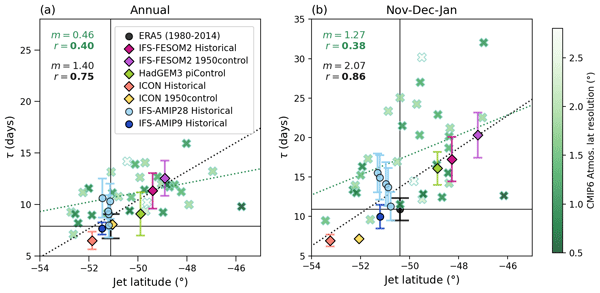
Southern Annular Mode (SAM) is a leading mode of Southern Hemisphere climate variability, but global models often overestimate its persistence in summer. Bias in SAM persistence is reduced and jet latitude improved using high-resolution sea surface temperature (SST)-prescribed models, pointing to the central role of SSTs. Control experiments explore the influence of model resolution and mesoscale ocean features on SAM persistence, highlighting the complex and subtle nature of air-sea coupling.
Kristian Strommen, Tim Woollings, Paolo Davini, Paolo Ruggieri, and Isla R. Simpson
Weather Clim. Dynam., 4, 853–874, https://doi.org/10.5194/wcd-4-853-2023, https://doi.org/10.5194/wcd-4-853-2023, 2023
Short summary
Short summary
We present evidence which strongly suggests that decadal variations in the intensity of the North Atlantic winter jet stream can be predicted by current forecast models but that decadal variations in its position appear to be unpredictable. It is argued that this skill at predicting jet intensity originates from the slow, predictable variability in sea surface temperatures in the sub-polar North Atlantic.

Kristian Strommen, Stephan Juricke, and Fenwick Cooper
Weather Clim. Dynam., 3, 951–975, https://doi.org/10.5194/wcd-3-951-2022, https://doi.org/10.5194/wcd-3-951-2022, 2022
Short summary
Short summary
Observational data suggest that the extent of Arctic sea ice influences mid-latitude winter weather. However, climate models generally fail to reproduce this link, making it unclear if models are missing something or if the observed link is just a coincidence. We show that if one explicitly represents the effect of unresolved sea ice variability in a climate model, then it is able to reproduce this link. This implies that the link may be real but that many models simply fail to simulate it.
Joshua Dorrington, Kristian Strommen, and Federico Fabiano
Weather Clim. Dynam., 3, 505–533, https://doi.org/10.5194/wcd-3-505-2022, https://doi.org/10.5194/wcd-3-505-2022, 2022
Short summary
Short summary
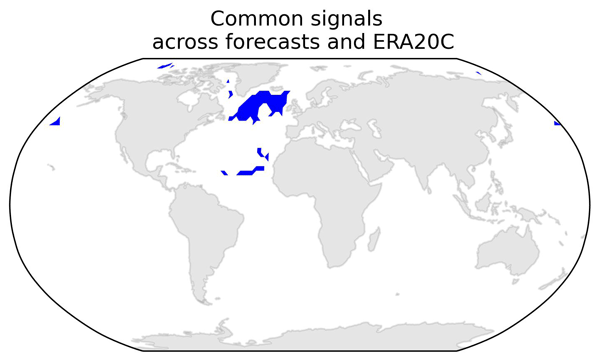
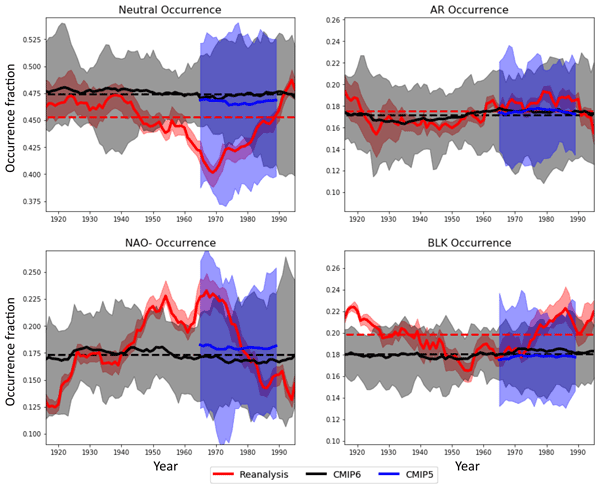
We investigate how well current state-of-the-art climate models reproduce the wintertime weather of the North Atlantic and western Europe by studying how well different "regimes" of weather are captured. Historically, models have struggled to capture these regimes, making it hard to predict future changes in wintertime extreme weather. We show models can capture regimes if the right method is used, but they show biases, partially as a result of biases in jet speed and eddy strength.
Vincenzo de Toma, Andrea Storto, Ronan McAdam, Antonietta Capotondi, and Chunxue Yang
EGUsphere, https://doi.org/10.5194/egusphere-2026-5747, https://doi.org/10.5194/egusphere-2026-5747, 2026
This preprint is open for discussion and under review for Ocean Science (OS).
Short summary
Short summary
Marine heatwaves, prolonged spells of unusually warm seawater, can harm marine life and the people who depend on it, yet we know little about what happens beneath the surface. We compared three reconstructions of past ocean conditions and found they reliably capture famous surface events seen by satellites. Warm water often extends 100 to 150 metres down, and events reaching deeper last longer. Our results show that combining several products adds value to the results.
Zhe Song, Anny Cazenave, William Llovel, Andrea Storto, and Marie Bouih
Ocean Sci., 22, 2903–2914, https://doi.org/10.5194/os-22-2903-2026, https://doi.org/10.5194/os-22-2903-2026, 2026
Short summary
Short summary
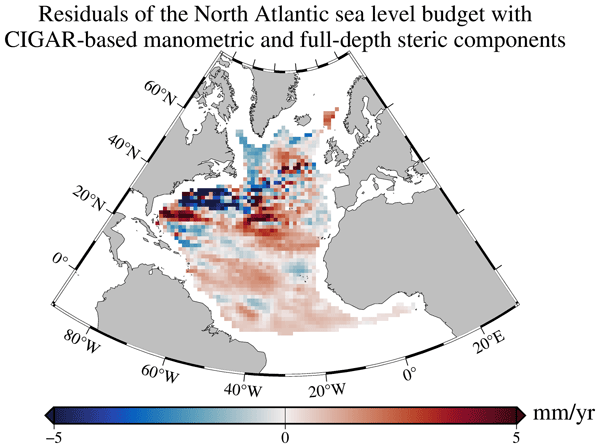
The objective of this study is to understand why the North Atlantic sea level budget is not closed over the Argo and Gravity Recovery and Climate Experiment (GRACE) era. We show that using an ocean reanalysis for the ocean mass component instead of GRACE, and accounting for deep ocean warming allows quasi-closure of the North Atlantic sea level budget within data uncertainties.
Paolo Mauriello, Gregory C. Smith, Andrea Storto, and Chunxue Yang
Ocean Sci., 22, 2863–2902, https://doi.org/10.5194/os-22-2863-2026, https://doi.org/10.5194/os-22-2863-2026, 2026
Short summary
Short summary
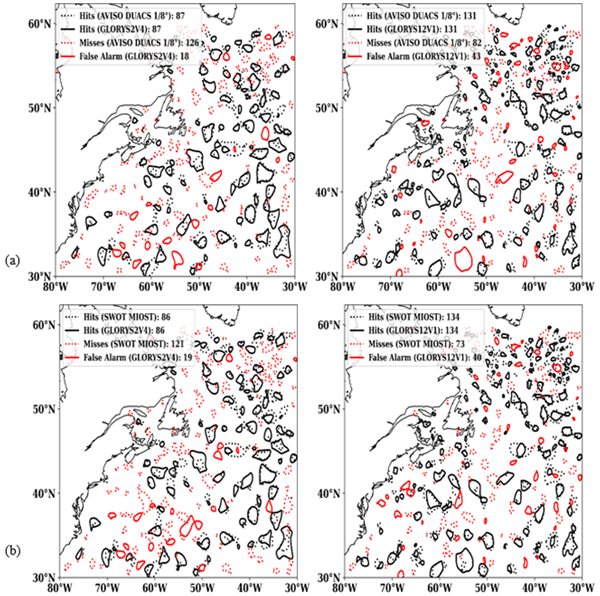
This article evaluates two ocean reanalyses with spatial resolutions of 1/4° and 1/12° by comparing them with two satellite observation products, both at 1/8° resolution. The results show the added value of higher model resolution for representing mesoscale eddies and highlight the value of wide-swath satellite altimetry for model verification in the North Atlantic.
Simon L. L. Michel, Kristian Strommen, and Hannah M. Christensen
EGUsphere, https://doi.org/10.5194/egusphere-2026-5397, https://doi.org/10.5194/egusphere-2026-5397, 2026
This preprint is open for discussion and under review for Earth System Dynamics (ESD).
Short summary
Short summary
Uncertainty reduction methods for climate projections usually treat natural climate variability as noise to remove, which makes future uncertainty overconfident. We instead use deep learning to learn from the recent observed temperature trajectory and predict future local climate while retaining this variability. The method reduces total uncertainty in future warming and gives spatially resolved predictions from the 2030s to the 2090s, including at regional scales relevant for adaptation.
Andrea Storto, Vincenzo de Toma, and Chunxue Yang
Ocean Sci., 22, 2809–2834, https://doi.org/10.5194/os-22-2809-2026, https://doi.org/10.5194/os-22-2809-2026, 2026
Short summary
Short summary
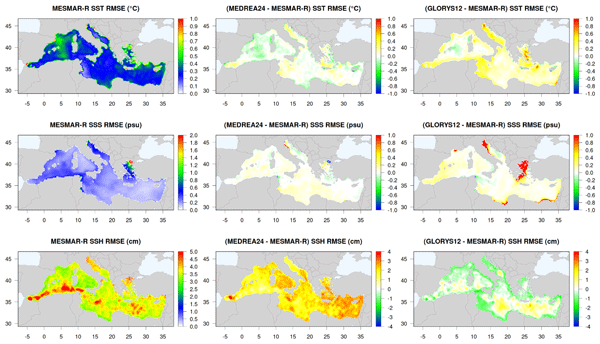
The Mediterranean region is one of the fastest-warming areas on Earth, and understanding its changes is thus crucial. We produced a new reconstruction of the Mediterranean climate for the 1993–2024 period, using a modelling system that combines weather, ocean, and hydrology information with observations. This new reanalysis offers a clearer picture of how the region has been warming, drying, and changing over the past 30 years, supporting better studies of extreme events and climate impacts.
Susanna Winkelbauer, Gaël Forget, Michael Mayer, Romain Bourdalle-Badie, Andrea Cipollone, Leopold Haimberger, Keith Haines, Satoshi Osafune, Yuanyuan Song, Andrea Storto, Chunxue Yang, and Hao Zuo
EGUsphere, https://doi.org/10.5194/egusphere-2026-5435, https://doi.org/10.5194/egusphere-2026-5435, 2026
This preprint is open for discussion and under review for Ocean Science (OS).
Short summary
Short summary
Ocean currents carry vast amounts of heat through the Atlantic and strongly influence climate. We compared estimates from 17 global ocean reanalyses with observations to assess how well they reproduce this heat transport and its changes over time. Most reanalyses capture the main patterns and variations, but important differences remain. The reanalyses also suggest a decrease in northward heat transport since the early 1990s, although its magnitude remains uncertain.
Yushi Morioka, Doroteaciro Iovino, Andrea Cipollone, Andrea Storto, Takeshi Doi, Masami Nonaka, and Swadhin K. Behera
EGUsphere, https://doi.org/10.5194/egusphere-2026-5070, https://doi.org/10.5194/egusphere-2026-5070, 2026
This preprint is open for discussion and under review for The Cryosphere (TC).
Short summary
Short summary
Arctic sea ice has been shrinking for the last four decades. As global warming continues, predicting summer sea ice is becoming more important. Here we create a seasonal forecast system using the SINTEX-F3 model. Results show that summer sea ice in the Barents-Kara Sea is best predicted when accurate sea ice and snow conditions are provided from spring. It is found that initial sea ice thickness acts as a memory for the climate system, enabling accurate summer sea ice prediction from spring.
Alejandro Blazquez, Benoit Meyssignac, Robin Fraudeau, Michael Ablain, Jonathan Bamber, Antonio Bonaduce, Marie Bouih, Anny Cazenave, Thorben Döhne, Ines Dussaillant, Ramiro Ferrari, Martin Horwath, Nicolas Kolodziejczyk, Hugo Lecomte, Stephanie Leroux, William Llovel, Daniele Melini, Erwan Oulhen, Thierry Penduff, Roshin P. Raj, Giorgio Spada, Marius Schlaak, Papasarafianou Stamatia, Andrea Storto, Chunxue Yang, and Sarah Connors
Earth Syst. Sci. Data Discuss., https://doi.org/10.5194/essd-2026-627, https://doi.org/10.5194/essd-2026-627, 2026
Preprint under review for ESSD
Short summary
Short summary
Closing the sea‑level budget on annual and longer time scales is a cornerstone of physical oceanography because sea‑level rise is one of the best indicators of climate change, and a closed budget shows we have identified and quantified all major drivers. We examined it from 1993 to 2022, finding an accelerated rise that matched ice melt and warm water until 2015. Afterwards an unexplained gap appears. Better deep‑ocean observations and refined gravity processing are needed to close the budget.
Michael Mayer, Daniel J. Befort, Jacob Maddison, and Antje Weisheimer
EGUsphere, https://doi.org/10.5194/egusphere-2026-3885, https://doi.org/10.5194/egusphere-2026-3885, 2026
Preprint archived
Short summary
Short summary
We present counterfactual seasonal hindcasts that simulate seasonal climate evolution under different climate conditions by modifying both the atmospheric forcing and the ocean initial conditions. As a result, long-term temperature trends are altered while largely retaining seasonal prediction skill and interannual variability. These simulations provide a practical framework for attribution studies and allow to diagnose model deficiencies in the response to anthropogenic climate forcing.
Philip Rupp, Jonas Spaeth, and Thomas Birner
Weather Clim. Dynam., 7, 767–785, https://doi.org/10.5194/wcd-7-767-2026, https://doi.org/10.5194/wcd-7-767-2026, 2026
Short summary
Short summary
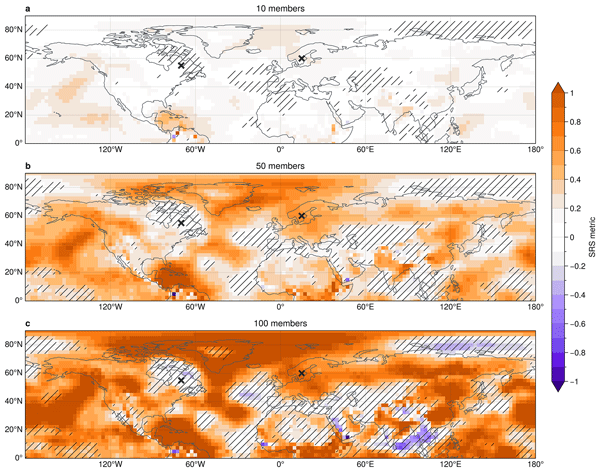
Weather forecasts several weeks ahead are uncertain, but this uncertainty itself can change depending on large-scale atmospheric conditions. We present a new way to measure how well forecasts capture these changes in uncertainty. Our results show that reliability of uncertainty varies strongly with region and is linked to slow, predictable patterns in the atmosphere. These findings help identify periods when forecasts are more trustworthy.
Louis Kern, Thomas Vaujour, Julia Pfeffer, Andrea Storto, Camille Szczypta, Gilles Garric, Claire Sirere, Gilles Larnicol, Chunxue Yang, Romain Bourdalle-Badie, and Stéphanie Guinehut
EGUsphere, https://doi.org/10.5194/egusphere-2025-6351, https://doi.org/10.5194/egusphere-2025-6351, 2026
Short summary
Short summary
Freshwater fluxes, despite their importance, are often poorly represented in ocean models. The impact of river discharge is evaluated from the Water Mass Balance approach, combining gravimetry and atmospheric reanalyses data. These estimates are assessed against river gauges, highlighting good agreement over South American rivers. Compared to climatological data, when used as inputs for ocean model simulations, this technique improves salinity and upper ocean circulation representation.
Alexis Barge, Julien Le Sommer, Andrea Storto, and Sophie Valcke
EGUsphere, https://doi.org/10.5194/egusphere-2026-854, https://doi.org/10.5194/egusphere-2026-854, 2026
Short summary
Short summary
Scientists use programs, called Earth System Models, to study and predict climate. These models are based on physical theories but can be completed with AI tools. However, combining these tools with traditional models is difficult due to their different nature. Our research introduces a new method that connects these AI tools with existing climate models. We tested this method by integrating it with an ocean model. This work should help scientists explore new ways of making climate predictions.
Susanna Winkelbauer, Isabella Winterer, Michael Mayer, Yao Fu, and Leopold Haimberger
Ocean Sci., 22, 629–651, https://doi.org/10.5194/os-22-629-2026, https://doi.org/10.5194/os-22-629-2026, 2026
Short summary
Short summary
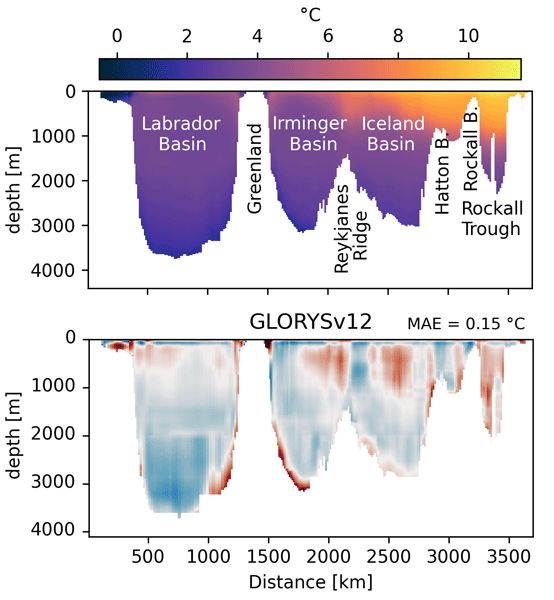
Ocean reanalyses combine models and observations to reconstruct past ocean conditions. We evaluate their performance against measurements from the OSNAP (Overturning in the Subpolar North Atlantic Program) section. While reanalyses capture long-term averages and broad circulation patterns, they miss some more regional features and variability. This highlights both their value and their limitations, stressing the need for improved observations and higher-resolution models.
Haohao Zhang, Andrea Storto, Xuezhi Bai, and Chunxue Yang
The Cryosphere, 19, 6807–6826, https://doi.org/10.5194/tc-19-6807-2025, https://doi.org/10.5194/tc-19-6807-2025, 2025
Short summary
Short summary
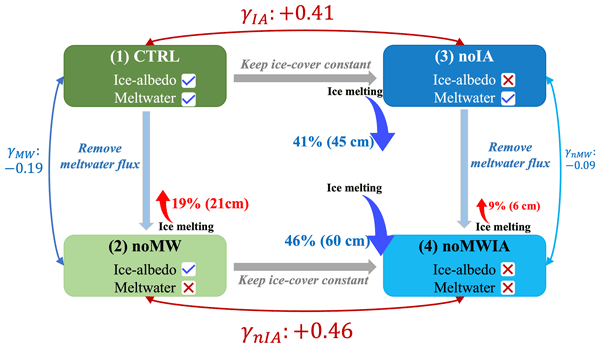
Using a 1D coupled ice-ocean model, we quantified the effects of meltwater and ice-albedo feedback independently. The meltwater reduces melting by 19 % through thermal isolation, while ice-albedo feedback increases melting by 41 %, with nonlinear coupling between them. In winter, meltwater protects ice in weakly stratified areas by blocking Atlantic heat. Our study provides new insights into the relative importance of different components in the Arctic ice-ocean system.
Ting-Chen Chen, Hugues Goosse, Cécile Davrinche, Stephy Libera, Christopher Roberts, Matthias Aengenheyster, Kristian Strommen, Malcolm Roberts, Rohit Ghosh, and Jin-Song von Storch
Weather Clim. Dynam., 6, 1179–1193, https://doi.org/10.5194/wcd-6-1179-2025, https://doi.org/10.5194/wcd-6-1179-2025, 2025
Short summary
Short summary
Southern Annular Mode (SAM) is a leading mode of Southern Hemisphere climate variability, but global models often overestimate its persistence in summer. Bias in SAM persistence is reduced and jet latitude improved using high-resolution sea surface temperature (SST)-prescribed models, pointing to the central role of SSTs. Control experiments explore the influence of model resolution and mesoscale ocean features on SAM persistence, highlighting the complex and subtle nature of air-sea coupling.
Andrea Storto, Sergey Frolov, Laura Slivinski, and Chunxue Yang
Geosci. Model Dev., 18, 4789–4804, https://doi.org/10.5194/gmd-18-4789-2025, https://doi.org/10.5194/gmd-18-4789-2025, 2025
Short summary
Short summary
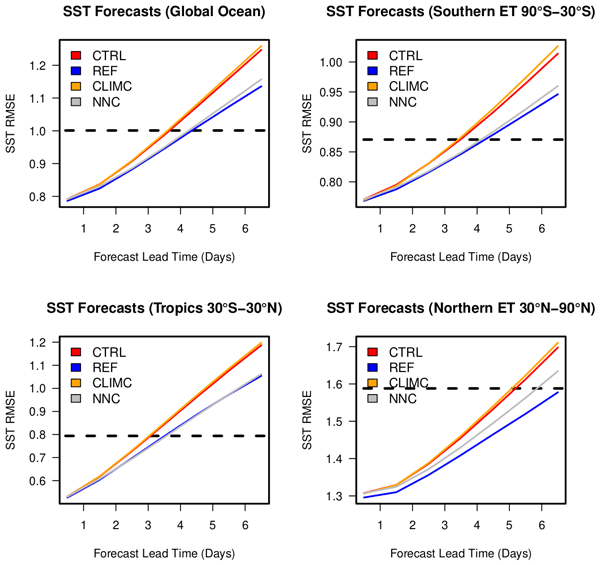
Inaccuracies in air–sea heat fluxes severely degrade the accuracy of ocean numerical simulations. Here, we use artificial neural networks to correct air–sea heat fluxes as a function of oceanic and atmospheric state predictors. The correction successfully improves surface and subsurface ocean temperatures beyond the training period and in prediction experiments.
Marie Bouih, Anne Barnoud, Chunxue Yang, Andrea Storto, Alejandro Blazquez, William Llovel, Robin Fraudeau, and Anny Cazenave
Ocean Sci., 21, 1425–1440, https://doi.org/10.5194/os-21-1425-2025, https://doi.org/10.5194/os-21-1425-2025, 2025
Short summary
Short summary
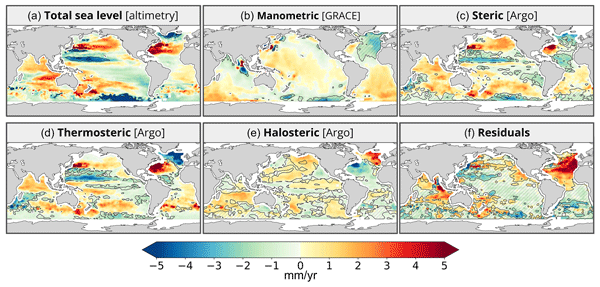
Present-day sea level rise is not uniform regionally. For better understanding of regional sea level variations, a classical approach is to compare the observed sea level trend patterns with those of the sum of the contributions. If the regional sea level trend budget is not closed, this allows the detection of errors in the observing systems. Our study shows that the trend budget is not closed in the North Atlantic Ocean and identifies errors in Argo-based salinity data as the main suspect.
Thomas Rackow, Xabier Pedruzo-Bagazgoitia, Tobias Becker, Sebastian Milinski, Irina Sandu, Razvan Aguridan, Peter Bechtold, Sebastian Beyer, Jean Bidlot, Souhail Boussetta, Willem Deconinck, Michail Diamantakis, Peter Dueben, Emanuel Dutra, Richard Forbes, Rohit Ghosh, Helge F. Goessling, Ioan Hadade, Jan Hegewald, Thomas Jung, Sarah Keeley, Lukas Kluft, Nikolay Koldunov, Aleksei Koldunov, Tobias Kölling, Josh Kousal, Christian Kühnlein, Pedro Maciel, Kristian Mogensen, Tiago Quintino, Inna Polichtchouk, Balthasar Reuter, Domokos Sármány, Patrick Scholz, Dmitry Sidorenko, Jan Streffing, Birgit Sützl, Daisuke Takasuka, Steffen Tietsche, Mirco Valentini, Benoît Vannière, Nils Wedi, Lorenzo Zampieri, and Florian Ziemen
Geosci. Model Dev., 18, 33–69, https://doi.org/10.5194/gmd-18-33-2025, https://doi.org/10.5194/gmd-18-33-2025, 2025
Short summary
Short summary
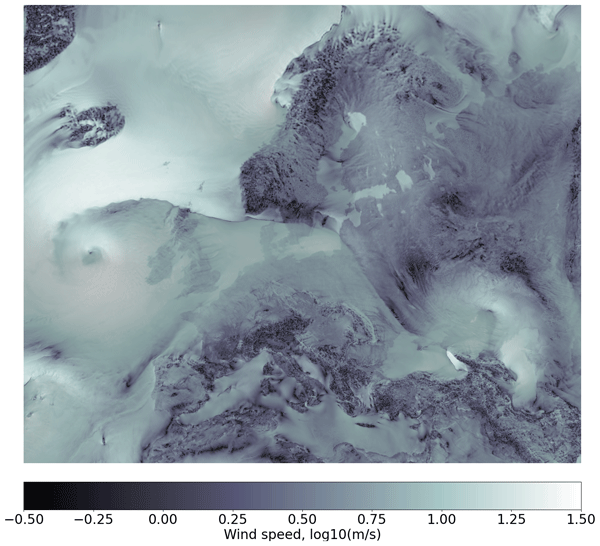
Detailed global climate model simulations have been created based on a numerical weather prediction model, offering more accurate spatial detail down to the scale of individual cities ("kilometre-scale") and a better understanding of climate phenomena such as atmospheric storms, whirls in the ocean, and cracks in sea ice. The new model aims to provide globally consistent information on local climate change with greater precision, benefiting environmental planning and local impact modelling.
Andrea Storto, Giulia Chierici, Julia Pfeffer, Anne Barnoud, Romain Bourdalle-Badie, Alejandro Blazquez, Davide Cavaliere, Noémie Lalau, Benjamin Coupry, Marie Drevillon, Sebastien Fourest, Gilles Larnicol, and Chunxue Yang
State Planet, 4-osr8, 12, https://doi.org/10.5194/sp-4-osr8-12-2024, https://doi.org/10.5194/sp-4-osr8-12-2024, 2024
Short summary
Short summary
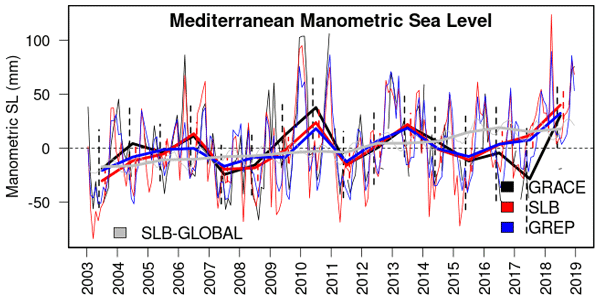
The variability in the manometric sea level (i.e. the sea level mass component) in three ocean basins is investigated in this study using three different methods (reanalyses, gravimetry, and altimetry in combination with in situ observations). We identify the emerging long-term signals, the consistency of the datasets, and the influence of large-scale climate modes on the regional manometric sea level variations at both seasonal and interannual timescales.
Vincenzo de Toma, Daniele Ciani, Yassmin Hesham Essa, Chunxue Yang, Vincenzo Artale, Andrea Pisano, Davide Cavaliere, Rosalia Santoleri, and Andrea Storto
Geosci. Model Dev., 17, 5145–5165, https://doi.org/10.5194/gmd-17-5145-2024, https://doi.org/10.5194/gmd-17-5145-2024, 2024
Short summary
Short summary
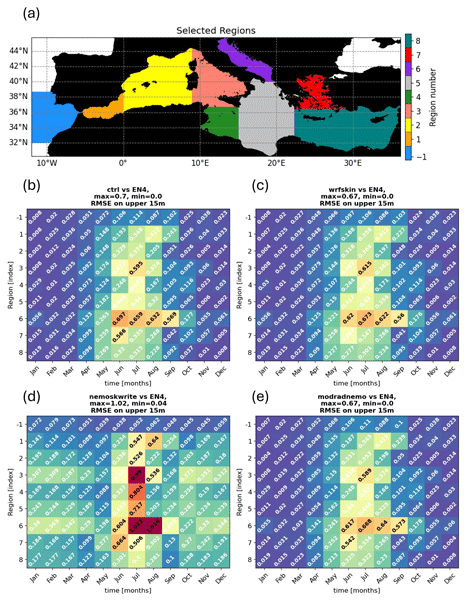
This study explores methods to reconstruct diurnal variations in skin sea surface temperature in a model of the Mediterranean Sea. Our new approach, considering chlorophyll concentration, enhances spatial and temporal variations in the warm layer. Comparative analysis shows context-dependent improvements. The proposed "chlorophyll-interactive" method brings the surface net total heat flux closer to zero annually, despite a net heat loss from the ocean to the atmosphere.
Susanna Winkelbauer, Michael Mayer, and Leopold Haimberger
Geosci. Model Dev., 17, 4603–4620, https://doi.org/10.5194/gmd-17-4603-2024, https://doi.org/10.5194/gmd-17-4603-2024, 2024
Short summary
Short summary
Oceanic transports shape the global climate, but the evaluation and validation of this key quantity based on reanalysis and model data are complicated by the distortion of the used modelling grids and the large number of different grid types. We present two new methods that allow the calculation of oceanic fluxes of volume, heat, salinity, and ice through almost arbitrary sections for various models and reanalyses that are independent of the used modelling grids.
Johannes Mayer, Leopold Haimberger, and Michael Mayer
Earth Syst. Dynam., 14, 1085–1105, https://doi.org/10.5194/esd-14-1085-2023, https://doi.org/10.5194/esd-14-1085-2023, 2023
Short summary
Short summary
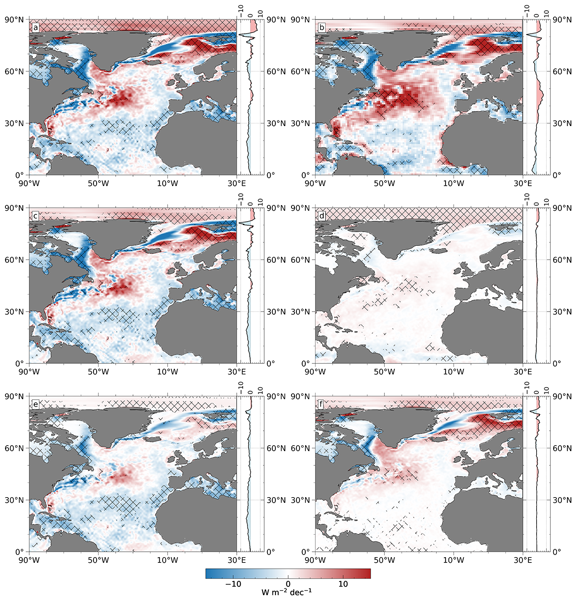
This study investigates the temporal stability and reliability of winter-month trends of air–sea heat fluxes from ERA5 forecasts over the North Atlantic basin for the period 1950–2019. Driving forces of trends and the impact of modes of climate variability and analysis increments on air–sea heat fluxes are investigated. Finally, a new and independent estimate of the Atlantic Meridional Overturning Circulation weakening is provided and associated with a decrease in air–sea heat fluxes.
Kristian Strommen, Tim Woollings, Paolo Davini, Paolo Ruggieri, and Isla R. Simpson
Weather Clim. Dynam., 4, 853–874, https://doi.org/10.5194/wcd-4-853-2023, https://doi.org/10.5194/wcd-4-853-2023, 2023
Short summary
Short summary
We present evidence which strongly suggests that decadal variations in the intensity of the North Atlantic winter jet stream can be predicted by current forecast models but that decadal variations in its position appear to be unpredictable. It is argued that this skill at predicting jet intensity originates from the slow, predictable variability in sea surface temperatures in the sub-polar North Atlantic.
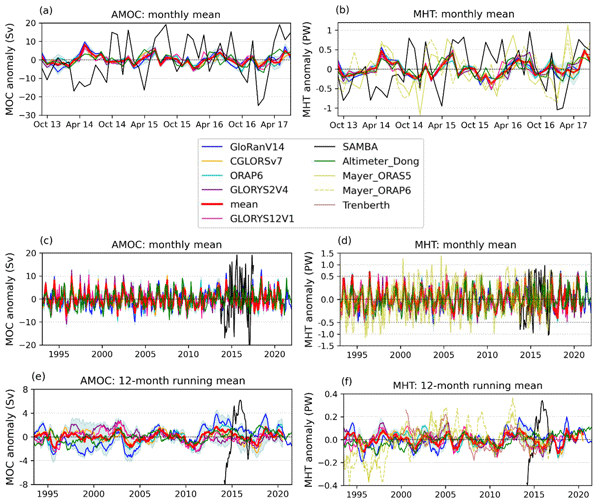
Jonathan Andrew Baker, Richard Renshaw, Laura Claire Jackson, Clotilde Dubois, Doroteaciro Iovino, Hao Zuo, Renellys C. Perez, Shenfu Dong, Marion Kersalé, Michael Mayer, Johannes Mayer, Sabrina Speich, and Tarron Lamont
State Planet, 1-osr7, 4, https://doi.org/10.5194/sp-1-osr7-4-2023, https://doi.org/10.5194/sp-1-osr7-4-2023, 2023
Short summary
Short summary
We use ocean reanalyses, in which ocean models are combined with observations, to infer past changes in ocean circulation and heat transport in the South Atlantic. Comparing these estimates with other observation-based estimates, we find differences in their trends, variability, and mean heat transport but closer agreement in their mean overturning strength. Ocean reanalyses can help us understand the cause of these differences, which could improve estimates of ocean transports in this region.
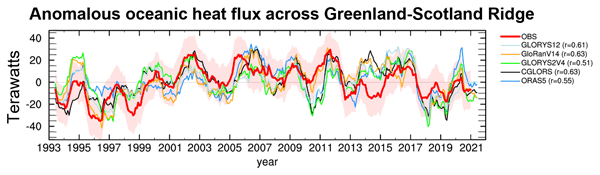
Michael Mayer, Takamasa Tsubouchi, Susanna Winkelbauer, Karin Margretha H. Larsen, Barbara Berx, Andreas Macrander, Doroteaciro Iovino, Steingrímur Jónsson, and Richard Renshaw
State Planet, 1-osr7, 14, https://doi.org/10.5194/sp-1-osr7-14-2023, https://doi.org/10.5194/sp-1-osr7-14-2023, 2023
Short summary
Short summary
This paper compares oceanic fluxes across the Greenland–Scotland Ridge (GSR) from ocean reanalyses to largely independent observational data. Reanalyses tend to underestimate the inflow of warm waters of subtropical Atlantic origin and hence oceanic heat transport across the GSR. Investigation of a strong negative heat transport anomaly around 2018 highlights the interplay of variability on different timescales and the need for long-term monitoring of the GSR to detect forced climate signals.
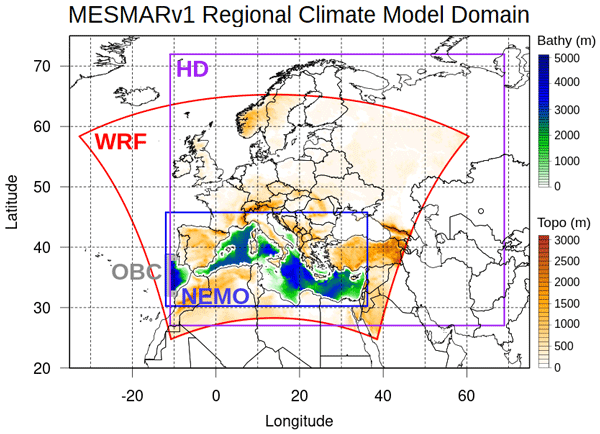
Andrea Storto, Yassmin Hesham Essa, Vincenzo de Toma, Alessandro Anav, Gianmaria Sannino, Rosalia Santoleri, and Chunxue Yang
Geosci. Model Dev., 16, 4811–4833, https://doi.org/10.5194/gmd-16-4811-2023, https://doi.org/10.5194/gmd-16-4811-2023, 2023
Short summary
Short summary
Regional climate models are a fundamental tool for a very large number of applications and are being increasingly used within climate services, together with other complementary approaches. Here, we introduce a new regional coupled model, intended to be later extended to a full Earth system model, for climate investigations within the Mediterranean region, coupled data assimilation experiments, and several downscaling exercises (reanalyses and long-range predictions).
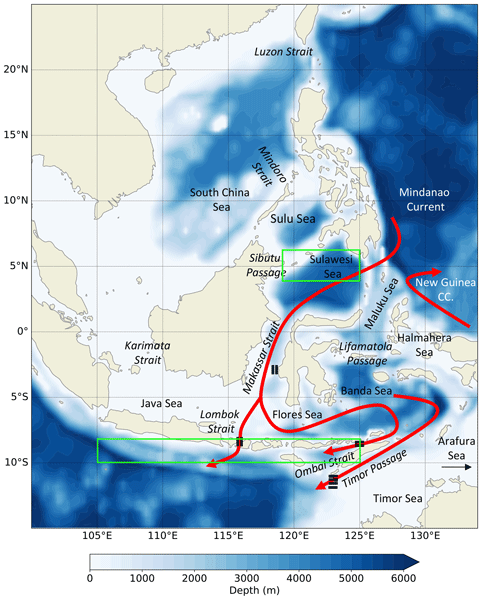
Magdalena Fritz, Michael Mayer, Leopold Haimberger, and Susanna Winkelbauer
Ocean Sci., 19, 1203–1223, https://doi.org/10.5194/os-19-1203-2023, https://doi.org/10.5194/os-19-1203-2023, 2023
Short summary
Short summary
The interaction between the Indonesian Throughflow (ITF) and regional climate phenomena indicates the high relevance for monitoring the ITF. Observations remain temporally and spatially limited; hence near-real-time monitoring is only possible with reanalyses. We assess how well ocean reanalyses depict the intensity of the ITF via comparison to observations. The results show that reanalyses agree reasonably well with in situ observations; however, some aspects require higher-resolution products.
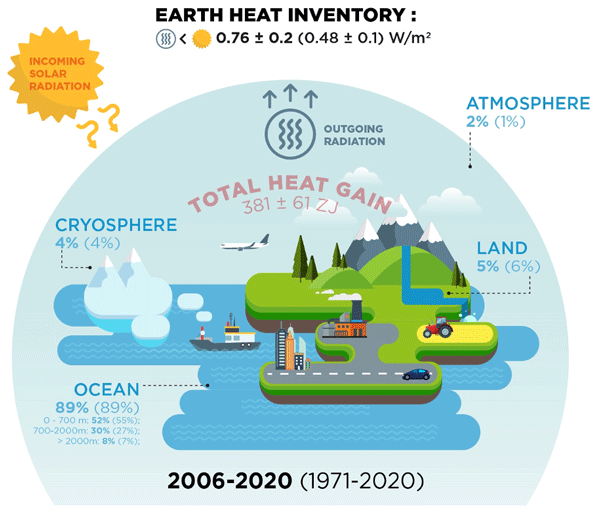
Karina von Schuckmann, Audrey Minière, Flora Gues, Francisco José Cuesta-Valero, Gottfried Kirchengast, Susheel Adusumilli, Fiammetta Straneo, Michaël Ablain, Richard P. Allan, Paul M. Barker, Hugo Beltrami, Alejandro Blazquez, Tim Boyer, Lijing Cheng, John Church, Damien Desbruyeres, Han Dolman, Catia M. Domingues, Almudena García-García, Donata Giglio, John E. Gilson, Maximilian Gorfer, Leopold Haimberger, Maria Z. Hakuba, Stefan Hendricks, Shigeki Hosoda, Gregory C. Johnson, Rachel Killick, Brian King, Nicolas Kolodziejczyk, Anton Korosov, Gerhard Krinner, Mikael Kuusela, Felix W. Landerer, Moritz Langer, Thomas Lavergne, Isobel Lawrence, Yuehua Li, John Lyman, Florence Marti, Ben Marzeion, Michael Mayer, Andrew H. MacDougall, Trevor McDougall, Didier Paolo Monselesan, Jan Nitzbon, Inès Otosaka, Jian Peng, Sarah Purkey, Dean Roemmich, Kanako Sato, Katsunari Sato, Abhishek Savita, Axel Schweiger, Andrew Shepherd, Sonia I. Seneviratne, Leon Simons, Donald A. Slater, Thomas Slater, Andrea K. Steiner, Toshio Suga, Tanguy Szekely, Wim Thiery, Mary-Louise Timmermans, Inne Vanderkelen, Susan E. Wjiffels, Tonghua Wu, and Michael Zemp
Earth Syst. Sci. Data, 15, 1675–1709, https://doi.org/10.5194/essd-15-1675-2023, https://doi.org/10.5194/essd-15-1675-2023, 2023
Short summary
Short summary
Earth's climate is out of energy balance, and this study quantifies how much heat has consequently accumulated over the past decades (ocean: 89 %, land: 6 %, cryosphere: 4 %, atmosphere: 1 %). Since 1971, this accumulated heat reached record values at an increasing pace. The Earth heat inventory provides a comprehensive view on the status and expectation of global warming, and we call for an implementation of this global climate indicator into the Paris Agreement’s Global Stocktake.
Kristian Strommen, Stephan Juricke, and Fenwick Cooper
Weather Clim. Dynam., 3, 951–975, https://doi.org/10.5194/wcd-3-951-2022, https://doi.org/10.5194/wcd-3-951-2022, 2022
Short summary
Short summary
Observational data suggest that the extent of Arctic sea ice influences mid-latitude winter weather. However, climate models generally fail to reproduce this link, making it unclear if models are missing something or if the observed link is just a coincidence. We show that if one explicitly represents the effect of unresolved sea ice variability in a climate model, then it is able to reproduce this link. This implies that the link may be real but that many models simply fail to simulate it.
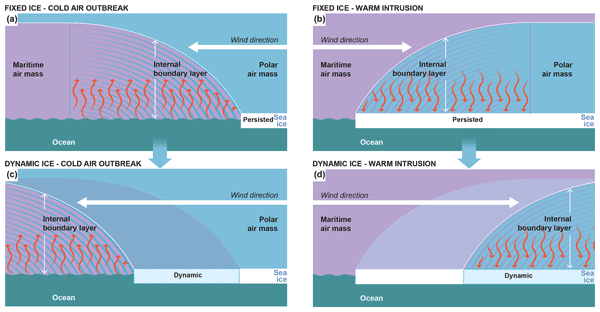
Jonathan J. Day, Sarah Keeley, Gabriele Arduini, Linus Magnusson, Kristian Mogensen, Mark Rodwell, Irina Sandu, and Steffen Tietsche
Weather Clim. Dynam., 3, 713–731, https://doi.org/10.5194/wcd-3-713-2022, https://doi.org/10.5194/wcd-3-713-2022, 2022
Short summary
Short summary
A recent drive to develop seamless forecasting systems has culminated in the development of weather forecasting systems that include a coupled representation of the atmosphere, ocean and sea ice. Before this, sea ice and sea surface temperature anomalies were typically fixed throughout a given forecast. We show that the dynamic coupling is most beneficial during periods of rapid ice advance, where persistence is a poor forecast of the sea ice and leads to large errors in the uncoupled system.
Joshua Dorrington, Kristian Strommen, and Federico Fabiano
Weather Clim. Dynam., 3, 505–533, https://doi.org/10.5194/wcd-3-505-2022, https://doi.org/10.5194/wcd-3-505-2022, 2022
Short summary
Short summary
We investigate how well current state-of-the-art climate models reproduce the wintertime weather of the North Atlantic and western Europe by studying how well different "regimes" of weather are captured. Historically, models have struggled to capture these regimes, making it hard to predict future changes in wintertime extreme weather. We show models can capture regimes if the right method is used, but they show biases, partially as a result of biases in jet speed and eddy strength.
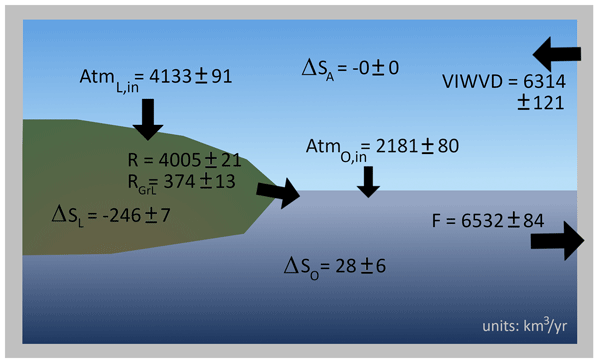
Susanna Winkelbauer, Michael Mayer, Vanessa Seitner, Ervin Zsoter, Hao Zuo, and Leopold Haimberger
Hydrol. Earth Syst. Sci., 26, 279–304, https://doi.org/10.5194/hess-26-279-2022, https://doi.org/10.5194/hess-26-279-2022, 2022
Short summary
Short summary
We evaluate Arctic river discharge using in situ observations and state-of-the-art reanalyses, inter alia the most recent Global Flood Awareness System (GloFAS) river discharge reanalysis version 3.1. Furthermore, we combine reanalysis data, in situ observations, ocean reanalyses, and satellite data and use a Lagrangian optimization scheme to close the Arctic's volume budget on annual and seasonal scales, resulting in one reliable and up-to-date estimate of every volume budget term.
Cited articles
Balmaseda, M. A., Ferranti, L., Molteni, F., and Palmer, T. N.: Impact of 2007 and 2008 Arctic ice anomalies on the atmospheric circulation: Implications for long-range predictions, Q. J. Roy. Meteor. Soc., 136, 1655–1664, https://doi.org/10.1002/qj.661, 2010. a
Benjamini, Y. and Hochberg, Y.: Controlling the false discovery rate: a practical and powerful approach to multiple testing, J. Roy. Stat. Soc. B Met., 57, 289–300, https://doi.org/10.1111/j.2517-6161.1995.tb02031.x, 1995. a
Berner, J., Achatz, U., Batté, L., Bengtsson, L., de la Cámara, A., Weisheimer, A., Weniger, M., Williams, P. D., and Yano, J.-I.: Stochastic Parameterization: Toward a New View of Weather and Climate Models, B. Am. Meteor. Soc., 98, 565–588, https://doi.org/10.1175/BAMS-D-15-00268.1, 2017. a
Brankart, J.-M., Candille, G., Garnier, F., Calone, C., Melet, A., Bouttier, P.-A., Brasseur, P., and Verron, J.: A generic approach to explicit simulation of uncertainty in the NEMO ocean model, Geosci. Model Dev., 8, 1285–1297, https://doi.org/10.5194/gmd-8-1285-2015, 2015. a
Breul, P., Ceppi, P., Simpson, I. R., and Woollings, T.: Seasonal and regional jet stream changes and drivers, Nature Reviews Earth & Environment, 6, 1–19, https://doi.org/10.1038/s43017-025-00749-9, 2025. a
Browne, P., de Boisseson, E., Keeley, S., Pelletier, C., and Zuo, H.: Sea ice data assimilation in ORAS6, The Cryosphere, 20, 3299–3311, https://doi.org/10.5194/tc-20-3299-2026, 2026. a
Buizza, R., Milleer, M., and Palmer, T. N.: Stochastic representation of model uncertainties in the ECMWF ensemble prediction system, Q. J. Roy. Meteor. Soc., 125, 2887–2908, https://doi.org/10.1002/qj.49712556006, 1999. a
Buizza, R., Leutbecher, M., and Isaksen, L.: Potential use of an ensemble of analyses in the ECMWF Ensemble Prediction System, Q. J. Roy. Meteor. Soc., 134, 2051–2066, https://doi.org/10.1002/qj.346, 2008. a
Dirkson, A., Denis, B., and Merryfield, W.: A multimodel approach for improving seasonal probabilistic forecasts of regional Arctic sea ice, Geophys. Res. Lett., 46, 10844–10853, https://doi.org/10.1029/2019GL083831, 2019. a
Dirkson, A., Denis, B., Merryfield, W. J., Peterson, K. A., and Tietsche, S.: Calibration of subseasonal sea-ice forecasts using ensemble model output statistics and observational uncertainty, Q. J. Roy. Meteor. Soc., 148, 2717–2741, https://doi.org/10.1002/qj.4332, 2022. a, b
EUMETSAT OSI SAF: Global Sea Ice Concentration Climate Data Record v3.0 - Multimission. V.3. EUMETSAT [data set], https://doi.org/10.15770/EUM_SAF_OSI_0013, 2022a. a
EUMETSAT OSI SAF (2022): Global Sea Ice Concentration Interim Climate Data Record Release 3 - DMSP. V. 3. EUMETSAT [data set], https://doi.org/10.15770/EUM_SAF_OSI_0014, 2022b. a
Fortin, V., Abaza, M., Anctil, F., and Turcotte, R.: Why should ensemble spread match the RMSE of the ensemble mean?, J. Hydrometeorol., 15, 1708–1713, https://doi.org/10.1175/JHM-D-14-0008.1, 2014. a
Gurvan, M., Bourdallé-Badie, R., Chanut, J., Clementi, E., Coward, A., Ethé, C., Iovino, D., Lea, D., Lévy, C., Lovato, T., Martin, N., Masson, S., Mocavero, S., Rousset, C., Storkey, D., Vancoppenolle, M., Müeller, S., Nurser, G., Bell, M., and Samson, G.: NEMO ocean engine, Version v4.0, Zenodo, https://doi.org/10.5281/zenodo.3878122, 2019. a
Hersbach, H.: Decomposition of the Continuous Ranked Probability Score for Ensemble Prediction Systems, Weather Forecast., 15, 559–570, https://doi.org/10.1175/1520-0434(2000)015<0559:DOTCRP>2.0.CO;2, 2000. a
Hersbach, H., Bell, B., Berrisford, P., Hirahara, S., Horányi, A., Muñoz-Sabater, J., Nicolas, J., Peubey, C., Radu, R., Schepers, D., Simmons, A., Soci, C., Abdalla, S., Abellan, X., Balsamo, G., Bechtold, P., Biavati, G., Bidlot, J., Bonavita, M., De Chiara, G., Dahlgren, P., Dee, D., Diamantakis, M., Dragani, R., Flemming, J., Forbes, R., Fuentes, M., Geer, A., Haimberger, L., Healy, S., Hogan, R. J., Hólm, E., Janisková, M., Keeley, S., Laloyaux, P., Lopez, P., Lupu, C., Radnoti, G., de Rosnay, P., Rozum, I., Vamborg, F., Villaume, S., and Thépaut, J.-N.: The ERA5 global reanalysis, Q. J. Roy. Meteor. Soc., 146, 1999–2049, https://doi.org/10.1002/qj.3803, 2020. a
Hersbach, H., Bell, B., Berrisford, P., Biavati, G., Horányi, A., Sabater, M., J., Nicolas, J., Peubey, C., Radu, R., Rozum, I., Schepers, D., Simmons, A., Soci, C., Dee, D., and Thépaut, J.-N.: ERA5 monthly averaged data on single levels from 1940 to present, Copernicus Climate Change Service (C3S) Climate Data Store (CDS) [data set], https://doi.org/10.24381/cds.f17050d7, 2023. a
Johnson, S. J., Stockdale, T. N., Ferranti, L., Balmaseda, M. A., Molteni, F., Magnusson, L., Tietsche, S., Decremer, D., Weisheimer, A., Balsamo, G., Keeley, S. P. E., Mogensen, K., Zuo, H., and Monge-Sanz, B. M.: SEAS5: the new ECMWF seasonal forecast system, Geosci. Model Dev., 12, 1087–1117, https://doi.org/10.5194/gmd-12-1087-2019, 2019. a, b
Juricke, S., Goessling, H. F., and Jung, T.: Potential sea ice predictability and the role of stochastic sea ice strength perturbations, Geophys. Res. Lett., 41, 8396–8403, https://doi.org/10.1002/2014GL062081, 2014. a
Juricke, S., Palmer, T. N., and Zanna, L.: Stochastic sub-grid scale ocean mixing: Impacts on low frequency variability, J. Climate, 30, 4997–5019, https://doi.org/10.1175/JCLI-D-16-0539.1, 2017. a
Keeley, S., Mogensen, K., Bidlot, J., Balmaseda, M. A., and Hatfield, S.: Introduction of a new ocean and sea-ice model based on NEMO4-SI3, ECMWF Newsletter No. 180, https://www.ecmwf.int/en/newsletter/180/earth-system-science/introduction-new-ocean-and-sea-ice-model-based-nemo4-si3 (last access: 24 August 2026), 2024. a
Koenigk, T., Mikolajewicz, U., Jungclaus, J. H., and Kroll, A.: Sea ice in the Barents Sea: Seasonal to interannual variability and climate feedbacks in a global coupled model, Clim. Dynam., 32, https://doi.org/10.1007/s00382-008-0450-2, 2009. a
Kretschmer, M., Coumou, D., Donges, J. F., and Runge, J.: Using causal effect networks to analyze different arctic drivers of midlatitude winter circulation, J. Climate, 29, https://doi.org/10.1175/JCLI-D-15-0654.1, 2016. a
Leutbecher, M. and Palmer, T. N.: Ensemble forecasting, J. Comput. Phys., 227, 3515–3539, https://doi.org/10.1016/j.jcp.2007.02.014, 2008. a
MacLeod, D. A., Cloke, H. L., Pappenberger, F., and Weisheimer, A.: Improved seasonal prediction of the hot summer of 2003 over Europe through better representation of uncertainty in the land surface, Q. J. Roy. Meteor. Soc., 142, 79–90, 2016. a
Notz, D. and SIMIP Community: Arctic Sea Ice in CMIP6, Geophys. Res. Lett., 47, e2019GL086749, https://doi.org/10.1029/2019GL086749, 2020. a
Ollinaho, P., Lock, S.-J., Leutbecher, M., Bechtold, P., Beljaars, A., Bozzo, A., Forbes, R. M., Haiden, T., Hogan, R. J., and Sandu, I.: Towards process-level representation of model uncertainties: stochastically perturbed parametrizations in the ECMWF ensemble, Q. J. Roy. Meteor. Soc., 143, 408–422, https://doi.org/10.1002/qj.2931, 2017. a
Palmer, T. N.: Towards the probabilistic Earth-system simulator: A vision for the future of climate and weather prediction, Q. J. Roy. Meteor. Soc., 138, 841–861, https://doi.org/10.1002/qj.1923, 2012. a
Palmer, T. N., Buizza, R., Jung, T., Leutbecher, M., Shutts, G. J., Steinheimer, M., and Weisheimer, A.: Stochastic parametrization and model uncertainty, ECMWF Technical Memorandum, 598, https://doi.org/10.21957/ps8gbwbdv, 2009. a
Perlin, K.: Improving Noise, in: Proceedings of the 29th Annual Conference on Computer Graphics and Interactive Techniques, Association for Computing Machinery, 681–682, https://doi.org/10.1145/566570.566636, 2002. a
Peterson, K. A., Smith, G. C., Lemieux, J.-F., Roy, F., Buehner, M., Caya, A., Houtekamer, P. L., Lin, H., Muncaster, R., Deng, X., et al.: Understanding sources of Northern Hemisphere uncertainty and forecast error in a medium-range coupled ensemble sea-ice prediction system, Q. J. Roy. Meteor. Soc., 148, 2877–2902, https://doi.org/10.1002/qj.4340, 2022. a
Petoukhov, V. and Semenov, V. A.: A link between reduced Barents-Kara sea ice and cold winter extremes over northern continents, J. Geophys. Res.-Atmos., 115, https://doi.org/10.1029/2009JD013568, 2010. a, b
Petrie, R. E., Shaffrey, L. C., and Sutton, R. T.: Atmospheric response in summer linked to recent Arctic sea ice loss, Q. J. Roy. Meteor. Soc., 141, 2070–2076, https://doi.org/10.1002/qj.2502, 2015. a
Roberts, C. D. and Leutbecher, M.: Unbiased calculation, evaluation, and calibration of ensemble forecast anomalies, Q. J. Roy. Meteor. Soc., e4993, https://doi.org/10.1002/qj.4993, 2025. a
Sanchez, C., Williams, K. D., and Collins, M.: Improved stochastic physics schemes for global weather and climate models, Q. J. Roy. Meteor. Soc., 142, 147–159, https://doi.org/10.1002/qj.2640, 2015. a
Shapiro, R.: Smoothing, filtering, and boundary effects, Rev. Geophys., 8, 359–387, https://doi.org/10.1029/RG008i002p00359, 1970. a
Siegert, S., Bellprat, O., Ménégoz, M., Stephenson, D. B., and Doblas-Reyes, F. J.: Detecting improvements in forecast correlation skill: Statistical testing and power analysis, Mon. Weather Rev., 145, 437–450, https://doi.org/10.1175/MWR-D-16-0037.1, 2017. a, b
Smith, D. M., Dunstone, N. J., Scaife, A. A., Fiedler, E. K., Copsey, D., and Hardiman, S. C.: Atmospheric response to Arctic and Antarctic sea ice: The importance of ocean–atmosphere coupling and the background state, J. Climate, 30, 4547–4565, https://doi.org/10.1029/2009JD013568, 2017. a
Smith, D. M., Eade, R., Andrews, M. B., Ayres, H., Clark, A., Chripko, S., Deser, C., Dunstone, N. J., García-Serrano, J., Gastineau, G., Graff, L. S., Hardiman, S. C., He, B., Hermanson, L., Jung, T., Knight, J., Levine, X., Magnusdottir, G., Manzini, E., Matei, D., Mori, M., Msadek, R., Ortega, P., Peings, Y., Scaife, A. A., Screen, J. A., Seabrook, M., Semmler, T., Sigmond, M., Streffing, J., Sun, L., and Walsh, A.: Robust but weak winter atmospheric circulation response to future Arctic sea ice loss, Nat. Commun., 13, 727, https://doi.org/10.1038/s41467-022-28283-y, 2022. a, b
Storto, A. and Andriopoulos, P.: A new stochastic ocean physics package and its application to hybrid-covariance data assimilation, Q. J. Roy. Meteor. Soc., 147, 1691–1725, https://doi.org/10.1002/qj.3990, 2021. a, b, c, d
Strommen, K. and Cooper, F. C.: Physical and unphysical causes of nonstationarity in the relationship between Barents-Kara Sea ice and the North Atlantic Oscillation, Geophys. Res. Lett., 51, e2023GL107609, https://doi.org/10.1029/2023GL107609, 2024. a, b
Strommen, K., Mayer, M., Spaeth, J., and Tietsche, S.: Seasonal forecast with stochastic sea ice, Experiment ID imsu, ECMWF [data set], https://doi.org/10.21957/4cdz-q265, 1993a. a
Strommen, K., Mayer, M., Spaeth, J., and Tietsche, S.: Seasonal forecast with stochastic sea ice - control counterpart, Experiment ID ikh7, ECMWF [data set], https://doi.org/10.21957/z96y-yy85, 1993b. a
Strommen, K., Christensen, H. M., MacLeod, D., Juricke, S., and Palmer, T. N.: Progress towards a probabilistic Earth system model: examining the impact of stochasticity in the atmosphere and land component of EC-Earth v3.2, Geosci. Model Dev., 12, 3099–3118, https://doi.org/10.5194/gmd-12-3099-2019, 2019. a
Strong, C., Magnusdottir, G., and Stern, H.: Observed Feedback between Winter Sea Ice and the North Atlantic Oscillation, J. Climate, 22, 6021–6032, https://doi.org/10.1175/2009JCLI3100.1, 2009. a
Subramanian, A., Juricke, S., Dueben, P., and Palmer, T.: A stochastic representation of subgrid uncertainty for dynamical core development, B. Am. Meteorol. Soc., 100, 1091–1101, 2019. a
Tian, T., Yang, S., Høyer, J. L., Nielsen-Englyst, P., and Singha, S.: Cooler Arctic surface temperatures simulated by climate models are closer to satellite-based data than the ERA5 reanalysis, Communications Earth & Environment, 5, 111, https://doi.org/10.1038/s43247-024-01276-z, 2024. a
Vancoppenolle, M., Rousset, C., Blockley, E., Aksenov, Y., Feltham, D., Fichefet, T., Garric, G., Guémas, V., Iovino, D., Keeley, S., Madec, G., Massonnet, F., Ridley, J., Schroeder, D., and Tietsche, S.: SI3, the NEMO Sea Ice Engine, Version 4.2release_doc1.0, Zenodo, https://doi.org/10.5281/zenodo.7534900, 2023. a
Virtanen, P., Gommers, R., Oliphant, T. E., Haberland, M., Reddy, T., Cournapeau, D., Burovski, E., Peterson, P., Weckesser, W., Bright, J., van der Walt, S. J., Brett, M., Wilson, J., Millman, K. J., Mayorov, N., Nelson, A. R. J., Jones, E., Kern, R., Larson, E., Carey, C. J., Polat, İ., Feng, Y., Moore, E. W., VanderPlas, J., Laxalde, D., Perktold, J., Cimrman, R., Henriksen, I., Quintero, E. A., Harris, C. R., Archibald, A. M., Ribeiro, A. H., Pedregosa, F., van Mulbregt, P., and SciPy 1.0 Contributors: SciPy 1.0: Fundamental Algorithms for Scientific Computing in Python, Nat. Methods, 17, 261–272, https://doi.org/10.1038/s41592-019-0686-2, 2020. a
Wang, L., Ting, M., and Kushner, P. J.: A robust empirical seasonal prediction of winter NAO and surface climate, Scientific Reports, 7, 279, https://doi.org/10.1038/s41598-017-00353-y, 2017. a
Woollings, T., Li, C., Drouard, M., Dunn-Sigouin, E., Elmestekawy, K. A., Hell, M., Hoskins, B., Mbengue, C., Patterson, M., and Spengler, T.: The role of Rossby waves in polar weather and climate, Weather Clim. Dynam., 4, 61–80, https://doi.org/10.5194/wcd-4-61-2023, 2023. a
Xu, Z., Chen, J., Mu, M., Tao, L., Dai, G., Wang, J., and Ma, Y.: A stochastic and non-linear representation of model uncertainty in a convective-scale ensemble prediction system, Q. J. Roy. Meteor. Soc., 148, 2507–2531, https://doi.org/10.1002/qj.4322, 2022. a
Zuo, H., Balmaseda, M., De Boisseson, E., Hirahara, S., Chrust, M., and De Rosnay, P.: A generic ensemble generation scheme for data assimilation and ocean analysis, ECMWF Technical Memoranda, 795, https://doi.org/10.21957/cub7mq0i4, 2017. a
Zuo, H., Balmaseda, M. A., Tietsche, S., Mogensen, K., and Mayer, M.: The ECMWF operational ensemble reanalysis–analysis system for ocean and sea ice: a description of the system and assessment, Ocean Sci., 15, 779–808, https://doi.org/10.5194/os-15-779-2019, 2019. a
Zuo, H., Balmaseda, M. A., de Boisseson, E., Browne, P., Chrust, M., Keeley, S., Mogensen, K., Pelletier, C., de Rosnay, P., and Takakura, T.: ECMWF's next ensemble reanalysis system for ocean and sea ice: ORAS6, ECMWF Newsletter, 180, https://doi.org/10.21957/hzd5y821lk, 2025. a
Editorial statement
This study describes the implementation and evaluation of a stochastically perturbed parameter (SPP) scheme applied to the sea ice component of ECMWF's Integrated Forecast System (IFS). Applying the SPP scheme in seasonal forecasts enhances ensemble spread for both sea ice concentration and thickness by approximately 10%. The study then concisely catalogues atmospheric effects of introducing stochastic sea ice perturbations and shows that they improve seasonal forecast skill beyond the Arctic region, in particular in Europe during winter. Hypotheses are well presented and tested with different experiments, statistical tests, and toy models.
This study describes the implementation and evaluation of a stochastically perturbed parameter...
Short summary
Numerical weather forecasts of sea ice are unreliable, exhibiting an overly narrow range of plausible sea ice evolutions. Stochastic perturbations introduce randomness to the forecast in order to alleviate this by representing uncertainties in the representation of sea ice physics. We show that including such perturbations in a forecast model improves the reliability of sea ice forecasts, and furthermore results in improved seasonal forecasts of the northern European winter circulation.
Numerical weather forecasts of sea ice are unreliable, exhibiting an overly narrow range of...


