
Articles | Volume 7, issue 4
https://doi.org/10.5194/wcd-7-2087-2026
© Author(s) 2026. This work is distributed under
the Creative Commons Attribution 4.0 License.
the Creative Commons Attribution 4.0 License.
https://doi.org/10.5194/wcd-7-2087-2026
© Author(s) 2026. This work is distributed under
the Creative Commons Attribution 4.0 License.
the Creative Commons Attribution 4.0 License.
Research article
| 
29 Oct 2026
Research article |
| 29 Oct 2026
| 29 Oct 2026
Climate change effects on analogues of contrasting extratropical cyclones over the UK, Ireland and France
Farrell Morgan
National Centre for Atmospheric Science, Department of Meteorology, University of Reading, Earley Gate, Whiteknights Road, Reading, RG6 6ES, UK
Ben Harvey
National Centre for Atmospheric Science, Department of Meteorology, University of Reading, Earley Gate, Whiteknights Road, Reading, RG6 6ES, UK
Kevin Hodges
National Centre for Atmospheric Science, Department of Meteorology, University of Reading, Earley Gate, Whiteknights Road, Reading, RG6 6ES, UK
Oscar Martínez-Alvarado
CORRESPONDING AUTHOR

National Centre for Atmospheric Science, Department of Meteorology, University of Reading, Earley Gate, Whiteknights Road, Reading, RG6 6ES, UK
Related authors
No articles found.
Andressa Andrade Cardoso, Suzanne L. Gray, Ambrogio Volonté, Ben J. Harvey, and Claudio Sánchez
EGUsphere, https://doi.org/10.5194/egusphere-2026-4757, https://doi.org/10.5194/egusphere-2026-4757, 2026
Short summary
Short summary
We studied whether high-resolution weather models that simulate thunderstorm clouds directly, rather than estimating their effects, improve forecasts of hazardous Mediterranean storms. Unlike more typical Mediterranean storms, tropical-cyclone-like medicanes became much stronger in the high-resolution simulations. However, the results also depended on how physical processes were represented, showing that more accurate forecasts require both better model design and higher resolution.
Reinhard K. H. Schiemann, Grenville Lister, Rosalyn Hatcher, Dan Hodson, Bryan Lawrence, Len Shaffrey, Jeff Cole, Andrea Dittus, Jenny Mecking, Jon Robson, Simon Wilson, Yevgeny Aksenov, Adam T. Blaker, Ben Harvey, Oscar Martínez-Alvarado, Annette Osprey, Stephanie Rynders, Sharar Ahmadi, Jake Aylmer, Laura Baker, David Case, Emanuele Silvio Gentile, Steve George, Kevin Hodges, Eliza Karlowska, Charlotte Lang, Hua Lu, Niamh O'Callaghan, Weronika Osmolska, Scott Osprey, Tony Phillips, David Schröder, Robin Smith, Andrew G. Turner, Steve Woolnough, Martin Andrews, Andrew Coward, Steven Hardiman, James Harle, John W. Rostron, David M. H. Sexton, Bablu Sinha, Jonny Williams, and Chris Wilson
EGUsphere, https://doi.org/10.5194/egusphere-2026-2281, https://doi.org/10.5194/egusphere-2026-2281, 2026
This preprint is open for discussion and under review for Geoscientific Model Development (GMD).
Short summary
Short summary
This paper presents a new large ensemble of climate model simulations: The CANARI HadGEM3 Large Ensemble (CANARI LE). The CANARI LE has a comparatively high resolution, provides sub-daily output on atmospheric pressure levels, and boundary conditions for driving regional model simulations. The CANARI LE is thus a community resource that lends itself for the study of physical coupled climate processes, weather systems, and impacts in a changing climate.
Jake Patrick Keller, Oscar Martínez-Alvarado, Ben J. Harvey, Claudio Sanchez, and Benoît Vannière
EGUsphere, https://doi.org/10.5194/egusphere-2026-4273, https://doi.org/10.5194/egusphere-2026-4273, 2026
Short summary
Short summary
Storm Daniel led to severe flooding in Greece and Bulgaria, followed by a catastrophic flood in Derna, Libya. We establish that the event was difficult to predict because small errors in the track of Hurricane Franklin over the Atlantic several days earlier grew into large differences in forecasts over Europe. This study highlights the need for improved operational global weather forecasts and raises awareness of the early warning signs that can lead to high-impact weather.
Rafaela Jane Delfino, Gerry Bagtasa, Pier Luigi Vidale, and Kevin Hodges
Nat. Hazards Earth Syst. Sci., 26, 3579–3595, https://doi.org/10.5194/nhess-26-3579-2026, https://doi.org/10.5194/nhess-26-3579-2026, 2026
Short summary
Short summary
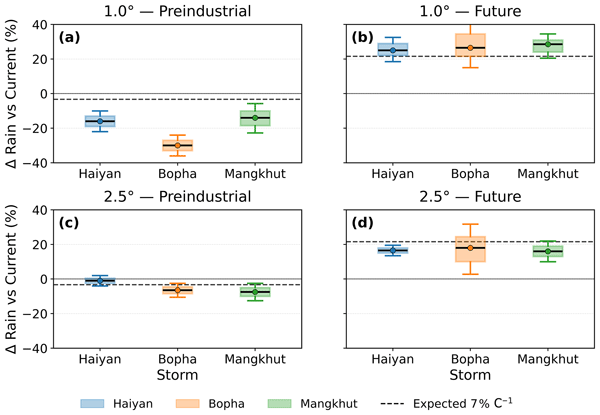
High-resolution simulations reveal that future warming amplifies tropical cyclone extreme rainfall in the Philippines, with inner-core increases exceeding 30–40 %, indicating a shift toward higher-intensity rainfall events. This response is primarily driven by thermodynamic moisture increases, while dynamical changes generally offset part of the increase. Tropical cyclone (TC) rainfall scaling is therefore largely moisture-driven, with TC-specific dynamics modulating the magnitude of rainfall enhancement.
Stella Bourdin, Kevin Hodges, Yushan Han, Leo Saffin, Alexander Baker, John Methven, and Pier Luigi Vidale
Earth Syst. Sci. Data Discuss., https://doi.org/10.5194/essd-2026-403, https://doi.org/10.5194/essd-2026-403, 2026
Preprint under review for ESSD
Short summary
Short summary
This paper describes a new dataset for the study of historical tropical cyclones. RABTracks is a global dataset that combines official tropical cyclone records with multiple weather reanalyses and tracking methods from 1940 to today. It extends cyclone tracks before formation and after dissipation, adding information on intensity, size, structure, and transition to extratropical storms. The dataset is designed to support improved cyclone risk analysis.
Dorothy Heinrich, Erin Coughlan de Perez, Leanne Archer, Nadia Bloemendaal, Kevin I. Hodges, Helen Hooker, Theodore G. Shepherd, Nathan Sparks, Ralf Toumi, and Elisabeth Stephens
EGUsphere, https://doi.org/10.5194/egusphere-2026-2758, https://doi.org/10.5194/egusphere-2026-2758, 2026
Short summary
Short summary
An unprecedented tropical cyclone (TC) can turn into a disaster if it is unforeseen. In this work, we explore different TC datasets to identify simulated events that could be unprecedented. We look at whether these scenarios could be considered be plausible and how different these would be from past records, and illustrate with examples. We highlight that there is a wealth of scenarios that could be used by disaster managers to imagine and prepare for unprecedented events.
Rhiannon Biddiscombe, Maarten Ambaum, and Ben Harvey
EGUsphere, https://doi.org/10.5194/egusphere-2026-3043, https://doi.org/10.5194/egusphere-2026-3043, 2026
Short summary
Short summary
The strength of the North Atlantic storm track, a region where cyclones develop and propagate, is determined by the north to south temperature gradient across the storm track. The usual measure of this strength is the Eady growth rate, which encodes relevant information about the structure of wind and temperature. In this manuscript we show that this rather complex measure can be reduced to a much simplified expression while maintaining its accuracy.
Lorenzo Sangelantoni, Stefano Tibaldi, Leone Cavicchia, Enrico Scoccimarro, Pier Luigi Vidale, Kevin Hodges, Vivien Mavel, Mattia Almansi, Chiara Cagnazzo, and Samuel Almond
EGUsphere, https://doi.org/10.5194/egusphere-2024-4157, https://doi.org/10.5194/egusphere-2024-4157, 2025
Preprint archived
Short summary
Short summary
We introduce a new dataset of European windstorms linked to extratropical cyclones, spanning whole ERA5 reanalysis period (1940–present). Developed under Copernicus Climate Change Service, the dataset provides standardized, high-quality information on windstorm tracks and footprints for industries like insurance and risk management. Preliminary findings show an increase in cold-season windstorms and their impacts in parts of Europe. Tracking methods contribute to uncertainties in key statistics.
Suzanne L. Gray, Ambrogio Volonté, Oscar Martínez-Alvarado, and Ben J. Harvey
Weather Clim. Dynam., 5, 1523–1544, https://doi.org/10.5194/wcd-5-1523-2024, https://doi.org/10.5194/wcd-5-1523-2024, 2024
Short summary
Short summary
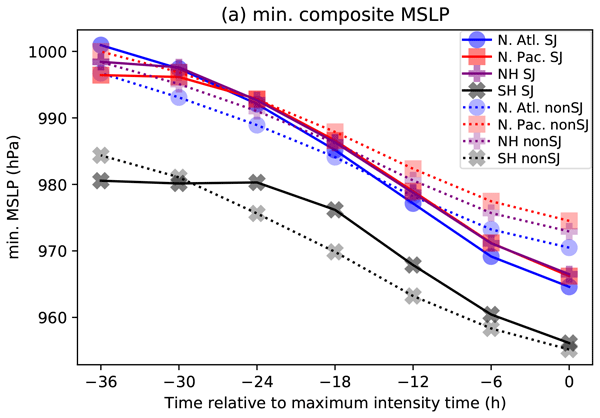
Sting jets occur in some of the most damaging cyclones impacting Europe. We present the first climatology of sting-jet cyclones over the major ocean basins. Cyclones with sting-jet precursors occur over the North Atlantic, North Pacific, and Southern Oceans, with implications for wind warnings. Precursor cyclones have distinct characteristics, even in reanalyses that are too coarse to fully resolve sting jets, evidencing the climatological consequences of strong diabatic cloud processes.
Karina von Schuckmann, Lorena Moreira, Mathilde Cancet, Flora Gues, Emmanuelle Autret, Jonathan Baker, Clément Bricaud, Romain Bourdalle-Badie, Lluis Castrillo, Lijing Cheng, Frederic Chevallier, Daniele Ciani, Alvaro de Pascual-Collar, Vincenzo De Toma, Marie Drevillon, Claudia Fanelli, Gilles Garric, Marion Gehlen, Rianne Giesen, Kevin Hodges, Doroteaciro Iovino, Simon Jandt-Scheelke, Eric Jansen, Melanie Juza, Ioanna Karagali, Thomas Lavergne, Simona Masina, Ronan McAdam, Audrey Minière, Helen Morrison, Tabea Rebekka Panteleit, Andrea Pisano, Marie-Isabelle Pujol, Ad Stoffelen, Sulian Thual, Simon Van Gennip, Pierre Veillard, Chunxue Yang, and Hao Zuo
State Planet, 4-osr8, 1, https://doi.org/10.5194/sp-4-osr8-1-2024, https://doi.org/10.5194/sp-4-osr8-1-2024, 2024
Karina von Schuckmann, Lorena Moreira, Mathilde Cancet, Flora Gues, Emmanuelle Autret, Ali Aydogdu, Lluis Castrillo, Daniele Ciani, Andrea Cipollone, Emanuela Clementi, Gianpiero Cossarini, Alvaro de Pascual-Collar, Vincenzo De Toma, Marion Gehlen, Rianne Giesen, Marie Drevillon, Claudia Fanelli, Kevin Hodges, Simon Jandt-Scheelke, Eric Jansen, Melanie Juza, Ioanna Karagali, Priidik Lagemaa, Vidar Lien, Leonardo Lima, Vladyslav Lyubartsev, Ilja Maljutenko, Simona Masina, Ronan McAdam, Pietro Miraglio, Helen Morrison, Tabea Rebekka Panteleit, Andrea Pisano, Marie-Isabelle Pujol, Urmas Raudsepp, Roshin Raj, Ad Stoffelen, Simon Van Gennip, Pierre Veillard, and Chunxue Yang
State Planet, 4-osr8, 2, https://doi.org/10.5194/sp-4-osr8-2-2024, https://doi.org/10.5194/sp-4-osr8-2-2024, 2024
Henri Rossi Pinheiro, Kevin Ivan Hodges, and Manoel Alonso Gan
Weather Clim. Dynam., 5, 881–894, https://doi.org/10.5194/wcd-5-881-2024, https://doi.org/10.5194/wcd-5-881-2024, 2024
Short summary
Short summary
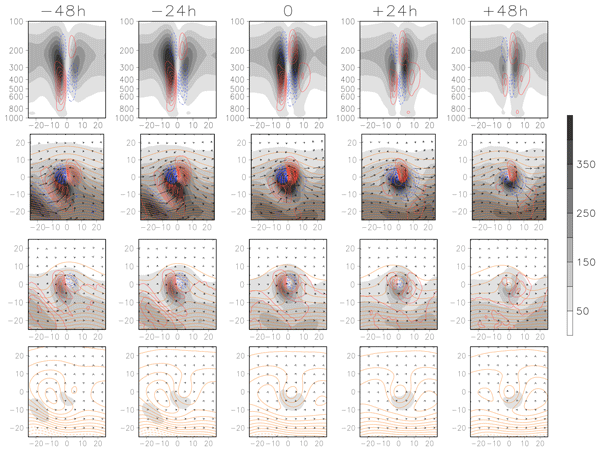
Cut-off lows (COLs) are weather systems with varied structures and lifecycles, from upper atmospheric to deep vortices. Deep, strong COLs are common around Australia and the southwestern Pacific in autumn and spring, while shallow, weak COLs occur more in summer near the Equator. Jet streams play a crucial role in COL development, with different jets influencing its depth and strength. The study also emphasizes the need for better representation of diabatic processes in reanalysis data.
Alexander Frank Vessey, Kevin I. Hodges, Len C. Shaffrey, and Jonathan J. Day
Nat. Hazards Earth Syst. Sci., 24, 2115–2132, https://doi.org/10.5194/nhess-24-2115-2024, https://doi.org/10.5194/nhess-24-2115-2024, 2024
Short summary
Short summary
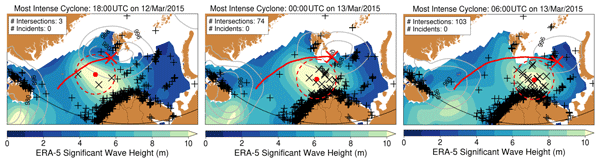
The risk posed to ships by Arctic cyclones has seldom been quantified due to the lack of publicly available historical Arctic ship track data. This study investigates historical Arctic ship tracks, cyclone tracks, and shipping incident reports to determine the number of shipping incidents caused by the passage of Arctic cyclones. Results suggest that Arctic cyclones have not been hazardous to ships and that ships are resilient to the rough sea conditions caused by Arctic cyclones.

Sam Hardy, John Methven, Juliane Schwendike, Ben Harvey, and Mike Cullen
Weather Clim. Dynam., 4, 1019–1043, https://doi.org/10.5194/wcd-4-1019-2023, https://doi.org/10.5194/wcd-4-1019-2023, 2023
Short summary
Short summary
We examine a Borneo vortex case using computer simulations and satellite observations. The vortex is identified with high humidity through the atmosphere and has heaviest rainfall on its northern flank. Simulations represent circulation and rainfall accumulation well. The low-level Borneo vortex is coupled with a higher-level wave, which moves westwards along a layer with a sharp vertical gradient in moisture. Vortex growth occurs through mechanisms usually considered outside the tropics.
Charlie C. Suitters, Oscar Martínez-Alvarado, Kevin I. Hodges, Reinhard K. H. Schiemann, and Duncan Ackerley
Weather Clim. Dynam., 4, 683–700, https://doi.org/10.5194/wcd-4-683-2023, https://doi.org/10.5194/wcd-4-683-2023, 2023
Short summary
Short summary
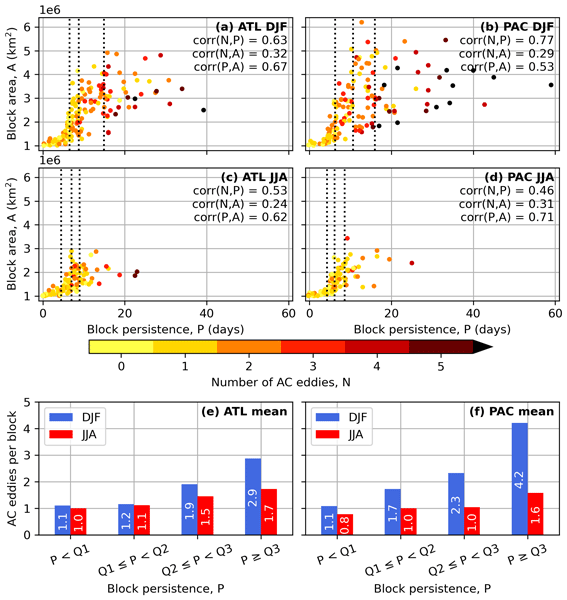
Atmospheric blocking describes large and persistent high surface pressure. In this study, the relationship between block persistence and smaller-scale systems is examined. Persistent blocks result from more interactions with small systems, but a block's persistence does not depend as strongly on the strength of these smaller features. This work is important because it provides more knowledge as to how blocks can be allowed to persist, which is something we still do not fully understand.
Hannah L. Croad, John Methven, Ben Harvey, Sarah P. E. Keeley, and Ambrogio Volonté
Weather Clim. Dynam., 4, 617–638, https://doi.org/10.5194/wcd-4-617-2023, https://doi.org/10.5194/wcd-4-617-2023, 2023
Short summary
Short summary
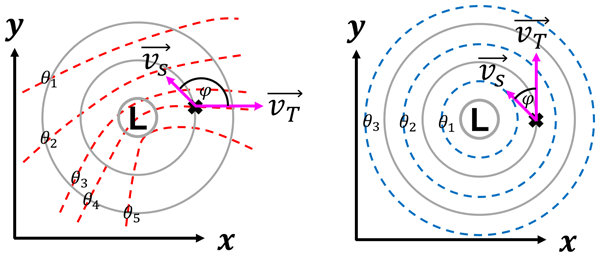
The interaction between Arctic cyclones and the sea ice surface in summer is investigated by analysing the friction and sensible heat flux processes acting in two cyclones with contrasting evolution. The major finding is that the effects of friction on cyclone strength are dependent on a particular feature of cyclone structure: whether they have a warm or cold core during growth. Friction leads to cooling within both cyclone types in the lower atmosphere, which may contribute to their longevity.
Ed Hawkins, Philip Brohan, Samantha N. Burgess, Stephen Burt, Gilbert P. Compo, Suzanne L. Gray, Ivan D. Haigh, Hans Hersbach, Kiki Kuijjer, Oscar Martínez-Alvarado, Chesley McColl, Andrew P. Schurer, Laura Slivinski, and Joanne Williams
Nat. Hazards Earth Syst. Sci., 23, 1465–1482, https://doi.org/10.5194/nhess-23-1465-2023, https://doi.org/10.5194/nhess-23-1465-2023, 2023
Short summary
Short summary
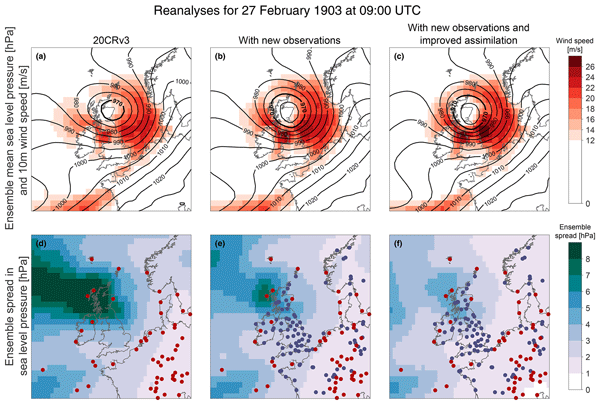
We examine a severe windstorm that occurred in February 1903 and caused significant damage in the UK and Ireland. Using newly digitized weather observations from the time of the storm, combined with a modern weather forecast model, allows us to determine why this storm caused so much damage. We demonstrate that the event is one of the most severe windstorms to affect this region since detailed records began. The approach establishes a new tool to improve assessments of risk from extreme weather.
Elliott Michael Sainsbury, Reinhard K. H. Schiemann, Kevin I. Hodges, Alexander J. Baker, Len C. Shaffrey, Kieran T. Bhatia, and Stella Bourdin
Weather Clim. Dynam., 3, 1359–1379, https://doi.org/10.5194/wcd-3-1359-2022, https://doi.org/10.5194/wcd-3-1359-2022, 2022
Short summary
Short summary
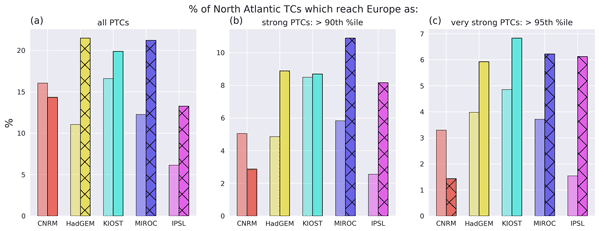
Post-tropical cyclones (PTCs) can bring severe weather to Europe. By tracking and identifying PTCs in five global climate models, we investigate how the frequency and intensity of PTCs may change across Europe by 2100. We find no robust change in the frequency or intensity of Europe-impacting PTCs in the future. This study indicates that large uncertainties surround future Europe-impacting PTCs and provides a framework for evaluating PTCs in future generations of climate models.

Rafaela Jane Delfino, Gerry Bagtasa, Kevin Hodges, and Pier Luigi Vidale
Nat. Hazards Earth Syst. Sci., 22, 3285–3307, https://doi.org/10.5194/nhess-22-3285-2022, https://doi.org/10.5194/nhess-22-3285-2022, 2022
Short summary
Short summary
We showed the effects of altering the choice of cumulus schemes, surface flux options, and spectral nudging with a high level of sensitivity to cumulus schemes in simulating an intense typhoon. We highlight the advantage of using an ensemble of cumulus parameterizations to take into account the uncertainty in simulating typhoons such as Haiyan in 2013. This study is useful in addressing the growing need to plan and prepare for as well as reduce the impacts of intense typhoons in the Philippines.
Alexander F. Vessey, Kevin I. Hodges, Len C. Shaffrey, and Jonathan J. Day
Weather Clim. Dynam., 3, 1097–1112, https://doi.org/10.5194/wcd-3-1097-2022, https://doi.org/10.5194/wcd-3-1097-2022, 2022
Short summary
Short summary
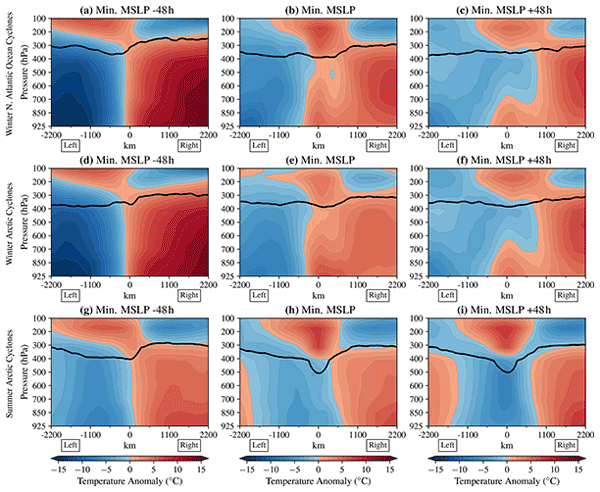
Understanding the location and intensity of hazardous weather across the Arctic is important for assessing risks to infrastructure, shipping, and coastal communities. This study describes the typical lifetime and structure of intense winter and summer Arctic cyclones. Results show the composite development and structure of intense summer Arctic cyclones are different from intense winter Arctic and North Atlantic Ocean extra-tropical cyclones and from conceptual models.
Suzanne L. Gray, Kevin I. Hodges, Jonathan L. Vautrey, and John Methven
Weather Clim. Dynam., 2, 1303–1324, https://doi.org/10.5194/wcd-2-1303-2021, https://doi.org/10.5194/wcd-2-1303-2021, 2021
Short summary
Short summary
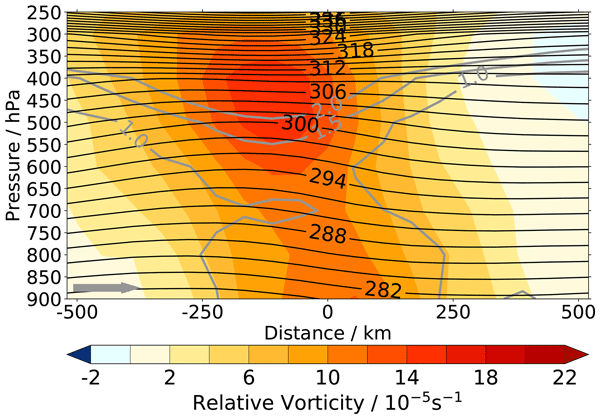
This research demonstrates, using feature identification and tracking, that anticlockwise rotating vortices at about 7 km altitude called tropopause polar vortices frequently interact with storms developing in the Arctic region, affecting their structure and where they occur. This interaction has implications for the predictability of Arctic weather, given the long lifetime but a relatively small spatial scale of these vortices compared with the density of the polar observation network.
Cited articles
Ali, H., Wong, L. C. Y., Prein, A. F., and Fowler, H. J.: Characteristics of precipitation associated with post-tropical cyclones in the North Atlantic, Wea. Climate Extremes, 47, 100742, https://doi.org/10.1016/j.wace.2024.100742, 2025. a
Bengtsson, L., Hodges, K. I., and Keenlyside, N.: Will extratropical storms intensify in a warmer climate?, J. Climate, 22, 2276–2301, https://doi.org/10.1175/2008JCLI2678.1, 2009. a, b, c, d
Benjamini, Y. and Hochberg, Y.: Controlling the false discovery rate: a practical and powerful approach to multiple testing, J. R. Stat. Soc., 57, 289–300, 1995. a
Bieli, M., Sobel, A. H., Camargo, S. J., Murakami, H., and Vecchi, G. A.: Application of the cyclone phase space to extratropical transition in a global climate model, J. Adv. Model. Earth Sy., 12, e2019MS001878, https://doi.org/10.1029/2019MS001878, 2020. a
Brasseur, O.: Development and application of a physical approach to estimating wind gusts, Mon. Weather Rev., 129, 5–25, 2001. a
Browning, K. A.: The sting at the end of the tail: damaging winds associated with extratropical cyclones, Q. J. Roy. Meteor. Soc., 130, 375–399, https://doi.org/10.1256/qj.02.143, 2004. a, b
Burt, S. D. and Mansfield, D. A.: The great storm of 15–16 October 1987, Weather, 43, 90–110, https://doi.org/10.1002/j.1477-8696.1988.tb03885.x, 1988. a, b, c
Butler, A. H., Thompson, D. W., and Heikes, R.: The steady-state atmospheric circulation response to climate change–like thermal forcings in a simple general circulation model, J. Climate, 23, 3474–3496, https://doi.org/10.1175/2010JCLI3228.1, 2010. a
Catto, J. L., Shaffrey, L. C., and Hodges, K. I.: Northern Hemisphere extratropical cyclones in a warming climate in the HiGEM high-resolution climate model, J. Climate, 24, 5336–5352, https://doi.org/10.1175/2011JCLI4181.1, 2011. a
Cheung, H. M. and Chu, J. E.: Global increase in destructive potential of extratropical transition events in response to greenhouse warming, npj Climate Atmos. Sci., 6, 137, https://doi.org/10.1038/s41612-023-00470-8, 2023. a
Clark, P. A. and Gray, S. L.: Sting jets in extratropical cyclones: a review, Q. J. Roy. Meteor. Soc., 144, 943–969, 2018. a
Clark, P. A., Browning, K. A., and Wang, C.: The sting at the end of the tail: model diagnostics of fine-scale three-dimensional structure of the cloud head, Q. J. Roy. Meteor. Soc., 131, 2263–2292, https://doi.org/10.1256/qj.04.36, 2005. a
Colle, B. A., Zhang, Z., Lombardo, K. A., Chang, E., Liu, P., and Zhang, M.: Historical evaluation and future prediction of eastern North American and western Atlantic extratropical cyclones in the CMIP5 models during the cool season, J. Climate, 26, 6882–6903, https://doi.org/10.1175/JCLI-D-12-00498.1, 2013. a
Copernicus Climate Change Service: ERA5 hourly data on pressure levels from 1940 to present, Copernicus Climate Change Service (C3S) Climate Data Store (CDS) [data set], https://doi.org/10.24381/cds.bd0915c6, 2023. a
Deser, C., Knutti, R., Solomon, S., and Phillips, A. S.: Communication of the role of natural variability in future North American climate, Nat. Clim. Change, 2, 775–779, https://doi.org/10.1038/nclimate1562, 2012. a
Dolores-Tesillos, E., Teubler, F., and Pfahl, S.: Future changes in North Atlantic winter cyclones in CESM-LE – Part 1: Cyclone intensity, potential vorticity anomalies, and horizontal wind speed, Weather Clim. Dynam., 3, 429–448, https://doi.org/10.5194/wcd-3-429-2022, 2022. a
Eady, E. T.: Long waves and cyclone waves, Tellus, 1, 33–52, https://doi.org/10.1111/j.2153-3490.1949.tb01265.x, 1949. a
Gentile, E. S., Zhao, M., and Hodges, K.: Poleward intensification of midlatitude extreme winds under warmer climate, npj Climate Atmos. Sci., 6, 219, https://doi.org/10.1038/s41612-023-00540-x, 2023. a
Gentile, E. S., Harris, L., Zhao, M., Hodges, K., Tan, Z., Cheng, K.-Y., and Zhou, L.: Response of extreme north Atlantic midlatitude cyclones to a warmer climate in the GFDL X-SHiELD kilometer-scale global storm-resolving model, Geophys. Res. Lett., 52, e2024GL112570, https://doi.org/10.1029/2024GL112570, 2025. a
Gertler, C. G. and O'Gorman, P. A.: Changing available energy for extratropical cyclones and associated convection in Northern Hemisphere summer, P. Natl. Acad. Sci. USA, 116, 4105–4110, https://doi.org/10.1073/pnas.1812312116, 2019. a
Gramcianinov, C., Campos, R., De Camargo, R., Hodges, K., Soares, C. G., and da Silva Dias, P.: Analysis of Atlantic extratropical storm tracks characteristics in 41 years of ERA5 and CFSR/CFSv2 databases, Ocean Eng., 216, 108111, https://doi.org/10.1016/j.oceaneng.2020.108111, 2020. a
Gray, W. M.: Tropical Cyclone Origin, Movement and Intensity Characteristics Based on Data Compositing Techniques, Tech. Rep. Paper 79-6, Colorado State University, Dept. of Atmospheric Science, 1979. a
Guisado-Pintado, E. and Jackson, D. W.: Multi-scale variability of storm Ophelia 2017: the importance of synchronised environmental variables in coastal impact, Sci. Total Environ., 630, 287–301, https://doi.org/10.1016/j.scitotenv.2018.02.188, 2018. a
Guisado-Pintado, E. and Jackson, D. W.: Coastal impact from high-energy events and the importance of concurrent forcing parameters: the cases of storm Ophelia (2017) and storm Hector (2018) in NW Ireland, Front. Earth Sci., 7, 190, https://doi.org/10.3389/feart.2019.00190, 2019. a
Hand, R., Keenlyside, N. S., Omrani, N.-E., Bader, J., and Greatbatch, R. J.: The role of local sea surface temperature pattern changes in shaping climate change in the North Atlantic sector, Clim. Dynam., 52, 417–438, https://doi.org/10.1007/s00382-018-4151-1, 2019. a
Hart, N. C., Gray, S. L., and Clark, P. A.: Sting-jet windstorms over the North Atlantic: climatology and contribution to extreme wind risk, J. Climate, 30, 5455–5471, 2017. a
Harvey, B. J., Cook, P., Shaffrey, L. C., and Schiemann, R.: The response of the Northern Hemisphere storm tracks and jet streams to climate change in the CMIP3, CMIP5, and CMIP6 climate models, J. Geophys. Res.-Atmos., 125, e2020JD032701, https://doi.org/10.1029/2020JD032701, 2020. a, b
Hawcroft, M. K., Shaffrey, L. C., Hodges, K. I., and Dacre, H. F.: How much Northern Hemisphere precipitation is associated with extratropical cyclones?, Geophys. Res. Lett., 39, L24809, https://doi.org/10.1029/2012GL053866, 2012. a
Hawkins, E. and Sutton, R.: The potential to narrow uncertainty in regional climate predictions, B. Am. Meteorol. Soc., 90, 1095–1108, https://doi.org/10.1175/2009BAMS2607.1, 2009. a
Hay, S., Priestley, M. D., Yu, H., Catto, J. L., and Screen, J. A.: The effect of Arctic sea-ice loss on extratropical cyclones, Geophys. Res. Lett., 50, e2023GL102840, https://doi.org/10.1029/2023GL102840, 2023. a
Hersbach, H., Bell, B., Berrisford, P., Hirahara, S., Horányi, A., Muñoz-Sabater, J., Nicolas, J., Peubey, C., Radu, R., Schepers, D., and Simmons, A.: The ERA5 global reanalysis, Q. J. Roy. Meteor. Soc., 146, 1999–2049, https://doi.org/10.1002/qj.3803, 2020. a, b
Hodges, K. I.: A general method for tracking analysis and its application to meteorological data, Mon. Weather Rev., 122, 2573–2586, https://doi.org/10.1175/1520-0493(1994)122<2573:AGMFTA>2.0.CO;2, 1994. a
Hodges, K. I.: Feature tracking on the unit-sphere, Mon. Weather Rev., 123, 3458–3465, https://doi.org/10.1175/1520-0493(1995)123<3458:FTOTUS>2.0.CO;2, 1995. a
Hodges, K. I.: Adaptive constraints for feature tracking, Mon. Weather Rev., 127, 1362–1373, https://doi.org/10.1175/1520-0493(1999)127<1362:ACFFT>2.0.CO;2, 1999. a, b
Hodges, K. I., Lee, R. W., and Bengtsson, L.: A comparison of extratropical cyclones in recent reanalyses: ERA-Interim, NASA MERRA, NCEP CFSR, and JRA-25, J. Climate, 24, 4888–4906, https://doi.org/10.1175/2011JCLI4097.1, 2011. a
Hoskins, B. J. and Hodges, K. I.: New perspectives on the Northern Hemisphere winter storm tracks, J. Atmos. Sci., 59, 1041–1061, https://doi.org/10.1175/1520-0469(2002)059<1041:NPOTNH>2.0.CO;2, 2002. a, b
Inatsu, M., Mukougawa, H., and Xie, S.-P.: Atmospheric response to zonal variations in midlatitude SST: transient and stationary eddies and their feedback, J. Climate, 16, 3314–3329, https://doi.org/10.1175/1520-0442(2003)016<3314:ARTZVI>2.0.CO;2, 2003. a, b
Keller, J. H., Grams, C. M., Riemer, M., Archambault, H. M., Bosart, L., Doyle, J. D., Evans, J. L., Galarneau, T. J. J., Griffin, K., Harr, P. A., and Kitabatake, N.: The extratropical transition of tropical cyclones. Part II: Interaction with the midlatitude flow, downstream impacts, and implications for predictability, Mon. Weather Rev., 147, 1077–1106, https://doi.org/10.1175/MWR-D-17-0329.1, 2019. a
Knutson, T., Camargo, S. J., Chan, J. C., Emanuel, K., Ho, C. H., Kossin, J., Mohapatra, M., Satoh, M., Sugi, M., Walsh, K., and Wu, L.: Tropical cyclones and climate change assessment: Part II: Projected response to anthropogenic warming, B. Am. Meteorol. Soc., 101, E303–E322, https://doi.org/10.1175/BAMS-D-18-0194.1, 2020. a
Koch, P., Wernli, H., and Davies, H. C.: An event based jet stream climatology and typology, Int. J. Climatol., 26, 283–301, https://doi.org/10.1002/joc.1255, 2006. a
Lehmann, J., Coumou, D., Frieler, K., Eliseev, A. V., and Levermann, A.: Future changes in extratropical storm tracks and baroclinicity under climate change, Environ. Res. Lett., 9, 084002, https://doi.org/10.1088/1748-9326/9/8/084002, 2014. a
Li, M., Woollings, T., Hodges, K., and Masato, G.: Extratropical cyclones in a warmer, moister climate: a recent Atlantic analogue, Geophys. Res. Lett., 41, 8594–8601, https://doi.org/10.1002/2014GL062186, 2014. a
Manning, C., Kendon, E. J., Fowler, H. J., Roberts, N. M., Berthou, S., Suri, D., and Roberts, M. J.: Extreme windstorms and sting jets in convection-permitting climate simulations over Europe, Clim. Dynam., 58, 2387–2404, 2022. a
Manning, C., Kendon, E. J., Fowler, H. J., and Roberts, N. M.: Projected increase in windstorm severity and contribution from sting jets over the UK and Ireland, Wea. Climate Extremes, 40, 100562, https://doi.org/10.1016/j.wace.2023.100562, 2023. a
Met Office: Storm Arwen, 26–27 November 2021, Tech. rep., Met Office, https://www.metoffice.gov.uk/binaries/content/assets/metofficegovuk/pdf/weather/learn-about/uk-past-events/interesting/2021/2021_07_storm_arwen.pdf (last access: 30 December 2025), 2021. a
Mizuta, R., Matsueda, M., Endo, H., and Yukimoto, S.: Future change in extratropical cyclones associated with change in the upper troposphere, J. Climate, 24, 6456–6470, https://doi.org/10.1175/2011JCLI3969.1, 2011. a, b, c
Owen, L. E., Catto, J. L., Stephenson, D. B., and Dunstone, N. J.: Compound precipitation and wind extremes over Europe and their relationship to extratropical cyclones, Wea. Climate Extremes, 33, 100342, https://doi.org/10.1016/j.wace.2021.100342, 2021. a
Palmer, T. E., McSweeney, C. F., Booth, B. B. B., Priestley, M. D. K., Davini, P., Brunner, L., Borchert, L., and Menary, M. B.: Performance-based sub-selection of CMIP6 models for impact assessments in Europe, Earth Syst. Dynam., 14, 457–483, https://doi.org/10.5194/esd-14-457-2023, 2023. a, b, c
PERILS: Eur 49M Ireland, GBP 10M UK – Insured market loss for Ex-Hurricane Ophelia, Press release, https://www.perils.org/files/News/2017/Loss-Annoucements/Ophelia/PERILS-Press-Release-Ex-Hurricane-Ophelia-27-Nov-2017.pdf (last access: 15 May 2026), 2017. a
PERILS: Losses, https://www.perils.org/losses?year=&classification=1012&status=#event-losses, last access: 15 May 2026. a
Pfahl, S., O'Gorman, P. A., and Fischer, E. M.: Understanding the regional pattern of projected future changes in extreme precipitation, Nat. Clim. Change, 7, 423–427, https://doi.org/10.1038/nclimate3287, 2017. a, b
Priestley, M. D., Ackerley, D., Catto, J. L., and Hodges, K. I.: Drivers of biases in the CMIP6 extratropical storm tracks. Part I: Northern Hemisphere, J. Climate, 36, 1451–1467, https://doi.org/10.1175/JCLI-D-20-0976.1, 2023. a
Rivière, G., Arbogast, P., Maynard, K., and Joly, A.: The essential ingredients leading to the explosive growth stage of the European wind storm Lothar of Christmas 1999, Q. J. Roy. Meteor. Soc., 136, 638–652, https://doi.org/10.1002/qj.585, 2010. a
Saha, S., Moorthi, S., Pan, H., Wu, X., Wang, J., Nadiga, S., Tripp, P., Kistler, R., Woollen, J., Behringer, D., Liu, H., Stokes, D., Grumbine, R., Gayno, G., Wang, J., Hou, Y., Chuang, H., Juang, H. H., Sela, J., Iredell, M., Treadon, R., Kleist, D., Van Delst, P., Keyser, D., Derber, J., Ek, M., Meng, J., Wei, H., Yang, R., Lord, S., van den Dool, H., Kumar, A., Wang, W., Long, C., Chelliah, M., Xue, Y., Huang, B., Schemm, J., Ebisuzaki, W., Lin, R., Xie, P., Chen, M., Zhou, S., Higgins, W., Zou, C., Liu, Q., Chen, Y., Han, Y., Cucurull, L., Reynolds, R. W., Rutledge, G., and Goldberg, M. : The NCEP climate forecast system reanalysis, B. Am. Meteorol. Soc., 91, 1015–1058, 2010. a
Saha, S., Moorthi, S., Wu, X., Wang, J., Nadiga, S., Tripp, P., Behringer, D., Hou, Y., Chuang, H., Iredell, M., Ek, M., Meng, J., Yang, R., Mendez, M. P., van den Dool, H., Zhang, Q., Wang, W., Chen, M., and Becker, E.: The NCEP climate forecast system version 2, J. Climate, 27, 2185–2208, 2014. a
Sainsbury, E. M., Schiemann, R. K., Hodges, K. I., Shaffrey, L. C., Baker, A. J., and Bhatia, K. T.: How important are post tropical cyclones for European windstorm risk?, Geophys. Res. Lett., 47, e2020GL089853, https://doi.org/10.1029/2020GL089853, 2020. a, b, c, d
Schemm, S.: Toward eliminating the decades old “too zonal and too equatorward” storm track bias in climate models, J. Adv. Model. Earth Sy., 15, e2022MS003482, https://doi.org/10.1029/2022MS003482, 2023. a
Schiemann, R. K. H., Lister, G., Hatcher, R., Hodson, D., Lawrence, B., Shaffrey, L., Cole, J., Dittus, A., Mecking, J., Robson, J., Wilson, S., Aksenov, Y., Blaker, A. T., Harvey, B., Martínez-Alvarado, O., Osprey, A., Rynders, S., Ahmadi, S., Aylmer, J., Baker, L., Case, D., Gentile, E. S., George, S., Hodges, K., Karlowska, E., Lang, C., Lu, H., O'Callaghan, N., Osmolska, W., Osprey, S., Phillips, T., Schröder, D., Smith, R., Turner, A. G., Woolnough, S., Andrews, M., Coward, A., Hardiman, S., Harle, J., Rostron, J. W., Sexton, D. M. H., Sinha, B., Williams, J., and Wilson, C.: The CANARI HadGEM3 Large Ensemble: Design, and evaluation of historical experiments, EGUsphere [preprint], https://doi.org/10.5194/egusphere-2026-2281, 2026a. a, b, c, d, e, f, g
Schiemann, R. K. H., Lister, G., Hatcher, R., Hodson, D., Lawrence, B., Shaffrey, L. C., Cole, J., Dittus, A., Mecking, J., Robson, J., Wilson, S., Aksenov, Y., Blaker, A., Harvey, B., Martinez-Alvarado, O., Osprey, A., Rynders, S., Ahmadi, S., Aylmer, J., Baker, L., Case, D., Gentile, E. S., George, S., Hodges, K., Karlowska, E., Lang, C., Lu, H., O'Callaghan, N., Osmolska, W., Osprey, S., Phillips, T., Schröder, D., Smith, R., Turner, A. G., Woolnough, S., Andrews, M., Coward, A., Hardiman, S., Harle, J., Rostron, J., Sexton, D., Sinha, B., Williams, J., and Wilson, C.: CANARI LE Priority Variables from the HadGEM3.1 large ensemble of climate model simulations for the CANARI project (v1), CEDA Archive [data set], https://doi.org/10.5285/4B62FAFC68AE4C3784FB2819F652C 537, 2026b. a
Shaw, T. A., Baldwin, M., Barnes, E. A., Caballero, R., Garfinkel, C. I., Hwang, Y. T., Li, C., O'Gorman, P. A., Rivière, G., Simpson, I. R., and Voigt, A.: Storm track processes and the opposing influences of climate change, Nat. Geosci., 9, 656–664, https://doi.org/10.1038/ngeo2783, 2016. a, b, c
Shepherd, T. G.: A common framework for approaches to extreme event attribution, Curr. Climate Change Rep., 2, 28–38, https://doi.org/10.1007/s40641-016-0033-y, 2016. a
Shiogama, H., Fujimori, S., Hasegawa, T., Hayashi, M., Hirabayashi, Y., Ogura, T., Iizumi, T., Takahashi, K., and Takemura, T.: Important distinctiveness of SSP3–7.0 for use in impact assessments, Nat. Clim. Change, 13, 1276–1278, https://doi.org/10.1038/s41558-023-01883-2, 2023. a
Sinclair, V. A., Rantanen, M., Haapanala, P., Räisänen, J., and Järvinen, H.: The characteristics and structure of extra-tropical cyclones in a warmer climate, Weather Clim. Dynam., 1, 1–25, https://doi.org/10.5194/wcd-1-1-2020, 2020. a, b, c, d
Smart, D., Lee, S. H., and Graham, E.: Some aspects of the unusual climatology of Storm Arwen, Weather, 77, 31–33, https://doi.org/10.1002/wea.4138, 2021. a, b, c
Ulbrich, U., Fink, A. H., Klawa, M., and Pinto, J. G.: Three extreme storms over Europe in December 1999, Weather, 56, 70–80, https://doi.org/10.1002/j.1477-8696.2001.tb06540.x, 2001. a, b, c, d
Ulbrich, U., Leckebusch, G. C., and Pinto, J. G.: Extra-tropical cyclones in the present and future climate: a review, Theor. Appl. Climatol., 96, 117–131, https://doi.org/10.1007/s00704-008-0083-8, 2009. a, b
Wilks, D.: “The stippling shows statistically significant grid points”: how research results are routinely overstated and overinterpreted, and what to do about it, B. Am. Meteorol. Soc., 97, 2263–2273, 2016. a
Williams, K. D., Copsey, D., Blockley, E. W., Bodas Salcedo, A., Calvert, D., Comer, R., Davis, P., Graham, T., Hewitt, H. T., Hill, R., and Hyder, P.: The Met Office global coupled model 3.0 and 3.1 (GC3.0 and GC3.1) configurations, J. Adv. Model. Earth Sy., 10, 357–380, https://doi.org/10.1002/2017MS001115, 2018. a, b
Woollings, T., Gregory, J., Pinto, J., Reyers, M., and Brayshaw, D. J.: Response of the North Atlantic storm track to climate change shaped by ocean–atmosphere coupling, Nat. Geosci., 5, 313–317, https://doi.org/10.1038/ngeo1438, 2012. a, b
Zappa, G. and Shepherd, T. G.: Storylines of atmospheric circulation change for European regional climate impact assessment, J. Climate, 30, 6561–6577, https://doi.org/10.1175/JCLI-D-16-0807.1, 2017. a
Zappa, G., Shaffrey, L. C., Hodges, K. I., Sansom, P. G., and Stephenson, D. B.: A multimodel assessment of future projections of North Atlantic and European extratropical cyclones in the CMIP5 climate models, J. Climate, 26, 5846–5862, https://doi.org/10.1175/JCLI-D-12-00573.1, 2013. a, b
Short summary
The socio-economic risk represented by mid-latitude cyclones in Europe is changing in a warming climate, but these changes are not uniform across all cyclones. Here we investigate climate change effects on contrasting historical cyclones that impacted the UK. We show that the changes in likelihood, intensity and causes do depend on each cyclone’s characteristics. This highlights that accounting for cyclone-specific responses is critical for assessing impacts and developing adaptation strategies.
The socio-economic risk represented by mid-latitude cyclones in Europe is changing in a warming...


Altmetrics
Final-revised paper
Preprint