
Articles | Volume 6, issue 4
https://doi.org/10.5194/wcd-6-1875-2025
© Author(s) 2025. This work is distributed under
the Creative Commons Attribution 4.0 License.
the Creative Commons Attribution 4.0 License.
https://doi.org/10.5194/wcd-6-1875-2025
© Author(s) 2025. This work is distributed under
the Creative Commons Attribution 4.0 License.
the Creative Commons Attribution 4.0 License.
Research article
| 
19 Dec 2025
Research article |
| 19 Dec 2025
| 19 Dec 2025
Summer Greenland Blocking in reanalysis and in SEAS5.1 seasonal forecasts: robust trend or natural variability?
Johanna Beckmann
School of Earth, Atmosphere and Environment, Monash University, Clayton, Kulin Nations, Australia
Earth System Analysis, Potsdam Institute for Climate Impact Research, Member of the Leibniz Association, Potsdam, Germany

Earth System Analysis, Potsdam Institute for Climate Impact Research, Member of the Leibniz Association, Potsdam, Germany
Invited contribution by Giorgia Di Capua, recipient of the EGU Nonlinear Processes in Geosciences Virtual Outstanding Student and PhD candidate Presentation Award 2021.
Paolo Davini
Consiglio Nazionale delle Ricerche, Istituto di Scienze dell'Atmosfera e del Clima, Torino, Italy
Related authors
Johanna Beckmann, Ronja Reese, Felicity S. McCormack, Sue Cook, Lawrence Bird, Dawid Gwyther, Daniel Richards, Matthias Scheiter, Yu Wang, Hélène Seroussi, Ayako Abe‐Ouchi, Torsten Albrecht, Jorge Alvarez‐Solas, Xylar S. Asay‐Davis, Jean‐Baptiste Barre, Constantijn J. Berends, Jorge Bernales, Javier Blasco, Justine Caillet, David M. Chandler, Violaine Coulon, Richard Cullather, Christophe Dumas, Benjamin K. Galton‐Fenzi, Julius Garbe, Fabien Gillet‐Chaulet, Rupert Gladstone, Heiko Goelzer, Nicholas R. Golledge, Ralf Greve, G. Hilmar Gudmundsson, Holly Kyeore Han, Trevor R. Hillebrand, Matthew J. Hoffman, Philippe Huybrechts, Nicolas C. Jourdain, Ann Kristin Klose, Petra M. Langebroek, Gunter R. Leguy, William H. Lipscomb, Daniel P. Lowry, Pierre Mathiot, Marisa Montoya, Mathieu Morlighem, Sophie Nowicki, Frank Pattyn, Antony J. Payne, Tyler Pelle, Aurélien Quiquet, Alexander Robinson, Leopekka Saraste, Erika G. Simon, Sainan Sun, Jake P. Twarog, Luke D. Trusel, Benoit Urruty, Jonas Van Breedam, Roderik S. W. van de Wal, Chen Zhao, and Thomas Zwinger
EGUsphere, https://doi.org/10.5194/egusphere-2025-4069, https://doi.org/10.5194/egusphere-2025-4069, 2025
Short summary
Short summary
Antarctica holds enough ice to raise sea levels by many meters, but its future is uncertain. Warm ocean water melts ice shelves from below, letting inland ice flow faster into the sea. By 2300, Antarctica could add 0.6–4.4 m to sea levels. Our study identifies two key factors—how strongly shelves melt and how the ice responds. These explain much of the range, and refining them in models may improve future predictions.
Alison Delhasse, Christoph Kittel, and Johanna Beckmann
The Cryosphere, 19, 4459–4469, https://doi.org/10.5194/tc-19-4459-2025, https://doi.org/10.5194/tc-19-4459-2025, 2025
Short summary
Short summary
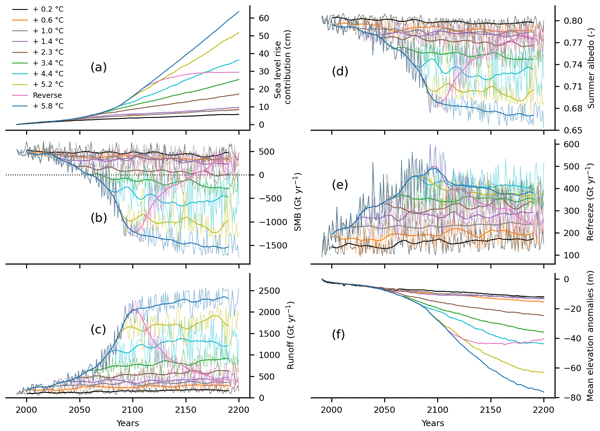
This study explores how the Greenland Ice Sheet (GrIS) responds to different levels of stabilized global warming and if the climate cools back. Our findings show that global temperature increases beyond +2.3 °C mark a critical threshold. We also highlight the importance of limiting warming to avoid irreversible ice loss, as well as the potential for recovery after temporarily exceeding warming thresholds if action is taken quickly to lower global temperatures.
Lawrence A. Bird, Felicity S. McCormack, Johanna Beckmann, Richard S. Jones, and Andrew N. Mackintosh
The Cryosphere, 19, 955–973, https://doi.org/10.5194/tc-19-955-2025, https://doi.org/10.5194/tc-19-955-2025, 2025
Short summary
Short summary
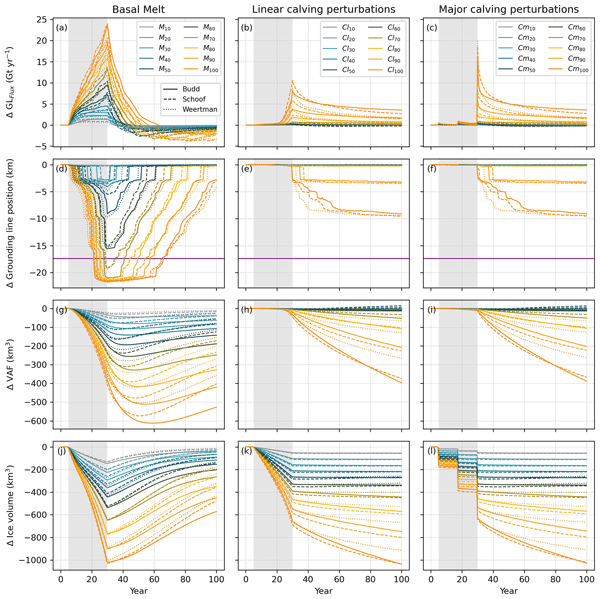
Vanderford Glacier is the fastest-retreating glacier in East Antarctica and may have important implications for future ice loss from the Aurora Subglacial Basin. Our ice sheet model simulations suggest that grounding line retreat is driven by sub-ice-shelf basal melting, in which warm ocean waters melt ice close to the grounding line. We show that current estimates of basal melt are likely too low, highlighting the need for improved estimates and direct measurements of basal melt in the region.
Alison Delhasse, Johanna Beckmann, Christoph Kittel, and Xavier Fettweis
The Cryosphere, 18, 633–651, https://doi.org/10.5194/tc-18-633-2024, https://doi.org/10.5194/tc-18-633-2024, 2024
Short summary
Short summary
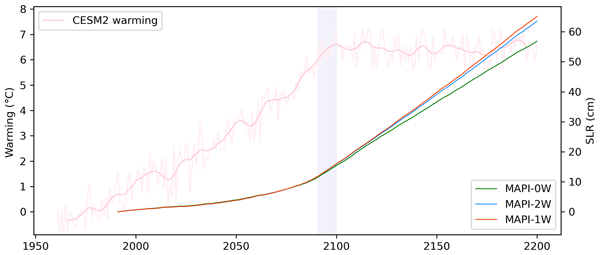
Aiming to study the long-term influence of an extremely warm climate in the Greenland Ice Sheet contribution to sea level rise, a new regional atmosphere–ice sheet model setup was established. The coupling, explicitly considering the melt–elevation feedback, is compared to an offline method to consider this feedback. We highlight mitigation of the feedback due to local changes in atmospheric circulation with changes in surface topography, making the offline correction invalid on the margins.
Johanna Beckmann and Ricarda Winkelmann
The Cryosphere, 17, 3083–3099, https://doi.org/10.5194/tc-17-3083-2023, https://doi.org/10.5194/tc-17-3083-2023, 2023
Short summary
Short summary
Over the past decade, Greenland has experienced several extreme melt events.
With progressing climate change, such extreme melt events can be expected to occur more frequently and potentially become more severe and persistent.
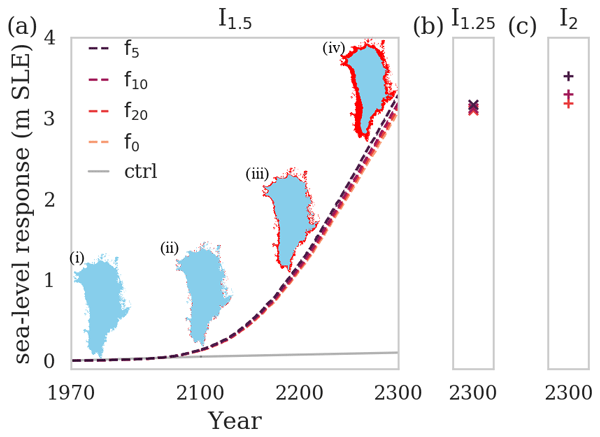
Strong melt events may considerably contribute to Greenland's mass loss, which in turn strongly determines future sea level rise. How important these extreme melt events could be in the future is assessed in this study for the first time.
Maria Zeitz, Ronja Reese, Johanna Beckmann, Uta Krebs-Kanzow, and Ricarda Winkelmann
The Cryosphere, 15, 5739–5764, https://doi.org/10.5194/tc-15-5739-2021, https://doi.org/10.5194/tc-15-5739-2021, 2021
Short summary
Short summary
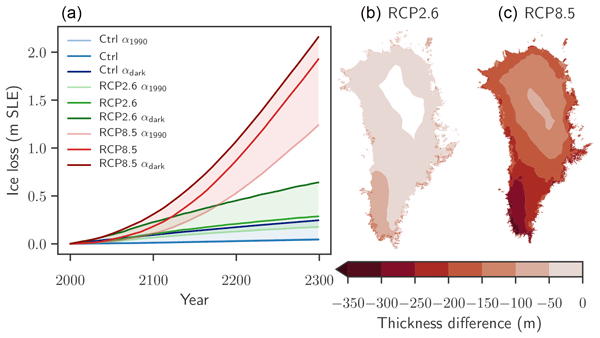
With the increasing melt of the Greenland Ice Sheet, which contributes to sea level rise, the surface of the ice darkens. The dark surfaces absorb more radiation and thus experience increased melt, resulting in the melt–albedo feedback. Using a simple surface melt model, we estimate that this positive feedback contributes to an additional 60 % ice loss in a high-warming scenario and additional 90 % ice loss for moderate warming. Albedo changes are important for Greenland’s future ice loss.
Matteo Nurisso, Jost von Hardenberg, Marco Cadau, Silvia Caprioli, Paolo Ghinassi, Supriyo Ghosh, Nikolay Koldunov, Natalia Nazarova, Maqsood Mubarak Rajput, Emanuele Tovazzi, and Paolo Davini
Geosci. Model Dev., 19, 7725–7740, https://doi.org/10.5194/gmd-19-7725-2026, https://doi.org/10.5194/gmd-19-7725-2026, 2026
Short summary
Short summary
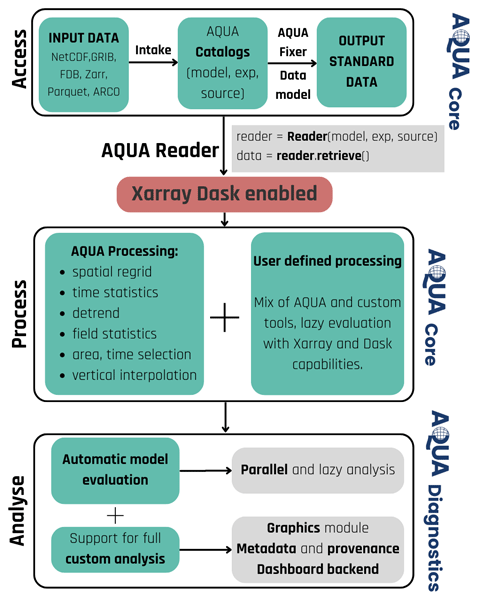
We present a new open-source software called AQUA designed to handle and evaluate the vast amounts of data produced by high-resolution climate simulations. As climate models become more detailed, their output can become too large and complex for traditional analysis methods. We introduce a new framework for data access, processing, and comparison that is fast, reliable, and easy to automate. Our results show that it can efficiently manage very large datasets and support real-time quality checks.
Heikki Järvinen, Jouni Räisänen, Lauri Tuppi, Clément Bouvier, Antonio Sanchez-Benitez, Juniper Tyree, Antti Toropainen, Paolo Davini, Francisco Doblas-Reyes, Thomas Jung, Daniel Klocke, Jenni Kontkanen, Sebastian Milinski, Matteo Nurisso, Himansu Kesari Pradhan, and Irina Sandu
EGUsphere, https://doi.org/10.5194/egusphere-2026-3364, https://doi.org/10.5194/egusphere-2026-3364, 2026
Short summary
Short summary
There is rich process-level variability present in the new-generation kilometre-scale climate simulations. The EU’s Climate Change Adaptation Digital Twin (Climate DT) integrates global Earth observing systems and observation modelling capabilities – until now common only in weather prediction – into operational climate simulation workflow. This provides a novel framework for precise evaluation of fine-scale details of simulation data and informing adaptation decisions at local (city) scales.
James A. Anstey, Neal Butchart, Scott Osprey, Yoshio Kawatani, Kevin Hamilton, Jadwiga H. Richter, Tim Stockdale, Martin B. Andrews, Zhaoyang Chai, Paolo Davini, Dong-Chan Hong, Kai Huang, Aleena M. Jaison, Tobias Kerzenmacher, Jeff R. Knight, Pu Lin, Francois Lott, Yixiong Lu, Hiroaki Naoe, Federico Serva, Isla Simpson, Seok-Woo Son, Qi Tang, Shingo Watanabe, Jinbo Xie, and Kohei Yoshida
EGUsphere, https://doi.org/10.5194/egusphere-2026-1165, https://doi.org/10.5194/egusphere-2026-1165, 2026
Short summary
Short summary
We describe experiments where modelled tropical stratosphere winds are adjusted by "nudging" them toward realistic time-evolving eastward and westward Quasi-Biennial Oscillation (QBO) winds. The effects of this bias correction on other atmospheric processes, such as the stratospheric polar vortex or tropical waves that force the QBO, can then be assessed. We describe details of the experiments, the multi-model ensemble that has performed them, and basic validation of the nudging response.
Francisco J. Doblas-Reyes, Jenni Kontkanen, Irina Sandu, Mario Acosta, Mohammed Hussam Al Turjmam, Ivan Alsina-Ferrer, Miguel Andrés-Martínez, Costanza Anerdi, Leo Arriola, Marvin Axness, Marc Batlle Martín, Peter Bauer, Tobias Becker, Daniel Beltrán, Sebastian Beyer, Hendryk Bockelmann, Pierre-Antoine Bretonnière, Sebastien Cabaniols, Silvia Caprioli, Miguel Castrillo, Aparna Chandrasekar, Suvarchal Cheedela, Victor Correal, Emanuele Danovaro, Paolo Davini, Jussi Enkovaara, Claudia Frauen, Barbara Früh, Aina Gaya Àvila, Paolo Ghinassi, Rohit Ghosh, Supriyo Ghosh, Iker González, Katherine Grayson, Matthew Griffith, Ioan Hadade, Christopher Haine, Carl Hartick, Utz-Uwe Haus, Shane Hearne, Heikki Järvinen, Bernat Jiménez, Amal John, Marlin Juchem, Thomas Jung, Jessica Kegel, Matthias Kelbling, Kai Keller, Bruno Kinoshita, Theresa Kiszler, Daniel Klocke, Lukas Kluft, Nikolay Koldunov, Tobias Kölling, Joonas Kolstela, Luis Kornblueh, Sergey Kosukhin, Aleksander Lacima-Nadolnik, Jeisson Javier Leal Rojas, Jonni Lehtiranta, Tuomas Lunttila, Anna Luoma, Pekka Manninen, Alexey Medvedev, Sebastian Milinski, Ali Mohammed, Sebastian Müller, Devaraju Naryanappa, Natalia Nazarova, Sami Niemelä, Bimochan Niraula, Henrik Nortamo, Aleksi Nummelin, Matteo Nurisso, Pablo Ortega, Stella Paronuzzi, Xabier Pedruzo-Bagazgoitia, Charles Pelletier, Carlos Peña, Suraj Polade, Himansu Kesari Pradhan, Rommel Quintanilla, Tiago Quintino, Thomas Rackow, Jouni Räisänen, Maqsood Mubarak Rajput, René Redler, Balthasar Reuter, Nuno Rocha Monteiro, Francesc Roura-Adserias, Silva Ruppert, Susan Sayed, Reiner Schnur, Tanvi Sharma, Dmitry Sidorenko, Outi Sievi-Korte, Albert Soret, Christian Steger, Bjorn Stevens, Jan Streffing, Jaleena Sunny, Luiggi Tenorio, Stephan Thober, Ulf Tigerstedt, Oriol Tinto, Juha Tonttila, Heikki Tuomenvirta, Lauri Tuppi, Ginka Van Thielen, Emanuele Vitali, Jost von Hardenberg, Ingo Wagner, Nils Wedi, Jan Wehner, Sven Willner, Xavier Yepes-Arbós, Florian Ziemen, and Janos Zimmermann
Geosci. Model Dev., 19, 2821–2848, https://doi.org/10.5194/gmd-19-2821-2026, https://doi.org/10.5194/gmd-19-2821-2026, 2026
Short summary
Short summary
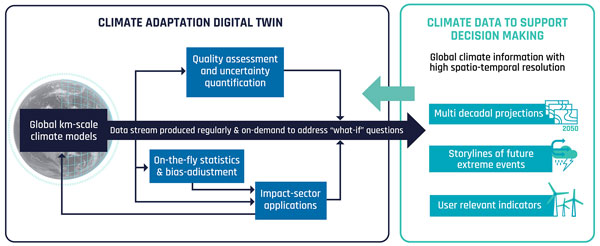
The Climate Change Adaptation Digital Twin (Climate DT) pioneers the operationalisation of global climate projections. It produces global simulations with local granularity for adaptation decision-making. Applications are embedded to generate tailored indicators. A unified workflow orchestrates all components in several supercomputers. Data management ensures consistency and streaming enables real-time use. It is a complementary innovation to initiatives like CMIP, CORDEX, and climate services.
Johanna Beckmann, Ronja Reese, Felicity S. McCormack, Sue Cook, Lawrence Bird, Dawid Gwyther, Daniel Richards, Matthias Scheiter, Yu Wang, Hélène Seroussi, Ayako Abe‐Ouchi, Torsten Albrecht, Jorge Alvarez‐Solas, Xylar S. Asay‐Davis, Jean‐Baptiste Barre, Constantijn J. Berends, Jorge Bernales, Javier Blasco, Justine Caillet, David M. Chandler, Violaine Coulon, Richard Cullather, Christophe Dumas, Benjamin K. Galton‐Fenzi, Julius Garbe, Fabien Gillet‐Chaulet, Rupert Gladstone, Heiko Goelzer, Nicholas R. Golledge, Ralf Greve, G. Hilmar Gudmundsson, Holly Kyeore Han, Trevor R. Hillebrand, Matthew J. Hoffman, Philippe Huybrechts, Nicolas C. Jourdain, Ann Kristin Klose, Petra M. Langebroek, Gunter R. Leguy, William H. Lipscomb, Daniel P. Lowry, Pierre Mathiot, Marisa Montoya, Mathieu Morlighem, Sophie Nowicki, Frank Pattyn, Antony J. Payne, Tyler Pelle, Aurélien Quiquet, Alexander Robinson, Leopekka Saraste, Erika G. Simon, Sainan Sun, Jake P. Twarog, Luke D. Trusel, Benoit Urruty, Jonas Van Breedam, Roderik S. W. van de Wal, Chen Zhao, and Thomas Zwinger
EGUsphere, https://doi.org/10.5194/egusphere-2025-4069, https://doi.org/10.5194/egusphere-2025-4069, 2025
Short summary
Short summary
Antarctica holds enough ice to raise sea levels by many meters, but its future is uncertain. Warm ocean water melts ice shelves from below, letting inland ice flow faster into the sea. By 2300, Antarctica could add 0.6–4.4 m to sea levels. Our study identifies two key factors—how strongly shelves melt and how the ice responds. These explain much of the range, and refining them in models may improve future predictions.
Alison Delhasse, Christoph Kittel, and Johanna Beckmann
The Cryosphere, 19, 4459–4469, https://doi.org/10.5194/tc-19-4459-2025, https://doi.org/10.5194/tc-19-4459-2025, 2025
Short summary
Short summary
This study explores how the Greenland Ice Sheet (GrIS) responds to different levels of stabilized global warming and if the climate cools back. Our findings show that global temperature increases beyond +2.3 °C mark a critical threshold. We also highlight the importance of limiting warming to avoid irreversible ice loss, as well as the potential for recovery after temporarily exceeding warming thresholds if action is taken quickly to lower global temperatures.
Lawrence A. Bird, Felicity S. McCormack, Johanna Beckmann, Richard S. Jones, and Andrew N. Mackintosh
The Cryosphere, 19, 955–973, https://doi.org/10.5194/tc-19-955-2025, https://doi.org/10.5194/tc-19-955-2025, 2025
Short summary
Short summary
Vanderford Glacier is the fastest-retreating glacier in East Antarctica and may have important implications for future ice loss from the Aurora Subglacial Basin. Our ice sheet model simulations suggest that grounding line retreat is driven by sub-ice-shelf basal melting, in which warm ocean waters melt ice close to the grounding line. We show that current estimates of basal melt are likely too low, highlighting the need for improved estimates and direct measurements of basal melt in the region.
Julianna Carvalho-Oliveira, Giorgia Di Capua, Leonard F. Borchert, Reik V. Donner, and Johanna Baehr
Weather Clim. Dynam., 5, 1561–1578, https://doi.org/10.5194/wcd-5-1561-2024, https://doi.org/10.5194/wcd-5-1561-2024, 2024
Short summary
Short summary
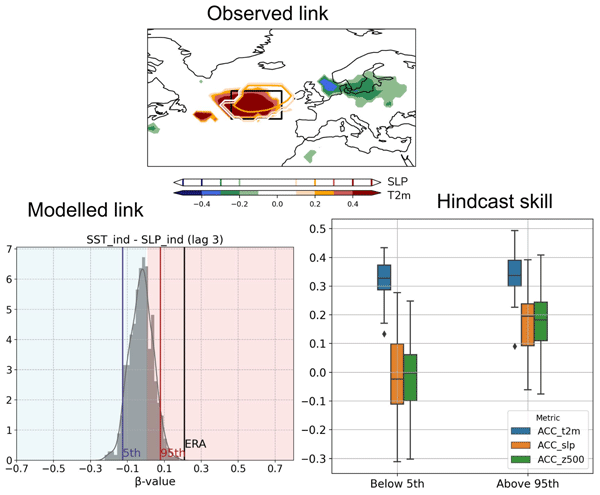
We demonstrate with a causal analysis that an important recurrent summer atmospheric pattern, the so-called East Atlantic teleconnection, was influenced by the extratropical North Atlantic in spring during the second half of the 20th century. This causal link is, however, not well represented by our evaluated seasonal climate prediction system. We show that simulations able to reproduce this link show improved surface climate prediction credibility over those that do not.
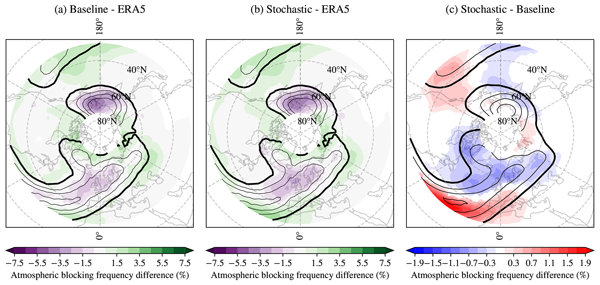
Michele Filippucci, Simona Bordoni, and Paolo Davini
Weather Clim. Dynam., 5, 1207–1222, https://doi.org/10.5194/wcd-5-1207-2024, https://doi.org/10.5194/wcd-5-1207-2024, 2024
Short summary
Short summary
Atmospheric blocking is a recurring phenomenon in midlatitudes, causing winter cold spells and summer heat waves. Current models underestimate it, hindering understanding of global warming's impact on extremes. In this paper, we investigate whether stochastic parameterizations can improve blocking representation. We find that blocking frequency representation slightly deteriorates, following a change in midlatitude winds. We conclude by suggesting a direction for future model development.
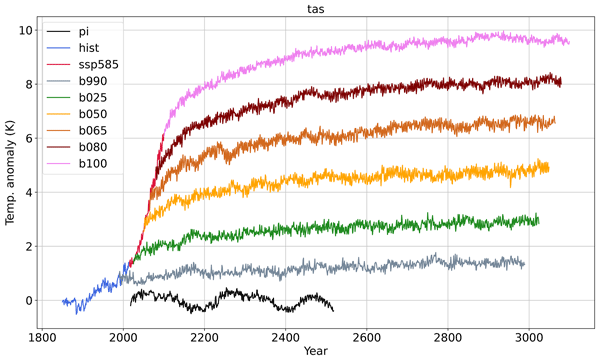
Federico Fabiano, Paolo Davini, Virna L. Meccia, Giuseppe Zappa, Alessio Bellucci, Valerio Lembo, Katinka Bellomo, and Susanna Corti
Earth Syst. Dynam., 15, 527–546, https://doi.org/10.5194/esd-15-527-2024, https://doi.org/10.5194/esd-15-527-2024, 2024
Short summary
Short summary
Even after the concentration of greenhouse gases is stabilized, the climate will continue to adapt, seeking a new equilibrium. We study this long-term stabilization through a set of 1000-year simulations, obtained by suddenly "freezing" the atmospheric composition at different levels. If frozen at the current state, global warming surpasses 3° in the long term with our model. We then study how climate impacts will change after various centuries and how the deep ocean will warm.
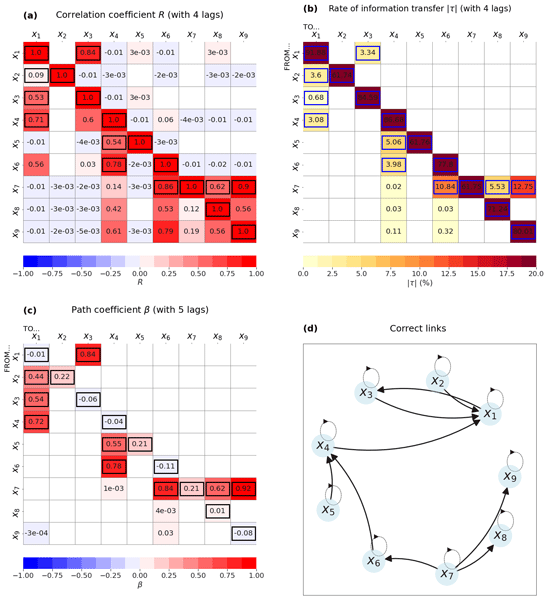
David Docquier, Giorgia Di Capua, Reik V. Donner, Carlos A. L. Pires, Amélie Simon, and Stéphane Vannitsem
Nonlin. Processes Geophys., 31, 115–136, https://doi.org/10.5194/npg-31-115-2024, https://doi.org/10.5194/npg-31-115-2024, 2024
Short summary
Short summary
Identifying causes of specific processes is crucial in order to better understand our climate system. Traditionally, correlation analyses have been used to identify cause–effect relationships in climate studies. However, correlation does not imply causation, which justifies the need to use causal methods. We compare two independent causal methods and show that these are superior to classical correlation analyses. We also find some interesting differences between the two methods.
Alison Delhasse, Johanna Beckmann, Christoph Kittel, and Xavier Fettweis
The Cryosphere, 18, 633–651, https://doi.org/10.5194/tc-18-633-2024, https://doi.org/10.5194/tc-18-633-2024, 2024
Short summary
Short summary
Aiming to study the long-term influence of an extremely warm climate in the Greenland Ice Sheet contribution to sea level rise, a new regional atmosphere–ice sheet model setup was established. The coupling, explicitly considering the melt–elevation feedback, is compared to an offline method to consider this feedback. We highlight mitigation of the feedback due to local changes in atmospheric circulation with changes in surface topography, making the offline correction invalid on the margins.
Kristian Strommen, Tim Woollings, Paolo Davini, Paolo Ruggieri, and Isla R. Simpson
Weather Clim. Dynam., 4, 853–874, https://doi.org/10.5194/wcd-4-853-2023, https://doi.org/10.5194/wcd-4-853-2023, 2023
Short summary
Short summary
We present evidence which strongly suggests that decadal variations in the intensity of the North Atlantic winter jet stream can be predicted by current forecast models but that decadal variations in its position appear to be unpredictable. It is argued that this skill at predicting jet intensity originates from the slow, predictable variability in sea surface temperatures in the sub-polar North Atlantic.
Alice Portal, Fabio D'Andrea, Paolo Davini, Mostafa E. Hamouda, and Claudia Pasquero
Weather Clim. Dynam., 4, 809–822, https://doi.org/10.5194/wcd-4-809-2023, https://doi.org/10.5194/wcd-4-809-2023, 2023
Short summary
Short summary
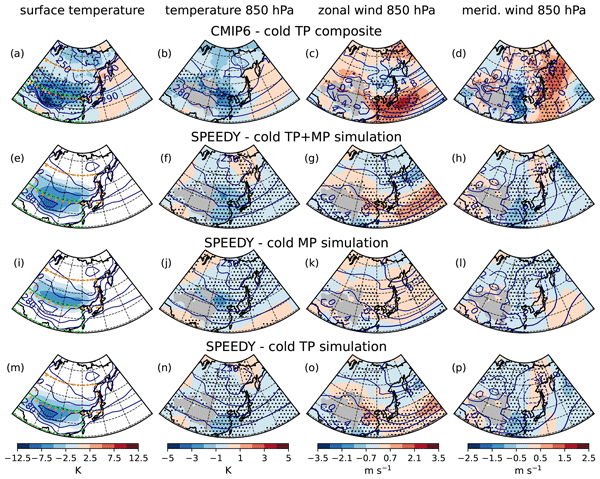
The differences between climate models can be exploited to infer how specific aspects of the climate influence the Earth system. This work analyses the effects of a negative temperature anomaly over the Tibetan Plateau on the winter atmospheric circulation. We show that models with a colder-than-average Tibetan Plateau present a reinforcement of the eastern Asian winter monsoon and discuss the atmospheric response to the enhanced transport of cold air from the continent toward the Pacific Ocean.
Giorgia Di Capua, Dim Coumou, Bart van den Hurk, Antje Weisheimer, Andrew G. Turner, and Reik V. Donner
Weather Clim. Dynam., 4, 701–723, https://doi.org/10.5194/wcd-4-701-2023, https://doi.org/10.5194/wcd-4-701-2023, 2023
Short summary
Short summary
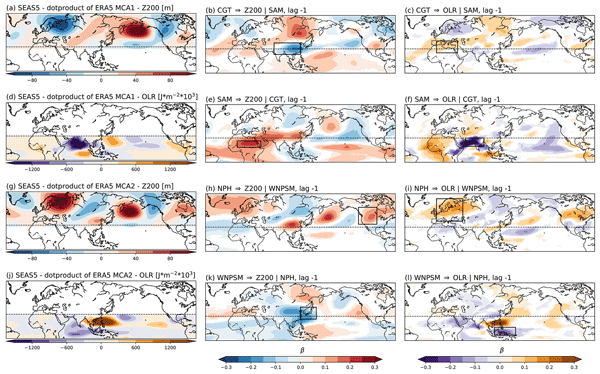
Heavy rainfall in tropical regions interacts with mid-latitude circulation patterns, and this interaction can explain weather patterns in the Northern Hemisphere during summer. In this analysis we detect these tropical–extratropical interaction pattern both in observational datasets and data obtained by atmospheric models and assess how well atmospheric models can reproduce the observed patterns. We find a good agreement although these relationships are weaker in model data.
Johanna Beckmann and Ricarda Winkelmann
The Cryosphere, 17, 3083–3099, https://doi.org/10.5194/tc-17-3083-2023, https://doi.org/10.5194/tc-17-3083-2023, 2023
Short summary
Short summary
Over the past decade, Greenland has experienced several extreme melt events.
With progressing climate change, such extreme melt events can be expected to occur more frequently and potentially become more severe and persistent.
Strong melt events may considerably contribute to Greenland's mass loss, which in turn strongly determines future sea level rise. How important these extreme melt events could be in the future is assessed in this study for the first time.
Tamzin E. Palmer, Carol F. McSweeney, Ben B. B. Booth, Matthew D. K. Priestley, Paolo Davini, Lukas Brunner, Leonard Borchert, and Matthew B. Menary
Earth Syst. Dynam., 14, 457–483, https://doi.org/10.5194/esd-14-457-2023, https://doi.org/10.5194/esd-14-457-2023, 2023
Short summary
Short summary
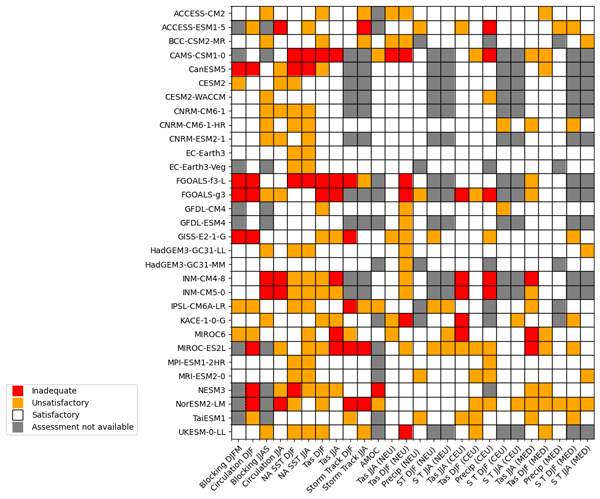
We carry out an assessment of an ensemble of general climate models (CMIP6) based on the ability of the models to represent the key physical processes that are important for representing European climate. Filtering the models with the assessment leads to more models with less global warming being removed, and this shifts the lower part of the projected temperature range towards greater warming. This is in contrast to the affect of weighting the ensemble using global temperature trends.
Paolo Davini, Federico Fabiano, and Irina Sandu
Weather Clim. Dynam., 3, 535–553, https://doi.org/10.5194/wcd-3-535-2022, https://doi.org/10.5194/wcd-3-535-2022, 2022
Short summary
Short summary
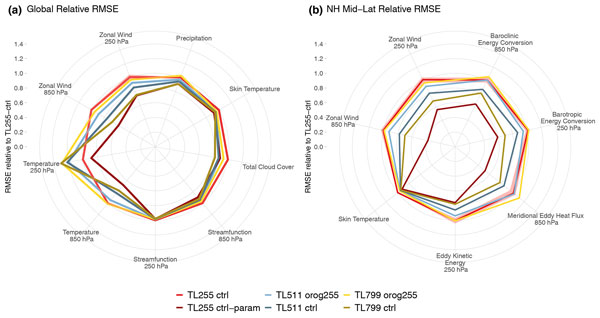
In climate models, improvements obtained in the winter mid-latitude circulation following horizontal resolution increase are mainly caused by the more detailed representation of the mean orography. A high-resolution climate model with low-resolution orography might underperform compared to a low-resolution model with low-resolution orography. The absence of proper model tuning at high resolution is considered the potential reason behind such lack of improvements.
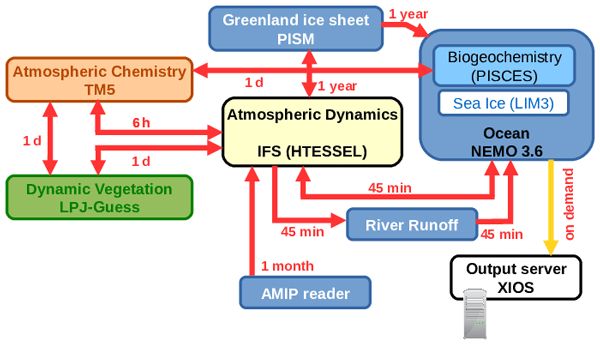
Ralf Döscher, Mario Acosta, Andrea Alessandri, Peter Anthoni, Thomas Arsouze, Tommi Bergman, Raffaele Bernardello, Souhail Boussetta, Louis-Philippe Caron, Glenn Carver, Miguel Castrillo, Franco Catalano, Ivana Cvijanovic, Paolo Davini, Evelien Dekker, Francisco J. Doblas-Reyes, David Docquier, Pablo Echevarria, Uwe Fladrich, Ramon Fuentes-Franco, Matthias Gröger, Jost v. Hardenberg, Jenny Hieronymus, M. Pasha Karami, Jukka-Pekka Keskinen, Torben Koenigk, Risto Makkonen, François Massonnet, Martin Ménégoz, Paul A. Miller, Eduardo Moreno-Chamarro, Lars Nieradzik, Twan van Noije, Paul Nolan, Declan O'Donnell, Pirkka Ollinaho, Gijs van den Oord, Pablo Ortega, Oriol Tintó Prims, Arthur Ramos, Thomas Reerink, Clement Rousset, Yohan Ruprich-Robert, Philippe Le Sager, Torben Schmith, Roland Schrödner, Federico Serva, Valentina Sicardi, Marianne Sloth Madsen, Benjamin Smith, Tian Tian, Etienne Tourigny, Petteri Uotila, Martin Vancoppenolle, Shiyu Wang, David Wårlind, Ulrika Willén, Klaus Wyser, Shuting Yang, Xavier Yepes-Arbós, and Qiong Zhang
Geosci. Model Dev., 15, 2973–3020, https://doi.org/10.5194/gmd-15-2973-2022, https://doi.org/10.5194/gmd-15-2973-2022, 2022
Short summary
Short summary
The Earth system model EC-Earth3 is documented here. Key performance metrics show physical behavior and biases well within the frame known from recent models. With improved physical and dynamic features, new ESM components, community tools, and largely improved physical performance compared to the CMIP5 version, EC-Earth3 represents a clear step forward for the only European community ESM. We demonstrate here that EC-Earth3 is suited for a range of tasks in CMIP6 and beyond.
Maria Zeitz, Ronja Reese, Johanna Beckmann, Uta Krebs-Kanzow, and Ricarda Winkelmann
The Cryosphere, 15, 5739–5764, https://doi.org/10.5194/tc-15-5739-2021, https://doi.org/10.5194/tc-15-5739-2021, 2021
Short summary
Short summary
With the increasing melt of the Greenland Ice Sheet, which contributes to sea level rise, the surface of the ice darkens. The dark surfaces absorb more radiation and thus experience increased melt, resulting in the melt–albedo feedback. Using a simple surface melt model, we estimate that this positive feedback contributes to an additional 60 % ice loss in a high-warming scenario and additional 90 % ice loss for moderate warming. Albedo changes are important for Greenland’s future ice loss.
Cited articles
Baxter, I., Ding, Q., Schweiger, A., L'Heureux, M., Baxter, S., Wang, T., Zhang, Q., Harnos, K., Markle, B., Topal, D., and Lu, J.: How Tropical Pacific Surface Cooling Contributed to Accelerated Sea Ice Melt from 2007 to 2012 as Ice Is Thinned by Anthropogenic Forcing, J. Climate, 32, 8583–8602, https://doi.org/10.1175/JCLI-D-18-0783.1, 2019.
Beckmann, J. and Winkelmann, R.: Effects of extreme melt events on ice flow and sea level rise of the Greenland Ice Sheet, The Cryosphere, 17, 3083–3099, https://doi.org/10.5194/tc-17-3083-2023, 2023.
Benjamini, Y. and Hochberg, Y.: Controlling the False Discovery Rate: A Practical and Powerful Approach to Multiple Testing, Journal of the Royal Statistical Society. Series B (Methodological), 57, 289–300, https://doi.org/10.1111/j.2517-6161.1995.tb02031.x, 1995.
Cai, Z., You, Q., Wu, F., Chen, H. W., Chen, D., and Cohen, J.: Arctic Warming Revealed by Multiple CMIP6 Models: Evaluation of Historical Simulations and Quantification of Future Projection Uncertainties, J. Climate, 34, 4871–4892, https://doi.org/10.1175/JCLI-D-20-0791.1, 2021.
Cohen, J., Screen, J. A., Furtado, J. C., Barlow, M., Whittleston, D., Coumou, D., Francis, J., Dethloff, K., Entekhabi, D., Overland, J., and Jones, J.: Recent Arctic amplification and extreme mid-latitude weather, Nat. Geosci., 7, 627–637, https://doi.org/10.1038/ngeo2234, 2014.
Copernicus Climate Change Service Climate Data Store: Seasonal forecast subdaily data on pressure levels, Copernicus Climate Change Service (C3S) Climate Data Store (CDS) [data set], https://doi.org/10.24381/cds.50ed0a73, 2018.
Coumou, D., Di Capua, G., Vavrus, S., Wang, L., and Wang, S.: The influence of Arctic amplification on mid-latitude summer circulation, Nat. Commun., 9, 2959, https://doi.org/10.1038/s41467-018-05256-8, 2018.
Davini, P. and D'Andrea, F.: Northern Hemisphere Atmospheric Blocking Representation in Global Climate Models: Twenty Years of Improvements?, J. Climate, 29, 8823–8840, https://doi.org/10.1175/JCLI-D-16-0242.1, 2016.
Davini, P. and D'Andrea, F.: From CMIP3 to CMIP6: Northern Hemisphere Atmospheric Blocking Simulation in Present and Future Climate, J. Climate, 33, 10021–10038, https://doi.org/10.1175/JCLI-D-19-0862.1, 2020.
Davini, P., Cagnazzo, C., Gualdi, S., and Navarra, A.: Bidimensional Diagnostics, Variability, and Trends of Northern Hemisphere Blocking, J. Climate, 25, 6496–6509, https://doi.org/10.1175/JCLI-D-12-00032.1, 2012.
Davini, P., Weisheimer, A., Balmaseda, M., Johnson, S. J., Molteni, F., Roberts, C. D., Senan, R., and Stockdale, T. N.: The representation of winter Northern Hemisphere atmospheric blocking in ECMWF seasonal prediction systems, Q. J. Roy. Meteor. Soc., 147, 1344–1363, https://doi.org/10.1002/qj.3974, 2021.
Davy, R., Chen, L., and Hanna, E.: Arctic amplification metrics, Int. J. Climatol., 38, 4384–4394, https://doi.org/10.1002/joc.5675, 2018.
Delhasse, A., Hanna, E., Kittel, C., and Fettweis, X.: Brief communication: CMIP6 does not suggest any circulation change over Greenland in summer by 2100, The Cryosphere Discuss. [preprint], https://doi.org/10.5194/tc-2019-332, 2020.
Di Capua, G., Kretschmer, M., Runge, J., Alessandri, A., Donner, R. V., Van Den Hurk, B., Vellore, R., Krishnan, R., and Coumou, D.: Long-Lead Statistical Forecasts of the Indian Summer Monsoon Rainfall Based on Causal Precursors, Weather Forecast., 34, 1377–1394, https://doi.org/10.1175/WAF-D-19-0002.1, 2019.
Di Capua, G., Kretschmer, M., Donner, R. V., van den Hurk, B., Vellore, R., Krishnan, R., and Coumou, D.: Tropical and mid-latitude teleconnections interacting with the Indian summer monsoon rainfall: a theory-guided causal effect network approach, Earth Syst. Dynam., 11, 17–34, https://doi.org/10.5194/esd-11-17-2020, 2020a.
Di Capua, G., Runge, J., Donner, R. V., van den Hurk, B., Turner, A. G., Vellore, R., Krishnan, R., and Coumou, D.: Dominant patterns of interaction between the tropics and mid-latitudes in boreal summer: causal relationships and the role of timescales, Weather Clim. Dynam., 1, 519–539, https://doi.org/10.5194/wcd-1-519-2020, 2020b.
Di Capua, G., Sparrow, S., Kornhuber, K., Rousi, E., Osprey, S., Wallom, D., van den Hurk, B., and Coumou, D.: Drivers behind the summer 2010 wave train leading to Russian heatwave and Pakistan flooding, npj Climate and Atmospheric Science, 4, https://doi.org/10.1038/s41612-021-00211-9, 2021.
Di Capua, G., Coumou, D., van den Hurk, B., Weisheimer, A., Turner, A. G., and Donner, R. V.: Validation of boreal summer tropical–extratropical causal links in seasonal forecasts, Weather Clim. Dynam., 4, 701–723, https://doi.org/10.5194/wcd-4-701-2023, 2023.
Di Capua, G., Tyrlis, E., Matei, D., and Donner, R. V.: Tropical and mid-latitude causal drivers of the eastern Mediterranean Etesians during boreal summer, Clim. Dynam., 62, 9565–9585, https://doi.org/10.1007/s00382-024-07411-y, 2024.
Docquier, D., Di Capua, G., Donner, R. V., Pires, C. A. L., Simon, A., and Vannitsem, S.: A comparison of two causal methods in the context of climate analyses, Nonlin. Processes Geophys., 31, 115–136, https://doi.org/10.5194/npg-31-115-2024, 2024.
Feldstein, S. B.: The Timescale, Power Spectra, and Climate Noise Properties of Teleconnection Patterns, J. Climate, 13, 4430–4440, https://doi.org/10.1175/1520-0442(2000)013<4430:TTPSAC>2.0.CO;2, 2000.
Francis, J. and Skific, N.: Evidence linking rapid Arctic warming to mid-latitude weather patterns, Phil. Trans. R. Soc. A, 373, 20140170, https://doi.org/10.1098/rsta.2014.0170, 2015.
Gollan, G., Greatbatch, R. J., and Jung, T.: Origin of variability in Northern Hemisphere winter blocking on interannual to decadal timescales, Geophys. Res. Lett., 42, https://doi.org/10.1002/2015GL066572, 2015.
Häkkinen, S., Rhines, P. B., and Worthen, D. L.: Atmospheric Blocking and Atlantic Multidecadal Ocean Variability, Science, 334, 655–659, https://doi.org/10.1126/science.1205683, 2011.
Hanna, E., Jones, J. M., Cappelen, J., Mernild, S. H., Wood, L., Steffen, K., and Huybrechts, P.: The influence of North Atlantic atmospheric and oceanic forcing effects on 1900–2010 Greenland summer climate and ice melt/runoff, Int. J. Climatol., 33, 862–880, https://doi.org/10.1002/joc.3475, 2013.
Hanna, E., Cropper, T. E., Hall, R. J., and Cappelen, J.: Greenland Blocking Index 1851–2015: a regional climate change signal, Int. J. Climatol., 36, 4847-4861, https://doi.org/10.1002/joc.4673, 2016.
Hanna, E., Fettweis, X., and Hall, R. J.: Brief communication: Recent changes in summer Greenland blocking captured by none of the CMIP5 models, The Cryosphere, 12, 3287–3292, https://doi.org/10.5194/tc-12-3287-2018, 2018.
Hauser, S., Teubler, F., Riemer, M., Knippertz, P., and Grams, C. M.: Life cycle dynamics of Greenland blocking from a potential vorticity perspective, Weather Clim. Dynam., 5, 633–658, https://doi.org/10.5194/wcd-5-633-2024, 2024.
Hersbach, H., Bell, B., Berrisford, P., Hirahara, S., Horányi, A., Muñoz-Sabater, J., Nicolas, J., Peubey, C., Radu, R., Schepers, D., Simmons, A., Soci, C., Abdalla, S., Abellan, X., Balsamo, G., Bechtold, P., Biavati, G., Bidlot, J., Bonavita, M., De Chiara, G., Dahlgren, P., Dee, D., Diamantakis, M., Dragani, R., Flemming, J., Forbes, R., Fuentes, M., Geer, A., Haimberger, L., Healy, S., Hogan, R. J., Hólm, E., Janisková, M., Keeley, S., Laloyaux, P., Lopez, P., Lupu, C., Radnoti, G., De Rosnay, P., Rozum, I., Vamborg, F., Villaume, S., and Thépaut, J.: The ERA5 global reanalysis, Q. J. Roy. Meteor. Soc., 146, 1999–2049, https://doi.org/10.1002/qj.3803, 2020.
Hersbach, H., Bell, B., Berrisford, P., Biavati, G., Horányi, A., Muñoz Sabater, J., Nicolas, J., Peubey, C., Radu, R., Rozum, I., Schepers, D., Simmons, A., Soci, C., Dee, D., and Thépaut, J.-N.: ERA5 hourly data on single levels from 1940 to present, Copernicus Climate Change Service (C3S) Climate Data Store (CDS) [data set], https://doi.org/10.24381/cds.adbb2d47, 2023.
Hoskins, B. and Woollings, T.: Persistent Extratropical Regimes and Climate Extremes, Current Climate Change Reports, 1, 115–124, https://doi.org/10.1007/s40641-015-0020-8, 2015.
Hu, X.-M., Ma, J.-R., Ying, J., Cai, M., and Kong, Y.-Q.: Inferring future warming in the Arctic from the observed global warming trend and CMIP6 simulations, Advances in Climate Change Research, 12, 499–507, https://doi.org/10.1016/j.accre.2021.04.002, 2021.
Johnson, S. J., Stockdale, T. N., Ferranti, L., Balmaseda, M. A., Molteni, F., Magnusson, L., Tietsche, S., Decremer, D., Weisheimer, A., Balsamo, G., Keeley, S. P. E., Mogensen, K., Zuo, H., and Monge-Sanz, B. M.: SEAS5: the new ECMWF seasonal forecast system, Geosci. Model Dev., 12, 1087–1117, https://doi.org/10.5194/gmd-12-1087-2019, 2019.
Kretschmer, M., Coumou, D., Donges, J. F., and Runge, J.: Using Causal Effect Networks to Analyze Different Arctic Drivers of Midlatitude Winter Circulation, J. Climate, 29, 4069–4081, https://doi.org/10.1175/JCLI-D-15-0654.1, 2016.
Kretschmer, M., Coumou, D., Agel, L., Barlow, M., Tziperman, E., and Cohen, J.: More-Persistent Weak Stratospheric Polar Vortex States Linked to Cold Extremes, B. Am. Meteorol. Soc. 99, 49–60, https://doi.org/10.1175/BAMS-D-16-0259.1, 2018b.
Lehmann, J., Kretschmer, M., Schauberger, B., and Wechsung, F.: Potential for Early Forecast of Moroccan Wheat Yields Based on Climatic Drivers, Geophys. Res. Lett., 47, e2020GL087516, https://doi.org/10.1029/2020GL087516, 2020.
Lundquist, J. D., Kim, R. S., Durand, M., and Prugh, L. R.: Seasonal Peak Snow Predictability Derived From Early-Season Snow in North America, Geophys. Res. Lett., 50, e2023GL103802, https://doi.org/10.1029/2023GL103802, 2023.
Luu, L. N., Hanna, E., De Alwis Pitts, D., Maddison, J., Screen, J. A., Catto, J. L., and Fettweis, X.: Greenland summer blocking characteristics: an evaluation of a high-resolution multi-model ensemble, Clim. Dynam., 62, 10503–10523, https://doi.org/10.1007/s00382-024-07453-2, 2024.
Maddison, J. W., Catto, J. L., Hanna, E., Luu, L. N., and Screen, J. A.: Missing Increase in Summer Greenland Blocking in Climate Models, Geophys. Res. Lett., 51, e2024GL108505, https://doi.org/10.1029/2024GL108505, 2024.
Masato, G., Hoskins, B. J., and Woollings, T.: Winter and Summer Northern Hemisphere Blocking in CMIP5 Models, J. Climate, 26, 7044–7059, https://doi.org/10.1175/JCLI-D-12-00466.1, 2013.
McGraw, M. C. and Barnes, E. A.: New Insights on Subseasonal Arctic–Midlatitude Causal Connections from a Regularized Regression Model, J. Climate, 33, 213–228, https://doi.org/10.1175/JCLI-D-19-0142.1, 2020.
McLeod, J. T. and Mote, T. L.: Linking interannual variability in extreme Greenland blocking episodes to the recent increase in summer melting across the Greenland ice sheet: Extreme Greenland blocking and summer melting across the Greenland ice sheet, Int. J. Climatol., 36, 1484–1499, https://doi.org/10.1002/joc.4440, 2016.
Meehl, G. A., Chung, C. T. Y., Arblaster, J. M., Holland, M. M., and Bitz, C. M.: Tropical Decadal Variability and the Rate of Arctic Sea Ice Decrease, Geophys. Res. Lett., 45, https://doi.org/10.1029/2018GL079989, 2018.
Nakamura, T., Yamazaki, K., Iwamoto, K., Honda, M., Miyoshi, Y., Ogawa, Y., Tomikawa, Y., and Ukita, J.: The stratospheric pathway for Arctic impacts on midlatitude climate, Geophys. Res. Lett., 43, 3494–3501, https://doi.org/10.1002/2016GL068330, 2016.
Nghiem, S. V., Hall, D. K., Mote, T. L., Tedesco, M., Albert, M. R., Keegan, K., Shuman, C. A., DiGirolamo, N. E., and Neumann, G.: The extreme melt across the Greenland ice sheet in 2012, Geophys. Res. Lett., 39, 2012GL053611, https://doi.org/10.1029/2012GL053611, 2012.
Nowack, P., Runge, J., Eyring, V., and Haigh, J. D.: Causal networks for climate model evaluation and constrained projections, Nat. Commun., 11, 1415, https://doi.org/10.1038/s41467-020-15195-y, 2020.
O'Gorman, P. A.: Contrasting responses of mean and extreme snowfall to climate change, Nature, 512, 416–418, https://doi.org/10.1038/nature13625, 2014.
Pfleiderer, P., Schleussner, C.-F., Geiger, T., and Kretschmer, M.: Robust predictors for seasonal Atlantic hurricane activity identified with causal effect networks, Weather Clim. Dynam., 1, 313–324, https://doi.org/10.5194/wcd-1-313-2020, 2020.
Preece, J. R., Mote, T. L., Cohen, J., Wachowicz, L. J., Knox, J. A., Tedesco, M., and Kooperman, G. J.: Summer atmospheric circulation over Greenland in response to Arctic amplification and diminished spring snow cover, Nat. Commun., 14, 3759, https://doi.org/10.1038/s41467-023-39466-6, 2023.
Previdi, M., Smith, K. L., and Polvani, L. M.: Arctic amplification of climate change: a review of underlying mechanisms, Environ. Res. Lett., 16, 093003, https://doi.org/10.1088/1748-9326/ac1c29, 2021.
Quante, L., Willner, S. N., Middelanis, R., and Levermann, A.: Regions of intensification of extreme snowfall under future warming, Sci. Rep., 11, 16621, https://doi.org/10.1038/s41598-021-95979-4, 2021.
Runge, J.: Causal network reconstruction from time series: From theoretical assumptions to practical estimation, Chaos, 28, 075310, https://doi.org/10.1063/1.5025050, 2018.
Runge, J., Bathiany, S., Bollt, E., Camps-Valls, G., Coumou, D., Deyle, E., Glymour, C., Kretschmer, M., Mahecha, M. D., Muñoz-Marí, J., van Nes, E. H., Peters, J., Quax, R., Reichstein, M., Scheffer, M., Schölkopf, B., Spirtes, P., Sugihara, G., Sun, J., Zhang, K., and Zscheischler, J.: Inferring causation from time series in Earth system sciences, Nat. Commun., 10, 2553, https://doi.org/10.1038/s41467-019-10105-3, 2019a.
Runge, J., Nowack, P., Kretschmer, M., Flaxman, S., and Sejdinovic, D.: Detecting and quantifying causal associations in large nonlinear time series datasets, Sci. Adv., 5, eaau4996, https://doi.org/10.1126/sciadv.aau4996, 2019b.
Sasgen, I., Wouters, B., Gardner, A. S., King, M. D., Tedesco, M., Landerer, F. W., Dahle, C., Save, H., and Fettweis, X.: Return to rapid ice loss in Greenland and record loss in 2019 detected by the GRACE-FO satellites, Commun. Earth Environ., 1, 8, https://doi.org/10.1038/s43247-020-0010-1, 2020.
Scaife, A. A., Smith, D.: A signal-to-noise paradox in climate science, npj Clim. Atmos. Sci., 1, 28, https://doi.org/10.1038/s41612-018-0038-4, 2018.
Scherrer, S. C., Croci-Maspoli, M., Schwierz, C., and Appenzeller, C.: Two-dimensional indices of atmospheric blocking and their statistical relationship with winter climate patterns in the Euro-Atlantic region, Int. J. Climatol., 26, 233–249, https://doi.org/10.1002/joc.1250, 2006.
Serreze, M. C., Barrett, A. P., Stroeve, J. C., Kindig, D. N., and Holland, M. M.: The emergence of surface-based Arctic amplification, The Cryosphere, 3, 11–19, https://doi.org/10.5194/tc-3-11-2009, 2009.
Shu, Q., Wang, Q., Årthun, M., Wang, S., Song, Z., Zhang, M., and Qiao, F.: Arctic Ocean Amplification in a warming climate in CMIP6 models, Sci. Adv., 8, eabn9755, https://doi.org/10.1126/sciadv.abn9755, 2022.
Tedesco, M. and Fettweis, X.: Unprecedented atmospheric conditions (1948–2019) drive the 2019 exceptional melting season over the Greenland ice sheet, The Cryosphere, 14, 1209–1223, https://doi.org/10.5194/tc-14-1209-2020, 2020.
Tedesco, M., Fettweis, X., van den Broeke, M. R., van de Wal, R. S. W., Smeets, C. J. P. P., van de Berg, W. J., Serreze, M. C., and Box, J. E.: The role of albedo and accumulation in the 2010 melting record in Greenland, Environ. Res. Lett., 6, 014005, https://doi.org/10.1088/1748-9326/6/1/014005, 2011.
Tian, Y., Giaquinto, D., Di Capua, G., Claassen, J. N., Ali, J., Li, H., and De Michele, C.: Historical changes in the Causal Effect Networks of compound hot and dry extremes in central Europe, Commun. Earth Environ., 5, 764, https://doi.org/10.1038/s43247-024-01934-2, 2024.
Tibaldi, S. and Molteni, F.: On the operational predictability of blocking, Tellus A, 42, 343–365, https://doi.org/10.1034/j.1600-0870.1990.t01-2-00003.x, 1990.
Topál, D., Ding, Q., Ballinger, T. J., Hanna, E., Fettweis, X., Li, Z., and Pieczka, I.: Discrepancies between observations and climate models of large-scale wind-driven Greenland melt influence sea-level rise projections, Nat. Commun., 13, 6833, https://doi.org/10.1038/s41467-022-34414-2, 2022.
Tyrlis, E., Bader, J., Manzini, E., and Matei, D.: Reconciling different methods of high-latitude blocking detection, Q. J. Roy. Meteor. Soc., 147, 1070–1096, https://doi.org/10.1002/qj.39, 2021.
Wachowicz, L. J., Preece, J. R., Mote, T. L., Barrett, B. S., and Henderson, G. R.: Historical trends of seasonal Greenland blocking under different blocking metrics, Int. J. Climatol., 41, https://doi.org/10.1002/joc.6923, 2020.
Wang, H. and Luo, D.: North Atlantic Footprint of Summer Greenland Ice Sheet Melting on Interannual to Interdecadal Time Scales: A Greenland Blocking Perspective, J. Climate, 35, 1939–1961, https://doi.org/10.1175/JCLI-D-21-0382.1, 2022.
Woollings, T. and Hoskins, B.: Simultaneous Atlantic–Pacific blocking and the Northern Annular Mode, Q. J. Roy. Meteor. Soc., 134, 1635–1646, https://doi.org/10.1002/qj.310, 2008.
Wachowicz, L. J., Preece, J. R., Mote, T. L., Barrett, B. S., and Henderson, G. R.: Historical trends of seasonal Greenland blocking under different blocking metrics, Int. J. Climatol., 41, E3263–E3278, https://doi.org/10.1002/joc.6923, 2021.
Woollings, T., Barriopedro, D., Methven, J., Son, S.-W., Martius, O., Harvey, B., Sillmann, J., Lupo, A. R., and Seneviratne, S.: Blocking and its Response to Climate Change, Curr. Clim. Change Rep., 4, 287–300, https://doi.org/10.1007/s40641-018-0108-z, 2018.
Zhang, B., Liu, L., Khan, S. A., van Dam, T., Bjørk, A. A., Peings, Y., Zhang, E., Bevis, M., Yao, Y., and Noël, B.: Geodetic and model data reveal different spatio-temporal patterns of transient mass changes over Greenland from 2007 to 2017, Earth Planet. Sc. Lett., 515, 154–163, https://doi.org/10.1016/j.epsl.2019.03.028, 2019.
Zhu, Z., Lu, R., Yu, B., Li, T., and Yeh, S.-W.: A moderator of tropical impacts on climate in Canadian Arctic Archipelago during boreal summer, Nat. Commun., 15, 8644, https://doi.org/10.1038/s41467-024-53056-0, 2024.
Short summary
Greenland blocking, which enhances ice sheet melting, has increased, but climate models fail to capture this trend. Analysis with reanalysis data and a seasonal forecast system shows that model improvements help, but they still miss the role of early North American snowmelt in shaping blocking patterns. This gap may explain the discrepancy and suggests that future projections could underestimate Greenland blocking and its impact on melting.
Greenland blocking, which enhances ice sheet melting, has increased, but climate models fail to...


