
Articles | Volume 7, issue 2
https://doi.org/10.5194/wcd-7-1009-2026
© Author(s) 2026. This work is distributed under
the Creative Commons Attribution 4.0 License.
the Creative Commons Attribution 4.0 License.
https://doi.org/10.5194/wcd-7-1009-2026
© Author(s) 2026. This work is distributed under
the Creative Commons Attribution 4.0 License.
the Creative Commons Attribution 4.0 License.
Research article
| 
17 Jun 2026
Research article |
| 17 Jun 2026
| 17 Jun 2026
Physical processes leading to extreme day-to-day temperature change – Part 2: Future climate change
Kalpana Hamal
CORRESPONDING AUTHOR

Institut für Meteorologie, Freie Universität Berlin, 12165 Berlin, Germany
Stephan Pfahl
Institut für Meteorologie, Freie Universität Berlin, 12165 Berlin, Germany
Related authors
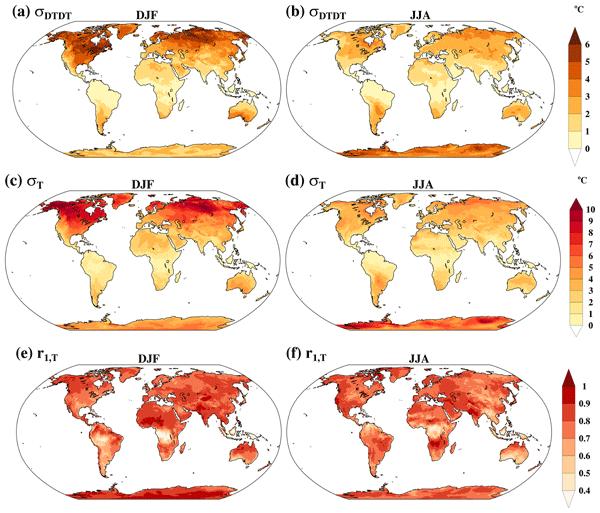
Kalpana Hamal and Stephan Pfahl
Weather Clim. Dynam., 6, 879–899, https://doi.org/10.5194/wcd-6-879-2025, https://doi.org/10.5194/wcd-6-879-2025, 2025
Short summary
Short summary
This study investigates the global drivers of sudden temperature changes from one day to the next using observational data and trajectory analysis. In extratropical regions, these shifts are mainly driven by air mass movements linked to circulation patterns. In tropical areas, local factors like cloud cover play a key role. Understanding these mechanisms improves predictions of extreme-temperature events, aiding in better preparation and mitigation strategies.
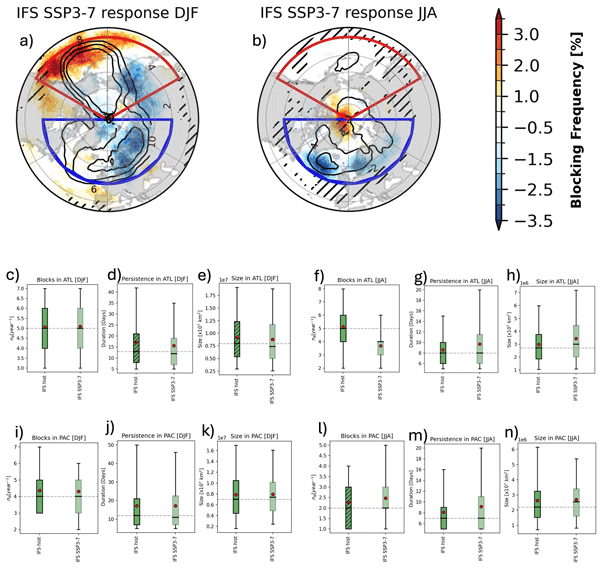
Edgar Dolores-Tesillos, Olivia Martius, and Stephan Pfahl
Weather Clim. Dynam., 7, 1089–1116, https://doi.org/10.5194/wcd-7-1089-2026, https://doi.org/10.5194/wcd-7-1089-2026, 2026
Short summary
Short summary
Storm-resolving climate models are gaining attention for their improved simulation of mesoscale processes. Yet, how finer resolution benefits synoptic-scale phenomena remains unclear. We assess atmospheric blocking in the Next Generation Earth Modelling Systems, European Eddy-Rich Earth System Models, and Destination Earth projects, identifying key bias drivers and their response under a high-emissions climate change scenario.
Henry Schoeller and Stephan Pfahl
EGUsphere, https://doi.org/10.5194/egusphere-2026-3137, https://doi.org/10.5194/egusphere-2026-3137, 2026
Short summary
Short summary
The state of the atmosphere is never perfectly known, and how reliable estimates are changes with both the weather and the measurements available. We studied this uncertainty in a widely used atmospheric dataset across more than eight decades. We found it is shaped strongly by observational challenges in addition to model limitations. This matters for anyone using such data to study past and future weather and climate, but also because uncertainty in the current state limits forecasting.
Donghe Zhu, Patrick Pieper, Stephan Pfahl, and Erich Fischer
EGUsphere, https://doi.org/10.5194/egusphere-2026-1258, https://doi.org/10.5194/egusphere-2026-1258, 2026
Short summary
Short summary
Climate models consistently project stronger heavy rainfall in a warming climate, but they disagree on how large these changes will be across regions. In this study, we identify the key causes of this uncertainty. Shifts in when events occur during the year alter the warming on those days and explain part of the thermodynamic increase in heavy rainfall. Differences in mid-tropospheric atmospheric motion are the dominant source of model disagreement in the dynamic increase in heavy rainfall.
Kalpana Hamal and Stephan Pfahl
Weather Clim. Dynam., 6, 879–899, https://doi.org/10.5194/wcd-6-879-2025, https://doi.org/10.5194/wcd-6-879-2025, 2025
Short summary
Short summary
This study investigates the global drivers of sudden temperature changes from one day to the next using observational data and trajectory analysis. In extratropical regions, these shifts are mainly driven by air mass movements linked to circulation patterns. In tropical areas, local factors like cloud cover play a key role. Understanding these mechanisms improves predictions of extreme-temperature events, aiding in better preparation and mitigation strategies.
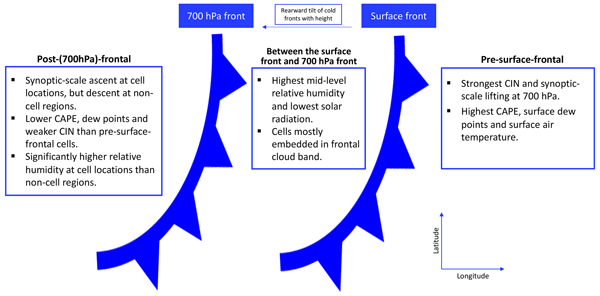
George Pacey, Stephan Pfahl, and Lisa Schielicke
Weather Clim. Dynam., 6, 695–713, https://doi.org/10.5194/wcd-6-695-2025, https://doi.org/10.5194/wcd-6-695-2025, 2025
Short summary
Short summary
Cold fronts are often associated with areas of intense precipitation (cells) in the warm season, but the drivers and environments of cells at different locations relative to the front are not well-understood. We show that cells ahead of the surface front have the highest amount of environmental instability and moisture. Also, low-level lifting is maximised ahead of the surface front and upper-level lifting is particularly important for cell initiation behind the front.
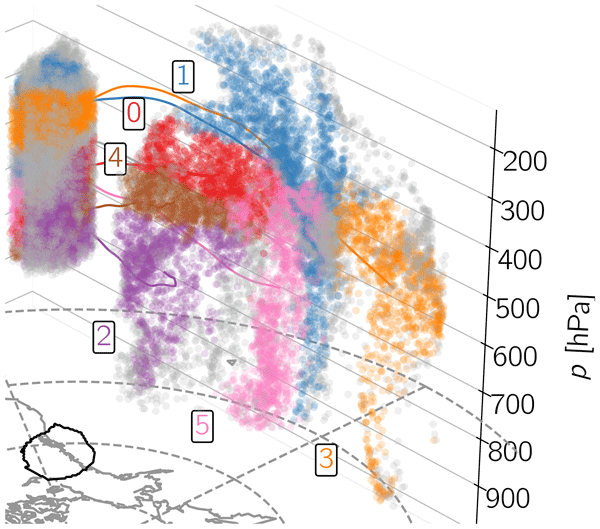
Henry Schoeller, Robin Chemnitz, Péter Koltai, Maximilian Engel, and Stephan Pfahl
Nonlin. Processes Geophys., 32, 51–73, https://doi.org/10.5194/npg-32-51-2025, https://doi.org/10.5194/npg-32-51-2025, 2025
Short summary
Short summary
We identify spatially coherent air streams into atmospheric blockings, which are important weather phenomena. By adapting mathematical methods to the atmosphere, we confirm previous findings. Our work shows that spatially coherent air streams featuring cloud formation correlate with strengthening of the blocking. The developed framework also allows for statements about the spatial behavior of the air parcels as a whole and indicates that blockings reduce the dispersion of the air parcels.
Florian Ruff and Stephan Pfahl
Nat. Hazards Earth Syst. Sci., 24, 2939–2952, https://doi.org/10.5194/nhess-24-2939-2024, https://doi.org/10.5194/nhess-24-2939-2024, 2024
Short summary
Short summary
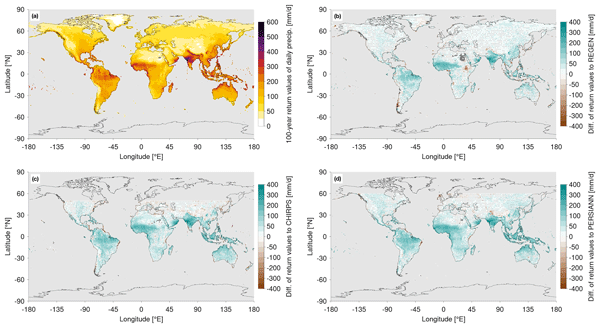
High-impact river floods are often caused by extreme precipitation. Flood protection relies on reliable estimates of the return values. Observational time series are too short for a precise calculation. Here, 100-year return values of daily precipitation are estimated on a global grid based on a large set of model-generated precipitation events from ensemble weather prediction. The statistical uncertainties in the return values can be substantially reduced compared to observational estimates.
Edgar Dolores-Tesillos and Stephan Pfahl
Weather Clim. Dynam., 5, 163–179, https://doi.org/10.5194/wcd-5-163-2024, https://doi.org/10.5194/wcd-5-163-2024, 2024
Short summary
Short summary
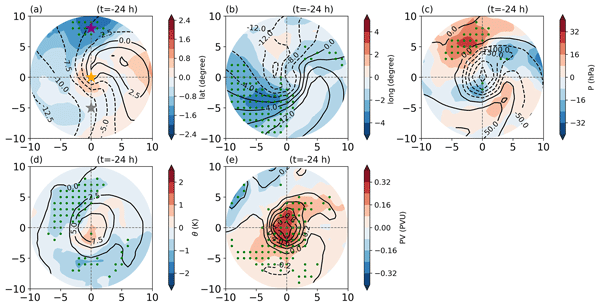
In a warmer climate, the winter extratropical cyclones over the North Atlantic basin are expected to have a larger footprint of strong winds. Dynamical changes at different altitudes are responsible for these wind changes. Based on backward trajectories using the CESM-LE simulations, we show that the diabatic processes gain relevance as the planet warms. For instance, changes in the radiative processes will play an important role in the upper-level cyclone dynamics.
Julian F. Quinting, Christian M. Grams, Edmund Kar-Man Chang, Stephan Pfahl, and Heini Wernli
Weather Clim. Dynam., 5, 65–85, https://doi.org/10.5194/wcd-5-65-2024, https://doi.org/10.5194/wcd-5-65-2024, 2024
Short summary
Short summary
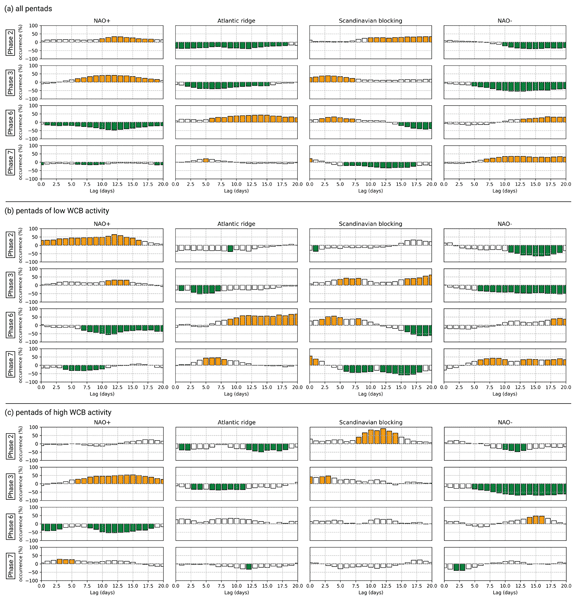
Research in the last few decades has revealed that rapidly ascending airstreams in extratropical cyclones have an important effect on the evolution of downstream weather and predictability. In this study, we show that the occurrence of these airstreams over the North Pacific is modulated by tropical convection. Depending on the modulation, known atmospheric circulation patterns evolve quite differently, which may affect extended-range predictions in the Atlantic–European region.
George Pacey, Stephan Pfahl, Lisa Schielicke, and Kathrin Wapler
Nat. Hazards Earth Syst. Sci., 23, 3703–3721, https://doi.org/10.5194/nhess-23-3703-2023, https://doi.org/10.5194/nhess-23-3703-2023, 2023
Short summary
Short summary
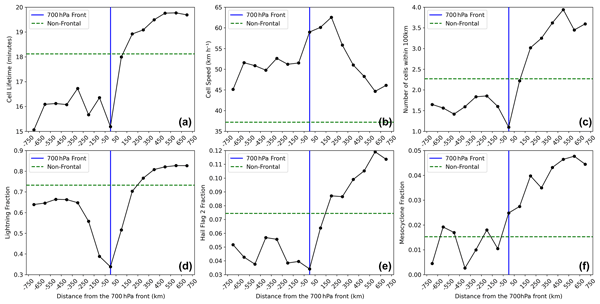
Cold fronts are often associated with areas of intense precipitation (cells) and sometimes with hazards such as flooding, hail and lightning. We find that cold-frontal cell days are associated with higher cell frequency and cells are typically more intense. We also show both spatially and temporally where cells are most frequent depending on their cell-front distance. These results are an important step towards a deeper understanding of cold-frontal storm climatology and improved forecasting.
Leonie Villiger, Marina Dütsch, Sandrine Bony, Marie Lothon, Stephan Pfahl, Heini Wernli, Pierre-Etienne Brilouet, Patrick Chazette, Pierre Coutris, Julien Delanoë, Cyrille Flamant, Alfons Schwarzenboeck, Martin Werner, and Franziska Aemisegger
Atmos. Chem. Phys., 23, 14643–14672, https://doi.org/10.5194/acp-23-14643-2023, https://doi.org/10.5194/acp-23-14643-2023, 2023
Short summary
Short summary
This study evaluates three numerical simulations performed with an isotope-enabled weather forecast model and investigates the coupling between shallow trade-wind cumulus clouds and atmospheric circulations on different scales. We show that the simulations reproduce key characteristics of shallow trade-wind clouds as observed during the field experiment EUREC4A and that the spatial distribution of stable-water-vapour isotopes is shaped by the overturning circulation associated with these clouds.
Florian Ruff and Stephan Pfahl
Weather Clim. Dynam., 4, 427–447, https://doi.org/10.5194/wcd-4-427-2023, https://doi.org/10.5194/wcd-4-427-2023, 2023
Short summary
Short summary
In this study, we analyse the generic atmospheric processes of very extreme, 100-year precipitation events in large central European river catchments and the corresponding differences to less extreme events, based on a large time series (~1200 years) of simulated but realistic daily precipitation events from the ECMWF. Depending on the catchment, either dynamical mechanisms or thermodynamic conditions or a combination of both distinguish 100-year events from less extreme precipitation events.
Charles G. Gertler, Paul A. O'Gorman, and Stephan Pfahl
Weather Clim. Dynam., 4, 361–379, https://doi.org/10.5194/wcd-4-361-2023, https://doi.org/10.5194/wcd-4-361-2023, 2023
Short summary
Short summary
The relationship between the time-mean state of the atmosphere and aspects of atmospheric circulation drives general understanding of the atmospheric circulation. Here, we present new techniques to calculate local properties of the time-mean atmosphere and relate those properties to aspects of extratropical circulation with important implications for weather. This relationship should help connect changes to the atmosphere, such as under global warming, to changes in midlatitude weather.
Lisa Schielicke and Stephan Pfahl
Weather Clim. Dynam., 3, 1439–1459, https://doi.org/10.5194/wcd-3-1439-2022, https://doi.org/10.5194/wcd-3-1439-2022, 2022
Short summary
Short summary
Projected future heatwaves in many European regions will be even warmer than the mean increase in summer temperature suggests. To identify the underlying thermodynamic and dynamic processes, we compare Lagrangian backward trajectories of airstreams associated with heatwaves in two time slices (1991–2000 and 2091–2100) in a large single-model ensemble (CEMS-LE). We find stronger future descent associated with adiabatic warming in some regions and increased future diabatic heating in most regions.
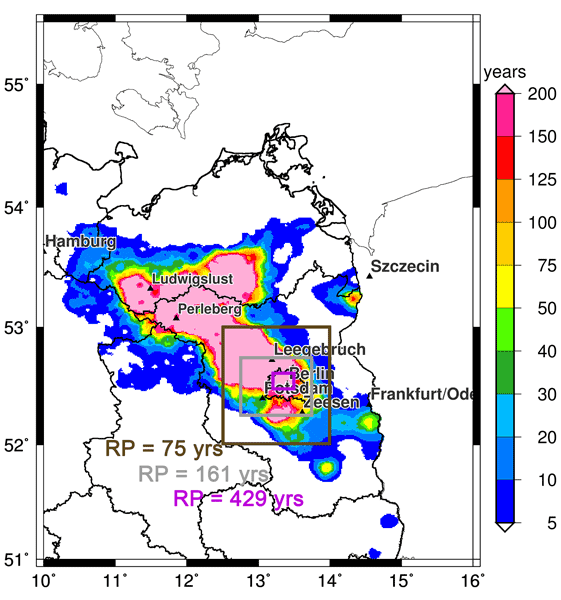
Alberto Caldas-Alvarez, Markus Augenstein, Georgy Ayzel, Klemens Barfus, Ribu Cherian, Lisa Dillenardt, Felix Fauer, Hendrik Feldmann, Maik Heistermann, Alexia Karwat, Frank Kaspar, Heidi Kreibich, Etor Emanuel Lucio-Eceiza, Edmund P. Meredith, Susanna Mohr, Deborah Niermann, Stephan Pfahl, Florian Ruff, Henning W. Rust, Lukas Schoppa, Thomas Schwitalla, Stella Steidl, Annegret H. Thieken, Jordis S. Tradowsky, Volker Wulfmeyer, and Johannes Quaas
Nat. Hazards Earth Syst. Sci., 22, 3701–3724, https://doi.org/10.5194/nhess-22-3701-2022, https://doi.org/10.5194/nhess-22-3701-2022, 2022
Short summary
Short summary
In a warming climate, extreme precipitation events are becoming more frequent. To advance our knowledge on such phenomena, we present a multidisciplinary analysis of a selected case study that took place on 29 June 2017 in the Berlin metropolitan area. Our analysis provides evidence of the extremeness of the case from the atmospheric and the impacts perspectives as well as new insights on the physical mechanisms of the event at the meteorological and climate scales.

Andries Jan de Vries, Franziska Aemisegger, Stephan Pfahl, and Heini Wernli
Atmos. Chem. Phys., 22, 8863–8895, https://doi.org/10.5194/acp-22-8863-2022, https://doi.org/10.5194/acp-22-8863-2022, 2022
Short summary
Short summary
The Earth's water cycle contains the common H2O molecule but also the less abundant, heavier HDO. We use their different physical properties to study tropical ice clouds in model simulations of the West African monsoon. Isotope signals reveal different processes through which ice clouds form and decay in deep-convective and widespread cirrus. Previously observed variations in upper-tropospheric vapour isotopes are explained by microphysical processes in convective updraughts and downdraughts.
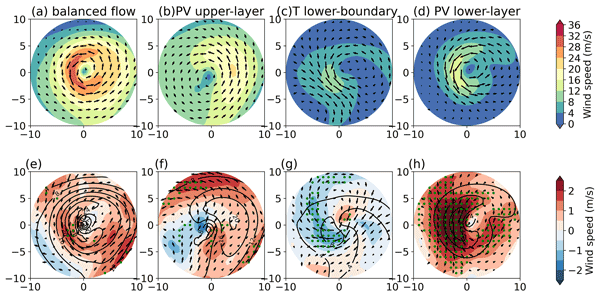
Edgar Dolores-Tesillos, Franziska Teubler, and Stephan Pfahl
Weather Clim. Dynam., 3, 429–448, https://doi.org/10.5194/wcd-3-429-2022, https://doi.org/10.5194/wcd-3-429-2022, 2022
Short summary
Short summary
Strong winds caused by extratropical cyclones represent a costly hazard for European countries. Here, based on CESM-LENS coupled climate simulations, we show that future changes of such strong winds are characterized by an increased magnitude and extended footprint southeast of the cyclone center. This intensification is related to a combination of increased diabatic heating and changes in upper-level wave dynamics.
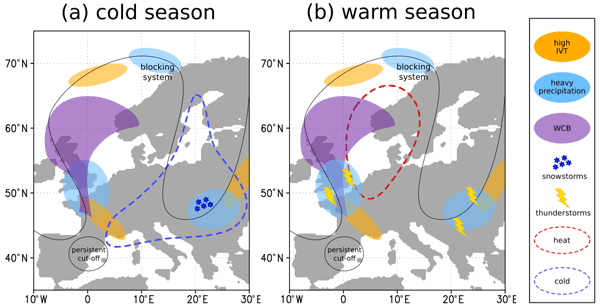
Lisa-Ann Kautz, Olivia Martius, Stephan Pfahl, Joaquim G. Pinto, Alexandre M. Ramos, Pedro M. Sousa, and Tim Woollings
Weather Clim. Dynam., 3, 305–336, https://doi.org/10.5194/wcd-3-305-2022, https://doi.org/10.5194/wcd-3-305-2022, 2022
Short summary
Short summary
Atmospheric blocking is associated with stationary, self-sustaining and long-lasting high-pressure systems. They can cause or at least influence surface weather extremes, such as heat waves, cold spells, heavy precipitation events, droughts or wind extremes. The location of the blocking determines where and what type of extreme event will occur. These relationships are also important for weather prediction and may change due to global warming.
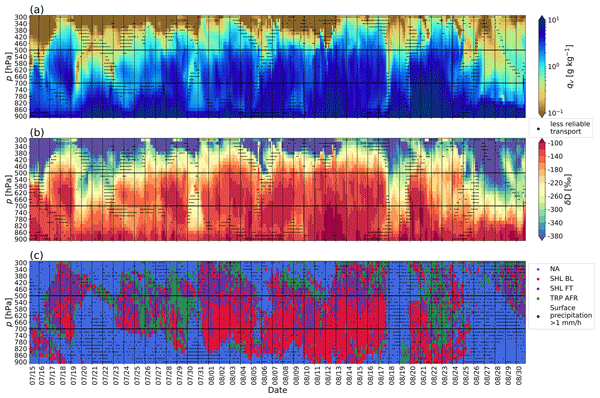
Fabienne Dahinden, Franziska Aemisegger, Heini Wernli, Matthias Schneider, Christopher J. Diekmann, Benjamin Ertl, Peter Knippertz, Martin Werner, and Stephan Pfahl
Atmos. Chem. Phys., 21, 16319–16347, https://doi.org/10.5194/acp-21-16319-2021, https://doi.org/10.5194/acp-21-16319-2021, 2021
Short summary
Short summary
We use high-resolution numerical isotope modelling and Lagrangian backward trajectories to identify moisture transport pathways and governing physical and dynamical processes that affect the free-tropospheric humidity and isotopic variability over the eastern subtropical North Atlantic. Furthermore, we conduct a thorough isotope modelling validation with aircraft and remote-sensing observations of water vapour isotopes.
Cited articles
Bao, J. and Stevens, B.: The Elements of the Thermodynamic Structure of the Tropical Atmosphere, J. Meteorol. Soc. JPN II, 99, 1483–1499, https://doi.org/10.2151/jmsj.2021-072, 2021.
Bartusek, S., Kornhuber, K., and Ting, M.: 2021 North American heatwave amplified by climate change-driven nonlinear interactions, Nat. Clim. Change, 12, 1143–1150, https://doi.org/10.1038/s41558-022-01520-4, 2022.
Bathiany, S., Dakos, V., Scheffer, M., and Lenton, T. M.: Climate models predict increasing temperature variability in poor countries, Sci. Adv., 4, eaar5809, https://doi.org/10.1126/sciadv.aar5809, 2018.
Bennett, L. M., Proppe, B., and Curta, B.: a general-purpose high-performance computer at ZEDAT, Freie Universität Berlin, https://doi.org/10.17169/refubium-26754, 2020.
Beobide-Arsuaga, G., Suarez-Gutierrez, L., Barkhordarian, A., Olonscheck, D., and Baehr, J.: Increasing central and northern European summer heatwave intensity due to forced changes in internal variability, Nat. Commun., 16, 9485, https://doi.org/10.1038/s41467-025-65392-w, 2025.
Bergman, J. W. and Sardeshmukh, P. D.: Dynamic Stabilization of Atmospheric Single Column Models, J. Climate, 17, 1004–1021, https://doi.org/10.1175/1520-0442(2004)017<1004:DSOASC>2.0.CO;2, 2004.
Bieli, M., Pfahl, S., and Wernli, H.: A Lagrangian investigation of hot and cold temperature extremes in Europe, Q. J. Roy. Meteorol. Soc., 141, 98–108, https://doi.org/10.1002/qj.2339, 2015.
Birch, C. E., Jackson, L. S., Finney, D. L., Marsham, J. M., Stratton, R. A., Tucker, S., Chapman, S., Senior, C. A., Keane, R. J., Guichard, F., and Kendon, E. J.: Future Changes in African Heatwaves and Their Drivers at the Convective Scale, J. Climate, 35, 5981–6006, https://doi.org/10.1175/JCLI-D-21-0790.1, 2022.
Brunner, L., Schaller, N., Anstey, J., Sillmann, J., and Steiner, A. K.: Dependence of Present and Future European Temperature Extremes on the Location of Atmospheric Blocking, Geophys. Res. Lett., 45, 6311–6320, https://doi.org/10.1029/2018GL077837, 2018.
Cattiaux, J., Douville, H., Schoetter, R., Parey, S., and Yiou, P.: Projected increase in diurnal and interdiurnal variations of European summer temperatures, Geophys. Res. Lett., 42, 899–907, https://doi.org/10.1002/2014GL062531, 2015.
Chan, E. Y. Y., Goggins, W. B., Kim, J. J., and Griffiths, S. M.: A study of intracity variation of temperature-related mortality and socioeconomic status among the Chinese population in Hong Kong, J. Epidemiol. Comm. H., 66, 322–327, https://doi.org/10.1136/jech.2008.085167, 2012.
Chan, P. W., Catto, J. L., and Collins, M.: Heatwave–blocking relation change likely dominates over decrease in blocking frequency under global warming, npj Clim. Atmos. Sci., 5, 68, https://doi.org/10.1038/s41612-022-00290-2, 2022.
Chapman, S., Syktus, J., Trancoso, R., Toombs, N., and Eccles, R.: Projected changes in mean climate and extremes from downscaled high-resolution CMIP6 simulations in Australia, Weather Clim. Extrem., 46, 100733, https://doi.org/10.1016/j.wace.2024.100733, 2024.
Chen, H., Yang, J., Tan, C., Wang, J., and Cai, X.: Dynamic evolution of Day-To-Day Temperature fluctuations and population exposure on a global scale, PLoS One, 20, e0333887, https://doi.org/10.1371/journal.pone.0333887, 2025.
Chen, J., Dai, A., and Zhang, Y.: Projected Changes in Daily Variability and Seasonal Cycle of Near-Surface Air Temperature over the Globe during the Twenty-First Century, J. Climate, 32, 8537–8561, https://doi.org/10.1175/JCLI-D-19-0438.1, 2019.
Ciavarella, A., Cotterill, D., Stott, P., Kew, S., Philip, S., van Oldenborgh, G. J., Skålevåg, A., Lorenz, P., Robin, Y., Otto, F., Hauser, M., Seneviratne, S. I., Lehner, F., and Zolina, O.: Prolonged Siberian heat of 2020 almost impossible without human influence, Clim. Change, 166, 9, https://doi.org/10.1007/s10584-021-03052-w, 2021.
Copernicus Climate Change Service: Complete ERA5 global atmospheric reanalysis, Copernicus Climate Change Service (C3S) Climate Data Store (CDS) [data set], https://doi.org/10.24381/cds.143582cf, 2023.
Coumou, D., Di Capua, G., Vavrus, S., Wang, L., and Wang, S.: The influence of Arctic amplification on mid-latitude summer circulation, Nat. Commun., 9, 2959, https://doi.org/10.1038/s41467-018-05256-8, 2018.
Dai, A. and Deng, J.: Arctic Amplification Weakens the Variability of Daily Temperatures over Northern Middle-High Latitudes, J. Climate, 34, 2591–2609, https://doi.org/10.1175/JCLI-D-20-0514.1, 2021.
Diro, G. T. and Sushama, L.: Contribution of Snow Cover Decline to Projected Warming Over North America, Geophys. Res. Lett., 47, e2019GL084414, https://doi.org/10.1029/2019GL084414, 2020.
Dolores-Tesillos, E., Teubler, F., and Pfahl, S.: Future changes in North Atlantic winter cyclones in CESM-LE – Part 1: Cyclone intensity, potential vorticity anomalies, and horizontal wind speed, Weather Clim. Dynam., 3, 429–448, https://doi.org/10.5194/wcd-3-429-2022, 2022.
Ebi, K., Haines, A., Andrade, R. F. S., Åström, C., Barreto, M. L., Bonell, A., Brink, N., Caminade, C., Carlson, C. J., Carter, R., Chua, P., Cissé, G., Colón-González, F. J., Dasgupta, S., Galvao, L. A., Garrido Zornoza, M., Gasparrini, A., Gordon-Strachan, G., Hajat, S., Harper, S., Harrington, L. J., Hashizume, M., Hess, J., Hilly, J., Ingole, V., Jacobson, L. V., Kapwata, T., Keeler, C., Kidd, S. A., Kimani-Murage, E. W., Kolli, R. K., Kovats, S., Li, S., Lowe, R., Mitchell, D., Murray, K., New, M., Ogunniyi, O. E., Perkins-Kirkpatrick, S. E., Pescarini, J., Pineda Restrepo, B. L., Pinho, S. T. R., Prescott, V., Redvers, N., Ryan, S., Santer, B., Schleussner, C. F., Semenza, J. C., Taylor, M., Temple, L., Thiam, S., Thiery, W., Tompkins, A. M., Undorf, S., Vicedo-Cabrera, A. M., Wan, K., Warren, R., Webster, C., Woodward, A., Wright, C., and Stuart-Smith, R. F.: The attribution of human health outcomes to climate change: a transdisciplinary guidance document, Clim. Change, 178, https://doi.org/10.1007/s10584-025-03976-7, 2025.
Elkouk, A., El Morjani, Z. E. A., Pokhrel, Y., Chehbouni, A., Sifeddine, A., Thober, S., and Bouchaou, L.: Multi-model ensemble projections of soil moisture drought over North Africa and the Sahel region under 1.5, 2, and 3 °C global warming, Clim. Change, 167, 52, https://doi.org/10.1007/s10584-021-03202-0, 2021.
Garfinkel, C. I. and Harnik, N.: The Non-Gaussianity and Spatial Asymmetry of Temperature Extremes Relative to the Storm Track: The Role of Horizontal Advection, J. Climate, 30, 445–464, https://doi.org/10.1175/JCLI-D-15-0806.1, 2017.
Giorgi, F. and Raffaele, F.: On the dependency of GCM-based regional surface climate change projections on model biases, resolution and climate sensitivity, Clim. Dynam., 58, 2843–2862, https://doi.org/10.1007/s00382-021-06037-8, 2022.
Hamal, K. and Pfahl, S.: Physical processes leading to extreme day-to-day temperature change – Part 1: Present-day climate, Weather Clim. Dynam., 6, 879–899, https://doi.org/10.5194/wcd-6-879-2025, 2025.
Hartig, K., Tziperman, E., and Loughner, C. P.: Processes Contributing to North American Cold Air Outbreaks Based on Air Parcel Trajectory Analysis, J. Climate, 36, 931–943, https://doi.org/10.1175/JCLI-D-22-0204.1, 2023.
Heeter, K. J., Harley, G. L., Abatzoglou, J. T., Anchukaitis, K. J., Cook, E. R., Coulthard, B. L., Dye, L. A., and Homfeld, I. K.: Unprecedented 21st century heat across the Pacific Northwest of North America, npj Clim. Atmos. Sci., 6, 5, https://doi.org/10.1038/s41612-023-00340-3, 2023.
Hersbach, H., Bell, B., Berrisford, P., Hirahara, S., Horányi, A., Muñoz-Sabater, J., Nicolas, J., Peubey, C., Radu, R., Schepers, D., Simmons, A., Soci, C., Abdalla, S., Abellan, X., Balsamo, G., Bechtold, P., Biavati, G., Bidlot, J., Bonavita, M., De Chiara, G., Dahlgren, P., Dee, D., Diamantakis, M., Dragani, R., Flemming, J., Forbes, R., Fuentes, M., Geer, A., Haimberger, L., Healy, S., Hogan, R. J., Hólm, E., Janisková, M., Keeley, S., Laloyaux, P., Lopez, P., Lupu, C., Radnoti, G., de Rosnay, P., Rozum, I., Vamborg, F., Villaume, S., and Thépaut, J.-N.: The ERA5 global reanalysis, Q. J. Roy. Meteorol. Soc., 146, 1999–2049, https://doi.org/10.1002/qj.3803, 2020.
Hovdahl, I.: The deadly effect of day-to-day temperature variation in the United States, Environ. Res. Lett., 17, 104031, https://doi.org/10.1088/1748-9326/ac9297, 2022.
Intergovernmental Panel on Climate, C.: Climate Change 2022 – Impacts, Adaptation and Vulnerability: Working Group II Contribution to the Sixth Assessment Report of the Intergovernmental Panel on Climate Change, Cambridge University Press, Cambridge, https://doi.org/10.1017/9781009325844, 2023.
Jeong, D. I., Yu, B., and Cannon, A. J.: Future Changes in North American Summer Heatwave Variability and Associated Dynamic and Thermodynamic Processes, J. Climate, 38, 6727–6744, https://doi.org/10.1175/JCLI-D-25-0114.1, 2025.
Kautz, L.-A., Martius, O., Pfahl, S., Pinto, J. G., Ramos, A. M., Sousa, P. M., and Woollings, T.: Atmospheric blocking and weather extremes over the Euro-Atlantic sector – a review, Weather Clim. Dynam., 3, 305–336, https://doi.org/10.5194/wcd-3-305-2022, 2022.
Kay, J. E., Deser, C., Phillips, A., Mai, A., Hannay, C., Strand, G., Arblaster, J. M., Bates, S. C., Danabasoglu, G., Edwards, J., Holland, M., Kushner, P., Lamarque, J.-F., Lawrence, D., Lindsay, K., Middleton, A., Munoz, E., Neale, R., Oleson, K., Polvani, L., and Vertenstein, M.: The Community Earth System Model (CESM) Large Ensemble Project: A Community Resource for Studying Climate Change in the Presence of Internal Climate Variability, B. Am. Meteorol. Soc., 96, 1333–1349, https://doi.org/10.1175/BAMS-D-13-00255.1, 2015 (data available at: https://www2.cesm.ucar.edu/models/cesm1.0/, last access: 15 Apriol 2026).
Kim, O.-Y., Wang, B., and Shin, S.-H.: How do weather characteristics change in a warming climate?, Clim. Dynam., 41, 3261–3281, https://doi.org/10.1007/s00382-013-1795-8, 2013.
Kornhuber, K. and Tamarin-Brodsky, T.: Future Changes in Northern Hemisphere Summer Weather Persistence Linked to Projected Arctic Warming, Geophys. Res. Lett., 48, e2020GL091603, https://doi.org/10.1029/2020GL091603, 2021.
Kotz, M., Wenz, L., Stechemesser, A., Kalkuhl, M., and Levermann, A.: Day-to-day temperature variability reduces economic growth, Nat. Clim. Change, 11, 319–325, https://doi.org/10.1038/s41558-020-00985-5, 2021.
Lin, H., Li, Y., and Zhao, L.: Partitioning of Sensible and Latent Heat Fluxes in Different Vegetation Types and Their Spatiotemporal Variations Based on 203 FLUXNET Sites, J. Geophys. Res.-Atmos., 127, e2022JD037142, https://doi.org/10.1029/2022JD037142, 2022.
Linsenmeier, M.: Temperature variability and long-run economic development, J. Environ. Econom. Manage., 121, 102840, https://doi.org/10.1016/j.jeem.2023.102840, 2023.
Liu, Q., Fu, C., Xu, Z., and Ding, A.: Global warming intensifies extreme day-to-day temperature changes in mid–low latitudes, Nat. Clim. Change, https://doi.org/10.1038/s41558-025-02486-9, 2025.
Luo, H., Quaas, J., and Han, Y.: Diurnally asymmetric cloud cover trends amplify greenhouse warming, Sci. Adv., 10, eado5179, https://doi.org/10.1126/sciadv.ado5179, 2024.
Martínez-Solanas, È., Quijal-Zamorano, M., Achebak, H., Petrova, D., Robine, J.-M., Herrmann, F. R., Rodó, X., and Ballester, J.: Projections of temperature-attributable mortality in Europe: a time series analysis of 147 contiguous regions in 16 countries, The Lancet Planet. H., 5, e446–e454, https://doi.org/10.1016/S2542-5196(21)00150-9, 2021.
Mayer, A.: A New Global Lagrangian Analysis of Near-Surface Temperature Extremes, Geophys. Res. Lett., 52, e2025GL116696, https://doi.org/10.1029/2025GL116696, 2025.
McKinnon, K. A., Simpson, I. R., and Williams, A. P.: The pace of change of summertime temperature extremes, P. Natl. Acad. Sci. USA, 121, e2406143121, https://doi.org/10.1073/pnas.2406143121, 2024.
Moustakis, Y., Onof, C. J., and Paschalis, A.: Atmospheric convection, dynamics and topography shape the scaling pattern of hourly rainfall extremes with temperature globally, Commun. Earth Environ., 1, 11, https://doi.org/10.1038/s43247-020-0003-0, 2020.
Nangombe, S. S., Zhou, T., Zhang, W., Zou, L., and Li, D.: High-Temperature Extreme Events Over Africa Under 1.5 and 2 °C of Global Warming, J. Geophys. Res.-Atmos., 124, 4413–4428, https://doi.org/10.1029/2018JD029747, 2019.
Neal, E., Huang, C. S. Y., and Nakamura, N.: The 2021 Pacific Northwest Heat Wave and Associated Blocking: Meteorology and the Role of an Upstream Cyclone as a Diabatic Source of Wave Activity, Geophys. Res. Lett., 49, e2021GL097699, https://doi.org/10.1029/2021GL097699, 2022.
Nygård, T., Papritz, L., Naakka, T., and Vihma, T.: Cold wintertime air masses over Europe: where do they come from and how do they form?, Weather Clim. Dynam., 4, 943–961, https://doi.org/10.5194/wcd-4-943-2023, 2023.
Papritz, L. and Spengler, T.: A Lagrangian Climatology of Wintertime Cold Air Outbreaks in the Irminger and Nordic Seas and Their Role in Shaping Air–Sea Heat Fluxes, J. Climate, 30, 2717–2737, https://doi.org/10.1175/JCLI-D-16-0605.1, 2017.
Quinting, J. F. and Reeder, M. J.: Southeastern Australian Heat Waves from a Trajectory Viewpoint, Mon. Weather Rev., 145, 4109–4125, https://doi.org/10.1175/MWR-D-17-0165.1, 2017.
Raymond, C., Matthews, T., and Horton, R. M.: The emergence of heat and humidity too severe for human tolerance, Sci. Adv., 6, eaaw1838, https://doi.org/10.1126/sciadv.aaw1838, 2020.
Röthlisberger, M. and Papritz, L.: Quantifying the physical processes leading to atmospheric hot extremes at a global scale, Nat. Geosci., 16, 210–216, https://doi.org/10.1038/s41561-023-01126-1, 2023a.
Röthlisberger, M. and Papritz, L.: A Global Quantification of the Physical Processes Leading to Near-Surface Cold Extremes, Geophys. Res. Lett., 50, e2022GL101670, https://doi.org/10.1029/2022GL101670, 2023b.
Röthlisberger, M., Sprenger, M., Beyerle, U., Fischer, E. M., and Wernli, H.: Advective, adiabatic and diabatic contributions to heat extremes simulated with the Community Earth System Model version 2, EGUsphere [preprint], https://doi.org/10.5194/egusphere-2025-5146, 2025.
Ruosteenoja, K., Markkanen, T., Venäläinen, A., Räisänen, P., and Peltola, H.: Seasonal soil moisture and drought occurrence in Europe in CMIP5 projections for the 21st century, Clim. Dynam., 50, 1177–1192, https://doi.org/10.1007/s00382-017-3671-4, 2018.
Sato, T. and Nakamura, T.: Intensification of hot Eurasian summers by climate change and land–atmosphere interactions, Sci. Rep., 9, 10866, https://doi.org/10.1038/s41598-019-47291-5, 2019.
Schaller, N., Sillmann, J., Anstey, J., Fischer, E. M., Grams, C. M., and Russo, S.: Influence of blocking on Northern European and Western Russian heatwaves in large climate model ensembles, Environ. Res. Lett., 13, 054015, https://doi.org/10.1088/1748-9326/aaba55, 2018.
Schielicke, L. and Pfahl, S.: European heatwaves in present and future climate simulations: a Lagrangian analysis, Weather Clim. Dynam., 3, 1439–1459, https://doi.org/10.5194/wcd-3-1439-2022, 2022.
Screen, J. A.: Arctic amplification decreases temperature variance in northern mid- to high-latitudes, Nat. Clim. Change, 4, 577–582, https://doi.org/10.1038/nclimate2268, 2014.
Simpson, I. R., Lawrence, D. M., Swenson, S. C., Hannay, C., McKinnon, K. A., and Truesdale, J. E.: Improvements in Wintertime Surface Temperature Variability in the Community Earth System Model Version 2 (CESM2) Related to the Representation of Snow Density, J. Adv. Model. Earth Syst., 14, e2021MS002880, https://doi.org/10.1029/2021MS002880, 2022.
Sprenger, M. and Wernli, H.: The LAGRANTO Lagrangian analysis tool – version 2.0, Geosci. Model Dev., 8, 2569–2586, https://doi.org/10.5194/gmd-8-2569-2015, 2015 (data available at: https://iacweb.ethz.ch/staff/sprenger/lagranto/, last access: 15 April 2026).
Stohl, A.: Computation, accuracy and applications of trajectories – A review and bibliography, Atmos. Environ., 32, 947–966, https://doi.org/10.1016/S1352-2310(97)00457-3, 1998.
Tamarin-Brodsky, T., Hodges, K., Hoskins, B. J., and Shepherd, T. G.: Changes in Northern Hemisphere temperature variability shaped by regional warming patterns, Nat. Geosci., 13, 414–421, https://doi.org/10.1038/s41561-020-0576-3, 2020.
Vogel, M. M., Zscheischler, J., Fischer, E. M., and Seneviratne, S. I.: Development of Future Heatwaves for Different Hazard Thresholds, J. Geophys. Res.-Atmos., 125, e2019JD032070, https://doi.org/10.1029/2019JD032070, 2020.
Wan, H., Kirchmeier-Young, M. C., and Zhang, X.: Human influence on daily temperature variability over land, Environ. Res. Lett., 16, 094026, https://doi.org/10.1088/1748-9326/ac1cb9, 2021.
Wang, F., Vavrus, S. J., Francis, J. A., and Martin, J. E.: The role of horizontal thermal advection in regulating wintertime mean and extreme temperatures over interior North America during the past and future, Clim. Dynam., 53, 6125–6144, https://doi.org/10.1007/s00382-019-04917-8, 2019.
Wang, J., Zhang, J., and Zhang, P.: Rising temperature threatens China's cropland, Environ. Res. Lett., 17, 084042, https://doi.org/10.1088/1748-9326/ac84f1, 2022.
Wang, P., Ye, F., Yang, Y., Tang, J., and Liao, H.: Mitigated Rapid Temperature Variability in the Northern Mid-High Latitudes Under Carbon Neutrality, Geophys. Res. Lett., 52, e2025GL118040, https://doi.org/10.1029/2025GL118040, 2025.
White, R. H., Anderson, S., Booth, J. F., Braich, G., Draeger, C., Fei, C., Harley, C. D. G., Henderson, S. B., Jakob, M., Lau, C.-A., Mareshet Admasu, L., Narinesingh, V., Rodell, C., Roocroft, E., Weinberger, K. R., and West, G.: The unprecedented Pacific Northwest heatwave of June 2021, Nat. Commun., 14, 727, https://doi.org/10.1038/s41467-023-36289-3, 2023.
Wilks, D. S.: “The Stippling Shows Statistically Significant Grid Points”: How Research Results are Routinely Overstated and Overinterpreted, and What to Do about It, B. Am. Meteorol. Soc., 97, 2263–2273, https://doi.org/10.1175/BAMS-D-15-00267.1, 2016.
Wu, Y., Wen, B., Li, S., Gasparrini, A., Tong, S., Overcenco, A., Urban, A., Schneider, A., Entezari, A., Vicedo-Cabrera, A. M., Zanobetti, A., Analitis, A., Zeka, A., Tobias, A., Alahmad, B., Armstrong, B., Forsberg, B., Íñiguez, C., Ameling, C., De la Cruz Valencia, C., Åström, C., Houthuijs, D., Van Dung, D., Royé, D., Indermitte, E., Lavigne, E., Mayvaneh, F., Acquaotta, F., de'Donato, F., Sera, F., Carrasco-Escobar, G., Kan, H., Orru, H., Kim, H., Holobaca, I.-H., Kyselý, J., Madureira, J., Schwartz, J., Katsouyanni, K., Hurtado-Díaz, M., Ragettli, M. S., Hashizume, M., Pascal, M., de Sousa Zanotti Stagliorio Coélho, M., Scovronick, N., Michelozzi, P., Goodman, P., Nascimento Saldiva, P. H., Abrutzky, R., Osorio, S., Dang, T. N., Colistro, V., Huber, V., Lee, W., Seposo, X., Honda, Y., Bell, M. L., and Guo, Y.: Fluctuating temperature modifies heat-mortality association around the globe, The Innovation, 3, 100225, https://doi.org/10.1016/j.xinn.2022.100225, 2022.
Xu, Z., Huang, F., Liu, Q., and Fu, C.: Global pattern of historical and future changes in rapid temperature variability, Environ. Res. Lett., 15, 124073, https://doi.org/10.1088/1748-9326/abccf3, 2020.
Zhang, X., Zhou, T., Zhang, W., Ren, L., Jiang, J., Hu, S., Zuo, M., Zhang, L., and Man, W.: Increased impact of heat domes on 2021-like heat extremes in North America under global warming, Nat. Commun., 14, 1690, https://doi.org/10.1038/s41467-023-37309-y, 2023.
Zhou, X., Wang, Q., and Yang, T.: Decreases in days with sudden day-to-day temperature change in the warming world, Global Planet. Change, 192, 103239, https://doi.org/10.1016/j.gloplacha.2020.103239, 2020.
Zou, Z., Li, C., Wu, X., Meng, Z., and Cheng, C.: The effect of day-to-day temperature variability on agricultural productivity, Environ. Res. Lett., 19, 124046, https://doi.org/10.1088/1748-9326/ad8ede, 2024.
Zscheischler, J. and Seneviratne, S. I.: Dependence of drivers affects risks associated with compound events, Sci. Adv., 3, e1700263, https://doi.org/10.1126/sciadv.1700263, 2017.
Zschenderlein, P., Fink, A. H., Pfahl, S., and Wernli, H.: Processes determining heat waves across different European climates, Q. J. Roy. Meteorol. Soc., 145, 2973–2989, https://doi.org/10.1002/qj.3599, 2019.
Short summary
In a warmer climate, extreme day-to-day temperature changes weaken in extratropical regions but intensify in the tropics during December-February. Whereas, during June–August, they show widespread intensification across most regions. Such changes are driven not only by variations in advection but also by adiabatic and diabatic processes. Together, these findings underscore the need for region-specific adaptation strategies to mitigate the risks associated with rapid temperature fluctuations.
In a warmer climate, extreme day-to-day temperature changes weaken in extratropical regions but...


