
Articles | Volume 7, issue 3
https://doi.org/10.5194/wcd-7-1089-2026
© Author(s) 2026. This work is distributed under
the Creative Commons Attribution 4.0 License.
the Creative Commons Attribution 4.0 License.
https://doi.org/10.5194/wcd-7-1089-2026
© Author(s) 2026. This work is distributed under
the Creative Commons Attribution 4.0 License.
the Creative Commons Attribution 4.0 License.
Research article
| 
03 Jul 2026
Research article |
| 03 Jul 2026
| 03 Jul 2026
Atmospheric blocking representation in storm-resolving climate models under historical and future forcing
Edgar Dolores-Tesillos
CORRESPONDING AUTHOR

Institute of Geography, Oeschger Centre for Climate Change Research, University of Bern, Bern, Switzerland
Faculty of Geosciences and Environment, University of Lausanne, Lausanne, Switzerland
Olivia Martius
Institute of Geography, Oeschger Centre for Climate Change Research, University of Bern, Bern, Switzerland
Stephan Pfahl
Institute of Meteorology, Freie Universität Berlin, Berlin, Germany
Related authors
Onno Doensen, Martina Messmer, Edgar Dolores-Tesillos, and Christoph C. Raible
Weather Clim. Dynam., 7, 1899–1917, https://doi.org/10.5194/wcd-7-1899-2026, https://doi.org/10.5194/wcd-7-1899-2026, 2026
Short summary
Short summary
This study finds that while the total number of Mediterranean cyclones is set to decrease by the end of the century, the most extreme cyclones become more intense. Heavy precipitation cyclones intensify mainly in the western Mediterranean, while strong wind cyclones increase across the whole Mediterranean. These changes are partially driven by an increased moisture availability and more favourable dynamics.
Hans Segura, Xabier Pedruzo-Bagazgoitia, Philipp Weiss, Sebastian K. Müller, Thomas Rackow, Junhong Lee, Edgar Dolores-Tesillos, Imme Benedict, Matthias Aengenheyster, Razvan Aguridan, Gabriele Arduini, Alexander J. Baker, Jiawei Bao, Swantje Bastin, Eulàlia Baulenas, Tobias Becker, Sebastian Beyer, Hendryk Bockelmann, Nils Brüggemann, Lukas Brunner, Suvarchal K. Cheedela, Sushant Das, Jasper Denissen, Ian Dragaud, Piotr Dziekan, Madeleine Ekblom, Jan Frederik Engels, Monika Esch, Richard Forbes, Claudia Frauen, Lilli Freischem, Diego García-Maroto, Philipp Geier, Paul Gierz, Álvaro González-Cervera, Katherine Grayson, Matthew Griffith, Oliver Gutjahr, Helmuth Haak, Ioan Hadade, Kerstin Haslehner, Shabeh ul Hasson, Jan Hegewald, Lukas Kluft, Aleksei Koldunov, Nikolay Koldunov, Tobias Kölling, Shunya Koseki, Sergey Kosukhin, Josh Kousal, Peter Kuma, Arjun U. Kumar, Rumeng Li, Nicolas Maury, Maximilian Meindl, Sebastian Milinski, Kristian Mogensen, Bimochan Niraula, Jakub Nowak, Divya Sri Praturi, Ulrike Proske, Dian Putrasahan, René Redler, David Santuy, Domokos Sármány, Reiner Schnur, Patrick Scholz, Dmitry Sidorenko, Dorian Spät, Birgit Sützl, Daisuke Takasuka, Adrian Tompkins, Alejandro Uribe, Mirco Valentini, Menno Veerman, Aiko Voigt, Sarah Warnau, Fabian Wachsmann, Marta Wacławczyk, Nils Wedi, Karl-Hermann Wieners, Jonathan Wille, Marius Winkler, Yuting Wu, Florian Ziemen, Janos Zimmermann, Frida A.-M. Bender, Dragana Bojovic, Sandrine Bony, Simona Bordoni, Patrice Brehmer, Marcus Dengler, Emanuel Dutra, Saliou Faye, Erich Fischer, Chiel van Heerwaarden, Cathy Hohenegger, Heikki Järvinen, Markus Jochum, Thomas Jung, Johann H. Jungclaus, Noel S. Keenlyside, Daniel Klocke, Heike Konow, Martina Klose, Szymon Malinowski, Olivia Martius, Thorsten Mauritsen, Juan Pedro Mellado, Theresa Mieslinger, Elsa Mohino, Hanna Pawłowska, Karsten Peters-von Gehlen, Abdoulaye Sarré, Pajam Sobhani, Philip Stier, Lauri Tuppi, Pier Luigi Vidale, Irina Sandu, and Bjorn Stevens
Geosci. Model Dev., 18, 7735–7761, https://doi.org/10.5194/gmd-18-7735-2025, https://doi.org/10.5194/gmd-18-7735-2025, 2025
Short summary
Short summary
The Next Generation of Earth Modeling Systems project (nextGEMS) developed two Earth system models that use horizontal grid spacing of 10 km and finer, giving more fidelity to the representation of local phenomena, globally. In its fourth cycle, nextGEMS simulated the Earth System climate over the 2020–2049 period under the SSP3-7.0 scenario. Here, we provide an overview of nextGEMS, insights into the model development, and the realism of multi-decadal, kilometer-scale simulations.
Edgar Dolores-Tesillos, Olivia Martius, and Julian Quinting
Weather Clim. Dynam., 6, 471–487, https://doi.org/10.5194/wcd-6-471-2025, https://doi.org/10.5194/wcd-6-471-2025, 2025
Short summary
Short summary
An accurate representation of synoptic weather systems in climate models is required to estimate their societal and economic impacts under climate warming. Current climate models poorly represent the frequency of atmospheric blocking. Few studies have analysed the role of moist processes as a source of the bias of blocks. Here, we implement ELIAS2.0, a deep-learning tool, to validate the representation of moist processes in CMIP6 models and their link to the Euro-Atlantic blocking biases.
Edgar Dolores-Tesillos and Stephan Pfahl
Weather Clim. Dynam., 5, 163–179, https://doi.org/10.5194/wcd-5-163-2024, https://doi.org/10.5194/wcd-5-163-2024, 2024
Short summary
Short summary
In a warmer climate, the winter extratropical cyclones over the North Atlantic basin are expected to have a larger footprint of strong winds. Dynamical changes at different altitudes are responsible for these wind changes. Based on backward trajectories using the CESM-LE simulations, we show that the diabatic processes gain relevance as the planet warms. For instance, changes in the radiative processes will play an important role in the upper-level cyclone dynamics.
Edgar Dolores-Tesillos, Franziska Teubler, and Stephan Pfahl
Weather Clim. Dynam., 3, 429–448, https://doi.org/10.5194/wcd-3-429-2022, https://doi.org/10.5194/wcd-3-429-2022, 2022
Short summary
Short summary
Strong winds caused by extratropical cyclones represent a costly hazard for European countries. Here, based on CESM-LENS coupled climate simulations, we show that future changes of such strong winds are characterized by an increased magnitude and extended footprint southeast of the cyclone center. This intensification is related to a combination of increased diabatic heating and changes in upper-level wave dynamics.
Onno Doensen, Martina Messmer, Edgar Dolores-Tesillos, and Christoph C. Raible
Weather Clim. Dynam., 7, 1899–1917, https://doi.org/10.5194/wcd-7-1899-2026, https://doi.org/10.5194/wcd-7-1899-2026, 2026
Short summary
Short summary
This study finds that while the total number of Mediterranean cyclones is set to decrease by the end of the century, the most extreme cyclones become more intense. Heavy precipitation cyclones intensify mainly in the western Mediterranean, while strong wind cyclones increase across the whole Mediterranean. These changes are partially driven by an increased moisture availability and more favourable dynamics.
Lena Wilhelm, Monika Feldmann, Katharina Schröer, Cornelia Schwierz, and Olivia Martius
Weather Clim. Dynam., 7, 1681–1707, https://doi.org/10.5194/wcd-7-1681-2026, https://doi.org/10.5194/wcd-7-1681-2026, 2026
Short summary
Short summary
Hailstorms are among the most damaging natural hazards in Switzerland, yet drivers of their year-to-year variability remain unclear. Using a 64-year reconstruction of hail days and atmospheric reanalysis, we show that active hail seasons are linked to recurring large-scale circulation patterns and seasonally preconditioned sea and land surface conditions that repeatedly bring warm, moist, unstable environments. Our findings underpin seasonal hail prediction and can support risk preparedness.
Kalpana Hamal and Stephan Pfahl
Weather Clim. Dynam., 7, 1009–1032, https://doi.org/10.5194/wcd-7-1009-2026, https://doi.org/10.5194/wcd-7-1009-2026, 2026
Short summary
Short summary
In a warmer climate, extreme day-to-day temperature changes weaken in extratropical regions but intensify in the tropics during December-February. Whereas, during June–August, they show widespread intensification across most regions. Such changes are driven not only by variations in advection but also by adiabatic and diabatic processes. Together, these findings underscore the need for region-specific adaptation strategies to mitigate the risks associated with rapid temperature fluctuations.
Christoph Nathanael von Matt, Benjamin David Stocker, and Olivia Martius
Earth Syst. Sci. Data, 18, 4113–4154, https://doi.org/10.5194/essd-18-4113-2026, https://doi.org/10.5194/essd-18-4113-2026, 2026
Short summary
Short summary
Low flow conditions (hydrological droughts) in Switzerland pose challenges to agriculture and energy production. Improved understanding of droughts supports warning applications and infrastructure planning. The HYD-responses data set provides data to study the the evolution of drought conditions. The data set combines weather data, snow cover data, soil moisture data, and numerous drought indicators. The data set supports process studies, statistical analyses, and the training of AI models.
Henry Schoeller and Stephan Pfahl
EGUsphere, https://doi.org/10.5194/egusphere-2026-3137, https://doi.org/10.5194/egusphere-2026-3137, 2026
Short summary
Short summary
The state of the atmosphere is never perfectly known, and how reliable estimates are changes with both the weather and the measurements available. We studied this uncertainty in a widely used atmospheric dataset across more than eight decades. We found it is shaped strongly by observational challenges in addition to model limitations. This matters for anyone using such data to study past and future weather and climate, but also because uncertainty in the current state limits forecasting.
Monika Feldmann, Sandro Beer, Aaron W. Zeeb, Killian P. Brennan, Lena Wilhelm, and Olivia Martius
Weather Clim. Dynam., 7, 615–632, https://doi.org/10.5194/wcd-7-615-2026, https://doi.org/10.5194/wcd-7-615-2026, 2026
Short summary
Short summary
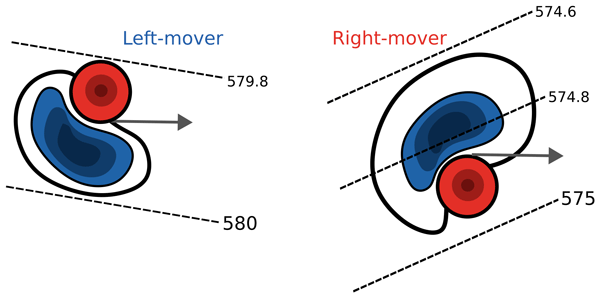
Supercell thunderstorms are among Europe's most damaging storms. Using high-resolution climate data, we compare left-moving (LM) and right-moving (RM) supercells. RMs have larger areas of intense rainfall, hail, and lightning, while LMs are smaller but can reach similar intensities and occur in warmer, less stable conditions. In a warmer climate, supercell hazards intensify, especially for LMs. A regional analysis shows how regional climates further influence storm conditions and hazards.
Donghe Zhu, Patrick Pieper, Stephan Pfahl, and Erich Fischer
EGUsphere, https://doi.org/10.5194/egusphere-2026-1258, https://doi.org/10.5194/egusphere-2026-1258, 2026
Short summary
Short summary
Climate models consistently project stronger heavy rainfall in a warming climate, but they disagree on how large these changes will be across regions. In this study, we identify the key causes of this uncertainty. Shifts in when events occur during the year alter the warming on those days and explain part of the thermodynamic increase in heavy rainfall. Differences in mid-tropospheric atmospheric motion are the dominant source of model disagreement in the dynamic increase in heavy rainfall.
Hugo Banderier, Tim Woollings, and Olivia Martius
EGUsphere, https://doi.org/10.5194/egusphere-2026-1045, https://doi.org/10.5194/egusphere-2026-1045, 2026
Short summary
Short summary
Recent literature suggests that persistence of the upper-level jet stream could force weather persistence. Yet most studies use metrics for the persistence of the jet that obscure the evolution of complex jet stream structures. In this study, we define a feature-based method for the characterisation of jet stream persistence. We revisit the hypothesis linking jet stream persistence to persistent weather, and explore the potential mechanisms that maintain the jet in place.
Hans Segura, Xabier Pedruzo-Bagazgoitia, Philipp Weiss, Sebastian K. Müller, Thomas Rackow, Junhong Lee, Edgar Dolores-Tesillos, Imme Benedict, Matthias Aengenheyster, Razvan Aguridan, Gabriele Arduini, Alexander J. Baker, Jiawei Bao, Swantje Bastin, Eulàlia Baulenas, Tobias Becker, Sebastian Beyer, Hendryk Bockelmann, Nils Brüggemann, Lukas Brunner, Suvarchal K. Cheedela, Sushant Das, Jasper Denissen, Ian Dragaud, Piotr Dziekan, Madeleine Ekblom, Jan Frederik Engels, Monika Esch, Richard Forbes, Claudia Frauen, Lilli Freischem, Diego García-Maroto, Philipp Geier, Paul Gierz, Álvaro González-Cervera, Katherine Grayson, Matthew Griffith, Oliver Gutjahr, Helmuth Haak, Ioan Hadade, Kerstin Haslehner, Shabeh ul Hasson, Jan Hegewald, Lukas Kluft, Aleksei Koldunov, Nikolay Koldunov, Tobias Kölling, Shunya Koseki, Sergey Kosukhin, Josh Kousal, Peter Kuma, Arjun U. Kumar, Rumeng Li, Nicolas Maury, Maximilian Meindl, Sebastian Milinski, Kristian Mogensen, Bimochan Niraula, Jakub Nowak, Divya Sri Praturi, Ulrike Proske, Dian Putrasahan, René Redler, David Santuy, Domokos Sármány, Reiner Schnur, Patrick Scholz, Dmitry Sidorenko, Dorian Spät, Birgit Sützl, Daisuke Takasuka, Adrian Tompkins, Alejandro Uribe, Mirco Valentini, Menno Veerman, Aiko Voigt, Sarah Warnau, Fabian Wachsmann, Marta Wacławczyk, Nils Wedi, Karl-Hermann Wieners, Jonathan Wille, Marius Winkler, Yuting Wu, Florian Ziemen, Janos Zimmermann, Frida A.-M. Bender, Dragana Bojovic, Sandrine Bony, Simona Bordoni, Patrice Brehmer, Marcus Dengler, Emanuel Dutra, Saliou Faye, Erich Fischer, Chiel van Heerwaarden, Cathy Hohenegger, Heikki Järvinen, Markus Jochum, Thomas Jung, Johann H. Jungclaus, Noel S. Keenlyside, Daniel Klocke, Heike Konow, Martina Klose, Szymon Malinowski, Olivia Martius, Thorsten Mauritsen, Juan Pedro Mellado, Theresa Mieslinger, Elsa Mohino, Hanna Pawłowska, Karsten Peters-von Gehlen, Abdoulaye Sarré, Pajam Sobhani, Philip Stier, Lauri Tuppi, Pier Luigi Vidale, Irina Sandu, and Bjorn Stevens
Geosci. Model Dev., 18, 7735–7761, https://doi.org/10.5194/gmd-18-7735-2025, https://doi.org/10.5194/gmd-18-7735-2025, 2025
Short summary
Short summary
The Next Generation of Earth Modeling Systems project (nextGEMS) developed two Earth system models that use horizontal grid spacing of 10 km and finer, giving more fidelity to the representation of local phenomena, globally. In its fourth cycle, nextGEMS simulated the Earth System climate over the 2020–2049 period under the SSP3-7.0 scenario. Here, we provide an overview of nextGEMS, insights into the model development, and the realism of multi-decadal, kilometer-scale simulations.
Monika Feldmann, Daniela I. V. Domeisen, and Olivia Martius
Weather Clim. Dynam., 6, 1089–1106, https://doi.org/10.5194/wcd-6-1089-2025, https://doi.org/10.5194/wcd-6-1089-2025, 2025
Short summary
Short summary
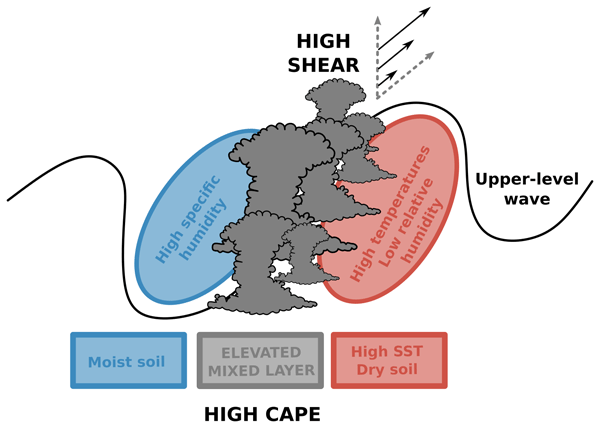
Severe thunderstorm outbreaks are a source of major damage across Europe. Using historical data, we analysed the large-scale weather patterns leading to these outbreaks in eight different regions. Three types of regions emerge: those limited by temperature, those limited by saturation, and those overall favourable for thunderstorms, consistent with their associated weather patterns and the general climate. These findings help explain regional differences and provide a basis for future forecast improvements.
Kalpana Hamal and Stephan Pfahl
Weather Clim. Dynam., 6, 879–899, https://doi.org/10.5194/wcd-6-879-2025, https://doi.org/10.5194/wcd-6-879-2025, 2025
Short summary
Short summary
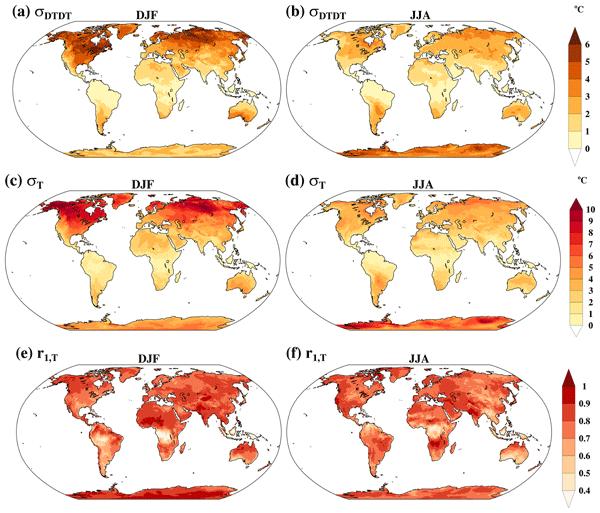
This study investigates the global drivers of sudden temperature changes from one day to the next using observational data and trajectory analysis. In extratropical regions, these shifts are mainly driven by air mass movements linked to circulation patterns. In tropical areas, local factors like cloud cover play a key role. Understanding these mechanisms improves predictions of extreme-temperature events, aiding in better preparation and mitigation strategies.
Duncan Pappert, Alexandre Tuel, Dim Coumou, Mathieu Vrac, and Olivia Martius
Weather Clim. Dynam., 6, 769–788, https://doi.org/10.5194/wcd-6-769-2025, https://doi.org/10.5194/wcd-6-769-2025, 2025
Short summary
Short summary
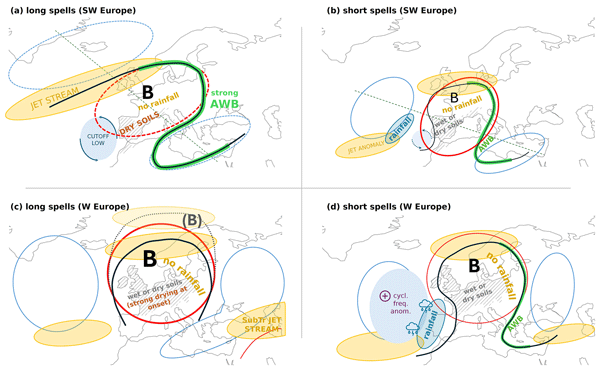
This study compares the dynamical structures that characterise long-lasting (persistent) and short hot spells in Western Europe. We find differences in large-scale atmospheric flow patterns during the events and particular soil moisture evolutions, which can account for the variation in event duration. There is variability in how drivers combine in individual events. Understanding persistent heat extremes can help improve their representation in models and ultimately their prediction.
Hugo Banderier, Alexandre Tuel, Tim Woollings, and Olivia Martius
Weather Clim. Dynam., 6, 715–739, https://doi.org/10.5194/wcd-6-715-2025, https://doi.org/10.5194/wcd-6-715-2025, 2025
Short summary
Short summary
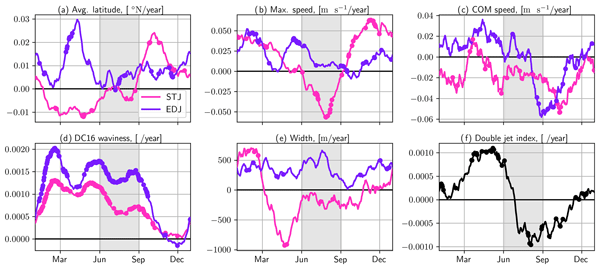
The jet stream is the main feature of upper-level flow and drives the weather at the surface. It is stronger and better defined in winter and has mostly been studied in that season. However, it is very important for (extreme) weather in summer. In this work, we improve and use two existing and complementary methods to study the jet stream(s) in the Euro-Atlantic sector, with a focus on summer. We find that our methods can verify each other and agree on interesting signals and trends.
George Pacey, Stephan Pfahl, and Lisa Schielicke
Weather Clim. Dynam., 6, 695–713, https://doi.org/10.5194/wcd-6-695-2025, https://doi.org/10.5194/wcd-6-695-2025, 2025
Short summary
Short summary
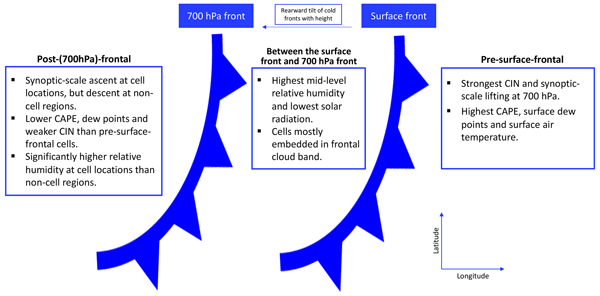
Cold fronts are often associated with areas of intense precipitation (cells) in the warm season, but the drivers and environments of cells at different locations relative to the front are not well-understood. We show that cells ahead of the surface front have the highest amount of environmental instability and moisture. Also, low-level lifting is maximised ahead of the surface front and upper-level lifting is particularly important for cell initiation behind the front.
Edgar Dolores-Tesillos, Olivia Martius, and Julian Quinting
Weather Clim. Dynam., 6, 471–487, https://doi.org/10.5194/wcd-6-471-2025, https://doi.org/10.5194/wcd-6-471-2025, 2025
Short summary
Short summary
An accurate representation of synoptic weather systems in climate models is required to estimate their societal and economic impacts under climate warming. Current climate models poorly represent the frequency of atmospheric blocking. Few studies have analysed the role of moist processes as a source of the bias of blocks. Here, we implement ELIAS2.0, a deep-learning tool, to validate the representation of moist processes in CMIP6 models and their link to the Euro-Atlantic blocking biases.
Markus Mosimann, Martina Kauzlaric, Olivia Martius, and Andreas Paul Zischg
Abstr. Int. Cartogr. Assoc., 9, 26, https://doi.org/10.5194/ica-abs-9-26-2025, https://doi.org/10.5194/ica-abs-9-26-2025, 2025
Henry Schoeller, Robin Chemnitz, Péter Koltai, Maximilian Engel, and Stephan Pfahl
Nonlin. Processes Geophys., 32, 51–73, https://doi.org/10.5194/npg-32-51-2025, https://doi.org/10.5194/npg-32-51-2025, 2025
Short summary
Short summary
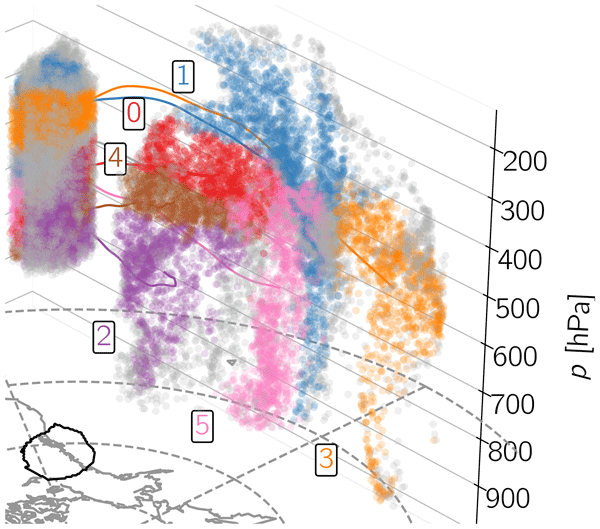
We identify spatially coherent air streams into atmospheric blockings, which are important weather phenomena. By adapting mathematical methods to the atmosphere, we confirm previous findings. Our work shows that spatially coherent air streams featuring cloud formation correlate with strengthening of the blocking. The developed framework also allows for statements about the spatial behavior of the air parcels as a whole and indicates that blockings reduce the dispersion of the air parcels.
Lena Wilhelm, Cornelia Schwierz, Katharina Schröer, Mateusz Taszarek, and Olivia Martius
Nat. Hazards Earth Syst. Sci., 24, 3869–3894, https://doi.org/10.5194/nhess-24-3869-2024, https://doi.org/10.5194/nhess-24-3869-2024, 2024
Short summary
Short summary
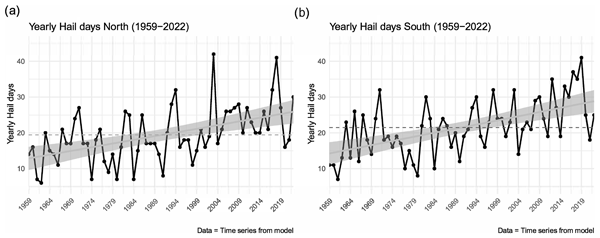
In our study we used statistical models to reconstruct past hail days in Switzerland from 1959–2022. This new time series reveals a significant increase in hail day occurrences over the last 7 decades. We link this trend to increases in moisture and instability variables in the models. This time series can now be used to unravel the complexities of Swiss hail occurrence and to understand what drives its year-to-year variability.
Raphaël Rousseau-Rizzi, Shira Raveh-Rubin, Jennifer L. Catto, Alice Portal, Yonatan Givon, and Olivia Martius
Weather Clim. Dynam., 5, 1079–1101, https://doi.org/10.5194/wcd-5-1079-2024, https://doi.org/10.5194/wcd-5-1079-2024, 2024
Short summary
Short summary
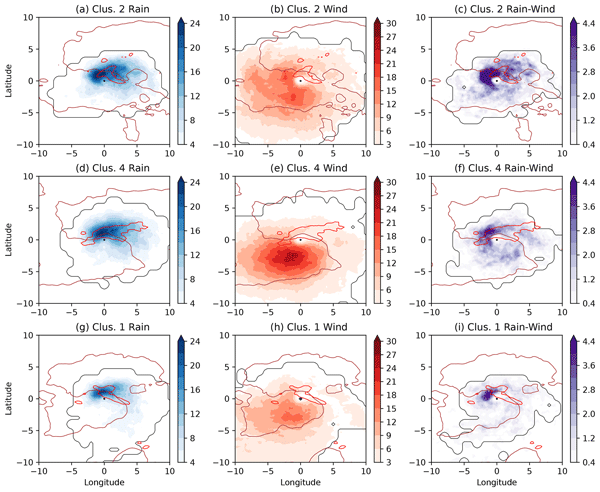
We identify situations when rain and wind, rain and wave, or heat and dust hazards co-occur within Mediterranean cyclones. These hazard combinations are associated with risk to infrastructure, risk of coastal flooding and risk of respiratory issues. The presence of Mediterranean cyclones is associated with increased probability of all three hazard combinations. We identify weather configurations and cyclone structures, particularly those associated with specific co-occurrence combinations.
Florian Ruff and Stephan Pfahl
Nat. Hazards Earth Syst. Sci., 24, 2939–2952, https://doi.org/10.5194/nhess-24-2939-2024, https://doi.org/10.5194/nhess-24-2939-2024, 2024
Short summary
Short summary
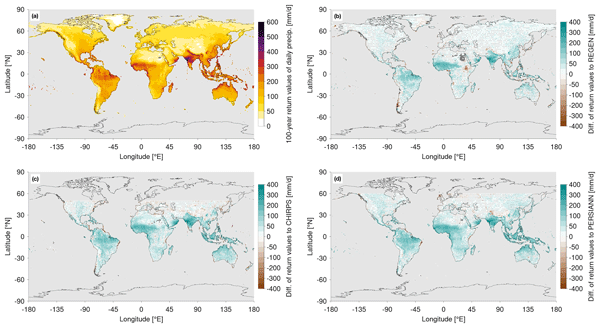
High-impact river floods are often caused by extreme precipitation. Flood protection relies on reliable estimates of the return values. Observational time series are too short for a precise calculation. Here, 100-year return values of daily precipitation are estimated on a global grid based on a large set of model-generated precipitation events from ensemble weather prediction. The statistical uncertainties in the return values can be substantially reduced compared to observational estimates.
Alice Portal, Shira Raveh-Rubin, Jennifer L. Catto, Yonatan Givon, and Olivia Martius
Weather Clim. Dynam., 5, 1043–1060, https://doi.org/10.5194/wcd-5-1043-2024, https://doi.org/10.5194/wcd-5-1043-2024, 2024
Short summary
Short summary
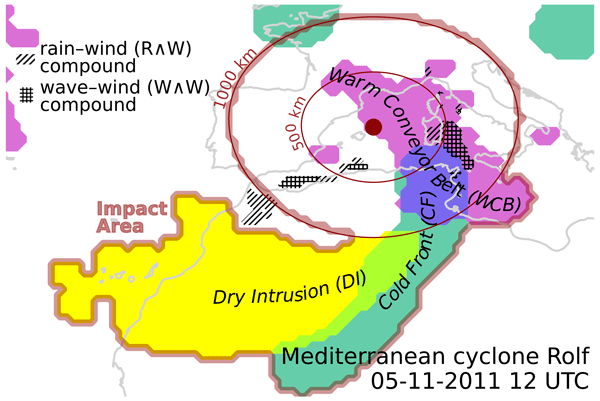
Mediterranean cyclones are associated with extended rain, wind, and wave impacts. Although beneficial for regional water resources, their passage may induce extreme weather, which is especially impactful when multiple hazards combine together. Here we show how the passage of Mediterranean cyclones increases the likelihood of rain–wind and wave–wind compounding and how compound–cyclone statistics vary by region and season, depending on the presence of specific airflows around the cyclone.
Jérôme Kopp, Alessandro Hering, Urs Germann, and Olivia Martius
Atmos. Meas. Tech., 17, 4529–4552, https://doi.org/10.5194/amt-17-4529-2024, https://doi.org/10.5194/amt-17-4529-2024, 2024
Short summary
Short summary
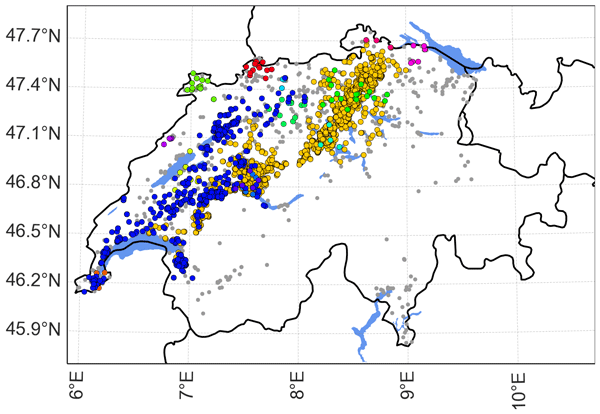
We present a verification of two products based on weather radars to detect the presence of hail and estimate its size. Radar products are remote detection of hail, so they must be verified against ground-based observations. We use reports from users of the Swiss Weather Services phone app to do the verification. We found that the product estimating the presence of hail provides fair results but that it should be recalibrated and that estimating the hail size with radar is more challenging.
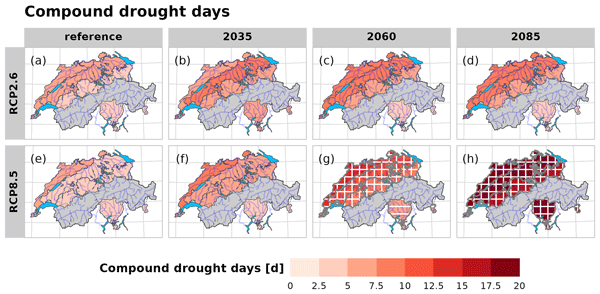
Christoph Nathanael von Matt, Regula Muelchi, Lukas Gudmundsson, and Olivia Martius
Nat. Hazards Earth Syst. Sci., 24, 1975–2001, https://doi.org/10.5194/nhess-24-1975-2024, https://doi.org/10.5194/nhess-24-1975-2024, 2024
Short summary
Short summary
The simultaneous occurrence of meteorological (precipitation), agricultural (soil moisture), and hydrological (streamflow) drought can lead to augmented impacts. By analysing drought indices derived from the newest climate scenarios for Switzerland (CH2018, Hydro-CH2018), we show that with climate change the concurrence of all drought types will increase in all studied regions of Switzerland. Our results stress the benefits of and need for both mitigation and adaptation measures at early stages.
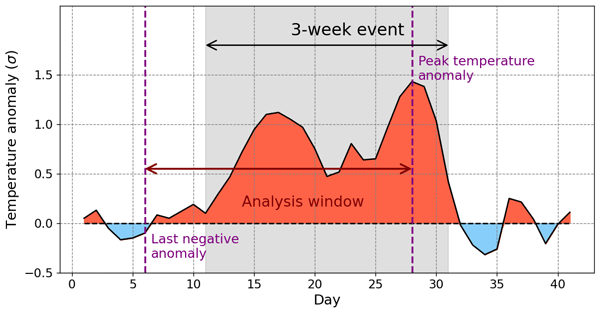
Alexandre Tuel and Olivia Martius
Weather Clim. Dynam., 5, 263–292, https://doi.org/10.5194/wcd-5-263-2024, https://doi.org/10.5194/wcd-5-263-2024, 2024
Short summary
Short summary
Warm and cold spells often have damaging consequences for agriculture, power demand, human health and infrastructure, especially when they occur over large areas and persist for a week or more. Here, we split the Northern Hemisphere extratropics into coherent regions where 3-week warm and cold spells in winter and summer are associated with the same large-scale circulation patterns. To understand their physical drivers, we analyse the associated circulation and temperature budget anomalies.
Edgar Dolores-Tesillos and Stephan Pfahl
Weather Clim. Dynam., 5, 163–179, https://doi.org/10.5194/wcd-5-163-2024, https://doi.org/10.5194/wcd-5-163-2024, 2024
Short summary
Short summary
In a warmer climate, the winter extratropical cyclones over the North Atlantic basin are expected to have a larger footprint of strong winds. Dynamical changes at different altitudes are responsible for these wind changes. Based on backward trajectories using the CESM-LE simulations, we show that the diabatic processes gain relevance as the planet warms. For instance, changes in the radiative processes will play an important role in the upper-level cyclone dynamics.
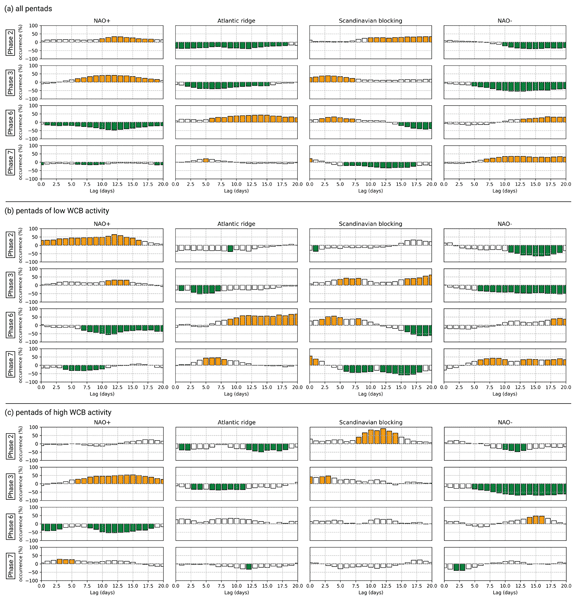
Julian F. Quinting, Christian M. Grams, Edmund Kar-Man Chang, Stephan Pfahl, and Heini Wernli
Weather Clim. Dynam., 5, 65–85, https://doi.org/10.5194/wcd-5-65-2024, https://doi.org/10.5194/wcd-5-65-2024, 2024
Short summary
Short summary
Research in the last few decades has revealed that rapidly ascending airstreams in extratropical cyclones have an important effect on the evolution of downstream weather and predictability. In this study, we show that the occurrence of these airstreams over the North Pacific is modulated by tropical convection. Depending on the modulation, known atmospheric circulation patterns evolve quite differently, which may affect extended-range predictions in the Atlantic–European region.
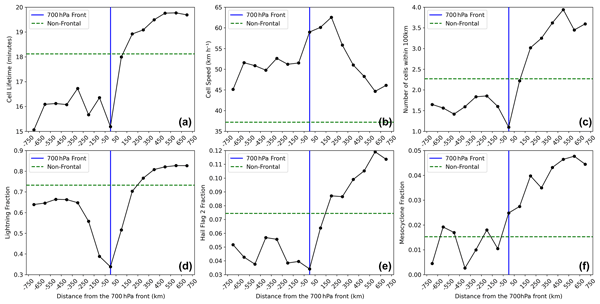
George Pacey, Stephan Pfahl, Lisa Schielicke, and Kathrin Wapler
Nat. Hazards Earth Syst. Sci., 23, 3703–3721, https://doi.org/10.5194/nhess-23-3703-2023, https://doi.org/10.5194/nhess-23-3703-2023, 2023
Short summary
Short summary
Cold fronts are often associated with areas of intense precipitation (cells) and sometimes with hazards such as flooding, hail and lightning. We find that cold-frontal cell days are associated with higher cell frequency and cells are typically more intense. We also show both spatially and temporally where cells are most frequent depending on their cell-front distance. These results are an important step towards a deeper understanding of cold-frontal storm climatology and improved forecasting.
Leonie Villiger, Marina Dütsch, Sandrine Bony, Marie Lothon, Stephan Pfahl, Heini Wernli, Pierre-Etienne Brilouet, Patrick Chazette, Pierre Coutris, Julien Delanoë, Cyrille Flamant, Alfons Schwarzenboeck, Martin Werner, and Franziska Aemisegger
Atmos. Chem. Phys., 23, 14643–14672, https://doi.org/10.5194/acp-23-14643-2023, https://doi.org/10.5194/acp-23-14643-2023, 2023
Short summary
Short summary
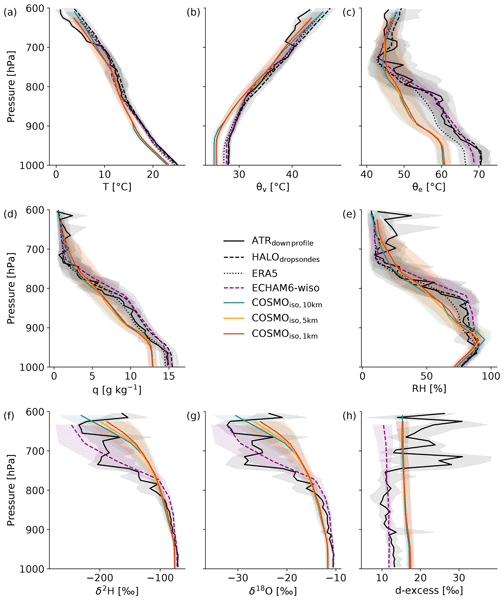
This study evaluates three numerical simulations performed with an isotope-enabled weather forecast model and investigates the coupling between shallow trade-wind cumulus clouds and atmospheric circulations on different scales. We show that the simulations reproduce key characteristics of shallow trade-wind clouds as observed during the field experiment EUREC4A and that the spatial distribution of stable-water-vapour isotopes is shaped by the overturning circulation associated with these clouds.
Alexandre Tuel and Olivia Martius
Earth Syst. Dynam., 14, 955–987, https://doi.org/10.5194/esd-14-955-2023, https://doi.org/10.5194/esd-14-955-2023, 2023
Short summary
Short summary
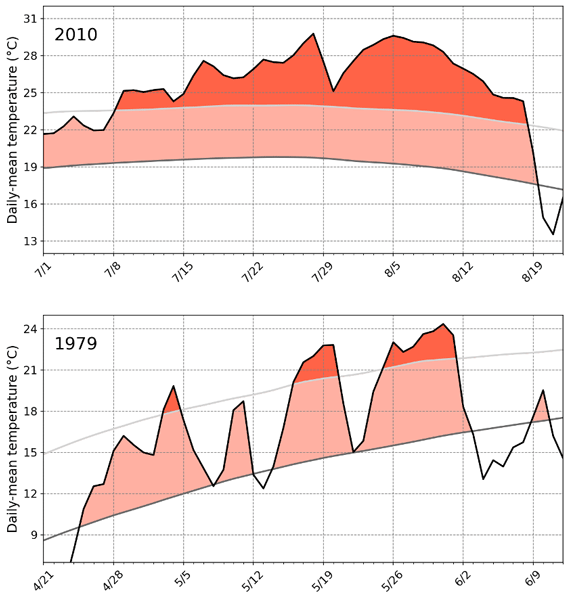
Weather persistence on sub-seasonal to seasonal timescales has been a topic of research since the early days of meteorology. Stationary or recurrent behavior are common features of weather dynamics and are strongly related to fundamental physical processes, weather predictability and surface weather impacts. In this review, we propose a typology for the broad concepts related to persistence and discuss various methods that have been used to characterize persistence in weather data.
Pauline Rivoire, Olivia Martius, Philippe Naveau, and Alexandre Tuel
Nat. Hazards Earth Syst. Sci., 23, 2857–2871, https://doi.org/10.5194/nhess-23-2857-2023, https://doi.org/10.5194/nhess-23-2857-2023, 2023
Short summary
Short summary
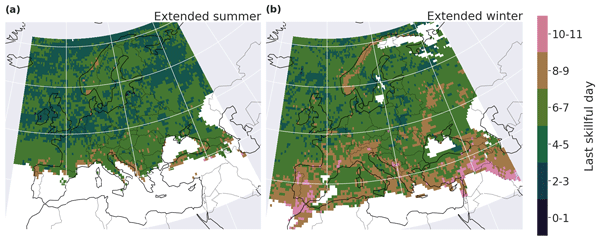
Heavy precipitation can lead to floods and landslides, resulting in widespread damage and significant casualties. Some of its impacts can be mitigated if reliable forecasts and warnings are available. In this article, we assess the capacity of the precipitation forecast provided by ECMWF to predict heavy precipitation events on a subseasonal-to-seasonal (S2S) timescale over Europe. We find that the forecast skill of such events is generally higher in winter than in summer.
Jérôme Kopp, Agostino Manzato, Alessandro Hering, Urs Germann, and Olivia Martius
Atmos. Meas. Tech., 16, 3487–3503, https://doi.org/10.5194/amt-16-3487-2023, https://doi.org/10.5194/amt-16-3487-2023, 2023
Short summary
Short summary
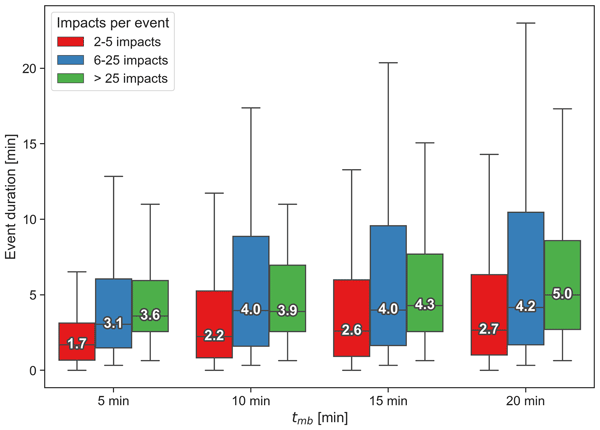
We present the first study of extended field observations made by a network of 80 automatic hail sensors from Switzerland. The sensors record the exact timing of hailstone impacts, providing valuable information about the local duration of hailfall. We found that the majority of hailfalls lasts just a few minutes and that most hailstones, including the largest, fall during a first phase of high hailstone density, while a few remaining and smaller hailstones fall in a second low-density phase.
Florian Ruff and Stephan Pfahl
Weather Clim. Dynam., 4, 427–447, https://doi.org/10.5194/wcd-4-427-2023, https://doi.org/10.5194/wcd-4-427-2023, 2023
Short summary
Short summary
In this study, we analyse the generic atmospheric processes of very extreme, 100-year precipitation events in large central European river catchments and the corresponding differences to less extreme events, based on a large time series (~1200 years) of simulated but realistic daily precipitation events from the ECMWF. Depending on the catchment, either dynamical mechanisms or thermodynamic conditions or a combination of both distinguish 100-year events from less extreme precipitation events.
Charles G. Gertler, Paul A. O'Gorman, and Stephan Pfahl
Weather Clim. Dynam., 4, 361–379, https://doi.org/10.5194/wcd-4-361-2023, https://doi.org/10.5194/wcd-4-361-2023, 2023
Short summary
Short summary
The relationship between the time-mean state of the atmosphere and aspects of atmospheric circulation drives general understanding of the atmospheric circulation. Here, we present new techniques to calculate local properties of the time-mean atmosphere and relate those properties to aspects of extratropical circulation with important implications for weather. This relationship should help connect changes to the atmosphere, such as under global warming, to changes in midlatitude weather.
Lisa Schielicke and Stephan Pfahl
Weather Clim. Dynam., 3, 1439–1459, https://doi.org/10.5194/wcd-3-1439-2022, https://doi.org/10.5194/wcd-3-1439-2022, 2022
Short summary
Short summary
Projected future heatwaves in many European regions will be even warmer than the mean increase in summer temperature suggests. To identify the underlying thermodynamic and dynamic processes, we compare Lagrangian backward trajectories of airstreams associated with heatwaves in two time slices (1991–2000 and 2091–2100) in a large single-model ensemble (CEMS-LE). We find stronger future descent associated with adiabatic warming in some regions and increased future diabatic heating in most regions.
Alberto Caldas-Alvarez, Markus Augenstein, Georgy Ayzel, Klemens Barfus, Ribu Cherian, Lisa Dillenardt, Felix Fauer, Hendrik Feldmann, Maik Heistermann, Alexia Karwat, Frank Kaspar, Heidi Kreibich, Etor Emanuel Lucio-Eceiza, Edmund P. Meredith, Susanna Mohr, Deborah Niermann, Stephan Pfahl, Florian Ruff, Henning W. Rust, Lukas Schoppa, Thomas Schwitalla, Stella Steidl, Annegret H. Thieken, Jordis S. Tradowsky, Volker Wulfmeyer, and Johannes Quaas
Nat. Hazards Earth Syst. Sci., 22, 3701–3724, https://doi.org/10.5194/nhess-22-3701-2022, https://doi.org/10.5194/nhess-22-3701-2022, 2022
Short summary
Short summary
In a warming climate, extreme precipitation events are becoming more frequent. To advance our knowledge on such phenomena, we present a multidisciplinary analysis of a selected case study that took place on 29 June 2017 in the Berlin metropolitan area. Our analysis provides evidence of the extremeness of the case from the atmospheric and the impacts perspectives as well as new insights on the physical mechanisms of the event at the meteorological and climate scales.
S. Mubashshir Ali, Matthias Röthlisberger, Tess Parker, Kai Kornhuber, and Olivia Martius
Weather Clim. Dynam., 3, 1139–1156, https://doi.org/10.5194/wcd-3-1139-2022, https://doi.org/10.5194/wcd-3-1139-2022, 2022
Short summary
Short summary
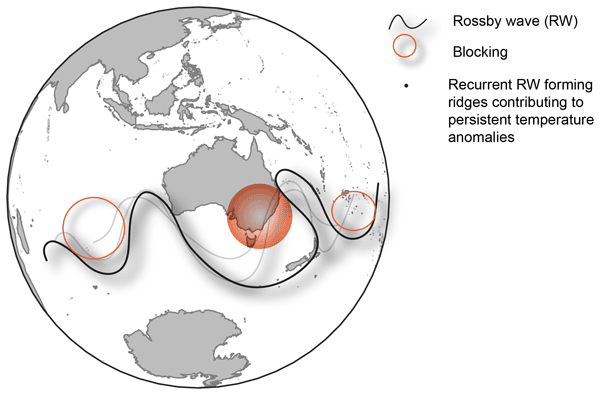
Persistent weather can lead to extreme weather conditions. One such atmospheric flow pattern, termed recurrent Rossby wave packets (RRWPs), has been shown to increase persistent weather in the Northern Hemisphere. Here, we show that RRWPs are also an important feature in the Southern Hemisphere. We evaluate the role of RRWPs during south-eastern Australian heatwaves and find that they help to persist the heatwaves by forming upper-level high-pressure systems over south-eastern Australia.
Kathrin Wehrli, Fei Luo, Mathias Hauser, Hideo Shiogama, Daisuke Tokuda, Hyungjun Kim, Dim Coumou, Wilhelm May, Philippe Le Sager, Frank Selten, Olivia Martius, Robert Vautard, and Sonia I. Seneviratne
Earth Syst. Dynam., 13, 1167–1196, https://doi.org/10.5194/esd-13-1167-2022, https://doi.org/10.5194/esd-13-1167-2022, 2022
Short summary
Short summary
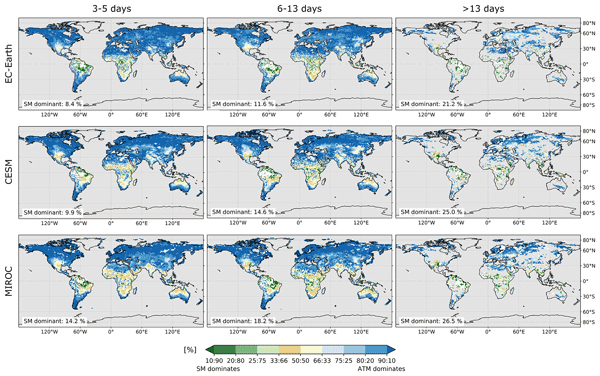
The ExtremeX experiment was designed to unravel the contribution of processes leading to the occurrence of recent weather and climate extremes. Global climate simulations are carried out with three models. The results show that in constrained experiments, temperature anomalies during heatwaves are well represented, although climatological model biases remain. Further, a substantial contribution of both atmospheric circulation and soil moisture to heat extremes is identified.

Andries Jan de Vries, Franziska Aemisegger, Stephan Pfahl, and Heini Wernli
Atmos. Chem. Phys., 22, 8863–8895, https://doi.org/10.5194/acp-22-8863-2022, https://doi.org/10.5194/acp-22-8863-2022, 2022
Short summary
Short summary
The Earth's water cycle contains the common H2O molecule but also the less abundant, heavier HDO. We use their different physical properties to study tropical ice clouds in model simulations of the West African monsoon. Isotope signals reveal different processes through which ice clouds form and decay in deep-convective and widespread cirrus. Previously observed variations in upper-tropospheric vapour isotopes are explained by microphysical processes in convective updraughts and downdraughts.
Alexandre Tuel, Bettina Schaefli, Jakob Zscheischler, and Olivia Martius
Hydrol. Earth Syst. Sci., 26, 2649–2669, https://doi.org/10.5194/hess-26-2649-2022, https://doi.org/10.5194/hess-26-2649-2022, 2022
Short summary
Short summary
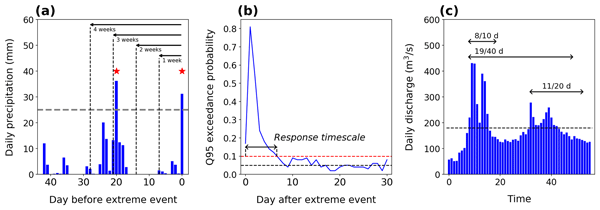
River discharge is strongly influenced by the temporal structure of precipitation. Here, we show how extreme precipitation events that occur a few days or weeks after a previous event have a larger effect on river discharge than events occurring in isolation. Windows of 2 weeks or less between events have the most impact. Similarly, periods of persistent high discharge tend to be associated with the occurrence of several extreme precipitation events in close succession.
Daniel Steinfeld, Adrian Peter, Olivia Martius, and Stefan Brönnimann
EGUsphere, https://doi.org/10.5194/egusphere-2022-92, https://doi.org/10.5194/egusphere-2022-92, 2022
Preprint archived
Short summary
Short summary
We assess the performance of various fire weather indices to predict wildfire occurrence in Northern Switzerland. We find that indices responding readily to weather changes have the best performance during spring; in the summer and autumn seasons, indices that describe persistent hot and dry conditions perform best. We demonstrate that a logistic regression model trained on local historical fire activity can outperform existing fire weather indices.
Edgar Dolores-Tesillos, Franziska Teubler, and Stephan Pfahl
Weather Clim. Dynam., 3, 429–448, https://doi.org/10.5194/wcd-3-429-2022, https://doi.org/10.5194/wcd-3-429-2022, 2022
Short summary
Short summary
Strong winds caused by extratropical cyclones represent a costly hazard for European countries. Here, based on CESM-LENS coupled climate simulations, we show that future changes of such strong winds are characterized by an increased magnitude and extended footprint southeast of the cyclone center. This intensification is related to a combination of increased diabatic heating and changes in upper-level wave dynamics.
Lisa-Ann Kautz, Olivia Martius, Stephan Pfahl, Joaquim G. Pinto, Alexandre M. Ramos, Pedro M. Sousa, and Tim Woollings
Weather Clim. Dynam., 3, 305–336, https://doi.org/10.5194/wcd-3-305-2022, https://doi.org/10.5194/wcd-3-305-2022, 2022
Short summary
Short summary
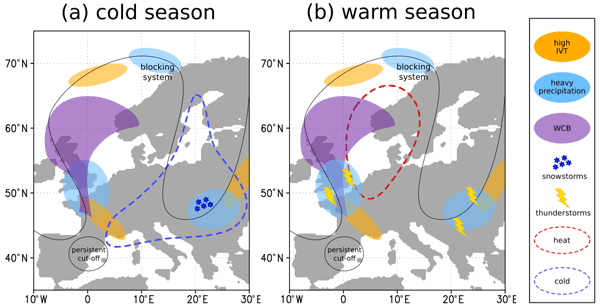
Atmospheric blocking is associated with stationary, self-sustaining and long-lasting high-pressure systems. They can cause or at least influence surface weather extremes, such as heat waves, cold spells, heavy precipitation events, droughts or wind extremes. The location of the blocking determines where and what type of extreme event will occur. These relationships are also important for weather prediction and may change due to global warming.
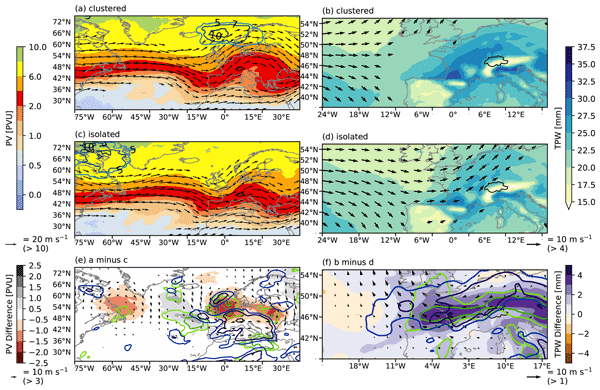
Hélène Barras, Olivia Martius, Luca Nisi, Katharina Schroeer, Alessandro Hering, and Urs Germann
Weather Clim. Dynam., 2, 1167–1185, https://doi.org/10.5194/wcd-2-1167-2021, https://doi.org/10.5194/wcd-2-1167-2021, 2021
Short summary
Short summary
In Switzerland hail may occur several days in a row. Such multi-day hail events may cause significant damage, and understanding and forecasting these events is important. Using reanalysis data we show that weather systems over Europe move slower before and during multi-day hail events compared to single hail days. Surface temperatures are typically warmer and the air more humid over Switzerland and winds are slower on multi-day hail clusters. These results may be used for hail forecasting.
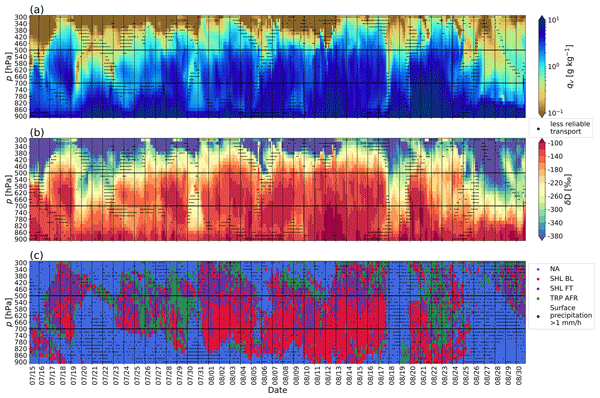
Fabienne Dahinden, Franziska Aemisegger, Heini Wernli, Matthias Schneider, Christopher J. Diekmann, Benjamin Ertl, Peter Knippertz, Martin Werner, and Stephan Pfahl
Atmos. Chem. Phys., 21, 16319–16347, https://doi.org/10.5194/acp-21-16319-2021, https://doi.org/10.5194/acp-21-16319-2021, 2021
Short summary
Short summary
We use high-resolution numerical isotope modelling and Lagrangian backward trajectories to identify moisture transport pathways and governing physical and dynamical processes that affect the free-tropospheric humidity and isotopic variability over the eastern subtropical North Atlantic. Furthermore, we conduct a thorough isotope modelling validation with aircraft and remote-sensing observations of water vapour isotopes.
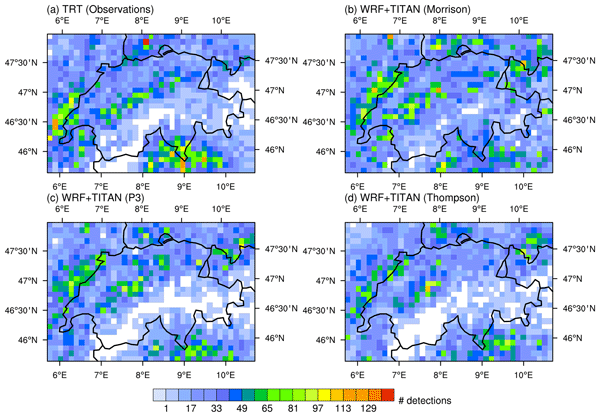
Timothy H. Raupach, Andrey Martynov, Luca Nisi, Alessandro Hering, Yannick Barton, and Olivia Martius
Geosci. Model Dev., 14, 6495–6514, https://doi.org/10.5194/gmd-14-6495-2021, https://doi.org/10.5194/gmd-14-6495-2021, 2021
Short summary
Short summary
When simulated thunderstorms are compared to observations or other simulations, a match between overall storm properties is often more important than exact matches to individual storms. We tested a comparison method that uses a thunderstorm tracking algorithm to characterise simulated storms. For May 2018 in Switzerland, the method produced reasonable matches to independent observations for most storm properties, showing its feasibility for summarising simulated storms over mountainous terrain.
Cited articles
Ackerley, D., Chadwick, R., Dommenget, D., and Petrelli, P.: An ensemble of AMIP simulations with prescribed land surface temperatures, Geosci. Model Dev., 11, 3865–3881, https://doi.org/10.5194/gmd-11-3865-2018, 2018. a
Ackerley, D., Catto, J. L., Dolores-Tesillos, E., Priestley, M. D., Raveh-Rubin, S., Schiemann, R., and Suitters, C. C.: Weather systems in mid-latitudes, in: Reference Module in Earth Systems and Environmental Sciences, Elsevier, ISBN 978-0-12-409548-9, https://doi.org/10.1016/B978-0-443-15748-6.00005-8, 2025. a
Athanasiadis, P. J., Ogawa, F., Omrani, N.-E., Keenlyside, N., Schiemann, R., Baker, A. J., Vidale, P. L., Bellucci, A., Ruggieri, P., Haarsma, R., Roberts, M., Roberts, C., Novak, L., and Gualdi, S.: Mitigating climate biases in the midlatitude North Atlantic by increasing model resolution: SST gradients and their relation to blocking and the jet, J. Climate, 35, 6985–7006, https://doi.org/10.1175/JCLI-D-21-0515.1, 2022. a, b, c, d, e
Barsugli, J. J. and Battisti, D. S.: The Basic Effects of Atmosphere–Ocean Thermal Coupling on Midlatitude Variability, J. Atmos. Sci., 55, 477–493, https://doi.org/10.1175/1520-0469(1998)055<0477:TBEOAO>2.0.CO;2, 1998. a
Berckmans, J., Woollings, T., Demory, M.-E., Vidale, P.-L., and Roberts, M.: Atmospheric blocking in a high resolution climate model: influences of mean state, orography and eddy forcing, Atmos. Sci. Lett., 14, 34–40, https://doi.org/10.1002/asl2.412, 2013. a, b
Booth, J. F., Dunn-Sigouin, E., and Pfahl, S.: The Relationship Between Extratropical Cyclone Steering and Blocking Along the North American East Coast, Geophys. Res. Lett., 44, 11976–11984, https://doi.org/10.1002/2017GL075941, 2017. a
Brayshaw, D. J., Hoskins, B., and Blackburn, M.: The Storm-Track Response to Idealized SST Perturbations in an Aquaplanet GCM, J. Atmos. Sci., 65, 2842–2860, https://doi.org/10.1175/2008JAS2657.1, 2008. a
Brunner, L. and Steiner, A. K.: A global perspective on atmospheric blocking using GPS radio occultation – one decade of observations, Atmos. Meas. Tech., 10, 4727–4745, https://doi.org/10.5194/amt-10-4727-2017, 2017. a
Brunner, L., Pendergrass, A. G., Lehner, F., Merrifield, A. L., Lorenz, R., and Knutti, R.: Reduced global warming from CMIP6 projections when weighting models by performance and independence, Earth Syst. Dynam., 11, 995–1012, https://doi.org/10.5194/esd-11-995-2020, 2020. a
Brunner, L., Poschlod, B., Dutra, E., Fischer, E. M., Martius, O., and Sillmann, J.: A global perspective on the spatial representation of climate extremes from km-scale models, Environ. Res. Lett., 20, 074054, https://doi.org/10.1088/1748-9326/ade1ef, 2025. a
Coumou, D., Di Capua, G., Vavrus, S., Wang, L., and Wang, S.: The influence of Arctic amplification on mid-latitude summer circulation, Nat. Commun., 9, 2959, https://doi.org/10.1038/s41467-018-05256-8, 2018. a, b
Davini, P. and D’Andrea, F.: Northern Hemisphere atmospheric blocking representation in global climate models: twenty years of improvements?, J. Climate, 29, 8823–8840, https://doi.org/10.1175/JCLI-D-16-0242.1, 2016. a, b
Davini, P. and D'Andrea, F.: From CMIP3 to CMIP6: Northern Hemisphere Atmospheric Blocking Simulation in Present and Future Climate, J. Climate, 33, 10021–10038, https://doi.org/10.1175/JCLI-D-19-0862.1, 2020. a, b, c, d
Davini, P., Cagnazzo, C., Gualdi, S., and Navarra, A.: Bidimensional diagnostics, variability, and trends of Northern Hemisphere blocking, J. Climate, 25, 6496–6509, https://doi.org/10.1175/JCLI-D-12-00032.1, 2012. a
Davini, P., Corti, S., D'Andrea, F., Rivière, G., and Von Hardenberg, J.: Improved Winter European Atmospheric Blocking Frequencies in High‐Resolution Global Climate Simulations, J. Adv. Model. Earth Sy., 9, 2615–2634, https://doi.org/10.1002/2017MS001082, 2017. a, b
De Luca, P., Jiménez-Esteve, B., Degenhardt, L., Schemm, S., and Pfahl, S.: Enhanced Blocking Frequencies in Very-High Resolution Idealized Climate Model Simulations, Geophys. Res. Lett., 51, e2024GL111016, https://doi.org/10.1029/2024GL111016, 2024. a, b
de Vries, H., Woollings, T., Anstey, J., Haarsma, R. J., and Hazeleger, W.: Atmospheric blocking and its relation to jet changes in a future climate, Clim. Dynam., 41, 2643–2654, https://doi.org/10.1007/s00382-013-1699-7, 2013. a
Doblas-Reyes, F. J., Kontkanen, J., Sandu, I., Acosta, M., Al Turjmam, M. H., Alsina-Ferrer, I., Andrés-Martínez, M., Anerdi, C., Arriola, L., Axness, M., Batlle Martín, M., Bauer, P., Becker, T., Beltrán, D., Beyer, S., Bockelmann, H., Bretonnière, P.-A., Cabaniols, S., Caprioli, S., Castrillo, M., Chandrasekar, A., Cheedela, S., Correal, V., Danovaro, E., Davini, P., Enkovaara, J., Frauen, C., Früh, B., Gaya Àvila, A., Ghinassi, P., Ghosh, R., Ghosh, S., González, I., Grayson, K., Griffith, M., Hadade, I., Haine, C., Hartick, C., Haus, U.-U., Hearne, S., Järvinen, H., Jiménez, B., John, A., Juchem, M., Jung, T., Kegel, J., Kelbling, M., Keller, K., Kinoshita, B., Kiszler, T., Klocke, D., Kluft, L., Koldunov, N., Kölling, T., Kolstela, J., Kornblueh, L., Kosukhin, S., Lacima-Nadolnik, A., Leal Rojas, J. J., Lehtiranta, J., Lunttila, T., Luoma, A., Manninen, P., Medvedev, A., Milinski, S., Mohammed, A., Müller, S., Naryanappa, D., Nazarova, N., Niemelä, S., Niraula, B., Nortamo, H., Nummelin, A., Nurisso, M., Ortega, P., Paronuzzi, S., Pedruzo-Bagazgoitia, X., Pelletier, C., Peña, C., Polade, S., Pradhan, H. K., Quintanilla, R., Quintino, T., Rackow, T., Räisänen, J., Rajput, M. M., Redler, R., Reuter, B., Rocha Monteiro, N., Roura-Adserias, F., Ruppert, S., Sayed, S., Schnur, R., Sharma, T., Sidorenko, D., Sievi-Korte, O., Soret, A., Steger, C., Stevens, B., Streffing, J., Sunny, J., Tenorio, L., Thober, S., Tigerstedt, U., Tinto, O., Tonttila, J., Tuomenvirta, H., Tuppi, L., Van Thielen, G., Vitali, E., von Hardenberg, J., Wagner, I., Wedi, N., Wehner, J., Willner, S., Yepes-Arbós, X., Ziemen, F., and Zimmermann, J.: The Destination Earth digital twin for climate change adaptation, Geosci. Model Dev., 19, 2821–2848, https://doi.org/10.5194/gmd-19-2821-2026, 2026. a
Dolores-Tesillos, E. and Pfahl, S.: Future changes in North Atlantic winter cyclones in CESM-LE – Part 2: A Lagrangian analysis, Weather Clim. Dynam., 5, 163–179, https://doi.org/10.5194/wcd-5-163-2024, 2024. a
Dolores-Tesillos, E., Teubler, F., and Pfahl, S.: Future changes in North Atlantic winter cyclones in CESM-LE – Part 1: Cyclone intensity, potential vorticity anomalies, and horizontal wind speed, Weather Clim. Dynam., 3, 429–448, https://doi.org/10.5194/wcd-3-429-2022, 2022. a
Dunn-Sigouin, E. and Son, S.-W.: Northern Hemisphere blocking frequency and duration in the CMIP5 models, J. Geophys. Res.-Atmos., 118, 1179–1188, https://doi.org/10.1002/jgrd.50143, 2013. a
Elliott, R. D. and Smith, T. B.: A study of the effects of large blocking highs on the general circulation in the northern-hemisphere westerlies, J. Atmos. Sci., 6, 68–85, https://doi.org/10.1175/1520-0469(1949)006<0068:ASOTEO>2.0.CO;2, 1949. a
Embury, O., Merchant, C. J., Good, S. A., Rayner, N. A., Høyer, J. L., Atkinson, C., Block, T., Alerskans, E., Pearson, K. J., Worsfold, M., McCarroll, N., and Donlon, C.: Satellite-based time-series of sea-surface temperature since 1980 for climate applications, Scientific Data, 11, 326, https://doi.org/10.1038/s41597-024-03147-w, 2024. a
Eyring, V., Bony, S., Meehl, G. A., Senior, C. A., Stevens, B., Stouffer, R. J., and Taylor, K. E.: Overview of the Coupled Model Intercomparison Project Phase 6 (CMIP6) experimental design and organization, Geosci. Model Dev., 9, 1937–1958, https://doi.org/10.5194/gmd-9-1937-2016, 2016. a
Gao, Y., Guo, X., Lu, J., Woolings, T., Chen, D., Guo, X., Kou, W., Zhang, S., Leung, L. R., Schiemann, R., O'Reilly, C. H., Guo, C., Li, J., Gao, H., and Wu, L.: Enhanced Simulation of Atmospheric Blocking in a High-Resolution Earth System Model: Projected Changes and Implications for Extreme Weather Events, J. Geophys. Res.-Atmos., 130, e2024JD042045, https://doi.org/10.1029/2024JD042045, 2025. a, b, c
Gates, W. L., Boyle, J. S., Covey, C., Dease, C. G., Doutriaux, C. M., Drach, R. S., Fiorino, M., Gleckler, P. J., Hnilo, J. J., Marlais, S. M., Phillips, T. J., Potter, G. L., Santer, B. D., Sperber, K. R., Taylor, K. E., and Williams, D. N.: An Overview of the Results of the Atmospheric Model Intercomparison Project (AMIP I), B. Am. Meteorol. Soc., 80, 29–56, https://doi.org/10.1175/1520-0477(1999)080<0029:AOOTRO>2.0.CO;2, 1999. a
Grams, C., Beerli, R., Pfenninger, R., Staffell, I., and Wernli, H.: Balancing Europe's wind-power output through spatial deployment informed by weather regimes, Nat. Clim. Change, 7, 557–562, https://doi.org/10.1038/nclimate3338, 2017. a
Greeves, C., Pope, V., Stratton, R., and Martin, G.: Representation of Northern Hemisphere winter storm tracks in climate models, Clim. Dynam., 28, 683–702, https://doi.org/10.1007/s00382-006-0205-x, 2007. a
Harvey, B., Cook, P., Shaffrey, L., and Schiemann, R.: The response of the northern hemisphere storm tracks and jet streams to climate change in the CMIP3, CMIP5, and CMIP6 climate models, J. Geophys. Res.-Atmos., 125, e2020JD032701, https://doi.org/10.1029/2020JD032701, 2020. a, b, c
Hassanzadeh, P., Kuang, Z., and Farrell, B. F.: Responses of midlatitude blocks and wave amplitude to changes in the meridional temperature gradient in an idealized dry GCM, Geophys. Res. Lett., 41, 5223–5232, https://doi.org/10.1002/2014GL060764, 2014. a, b
Hermoso, A., Rivière, G., Harvey, B., Methven, J., and Schemm, S.: A Dynamical Interpretation of the Intensification of the Winter North Atlantic Jet Stream in Reanalysis, J. Climate, 37, 5853–5881, https://doi.org/10.1175/JCLI-D-23-0757.1, 2024. a, b, c
Hersbach, H., Bell, B., Berrisford, P., Hirahara, S., Horányi, A., Muñoz-Sabater, J., Nicolas, J., Peubey, C., Radu, R., Schepers, D., Simmons, A., Soci, C., Abdalla, S., Abellan, X., Balsamo, G., Bechtold, P., Biavati, G., Bidlot, J., Bonavita, M., De Chiara, G., Dahlgren, P., Dee, D., Diamantakis, M., Dragani, R., Flemming, J., Forbes, R., Fuentes, M., Geer, A., Haimberger, L., Healy, S., Hogan, R. J., Hólm, E., Janisková, M., Keeley, S., Laloyaux, P., Lopez, P., Lupu, C., Radnoti, G., de Rosnay, P., Rozum, I., Vamborg, F., Villaume, S., and Thépaut, J.-N.: The ERA5 global reanalysis, Q. J. Roy. Meteor. Soc., 146, 1999–2049, https://doi.org/10.1002/qj.3803, 2020. a
Hinton, T., Hoskins, B., and Martin, G.: The influence of tropical sea surface temperatures and precipitation on north Pacific atmospheric blocking, Clim. Dynam., 33, 549–563, https://doi.org/10.1007/s00382-009-0542-7, 2009. a
Hoffmann, J., Bauer, P., Sandu, I., Wedi, N., Geenen, T., and Thiemert, D.: Destination Earth – A digital twin in support of climate services, Climate Services, 30, 100394, https://doi.org/10.1016/j.cliser.2023.100394, 2023. a
Hohenegger, C., Korn, P., Linardakis, L., Redler, R., Schnur, R., Adamidis, P., Bao, J., Bastin, S., Behravesh, M., Bergemann, M., Biercamp, J., Bockelmann, H., Brokopf, R., Brüggemann, N., Casaroli, L., Chegini, F., Datseris, G., Esch, M., George, G., Giorgetta, M., Gutjahr, O., Haak, H., Hanke, M., Ilyina, T., Jahns, T., Jungclaus, J., Kern, M., Klocke, D., Kluft, L., Kölling, T., Kornblueh, L., Kosukhin, S., Kroll, C., Lee, J., Mauritsen, T., Mehlmann, C., Mieslinger, T., Naumann, A. K., Paccini, L., Peinado, A., Praturi, D. S., Putrasahan, D., Rast, S., Riddick, T., Roeber, N., Schmidt, H., Schulzweida, U., Schütte, F., Segura, H., Shevchenko, R., Singh, V., Specht, M., Stephan, C. C., von Storch, J.-S., Vogel, R., Wengel, C., Winkler, M., Ziemen, F., Marotzke, J., and Stevens, B.: ICON-Sapphire: simulating the components of the Earth system and their interactions at kilometer and subkilometer scales, Geosci. Model Dev., 16, 779–811, https://doi.org/10.5194/gmd-16-779-2023, 2023. a, b
Hoskins, B. J. and Hodges, K. I.: New perspectives on the Northern Hemisphere winter storm tracks, J. Atmos. Sci., 59, 1041–1061, https://doi.org/10.1175/1520-0469(2002)059<1041:NPOTNH>2.0.CO;2, 2002. a
Häkkinen, S., Rhines, P. B., and Worthen, D. L.: Atmospheric Blocking and Atlantic Multidecadal Ocean Variability, Science, 334, 655–659, https://doi.org/10.1126/science.1205683, 2011. a, b, c, d
Kautz, L.-A., Martius, O., Pfahl, S., Pinto, J. G., Ramos, A. M., Sousa, P. M., and Woollings, T.: Atmospheric blocking and weather extremes over the Euro-Atlantic sector – a review, Weather Clim. Dynam., 3, 305–336, https://doi.org/10.5194/wcd-3-305-2022, 2022. a
Koldunov, N., Kölling, T., Pedruzo-Bagazgoitia, X., Rackow, T., Redler, R., Sidorenko, D., Wieners, K.-H., and Ziemen, F. A.: nextGEMS: output of the model development cycle 3 simulations for ICON and IFS, World Data Center for Climate (WDCC) at DKRZ [data set], https://doi.org/10.26050/WDCC/nextGEMS_cyc3, 2023. a
Kushnir, Y., Robinson, W. A., Bladé, I., Hall, N. M. J., Peng, S., and Sutton, R.: Atmospheric GCM Response to Extratropical SST Anomalies: Synthesis and Evaluation, J. Climate, 15, 2233–2256, https://doi.org/10.1175/1520-0442(2002)015<2233:AGRTES>2.0.CO;2, 2002. a
Michel, S. L. L., von der Heydt, A. S., van Westen, R. M., Baatsen, M. L. J., and Dijkstra, H. A.: Increased wintertime European atmospheric blocking frequencies in General Circulation Models with an eddy-permitting ocean, npj Climate and Atmospheric Science, 6, 50, https://doi.org/10.1038/s41612-023-00372-9, 2023. a
Nakamura, N. and Huang, C. S. Y.: Atmospheric blocking as a traffic jam in the jet stream, Science, 361, 42–47, https://doi.org/10.1126/science.aat0721, 2018. a, b, c
Namias, J.: Seasonal persistence and recurrence of European blocking during 1958–1960, Tellus, 16, 394–407, https://doi.org/10.1111/j.2153-3490.1964.tb00176.x, 1964. a
O'Neill, B. C., Tebaldi, C., van Vuuren, D. P., Eyring, V., Friedlingstein, P., Hurtt, G., Knutti, R., Kriegler, E., Lamarque, J.-F., Lowe, J., Meehl, G. A., Moss, R., Riahi, K., and Sanderson, B. M.: The Scenario Model Intercomparison Project (ScenarioMIP) for CMIP6, Geosci. Model Dev., 9, 3461–3482, https://doi.org/10.5194/gmd-9-3461-2016, 2016. a
Ormanova, G., Karaca, F., and Kononova, N.: Analysis of the impacts of atmospheric circulation patterns on the regional air quality over the geographical center of the Eurasian continent, Atmos. Res., 237, 104858, https://doi.org/10.1016/j.atmosres.2020.104858, 2020. a
Osborne, J. M., Collins, M., Screen, J. A., Thomson, S. I., and Dunstone, N.: The North Atlantic as a Driver of Summer Atmospheric Circulation, J. Climate, 33, 7335–7351, https://doi.org/10.1175/JCLI-D-19-0423.1, 2020. a
Palmer, T. E., McSweeney, C. F., Booth, B. B. B., Priestley, M. D. K., Davini, P., Brunner, L., Borchert, L., and Menary, M. B.: Performance-based sub-selection of CMIP6 models for impact assessments in Europe, Earth Syst. Dynam., 14, 457–483, https://doi.org/10.5194/esd-14-457-2023, 2023. a
Pfahl, S., Schwierz, C., Croci-Maspoli, M., Grams, C. M., and Wernli, H.: Importance of latent heat release in ascending air streams for atmospheric blocking, Nat. Geosci., 8, 610–614, https://doi.org/10.1038/ngeo2487, 2015. a
Planchon, O., Quénol, H., Irimia, L., and Patriche, C.: European cold wave during February 2012 and impacts in wine growing regions of Moldavia (Romania), Theor. Appl. Climatol., 120, 469–478, https://doi.org/10.1007/s00704-014-1191-2, 2015. a
Poujol, B., Lee, J., Rackow, T., Rotach, M. W., and Ban, N.: Are the Largest Benefits of Kilometer-Scale Climate Models Over Mountains or Over Flatland?, Geophys. Res. Lett., 52, e2024GL113937, https://doi.org/10.1029/2024GL113937, 2025. a
Prein, A. F., Langhans, W., Fosser, G., Ferrone, A., Ban, N., Goergen, K., Keller, M., Tölle, M., Gutjahr, O., Feser, F., Brisson, E., Kollet, S., Schmidli, J., van Lipzig, N. P. M., and Leung, R.: A review on regional convection-permitting climate modeling: Demonstrations, prospects, and challenges, Rev. Geophys., 53, 323–361, https://doi.org/10.1002/2014RG000475, 2015. a
Priestley, M. D. K., Ackerley, D., Catto, J. L., and Hodges, K. I.: Drivers of Biases in the CMIP6 Extratropical Storm Tracks. Part I: Northern Hemisphere, J. Climate, 36, 1451–1467, https://doi.org/10.1175/JCLI-D-20-0976.1, 2023. a, b, c
Prodhomme, C., Batté, L., Massonnet, F., Davini, P., Bellprat, O., Guemas, V., and Doblas-Reyes, F. J.: Benefits of Increasing the Model Resolution for the Seasonal Forecast Quality in EC-Earth, J. Climate, 29, 9141–9162, https://doi.org/10.1175/JCLI-D-16-0117.1, 2016. a
Rackow, T., Pedruzo-Bagazgoitia, X., Becker, T., Milinski, S., Sandu, I., Aguridan, R., Bechtold, P., Beyer, S., Bidlot, J., Boussetta, S., Deconinck, W., Diamantakis, M., Dueben, P., Dutra, E., Forbes, R., Ghosh, R., Goessling, H. F., Hadade, I., Hegewald, J., Jung, T., Keeley, S., Kluft, L., Koldunov, N., Koldunov, A., Kölling, T., Kousal, J., Kühnlein, C., Maciel, P., Mogensen, K., Quintino, T., Polichtchouk, I., Reuter, B., Sármány, D., Scholz, P., Sidorenko, D., Streffing, J., Sützl, B., Takasuka, D., Tietsche, S., Valentini, M., Vannière, B., Wedi, N., Zampieri, L., and Ziemen, F.: Multi-year simulations at kilometre scale with the Integrated Forecasting System coupled to FESOM2.5 and NEMOv3.4, Geosci. Model Dev., 18, 33–69, https://doi.org/10.5194/gmd-18-33-2025, 2025. a, b
Rex, D. F.: Blocking action in the middle troposphere and its effect upon regional climate, Tellus, 2, 275–301, https://doi.org/10.3402/tellusa.v2i4.8603, 1950. a
Rohrer, M., Brönnimann, S., Martius, O., Raible, C. C., Wild, M., and Compo, G. P.: Representation of extratropical cyclones, blocking anticyclones, and Alpine circulation types in multiple reanalyses and model simulations, J. Climate, 31, 3009–3031, https://doi.org/10.1175/JCLI-D-17-0350.1, 2018. a
Sandu, I.: Destination Earth's digital twins and Digital Twin Engine – state of play, ECMWF Newsletter, 180, 14–23, https://doi.org/10.21957/is1fc736jx, 2024. a
Scaife, A. A., Copsey, D., Gordon, C., Harris, C., Hinton, T., Keeley, S., O'Neill, A., Roberts, M., and Williams, K.: Improved Atlantic winter blocking in a climate model, Geophys. Res. Lett., 38, https://doi.org/10.1029/2011GL049573, 2011. a, b, c
Schemm, S.: Toward Eliminating the Decades-Old “Too Zonal and Too Equatorward” Storm-Track Bias in Climate Models, J. Adv. Model. Earth Sy., 15, e2022MS003482, https://doi.org/10.1029/2022MS003482, 2023. a, b
Scherrer, S. C., Croci-Maspoli, M., Schwierz, C., and Appenzeller, C.: Two-dimensional indices of atmospheric blocking and their statistical relationship with winter climate patterns in the Euro-Atlantic region, Int. J. Climatol., 26, 233–249, https://doi.org/10.1002/joc.1250, 2006. a
Schiemann, R., Demory, M.-E., Shaffrey, L. C., Strachan, J., Vidale, P. L., Mizielinski, M. S., Roberts, M. J., Matsueda, M., Wehner, M. F., and Jung, T.: The resolution sensitivity of Northern Hemisphere blocking in four 25-km atmospheric global circulation models, J. Climate, 30, 337–358, https://doi.org/10.1175/JCLI-D-16-0100.1, 2017. a, b
Schiemann, R., Athanasiadis, P., Barriopedro, D., Doblas-Reyes, F., Lohmann, K., Roberts, M. J., Sein, D. V., Roberts, C. D., Terray, L., and Vidale, P. L.: Northern Hemisphere blocking simulation in current climate models: evaluating progress from the Climate Model Intercomparison Project Phase 5 to 6 and sensitivity to resolution, Weather Clim. Dynam., 1, 277–292, https://doi.org/10.5194/wcd-1-277-2020, 2020. a, b, c
Schwierz, C., Croci-Maspoli, M., and Davies, H. C.: Perspicacious indicators of atmospheric blocking, Geophys. Res. Lett., 31, https://doi.org/10.1029/2003GL019341, 2004. a
Segura, H., Pedruzo-Bagazgoitia, X., Weiss, P., Müller, S. K., Rackow, T., Lee, J., Dolores-Tesillos, E., Benedict, I., Aengenheyster, M., Aguridan, R., Arduini, G., Baker, A. J., Bao, J., Bastin, S., Baulenas, E., Becker, T., Beyer, S., Bockelmann, H., Brüggemann, N., Brunner, L., Cheedela, S. K., Das, S., Denissen, J., Dragaud, I., Dziekan, P., Ekblom, M., Engels, J. F., Esch, M., Forbes, R., Frauen, C., Freischem, L., García-Maroto, D., Geier, P., Gierz, P., González-Cervera, Á., Grayson, K., Griffith, M., Gutjahr, O., Haak, H., Hadade, I., Haslehner, K., ul Hasson, S., Hegewald, J., Kluft, L., Koldunov, A., Koldunov, N., Kölling, T., Koseki, S., Kosukhin, S., Kousal, J., Kuma, P., Kumar, A. U., Li, R., Maury, N., Meindl, M., Milinski, S., Mogensen, K., Niraula, B., Nowak, J., Praturi, D. S., Proske, U., Putrasahan, D., Redler, R., Santuy, D., Sármány, D., Schnur, R., Scholz, P., Sidorenko, D., Spät, D., Sützl, B., Takasuka, D., Tompkins, A., Uribe, A., Valentini, M., Veerman, M., Voigt, A., Warnau, S., Wachsmann, F., Wacławczyk, M., Wedi, N., Wieners, K.-H., Wille, J., Winkler, M., Wu, Y., Ziemen, F., Zimmermann, J., Bender, F. A.-M., Bojovic, D., Bony, S., Bordoni, S., Brehmer, P., Dengler, M., Dutra, E., Faye, S., Fischer, E., van Heerwaarden, C., Hohenegger, C., Järvinen, H., Jochum, M., Jung, T., Jungclaus, J. H., Keenlyside, N. S., Klocke, D., Konow, H., Klose, M., Malinowski, S., Martius, O., Mauritsen, T., Mellado, J. P., Mieslinger, T., Mohino, E., Pawłowska, H., Peters-von Gehlen, K., Sarré, A., Sobhani, P., Stier, P., Tuppi, L., Vidale, P. L., Sandu, I., and Stevens, B.: nextGEMS: entering the era of kilometer-scale Earth system modeling, Geosci. Model Dev., 18, 7735–7761, https://doi.org/10.5194/gmd-18-7735-2025, 2025. a, b, c
Shaw, T. A. and Voigt, A.: Tug of war on summertime circulation between radiative forcing and sea surface warming, Nat. Geosci., 8, 560–566, https://doi.org/10.1038/ngeo2449, 2015. a, b
Shutts, G.: The propagation of eddies in diffluent jetstreams: Eddy vorticity forcing of 'blocking'flow fields, Q. J. Roy. Meteor. Soc., 109, 737–761, https://doi.org/10.1002/qj.49710946204, 1983. a, b
Steinfeld, D.: ConTrack – Contour Tracking, gitHub [code], https://github.com/steidani/ConTrack (last access: 20 December 2025), 2020. a
Steinfeld, D. and Pfahl, S.: The role of latent heating in atmospheric blocking dynamics: a global climatology, Clim. Dynam., 53, 6159–6180, https://doi.org/10.1007/s00382-019-04919-6, 2019. a
Steinfeld, D., Boettcher, M., Forbes, R., and Pfahl, S.: The sensitivity of atmospheric blocking to upstream latent heating – numerical experiments, Weather Clim. Dynam., 1, 405–426, https://doi.org/10.5194/wcd-1-405-2020, 2020. a
Steinfeld, D., Sprenger, M., Beyerle, U., and Pfahl, S.: Response of moist and dry processes in atmospheric blocking to climate change, Environ. Res. Lett., 17, 084020, https://doi.org/10.1088/1748-9326/ac81af, 2022. a
Takasuka, D., Satoh, M., Miyakawa, T., Kodama, C., Klocke, D., Stevens, B., Vidale, P. L., and Terai, C. R.: A protocol and analysis of year-long simulations of global storm-resolving models and beyond, Prog. Earth Planet. Sci., 11, 66, https://doi.org/10.1186/s40645-024-00668-1, 2024. a
Tibaldi, S. and Molteni, F.: On the operational predictability of blocking, Tellus A, 42, 343–365, https://doi.org/10.1034/j.1600-0870.1990.t01-2-00003.x, 1990. a, b
Vivant, F., Siegelman, L., Klein, P., Torres, H. S., Menemenlis, D., and Molod, A. M.: Ocean submesoscale fronts induce diabatic heating and convective precipitation within storms, Communications Earth & Environment, 6, 69, https://doi.org/10.1038/s43247-025-02002-z, 2025. a, b
Wieners, K.-H., Rackow, T., Aguridan, R., Becker, T., Beyer, S., Cheedela, S. K., Dreier, N.-A., Engels, J. F., Esch, M., Frauen, C., Klocke, D., Kölling, T., Pedruzo-Bagazgoitia, X., Putrasahan, D., Sidorenko, D., Schnur, R., Stevens, B., and Zimmermann, J.: nextGEMS: output of the production simulations for ICON and IFS, World Data Center for Climate (WDCC) at DKRZ [data set], https://doi.org/10.35095/WDCC/nextGEMS_prod_addinfov1, 2024. a
Wille, J. D., Koch, R., Becker, T., and Fischer, E.: Extreme Precipitation Depiction in Convection-Permitting Earth System Models Within the nextGEMS Project, J. Adv. Model. Earth Sy., https://doi.org/10.1029/2024MS004840, 2025. a, b
Willison, J., Robinson, W. A., and Lackmann, G. M.: The importance of resolving mesoscale latent heating in the North Atlantic storm track, J. Atmos. Sci., 70, 2234–2250, https://doi.org/10.1175/JAS-D-12-0226.1, 2013. a
Wills, R. C. J., Herrington, A. R., Simpson, I. R., and Battisti, D. S.: Resolving Weather Fronts Increases the Large-Scale Circulation Response to Gulf Stream SST Anomalies in Variable-Resolution CESM2 Simulations, J. Adv. Model. Earth Sy., 16, e2023MS004123, https://doi.org/10.1029/2023MS004123, 2024. a, b
Wirth, V., Riemer, M., Chang, E. K., and Martius, O.: Rossby wave packets on the midlatitude waveguide – A review, Mon. Weather Rev., 146, 1965–2001, 2018. a
Woollings, T., Drouard, M., Sexton, D. M. H., and McSweeney, C. F.: Sensitivity of European blocking to physical parameters in a large ensemble climate model experiment, Atmos. Sci. Lett., 26, e1295, https://doi.org/10.1002/asl.1295, 2025. a
Zappa, G., Shaffrey, L. C., Hodges, K. I., Sansom, P. G., and Stephenson, D. B.: A multimodel assessment of future projections of North Atlantic and European extratropical cyclones in the CMIP5 climate models, J. Climate, 26, 5846–5862, https://doi.org/10.1175/JCLI-D-12-00573.1, 2013. a, b
Zappa, G., Masato, G., Shaffrey, L., Woollings, T., and Hodges, K.: Linking Northern Hemisphere blocking and storm track biases in the CMIP5 climate models, Geophys. Res. Lett., 41, 135–139, https://doi.org/10.1002/2013GL058480, 2014. a, b
Zhang, Q., Liu, B., Li, S., and Zhou, T.: Understanding Models' Global Sea Surface Temperature Bias in Mean State: From CMIP5 to CMIP6, Geophys. Res. Lett., 50, e2022GL100888, https://doi.org/10.1029/2022GL100888, 2023. a
Short summary
Storm-resolving climate models are gaining attention for their improved simulation of mesoscale processes. Yet, how finer resolution benefits synoptic-scale phenomena remains unclear. We assess atmospheric blocking in the Next Generation Earth Modelling Systems, European Eddy-Rich Earth System Models, and Destination Earth projects, identifying key bias drivers and their response under a high-emissions climate change scenario.
Storm-resolving climate models are gaining attention for their improved simulation of mesoscale...


