
Articles | Volume 7, issue 3
https://doi.org/10.5194/wcd-7-1479-2026
© Author(s) 2026. This work is distributed under
the Creative Commons Attribution 4.0 License.
the Creative Commons Attribution 4.0 License.
https://doi.org/10.5194/wcd-7-1479-2026
© Author(s) 2026. This work is distributed under
the Creative Commons Attribution 4.0 License.
the Creative Commons Attribution 4.0 License.
Research article
| 
24 Aug 2026
Research article |
| 24 Aug 2026
| 24 Aug 2026
The influence of El Niño-Southern Oscillation on cool-season precipitation variability in the arid Middle East
Andries-Jan de Vries
CORRESPONDING AUTHOR

Institute of Earth Surface Dynamics, University of Lausanne, Lausanne, Switzerland
Steven B. Feldstein
Department of Meteorology and Atmospheric Science, The Pennsylvania State University, University Park, PA, USA
Jake W. Casselman
Department of Atmospheric Sciences, University of Hawaii, Mãnoa, USA
Georgios Fragkoulidis
Institute of Environmental Research and Sustainable Development, National Observatory of Athens, Athens, Greece
Jos Lelieveld
Department of Atmospheric Chemistry, Max Planck Institute for Chemistry, Mainz, Germany
Climate and Atmospheric Research Center (CARE-C), The Cyprus Institute, Nicosia, Cyprus
Daniela I. V. Domeisen
Institute of Earth Surface Dynamics, University of Lausanne, Lausanne, Switzerland
Institute for Atmospheric and Climate Science, ETH Zürich, Zürich, Switzerland
Related authors
Andries-Jan de Vries, Steven B. Feldstein, Georgios Fragkoulidis, Priyanka Yadav, and Daniela I. V. Domeisen
EGUsphere, https://doi.org/10.5194/egusphere-2026-5324, https://doi.org/10.5194/egusphere-2026-5324, 2026
This preprint is open for discussion and under review for Weather and Climate Dynamics (WCD).
Short summary
Short summary
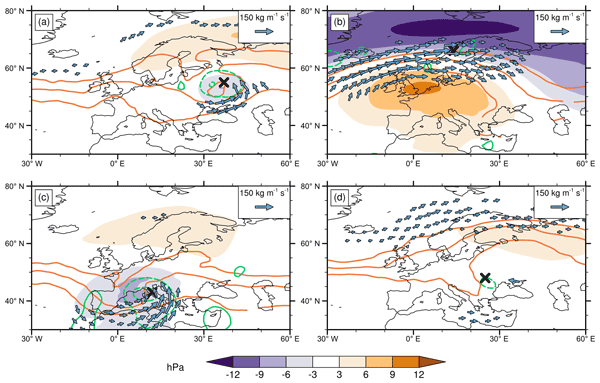
Much of the annual precipitation in the arid Middle East falls on only a few days per year, with relevance to drought and flooding. This study quantifies the separate and joint influence of the Madden-Julian Oscillation and midlatitude Rossby waves on daily precipitation variability in the Middle East during the wet season. We find that the tropical and extratropical forcing mechanisms operate largely independent of another and exert an approximately equal influence on precipitation anomalies.
Romain Pilon, Andries Jan De Vries, and Daniela I. V. Domeisen
Weather Clim. Dynam., 7, 857–872, https://doi.org/10.5194/wcd-7-857-2026, https://doi.org/10.5194/wcd-7-857-2026, 2026
Short summary
Short summary
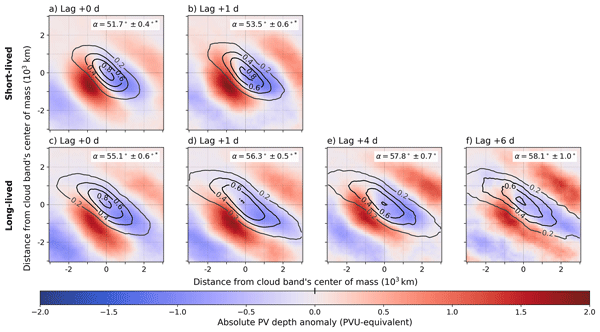
South Pacific cloud bands are vital rain sources. Using historical weather data, we investigated how atmospheric waves from the midlatitudes shape these cloud bands. We found that long-lasting cloud bands require sustained high-altitude waves to continuously steer tropical moisture southward. These persistent events occur strictly during the summer. Understanding this dynamic link is essential for improving climate models and predicting how regional rainfall patterns may change in the future.
Mélanie Coleman, Andries-Jan de Vries, Caroline Roberts, and Daniela I. V. Domeisen
EGUsphere, https://doi.org/10.5194/egusphere-2026-1827, https://doi.org/10.5194/egusphere-2026-1827, 2026
Short summary
Short summary
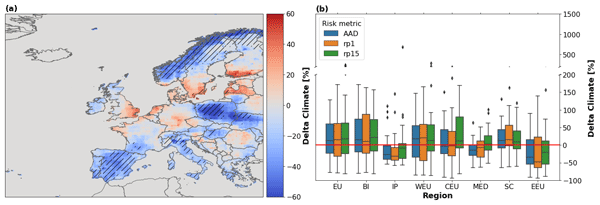
This study compares flood impacts between countries in the European Union (EU) and in the Middle East and North Africa (MENA). We find that floods cause four times more fatalities in the MENA region, while they inflict more economic losses in the EU. By comparing recorded impacts and survey data available in the EU only, we find that the population overestimates flood risk in northern EU countries but underestimates it in southern EU countries relative to other natural hazards.
Luca G. Severino, Chahan M. Kropf, Hilla Afargan-Gerstman, Christopher Fairless, Andries Jan de Vries, Daniela I. V. Domeisen, and David N. Bresch
Nat. Hazards Earth Syst. Sci., 24, 1555–1578, https://doi.org/10.5194/nhess-24-1555-2024, https://doi.org/10.5194/nhess-24-1555-2024, 2024
Short summary
Short summary
We combine climate projections from 30 climate models with a climate risk model to project winter windstorm damages in Europe under climate change. We study the uncertainty and sensitivity factors related to the modelling of hazard, exposure and vulnerability. We emphasize high uncertainties in the damage projections, with climate models primarily driving the uncertainty. We find climate change reshapes future European windstorm risk by altering damage locations and intensity.
Maria Pyrina, Wolfgang Wicker, Andries Jan de Vries, Georgios Fragkoulidis, and Daniela I. V. Domeisen
EGUsphere, https://doi.org/10.5194/egusphere-2023-3088, https://doi.org/10.5194/egusphere-2023-3088, 2024
Preprint withdrawn
Short summary
Short summary
We investigate the atmospheric dynamics behind heatwaves, specifically of those occurring simultaneously across regions, known as concurrent heatwaves. We find that heatwaves are strongly modulated by Rossby wave packets, being Rossby waves whose amplitude has a local maximum and decays at larger distances. High amplitude Rossby wave packets increase the occurrence probabilities of concurrent and non-concurrent heatwaves by a factor of 15 and 18, respectively, over several regions globally.
Matthias Röthlisberger, Barbara Scherrer, Andries Jan de Vries, and Raphael Portmann
Weather Clim. Dynam., 3, 733–754, https://doi.org/10.5194/wcd-3-733-2022, https://doi.org/10.5194/wcd-3-733-2022, 2022
Short summary
Short summary
We examine the palette of synoptic storylines accompanying unusually long wet spells in Europe. Thereby, we identify a hitherto not documented mechanism for generating long wet spells which involves recurrent Rossby wave breaking and subsequent cutoff replenishment. Understanding the synoptic processes behind long wet spells is relevant in light of projected changes in wet spell characteristics as it is a prerequisite for evaluating climate models with regard to such events.

Andries Jan de Vries, Franziska Aemisegger, Stephan Pfahl, and Heini Wernli
Atmos. Chem. Phys., 22, 8863–8895, https://doi.org/10.5194/acp-22-8863-2022, https://doi.org/10.5194/acp-22-8863-2022, 2022
Short summary
Short summary
The Earth's water cycle contains the common H2O molecule but also the less abundant, heavier HDO. We use their different physical properties to study tropical ice clouds in model simulations of the West African monsoon. Isotope signals reveal different processes through which ice clouds form and decay in deep-convective and widespread cirrus. Previously observed variations in upper-tropospheric vapour isotopes are explained by microphysical processes in convective updraughts and downdraughts.
Wolfgang Wicker, Georgios Fragkoulidis, Nili Harnik, Emmanuele Russo, and Daniela I. V. Domeisen
EGUsphere, https://doi.org/10.5194/egusphere-2026-5678, https://doi.org/10.5194/egusphere-2026-5678, 2026
This preprint is open for discussion and under review for Weather and Climate Dynamics (WCD).
Short summary
Short summary
The horizontal structure of spatially compounding climate extremes can be described in terms of a zonal wavenumber. We derive this wavenumber by calibrating a simple dispersion relation with local flow properties and compare the structure of concurrent heatwaves in an idealized atmospheric model with reanalysis data. We find that the calibration can explain differences in concurrent heatwave frequency between summer and winter, and between the Northern and the Southern hemisphere.
Chaim I. Garfinkel, Zachary D. Lawrence, Amy H. Butler, Blanca Ayarzaguena, Marta Abalos, David Barriopedro, Natalia Calvo, Alvaro de la Cámara, Andrew Charlton-Perez, Judah Cohen, Ying Dai, Daniela I. V. Domeisen, Etienne Dunn-Sigouin, Irene Erner, Javier García-Serrano, Neil P. Hindley, Peter Hitchcock, Martin Jucker, Alexey Yu. Karpechko, Hera Kim, Gerbrand Koren, Simon H. Lee, Robert W. Lee, Marisol Osman, Froila M. Palmeiro, Jian Rao, Chen Schwartz, Seok-Woo Son, Corwin J. Wright, and Rachel W.-Y. Wu
EGUsphere, https://doi.org/10.5194/egusphere-2026-6070, https://doi.org/10.5194/egusphere-2026-6070, 2026
This preprint is open for discussion and under review for Weather and Climate Dynamics (WCD).
Short summary
Short summary
Weather at the surface is influenced by the stratosphere, where changes can affect conditions weeks later. The Northern and Southern Annular Modes (NAM and SAM) describe large-scale shifts in winds around the poles that influence storms, temperature and rainfall. We show that 22 forecasting models have systematic biases in representing stratosphere–troposphere coupling, limiting prediction skill. Improving these processes could extend useful forecasts of weather extremes.
Edgar Dolores-Tesillos, Praveen K. Pothapakula, Christian Zeman, and Daniela I. V. Domeisen
EGUsphere, https://doi.org/10.5194/egusphere-2026-5758, https://doi.org/10.5194/egusphere-2026-5758, 2026
This preprint is open for discussion and under review for Weather and Climate Dynamics (WCD).
Short summary
Short summary
We tested whether increasing climate-model resolution and changing how convection is represented improve the simulation of heatwaves. Using a hierarchy of global atmosphere-only simulations, we found that finer resolution does not consistently reduce heatwave biases. Heatwave persistence depends on regional interactions among convection, rainfall, land conditions, and large-scale circulation, showing that higher resolution alone is not enough.
Bianca E. Krumm, Matthias Kohl, Anna Martin, Joseph Byron, Alexandra Gutmann, Michael Hewson, Jos Lelieveld, Andrea Pozzer, and Jonathan Williams
EGUsphere, https://doi.org/10.5194/egusphere-2026-5595, https://doi.org/10.5194/egusphere-2026-5595, 2026
This preprint is open for discussion and under review for Atmospheric Chemistry and Physics (ACP).
Short summary
Short summary
We present airborne DMS observations (0.3-14 km) over the Amazon rainforest and Pacific Ocean, revealing frequent high DMS in marine upper‑tropospheric convective outflows. EMAC model comparisons show the global terrestrial inventory overestimates Amazonian DMS threefold and convection parameterisations control the vertical distribution of DMS and its oxidation products. The results call for improved emission inventories and further research on the fate of lofted DMS in the upper troposphere.
Andries-Jan de Vries, Steven B. Feldstein, Georgios Fragkoulidis, Priyanka Yadav, and Daniela I. V. Domeisen
EGUsphere, https://doi.org/10.5194/egusphere-2026-5324, https://doi.org/10.5194/egusphere-2026-5324, 2026
This preprint is open for discussion and under review for Weather and Climate Dynamics (WCD).
Short summary
Short summary
Much of the annual precipitation in the arid Middle East falls on only a few days per year, with relevance to drought and flooding. This study quantifies the separate and joint influence of the Madden-Julian Oscillation and midlatitude Rossby waves on daily precipitation variability in the Middle East during the wet season. We find that the tropical and extratropical forcing mechanisms operate largely independent of another and exert an approximately equal influence on precipitation anomalies.
Gunther N. T. E. Türk, Simone T. Andersen, Patrick Dewald, Jan Schuladen, Jos Lelieveld, and John N. Crowley
Atmos. Meas. Tech., 19, 4815–4832, https://doi.org/10.5194/amt-19-4815-2026, https://doi.org/10.5194/amt-19-4815-2026, 2026
Short summary
Short summary
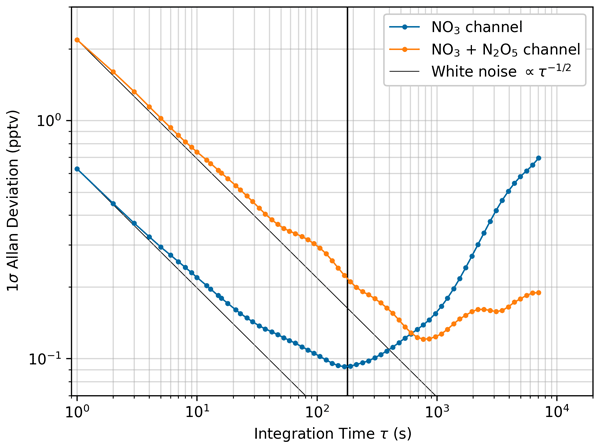
We built a small instrument to measure the air-borne molecules NO₃ and N₂O₅. These originate mostly from human-made nitrogen oxide emissions and are important for nighttime chemistry and air quality. Our instrument is lightweight and sensitive, detecting these molecules at levels below one part per trillion. Tests in the laboratory and during a field study show its ability to accurately measure these trace gases. Here, we present the design of the instrument and discuss its performance.
Yihan Zou, Jianzhong Ma, Ningwei Liu, Weili Lin, Xiaobin Xu, Yunjia Li, Siyang Cheng, Xiangdong Zheng, Andrea Pozzer, and Jos Lelieveld
Atmos. Chem. Phys., 26, 10355–10377, https://doi.org/10.5194/acp-26-10355-2026, https://doi.org/10.5194/acp-26-10355-2026, 2026
Short summary
Short summary
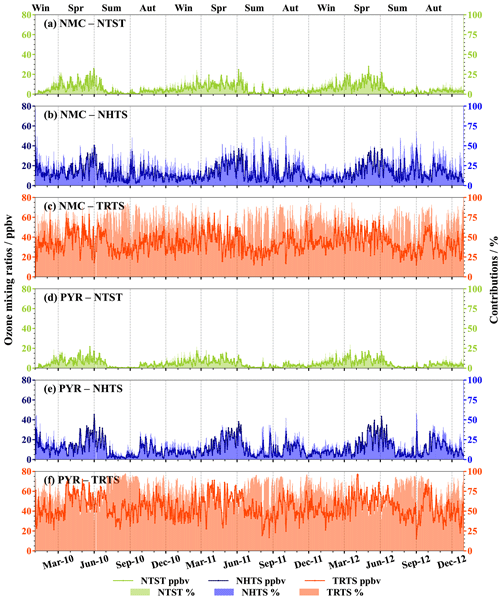
Our model simulations with the ozone-tagging technique show strong seasonal and daily variability in the contributions of various stratospheric and tropospheric sources to surface ozone over the Tibetan Plateau. Tropospheric sources from Central Asia, West Asian and Europe results in a summertime maximum over the northern Tibetan Plateau. The tropospheric source from South Asia and Southeast Asia leads to the peaks in the southern and central Tibetan Plateau during the pre-monsoon period.
Samuel Ruhl, Matthias Kohl, Rima Baalbaki, Christos Xenofontos, Ryan Vella, Sergey Gromov, Xu-Cheng He, Jiali Shen, Dina Alfaouri, Samira Atabakhsh, Lubna Dada, Jenna DeVivo, Jonathan Duplissy, Imad El Haddad, Hartwig Harder, Tuija Jokinen, Heikki Junninen, Vijay P. Kanawade, Milin K. Sebastian, Hannah Klebach, Markku Kulmala, Felix Kunkler, Jos Lelieveld, Katrianne Lehtipalo, Clara J. Lietzke, Lu Liu, Roy Mauldin, Bernhard Mentler, Ottmar Möhler, Tuukka Petäjä, Douglas M. Russell, Mario Simon, Roseline C. Thakur, Wenjuan Yu, Jiangyi Zhang, Zhensen Zheng, Jasper Kirkby, Holger Tost, Theodoros Christoudias, Rolf Sander, and Andrea Pozzer
EGUsphere, https://doi.org/10.5194/egusphere-2026-4020, https://doi.org/10.5194/egusphere-2026-4020, 2026
This preprint is open for discussion and under review for Atmospheric Chemistry and Physics (ACP).
Short summary
Short summary
Marine microbes release sulfur gases that form tiny particles able to seed clouds. Using a global chemistry-climate model, we compare four schemes for how these gases oxidise and test them against ship and ground measurements. We find that methanesulfonic acid can drive new particle formation as strongly as sulfuric acid over the cold Southern Ocean, supplying around 25 % of the cloud-forming particles there, a natural, climate-relevant source that models often overlook.
Liping Wang, Gang Chen, Xiuyuan Ding, Haijun Yang, and Daniela I. V. Domeisen
EGUsphere, https://doi.org/10.5194/egusphere-2026-4150, https://doi.org/10.5194/egusphere-2026-4150, 2026
Short summary
Short summary
We investigate low-frequency Northern Hemisphere stratospheric variability using reanalysis and three multi-century climate model simulations. We identify an intermittent oscillation with a period of about 15 years. This signal is closely connected to the surface North Atlantic Oscillation and tends to precede it, whereas its link to North Pacific circulation is weaker. These results help improve our understanding of stratosphere-surface coupling on multi-year to multi-decadal timescales.
Matthias Kohl, Christoph Brühl, Holger Tost, Christos Xenofontos, Theodoros Christoudias, Sergey Gromov, Oliver Appel, Stephan Borrmann, Adam Bourassa, Pedro Campunzano-Jost, Yafang Cheng, Oliver Eppers, Karl D. Froyd, Bruna A. Holanda, Jose L. Jimenez, Patrick Jöckel, Philipp Joppe, Katharina Kaiser, Joseph M. Katich, Klaus Klingmüller, Franziska Köllner, Agnieszka Kupc, Anna Martin, Christopher Pöhlker, Mira L. Pöhlker, Ulrich Pöschl, Landon Rieger, Samuel Ruhl, Gregory P. Schill, Johannes Schneider, Christiane Schulz, Joshua P. Schwarz, Alexandra P. Tsimpidi, Ryan Vella, Christina J. Williamson, Yifan Yang, Daniel Zawada, Jos Lelieveld, and Andrea Pozzer
EGUsphere, https://doi.org/10.5194/egusphere-2026-3649, https://doi.org/10.5194/egusphere-2026-3649, 2026
Short summary
Short summary
Aerosols are crucial for Earth's climate, yet their vertical distribution remains poorly understood. We present first consistent global simulations of aerosol distributions and composition from the Earth's surface to the stratosphere, validated by extensive observations. Key findings include a global minimum in aerosol mass in the free troposphere, a significant contribution of organic aerosol in the lower stratosphere, and limited transport of primary particles to the stratosphere.
Jianzhong Ma, Bin Chen, Qianshan He, Xiaolu Yan, Gaili Wang, Siyang Cheng, Benedikt Steil, Christoph Brühl, Holger Tost, Michael Höpfner, Andrea Pozzer, and Jos Lelieveld
Atmos. Chem. Phys., 26, 8125–8144, https://doi.org/10.5194/acp-26-8125-2026, https://doi.org/10.5194/acp-26-8125-2026, 2026
Short summary
Short summary
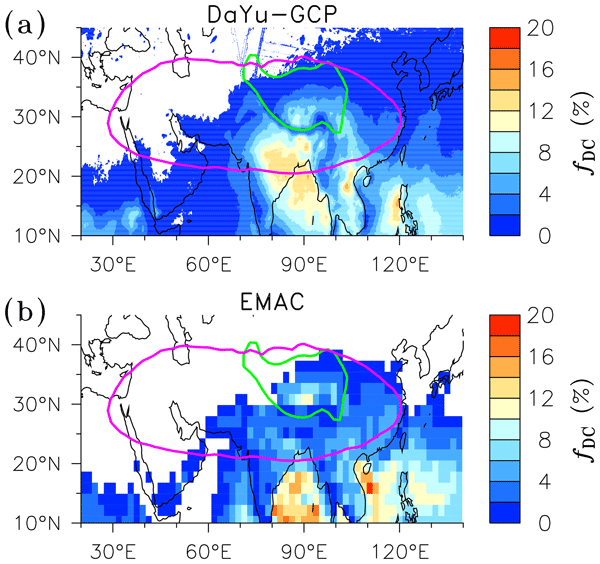
We use a global atmospheric chemistry and climate model to study the efficiency and effectiveness of the deep convective transport of CO, NH3 and SO2 from the planetary boundary layer into the Asian summer monsoon anticyclone. We find that in contrast to CO and NH3, the SO2 enhancements within the anticyclone are very weak. The wet scavenging over South Asia is more effective for SO2 than NH3 at reducing their amounts reaching the Tibetan Plateau and the Asian summer monsoon anticyclone.
Romain Pilon, Andries Jan De Vries, and Daniela I. V. Domeisen
Weather Clim. Dynam., 7, 857–872, https://doi.org/10.5194/wcd-7-857-2026, https://doi.org/10.5194/wcd-7-857-2026, 2026
Short summary
Short summary
South Pacific cloud bands are vital rain sources. Using historical weather data, we investigated how atmospheric waves from the midlatitudes shape these cloud bands. We found that long-lasting cloud bands require sustained high-altitude waves to continuously steer tropical moisture southward. These persistent events occur strictly during the summer. Understanding this dynamic link is essential for improving climate models and predicting how regional rainfall patterns may change in the future.
Johanna Margaretha Schüttler, Giovanni Pugliese, Joseph Byron, Cléo Quaresma Dias-Júnior, Carolina de A. Monteiro, Hartwig Harder, Jos Lelieveld, and Jonathan Williams
Biogeosciences, 23, 3467–3498, https://doi.org/10.5194/bg-23-3467-2026, https://doi.org/10.5194/bg-23-3467-2026, 2026
Short summary
Short summary
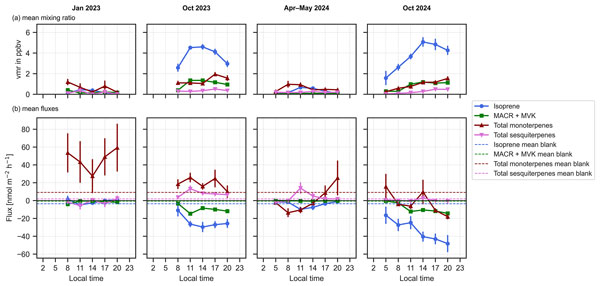
We measured how Amazon rainforest soils release and uptake compounds commonly produced by plants across seasons, including the severe 2023 El Niño drought. Soils took up isoprene most in the afternoon of dry seasons, while emissions of very reactive sesquiterpenes peaked during the drought. Removing the leaf litter changed which compounds transferred to and from the soil. These soil exchanges, though small compared to the canopy, can shape air chemistry near the ground and influence soil biota.
Rachel Wai-Ying Wu, Dominik Büeler, Maria Pyrina, Jonathan Day, Adel Imamovic, Vincent Humphrey, and Daniela I.V. Domeisen
EGUsphere, https://doi.org/10.5194/egusphere-2026-2465, https://doi.org/10.5194/egusphere-2026-2465, 2026
Short summary
Short summary
Compound heat-drought events threaten health, agriculture, and energy. Using ECMWF sub-seasonal hindcasts, we find that physical coupling increases forecast skill by ~10 % relative to assuming event independence. However, skill drops significantly where land-atmosphere interactions – namely soil moisture feedbacks – are misrepresented. We identify European regions where these forecasts are most reliable and highlight physical biases as the primary barrier to accuracy elsewhere.
Lara C. Mercier, Hilla Afargan-Gerstman, Matthew D. K. Priestley, Jens H. Christensen, and Daniela I. V. Domeisen
EGUsphere, https://doi.org/10.5194/egusphere-2026-1805, https://doi.org/10.5194/egusphere-2026-1805, 2026
Preprint archived
Short summary
Short summary
The study examines how extreme extratropical cyclones in the North Atlantic will change in a warming climate using historical and future projections of CMIP6 models. It shows that while near-surface temperature gradients are weakening, increased moisture is likely to make future storms more intense, suggesting a shift toward moisture-driven dynamics. Our findings provide new insights for improving long-term climate adaptation and risk management for high-impact weather in the midlatitudes.
Mélanie Coleman, Andries-Jan de Vries, Caroline Roberts, and Daniela I. V. Domeisen
EGUsphere, https://doi.org/10.5194/egusphere-2026-1827, https://doi.org/10.5194/egusphere-2026-1827, 2026
Short summary
Short summary
This study compares flood impacts between countries in the European Union (EU) and in the Middle East and North Africa (MENA). We find that floods cause four times more fatalities in the MENA region, while they inflict more economic losses in the EU. By comparing recorded impacts and survey data available in the EU only, we find that the population overestimates flood risk in northern EU countries but underestimates it in southern EU countries relative to other natural hazards.
Pauline Rivoire, Sonia Dupuis, Antoine Guisan, Pascal Vittoz, and Daniela I. V. Domeisen
Nat. Hazards Earth Syst. Sci., 26, 1183–1205, https://doi.org/10.5194/nhess-26-1183-2026, https://doi.org/10.5194/nhess-26-1183-2026, 2026
Short summary
Short summary
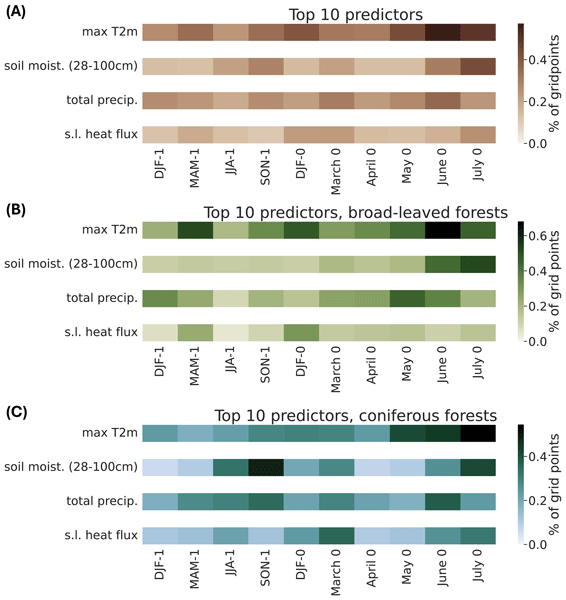
Our study investigates the temperature, precipitation, humidity, and soil moisture conditions leading to the browning of the European forests in summer. Using a Random Forest model and satellite measurements of vegetation greenness, we identify key conditions to predict forest damage. We conclude that hot and dry conditions in spring and summer are adverse conditions. The conditions during the preceding year can also have an impact, with the relevant period varying by forest type.
Anna Martin, Klaus Klingmüller, Benedikt Steil, Sergey Gromov, Yu-Ri Lee, Dong Yeong Chang, Nic Surawski, Jos Lelieveld, Sujong Jeong, and Andrea Pozzer
EGUsphere, https://doi.org/10.5194/egusphere-2026-371, https://doi.org/10.5194/egusphere-2026-371, 2026
Short summary
Short summary
We evaluate a new model simulating soil uptake of methane and hydrogen from the atmosphere. Coupled to an atmospheric chemistry and land surface model, it accounts for weather and soil conditions. Our results match observations, showing accurate removal depending on soil properties, temperature, moisture, and atmospheric conditions. This work improves the model’s ability to represent natural cycles of methane and hydrogen.

Nic Surawski, Benedikt Steil, Christoph Brühl, Sergey Gromov, Klaus Klingmüller, Anna Martin, Andrea Pozzer, and Jos Lelieveld
Geosci. Model Dev., 19, 911–931, https://doi.org/10.5194/gmd-19-911-2026, https://doi.org/10.5194/gmd-19-911-2026, 2026
Short summary
Short summary
Hydrogen usage will likely increase to achieve net zero emission targets. We undertook calculations with an Earth system model using a high-performance computer to explore hydrogen atmospheric dynamics. Simulations with our model yielded highly accurate results at global scale. Correctly representing hydroxyl radicals in the model is a critical requirement for predicting hydrogen concentrations well. Our hydrogen budget is also in very good agreement with bottom-up literature estimates.
Christoph Brühl, Matthias Kohl, and Jos Lelieveld
Atmos. Chem. Phys., 25, 18697–18718, https://doi.org/10.5194/acp-25-18697-2025, https://doi.org/10.5194/acp-25-18697-2025, 2025
Short summary
Short summary
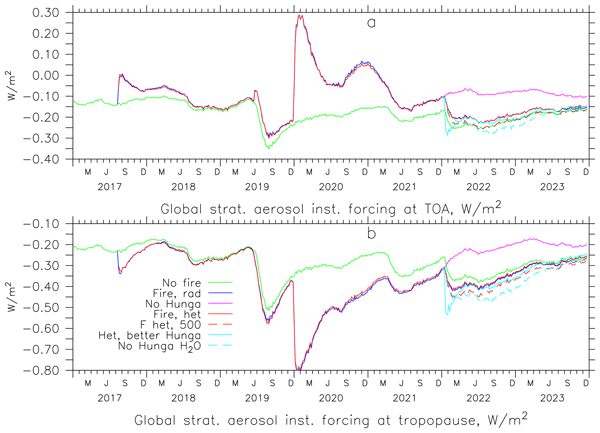
Simulations with a comprehensive chemistry-climate model show that organic aerosol from recent major forest fires strongly enhances heterogeneous ozone depletion by chlorine in the middle and high latitude lower stratosphere, supported by satellite observations. This sunlight-absorbing, self-lofting aerosol perturbs the radiation budget and stratospheric dynamics differently from major volcanic eruptions, which are also included in this study.
Linda Ort, Andrea Pozzer, Peter Hoor, Florian Obersteiner, Andreas Zahn, Thomas B. Ryerson, Chelsea R. Thompson, Jeff Peischl, Róisín Commane, Bruce Daube, Ilann Bourgeois, Jos Lelieveld, and Horst Fischer
Atmos. Chem. Phys., 25, 14987–15007, https://doi.org/10.5194/acp-25-14987-2025, https://doi.org/10.5194/acp-25-14987-2025, 2025
Short summary
Short summary
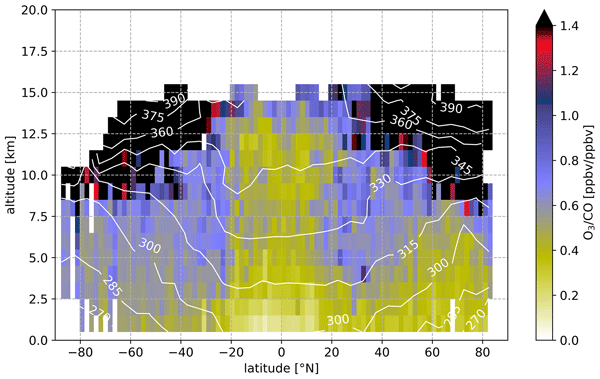
This study investigates the role of lightning emissions on the O3–CO ratio in the northern subtropics. We used in situ observations and a global circulation model to show an effect of up to 40 % onto the subtropical O3–CO ratio by tropical air masses transported via the Hadley cell. This influence of lightning emissions and its photochemistry has a global effect on trace and greenhouse gases and needs to be considered for global chemical distributions.
Monika Feldmann, Daniela I. V. Domeisen, and Olivia Martius
Weather Clim. Dynam., 6, 1089–1106, https://doi.org/10.5194/wcd-6-1089-2025, https://doi.org/10.5194/wcd-6-1089-2025, 2025
Short summary
Short summary
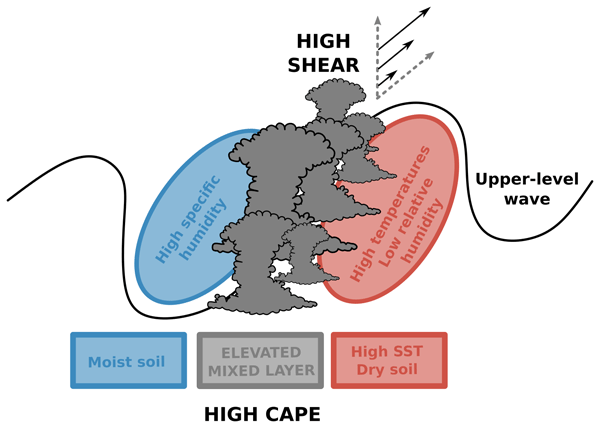
Severe thunderstorm outbreaks are a source of major damage across Europe. Using historical data, we analysed the large-scale weather patterns leading to these outbreaks in eight different regions. Three types of regions emerge: those limited by temperature, those limited by saturation, and those overall favourable for thunderstorms, consistent with their associated weather patterns and the general climate. These findings help explain regional differences and provide a basis for future forecast improvements.
Wolfgang Wicker, Emmanuele Russo, and Daniela I. V. Domeisen
Weather Clim. Dynam., 6, 965–979, https://doi.org/10.5194/wcd-6-965-2025, https://doi.org/10.5194/wcd-6-965-2025, 2025
Short summary
Short summary
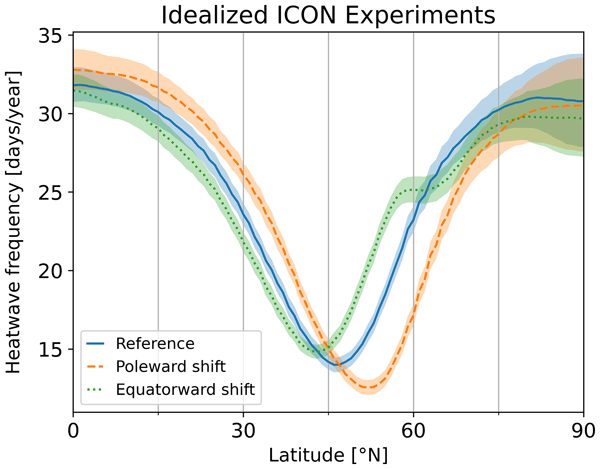
Heatwaves are becoming more frequent, but the contribution by atmospheric circulation changes is unclear. Experiments with an idealized model that simulates atmospheric dynamcis, but excludes clouds, radiation, and moisture, show how a poleward storm track shift increases the eastward phase speed of Rossby waves and reduces mid-latitude heatwave frequency. A comparison with real data for the Southern Hemisphere is attempted.
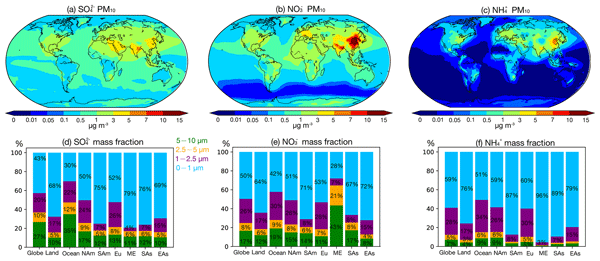
Xurong Wang, Alexandra P. Tsimpidi, Zhenqi Luo, Benedikt Steil, Andrea Pozzer, Jos Lelieveld, and Vlassis A. Karydis
Atmos. Chem. Phys., 25, 10559–10586, https://doi.org/10.5194/acp-25-10559-2025, https://doi.org/10.5194/acp-25-10559-2025, 2025
Short summary
Short summary
Ammonia (NH3) is an abundant alkaline gas and key precursor in particulate matter formation. While SO2 and NOx emissions have decreased, global NH3 emissions are stable or rising. This study investigates NH3 emission impacts on size-resolved aerosol composition and acidity using the EMAC (ECHAM5/MESSy Atmospheric Chemistry) model, analyzing three emission schemes. Sulfate–nitrate–ammonium aerosols in fine-mode sizes are most sensitive to NH3 changes. Regional responses vary. NH3 buffers aerosol acidity, mitigating pH shifts.

Ryan Vella, Sergey Gromov, Clara M. Nussbaumer, Laura Stecher, Matthias Kohl, Samuel Ruhl, Holger Tost, Jos Lelieveld, and Andrea Pozzer
Atmos. Chem. Phys., 25, 9885–9904, https://doi.org/10.5194/acp-25-9885-2025, https://doi.org/10.5194/acp-25-9885-2025, 2025
Short summary
Short summary
This work examines the impact of replacing forests with farmland and grazing areas on atmospheric composition. Using a global climate–chemistry model, we found that deforestation reduces biogenic volatile organic compounds (BVOCs), increases farming emissions, and shifts ozone chemistry. These changes result in a slight cooling effect on the climate. Restoring natural vegetation could reverse some of these effects.
Annie Y.-Y. Chang, Shaun Harrigan, Maria-Helena Ramos, Massimiliano Zappa, Christian M. Grams, Daniela I. V. Domeisen, and Konrad Bogner
EGUsphere, https://doi.org/10.5194/egusphere-2025-3411, https://doi.org/10.5194/egusphere-2025-3411, 2025
Short summary
Short summary
This study presents a machine learning-aided hybrid forecasting framework to improve early warnings of low flows in the European Alps. It combines weather regime information, streamflow observations, and model simulations (EFAS). Even using only weather regime data improves predictions over climatology, while integrating different data sources yields the best result, emphasizing the value of integrating diverse data sources.
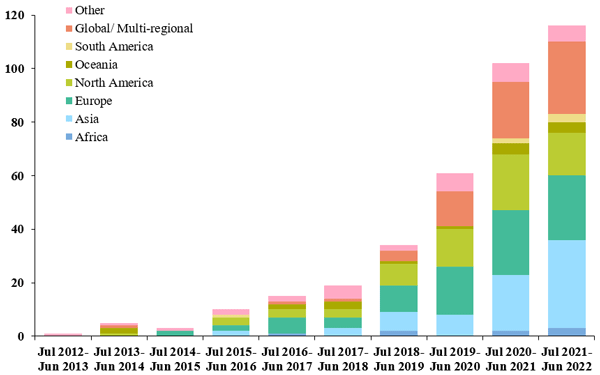
Lou Brett, Christopher J. White, Daniela I. V. Domeisen, Bart van den Hurk, Philip Ward, and Jakob Zscheischler
Nat. Hazards Earth Syst. Sci., 25, 2591–2611, https://doi.org/10.5194/nhess-25-2591-2025, https://doi.org/10.5194/nhess-25-2591-2025, 2025
Short summary
Short summary
Compound events, where multiple weather or climate hazards occur together, pose significant risks to both society and the environment. These events, like simultaneous wind and rain, can have more severe impacts than single hazards. Our review of compound event research from 2012–2022 reveals a rise in studies, especially on events that occur concurrently, hot and dry events, and compounding flooding. The review also highlights opportunities for research in the coming years.
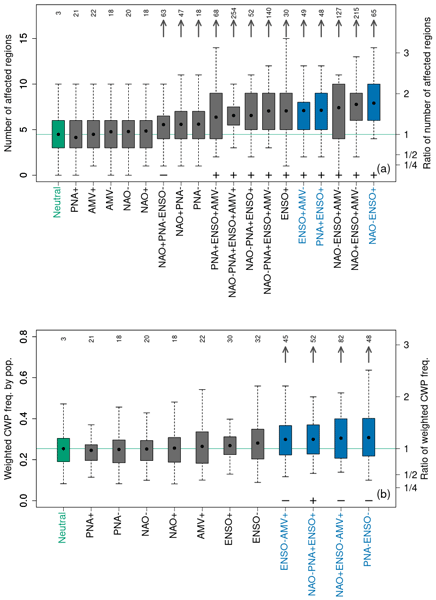
Bastien François, Khalil Teber, Lou Brett, Richard Leeding, Luis Gimeno-Sotelo, Daniela I. V. Domeisen, Laura Suarez-Gutierrez, and Emanuele Bevacqua
Earth Syst. Dynam., 16, 1029–1051, https://doi.org/10.5194/esd-16-1029-2025, https://doi.org/10.5194/esd-16-1029-2025, 2025
Short summary
Short summary
Spatially compounding wind and precipitation (CWP) extremes can lead to severe impacts on society. We find that concurrent climate variability modes favor the occurrence of such wintertime spatially compounding events in the Northern Hemisphere and can even amplify the number of regions and population exposed. Our analysis highlights the importance of considering the interplay between variability modes to improve risk management of such spatially compounding events.
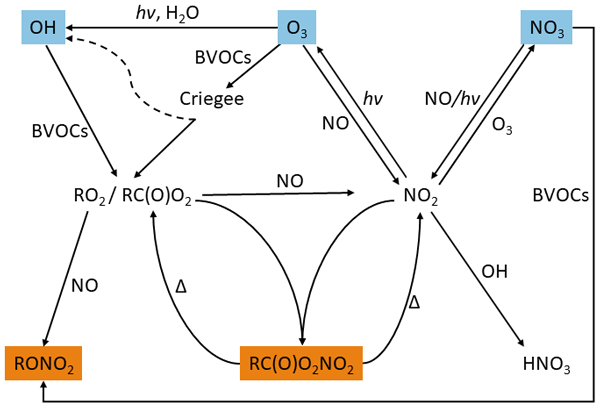
Simone T. Andersen, Rolf Sander, Patrick Dewald, Laura Wüst, Tobias Seubert, Gunther N. T. E. Türk, Jan Schuladen, Max R. McGillen, Chaoyang Xue, Abdelwahid Mellouki, Alexandre Kukui, Vincent Michoud, Manuela Cirtog, Mathieu Cazaunau, Astrid Bauville, Hichem Bouzidi, Paola Formenti, Cyrielle Denjean, Jean-Claude Etienne, Olivier Garrouste, Christopher Cantrell, Jos Lelieveld, and John N. Crowley
Atmos. Chem. Phys., 25, 5893–5909, https://doi.org/10.5194/acp-25-5893-2025, https://doi.org/10.5194/acp-25-5893-2025, 2025
Short summary
Short summary
Measurements and modelling of reactive nitrogen gases observed in a suburban temperate forest in Rambouillet, France, circa 50 km southwest of Paris in 2022 indicate that the biosphere rapidly scavenges organic nitrates of mixed biogenic and anthropogenic origin, resulting in short lifetimes for, for example, alkyl nitrates and peroxy nitrates.
Laura Wüst, Patrick Dewald, Gunther N. T. E. Türk, Jos Lelieveld, and John N. Crowley
Atmos. Meas. Tech., 18, 1943–1959, https://doi.org/10.5194/amt-18-1943-2025, https://doi.org/10.5194/amt-18-1943-2025, 2025
Short summary
Short summary
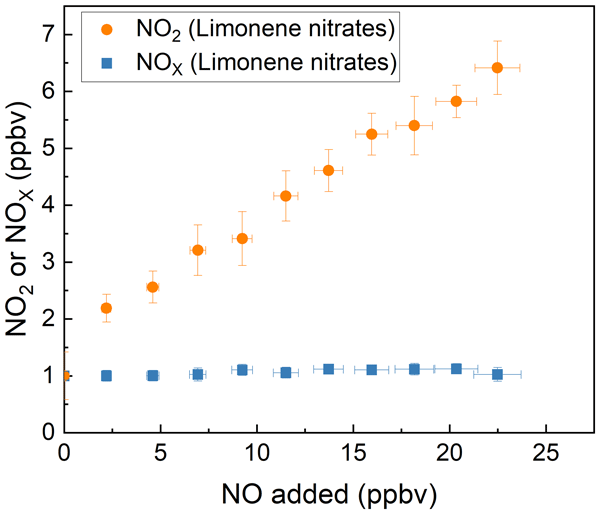
Detection of NO2 via cavity ring-down spectroscopy (CRDS) after thermal dissociation (TD) of alkyl and peroxy nitrates can be used to detect total atmospheric organic nitrates originating from the interaction between biogenic emissions of volatile organic compounds and nitrogen oxides of anthropogenic origin. Here we present an improved TD-CRDS technique that avoids systematic bias resulting from secondary chemistry in the heated inlets and that can be deployed in regions with strong biogenic emissions.
Pantelis Georgiades, Theo Economou, Yiannis Proestos, Jose Araya, Jos Lelieveld, and Marco Neira
Earth Syst. Sci. Data, 17, 1153–1171, https://doi.org/10.5194/essd-17-1153-2025, https://doi.org/10.5194/essd-17-1153-2025, 2025
Short summary
Short summary
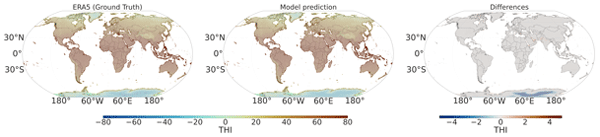
Climate change is posing increasing challenges in the dairy cattle farming sector, as heat stress adversely affects the animals' health and milk production. To accurately assess these impacts, we developed a machine learning model to downscale daily climate data to hourly Temperature Humidity Index (THI) values. We utilized historical weather data to train our model and applied them to future climate projections, under two climate scenarios.
Chaim I. Garfinkel, Zachary D. Lawrence, Amy H. Butler, Etienne Dunn-Sigouin, Irene Erner, Alexey Y. Karpechko, Gerbrand Koren, Marta Abalos, Blanca Ayarzagüena, David Barriopedro, Natalia Calvo, Alvaro de la Cámara, Andrew Charlton-Perez, Judah Cohen, Daniela I. V. Domeisen, Javier García-Serrano, Neil P. Hindley, Martin Jucker, Hera Kim, Robert W. Lee, Simon H. Lee, Marisol Osman, Froila M. Palmeiro, Inna Polichtchouk, Jian Rao, Jadwiga H. Richter, Chen Schwartz, Seok-Woo Son, Masakazu Taguchi, Nicholas L. Tyrrell, Corwin J. Wright, and Rachel W.-Y. Wu
Weather Clim. Dynam., 6, 171–195, https://doi.org/10.5194/wcd-6-171-2025, https://doi.org/10.5194/wcd-6-171-2025, 2025
Short summary
Short summary
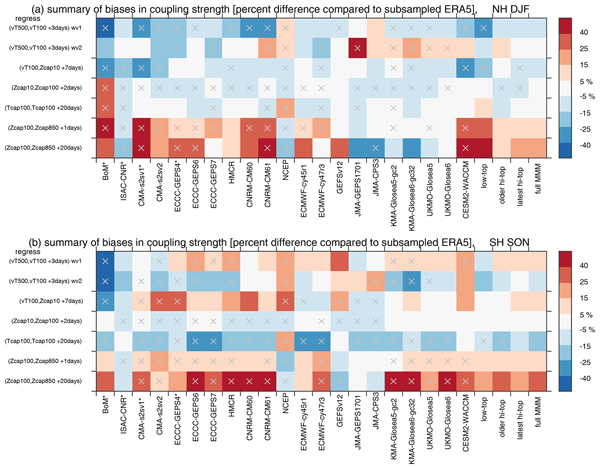
Variability in the extratropical stratosphere and troposphere is coupled, and because of the longer timescales characteristic of the stratosphere, this allows for a window of opportunity for surface prediction. This paper assesses whether models used for operational prediction capture these coupling processes accurately. We find that most processes are too weak; however downward coupling from the lower stratosphere to the near surface is too strong.
Ryan Vella, Matthew Forrest, Andrea Pozzer, Alexandra P. Tsimpidi, Thomas Hickler, Jos Lelieveld, and Holger Tost
Atmos. Chem. Phys., 25, 243–262, https://doi.org/10.5194/acp-25-243-2025, https://doi.org/10.5194/acp-25-243-2025, 2025
Short summary
Short summary
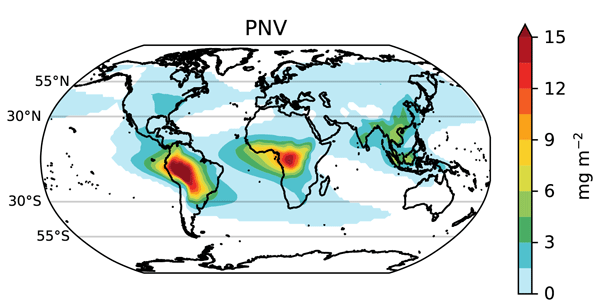
This study examines how land cover changes influence biogenic volatile organic compound (BVOC) emissions and atmospheric states. Using a coupled chemistry–climate–vegetation model, we compare present-day land cover (deforested for crops and grazing) with natural vegetation and an extreme reforestation scenario. We find that vegetation changes significantly impact global BVOC emissions and organic aerosols but have a relatively small effect on total aerosols, clouds, and radiative effects.
Rachel W.-Y. Wu, Gabriel Chiodo, Inna Polichtchouk, and Daniela I. V. Domeisen
Atmos. Chem. Phys., 24, 12259–12275, https://doi.org/10.5194/acp-24-12259-2024, https://doi.org/10.5194/acp-24-12259-2024, 2024
Short summary
Short summary
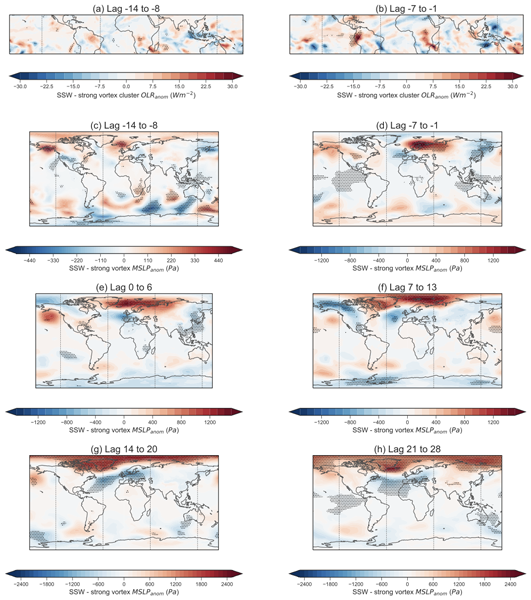
Strong variations in the strength of the stratospheric polar vortex can profoundly affect surface weather extremes; therefore, accurately predicting the stratosphere can improve surface weather forecasts. The research reveals how uncertainty in the stratosphere is linked to the troposphere. The findings suggest that refining models to better represent the identified sources and impact regions in the troposphere is likely to improve the prediction of the stratosphere and its surface impacts.
Akima Ringsdorf, Achim Edtbauer, Bruna Holanda, Christopher Poehlker, Marta O. Sá, Alessandro Araújo, Jürgen Kesselmeier, Jos Lelieveld, and Jonathan Williams
Atmos. Chem. Phys., 24, 11883–11910, https://doi.org/10.5194/acp-24-11883-2024, https://doi.org/10.5194/acp-24-11883-2024, 2024
Short summary
Short summary
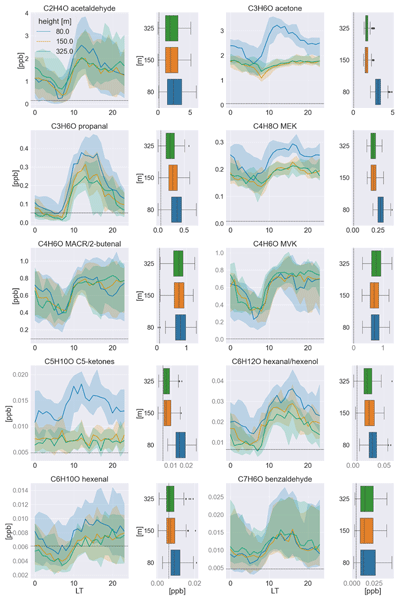
We show the average height distribution of separately observed aldehydes and ketones over a day and discuss their rainforest-specific sources and sinks as well as their seasonal changes above the Amazon. Ketones have much longer atmospheric lifetimes than aldehydes and thus different implications for atmospheric chemistry. However, they are commonly observed together, which we overcome by measuring with a NO+ chemical ionization mass spectrometer for the first time in the Amazon rainforest.
Simone T. Andersen, Max R. McGillen, Chaoyang Xue, Tobias Seubert, Patrick Dewald, Gunther N. T. E. Türk, Jan Schuladen, Cyrielle Denjean, Jean-Claude Etienne, Olivier Garrouste, Marina Jamar, Sergio Harb, Manuela Cirtog, Vincent Michoud, Mathieu Cazaunau, Antonin Bergé, Christopher Cantrell, Sebastien Dusanter, Bénédicte Picquet-Varrault, Alexandre Kukui, Abdelwahid Mellouki, Lucy J. Carpenter, Jos Lelieveld, and John N. Crowley
Atmos. Chem. Phys., 24, 11603–11618, https://doi.org/10.5194/acp-24-11603-2024, https://doi.org/10.5194/acp-24-11603-2024, 2024
Short summary
Short summary
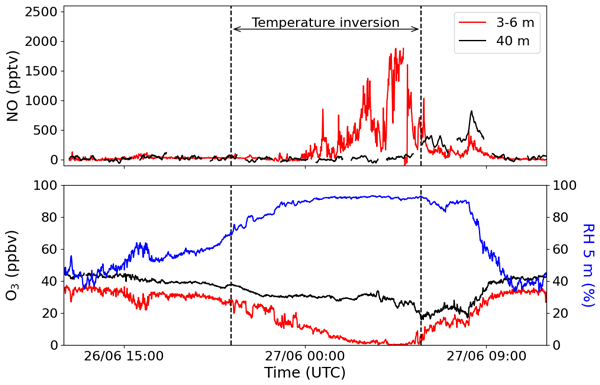
Using measurements of various trace gases in a suburban forest near Paris in the summer of 2022, we were able to gain insight into the sources and sinks of NOx (NO+NO2) with a special focus on their nighttime chemical and physical loss processes. NO was observed as a result of nighttime soil emissions when O3 levels were strongly depleted by deposition. NO oxidation products were not observed at night, indicating that soil and/or foliar surfaces are an efficient sink of reactive N.
Patrick Dewald, Tobias Seubert, Simone T. Andersen, Gunther N. T. E. Türk, Jan Schuladen, Max R. McGillen, Cyrielle Denjean, Jean-Claude Etienne, Olivier Garrouste, Marina Jamar, Sergio Harb, Manuela Cirtog, Vincent Michoud, Mathieu Cazaunau, Antonin Bergé, Christopher Cantrell, Sebastien Dusanter, Bénédicte Picquet-Varrault, Alexandre Kukui, Chaoyang Xue, Abdelwahid Mellouki, Jos Lelieveld, and John N. Crowley
Atmos. Chem. Phys., 24, 8983–8997, https://doi.org/10.5194/acp-24-8983-2024, https://doi.org/10.5194/acp-24-8983-2024, 2024
Short summary
Short summary
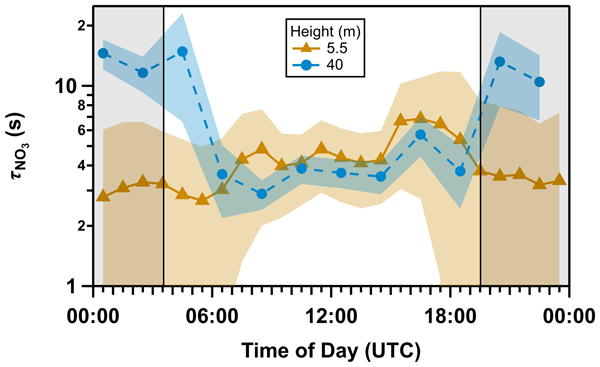
In the scope of a field campaign in a suburban forest near Paris in the summer of 2022, we measured the reactivity of the nitrate radical NO3 towards biogenic volatile organic compounds (BVOCs; e.g. monoterpenes) mainly below but also above the canopy. NO3 reactivity was the highest during nights with strong temperature inversions and decreased strongly with height. Reactions with BVOCs were the main removal process of NO3 throughout the diel cycle below the canopy.
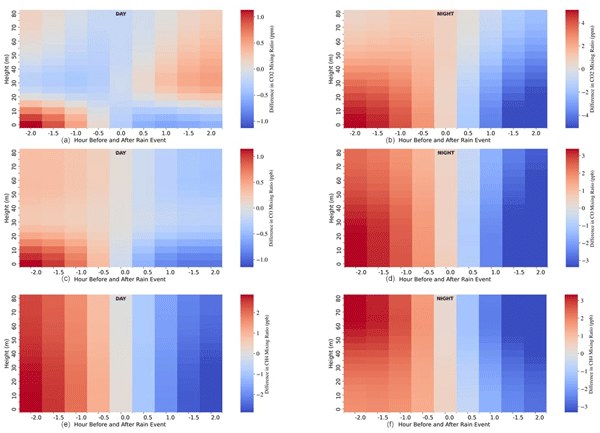
Luiz A. T. Machado, Jürgen Kesselmeier, Santiago Botía, Hella van Asperen, Meinrat O. Andreae, Alessandro C. de Araújo, Paulo Artaxo, Achim Edtbauer, Rosaria R. Ferreira, Marco A. Franco, Hartwig Harder, Sam P. Jones, Cléo Q. Dias-Júnior, Guido G. Haytzmann, Carlos A. Quesada, Shujiro Komiya, Jost Lavric, Jos Lelieveld, Ingeborg Levin, Anke Nölscher, Eva Pfannerstill, Mira L. Pöhlker, Ulrich Pöschl, Akima Ringsdorf, Luciana Rizzo, Ana M. Yáñez-Serrano, Susan Trumbore, Wanda I. D. Valenti, Jordi Vila-Guerau de Arellano, David Walter, Jonathan Williams, Stefan Wolff, and Christopher Pöhlker
Atmos. Chem. Phys., 24, 8893–8910, https://doi.org/10.5194/acp-24-8893-2024, https://doi.org/10.5194/acp-24-8893-2024, 2024
Short summary
Short summary
Composite analysis of gas concentration before and after rainfall, during the day and night, gives insight into the complex relationship between trace gas variability and precipitation. The analysis helps us to understand the sources and sinks of trace gases within a forest ecosystem. It elucidates processes that are not discernible under undisturbed conditions and contributes to a deeper understanding of the trace gas life cycle and its intricate interactions with cloud dynamics in the Amazon.
Pantelis Georgiades, Matthias Kohl, Mihalis A. Nicolaou, Theodoros Christoudias, Andrea Pozzer, Constantine Dovrolis, and Jos Lelieveld
Earth Syst. Sci. Data Discuss., https://doi.org/10.5194/essd-2024-314, https://doi.org/10.5194/essd-2024-314, 2024
Manuscript not accepted for further review
Short summary
Short summary
This study maps global ultrafine particle (UFP) concentrations, pollutants known to affect health, using machine learning. By combining environmental and urban data, we predicted UFP levels at a fine 1 km resolution, highlighting areas of high exposure. Our results provide data for public health policies aimed at reducing air pollution impacts. This research bridges data gaps, offering a valuable tool for understanding and mitigating the health effects of UFP exposure.
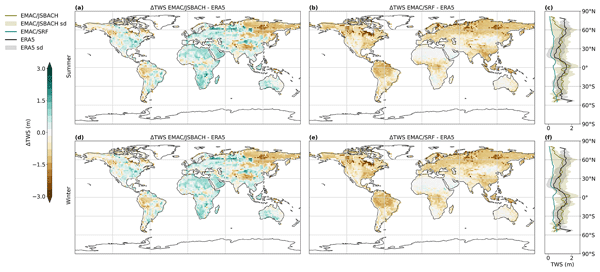
Anna Martin, Veronika Gayler, Benedikt Steil, Klaus Klingmüller, Patrick Jöckel, Holger Tost, Jos Lelieveld, and Andrea Pozzer
Geosci. Model Dev., 17, 5705–5732, https://doi.org/10.5194/gmd-17-5705-2024, https://doi.org/10.5194/gmd-17-5705-2024, 2024
Short summary
Short summary
The study evaluates the land surface and vegetation model JSBACHv4 as a replacement for the simplified submodel SURFACE in EMAC. JSBACH mitigates earlier problems of soil dryness, which are critical for vegetation modelling. When analysed using different datasets, the coupled model shows strong correlations of key variables, such as land surface temperature, surface albedo and radiation flux. The versatility of the model increases significantly, while the overall performance does not degrade.
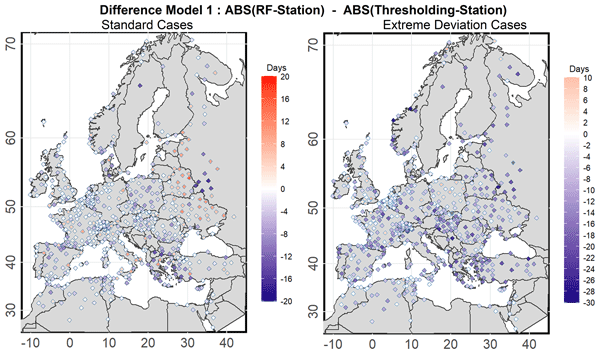
Georgia Lazoglou, Theo Economou, Christina Anagnostopoulou, George Zittis, Anna Tzyrkalli, Pantelis Georgiades, and Jos Lelieveld
Geosci. Model Dev., 17, 4689–4703, https://doi.org/10.5194/gmd-17-4689-2024, https://doi.org/10.5194/gmd-17-4689-2024, 2024
Short summary
Short summary
This study focuses on the important issue of the drizzle bias effect in regional climate models, described by an over-prediction of the number of rainy days while underestimating associated precipitation amounts. For this purpose, two distinct methodologies are applied and rigorously evaluated. These results are encouraging for using the multivariate machine learning method random forest to increase the accuracy of climate models concerning the projection of the number of wet days.

Linda Ort, Lenard Lukas Röder, Uwe Parchatka, Rainer Königstedt, Daniel Crowley, Frank Kunz, Ralf Wittkowski, Jos Lelieveld, and Horst Fischer
Atmos. Meas. Tech., 17, 3553–3565, https://doi.org/10.5194/amt-17-3553-2024, https://doi.org/10.5194/amt-17-3553-2024, 2024
Short summary
Short summary
Airborne in situ measurements are of great importance to collect valuable data to improve our knowledge of the atmosphere but also present challenges which demand specific designs. This study presents an IR spectrometer for airborne trace-gas measurements with high data efficiency and a simple, compact design. Its in-flight performance is characterized with the help of a test flight and a comparison with another spectrometer. Moreover, results from its first campaign highlight its benefits.
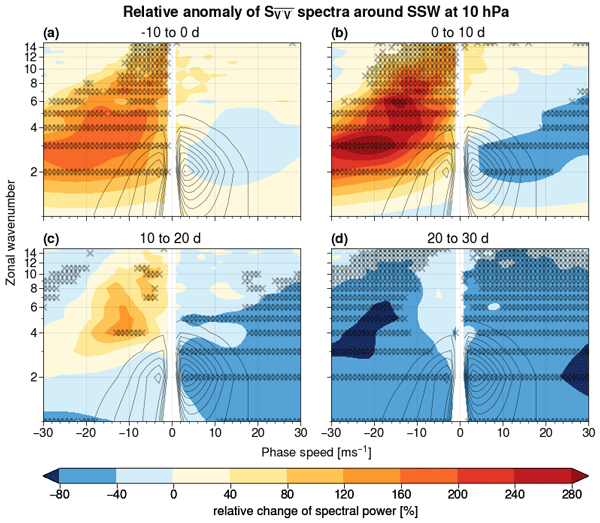
Michael Schutte, Daniela I. V. Domeisen, and Jacopo Riboldi
Weather Clim. Dynam., 5, 733–752, https://doi.org/10.5194/wcd-5-733-2024, https://doi.org/10.5194/wcd-5-733-2024, 2024
Short summary
Short summary
The winter circulation in the stratosphere, a layer of the Earth’s atmosphere between 10 and 50 km height, is tightly linked to the circulation in the lower atmosphere determining our daily weather. This interconnection happens in the form of waves propagating in and between these two layers. Here, we use space–time spectral analysis to show that disruptions and enhancements of the stratospheric circulation modify the shape and propagation of waves in both layers.
Luca G. Severino, Chahan M. Kropf, Hilla Afargan-Gerstman, Christopher Fairless, Andries Jan de Vries, Daniela I. V. Domeisen, and David N. Bresch
Nat. Hazards Earth Syst. Sci., 24, 1555–1578, https://doi.org/10.5194/nhess-24-1555-2024, https://doi.org/10.5194/nhess-24-1555-2024, 2024
Short summary
Short summary
We combine climate projections from 30 climate models with a climate risk model to project winter windstorm damages in Europe under climate change. We study the uncertainty and sensitivity factors related to the modelling of hazard, exposure and vulnerability. We emphasize high uncertainties in the damage projections, with climate models primarily driving the uncertainty. We find climate change reshapes future European windstorm risk by altering damage locations and intensity.
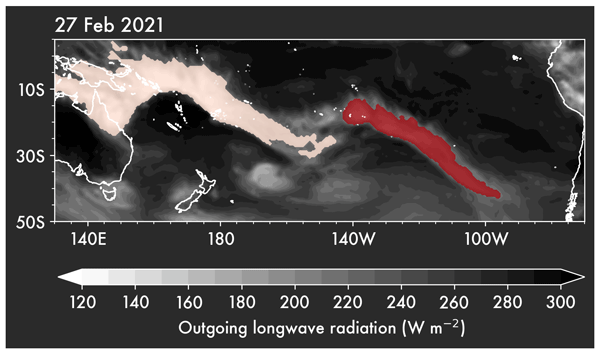
Romain Pilon and Daniela I. V. Domeisen
Geosci. Model Dev., 17, 2247–2264, https://doi.org/10.5194/gmd-17-2247-2024, https://doi.org/10.5194/gmd-17-2247-2024, 2024
Short summary
Short summary
This paper introduces a new method for detecting atmospheric cloud bands to identify long convective cloud bands that extend from the tropics to the midlatitudes. The algorithm allows for easy use and enables researchers to study the life cycle and climatology of cloud bands and associated rainfall. This method provides insights into the large-scale processes involved in cloud band formation and their connections between different regions, as well as differences across ocean basins.
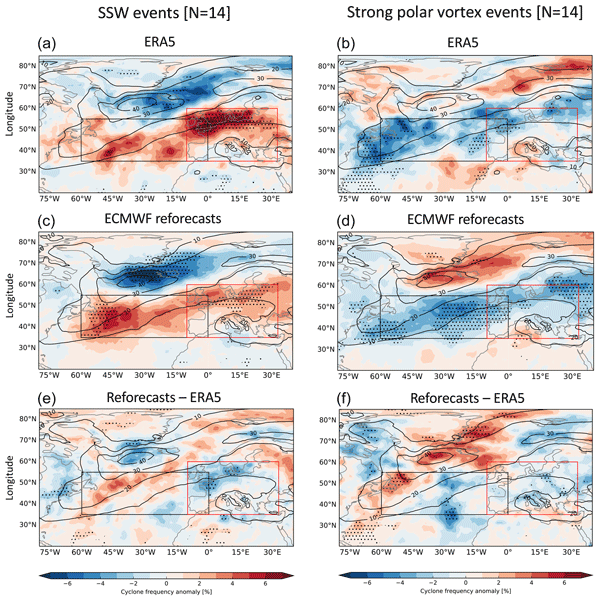
Hilla Afargan-Gerstman, Dominik Büeler, C. Ole Wulff, Michael Sprenger, and Daniela I. V. Domeisen
Weather Clim. Dynam., 5, 231–249, https://doi.org/10.5194/wcd-5-231-2024, https://doi.org/10.5194/wcd-5-231-2024, 2024
Short summary
Short summary
The stratosphere is a layer of Earth's atmosphere found above the weather systems. Changes in the stratosphere can affect the winds and the storm tracks in the North Atlantic region for a relatively long time, lasting for several weeks and even months. We show that the stratosphere can be important for weather forecasts beyond 1 week, but more work is needed to improve the accuracy of these forecasts for 3–4 weeks.
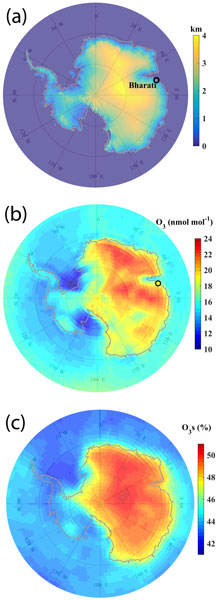
Imran A. Girach, Narendra Ojha, Prabha R. Nair, Kandula V. Subrahmanyam, Neelakantan Koushik, Mohammed M. Nazeer, Nadimpally Kiran Kumar, Surendran Nair Suresh Babu, Jos Lelieveld, and Andrea Pozzer
Atmos. Chem. Phys., 24, 1979–1995, https://doi.org/10.5194/acp-24-1979-2024, https://doi.org/10.5194/acp-24-1979-2024, 2024
Short summary
Short summary
We investigate surface ozone variability in East Antarctica based on measurements and EMAC global model simulations during austral summer. Nearly half of the surface ozone is found to be of stratospheric origin. The east coast of Antarctica acts as a stronger sink of ozone than surrounding regions. Photochemical loss of ozone is counterbalanced by downward transport of ozone. The study highlights the intertwined role of chemistry and dynamics in governing ozone variations over East Antarctica.
Maria Pyrina, Wolfgang Wicker, Andries Jan de Vries, Georgios Fragkoulidis, and Daniela I. V. Domeisen
EGUsphere, https://doi.org/10.5194/egusphere-2023-3088, https://doi.org/10.5194/egusphere-2023-3088, 2024
Preprint withdrawn
Short summary
Short summary
We investigate the atmospheric dynamics behind heatwaves, specifically of those occurring simultaneously across regions, known as concurrent heatwaves. We find that heatwaves are strongly modulated by Rossby wave packets, being Rossby waves whose amplitude has a local maximum and decays at larger distances. High amplitude Rossby wave packets increase the occurrence probabilities of concurrent and non-concurrent heatwaves by a factor of 15 and 18, respectively, over several regions globally.
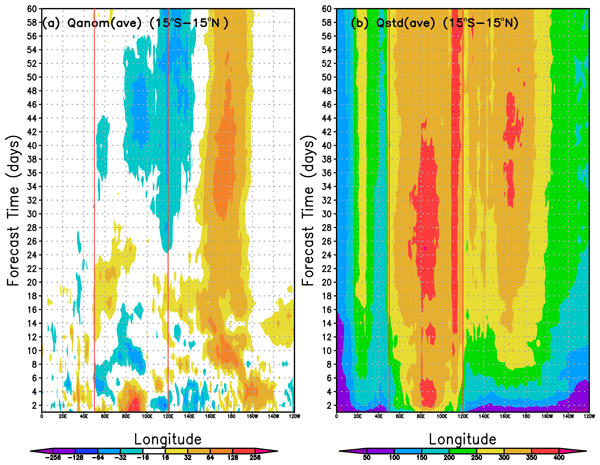
David Martin Straus, Daniela I. V. Domeisen, Sarah-Jane Lock, Franco Molteni, and Priyanka Yadav
Weather Clim. Dynam., 4, 1001–1018, https://doi.org/10.5194/wcd-4-1001-2023, https://doi.org/10.5194/wcd-4-1001-2023, 2023
Short summary
Short summary
The global response to the Madden–Julian oscillation (MJO) is potentially predictable. Yet the diabatic heating is uncertain even within a particular episode of the MJO. Experiments with a global model probe the limitations imposed by this uncertainty. The large-scale tropical heating is predictable for 25 to 45 d, yet the associated Rossby wave source that links the heating to the midlatitude circulation is predictable for 15 to 20 d. This limitation has not been recognized in prior work.
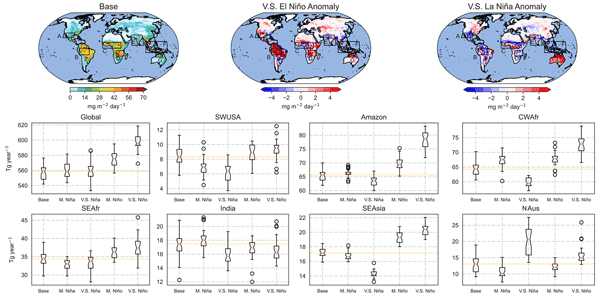
Ryan Vella, Andrea Pozzer, Matthew Forrest, Jos Lelieveld, Thomas Hickler, and Holger Tost
Biogeosciences, 20, 4391–4412, https://doi.org/10.5194/bg-20-4391-2023, https://doi.org/10.5194/bg-20-4391-2023, 2023
Short summary
Short summary
We investigated the effect of the El Niño–Southern Oscillation (ENSO) on biogenic volatile organic compound (BVOC) emissions from plants. ENSO events can cause a significant increase in these emissions, which have a long-term impact on the Earth's atmosphere. Persistent ENSO conditions can cause long-term changes in vegetation, resulting in even higher BVOC emissions. We link ENSO-induced emission anomalies with driving atmospheric and vegetational variables.
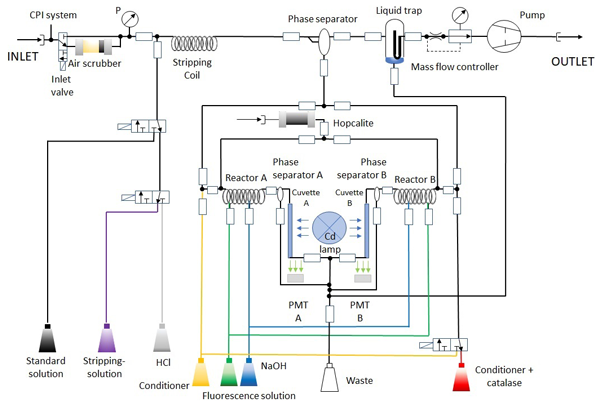
Zaneta Hamryszczak, Antonia Hartmann, Dirk Dienhart, Sascha Hafermann, Bettina Brendel, Rainer Königstedt, Uwe Parchatka, Jos Lelieveld, and Horst Fischer
Atmos. Meas. Tech., 16, 4741–4756, https://doi.org/10.5194/amt-16-4741-2023, https://doi.org/10.5194/amt-16-4741-2023, 2023
Short summary
Short summary
Hydroperoxide measurements improve the understanding of atmospheric oxidation processes. We introduce an instrumental setup for airborne measurements. The aim of the work is the characterization of the measurement method with emphasis on interferences impacting instrumental uncertainty. Technical and physical challenges do not critically impact the instrumental performance. The instrument resolves dynamic processes, such as convective transport, as shown based on the CAFE-Brazil campaign.
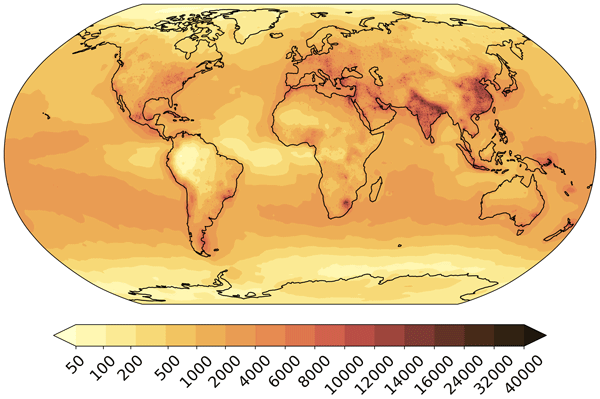
Matthias Kohl, Jos Lelieveld, Sourangsu Chowdhury, Sebastian Ehrhart, Disha Sharma, Yafang Cheng, Sachchida Nand Tripathi, Mathew Sebastian, Govindan Pandithurai, Hongli Wang, and Andrea Pozzer
Atmos. Chem. Phys., 23, 13191–13215, https://doi.org/10.5194/acp-23-13191-2023, https://doi.org/10.5194/acp-23-13191-2023, 2023
Short summary
Short summary
Knowledge on atmospheric ultrafine particles (UFPs) with a diameter smaller than 100 nm is crucial for public health and the hydrological cycle. We present a new global dataset of UFP concentrations at the Earth's surface derived with a comprehensive chemistry–climate model and evaluated with ground-based observations. The evaluation results are combined with high-resolution primary emissions to downscale UFP concentrations to an unprecedented horizontal resolution of 0.1° × 0.1°.
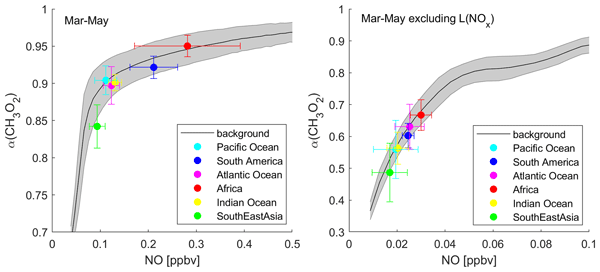
Clara M. Nussbaumer, Horst Fischer, Jos Lelieveld, and Andrea Pozzer
Atmos. Chem. Phys., 23, 12651–12669, https://doi.org/10.5194/acp-23-12651-2023, https://doi.org/10.5194/acp-23-12651-2023, 2023
Short summary
Short summary
Ozone is a greenhouse gas and contributes to the earth’s radiative energy budget and therefore to global warming. This effect is the largest in the upper troposphere. In this study, we investigate the processes controlling ozone formation and the sensitivity to its precursors in the upper tropical troposphere based on model simulations by the ECHAM5/MESSy2 Atmospheric Chemistry (EMAC) model. We find that NO𝑥 emissions from lightning most importantly affect ozone chemistry at these altitudes.
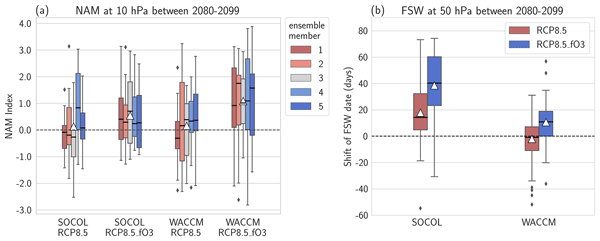
Gabriel Chiodo, Marina Friedel, Svenja Seeber, Daniela Domeisen, Andrea Stenke, Timofei Sukhodolov, and Franziska Zilker
Atmos. Chem. Phys., 23, 10451–10472, https://doi.org/10.5194/acp-23-10451-2023, https://doi.org/10.5194/acp-23-10451-2023, 2023
Short summary
Short summary
Stratospheric ozone protects the biosphere from harmful UV radiation. Anthropogenic activity has led to a reduction in the ozone layer in the recent past, but thanks to the implementation of the Montreal Protocol, the ozone layer is projected to recover. In this study, we show that projected future changes in Arctic ozone abundances during springtime will influence stratospheric climate and thereby actively modulate large-scale circulation changes in the Northern Hemisphere.
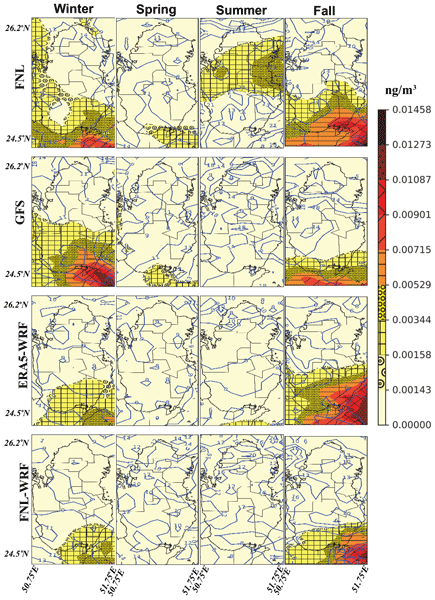
Seyed Omid Nabavi, Theodoros Christoudias, Yiannis Proestos, Christos Fountoukis, Huda Al-Sulaiti, and Jos Lelieveld
Atmos. Chem. Phys., 23, 7719–7739, https://doi.org/10.5194/acp-23-7719-2023, https://doi.org/10.5194/acp-23-7719-2023, 2023
Short summary
Short summary
The objective of our study is to comprehensively assess the timing of radioactive material transportation and deposition, along with the associated population exposure in the designated region. We employed diverse meteorological inputs, emission specifics, and simulation codes, aiming to quantify the level of uncertainty.
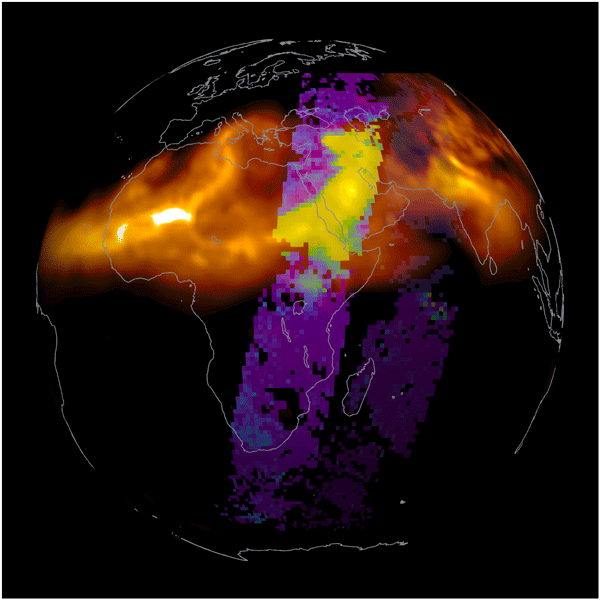
Klaus Klingmüller and Jos Lelieveld
Geosci. Model Dev., 16, 3013–3028, https://doi.org/10.5194/gmd-16-3013-2023, https://doi.org/10.5194/gmd-16-3013-2023, 2023
Short summary
Short summary
Desert dust has significant impacts on climate, public health, infrastructure and ecosystems. An impact assessment requires numerical predictions, which are challenging because the dust emissions are not well known. We present a novel approach using satellite observations and machine learning to more accurately estimate the emissions and to improve the model simulations.
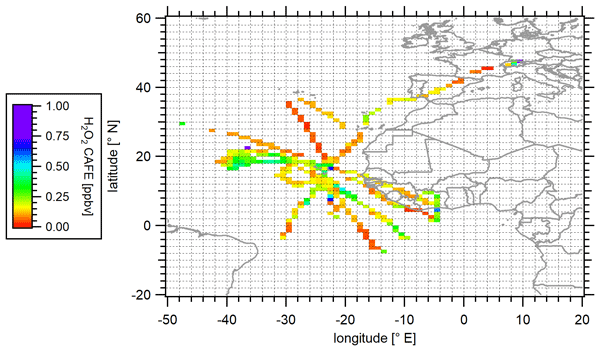
Zaneta Hamryszczak, Dirk Dienhart, Bettina Brendel, Roland Rohloff, Daniel Marno, Monica Martinez, Hartwig Harder, Andrea Pozzer, Birger Bohn, Martin Zöger, Jos Lelieveld, and Horst Fischer
Atmos. Chem. Phys., 23, 5929–5943, https://doi.org/10.5194/acp-23-5929-2023, https://doi.org/10.5194/acp-23-5929-2023, 2023
Short summary
Short summary
Hydrogen peroxide is a key contributor to the oxidative chemistry of the atmosphere through its link to the most prominent oxidants controlling its self-cleansing capacity, HOx. During the CAFE-Africa campaign, H2O2 was measured over the Atlantic Ocean and western Africa in August/September 2018. The study gives an overview of the distribution of H2O2 in the upper tropical troposphere and investigates the impact of convective processes in the Intertropical Convergence Zone on the budget of H2O2.
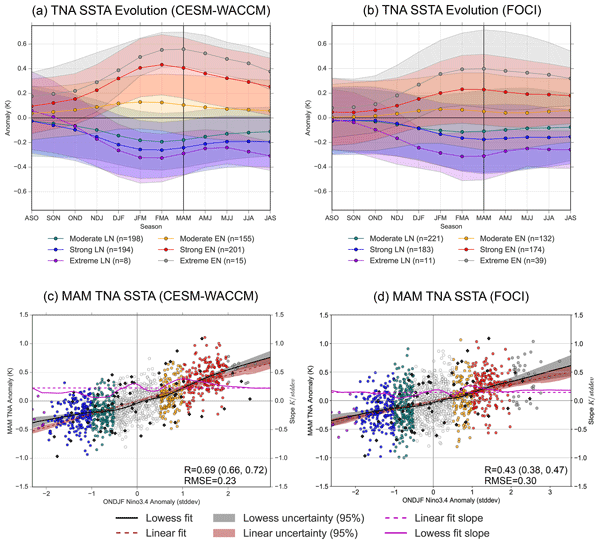
Jake W. Casselman, Joke F. Lübbecke, Tobias Bayr, Wenjuan Huo, Sebastian Wahl, and Daniela I. V. Domeisen
Weather Clim. Dynam., 4, 471–487, https://doi.org/10.5194/wcd-4-471-2023, https://doi.org/10.5194/wcd-4-471-2023, 2023
Short summary
Short summary
El Niño–Southern Oscillation (ENSO) has remote effects on the tropical North Atlantic (TNA), but the connections' nonlinearity (strength of response to an increasing ENSO signal) is not always well represented in models. Using the Community Earth System Model version 1 – Whole Atmosphere Community Climate Mode (CESM-WACCM) and the Flexible Ocean and Climate Infrastructure version 1, we find that the TNA responds linearly to extreme El Niño but nonlinearly to extreme La Niña for CESM-WACCM.
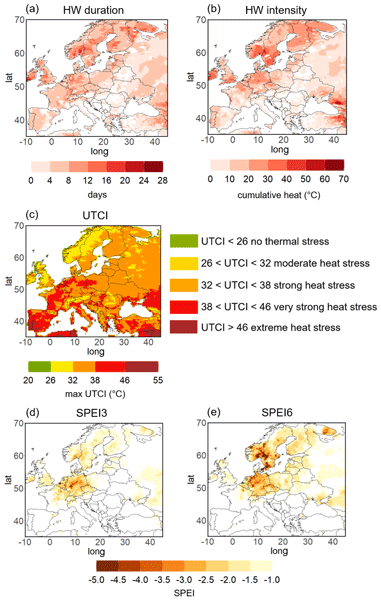
Efi Rousi, Andreas H. Fink, Lauren S. Andersen, Florian N. Becker, Goratz Beobide-Arsuaga, Marcus Breil, Giacomo Cozzi, Jens Heinke, Lisa Jach, Deborah Niermann, Dragan Petrovic, Andy Richling, Johannes Riebold, Stella Steidl, Laura Suarez-Gutierrez, Jordis S. Tradowsky, Dim Coumou, André Düsterhus, Florian Ellsäßer, Georgios Fragkoulidis, Daniel Gliksman, Dörthe Handorf, Karsten Haustein, Kai Kornhuber, Harald Kunstmann, Joaquim G. Pinto, Kirsten Warrach-Sagi, and Elena Xoplaki
Nat. Hazards Earth Syst. Sci., 23, 1699–1718, https://doi.org/10.5194/nhess-23-1699-2023, https://doi.org/10.5194/nhess-23-1699-2023, 2023
Short summary
Short summary
The objective of this study was to perform a comprehensive, multi-faceted analysis of the 2018 extreme summer in terms of heat and drought in central and northern Europe, with a particular focus on Germany. A combination of favorable large-scale conditions and locally dry soils were related with the intensity and persistence of the events. We also showed that such extremes have become more likely due to anthropogenic climate change and might occur almost every year under +2 °C of global warming.

Raphaël de Fondeville, Zheng Wu, Enikő Székely, Guillaume Obozinski, and Daniela I. V. Domeisen
Weather Clim. Dynam., 4, 287–307, https://doi.org/10.5194/wcd-4-287-2023, https://doi.org/10.5194/wcd-4-287-2023, 2023
Short summary
Short summary
We propose a fully data-driven, interpretable, and computationally scalable framework to characterize sudden stratospheric warmings (SSWs), extract statistically significant precursors, and produce machine learning (ML) forecasts. By successfully leveraging the long-lasting impact of SSWs, the ML predictions outperform sub-seasonal numerical forecasts for lead times beyond 25 d. Post-processing numerical predictions using their ML counterparts yields a performance increase of up to 20 %.
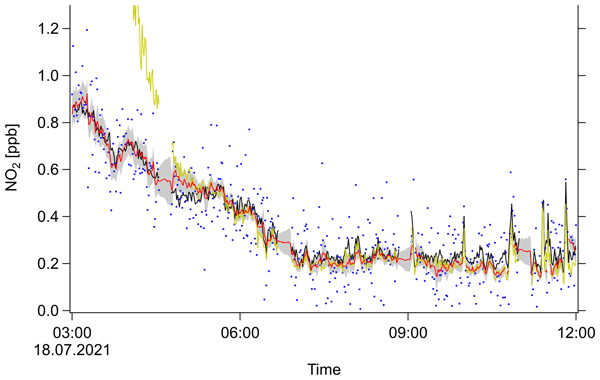
Lenard L. Röder, Patrick Dewald, Clara M. Nussbaumer, Jan Schuladen, John N. Crowley, Jos Lelieveld, and Horst Fischer
Atmos. Meas. Tech., 16, 1167–1178, https://doi.org/10.5194/amt-16-1167-2023, https://doi.org/10.5194/amt-16-1167-2023, 2023
Short summary
Short summary
Field experiments in atmospheric chemistry provide insights into chemical interactions of our atmosphere. However, high data coverage and accuracy are needed to enable further analysis. In this study, we explore a statistical method that combines knowledge about the chemical reactions with information from measurements to increase the quality of field experiment datasets. We test the algorithm for several applications and discuss limitations that depend on the specific variable and the dynamics.
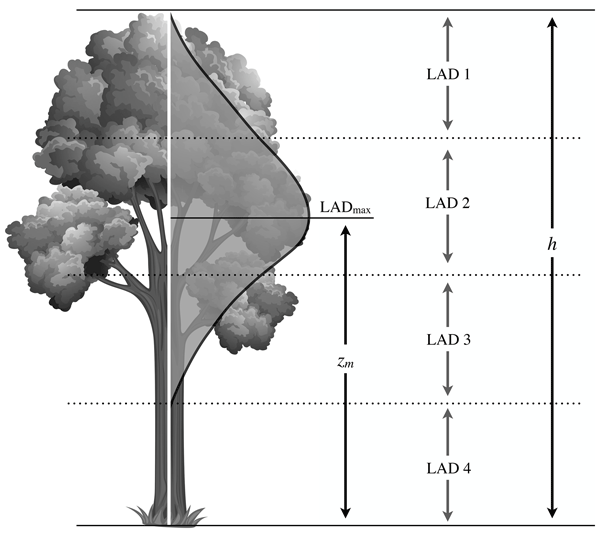
Ryan Vella, Matthew Forrest, Jos Lelieveld, and Holger Tost
Geosci. Model Dev., 16, 885–906, https://doi.org/10.5194/gmd-16-885-2023, https://doi.org/10.5194/gmd-16-885-2023, 2023
Short summary
Short summary
Biogenic volatile organic compounds (BVOCs) are released by vegetation and have a major impact on atmospheric chemistry and aerosol formation. Non-interacting vegetation constrains the majority of numerical models used to estimate global BVOC emissions, and thus, the effects of changing vegetation on emissions are not addressed. In this work, we replace the offline vegetation with dynamic vegetation states by linking a chemistry–climate model with a global dynamic vegetation model.
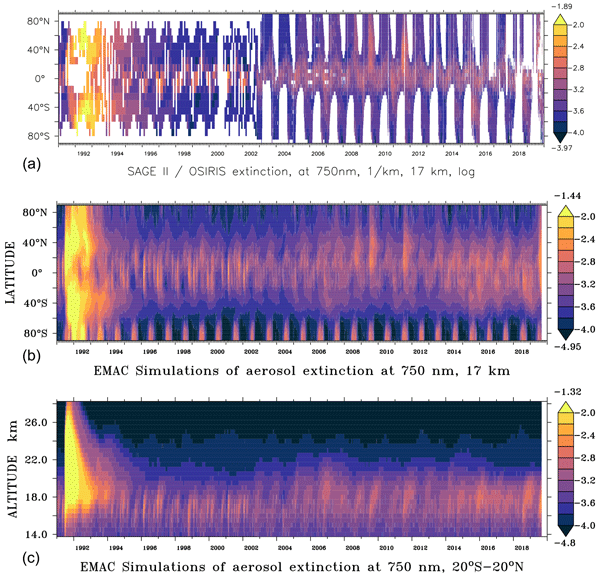
Jennifer Schallock, Christoph Brühl, Christine Bingen, Michael Höpfner, Landon Rieger, and Jos Lelieveld
Atmos. Chem. Phys., 23, 1169–1207, https://doi.org/10.5194/acp-23-1169-2023, https://doi.org/10.5194/acp-23-1169-2023, 2023
Short summary
Short summary
We characterized the influence of volcanic aerosols for the period 1990–2019 and established a volcanic SO2 emission inventory that includes more than 500 eruptions. From limb-based satellite observations of SO2 and extinction, we derive 3D plumes of SO2 perturbations and injected mass by a novel method. We calculate instantaneous radiative forcing with a comprehensive chemisty climate model. Our results show that smaller eruptions can also contribute to the stratospheric aerosol forcing.
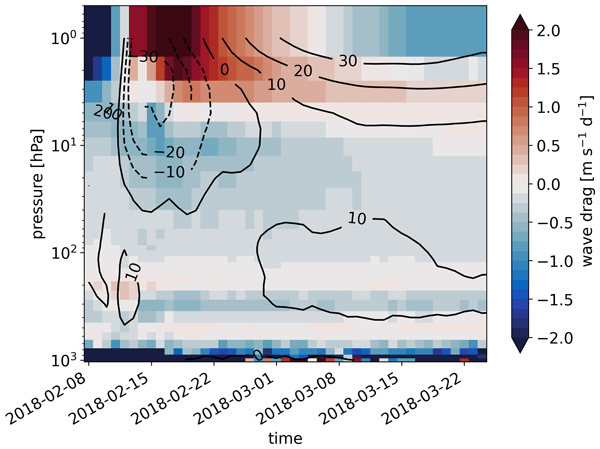
Wolfgang Wicker, Inna Polichtchouk, and Daniela I. V. Domeisen
Weather Clim. Dynam., 4, 81–93, https://doi.org/10.5194/wcd-4-81-2023, https://doi.org/10.5194/wcd-4-81-2023, 2023
Short summary
Short summary
Sudden stratospheric warmings are extreme weather events where the winter polar stratosphere warms by about 25 K. An improved representation of small-scale gravity waves in sub-seasonal prediction models can reduce forecast errors since their impact on the large-scale circulation is predictable multiple weeks ahead. After a sudden stratospheric warming, vertically propagating gravity waves break at a lower altitude than usual, which strengthens the long-lasting positive temperature anomalies.

Mohamed Abdelkader, Georgiy Stenchikov, Andrea Pozzer, Holger Tost, and Jos Lelieveld
Atmos. Chem. Phys., 23, 471–500, https://doi.org/10.5194/acp-23-471-2023, https://doi.org/10.5194/acp-23-471-2023, 2023
Short summary
Short summary
We study the effect of injected volcanic ash, water vapor, and SO2 on the development of the volcanic cloud and the stratospheric aerosol optical depth (AOD). Both are sensitive to the initial injection height and to the aging of the volcanic ash shaped by heterogeneous chemistry coupled with the ozone cycle. The paper explains the large differences in AOD for different injection scenarios, which could improve the estimate of the radiative forcing of volcanic eruptions.
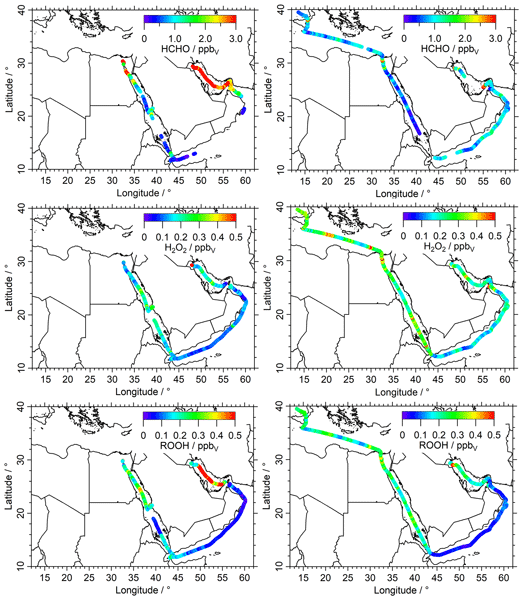
Dirk Dienhart, Bettina Brendel, John N. Crowley, Philipp G. Eger, Hartwig Harder, Monica Martinez, Andrea Pozzer, Roland Rohloff, Jan Schuladen, Sebastian Tauer, David Walter, Jos Lelieveld, and Horst Fischer
Atmos. Chem. Phys., 23, 119–142, https://doi.org/10.5194/acp-23-119-2023, https://doi.org/10.5194/acp-23-119-2023, 2023
Short summary
Short summary
Formaldehyde and hydroperoxide measurements were performed in the marine boundary layer around the Arabian Peninsula and highlight the Suez Canal and Arabian (Persian) Gulf as a hotspot of photochemical air pollution. A comparison with the EMAC model shows that the formaldehyde results match within a factor of 2, while hydrogen peroxide was overestimated by more than a factor of 5, which revealed enhanced HOx (OH+HO2) radicals in the simulation and an underestimation of dry deposition velocites.
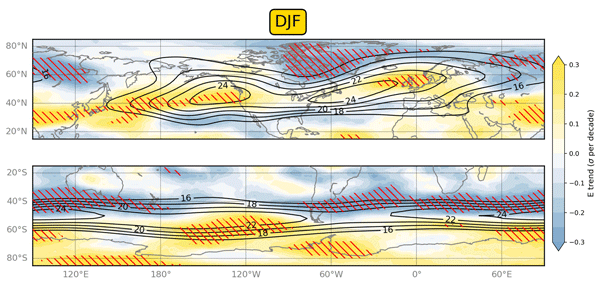
Georgios Fragkoulidis
Weather Clim. Dynam., 3, 1381–1398, https://doi.org/10.5194/wcd-3-1381-2022, https://doi.org/10.5194/wcd-3-1381-2022, 2022
Short summary
Short summary
Assessing the seasonal distributions of local Rossby wave packet (RWP) amplitude, phase, and phase speed on reanalysis data of the 1979–2019 period reveals that patterns of robust trends emerge and vary substantially between seasons and regions. While an absence of covariance is evident between RWP amplitude and phase speed at decadal scales, the frequency of DJF large-amplitude quasi-stationary RWPs increases in several areas of the N Pacific and N America during 1999–2019.
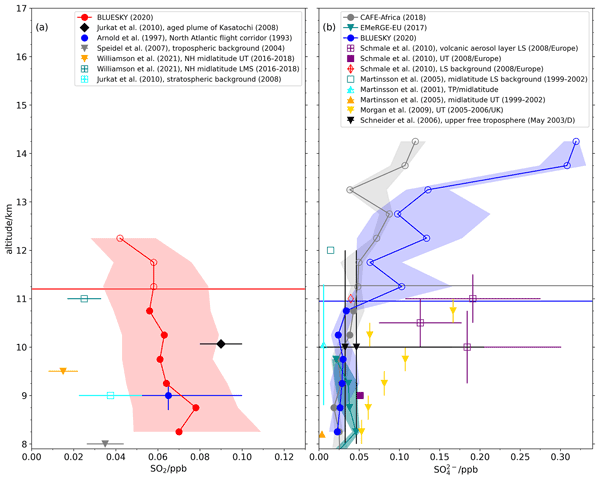
Laura Tomsche, Andreas Marsing, Tina Jurkat-Witschas, Johannes Lucke, Stefan Kaufmann, Katharina Kaiser, Johannes Schneider, Monika Scheibe, Hans Schlager, Lenard Röder, Horst Fischer, Florian Obersteiner, Andreas Zahn, Martin Zöger, Jos Lelieveld, and Christiane Voigt
Atmos. Chem. Phys., 22, 15135–15151, https://doi.org/10.5194/acp-22-15135-2022, https://doi.org/10.5194/acp-22-15135-2022, 2022
Short summary
Short summary
The detection of sulfur compounds in the upper troposphere (UT) and lower stratosphere (LS) is a challenge. In-flight measurements of SO2 and sulfate aerosol were performed during the BLUESKY mission in spring 2020 under exceptional atmospheric conditions. Reduced sinks in the dry UTLS and lower but still significant air traffic influenced the enhanced SO2 in the UT, and aged volcanic plumes enhanced the LS sulfate aerosol impacting the atmospheric radiation budget and global climate.
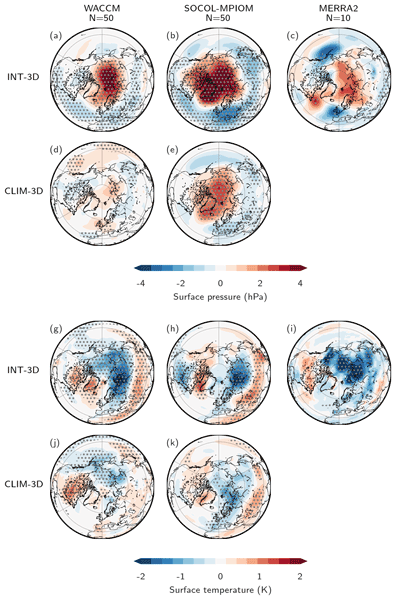
Marina Friedel, Gabriel Chiodo, Andrea Stenke, Daniela I. V. Domeisen, and Thomas Peter
Atmos. Chem. Phys., 22, 13997–14017, https://doi.org/10.5194/acp-22-13997-2022, https://doi.org/10.5194/acp-22-13997-2022, 2022
Short summary
Short summary
In spring, winds the Arctic stratosphere change direction – an event called final stratospheric warming (FSW). Here, we examine whether the interannual variability in Arctic stratospheric ozone impacts the timing of the FSW. We find that Arctic ozone shifts the FSW to earlier and later dates in years with high and low ozone via the absorption of UV light. The modulation of the FSW by ozone has consequences for surface climate in ozone-rich years, which may result in better seasonal predictions.
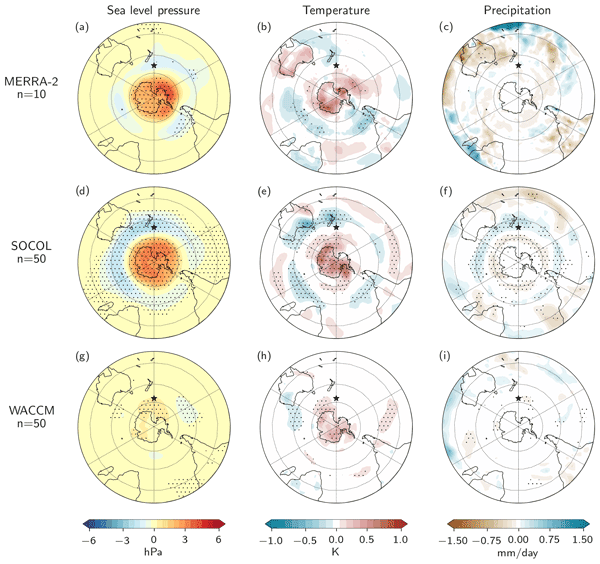
Nora Bergner, Marina Friedel, Daniela I. V. Domeisen, Darryn Waugh, and Gabriel Chiodo
Atmos. Chem. Phys., 22, 13915–13934, https://doi.org/10.5194/acp-22-13915-2022, https://doi.org/10.5194/acp-22-13915-2022, 2022
Short summary
Short summary
Polar vortex extremes, particularly situations with an unusually weak cyclonic circulation in the stratosphere, can influence the surface climate in the spring–summer time in the Southern Hemisphere. Using chemistry-climate models and observations, we evaluate the robustness of the surface impacts. While models capture the general surface response, they do not show the observed climate patterns in midlatitude regions, which we trace back to biases in the models' circulations.
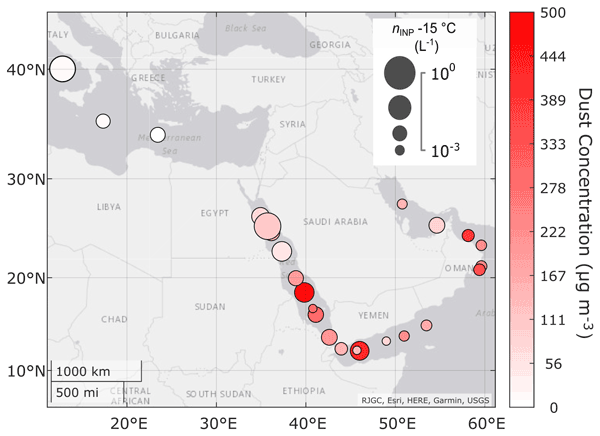
Charlotte M. Beall, Thomas C. J. Hill, Paul J. DeMott, Tobias Köneman, Michael Pikridas, Frank Drewnick, Hartwig Harder, Christopher Pöhlker, Jos Lelieveld, Bettina Weber, Minas Iakovides, Roman Prokeš, Jean Sciare, Meinrat O. Andreae, M. Dale Stokes, and Kimberly A. Prather
Atmos. Chem. Phys., 22, 12607–12627, https://doi.org/10.5194/acp-22-12607-2022, https://doi.org/10.5194/acp-22-12607-2022, 2022
Short summary
Short summary
Ice-nucleating particles (INPs) are rare aerosols that can trigger ice formation in clouds and affect climate-relevant cloud properties such as phase, reflectivity and lifetime. Dust is the dominant INP source, yet few measurements have been reported near major dust sources. We report INP observations within hundreds of kilometers of the biggest dust source regions globally: the Sahara and the Arabian Peninsula. Results show that at temperatures > −15 °C, INPs are dominated by organics.
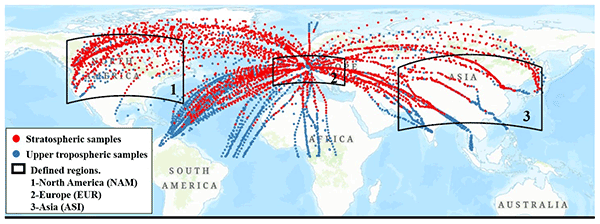
Mengze Li, Andrea Pozzer, Jos Lelieveld, and Jonathan Williams
Earth Syst. Sci. Data, 14, 4351–4364, https://doi.org/10.5194/essd-14-4351-2022, https://doi.org/10.5194/essd-14-4351-2022, 2022
Short summary
Short summary
We present a northern hemispheric airborne measurement dataset of atmospheric ethane, propane and methane and temporal trends for the time period 2006–2016 in the upper troposphere and lower stratosphere. The growth rates of ethane, methane, and propane in the upper troposphere are -2.24, 0.33, and -0.78 % yr-1, respectively, and in the lower stratosphere they are -3.27, 0.26, and -4.91 % yr-1, respectively, in 2006–2016.
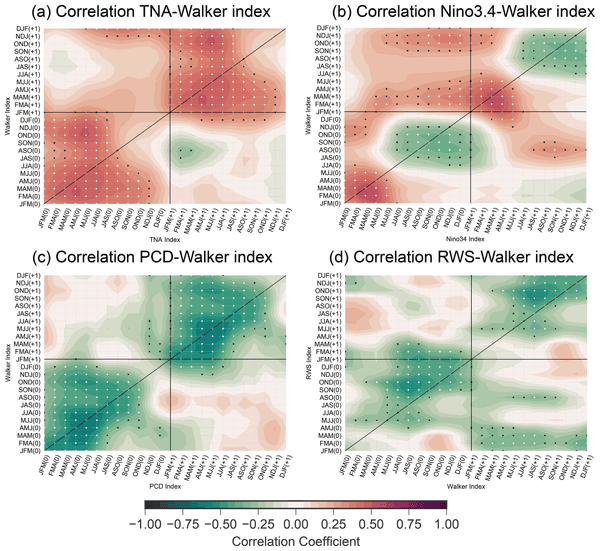
Jake W. Casselman, Bernat Jiménez-Esteve, and Daniela I. V. Domeisen
Weather Clim. Dynam., 3, 1077–1096, https://doi.org/10.5194/wcd-3-1077-2022, https://doi.org/10.5194/wcd-3-1077-2022, 2022
Short summary
Short summary
Using an atmospheric general circulation model, we analyze how the tropical North Atlantic influences the El Niño–Southern Oscillation connection towards the North Atlantic European region. We also focus on the lesser-known boreal spring and summer response following an El Niño–Southern Oscillation event. Our results show that altered tropical Atlantic sea surface temperatures may cause different responses over the Caribbean region, consequently influencing the North Atlantic European region.
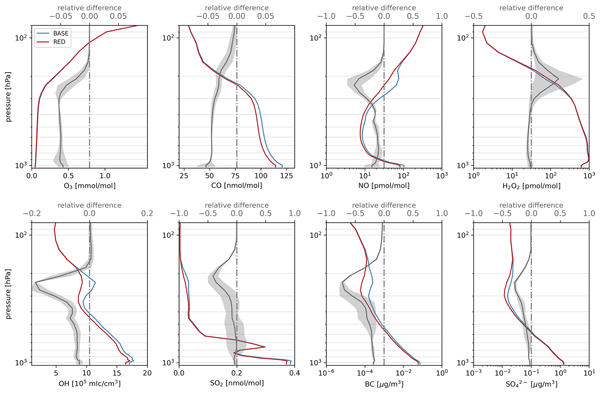
Simon F. Reifenberg, Anna Martin, Matthias Kohl, Sara Bacer, Zaneta Hamryszczak, Ivan Tadic, Lenard Röder, Daniel J. Crowley, Horst Fischer, Katharina Kaiser, Johannes Schneider, Raphael Dörich, John N. Crowley, Laura Tomsche, Andreas Marsing, Christiane Voigt, Andreas Zahn, Christopher Pöhlker, Bruna A. Holanda, Ovid Krüger, Ulrich Pöschl, Mira Pöhlker, Patrick Jöckel, Marcel Dorf, Ulrich Schumann, Jonathan Williams, Birger Bohn, Joachim Curtius, Hardwig Harder, Hans Schlager, Jos Lelieveld, and Andrea Pozzer
Atmos. Chem. Phys., 22, 10901–10917, https://doi.org/10.5194/acp-22-10901-2022, https://doi.org/10.5194/acp-22-10901-2022, 2022
Short summary
Short summary
In this work we use a combination of observational data from an aircraft campaign and model results to investigate the effect of the European lockdown due to COVID-19 in spring 2020. Using model results, we show that the largest relative changes to the atmospheric composition caused by the reduced emissions are located in the upper troposphere around aircraft cruise altitude, while the largest absolute changes are present at the surface.
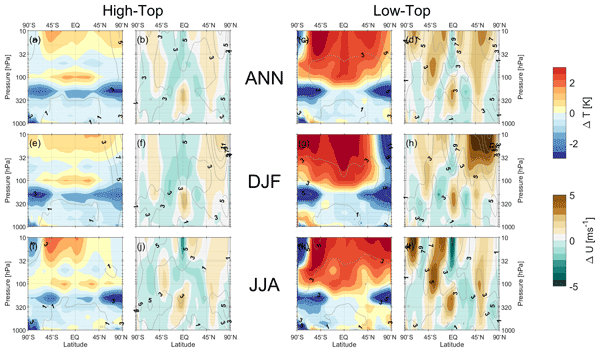
Zachary D. Lawrence, Marta Abalos, Blanca Ayarzagüena, David Barriopedro, Amy H. Butler, Natalia Calvo, Alvaro de la Cámara, Andrew Charlton-Perez, Daniela I. V. Domeisen, Etienne Dunn-Sigouin, Javier García-Serrano, Chaim I. Garfinkel, Neil P. Hindley, Liwei Jia, Martin Jucker, Alexey Y. Karpechko, Hera Kim, Andrea L. Lang, Simon H. Lee, Pu Lin, Marisol Osman, Froila M. Palmeiro, Judith Perlwitz, Inna Polichtchouk, Jadwiga H. Richter, Chen Schwartz, Seok-Woo Son, Irene Erner, Masakazu Taguchi, Nicholas L. Tyrrell, Corwin J. Wright, and Rachel W.-Y. Wu
Weather Clim. Dynam., 3, 977–1001, https://doi.org/10.5194/wcd-3-977-2022, https://doi.org/10.5194/wcd-3-977-2022, 2022
Short summary
Short summary
Forecast models that are used to predict weather often struggle to represent the Earth’s stratosphere. This may impact their ability to predict surface weather weeks in advance, on subseasonal-to-seasonal (S2S) timescales. We use data from many S2S forecast systems to characterize and compare the stratospheric biases present in such forecast models. These models have many similar stratospheric biases, but they tend to be worse in systems with low model tops located within the stratosphere.
Zaneta T. Hamryszczak, Andrea Pozzer, Florian Obersteiner, Birger Bohn, Benedikt Steil, Jos Lelieveld, and Horst Fischer
Atmos. Chem. Phys., 22, 9483–9497, https://doi.org/10.5194/acp-22-9483-2022, https://doi.org/10.5194/acp-22-9483-2022, 2022
Short summary
Short summary
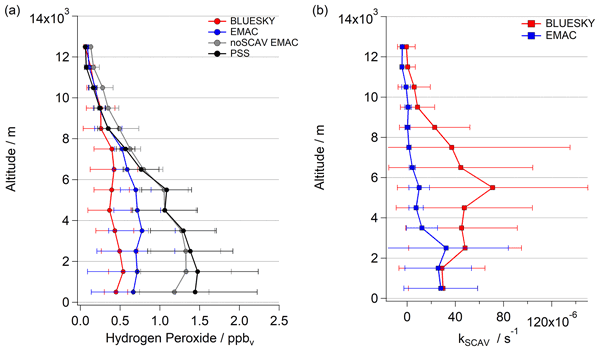
Hydrogen peroxide plays a pivotal role in the chemistry of the atmosphere. Together with organic hydroperoxides, it forms a reservoir for peroxy radicals, which are known to be the key contributors to the self-cleaning processes of the atmosphere. Hydroperoxides were measured over Europe during the BLUESKY campaign in May–June 2020. The paper gives an overview of the distribution of the species in the troposphere and investigates the impact of wet scavenging and deposition on the budget of H2O2.

Rachel Wai-Ying Wu, Zheng Wu, and Daniela I.V. Domeisen
Weather Clim. Dynam., 3, 755–776, https://doi.org/10.5194/wcd-3-755-2022, https://doi.org/10.5194/wcd-3-755-2022, 2022
Short summary
Short summary
Accurate predictions of the stratospheric polar vortex can enhance surface weather predictability. Stratospheric events themselves are less predictable, with strong inter-event differences. We assess the predictability of stratospheric acceleration and deceleration events in a sub-seasonal prediction system, finding that the predictability of events is largely dependent on event magnitude, while extreme drivers of deceleration events are not fully represented in the model.
Matthias Röthlisberger, Barbara Scherrer, Andries Jan de Vries, and Raphael Portmann
Weather Clim. Dynam., 3, 733–754, https://doi.org/10.5194/wcd-3-733-2022, https://doi.org/10.5194/wcd-3-733-2022, 2022
Short summary
Short summary
We examine the palette of synoptic storylines accompanying unusually long wet spells in Europe. Thereby, we identify a hitherto not documented mechanism for generating long wet spells which involves recurrent Rossby wave breaking and subsequent cutoff replenishment. Understanding the synoptic processes behind long wet spells is relevant in light of projected changes in wet spell characteristics as it is a prerequisite for evaluating climate models with regard to such events.
Andries Jan de Vries, Franziska Aemisegger, Stephan Pfahl, and Heini Wernli
Atmos. Chem. Phys., 22, 8863–8895, https://doi.org/10.5194/acp-22-8863-2022, https://doi.org/10.5194/acp-22-8863-2022, 2022
Short summary
Short summary
The Earth's water cycle contains the common H2O molecule but also the less abundant, heavier HDO. We use their different physical properties to study tropical ice clouds in model simulations of the West African monsoon. Isotope signals reveal different processes through which ice clouds form and decay in deep-convective and widespread cirrus. Previously observed variations in upper-tropospheric vapour isotopes are explained by microphysical processes in convective updraughts and downdraughts.
Marco Wietzoreck, Marios Kyprianou, Benjamin A. Musa Bandowe, Siddika Celik, John N. Crowley, Frank Drewnick, Philipp Eger, Nils Friedrich, Minas Iakovides, Petr Kukučka, Jan Kuta, Barbora Nežiková, Petra Pokorná, Petra Přibylová, Roman Prokeš, Roland Rohloff, Ivan Tadic, Sebastian Tauer, Jake Wilson, Hartwig Harder, Jos Lelieveld, Ulrich Pöschl, Euripides G. Stephanou, and Gerhard Lammel
Atmos. Chem. Phys., 22, 8739–8766, https://doi.org/10.5194/acp-22-8739-2022, https://doi.org/10.5194/acp-22-8739-2022, 2022
Short summary
Short summary
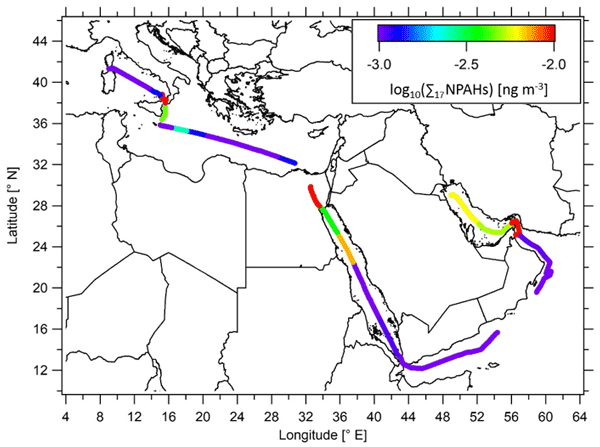
A unique dataset of concentrations and sources of polycyclic aromatic hydrocarbons (PAHs) and their alkylated, oxygenated and nitrated derivatives, in total 74 individual species, in the marine atmosphere is presented. Exposure to these substances poses a major health risk. We found very low concentrations over the Arabian Sea, while both local and long-range-transported pollution caused elevated levels over the Mediterranean Sea and the Arabian Gulf.
Ovid O. Krüger, Bruna A. Holanda, Sourangsu Chowdhury, Andrea Pozzer, David Walter, Christopher Pöhlker, Maria Dolores Andrés Hernández, John P. Burrows, Christiane Voigt, Jos Lelieveld, Johannes Quaas, Ulrich Pöschl, and Mira L. Pöhlker
Atmos. Chem. Phys., 22, 8683–8699, https://doi.org/10.5194/acp-22-8683-2022, https://doi.org/10.5194/acp-22-8683-2022, 2022
Short summary
Short summary
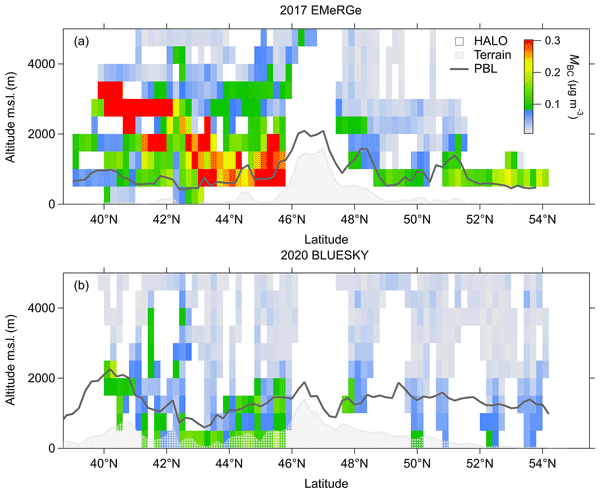
The abrupt reduction in human activities during the first COVID-19 lockdown created unprecedented atmospheric conditions. We took the opportunity to quantify changes in black carbon (BC) as a major anthropogenic air pollutant. Therefore, we measured BC on board a research aircraft over Europe during the lockdown and compared the results to measurements from 2017. With model simulations we account for different weather conditions and find a lockdown-related decrease in BC of 41 %.
Peter Hitchcock, Amy Butler, Andrew Charlton-Perez, Chaim I. Garfinkel, Tim Stockdale, James Anstey, Dann Mitchell, Daniela I. V. Domeisen, Tongwen Wu, Yixiong Lu, Daniele Mastrangelo, Piero Malguzzi, Hai Lin, Ryan Muncaster, Bill Merryfield, Michael Sigmond, Baoqiang Xiang, Liwei Jia, Yu-Kyung Hyun, Jiyoung Oh, Damien Specq, Isla R. Simpson, Jadwiga H. Richter, Cory Barton, Jeff Knight, Eun-Pa Lim, and Harry Hendon
Geosci. Model Dev., 15, 5073–5092, https://doi.org/10.5194/gmd-15-5073-2022, https://doi.org/10.5194/gmd-15-5073-2022, 2022
Short summary
Short summary
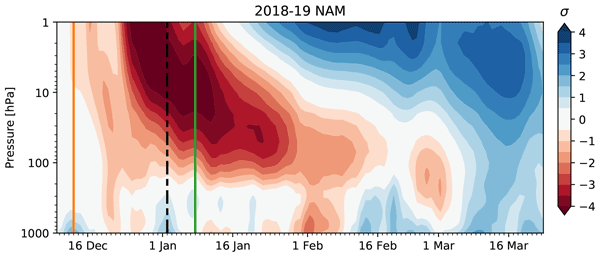
This paper describes an experimental protocol focused on sudden stratospheric warmings to be carried out by subseasonal forecast modeling centers. These will allow for inter-model comparisons of these major disruptions to the stratospheric polar vortex and their impacts on the near-surface flow. The protocol will lead to new insights into the contribution of the stratosphere to subseasonal forecast skill and new approaches to the dynamical attribution of extreme events.
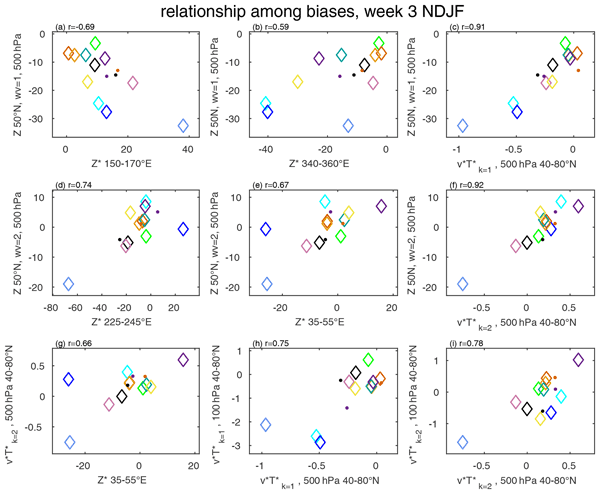
Chen Schwartz, Chaim I. Garfinkel, Priyanka Yadav, Wen Chen, and Daniela I. V. Domeisen
Weather Clim. Dynam., 3, 679–692, https://doi.org/10.5194/wcd-3-679-2022, https://doi.org/10.5194/wcd-3-679-2022, 2022
Short summary
Short summary
Eleven operational forecast models that run on subseasonal timescales (up to 2 months) are examined to assess errors in their simulated large-scale stationary waves in the Northern Hemisphere winter. We found that models with a more finely resolved stratosphere generally do better in simulating the waves in both the stratosphere (10–50 km) and troposphere below. Moreover, a connection exists between errors in simulated time-mean convection in tropical regions and errors in the simulated waves.
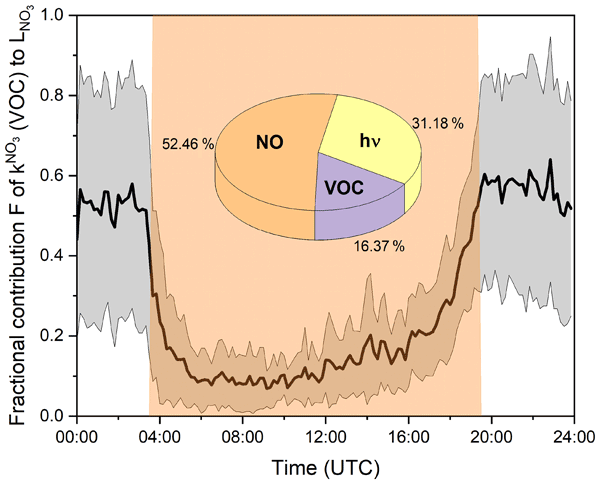
Patrick Dewald, Clara M. Nussbaumer, Jan Schuladen, Akima Ringsdorf, Achim Edtbauer, Horst Fischer, Jonathan Williams, Jos Lelieveld, and John N. Crowley
Atmos. Chem. Phys., 22, 7051–7069, https://doi.org/10.5194/acp-22-7051-2022, https://doi.org/10.5194/acp-22-7051-2022, 2022
Short summary
Short summary
We measured the gas-phase reactivity of the NO3 radical on the summit (825 m a.s.l.) of a semi-rural mountain in southwestern Germany in July 2021. The impact of VOC-induced NO3 losses (mostly monoterpenes) competing with a loss by reaction with NO and photolysis throughout the diel cycle was estimated. Besides chemistry, boundary layer dynamics and plant-physiological processes presumably have a great impact on our observations, which were compared to previous NO3 measurements at the same site.
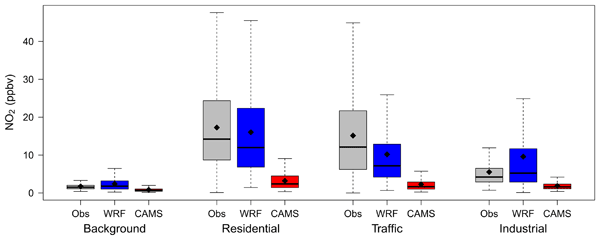
George K. Georgiou, Theodoros Christoudias, Yiannis Proestos, Jonilda Kushta, Michael Pikridas, Jean Sciare, Chrysanthos Savvides, and Jos Lelieveld
Geosci. Model Dev., 15, 4129–4146, https://doi.org/10.5194/gmd-15-4129-2022, https://doi.org/10.5194/gmd-15-4129-2022, 2022
Short summary
Short summary
We evaluate the skill of the WRF-Chem model to perform high-resolution air quality forecasts (including ozone, nitrogen dioxide, and fine particulate matter) over the Eastern Mediterranean, during winter and summer. We compare the forecast output to observational data from background and urban locations and the forecast output from CAMS. WRF-Chem was found to forecast the concentrations and diurnal profiles of gas-phase pollutants in urban areas with higher accuracy.
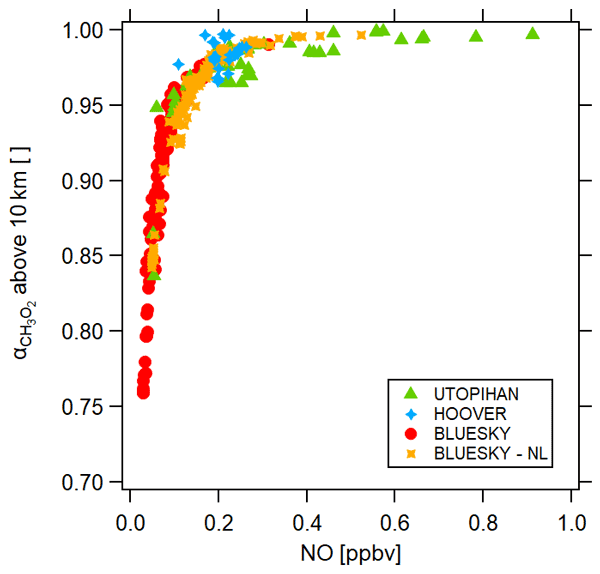
Clara M. Nussbaumer, Andrea Pozzer, Ivan Tadic, Lenard Röder, Florian Obersteiner, Hartwig Harder, Jos Lelieveld, and Horst Fischer
Atmos. Chem. Phys., 22, 6151–6165, https://doi.org/10.5194/acp-22-6151-2022, https://doi.org/10.5194/acp-22-6151-2022, 2022
Short summary
Short summary
The European COVID-19 lockdowns have significantly reduced the emission of primary pollutants such as NOx, which impacts the tropospheric photochemical processes and the abundance of O3. In this study, we present how the lockdowns have affected tropospheric trace gases and ozone production based on in situ observations and modeling simulations. We additionally show that the chemical regime shifted from a transition point to a NOx limitation in the upper troposphere.

Wenyu Sun, Matias Berasategui, Andrea Pozzer, Jos Lelieveld, and John N. Crowley
Atmos. Chem. Phys., 22, 4969–4984, https://doi.org/10.5194/acp-22-4969-2022, https://doi.org/10.5194/acp-22-4969-2022, 2022
Short summary
Short summary
The reaction between OH and SO2 is a termolecular process that in the atmosphere results in the formation of H2SO4 and thus aerosols. We present the first temperature- and pressure-dependent measurements of the rate coefficients in N2. This is also the first study to examine the effects of water vapour on the kinetics of this reaction. Our results indicate the rate coefficient is larger than that recommended by evaluation panels, with deviations of up to 30 % in some parts of the atmosphere.
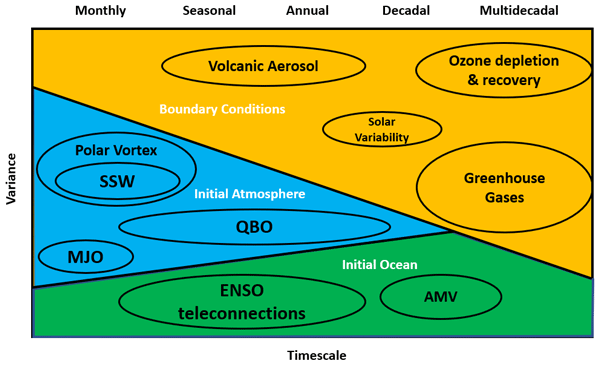
Adam A. Scaife, Mark P. Baldwin, Amy H. Butler, Andrew J. Charlton-Perez, Daniela I. V. Domeisen, Chaim I. Garfinkel, Steven C. Hardiman, Peter Haynes, Alexey Yu Karpechko, Eun-Pa Lim, Shunsuke Noguchi, Judith Perlwitz, Lorenzo Polvani, Jadwiga H. Richter, John Scinocca, Michael Sigmond, Theodore G. Shepherd, Seok-Woo Son, and David W. J. Thompson
Atmos. Chem. Phys., 22, 2601–2623, https://doi.org/10.5194/acp-22-2601-2022, https://doi.org/10.5194/acp-22-2601-2022, 2022
Short summary
Short summary
Great progress has been made in computer modelling and simulation of the whole climate system, including the stratosphere. Since the late 20th century we also gained a much clearer understanding of how the stratosphere interacts with the lower atmosphere. The latest generation of numerical prediction systems now explicitly represents the stratosphere and its interaction with surface climate, and here we review its role in long-range predictions and projections from weeks to decades ahead.

Clara M. Nussbaumer, John N. Crowley, Jan Schuladen, Jonathan Williams, Sascha Hafermann, Andreas Reiffs, Raoul Axinte, Hartwig Harder, Cheryl Ernest, Anna Novelli, Katrin Sala, Monica Martinez, Chinmay Mallik, Laura Tomsche, Christian Plass-Dülmer, Birger Bohn, Jos Lelieveld, and Horst Fischer
Atmos. Chem. Phys., 21, 18413–18432, https://doi.org/10.5194/acp-21-18413-2021, https://doi.org/10.5194/acp-21-18413-2021, 2021
Short summary
Short summary
HCHO is an important atmospheric trace gas influencing the photochemical processes in the Earth’s atmosphere, including the budget of HOx and the abundance of tropospheric O3. This research presents the photochemical calculations of HCHO and O3 based on three field campaigns across Europe. We show that HCHO production via the oxidation of only four volatile organic compound precursors, i.e., CH4, CH3CHO, C5H8 and CH3OH, can balance the observed loss at all sites well.
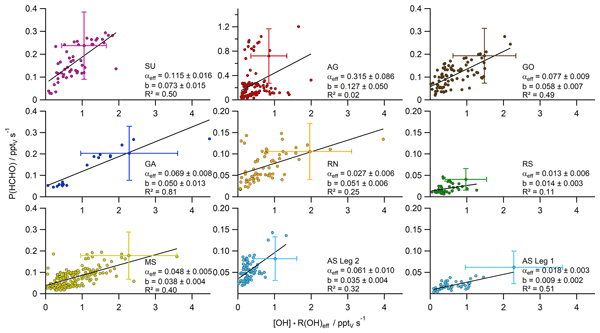
Dirk Dienhart, John N. Crowley, Efstratios Bourtsoukidis, Achim Edtbauer, Philipp G. Eger, Lisa Ernle, Hartwig Harder, Bettina Hottmann, Monica Martinez, Uwe Parchatka, Jean-Daniel Paris, Eva Y. Pfannerstill, Roland Rohloff, Jan Schuladen, Christof Stönner, Ivan Tadic, Sebastian Tauer, Nijing Wang, Jonathan Williams, Jos Lelieveld, and Horst Fischer
Atmos. Chem. Phys., 21, 17373–17388, https://doi.org/10.5194/acp-21-17373-2021, https://doi.org/10.5194/acp-21-17373-2021, 2021
Short summary
Short summary
We present the first ship-based in situ measurements of formaldehyde (HCHO), hydroxyl radicals (OH) and the OH reactivity around the Arabian Peninsula. Regression analysis of the HCHO production rate and the related OH chemistry revealed the regional HCHO yield αeff, which represents the different chemical regimes encountered. Highest values were found for the Arabian Gulf (also known as the Persian Gulf), which highlights this region as a hotspot of photochemical air pollution.
Cited articles
Abid, M. A., Kucharski, F., Almazroui, M., and Kang, I.-S.: Interannual rainfall variability and ECMWF-Sys4-based predictability over the Arabian Peninsula winter monsoon region, Q. J. Roy. Meteor. Soc., 142, 233–242, https://doi.org/10.1002/qj.2648, 2016.
Abid, M. A., Ashfaq, M., Kucharski, F., Evans, K., and Almazroui, M.: Tropical Indian Ocean mediates ENSO influence over central southwest Asia during the wet season, Geophys. Res. Lett, 47, e2020GL089308, https://doi.org/10.1029/2020GL089308, 2020.
Alizadeh, O. and Mousavizadeh, M.: Impact of ENSO on extreme precipitation in Southwest Asia, Glob. Plan. Change, 244, 104645, https://doi.org/10.1016/j.gloplacha.2024.104645, 2025.
Alizadeh-Choobari, O., Adibi, P., and Irannejad, P.: Impact of the El Niño-Southern Oscillation on the climate of Iran using ERA-Interim data, Clim. Dyn., 51, 2897–2911, https://doi.org/10.1007/s00382-017-4055-5, 2018.
Armon, M., Shmilovitz, Y., and Dente, E.: Anatomy of a Foreseeable Disaster: Lessons from the 2023 Dam-Breaching Flood in Derna, Libya, Sci. Adv., 11, 13, https://doi.org/10.1126/sciadv.adu2865, 2025.
Athar, H.: Teleconnections and variability in observed rainfall over Saudi Arabia during 1978–2010, Atmos. Sci., Lett., 16, 373–379, https://doi.org/10.1002/asl2.570, 2015.
Bahrami, F., Saadatabadi, A. R., Meshkatee, A. H., and Kamali, G.: The impact of ENSO phase transition on the atmospheric circulation, precipitation, and temperature in the Middle East autumn, Asia-Pac. J. Atmos. Sci., 56, 439–453, https://doi.org/10.1007/s13143-019-00149-2, 2021.
Barlow, M., Cullen, H., and Lyon, B.: Drought in central and southwest Asia: La Niña, the warm pool, and Indian Ocean precipitation, J. Climate, 15, 697–700, https://doi.org/10.1175/1520-0442(2002)015<0697:DICASA>2.0.CO;2, 2002.
Barlow, M., Wheeler, M., Lyon, B., and Cullen, H.: Modulation of daily precipitation over southwest Asia by the Madden-Julian Oscillation, Mon. Weath, Rev., 3579–3594, https://doi.org/10.1175/MWR3026.1, 2005.
Barlow, M., Hoell, A., and Colby, F.: Examining the wintertime response to tropical convection over the Indian Ocean by modifying convective heating in a full atmospheric model, Geophys. Res. Lett, 34, L19702, https://doi.org/10.1029/2007GL030043, 2007.
Barlow, M., Zaitchik, B., Paz, S., Black, E., Evans, J., and Hoell, A.: A Review of Drought in the Middle East and Southwest Asia, J. Climate, 29, 8547–8574, https://doi.org/10.1175/JCLI-D-13-00692.1, 2016.
Barlow, M., Hoell, A., and Agel, L.: An evaluation of CMIP6 historical simulations of the cold season teleconnection between tropical Indo-Pacific Sea surface temperatures and precipitation in southwest Asia, the coastal Middle East, and northern Pakistan and India, J. Climate, 34, 6905–6926, https://doi.org/10.1175/JCLI-D-19-1026.1, 2021.
Beck, H. E., Wood, E. F., Pan, M., Fisher, C. K., Miralles, D. G., van Dijk, A. I., McVicar, T. R., and Adler, R. F.: MSWEP V2 global 3-hourly 0.1 precipitation: methodology and quantitative assessment, B. Am. Meteorol. Soc., 100, 473–500, https://doi.org/10.1175/BAMS-D-17-0138.1, 2019.
Bharati, P., Deb, P., Hunt, K. R., Orr, A., and Dash, M. K.: ENSO-induced latitudinal variation of the subtropical jet modulates extreme winter precipitation over the western Himalayas, Adv. Atmos., Sci., 42, 427–437, https://doi.org/10.1007/s00376-024-4057-2, 2025.
Cannon, F., Carvalho, L. M. V., Jones, C., Hoell, A., Norris, J., Kiladis, G. N., and Tahir, A. A.: The influence of tropical forcing on extreme winter precipitation in the western Himalaya, Clim. Dynam., 48, 1213–1232, https://doi.org/10.1007/s00382-016-3137-0, 2017.
Casselman, J. W., Taschetto, A. S., and Domeisen, D. I.: Nonlinearity in the pathway of El Niño-Southern Oscillation to the tropical North Atlantic, J. Climate, 34, 7277–7296, https://doi.org/10.1175/jcli-d-20-0952.1, 2021.
Chakraborty, A., Behera, S. K., Mujumdar, M., Ohba, R., and Yamagata, T.: Diagnosis of tropospheric moisture over Saudi Arabia and influences of IOD and ENSO, Mon. Weather Rev., 134, 598–617, https://doi.org/10.1175/MWR3085.1, 2006.
Coleman, M., de Vries, A.-J., Roberts, C., and Domeisen, D. I. V.: Floods in the European Union and the Middle East and North Africa region: Socio-economic impacts, characteristics, and public perception, EGUsphere [preprint], https://doi.org/10.5194/egusphere-2026-1827, 2026.
Dasari, H. P., Desamsetti, S., Langodan, S., Attada, R., Ashok, K., and Hoteit, I.: Long-term changes in the Arabian Peninsula rainfall and their relationship with the ENSO signals in the tropical Indo-Pacific, Clim. Dyn., 59, 1715–1731, https://doi.org/10.1007/s00382-021-06062-7, 2021.
de Vries, A. J.: A global climatological perspective on the importance of Rossby wave breaking and intense moisture transport for extreme precipitation events, Weather Clim. Dynam., 2, 129–161, https://doi.org/10.5194/wcd-2-129-2021, 2021.
de Vries, A. J., Tyrlis, E., Edry, D., Krichak, S. O., Steil, B., and Lelieveld, J.: Extreme precipitation events in the Middle East: Dynamics of the Active Red Sea Trough, J. Geophys. Res.-Atmos., 118, 7087–7108, https://doi.org/10.1002/jgrd.50569, 2013.
de Vries, A. J., Feldstein, S. B., Riemer, M., Tyrlis, E., Sprenger, M., Baumgart, M., Fnais, M., and Lelieveld, J.: Dynamics of tropical-extratropical interactions and extreme precipitation events in Saudi Arabia in autumn, winter and spring, Q. J. Roy. Meteor. Soc., 142, 1862–1880, https://doi.org/10.1002/qj.2781, 2016.
de Vries, A. J., Ouwersloot, H. G., Feldstein, S. B., Riemer, M., El Kenawy, A. M., McCabe, M. F., and Lelieveld, J.: Identification of tropical-extratropical interactions and extreme precipitation events in the Middle East based on potential vorticity and moisture transport, J. Geophys. Res.-Atmos., 123, 861–881, https://doi.org/10.1002/2017JD027587, 2018.
de Vries, A. J., Armon, M., Klingmüller, K., Portmann, R., Röthlisberger, M., and Domeisen, D. I. V.: Breaking Rossby waves drive extreme precipitation in the world's arid regions, Commun. Earth Environ., 5, 493, https://doi.org/10.1038/s43247-024-01633-y, 2024.
Francis, D., Fonseca, R., Nelli, N., Cherif, C., Yarragunta, Y., Zittis, G., and de Vries, A. J.: From cause to consequence: examining the historic April 2024 rainstorm in the United Arab Emirates through the lens of climate change, npj Clim. Atmos. Sci., 8, 183, https://doi.org/10.1038/s41612-025-01073-1, 2025.
Gill, A. E.: Some simple solutions for heat-induced tropical circulation, Q. J. Roy. Meteor. Soc., 106, 447–462, https://doi.org/10.1002/qj.49710644905, 1980.
Gleick, P. H.: Water, drought, climate change, and conflict in Syria, Weather Clim. Soc. 6, 331–340, https://doi.org/10.1175/WCAS-D-13-00059.1, 2014.
Haris, I., Osborn, T. J., Jones, P. and Lister, D.: Version 4 of the CRU TS monthly high-resolution gridded multivariate climate datasets, Sci. Data, 7, 109, https://doi.org/10.1038/s41597-020-0453-3, 2020.
Hart, N. C. G., Washington, R., and Reason, C. J. C.: On the likelihood of tropical-extratropical cloud bands in the South Indian Convergence one during ENSO events, J. Climate, 31, 2797–2817, https://doi.org/10.1175/JCLI-D-17-0221.1, 2018.
Hersbach, H., Bell, B., Berrisford, P., Hirahara, S., Horányi, A., Muñoz-Sabater, J., Nicolas, J., Peubey, C., Radu, R., Schepers, D., Simmons, A., Soci, C., Abdalla, S., Abellan, X., Balsamo, G., Bechtold, P., Biavati, G., Bidlot, J., Bonavita, M., De Chiara, G., Dahlgren, P., Dee, D., Diamantakis, M., Dragani, R., Flemming, J., Forbes, R., Fuentes, M., Geer, A., Haimberger, L., Healy, S., Hogan, R. J., Hólm, E., Janisková, M., Keeley, S., Laloyaux, P., Lopez, P., Lupu, C., Radnoti, G., de Rosnay, P., Rozum, I., Vamborg, F., Villaume, S., and Thépaut, J.-N.: The ERA5 global reanalysis, Q. J. Roy. Meteor. Soc., 146, 1999–2049, https://doi.org/10.1002/qj.3803, 2020.
Hochman, A. and Gildor, H.: Synergistic effects of El Niño-Southern Oscillation and the Indian Ocean Dipole on Middle Eastern subseasonal precipitation variability and predictability, Q. J. Roy. Meteor. Soc., 151, 776, https://doi.org/10.1002/qj.4903, 2024.
Hochman, A., Shachar, N., and Gildor, H.: Unraveling sub-seasonal precipitation variability in the Middle East via Indian Ocean sea surface temperatures, Sci. Rep., 14, 2919, https://doi.org/10.1038/s41598-024-53677-x, 2024.
Hoell, A. and Funk, C.: The ENSO-related West Pacific Sea surface temperature gradient, J. Climate, 9545-9562, https://doi.org/10.1175/JCLI-D-12-00344.1, 2013.
Hoell, A., Barlow, M., and Saini, R.: The leading pattern of intraseasonal and interannual Indian Ocean precipitation variability and its relationship with Asian circulation during the boreal cold season, J. Climate, 25, 7509–7526, https://doi.org/10.1175/JCLI-D-11-00572.1, 2012.
Hoell, A., Barlow, M., and Saini, R.: Intraseasonal and seasonal-to-interannual Indian Ocean convection and hemispheric teleconnections, J. Climate, 26, 8850–8867, https://doi.org/10.1175/JCLI-D-12-00306.1, 2013.
Hoell, A., Funk, C., and Barlow, M.: The regional forcing of Northern Hemisphere drought during recent warm tropical west Pacific Ocean La Niña events, Clim. Dynam., 42, 3289–3311, https://doi.org/10.1007/s00382-013-1799-4, 2014a.
Hoell, A., Funk, C., and Barlow, M.: La Niña diversity and northwest Indian Ocean Rim teleconnections. Clim. Dynam., 43, 2707–2724, https://doi.org/10.1007/s00382-014-2083-y, 2014b.
Hoell, A., Shukla, S., Barlow, M., Cannon, F., Kelley, C., and Funk, C.: The forcing of monthly precipitation variability over south-west Asia during the boreal cold season, J. Climate, 28, 7038–7056, https://doi.org/10.1175/JCLI-D-14-00757.1, 2015a.
Hoell, A., Funk, C., and Barlow, M.: The Forcing of Southwestern Asia Teleconnections by Low-Frequency Sea Surface Temperature Variability during Boreal Winter, J. Climate, 28, 1511–1526, https://doi.org/10.1175/JCLI-D-14-00344.1, 2015b.
Hoell, A., Barlow, M., Cannon, F., and Xu, T.: Oceanic origins of historical southwest Asia precipitation during the boreal cold season, J. Climate, 30, 2885–2903, https://doi.org/10.1175/JCLI-D-16-0519.1, 2017.
Hoell, A., Barlow, M., Xu, T., and Zhang, T.: Cold Season Southwest Asia Precipitation Sensitivity to El Niño–Southern Oscillation Events, J. Climate, 31, 4463–4482, https://doi.org/10.1175/JCLI-D-17-0456.1, 2018.
Hoell, A., Robinson, R., Agel, L., Barlow, M. Breeden, M., Eischeid, J., McNally, A., Slinski, K., and Quan, X.-W.: Changes to Middle East and Southwest Asia compound drought and heat since 1999, J. Climate, 269–287, https://doi.org/10.1175/JCLI-D-23-0194.1, 2024.
Hoell, A., Breeden, M., Worsnop, R. P., Robinson, R., Agel, L., Anderson, W., Barlow, M., Jayanthi, H., McNally, A., Shukla, S., Slinski K., Verdin, J., and Zaheer, F.: An unexpected outcome followed an apparent seasonal forecast of opportunity and prolonged drought in southwest Asia, Int. J. Climatol., 45,8, e8861, https://doi.org/10.1002/joc.8851, 2025.
Hoskins, B. J. and Ambrizzi, T.: Rossby wave propagation on a realistic longitudinally varying flow, J. Atmos. Sci., 50, 1661–1671, https://doi.org/10.1175/1520-0469(1993)050<1661:RWPOAR>2.0.CO;2, 1993.
Huang, B., Yin, X., Boyer, T., Liu, C., Menne, M., Rao, Y. D., Smith, T., Vose, R., and Zhang, H.: Extended Reconstructed Sea Surface Temperature, Version 6 (ERSSTv6). Part I: An artificial neural network approach, J. Climate, 38, 1105–1121, https://doi.org/10.1175/JCLI-D-23-0707.1, 2025a.
Huang, B., Yin, X., Boyer, T., Liu, C., Menne, M., Rao, Y. D., Smith, T., Vose, R., and Zhang, H.: Extended Reconstructed Sea Surface Temperature, Version 6 (ERSSTv6). Part II: Upgrades on quality control and large-scale filter, J. Climate, 38, 1123–1136, https://doi.org/10.1175/JCLI-D-24-0185.1, 2025b.
Hunt, K. M. R., Baudouin, J.-P., Turner, A. G., Dimri, A. P., Jeelani, G., Pooja, Chattopadhyay, R., Cannon, F., Arulalan, T., Shekhar, M. S., Sabin, T. P., and Palazzi, E.: Western disturbances and climate variability: a review of recent developments, Weather Clim. Dynam., 6, 43–112, https://doi.org/10.5194/wcd-6-43-2025, 2025.
Hussein, K., Alhosani, N., Al-Areeq, A. M., Aghbari, A. A., Elkamali, M., Alsumaiti, T. Sharif, H. O., Almurshidi, A. M. G., and Abdalati, W.: Unprecedented rainfall in the United Arab Emirates: hydrologic and flood impact analysis of the April 2024 event, 121, 9363–9385, https://doi.org/10.1007/s11069-025-07156-9, 2025.
Kadhum, J. H., Al-Zuhairi, M. F., and Hashim, A. A.: Synoptic and dynamic analysis of few extreme rainfall events in Iraq, 8, 4939–4952, https://doi.org/10.1007/s40808-022-01419-1, 2022.
Kahana, R., Ziv, B., Enzel, Y., and Dayan, U.: Synoptic climatology of major floods in the Negev Desert, Israel, Int J. Climatol., 22, 867–882, https://doi.org/10.1002/joc.766, 2002.
Kang, I.-S., Rashid, I. U., Kucharski, F., Almazroui, M., and Alkhalaf, A. K.: Multidecadal changes in the relationship between ENSO and wet-season precipitation in the Arabian Peninsula, J. Climate, 28, 4743–4752, https://doi.org/10.1175/JCLI-D-14-00388.1, 2015.
Kelley, C. P., Mohtadi, S., Cane, M. A., Seager, R., and Kushnir, Y.: Climate change in the Fertile Crescent and implications of the recent Syrian drought, P. Natl. Acad. Sci. USA, 112, 3241–3246, https://doi.org/10.1073/pnas.1421533112, 2015.
Kiladis, G. N. and Diaz, H. F.: Global climatic anomalies associated with extremes in the Southern Oscillation, J. Climate, 2, 1069–1090, https://doi.org/10.1175/1520-0442(1989)002<1069:GCAAWE>2.0.CO;2, 1989.
Krichak, S. O., Breitgand, J. S., and Feldstein, S. B.: A conceptual model for the identification of the Active Red Sea Trough Synoptic events over the southeastern Mediterranean, J. Appl. Meteor. Climatol., 51, 962–971, https://doi.org/10.1175/JAMC-D-11-0223.1, 2012.
Kumar, K. N., Entekhabi, D., and Molini, A.: Hydrological extremes in hyperarid regions: A diagnostic characterization of intense precipitation over the Central Arabian Peninsula, J. Geophys. Res.-Atmos., 120, 1637–1650, https://doi.org/10.1002/2014JD022341, 2015.
Kumar, K. N., Ouarda, T. B. M. J., Sandeep, S., and Ajayamohan, R. S.: Wintertime precipitation variability over the Arabian Peninsula and its relationship with ENSO in the CAM4 simulations, Clim. Dyn., 47, 2443–2454, https://doi.org/10.1007/s00382-016-2973-2, 2016.
Lelieveld, J., Hadjinicolaou, P., Kostopoulou, E., Chenoweth, J., El Maayar, M., Giannakopoulos, C., Hannides, C., Lange, M. A., Tanarhte, M., Tylris, E., and Xoplaki, E.: Climate change and impacts in the Eastern Mediterranean and the Middle East, Climatic Change, 114, 667–687, https://doi.org/10.1007/s10584-012-0418-4, 2012.
Mariotti, A.: How ENSO impacts precipitation in southwest central Asia, Geophys. Res. Lett., 34, L16706, https://doi.org/10.1029/2007GL030078, 2007.
Mariotti, A., Ballabrera-Poy, J., and Zeng, N.: Tropical influence on Euro-Asian autumn rainfall variability, Clim. Dynam., 24, 511–521, https://doi.org/10.1007/s00382-004-0498-6, 2005.
Matsuno, T.: Quasi-geostrophic motions in the Equatorial Area, J. Meteor., Soc. Japan, 44, 25–43, https://doi.org/10.2151/jmsj1965.44.1_25, 1966.
Middleton, N. and Thomas, D.: World Atlas of desertification, United Nations Environment Programme, Arnold publishers, John Wiley & Sons, Inc., ISBN 0340691662, 1997.
Nazemosadat, M. J. and Cordery, I.: On the relationship between ENSO and autumn rainfall in Iran, Int. J. Climatol., 20, 47–61, https://doi.org/10.1002/(SICI)1097-0088(200001)20:1<47::AID-JOC461>3.0.CO;2-P, 2000.
Nazemosadat, M. J. and Ghasemi, A. R.: Quantifying the ENSO-related shifts in the intensity and probability of drought and wet periods in Iran, J. Climate, 17, 4005–4018, https://doi.org/10.1175/1520-0442(2004)017<4005:QTESIT>2.0.CO;2, 2004.
Nuroozi, H., Shirvanu A., and Barlow, M.: The relationship between moisture in the low level of the troposphere and seasonal precipitation over Iran, Meteorol. Appl., 32, e70033, https://doi.org/10.1002/met.70033, 2025.
Pourasghar, F., Oliver, E. C. J., and Holbrook, N. J.: Modulation of wet-season rainfall over Iran by the Madden-Julian Oscillation, Indian Ocean Dipole, and El Niño-Southern Oscillation, Int. J. Climatol., 39, 4029–4040, https://doi.org/10.1002/joc.6057, 2019.
Price, C., Stone, L., Huppert, A., Rajagopalan, B., and Alpert, P.: A possible link between El Nino and precipitation in Israel, Geophys. Res. Lett., 25, 3963–3966, https://doi.org/10.1029/1998GL900098, 1998.
Rezaei, A.: Teleconnections between ocean-atmosphere circulations and historical integrated drought in the Middle East and North Africa, Environ. Monit. Assess., 195, 775, https://doi.org/10.1007/s10661-023-11386-4, 2023.
Rodwell, M. J. and Hoskins, B. J.: Monsoon and the dynamics of deserts, Q. J. Roy. Meteor. Soc., 122, 1385–1404, https://doi.org/10.1002/qj.49712253408, 1996.
Rodwell, M. J. and Hoskins, B. J.: Subtropical anticyclones and summer monsoons, J. Climate, 14, 3192–3211, https://doi.org/10.1175/1520-0442(2001)014<3192:SAASM>2.0.CO;2, 2001.
Saghafian, B., Haghbegahdar, A., and Dehghani, M.: Effect of ENSO on annual maximum floods and volume over threshold in the southwestern region of Iran, Hydrolog. Sci. J., 62, 1039–1049, https://doi.org/10.1080/02626667.2017.1296229, 2017.
Saharwardi, M. S., Dasari, H. P., Aggarwal, V., Ashok, K., and Hoteit, I.: Long-term variability in the Arabian Peninsula droughts driven by the Atlantic Multidecadal Oscillation, Earths Future, 11, e2023EF003549, https://doi.org/10.1029/2023EF003549, 2024.
Saji, N. H., Goswami, B. N., Vinayachandran, P. N., and Yamagata, T.: A Dipole Mode in the tropical Indian Ocean, Nature, 401, 360–363, https://doi.org/10.1038/43854, 1999.
Sandeep, S. and Ajayamohan, R. S.: Modulation of winter precipitation dynamics over the Arabian Gulf by ENSO, J. Geophys. Res.-Atmos., 123, 198–210, https://doi.org/10.1002/2017JD027263, 2018.
Schott, F. A., Xie, S.-P., and McCreary Jr., J. P.: Indian Ocean circulation and climate variability, Rev. Geophys., 47, RG1002, https://doi.org/10.1029/2007RG000245, 2009.
Seager, R., Harnik, N., Kushnir, Y., Robinson, W. A., and Miller, J.: Mechanisms of hemispherically symmetric Climate variability, J. Climate, 16, 18, 2960–2978, https://doi.org/10.1175/1520-0442(2003)016<2960:MOHSCV>2.0.CO;2, 2003.
Seager, R., Harnik, N., Robinson, W. A., Kushnir, Y., Ting, M., Huang, H.-P., and Velez, J.: Mechanisms of ENSO-forcing of hemispherically symmetric precipitation variability, Q. J. Roy. Meteor. Soc., 131, 1501–1527, https://doi.org/10.1256/qj.04.96, 2005.
Sohrabi, R.: The politics of drought in the Middle East, case study from Iran, Discover Environ., 3, 122, https://doi.org/10.1007/s44274-025-00334-3, 2025.
Stuecker, M. F., Timmermann, A., Jin, F.-F., Chikamoto, Y., Zhang, W., Wittenberg, A. T., Widiasih, E., and Zhao, S.: Revisiting ENSO/Indian Ocean Dipole phase relationships, Geophys. Res. Lett., 44, 2481–2492, https://doi.org/10.1002/2016GL072308, 2017.
Tuel, A., Choi, Y.-W., AlRukaibi, D., and Eltahir, E. A. B.: Extreme storms in Southwest Asia (Northern Arabian Peninsula) under current and future climate, Clim. Dyn., 58, 1509–1524, https://doi.org/10.1007/s00382-021-05975-7, 2022.
Tyrlis, E., Lelieveld, J., and Steil, B.: The summer circulation over the eastern Mediterranean and the Middle East: Influence of the South Asian monsoon, Clim. Dyn., 40, 1103–1123, https://doi.org/10.1007/s00382-012-1528-4, 2013.
Wallace, J. M. and Gutzler, D. S.: Teleconnections in the geopotential height field during the Northern Hemisphere winter, Mon. Weather Rev., 109, 784–812, https://doi.org/10.1175/1520-0493(1981)109<0784:TITGHF>2.0.CO;2, 1981.
Wernli, H. and Sprenger, M.: Identification and ERA-15 climatology of potential vorticity streamers and cutoffs near the extratropical tropopause, J. Atmos. Sci., 64, 1569–1586, https://doi.org/10.1175/JAS3912.1, 2007.
Zittis, G., Almazroui, M., Alpert, P., Ciais, P., Cramer, W., Dahdal, Y., Fnais, M., Francis, D., Hadjinicolaou, P., Howari, F., Jrrar, A., Kaskaoutis, D. G., Kulmala, M., Lazoglou, G., Mihalopoulos, N., Lin, X., Rudich, Y., Sciare, J., Stenchikov, G., Xoplaki, E., and Lelieveld, J.: Climate Change and Weather Extremes in the Eastern Mediterranean and Middle East, Rev. Geophys., 60, e2021RG000762, https://doi.org/10.1029/2021RG000762, 2022.
Short summary
Precipitation in the arid Middle East experiences large yearly variation with direct relevance to drought and flooding. This study quantifies the influence of El Niño-Southern Oscillation on Middle East precipitation variability at local and regional scales during the cool season. Three mechanisms contribute to precipitation anomalies: a meridional shift in the subtropical jet, a barotropic Rossby wave response in the extratropics, and a baroclinic response in the regional tropical circulation.
Precipitation in the arid Middle East experiences large yearly variation with direct relevance...


