
Articles | Volume 7, issue 3
https://doi.org/10.5194/wcd-7-1875-2026
© Author(s) 2026. This work is distributed under
the Creative Commons Attribution 4.0 License.
the Creative Commons Attribution 4.0 License.
https://doi.org/10.5194/wcd-7-1875-2026
© Author(s) 2026. This work is distributed under
the Creative Commons Attribution 4.0 License.
the Creative Commons Attribution 4.0 License.
Research article
| 
29 Sep 2026
Research article |
| 29 Sep 2026
| 29 Sep 2026
Global characterisation of the vertical temperature anomaly structure of heat extremes over land in ERA5

Institute for Atmospheric and Climate Science, ETH Zürich, Zürich, Switzerland
Heini Wernli
Institute for Atmospheric and Climate Science, ETH Zürich, Zürich, Switzerland
Matthias Röthlisberger
Institute for Atmospheric and Climate Science, ETH Zürich, Zürich, Switzerland
Mobiliar Lab for Natural Risks, Oeschger Centre for Climate Change Research, University of Bern, Bern, Switzerland
Swiss Mobiliar Insurance, Bern, Switzerland
Robin Noyelle
Institute for Atmospheric and Climate Science, ETH Zürich, Zürich, Switzerland
Related authors
Hiu-Wang Lau, Belinda Hotz, Heini Wernli, and Robin Noyelle
EGUsphere, https://doi.org/10.5194/egusphere-2026-5697, https://doi.org/10.5194/egusphere-2026-5697, 2026
This preprint is open for discussion and under review for Weather and Climate Dynamics (WCD).
Short summary
Short summary
Studying the spatial and vertical extent of heat extremes is essential to understand their impacts and physical mechanisms. Here we investigate the 3D vertical structures of heatwaves and describe their geometry. We find that they extend vertically but are larger and more intense close to the ground and that their general shape is an ellipse oriented towards the pole. We argue that the simplified image of a “heat dome” is not adapted to describe the vertical structure of heatwaves.
Quentin Nicolas and Belinda Hotz
Weather Clim. Dynam., 7, 843–856, https://doi.org/10.5194/wcd-7-843-2026, https://doi.org/10.5194/wcd-7-843-2026, 2026
Short summary
Short summary
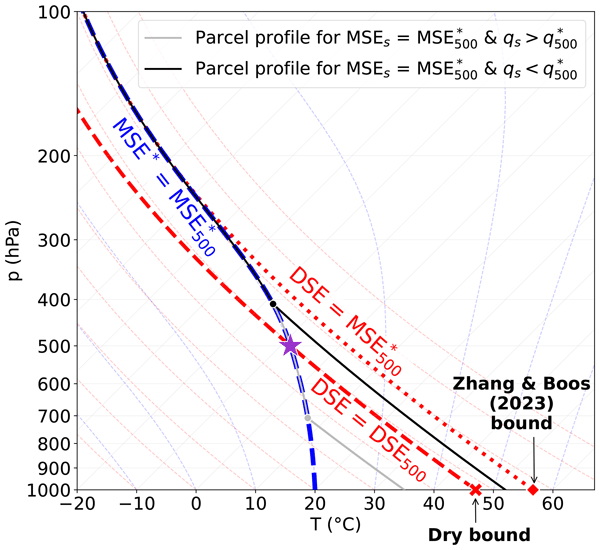
Heatwaves are intensifying at a fast pace, and how much further they can strengthen is unknown. Our study seeks to estimate a physical upper limit to surface air temperature. We show that, unlike what recent work suggested, the intensity of the most extreme heatwaves may not be constrained by the onset of thunderstorms. Instead, the limit is set by the development of a several-kilometer-deep layer of well-mixed air above the ground, and modulated by a very hot and unstable near-surface layer.
Belinda Hotz, Lukas Papritz, and Matthias Röthlisberger
Weather Clim. Dynam., 5, 323–343, https://doi.org/10.5194/wcd-5-323-2024, https://doi.org/10.5194/wcd-5-323-2024, 2024
Short summary
Short summary
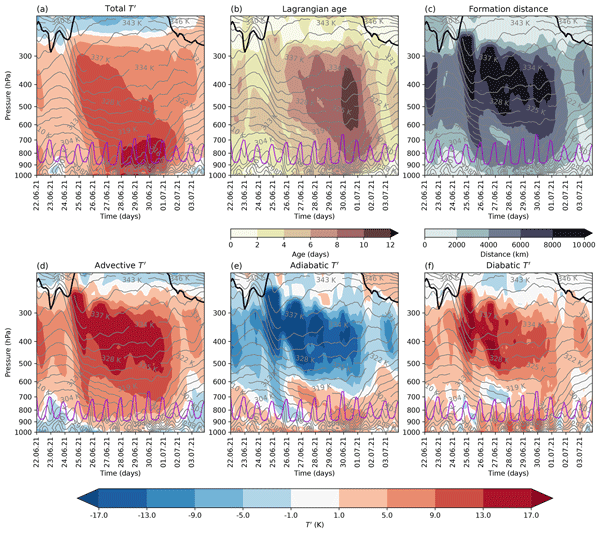
Analysing the vertical structure of temperature anomalies of recent record-breaking heatwaves reveals a complex four-dimensional interplay of anticyclone–heatwave interactions, with vertically strongly varying advective, adiabatic, and diabatic contributions to the respective temperature anomalies. The heatwaves featured bottom-heavy positive temperature anomalies, extending throughout the troposphere.
Hiu-Wang Lau, Belinda Hotz, Heini Wernli, and Robin Noyelle
EGUsphere, https://doi.org/10.5194/egusphere-2026-5697, https://doi.org/10.5194/egusphere-2026-5697, 2026
This preprint is open for discussion and under review for Weather and Climate Dynamics (WCD).
Short summary
Short summary
Studying the spatial and vertical extent of heat extremes is essential to understand their impacts and physical mechanisms. Here we investigate the 3D vertical structures of heatwaves and describe their geometry. We find that they extend vertically but are larger and more intense close to the ground and that their general shape is an ellipse oriented towards the pole. We argue that the simplified image of a “heat dome” is not adapted to describe the vertical structure of heatwaves.
Ming Hon Franco Lee, Hanna Joos, Heini Wernli, Richard Forbes, and Michael Sprenger
EGUsphere, https://doi.org/10.5194/egusphere-2026-4609, https://doi.org/10.5194/egusphere-2026-4609, 2026
This preprint is open for discussion and under review for Weather and Climate Dynamics (WCD).
Short summary
Short summary
Warm conveyor belts are coherent, rapidly ascending airstreams in extratropical cyclones, creating divergent outflows at upper levels. Using a numerical simulation, turbulence is found modifying potential vorticity near the tropopause in an outflow region. Despite the complex flow, changes in potential vorticity are retained due to the coordination provided by the outflow, leading to a potential upscale effect on the dynamics on larger scales, possibly affecting weather predictability.
Florian E. Roemer, Erich M. Fischer, Robin Noyelle, and Reto Knutti
Weather Clim. Dynam., 7, 1919–1949, https://doi.org/10.5194/wcd-7-1919-2026, https://doi.org/10.5194/wcd-7-1919-2026, 2026
Short summary
Short summary
Climate model based storylines of future extreme events are a useful tool to inform disaster preparations, but it is often unclear whether such events are plausible to occur in the real world. We present an approach that evaluates the plausibility of climate storylines based on process understanding and historical precedents. We demonstrate our approach for long-lasting heatwaves in Western Europe; it can also be applied other types of extreme events.
Mel Fülster, Ruzica Dadic, Iris Thurnherr, and Heini Wernli
EGUsphere, https://doi.org/10.5194/egusphere-2026-4721, https://doi.org/10.5194/egusphere-2026-4721, 2026
This preprint is open for discussion and under review for The Cryosphere (TC).
Short summary
Short summary
Winter-time fast ice extent and variability in McMurdo Sound is governed by strong wind events. We investigate the large scale atmospheric forcing leading to winter sea ice breakout events in McMurdo Sound from 2013–2024 using satellite-derived sea ice concentration data, weather station data and ERA-5 reanalysis data. Our results indicate that cyclones in the Ross Sea impact sea ice in McMurdo Sound indirectly through the barrier wind regime known as the Ross Ice Shelf air stream.
Seraphine Hauser, Lukas Papritz, and Heini Wernli
EGUsphere, https://doi.org/10.5194/egusphere-2026-5124, https://doi.org/10.5194/egusphere-2026-5124, 2026
This preprint is open for discussion and under review for Weather and Climate Dynamics (WCD).
Short summary
Short summary
This study analyses the sensitivity of numerical simulations of Storm Éowyn in January 2025 with respect to model resolution, initialisation time, and latent heating. High resolution is crucial to capture the structure and intensity of the cyclone, and the severe wind hazards that affected parts of the British Isles. In simulations with artificially reduced latent heating, the cyclone becomes less intense, and shifts northward compared to the control simulation, missing the British Isles.
Sven Voigt, Hanin Binder, Seraphine Hauser, and Heini Wernli
EGUsphere, https://doi.org/10.5194/egusphere-2026-4755, https://doi.org/10.5194/egusphere-2026-4755, 2026
This preprint is open for discussion and under review for Weather and Climate Dynamics (WCD).
Short summary
Short summary
This study uses 75 years of reanalysis data to identify extreme hazard cyclones, defined as systems accumulating a high number of extreme precipitation or surface wind events along their tracks. Globally, these cyclones form in the tropics and undergo extratropical transition. When restricting the analysis to the extratropical North Atlantic, they form at lower latitudes, are deeper, longer-lived, larger in cyclone area, and more rapidly intensifying relative to average extratropical cyclones.
Gergana Gyuleva, Reto Knutti, Robin Noyelle, Urs Beyerle, Erich Fischer, and Sebastian Sippel
EGUsphere, https://doi.org/10.48550/arXiv.2608.13219, https://doi.org/10.48550/arXiv.2608.13219, 2026
Short summary
Short summary
How much Earth warms depends on climate feedbacks, which change with sea surface temperatures. This effect is usually modelled by prescribing observed sea-surface temperatures to atmospheric models. We test this standard approach in idealised runs and find it fails to reproduce the true feedback. We also find that feedback variations can be fully explained via statistical noise. Our results suggest historical "pattern effect" estimates are not robust, increasing uncertainty in future warming.
Matthias Röthlisberger, Michael Sprenger, Urs Beyerle, Erich M. Fischer, and Heini Wernli
Weather Clim. Dynam., 7, 1363–1384, https://doi.org/10.5194/wcd-7-1363-2026, https://doi.org/10.5194/wcd-7-1363-2026, 2026
Short summary
Short summary
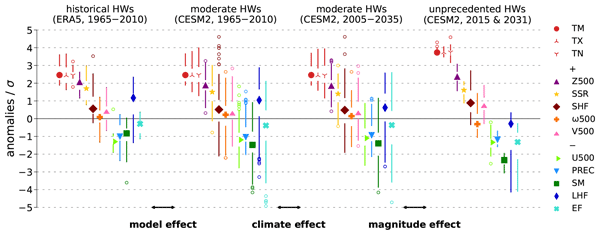
This study investigates yearly heat extremes simulated with the global climate model CESM2. A trajectory-based method is used, which allows quantifying the contributions to temperature anomalies from advection, subsidence, and diabatic heating. The results show that the magnitude of CESM2 heat extremes agrees fairly well with ERA5 reanalyses, but it is often
for the partly wrong physical reasons.
Ming Hon Franco Lee, Hanna Joos, Heini Wernli, Richard Forbes, and Michael Sprenger
EGUsphere, https://doi.org/10.5194/egusphere-2026-4184, https://doi.org/10.5194/egusphere-2026-4184, 2026
Short summary
Short summary
Turbulence near jet streams modifies the atmospheric flow, but there is limited research on the underlying mechanism. In this study, we infer this feedback by tracing the change in potential vorticity. We use an analytical framework to explain the systematic changes caused by turbulence in a numerical simulation of a jet stream. A typical tripolar pattern appears repeatedly, and it is highly related to the coherence of the jet. The improved understanding may help advance weather forecasts.
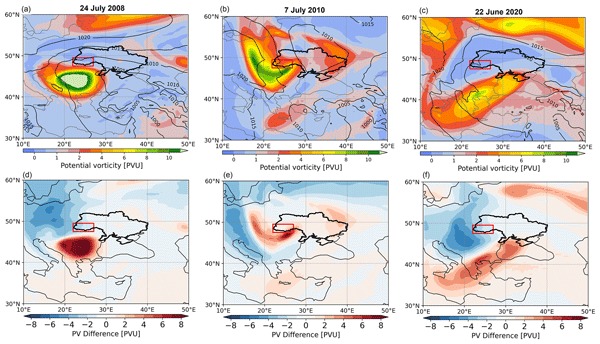
Ellina Agayar, Moshe Armon, Michael Sprenger, and Heini Wernli
Nat. Hazards Earth Syst. Sci., 26, 3025–3043, https://doi.org/10.5194/nhess-26-3025-2026, https://doi.org/10.5194/nhess-26-3025-2026, 2026
Short summary
Short summary
This study investigates the hydrometeorological features of the major floods of 2008, 2010, and 2020 in western Ukraine. All cases were linked to upper-level potential vorticity (PV) anomalies. We also conducted a climatological analysis of PV structure associated with 22 summer heavy precipitation events (2000–2022), highlighting their key role in determining the location and intensity of flood-inducing rainfall events in the Carpathians.
Quentin Nicolas and Belinda Hotz
Weather Clim. Dynam., 7, 843–856, https://doi.org/10.5194/wcd-7-843-2026, https://doi.org/10.5194/wcd-7-843-2026, 2026
Short summary
Short summary
Heatwaves are intensifying at a fast pace, and how much further they can strengthen is unknown. Our study seeks to estimate a physical upper limit to surface air temperature. We show that, unlike what recent work suggested, the intensity of the most extreme heatwaves may not be constrained by the onset of thunderstorms. Instead, the limit is set by the development of a several-kilometer-deep layer of well-mixed air above the ground, and modulated by a very hot and unstable near-surface layer.
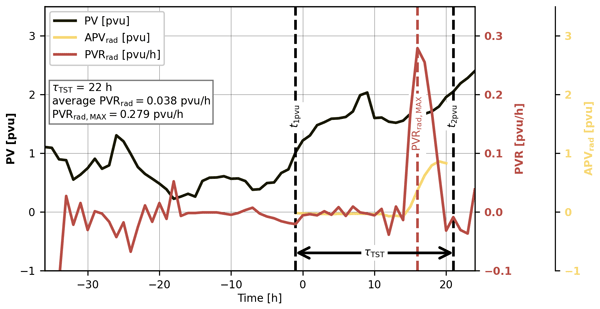
Tuule Müürsepp, Michael Sprenger, Heini Wernli, and Hanna Joos
Weather Clim. Dynam., 7, 547–565, https://doi.org/10.5194/wcd-7-547-2026, https://doi.org/10.5194/wcd-7-547-2026, 2026
Short summary
Short summary
The tropopause region of the atmosphere is greatly impacted by the exchange of mass and constituents between the troposphere and the stratosphere. This study quantifies the role of radiation in troposphere-to-stratosphere transport using reanalysis data. We find that radiation contributes to this transport most of the time, albeit it might not be the dominant process. We provide a new insight into the complex interplay of processes that air parcels experience on their way to the stratosphere.
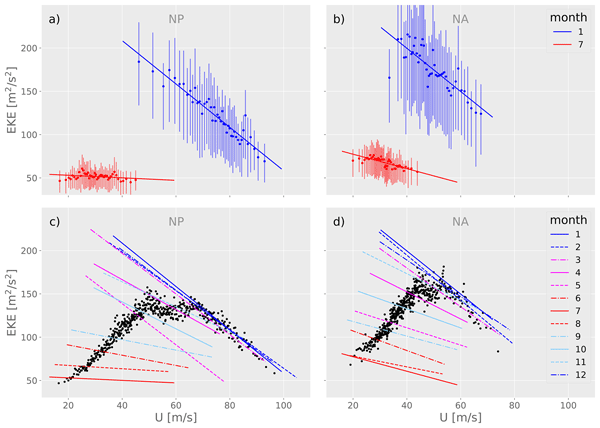
Nora Zilibotti, Heini Wernli, and Sebastian Schemm
Weather Clim. Dynam., 7, 201–221, https://doi.org/10.5194/wcd-7-201-2026, https://doi.org/10.5194/wcd-7-201-2026, 2026
Short summary
Short summary
This study investigates the relationship between jet strength and storm track activity in the North Pacific and North Atlantic with a new approach that does not rely on monthly averaging. We find a consistent behaviour in the two basins, with two distinct relationships on seasonal and sub-monthly timescales emerging. This work underlines the importance of separating different timescales of variability to understand the interplay of jet characteristics and storm track activity.
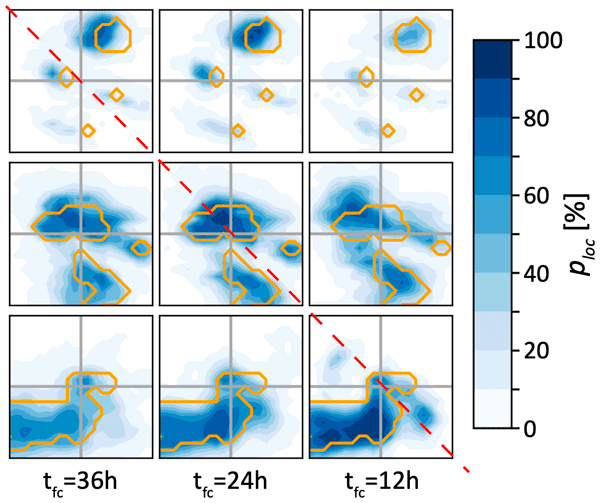
Katharina Hartmuth, Dominik Büeler, and Heini Wernli
Weather Clim. Dynam., 7, 129–148, https://doi.org/10.5194/wcd-7-129-2026, https://doi.org/10.5194/wcd-7-129-2026, 2026
Short summary
Short summary
This study presents three case studies of applying a newly developed method to quantify the uncertainty of the operational ensemble from the European Centre for Medium-Range Weather Forecasts in forecasting precipitation and wind extremes associated with Mediterranean cyclones. We find that the cyclones as well as their associated extremes are predicted well for lead times ≤ 48 h; however, for longer lead times there is large case-to-case variability in the ensemble performance.
Jacopo Riboldi, Robin Noyelle, Ellina Agayar, Hanin Binder, Marc Federer, Katharina Hartmuth, Michael Sprenger, Iris Thurnherr, and Selvakumar Vishnupriya
Weather Clim. Dynam., 7, 65–87, https://doi.org/10.5194/wcd-7-65-2026, https://doi.org/10.5194/wcd-7-65-2026, 2026
Short summary
Short summary
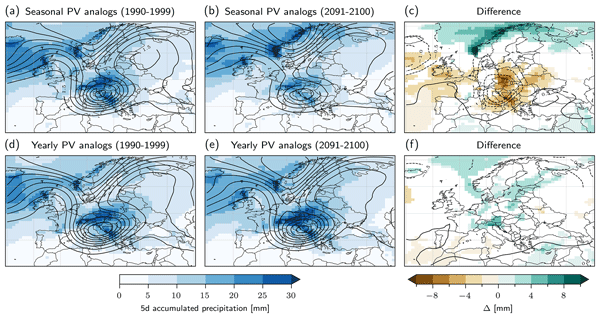
Storm Boris led to record-breaking precipitation over central Europe in September 2024. By incorporating event-specific meteorological information, this work introduces a methodology to strengthen our comprehension of how global warming affects similar hazards. Furthermore, it contextualizes how the answer to the question "How will Boris-like storms change in a warmer climate?" depends on explicit and implicit methodological choices, with the aim to inform future attribution research.
Franziska Schnyder, Ming Hon Franco Lee, and Heini Wernli
Weather Clim. Dynam., 6, 1319–1337, https://doi.org/10.5194/wcd-6-1319-2025, https://doi.org/10.5194/wcd-6-1319-2025, 2025
Short summary
Short summary
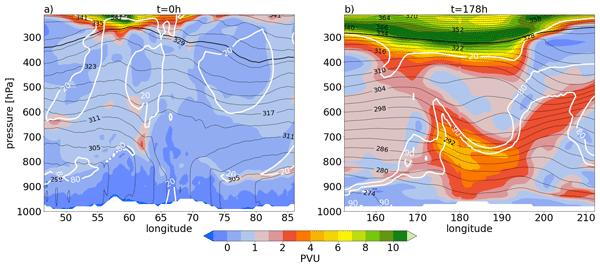
In this study, we investigate a particularly long-lived example of a Siberian summer cyclone, which originates during a heat wave in Kazakhstan in July 2021 and propagates into the Arctic, where it leads to heavy precipitation and alters the Arctic tropopause. Although a rare event in current climate, this case reveals how compounding events may be linked by one weather system and portrays a type of cyclone event which is likely to become more frequent in a warmer climate.
Selvakumar Vishnupriya, Michael Sprenger, Hanna Joos, and Heini Wernli
Weather Clim. Dynam., 6, 1195–1219, https://doi.org/10.5194/wcd-6-1195-2025, https://doi.org/10.5194/wcd-6-1195-2025, 2025
Short summary
Short summary
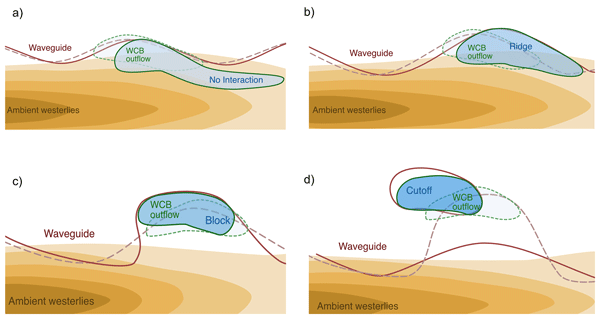
Extratropical cyclones feature rapidly ascending airstreams known as warm conveyor belts, which could influence upper-level flow dynamics. This study classifies interactions between warm conveyor belt outflows and the jet stream into four types: no interactions, ridges, blocks, and tropospheric cutoffs. We use reanalysis data to demonstrate that the interaction type depends on the structure of the ambient flow than on the outflow, improving our understanding of extratropical flow variability.
Luna Bloin-Wibe, Robin Noyelle, Vincent Humphrey, Urs Beyerle, Reto Knutti, and Erich Fischer
Weather Clim. Dynam., 6, 1147–1177, https://doi.org/10.5194/wcd-6-1147-2025, https://doi.org/10.5194/wcd-6-1147-2025, 2025
Short summary
Short summary
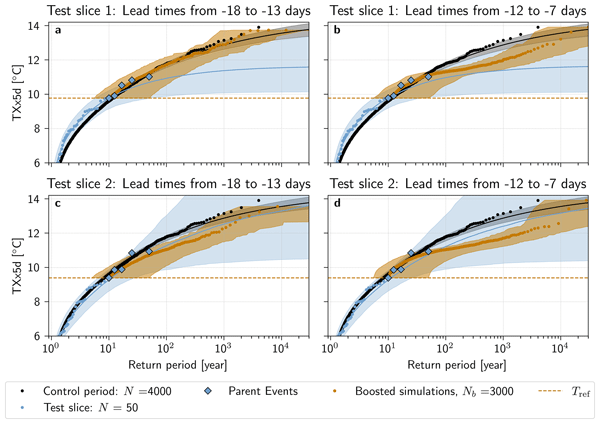
Weather extremes have become more frequent due to climate change. It is therefore crucial to understand them, but since they are rarer than average weather, they are challenging to study. Ensemble Boosting (EB) is a tool that generates extreme climate model events efficiently, but without directly estimating their probability. Here, we present a method to recover these probabilities for a global climate model. EB can thus now be used to find extremes with meaningful statistical information.
Killian P. Brennan, Iris Thurnherr, Michael Sprenger, and Heini Wernli
Nat. Hazards Earth Syst. Sci., 25, 3693–3712, https://doi.org/10.5194/nhess-25-3693-2025, https://doi.org/10.5194/nhess-25-3693-2025, 2025
Short summary
Short summary
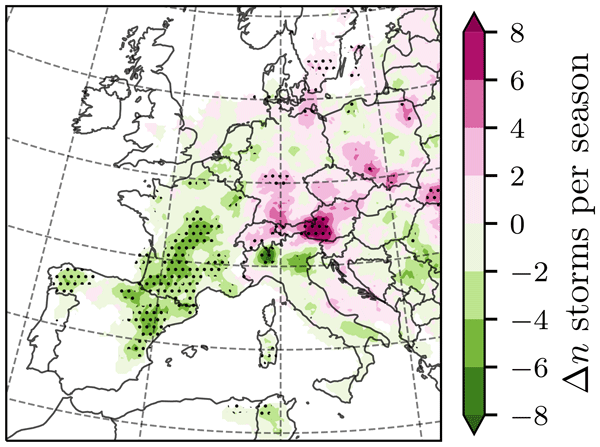
Hailstorms can cause severe damage to homes, crops, and infrastructure. Using high-resolution climate simulations, we tracked thousands of hailstorms across Europe to study future changes. Large hail will become more frequent, hail-covered areas will expand, and instances of extreme hail combined with heavy rain will double. These shifts could increase risks for communities and businesses, highlighting the need for better preparedness and adaptation.
Luise J. Fischer, David N. Bresch, Dominik Büeler, Christian M. Grams, Robin Noyelle, Matthias Röthlisberger, and Heini Wernli
Weather Clim. Dynam., 6, 1027–1043, https://doi.org/10.5194/wcd-6-1027-2025, https://doi.org/10.5194/wcd-6-1027-2025, 2025
Short summary
Short summary
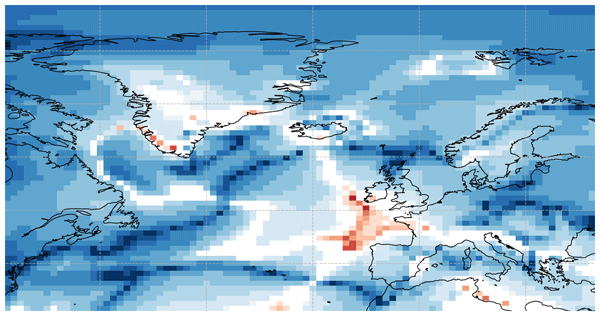
Atmospheric flows over the North Atlantic can be meaningfully classified into weather regimes, and climate simulations suggest that the regime frequencies might change in the future. We provide a quantitative framework that helps assess whether these regime frequency changes are relevant to understanding climate change signals in precipitation. At least in our example application, in most regions, regime frequency changes explain little of the projected precipitation changes.
Robin Noyelle, Davide Faranda, Yoann Robin, Mathieu Vrac, and Pascal Yiou
Weather Clim. Dynam., 6, 817–839, https://doi.org/10.5194/wcd-6-817-2025, https://doi.org/10.5194/wcd-6-817-2025, 2025
Short summary
Short summary
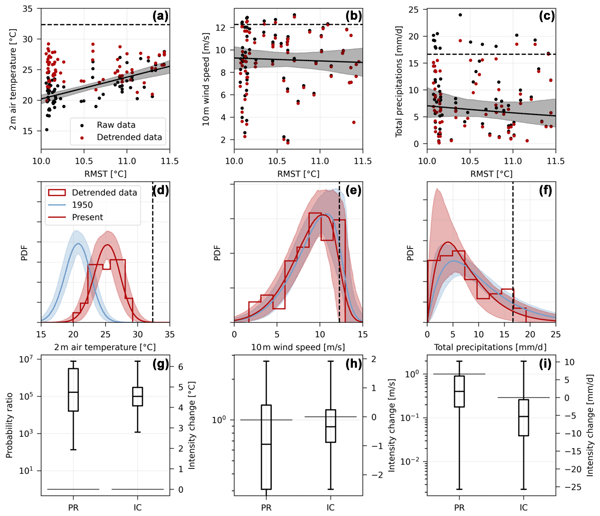
Properties of extreme meteorological and climatological events are changing under human-caused climate change. Extreme event attribution methods seek to estimate the contribution of global warming in the probability and intensity changes of extreme events. Here we propose a procedure to estimate these quantities for the flow analogue method, which compares the observed event to similar events in the past.
Killian P. Brennan, Michael Sprenger, André Walser, Marco Arpagaus, and Heini Wernli
Weather Clim. Dynam., 6, 645–668, https://doi.org/10.5194/wcd-6-645-2025, https://doi.org/10.5194/wcd-6-645-2025, 2025
Short summary
Short summary
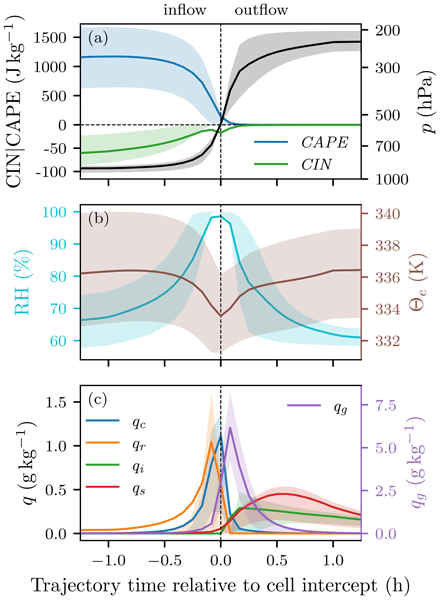
We studied severe hailstorms that occurred in Switzerland on 28 June 2021 using a weather prediction model to understand how they evolved. We found that the storms moved toward areas with more storm energy. Hailfall was quickly followed by heavy rain. Just before the storms died out, the air feeding them stopped coming from near the ground. We also observed a delay between different types of precipitation forming in the incoming air.
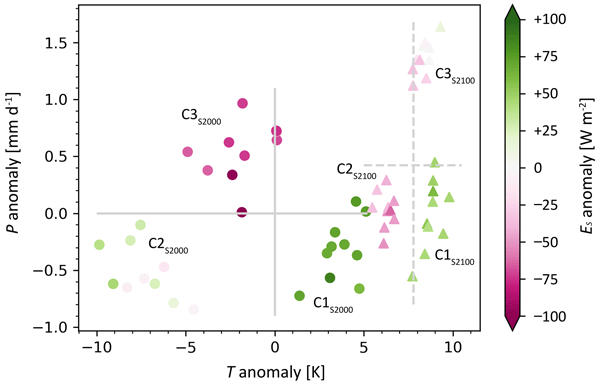
Katharina Hartmuth, Heini Wernli, and Lukas Papritz
Weather Clim. Dynam., 6, 505–520, https://doi.org/10.5194/wcd-6-505-2025, https://doi.org/10.5194/wcd-6-505-2025, 2025
Short summary
Short summary
In this study, we use large-ensemble climate model simulations to analyze extreme winters in the Barents Sea in a changing climate. We find that variability in both atmospheric processes and sea ice conditions determines the formation of such seasons in the present-day climate. The reduction in sea ice variability results in a decreasing importance of surface boundary conditions in a warmer climate, while the robust link shown for surface weather systems persists.
Nicolai Krieger, Heini Wernli, Michael Sprenger, and Christian Kühnlein
Weather Clim. Dynam., 6, 447–469, https://doi.org/10.5194/wcd-6-447-2025, https://doi.org/10.5194/wcd-6-447-2025, 2025
Short summary
Short summary
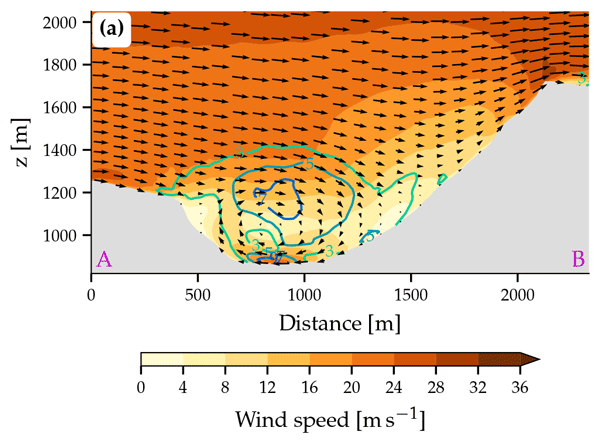
This study investigates the Laseyer, a local windstorm in a narrow Swiss valley characterized by strong southeasterly winds during northwesterly ambient flow. Using large-eddy simulations (LESs) with 30 m grid spacing, this is the first study to reveal that the extreme gusts in the valley are caused by an amplifying interplay of two recirculation regions. Modifying terrain and ambient wind conditions affects the windstorm's intensity and highlights the importance of topographic details in LES.
Hanin Binder and Heini Wernli
Weather Clim. Dynam., 6, 151–170, https://doi.org/10.5194/wcd-6-151-2025, https://doi.org/10.5194/wcd-6-151-2025, 2025
Short summary
Short summary
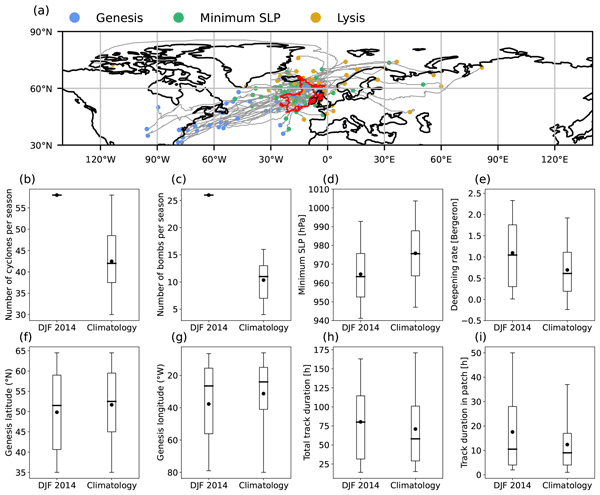
This study presents a systematic analysis of frequency anomalies and characteristics of extratropical cyclones during extremely wet, dry, windy, and calm winter and summer seasons in the extratropics based on 1050 years of present-day climate simulations. We show that anomalies in cyclone frequency, intensity, and stationarity are crucial to the occurrence of many extreme seasons and that these anomaly patterns exhibit substantial regional and seasonal variability.
Stefano Ubbiali, Christian Kühnlein, Christoph Schär, Linda Schlemmer, Thomas C. Schulthess, Michael Staneker, and Heini Wernli
Geosci. Model Dev., 18, 529–546, https://doi.org/10.5194/gmd-18-529-2025, https://doi.org/10.5194/gmd-18-529-2025, 2025
Short summary
Short summary
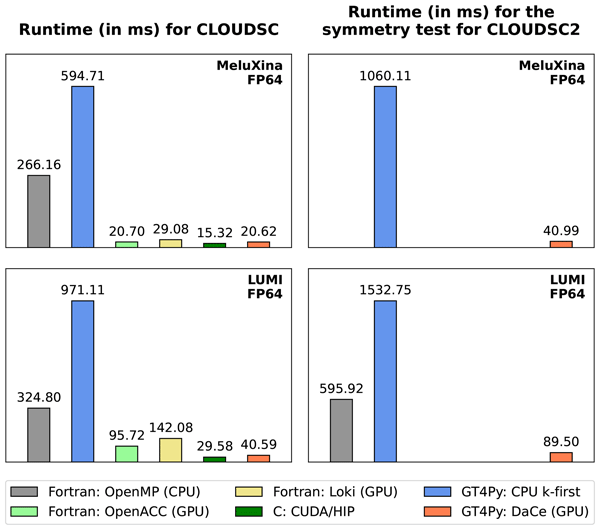
We explore a high-level programming model for porting numerical weather prediction (NWP) model codes to graphics processing units (GPUs). We present a Python rewrite with the domain-specific library GT4Py (GridTools for Python) of two renowned cloud microphysics schemes and the associated tangent-linear and adjoint algorithms. We find excellent portability, competitive GPU performance, robust execution on diverse computing architectures, and enhanced code maintainability and user productivity.
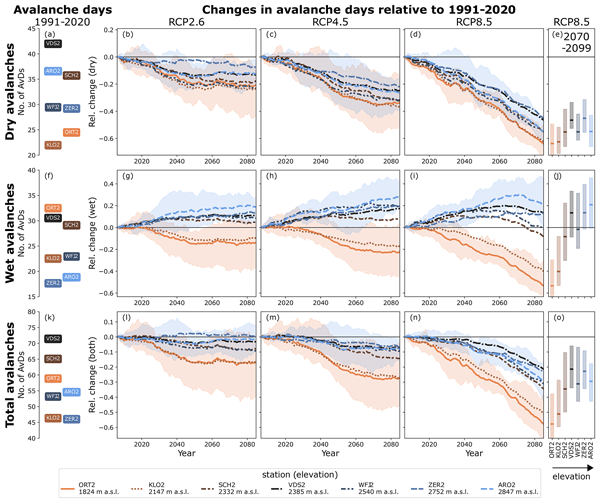
Stephanie Mayer, Martin Hendrick, Adrien Michel, Bettina Richter, Jürg Schweizer, Heini Wernli, and Alec van Herwijnen
The Cryosphere, 18, 5495–5517, https://doi.org/10.5194/tc-18-5495-2024, https://doi.org/10.5194/tc-18-5495-2024, 2024
Short summary
Short summary
Understanding the impact of climate change on snow avalanche activity is crucial for safeguarding lives and infrastructure. Here, we project changes in avalanche activity in the Swiss Alps throughout the 21st century. Our findings reveal elevation-dependent patterns of change, indicating a decrease in dry-snow avalanches alongside an increase in wet-snow avalanches at elevations above the current treeline. These results underscore the necessity to revisit measures for avalanche risk mitigation.
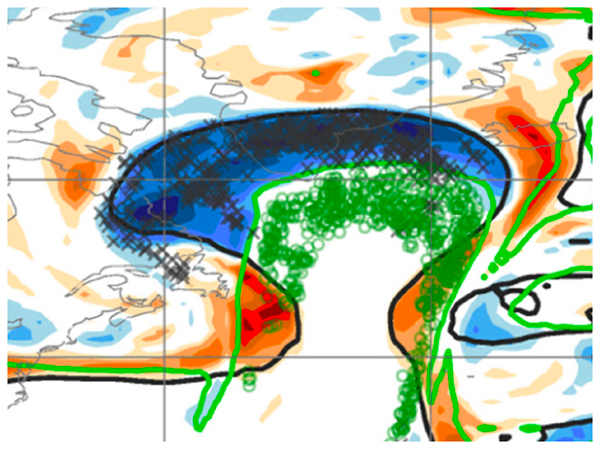
Heini Wernli and Suzanne L. Gray
Weather Clim. Dynam., 5, 1299–1408, https://doi.org/10.5194/wcd-5-1299-2024, https://doi.org/10.5194/wcd-5-1299-2024, 2024
Short summary
Short summary
The science of extratropical dynamics has reached a new level where the interplay of dry dynamics with effects of latent heating in clouds and other diabatic processes is considered central to the field. This review documents how research about the role of diabatic processes evolved over more than a century; it highlights that progress relied essentially on the integration of theory, field campaigns, novel diagnostics, and numerical modelling, and it outlines avenues for future research.
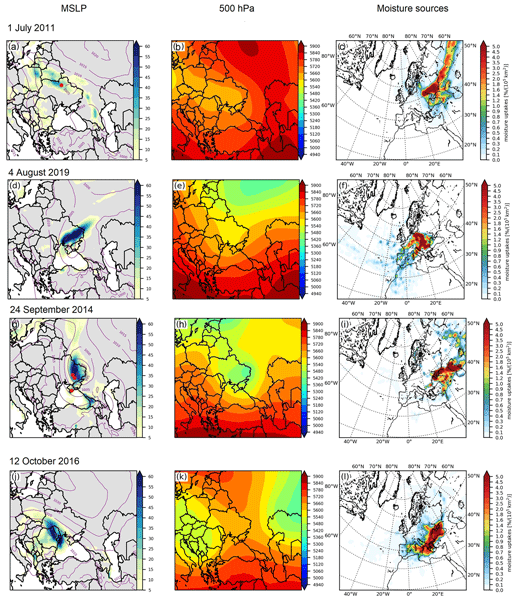
Ellina Agayar, Franziska Aemisegger, Moshe Armon, Alexander Scherrmann, and Heini Wernli
Nat. Hazards Earth Syst. Sci., 24, 2441–2459, https://doi.org/10.5194/nhess-24-2441-2024, https://doi.org/10.5194/nhess-24-2441-2024, 2024
Short summary
Short summary
This study presents the results of a climatological investigation of extreme precipitation events (EPEs) in Ukraine for the period 1979–2019. During all seasons EPEs are associated with pronounced upper-level potential vorticity (PV) anomalies. In addition, we find distinct seasonal and regional differences in moisture sources. Several extreme precipitation cases demonstrate the importance of these processes, complemented by a detailed synoptic analysis.
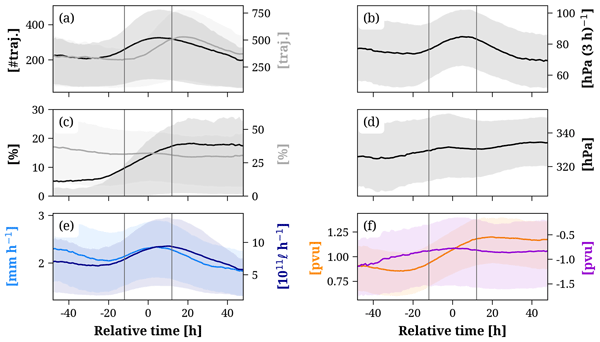
Katharina Heitmann, Michael Sprenger, Hanin Binder, Heini Wernli, and Hanna Joos
Weather Clim. Dynam., 5, 537–557, https://doi.org/10.5194/wcd-5-537-2024, https://doi.org/10.5194/wcd-5-537-2024, 2024
Short summary
Short summary
Warm conveyor belts (WCBs) are coherently ascending air streams that occur in extratropical cyclones where they form precipitation and often affect the large-scale flow. We quantified the key characteristics and impacts of WCBs and linked them to different phases in the cyclone life cycle and to different WCB branches. A climatology of these metrics revealed that WCBs are most intense during cyclone intensification and that the cyclonic and anticyclonic WCB branches show distinct differences.
Alexander Scherrmann, Heini Wernli, and Emmanouil Flaounas
Weather Clim. Dynam., 5, 419–438, https://doi.org/10.5194/wcd-5-419-2024, https://doi.org/10.5194/wcd-5-419-2024, 2024
Short summary
Short summary
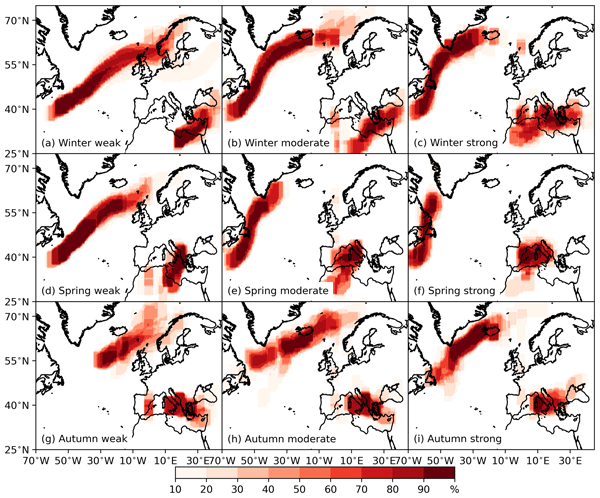
We show that the formation of Mediterranean cyclones follows the presence of cyclones over the North Atlantic. The distinct regions of cyclone activity in the Mediterranean in the different seasons can be linked to the atmospheric state, in particular the position of the polar jet over the North Atlantic. With this we now better understand the processes that lead to the formation of Mediterranean cyclones. We used a novel simulation framework in which we directly show and probe this connection.
Belinda Hotz, Lukas Papritz, and Matthias Röthlisberger
Weather Clim. Dynam., 5, 323–343, https://doi.org/10.5194/wcd-5-323-2024, https://doi.org/10.5194/wcd-5-323-2024, 2024
Short summary
Short summary
Analysing the vertical structure of temperature anomalies of recent record-breaking heatwaves reveals a complex four-dimensional interplay of anticyclone–heatwave interactions, with vertically strongly varying advective, adiabatic, and diabatic contributions to the respective temperature anomalies. The heatwaves featured bottom-heavy positive temperature anomalies, extending throughout the troposphere.
Esther S. Breuninger, Julie Tolu, Iris Thurnherr, Franziska Aemisegger, Aryeh Feinberg, Sylvain Bouchet, Jeroen E. Sonke, Véronique Pont, Heini Wernli, and Lenny H. E. Winkel
Atmos. Chem. Phys., 24, 2491–2510, https://doi.org/10.5194/acp-24-2491-2024, https://doi.org/10.5194/acp-24-2491-2024, 2024
Short summary
Short summary
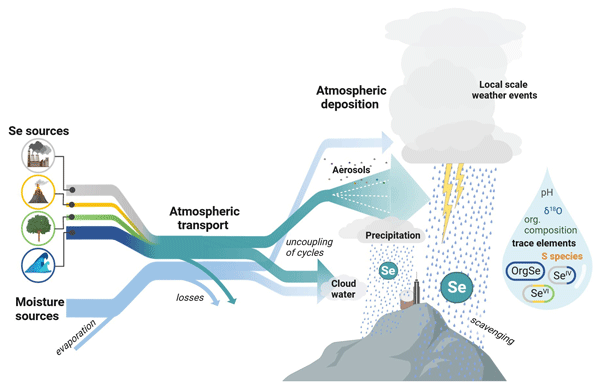
Atmospheric deposition is an important source of selenium (Se) and other health-relevant trace elements in surface environments. We found that the variability in elemental concentrations in atmospheric deposition reflects not only changes in emission sources but also weather conditions during atmospheric removal. Depending on the sources and if Se is derived more locally or from further away, the Se forms can be different, affecting the bioavailability of Se atmospherically supplied to soils.
Julian F. Quinting, Christian M. Grams, Edmund Kar-Man Chang, Stephan Pfahl, and Heini Wernli
Weather Clim. Dynam., 5, 65–85, https://doi.org/10.5194/wcd-5-65-2024, https://doi.org/10.5194/wcd-5-65-2024, 2024
Short summary
Short summary
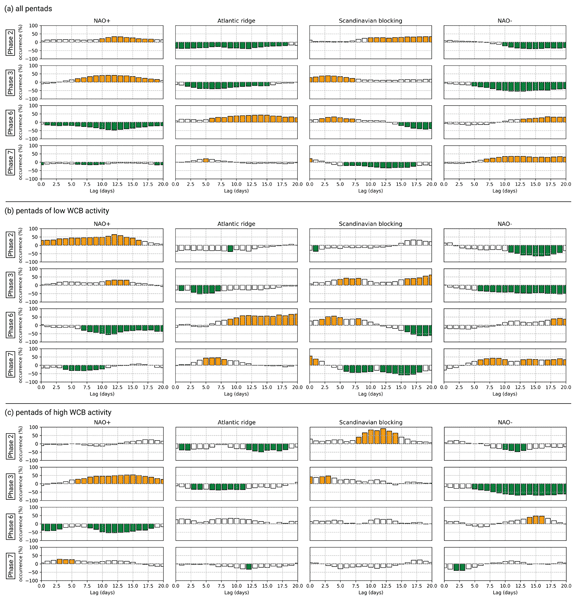
Research in the last few decades has revealed that rapidly ascending airstreams in extratropical cyclones have an important effect on the evolution of downstream weather and predictability. In this study, we show that the occurrence of these airstreams over the North Pacific is modulated by tropical convection. Depending on the modulation, known atmospheric circulation patterns evolve quite differently, which may affect extended-range predictions in the Atlantic–European region.
Leonie Villiger, Marina Dütsch, Sandrine Bony, Marie Lothon, Stephan Pfahl, Heini Wernli, Pierre-Etienne Brilouet, Patrick Chazette, Pierre Coutris, Julien Delanoë, Cyrille Flamant, Alfons Schwarzenboeck, Martin Werner, and Franziska Aemisegger
Atmos. Chem. Phys., 23, 14643–14672, https://doi.org/10.5194/acp-23-14643-2023, https://doi.org/10.5194/acp-23-14643-2023, 2023
Short summary
Short summary
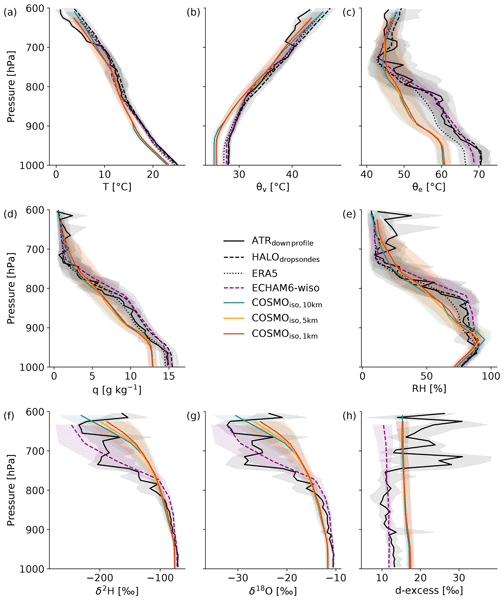
This study evaluates three numerical simulations performed with an isotope-enabled weather forecast model and investigates the coupling between shallow trade-wind cumulus clouds and atmospheric circulations on different scales. We show that the simulations reproduce key characteristics of shallow trade-wind clouds as observed during the field experiment EUREC4A and that the spatial distribution of stable-water-vapour isotopes is shaped by the overturning circulation associated with these clouds.
Elena De La Torre Castro, Tina Jurkat-Witschas, Armin Afchine, Volker Grewe, Valerian Hahn, Simon Kirschler, Martina Krämer, Johannes Lucke, Nicole Spelten, Heini Wernli, Martin Zöger, and Christiane Voigt
Atmos. Chem. Phys., 23, 13167–13189, https://doi.org/10.5194/acp-23-13167-2023, https://doi.org/10.5194/acp-23-13167-2023, 2023
Short summary
Short summary
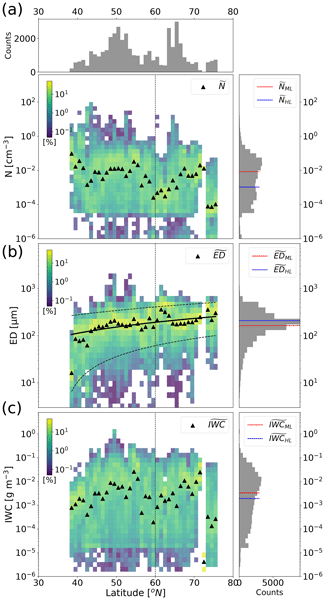
In this study, we show the differences in the microphysical properties between high-latitude (HL) cirrus and mid-latitude (ML) cirrus over the Arctic, North Atlantic, and central Europe during summer. The in situ measurements are combined with backward trajectories to investigate the influence of the region on cloud formation. We show that HL cirrus are characterized by a lower concentration of larger ice crystals when compared to ML cirrus.
Mark J. Rodwell and Heini Wernli
Weather Clim. Dynam., 4, 591–615, https://doi.org/10.5194/wcd-4-591-2023, https://doi.org/10.5194/wcd-4-591-2023, 2023
Short summary
Short summary
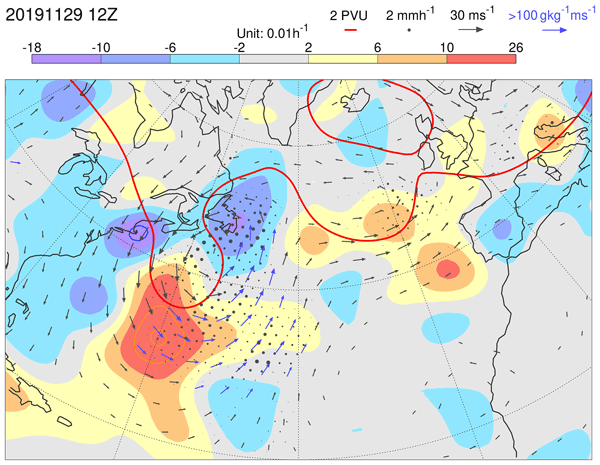
Midlatitude storms and their downstream impacts have a major impact on society, yet their prediction is especially prone to uncertainty. While this can never be fully eliminated, we find that the initial rate of growth of uncertainty varies for a range of forecast models. Examination of the model of the European Centre for Medium-Range Weather Forecasts (ECMWF) suggests ways in which uncertainty growth could be reduced, leading to sharper and more reliable forecasts over the first few days.
Mauro Hermann, Matthias Röthlisberger, Arthur Gessler, Andreas Rigling, Cornelius Senf, Thomas Wohlgemuth, and Heini Wernli
Biogeosciences, 20, 1155–1180, https://doi.org/10.5194/bg-20-1155-2023, https://doi.org/10.5194/bg-20-1155-2023, 2023
Short summary
Short summary
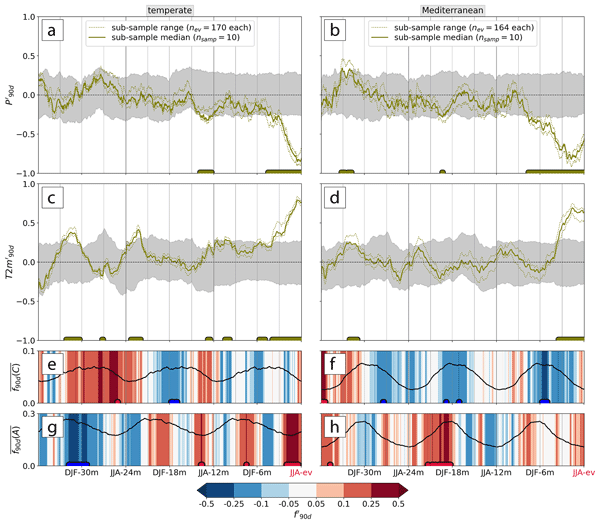
This study examines the multi-annual meteorological history of low-forest-greenness events in Europe's temperate and Mediterranean biome in 2002–2022. We systematically identify anomalies in temperature, precipitation, and weather systems as event precursors, with noteworthy differences between the two biomes. We also quantify the impact of the most extensive event in 2022 (37 % coverage), underlining the importance of understanding the forest–meteorology interaction in a changing climate.
Alexander Scherrmann, Heini Wernli, and Emmanouil Flaounas
Weather Clim. Dynam., 4, 157–173, https://doi.org/10.5194/wcd-4-157-2023, https://doi.org/10.5194/wcd-4-157-2023, 2023
Short summary
Short summary
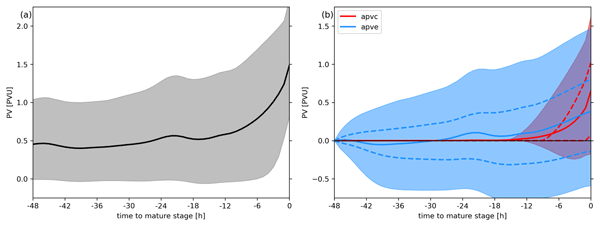
We investigate the dynamical origin of the lower-atmospheric potential vorticity (PV; linked to the intensity of cyclones) in Mediterranean cyclones. We quantify the contribution of the cyclone and the environment by tracing PV backward in time and space and linking it to the track of the cyclone. We find that the lower-tropospheric PV is produced shortly before the cyclone's stage of highest intensity. We investigate the driving processes and use a global dataset and a process-resolving one.
Hanna Joos, Michael Sprenger, Hanin Binder, Urs Beyerle, and Heini Wernli
Weather Clim. Dynam., 4, 133–155, https://doi.org/10.5194/wcd-4-133-2023, https://doi.org/10.5194/wcd-4-133-2023, 2023
Short summary
Short summary
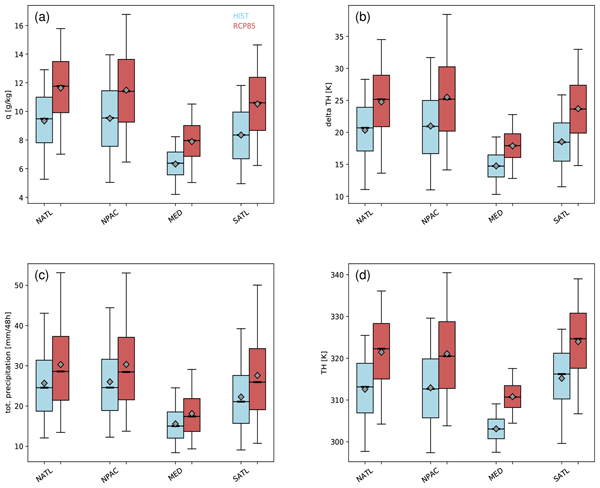
Warm conveyor belts (WCBs) are strongly ascending, cloud- and precipitation-forming airstreams in extratropical cyclones. In this study we assess their representation in a climate simulation and their changes under global warming. They become moister, become more intense, and reach higher altitudes in a future climate, implying that they potentially have an increased impact on the mid-latitude flow.
Andreas Schäfler, Michael Sprenger, Heini Wernli, Andreas Fix, and Martin Wirth
Atmos. Chem. Phys., 23, 999–1018, https://doi.org/10.5194/acp-23-999-2023, https://doi.org/10.5194/acp-23-999-2023, 2023
Short summary
Short summary
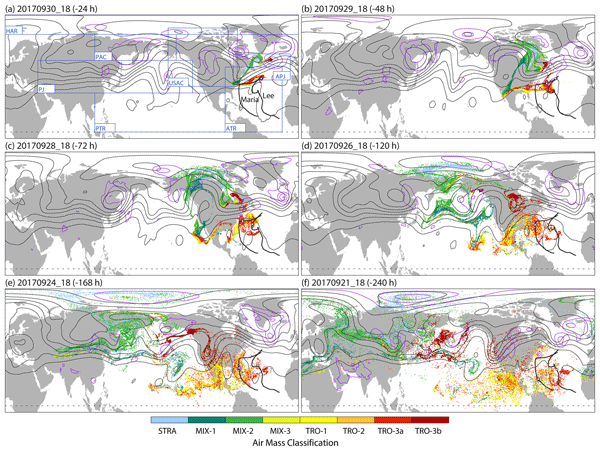
In this study, airborne lidar profile measurements of H2O and O3 across a midlatitude jet stream are combined with analyses in tracer–trace space and backward trajectories. We highlight that transport and mixing processes in the history of the observed air masses are governed by interacting tropospheric weather systems on synoptic timescales. We show that these weather systems play a key role in the high variability of the paired H2O and O3 distributions near the tropopause.
Hanin Binder, Hanna Joos, Michael Sprenger, and Heini Wernli
Weather Clim. Dynam., 4, 19–37, https://doi.org/10.5194/wcd-4-19-2023, https://doi.org/10.5194/wcd-4-19-2023, 2023
Short summary
Short summary
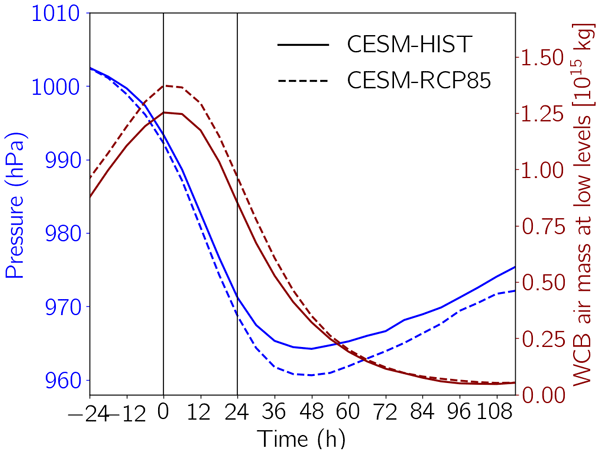
Warm conveyor belts (WCBs) are the main cloud- and precipitation-producing airstreams in extratropical cyclones. The latent heat release that occurs during cloud formation often contributes to the intensification of the associated cyclone. Based on the Community Earth System Model Large Ensemble coupled climate simulations, we show that WCBs and associated latent heating will become stronger in a future climate and be even more important for explosive cyclone intensification than in the present.
Davide Faranda, Stella Bourdin, Mireia Ginesta, Meriem Krouma, Robin Noyelle, Flavio Pons, Pascal Yiou, and Gabriele Messori
Weather Clim. Dynam., 3, 1311–1340, https://doi.org/10.5194/wcd-3-1311-2022, https://doi.org/10.5194/wcd-3-1311-2022, 2022
Short summary
Short summary
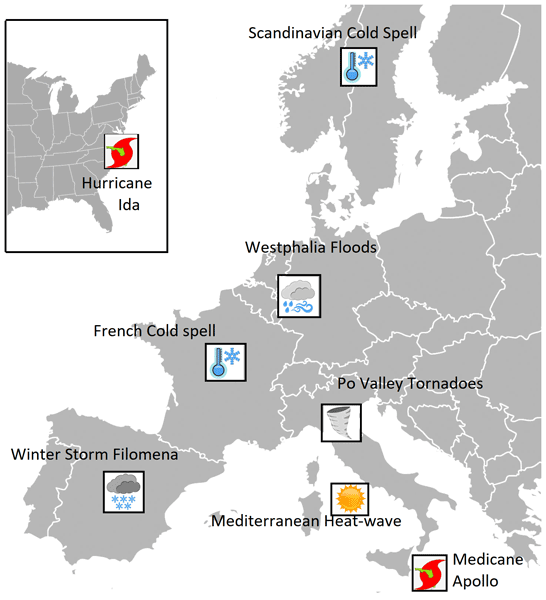
We analyze the atmospheric circulation leading to impactful extreme events for the calendar year 2021 such as the Storm Filomena, Westphalia floods, Hurricane Ida and Medicane Apollo. For some of the events, we find that climate change has contributed to their occurrence or enhanced their intensity; for other events, we find that they are unprecedented. Our approach underscores the importance of considering changes in the atmospheric circulation when performing attribution studies.

Andries Jan de Vries, Franziska Aemisegger, Stephan Pfahl, and Heini Wernli
Atmos. Chem. Phys., 22, 8863–8895, https://doi.org/10.5194/acp-22-8863-2022, https://doi.org/10.5194/acp-22-8863-2022, 2022
Short summary
Short summary
The Earth's water cycle contains the common H2O molecule but also the less abundant, heavier HDO. We use their different physical properties to study tropical ice clouds in model simulations of the West African monsoon. Isotope signals reveal different processes through which ice clouds form and decay in deep-convective and widespread cirrus. Previously observed variations in upper-tropospheric vapour isotopes are explained by microphysical processes in convective updraughts and downdraughts.
Philipp Zschenderlein and Heini Wernli
Weather Clim. Dynam., 3, 391–411, https://doi.org/10.5194/wcd-3-391-2022, https://doi.org/10.5194/wcd-3-391-2022, 2022
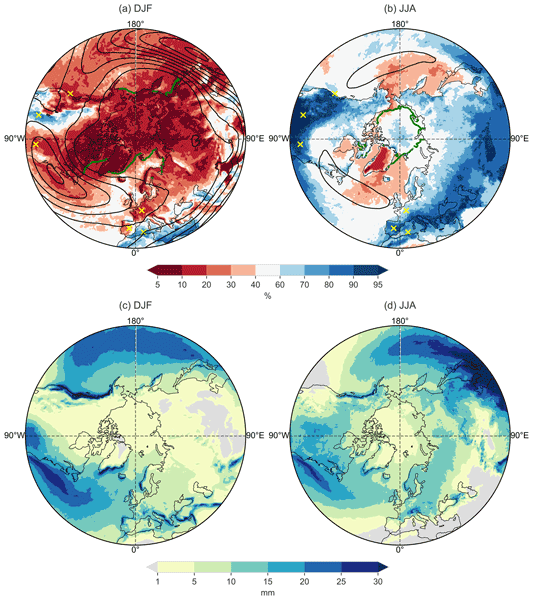
Short summary
Short summary
Precipitation and temperature are two of the most important variables describing our weather and climate. The relationship between these variables has been studied extensively; however, the role of specific weather systems in shaping this relationship has not been analysed yet. We therefore analyse whether intense precipitation occurs on warmer or on colder days and identify the relevant weather systems. In general, weather systems strongly influence this relationship, especially in winter.
Jan Clemens, Felix Ploeger, Paul Konopka, Raphael Portmann, Michael Sprenger, and Heini Wernli
Atmos. Chem. Phys., 22, 3841–3860, https://doi.org/10.5194/acp-22-3841-2022, https://doi.org/10.5194/acp-22-3841-2022, 2022
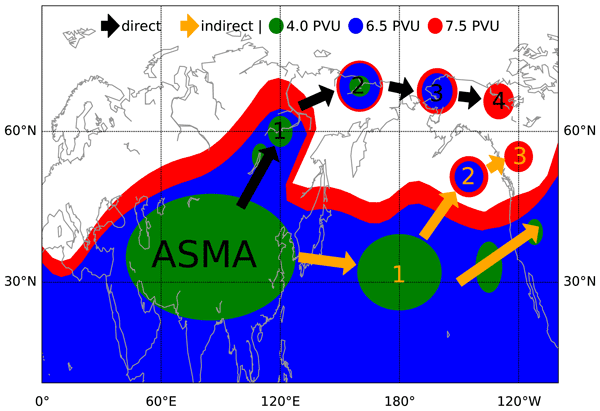
Short summary
Short summary
Highly polluted air flows from the surface to higher levels of the atmosphere during the Asian summer monsoon. At high levels, the air is trapped within eddies. Here, we study how air masses can leave the eddy within its cutoff, how they distribute, and how their chemical composition changes. We found evidence for transport from the eddy to higher latitudes over the North Pacific and even Alaska. During transport, trace gas concentrations within cutoffs changed gradually, showing steady mixing.
Katharina Hartmuth, Maxi Boettcher, Heini Wernli, and Lukas Papritz
Weather Clim. Dynam., 3, 89–111, https://doi.org/10.5194/wcd-3-89-2022, https://doi.org/10.5194/wcd-3-89-2022, 2022
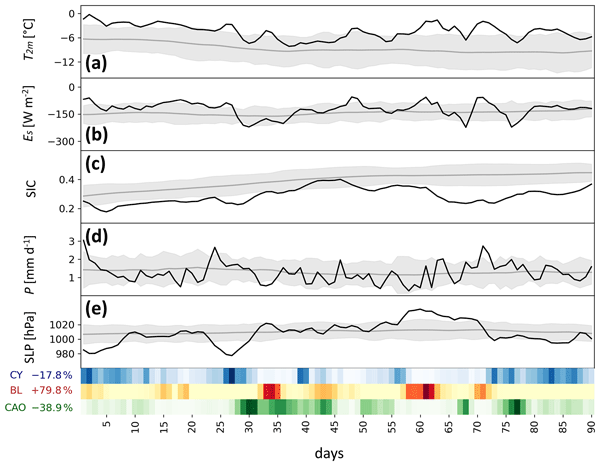
Short summary
Short summary
In this study, we introduce a novel method to objectively define and identify extreme Arctic seasons based on different surface variables. We find that such seasons are resulting from various combinations of unusual seasonal conditions. The occurrence or absence of different atmospheric processes strongly affects the character of extreme Arctic seasons. Further, changes in sea ice and sea surface temperature can strongly influence the formation of such a season in distinct regions.
Leonie Villiger, Heini Wernli, Maxi Boettcher, Martin Hagen, and Franziska Aemisegger
Weather Clim. Dynam., 3, 59–88, https://doi.org/10.5194/wcd-3-59-2022, https://doi.org/10.5194/wcd-3-59-2022, 2022
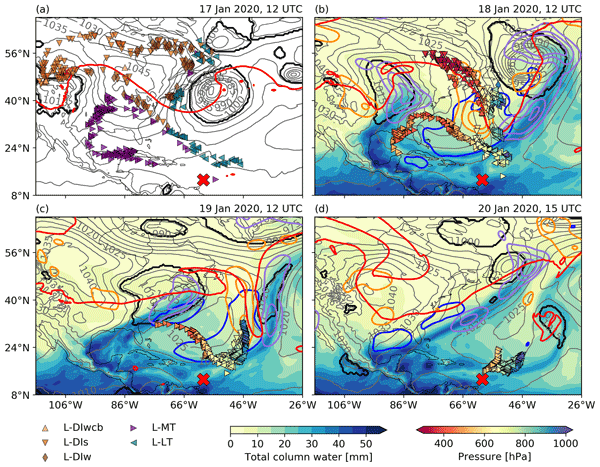
Short summary
Short summary
The coupling between the large-scale atmospheric circulation and the clouds in the trade-wind region is complex and not yet fully understood. In this study, the formation pathway of two anomalous cloud layers over Barbados during the field campaign EUREC4A is described. The two case studies highlight the influence of remote weather systems on the local environmental conditions in Barbados.
Philipp Zschenderlein and Heini Wernli
Nat. Hazards Earth Syst. Sci. Discuss., https://doi.org/10.5194/nhess-2021-396, https://doi.org/10.5194/nhess-2021-396, 2022
Preprint withdrawn
Short summary
Short summary
In early January 2021, Spain was affected by two extreme events – an unusually long cold spell and a heavy snowfall event associated with extratropical cyclone Filomena. In the study, we analyse the synoptic-dynamic development of the two extreme events. Cold air from the north was advected towards Spain and between 07 and 10 January, cyclone Filomena was responsible for major parts of the snowfall event. During this event, temperature and moisture contrasts accross Spain were very high.
Roman Attinger, Elisa Spreitzer, Maxi Boettcher, Heini Wernli, and Hanna Joos
Weather Clim. Dynam., 2, 1073–1091, https://doi.org/10.5194/wcd-2-1073-2021, https://doi.org/10.5194/wcd-2-1073-2021, 2021
Short summary
Short summary
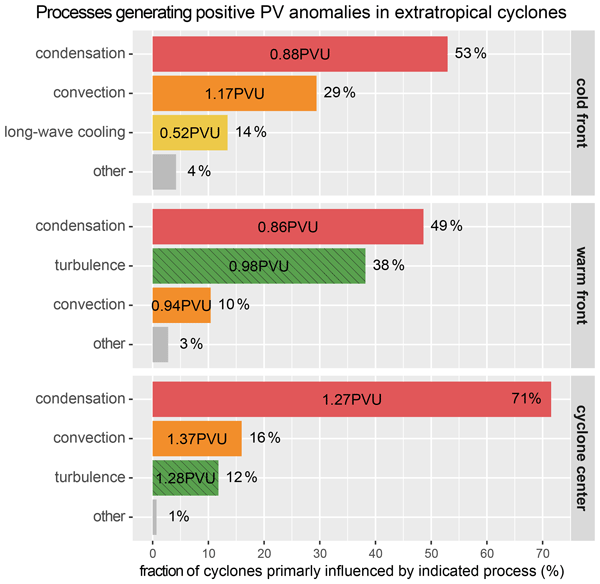
Diabatic processes affect the development of extratropical cyclones. This work provides a systematic assessment of the diabatic processes that modify potential vorticity (PV) in model simulations. PV is primarily produced by condensation and convection. Given favorable environmental conditions, long-wave radiative cooling and turbulence become the primary process at the cold and warm fronts, respectively. Turbulence and long-wave radiative heating produce negative PV anomalies at the fronts.
Fabienne Dahinden, Franziska Aemisegger, Heini Wernli, Matthias Schneider, Christopher J. Diekmann, Benjamin Ertl, Peter Knippertz, Martin Werner, and Stephan Pfahl
Atmos. Chem. Phys., 21, 16319–16347, https://doi.org/10.5194/acp-21-16319-2021, https://doi.org/10.5194/acp-21-16319-2021, 2021
Short summary
Short summary
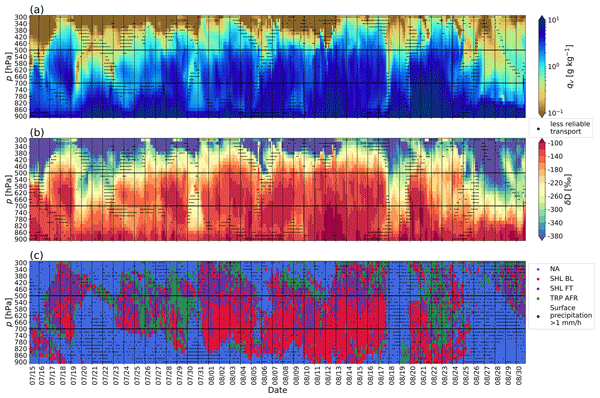
We use high-resolution numerical isotope modelling and Lagrangian backward trajectories to identify moisture transport pathways and governing physical and dynamical processes that affect the free-tropospheric humidity and isotopic variability over the eastern subtropical North Atlantic. Furthermore, we conduct a thorough isotope modelling validation with aircraft and remote-sensing observations of water vapour isotopes.
Cited articles
Assent, I.: Clustering high dimensional data, WIREs Data Min. Knowl. Discov., 2, 340–350, https://doi.org/10.1002/widm.1062, 2012. a
Bieli, M., Pfahl, S., and Wernli, H.: A Lagrangian investigation of hot and cold temperature extremes in Europe, Q. J. Roy. Meteorol. Soc., 141, 98–108, https://doi.org/10.1002/qj.2339, 2015. a
Blanchard‐Wrigglesworth, E., Cox, T., Espinosa, Z. I., and Donohoe, A.: The largest ever recorded heatwave – characteristics and attribution of the Antarctic heatwave of March 2022, Geophys. Res. Lett., 50, e2023GL104910, https://doi.org/10.1029/2023GL104910, 2023. a, b
Bloin-Wibe, L., Noyelle, R., Humphrey, V., Beyerle, U., Knutti, R., and Fischer, E.: Estimating return periods for extreme events in climate models through Ensemble Boosting, Weather Clim. Dynam., 6, 1147–1177, https://doi.org/10.5194/wcd-6-1147-2025, 2025. a
Brennan, K. P. and Wilhelm, L.: Saharan dust linked to European hail events, Atmos. Chem. Phys., 25, 10823–10836, https://doi.org/10.5194/acp-25-10823-2025, 2025. a
Brown, S. J., Caesar, J., and Ferro, C. A. T.: Global changes in extreme daily temperature since 1950, J. Geophys. Res.-Atmos., 113, 2006JD008091, https://doi.org/10.1029/2006JD008091, 2008. a
Brunner, L., Steiner, A. K., Scherllin-Pirscher, B., and Jury, M. W.: Exploring atmospheric blocking with GPS radio occultation observations, Atmos. Chem. Phys., 16, 4593–4604, https://doi.org/10.5194/acp-16-4593-2016, 2016. a
Cao, Y., Yang, Y., Zhang, Y., Lv, X., Ma, Y., Liu, R., Ren, X., Hu, Y., and Xin, J.: Evaluation of FY-3E, CRA, and ERA5 temperature and humidity profiles over North China in summer, Remote Sens., 18, 1058, https://doi.org/10.3390/rs18071058, 2026. a
Copernicus Climate Change Service: Complete ERA5 global atmospheric reanalysis, Copernicus Climate Change Service (C3S) Climate Data Store (CDS) [data set], https://doi.org/10.24381/cds.143582cf, 2023. a
Cos, P., Olmo, M., Campos, D., Marcos-Matamoros, R., Palma, L., Muñoz, Á. G., and Doblas-Reyes, F. J.: Saharan warm-air intrusions in the western Mediterranean: identification, impacts on temperature extremes, and large-scale mechanisms, Weather Clim. Dynam., 6, 609–626, https://doi.org/10.5194/wcd-6-609-2025, 2025. a
Crameri, F., Shephard, G. E., and Heron, P. J.: The misuse of colour in science communication, Nat. Commun., 11, 5444, https://doi.org/10.1038/s41467-020-19160-7, 2020. a, b
Cronin, T. W. and Jansen, M. F.: Analytic radiative‐advective equilibrium as a model for high‐latitude climate, Geophys. Res. Lett., 43, 449–457, https://doi.org/10.1002/2015GL067172, 2016. a
ECMWF: IFS documentation CY41R2 – Part IV: Physical processes, ECMWF, 4, https://doi.org/10.21957/TR5RV27XU, 2016. a
Emanuel, K. A., Neelin, J. D., and Bretherton, C. S.: On large‐scale circulations in convecting atmospheres, Q. J. Roy. Meteorol. Soc., 120, 1111–1143, https://doi.org/10.1002/qj.49712051902, 1994. a
Fischer, E. M., Seneviratne, S. I., Lüthi, D., and Schär, C.: Contribution of land‐atmosphere coupling to recent European summer heat waves, Geophys. Res. Lett., 34, L06707, https://doi.org/10.1029/2006GL029068, 2007. a
Fischer, E. M., Rajczak, J., and Schär, C.: Changes in European summer temperature variability revisited, Geophys. Res. Lett., 39, L19702, https://doi.org/10.1029/2012GL052730, 2012. a
Gálfi, V. M., Lucarini, V., Ragone, F., and Wouters, J.: Applications of large deviation theory in geophysical fluid dynamics and climate science, Riv. Nuovo Cim., 44, 291–363, https://doi.org/10.1007/s40766-021-00020-z, 2021. a
Gelbrecht, M., Boers, N., and Kurths, J.: Variability of the low-level circulation of the South American Monsoon analysed with complex networks, Eur. Phys. J.: Spec. Top., 230, 3101–3120, https://doi.org/10.1140/epjs/s11734-021-00187-w, 2021. a
Hermann, M., Papritz, L., and Wernli, H.: A Lagrangian analysis of the dynamical and thermodynamic drivers of large-scale Greenland melt events during 1979–2017, Weather Clim. Dynam., 1, 497–518, https://doi.org/10.5194/wcd-1-497-2020, 2020. a, b
Hersbach, H., Bell, B., Berrisford, P., Hirahara, S., Horányi, A., Muñoz‐Sabater, J., Nicolas, J., Peubey, C., Radu, R., Schepers, D., Simmons, A., Soci, C., Abdalla, S., Abellan, X., Balsamo, G., Bechtold, P., Biavati, G., Bidlot, J., Bonavita, M., De Chiara, G., Dahlgren, P., Dee, D., Diamantakis, M., Dragani, R., Flemming, J., Forbes, R., Fuentes, M., Geer, A., Haimberger, L., Healy, S., Hogan, R. J., Hólm, E., Janisková, M., Keeley, S., Laloyaux, P., Lopez, P., Lupu, C., Radnoti, G., De Rosnay, P., Rozum, I., Vamborg, F., Villaume, S., and Thépaut, J.: The ERA5 global reanalysis, Q. J. Roy. Meteorol. Soc., 146, 1999–2049, https://doi.org/10.1002/qj.3803, 2020. a, b
Holloway, C. E. and Neelin, J. D.: The convective cold top and quasi equilibrium, J. Atmos. Sci., 64, 1467–1487, https://doi.org/10.1175/jas3907.1, 2007. a, b
Joshi, M. M., Gregory, J. M., Webb, M. J., Sexton, D. M. H., and Johns, T. C.: Mechanisms for the land/sea warming contrast exhibited by simulations of climate change, Clim. Dynam., 30, 455–465, https://doi.org/10.1007/s00382-007-0306-1, 2008. a
Krishna, K. and Narasimha Murty, M.: Genetic K-means algorithm, IEEE Trans. Syst. Man. Cybern. B Cybern., 29, 433–439, https://doi.org/10.1109/3477.764879, 1999. a
Li, F. and Tamarin-Brodsky, T.: Atmospheric stability sets maximum moist heat and convection in the midlatitudes, Sci. Adv., 12, eaea8453, https://doi.org/10.1126/sciadv.aea8453, 2026. a
Lin, J. and Emanuel, K.: Why the lower stratosphere cools when the troposphere warms, P. Natl. Acad. Sci. USA, 121, e2319228121, https://doi.org/10.1073/pnas.2319228121, 2024. a
Lopes, F. M., Dutra, E., and Boussetta, S.: Evaluation of daily temperature extremes in the ECMWF operational weather forecasts and ERA5 reanalysis, Atmos., 15, 93, https://doi.org/10.3390/atmos15010093, 2024. a
Lorenz, R., Jaeger, E. B., and Seneviratne, S. I.: Persistence of heat waves and its link to soil moisture memory, Geophys. Res. Lett., 37, L09703, https://doi.org/10.1029/2010GL042764, 2010. a
Lucarini, V., Gálfi, V. M., Riboldi, J., and Messori, G.: Typicality of the 2021 Western North America summer heatwave, Environ. Res. Lett., 18, 015004, https://doi.org/10.1088/1748-9326/acab77, 2023. a, b, c
Manabe, S. and Strickler, R. F.: Thermal equilibrium of the atmosphere with a convective adjustment, J. Atmos. Sci., 21, 361–385, https://doi.org/10.1175/1520-0469(1964)021<0361:TEOTAW>2.0.CO;2, 1964. a
Martens, B., Schumacher, D. L., Wouters, H., Muñoz-Sabater, J., Verhoest, N. E. C., and Miralles, D. G.: Evaluating the land-surface energy partitioning in ERA5, Geosci. Model Dev., 13, 4159–4181, https://doi.org/10.5194/gmd-13-4159-2020, 2020. a
Mayer, A.: A new global Lagrangian analysis of near‐surface temperature extremes, Geophys. Res. Lett., 52, e2025GL116696, https://doi.org/10.1029/2025GL116696, 2025. a
McKinnon, K. A. and Simpson, I. R.: How unexpected was the 2021 Pacific Northwest heatwave?, Geophys. Res. Lett., 49, e2022GL100380, https://doi.org/10.1029/2022GL100380, 2022. a
McKinnon, K. A., Rhines, A., Tingley, M. P., and Huybers, P.: The changing shape of Northern Hemisphere summer temperature distributions, J. Geophys. Res.-Atmos., 121, 8849–8868, https://doi.org/10.1002/2016JD025292, 2016. a
Miralles, D. G., Teuling, A. J., van Heerwaarden, C. C., and Vilà-Guerau de Arellano, J.: Mega-heatwave temperatures due to combined soil desiccation and atmospheric heat accumulation, Nat. Geosci., 7, 345–349, https://doi.org/10.1038/ngeo2141, 2014. a, b, c, d
Nabizadeh, E., Lubis, S. W., and Hassanzadeh, P.: The 3D structure of northern hemisphere blocking events: Climatology, role of moisture, and response to climate change, J. Climate, 34, 9837–9860, https://doi.org/10.1175/JCLI-D-21-0141.1, 2021. a
Nicholls, M. E., Pielke, R. A., and Cotton, W. R.: Thermally forced gravity waves in an atmosphere at rest, J. Atmos. Sci., 48, 1869–1884, https://doi.org/10.1175/1520-0469(1991)048<1869:tfgwia>2.0.co;2, 1991. a, b
Nicolas, Q. and Hotz, B.: Dry and moist convective upper bounds for near-surface temperatures, Weather Clim. Dynam., 7, 843–856, https://doi.org/10.5194/wcd-7-843-2026, 2026. a, b
Noyelle, R., Yiou, P., and Faranda, D.: Investigating the typicality of the dynamics leading to extreme temperatures in the IPSL-CM6A-LR model, Clim. Dynam., 62, 1329–1357, https://doi.org/10.1007/s00382-023-06967-5, 2024. a, b, c
Noyelle, R., Caubel, A., Meurdesoif, Y., Faranda, D., and Yiou, P.: Evolution of the dynamics of centennial hot summers in Western Europe with climate change, Geophys. Res. Lett., 52, e2025GL115552, https://doi.org/10.1029/2025GL115552, 2025. a
Nygård, T., Tisler, P., Vihma, T., Pirazzini, R., Palo, T., and Kouznetsov, R.: Properties and temporal variability of summertime temperature inversions over Dronning Maud Land, Antarctica, Q. J. Roy. Meteorol. Soc., 143, 582–595, https://doi.org/10.1002/qj.2951, 2017. a
Oertel, A., Pickl, M., Quinting, J. F., Hauser, S., Wandel, J., Magnusson, L., Balmaseda, M., Vitart, F., and Grams, C. M.: Everything hits at once: How remote rainfall matters for the prediction of the 2021 North American heat wave, Geophys. Res. Lett., 50, e2022GL100958, https://doi.org/10.1029/2022GL100958, 2023. a
O'Gorman, P. A. and Schneider, T.: The physical basis for increases in precipitation extremes in simulations of 21st-century climate change, P. Natl. Acad. Sci. USA, 106, 14773–14777, https://doi.org/10.1073/pnas.0907610106, 2009. a
Pappert, D., Tuel, A., Coumou, D., Vrac, M., and Martius, O.: Long vs. short: understanding the dynamics of persistent summer hot spells in Europe, Weather Clim. Dynam., 6, 769–788, https://doi.org/10.5194/wcd-6-769-2025, 2025. a
Papritz, L.: Arctic lower-tropospheric warm and cold extremes: Horizontal and vertical transport, diabatic Processes, and linkage to synoptic circulation features, J. Climate, 33, 993–1016, https://doi.org/10.1175/JCLI-D-19-0638.1, 2020. a
Patel, R. N., Bonan, D. B., and Schneider, T.: Changes in the frequency of observed temperature extremes largely driven by a distribution shift, Geophys. Res. Lett., 51, e2024GL110707, https://doi.org/10.1029/2024GL110707, 2024. a
Pedregosa, F., Varoquaux, G., Gramfort, A., Michel, V., Thirion, B., Grisel, O., Blondel, M., Prettenhofer, P., Weiss, R., Dubourg, V., Vanderplas, J., Passos, A., Cournapeau, D., Brucher, M., Perrot, M., and Duchesnay, E.: Scikit-learn: Machine Learning in Python, J. Mach. Learn. Res., 12, 2825–2830, http://jmlr.org/papers/v12/pedregosa11a.html (last access: 21 September 2026), 2011. a
Pfahl, S. and Wernli, H.: Quantifying the relevance of atmospheric blocking for co‐located temperature extremes in the Northern Hemisphere on (sub‐)daily time scales, Geophys. Res. Lett., 39, L12807, https://doi.org/10.1029/2012GL052261, 2012. a, b, c
Pfahl, S., Schwierz, C., Croci-Maspoli, M., Grams, C. M., and Wernli, H.: Importance of latent heat release in ascending air streams for atmospheric blocking, Nat. Geosci., 8, 610–614, https://doi.org/10.1038/ngeo2487, 2015. a
Philip, S. Y., Kew, S. F., van Oldenborgh, G. J., Anslow, F. S., Seneviratne, S. I., Vautard, R., Coumou, D., Ebi, K. L., Arrighi, J., Singh, R., van Aalst, M., Pereira Marghidan, C., Wehner, M., Yang, W., Li, S., Schumacher, D. L., Hauser, M., Bonnet, R., Luu, L. N., Lehner, F., Gillett, N., Tradowsky, J. S., Vecchi, G. A., Rodell, C., Stull, R. B., Howard, R., and Otto, F. E. L.: Rapid attribution analysis of the extraordinary heat wave on the Pacific coast of the US and Canada in June 2021, Earth Syst. Dynam., 13, 1689–1713, https://doi.org/10.5194/esd-13-1689-2022, 2022. a, b, c
Rodrigues, R. R. and Woollings, T.: Impact of atmospheric blocking on South America in austral summer, J. Climate, 30, 1821–1837, https://doi.org/10.1175/JCLI-D-16-0493.1, 2017. a
Röthlisberger, M. and Martius, O.: Quantifying the local effect of Northern hemisphere atmospheric blocks on the persistence of summer hot and dry spells, Geophys. Res. Lett., 46, 10101–10111, https://doi.org/10.1029/2019GL083745, 2019. a
Röthlisberger, M., Frossard, L., Bosart, L. F., Keyser, D., and Martius, O.: Recurrent synoptic-scale Rossby wave patterns and their effect on the persistence of cold and hot spells, J. Climate, 32, 3207–3226, https://doi.org/10.1175/JCLI-D-18-0664.1, 2019. a
Rousseeuw, P. J.: Silhouettes: A graphical aid to the interpretation and validation of cluster analysis, J. Comput. Appl. Math., 20, 53–65, https://doi.org/10.1016/0377-0427(87)90125-7, 1987. a
Santanello, J. A., Friedl, M. A., and Ek, M. B.: Convective planetary boundary layer interactions with the land surface at diurnal time scales: Diagnostics and feedbacks, J. Hydrometeorol., 8, 1082–1097, https://doi.org/10.1175/JHM614.1, 2007. a
Santos, J. A., Pfahl, S., Pinto, J. G., and Wernli, H.: Mechanisms underlying temperature extremes in Iberia: A Lagrangian perspective, Tellus A, 67, 26032, https://doi.org/10.3402/tellusa.v67.26032, 2015. a
Sauter, C., Catto, J. L., Fowler, H. J., Westra, S., and White, C. J.: Compounding heatwave‐extreme rainfall events driven by fronts, high moisture, and atmospheric instability, J. Geophys. Res.-Atmos., 128, e2023JD038761, https://doi.org/10.1029/2023JD038761, 2023. a
Schumacher, D. L., Keune, J., van Heerwaarden, C. C., Vilà-Guerau de Arellano, J., Teuling, A. J., and Miralles, D. G.: Amplification of mega-heatwaves through heat torrents fuelled by upwind drought, Nat. Geosci., 12, 712–717, https://doi.org/10.1038/s41561-019-0431-6, 2019. a
Schumacher, D. L., Hauser, M., and Seneviratne, S. I.: Drivers and mechanisms of the 2021 Pacific Northwest heatwave, Earths Future, 10, e2022EF002967, https://doi.org/10.1029/2022EF002967, 2022. a, b
Schwingshackl, C., Hirschi, M., and Seneviratne, S. I.: Quantifying spatiotemporal variations of soil moisture control on surface energy balance and near-surface air temperature, J. Climate, 30, 7105–7124, https://doi.org/10.1175/jcli-d-16-0727.1, 2017. a, b, c, d
Seneviratne, S. I., Corti, T., Davin, E. L., Hirschi, M., Jaeger, E. B., Lehner, I., Orlowsky, B., and Teuling, A. J.: Investigating soil moisture–climate interactions in a changing climate: A review, Earth-Sci. Rev., 99, 125–161, https://doi.org/10.1016/j.earscirev.2010.02.004, 2010. a, b, c
Shahi, S., Abermann, J., Heinrich, G., Prinz, R., and Schöner, W.: Regional variability and trends of temperature inversions in Greenland, J. Climate, 33, 9391–9407, https://doi.org/10.1175/jcli-d-19-0962.1, 2020. a
Sinclair, V. A. and Catto, J. L.: The relationship between extra-tropical cyclone intensity and precipitation in idealised current and future climates, Weather Clim. Dynam., 4, 567–589, https://doi.org/10.5194/wcd-4-567-2023, 2023. a
Sobel, A. H. and Bretherton, C. S.: Modeling tropical precipitation in a single column, J. Climate, 13, 4378–4392, https://doi.org/10.1175/1520-0442(2000)013<4378:MTPIAS>2.0.CO;2, 2000. a, b
Soci, C., Hersbach, H., Simmons, A., Poli, P., Bell, B., Berrisford, P., Horányi, A., Muñoz‐Sabater, J., Nicolas, J., Radu, R., Schepers, D., Villaume, S., Haimberger, L., Woollen, J., Buontempo, C., and Thépaut, J.: The ERA5 global reanalysis from 1940 to 2022, Q. J. Roy. Meteorol. Soc., 150, 4014–4048, https://doi.org/10.1002/qj.4803, 2024. a
Sousa, P. M., Barriopedro, D., Ramos, A. M., García-Herrera, R., Espírito-Santo, F., and Trigo, R. M.: Saharan air intrusions as a relevant mechanism for Iberian heatwaves: The record breaking events of August 2018 and June 2019, Weather Clim. Extrem., 26, 100224, https://doi.org/10.1016/j.wace.2019.100224, 2019. a
Sousa, P. M., Barriopedro, D., García-Herrera, R., Woollings, T., and Trigo, R. M.: A new combined detection algorithm for blocking and subtropical ridges, J. Climate, 35, 7735–7758, https://doi.org/10.1175/JCLI-D-20-0658.1, 2021. a, b
Stefanon, M., D'Andrea, F., and Drobinski, P.: Heatwave classification over Europe and the Mediterranean region, Environ. Res. Lett., 7, 014023, https://doi.org/10.1088/1748-9326/7/1/014023, 2012. a
Steinfeld, D. and Pfahl, S.: The role of latent heating in atmospheric blocking dynamics: A global climatology, Clim. Dyn., 53, 6159–6180, https://doi.org/10.1007/s00382-019-04919-6, 2019. a
Touchette, H.: The large deviation approach to statistical mechanics, Phys. Rep., 478, 1–69, https://doi.org/10.1016/j.physrep.2009.05.002, 2009. a
Vallis, G. K.: Atmospheric and oceanic fluid dynamics: Fundamentals and large-scale circulation, 2nd edn., Cambridge University Press, Cambridge, ISBN 978-1-107-58841-7, https://doi.org/10.1017/9781107588417, 2017. a, b
Vautard, R., Barnes, C., Philip, S., Kew, S., Pinto, I., and Otto, F. E. L.: Heat extremes linearly shift with global warming, with frequency doubling per decade since 1979, Environ. Res. Lett., 19, 094033, https://doi.org/10.1088/1748-9326/ad63be, 2024. a
White, R. H., Anderson, S., Booth, J. F., Braich, G., Draeger, C., Fei, C., Harley, C. D. G., Henderson, S. B., Jakob, M., Lau, C.-A., Mareshet Admasu, L., Narinesingh, V., Rodell, C., Roocroft, E., Weinberger, K. R., and West, G.: The unprecedented Pacific Northwest heatwave of June 2021, Nat. Commun., 14, 727, https://doi.org/10.1038/s41467-023-36289-3, 2023. a, b
Wille, J. D., Alexander, S. P., Amory, C., Baiman, R., Barthélemy, L., Bergstrom, D. M., Berne, A., Binder, H., Blanchet, J., Bozkurt, D., Bracegirdle, T. J., Casado, M., Choi, T., Clem, K. R., Codron, F., Datta, R., Di Battista, S., Favier, V., Francis, D., Fraser, A. D., Fourré, E., Garreaud, R. D., Genthon, C., Gorodetskaya, I. V., González-Herrero, S., Heinrich, V. J., Hubert, G., Joos, H., Kim, S.-J., King, J. C., Kittel, C., Landais, A., Lazzara, M., Leonard, G. H., Lieser, J. L., Maclennan, M., Mikolajczyk, D., Neff, P., Ollivier, I., Picard, G., Pohl, B., Ralph, F. M., Rowe, P., Schlosser, E., Shields, C. A., Smith, I. J., Sprenger, M., Trusel, L., Udy, D., Vance, T., Vignon, E., Walker, C., Wever, N., and Zou, X.: The extraordinary March 2022 East Antarctica “heat” wave. Part I: Observations and meteorological drivers, J. Climate, 37, 757–778, https://doi.org/10.1175/JCLI-D-23-0175.1, 2024. a, b, c, d, e, f, g
Wold, S., Esbensen, K., and Geladi, P.: Principal component analysis, Chemometr. Intell. Lab. Syst., 2, 37–52, https://doi.org/10.1016/0169-7439(87)80084-9, 1987. a
Wu, S., Luo, M., Zhao, R., Li, J., Sun, P., Liu, Z., Wang, X., Wang, P., and Zhang, H.: Local mechanisms for global daytime, nighttime, and compound heatwaves, npj Clim. Atmos. Sci., 6, 36, https://doi.org/10.1038/s41612-023-00365-8, 2023. a
Xoplaki, E., González-Rouco, J. F., Luterbacher, J., and Wanner, H.: Mediterranean summer air temperature variability and its connection to the large-scale atmospheric circulation and SSTs, Clim. Dynam., 20, 723–739, https://doi.org/10.1007/s00382-003-0304-x, 2003. a
Zhang, Y., Held, I., and Fueglistaler, S.: Projections of tropical heat stress constrained by atmospheric dynamics, Nat. Geosci., 14, 133–137, https://doi.org/10.1038/s41561-021-00695-3, 2021. a
Zschenderlein, P., Fink, A. H., Pfahl, S., and Wernli, H.: Processes determining heat waves across different European climates, Q. J. Roy. Meteorol. Soc., 145, 2973–2989, https://doi.org/10.1002/qj.3599, 2019. a, b, c, d
Zschenderlein, P., Pfahl, S., Wernli, H., and Fink, A. H.: A Lagrangian analysis of upper-tropospheric anticyclones associated with heat waves in Europe, Weather Clim. Dynam., 1, 191–206, https://doi.org/10.5194/wcd-1-191-2020, 2020. a
Short summary
We systematically investigate vertical temperature anomaly profiles during heat extremes on a global scale. Three distinct clusters emerge, aligning closely with the polar, mid-latitude, and tropical climate zones and capturing the key characteristics of the vertical profiles. While mid-latitude and polar profiles feature anomalies throughout the troposphere, with the highest temperature anomalies in the boundary layer, tropical temperature anomalies are confined to the boundary layer.
We systematically investigate vertical temperature anomaly profiles during heat extremes on a...


